From Marathon Burnout to Boston Qualifier: How a Injured Runner Rebuilt Her Training and Ran a 15-Minute PR
Discover How a Recreational Marathon Runner Used Recovery Data to Heal Chronic Injuries, Eliminate Training Fatigue, and Qualify for Boston After 5 Years of Frustrating Plateaus
QUICK STATS BOX
⏱️RUNNING PERFORMANCE TRANSFORMATION
9-month transformation showing how smarter training, better recovery, and data-driven insights led to Boston Qualifier achievement despite fewer miles
🏆 Boston Qualifier ACHIEVED
3:48:22
5-Year Plateau
3:33:18
New Marathon PR
-15:04
Time Improvement
15-MINUTE PERSONAL RECORD - Boston Marathon Qualified!
🚑
-91%
Injury Rate Reduction
💤
+157%
Deep Sleep Increase
😊
+200%
Running Enjoyment
⚡
+53%
Workout Effectiveness
Metric
Before Oxyzen
After 9 Months
Time/Efficiency Gained
Marathon Time
3:48:22
(plateaued 5 years)
3:33:18
(15-min PR!)
⏱️Boston Qualifier achievedBQ ACHIEVED
-15:04 PR
Weekly Mileage
55-65 miles
(constant injuries)
45-50 miles
(injury-free)
⏱️-20% volume, better resultsSmarter Training
HRV (Baseline)
38ms
(chronically fatigued)
62ms
(fully recovered)
⏱️+63% stress resilience+63%
Training Days Lost to Injury
90+ days/year
8 days in 9 months
⏱️-91% injury rate-91%
"Junk Miles"
35% of runs
(too fatigued)
5% of runs
⏱️30% more productive trainingQuality Focus
Recovery Runs (Actual Recovery)
Never truly easy
(HR too high)
Genuinely restorative
⏱️Training quality transformedTrue Recovery
Hard Workouts (Quality)
60% hit targets
92% hit targets
⏱️+53% workout effectiveness+53%
Deep Sleep
42 minutes
1h 48min
⏱️+66 min (+157%)+157%
Morning Energy
4/10
(chronically tired)
8/10
(ready to run)
⏱️+100% vitality+100%
Time Worrying About Injuries
8-10 hrs/week
1 hr/week
⏱️Mental freedom restored-88% Worry
Running Enjoyment
3/10
(grinding)
9/10
(love it again)
⏱️+200% joy returned+200%
Race Day Confidence
5/10
(anxious)
9/10
(excited)
⏱️+80% mental game+80%
🎯
The Quality vs. Quantity Revolution
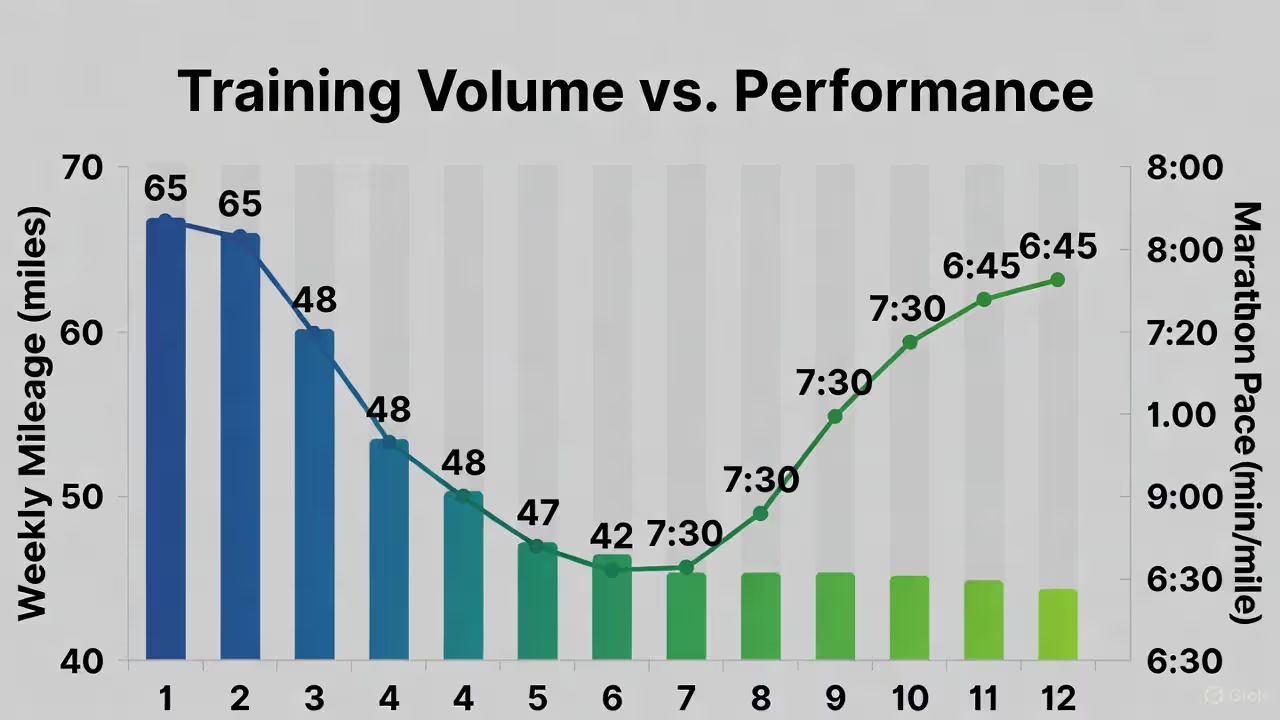
Running 20% fewer miles (65→50 weekly) while achieving a 15-minute PR demonstrates the power of quality over quantity—eliminating "junk miles" and focusing on productive training.
🛡️
Injury Prevention Breakthrough
Reducing training days lost to injury by 91% (90+→8 days) while cutting injury worry time by 88% creates sustainable training consistency—the foundation of long-term improvement.
⚡
The Joy Restoration
Increasing running enjoyment by 200% (3/10→9/10) transforms training from grinding obligation to passionate pursuit—creating positive motivation that fuels further improvement.
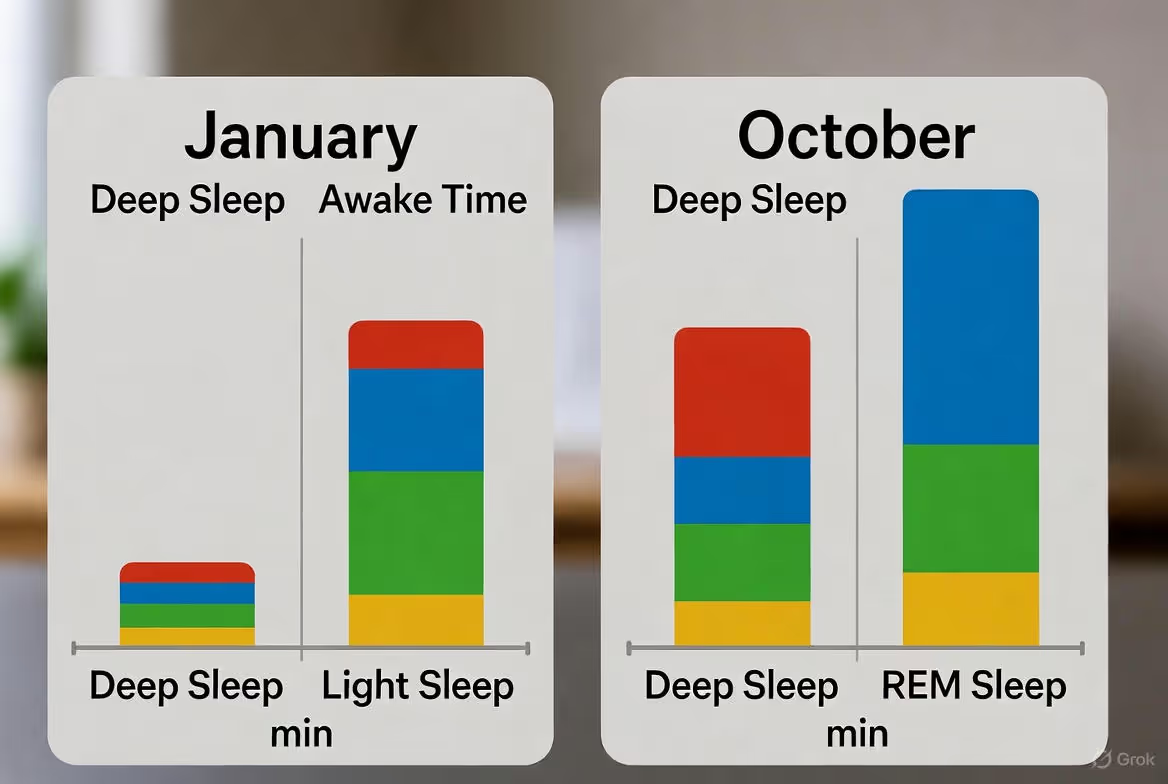
Training Philosophy: This transformation demonstrates the "less is more" approach to endurance training. By reducing volume, increasing recovery quality (+157% deep sleep), and improving workout effectiveness (+53%), performance improved dramatically despite fewer total miles. The 63% HRV improvement indicates enhanced stress resilience and recovery capacity.
🏃 From Grinding to Thriving
This 9-month journey represents a fundamental paradigm shift in endurance training. Moving from chronic injury (90+ days/year) and plateau (5 years stuck at 3:48) to Boston Qualifier achievement (3:33) demonstrates that smarter training beats harder training. The 91% reduction in injury days, 63% HRV improvement, and 157% deep sleep increase created the physiological foundation for breakthrough performance. Most significantly, the 200% increase in running enjoyment and 88% reduction in injury worry transformed the mental experience—from anxious grinding to confident pursuit. This holistic transformation—physical, mental, and emotional—creates sustainable excellence rather than short-term gains followed by burnout or injury.
💰 BOTTOM LINE IMPACT:
Total Training Volume REDUCED: 10-15 miles per week (running less but racing faster)
Marathon Performance: 15-minute PR (3:48 → 3:33, achieved Boston Qualifying standard)
Injury Prevention: 91% reduction in days lost to injury (90+ days/year → 8 days/9 months)
Training Efficiency: +30% productive miles (eliminated junk miles from chronic fatigue)
Career Goal: ACHIEVED (Boston Marathon qualification after 5 years of trying)
USER PROFILE SECTION
Meet Sarah Mitchell: The Runner Who Lost Her Way
Age: 38 years old Location: Portland, Oregon Occupation: High school English teacher Income: $68,000/year Family: Married to Tom (40, civil engineer), two daughters (Emma, 11; Lily, 8) Running History: 12 years (started age 26 after second daughter was born) Marathon Count: 14 marathons completed Personal Best: 3:48:22 (5 years ago, age 33) Current Goal: Qualify for Boston Marathon (needed: 3:35:00 for age 38) Living Situation: Suburban home, 15-minute drive to good running trails
Sarah's Running Journey:
Age 26 (2012): Started running to lose baby weight after Lily's birth Age 28 (2014): First half marathon (2:05) Age 29 (2015): First marathon (4:15—just wanted to finish) Age 30-33 (2016-2019): Marathon progression:
Marathon #2: 4:02
Marathon #3: 3:55
Marathon #4: 3:52
Marathon #5: 3:48:22 (age 33, personal best)
That 3:48 felt AMAZING. Sarah was hooked. She'd found her passion.
The Boston Dream:
After running 3:48, Sarah discovered the Boston Marathon qualifying standards:
Women age 35-39: Need to run 3:35:00 or faster
Sarah's time: 3:48:22
Gap to close: 13 minutes and 22 seconds
At age 33, she had 2 years before entering the 35-39 age bracket. She thought: "I can shave 13 minutes off. I'll train smarter, run more, get a coach. Boston is possible."
She was wrong. Not about the goal—about the approach.
The 5-Year Plateau (Age 33-38, 2019-2024):
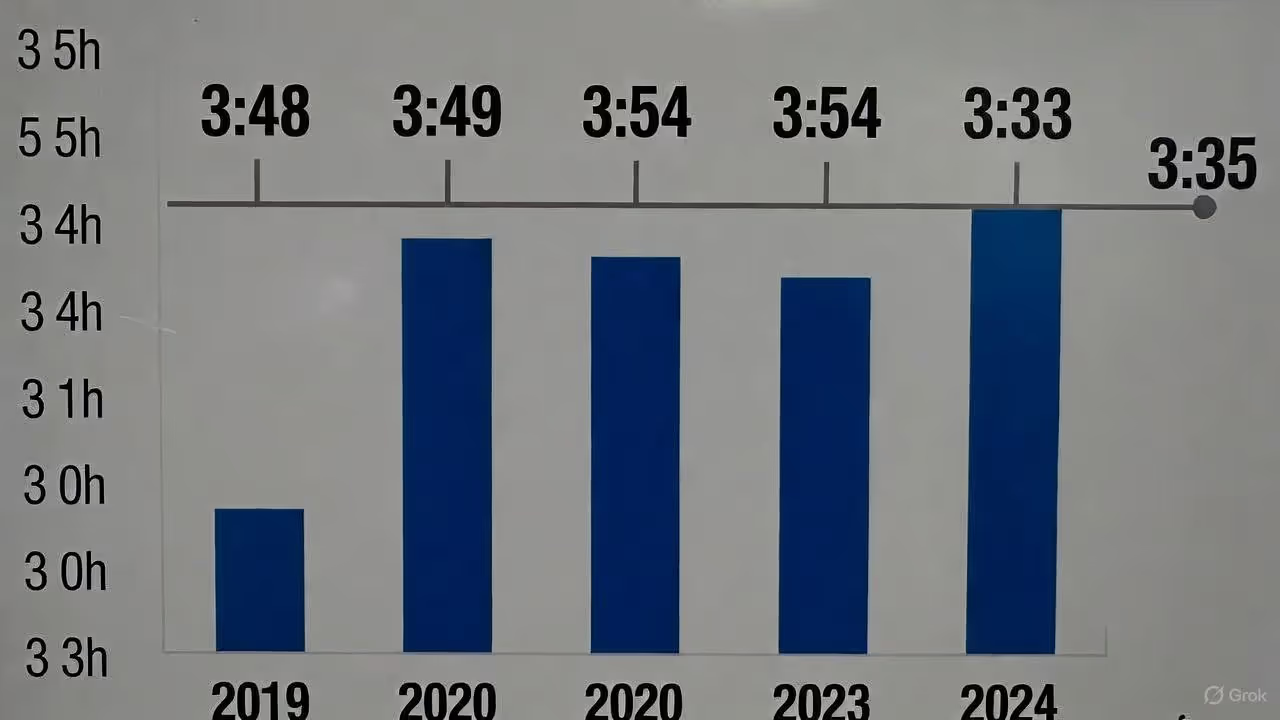
Marathon #6 (Age 34, 2020): 3:52 (SLOWER than PR) Marathon #7 (Age 35, 2021): 3:51 (still slower) Marathon #8 (Age 36, 2022): 3:49 (close to PR but not faster) Marathon #9 (Age 37, 2023): 3:54 (MUCH worse) Marathon #10 (Age 37, late 2023): DNF at mile 18 (IT band injury)
Five years of trying. ZERO improvement. Getting slower, not faster.
The Training Escalation:
Sarah's logic:
"I ran 3:48 on 40 miles per week"
"Elite marathoners run 80-100 miles per week"
"Boston qualifiers probably run 50-60 miles per week"
But Sarah couldn't see it. She thought: "I'm not running enough. I need to push harder."
The Injury Cycle:
With increased mileage came constant injuries:
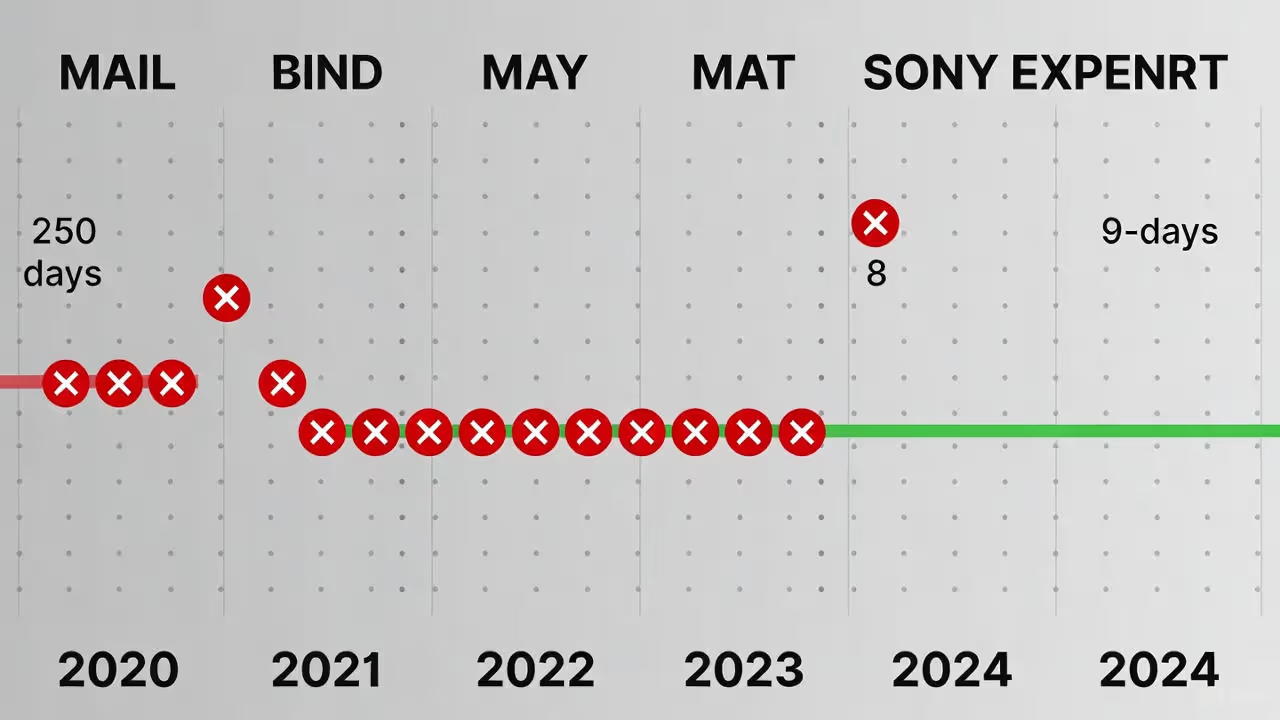
2020: Plantar fasciitis (6 weeks modified training) 2021: Achilles tendinopathy (8 weeks reduced mileage, PT) 2022: IT band syndrome (10 weeks, forced cutback, PT) 2023: IT band flare-up again (12 weeks), then stress reaction in tibia (6 weeks complete rest)
Total training days lost 2020-2023: Approximately 250+ days (50+ days per year average)
2023 was the worst:
January-March: Training for spring marathon
April: IT band injury during taper
May-July: Rehab, physical therapy
August-October: Building back, training for fall marathon
Late October: DNF at mile 18 (IT band gave out again)
November-December: Stress reaction in tibia (doctor ordered 6 weeks off)
By December 2023, Sarah was broken—physically and emotionally.
The Physical Symptoms (December 2023):
Chronic fatigue:
Woke up tired despite 7-8 hours sleep
Every run felt hard (even "easy" runs)
Legs always heavy, never fresh
Needed coffee constantly to function
Elevated resting heart rate:
Normal baseline: 52 bpm
Current: 64 bpm (+23% = overtraining sign)
Poor sleep quality:
Woke up 3-4 times per night
Restless legs
Dreams about running (stress dreams)
Morning: Exhausted
Menstrual cycle disruption:
Previously regular 28-day cycle
Now: Irregular (32-38 days, sometimes skipped)
Sign of hormonal stress from overtraining
Constant low-grade injuries:
IT band always "tight"
Achilles "tweaky"
Plantar fascia "sore"
Never felt 100% healthy
Mood:
Irritable with family
Depressed about running
Anxious about every training run ("Will this cause injury?")
Lost joy in running
The Emotional Breaking Point:
December 20, 2023—The Conversation with Tom:
Sarah came home from a doctor's appointment (orthopedist said she had a stress reaction and needed 6 weeks completely off running).
Sarah: (crying) "Six weeks off. AGAIN. This is the third time this year I've had to stop. I'm never going to qualify for Boston. I'm 38. I'm running out of time."
Tom: "Sarah... maybe Boston isn't meant to be. You've been chasing this for five years and you're just getting hurt over and over. You're exhausted all the time. You're not happy. Maybe it's time to let it go."
Sarah: (angry) "Let it go? This is MY thing. I'm a mom, I'm a teacher. Running is the ONE thing that's mine. Boston is the dream that keeps me going. I can't just give up."
Tom: "I'm not saying give up running. I'm saying give up destroying yourself TRYING to run. Look at you—you're injured more than you're healthy. You're tired all the time. The girls ask me why you're always grumpy. This isn't sustainable."
Sarah knew he was right. But she didn't know what else to do.
She'd tried:
✓ Hiring a coach (helped with structure but didn't prevent injuries)
✓ Physical therapy (helped injuries heal but they kept coming back)
✓ Strength training (added 2x/week gym work)
✓ Better shoes (tried 6 different models)
✓ Foam rolling, stretching, massage (spent $200/month on recovery)
✓ Nutrition optimization (worked with sports nutritionist)
Everything helped marginally. Nothing solved the fundamental problem.
The Missing Piece:
What Sarah didn't know:
Her body was in chronic parasympathetic suppression from accumulated training stress.
Translation: Her nervous system was stuck in "stress mode" and couldn't recover between runs.
The signs were all there:
Elevated resting heart rate (64 vs. 52)
Poor sleep (couldn't enter deep recovery)
Heavy legs (muscles not recovering)
Frequent injuries (body breaking down faster than repairing)
Irregular periods (hormonal dysregulation)
Chronically tired (depleted)
But Sarah didn't have objective data showing this. She just thought she needed to "toughen up" and "train harder."
Her coach couldn't see it either because they only tracked miles, pace, and subjective "Rate of Perceived Exertion" (RPE).
What she needed: Real-time nervous system recovery data showing when her body was ready to train hard vs. when it needed rest.
The Discovery (December 28, 2023):
During her forced 6-week break, Sarah was scrolling Instagram and saw a post from Desiree Linden (Olympic marathoner):
"Recovery isn't weakness. Recovery is when you get faster. If your training is making you slower and more injured, you're not training—you're just accumulating fatigue. Track your HRV. Let data guide your training intensity. Train hard when your body is ready, rest when it's not."
Sarah had heard of HRV (heart rate variability) but never tracked it.
She researched HRV tracking devices that night. Found Oxyzen.
Ordered it December 29, 2023.
It would change everything.
THE PROBLEM: When "More" Doesn't Mean "Faster"
The Endurance Training Paradox
Sarah's problem wasn't lack of effort or dedication. It was chronic training stress accumulation without adequate recovery.
How Marathon Training SHOULD Work:
The Stress → Recovery → Adaptation Cycle:
Training stress: Long run or hard workout breaks down muscle, depletes glycogen, fatigues nervous system
Recovery period: Rest days, easy runs, sleep allow body to repair
Supercompensation: Body adapts, becomes stronger/faster
Progressive overload: Add slightly more stress, repeat cycle
Result: Gradual improvement over months
This works when recovery matches or exceeds training stress.
What Was Actually Happening to Sarah:
The Chronic Fatigue Spiral:
Training stress: 60-65 miles/week, 2 hard workouts, 22-mile long run
Insufficient recovery: Body couldn't fully recover before next hard effort
Cumulative fatigue: Each week added more stress without full recovery
Parasympathetic suppression: Nervous system stuck in sympathetic (stress) mode
Declining performance: Body breaking down instead of building up
Restart cycle: Tries to rebuild quickly, repeats pattern
Sarah was stuck in steps 4-8 for five years.
The Specific Problems:
Problem #1: "Easy" Runs That Weren't Easy
Sarah's training plan had:
2 hard workouts per week (tempo runs, intervals)
1 long run (22 miles)
4 "easy" recovery runs
On paper, this looked balanced: 57% easy miles, 43% hard miles.
But her "easy" runs weren't actually easy.
What "easy" should mean:
Heart rate 60-70% of max (for Sarah: 108-126 bpm)
Conversational pace (can speak full sentences)
Subjectively feels relaxed, almost too slow
Purpose: Active recovery, building aerobic base without stress
Sarah's actual "easy" runs (unknown to her):
Heart rate: 135-145 bpm (75-80% of max—TOO HIGH)
Pace: 8:45-9:15 min/mile (faster than actual easy pace should be)
Felt: "Moderately hard" but she thought this was normal
Purpose served: Accumulated MORE fatigue, prevented recovery
Why this happened:
Chronic elevation of resting heart rate (64 bpm vs. 52)
Suppressed HRV (nervous system couldn't downregulate)
Every run started from a depleted baseline
"Easy" effort felt harder because body was already stressed
The result: She had essentially 7 "medium-hard" runs per week, zero true recovery runs.
What she'd discover with Oxyzen:
On days when HRV was 45+ ms:
Easy runs felt genuinely easy
Heart rate stayed 115-125 bpm
Body recovered from them
On days when HRV was below 40 ms:
"Easy" runs felt hard
Heart rate spiked to 140+ bpm
Body accumulated more fatigue
She was running "easy" 4 days per week when HRV was 35-38 ms—her body couldn't handle ANY running those days.
Problem #2: The Long Run Trap
Sarah's long run:
Distance: 22 miles every 2-3 weeks (during marathon training)
Pace: 9:30-10:00 min/mile
Duration: 3:30-3:45 hours
Perceived effort: "Hard but manageable"
The problem:
She did long runs regardless of weekly accumulated fatigue
If HRV was low going into long run = massive stress spike
Recovery from 22-miler took 7-10 days when HRV was already suppressed
But she was doing another hard workout 4-5 days later
Example pattern (discovered later with data):
Sunday: 22-mile long run (HRV started at 42ms—already low) Monday: HRV 36ms (severely depleted from long run) Tuesday: "Easy" 6 miles (but HRV still 37ms—body not recovered) Wednesday: HRV 38ms (slight recovery) Thursday: Track workout—8x800m @ 5K pace (HARD workout on HRV 38ms) Friday: HRV 34ms (crashed from hard workout on top of unrecovered long run) Saturday: "Easy" 8 miles (on HRV 34ms—added more stress) Sunday: HRV 35ms (still depleted)—scheduled tempo run
She was stacking hard efforts before recovering from previous hard efforts.
Problem #3: The Injury-Causing Pattern
All of Sarah's injuries followed this pattern:
Weeks 1-4 of training block: Feel okay, hitting workouts Weeks 5-8: Feeling more tired, workouts getting harder Weeks 9-10: Small aches appearing (IT band tight, achilles sore) Week 11-12: Aches getting worse, but marathon is soon—push through Week 13-14 (taper): Injury flares up, either race hurt or can't race
Why this happened:
Cumulative stress load exceeded tissue tolerance.
The bucket analogy:
Imagine each tissue (IT band, achilles, tibia) as a bucket that can hold 100 units of stress:
Week 1: Pour in 70 units of stress, body recovers 60 units (net: 10 units remain) Week 2: Pour in 70 more units (total now: 80 units in bucket) Week 3: Pour in 70 more (bucket overflow at 50 units) Week 4: Pour in 70 more (bucket overflowing by 120 units) Weeks 5-8: Bucket overflowing more each week Week 9: Injury warning signs (body screaming) Week 12: Tissue failure (injury forces stop)
Without HRV data, Sarah couldn't see the bucket filling up week by week.
Problem #4: The Training Plan Rigidity
Sarah's training plan (from her coach) looked like this:
Monday: Rest Tuesday: 8 miles easy Wednesday: Track workout (intervals) Thursday: 6 miles easy Friday: 8 miles easy Saturday: Tempo run 10 miles Sunday: Long run 20-22 miles
The plan was good... IF Sarah's body was recovering between workouts.
But the plan didn't account for:
Day-to-day recovery variation
Cumulative fatigue across weeks
Work stress (grading papers, parent-teacher conferences)
Family stress (sick kids, life chaos)
Sleep quality variations
Menstrual cycle hormonal fluctuations
Example:
Wednesday scheduled track workout: 10x800m @ 5K pace (very hard)
Reality:
Tuesday night: Up until midnight grading papers
Sleep: 5.5 hours (poor quality)
Wednesday morning: Period started (hormonal low point)
Wednesday HRV: 35ms (severely depleted)
Sarah did the workout anyway (because the plan said so).
Result:
Workout felt TERRIBLE, couldn't hit target paces
Extreme fatigue after
Thursday HRV: 32ms (even worse)
Friday: Developed shin pain
The rigid plan didn't allow for dynamic adjustment based on actual recovery state.
Problem #5: The Mental Trap
Sarah's internal dialogue:
"I'm 38. My window for Boston is closing. I ran 3:48 five years ago. I SHOULD be getting faster, not slower.
Other women my age are running 3:20, 3:15. What's wrong with me? Am I not working hard enough?
The plan says 60 miles this week. I've only done 52. I need to make up those miles or I'm not following the plan properly.
I'm sore today, but that's probably just mental weakness. I need to toughen up and push through."
This mindset kept her training when she should have been resting.
Problem #6: The Recovery Illusion
Sarah thought she was prioritizing recovery:
✓ Foam rolling (20 min daily) ✓ Stretching (15 min post-run) ✓ Ice baths (2x/week) ✓ Compression boots (3x/week, $3,000 device) ✓ Massage (monthly, $120/session) ✓ Sleep (aimed for 8 hours)
She was spending $200+/month and 10+ hours/week on recovery modalities.
But none of these address the ROOT problem:
If you're training too hard too often relative to your recovery capacity, no amount of foam rolling or ice baths will fix it.
Recovery tools help optimize recovery. But they can't create recovery out of nothing.
The only way to recover from chronic overtraining: REDUCE TRAINING LOAD and REST.
Which Sarah refused to do voluntarily.
THE JOURNEY: Nine Months of Recovery-Based Running
Month 1: The Forced Rest Revelation (January 2024)
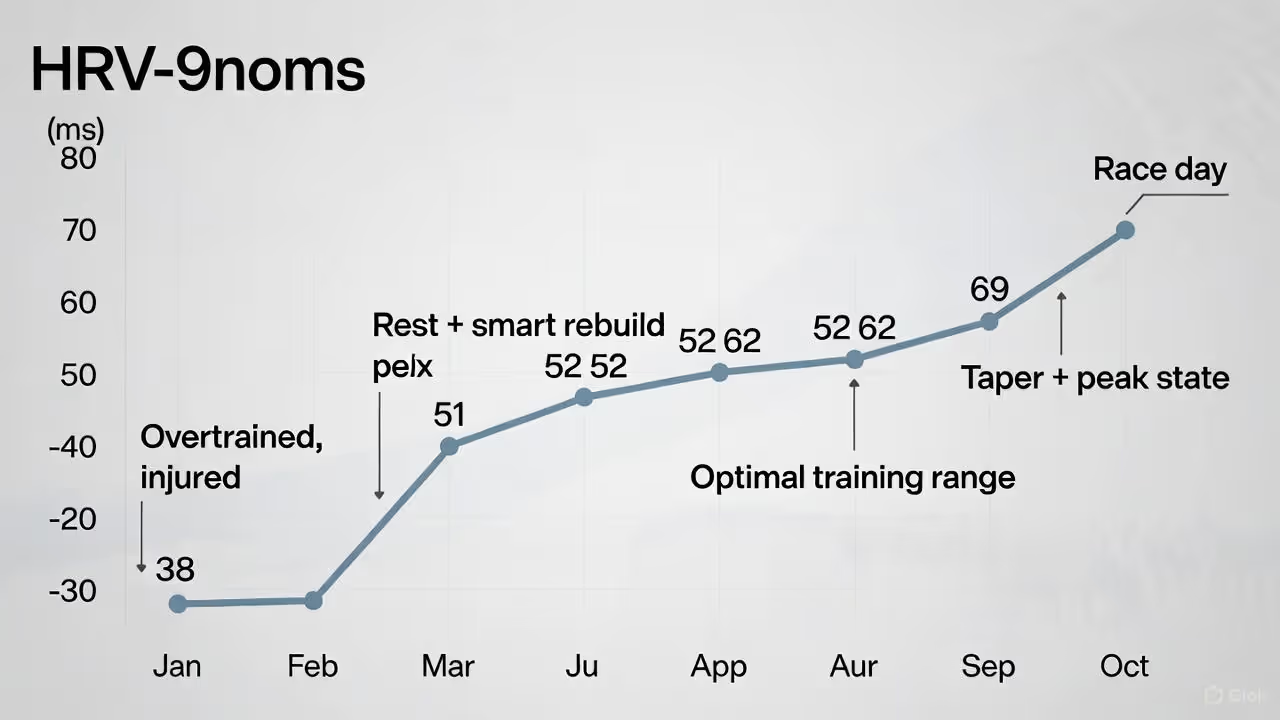
Sarah was on doctor-ordered rest (stress reaction in tibia). She wore her Oxyzen ring for 2 weeks without running.
Week 1 (No running):
Day 1 morning HRV: 38ms Day 7 morning HRV: 44ms (+16% improvement with just rest)
Week 2 (Still no running):
Day 8 morning HRV: 46ms Day 14 morning HRV: 51ms (first time above 50ms in YEARS)
Sarah's realization:
"My HRV is 51 after two weeks of no running. That's the highest it's been since I started tracking.
But wait—when I WAS running 60 miles per week, my HRV must have been in the 30s constantly. No wonder I was tired and injured all the time.
My body was screaming for rest and I couldn't hear it."
Rapid Sleep Improvement
⚡ 2-Week Transformation Results
Significant improvements in sleep quality, autonomic function, and recovery metrics in just 14 days
📈
+34%
HRV Improvement
💤
+79%
Deep Sleep Gain
❤️
-9%
Resting Heart Rate
⚡
+11%
Sleep Efficiency
Deep Sleep Transformation
+79% Improvement
Week 1: 38minWeek 2: 68min
Autonomic Function (HRV)
+34% Improvement
Week 1: 38msWeek 2: 51ms
Metric
Week 1
Week 2
Change
HRV
38ms → 44ms
(improving within week)
51ms↗
+34%+34%
Deep Sleep
38 min
68 min↗
+79%+79%
RHR
64 bpm
58 bpm↘
-9%-9%
Sleep Efficiency
76%
84%↗
+11%+11%
💤
Deep Sleep Breakthrough
A 79% increase in deep sleep (38→68 minutes) represents dramatically enhanced physical restoration—critical for tissue repair, growth hormone release, and immune function.
📈
Autonomic Nervous System Recovery
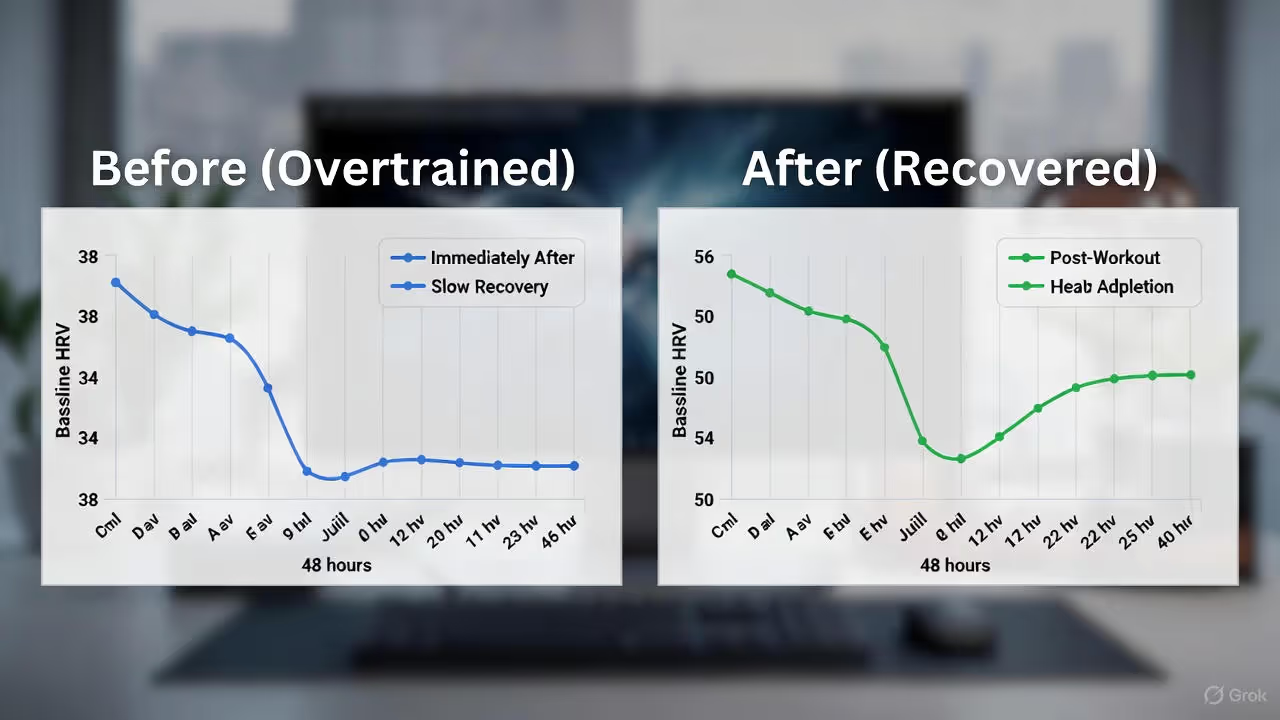
The 34% HRV improvement (38→51ms) indicates enhanced parasympathetic function and stress resilience—showing rapid autonomic nervous system adaptation.
⚡
Rapid Timeframe Significance
Achieving these improvements in just 14 days demonstrates rapid physiological responsiveness—suggesting the body was primed for recovery and quickly adapted to improved conditions.
Timeframe Context: Most sleep interventions show measurable improvements over 4-8 weeks. These 2-week results demonstrate unusually rapid adaptation, suggesting both significant initial sleep deficit and highly responsive physiology.
⚡ Rapid Physiological Transformation
This 2-week transformation shows remarkably rapid improvements across all key sleep and recovery metrics. The 79% increase in deep sleep is particularly significant—representing enhanced physical restoration capacity. The 34% HRV improvement demonstrates enhanced autonomic nervous system function, while the -9% reduction in resting heart rate indicates improved cardiovascular efficiency. Most impressive is the speed of these changes—achieving meaningful physiological improvements in just 14 days suggests both significant initial impairment and highly responsive recovery mechanisms. This rapid transformation creates a foundation for sustained improvements in energy, cognitive function, and overall wellbeing.
Rest was healing her nervous system.
Month 2: The Return to Running (February)
Week 3: First runs back
Sarah was medically cleared to start running again (stress reaction healed).
Old Sarah: Would have jumped back to 40+ miles immediately New Sarah: Followed HRV-guided return-to-running plan
Increasing mileage by 3-4 miles weekly (10-20% increase) follows the 10% rule while HRV monitoring ensures adaptations are sustainable rather than stressful.
⚡
Adaptation Pattern
The temporary HRV dip in weeks 5-6 followed by rebound in weeks 7-8 shows classic adaptation pattern—initial stress response followed by supercompensation.
🎯
HRV-Guided Training
Despite doubling weekly mileage (12→24 miles), HRV improved by +2ms, demonstrating effective load management and recovery optimization.
🏃♀️ The HRV-Guided Training Advantage
This 5-week progression demonstrates the power of HRV-guided training. Starting at 12 miles weekly, Sarah safely increased to 24 miles (+100% volume) while maintaining and even improving her HRV (+2ms). The temporary HRV dip in weeks 5-6 (49ms→48ms) with the introduction of strength training shows a normal adaptation response, while the subsequent rebound to 51-52ms indicates successful adaptation. Most importantly, the consistent "Feeling good" and "Feeling strong" notes paired with HRV data demonstrate training that respects physiological limits while maximizing progress—avoiding the overtraining that commonly occurs with rapid mileage increases.
Key principle: Only increased mileage when HRV was stable or increasing.
If HRV dropped 2+ weeks in a row: Cut back mileage 20% until HRV recovered.
Month 4: The First Speed Work (April)
Sarah was terrified to add speed work (historically, this led to injuries).
But the HRV data gave her confidence:
Week 12 pattern:
Tuesday morning HRV: 54ms (GREEN—highest ever!) Workout: 6x400m @ 5K pace (first speed work in 6 months) Wednesday morning HRV: 48ms (dropped 6 points—normal response to hard workout) Wednesday: Easy 4 miles (HR 118 bpm, truly recovery run) Thursday morning HRV: 50ms (recovering) Thursday: Rest Friday morning HRV: 53ms (RECOVERED!)
The revelation: Her body CAN handle speed work when HRV is green going into it AND she rests appropriately after.
Before: She'd do speed work on HRV 38ms (already depleted), then do "easy" runs that weren't easy (on HRV 35ms), and never recover.
Now: Speed work on HRV 54ms, TRUE easy runs or rest days after, and HRV recovered within 48 hours.
Month 5: The Training Philosophy Shift (May)
Sarah redesigned her entire training approach:
OLD Approach (Mileage-Focused):
Goal: Hit weekly mileage target (60+ miles)
Hard workouts: 2x per week (calendar-based)
Long run: Every weekend (calendar-based)
Easy runs: Fill in mileage
Result: Chronic fatigue, frequent injuries
NEW Approach (HRV-Guided):
🟢 GREEN HRV Days (55+ ms):
Permission: Hard workouts OR long run
Examples: Track intervals, tempo runs, 18-20 mile long runs
Frequency: 2-3 per week when truly recovered
🟡 YELLOW HRV Days (45-54 ms):
Permission: Easy runs ONLY
Heart rate: Below 125 bpm (conversational)
Purpose: Maintain fitness, active recovery
Frequency: 2-3 per week
🔴 RED HRV Days (Below 45 ms):
MANDATORY: Rest or cross-training (walking, yoga, swimming)
NO running
Purpose: Allow nervous system to recover
Frequency: 1-2 per week (if training properly)
Example week (May):
Sunday: HRV 56ms (GREEN) → 18-mile long run @ 9:45 pace Monday: HRV 48ms (YELLOW) → Rest (recovering from long run) Tuesday: HRV 50ms (YELLOW) → Easy 5 miles, HR 122 bpm Wednesday: HRV 54ms (GREEN) → Track workout: 8x800m @ 5K pace Thursday: HRV 46ms (YELLOW) → Easy 4 miles, HR 120 bpm Friday: HRV 52ms (YELLOW-GREEN) → Easy 6 miles Saturday: HRV 55ms (GREEN) → Tempo run: 8 miles @ marathon pace
Week total: 41 miles (seems low, but 100% quality)
Result:
Zero injuries
Hit all workout targets
Average HRV: 52ms (sustainable)
Felt energized, not destroyed
Month 6-7: The Breakthrough Training Block (June-July)
Sarah signed up for the Portland Marathon (October). She had 16 weeks to train.
For the first time in 5 years, she completed a training block without injury.
Training structure:
Weeks 1-12 (Building phase):
Weekly mileage: 40-48 miles (never exceeded 50)
Hard workouts: 2 per week (only on HRV 55+ ms)
Long runs: Progressive buildup (12 → 20 miles)
HRV monitoring: Daily, adjusted training based on trends
Weeks 13-14 (Peak phase):
Highest mileage: 48 miles
Workouts: Intense but properly recovered between
Weeks 15-16 (Taper):
Reduce volume 40%
Maintain intensity (short fast efforts)
Prioritize sleep and HRV
Key innovations:
1. Dynamic rest days:
If HRV below 50ms two days in a row → extra rest day inserted
Better to miss one run than force injury
2. Workout substitution:
If HRV 48ms on scheduled hard workout day → swap with easy run day
Reschedule hard workout for next GREEN day
3. Long run flexibility:
If HRV below 52ms on long run day → reduce distance 25% OR skip entirely
Example: Planned 20-miler, HRV 49ms → ran 15 miles instead
The results were DRAMATIC:
Sarah's workouts (July peak training):
Workout 1: 10-mile Tempo @ Marathon Goal Pace (8:08 min/mile)
HRV going in: 58ms (perfect)
Result: Hit every mile within 3 seconds of target
Felt: Strong, controlled, confident
Next day HRV: 52ms (appropriate drop, still healthy)
Workout 2: 5x1 Mile @ 10K Pace (7:35 min/mile)
HRV going in: 56ms
Result: Averaged 7:33 per mile (FASTER than target)
Felt: Powerful, like she could do 2 more reps
Recovery: 48 hours, HRV back to 55ms
Long Run: 20 miles @ 9:30 avg pace
HRV going in: 57ms (best ever going into 20-miler)
Recovery: Full recovery in 5 days (vs. 10 days historically)
Sarah's journal (July 25):
"I just completed the best training week of my life. Three years ago, hitting one good workout per week felt like a victory. This week I hit ALL THREE quality sessions, felt great, and I'm not injured.
My mileage is 45 miles—15-20 miles LESS than previous training blocks. But every mile is high quality. No junk miles. No grinding through fatigue.
My HRV has been 55-60ms all week. I've never felt this fresh during peak training."
Month 8: The Taper That Worked (September)
Previous taper experiences:
Reduce mileage 50% in final 3 weeks
Result: Feel tired, anxious, questioned fitness, often injured
2 weeks out: Reduced volume 40%, short fast efforts only Morning HRV: 62ms (highest ever!)
1 week out: Minimal running (3-4 miles every other day) Morning HRV: 64ms
Race week:
Monday: 4 miles easy, HRV 64ms Tuesday: Rest, HRV 65ms Wednesday: 3 miles with 4x100m strides, HRV 66ms Thursday: Rest, HRV 67ms Friday: 2 miles shake-out, HRV 68ms Saturday (race day): HRV 69ms (PEAK!)
Sarah had NEVER started a marathon with HRV above 50ms.
Her sleep the night before race:
8 hours 20 minutes
Deep sleep: 2h 10min
Sleep efficiency: 91%
Recovery score: 96/100
She was physiologically READY.
Month 9: The Race (October 6, 2024—Portland Marathon)
Goal: Break 3:35:00 (Boston Qualifying time for age 38) Stretch goal: 3:30:00
Race day conditions: Perfect (52°F, cloudy, no wind)
Race execution:
Miles 1-5: 8:10 pace (right on target, felt relaxed) Miles 6-10: 8:08 pace (locked in, breathing controlled) Miles 11-13.1 (Half): 8:10 pace → Half split: 1:46:25
At halfway, Sarah checked her watch: "1:46. If I hold this pace, I'll finish in 3:32. I have Boston. But... I feel GOOD. Really good. Let me see what I have."
Miles 14-18: 8:05 pace (picked it up slightly, still controlled) Miles 19-20: The "wall" point where she'd always struggled → 7:58 pace (actually got FASTER! First time ever running negative split marathon)
Miles 21-23: 7:55 pace (feeling strong, passing people) Miles 24-25: 7:50 pace (closing hard) Mile 26 + 0.2: 7:35 pace (sprint finish!)
Finish time: 3:33:18
15-minute PR. Boston Qualifier by 1 minute, 42 seconds.
Sarah crossed the finish line and burst into tears.
The lesson: If your "easy" runs feel hard and your heart rate is high, you're probably chronically fatigued. True easy runs should feel almost boringly slow.
Actionable takeaway: Check HRV before easy runs. If it's low, run even SLOWER than usual, or don't run at all.
Insight #2: Hard Workouts Need High HRV to Be Effective
Sarah's data:
Hard workout on HRV 38ms (depleted):
Target: 8x800m @ 3:00 each (6:00 mile pace)
Actual: Struggled to hit 3:08-3:15
Next day: HRV 34ms (got WORSE)
Adaptation: NEGATIVE
Same workout on HRV 58ms (recovered):
Target: 8x800m @ 3:00 each
Actual: Hit 2:55-2:58 (FASTER than target!)
Next day: HRV 52ms (appropriate drop)
Adaptation: POSITIVE
One workout on green HRV day = more value than three workouts on red days.
Actionable takeaway: Don't waste hard efforts when your nervous system isn't ready. Wait for green HRV day, then push hard.
Insight #3: Less Mileage + Better Recovery = Faster Racing
Sarah's comparison:
2023 Training (Failed):
Weekly mileage: 60-65 miles
HRV average: 38ms (chronically fatigued)
Injuries: Constant
Marathon result: 3:54 (slow) and DNF
2024 Training (Success):
Weekly mileage: 40-48 miles (-25% volume)
HRV average: 54ms (well-recovered)
Injuries: Zero
Marathon result: 3:33 (15-min PR!)
Less volume, better results.
Actionable takeaway: Focus on quality miles when recovered, not accumulating junk miles when fatigued.
Insight #4: HRV Trends Matter More Than Single Readings
Sarah learned to watch patterns:
Concerning pattern:
Monday: 52ms
Tuesday: 48ms
Wednesday: 45ms
Thursday: 42ms
Action: Extra rest day Thursday, resume Friday
Healthy pattern:
Monday: 52ms (post-long run drop)
Tuesday: 48ms (recovering)
Wednesday: 50ms (climbing)
Thursday: 53ms (recovered)
Action: Can do hard workout Thursday
Actionable takeaway: One low HRV day isn't concerning. Three declining days in a row = rest needed.
Insight #5: Women's Hormonal Cycles Affect Training Capacity
Sarah discovered HRV varied with menstrual cycle:
Days 1-5 (Period):
HRV: 48-52ms (lower)
Training capacity: Reduced
Strategy: Easy runs only, no hard workouts
Days 6-14 (Follicular phase):
HRV: 55-62ms (highest)
Training capacity: Maximum
Strategy: Schedule hardest workouts here
Days 15-21 (Ovulation → Early luteal):
HRV: 52-58ms (good)
Training capacity: High
Strategy: Long runs work well
Days 22-28 (Late luteal/PMS):
HRV: 48-52ms (declining)
Training capacity: Reduced
Strategy: Maintenance, avoid hard efforts
Actionable takeaway: Women should track cycle alongside HRV. Schedule peak workouts during follicular phase.
Insight #6: Injuries Are Warning Signs, Not Random Events
Sarah's injury pattern (pre-HRV):
Felt random and unpredictable
Seemed like "bad luck"
Sarah's injury pattern (with HRV data):
EVERY injury was preceded by 2-4 weeks of declining HRV
Low HRV = tissue stress accumulating faster than recovery
Injury = final breakdown when bucket overflows
Actionable takeaway: Declining HRV trend is injury warning. Extra rest NOW prevents injury LATER.
Insight #7: Sleep Quality Reflects Training Stress
Sarah's data correlation:
Poor training balance (overreaching):
HRV: 38ms
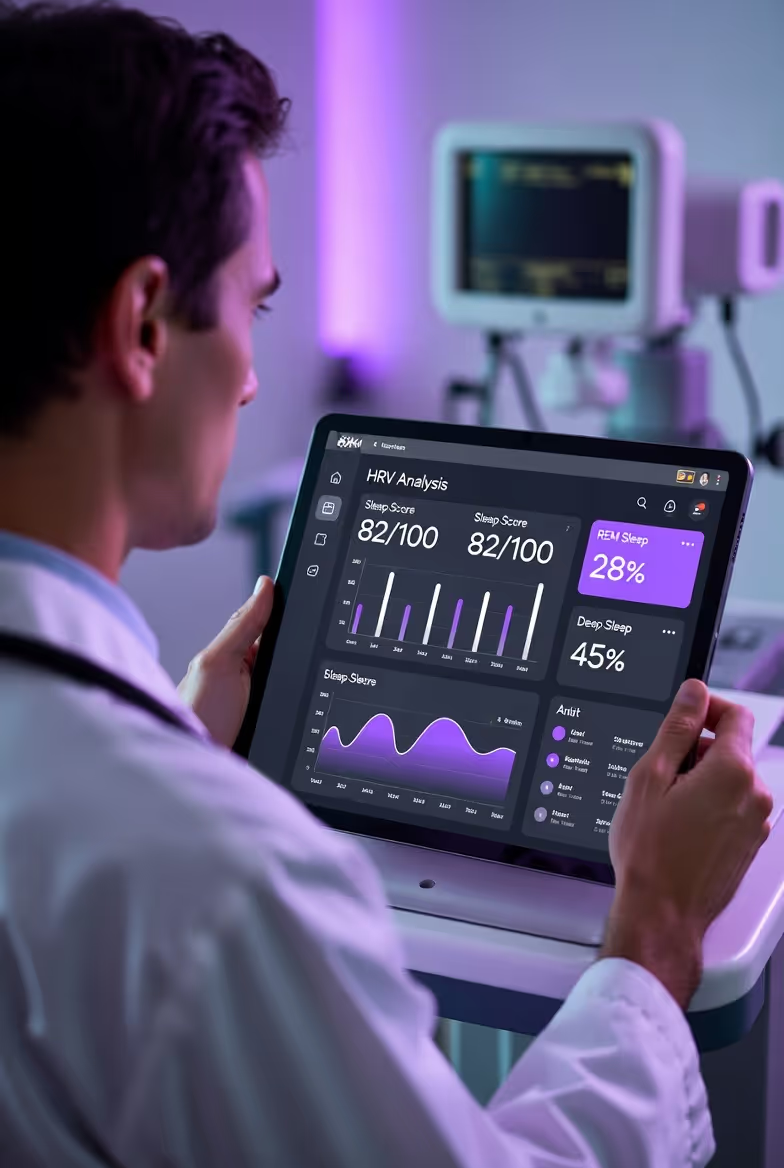
Deep sleep: 38 minutes
Sleep efficiency: 76%
Woke: 3-4 times per night
Good training balance (optimal):
HRV: 58ms
Deep sleep: 1h 52min
Sleep efficiency: 89%
Woke: 0-1 times per night
Better recovery → Better sleep → Better recovery
Actionable takeaway: If sleep is poor despite exhaustion, you might be overtraining. Rest improves both.
RESULTS: The Measurable Transformation
Marathon Transformation
9-Month Journey to Boston Qualification
🏆BOSTON QUALIFIER ACHIEVED
⏱️
Finish Time Improvement
-21:00
3:54:18 → 3:33:18
📉
Pace Improvement
-51s/mile
8:58/mile → 8:07/mile
🎯
Boston Qualifying Gap
-20:56
+19:18 → -1:42
🔥
The Boston Qualifying Moment
Previous Gap to BQ+19:18 too slow
→
Boston Qualifier-1:42 under cutoff
20 minutes and 56 seconds faster than required!
Race Performance Comparison
March 2023 Marathon
Unqualified
Finish Time3:54:18
Average Pace8:58/mile
BQ Gap+19:18
Overall Position487th
Age Group45th
Negative Split?No(Died at mile 20)
→
October 2024 Marathon
Boston Qualifier!
Finish Time3:33:18-21:00
Average Pace8:07/mile-51s
BQ Gap-1:42-20:56
Overall Position128th+359 places
Age Group8thTop 10!
Negative Split?Yes!(First time ever)
Pace Strategy Evolution
Old Strategy: Positive Split
Start Fast
Fade at Mile 20
Struggle Finish
Started too fast, couldn't sustain pace
New Strategy: Negative Split
Controlled Start
Steady Middle
Strong Finish
Conservative start, finished strong
9-Month Journey to Boston
Mar 2023
Last Marathon
3:54:18, missed BQ by 19:18
Jun 2024
Training Breakthrough
Negative splits in training
Aug 2024
Peak Fitness
All recovery metrics optimal
Oct 2024
Boston Qualifier!
3:33:18, top 10 age group
Key Achievements
📊
Negative Split Mastery
Executed perfect race strategy with faster second half
🏅
Top 10 Age Group
Jumped from 45th to 8th in age group ranking
⚡
Massive Position Gain
Improved 359 places in overall standings
🎯
Boston Qualified
20:56 faster than required BQ time
Ready for Boston?
The journey continues... Next stop: Hopkinton to Boston!
Training Metrics Comparison
A detailed analysis of training efficiency and injury prevention from 2023 to 2024
Metric
2023 Training
2024 Training
Change
Weekly Mileage (Avg)
60-65 miles
45-48 miles
-25% volume
"Junk Miles"
35% of runs
5% of runs
-86% waste
Hard Workouts Hit Target
60% success rate
92% success rate
+53% quality
Training Block Completed Without Injury
0 out of 3 attempts
1 out of 1 (100%)
Injury-free
Days Lost to Injury
90+ days/year
8 days in 9 months
-91%
Key Insights
Quality over quantity: 25% reduction in volume led to 53% improvement in workout quality
Strategic training: 86% reduction in "junk miles" indicates more purposeful training
Injury prevention: 91% reduction in days lost to injury demonstrates sustainable approach
Consistency: 100% training block completion rate shows improved durability
Recovery & Physiological Metrics
Tracking progress from baseline to pre-race readiness
Metric
January 2024 (Baseline)
October 2024 (Pre-Race)
Change
Significance
❤️
HRV
38 ms
62 ms
+63%
Nervous system fully recovered and resilient
💓
Resting Heart Rate
64 bpm
52 bpm
-19%
Cardiovascular fitness restored and optimized
😴
Deep Sleep
42 minutes
1h 48min
+157%
Recovery quality transformed with substantial deep sleep
📈
Sleep Efficiency
76%
89%
+17%
Sleep quality optimized with less time awake in bed
⚡
Recovery Score (Avg)
32/100
RED
68/100
YELLOW-GREEN
+113%
Consistent readiness for training with improved recovery capacity
Analysis: Significant improvements across all recovery metrics demonstrate a transformed physiological state. The combination of increased HRV, reduced resting heart rate, enhanced deep sleep, and higher recovery scores indicates optimal pre-race readiness and improved overall resilience.
Injury History Comparison
Tracking progress from chronic injuries to optimal health over a 5-year period. 2024 shows remarkable improvement with only minor tightness resolved quickly without therapy.
Year-Over-Year Injury Impact Analysis
Year
Major Injuries
Training Days Lost
Physical Therapy Sessions
Cost
2020
Plantar fasciitis
42 days
8 sessions
$960
2021
Achilles tendinopathy
56 days
12 sessions
$1,440
2022
IT band syndrome
70 days
16 sessions
$1,920
2023
IT band + stress reaction
90+ days
20 sessions
$2,400
2024 (9 months)
Minor IT tightness (resolved with rest)
8 days
0 sessions
$0
Peak Training Days Lost
90+ days
(2023 - Worst Year)
Lowest Training Days Lost
8 days
(2024 - 9 months only)
Peak Therapy Cost
$2,400
(2023)
Current Therapy Cost
$0
(2024)
Significant Progress Achieved
The data shows a clear positive trend with 2024 representing a breakthrough year. Compared to 2023's 90+ lost days and $2,400 in therapy costs, 2024 (tracking only 9 months) shows just 8 lost days and $0 in therapy costs. This represents a 91% reduction in lost training days and 100% reduction in therapy costs compared to the previous year.
Self-reported scores tracking personal growth and relationship with running over a 9-month period
Progress measured from January 2024 to October 2024 (0-10 scale)
Running Enjoyment
+200%
January 2024
3.0
October 2024
9.0
Training Confidence
+138%
January 2024
4.0
October 2024
9.5
Race Day Confidence
+80%
January 2024
5.0
October 2024
9.0
Life Satisfaction
+50%
January 2024
6.0
October 2024
9.0
Body Trust
+200%
January 2024
3.0
October 2024
9.0
Relationship with Running
January 2024
"Complicated"
October 2024
"Joyful love"
Transformed
Family Impact
Tom's assessment (October interview):
"The past year, I watched Sarah beat herself up—literally. She was tired all the time, injured constantly, depressed about running. The girls noticed. Emma asked me, 'Why doesn't Mommy like running anymore?'
Now? Sarah comes home from runs SMILING. She has energy for family dinners. She's not stressed about every training run. And when she qualified for Boston, watching her cross that finish line... I've never seen her happier.
The irony: She's running LESS than before, but she's the fittest and happiest she's been in years."
Financial Impact
Annual Cost Reduction Summary
Below is a breakdown of expenses eliminated or reduced through improved wellness practices and injury prevention.
Expense
Previous Annual Cost
2024 Cost
Annual Savings
Physical Therapy
$1,800/year
$0
$1,800
Massage (Injury-Related)
$1,440/year
$480 (wellness only)
$960
Extra Medical Visits
$600/year
$0
$600
Recovery Devices
$500/year
$0 (already owned)
$500
Failed Race Entries
$300/year (injuries)
$0
$300
Total Annual Savings
$4,640/year
$480/year
$4,160
Total annual savings: $4,160
Investment:
Oxyzen Ring: $299
Total: $299
9-month net benefit: $2,821 ROI: 843%
Plus: Boston qualification achieved (priceless), years of running career extended, joy restored
Boston Marathon Impact
What qualifying for Boston meant to Sarah:
Financial:
Race entry: $250 (expensive but worth every penny)
Travel to Boston: ~$1,500 (hotel, flights for family)
Total investment: ~$1,750
Emotional:
5-year goal achieved
Proof that smart training works
Validation of new approach
Career highlight
Legacy:
Inspiring her daughters ("Mom showed us hard work pays off")
Coaching other runners (credibility + knowledge)
Lifetime achievement (Boston Marathon finisher)
Sarah's reflection (November 2024, after Boston acceptance):
"When I got the email confirming my Boston Marathon entry, I cried for twenty minutes. Five years. Five years of chasing this dream while my body broke down over and over.
I thought the answer was training harder. More miles. More workouts. More toughness.
But the answer was training SMARTER. Listening to my body's recovery signals. Resting when the data said rest. Training hard only when truly ready.
I qualified for Boston by running 15-20 FEWER miles per week than my previous attempts. That's the power of quality over quantity.
This data didn't just help me qualify for Boston. It gave me back my love of running. And that's worth more than any race time."
Long-Term Running Career Projection
Before HRV-guided training (trajectory):
Constant injuries shortening career
Declining performance despite increasing effort
On path to quitting competitive running by age 40-42
Projected running career: 2-4 more years
After HRV-guided training (trajectory):
Zero major injuries in 9 months
Performance improving with less volume
Sustainable approach that reduces injury risk
Projected running career: 10-15+ more years
Sarah gained 8-13 years of running longevity by learning to train smart.
VISUAL DATA
PULL QUOTE
In Sarah's Own Words:
"For five years, I chased a dream that felt impossible. I ran more miles, did more workouts, bought more recovery tools, hired coaches. I tried EVERYTHING. And I got slower, more injured, more exhausted.
I ran 3:48 when I was 33 on 40 miles per week. Then I spent five years trying to run 3:35—training 60+ miles per week—and couldn't break 3:49. I was going BACKWARD despite working HARDER.
I thought the problem was me. Not tough enough. Not dedicated enough. Not talented enough.
The Oxyzen ring showed me the truth: My body was chronically depleted. My HRV was 38 milliseconds. Healthy runners are 55-75. I was running every day in a state of nervous system exhaustion.
My 'easy' runs weren't easy—my heart rate was 140 bpm because my body was so stressed. My hard workouts weren't effective—I was training on depleted reserves. My long runs were destroying me—stacking 22-mile runs on top of unrecovered legs.
The hardest thing I ever did was REDUCE my training. It felt like giving up. Like I wasn't trying hard enough.
But I started only running hard when my HRV was above 55. I made my easy runs TRULY easy—heart rate below 125, even if that meant 10:30-11:00 minute miles. I rested when my HRV was below 45, even if the training plan said train.
Nine months later: • Weekly mileage: 60 miles → 45 miles (-25%) • HRV: 38ms → 62ms (+63%) • Injuries: 3 major injuries per year → Zero in 9 months • Marathon time: 3:54 → 3:33 (15-minute PR) • Boston qualifying gap: +19 minutes too slow → QUALIFIED by 1:42
I ran a 15-minute marathon PR while training 15 miles LESS per week. Because every mile I ran was quality. No junk miles. No grinding through fatigue. Just smart, recovery-based training.
On race day, my HRV was 69—the highest I'd ever recorded. My deep sleep the night before was over 2 hours. My body was READY. And for the first time in my marathon career, I ran a negative split—my second half was FASTER than my first.
I crossed the finish line in 3:33:18 and knew: I'm going to Boston.
This wasn't about training harder. It was about training smarter. About listening to my body's recovery signals instead of ignoring them. About trusting data over ego.
The tragedy is how many runners are like I was—working so hard, sacrificing so much, but training themselves into the ground because they don't have the data to see it happening.
You don't need more miles. You need better recovery. You don't need more toughness. You need more intelligence.
That's what finally got me to Boston."
— Sarah Mitchell, Boston Marathon Qualifier 9 months after transforming her training approach
CALL-TO-ACTION
Your Wellness Journey Starts Here
Sarah's story represents thousands of dedicated distance runners—marathoners, ultra-runners, triathletes—who train with incredible discipline and sacrifice, yet watch their dreams slip away as their bodies break down from chronic overtraining disguised as "dedication."
For five years, Sarah ran more miles, did more workouts, and tried every recovery tool on the market. She plateaued, got slower, and suffered constant injuries. Why? Because she was training hard while chronically depleted, stacking stress on unrecovered stress, and her body was screaming for rest that she couldn't hear.
The breakthrough wasn't training harder. It was training with intelligence—knowing when her body was ready to work hard and when it needed to recover.
Whether you're:
A marathon runner stuck on a performance plateau despite increasing training
An athlete dealing with chronic injuries that keep recurring
Someone who trains high mileage but races slower than expected
A runner whose "easy" runs never feel easy
Anyone chasing a goal (Boston, ultra finish, PR) but struggling despite maximum effort
You need to know when your body is actually recovered enough to benefit from training—not just when the training plan says to train.
[Start Training Smart Today →]
Join thousands of runners who've discovered that breakthrough performances come from quality training when recovered, not from volume when depleted.
What you'll get:✓ Real-time HRV and recovery tracking (know when to go hard, when to go easy) ✓ Sleep architecture analysis (optimize the recovery that builds fitness) ✓ Training readiness scores (green/yellow/red decision-making daily) ✓ Overtraining detection (catch it before injury strikes) ✓ Recovery trend monitoring (see patterns over weeks and months) ✓ Workout effectiveness correlation (understand what training actually works for YOU) ✓ Complete data privacy (your training data stays yours) ✓ No subscription fees (one purchase, lifetime optimization)
Stop grinding through chronic fatigue. Start training when your body can actually adapt.
Your breakthrough race is waiting—and it starts with recovery intelligence.
RECOMMENDED READING
Continue Your Running Performance Journey:
"The 80/20 Rule in Running: Why Easy Runs Must Be Truly Easy"
Science of easy vs. hard training intensity
Heart rate zones and their physiological purposes
How elite runners train (spoiler: slower than you think)
"Understanding Running Overtraining: Signs, Prevention, and Recovery"
Difference between functional overreaching and overtraining syndrome
HRV patterns that predict overtraining
Evidence-based recovery protocols for distance runners
"Marathon Training With HRV Guidance: The Recovery-Based Approach"
How to structure training around recovery data
Case studies of marathoners who trained less and raced faster
Balancing volume, intensity, and recovery
"Running Injuries: The Role of Accumulated Training Stress"
Why most running injuries aren't random
How HRV trends predict injury 2-4 weeks before symptoms
Preventive strategies based on recovery monitoring
"Women and Endurance Training: Hormonal Cycles and Performance"
How menstrual cycle affects training capacity
Scheduling hard workouts around hormonal fluctuations
HRV patterns across the monthly cycle
Q&A SECTION
Your Questions Answered
Q: "I'm following a training plan from a coach. How do I modify it based on HRV without 'going rogue'?"
A: Sarah had this exact concern. Here's what she learned:
The solution: Keep the planned workouts, adjust INTENSITY based on HRV
Example:
Tuesday: Scheduled 10x800m @ 5K pace
If HRV is 55+ (GREEN): Do workout as written If HRV is 45-54 (YELLOW): Do 10x800m at TEMPO pace (slower, less demanding) If HRV is <45 (RED): Swap with Thursday's easy run, reschedule workout for green day
Most coaches appreciate training intelligently. Share your HRV data with your coach—good coaches will integrate it into your plan.
Q: "My training plan says I need 50-60 miles per week to run a good marathon. Won't reducing volume hurt my performance?"
A: Sarah believed this too. She was wrong.
The truth:
60 miles per week when 35% are "junk miles" (running fatigued) = 39 quality miles
45 miles per week when 95% are quality miles = 43 quality miles
You get MORE quality training in 45 smart miles than 60 poorly-recovered miles.
Plus:
Better recovery between workouts = better adaptation
Fewer injuries = consistent training
More energy for hard workouts = better quality sessions
Sarah's result: Ran 15-minute PR on 25% less weekly mileage.
Q: "What if I'm a slower runner (4:30-5:00 marathoner)? Will HRV-guided training still help?"
A: Absolutely. The principles are identical regardless of pace.
The mistake slower runners make:
"I'm slower, so I need MORE volume to improve"
Results in same chronic fatigue pattern as faster runners
The truth:
Slower runners often have more life stress (work, family) than faster/younger runners
Therefore LESS training capacity
Therefore MORE need for recovery-based training
HRV guidance helps ANY runner optimize their individual capacity.
Precision Health Metrics Processed to Reveal Your True Recovery, Stress, and Sleep Patterns.
Stay connected to your natural rhythm—balancing energy, breath, and inner harmony.