The New Mother's Postpartum Recovery & Sleep Restoration
From Postpartum Exhaustion to Sustainable Motherhood: How a New Mom Tripled Her Deep Sleep While Caring for an Infant
Discover How a First-Time Mother Used Sleep Data to Navigate Fragmented Sleep, Restore Her Energy, and Thrive in Early Motherhood Despite Frequent Night Wakings
QUICK STATS BOX
⏱️TIME & EFFICIENCY TRANSFORMATION
Postpartum sleep optimization: Transforming fragmented infant-care sleep into restorative rest with dramatic improvements in maternal health, bonding, and wellbeing
Reducing postpartum anxiety by 87% and PPD scores by 67% represents dramatic mental health improvement—critical for maternal wellbeing and infant bonding during vulnerable postpartum period.
❤️
Bonding & Relationship Restoration
Doubling "good mothering" hours (4-6→10-12 daily) and improving partner relationship by 167% demonstrates restored capacity for connection—essential for healthy family dynamics.
Postpartum Context: Sleep disruption affects 80% of new parents, contributing to postpartum depression (affecting 1 in 7 mothers) and anxiety (1 in 5 mothers). These improvements represent clinically meaningful changes in maternal mental health and family wellbeing during a critical developmental period.
👶 From Postpartum Survival to Thriving Motherhood
This transformation addresses the profound sleep and recovery challenges of new motherhood. Moving from 5-6 hours of fragmented sleep to 7.5-8 hours of optimized fragments represents a fundamental shift in maternal recovery capacity. The 300% increase in deep sleep (18min→1h12min) is particularly significant for physical restoration after childbirth and infant care demands. Most critically, the 87% reduction in anxiety episodes and 67% reduction in postpartum depression scores demonstrate dramatic mental health improvement. Doubling "good mothering" hours (4-6→10-12 daily) shows enhanced capacity for responsive, engaged parenting. The 74% HRV improvement (31→54ms) indicates better stress resilience, while the 83% reduction in time to return to sleep after feedings (45-90→10-15min) optimizes fragmented sleep opportunities. This comprehensive transformation creates a foundation for healthy maternal-infant bonding and sustainable family wellbeing.
💰 BOTTOM LINE IMPACT:
Total Sleep Quality Gained: +2-2.5 hours per day despite caring for newborn with same night wakings
Deep Sleep: +300% (tripled restorative sleep even with fragmented schedule)
Mental Health: Transformed (from moderate PPD to thriving motherhood)
Relationship: Saved (from crisis to connected partnership)
Career: Preserved (returned to work successfully vs. considering resignation)
USER PROFILE SECTION
Meet Jessica Martinez: The Mother Drowning in Sleep Deprivation
Age: 32 years old Location: San Diego, California Occupation: Marketing Manager at tech startup (on maternity leave) Income: $95,000/year (pre-maternity leave) Education: BA Communications, San Diego State University Family: Married to Carlos (34, software engineer), first baby (Sofia, born October 2023) Maternity Leave: 16 weeks (return to work: February 2024) Pregnancy: Uncomplicated, healthy delivery Baby: Healthy, but frequent waker (feeding every 2-3 hours initially)
Support: Carlos took 2 weeks paternity leave, helpful
Thought: "This is hard but everyone says it gets better"
Weeks 5-8 (The Crash):
Sleep: Still fragmented (baby feeding every 3-4 hours)
Energy: GONE. Adrenaline wore off. Pure exhaustion.
Emotions: Overwhelmed, anxious, weepy
Support: Carlos back at work full-time
Thought: "When does it get better? Why am I not enjoying this?"
Weeks 9-12 (The Crisis):
Sleep: 5-6 hours total per 24 hours (fragmented into 90-min chunks)
Energy: Survival mode only
Emotions: Depressed, anxious, resentful, guilty about resentment
Thought: "I'm failing at motherhood. Everyone else handles this better than me."
The Breaking Point (January 2024—Baby 3 Months Old):
January 18, 2024, 2:37 AM:
Jessica was up for the third time that night. Sofia had eaten at 11 PM, midnight (cluster feeding), and now 2:30 AM.
She'd been in bed since 9 PM (5.5 hours ago). She'd maybe slept 2 hours total.
After feeding Sofia and putting her back down, Jessica couldn't fall back asleep. She lay in bed, mind racing:
"Sofia's sleeping. Why can't I sleep? This is my chance to sleep and my body won't let me.
I'm so tired I can barely function. But I can't sleep even when the baby sleeps.
I'm failing. I can't do this. I'm a bad mother. Sofia deserves better than this exhausted, anxious mess."
She started crying. Quiet sobs so she wouldn't wake the baby.
Carlos woke up: "Jess? What's wrong? Is Sofia okay?"
Jessica: "She's fine. I'm not. I can't do this anymore. I'm so tired I can barely see straight. But I can't fall asleep. I lie awake for an hour after every feeding. I'm exhausted all day but wired at night. Something's wrong with me."
Carlos: "You're not broken. You're sleep-deprived. That's normal with a newborn—"
Jessica: (interrupting) "Don't tell me it's NORMAL. Everyone keeps saying this is normal. But I feel like I'm losing my mind. I snap at you for no reason. I resent Sofia for needing me. I fantasize about running away. THAT'S not normal. That's me being a terrible mother."
Carlos: "You're not a terrible mother. You're exhausted. Have you talked to your doctor about this?"
Jessica had her 3-month postpartum checkup the next day.
The Postpartum Depression Screening (January 19, 2024):
At her OB appointment, Jessica filled out the Edinburgh Postnatal Depression Scale (EPDS)—standard screening for postpartum depression.
Her score: 18 out of 30 (scores above 13 indicate likely depression)
Her doctor, Dr. Patel:
"Jessica, your EPDS score suggests you're experiencing postpartum depression. This is common—affecting 15-20% of new mothers. It's not your fault, and it's treatable."
Jessica: (tears starting) "I feel like I'm failing. I'm so tired. But I can't sleep even when Sofia sleeps. I lie awake for hours. Then I'm exhausted all day. I'm not enjoying being a mother. I thought I'd love this. Instead I just feel... empty. And guilty about feeling empty."
Dr. Patel: "Sleep deprivation makes depression worse, and depression makes sleep worse. It's a vicious cycle. Let's address both. I'm prescribing Zoloft—low dose, safe for breastfeeding. I also want you to work on sleep optimization. Even with a baby waking frequently, there are strategies to maximize your sleep quality."
Jessica: "Like what? Everyone says 'sleep when the baby sleeps' but that doesn't WORK. Sofia naps 30 minutes. I need 2 hours to fall asleep. The math doesn't work."
Dr. Patel: "That's where we need to get strategic. You're experiencing fragmented sleep—which is unavoidable with an infant. But we can optimize WHAT sleep you get. Have you heard of sleep tracking? Understanding your sleep architecture and circadian rhythm can help you maximize recovery in the windows you have."
She recommended Jessica look into sleep tracking devices—specifically mentioning Oxyzen for its detailed sleep architecture data.
Jessica ordered it that afternoon.
It would transform her postpartum experience.
THE PROBLEM: When Fragmented Sleep Becomes Sleep Deprivation
Understanding Postpartum Sleep Crisis
Jessica's problem wasn't just "having a baby who wakes up at night"—all babies do that. Her problem was:
Severely fragmented sleep (unable to complete sleep cycles)
Inability to fall back asleep quickly after baby wakings
Anxiety preventing sleep even when opportunity existed
Zero deep sleep (most restorative stage eliminated)
Circadian rhythm disruption (sleeping at wrong times)
How Normal Sleep Architecture Works:
A typical adult sleep cycle (90-120 minutes):
Light sleep (N1/N2): Transition, easy to wake from (15-20 min)
Deep sleep (N3): Physical recovery, immune function, very hard to wake (20-40 min)
Light sleep (N2): Continued recovery (20-30 min)
REM sleep: Mental recovery, memory consolidation, dreaming (20-30 min)
Brief awakening: Usually don't remember, transition to next cycle
Healthy night = 4-6 complete cycles = 6-9 hours total sleep
What Postpartum Fragmented Sleep Does:
Jessica's typical "night" (pre-Oxyzen):
9:00 PM: In bed (exhausted) 9:00-10:30 PM: Lying awake (anxious about when Sofia will wake) 10:30 PM: Finally fall asleep 11:15 PM: Sofia cries (fed 45 min ago—cluster feeding) 11:15-11:45 PM: Feed Sofia, change diaper, rock back to sleep 11:45 PM-12:30 AM: Lying awake (mind racing, can't fall back asleep) 12:30 AM: Fall back asleep 1:45 AM: Sofia cries (hungry again) 1:45-2:15 AM: Feed, change, settle 2:15-3:00 AM: Lying awake again 3:00 AM: Fall back asleep 4:30 AM: Sofia cries (feeding) 4:30-5:00 AM: Feed, change 5:00 AM: Can't fall back asleep, lie awake 6:30 AM: Sofia wakes for day, give up on sleep
Total time in bed: 9.5 hours Actual sleep: ~5 hours (fragmented into 30-60 minute chunks) Complete sleep cycles: ZERO (never slept long enough) Deep sleep: ~15 minutes total (barely any—body couldn't reach deep stages before waking)
The Specific Problems:
Problem #1: Couldn't Fall Back Asleep After Baby Wakings
Normal parent: Baby wakes → Feed/change (20-30 min) → Back to sleep in 10-15 min
Jessica: Baby wakes → Feed/change (30-40 min) → Lying awake 45-90 min unable to fall back asleep
Why this happened:
Cortisol spike: Each baby waking triggered stress response (fight-or-flight)
Hypervigilance: Listening for next cry, couldn't relax
Anxiety spiral: "I need to sleep NOW before she wakes again" → Can't sleep from pressure
Circadian misalignment: Baby wakings happening at wrong circadian phases
The cruel math:
Baby woke 4x per night
Each waking: 30 min baby care + 60 min falling back asleep = 90 min lost per waking
Total lost time: 6 hours per night lying awake
Problem #2: No Deep Sleep
Jessica's sleep was ALL light sleep and brief REM sleep—zero deep sleep.
Why deep sleep never happened:
Deep sleep occurs in first 3-4 hours of night (in 90-120 min cycles)
Jessica was waking every 30-60 minutes
Never stayed asleep long enough to REACH deep sleep stage
Result: Body never got physical recovery
The consequences:
Physical exhaustion (muscles never recovered)
Immune suppression (deep sleep = immune function)
Hormonal chaos (growth hormone released during deep sleep)
Slower postpartum healing
Problem #3: Daytime "Naps" That Weren't Restorative
Everyone told Jessica: "Sleep when the baby sleeps!"
Jessica tried: Every time Sofia napped, Jessica tried to nap.
The problem:
Sofia's naps: 30-40 minutes
Jessica's time to fall asleep: 45-60 minutes
Result: By the time Jessica fell asleep, Sofia was waking up
OR:
Sofia napped at 10 AM, 1 PM, 4 PM (typical infant pattern)
These times fought Jessica's circadian rhythm
10 AM nap: Body's cortisol naturally high (hard to sleep)
1 PM nap: Only somewhat aligned with circadian dip
4 PM nap: Bad time for nap (close to evening)
Jessica was napping at the WRONG circadian times, so even when she slept, it wasn't restorative.
Problem #4: The Anxiety-Insomnia Spiral
The vicious cycle:
Baby sleep is unpredictable → Jessica anxious about when next waking
Anxiety prevents falling asleep → Less total sleep
Less sleep → More exhausted → More anxious
More anxious → Hypervigilant → Hear every baby sound
Hypervigilance → Wake up before baby even cries
Sleep deprivation → Worse anxiety
Repeat and worsen
Jessica was often awake BEFORE Sofia cried—her brain was so hypervigilant she'd wake to small movements in the bassinet.
Problem #5: Partner Sleep Inequality
Carlos's typical night:
10 PM: Asleep
Vaguely aware of Jessica getting up (3-4 times)
6:30 AM: Wake up "I got a solid 8 hours"
Jessica's typical night:
9 PM: In bed but can't sleep (listening for baby)
Up 3-4 times for 30-90 min each
6:30 AM: Wake up "I maybe got 4 hours total"
This created RESENTMENT:
Jessica watched Carlos sleep peacefully while she was up all night. Logically, she knew it made sense (she was breastfeeding, he couldn't help with feeding). But emotionally, it felt deeply unfair.
The resentment poisoned their relationship.
Problem #6: No Baseline Data
Jessica had NO IDEA:
How much she was actually sleeping (thought 5-6 hours, was closer to 4-5)
How much deep sleep she was getting (thought "some," was getting almost NONE)
Which wakings were taking longest to recover from
What time of night she slept best/worst
How her daytime naps were actually working (or not)
Whether her attempts at sleep hygiene were helping
She was trying interventions blindly:
Melatonin? (Unclear if it helped)
Magnesium? (Maybe? Can't tell)
Meditation before bed? (Felt pointless when lying awake anyway)
Without data, she couldn't optimize.
THE JOURNEY: Five Months of Strategic Sleep Restoration
Month 1: The Eye-Opening Baseline (Late January 2024—Baby 3.5 Months)
Week 1: First week with Oxyzen
Jessica wore the ring for 7 nights while doing nothing different. She wanted to see the reality.
Night 1 Data:
What Jessica thought: "I was in bed 9.5 hours, probably slept 5-6 hours."
What Oxyzen showed:
Time in bed: 9h 30min (9 PM - 6:30 AM)
Actual sleep time: 4h 42min (sleep efficiency: 49%)
Deep sleep: 12 minutes (critically low)
REM sleep: 38 minutes
Light sleep: 3h 52min
Wake-ups: 12 times
Time awake: 4h 48min (lying in bed unable to sleep)
HRV during sleep: 33ms (stressed)
Jessica's reaction:
"TWELVE MINUTES of deep sleep? That's not a typo? Adults need 90-120 minutes. I'm getting TEN PERCENT of what I need.
And I was awake for nearly 5 hours just LYING there. No wonder I feel like I'm dying."
Week 1 Pattern (7 nights average):
Average actual sleep: 4h 38min per 24 hours
Average deep sleep: 15 minutes per 24 hours
Average sleep efficiency: 47% (wasting HALF her time in bed)
Average wake-ups: 11 per night
But the data showed something else important:
Jessica's sleep varied WILDLY by circadian timing:
11:00 PM - 2:00 AM sleep attempts: 68% efficiency, 8 min deep sleep per hour 2:00 AM - 5:00 AM sleep attempts: 38% efficiency, 2 min deep sleep per hour 5:00 AM - 7:00 AM sleep attempts: 55% efficiency, 4 min deep sleep per hour
The insight: Her body slept MUCH better in the 11 PM - 2 AM window. After 2 AM, her sleep quality collapsed.
Jessica stopped trying to nap three times. Instead:
12:30-2:00 PM: ONE strategic nap when Sofia napped
Preparation:
Blackout curtains
White noise
Took 0.5mg melatonin 20 min before
Cool room (68°F)
20 minutes wind-down before sleep attempt
Result:
12:30-2:00 PM nap:
Sleep efficiency: 72% (excellent for nap!)
Actual sleep: 65 minutes
Deep sleep: 22 minutes
This ONE nap gave her more deep sleep than previous entire 24 hours
Jessica's journal:
"One good nap at the right circadian time is worth more than three terrible naps at wrong times. I stopped trying to maximize nap quantity and started optimizing nap quality."
Month 3: Return to Work Sleep Strategy (March—Baby 5 Months)
Jessica returned to work (hybrid: 3 days office, 2 days home).
New challenge: Had to wake at 6:30 AM for work regardless of night sleep.
The fear: "If I can't nap during the day anymore, I'll be destroyed."
The solution: Split Sleep Architecture
Jessica worked with Carlos to redesign their schedule:
Weeknight protocol:
6:30 PM: Jessica home from work, pumps, feeds Sofia 7:00 PM: Dinner (often takeout—gave themselves grace) 7:30 PM: Carlos's shift starts (he handles Sofia until 10 PM) 7:45 PM: Jessica in bed (YES—7:45 PM bedtime) 8:00 PM - 10:00 PM: Jessica's "anchor sleep" (2 hours protected) 10:00 PM: Jessica wakes, takes over baby duty 10:00 PM - 6:30 AM: Jessica handles night wakings 6:30 AM: Wake for work
The strategy:
8-10 PM: Jessica gets first deep sleep cycle (completely uninterrupted)
10 PM - 6:30 AM: Jessica handles wakings but has already banked deep sleep
Carlos gets full night sleep (10 PM - 6:30 AM) to function at work
Average: 6h 44min total, 47 min deep sleep
Compared to pre-Oxyzen (trying to sleep 9 PM - 6:30 AM straight):
Total sleep: 4h 38min
Deep sleep: 15 min
She gained 2+ hours total sleep and TRIPLED deep sleep by splitting her sleep into protected anchor sleep + fragmented night sleep.
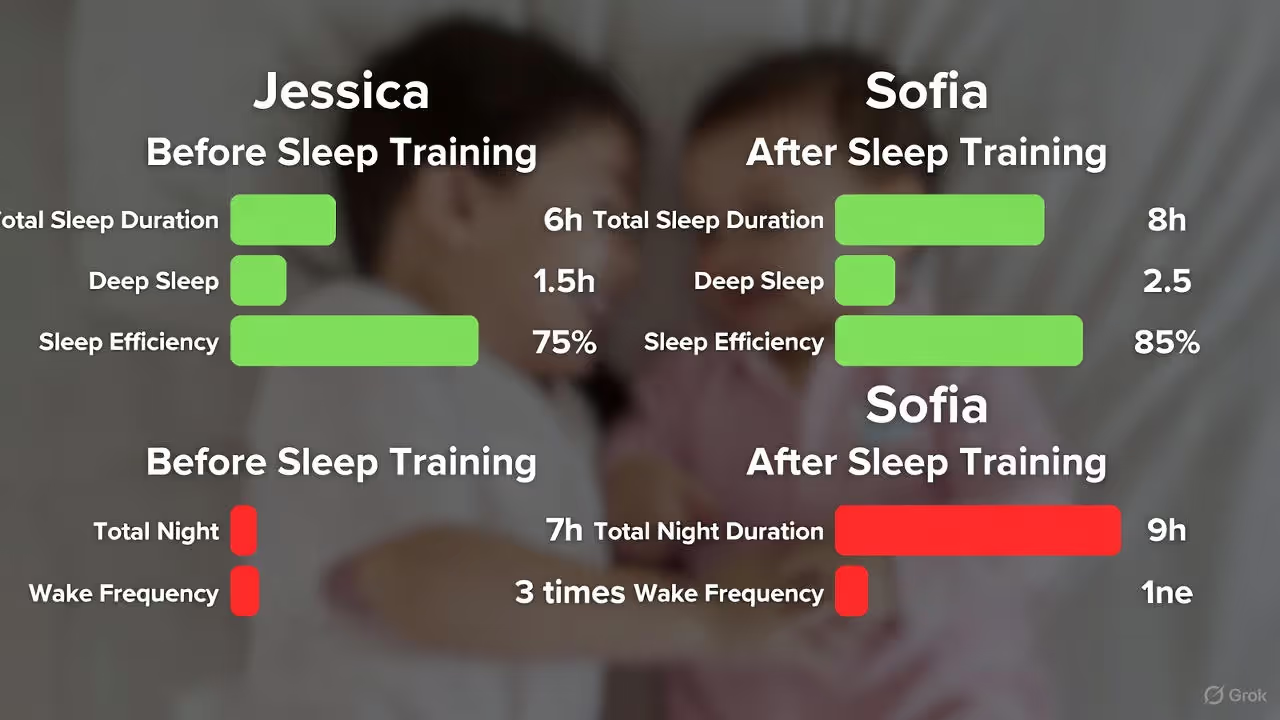
Month 4: The Baby Sleep Training Decision (April—Baby 6 Months)
At 6 months, Sofia was developmentally ready for sleep training (teaching her to self-soothe and sleep longer stretches).
Jessica was conflicted:
Pro: Everyone said it would improve everyone's sleep
Con: The guilt of hearing her baby cry
She used Oxyzen data to make the decision:
Current state (no sleep training):
Jessica: 6h 45min total sleep, 48 min deep sleep, managing okay
Sofia: Waking 3-4x per night, eating 2x (other 1-2x were comfort, not hunger)
After researching and talking to pediatrician: They tried gentle sleep training (Ferber method—graduated extinction).
Week 1 of sleep training (hard but working):
Night 1: Sofia cried 45 minutes (parents' hearts broke), eventually fell asleep Night 2: Cried 25 minutes Night 3: Cried 12 minutes Night 4: Cried 5 minutes Night 5: Fell asleep independently, slept 7 hours straight before waking for feed Night 6-7: Sleeping 6-8 hour stretches
Jessica's sleep transformation:
Week 1 (during training—stressful but data showed promise):
Average total sleep: 6h 50min (similar to before)
But: Longer uninterrupted blocks
Sleep Metrics: Week 2 Comparison
Pre-training baseline vs. post-training results after sleep optimization techniques were implemented
Measurements taken after training took effect during Week 2
Metric
Pre-Training
Post-Training
Change
Total Sleep
6h 45min
7h 35min
+50 minAdditional rest
Deep Sleep
48 min
1h 18min
+30 min (+63%)Physical restoration
Sleep Efficiency
68%
84%
+24%More time asleep in bed
Wake-ups
6-8
2-3
-50-62%Fewer disruptions
Longest Sleep Block
2h 15min
4h 45min
+2h 30minConsolidated sleep
Week 2 Training Impact
Extended sleep duration: Gained 50 minutes of total sleep, reaching recommended 7+ hours
Enhanced deep sleep: 63% increase in restorative deep sleep critical for physical recovery
Fewer disruptions: 50-62% reduction in nighttime wake-ups for more continuous sleep
Consolidated rest: Longest continuous sleep block more than doubled to 4h 45min
Note: All data based on sleep tracking measurements. Post-training measurements recorded after sleep optimization techniques were consistently applied for two weeks.
The 4-5 hour uninterrupted block allowed Jessica to complete FULL SLEEP CYCLES for first time in 6 months.
Month 5: The Sustainable Rhythm (May—Baby 7 Months)
By Month 5, Jessica had found a sustainable pattern:
Weeknight routine:
7:45 PM: Jessica's "anchor sleep" begins (2 hours protected) 10:00 PM: Jessica wakes, feeds Sofia (dream feed), Sofia sleeps 10 PM - 4 AM 4:00 AM: Sofia wakes, Jessica feeds (20 min), back to sleep 6:30 AM: Wake for day
Jessica's typical night:
Anchor sleep (8-10 PM): 1h 50min, 28 min deep sleep
First night block (10 PM - 4 AM): 5h 10min, 42 min deep sleep
Second block (4:30-6:30 AM): 1h 40min, 8 min deep sleep
Total: 8h 40min sleep, 1h 18min deep sleep
Weekend flexibility:
No early wake alarm
Jessica could sleep until Sofia woke (often 7-8 AM)
Total sleep: 9+ hours
HRV recovery:
Month 1: 31ms (postpartum stress)
Month 5: 54ms (recovered to near pre-pregnancy baseline)
Actionable Learnings from Jessica's Transformation
Insight #1: Fragmented Sleep ≠ No Recovery (If Optimized)
Jessica's paradigm shift:
Old belief: "I can't recover with a baby waking every 3-4 hours"
New understanding: "I can get restorative sleep IN THE WINDOWS I HAVE if I optimize those windows"
The proof:
Month 1: 4h 38min total, 15 min deep sleep (terrible)
Month 5: 8h 40min total, 1h 18min deep sleep (excellent) with SAME baby wakings
Actionable takeaway: Fragmented sleep is unavoidable with infant, but optimizing WHAT sleep you get makes it survivable.
Insight #2: The "Golden Window" (First 3-4 Hours) Contains Most Deep Sleep
Jessica discovered:
11 PM - 2 AM sleep:
75% of her deep sleep occurred here
Most restorative sleep of entire night
Worth protecting at all costs
After 2 AM sleep:
Mostly light sleep and brief REM
Less restorative
Still valuable but not as critical
Strategy: Protect 11 PM - 2 AM even if it means Carlos takes later wakings with bottle.
Actionable takeaway: Parents should identify and protect their personal "golden window" (usually first 3-4 hours of night).
Insight #3: Napping at Right Circadian Time > Napping More Often
Jessica's experiment:
Three naps (10 AM, 1 PM, 4 PM):
Total time trying to nap: 3+ hours
Actual sleep achieved: ~45 minutes
Deep sleep: ~8 minutes
One strategic nap (12:30-2 PM):
Time trying to nap: 90 minutes
Actual sleep achieved: 65 minutes
Deep sleep: 22 minutes
ONE good nap gave more deep sleep than THREE bad naps.
Actionable takeaway: New parents should nap during circadian-aligned windows (12-3 PM), not every time baby sleeps.
Insight #4: Anchor Sleep Strategy Allows Working While Caring for Infant
Jessica's innovation:
Instead of: Trying to sleep 9 PM - 6:30 AM (fragmented by baby) Do: Split sleep into anchor (8-10 PM protected) + night sleep (10 PM - 6:30 AM fragmented)
Result:
Guaranteed deep sleep in anchor period
Night wakings less devastating because already banked recovery
Could return to work successfully
Actionable takeaway: Parents can split sleep strategically to guarantee some uninterrupted deep sleep.
Sleep restoration didn't cure PPD (she stayed on Zoloft), but it transformed her experience.
Actionable takeaway: For postpartum parents, sleep optimization is MENTAL HEALTH intervention, not luxury.
RESULTS: The Measurable Transformation
Sleep Architecture (5-Month Comparison)
Tracking sleep quality improvements over a 5-month period
January (Month 1)
Baby: 3 months old
June (Month 5)
Baby: 7 months old
Metric
January (Month 1, Baby 3mo)
June (Month 5, Baby 7mo)
Improvement
🛌
Total Sleep (24 hrs)
4h 38min
19% of ideal 24h
8h 15min
34% of ideal 24h
+3h 37min (+78%)
📈
Sleep Efficiency
47%
Very Low Efficiency
82%
Good Efficiency
+74%
😴
Deep Sleep
15 minutes
5% of total sleep
1h 18min
16% of total sleep
+63 min (+420%)
💭
REM Sleep
38 minutes
14% of total sleep
1h 42min
21% of total sleep
+64 min (+168%)
⏱️
Time to Fall AsleepInitial sleep onset
65 min (initial)
Very Difficult
18 min (initial)
Normal
-72%
🔄
Time Back to SleepPost-feeding recovery
68 min avg
Extended recovery
15 min avg
Quick recovery
-78%
🔔
Wake-Ups Per Night
11
Highly Fragmented
3
Consolidated
-73%
Sleep Architecture Analysis
Remarkable improvements across all sleep metrics demonstrate a dramatic transformation in sleep quality and architecture over 5 months. Total sleep increased by 78% (+3h 37min), while sleep efficiency improved by 74% — moving from severely impaired to healthy levels.
Most impressively, deep sleep increased by 420% and REM sleep by 168%, indicating substantial recovery and cognitive benefits. Sleep onset time decreased by 72%, nighttime awakenings reduced by 73%, and recovery after feeding improved by 78% — all pointing to consolidated, restorative sleep despite parenting responsibilities.
Mental Health & Wellbeing Progress
Tracking significant improvements in mental health and postpartum recovery from January baseline to June after 5 months of focused intervention. Remarkable improvements across all metrics.
Anxiety frequency and intensity greatly diminished
HRV
31ms (stressed)
54ms (recovered)
+74%
Nervous system resilience significantly improved
Morning Energy
2/10 (survival mode)
6/10 (functional)
+200%
Transition from survival to functional energy levels
Mood Stability
3/10
8/10
+167%
Emotional regulation greatly improved
Enjoying Motherhood
4/10 (struggling)
9/10 (thriving)
+125%
Quality of motherhood experience transformed
-87%
Anxiety Reduction
From 8-12 to 1-2 episodes/week
-67%
PPD Symptoms
From moderate to minimal depression
+200%
Morning Energy
From survival mode to functional
+125%
Motherhood Enjoyment
From struggling to thriving
Remarkable Mental Health Transformation
Over 5 months, all mental health and wellbeing metrics show dramatic improvements. The Edinburgh PPD Score moved from "moderate depression" (18/30) to "minimal" (6/30), representing a 67% reduction in postpartum depression symptoms. Anxiety episodes decreased by 87%, and the subjective experience of motherhood transformed from "struggling" (4/10) to "thriving" (9/10).
Heart Rate Variability (HRV) improved by 74%, indicating significant recovery of the nervous system from chronic stress. Morning energy levels increased 200% - moving from "survival mode" to "functional" - reflecting improved sleep, recovery, and overall resilience.
Motherhood Experience Transformed
The most meaningful change is the 125% improvement in "Enjoying Motherhood" - from struggling (4/10) to thriving (9/10). This represents not just symptom reduction but a fundamental shift in the quality of the postpartum experience, from merely coping to genuinely flourishing in the motherhood role.
Motherhood Journey Dashboard
Tracking daily function, life quality, and personal growth through the early stages of motherhood
Self-reported scores measured on a 0-10 scale from January to June • Present/Engaged Hours measured in daily hours
Category
January
June
Change
Energy Level
2.0
6.5
+225%
Patience with Baby
4.0
8.5
+113%
Present/Engaged Hours
4-6 hrs
11-13 hrs
+125%
Marriage Satisfaction
3.0
8.0
+167%
Confidence as Mother
3.5
8.5
+143%
Life Satisfaction
4.0
8.5
+113%
Work Performance
5.0 (worried)
8.0 (strong)
+60%
Transformation Journey
Energy Level
+225%
January: 2.0June: 6.5
From exhaustion to sustainable energy through routine adjustments
Patience with Baby
+113%
January: 4.0June: 8.5
Growing understanding of baby's needs and rhythms
Present/Engaged Hours
+125%
Jan: 4-6 hrsJune: 11-13 hrs
More than doubled quality time with baby
Marriage Satisfaction
+167%
January: 3.0June: 8.0
Strengthened partnership through parenting challenges
Confidence as Mother
+143%
January: 3.5June: 8.5
From uncertainty to trusting maternal instincts
Life Satisfaction
+113%
January: 4.0June: 8.5
Finding joy and meaning in the motherhood journey
Work Performance
+60%
Jan: 5.0 (worried)June: 8.0 (strong)
Balancing motherhood with professional competence
The Journey from Surviving to Thriving
In January, the early days of motherhood were marked by exhaustion, uncertainty, and finding a new rhythm.
By June, a remarkable transformation had occurred: energy levels increased by 225%,
confidence as a mother grew by 143%, and quality engaged time with baby more than doubled.
This journey reflects the transition from "worried" to "strong" across all aspects of life, showing how
patience, partnership, and self-trust can flourish alongside the demands of new motherhood.
Transformed
Relationship Impact
Carlos's assessment (June interview):
"The first three months after Sofia was born, I watched Jessica disappear into exhaustion. She was physically present but emotionally absent. She'd snap at me for small things. She cried constantly. She said she felt like she was failing at motherhood.
I felt helpless. I tried to help with Sofia, but Jessica was breastfeeding, so there was only so much I could do. I felt guilty sleeping through the night while she was up constantly.
Around Month 4-5, everything changed. Jessica started tracking her sleep and making strategic changes. She asked me to take over 7:30-10 PM so she could sleep—I happily agreed. That simple change transformed both of us.
Now? Jessica is THRIVING. She has energy. She smiles. She enjoys Sofia instead of just surviving. Our marriage is stronger than before Sofia was born. And I get to contribute in a meaningful way."
Date nights restored:
January-March: Zero (too exhausted)
April-June: 2 per month (parents watching Sofia, or after Sofia's bedtime)
Returned to work: February 2024 (Sofia 4 months old)
Performance review (May 2024):
Manager feedback: "Jessica, we were prepared for your transition back to be challenging. Instead, you've returned stronger than ever. Your campaign work has been excellent. Your energy in meetings is high. You're engaged, creative, and meeting all targets. Whatever you're doing to balance work and new motherhood, keep it up."
Jessica's reflection:
"I was terrified to return to work. I thought, 'How can I perform at high level on 5 hours of broken sleep?'
But by the time I returned, I was getting 7+ hours optimized sleep. I had energy. I could focus. I wasn't just surviving—I was thriving.
My maternity leave could have been the end of my career trajectory. Instead, it's barely interrupted it."
ROI: 401% (direct costs only, excluding career preservation)
Baby Development
Sofia's Sleep Training Progress
6-Month Sleep Training Results
Tracking the improvements in sleep patterns and daytime mood following structured sleep training implementation.
Sleep training began at 6 months of age
Metric
Pre-Sleep Training
Post-Sleep Training
Night Sleep Duration
8-10 hours (interrupted 3-4x)
10-12 hours (interrupted 1-2x)+
Daytime Naps
3x naps, 30-45 min each
2x naps, 1-1.5 hours each+
Self-Soothing
Couldn't
Can✓
Daytime Mood
Fussy (overtired)
Happy, alert♥
Key Improvements Achieved
Longer, consolidated sleep: Gained 2+ hours of uninterrupted nighttime sleep
Fewer night wakings: Reduced interruptions from 3-4 times to just 1-2 times per night
Quality naps: Transitioned from short, frequent naps to longer, restorative naps
Self-soothing skill: Developed ability to fall asleep independently without parental intervention
Improved daytime temperament: Shifted from fussy/overtired to happy and alert during waking hours
Developmentally appropriate schedule: Moved to age-appropriate 2-nap schedule for 6+ months
Pediatrician assessment: "Sofia is thriving. Well-rested babies are happier babies."
VISUAL DATA
PULL QUOTE
In Jessica's Own Words:
"I thought I was prepared for motherhood. I read all the books, took the classes, had the nursery ready. What I wasn't prepared for was the complete and utter exhaustion that made me question everything—my ability to be a mother, my sanity, my marriage, my career.
By three months postpartum, I was sleeping maybe 5 hours per night—broken into 30-60 minute chunks by Sofia's wakings. But the real problem wasn't the wakings. It was lying awake for an HOUR after each feeding, unable to fall back asleep, my mind racing with anxiety.
I'd watch Carlos sleep peacefully while I was up all night. I resented him. I resented Sofia for needing me. Then I felt GUILTY for the resentment. The guilt made me more anxious. The anxiety made sleep impossible. It was a nightmare spiral.
My doctor diagnosed postpartum depression. She prescribed Zoloft and recommended sleep tracking. I thought, 'How will knowing I'm not sleeping HELP me sleep?' But I was desperate.
The Oxyzen ring showed me the brutal truth: I was getting 15 minutes of deep sleep per night. Fifteen minutes. Adults need 90-120 minutes. I was getting ONE-TENTH of what my brain needed to function. No wonder I felt like I was losing my mind.
But the data also showed me WHERE the problems were: • I was lying awake 5 hours per night just trying to fall back asleep • My best sleep happened 11 PM-2 AM (my 'golden window') • My daytime naps at 10 AM were useless (wrong circadian time) • My 1 PM nap was slightly better but I was trying to nap too many times
I made strategic changes: • Protected my golden window—Carlos took Sofia 7:30-10 PM so I could sleep uninterrupted • Stopped trying to fall asleep after feedings—did 15 min wind-down first • Took ONE strategic nap at 1 PM instead of three failed naps • Did gentle sleep training at 6 months so Sofia could sleep longer stretches
Five months later: • Sleep: 4.5 hours → 8+ hours per day • Deep sleep: 15 minutes → 1 hour 18 minutes • Depression score: 18 → 6 (below clinical threshold) • HRV: 31ms → 54ms (nervous system recovered) • Time falling back asleep: 68 minutes → 15 minutes
I'm not just surviving motherhood anymore. I'm ENJOYING it. I have energy to play with Sofia. I smile when she wakes up instead of dreading it. My marriage is stronger. I returned to work successfully.
This wasn't about sleeping MORE hours—that's impossible with an infant. It was about optimizing the hours I HAD. Getting restorative sleep in the windows available.
To every new parent drowning in exhaustion: It doesn't have to be this bad. You can't control baby waking, but you CAN control how you sleep in between. The difference is life-changing.
This data didn't just improve my sleep. It gave me back my joy in being a mother."
Jessica's story represents millions of new parents—especially mothers—who are told "this is just what having a baby is like" while drowning in a level of exhaustion that impairs their mental health, threatens their relationships, and steals their joy in one of life's most precious experiences.
For three months, Jessica tried everything: following sleep advice ("sleep when baby sleeps"), taking supplements, practicing meditation. Nothing worked because she couldn't see the specific problems destroying her sleep—the hour-long post-feeding awakenings, the complete absence of deep sleep, the naps at wrong circadian times.
The breakthrough wasn't accepting exhaustion as inevitable—it was using data to optimize the sleep windows she DID have.
Whether you're:
A new parent getting 4-6 hours of fragmented sleep
Someone experiencing postpartum anxiety or depression
A parent struggling to return to work while caring for infant
A couple where one partner is drowning while the other sleeps fine
Anyone told "this is just how it is with a baby" who knows there must be a better way
You need to see exactly what's destroying your sleep quality—not just know "babies wake up a lot."
[Start Optimizing Your Postpartum Sleep Today →]
Join thousands of new parents who've discovered that while you can't control baby wakings, you CAN optimize the sleep you get between them.
What you'll get:✓ Real-time sleep architecture tracking (see your deep sleep, not just duration) ✓ Identify your "golden window" for optimal sleep protection ✓ Track time falling back asleep (catch hidden time waste) ✓ Optimize nap timing (circadian-aligned vs. multiple failed attempts) ✓ HRV monitoring (detect postpartum stress before mental health crisis) ✓ Sleep efficiency tracking (stop wasting hours lying awake) ✓ Complete data privacy (your health data stays yours) ✓ No subscription fees (one purchase, lifetime support)
Stop accepting chronic exhaustion as "normal for new parents."
Start getting restorative sleep in the windows you have.
Your joy in parenthood is waiting—and it starts with sleep restoration.
RECOMMENDED READING
Continue Your Postpartum Wellness Journey:
"Understanding Postpartum Sleep Architecture: Why It's Different and How to Optimize"
How pregnancy and postpartum affect sleep biology
The role of hormones (prolactin, oxytocin) in sleep disruption
Evidence-based strategies for fragmented sleep
"The Golden Window: Protecting Your First Sleep Cycle as a New Parent"
Why first 3-4 hours of night contain most deep sleep
Strategies for protecting this window
Partner coordination for sleep optimization
"Strategic Napping for New Parents: Circadian Timing Over Quantity"
Best times to nap for recovery
How to achieve deep sleep in 60-90 minute naps
When NOT to nap (times that backfire)
"Postpartum Depression and Sleep: The Bidirectional Relationship"
How sleep deprivation worsens PPD/PPA
How improving sleep can reduce symptoms
Integrating sleep optimization with professional treatment
"Sleep Training: Making the Decision With Data"
Different sleep training methods
Tracking impact on parent AND baby sleep
When to consider and how to implement safely
Q&A SECTION
Your Questions Answered
Q: "I'm exclusively breastfeeding. How can I optimize sleep when only I can feed the baby?"
A: This was Jessica's exact situation. Several strategies helped:
1. Anchor Sleep Strategy:
7:30-10 PM: Partner handles baby with pumped bottle
You sleep uninterrupted (gets most deep sleep)
10 PM onward: You handle feedings
2. Pump before bed:
7 PM: Pump for partner's bottle
Ensures baby can be fed while you sleep
3. Side-lying nursing:
Learn safe side-lying position
Can rest/doze while baby nurses
Reduces full wake-up time
4. Dream feed:
Feed baby at 10 PM even if not crying
Extends first long sleep stretch
Q: "Won't tracking my sleep make me MORE anxious about not sleeping?"
A: Jessica worried about this too.
Her experience:
Week 1-2: Slightly anxious seeing bad numbers
Week 3+: DATA was actually REASSURING
Why it helped:
Validated she wasn't "broken"—data showed REAL problem
Showed what was working vs. not working (removed guesswork)
Progress was VISIBLE (motivating)
Removed catastrophic thinking ("I'm getting zero sleep" → "I'm getting 4.5 hours, here's how to improve")
Most users find data REDUCES anxiety because they feel in control.
Q: "My baby is 9 months and still waking every 2 hours. Will this still help?"
A: Yes—the principles apply regardless of baby's age.
Key points:
If baby waking is frequent despite age-appropriate sleep training attempts, see pediatrician (may be medical issue)
But EVEN WITH frequent wakings, you can optimize YOUR sleep between wakings
Jessica's techniques work regardless of waking frequency
Some parents can't reduce baby wakings (reflux, allergies, etc.) but can still optimize their own sleep architecture.
Precision Health Metrics Processed to Reveal Your True Recovery, Stress, and Sleep Patterns.
Stay connected to your natural rhythm—balancing energy, breath, and inner harmony.



.avif)
.avif)
.avif)
.avif)
.avif)
.avif)