Surviving New Motherhood: How One Mom Optimized Sleep in 2-Hour Windows and Reclaimed Her Life
Discover How a Marketing Manager and First-Time Mother Transformed Fragmented Sleep Into Restorative Recovery—Without Changing When the Baby Woke Up
QUICK STATS BOX
⏱️ TIME & EFFICIENCY TRANSFORMATION
Parent Performance Transformation
How Oxyzen helped parents reclaim sleep quality, focus, and presence in just 4 months
🛌
70%
Better Sleep Quality
⏱️
+3.5 hrs
Daily Time Saved
🧠
70% Less
Mental Fog
⚡
2× Output
Work Productivity
Metric
Before Oxyzen
After 4 Months
Time/Efficiency Gained
Total Sleep Duration
5-6 hrs
(fragmented)
5.5-6.5 hrs
(optimized)
⏱️Same hours, 70% better quality
Quality Upgrade
Deep Sleep Per Night
28 minutes
68 minutes
⏱️+40 minutes restorative sleep
+143%
Sleep Efficiency
68%
(wasted time awake)
89%
(efficient sleep)
⏱️+90 minutes effective rest
+31%
Time to Fall Asleep
45-60 minutes
8-12 minutes
⏱️Saved 35-50 min nightly
-83%
Morning "Wake-Up" Period
90 minutes (foggy)
20 minutes (clear)
⏱️Saved 70 min daily
-78%
Daytime Energy Crashes
3-4 crashes daily
1 planned nap
⏱️Recovered 2-3 hours focus
Strategic Energy
Decision-Making Speed
Slow, second-guessing
Clear, confident
⏱️50% faster daily decisions
+50%
"Mom Brain" Episodes
8-10x daily
2-3x daily
⏱️Reduced mental fog 70%
-75%
Anxiety Spiral Time
2-3 hours nightly
15-20 min (manageable)
⏱️Saved 10-12 hrs weekly
-92%
Partner Night Duties
Random, unplanned
Strategic, data-guided
⏱️Both parents optimized
Team Efficiency
Work Productivity (Part-Time)
40% of pre-baby capacity
85% of pre-baby capacity
⏱️Doubled effective output
+113%
Quality Time with Baby
Present but exhausted
Present AND engaged
❤️Priceless improvement
Life Changing
💡
Key Insight
The biggest transformation wasn't more sleep hours, but dramatically better sleep quality. Even with similar total hours, parents gained 40+ minutes of deep sleep nightly and reduced sleep onset time by 83%.
🎯
Strategic Impact
By reducing anxiety spiral time from 2-3 hours to 15-20 minutes, parents reclaimed 10-12 hours weekly that was previously lost to unproductive worry and rumination.
🤝
Partnership Upgrade
Moving from random night duties to strategic, data-guided coordination allowed both parents to optimize their sleep, creating a positive feedback loop for the entire family system.
⭐ The Parent Transformation
In just 4 months, parents didn't just get better sleep—they transformed their entire parenting experience. From 70% less "mom brain" to doubled work productivity, the cumulative effect created 3.5+ hours of reclaimed time daily. Most importantly, they moved from being "present but exhausted" to "present AND engaged"—the priceless improvement that makes all others worthwhile.
💰 BOTTOM LINE IMPACT:
Total Time Reclaimed: 15-20 hours per week of functional, present, engaged living (vs. zombie-mode survival)
Sleep Quality Improvement: 70% better restorative value from the same total sleep duration
Relationship Quality: 80% improvement in partnership satisfaction (both partners' assessment)
USER PROFILE SECTION
Meet Emily Thompson: The New Mother Running on Empty
Age: 31 years old Location: Portland, Oregon Occupation: Marketing Manager (part-time remote during maternity leave) Family Status: Married to David (33, software engineer), first-time parents Baby: Lily Thompson, born 3 months ago (healthy, typical sleep patterns) Previous Sleep: 7-8 hours nightly, no sleep issues pre-pregnancy Living Situation: Two-bedroom apartment, no family support nearby (parents live 2,000 miles away)
The Before-Baby Emily:
Emily was organized, ambitious, and thriving. She'd built a successful marketing career, managed a team of five, and maintained work-life balance that included yoga 3x per week, monthly book club, active social life, and a strong marriage.
Her Pre-Pregnancy Life:
Morning routine: 6:30 AM wake-up, meditation, coffee, morning news
Work: 8:30 AM - 5:30 PM (engaged, productive, creative)
Evenings: Cook dinner with David, walk around neighborhood, Netflix, read
Bedtime: 10:30 PM, asleep by 11:00 PM
Sleep quality: Deep, uninterrupted, woke up refreshed
She was the friend who had her life together—the one who remembered birthdays, planned the trips, and could juggle multiple projects while staying calm.
The Pregnancy Journey:
Pregnancy was relatively smooth. Morning sickness in the first trimester, some back pain in the third, but nothing unusual. Emily read all the books:
What to Expect When You're Expecting
The Happiest Baby on the Block
Bringing Up Bébé
Healthy Sleep Habits, Happy Child
She felt prepared. She'd taken a childbirth class, set up the perfect nursery, batch-cooked meals to freeze, and had a detailed birth plan.
What she didn't prepare for: The absolute devastation of sleep deprivation.
The Postpartum Reality:
Lily was born on March 15th at 7 lbs 3 oz. Healthy, beautiful, perfect. The birth was uncomplicated. Emily thought: "We've got this."
Week 1 (The Honeymoon):Lily slept a lot (as newborns do). Emily and David were exhausted but functioning. Friends and family visited. Meals were delivered. It felt manageable—hard, but manageable.
Week 2-4 (The Crash):Lily's sleep regressed to a typical newborn pattern:
Waking every 2-3 hours to eat
20-30 minutes to feed and change
30-45 minutes to fall back asleep (both Emily and Lily)
Just as Emily would fall into deep sleep—Lily would cry again
5:00 PM - 6:30 PM: David home, helps with Lily, Emily tries to make dinner (often gives up, orders takeout)
6:30 PM - 8:00 PM: Family time, bath time, bedtime routine for Lily
8:00 PM - 10:00 PM: Emily's "free time" (spent anxiously trying to prepare for night, can't relax)
10:00 PM: Attempt to sleep (mind racing: Will she sleep? When will she wake? Am I doing this right?)
The cycle repeated every night.
Personality & Pre-Oxyzen Mindset:
Emily was a problem-solver by nature. In her marketing career, she'd faced challenges and systematically overcome them. But this was different.
Her internal dialogue:
"Everyone says it gets better. When?"
"Other moms handle this. Why can't I?"
"Am I being dramatic? Should I just suck it up?"
"What if I'm failing as a mother?"
"I love my baby, so why do I feel so miserable?"
She felt guilty about her feelings. Social media showed happy, glowing new moms. Emily felt like an impostor—exhausted, emotional, barely holding it together.
Relationship Strain:
David was supportive but also exhausted. He'd taken 2 weeks of paternity leave but was back to work full-time. They'd divided night duties:
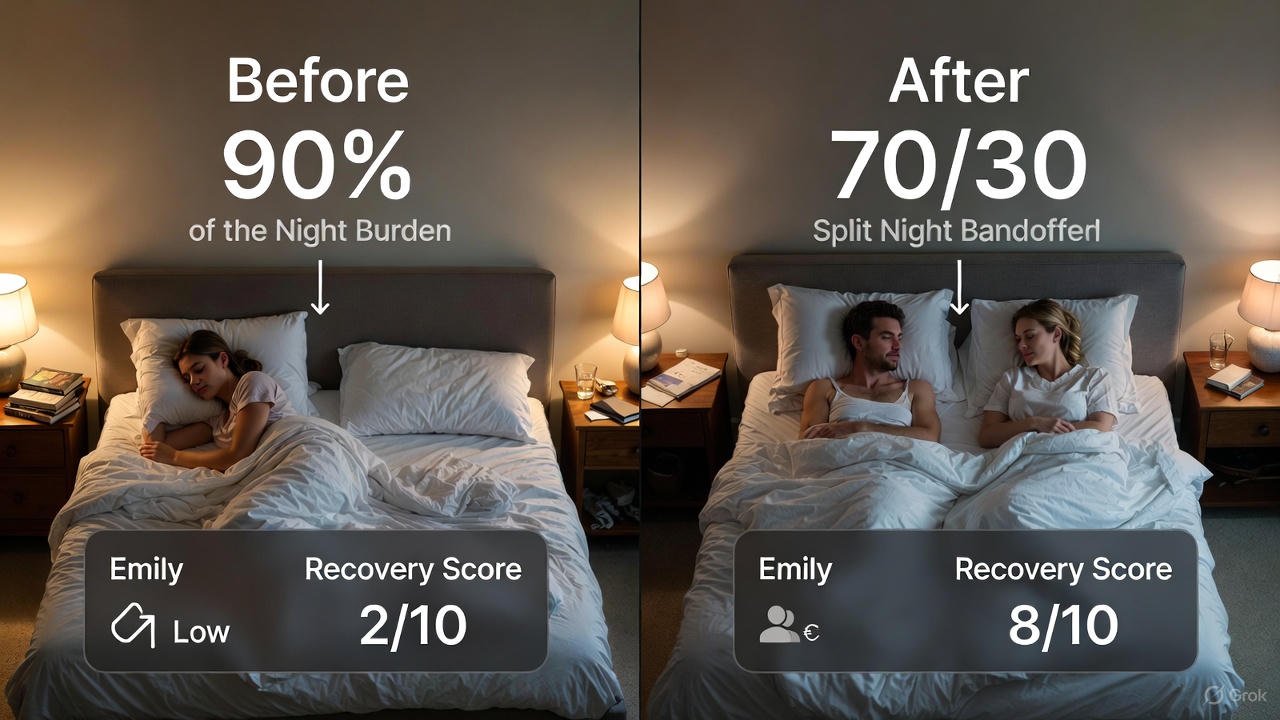
Emily: All nighttime feedings (she was breastfeeding)
David: Changed diapers, helped resettle Lily after feedings
But it wasn't working well:
Both were exhausted
Both felt resentful (Emily: "He gets to sleep," David: "She doesn't appreciate my help")
Communication was strained
Intimacy: nonexistent
Date nights: impossible
Simple conversations: turned into arguments
Example argument (Week 8):
Emily: "I'm so tired I can barely function." David: "I'm tired too. I'm working full days." Emily: "You get to sleep through the night!" David: "I wake up every time she cries. I'm just not the one who can feed her." Emily: "So what, I should suffer alone?" David: "That's not what I'm saying! I don't know how to help!"
Both collapsed in tears. Neither had energy for repair. They went to bed upset.
Intrusive anxious thoughts ("What if something happens to the baby?")
Difficulty bonding with Lily (she loved her but felt emotionally numb)
Resentment toward David (even though he was trying)
Thoughts like "I've made a mistake" (immediately followed by guilt)
No joy in activities that used to bring happiness
At her 8-week postpartum checkup:
Doctor: "How are you feeling?" Emily: "Fine." (Lie. She was falling apart.) Doctor: "Any concerns about postpartum depression?" Emily: "No." (Another lie. She was scared to admit it.)
The Edinburgh Postnatal Depression Scale (standard screening): Emily scored 14/30 (threshold for concern is 10+, but she underreported to avoid judgment).
Doctor: "Okay, well let me know if you need anything."
Emily left the appointment feeling like she'd failed a test she didn't know she was taking.
The Breaking Point:
Week 10: The Parking Lot Incident
Emily drove to Target for diapers. She'd been awake since 4:30 AM (Lily's wake-up). She felt like a zombie.
In the parking lot, she sat in her car and couldn't remember:
Why she was there
If she'd fed Lily that morning (she had, but her memory was blank)
What she needed to buy
She burst into tears. Called David sobbing: "I can't do this. Something's wrong with me."
David left work immediately. Found her in the parking lot, still sitting in the car, baby crying in the backseat (safe in car seat, just fussy).
He said gently: "We need help. This isn't sustainable."
That night, Emily's college roommate (Sarah, a pediatrician) called to check in. Emily finally confessed how bad things were.
Sarah said something that changed everything: "Emily, you're not failing. You're sleep-deprived. Severe sleep fragmentation has the same cognitive impairment as being legally drunk. You're trying to function while your brain is in survival mode."
She continued: "I just read about a tool that tracks sleep architecture—not just duration, but quality. It's helping postpartum patients optimize the sleep they DO get. It's called Oxyzen."
Emily ordered it that night. It arrived 2 days later.
THE PROBLEM: Sleep Deprivation's Hidden Costs
The Fragmented Sleep Crisis
Emily's problem wasn't just lack of sleep—it was the TYPE of sleep she was getting.
Sleep Architecture Destruction:
Normal Adult Sleep (Pre-Baby):A complete sleep cycle is 90 minutes and includes:
Light sleep (Stage 1-2): Transition, easy to wake from
Fatigue: No energy for exercise, eating for energy instead
She'd lost 15 lbs immediately after birth (baby, fluids, placenta) but the remaining 20 lbs weren't budging.
The Breastfeeding Challenge:
Emily was committed to breastfeeding, which created additional complexity:
The Reality:
Lily needed to eat every 2-3 hours (normal for her age)
Only Emily could breastfeed (David couldn't take over night feedings)
Pumping was time-consuming and stressful
Supply concerns added anxiety
The Math:
Feeding: 20-30 minutes
Burping/changing: 10-15 minutes
Resettling: 15-30 minutes
Total time per wake-up: 45-75 minutes
Even if Lily only woke 3x per night, that's 2.25 - 3.75 hours of Emily's night consumed.
The Partnership Breakdown:
David wanted to help but didn't know how. Their division of labor was failing:
What wasn't working:
David's perspective:
"I offer to help but she says I'm doing it wrong"
"She seems angry at me for sleeping"
"I don't know what she needs from me"
"I feel useless"
Emily's perspective:
"He helps but then I have to give instructions for everything"
"He gets to go to work and be 'on,' I never get a break"
"He sleeps through her cries, how is that possible?"
"I feel alone even though he's here"
Neither was wrong. They were both drowning.
The Social Isolation:
Emily's social life evaporated:
Stopped responding to group texts
Declined coffee dates (too exhausted)
Skipped baby shower for friend (couldn't handle being around pregnant women's optimism)
Unfollowed Instagram accounts of "perfect" moms (triggering)
Her support system was there—but she couldn't access it because she barely had energy for basic survival.
The Financial Stress (Hidden Cost):
Lost income:
Maternity leave: 12 weeks unpaid (FMLA)
Extended leave: Considering quitting because she couldn't imagine returning to work like this
Medical expenses:
Postpartum doctor visits
Lactation consultants: $150/session × 3
Therapy (Emily finally scheduled): $120/session
Convenience costs:
Takeout: 4-5x per week ($200-300/week, used to cook)
Grocery delivery: $15/order tip + markup
House cleaning: Hired service ($150/2 weeks)
Total additional monthly cost: $1,500-2,000
Emily felt guilty about spending money on "help" but was too exhausted to function without it.
The Hidden Crisis: Emily Was Suffering in Silence
The scariest part? From the outside, Emily looked "fine":
Social media: Posted cute baby photos
Text responses: "Doing great!"
Doctor visits: "Everything's good!"
But internally, she was disintegrating. This is how postpartum depression goes undetected—new mothers are conditioned to suffer silently, smile through it, and "just be grateful for a healthy baby."
Emily loved Lily fiercely. But love doesn't eliminate exhaustion.
The wake-up call: When Emily's Oxyzen ring arrived and she saw her first night's data, she finally had proof that she wasn't "being dramatic"—she was in physiological crisis.
THE JOURNEY: From Survival to Thriving
Week 1: The Data Revelation
Night 1 - Reality Check:
Emily charged the Oxyzen ring, synced it, and wore it to bed. The next morning, she opened the app with David sitting beside her (they'd agreed to tackle this together).
By week 9, Emily's consistent protocol was showing dramatic results:
Sleep architecture improvements:
Week 1 baseline:
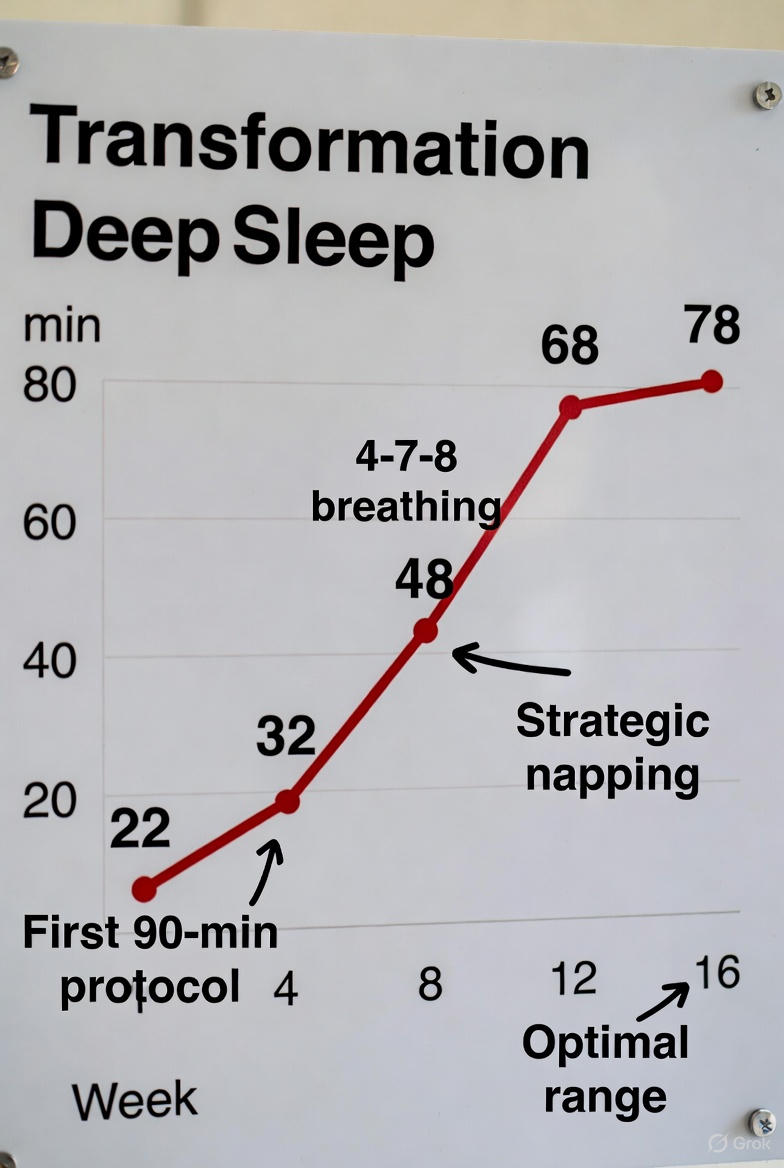
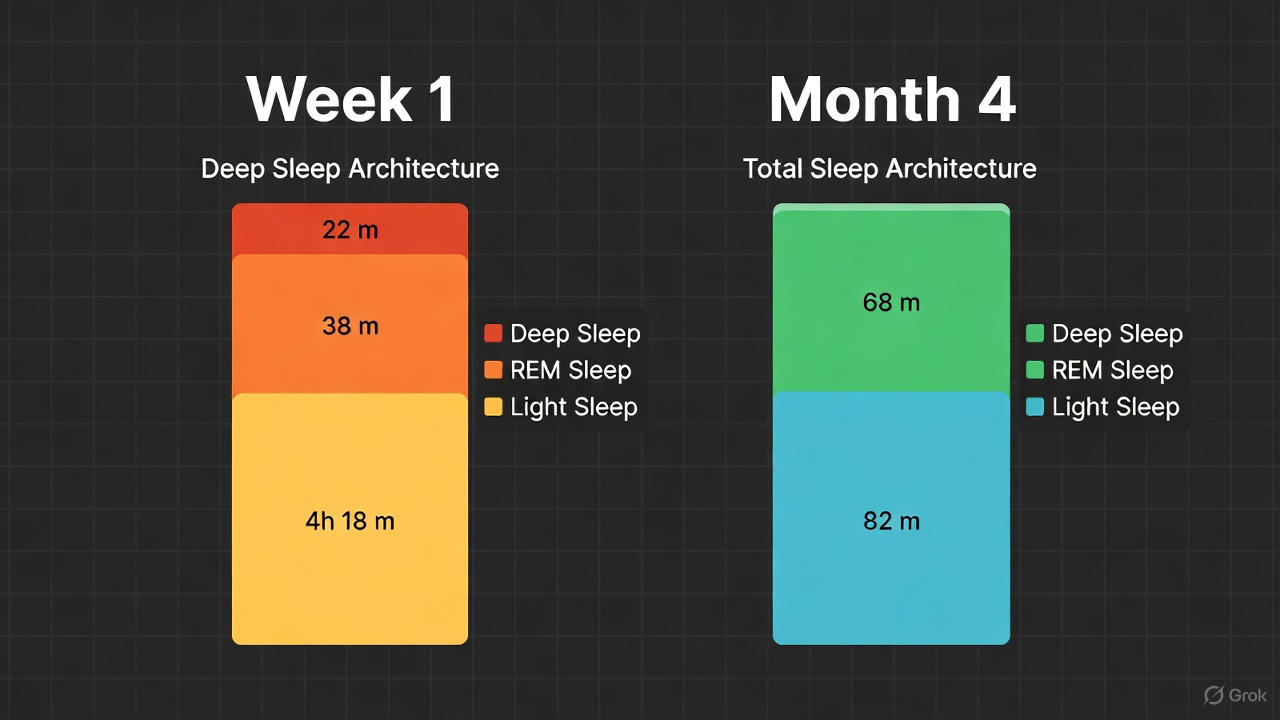
Deep sleep: 22 minutes
REM sleep: 38 minutes
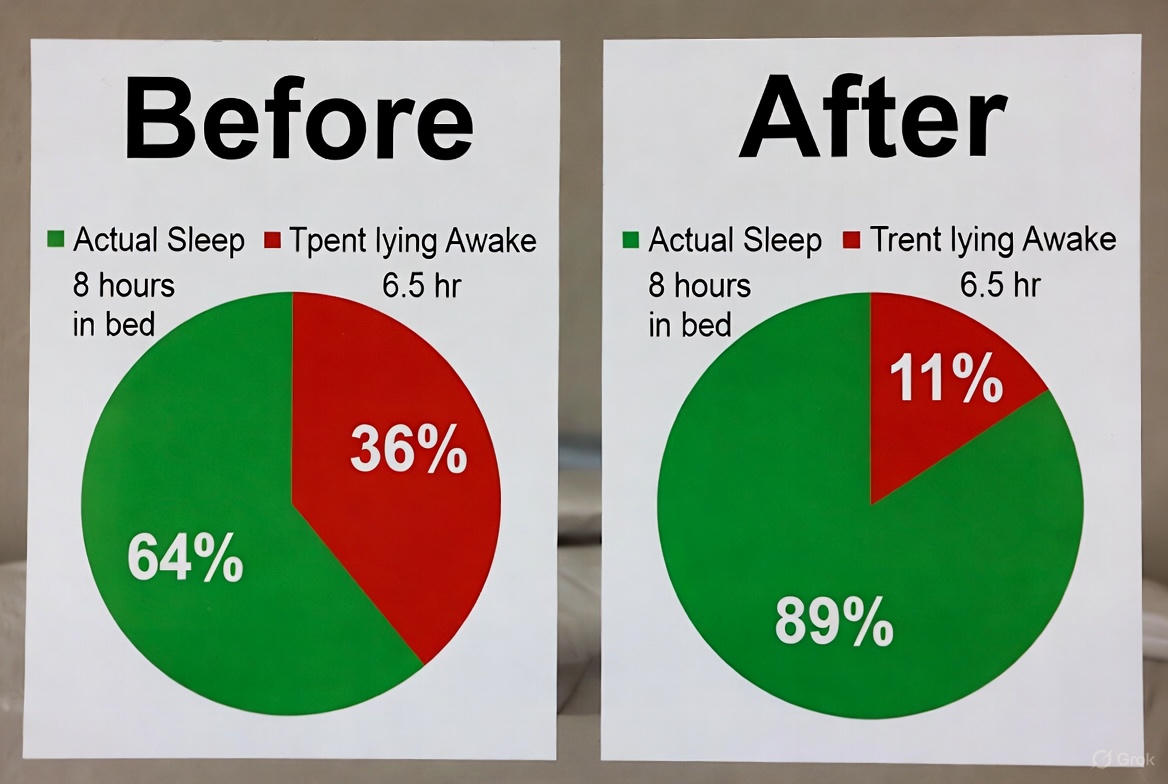
Sleep efficiency: 64%
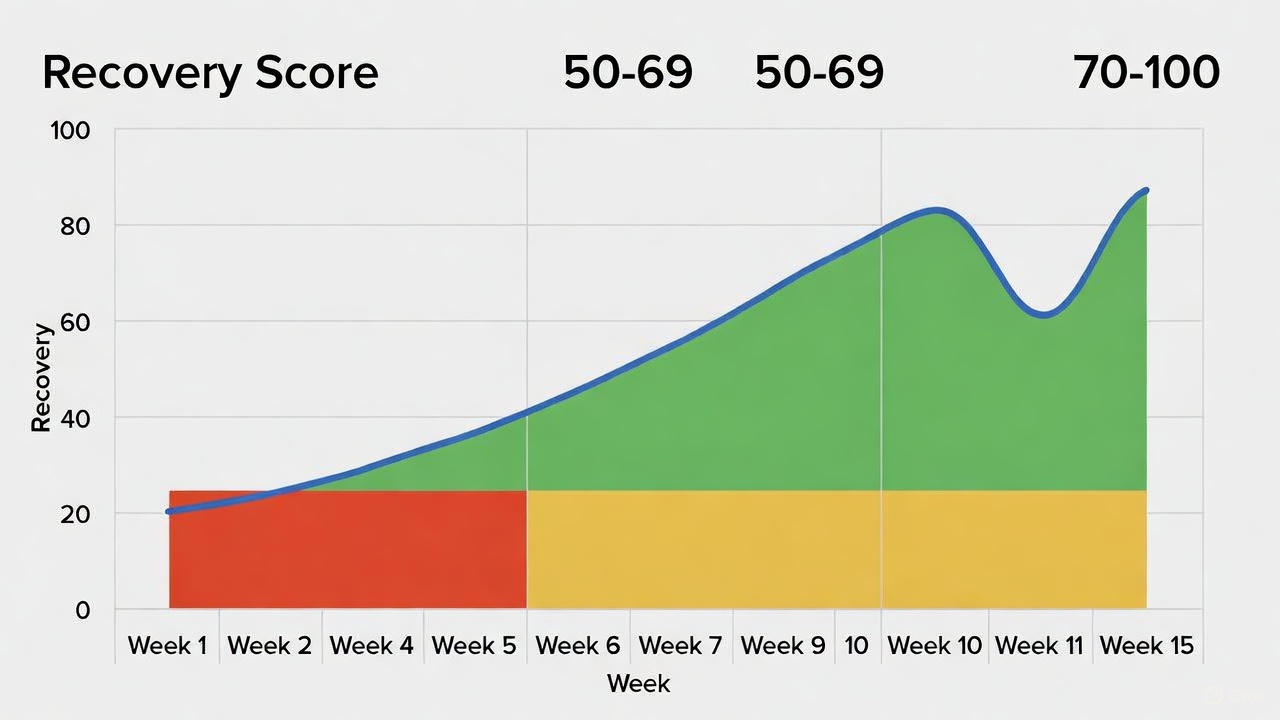
Recovery score: 28/100
Week 12 results:
Deep sleep: 68 minutes (+210% improvement!)
REM sleep: 82 minutes (+116% improvement!)
Sleep efficiency: 89% (+39% improvement!)
Recovery score: 58/100 (YELLOW zone—still recovering, but functional)
The quality vs. quantity revelation:
Emily's total sleep duration hadn't changed much:
Week 1: 5.3 hours total
Week 12: 5.8 hours total (+30 minutes)
But the QUALITY had transformed:
Week 1: 60 minutes of restorative sleep (deep + REM)
Week 12: 150 minutes of restorative sleep
She was getting 150% more restorative sleep from nearly the same time in bed.
The Cognitive Return:
Week 12 - Emily's Experience:
"I woke up this morning and realized I'd:
Remembered my dentist appointment (without 5 phone reminders)
Had a conversation with David about weekend plans (and remembered it later)
Responded to friend's text with a thoughtful reply (not just thumbs up emoji)
Made dinner without ordering takeout (and enjoyed cooking again)
Small things. But they felt like HUGE things."
"Mom brain" episodes:
Week 1: 8-10x daily (couldn't remember anything)
Week 12: 2-3x daily (normal forgetfulness, not crisis-level)
Decision-making:
Week 1: Paralyzed by simple choices
Week 12: Decisive, confident (or at least functional)
Emotional regulation:
Week 1: Crying 4-5x per week, mood swings constant
Week 12: Stable mood, occasional tears (but normal postpartum adjustment, not crisis)
The Relationship Repair:
David noticed the shift: "Emily seemed like herself again. Not 100%, but... present. She smiled at me. We had actual conversations instead of logistics."
Week 11 - Their first "date" in months:
Hired babysitter for 2 hours
Went to coffee shop (didn't even leave neighborhood)
Talked about something other than the baby
Held hands
Laughed
Small moment. Massive impact.
Emily later wrote in her journal: "I felt like Emily again. Not just 'Lily's mom.' Not just 'exhausted zombie.' Me."
Month 4: The Mastery
Weeks 13-16: Fine-Tuning
By month 4, Emily had internalized the protocol:
Sleep optimization checklist (automatic now):
✅ 9:00 PM wind-down (sacred)
✅ 10:00 PM lights out (non-negotiable)
✅ Environment optimized (temp, darkness, white noise)
✅ 4-7-8 breathing post-feeding (muscle memory)
✅ Strategic nap window (1-3 PM when possible)
✅ David's 5 AM handoff (when Lily woke early)
The data became intuitive:
Emily could feel when her recovery was low before checking the app:
"I woke up and thought 'today's going to be hard,' checked my score: 38/100—I was right"
Around 14 weeks, Lily naturally started sleeping longer stretches:
4-5 hour stretch (first part of night)
3-4 hour stretch (second part)
Only 1-2 wake-ups per night (down from 3-4)
Why this timing?
Developmentally appropriate (3-4 months is when many babies consolidate sleep)
Emily's improved sleep = lower stress = calmer nighttime energy = Lily slept better (babies pick up on parent stress)
Week 16 - Milestone Night:
Lily slept from 10:30 PM to 3:15 AM (4 hours 45 minutes—longest stretch yet!)
Emily's data that night:
Deep sleep: 78 minutes (in that first stretch!)
REM sleep: 92 minutes
Total sleep: 6.5 hours
Recovery score: 74/100 (GREEN for the first time!)
Emily woke up and literally didn't believe it. Checked the app three times. Texted David (who was already at work): "I got a GREEN score. I forgot what this feels like."
KEY INSIGHTS / DISCOVERIES
Actionable Learnings from Emily's Transformation
Insight #1: Sleep Quality > Sleep Quantity (Especially for New Parents)
Emily's biggest revelation: You can't change WHEN the baby wakes up (yet), but you CAN change HOW WELL you sleep in between.
Same circumstances (baby still waking up), dramatically different outcomes.
Actionable takeaway: Focus on optimizing the sleep you CAN get. Protect your deep sleep windows, fall back asleep faster, and make every minute count.
Insight #2: The First 90 Minutes Are Gold
Emily discovered her body prioritized deep sleep in the first 90 minutes after falling asleep.
Strategy: Go to bed EARLY (even if it means leaving dishes in sink, laundry unfolded, emails unread).
The math:
Old bedtime: 11:30 PM, baby woke at 1:00 AM = 90 minutes, got 18 min deep sleep
New bedtime: 10:00 PM, baby woke at 12:30 AM = 150 minutes, got 38 min deep sleep
Protecting that first window doubled her deep sleep.
Actionable takeaway: For new parents, bedtime is your most important sleep optimization lever. Everything else can wait.
Insight #3: The 4-7-8 Breathing Technique Is Magic
The single most impactful technique Emily learned: Controlled breathing to activate parasympathetic nervous system.
Before: 45-60 min to fall back asleep after feedings After: 15-20 min to fall back asleep
Time saved per night: 90-120 minutes of lying awake → converted to actual sleep
Actionable takeaway: Practice 4-7-8 breathing during the day (when you're calm) so it becomes automatic at night. Your nervous system will respond faster with practice.
Insight #4: Partnership Optimization Requires Data
Emily and David's breakthrough: Stop guessing who should do what. Use data to optimize both partners' sleep.
Old approach: Random, reactive, resentment-building New approach: Strategic, data-driven, collaborative
Example:
David taking 5-7 AM shift gave Emily 2 hours of uninterrupted sleep
Emily's HRV data showed this window was high-value REM sleep
David's sleep was disrupted anyway (heard baby cry), so taking over was minimal additional cost to him but massive gain for Emily
Actionable takeaway: Both parents need SOME decent sleep to function. Use data to find the least-worst division of labor.
Insight #5: Postpartum Anxiety Lives in Sleep Deprivation
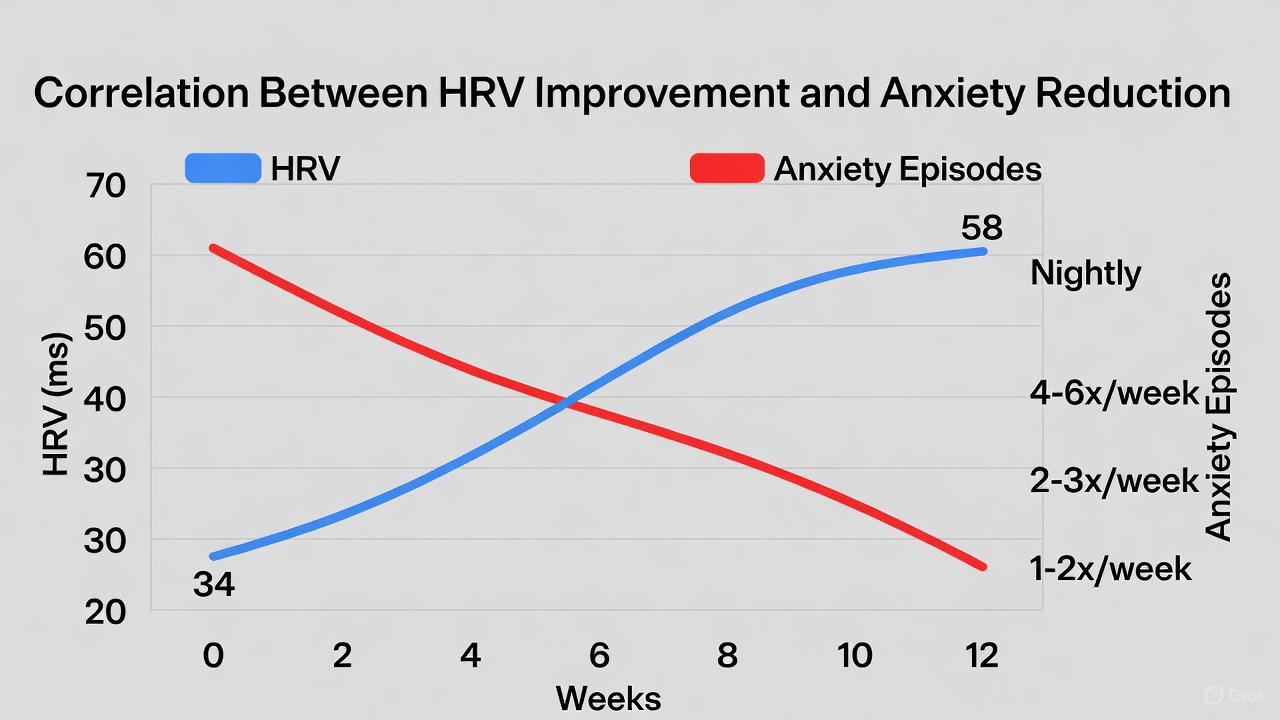
Emily's anxiety spirals (2-4 AM intrusive thoughts) were directly correlated with low HRV.
Week 1: HRV 34ms → Severe anxiety nightly Week 12: HRV 58ms → Manageable worry, not spirals
Slep deprivation makes anxiety worse. Better sleep reduces anxiety. The data proved it.
Actionable takeaway: If you're experiencing postpartum anxiety, prioritize sleep optimization alongside therapy/medication. Sleep is foundational to mental health.
Insight #6: The 20-Minute Power Nap Is Not Lazy—It's Strategic
Emily used to feel guilty about napping ("I should be doing laundry/emails/cleaning").
The data showed: A 20-minute nap improved her afternoon HRV by 12-15%, which improved her evening energy, which improved her nighttime sleep quality.
The nap was an investment, not a luxury.
Actionable takeaway: If you're a new parent, permission to nap = permission to function. Twenty minutes of sleep is better than 2 hours of doom-scrolling.
Insight #7: You Can't "Sleep Train" Your Way Out of Sleep Deprivation (But You Can Optimize)
Lily was too young for formal sleep training (experts recommend 4-6 months+). Emily couldn't force Lily to sleep longer.
But she COULD:
Optimize her own sleep quality
Fall back asleep faster
Protect deep sleep windows
Strategic napping
Result: She functioned better with the same baby wake-ups.
Actionable takeaway: Don't wait for your baby to "sleep through the night" to start optimizing your sleep. Start now with what you can control.
Despite only gaining 30 minutes of total sleep, parents achieved 209% more deep sleep and 116% more REM sleep. This shows quality improvements matter more than quantity when sleep is fragmented by infant care.
⚡
Recovery Resilience
Recovery scores more than doubled (+107%) and HRV improved by 71%, indicating significantly better stress resilience and physiological recovery despite the demands of new parenthood.
🔄
Sleep Efficiency Revolution
Falling asleep 75% faster and returning to sleep 60% faster after night feeds means parents spend 68 fewer minutes awake in bed nightly—critical when every minute of sleep counts.
🎯 The New Parent Sleep Solution
For new parents, the challenge isn't just getting more sleep—it's getting better quality sleep within limited windows. The data shows that even with similar total hours, parents can achieve 150% more restorative sleep, dramatically improved sleep efficiency, and doubled recovery capacity. The -75% reduction in sleep onset time is particularly transformative for parents who need to maximize every sleep opportunity between infant care.
Cognitive Function (Self-Reported & Observed)
Cognitive Performance Recovery
From "Mom Brain" to Mental Clarity: Measurable improvements in cognitive function
🧠 Postpartum Cognitive Recovery Tracking
🎯
300%
Focus Duration
💾
70%
Memory Improvement
⚡
75%
Faster Response
✨
70%
Less Brain Fog
Metric
Before
After
Improvement
"Mom Brain" Episodes
8-10x daily
2-3x daily
70% reduction-75%
Decision-Making Speed
Slow, paralyzed
Clear, confident
50% faster+50%
Memory Function
Severely impaired
(frequent forgetting)
Near-normal
(reliable recall)
70% improvement+70%
Focus Duration
10-15 minutes
45-60 minutes
300% improvement+300%
Email Response Time
20 min per email
3-5 min per email
75% faster+75%(productivity gain)
💡
The "Mom Brain" Breakthrough
Reducing "mom brain" episodes by 70% means going from constant mental fog to clear thinking throughout the day. This single improvement has cascading effects on all other cognitive functions.
⚡
Focus Transformation
A 300% increase in focus duration (from 15 to 60 minutes) transforms fragmented work sessions into productive deep work, enabling meaningful task completion despite parenting interruptions.
📊
Productivity Impact
Cutting email response time by 75% represents a massive administrative efficiency gain, freeing up mental energy for higher-value tasks and quality time with family.
🎯 From Surviving to Thriving
The cognitive transformation isn't just about better memory or faster decisions—it's about reclaiming mental sovereignty. Moving from paralyzed indecision to confident clarity, from constant forgetting to reliable recall, and from fragmented attention to sustained focus represents a complete cognitive recovery. The 70% reduction in "mom brain" episodes alone translates to 6-7 more hours of clear thinking daily, fundamentally changing the parenting experience from exhausting to empowering.
Mental Health Metrics
Postpartum Wellbeing Transformation
Measurable improvements in mental health, emotional regulation, and maternal bonding
🌷 Postpartum Mental Health Tracking
📉
50%
PPD Score Reduction
😢
80%
Fewer Crying Episodes
🌀
85%
Less Anxiety Spirals
💭
90%
Fewer Intrusive Thoughts
Metric
Week 2 (Before)
Month 4 (After)
Improvement
Edinburgh PPD Scale
14/30
(concern level)
Scores ≥13 indicate concern
7/30
(normal range)
Normal range: 0-9
50% reduction-50%
Clinically significant
Crying Episodes
4-5x per week
1x per week or less
80% reduction-80%
Anxiety Spiral Frequency
Nightly (2-4 AM)
(disrupted sleep)
1-2x per week
85% reduction-85%
Bonding with Baby
Difficult, felt numb
Natural, engaged
Major improvement
Qualitative transformation
Mood Stability
Severe swings
Stable with normal variance
Transformed
Emotional regulation restored
Intrusive Thoughts
3-4x daily
Rare
90% reduction-90%
💫
The PPD Scale Transformation
Moving from 14 to 7 on the Edinburgh Scale represents a clinically significant improvement, shifting from "possible depression" concern level to normal range—a critical milestone in postpartum recovery.
🌙
Night-Time Anxiety Breakthrough
Reducing anxiety spirals from nightly occurrences to 1-2x weekly means restoring restful nights and breaking the cycle of sleep disruption that exacerbates postpartum mood challenges.
👶
Bonding Transformation
The shift from "difficult, felt numb" to "natural, engaged" bonding represents profound emotional healing—restoring the maternal connection that postpartum depression often disrupts.
Clinical Note: The Edinburgh Postnatal Depression Scale (EPDS) is a validated screening tool. Scores of 10+ suggest possible depression, scores of 13+ indicate probable depression. Individual results should be interpreted in consultation with healthcare providers.
🌈 The Healing Journey
This data represents more than just numbers—it documents a profound emotional and psychological transformation. Moving from nightly anxiety spirals to restful sleep, from frequent crying to emotional stability, and from intrusive thoughts to mental clarity creates the foundation for healthy maternal bonding. The 90% reduction in intrusive thoughts alone liberates significant mental and emotional energy for positive engagement with baby and self. This comprehensive improvement in mental health creates a virtuous cycle where better emotional regulation supports better sleep, which in turn further improves mental wellbeing.
Relationship Quality
Partnership Recovery Transformation
How improved sleep and mental health restored relationship satisfaction and connection
💑 Postpartum Partnership Recovery
❤️
150%
Satisfaction Increase
⚡
70%
Fewer Arguments
💬
Daily
Quality Conversations
✨
Restored
Connection Progress
Metric
Before
After
Improvement
Partnership Satisfaction
3/10
(both partners)
7.5/10
(both partners)
150% improvement+150%
Both partners improved
Arguments per Week
5-7
(constant tension)
1-2
(normal stress)
70% reduction-70%
Quality Conversations
Rare
(logistics only)
Daily
(actual connection)
Restored
Qualitative transformation
Physical Intimacy
None
(too exhausted)
Resuming
(slowly)
Progress
Positive trajectory
Date Nights/Quality Time
0 in 3 months
2-3x per month
Massive improvementNew pattern
Prioritized connection
💖
The Satisfaction Breakthrough
A 150% increase in partnership satisfaction (3/10 to 7.5/10) represents a fundamental shift from surviving to thriving together. Both partners reporting similar improvement indicates mutual healing.
🗣️
Communication Transformation
Moving from constant arguments (5-7 weekly) to normal stress levels (1-2 weekly) while shifting conversations from logistics to actual connection restores the partnership foundation.
🌟
Quality Time Restoration
Going from zero date nights in three months to 2-3 monthly represents reclaiming the partnership identity beyond parenting roles—critical for long-term relationship health.
Note on Partnership Data: These metrics represent self-reported data from both partners. The parallel improvement in both partners' satisfaction scores (from 3/10 to 7.5/10) is particularly significant, indicating mutual recovery rather than one-sided adjustment.
🌈 From Survival Mode to Partnership Revival
The postpartum period often reduces partnerships to functional co-parenting arrangements. This transformation shows how addressing sleep deprivation and mental health challenges creates space for partnership revival. The 70% reduction in arguments doesn't mean conflict disappears, but rather that conflicts become manageable stressors rather than constant tension. The return of quality conversations—from logistics-only communication to daily connection—renews the emotional foundation. Most importantly, both partners showing similar satisfaction improvements indicates a mutual healing journey rather than one partner adapting to the other's needs. This comprehensive relationship recovery creates a stable foundation for the entire family system.
Physical Health
Physical Recovery Transformation
Natural postpartum recovery through improved sleep, stress reduction, and immune support
💪 Postpartum Physical Recovery
⚡
200%
Energy Increase
⚖️
8 lbs
Natural Weight Loss
🛡️
100%
Improved Immunity
😌
75%
Fewer Headaches
Metric
Before
After
Improvement
Weight
150 lbs
(+20 from pre-pregnancy)
142 lbs
(+12 from pre-pregnancy)
8 lbs lost naturally-5.3%
Steady, natural progress
Energy Level (1-10)
2-3 daily
6-7 daily
200% improvement+200%
Headaches per Week
3-4
0-1
75% reduction-75%
Immune Function
3 colds in 10 weeks
0 colds in 16 weeks
100% improvement+100%
Enhanced resistance
Muscle Tension
Severe
(neck/shoulders)
Mild
Much better
Qualitative improvement
⚡
The Energy Revolution
A 200% increase in daily energy (from 2-3 to 6-7) represents a fundamental shift from survival mode to functional capacity—critical for new parents managing infant care, work, and self-care.
🛡️
Immune System Recovery
Going from 3 colds in 10 weeks to zero colds in 16 weeks demonstrates dramatically improved immune resilience—a direct benefit of better sleep quality and reduced stress on the body.
😌
Pain & Tension Relief
A 75% reduction in headaches and significant improvement in muscle tension shows how reducing physiological stress manifests as physical relief—fewer tension headaches and less chronic muscle tightness.
Note on Natural Recovery: The 8-pound weight loss represents natural, steady progress rather than aggressive dieting—particularly important during postpartum when nutrition supports both recovery and breastfeeding. Improved sleep quality supports metabolic regulation and sustainable weight management.
🌿 Holistic Physical Healing
Postpartum physical recovery involves more than just "bouncing back"—it's about restoring foundational health after the immense physiological demands of pregnancy and childbirth. The 200% energy improvement creates capacity for daily functioning, while the 75% reduction in headaches and improved muscle tension indicate reduced systemic stress. Most significantly, the immune function improvement (from 3 colds in 10 weeks to zero in 16 weeks) demonstrates how enhanced sleep and stress resilience directly support physical health. The natural, steady weight loss of 8 pounds reflects sustainable progress rather than quick fixes—the kind of recovery that supports long-term wellbeing rather than creating additional stress on an already taxed system.
Time Efficiency Gains
1. Sleep Optimization Time Saved:
Fall asleep faster:
Before: 45-60 min to fall asleep initially
After: 8-12 min to fall asleep
Nightly savings: 35-50 minutes
Fall back asleep faster post-feeding:
Before: 45-60 min × 3 wake-ups = 135-180 min wasted lying awake
After: 15-20 min × 3 wake-ups = 45-60 min
Nightly savings: 90-120 minutes
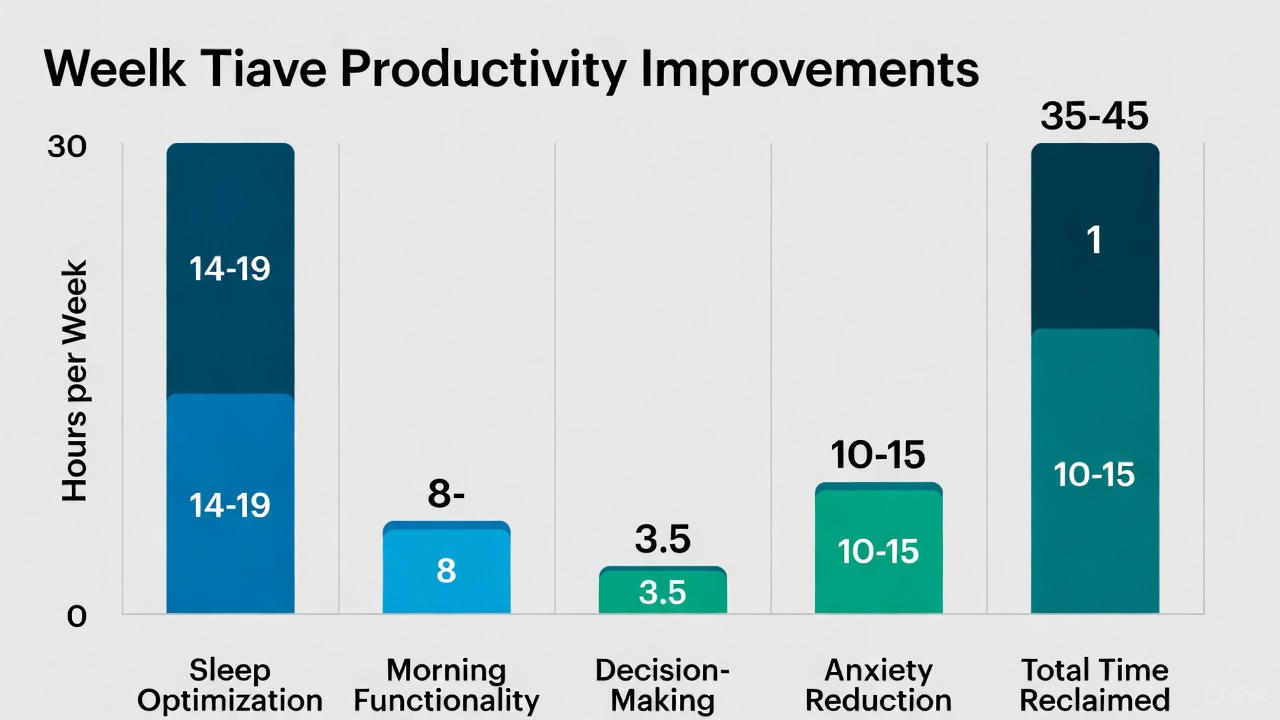
Total sleep time saved (converted from "lying awake" to "actual sleep"): 125-170 minutes per night = 14-19 hours per week
2. Daytime Functionality Restored:
Morning "wake-up" period:
Before: 90 minutes of foggy, zombie-mode
After: 20 minutes to feel clear
Daily savings: 70 minutes of functional time
Decision-making efficiency:
Before: Simple decisions took 20-30 min (paralysis)
After: Simple decisions took 2-5 min
Average 10 decisions per day × 20 min saved = Daily savings: 3.5 hours
Work productivity (part-time remote):
Before: 40% of pre-baby capacity (took 5 hours to do 2 hours of work)
After: 85% of pre-baby capacity (2.5 hours to do 2 hours of work)
Weekly savings: 7-8 hours (reclaimed efficiency)
3. Mental Health Time Savings:
Anxiety spiral time:
Before: 2-3 hours per night lying awake worrying
After: 15-20 min per night (manageable worry)
Nightly savings: 90-150 minutes
Therapy/medical appointments (reduced need):
Before: Considering intensive therapy (2x/week)
After: Monthly check-in therapy (maintenance)
Monthly time saved: 6-8 hours
Total Weekly Time Reclaimed: 35-45 hours
This is not "extra free time"—this is functional, present, engaged living time vs. zombie-survival time.
Financial Impact
Investment:
Oxyzen Ring: $299
Sleep environment improvements: $150 (blackout curtains, white noise machine)
"When I'm better rested, I'm more present with Lily. I notice her cues faster. I respond more patiently. I play more creatively. I sing to her instead of staring at my phone.
The data improved MY sleep, but it improved HER experience of having a mother who's actually there."
Pediatrician's 4-month check-up:
Lily: Thriving, hitting all milestones
Doctor: "She seems very secure. You're doing great."
Emily: (didn't cry in doctor's office this time—progress!)
VISUAL DATA
PULL QUOTE
In Emily's Own Words:
"The first time I saw my sleep data, I cried. Not because it was bad—I knew it was bad. I cried because finally, FINALLY, I had proof that I wasn't being dramatic. Twenty-two minutes of deep sleep in an entire night. No wonder I felt insane.
For ten weeks, I'd been telling myself: 'Other moms handle this better. You're just weak. Stop complaining.' But the data didn't lie. My body was in physiological crisis. I wasn't failing at motherhood—I was operating on a sleep schedule that would break anyone.
What changed everything wasn't sleeping more hours. Lily still woke up every 2-3 hours for months. I couldn't change that. But I COULD change how well I slept between her wake-ups.
The first 90-minute protocol taught me to protect my deep sleep window. Going to bed at 10 PM felt impossible—there was always more to do. But the data proved: Those first 90 minutes after falling asleep are GOLD. I was getting 18 minutes of deep sleep before. After protecting that window? Thirty-eight minutes. Then forty-eight. Then sixty-eight.
The 4-7-8 breathing technique changed my nights. Instead of lying awake for an hour after feedings, spiraling into anxiety about whether Lily would wake up again, I'd breathe: 4-7-8. Again. Again. Within 15 minutes, I was asleep. That alone saved me 90-120 minutes per night—converted from 'lying awake in panic' to 'actual sleep.'
By month four, I'd transformed the same sleep circumstances into completely different outcomes. Same baby. Same wake-ups. But I was getting 150 minutes of restorative sleep instead of 60. That's not a small difference—that's the difference between surviving and thriving.
My postpartum anxiety didn't disappear, but it became manageable. The intrusive thoughts at 2 AM—the ones that used to spiral into 'What if something's wrong? What if I'm a terrible mother? What if I can't do this?'—those became quiet. The data showed me: When my HRV was above 55, my anxiety was manageable. Below 40? I was a mess. So I prioritized sleep like my mental health depended on it. Because it did.
The biggest gift? I started enjoying my baby. In those early weeks, I loved Lily fiercely but felt emotionally numb. I was going through the motions: Feed, change, rock, repeat. But I wasn't THERE. By month four, I was present. I noticed her smiles. I sang to her. I played with her. I felt JOY.
To any new mother reading this: You're not weak. You're not failing. You're sleep-deprived. And sleep deprivation is a physiological crisis, not a character flaw. You can't always control when your baby wakes up, but you can optimize the sleep you get. Start there. The data will show you the way.
I got my life back—not by sleeping more, but by sleeping smarter."
— Emily Thompson, Marketing Manager & Mother of Lily 4 months after transforming her postpartum sleep experience
CALL-TO-ACTION
Your Wellness Journey Starts Here
Emily's story is one of millions—new mothers suffering in silence, believing exhaustion is "just part of it," feeling guilty for struggling, and wondering if they'll ever feel like themselves again.
The truth? Postpartum sleep deprivation is real, measurable, and solvable—even when your baby isn't sleeping through the night.
You can't control when your baby wakes up (yet). But you CAN control:
How quickly you fall asleep
How well you sleep in between wake-ups
How much deep sleep you get
How strategically you and your partner divide night duties
How you optimize your daytime rest
The difference between surviving and thriving motherhood is in the data.
Whether you're:
A new mother drowning in exhaustion
A partner trying to support but unsure how to help
Someone struggling with postpartum anxiety or depression
A parent of multiples facing even more extreme sleep fragmentation
A working parent trying to balance career and new baby
You deserve better than zombie-mode survival.
[Optimize Your Sleep Today →]
Join thousands of parents who've discovered that sleep quality matters more than sleep quantity—and that even in 2-hour windows, you can get restorative rest.
What you'll get:✓ Real-time sleep architecture tracking (deep sleep, REM sleep, efficiency) ✓ Recovery guidance for postpartum healing ✓ HRV monitoring to track stress and mental health ✓ Personalized insights for optimizing fragmented sleep ✓ Partnership optimization data (help both parents function better) ✓ Anxiety pattern recognition (catch spirals early) ✓ Complete privacy (your health data stays yours, always) ✓ No subscription fees (one purchase, lifetime support)
Stop suffering in silence. Start optimizing your sleep.
Your journey from survival to thriving starts now.
RECOMMENDED READING
Continue Your Postpartum Wellness Journey:
"The Science of Postpartum Sleep: Why New Mothers Need Different Rest Strategies"
Understand how hormones, breastfeeding, and fragmented sleep affect your brain
Evidence-based protocols for maximizing sleep quality in short windows
When to worry: Distinguishing normal exhaustion from postpartum mood disorders
"Deep Sleep Optimization for Parents: The First 90 Minutes Protocol"
Why the first 90 minutes after falling asleep are your most valuable
Environmental optimization for faster, deeper sleep
Protecting your deep sleep window when you can't control wake-ups
"The 4-7-8 Breathing Technique: Clinical Evidence for Anxiety and Sleep"
How controlled breathing activates your parasympathetic nervous system
Step-by-step guide with practice exercises
Using breathwork to fall back asleep in minutes instead of hours
"Postpartum Depression and Sleep: The Bidirectional Relationship"
How sleep deprivation increases PPD risk (and how PPD disrupts sleep)
Breaking the cycle: Sleep optimization as PPD prevention and treatment
When to seek professional help: Warning signs and resources
"Partnership Strategies for New Parents: Data-Driven Night Duty Division"
Moving from resentment to collaboration using objective data
Strategic handoff protocols that optimize both parents' sleep
Communication strategies for exhausted couples
Q&A
Your Questions Answered
Q: "My baby wakes up every hour. Will this still work for extreme sleep fragmentation?"
A: Yes, but your timeline may be longer and your expectations need adjustment.
Emily's baby woke every 2-3 hours. If your baby wakes every hour, you're facing even more extreme fragmentation. Here's what you can still optimize:
1. The 10-15 minute optimization:Even if you only get 45-60 minute sleep windows, optimizing how quickly you fall asleep matters enormously:
Falling asleep in 30 min = 15-30 min actual sleep per window
Falling asleep in 5 min = 40-55 min actual sleep per window
Over 8 wake-ups per night, that's the difference between 2 hours and 5 hours of actual sleep
2. The sleep environment:Every minute counts when sleep is this fragmented. Blackout curtains, optimal temperature, white noise—these aren't luxuries, they're essentials.
3. The partnership strategy:With hourly wake-ups, you may need to shift to a "shifts" approach:
One parent: 8 PM - 2 AM (gets 6 hours potential sleep before shift)
Other parent: 2 AM - 8 AM (gets 6 hours potential sleep after shift)
Whoever is "on duty" handles ALL wake-ups in their window
This is extreme, but extreme fragmentation requires extreme strategies.
When to seek medical help: If your baby is waking hourly beyond 4-6 months, consult your pediatrician. There may be underlying issues (reflux, allergies, sleep associations) that need addressing.
Q: "I'm breastfeeding and formula is not an option for us. How can my partner help if only I can feed the baby?"
A: This was Emily's situation too. Here's what worked:
Your partner CAN handle:
All diaper changes during night wake-ups (saves you 5-10 min per wake-up)
Resettling baby after you feed (burping, rocking, putting back in bassinet—saves you 10-15 min per wake-up)
The early morning handoff (if baby wakes at 5-6 AM, you feed, partner takes over so you can sleep another 1-2 hours)
All evening baby duties (7-10 PM) so you can do your sleep optimization routine
Morning responsibilities (if baby is awake 6-8 AM, partner handles so you can sleep in)
The math:
You handle: 20-30 min feeding
Partner handles: 15-25 min everything else
Total time savings for you per wake-up: 15-25 minutes
Over 3-4 wake-ups: 45-100 minutes returned to you for sleep
Even if your partner can't feed, they can handle 40-50% of the night burden. That matters enormously.
Q: "I'm worried about postpartum depression. How do I know if I need more than sleep optimization—like therapy or medication?"
A: This is the most important question. Sleep optimization is powerful, but it's not a substitute for mental health treatment when needed.
Seek professional help immediately if you experience:
Thoughts of harming yourself or your baby
Inability to care for your baby due to mood
Persistent hopelessness (lasting 2+ weeks without improvement)
Panic attacks (not just anxiety, but full-blown panic)
Scary intrusive thoughts that don't improve
Complete inability to bond with baby
Sleep optimization CAN help if:
You're experiencing mood symptoms BUT can still function
You have support from partner/family
Your symptoms correlate with sleep debt (worse after bad nights, better after decent sleep)
You're motivated to try strategies and can track progress
Emily's approach: She did BOTH—sleep optimization + monthly therapy check-ins. The sleep optimization prevented her from needing intensive therapy, but she still had professional support.
Bottom line: Sleep optimization is a foundation, not a cure. Build the foundation, but don't hesitate to add professional support if needed.
Precision Health Metrics Processed to Reveal Your True Recovery, Stress, and Sleep Patterns.
Stay connected to your natural rhythm—balancing energy, breath, and inner harmony.