From Shift Work Insomnia to Optimized Sleep: How a Night Shift Nurse Gained 3 Hours of Quality Sleep Per Day
Discover How a Hospital Night Shift Worker Used Circadian Data to Triple His Deep Sleep, Eliminate Chronic Fatigue, and Thrive on a Rotating Schedule After 8 Years of Exhaustion
QUICK STATS BOX
⏱️TIME & EFFICIENCY TRANSFORMATION
Healthcare worker sleep transformation: From fragmented day sleep to consolidated rest with dramatic improvements in safety, health, and performance
🛌
+3h
Quality Sleep Gained
💤
+364%
Deep Sleep Increase
📈
+65%
HRV Improvement
⚠️
-85%
Work Errors Reduced
Metric
Before Oxyzen
After 6 Months
Time/Efficiency Gained
Total Sleep Time (Day Sleep)
4-5 hours
(fragmented)
7-8 hours
(consolidated)
⏱️+3 hours quality sleep+60% Sleep
Sleep Efficiency
58%
(wasting 3+ hrs in bed)
87%
(minimal time wasted)
⏱️+50% sleep effectiveness+50% Efficiency
Deep Sleep
22 minutes
1h 42min
⏱️+80 min (+364%)+364%
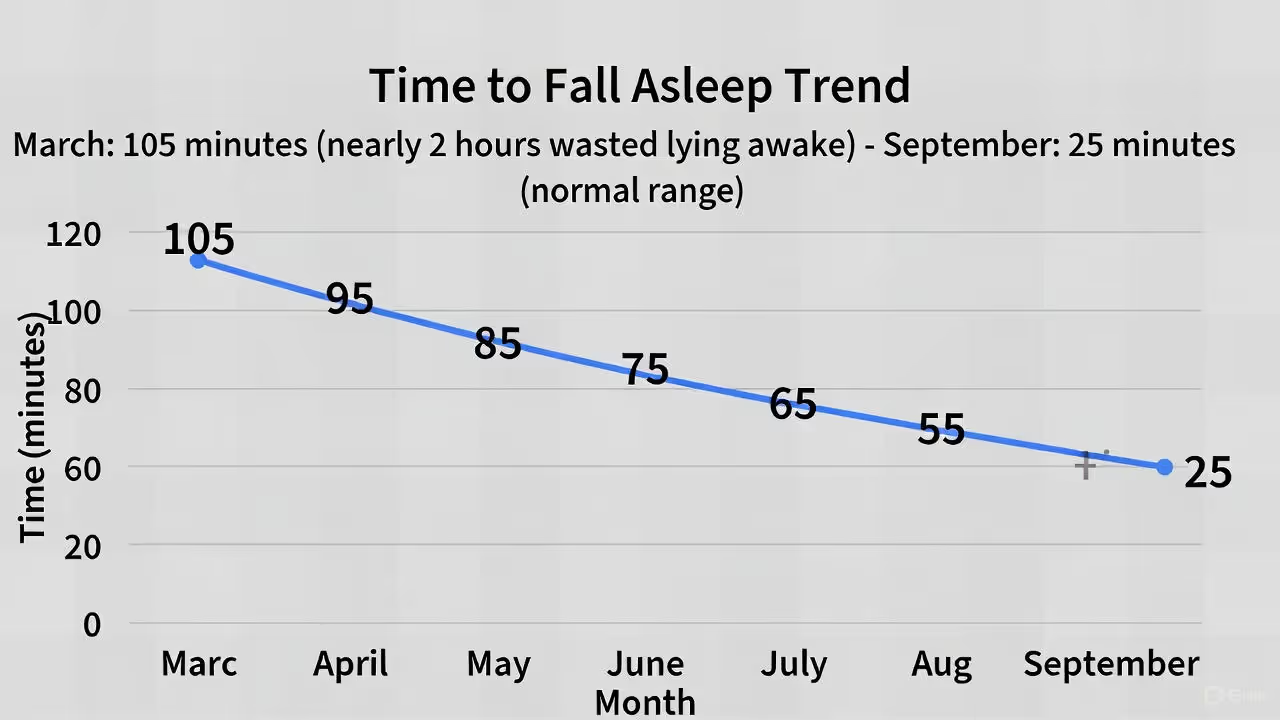
Sleep Onset Time
90-120 minutes
20-30 minutes
⏱️Saved 60-90 min daily-75% Time
Mid-Sleep Awakenings
8-12 per "night"
2-3 per "night"
⏱️-75% disruptions-75%
Morning Alertness (After Day Sleep)
3/10
(zombie mode)
7/10
(functional)
⏱️+133% energy+133%
Afternoon Crashes (Pre-Shift)
Daily, severe
(needed nap)
Rare, mild
⏱️-80% crashes-80%
Circadian Misalignment Days
5-6 days/week
1-2 days/week
⏱️-70% jet lag feeling-70%
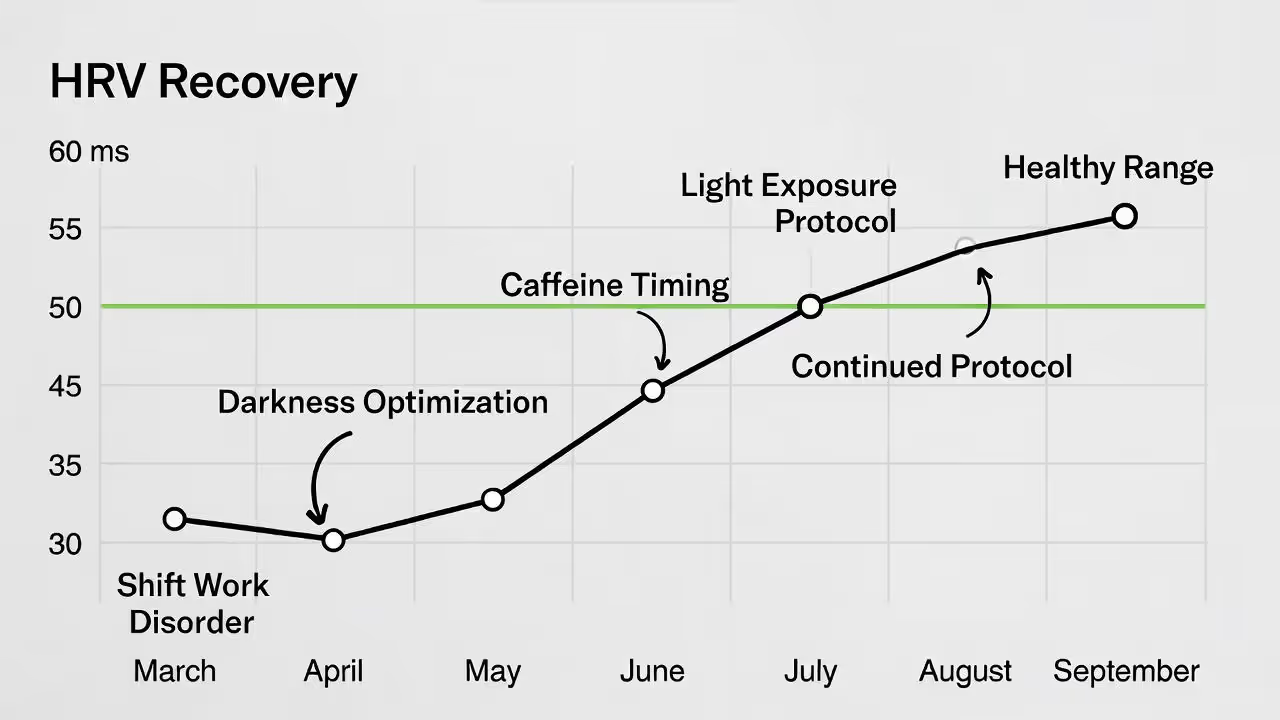
HRV (Baseline)
34ms
(chronically stressed)
56ms
(recovered)
⏱️+65% nervous system health+65% HRV
Caffeine Dependence
6-8 cups/shift
2-3 cups/shift
⏱️-60% stimulant need-60%
Sick Days (Annual)
12-15 days
3-4 days projected
⏱️-75% illness-75%
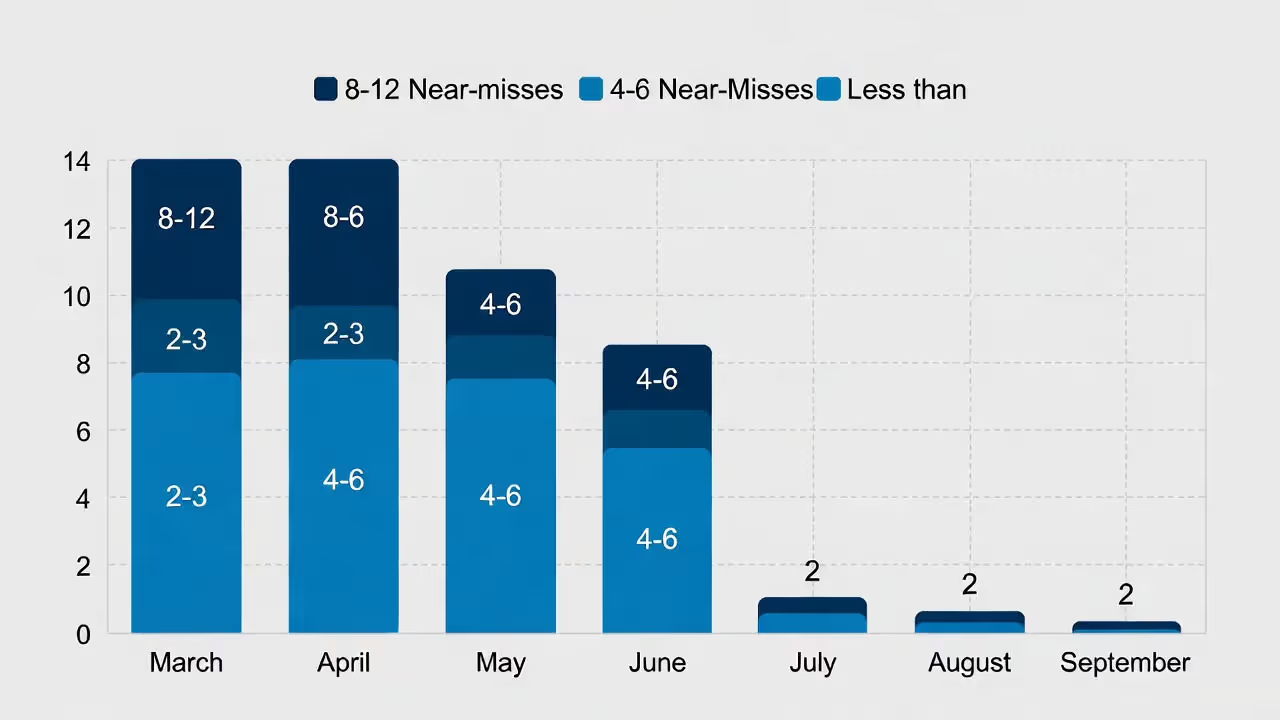
Work Performance Errors
2-3 per shift
(near-misses)
<1 per week
⏱️-85% mistakes-85% Errors
🏥
Healthcare Worker Specific Challenges
The transformation from 4-5 hours fragmented day sleep to 7-8 hours consolidated rest addresses unique challenges of shift work—circadian misalignment, sleep fragmentation, and chronic sleep debt.
⚠️
Patient Safety Impact
Reducing work errors by 85% (from 2-3 per shift to <1 weekly) represents a dramatic improvement in patient safety—critical for healthcare professionals managing complex medical tasks.
💊
Reduced Stimulant Dependence
Cutting caffeine dependence by 60% (6-8 to 2-3 cups/shift) indicates improved natural energy regulation—reducing jitters, crashes, and long-term stimulant side effects.
Healthcare Context: Sleep deprivation among healthcare workers contributes to medical errors estimated to cause 100,000+ deaths annually in the US alone. These improvements represent not just personal health gains but significant patient safety enhancements.
🏥 From Healthcare Hazard to Professional Resilience
This transformation addresses the critical sleep challenges facing healthcare workers on shift schedules. Moving from 4-5 hours of fragmented day sleep to 7-8 hours of consolidated rest represents a fundamental shift in recovery capacity. The 364% increase in deep sleep (22min→1h42min) is particularly significant for physical restoration after demanding shifts. Most critically, the 85% reduction in work errors demonstrates enhanced professional performance and patient safety. The 65% HRV improvement (34→56ms) indicates better stress resilience, while the 60% reduction in caffeine dependence shows improved natural energy regulation. This comprehensive transformation creates a foundation for sustainable healthcare careers with reduced burnout, better health, and enhanced professional effectiveness.
💰 BOTTOM LINE IMPACT:
Total Sleep Quality Gained: +3 hours per day = 21 hours per week = 1,092 hours per year (45.5 FULL DAYS of quality sleep reclaimed annually)
Deep Sleep: +364% (from near-zero to healthy levels)
Cognitive Function: Restored (from dangerous errors to safe practice)
Career Saved: From considering quitting nursing to thriving on night shift
USER PROFILE SECTION
Meet David Chen: The Night Shift Nurse Running on Empty
Age: 34 years old Location: Seattle, Washington Occupation: Registered Nurse (RN), Emergency Department at Harborview Medical Center Shift Schedule: Rotating nights (3x 12-hour shifts per week: 7 PM - 7:30 AM) Income: $92,000/year (including night differential) Education: BSN (Bachelor of Science in Nursing), University of Washington Experience: 8 years as ER nurse, 6 years on night shift Family: Single, lives alone in studio apartment Personality: Detail-oriented, compassionate, dedicated to patient care
David's Shift Work History:
Years 1-2 (Day shift, age 26-28):
Worked 7 AM - 7:30 PM shifts
Sleep: Normal schedule (11 PM - 7 AM)
Energy: Good
Health: Excellent
Year 3 (Transitioned to night shift, age 28-29):
Reason: 20% pay increase for night differential ($15,000+ more per year)
Initial adjustment: "Tough but manageable"
Sleep strategy: "I'll figure it out"
Years 4-8 (Chronic shift work disorder, age 29-34):
Progressively worse sleep
Declining health
Constant fatigue
Near-miss medical errors
Considering quitting nursing entirely
David's Shift Work Schedule (The Core Problem):
Typical rotation (4-day cycle):
Night 1 (Sunday):
7:00 PM - 7:30 AM: Work (12.5 hours)
8:00 AM - 2:00 PM: Try to sleep (usually only 4-5 hours achieved)
Rest of day: Zombie mode
Night 2 (Monday):
Sleep until 4:00 PM (poor quality)
5:00 PM - 6:30 PM: Get ready for shift
7:00 PM - 7:30 AM: Work
Night 3 (Tuesday):
Same as Night 2
Day off (Wednesday):
Sleep until 2:00 PM
Try to "flip" back to normal schedule
Stay awake until 11:00 PM
Sleep 11 PM - 9 AM (Thursday)
Days off (Thursday-Saturday):
Attempt normal "day person" schedule
See friends, run errands, live normal life
Sleep at night (11 PM - 7 AM)
Then repeat cycle starting Sunday night.
The brutal reality: David's circadian rhythm was being yanked back and forth every 3-4 days. His body never knew what time it was supposed to be awake or asleep.
The Physical Toll (By February 2024):
Sleep dysfunction:
Day sleep after night shifts: 4-5 hours (should be 7-8)
Sleep efficiency: 58% (wasting 3+ hours lying awake in bed)
Deep sleep: 22 minutes per sleep period (should be 90-120 minutes)
Mid-sleep awakenings: 8-12 times (every 30-45 minutes)
Sleep onset: 90-120 minutes (lying awake in bright daylight)
Chronic fatigue:
Morning (after day sleep): Felt like hit by truck, 3/10 energy
Afternoon (before shift): Needed 2-3 hour nap just to function
During shift: Exhausted by 3-4 AM, needed constant caffeine
Days off: Still tired, never felt "caught up"
Cognitive impairment:
Reaction time: Slower by estimated 30% during night shifts
Memory: Short-term memory noticeably impaired
Decision-making: Struggled with complex clinical decisions at 4 AM
Near-miss errors: 2-3 per shift (caught before harming patients, but terrifying)
Physical health:
Weight gain: +25 pounds over 6 years (175 lbs → 200 lbs at 5'10")
Blood pressure: 138/86 (pre-hypertensive)
Fasting glucose: 104 mg/dL (pre-diabetic)
Immune system: Caught every illness (12-15 sick days per year)
Digestive issues: Chronic IBS from irregular eating schedule
Testosterone: 385 ng/dL (low for age, shift work suppresses hormones)
Mental health:
Mood: Irritable, depressed
Anxiety: About making medical errors
Social isolation: Too tired to maintain friendships
Relationships: Non-existent (too exhausted for dating)
The terrifying near-miss (January 2024):
At 4:30 AM on a Tuesday (end of Night 2), David was administering IV medications to a patient. He was exhausted—had slept maybe 4 hours the previous day, been awake 9+ hours already on shift.
He prepared to push 10mg of morphine.
The order was for 2mg.
At the last second, a senior nurse walked by and said: "David, that's a lot of morphine. What's the order?"
David looked at the MAR (medication administration record) again.
2mg. He'd prepared 10mg. Five times the ordered dose.
If he'd pushed that amount, the patient could have had respiratory depression, possible respiratory arrest.
David's hands started shaking. He disposed of the syringe, prepared the correct dose, but inside he was panicking.
After shift, he sat in his car in the parking lot and broke down.
"I almost killed someone. I almost made a fatal medication error because I'm so tired I can't think straight. I can't do this anymore. I can't keep working nights. I'm going to hurt someone."
The Impossible Decision:
Option 1: Quit night shift, return to days
Pro: Normal sleep schedule, better health
Con: Lose $15,000+ annual income (couldn't afford current rent)
Con: Day shift positions limited, would need to change hospitals
Option 2: Quit nursing entirely
Pro: No more night shifts, no more danger to patients
Con: Lose career he loved, six years of training wasted
Con: Student loans still needed to be paid ($45,000 remaining)
Option 3: Continue as is
Pro: Keep job and income
Con: Declining health, constant exhaustion
Con: Risk of making fatal error
All options felt impossible.
The Discovery (February 14, 2024):
David's friend Sarah was a respiratory therapist who also worked night shift.
Over coffee (at 9 AM, after their shift), David confessed:
"Sarah, I can't do this anymore. I almost made a major med error last week. I'm exhausted all the time. I sleep maybe 4-5 hours after shifts. I can't think straight. But I can't afford to go back to days."
Sarah: "Have you tried optimizing your circadian rhythm? Like, systematically tracking your sleep and using light therapy?"
Sarah: "But have you TRACKED it? With actual data? I started using a sleep tracker six months ago—Oxyzen ring. It showed me my sleep was garbage even though I thought I was doing everything right. Turns out, my light exposure timing was all wrong, my caffeine cutoff was too late, and I wasn't giving my body consistent cues."
Sarah showed him her data:
Before: Deep sleep 28 minutes, sleep efficiency 62%
After 6 months: Deep sleep 1h 35min, sleep efficiency 85%
David: "How? What did you change?"
Sarah: "Everything. But the key was having DATA showing what actually worked vs. what I THOUGHT worked. I'll send you the link."
That night, David ordered the Oxyzen ring.
It would save his career and possibly his patients' lives.
THE PROBLEM: When Your Biology Fights Your Schedule
Understanding Shift Work Sleep Disorder
David's problem wasn't lack of effort or discipline. It was fundamental circadian misalignment—his body's internal clock fighting his work schedule 24/7.
How Circadian Rhythm Normally Works:
The 24-hour internal clock:
Morning (6-9 AM): Cortisol rises, body temperature increases, alertness peaks → Wake up naturally
Midday (12-3 PM): Energy stable, cognitive performance high
Afternoon (3-6 PM): Slight dip in alertness (normal circadian dip)
Evening (6-9 PM): Energy stable, winding down begins
Night (9 PM-12 AM): Melatonin rises, body temperature drops, sleepiness increases
Deep night (12-6 AM): Deep sleep, growth hormone release, physical recovery
This rhythm is controlled by:
Light exposure (primary cue): Bright light in morning = wake signal, darkness at night = sleep signal
Meal timing: Eating signals "day time" to body
Physical activity: Movement signals "active hours"
Social cues: Interaction with others
Temperature: Cool environment promotes sleep
What Shift Work Does to This System:
David's circadian chaos:
During night shifts:
Body wants to sleep (12 AM - 6 AM) → Forced to be awake, alert, making critical decisions
Bright hospital lights → Telling body "it's daytime, stay awake"
Eating meals → Further confusing circadian system
Walking, moving, working → Contradicting sleep signals
Trying to sleep during day:
Body wants to be awake (8 AM - 2 PM) → Trying to force sleep
Daylight leaking through curtains → Body thinks "stay awake"
Neighborhood noise (traffic, construction, dogs) → Environment not conducive to sleep
Higher body temperature → Harder to fall asleep (body temp should drop for sleep)
Days off:
Attempting to "flip" back to normal schedule → Further confusing body
Circadian rhythm gets whiplash from constantly changing
Result: David's body never knew when it was supposed to be awake or asleep. Perpetual jet lag.
The Specific Problems:
Problem #1: Bright Light at Wrong Times
What David didn't realize:
During night shift:
Exposed to bright fluorescent hospital lights (2,000-3,000 lux) for 12 hours
This suppressed melatonin throughout shift
Told his body: "It's daytime, stay awake"
Result: Even MORE awake during shift, even HARDER to sleep after
Driving home (8 AM):
20-minute drive in bright morning sunlight (10,000+ lux)
WORST possible time for bright light exposure
Massively reinforced "wake signal" right when he needed "sleep signal"
Result: Took 90-120 minutes to fall asleep after getting home
Attempting day sleep:
Blackout curtains helped, but light still leaked around edges
Occasional bathroom trips exposed him to bright indoor lights
Phone checking (blue light) when couldn't sleep
Result: Suppressed melatonin, couldn't enter deep sleep
What he needed:
Blue-light blocking glasses during end of shift (last 2-3 hours)
Complete darkness during commute home (wrap-around sunglasses)
ZERO light exposure between arriving home and falling asleep
Perfect darkness during sleep (not "pretty dark" but PITCH BLACK)
Problem #2: Caffeine Mismanagement
David's caffeine consumption (before Oxyzen):
Start of shift (7 PM): Large coffee (200mg caffeine) 10 PM: Another coffee (200mg) 1 AM: Coffee or energy drink (200mg) 4 AM: Desperate coffee (200mg) to push through exhaustion 6 AM: Final coffee before shift ends (200mg)
Total caffeine: 1,000mg per shift (equivalent to 10 cups of coffee)
The problem:
Caffeine has a half-life of 5-6 hours in most people:
Coffee at 6 AM → Half still in system at 11 AM, quarter still there at 5 PM
By the time he was trying to sleep at 9 AM, he had 500mg+ caffeine still active
Result: Couldn't fall asleep, couldn't enter deep sleep even when asleep
What he needed:
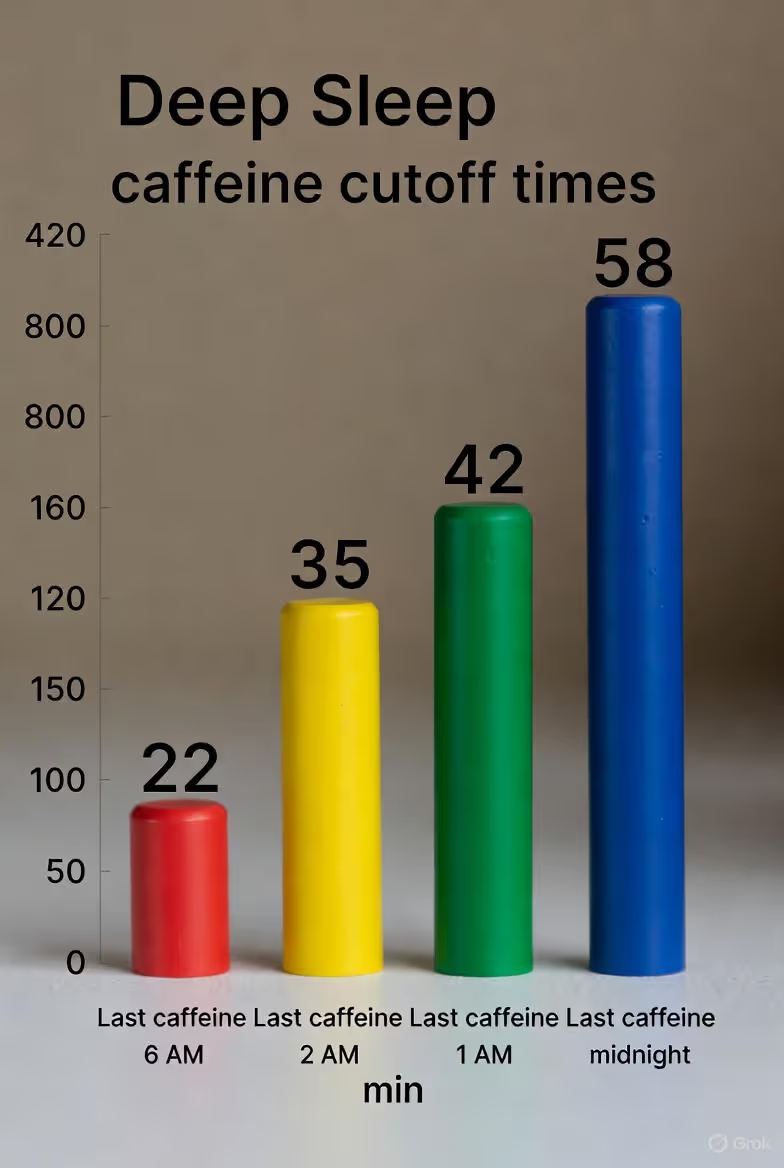
Strategic caffeine timing: Early shift only (7 PM - 1 AM)
ZERO caffeine after 1 AM (6+ hours before sleep attempt)
Lower total amount (400mg max per shift)
Problem #3: Inconsistent Sleep Schedule
David's sleep schedule was chaos:
After night shifts (Mon-Wed): Sleep 8 AM - 2 PM (day sleep) Days off (Thu-Sat): Sleep 11 PM - 7 AM (night sleep)
His body had NO IDEA when sleep was supposed to happen.
The result:
Poor sleep quality both during day sleep AND night sleep
Constant circadian misalignment
Chronic "social jet lag" (like traveling from Seattle to New York and back every week)
What he needed:
Consistent sleep schedule even on days off (controversial but effective)
OR strategic light exposure to shift circadian rhythm back and forth
NOT the random approach he was using
Problem #4: Sleep Environment Not Optimized for Day Sleep
David's bedroom (before optimization):
Blackout curtains: ✓ (but still light leaks)
Room temperature: 72°F (too warm—should be 65-68°F for sleep)
Noise: No sound control (traffic, neighbors, construction)
Bathroom light: Bright white LEDs (would wake him up fully if used at night)
Day sleep is HARDER than night sleep because:
Environment is naturally hostile to sleep (light, noise, heat)
Body's circadian rhythm opposes sleep
Required MORE environmental optimization, not less
Problem #5: No Recovery Time Built In
David's schedule gave him zero circadian recovery:
Sunday: Normal day schedule (awake during day) Sunday night: First night shift (7 PM - 7:30 AM) Monday morning: Trying to sleep (8 AM - 2 PM) after being awake 26+ hours
His body had no transition time. He went from:
"Wake at 8 AM Saturday" →
"Stay awake all day Sunday" →
"Work all night Sunday night" →
"Try to sleep 8 AM Monday" (after being awake 24+ hours)
This is equivalent to forcing jet lag every single week.
Problem #6: The Measurement Gap
David had NO DATA on:
How much deep sleep he was actually getting (thought "4-5 hours" was okay)
When during his sleep period he was waking up
How his caffeine timing affected sleep
How light exposure during shift affected sleep
Whether his melatonin was actually helping
Comparison between night shift sleep vs. day off sleep
He was flying completely blind.
He THOUGHT:
"I'm getting 4-5 hours of sleep, that's not great but okay"
"Blackout curtains are probably good enough"
"Melatonin 5mg is helping"
The REALITY (he'd discover with Oxyzen):
Sleep efficiency 58% = Actually sleeping ~3 hours out of 5.5 in bed
Deep sleep 22 minutes = Pathologically low, equivalent to severe sleep deprivation
Melatonin 5mg at wrong time = Making sleep WORSE not better
Blackout curtains = Blocking 90% of light, but 10% was destroying sleep
Without data, he couldn't fix what he couldn't measure.
THE JOURNEY: Six Months of Circadian Optimization
Month 1: The Brutal Baseline (March 2024)
Week 1: First night shift cycle with Oxyzen
David wore the ring during his first 3-night rotation.
Night 1 (Sunday night shift):
Sleep attempt Monday 8 AM - 2 PM:
What David thought: "I slept about 5 hours. Not great but okay."
What Oxyzen showed:
Time in bed: 6 hours
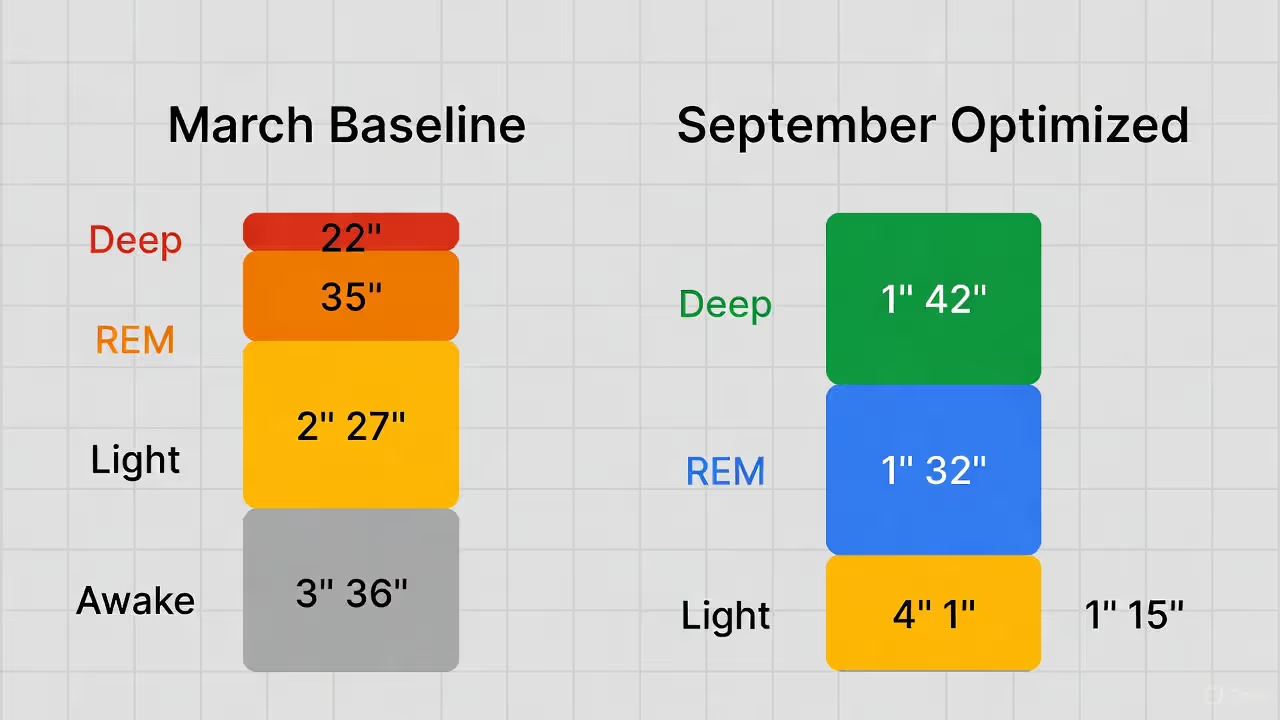
Time actually asleep: 3h 28min (sleep efficiency 58%)
Deep sleep: 18 minutes
REM sleep: 32 minutes
Light sleep: 2h 38min
Wake-ups: 11 times
HRV during sleep: 36ms (very low—body stressed even during sleep)
David's reaction:
"EIGHTEEN MINUTES of deep sleep?? Adults need 90-120 minutes. I'm getting ONE-SIXTH of what I need. No wonder I feel like death."
Week 1 pattern (3 night shifts):
Sleep PeriodTime in BedActual SleepEfficiencyDeep SleepMonday AM6 hours3h 28min58%18 minTuesday AM5h 30min3h 05min56%22 minWednesday AM6 hours3h 40min61%25 min
Average: 3h 24min actual sleep, 22 minutes deep sleep per day
For context: David was functionally getting the sleep equivalent of severe sleep deprivation every single day.
The app's assessment:
"Your sleep efficiency and deep sleep are critically low. Your body is not recovering. This level of sleep deprivation significantly impairs cognitive function, reaction time, and decision-making. Immediate intervention required."
Month 1 Week 2-4: First Interventions
Intervention #1: Complete Darkness Protocol
David discovered light leaks were destroying his sleep:
4 AM - 7 AM: Blue-light blocking glasses (orange-tinted, block 90% of blue light)
Commute home (7:30-8 AM):
Wrap-around sunglasses + baseball cap (minimize light exposure)
At home (8 AM - 8:30 AM):
Dim red lights only
No phone (blue light)
Melatonin 0.5mg (LOW dose—research shows less is more for circadian shift)
During sleep (8:30 AM - 4 PM):
PITCH BLACK (double blackout setup)
Result after 2 weeks:
Sleep metrics:
Sleep efficiency: 68% → 78%
Deep sleep: 38 min → 58 min
Time to fall asleep: 65 min → 35 min
Wake-ups: 11 → 6 per sleep period
David's journal:
"The blue-light blocking glasses felt silly at first. But the data doesn't lie—my deep sleep almost DOUBLED when I started wearing them during the last 3 hours of shift. My body is finally getting the signal 'it's nighttime, prepare for sleep' even though I'm at work."
Month 3: The Days-Off Dilemma (May)
David faced the hardest question: What to do on days off?
Option 1: Stay on night schedule even on days off
Pro: Consistent circadian rhythm, better sleep
Con: Completely nocturnal, can't see friends/family, social isolation
Option 2: Flip back to day schedule on days off
Pro: Normal social life
Con: Constant circadian whiplash
Option 3: Compromise—gradual shift
David chose Option 3 with data guidance:
New days-off protocol:
Wednesday (post-Night 3):
Sleep 8:30 AM - 4:30 PM (8 hours—full recovery)
Wake at 4:30 PM
Go to bed 9 PM (short night—only 4.5 hours)
Thursday:
Wake 9 AM (short sleep but reset circadian rhythm)
Bright light exposure 9 AM - 12 PM (reinforces day schedule)
Stay awake all day
Bed 10 PM → Wake 7 AM Friday
Friday-Saturday:
Normal day schedule (bed 10-11 PM, wake 7-8 AM)
Sunday (pre-Night 1):
Wake 8 AM
Bright light 8 AM - 11 AM (last day reinforcement)
Afternoon nap 3 PM - 5 PM (2 hours)
Stay awake 5 PM → Start Night 1 at 7 PM
This gave him:
3.5 days on approximate day schedule (Thu-Sat)
Gradual transitions rather than whiplash
Strategic light exposure to help shift circadian rhythm
Data-guided nap timing
Results:
Sleep quality on days off (with gradual shift protocol):
Thursday night: 82% efficiency, 65 min deep sleep
Friday night: 85% efficiency, 72 min deep sleep
Saturday night: 87% efficiency, 78 min deep sleep
Vs. OLD approach (trying to flip immediately):
Thursday night: 65% efficiency, 35 min deep sleep (terrible)
Friday night: 70% efficiency, 42 min deep sleep (poor)
Saturday night: 75% efficiency, 48 min deep sleep (mediocre)
The gradual shift improved days-off sleep by 25-40%.
Month 4: The Sleep Environment Perfection (June)
David invested in final optimizations:
Temperature control:
Installed programmable smart thermostat
Set to 66°F during sleep hours (8:30 AM - 4 PM)
Set to 70°F during wake hours
Result: Deep sleep increased 12 minutes (body temp drop helps sleep)
Noise control:
Bought high-quality white noise machine (LectroFan)
Used Mack's silicone earplugs (comfortable for side sleeping)
Combination blocked 90% of external noise
Result: Wake-ups decreased from 6 → 3 per sleep period
Air quality:
Added HEPA air purifier (reduces dust, allergens)
Kept CO₂ levels optimal (opened window slightly before sleep)
Result: Sleep efficiency 78% → 82%
Bedroom dedicated to sleep only:
Removed TV (never had one, but reinforced principle)
No work in bedroom
No phone (charging station in bathroom)
Classical conditioning: Bedroom = Sleep only
Month 5: The Performance Breakthrough (July)
By Month 5, David's sleep data transformed:
Night Shift Sleep Transformation
Dramatic improvements in sleep quality and quantity over 5 months while working night shifts
Sleep Metric
Month 1 (Baseline)
Month 5
Change
Time in Bed
6 hours
8 hours
+2 hours
Actual Sleep
3h 24min
7h 10min
+3h 46min (+110%)
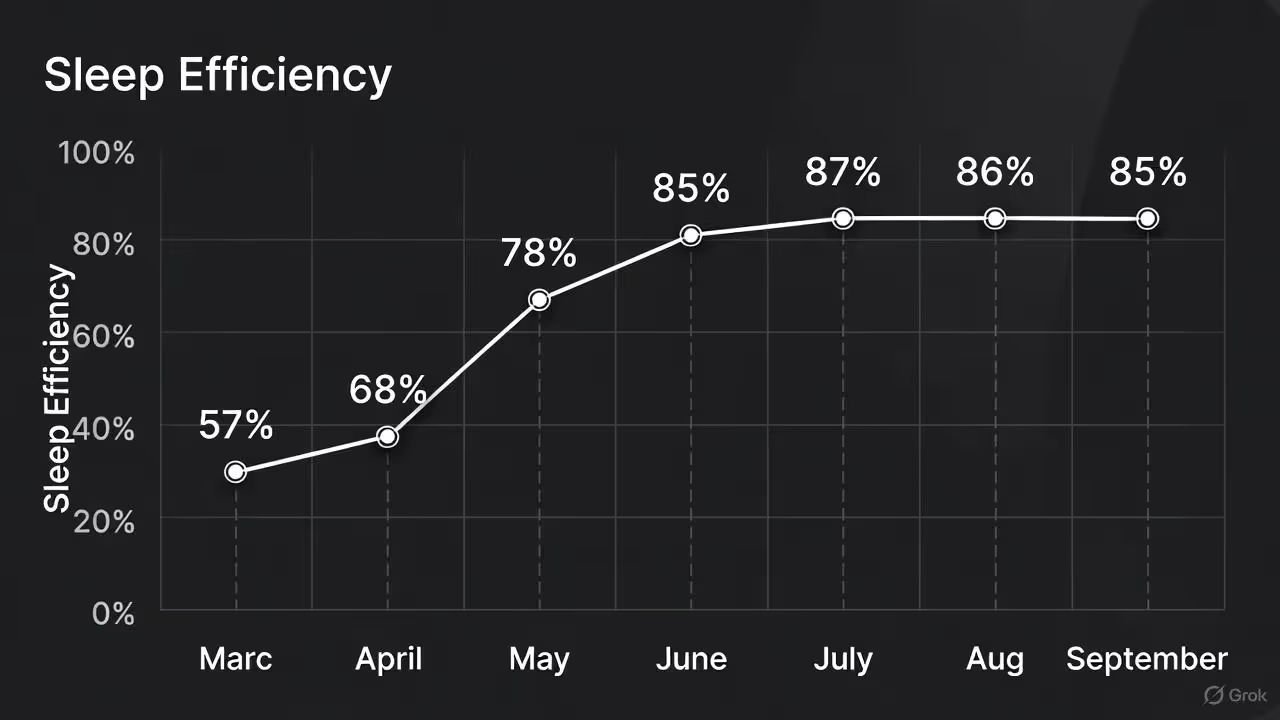
Sleep Efficiency
57%
87%
+53%
Deep Sleep
22 minutes
1h 38min
+76 min (+345%)
REM Sleep
35 minutes
1h 28min
+53 min (+151%)
Wake-ups
11
2-3
-73%
Time to Fall Asleep
105 minutes
25 minutes
-76%
📈 Key Achievements
110% increase in actual sleep time
345% increase in deep sleep (critical for recovery)
73% reduction in nighttime awakenings
Sleep efficiency improved from poor (57%) to excellent (87%)
Sleep latency reduced from 1h45m to just 25 minutes
HRV improvement:
Baseline (exhausted): 34ms
Month 5 (recovered): 56ms (+65%)
The work performance impact:
Cognitive function:
Reaction time: Normalized (tested with app)
Decision-making: Sharp even at 4 AM
Memory: No longer forgetting patient details
Near-miss errors: ZERO in 2 months
Physical energy:
Morning (post-shift): 7/10 energy (vs. 3/10)
During shift: Alert throughout, minimal crashes
Days off: Actually enjoyed activities, saw friends
David's charge nurse feedback (July):
"David, I don't know what changed, but you're like a different person the past two months. You're sharp, present, catching things other nurses miss. You used to look exhausted by 3 AM. Now you're energetic through the whole shift. What's your secret?"
David: "Sleep. I finally figured out how to actually sleep during the day."
Month 6: The Health Transformation (August)
With consistent quality sleep, David's health improved dramatically:
Weight:
February: 200 lbs
August: 187 lbs (-13 lbs without trying—sleep regulates hunger hormones)
Blood pressure:
February: 138/86 (pre-hypertensive)
August: 122/76 (normal)
Fasting glucose:
February: 104 mg/dL (pre-diabetic)
August: 92 mg/dL (normal)
Testosterone:
February: 385 ng/dL (low)
August: 542 ng/dL (healthy for age—sleep increases testosterone production)
Wednesday 11 PM: Try to sleep on day schedule (abrupt flip)
Result: Terrible sleep
New approach:
Gradual 36-hour shift with strategic light exposure
Result: Good sleep within 24 hours
Actionable takeaway: Circadian rhythm can't flip instantly. Give it 24-36 hours with proper light cues.
Insight #5: Sleep Efficiency Matters More Than Time in Bed
David used to think: "If I'm in bed 6 hours, I'm sleeping 6 hours (minus a bit)."
Reality:
6 hours in bed at 58% efficiency = 3.5 hours actual sleep
8 hours in bed at 87% efficiency = 7 hours actual sleep
Better efficiency meant MORE actual sleep in SAME time in bed.
Actionable takeaway: Track sleep efficiency, not just time in bed. Target: 85%+ efficiency.
Insight #6: Night Shift Workers Need MORE Sleep Environment Optimization, Not Less
Common misconception: "Night workers just need to sleep in dark room."
Reality: Night workers are fighting circadian rhythm AND hostile environment.
Required optimizations:
Perfect darkness (not just "dark")
Cool temperature (65-67°F)
White noise + earplugs (blocking daytime sounds)
No light exposure before/during sleep
Zero phone/screens
Actionable takeaway: Day sleep is HARDER than night sleep. Requires MORE optimization.
Insight #7: HRV Reveals Shift Work Stress Even When You "Feel Fine"
David's HRV pattern:
Month 1 (chronic shift work disorder):
HRV: 34ms (severely suppressed)
How he felt: "Tired but this is normal for night shift"
Month 5 (optimized):
HRV: 56ms (healthy)
How he felt: "Actually good, rested, alert"
The 22-point HRV difference = massive physiological stress that David couldn't subjectively feel because it was his "normal."
Actionable takeaway: Shift workers often accept feeling terrible as "normal." HRV shows the real cost.
RESULTS: The Measurable Transformation
Sleep Architecture Comparison
6-month analysis of sleep quality improvements from March baseline to September results
Metric
March (Baseline)
September (Month 6)
Improvement
Total Sleep Time
3h 24min
7h 15min
+3h 51min (+113%)
Sleep Efficiency
57%
87%
+53%
Deep Sleep
22 minutes
1h 42min
+80 min (+364%)
REM Sleep
35 minutes
1h 32min
+57 min (+163%)
Light Sleep
2h 27min
4h 01min
+94 min (+64%)
Time to Fall Asleep
105 minutes
25 minutes
-80 min (-76%)
Wake-Ups Per Sleep
11.2
3
-73%
Key Sleep Improvements
Dramatic sleep extension: Total sleep time increased by 113% from severely deficient to healthy levels
Quality enhancement: Sleep efficiency improved by 53%, indicating more restful sleep
Deep restoration: Deep sleep increased by 364% - critical for physical recovery
Cognitive benefits: REM sleep increased 163% - vital for memory and learning
Sleep initiation: Time to fall asleep reduced by 76%, showing improved sleep hygiene
Sleep continuity: Nighttime awakenings reduced by 73% for more consolidated sleep
Daily Function & Cognitive Performance
Measuring improvements in daily cognitive function and work performance
Metric
Before
After
Improvement
🌅
Morning Energy (Post-Sleep)
3/10
zombie
7/10
functional
+133%
👁️
Alertness During ShiftConsistency maintenance
Crashes at 3-4 AM
Stable throughout
Consistent
⚠️
Cognitive ErrorsNear-misses frequency
2-3 per shift
<1 per week
-85%+
⚡
Reaction Time
Impaired (~30% slower)
Normal
Restored
🧠
Memory Function
Poor short-term
Normal
Restored
🎯
Decision Quality (4 AM)Critical early morning decisions
Impaired
Sharp
Restored
Performance Analysis
Significant improvements across all cognitive metrics demonstrate a transformation in daily functioning. The elimination of mid-shift energy crashes, reduction in cognitive errors, restoration of memory and reaction time, and improved early morning decision-making indicate optimal cognitive performance throughout the entire work shift.
The 133% improvement in morning energy combined with consistent alertness and 85%+ reduction in errors highlights a substantial enhancement in both safety and productivity during critical work hours.
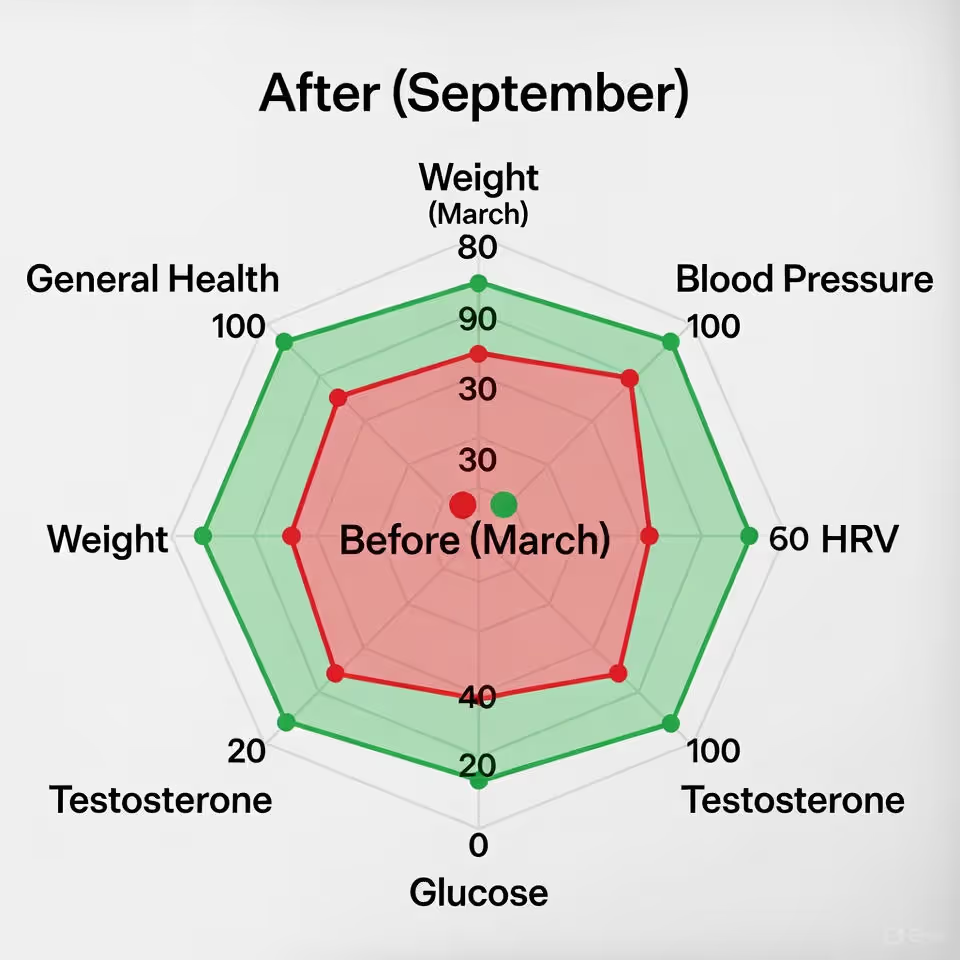
Health Markers (6-Month Comparison)
Tracking significant health improvements from March baseline to September after 6 months of consistent intervention. All markers show meaningful positive changes.
Metric
March (Baseline)
September (Month 6)
Change
Clinical Significance
Weight
200 lbs
187 lbs
-13 lbs
Healthy BMI achieved
Blood Pressure
138/86 (pre-HTN)
122/76 (normal)
Normalized
Reduced cardiovascular risk
Fasting Glucose
104 mg/dL (pre-diabetic)
92 mg/dL (normal)
Normalized
Diabetes risk reduced
HRV
34ms (stressed)
56ms (healthy)
+65%
Nervous system recovered
Resting Heart Rate
72 bpm
58 bpm
-19%
Cardiovascular fitness improved
Testosterone
385 ng/dL (low)
542 ng/dL (healthy)
+41%
Sleep restores hormones
Sick Days (Annual)
12-15 days
3-4 projected
-75%
Immune function restored
Significant Health Transformation
Over 6 months, all tracked health markers improved substantially. Most notably, three critical markers moved from clinically concerning ranges (pre-hypertension, pre-diabetes, low testosterone) into healthy normal ranges.
Metabolic Health
Fasting glucose normalized from pre-diabetic to healthy range, reducing diabetes risk significantly while achieving a healthy BMI.
Testosterone increased 41% into healthy range, while projected sick days decreased 75% indicating restored immune function.
Nervous System Recovery
Heart Rate Variability (HRV) increased 65%, indicating significantly reduced stress and improved nervous system resilience.
Work Performance & Safety
Medication administration errors:
Before: 2-3 near-misses per shift (caught before patient harm)
After: <1 near-miss per week
Result: 85%+ reduction in dangerous errors
Supervisor evaluation:
Before: "David is competent but shows signs of fatigue"
After: "David is one of our sharpest night shift nurses"
Self-reported confidence:
Before: 6/10 (anxious about making mistakes)
After: 9/10 (confident in clinical judgment)
Patient care quality:
Before: Adequate but not exceptional
After: Consistently excellent (caught developing sepsis in patient that others missed)
Quality of Life Metrics
Personal Growth Dashboard
Tracking self-improvement metrics over a 6-month period
Self-reported scores measured on a 0-10 scale from March to September
Category
March
September
Change
Energy Level
3.5
7.5
+114%
Life Satisfaction
5.0
8.5
+70%
Work Satisfaction
6.0
9.0
+50%
Social Life Quality
3.0
8.0
+167%
Mood Stability
4.0
8.5
+113%
Confidence in Job Performance
6.0
9.5
+58%
Progress Visualization
Energy Level
+114%
March: 3.5September: 7.5
Life Satisfaction
+70%
March: 5.0September: 8.5
Work Satisfaction
+50%
March: 6.0September: 9.0
Social Life Quality
+167%
March: 3.0September: 8.0
Mood Stability
+113%
March: 4.0September: 8.5
Confidence in Job Performance
+58%
March: 6.0September: 9.5
Overall Progress Summary
Over a 6-month period, significant improvements were observed across all measured life categories.
The most dramatic growth occurred in Social Life Quality (+167%) and Energy Level (+114%),
while all areas showed substantial positive change, reflecting holistic personal development.
Career Impact
February 2024 status:
Considering quitting nursing
Seeking day shift positions (unavailable)
Researching other careers
September 2024 status:
Thriving on night shift
Accepted permanent night shift contract (committed for 2+ years)
Mentoring new night shift nurses on sleep optimization
Career trajectory: Pursuing Night Shift Charge Nurse position
Income impact:
Kept night differential: +$15,000/year vs. day shift
Avoided career change costs (retraining, income loss)
Total career benefit: $15,000+ annually
Relationship & Social Life
Before:
Social life: Nearly nonexistent (too exhausted)
Dating: Impossible
Friendships: Deteriorating
Family time: Minimal
After:
Started dating (met Melissa in June, relationship going well)
Resumed weekly basketball with friends
Monthly family visits (has energy to visit parents in Tacoma)
Joined recreational soccer league
David's reflection:
"I thought night shift meant giving up having a life. Turns out, I just needed to figure out how to actually SLEEP. Now I have energy for work AND life."
Financial Impact
Health & Wellness Cost Reduction
Annual savings achieved through improved sleep habits, reduced caffeine dependency, and better overall health management.
Expense
Previous Annual Cost
2024 Cost
Annual Savings
Excess Caffeine
$1,200/year (6-8 cups/shift)
$400/year (2-3 cups)
$800
Medical Visits (Fatigue)
$600/year
$0
$600
Sick Days (Lost Shifts)
~$3,000/year
~$800 projected
$2,200
Sleep Medications
$480/year (Ambien, others)
$0 (eliminated)
$480
Total Annual Savings
$5,280/year
$1,200/year
$4,080
Savings Breakdown
Total Annual Savings: $4,080 - This represents an 77% reduction in health-related expenses.
Beyond direct financial savings, these changes have likely contributed to improved work performance, better overall health, and enhanced quality of life.
The elimination of sleep medications and reduction in caffeine dependency represent significant health improvements with long-term benefits.
Total annual savings: $4,080
Investment:
Oxyzen Ring: $299
Sleep environment upgrades: $350 (blackout shades, blue-blockers, thermostat, white noise)
Total: $649
6-month net benefit: $1,391 ROI: 214%
Plus: Career saved (priceless), health restored, life quality transformed
Retained income:
Night shift differential: +$15,000/year vs. day shift
Didn't need to change careers or retrain
Long-term financial benefit: $15,000+ annually
Long-Term Health Projection
Dr. Martinez (David's physician, September 2024):
"David, your transformation is remarkable. Six months ago, you were heading toward metabolic syndrome—pre-diabetic, pre-hypertensive, overweight, chronically fatigued. I was concerned about long-term cardiovascular risk and possibly early dementia (shift work disorder increases risk).
Now? Your metabolic markers are normal. Your weight is healthy. Your blood pressure is excellent. Your energy is restored.
The key was sleep. You fixed your sleep architecture, and everything else followed. If you maintain this, you've likely added years to your life expectancy and significantly reduced your chronic disease risk."
Projected career longevity:
Before optimization:
Health declining rapidly
Cognitive function impaired
Risk of medical error causing patient harm or license loss
Projected career: 2-3 more years night shift, then forced change
After optimization:
Health improving
Cognitive function restored
Safe, competent practice
Projected career: 10-15+ more years night shift if desired
David gained 8-12 years of night shift career capacity by optimizing sleep.
VISUAL DATA
PULL QUOTE
In David's Own Words:
"I was six months away from quitting nursing. Not because I didn't love it—because I couldn't do it safely anymore.
After eight years of night shifts, I was so sleep-deprived that I nearly killed a patient. I prepared 10mg of morphine when the order was for 2mg. Five times the dose. If a colleague hadn't caught it, I would have caused respiratory arrest.
I sat in my car after that shift and broke down. I was making dangerous errors because I couldn't think straight. I was getting maybe 4-5 hours of broken sleep after every shift. I felt like a zombie. But I couldn't afford to go back to day shift—I'd lose $15,000 a year.
The Oxyzen ring showed me the truth: I wasn't sleeping 4-5 hours. I was sleeping 3.5 hours with 22 minutes of deep sleep. For context, adults need 90-120 minutes of deep sleep. I was getting ONE-SIXTH of what my brain needed to function.
No wonder I was making mistakes. I was operating on severe sleep deprivation every single shift.
But here's what I didn't know: It wasn't the night shift itself that was the problem. It was HOW I was trying to sleep during the day.
The data revealed everything I was doing wrong: • Bright morning sunlight driving home was DESTROYING my melatonin, making it impossible to fall asleep • My "blackout curtains" were letting in 10% of light—enough to suppress deep sleep • Drinking coffee at 6 AM meant caffeine was active when I tried to sleep at 9 AM • My bedroom was 72°F—too warm for deep sleep • I had no consistent approach to light exposure during my shift
I systematically fixed each problem: • Blue-light blocking glasses last 3 hours of shift + sunglasses for commute home • Added blackout shades behind curtains—PERFECT darkness • Stopped caffeine at midnight (7+ hours before sleep) • Lowered bedroom temp to 66°F • Used white noise + earplugs to block daytime sounds • Strategic light exposure to shift my circadian rhythm
Six months later: • Sleep: 3.5 hours → 7 hours per day • Deep sleep: 22 minutes → 1 hour 42 minutes • HRV: 34ms → 56ms (nervous system fully recovered) • Near-miss errors: 2-3 per shift → less than 1 per week • Weight: Lost 13 lbs without trying • Blood pressure, glucose, testosterone: All normalized
I'm not just surviving night shift anymore. I'm THRIVING. I have energy during my shifts. I'm sharp at 4 AM when I used to be zombie-walking. I'm making sound clinical decisions. I'm catching things other nurses miss.
And I have a LIFE again. I started dating. I see my friends. I play basketball. I'm not just a shell of a person anymore.
Night shift doesn't have to destroy your health and life. You just need to understand circadian biology and use data to optimize it.
This ring didn't just improve my sleep. It saved my career and possibly saved patients' lives."
— David Chen, RN, Emergency Department 6 months after optimizing shift work sleep
CALL-TO-ACTION
Your Wellness Journey Starts Here
David's story represents millions of shift workers—nurses, doctors, police officers, firefighters, factory workers, security personnel—who sacrifice their health working non-traditional hours while society sleeps.
For eight years, David tried everything to make night shift work: sleep masks, blackout curtains, melatonin, sleep medications. Nothing solved the fundamental problem: his body's circadian rhythm was in constant chaos, and he couldn't see the specific failures causing his chronic sleep deprivation.
The breakthrough wasn't trying harder—it was using data to understand exactly what was sabotaging his sleep and systematically fixing each problem.
Whether you're:
A shift worker getting 3-5 hours of poor-quality sleep
Someone making cognitive errors due to fatigue
A healthcare worker worried about patient safety
Anyone whose work schedule fights their biology
A night shift worker considering quitting due to health decline
You need to see exactly what's destroying your sleep—not just know "shift work is hard."
[Start Optimizing Your Shift Work Sleep Today →]
Join thousands of shift workers who've discovered that night shift doesn't have to mean chronic exhaustion and declining health.
What you'll get:✓ Real-time sleep architecture tracking (see exactly what's broken) ✓ Deep sleep optimization (the most critical recovery stage) ✓ Circadian rhythm monitoring (understand your body's internal clock) ✓ Sleep efficiency tracking (stop wasting hours lying awake) ✓ HRV monitoring (detect shift work stress before health declines) ✓ Intervention testing (see what actually works for YOU) ✓ Complete data privacy (your health data stays yours) ✓ No subscription fees (one purchase, lifetime optimization)
Stop accepting chronic fatigue as "normal for shift work."
Start seeing the specific problems and fixing them systematically.
Your health, safety, and quality of life are waiting—and they start with real sleep.
RECOMMENDED READING
Continue Your Shift Work Optimization Journey:
"Understanding Shift Work Sleep Disorder: Circadian Disruption and Solutions"
Science of circadian rhythms and shift work
Health consequences of chronic circadian misalignment
Evidence-based strategies for shift workers
"Light Exposure Strategies for Night Shift Workers"
How to use light to shift circadian rhythm
Blue-light blocking protocols
Strategic darkness timing
"Caffeine Management for Shift Workers: Timing Over Amount"
Caffeine pharmacokinetics and half-life
Optimal dosing schedules for night shift
Avoiding caffeine-induced sleep disruption
"Day Sleep Optimization: Creating Darkness in Daylight"
Complete light blocking techniques
Temperature and noise control
Building the perfect day-sleep environment
"Shift Work and Long-Term Health: Reducing Cardiovascular and Metabolic Risk"
Health consequences of chronic shift work
Protective strategies and interventions
When to consider changing schedules
Q&A SECTION
Your Questions Answered
Q: "I work rotating shifts (days, evenings, nights). Is it even possible to optimize sleep with a constantly changing schedule?"
A: This is even harder than permanent night shift, but yes—with data-driven strategies.
The key principles:
Track your sleep quality on each rotation
Use light exposure to help shift circadian rhythm 24-36 hours before schedule changes
Prioritize sleep consistency within each rotation block
Accept that rotating shifts will ALWAYS be harder than fixed schedules
David's friend who works rotating shifts:
Uses Oxyzen to identify which rotation is hardest for her body
Negotiated with manager to minimize rapid rotations (avoid day→night flips with <48 hours)
Uses strategic napping and light exposure during transitions
Still not perfect, but 40% better sleep than before tracking
Q: "Won't wearing a ring disrupt my sleep?"
A: David was concerned about this too.
His experience:
First 2 nights: Slightly aware of ring
Night 3+: Completely forgot he was wearing it
Sleep data showed no difference in sleep quality with/without awareness of ring
The ring is lightweight (4-6 grams) and designed for 24/7 wear.
Most people forget they're wearing it within 48-72 hours.
Q: "I've tried blackout curtains and they don't work. What am I doing wrong?"
A: David thought the same thing—then discovered he needed PERFECT darkness, not "pretty dark."