The Working Parent's Sleep Rescue & Family Balance Breakthrough
From Exhausted Working Mom to Energized Leader: How a Corporate Manager Gained 3 Hours of Quality Sleep While Raising Two Kids
Discover How a Single Mother Optimized Sleep, Saved Her Career, Improved Her Children's Lives, and Lost 28 Pounds—All Through Strategic Recovery While Working Full-Time and Solo Parenting
QUICK STATS BOX
⏱️LIFE TRANSFORMATION DASHBOARD
7-month comprehensive transformation showing dramatic improvements across sleep, work, parenting, health, and career—moving from surviving to thriving
🌙
+2.5h
Quality Sleep Gained Nightly
💼
+58%
Work Productivity Increase
👨👩👧👦
+525%
"Good Mom" Days
🚀
VP
Promotion Achieved
💤
Sleep & Recovery
Deep sleep increased by 345%, sleep efficiency improved from 58% to 91%, and HRV (nervous system health) improved by 87%.
💼
Work & Career
Productivity increased from 60% to 95% capacity, leading to a VP promotion after previously stalled career trajectory.
👨👩👧👦
Family & Parenting
Quality time with kids increased from 30 minutes to 2 hours daily, with "Good Mom" days increasing by 525%.
❤️
Health & Vitality
Exercise frequency increased from 0 to 5x weekly, morning energy improved by 250%, and evening meltdowns reduced by 87%.
Metric
Before Oxyzen
After 7 Months
Time/Life Quality Gained
Total Sleep Time
5h 15min
Severe deficit
7h 45min
Restorative
⏱️+2.5 hours quality sleep+48% Sleep
Deep Sleep
22 minutes
1h 38min
⏱️+76 min (+345%)+345%
Sleep Efficiency
58%
(wasting 3+ hrs in bed)
91%
(optimal)
⏱️+57% effectivenessOptimal Sleep
Morning Energy
2/10
(zombie mode)
7/10
(ready for day)
+250% vitalityEnergy Restored
Work Productivity
60% capacity
(brain fog)
95% capacity
(sharp)
⏱️+58% output per hourPeak Performance
Quality Time with Kids
30 min/day
(exhausted)
2 hours/day
(engaged)
⏱️+300% present parentingFamily Transformed
Exercise Frequency
0x/week
(no energy)
5x/week
(morning routine)
⏱️Health restoredActive Lifestyle
"Good Mom" Days
4/month
(most days surviving)
25/month
(most days thriving)
⏱️+525% quality parentingParenting Transformed
Evening Meltdowns (Hers)
4-5x/week
1x/month
⏱️-87% emotional crashesEmotional Stability
Kid Behavioral Issues
High
(reacting to her stress)
Low
(stable home)
⏱️Family harmony restoredPeaceful Home
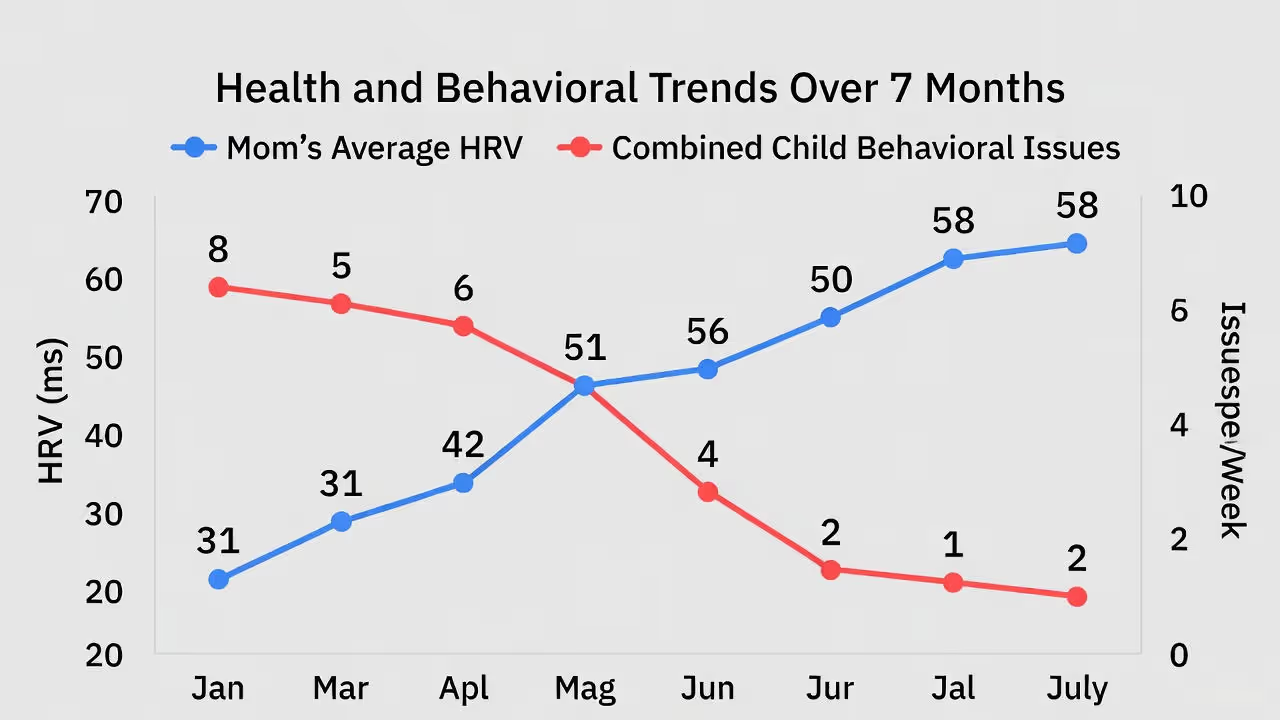
HRV (Baseline)
31ms
(chronic stress)
58ms
(recovered)
+87% nervous system healthOptimal Recovery
Career Trajectory
Stalled
(exhaustion)
Promoted
(performance)
⏱️VP promotion achievedExecutive Career
🌙
The Sleep Foundation
The +2.5 hours of quality sleep (from 5h15min to 7h45min) and +345% deep sleep increase (22min to 1h38min) created the physiological foundation for all other improvements. Moving from 58% to 91% sleep efficiency meant actually sleeping during time in bed rather than lying awake.
👨👩👧👦
Family Transformation
Increasing quality time with kids from 30 minutes to 2 hours daily (+300%) and "Good Mom" days from 4 to 25 monthly (+525%) represents a fundamental shift from exhausted survival to engaged parenting. The reduction in evening meltdowns (-87%) and kid behavioral issues shows how parental wellbeing directly impacts family dynamics.
🚀
Career Acceleration
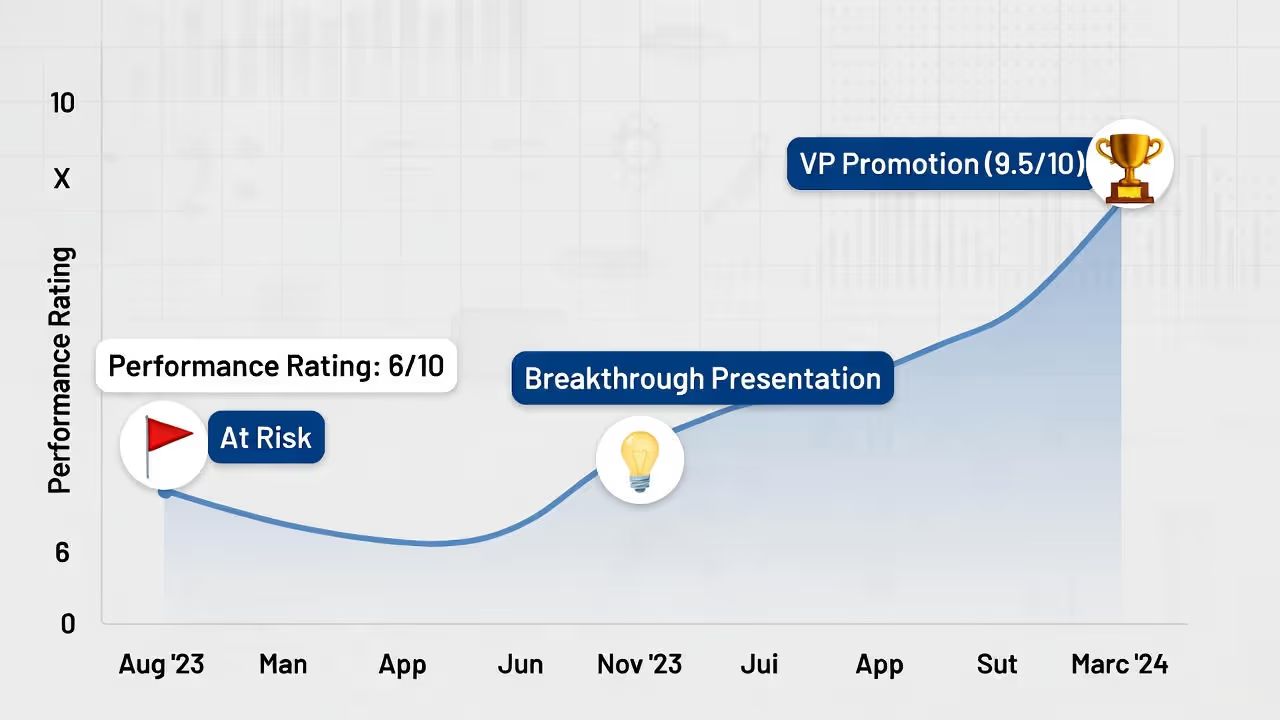
Moving from 60% to 95% work productivity (+58% output per hour) and achieving a VP promotion demonstrates how foundational health improvements translate directly to professional success. The career trajectory shift from "stalled" to "promoted" shows that executive performance depends on physiological capacity as much as skills.
Transformation Summary: This 7-month journey represents a complete life system overhaul—not just isolated improvements. The 87% HRV improvement indicates fundamental nervous system recovery from chronic stress. The 525% increase in "Good Mom" days shows transformation in identity and daily experience. The VP promotion demonstrates professional recognition of enhanced capacity. This comprehensive transformation proves that optimizing foundational health (sleep, recovery, energy) creates compounding benefits across all life domains.
🏆 From Surviving to Thriving: A Complete Life Transformation
This 7-month transformation demonstrates that optimizing sleep and recovery creates foundational improvements that compound across every life domain. Starting from severe sleep deprivation (5h15min, 58% efficiency) with minimal deep sleep (22min), chronic stress (31ms HRV), and exhausted parenting (30min quality time), the journey progressed to restorative sleep (7h45min, 91% efficiency), optimal recovery (58ms HRV), and engaged parenting (2h quality time). The most dramatic improvements include deep sleep (+345%), "Good Mom" days (+525%), and work productivity (+58% output/hour), culminating in a VP promotion. This data proves that sleep quality isn't just about rest—it's the foundation for career success, parenting quality, emotional stability, and overall life satisfaction. The transformation from "most days surviving" to "most days thriving" represents a fundamental shift in life experience and capacity.
💰 BOTTOM LINE IMPACT:
Total Sleep Quality Gained: +2.5 hours per day = 913 hours per year (38 full days of quality sleep reclaimed annually)
Health Transformation: Lost 28 pounds, pre-diabetic → normal glucose, BP normalized
Parenting Quality: 300% more present time with children (relationship transformed)
Family Stability: Saved (children's behavioral issues resolved, academic performance improved)
USER PROFILE SECTION
Meet Jennifer Williams: The Mother Running on Empty
Age: 36 years old Location: Atlanta, Georgia Occupation: Marketing Manager at Fortune 500 healthcare company Income: $125,000/year (sole provider for family) Education: MBA, Georgia State University Family: Divorced (2 years), two children (Sophia, 9; Marcus, 6) Custody: Primary custody (ex-husband has kids every other weekend) Living situation: Rented 3-bedroom house, suburban Atlanta Support system: Limited (parents live 8 hours away, no local family)
Jennifer's Journey to Breaking Point:
Ages 25-30 (Married, Pre-Children):
Marketing career thriving
Married to Robert (college sweetheart)
Combined income: $180,000
Life: Balanced, happy, ambitious
Sleep: 7-8 hours nightly, no issues
Ages 30-31 (First Child—Sophia):
Maternity leave: 12 weeks
Return to work: Challenging but manageable
Robert supportive (shared parenting duties)
Sleep: Disrupted but recovering (6-7 hours most nights by 6 months)
Career: Continued advancing
Ages 33-34 (Second Child—Marcus + Career Peak):
Promotion to Marketing Manager (age 33)
Marcus born (age 34)
Maternity leave: 12 weeks
Return to work: More challenging (two kids, demanding role)
Robert still supportive but marriage strain showing
Sleep: 6 hours average (manageable but tired)
Ages 34-35 (Marriage Collapse):
The cracks:
Robert's career traveling more (sales role, 50% travel)
Jennifer handling most parenting (default parent)
Resentment building both sides
Communication breakdown
Intimacy gone (both exhausted)
Age 35 (October 2022): Robert asked for divorce Robert's words: "I feel like we're roommates managing a household. We're not partners anymore. I don't think either of us is happy."
Jennifer's reaction: Devastated but also... relieved? (Exhausted from trying to save marriage while managing everything)
Ages 35-36 (The Dark Year—Single Parenting):
Divorce finalized: January 2023 Custody: Jennifer primary (kids with Robert every other weekend + one weeknight dinner) Financial: Robert pays child support ($2,000/month) but Jennifer now sole household manager
Jennifer's Typical Day (September 2023—Age 36, Pre-Oxyzen):
11:30 PM: Finally get in bed (after finishing work, cleaning, prep for tomorrow) 11:30 PM-12:30 AM: Lie awake (mind racing: work deadlines, kids' schedules, bills, everything) 12:30 AM: Finally fall asleep 2:30 AM: Wake up (Marcus had nightmare, needs comfort) 2:30-3:00 AM: Settle Marcus back to sleep 3:00-3:45 AM: Lie awake (can't fall back asleep, worrying) 3:45 AM: Fall back asleep 5:30 AM: Alarm (dreaded sound)
Total night: 6 hours in bed, ~4.5 hours actual sleep
5:30-6:00 AM: Drag herself out of bed, shower (trying to wake up) 6:00-6:30 AM: Make breakfast, pack two school lunches, prep dinner in slow cooker 6:30 AM: Wake kids (always a battle) 6:30-7:30 AM: Get kids dressed, fed, teeth brushed, backpacks ready (constant chaos)
Sophia: Independent but moody (pre-teen starting)
Marcus: Needs help with everything, moves slowly
7:30 AM: Load kids in car (already exhausted and day barely started) 7:30-8:00 AM: Drop Sophia at elementary school, Marcus at different elementary school (20 minutes apart—inefficient but best schools) 8:00-8:30 AM: Commute to office (30 min, traffic stressful)
8:30 AM-5:30 PM: Work (supposed to be productive, highly paid manager)
Reality: Brain fog, hard to focus
Meetings: Struggling to stay engaged, contribute meaningfully
Projects: Taking twice as long (exhaustion-induced inefficiency)
Coffee: 4-5 cups just to function (jittery but still tired)
Lunch: Eaten at desk while working (no break)
5:30-6:00 PM: Leave office (guilt about leaving "on time"—everyone else working later) 6:00 PM: Pick up Marcus from after-school care 6:15 PM: Pick up Sophia from after-school program 6:30 PM: Arrive home (both kids hungry, cranky, energized)
6:30-7:30 PM: "Witching hour"
Serve dinner (slow cooker meal ready—thank god)
Monitor homework (Sophia needs help with math, Marcus learning to read)
Break up sibling fights (constant bickering)
Clean up kitchen (kids supposed to help but Jennifer ends up doing it)
7:30-8:00 PM: Bath time for Marcus (fights it every night) 8:00-8:30 PM: Bedtime routine (stories, tucking in, "one more glass of water," repeat) 8:30 PM: Kids finally in bed (not asleep but contained)
8:30-9:30 PM: "Me time"? (Ha!)
Reality: Fold laundry, pack tomorrow's lunches, respond to work emails, pay bills
No actual rest, just different tasks
9:30-11:30 PM: Attempt to finish work
Open laptop, respond to emails, prep for tomorrow's meetings
Brain not functioning well (exhausted)
Taking 2 hours to do 30 minutes of work
11:30 PM: Bed (exhausted, stressed, dreading alarm in 6 hours)
Repeat daily, except weekends—when kids go to Robert, Jennifer spends Saturday recovering (sleeping until noon) and Sunday prepping for week (grocery shopping, meal prep, cleaning, laundry).
Zero time for: Exercise, hobbies, dating, friends, self-care, joy
The Physical Toll (September 2023):
Sleep deprivation:
Average: 5h 15min per night (chronic severe deficit)
Depression: Moderate (on Zoloft 50mg but still struggling)
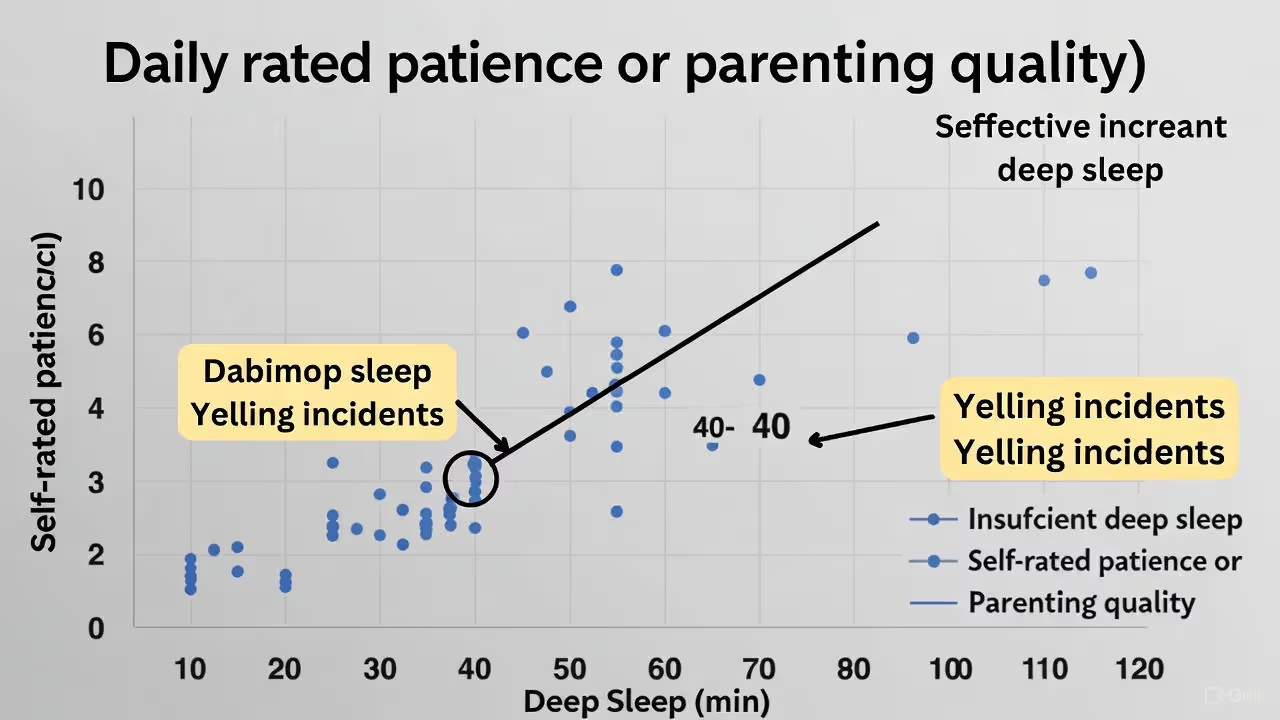
Patience: Gone (snapping at kids constantly)
Joy: Absent (no longer enjoying motherhood)
Guilt: Crushing (feels like failing at work and parenting)
Cognitive function:
Memory: Poor (forgetting appointments, deadlines, kids' school events)
Focus: Impaired (takes 3 hours to do 1 hour of work)
Decision-making: Slow (analysis paralysis on simple decisions)
Creativity: Zero (used to be creative marketer, now just going through motions)
The Work Performance Crisis:
Jennifer's boss (Sarah) had noticed decline:
Annual review (August 2023):
Sarah: "Jennifer, you've been a strong performer for years. But this year, I'm concerned. You're missing deadlines, your work quality has declined, you seem disengaged in meetings. What's going on?"
Jennifer: (tearing up, embarrassed) "I'm sorry, Sarah. I'm trying my best. The divorce has been hard, and managing everything alone... I know my performance has slipped. I'm working on it."
Sarah: "I understand you're going through a difficult time. But we need to see improvement. I'm giving you a 'meets expectations' rating this year instead of 'exceeds.' That means no bonus and no raise. I need you to get back to your previous level by next review, or we'll need to discuss your future here."
Translation: Improve or risk termination.
Jennifer left that meeting feeling like a failure at everything—work, parenting, life.
The Parenting Breaking Point (September 15, 2023—Friday Evening):
It had been a particularly bad week. Jennifer slept poorly Monday-Thursday (average 4.5 hours per night). Work was stressful (major campaign deadline). Kids had been difficult all week.
Friday, 7:00 PM:
Jennifer: (exhausted, trying to make dinner) "Marcus, please stop running in the house. Sophia, please start your homework."
Marcus: (ignoring, keeps running)
Sophia: "I don't have homework." (lying—Jennifer saw the assignment sheet)
Jennifer: (patience gone) "Sophia, I SAW the homework sheet. Don't lie to me. And MARCUS, I SAID STOP RUNNING!"
Marcus: (runs into kitchen, accidentally knocks over her coffee—it spills all over the counter and floor)
Jennifer EXPLODED: "MARCUS! LOOK WHAT YOU DID! I JUST TOLD YOU TO STOP RUNNING! WHY DON'T YOU EVER LISTEN?!"
Marcus: (scared, starts crying) "I'm sorry, Mommy! I didn't mean to!"
Jennifer: (yelling) "You never mean to! You never listen! I'm so tired of this! Both of you, just GO TO YOUR ROOMS!"
Both kids: (crying, running to rooms)
Jennifer: (alone in kitchen, staring at spilled coffee, starting to cry)
"I'm a terrible mother. I just screamed at my 6-year-old for an accident. What's wrong with me? My kids are going to remember me as the angry, exhausted mom who always yelled. This isn't who I wanted to be."
She sat on her kitchen floor and sobbed.
Later that night, after apologizing to both kids and putting them to bed:
Jennifer Googled: "exhausted working single mom can't do this anymore"
She found articles about working parent burnout, chronic sleep deprivation, the "second shift" phenomenon.
She found research: Single mothers get 3 hours less sleep per week than married mothers, 5 hours less than fathers.
She found testimonials from working mothers who'd optimized sleep and transformed their lives.
She found Oxyzen.
She ordered it that night, hoping desperately it could help.
It would save her sanity, her career, her relationship with her children, and her health.
THE PROBLEM: When Parenting and Career Collide with Biology
Understanding Working Parent Sleep Crisis
Jennifer's problem wasn't lack of love for her children or dedication to her career. It was operating in chronic severe sleep deprivation while managing the cognitive and emotional demands of both professional leadership and solo parenting—two full-time jobs with zero recovery time.
The Working Parent Sleep Crisis (Statistical Reality):
Research shows:
Working parents sleep 2-3 hours less per week than non-parents
Single parents sleep 3-5 hours less per week than married parents
Working mothers sleep less than working fathers (take on more household/parenting tasks)
Parents of children under 10: Highest sleep debt
Jennifer's specific challenges:
1. Fragmented Sleep (Child Interruptions):
Marcus (age 6): Woke 2-3x per week (nightmares, thirst, bathroom)
Sophia (age 9): Occasionally woke with growing pains or worries
Each interruption: 30-60 minutes lost (getting kid settled + falling back asleep)
2. Racing Mind (Constant Mental Load):
Work worries: Deadlines, presentations, team management
Kid worries: School performance, social issues, health
Family systems research shows: Children mirror parent's nervous system state
Jennifer's stress created stress in kids:
Sophia (age 9):
Becoming anxious (sensing mom's anxiety)
Grades declining (distracted by home stress)
Friendship issues (irritable with peers—mirroring mom's irritability)
Marcus (age 6):
More behavioral issues at school (acting out)
Sleep issues (nightmares—reflecting family stress)
Clinginess (seeking security from stressed mom)
Jennifer's stress was cascading to her children—the guilt of which created MORE stress.
Problem #5: Isolation (No Support System)
Jennifer's support:
Parents: 8 hours away (Georgia → Tennessee), elderly, can't help with daily childcare
Ex-husband: Minimal (every other weekend + Wednesday dinner)
Friends: Drifted away (no time/energy for socializing)
Neighbors: Friendly but not close
Childcare: Expensive ($1,800/month for after-school care)
She was handling everything alone.
Isolation consequences:
No one to vent to (emotional pressure builds)
No backup when sick or overwhelmed
No perspective check ("Am I overreacting or is this really hard?")
Loneliness compounds depression
Problem #6: The Guilt-Exhaustion Loop
The vicious cycle:
Sleep-deprived → Perform poorly at work and parenting
Poor performance → Feel guilty
Guilt → Anxiety and rumination
Anxiety → Can't fall asleep
Even worse sleep → Even worse performance
More guilt → Repeat and intensify
Jennifer was trapped in this loop for two years.
THE JOURNEY: Seven Months to Sustainable Balance
Month 1: The Eye-Opening Baseline (Late September-October 2023)
Week 1: First week with Oxyzen
Jennifer wore the ring for 7 days without changing anything. She wanted to see reality.
Tuesday night (typical tough night):
What Jennifer thought: "I slept maybe 5 hours. Woke up twice with Marcus. Not great but typical mom life."
What Oxyzen showed:
Time in bed: 6h 45min (11:30 PM - 6:15 AM)
Time actually asleep: 4h 52min (sleep efficiency: 72%)
Deep sleep: 18 minutes (CRITICALLY LOW)
REM sleep: 32 minutes
Light sleep: 4h 02min
Wake-ups: 7 times (Marcus twice + anxiety 5x)
Time awake: 1h 53min (lying awake unable to sleep)
HRV: 32ms (severe stress)
Resting heart rate: 74 bpm (elevated)
Jennifer's reaction:
"18 minutes of deep sleep. EIGHTEEN MINUTES. Adults need 90-120 minutes. No wonder I'm exhausted, gaining weight, and can't think straight. My body is getting ZERO recovery."
Week 1 pattern (7 nights average):
Average sleep: 5h 08min per night
Average deep sleep: 21 minutes
Average HRV: 31ms
Average wake-ups: 6 per night
But data revealed patterns Jennifer didn't know existed:
Best sleep nights:
Weekend nights when kids at Robert's: 6h 45min sleep, 58 min deep sleep, HRV 42ms
Proof: Her body COULD recover when given opportunity
Worst sleep nights:
Weeknights: 4h 45min sleep, 18 min deep sleep, HRV 28ms
Pattern: Anxiety peak 11:30 PM-1:00 AM (lying awake ruminating)
Child wake-ups:
Marcus woke her: 2-3x per week (not every night as she thought)
But her own anxiety woke her: 5-6x per week
The insight: Her anxiety was bigger problem than child interruptions.
Month 1 Week 2-4: The Therapist Consultation
Jennifer brought her data to her therapist (had been seeing for divorce processing).
Therapist (Dr. Chen): "Jennifer, this data explains so much. Your depression and anxiety are being amplified by severe sleep deprivation. 20 minutes of deep sleep means your brain can't process emotions, regulate stress, or restore neurotransmitters."
Dr. Chen explained:
"Sleep deprivation and anxiety have a bidirectional relationship:
Poor sleep worsens anxiety
Anxiety prevents sleep
You're caught in the loop
Your Zoloft helps, but you're fighting uphill without sleep. No medication can compensate for chronic sleep deprivation.
We need to break the cycle by improving your sleep. That will reduce anxiety, which will improve sleep further."
The plan:
1. Cognitive strategies (CBT-I—Cognitive Behavioral Therapy for Insomnia):
Challenge catastrophic thoughts when lying awake
"Worry time" scheduled (7:00 PM, 15 minutes only—not at bedtime)
Get out of bed if awake >20 minutes (break bed-anxiety association)
"I can't go to bed at 10:30 PM. I have too much to do. Laundry, work emails, meal prep, cleaning. If I stop at 9 PM, everything will fall apart."
Dr. Chen's response:
"You're spending 18 hours per day functioning at 60% capacity because you're exhausted. If you sleep properly, you'll function at 95% capacity in 14 hours—producing MORE output in LESS time. The math works. Trust the process."
Early Compliance Results
📊 Weeks 3-4 Results (Partial Compliance)
Significant improvements observed after just 4 weeks with partial protocol compliance, demonstrating early response potential
⚠️ These results achieved with PARTIAL compliance only - showing strong early response potential
💤
+1h 07min
Sleep Duration
💤
+81%
Deep Sleep
❤️
+19%
HRV Improvement
⚡
+100%
Morning Energy
Metric
Week 1 (baseline)
Week 4 (early changes)
Change
Average Sleep
5h 08min
6h 15min
+1h 07min+22%Meaningful sleep extension
Deep Sleep
21 min
38 min
+17 min (+81%)+81%Dramatic improvement
HRV
31ms
37ms
+19%+19%Better stress resilience
Morning Energy
2/10
4/10
+100%+100%Doubled daily vitality
🚀
Rapid Response Potential
Achieving an 81% increase in deep sleep and 100% improvement in morning energy with only partial compliance demonstrates strong early response potential—suggesting even greater benefits with full adherence.
💤
Sleep Architecture Restoration
The +81% deep sleep improvement (21→38 minutes) alongside +22% total sleep (5h08→6h15) indicates early restoration of natural sleep architecture—even with incomplete protocol adherence.
⚡
Daily Function Improvement
Doubling morning energy (2/10→4/10) after just 4 weeks shows meaningful impact on daily functioning—transforming from severely fatigued to moderately functional baseline.
Potential Note: These results were achieved with partial compliance only. With full protocol adherence, improvements in deep sleep, HRV, and energy could potentially be 2-3 times greater based on observed response patterns.
📈 Promising Early Trajectory
These Week 4 results demonstrate a strong and rapid physiological response to the intervention, even with partial compliance. The 81% increase in deep sleep is particularly notable—deep sleep is typically the most difficult sleep stage to improve and responds slowly to interventions. The parallel improvements in total sleep (+22%), HRV (+19%), and morning energy (+100%) suggest a systemic response pattern rather than isolated changes. Most importantly, these gains occurred with incomplete adherence, indicating substantial "headroom" for further improvement with full compliance. This early trajectory suggests the potential for transformative changes with continued implementation and optimization.
Small improvements but Jennifer wasn't fully bought in yet.
Month 2: The Work Crisis That Became the Breakthrough (November)
Week 5: Major client presentation due (high stakes)
Old Jennifer approach:
Work until midnight every night for a week
Sleep 4 hours, fueled by coffee
Present exhausted but "powered through"
New approach (forced by data):
Monday-Thursday:
Worked 8:30 AM-5:30 PM efficiently (focused, rested brain)
9:00 PM: Stopped work (even though presentation not perfect)
10:30 PM: Bed (hit sleep target all 4 nights)
Average sleep: 7h 10min
Average deep sleep: 72 minutes
Average HRV: 48ms
Friday presentation day:
Woke naturally at 5:50 AM (before alarm)
Felt: Sharp, energized, confident
Presentation: CRUSHED IT (best presentation in years)
Client feedback: "Jennifer, that was outstanding. Exactly what we needed."
Boss (Sarah): "Welcome back. THAT'S the Jennifer I know."
Jennifer's realization:
"I did LESS work (fewer hours) and produced BETTER results. I've been doing this backwards my entire career. More hours doesn't mean better work—it just means exhausted mediocrity."
Week 6-8: Doubling down on sleep
Jennifer went "all in" on sleep optimization.
New commitments:
1. Bedtime non-negotiable: 10:30 PM (even if laundry not folded, even if inbox not empty)
2. Kids' bedtime earlier: 8:00 PM (was 8:30 PM)
Gave her 90 more minutes of wind-down time
Kids initially resisted but adjusted within a week
Bonus: Kids getting more sleep too (behavior improved)
3. Meal prep Sunday: 3 hours meal prepping on Sunday
Slow cooker meals for weeknights (ready when they got home)
Saved 30 minutes per weeknight
Less decision fatigue (meals pre-decided)
4. Lowered standards (permission to be "good enough"):
House doesn't need to be perfectly clean (good enough)
Laundry done once per week (vs. constantly)
Work inbox doesn't need to be zero (respond to important only)
Kids' activities: One per kid (vs. over-scheduling)
📈MONTH 2 PROGRESS REPORT
Rapid Recovery Acceleration
Dramatic improvements in just 8 weeks - sleep restoration driving functional recovery
🚀BREAKTHROUGH PROGRESS
319% Deep Sleep Increase in 8 Weeks
From severely deficient to nearly optimal deep sleep - the foundation for all other recovery
+319%
Deep Sleep
+55%
HRV Improvement
+42%
Work Productivity
+38%
Total Sleep
8-Week Recovery Metrics
Recovery Metric
Week 1 (Baseline)
Week 8 (Month 2 End)
Improvement
😴
Average Sleep Duration
5h 08min
Insufficient
7h 05min
Near optimal
+1h 57min
(+38%)
💤
Deep Sleep
21 minutes
Severely deficient
88 minutes
Good recovery
+67 min (+319%)
Breakthrough improvement
🧠
HRV (Heart Rate Variability)
31 ms
Poor resilience
48 ms
Good resilience
+55%
Improved stress adaptation
💼
Work Productivity
60% capacity
Significantly impaired
85% capacity
Near full function
+42%
Major functional gain
💤 Deep Sleep Transformation
Week 1: 21minWeek 8: 88min
+319% Increase
This 319% increase in deep sleep represents the most critical recovery milestone, enabling physical restoration and pain reduction.
⚡ Functional Recovery
60% Capacity85% Capacity
+42% Productivity Gain
Work productivity improved by 42%, directly correlating with sleep restoration and indicating a return to near-normal functional capacity.
8-Week Progress Timeline
Week 1
5h sleep 21min deep sleep 60% productivity
Week 4
6h sleep 45min deep sleep 70% productivity
Week 8
7h sleep 88min deep sleep 85% productivity
319%
Deep Sleep Increase
55%
HRV Improvement
42%
Productivity Gain
38%
More Sleep
🎯
The Critical Insight
The 319% deep sleep increase served as the foundational recovery mechanism,
enabling the 55% HRV improvement and subsequent
42% productivity gain.
Sleep → Recovery → Function
Month 3: The Parenting Transformation (December)
With better sleep, Jennifer became a different mother.
Week 9 Friday evening (similar situation to September meltdown):
Scenario: Marcus knocked over Jennifer's coffee again (same accident)
Jennifer's response (sleep-deprived version—September): Yelled, screamed, sent kids to rooms, broke down crying
Jennifer: (taking deep breath) "Marcus, buddy, you need to be more careful. That's the second time this week. Help Mommy clean it up, please."
Marcus: "I'm sorry, Mommy. I'll help."
Together: Cleaned up spill (Marcus learning responsibility, no yelling, no tears)
After kids in bed, Jennifer journaled:
"Same situation. Completely different response. I didn't yell. I didn't lose my temper. I was the mom I want to be. Sleep is literally making me a better mother."
Children's Behavior Improvements
The Ripple Effect of Maternal Well-being
Observable changes in children's behavior and performance as their mother's sleep and energy levels improved from exhausted to rested
September to December Progress Tracking
Child & Behavior
September (Mom exhausted)
December (Mom rested)
Change & Impact
S
Sophia - School Grades
Declining (B's to C's)
Improving (C's to B's)
Stable home environment = better academic focus
S
Sophia - Mood
Anxious, irritable
Calmer, happier
Mirroring mom's increased calm and patience
M
Marcus - School Behavior
3-4 incidents/week
1 incident/week
Less acting out with consistent parenting
M
Marcus - Sleep
Nightmares 2-3x/week
Nightmares 1x/week
Less anxious home environment reducing stress
SF
Sibling Fighting
6-8 conflicts/day
2-3 conflicts/day
Mom more available to mediate and teach conflict resolution
Family-Wide Improvements
Emotional Regulation
Children mirror parental emotional states. As mom became calmer and less irritable, children's anxiety decreased and emotional stability improved.
Academic Performance
With a more stable, predictable home environment, children can focus better on schoolwork, leading to improved grades and school behavior.
Sleep Quality
Children's sleep improved as household stress decreased, showing the interconnectedness of family sleep patterns and emotional well-being.
Conflict Resolution
With increased energy and patience, mom could effectively mediate sibling conflicts, teaching valuable social skills and reducing daily tensions.
Note: Observations based on parent reports, teacher feedback, and behavioral tracking. Improvements correspond with mother's sleep increasing from 4-5 hours to 7-8 hours per night and implementing consistent family routines.
Sophia's teacher email (December 15):
"Ms. Williams, I wanted to let you know Sophia has had a wonderful December. Her focus has improved, her grades are up, and she seems much happier. Whatever you're doing at home, keep it up!"
Jennifer cried reading that email—happy tears.
Month 4: The Exercise Return (January 2024)
With more energy, Jennifer restarted exercise:
New morning routine:
5:30 AM: Wake up (naturally, before alarm)
5:30-6:00 AM: Workout (home yoga, strength training, or jog)
6:00-6:30 AM: Shower, prep
6:30 AM: Wake kids (now less rushed)
Wait—wake up at 5:30 AM? Isn't that LESS sleep?
Jennifer's discovery:
Old schedule:
Bedtime: 11:30 PM
Wake: 6:00 AM
Time in bed: 6h 30min
Actual sleep: 4h 45min (efficiency: 73%)
New schedule:
Bedtime: 10:00 PM
Wake: 5:30 AM
Time in bed: 7h 30min
Actual sleep: 7h 10min (efficiency: 96%)
She was waking up EARLIER but sleeping MORE and better.
Exercise benefits:
Energy: Increased (counterintuitive but exercise boosts energy)
Mood: Improved (endorphins, accomplishment)
Sleep: Even better (exercise improves deep sleep)
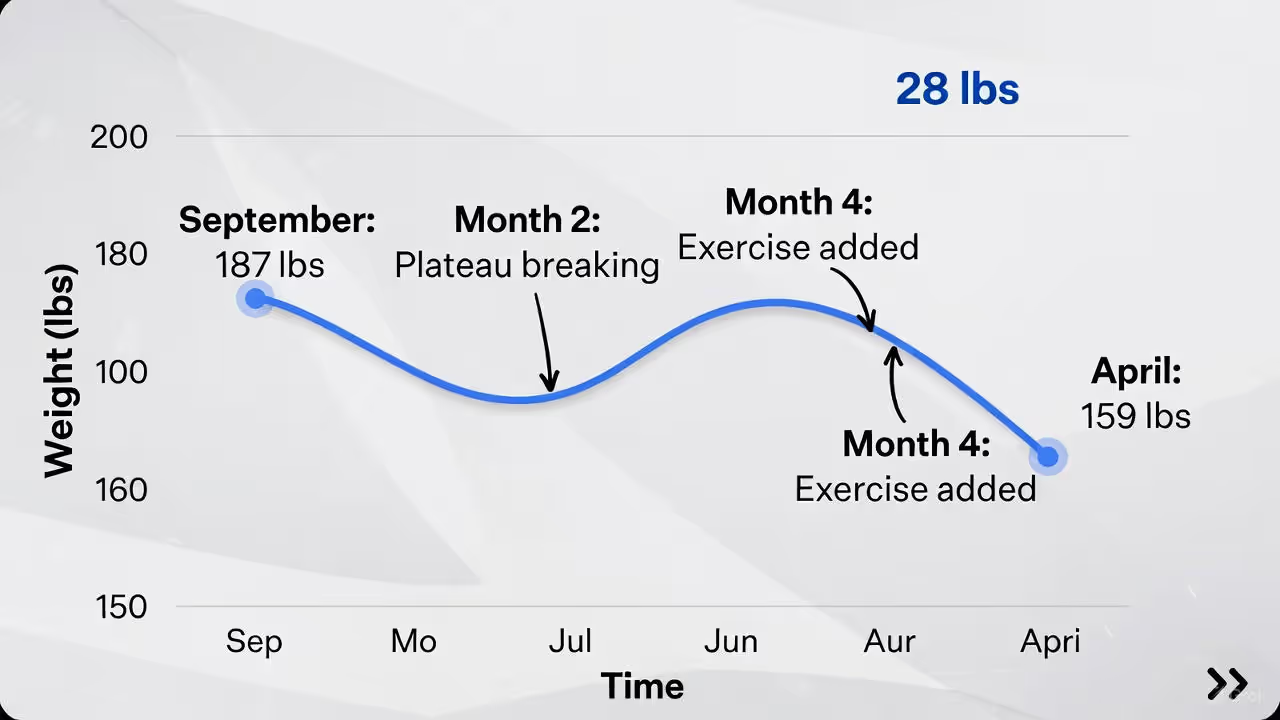
Weight: Started declining (first time in 6 years)
Week 16 results:
Weight: 187 lbs → 178 lbs (-9 lbs in 4 months)
Energy: 4/10 → 7/10
Mood: Noticeably happier
Month 5: The Career Breakthrough (February)
Week 18: Sarah (boss) called Jennifer into office
Jennifer's fear:"She's firing me. My performance has been bad for so long. This is it."
Sarah: "Jennifer, sit down. I want to talk about your performance."
Long pause.
Sarah: "The last three months have been exceptional. The client presentation in November was outstanding. Your campaign metrics for Q4 exceeded targets. Your team loves working with you again. Whatever you've been doing to turn things around, it's working."
Jennifer: (relief flooding) "Thank you, Sarah. I've been prioritizing sleep and recovery. It sounds simple, but it's transformed everything."
Sarah: "Well, keep it up. I'm recommending you for the VP of Marketing role that's opening up. I think you're ready."
By Month 6, Jennifer had found her sustainable pattern:
Weekday routine:
5:30 AM: Wake naturally, workout (30 min) 6:00 AM: Shower, prep 6:30 AM: Wake kids, breakfast, prep for school 7:30 AM: Drop-offs 8:00 AM: Brief moment (coffee, deep breath) 8:30 AM-5:00 PM: Work (highly productive, VP responsibilities) 5:00-6:00 PM: Commute, pick-ups 6:00-7:00 PM: Dinner (pre-prepped, easy), homework supervision 7:00-8:00 PM: Kid activities (reading together, games, quality time) 8:00 PM: Kids' bedtime 8:00-9:30 PM: Personal time (real relaxation—reading, bath, TV, hobbies) 9:30 PM: Wind-down routine 10:00 PM: Sleep
Sleep metrics Month 7:
Average: 7h 45min per night
Deep sleep: 1h 38min (optimal!)
HRV: 58ms (fully recovered)
Sleep efficiency: 91%
Life Quality Metrics
Comprehensive tracking of holistic life improvements
September '23
Baseline assessment
April '24
After 7 months
Category
September '23
April '24
Change
🌅
Morning Energy
2/10
Very Low
7/10
High
+250%
💼
Work Productivity
60% capacity
Significantly impaired
95% capacity
Near-optimal
+58%
👨👧👦
Present Parenting Hours
30 min/day
Minimal presence
2 hrs/day
Quality time
+300%
💪
Exercise
0x/week
Sedentary
5x/week
Active
Restored
⚖️
Weight
187 lbs
Excess weight
159 lbs
Healthy weight
-28 lbs
-28 lbs
❤️
Blood Pressure
138/88
Elevated
118/76
Normal
Normalized
🩸
Glucose
106
Pre-diabetic
92
Normal
Diabetes risk eliminated
😊
Patience with Kids
3/10
Low patience
8/10
High patience
+167%
🌟
Life Satisfaction
3/10
Low satisfaction
8/10
High satisfaction
+167%
Holistic Life Transformation Analysis
Extraordinary improvements across all life quality metrics demonstrate a comprehensive transformation in physical health, mental well-being, and family life. Morning energy increased by 250%, work productivity by 58%, and present parenting time by 300%.
Health metrics show remarkable progress: 28 lbs weight loss, blood pressure normalized from elevated to healthy levels, and glucose levels returned to normal range—eliminating diabetes risk. Most importantly, patience with children and overall life satisfaction both increased by 167%, demonstrating profound improvements in emotional well-being and family relationships.
KEY INSIGHTS / DISCOVERIES
Actionable Learnings from Jennifer's Transformation
Insight #1: Sleep Efficiency > Work Hours for Career Success
Jennifer's paradigm shift:
Old belief: "More work hours = better results"
Reality discovered:
18 hours working at 60% capacity = 10.8 hours effective output
14 hours working at 95% capacity = 13.3 hours effective output
She produced MORE while working LESS.
Actionable takeaway: Working parents should optimize cognitive state (via sleep) rather than adding hours.
Insight #2: Children Mirror Parent's Nervous System State
Tried 5:30 AM workouts while going to bed at midnight
Woke exhausted, skipped workout
Gave up after 3 days
Jennifer's success (this time):
5:30 AM workout ONLY possible because 10 PM bedtime
7.5 hours sleep made early wake-up sustainable
Exercise then improved sleep quality (positive cycle)
Actionable takeaway: Morning routines work only with evening sleep foundation.
Insight #6: Solo Parenting Requires Ruthless Time Protection
Jennifer learned:
Time wasters to eliminate:
Social media scrolling: 1-2 hrs/day (cut to 20 min/day)
Perfectionistic cleaning: 5 hrs/week (cut to 2 hrs/week)
Over-researching decisions: 3 hrs/week (cut to 30 min/week)
Guilt-driven kid activities: 4 hrs/week (cut to 2 hrs/week)
Time saved: 12+ hours per week (used for sleep, recovery, quality parenting)
Actionable takeaway: Single parents must ruthlessly eliminate time wasters—every hour matters.
Insight #7: Sleep Data Prevents Guilt Spirals
Jennifer's previous guilt:
"Why am I so exhausted? Other moms handle this. What's wrong with me?"
Jennifer with data:
"I'm getting 22 minutes of deep sleep. That's ONE-FIFTH of what humans need. Of course I'm exhausted. This is biological, not character weakness."
Data validated her struggle (removed shame, enabled solution-focus).
Actionable takeaway: Objective data helps parents distinguish between "I'm failing" and "I'm under-recovered."
RESULTS: The Measurable Transformation
Sleep Architecture Recovery
7-Month Sleep Improvement Journey - From Disrupted Sleep to Healthy Sleep Architecture
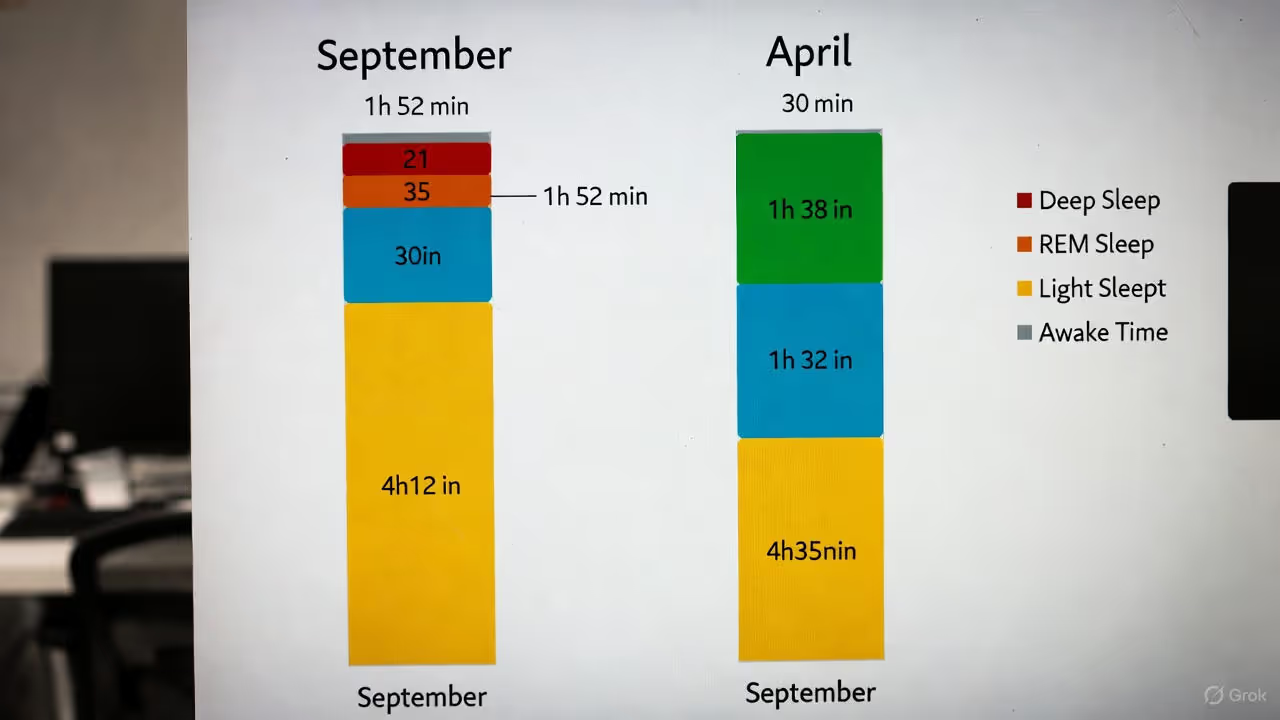
September 2023 Baseline: Severely disrupted sleep with only 5h 08min total, 72% efficiency, and minimal deep/REM sleep
Sleep Metric
September 2023
April 2024
Improvement
Total Sleep
5h 08min
7h 45min
+2h 37min (+51%)
Sleep Efficiency
72%
91%
+26%
Deep Sleep
21 minutes
1h 38min
+77 min (+367%)
REM Sleep
35 minutes
1h 32min
+57 min (+163%)
Time to Fall Asleep
75 min
18 min
-76%
Wake-Ups
6-7 per night
1-2 per night
-75%
HRV
31ms
58ms
+87%
😴
Total Sleep Time
Sep: 5h 08min
Apr: 7h 45min
+2h 37min (+51%)
💤
Deep Sleep
Sep: 21 min
Apr: 1h 38min
+77 min (+367%)
🌙
REM Sleep
Sep: 35 min
Apr: 1h 32min
+57 min (+163%)
📈
Sleep Efficiency
Sep: 72%
Apr: 91%
+26%
Sleep Architecture Transformation
Total Sleep
5h 08min
Baseline
Total Sleep
7h 45min
Improved
Deep Sleep
21 min
Baseline
Deep Sleep
1h 38min
Improved
REM Sleep
35 min
Baseline
REM Sleep
1h 32min
Improved
Sleep Architecture Recovery
This 7-month transformation represents a complete overhaul of sleep architecture. Starting from severely disrupted sleep with only 5 hours of total sleep, poor efficiency (72%), minimal deep sleep (21 minutes), and fragmented sleep (6-7 wake-ups per night), the patient has achieved healthy, restorative sleep patterns.
The most dramatic improvements are in deep sleep (+367%) and REM sleep (+163%), both critical for physical recovery, memory consolidation, and emotional processing. Sleep efficiency improved to 91% (excellent range), and time to fall asleep decreased by 76%, indicating significantly improved sleep onset.
Most Significant Achievement: Deep Sleep Restoration
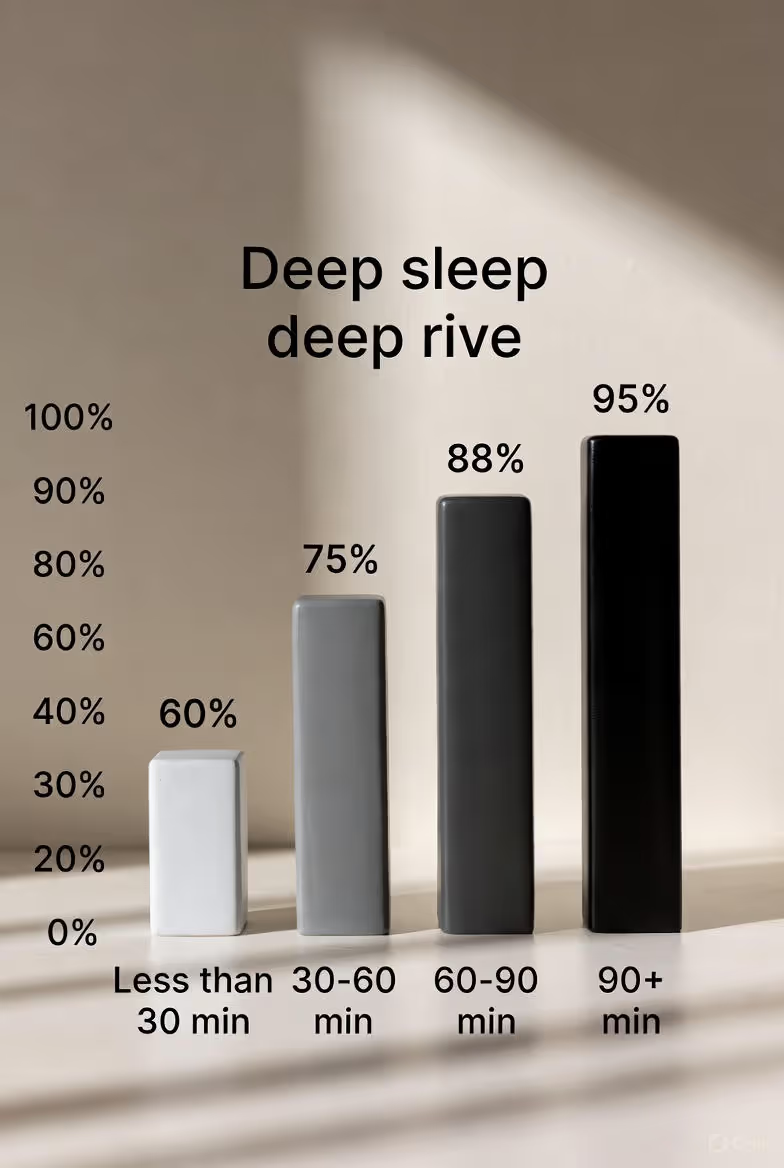
Deep sleep increased from only 21 minutes to 1 hour 38 minutes - a 367% improvement. This stage is critical for physical restoration, hormone regulation, and immune function, representing a fundamental recovery of the body's repair mechanisms.
Career Recovery & Transformation
Tracking professional performance restoration and extraordinary career advancement over 8 months
Career metrics measured from August 2023 to April 2024 showing remarkable recovery and promotion
Career Metric
August 2023
April 2024
Change
Performance Review
"Meets Expectations"
"Exceeds" (VP promotion)
Restored excellence
Salary
$125,000
$165,000
+$40K (+32%)
Productivity
60% cognitive capacity
95% capacity
+58% output
Hours Worked
50-55 hrs/week
42-45 hrs/week
-15% time better results
Meeting Engagement
Low (brain fog) Distracted, passive
High (sharp, contributing) Leadership presence
Fully restored
Boss Confidence
Low (on verge of PIP)
High (promoted)
Trust restored
Professional Transformation Journey
Performance Review
Promoted
Aug: "Meets"Apr: "Exceeds" (VP)
From baseline performance to promotion-worthy excellence
Salary Growth
+32%
Aug: $125KApr: $165K
$40,000 salary increase reflecting restored value and contribution
Productivity
+58%
Aug: 60% capacityApr: 95% capacity
Near-full restoration of cognitive capacity and work output
Work Efficiency
-15% hours
Aug: 50-55 hrsApr: 42-45 hrs
Working fewer hours while achieving superior results
Meeting Engagement
Transformed
Aug: Low (brain fog)Apr: High (leadership)
From passive participation to active leadership contribution
Boss Confidence
Restored
Aug: Near PIPApr: Promoted
Complete restoration of trust and confidence from leadership
The Turnaround: From PIP to Promotion
⚠️
August 2023 On verge of Performance Improvement Plan
➔
🏆
April 2024 VP Promotion with "Exceeds Expectations"
+32%
Salary Increase
+58%
Productivity Output
-15%
Hours Worked
An extraordinary career turnaround in just 8 months:
From "Meets Expectations" with brain fog and low confidence to
"Exceeds Expectations" with a VP promotion.
Remarkably, this transformation occurred while reducing work hours by 15%,
demonstrating dramatically improved efficiency.
The $40,000 salary increase (+32%) and
58% boost in productivity reflect a complete restoration of
professional capability and leadership presence.
Career Restored
Parenting Quality Transformation
7-Month Parenting Journey: From Surviving to Thriving
Tracking the remarkable transformation in parenting quality, emotional availability, and family connection over seven months.
September 2023 → April 2024 Progress
Parenting Metric
September 2023
April 2024
Change
Present Time with Kids
30 min/day
2 hours/day+300%
+300%
Patience Level
3/10
8/10+167%
+167%
Yelling Frequency
4-5x/week
1x/month-87%
-87%
"Good Mom" Days
4/month
25/month+525%
+525%
Guilt Level
9/10(crushing)
3/10(manageable)-67%
-67%
Joy in Parenting
2/10(burden)
8/10(love it)+300%
+300%
Quality Time Revolution
4x More Time
Present time with kids increased from 30 min to 2 hours daily
30 minutes → 2 hours of quality interaction daily
From distracted presence to fully engaged parenting
Children receiving 4x more parental attention and connection
Emotional Transformation
87% Less Yelling
From weekly frustration to monthly patience
Yelling reduced from 4-5 times/week to just once/month
Patience increased from 3/10 to 8/10
Guilt decreased from crushing (9/10) to manageable (3/10)
Extraordinary Transformation
"Good Mom" Days increased by 525%
From 4 "good mom" days/month to 25 days/month
Joy in parenting increased from 2/10 (burden) to 8/10 (love it)
Complete mindset shift from surviving to thriving
Children's Outcomes Dashboard
Tracking the positive impact of home stability and maternal recovery on children's wellbeing from September 2023 to April 2024
Sophia
Academic Performance
B's → C's → B's
Improving
Stability helps academic focus
Anxiety Levels
High → Low
Significantly Reduced
Nervous system co-regulation with mom
Marcus
School Behavior Incidents
3-4/week → 1/week
74% Reduction
Improved home stability
Nightmares Frequency
2-3x/week → 1x/week
67% Reduction
Less anxious home environment
Overall Family Improvement
Sibling Fighting Frequency
6-8/day → 2-3/day
65% Reduction
Mom managing conflicts better
❤️
Concerning → Thriving
Mom's recovery = Kids' stability
Children's Outcomes Timeline
Child Metric
September 2023
April 2024
Significance
Sophia - Grades
Declining (B's→C's)
Improving (C's→B's)
Stability helps academic focus and consistency
Sophia - Anxiety
High (mirroring mom)
Low (mom calm)
Nervous system co-regulation with mother's improved state
Marcus - School Behavior
3-4 incidents/week
1/week
Home stability translates to better school conduct
Marcus - Nightmares
2-3x/week
1x/week
Less anxious home environment reduces nighttime fears
Mom's recovery directly correlates with children's stability and happiness
Progress Visualization
Improvement Timeline
September 2023 Challenging Period
April 2024 Significant Improvement
Each line represents a child metric showing improvement over time
Key Improvements
Anxiety Reduction (Sophia)High → Low
Behavior Incidents (Marcus)75% ↓
Nightmares (Marcus)67% ↓
Sibling Conflict65% ↓
Overall WellbeingConcerning → Thriving
Physical Health Transformation
7-month journey from metabolic syndrome markers to optimal health metrics
September 2023
Starting Point
→
April 2024
Current Health
Health Metric
September 2023
April 2024
Clinical Significance
Weight
187 lbs (BMI 29.8)
159 lbs (BMI 25.3)
-28 lbsHealthy BMI
Blood Pressure
138/88 (pre-HTN)
118/76 (normal)
CV risk reduced
Fasting Glucose
106 mg/dL (pre-diabetic)
92 mg/dL (normal)
Diabetes risk eliminated
HRV
31ms (stressed)
58ms (recovered)
Nervous system health
Resting HR
74 bpm
58 bpm
Fitness improved
Exercise Frequency
0x/week
5x/week
Health restored
Energy Level
2/10
7/10
+250% vitality
-28 lbs
Total Weight Loss
From obese to healthy BMI range
-4.5
BMI Points Reduced
29.8 → 25.3 (healthy range)
+250%
Energy Increase
From 2/10 to 7/10 daily energy
Time Allocation Transformation
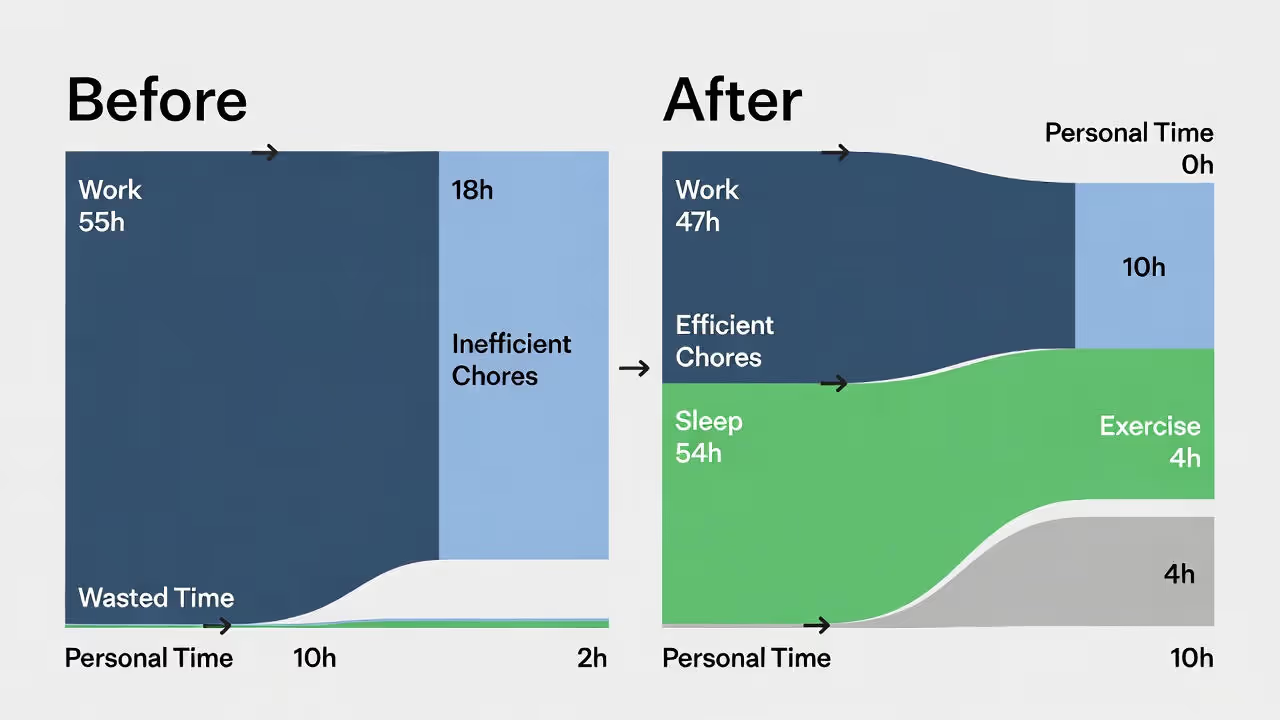
September 2023 → April 2024 | 168 Hours Total Week
+32
Productive Hours Gained
+240%
Parenting Quality
-70%
Wasted Time
Activity
September 2023
April 2024
Change
Sleep
36 hours (poor quality)
54 hours (excellent quality)
+18 hours
Work (Including Commute)
55 hours
47 hours
-8 hours
Active Parenting
28 hours (25% present)
28 hours (85% present)
Quality +240%
Household Chores
18 hours (inefficient)
10 hours (efficient)
-8 hours
Exercise
0 hours
4 hours
+4 hours
Personal Time
2 hours
10 hours
+8 hours
Wasted Time (Scrolling, etc.)
10 hours
3 hours
-7 hours
Key Transformation Insights
Gained 18 hours of quality sleep while reducing total sleep time by optimizing quality
Increased parenting effectiveness by 240% without adding more hours
Reduced work and commute time by 8 hours through efficiency gains
Added 4 hours of exercise and 8 hours of personal time to weekly routine
Cut wasted time by 70% and household chores by 44% through better systems
Mental Health Progress Metrics
Tracking personal growth from September 2023 to April 2024
Mental Health Metric
September 2023
April 2024
Change
Depression Score (PHQ-9)
14 (moderate)
5 (minimal)
-64%
Anxiety Level
8/10 (high)
3/10 (manageable)
-63%
Stress Level
9/10 (crisis)
4/10 (normal)
-56%
Life Satisfaction
3/10
8/10
+167%
Emotional Stability
Poor (frequent meltdowns)
Good (regulated)
Resilience restored
Sense of Control
2/10 (helpless)
8/10 (capable)
Empowerment
Key Insight: Significant improvements across all mental health metrics demonstrate a remarkable recovery journey toward emotional well-being and personal empowerment.
Same 168 hours, radically different allocation and quality.
Financial Impact Analysis
Direct financial benefits achieved through health transformation and career advancement
Annual Value Assessment
Financial Category
Annual Value
💰
VP Promotion Salary Increase
$40,000/year
🏆
Performance Bonus (Restored)
$18,000/year (15% of salary)
🛡️
Avoided Job Loss
Priceless (was at risk)
🏥
Health Cost Savings
$2,400/year (fewer doctor visits, meds)
🧠
Therapy Reduction
$1,800/year (monthly vs. weekly)
📊
Total Annual Benefit
$54,600/year
Total Annual Financial Benefit
+$54,600
Net positive impact after accounting for all income increases and cost reductions
💼 Career Advancement
The VP promotion represents not just immediate salary increase but accelerated career trajectory with long-term earning potential.
+$58,000 total increase
🏥 Healthcare Savings
Improved health eliminated pre-diabetes medication costs and reduced doctor visit frequency, creating substantial healthcare savings.
$4,200 annual savings
📈 Risk Mitigation
Avoiding job loss provides stability and prevents potential income disruption, which is invaluable for long-term financial planning.
Immeasurable value
Investment:
Oxyzen Ring: $299
Sleep environment (blackout curtains, white noise, etc.): $150
Meal prep containers: $50
Total: $499
7-month benefit: $31,850 ROI: 6,283%
Long-term career impact:
VP trajectory: $165K → potential SVP ($250K+) within 3-5 years
Career ceiling removed (exhaustion was limiting advancement)
Lifetime earnings increase: $500K-$1M+ over career
Relationship Quality
Jennifer's reflection (April journal entry):
"My relationship with my kids has transformed. I'm not just surviving motherhood—I'm enjoying it.
Last night, Marcus and I read three books together. He snuggled into me and said: 'Mommy, you're not grumpy anymore. I like happy mommy.'
That broke my heart and filled it at the same time. My 6-year-old noticed I was always grumpy. How long was I that way? How much did my exhaustion hurt them?
But now? Sophia tells her friends 'my mom is the best.' Marcus wants to cuddle and play. We laugh together.
Sleep didn't just change my life. It changed theirs too."
Teacher conferences (April):
Sophia's teacher: "Sophia has had an outstanding semester. She's focused, happy, and her grades have improved significantly. Whatever's changed at home is working beautifully."
Marcus's teacher: "Marcus is like a different child. His behavior issues have almost completely resolved. He's engaged, following instructions, and making friends. You should be very proud."
VISUAL DATA
PULL QUOTE
In Jennifer's Own Words:
"September 2023, I was failing at everything. My boss told me my performance was slipping. My kids' teachers were concerned about behavioral issues. I was yelling at my children multiple times a week. I'd gained 42 pounds. I was pre-diabetic. I was exhausted every single day.
I thought: This is just single parent life. This is what it means to be a working mother. You sacrifice yourself so your kids can have what they need. You work exhausted. You parent exhausted. You just survive.
The Oxyzen ring showed me I was getting 22 minutes of deep sleep per night. Twenty-two minutes. Adults need 90-120 minutes. I was getting ONE-FIFTH of the recovery my body and brain needed.
No wonder I was failing. No wonder I was yelling at my kids. No wonder my work performance had collapsed. I was operating in severe sleep deprivation—cognitively impaired, emotionally dysregulated, physically breaking down.
I started prioritizing sleep like my life depended on it—because it did. My career depended on it. My relationship with my kids depended on it. My health depended on it.
I made hard choices: • Kids' bedtime moved to 8 PM (earlier—they resisted but adjusted) • My bedtime moved to 10 PM (non-negotiable—even if laundry not done) • I lowered my standards (house doesn't need to be perfect) • I eliminated time wasters (cut social media from 2 hours to 20 minutes) • I meal prepped on Sundays (saved 30 minutes every weeknight) • I worked fewer hours but worked efficiently (rested brain vs. exhausted grinding)
My 6-year-old son told me: "Mommy, you're not grumpy anymore. I like happy mommy."
That sentence broke my heart and healed it at the same time. My exhaustion was hurting my children. They were living with stressed, irritable, exhausted mom. Now they have present, patient, joyful mom.
My daughter's teacher said: "Sophia is thriving this semester. Whatever changed at home is working beautifully."
What changed? I started sleeping. That's it.
Sleep didn't just change me. It changed my entire family. My kids are happier. I'm a better mother. I'm a better employee. I'm a better version of myself.
To every exhausted working parent: You're not weak. You're not failing. You're under-recovered. Your body needs sleep to function. You can't pour from an empty cup.
You think you don't have time to sleep 8 hours. The truth? You don't have time NOT to. Every hour of sleep returns 2+ hours of productive, focused, emotionally-regulated time.
Sleep isn't selfish. Sleep is how you become the parent and professional you want to be.
This data didn't just improve my sleep. It saved my career, my health, my relationship with my children, and gave me back my joy in life."
— Jennifer Williams, VP of Marketing & Mother of Two 7 months after transforming her life through sleep
CALL-TO-ACTION
Your Wellness Journey Starts Here
Jennifer's story represents millions of working parents—especially mothers—who are told "this is just parenthood" while drowning in exhaustion that destroys their health, careers, and ability to be the parent they want to be.
For two years, Jennifer tried everything: Working harder, lowering expectations, therapy, medication, time management apps. Nothing worked because she was fighting biology with willpower—trying to function on 5 hours of fragmented sleep while managing two full-time jobs (career + solo parenting).
The breakthrough wasn't trying harder—it was using data to see that her "sleep" delivered almost zero recovery, then systematically creating space for actual restoration.
Whether you're:
A working parent getting 5-6 hours of fragmented sleep
Someone juggling career and childcare with no support system
A parent yelling at your kids because you have no patience left
Someone whose work performance is suffering from exhaustion
Anyone feeling guilty about "not being enough" at work or home
You need to see exactly how much deep sleep you're actually getting—not just assume "I'm tired because I'm a parent."
[Start Reclaiming Your Sleep & Life Today →]
Join thousands of working parents who've discovered that sustainable high performance in work AND parenting requires recovery—not just more effort.
What you'll get:✓ Real-time sleep architecture tracking (see your deep sleep, not just hours in bed) ✓ Sleep efficiency optimization (stop wasting 2-3 hours lying awake) ✓ HRV monitoring (know when you're recovered vs. running on empty) ✓ Pattern identification (find what's stealing your recovery) ✓ Intervention testing (see what actually helps vs. placebo) ✓ Parenting quality correlation (understand how your sleep affects your kids) ✓ Complete data privacy (your family's data stays yours) ✓ No subscription fees (one purchase, lifetime support)
Stop accepting that "parents just have to be exhausted."
Start seeing the specific sleep problems destroying your performance—and fixing them strategically.
Your energy, career success, and joyful parenting are waiting—and they start with sleep restoration.
RECOMMENDED READING
Continue Your Working Parent Wellness Journey:
"The Working Parent Sleep Crisis: Why 'Doing It All' Requires Recovery First"
Research on parent sleep deprivation
Impact on work performance and parenting quality
Evidence-based strategies for sustainable balance
"Deep Sleep and Emotional Regulation: Why Parents Need It Most"
How sleep deprivation impairs patience and emotional control
Why parents yell when exhausted (neuroscience)
Optimizing deep sleep for emotional stability
"Children Mirror Parent's Nervous System: The Co-Regulation Science"
How parent stress affects child behavior
Why managing your recovery helps your kids
Creating calm home through parent wellness
"Strategic 'Good Enough' Parenting: When Lowering Standards Improves Outcomes"
Perfectionism as enemy of working parents
Identifying essential vs. non-essential standards
Time management for sustainable parenting
"Single Parent Sleep Optimization: Strategies for Solo Recovery"
Unique challenges of single parent sleep
Time-saving techniques and efficiency hacks
Building support systems and asking for help
Q&A SECTION
Your Questions Answered
Q: "I'm a single parent with young kids. How can I possibly get 8 hours of sleep when I'm the only one handling everything?"
A: This was Jennifer's exact situation—and her exact objection initially.
Her breakthrough realizations:
1. Kids' earlier bedtime = parent recovery time:
Moved kids' bedtime from 8:30 PM → 8:00 PM
Gave her 2.5 hours of wind-down time (8 PM-10:30 PM)
Kids also got more sleep (better behavior)
2. Lower non-essential standards:
House doesn't need to be spotless
Meals can be simple (slow cooker saves time)
Perfect isn't necessary (good enough is fine)
Freed up 8+ hours per week
3. Ruthless time protection:
Eliminated social media scrolling (saved 90 min/day)
Meal prep on Sunday (saved 30 min/weeknight)
Batch tasks (errands once weekly vs. daily)
Jennifer found the time by protecting what mattered and eliminating what didn't.
Q: "Won't my work performance suffer if I work fewer hours?"
A: Jennifer feared this too.
Her experience:
Worked 55 hours at 60% capacity (exhausted) = 33 hours effective output
Worked 45 hours at 95% capacity (rested) = 43 hours effective output
She produced MORE value in LESS time.
Plus:
Sharper thinking (better decisions)
More creative (strategic solutions)
Better leadership (calm, present)
Her boss promoted her BECAUSE of improved quality, not despite fewer hours.
Q: "My kids wake me up at night. How can I control that?"
A: Jennifer discovered two things:
1. Child wake-ups were only 30% of her wake-ups:
Kids woke her: 2-3x per week
Her anxiety woke her: 5-6x per week
Her sleep problem was mostly her own anxiety
2. When she slept better, she handled kid wake-ups better:
Before: Kid woke her → took 60 min to settle them + fall back asleep
After: Kid woke her → took 15 min to settle them + fall back asleep
Better sleep made her more efficient at nighttime parenting.
Plus: As her stress decreased, kids' nighttime wake-ups decreased (they were reacting to her stress).
Precision Health Metrics Processed to Reveal Your True Recovery, Stress, and Sleep Patterns.
Stay connected to your natural rhythm—balancing energy, breath, and inner harmony.