


12 Ways Your Wellness Ring Proves Health Is Your Best Productivity Tool
Twelve ways your ring proves that investing in your health is the ultimate productivity strategy.
Twelve ways your ring proves that investing in your health is the ultimate productivity strategy.
%402x.svg)
For decades, the corporate world has championed a brutal equation: more hours equal more output. We’ve glorified the grind, celebrated burnout as a badge of honor, and treated the human body like a machine that can run on caffeine and sheer willpower alone. But a quiet revolution is underway, powered not by motivational posters but by data—specifically, the intimate, continuous data stream from a device you wear on your finger.
Welcome to the new paradigm of productivity, where your health isn't the cost of success; it's the very foundation of it. The modern wellness ring—a sleek, unobtrusive piece of technology—is fundamentally rewriting the rules. It moves the conversation from abstract concepts of “work-life balance” to concrete, actionable biomarkers that dictate your cognitive capacity, emotional resilience, and creative potential. No longer is high performance a guessing game. It’s a science, and the evidence is on your hand.
This article explores twelve powerful ways your wellness ring serves as an undeniable witness, proving that investing in your physiological and mental health is the most strategic productivity decision you can make. We will move beyond generic advice and into the realm of personalized insight, showing how metrics like Heart Rate Variability (HRV), sleep architecture, and stress load directly translate to your performance in meetings, your clarity on complex problems, and your stamina throughout the workday. This is not about biohacking for its own sake; it’s about understanding that your best work is a direct output of your body’s state. Let’s begin the journey from simply being busy to being optimally, sustainably effective.
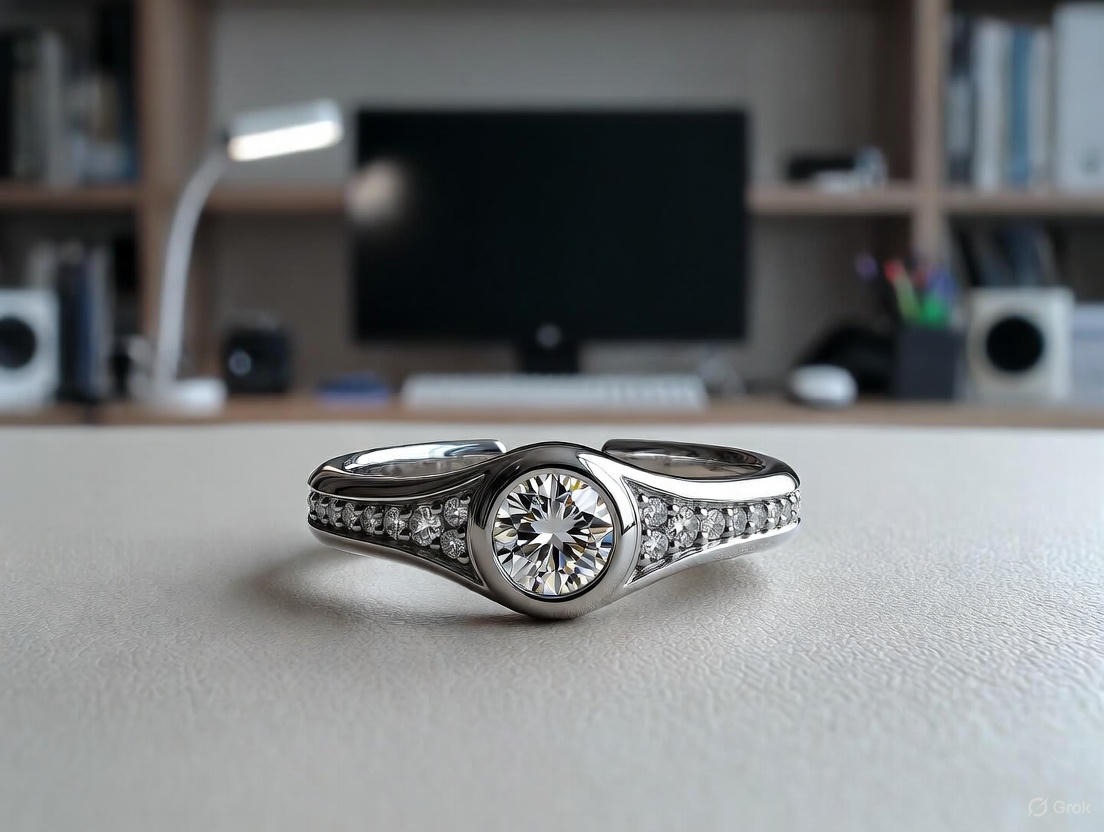
Before the advent of wearable technology, our understanding of our daily health was episodic and subjective. We might feel “tired” or “stressed,” but quantifying the depth, cause, and physiological impact of those states was nearly impossible. The wellness ring changes this dynamic entirely by providing a 24/7, passive window into your autonomic nervous system—the unconscious control center that governs your stress response, recovery, and readiness.
The magic lies in its continuity and proximity. Unlike a smartwatch you charge nightly, a ring is worn constantly, capturing data during sleep with unmatched accuracy. Its position on the finger’s vasculature allows for precise photoplethysmography (PPG) sensors to measure blood volume changes, translating into heart rate, HRV, and respiratory rate. This creates a rich, multidimensional picture of your body’s inner workings.
This continuous data stream shifts self-awareness from a feeling to a fact. You’re no longer guessing if last night’s sleep was restorative; your ring shows you the duration of deep and REM sleep, your resting heart rate dip, and your sleep-stage consistency. You don't just think a meeting was stressful; your ring displays the tangible spike in your heart rate and the dip in your HRV, correlating emotional events with physiological responses. This objective feedback is transformative. It breaks down the denial or minimization we often employ (“I’m fine, just a little wired”) and replaces it with irrefutable evidence.
For the knowledge worker, this is the ultimate productivity upgrade: a deep understanding of your personal operating system. You begin to see patterns. Perhaps your cognitive sharpness (as reported by your own focus) consistently peaks on mornings following a sleep score above 85. Maybe your afternoon energy crashes align perfectly with days your stress recovery score is low. This isn’t generic wellness advice; it’s a personalized blueprint for how your body fuels your work.
Establishing this personal stress baseline for accurate tracking is the critical first step. By understanding your unique norms, you can accurately interpret deviations, turning raw data into meaningful insight about your capacity for deep work, collaborative energy, and creative problem-solving on any given day.
Productivity in the modern world is less about brute-force effort and more about cognitive agility—the ability to pivot, solve novel problems, and maintain emotional regulation under pressure. This agility is fundamentally a neurological function, heavily influenced by your state of nervous system arousal. Your wellness ring is a master cartographer of this internal landscape, mapping your journey from a reactive, stress-dominated state to one of resilient calm.
At the heart of this is the balance between the sympathetic (“fight-or-flight”) and parasympathetic (“rest-and-digest”) branches of your autonomic nervous system. Chronic stress, poor sleep, and unhealthy lifestyle choices keep the sympathetic system dominant, leading to a state of high alert that depletes cognitive resources. Your ring tracks the primary biomarker of this balance: Heart Rate Variability (HRV). A higher HRV generally indicates a strong, adaptable parasympathetic response—meaning your body can efficiently downshift from stress and recover. A lower, less variable heart rate can signal a nervous system stuck in a heightened state.
When you’re in a reactive state, your prefrontal cortex—the brain region responsible for executive functions like focus, decision-making, and long-term planning—is effectively hijacked by the more primitive amygdala. The result? You become impulsive, distractible, and prone to errors. You might work long hours, but the quality of output suffers. Your ring can detect this state through sustained elevated heart rate, low HRV, and increased skin temperature variability.
Conversely, a resilient state, marked by higher and more stable HRV, correlates with optimal prefrontal cortex function. This is the zone of clarity through stillness, where you can access strategic thinking, creative insight, and sustained concentration. By using your ring’s data to identify the lifestyle factors that improve your HRV—such as quality sleep, mindful breathing, or targeted exercise—you are not just “managing stress.” You are directly training your nervous system to support peak cognitive performance.
This transformation is a journey your ring makes visible. It shows you the direct impact of a rushed morning versus five minutes of breathwork. It quantifies how a difficult conversation affects your physiology for hours afterward, and more importantly, it shows you your recovery rate, empowering you with techniques to hasten it. Understanding this neurological journey from reactive to resilient is the key to building the mental endurance required for true, sustainable productivity.
If you view sleep as downtime—a passive interval between productive days—your wellness ring is about to revolutionize your worldview. The data reveals sleep as the single most active and critical period for cognitive maintenance, memory consolidation, and emotional regulation. It is the non-negotiable foundation upon which every productive day is built. Your ring transforms abstract sleep advice into a personalized optimization manual.
Conventional wisdom asked, “Did you get 8 hours?” Modern biomarker tracking asks a far more sophisticated set of questions. Your ring breaks sleep into architectural components: light, deep, and REM sleep. Each stage serves a distinct purpose for the next day’s performance.
Your ring doesn't just track duration; it scores the quality of each night based on continuity, timing, and the balance of these stages. It correlates this score with your next-day readiness metrics. You’ll see the direct line between a night of fragmented, light-dominated sleep and a morning of brain fog, and conversely, between a night rich in deep and REM sleep and a day of effortless flow.
Furthermore, the ring illuminates the powerful bidirectional relationship between sleep data and stress levels. High stress at bedtime, signaled by an elevated resting heart rate and low HRV, predicts poorer sleep quality. In turn, poor sleep lowers your stress threshold for the following day, creating a vicious cycle. By using your ring’s evening data, you can implement targeted evening calm practices for transitioning from work to rest, breaking the cycle and setting the stage for regenerative sleep.
The productivity payoff is immense. Optimizing sleep via ring data leads to:
In essence, your ring helps you engineer your night to construct your most capable self for the day ahead.
We’ve all experienced it: the project that “suddenly” leads to burnout, the week where everything feels overwhelming. The truth is, these crises are rarely sudden. They are the culmination of an accumulating stress load that went unmonitored. Traditional productivity tools manage your time and tasks; your wellness ring manages your capacity. It turns the vague concept of “stress” into a tangible, trackable data stream, allowing for predictive load management rather than reactive crisis management.
Your ring tracks stress through multiple, complementary lenses:
By synthesizing these metrics, advanced rings generate a continuous stress load score throughout the day. This isn’t about labeling stress as “bad”—acute stress is a normal, performance-enhancing part of life. The danger lies in chronic, unaddressed stress that depletes your reserves. Your ring’s power is in its ability to show you your daily stress log in objective terms, helping you track stress triggers and recognize patterns.
Imagine starting your week with a full “recovery battery,” indicated by a high HRV and a low-stress baseline. Each meeting, deadline, and conflict draws down that battery to varying degrees, visible on your ring’s app. Without this data, you might schedule three high-stakes client calls in a single afternoon on a day your battery is already at 40%. The result is cognitive overload, poor decisions, and emotional exhaustion. With the data, you can strategically schedule demanding tasks for when your capacity is highest, and insert recovery activities—a walk, a breathing session—to recharge before critical moments.
This is predictive load management. By reviewing your weekly stress report, you can spot trends. Are Wednesday afternoons consistently a low point? Do weekend recovery fail to fully replenish your battery, suggesting a deeper issue? This intelligence allows you to have a proactive dialogue with your workload, your team, and yourself. You can use stress tracking data to predict burnout long before you hit the wall, making adjustments to projects, deadlines, and self-care rituals. You move from being a passive victim of stress to an active conductor of your energy.
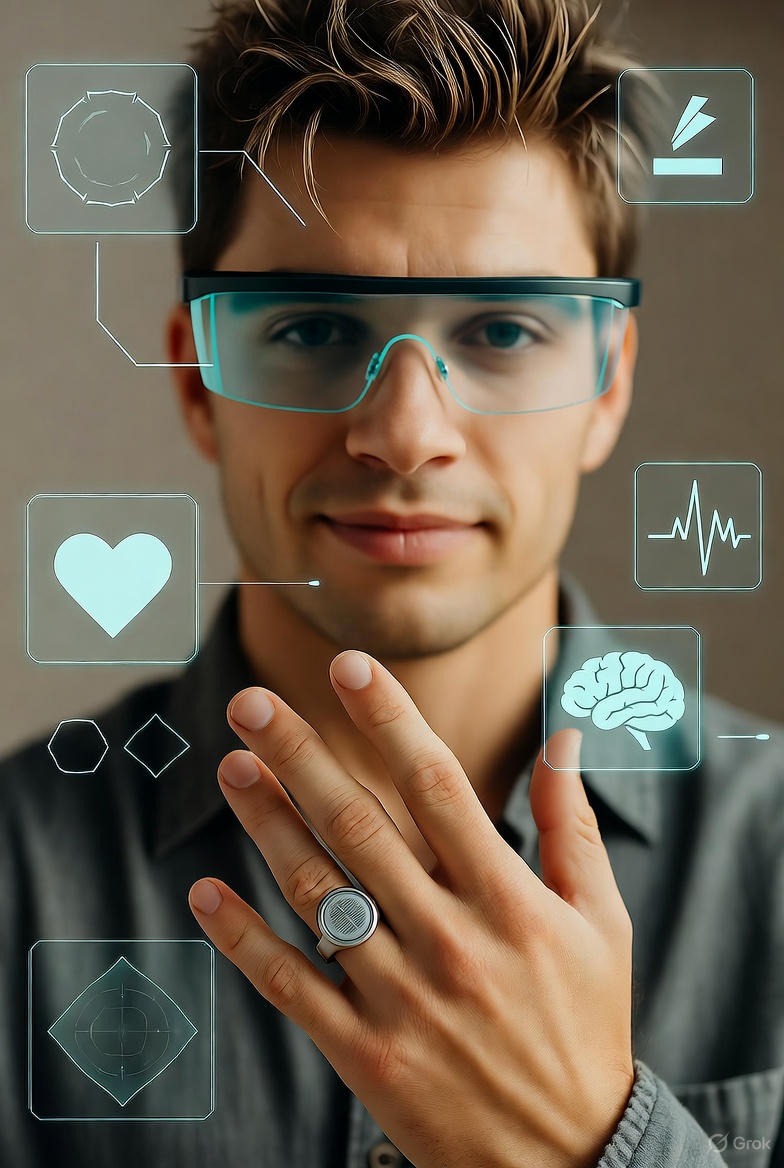
Of all the metrics a wellness ring provides, Heart Rate Variability (HRV) may be the most profound for the knowledge worker. It is a direct, non-invasive readout of your autonomic nervous system’s balance and your body’s overall readiness to perform. Think of it not as a heart strength metric, but as a heart intelligence metric—it measures the subtle, millisecond variations in time between each heartbeat. A healthy, resilient system shows high variability; it’s adaptable and responsive. A stressed, fatigued system shows low variability; it’s rigid and taxed.
For productivity, HRV is your ultimate biofeedback signal for cognitive resource availability. When your HRV is high, your parasympathetic nervous system is engaged, promoting a state of calm alertness ideal for the prefrontal cortex. This is the state for deep, focused work, strategic planning, and creative synthesis. When your HRV is low, your sympathetic drive is dominant, resources are diverted to basic survival functions, and your thinking becomes more rigid, reactive, and prone to error.
Your ring tracks HRV continuously, but it is most telling during two key times:
By correlating your HRV data with your work output and subjective experience, you begin to make powerful connections. You may find that on days your morning HRV is 10% above your baseline, you effortlessly solve complex coding problems that stumped you on lower-HRV days. You may notice that back-to-back virtual meetings cause a measurable dip in your HRV, explaining your subsequent inability to concentrate.
This data empowers you to make intelligent, real-time decisions. A low morning HRV score is not a verdict for a bad day; it’s a directive. It suggests today is for administrative tasks, clearing your inbox, or collaborative work rather than solo, deep-thinking marathons. It’s a cue to prioritize restorative practices like a midday walk or a guided calm practice to help nudge your nervous system back into balance. Diving deeper into understanding your heart rate variability numbers is essential for anyone using this data for performance optimization. It moves you from just seeing a number to interpreting a critical signal about your brain’s optimal operating conditions.
For generations, the professional’s energy management toolkit began and ended with stimulants: coffee to launch the morning, soda to battle the afternoon slump, maybe a sugary snack for a “quick boost.” This approach is a crude, destructive hack of a sophisticated biological system. It creates jagged peaks and catastrophic crashes, undermining steady focus and long-term health. Your wellness ring enables a far more elegant and effective strategy: a continuous, biomarker-based energy audit.
This audit looks at the true sources of human energy: mitochondrial health, metabolic flexibility, nervous system regulation, and circadian alignment. Your ring provides proxies for these systems, allowing you to fuel your work in harmony with your biology, not against it.
Key signals in your personal energy audit include:
With this data, you can experiment with and validate energy management techniques that go beyond caffeine. For instance:
This approach transforms you from a passive consumer of energy to an active architect of it. You learn the unique cadence of your energy throughout the day—your personal ultradian rhythms—and schedule tasks accordingly. Deep, creative work aligns with your biological peaks, while administrative tasks fill the natural valleys. You stop fighting your physiology and start partnering with it. To refine this practice, consider combining numbers with narrative in a stress-tracking journal, noting how different fueling strategies affect both your biomarkers and your subjective sense of productive flow.
Productivity isn’t derailed just by poor time management; it’s often hijacked by unmanaged emotions. Frustration, anxiety, impatience, and overwhelm are not just “feelings”—they are physiological events with measurable signatures. They trigger cortisol releases, spike your heart rate, and suppress your HRV, directly impairing the prefrontal cortex function required for good work. Your wellness ring acts as an objective mirror to your inner state, providing the self-awareness needed to move from emotional reactivity to regulated response.
The process is powerful: an external event (a critical email, a missed deadline) triggers an emotional reaction, which instantly creates a physiological change. Normally, we are only subjectively aware of the middle part—the feeling. The ring makes the physiological bookends visible. You can see the heart rate spike and the stress graph jump at the exact moment you read that email. This creates a crucial moment of pause and objectivity. It’s not “I am angry,” but “My body is having a stress response to this stimulus.”
This biofeedback loop is the foundation of emotional regulation. By noticing the physiological correlate of the emotion, you gain a point of intervention. Instead of being swept away by the feeling and firing off a reactive reply, you can use the data as a cue to engage a regulation technique:
Over time, this practice doesn’t just manage moments of crisis; it builds trait-level emotional resilience. You start to anticipate triggers and pre-emptively deploy calming strategies. You learn which types of interactions are most draining and can plan recovery afterward. This leads to clearer communication, better collaboration, and the ability to maintain strategic focus amid chaos—the hallmarks of true leadership and high-value work. For those in high-stakes roles, developing this skill through clarity through stillness practices is non-negotiable.
In a culture obsessed with activity, recovery is often seen as idleness—time wasted that could be spent doing. Your wellness ring provides incontrovertible evidence that this view is not only flawed but counterproductive. Recovery is not the absence of work; it is the active, biological process that makes high-quality work possible. It is when adaptation occurs, skills are consolidated, and cognitive resources are replenished. Your ring quantifies recovery, forcing you to honor it as a critical component of your productivity system.
Recovery operates on multiple timescales, all visible through your ring’s data:
Your ring helps you schedule and validate recovery activities. It answers questions like:
By treating recovery as a non-negotiable, data-informed practice, you break the cycle of chronic depletion. You stop glorifying the all-nighter and start celebrating the full night of deep sleep that enabled a breakthrough insight by 10 AM. You understand that the most productive hour of your week might be the one you spend on a walk in nature, completely disconnected, because it restores the cognitive flexibility you need for your next big idea. For a comprehensive look at how to measure the effectiveness of these practices, our blog offers a resource on how to measure progress in your calm mind practice.
Our productivity is not determined in a vacuum. It is profoundly shaped by our social interactions and physical environments—factors that, until now, were difficult to objectively assess. Your wellness ring acts as a personal environmental sensor, revealing the hidden physiological costs and benefits of your workspace, your conversations, and even your digital habits.
Social Stressors:
Meetings, especially contentious or poorly run ones, are notorious energy drains. Your ring can quantify this. You may see a steady climb in heart rate throughout a long video conference, or a sharp spike during a conflict. Conversely, a positive, collaborative brainstorming session with trusted colleagues might show stable, even improved, biomarkers. This data is invaluable. It allows you to:
Environmental Stressors:
By reviewing your data after different types of days, you can become a detective of your own optimal working conditions. Did you have a fantastically productive deep-work day at the quiet library? Check your stress and HRV graphs—they likely show a smooth, low-stress line. Was your work-from-home day fragmented and frustrating? The data may reveal constant micro-stressors from household noises or poor ergonomics.
This insight empowers you to engineer your environment for success. It provides concrete evidence to request a quieter workspace, invest in noise-canceling headphones, or set firmer boundaries around work communication after hours. It turns the abstract goal of a “healthy work environment” into a series of data-driven optimizations. For those navigating the unique challenges of remote work, targeted strategies for preventing digital burnout are essential.
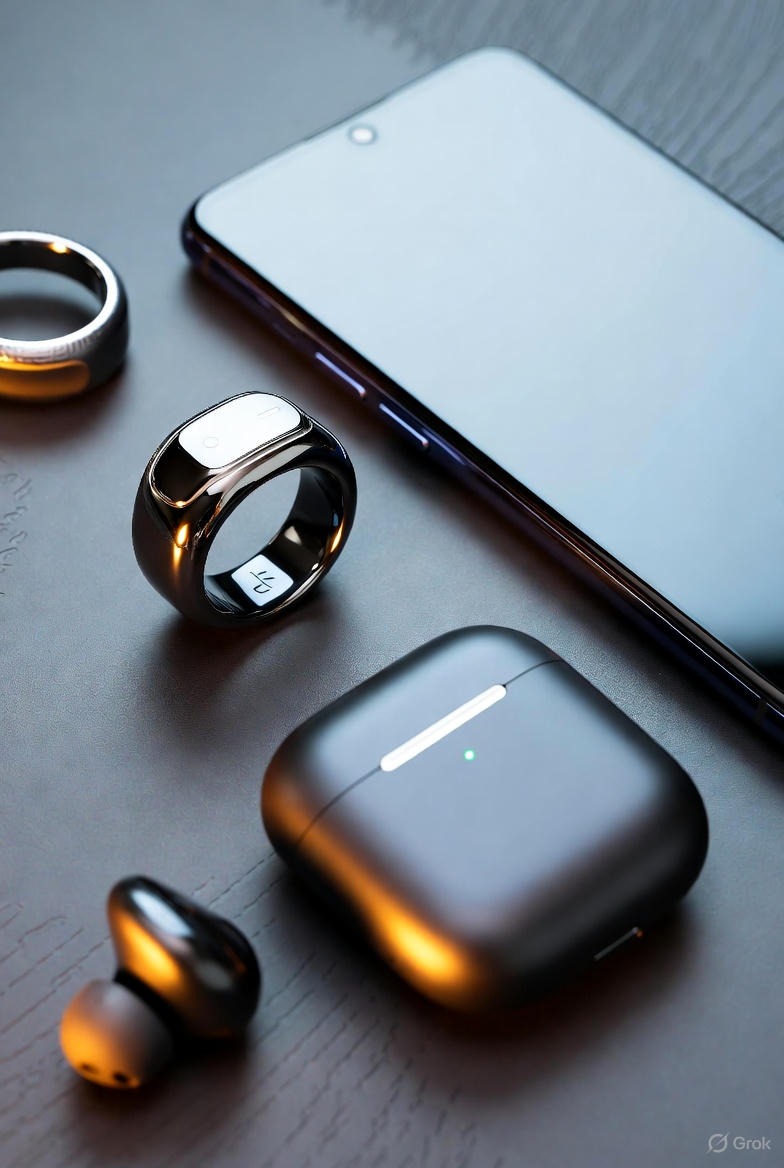
The final, and perhaps most significant, way your wellness ring proves health is your best productivity tool is by shifting your perspective from the daily grind to the decade-long arc of your career. Burnout isn’t a productivity problem; it’s a career-ending event. Chronic illness forced by neglect isn’t a personal failing; it’s a professional derailment. Your ring is the compass that keeps you on a sustainable trajectory, ensuring that your capacity to do great work compounds over years, not decays.
This long-game view is about tracking trends, not daily numbers. It’s about answering critical questions:
This longitudinal data transforms health from a remedial concern (“I need to fix my sleep”) to a strategic asset (“I am systematically building a more resilient physiology to support my leadership goals for the next five years”). It helps you make career decisions with your whole self in mind. Does that promotion with a 60-hour weekly commitment align with your physiological data on recovery needs? Can you sustain it without degrading your health—and therefore, eventually, your performance?
By using your ring as a long-term compass, you invest in the only piece of “equipment” essential to your work: yourself. You commit to a career built on vitality, not on borrowed time and depleted reserves. This is the ultimate productivity hack—one that doesn’t just help you accomplish more today, but ensures you have the energy, clarity, and passion to accomplish meaningful work for decades to come.
The transition from individual contributor to leader represents a fundamental shift in the source of productivity. A leader’s output is no longer their own direct work, but the collective output, innovation, and morale of their team. This makes a leader’s internal state—their stress levels, emotional regulation, and cognitive clarity—exponentially more consequential. A leader running on chronic stress becomes a contagion of anxiety, poor decision-making, and reactive management. Conversely, a leader operating from a state of physiological resilience creates a container for psychological safety, strategic focus, and peak team performance. Your wellness ring is the ultimate tool for cultivating this leadership edge.
The data provides a private, honest feedback loop that mitigates the "leadership blind spot." Leaders are often the last to know the impact of their own dysregulation. A terse message sent during a moment of low HRV, a meeting agenda rushed through because of a personal energy crash, or a missed coaching opportunity due to cognitive fatigue—these micro-moments degrade team trust and efficiency. The ring makes these states visible to you first, before they impact others.
Practical applications for the biomarker-aware leader:
Furthermore, a leader who openly champions the science of performance (without necessarily sharing their private data) sets a powerful cultural tone. By modeling behaviors like taking walking meetings, respecting recovery time, and discussing energy management, you give your team permission to do the same. You move the team culture from valuing “hours present” to valuing “sustainable output.” This shift can dramatically reduce team-wide burnout and turnover, which are among the largest productivity drains any organization faces. A leader who understands their own neurological journey from reactive to resilient is best equipped to guide their team through challenging periods without collective panic or exhaustion.
Most people design their workdays around a clock and a to-do list. High performers design their days around their energy and cognitive rhythms. Your wellness ring provides the sheet music for this symphony, showing you the natural cadence of your focus, creativity, and restorative needs throughout the day. The goal is to conduct your tasks to align with your biology, creating harmony instead of the discord of fighting against your own physiology.
This process begins with a week of observation. Using your ring’s continuous data alongside a simple log of your tasks and subjective focus, look for patterns. Most people will discover a version of the following ultradian rhythm, though the exact timing is personal:
Your ring helps you personalize this template. Are you a night owl whose true peak starts at 11 AM? Does your stress graph show you’re most resilient for difficult conversations at 10 AM? Use this data to block your calendar strategically.
The conductor’s toolkit based on ring feedback:
By conducting your day this way, you move from being a victim of your calendar to being the maestro of your potential.

Creativity and innovation are not mystical acts of inspiration; they are cognitive processes with specific physiological prerequisites. They require a state of “open awareness,” where the brain can make novel connections between disparate ideas. This state is antithetical to the hyper-focused, stress-induced tunnel vision of “fight-or-flight.” Your wellness ring holds the key to unlocking this state by guiding you into the physiological conditions where creativity flourishes.
The neuroscience is clear: the stress hormone cortisol, when chronically elevated, impairs the function of the prefrontal cortex and inhibits divergent thinking—the ability to generate many possible solutions. Creativity thrives under conditions of psychological safety and physiological calm, marked by higher parasympathetic (rest-and-digest) tone. Your ring’s primary indicator for this state is, once again, Heart Rate Variability (HRV). A higher HRV correlates with greater cognitive flexibility and access to the brain’s default mode network (DMN), which is active during mind-wandering, daydreaming, and insight—the very breeding grounds of creativity.
How to use your ring to engineer creative states:
Furthermore, the relationship between sleep data and creativity is profound. REM sleep, in particular, is essential for creative problem-solving. It’s during REM that the brain consolidates memories and stitches together unrelated concepts. A ring that shows you consistently achieving sufficient REM sleep is showing you that you’re investing in your creative capital. By prioritizing the sleep and recovery metrics that support high HRV and nervous system balance, you are not just resting; you are passively writing the code for your next innovative leap.
The modern workplace often rewards the illusion of multitasking—the rapid switching between email, chat, documents, and meetings. We wear our constant busyness as a badge of importance. Yet, decades of cognitive science prove that multitasking is a myth; what we’re actually doing is “task-switching,” and each switch carries a heavy cognitive cost in time, accuracy, and mental energy. Your wellness ring provides the physiological proof of this cost, making the hidden toll of fragmentation undeniably visible.
When you engage in focused, deep work on a single cognitively demanding task, your nervous system can achieve a state of flow. In this state, your heart rate may become steady and moderately elevated, stress markers can remain low, and you experience high efficiency. Contrast this with a period of fragmented work: jumping from a spreadsheet to Slack to a news headline and back. Your ring’s data will tell a different story:
Your ring turns this abstract concept into a personal case study. Try an experiment: For one morning, practice “monotasking.” Close all unnecessary tabs and apps, silence notifications, and work on a single project for 90 minutes. Note your subjective focus and your output. Then, review your ring’s stress and heart rate data for that block. The next day, have a typical, fragmented morning. Compare the data. The fragmented morning will almost certainly show a higher, more chaotic physiological signature.
Using your ring to build a fortress of focus:
By using your ring to expose the true cost of fragmentation, you gain the evidence-based conviction to defend your focus. You can communicate to colleagues or managers not just that you “need focus time,” but that the quality of your work—and the hard data from your body—depends on it. This moves you from the frantic, shallow productivity of multitasking to the profound, meaningful productivity of deep work. For those struggling to start, a beginner’s step-by-step guide to tracking your work patterns alongside your stress can be invaluable.
Think of your long-term productivity not as a linear function of hours worked, but as the output of a portfolio of health assets. Like a financial portfolio, some assets provide quick, volatile returns (e.g., caffeine, an all-nighter), while others are slow-growing, stable investments that pay compound interest over decades. Your wellness ring is your portfolio manager, providing the quarterly reports that show you which investments are truly building your net worth in human capital.
This “Resilience Portfolio” consists of several key asset classes, all trackable through your ring:
1. Sleep Equity: This is your foundational, low-risk, high-yield asset. Every night of high-quality sleep compounds, paying dividends the next day in cognitive function, emotional stability, and metabolic health. A consistent sleep debt, however, is like taking out a high-interest loan against your future performance. Your ring’s Sleep Score is the daily valuation of this asset.
2. Nervous System Flexibility (HRV): This is your growth stock. A high, stable, or improving HRV trend indicates a system that can withstand market volatility (stress) and recover quickly. You invest in this asset through practices like meditation, breathwork, and zone 2 cardio. Your ring’s HRV trendline is your portfolio’s performance chart.
3. Stress Recovery Capacity: This is your liquidity. It’s your ability to bounce back from draws on your system. You measure it by how quickly your stress metrics return to baseline after a challenging event. A high recovery capacity means you’re never far from your optimal operating state. Your ring’s stress recovery score and daily graphs show your liquidity in real-time.
4. Circadian Alignment: This is your diversified international fund—it ensures your internal processes are synchronized with the external world for optimal efficiency. It’s built through consistent light exposure, meal timing, and sleep schedules. Your ring’s body temperature rhythm and sleep consistency metrics are its audit.
How to manage your portfolio with ring data:
The ultimate report from your ring-portfolio manager is your long-term resilience. It answers: Are you richer in health and capacity than you were six months ago? Or are you slowly depleting your principal? By framing health as a portfolio of productive assets, you make intelligent, data-driven decisions that secure not just your next deadline, but your entire career’s potential. For a deeper analysis of the long-term trends that matter, an expert framework for interpreting chronic stress can help you move from weekly data to yearly strategy.
The separation of "physical health" and "mental performance" is a false dichotomy. For the knowledge worker, the body is not merely a vehicle for carrying the brain to meetings; it is the primary regulator of the brain's environment. Physical activity, tracked not for fitness vanity but for cognitive utility, becomes a precise tool for engineering mental states conducive to deep work, creative insight, and emotional resilience. Your wellness ring transforms exercise from a vague "should-do" into a data-informed strategy for cognitive optimization.
The connection is both acute and chronic. Acutely, a bout of movement directly alters your brain chemistry and physiology in ways your ring can measure. Chronically, consistent activity builds a more resilient system that can withstand cognitive load.
Decoding the acute cognitive effects via your ring:
Using your ring to find your optimal movement prescription for mental work:
By interpreting physical activity through the lens of its subsequent impact on your nervous system and sleep, you stop exercising for the mirror and start moving for the mind. You learn that the most productive workout might be the one that leaves you feeling calm and clear-headed, not utterly exhausted. For a detailed exploration of this balance, our analysis of stress tracking for athletes optimizing training and recovery, while geared towards athletes, contains universally applicable principles for dosing stress and recovery.
Nutrition profoundly influences productivity, but generic advice ("eat more greens") fails against the complexity of individual biochemistry, daily stress loads, and circadian timing. Your wellness ring provides a critical feedback mechanism, revealing how different foods and eating patterns impact your physiological stress, sleep quality, and next-day readiness. This turns nutrition from a domain of dogma to one of personalized experimentation.
You are not just eating for your stomach; you are eating for your autonomic nervous system. A meal can be either a stressor or a source of stable energy, and your ring's data on heart rate, HRV, and sleep reveals the truth.
Key nutritional insights your ring can help uncover:
Conducting your own nutritional experiments:
By using your ring to connect the dots between your plate and your performance, you make eating a strategic act of fueling your most valuable asset: your focused, creative mind.
Accumulating data is pointless without a framework for turning it into action. This section provides a step-by-step guide to synthesizing the insights from your wellness ring into a personalized, living protocol—a set of rules and guidelines you can follow to consistently align your health with your productivity goals. Think of it as building your own operating manual.
Phase 1: The Discovery Month (Weeks 1-4)
Phase 2: Pattern Recognition and Hypothesis Formation (Weeks 5-8)
Phase 3: The Experimentation Cycle (Ongoing)
Sample Protocol Rules Derived from Ring Data:
This protocol becomes your personal constitution for sustainable performance. It is dynamic, always updated by new data from your ring. It externalizes decision-making, reducing willpower drain. Instead of wondering, "Should I go out tonight?" you can consult your protocol: "My sleep has been poor this week, and I have a critical presentation tomorrow. Protocol says prioritize sleep."
We stand at an inflection point. The old model of productivity—linear, extractive, and ignorant of human biology—is failing. It results in epidemic levels of burnout, chronic disease, and disengagement. The future of work that succeeds will be human-centric, designed around the undeniable truth that people are not machines. They are biological organisms whose best work is a direct output of their physiological and psychological state. Widespread adoption of tools like the wellness ring will be a catalyst for this transformation, moving us from industrial-era management to stewardship of human potential.
Implications for Individuals:
You will become the CEO of your own health and performance. With precise data, you can negotiate not just for salary, but for working conditions that allow you to thrive. You can present a business case for a flexible schedule based on your circadian rhythm, or for a standing desk based on your NEAT data. Your career becomes a long-term project of cultivating and deploying your energy and talent, not just selling your time.
Implications for Teams and Leaders:
Forward-thinking organizations will move beyond "wellness programs" and into "performance environment design." While respecting privacy, aggregated, anonymized biomarker data could inform office design (optimal lighting, noise reduction), meeting culture (shorter, more purposeful), and workflow management (respecting ultradian rhythms). Leaders will be trained not just in project management, but in creating psychologically and physiologically safe environments that maximize collective cognitive bandwidth. They will learn to use stress tracking to improve team time management by identifying systemic, not individual, friction points.
Implications for Society:
A human-centric work model could realign success with well-being. If the most successful people are also the most rested, resilient, and healthy, it reshapes our cultural ideals. Healthcare could shift from sick-care to true health optimization, with devices like the ring providing preventive, continuous diagnostics. The productivity gains from a healthier, more focused workforce could be channeled into shorter work weeks, emphasizing output over presence, and creating more space for the life outside work that ultimately fuels creativity and purpose.
This future is not about being tracked for corporate gain; it is about being empowered with self-knowledge. The wellness ring is a pivotal tool in this shift. It provides the objective language to describe our subjective experience, the evidence to defend our human needs, and the roadmap to a way of working that doesn't require us to sacrifice our health on the altar of achievement. It proves, conclusively, that health is not a personal hobby—it is your most sophisticated, reliable, and powerful productivity tool.
Your Trusted Sleep Advocate: Sleep Foundation — https://www.sleepfoundation.org
Discover a digital archive of scholarly articles: NIH — https://www.ncbi.nlm.nih.gov/
39 million citations for biomedical literature :PubMed — https://pubmed.ncbi.nlm.nih.gov/
Experts at Harvard Health Publishing covering a variety of health topics — https://www.health.harvard.edu/blog/
Every life deserves world class care :Cleveland Clinic - https://my.clevelandclinic.org/health
Wearable technology and the future of predictive health monitoring :MIT Technology Review — https://www.technologyreview.com/
Dedicated to the well-being of all people and guided by science :World Health Organization — https://www.who.int/news-room/
Psychological science and knowledge to benefit society and improve lives. :APA — https://www.apa.org/monitor/
Cutting-edge insights on human longevity and peak performance:
Lifespan Research — https://www.lifespan.io/
Global authority on exercise physiology, sports performance, and human recovery:
American College of Sports Medicine — https://www.acsm.org/
Neuroscience-driven guidance for better focus, sleep, and mental clarity:
Stanford Human Performance Lab — https://humanperformance.stanford.edu/
Evidence-based psychology and mind–body wellness resources:
Mayo Clinic — https://www.mayoclinic.org/healthy-lifestyle/
Data-backed research on emotional wellbeing, stress biology, and resilience:
American Institute of Stress — https://www.stress.org/


