


How to Use Mindful Living to Break Bad Habits
A mindful life assessment asks how often you operate on autopilot vs. with awareness in different life domains.
A mindful life assessment asks how often you operate on autopilot vs. with awareness in different life domains.
%402x.svg)
Do you ever find yourself scrolling through your phone, only to look up 30 minutes later with no memory of what you just saw? Or perhaps you reach for that second (or third) cookie while working, almost as if your hand has a mind of its own. Maybe it’s the reflexive sigh of frustration in traffic, the automatic "yes" to a commitment you don’t have time for, or the late-night snack raid you instantly regret.
We call these actions "bad habits," but that label misses the point. They aren't moral failures or character flaws. They are, in essence, automated neural shortcuts—programs your brain has written to conserve energy. The problem isn't the programming itself, but that the program is running on outdated, inefficient code that no longer serves your well-being. For decades, the prescription for breaking these patterns has been a combination of sheer willpower, harsh self-criticism, and white-knuckled resistance. It’s a model built on conflict: you versus your habit. And like any war, it’s exhausting, demoralizing, and rarely results in lasting peace.
What if there was another way? A path not of force, but of awareness? Of curiosity instead of condemnation?
This is the promise of mindful living. Mindfulness is not about emptying your mind or achieving a state of perpetual Zen. It is the fundamental human ability to be fully present, aware of where we are and what we’re doing, without being overly reactive or overwhelmed by what’s going on around us. When applied to our habits, it transforms the entire battlefield. Instead of fighting the urge, we learn to observe it. Instead of being hijacked by automaticity, we insert a moment of conscious choice. This is the mindful pivot: that critical space between trigger and action where freedom resides.
In this comprehensive guide, we will dismantle the myth of willpower and rebuild a sustainable framework for change using the principles of mindful living. We’ll explore the neuroscience of habit loops, the psychology of cravings, and how modern technology, like the advanced sensors in a smart ring from Oxyzen, can provide the objective data to illuminate patterns invisible to our subjective awareness. This isn't just theory; it's a practical, step-by-step journey into self-knowledge. By the end, you will have a new understanding of your own behavior and a toolkit to redesign it—with compassion, clarity, and lasting effectiveness.
Let's begin not by breaking anything, but by understanding. Your habits are about to meet their most powerful adversary: your awake and aware mind.

Before we can change a habit, we must first see it clearly. In his seminal book The Power of Habit, Charles Duhigg popularized the concept of the "Habit Loop," a neurological pattern that governs any habit. This loop consists of three distinct components: the Cue, the Routine, and the Reward. Understanding this loop is like obtaining the schematic for a machine you’ve been struggling with; suddenly, you can see how all the parts fit together.
The Cue is the trigger that initiates the behavior. It’s a piece of information that predicts a reward. Cues can be external (a time of day, a location, the sight of food, a notification ping) or internal (a specific emotion like boredom or anxiety, a physical sensation, or a fleeting thought). The brain is constantly scanning the environment for these cues because they signal an opportunity to run an efficient, pre-programmed sequence.
The Routine is the behavior itself—the habitual action you perform, whether physical (eating, nail-biting, scrolling), mental (catastrophizing, ruminating), or emotional (outbursts, withdrawal). This is the part of the loop we typically identify as the "bad habit," but it’s merely the output of a deeper process.
The Reward is the benefit your brain gains from the routine. This is the crucial piece. The reward is what teaches the brain, "Remember this loop for the future." Rewards can be tangible (a sugar rush, a dopamine hit from a like) or intangible (a distraction from discomfort, a sense of social connection, temporary relief from anxiety).
Here’s the critical insight from neuroscience: when a habit is formed, the brain essentially goes on autopilot. The prefrontal cortex—the seat of conscious decision-making and willpower—checks out. The behavior is delegated to the basal ganglia, a deeper brain structure optimized for efficiency. This is why you can drive a familiar route or tie your shoes while planning your day; the conscious mind is freed up for other tasks.
The problem arises when the loop is built around a reward that is ultimately harmful or unfulfilling. The mindless snack provides a momentary pleasure (reward) that undermines a larger health goal. The procrastination scroll offers escape (reward) but creates greater stress later.
Where Mindfulness Intervenes: Mindfulness directly targets the autopilot. By cultivating present-moment awareness, you train your brain to recognize the Cue as it appears, rather than being unconsciously propelled into the Routine. You create space to ask a pivotal question: "What reward am I truly seeking here?" This simple act of observation begins to dismantle the loop’s power, bringing the behavior back under the domain of the conscious prefrontal cortex. It’s the difference between being a passenger on a runaway train and stepping into the conductor’s cabin. To see this process in action with real-world data, many find that tools like the Oxyzen smart ring offer a fascinating window into physiological cues like stress and sleep patterns, which you can explore further in our detailed blog posts.
Our cultural narrative around self-improvement is saturated with the "virtue of willpower." We idolize the person who can resist temptation through sheer grit and determination. We set goals and declare war on our weaknesses. Yet, study after study in behavioral psychology reveals a sobering truth: willpower is a profoundly limited resource. It functions more like a muscle that fatigues with use than an infinite reservoir of resolve.
This phenomenon, known as ego depletion, suggests that acts of self-control draw from a common pool of mental energy. Resisting that morning donut, forcing focus on a tedious task, or managing your temper in a frustrating meeting all tap the same resource. By the time evening rolls around, your "willpower muscle" is often exhausted, making you far more susceptible to the very habits you’re trying to break. This explains why your healthy eating resolution crumbles at 9 PM, not 9 AM.
Furthermore, the "fight" mentality sets up a painful internal conflict. It creates a dynamic of self-versus-self. One part of you (the conscious, goal-oriented self) is in a constant battle with another part (the impulsive, habit-driven self). This battle generates stress, guilt, and shame—emotions that, ironically, are potent cues for seeking comfort through the very bad habits you’re fighting. It’s a vicious, self-defeating cycle: you stress about your habit, then engage in the habit to relieve the stress.
Mindful living proposes a radical shift: from control to curiosity. Instead of trying to suppress or fight an urge, you learn to approach it with mindful awareness. This does not mean giving in. It means changing your relationship to the experience.
Imagine a craving for a cigarette (or a cookie, or your phone) as a wave in the ocean. The willpower approach is to stand rigidly against the wave, trying to hold it back until you are eventually overwhelmed. The mindful approach is to see the wave, acknowledge its presence, feel its intensity, and then watch it rise, peak, and fall away—without being swept off your feet. You recognize, "Ah, this is a craving. It feels like tension in my chest and a repetitive thought. It’s unpleasant, but it’s not an emergency. It’s just a passing state."
This de-escalates the internal war. By removing the judgment ("This is bad, I shouldn't be feeling this"), you remove the secondary layer of suffering. You conserve the mental energy previously spent on fighting and redirect it toward conscious choice. The question changes from "How do I kill this urge?" to "How do I want to respond to this urge?" This compassionate inquiry is the cornerstone of sustainable change, a philosophy deeply embedded in our mission at Oxyzen to support holistic well-being without judgment.

If mindfulness is the lens through which we see our habits clearly, then present-moment awareness is the practice of polishing that lens. You cannot change what you do not notice. This first step is not about your bad habit at all; it’s about training your mind’s most fundamental muscle: attention.
In our hyper-connected world, attention is perpetually fragmented. We live in a state of continuous partial attention, mentally time-traveling to rehearse the future or ruminate on the past. This autopilot mode is the perfect breeding ground for unconscious habits. Present-moment awareness is the deliberate practice of returning your attention to the "here and now," anchoring it in your direct sensory experience.
How to Begin: The Breath as an Anchor
The breath is the most portable and constant anchor we have. A simple practice to start:
Start with just two minutes, once or twice a day. The goal is not to achieve a blank mind, but to become familiar with the dynamic nature of your attention—how it moves, what it grabs onto, and how to gently guide it back.
Expanding Awareness to Daily Activities
Once you’ve practiced with the breath, bring this quality of attention to a routine activity. Practice mindful eating with one bite of food, noticing its texture, taste, and temperature. Practice mindful walking, feeling the lift and fall of your feet, the air on your skin. Practice mindful listening, giving someone your full attention without mentally preparing your response.
This trains the brain in meta-awareness—the awareness of awareness itself. You begin to notice that you are not your thoughts or urges; you are the observer of them. This creates the crucial psychological distance between the impulse and the action. When the craving for a mindless snack arises, you have already built the neural pathway to notice: "Hmm. There is a thought about wanting chocolate. There is a tightness in my stomach." This simple act of naming the experience engages the prefrontal cortex and weakens the automatic grip of the basal ganglia. It is the birth of choice in a previously automated process. For those curious about how technology can support this awareness with physiological data, our FAQ page addresses common questions about how wearables can complement a mindful practice.
With a slightly more stable capacity for awareness, you can now turn the spotlight of your attention onto the habit itself. This stage is investigative, not judgmental. You are a compassionate scientist gathering data on your own behavior. The objective is to deconstruct your habit loop with precision.
Step 1: Choose One Habit
Start with one specific, modest habit. "Being healthier" is too vague. "Mindlessly eating chips while watching TV after work" is specific. This precision gives you a clear loop to study.
Step 2: Collect Data with Curiosity
For 3-5 days, do not try to change the behavior. Your only task is to observe it mindfully every time it occurs. Keep a small journal or note in your phone. For each instance, probe the three parts of the loop:
An Example Map:
This mapping reveals the true function of the habit. You’re not a "phone addict"; you’re using the phone as an inefficient tool to manage the discomfort of boredom or challenge. This insight is revolutionary. It shifts the problem from the behavior (scrolling) to the underlying need (a restorative way to handle mental fatigue). Suddenly, you have new, more effective avenues for intervention. This process of self-discovery mirrors the journey we embarked on at Oxyzen, where understanding the root of a problem led to a better solution, as shared in our story.
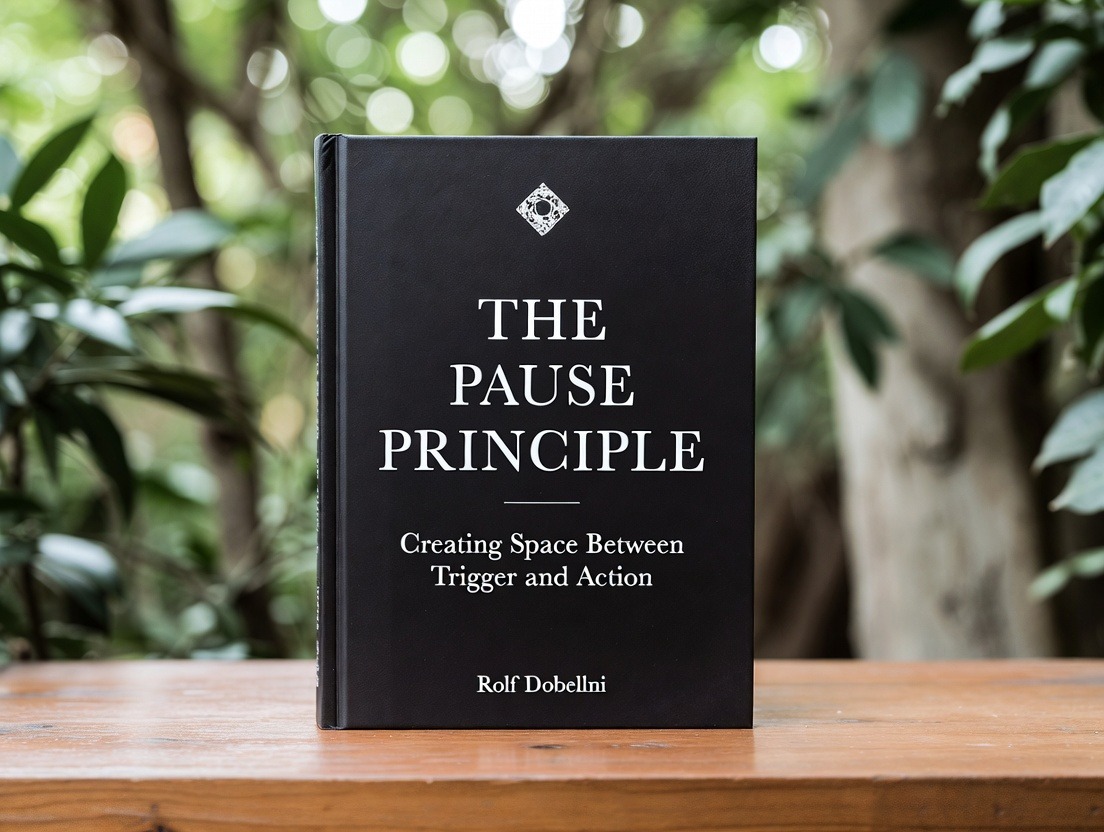
You’ve identified your loop. You see the cue, the routine, and the reward. Now, we target the most critical leverage point in the entire system: the sliver of time—often mere milliseconds—between the cue and the routine. This is the mindful pivot. The goal of this stage is not to stop the habit, but to consistently and deliberately lengthen this pause.
In the autopilot state, this space doesn’t seem to exist. The cue fires, and the routine executes like a reflex. The pause principle inserts a buffer of awareness, transforming a reflex into a response.
How to Cultivate the Pause:
What to Do in the Pause?
Don't just stare blankly. Use the pause for mindful inquiry. Ask yourself the "RAIN" questions, a classic mindfulness tool:
This pause is where your power lies. It is the moment you transition from being a puppet of your neural wiring to being the conscious operator of your life. Every time you successfully pause, you are not failing to break the habit; you are succeeding at the most important part—rewiring your brain’s automatic response. It’s in these small, victorious moments that lasting change is built, a truth echoed in the transformative experiences shared by our users.
A craving is not a command; it is a sensation. Yet, we treat it with the urgency of a five-alarm fire, believing we must either immediately obey it or frantically extinguish it. Mindfulness offers a third way: to surf it. "Urge surfing," a technique pioneered in addiction therapy, is the practice of riding the wave of a craving with mindful awareness until it naturally subsides.
A craving is a time-limited physiological and psychological event. Like a wave, it builds, peaks, and breaks. When we mindlessly act on it the moment it appears, we reinforce the belief that it is unendurable and that action is the only relief. When we fight it, we create tension and often make it stronger. Urge surfing teaches us that we can sit with discomfort and that it will pass on its own—a profoundly empowering realization.
How to Practice Urge Surfing:
The Neuroscience of Surfing: When you engage in urge surfing, you are activating the brain's "observer" network. You are proving to your nervous system that the craving sensation itself is not dangerous; it is just a pattern of energy in the body. This process of habituation occurs—the brain learns that the cue (e.g., boredom) does not reliably lead to the old routine and reward, so the neural pathway begins to weaken from disuse.
Every time you successfully surf an urge, you are not just resisting a bad habit; you are building tolerance for emotional and sensory discomfort. You are strengthening the neural circuitry for self-regulation. This skill becomes a superpower, applicable to any difficult emotion—frustration, anger, anxiety—freeing you from being at the mercy of your transient inner states. For deeper dives into the science of stress and self-regulation, our blog is a continually updated resource.

Your mindful investigation revealed the true reward your habit was seeking: escape, distraction, comfort, stimulation, connection. Now, with awareness and the ability to pause, you can engage in the most creative phase of habit change: experimentation. The goal is to find a new, more nourishing routine that delivers the same core reward.
This is not about deprivation, but about discovery and upgrade.
The Golden Rule of Habit Change (Duhigg): You cannot extinguish an old habit loop; you can only change it. The cue and the reward remain roughly the same, but you insert a new routine. The key is that the new routine must honestly satisfy the old craving.
How to Experiment Mindfully:
Examples of Reward Rewriting:
The success of this phase depends entirely on the mindful awareness built in the previous stages. Without the pause, you can't choose the experiment. Without non-judgmental curiosity, you'll get discouraged if the first experiment doesn't work. This is where change becomes playful and personalized. You are designing a better life, one conscious experiment at a time, a principle of innovation you can see in the technology we develop at Oxyzen.
We often think of habits as mental phenomena, but they are deeply embodied. The craving for a cigarette is felt as a tightening in the chest. The anxiety that triggers scrolling is a flutter in the stomach. The "stress snack" is often a response to a vague, unsettled feeling in the body we mislabel as hunger. Our thoughts are often just the narrators trying to explain these somatic sensations.
Therefore, a powerful front in mindful habit change is the body itself. Somatic awareness—the conscious perception of internal bodily sensations—allows us to intercept habits at their physiological roots.
How Habits Live in the Body:
Every emotion and urge has a correlating somatic signature. When you feel a habitual urge, it is preceded and accompanied by subtle (or not-so-subtle) changes in muscle tension, breath pattern, heart rate, and visceral feeling. Before you consciously think "I want to check my phone," your body may have already tensed your shoulders and shifted your breathing to a shallow pattern in response to a work stressor.
Practices for Somatic Awareness:
By becoming literate in your body's language, you get an earlier warning system. You can catch the habit loop at the stage of somatic cue, long before it escalates into a full-blown mental craving and automatic action. You learn that the body is not the enemy to be ignored or subdued, but a wise ally offering constant feedback. Honoring this mind-body connection is central to our vision for integrated wellness, which you can learn more about here.
While internal awareness is paramount, it is foolish to ignore the power of context. Our environment is a constant stream of cues, many designed by corporations to hijack our attention and trigger automated behaviors. Mindful living extends outward into the conscious design of your physical and digital spaces to make good choices easier and bad habits harder. This isn't about lacking willpower; it's about wisely engineering your surroundings to support your mindful intentions.
The Principle of Friction: Every habit has a friction coefficient. Mindless habits are typically low-friction. Your phone is in your pocket. The cookies are on the counter. Netflix autoplays the next episode. To change a habit, you can increase friction for the unwanted behavior and decrease friction for the desired behavior.
Physical Space Design:
Digital Space Design: Your digital environment is arguably more powerful than your physical one. It is a habit-forming engine.
The Role of Ritual: Design mindful transition rituals to replace habitual ones. If you automatically reach for your phone upon waking, place a notepad by your bed and write three things you're grateful for first. If you walk in the door and head straight to the pantry, design a new "arrival ritual": hang up your keys, wash your hands, and change into home clothes. These rituals, performed mindfully, become new, positive automatic routines that are cued by time and location.
By mindfully designing your environment, you are not relying solely on your internal pause in the heat of the moment. You are creating a world that consistently nudges you toward your desired self, making the mindful choice the path of least resistance. For ideas on creating a holistic wellness-supportive environment, our blog offers numerous practical guides.
Here is the inevitable truth you must make peace with: you will slip up. The old neural pathway is well-worn, like a deep riverbed. Your new, mindful path is a faint deer trail in the grass. In times of high stress, fatigue, or emotional overwhelm, the brain will default to the deeper channel. The automatic response will fire before your mindful pause.
This moment—the moment after the slip—is the most critical juncture in your entire journey. The traditional, willpower-based response is one of self-flagellation: "I'm a failure. I have no willpower. I'll never change." This mindset is toxic and counterproductive. The shame and frustration generated become powerful cues that often trigger more of the unwanted behavior in a misguided attempt to self-soothe, creating a shame-spiral.
Mindful habit change requires a complete reframe of the "setback." It is not a failure; it is data.
The Mindful Post-Slip Protocol:
This process transforms a shameful collapse into a powerful learning opportunity. It reinforces the new identity: "I am someone who learns from my experiences with kindness, not someone who punishes myself for being imperfect." This compassionate accountability is what makes change sustainable. It builds resilience instead of brittleness. Hearing how others have navigated this journey with self-compassion can be incredibly supportive, as seen in the stories shared by our community.
We've established that monumental change rarely begins with a monumental act. The willpower-fueled declaration of "I will never do X again!" sets a high bar that often leads to discouragement. Mindfulness teaches us to start small—not as a compromise, but as a strategic masterstroke. This philosophy is powerfully aligned with BJ Fogg's Tiny Habits method, which states that for a behavior to become habitual, it must be easy to do and effectively triggered.
The intersection of mindfulness and Tiny Habits is where profound transformation finds its most reliable engine. Mindfulness provides the awareness to see the tiny opportunity; Tiny Habits provide the ultra-simple blueprint to act on it. Together, they bypass resistance and build a foundation of success, one nearly imperceptible brick at a time.
The Neurology of Small Wins: Every time you perform a behavior—any behavior—and feel a sense of success, your brain releases a dose of dopamine. This neurotransmitter is not just about pleasure; it's about learning and motivation. It tells your brain, "That was good, do it again." By designing habits that are so small they are almost impossible to fail (e.g., "After I brush my teeth, I will floss one tooth"), you guarantee this dopamine hit. This positive reinforcement begins to wire your identity toward being "someone who flosses" or "someone who exercises," building intrinsic motivation that willpower alone cannot generate.
How to Design a Mindful Tiny Habit:
The Mindful Expansion: The power of this method lies in its organic growth. You are not forcing yourself to do 30 minutes of yoga on day one. You are simply building a reliable neural pathway: coffee → mat. Once that is automatic (which can happen in just a few days), you naturally think, "Well, I'm on the mat, I might as do one sun salutation." The habit expands from the inside out, driven by momentum and natural inclination, not grim determination. Mindfulness keeps you attuned to this natural expansion, ensuring you don't force it prematurely and reintroduce friction.
This approach is revolutionary for breaking bad habits through replacement. Want to stop reaching for your phone first thing? The tiny habit could be: "After my alarm goes off, I will place both feet on the floor and take one deep breath." This 2-second act inserts a mindful pause and a new, positive physical routine that directly disrupts the old "grab phone" sequence. It's not about fighting the phone; it's about starting your day with an anchored moment of presence. For more on building sustainable wellness routines, our blog offers a wealth of actionable strategies.
Not all habits are created equal. Some have a disproportionate ripple effect, triggering a cascade of other positive changes without requiring direct focus on each one. These are keystone habits, a concept that when viewed through a mindful lens, becomes a powerful tool for systemic life change.
A keystone habit is a pattern that creates structures in your life which make other good habits easier to adopt. It's the first domino. Classic examples include:
Why Keystone Habits Work: They succeed because they change your self-image. Running three times a week makes you see yourself as a "healthy, disciplined person." That identity then seeks congruence in other areas of your life. They also create small wins that build a sense of agency, the belief that "I am in control of my life." Furthermore, they often establish new routines and social rhythms that support other changes.
How to Mindfully Discover Your Keystone Habit:
You cannot simply adopt someone else's keystone habit. It must be meaningful and sustainable for you. Use mindful inquiry to find it:
Nurturing Your Keystone: Once identified, apply all the mindful habit-change tools to this one habit. Map its loop, design its environment, and practice compassionate accountability with it. Protect it fiercely. As this habit solidifies, be mindfully open to the unexpected positive changes that begin to unfold in other domains. You are not building a single habit; you are adjusting the central pillar of your life's architecture. This journey of self-discovery and systemic improvement is at the heart of the Oxyzen mission.
We do not develop habits in a vacuum. Our behaviors are profoundly shaped by the people around us—a reality famously summarized by motivational speaker Jim Rohn: "You are the average of the five people you spend the most time with." Your habit ecosystem—your family, friends, coworkers, and even your digital communities—constantly provides cues, normalizes routines, and offers rewards.
Mindful habit change, therefore, requires a mindful audit of your social environment.
How Social Cues Work:
Mindful Strategies for Social Habit Change:
Mindfulness in the social dimension is about recognizing that you are an interconnected being. It grants you the clarity to see which connections are nurturing your growth and which are unconsciously reinforcing patterns you wish to change. From this place of awareness, you can begin to gently reshape your social ecosystem with intention, not isolation.
Our most pervasive modern habits are digital. The compulsive check, the infinite scroll, the notification chase—these are not personal failings; they are the designed outcomes of a trillion-dollar attention economy. Breaking these habits requires a specialized application of mindfulness, because the opponent is not just your own neural wiring, but an army of engineers optimizing for your engagement.
Understanding the Digital Habit Loop:
Mindful Tech Practices:
The Deeper Inquiry: The "Digital Void" Often, we reach for our devices to fill a perceived void—a moment of silence, boredom, or transition. Mindfulness encourages you to get curious about the void itself. What happens if you don't fill it? What sensations arise? You may discover that the void is not an enemy, but a space where creativity, calm, and self-connection can germinate. Learning to sit in the mild discomfort of "not being stimulated" is a muscle mindfulness builds, breaking the reflex to seek constant digital input. For support in navigating the intersection of tech and well-being, our FAQ provides relevant insights.
A habit is not truly changed until it is maintained. The initial 21, 66, or 254 days (varying by study) of conscious effort are just the beginning. The real test is integrating this new behavior into your identity and lifestyle for the long term, through life's inevitable stresses, changes, and disruptions. This is where mindfulness transitions from a "tool for change" to a way of being.
From Doing to Being: The Identity Shift
The pinnacle of habit change is when you no longer think "I have to meditate" but "I am someone who values mindfulness." This shift from external compliance to internal identity is nurtured by mindfulness itself. Each time you mindfully choose the new behavior, you are not just performing an action; you are casting a vote for your new self. Mindfulness allows you to feel into that identity, to notice the subtle pride and integrity that comes from alignment.
Mindful Maintenance Strategies:
The Role of Ritual and Rhythm: Over time, your mindful habits become sacred rituals—non-negotiable touchstones that provide stability and meaning. Your morning pages, your weekly nature walk, your evening gratitude reflection become the rhythm of your life. They are not tasks to be checked off, but cherished practices that connect you to your deepest values. This is the ultimate integration: when your habits are no longer something you do, but a reflection of who you are. This deep alignment is what we hope to facilitate, a vision detailed in our company's story and values.
In a data-obsessed culture, we often reduce progress to metrics: pounds lost, days sober, consecutive workouts on an app streak. While these can be motivating, they are also fragile and can distort the true purpose of mindful habit change. A broken streak can feel like a total failure, erasing weeks of progress. A number on a scale can ignore improvements in sleep, mood, and self-respect.
Mindfulness invites us to redefine what progress means. It shifts the measurement from purely external and quantitative to include internal and qualitative indicators—the subtle shifts in your relationship with yourself that are the true markers of transformation.
Qualitative Indicators of Mindful Habit Change:
How to Track Mindful Progress:
By measuring progress mindfully, you build a self-reinforcing cycle. You celebrate awareness itself, which encourages more awareness. You validate the process, not just the outcome, which keeps you engaged through inevitable plateaus. You learn that the real victory is not a perfect record, but a transformed relationship with your own experience.
Life, by its very nature, is cyclical. There are periods of calm and periods of storm. It is during the storms—the major deadlines, family crises, personal losses, or periods of intense change—that our hard-won mindful habits feel most fragile. This is by design. Under acute stress, the brain's limbic system (the home of emotion and survival reflexes) can overwhelm the prefrontal cortex (the seat of mindful awareness and executive control). The very neural circuitry you've been carefully cultivating seems to go offline. The old, deeply grooved habit pathways suddenly look like the most accessible escape routes.
This is not a failure of your practice. It is its greatest test and opportunity. Mindful living is not about maintaining perfect equanimity in a bubble of peace; it is about learning to find a center of calm within the storm. The goal during high-stress periods shifts from "building new habits" to "protective maintenance" and "skillful navigation."
The Stress-Induced Habit Relapse: A Neurological View
When the amygdala signals "THREAT!" (whether from a work email or a real emergency), the body floods with cortisol and adrenaline. This hormonal cascade has several effects relevant to habits:
Mindful Strategies for High-Stress Habit Preservation:
High-stress periods prove that your practice is not a fair-weather friend. By adapting your expectations and tools, you learn that mindfulness is not about preventing the storm, but about remembering you are the sky—the vast, aware space that holds the weather, not defined by it. For practical support in tracking these physiological foundations during stress, many find tools that monitor readiness and sleep, like those discussed on the Oxyzen blog, provide invaluable objective feedback.
The journey of mindful habit change is profoundly personal, but it need not be solitary. While mindfulness turns your gaze inward, connection provides an essential external mirror, source of encouragement, and repository of wisdom. Integrating social support is not a sign of weakness; it is a sophisticated strategy that aligns with our innate human need for belonging and co-regulation.
The Three Tiers of Support:
How to Mindfully Engage with Support:
Building a mindful support system creates a web of resilience. It ensures that when your own awareness falters, there is an external structure to remind you of your intentions and reflect your progress back to you. It embodies the interconnected truth of our being: we wake up together.
Mindful habit change is not a new, trendy self-help hack. It is the practical application of ancient wisdom traditions, now validated and refined by modern neuroscience. Understanding these philosophical roots provides a deeper, more stable foundation for your practice, transforming it from a collection of techniques into a coherent worldview.
Stoicism: The Discipline of Perception and Action
The Stoic philosophers (like Epictetus, Seneca, and Marcus Aurelius) were masters of habit, though they didn't use the term. Their core tenet is profoundly relevant: "We cannot control external events, but we can control our reactions to them."
Buddhism: The End of Suffering Through Awareness
The Buddha's Four Noble Truths are a master template for habit change:
Modern Psychology & Neuroscience: Validating the Map
These ancient practices predicted what science now confirms:
Integrating these perspectives allows you to see your habit journey as part of a grand human endeavor. You are not just fixing a behavior; you are engaging in a timeless practice of waking up, cultivating wisdom, and living with greater freedom. It connects your personal struggle to a lineage of inquiry into the human condition, making the work feel more meaningful and resilient. For those interested in the fusion of this ancient wisdom with modern technology, our story explores this very synergy.
The ultimate goal is not to have a 20-minute meditation habit while the rest of your life runs on autopilot. It is for mindfulness to seep out of the dedicated practice session and become the quality of attention you bring to everything. This is the shift from "doing mindfulness" to "living mindfully." Your entire day becomes a continuous, gentle practice field.
Mindful Living in Action:
The Concept of "Everyday Nirvana": This is not a mystical state, but the tangible experience of finding moments of peace, connection, and clarity within ordinary life. It's the deep satisfaction of drinking a perfect cup of tea. It's the sudden awe at the light through a window. It's the genuine smile shared with a stranger. Mindfulness trains you to notice and savor these micro-moments of "everyday nirvana," which collectively build a life that feels rich and meaningful, regardless of external circumstances. These moments become their own powerful reward, out-competing the hollow rewards of old, mindless habits.
When you live this way, habit maintenance ceases to be a separate project. You are constantly attuned to your inner and outer experience, making micro-adjustments in real-time. A mindful lifestyle is self-correcting. It’s the art of living in graceful, compassionate alignment with your deepest self. For continuous inspiration on weaving mindfulness into every facet of life, our blog serves as a growing resource.
We have traversed the landscape of mindful habit change—from the microscopic neurology of the pause to the vast philosophical vistas that give it meaning. Now, let's distill this into a living, breathing roadmap you can return to again and again. This is not a rigid 12-step program, but a cyclical, adaptable guide.
Phase 1: Foundation (Weeks 1-4) – Cultivate the Observer
Phase 2: Disruption (Weeks 5-8) – Create the Pivot
Phase 3: Rewriting (Weeks 9-12) – Experiment with Upgrades
Phase 4: Integration (Ongoing) – Build the Ecosystem
Phase 5: Lifelong Navigation – The Spiral Path
Your Invitation to Begin (Again):
This roadmap is not linear. You will spiral through these phases, revisiting foundations when needed. The most important step is the first one: the decision to bring a gentle, awake awareness to your own life.
Remember, you are not trying to sculpt yourself into a perfect statue. You are learning to dance with the living, breathing, ever-changing process of being human. Your habits are not your enemies; they are messengers pointing you toward unmet needs and unexamined corners of your experience.
As you move forward, carry this ultimate truth from your mindful practice: Awareness itself is curative. In the light of non-judgmental attention, old patterns begin to lose their power. New possibilities emerge. You discover that the freedom you sought was never about breaking chains, but about realizing you were never truly bound to begin with—only asleep to the choice that was always there, in the sacred space of the present moment.
This journey you are on is the most important one you will ever take. It is the journey home to yourself. For any questions that arise along your path, remember that resources and a supportive community are available, including through our comprehensive FAQ. We are here, bearing witness to your awakening.
Your Trusted Sleep Advocate: Sleep Foundation — https://www.sleepfoundation.org
Discover a digital archive of scholarly articles: NIH — https://www.ncbi.nlm.nih.gov/
39 million citations for biomedical literature :PubMed — https://pubmed.ncbi.nlm.nih.gov/
Experts at Harvard Health Publishing covering a variety of health topics — https://www.health.harvard.edu/blog/
Every life deserves world class care :Cleveland Clinic - https://my.clevelandclinic.org/health
Wearable technology and the future of predictive health monitoring :MIT Technology Review — https://www.technologyreview.com/
Dedicated to the well-being of all people and guided by science :World Health Organization — https://www.who.int/news-room/
Psychological science and knowledge to benefit society and improve lives. :APA — https://www.apa.org/monitor/
Cutting-edge insights on human longevity and peak performance:
Lifespan Research — https://www.lifespan.io/
Global authority on exercise physiology, sports performance, and human recovery:
American College of Sports Medicine — https://www.acsm.org/
Neuroscience-driven guidance for better focus, sleep, and mental clarity:
Stanford Human Performance Lab — https://humanperformance.stanford.edu/
Evidence-based psychology and mind–body wellness resources:
Mayo Clinic — https://www.mayoclinic.org/healthy-lifestyle/
Data-backed research on emotional wellbeing, stress biology, and resilience:
American Institute of Stress — https://www.stress.org/


