30 Anxiety Reduction Methods That Actually Work in 2025
A list of 30 practical methods to decrease anxiety in 2025.
The Modern Anxiety Crisis: Why 2025 Demands Smarter Solutions
In a world that moves at the speed of a notification, anxiety has become the silent soundtrack of our lives. It’s no longer a fleeting feeling before a big presentation; it’s a constant, humming undercurrent, fed by global uncertainties, digital overload, and the relentless pressure to optimize every aspect of our existence. By 2025, our understanding of anxiety has evolved from a purely psychological condition to a complex mind-body phenomenon, intricately linked to our physiology, environment, and even the technology we wear. The old advice to “just relax” feels not only outdated but profoundly inadequate.
The quest for calm has spawned a multi-billion dollar wellness industry, yet many are left navigating a maze of quick fixes and contradictory advice. This article is different. It is a comprehensive, evidence-based map for the modern seeker of serenity. We’ve moved beyond generic tips to curate 30 Anxiety Reduction Methods That Actually Work in 2025, synthesizing cutting-edge neuroscience, time-honored practices, and the power of modern biofeedback technology. The goal is not just to manage symptoms, but to cultivate a durable, resilient calm that you can access anywhere, anytime.
This journey begins with the foundational layer of anxiety management: mastering the physical vessel that experiences the stress—your body. From the breath in your lungs to the tension in your shoulders, what happens below the neck dictates much of what happens above it. The following methods form the essential toolkit for short-circuiting the stress response and reclaiming a state of physiological balance.
1. Master Your Physiology: The Body-First Approach to Calm
Anxiety, at its core, is a biological event. It’s the activation of your sympathetic nervous system—the "fight-or-flight" response—often in the absence of any real physical threat. Your heart pounds, your breath quickens, and your muscles tense, all because your brain has perceived danger. The most direct way to disarm this alarm system is to speak its language: the language of the body. By consciously changing your physiological state, you send a powerful signal back to the brain that says, "We are safe." This isn’t just positive thinking; it’s neurobiological hacking.
The 2025 Breathwork Revolution: Beyond Basic Deep Breathing
While "take a deep breath" is common advice, 2025 sees the rise of precision breathwork protocols, each designed for a specific outcome. It’s the difference between a general antibiotic and a targeted therapy.
Physiological Sigh (The Instant Calmer): Popularized by Stanford neuroscientist Dr. Andrew Huberman, this is arguably the fastest physiological intervention for reducing acute stress. It involves a double inhale through the nose (filling the lungs completely), followed by a long, slow exhale through the mouth. The double inhale helps reinflate tiny sacs in the lungs (alveoli) that collapse during stress, improving oxygen exchange and rapidly lowering heart rate. Use it anytime you feel a wave of panic or frustration.
Box Breathing (The Focus Enhancer): Used by Navy SEALs to maintain composure under extreme pressure, this method equalizes all parts of the breath cycle. Inhale for a count of 4, hold for 4, exhale for 4, hold for 4. Repeat. This rhythmic pattern regulates the autonomic nervous system and is exceptional for calming pre-meeting jitters or regaining focus during a chaotic workday.
Cyclic Sighing (The Tension Melter): A more extended practice of the physiological sigh, this involves focusing on longer exhales for 5-10 minutes. The extended exhale is key, as it directly stimulates the vagus nerve, the main conduit of your "rest-and-digest" parasympathetic nervous system.
Storytelling Example: Consider Maya, a project manager facing a critical launch. As problems cascade, she feels her chest tighten—a classic anxiety signal. Instead of spiraling into frantic thoughts, she steps away for 90 seconds. She performs three physiological sighs. By the third exhale, her heart rate has visibly dropped on her wellness tracker, the tension in her shoulders lessens, and she can re-enter the situation with clarity, not panic.
Progressive Muscle Relaxation (PMR) 2.0
The classic PMR involves tensing and relaxing muscle groups from toes to head. The 2025 iteration integrates biofeedback and mindfulness. The instruction isn’t just to "relax," but to notice the specific texture of the release—does it feel like melting wax? A heavy blanket? This sensory focus deepens the mind-body connection and prevents the mind from wandering back to worries. Practicing PMR before bed is a proven method to quiet a restless body and prepare the nervous system for deep, restorative sleep.
The Vagus Nerve Reset
Your vagus nerve is your neural pathway to peace. Tonifying (strengthening) this nerve increases your resilience to stress. Methods include:
Humming or Singing: The vibrations from humming (try chanting “OM” or simply humming a tune) massages the vagus nerve where it connects to the vocal cords.
Cold Exposure: A splash of cold water on the face or a 30-second cold shower finish can trigger the "dive reflex," slowing heart rate and stimulating vagal activity.
Gargling Vigorously: Acts similarly to humming, engaging the muscles at the back of the throat connected to the nerve.
Mastering your body’s signals is the first, crucial step. But to build lasting resilience, we must also train the mind that interprets those signals. This brings us to the next frontier: harnessing and redirecting our cognitive patterns.
2. Cognitive Reframing & Thought Management
If anxiety is a false alarm from the body, catastrophic thinking is the faulty control panel that keeps sounding it. Our thoughts are not facts, yet we often treat them as absolute truth. Cognitive reframing, a cornerstone of Cognitive Behavioral Therapy (CBT), is the practice of identifying, challenging, and changing these distorted thought patterns. In 2025, this practice is enhanced by digital tools and a deeper understanding of metacognition—the ability to think about your thinking.
Identify Your Cognitive Distortions (The "Thinking Traps")
Anxiety loves to dress up in logical clothing. Recognizing these common distortions is like learning the enemy’s tactics:
Catastrophizing: Predicting the worst possible outcome as an inevitable fact. "If I stumble during this presentation, my career is over."
Black-and-White Thinking: Seeing situations in only two categories, with no middle ground. "If I’m not perfect, I’m a total failure."
Mind Reading: Assuming you know what others are thinking, almost always negatively. "My boss hasn’t replied to my email; she must be furious with me."
"Should" Statements: Using critical, pressure-filled language on yourself. "I should have handled that better. I shouldn’t feel this way."
The S.T.O.P. & R.E.A.L. Technique
This is a powerful, on-the-spot cognitive reframing protocol.
S: Stop. Pause everything. Freeze the mental spiral.
T: Take a breath. Use one of the breathwork techniques from Section 1. This creates space.
O: Observe. What am I thinking? What am I feeling in my body? What is the story I’m telling myself? Observe without judgment.
P: Proceed with a more conscious, helpful thought or action.
Then, apply R.E.A.L. to the anxious thought:
R: Recognize the distortion. "Ah, this is catastrophizing."
E: Examine the evidence. "What facts do I have that my career would end? Have I seen this happen to others? What’s a more likely outcome?"
A: Alternative View. "A more balanced view is that a small mistake would be minor and human. I can recover."
L: Let it be or Let it go. Acknowledge the thought without fusing with it. Picture it as a leaf floating down a stream. You see it, but you don’t have to grab it.
Scheduled "Worry Time"
Paradoxically, giving anxiety a dedicated appointment can contain it. Set a strict 15-minute window each day (e.g., 5:00-5:15 PM) as your official "Worry Time." When an anxious thought arises during the day, gently note it and postpone it: "I see you, but I’ll address you at 5 PM." When the time comes, sit down and consciously think about all your worries. Often, they lose their power when confronted deliberately in a contained space. For more structured guidance on techniques like this, our resource library at the Oxyzen blog offers detailed exercises and expert perspectives.
Training the mind creates internal space, but our environment exerts a constant, powerful influence on our nervous system. To build a truly anti-anxiety life, we must intentionally design the world around us.
3. Environmental & Digital Hygiene
You cannot de-stress in a stress-inducing environment. In 2025, "environment" extends beyond physical space to our digital ecosystems, which are often engineered to hijack attention and provoke comparison—two potent anxiety fuels. Cultivating calm requires proactive hygiene in both realms.
The Sensory Sanctuary: Curating Your Physical Space
Your surroundings should be a passive source of regulation.
Auditory Hygiene: Constant, unpredictable noise is a major subconscious stressor. Combat it with consistent, calming soundscapes. Use a white noise machine, a fan, or apps that play brown noise (deeper than white noise) or nature sounds like rain or forest streams. These mask jarring ambient sounds and provide a predictable auditory blanket.
Visual Order: Clutter is visual noise. It signals to the brain that work is never done. Implement a "closing time" ritual for your living and workspace—a quick 10-minute reset to put physical items away. This creates visual calm and a psychological boundary between activity and rest.
Biophilic Design: Incorporating elements of nature is no longer just aesthetic; it’s neurobiological. Studies show even looking at pictures of nature can lower cortisol. Introduce plants, ensure access to natural light, and use natural materials like wood and stone where possible.
The Digital Detox Protocol
Mindless scrolling isn't a break; it's a cognitive shift into a state of fragmented attention and social comparison.
Aggressive Notification Triage: Turn off all non-essential notifications. Every "ping" is a micro-interruption that triggers a mini stress response. Allow only notifications from actual people (calls, direct messages) for true emergencies.
App Intentionality: Before opening any social or news app, state your intention aloud or in your mind. "I am opening Instagram to see photos from my sister's trip, for 5 minutes." The moment you deviate from that intent (falling into the Explore page), close the app.
The "Do Not Disturb" Sabbath: Designate blocks of time—especially the first and last hour of your day—as sacred, screen-free zones. Use your phone’s built-in focus modes aggressively. This protects your most vulnerable mental states: waking up and winding down.
The News Diet
Consuming a firehose of global crises creates a phenomenon called "headline anxiety" or "doomscrolling." It activates a sense of perpetual threat. Implement a structured news diet:
Consume, Don't Graze: Choose one or two reputable sources. Check them deliberately once or twice a day at a set time. Avoid the 24/7 news ticker mentality.
After-Action Ritual: After consuming news, perform a brief ritual to transition out of "global threat mode." This could be the physiological sigh, washing your hands, or stating three things in your immediate environment that are safe and stable.
Creating a calmer environment sets the stage, but the fuel for our mental state comes from what we put into our bodies. The gut-brain axis is now a critical frontier in understanding anxiety.
4. Nutritional Psychiatry: Eating for Anxiety Reduction
The adage "you are what you eat" has profound implications for mental health. Nutritional Psychiatry is a burgeoning field that examines how food affects our mood and anxiety levels. The gut is often called the "second brain," producing about 95% of the body's serotonin, a key neurotransmitter for mood regulation. An inflamed gut can directly contribute to an inflamed, anxious mind.
Anxiety-Exacerbating Foods to Limit
Certain dietary patterns can mimic or worsen anxiety symptoms:
Blood Sugar Rollercoaster: Highly refined carbs and sugars cause rapid spikes and crashes in blood glucose, leading to feelings of jitteriness, irritability, and panic that mirror anxiety.
Stimulant Overload: While caffeine can improve focus in moderate doses, excess consumption (especially on an empty stomach) can induce heart palpitations, restlessness, and nervousness—the physical sensations of anxiety.
Processed Foods & Inflammatory Fats: Many processed foods are high in refined seed oils (high in omega-6) and low in omega-3s. This imbalance promotes systemic inflammation, which is increasingly linked to mood disorders.
Anxiety-Reducing Nutrients & Foods
Build your diet around these pillars:
Magnesium-Rich Foods: Magnesium is nature's relaxant. It regulates neurotransmitters and the stress-response system. Include leafy greens (spinach, kale), nuts and seeds (almonds, pumpkin seeds), avocados, and legumes.
Omega-3 Fatty Acids: These are potent anti-inflammatories for the brain. Aim for fatty fish (salmon, mackerel, sardines) 2-3 times per week, or supplement with high-quality algae or fish oil. For more on how biomarkers like inflammation are tracked, you can learn more about smart ring technology and its insights.
Probiotics & Prebiotics: Feed your gut microbiome. Probiotics (fermented foods like yogurt, kefir, kimchi, sauerkraut) introduce good bacteria. Prebiotics (fiber-rich foods like garlic, onions, asparagus, bananas) feed them.
Complex Carbohydrates: Whole grains like oats and quinoa help regulate blood sugar and aid in the production of serotonin in a steady, sustained way.
The Hydration-Anxiety Link
Even mild dehydration can significantly impact mood, concentration, and increase feelings of tension. Anxiety symptoms like dizziness and headache can be exacerbated by dehydration. Make a habit of sipping water throughout the day, not just when you're thirsty. Herbal teas like chamomile, lemon balm, and passionflower are doubly beneficial, providing hydration and mild anxiolytic (anxiety-reducing) properties.
The Mindful Meal Practice
How you eat is as important as what you eat. Eating while stressed, distracted, or rushed inhibits proper digestion and disconnects you from your body's satiety signals. Practice taking three deep breaths before a meal, chewing slowly, and putting your fork down between bites. This turns eating into a parasympathetic ("rest-and-digest") activity.
Nourishing the body properly provides the biochemical foundation for calm. To translate that potential into sustained energy and mood stability, we must look at the most fundamental restorative process: sleep.
5. Sleep Optimization as an Anxiety Antidote
Sleep and anxiety exist in a vicious cycle. Anxiety leads to poor sleep, and poor sleep lowers your threshold for anxiety, making you more reactive to stress the next day. Breaking this cycle is non-negotiable for mental health. In 2025, sleep optimization is less about just getting more hours and more about improving sleep architecture—the quality and structure of your sleep cycles.
Understanding the Sleep-Anxiety Feedback Loop
When sleep-deprived, the brain's amygdala (the fear center) becomes hyperactive, while the prefrontal cortex (the rational, moderating region) is impaired. This means you’re biologically primed to perceive threats more easily and have fewer cognitive resources to calm yourself down. Prioritizing sleep is not a luxury; it’s a direct intervention in this neural imbalance.
Crafting the 2025 Sleep Sanctuary Protocol
Temperature is King: The latest research emphasizes core body temperature drop as the primary driver for sleep onset. Your bedroom should be cool (around 65°F or 18°C). Consider a cooling mattress pad or weighted blanket designed for temperature regulation.
Light Harnessing: View bright, natural light within 30-60 minutes of waking. This sets your circadian rhythm, boosting daytime alertness and priming you for melatonin release later. Conversely, wear blue-light blocking glasses or use software f.lux on devices 2-3 hours before bed. Absolute darkness during sleep is critical; use blackout shades or a comfortable sleep mask.
The Wind-Down "Buffer Zone": Create a mandatory 60-minute pre-bed ritual that is screen-free. This could include dim lights, light stretching (like yoga nidra), reading a physical book, or listening to calming audio. The goal is to create a steep "ramp" down from sympathetic to parasympathetic dominance.
Leveraging Technology for Sleep Insight
Wearables have moved beyond simple step counting. Modern devices like advanced smart rings provide profound insights into your sleep stages (light, deep, REM), heart rate variability (HRV—a key marker of nervous system recovery), and resting heart rate. Seeing the direct correlation between a late-night stressful thought, a spike in your nighttime heart rate, and a poor deep sleep score is a powerful motivator for behavioral change. Reviewing this data helps you identify personal sleep disruptors you might otherwise miss. Many users find that tracking these biomarkers offers unexpected clarity, as shared in the real customer reviews at Oxyzen.
The "When You Can't Sleep" Protocol
Instead of lying in bed anxious about not sleeping:
The 20-Minute Rule: If you’re awake and frustrated for more than 20 minutes, get out of bed.
Do a Boring, Low-Light Activity: Sit in a chair and read a dull book (nothing stimulating). Do not look at your phone.
Return Only When Sleepy: Return to bed only when you feel drowsy. This breaks the association between your bed and anxiety.
Quality sleep recharges your emotional batteries. To actively build a more resilient battery, we must engage in practices that strengthen the mind directly, moving from passive recovery to active training.
6. Mindfulness & Meditation Practices for the Modern Mind
Mindfulness is the practice of paying attention to the present moment, without judgment. It is the antithesis of anxiety, which is almost always a projection into an imagined, fearful future. Meditation is the formal training ground for this skill. In 2025, meditation apps are ubiquitous, but the practice has evolved to be more accessible, integrated, and tailored to specific anxiety triggers.
Moving Beyond the "Clear Your Mind" Fallacy
The biggest barrier for beginners is the misconception that the goal is to stop thinking. This leads to frustration. The true goal is to change your relationship to your thoughts. You learn to see them as passing mental events, not orders you must obey or truths you must believe.
Foundational Practices for Anxiety
Focused Attention Meditation: This is the classic "anchor" practice. Focus your attention on a single point—the sensation of your breath at your nostrils, a word (a mantra), or a sound. When your mind wanders (and it will, hundreds of times), gently bring it back. This builds the "muscle" of attention and teaches you that you can disengage from a thought stream.
Body Scan Meditation: This practice, often used in MBSR (Mindfulness-Based Stress Reduction), involves slowly moving your attention through different parts of the body. It trains interoception—your awareness of internal bodily sensations. This is critical for catching the early, subtle signs of anxiety (a tight jaw, a clenched gut) before they escalate.
Loving-Kindness (Metta) Meditation: Anxiety is often coupled with self-criticism. Metta meditation directs phrases of goodwill and kindness toward yourself and others. "May I be safe. May I be healthy. May I live with ease." This practice directly counters the hostility of anxious self-talk and fosters a sense of connection, reducing the isolation anxiety creates.
Micro-Meditations: Integration into Daily Life
The future of mindfulness is off the cushion. It’s about "spot-meditating" throughout your day:
The Mindful Commute: Turn off the podcast. For 5 minutes, simply notice the sensations of movement, the sights passing by, without labeling or judging.
Mindful Eating: As mentioned in nutrition, give your full attention to the taste, texture, and smell of one bite.
The STOP Practice: (From Section 2) is itself a powerful micro-meditation.
Using Biofeedback to Deepen Practice
This is where technology and ancient practice powerfully converge. Using a device that gives real-time feedback on your heart rate or HRV during meditation provides objective proof of your inner state. You can literally see your physiological calm deepen as you focus on your breath, reinforcing the practice. It turns an abstract concept into a tangible, measurable skill. For those curious about how this integration works, our FAQ page covers common questions about data accuracy and practical application.
Meditation builds mental muscle, but the body also needs to move to metabolize stress. The next section explores how intentional physical activity is one of the most potent, underutilized anti-anxiety medicines available.
7. Movement & Exercise as Medicine
Exercise is not just for physical fitness; it's a cornerstone of mental fitness. Physical activity triggers a cascade of neurochemical events that directly combat anxiety: it releases endorphins (natural painkillers and mood elevators), boosts serotonin and dopamine, and reduces levels of the stress hormone cortisol. Perhaps most importantly, it helps metabolize and clear the stress hormones like adrenaline that linger in your system after an anxious episode.
The Anxiety-Movement Sweet Spot
Not all exercise is equal for anxiety relief. The key is to find the balance that works for your nervous system.
Moderate-Intensity Cardio (The Gold Standard): Activities like brisk walking, jogging, cycling, or swimming at a pace where you can talk but not sing. Aim for 30 minutes, 3-5 times a week. This reliably lowers baseline anxiety and improves sleep.
The Power of Rhythmic Movement: Activities that are repetitive and rhythmic—walking, running, rowing, swimming—have a naturally meditative, calming effect on the brain. They can induce a state similar to moving meditation.
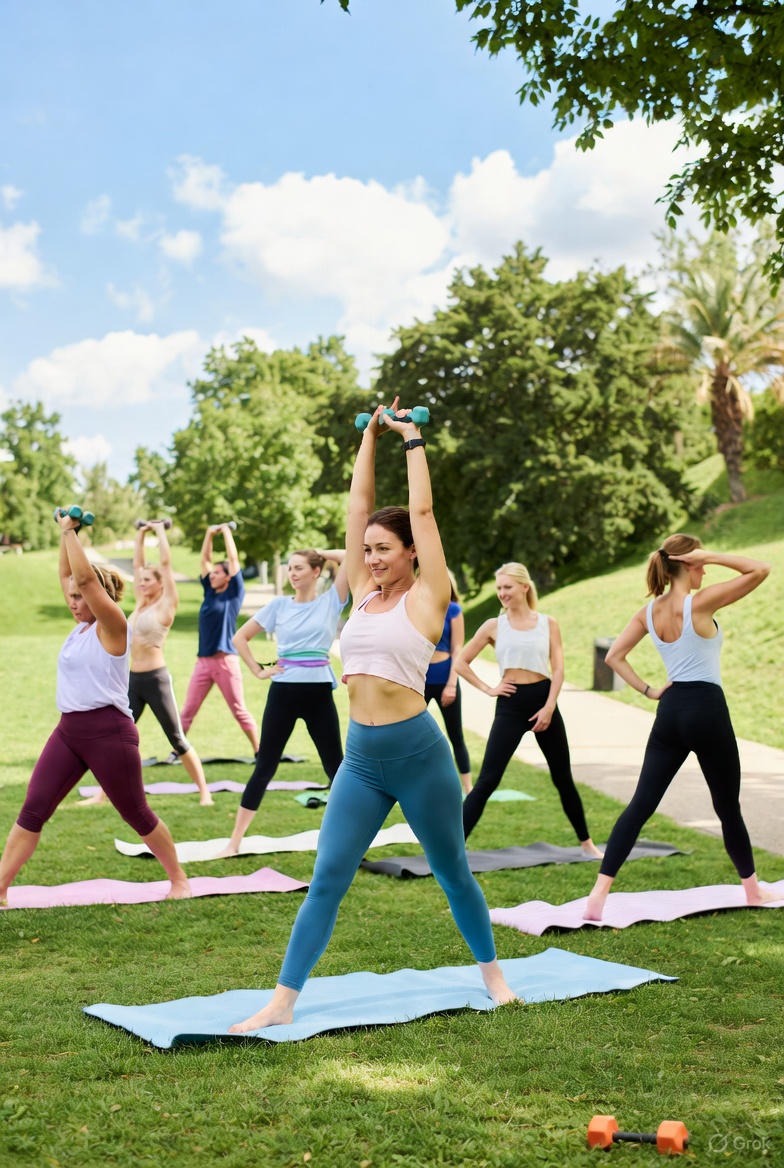
Yoga & Tai Chi: These are uniquely powerful as they combine movement with breath awareness and mindfulness—hitting the anxiety trifecta. The focus on proprioception (body position in space) pulls you out of your head and into the present moment.
Warning: When Exercise Backfires
For some, particularly those with burnout or chronic stress, high-intensity interval training (HIIT) can be too stressful, potentially exacerbating anxiety by further taxing an already overactive HPA axis (your central stress response system). Listen to your body. If a HIIT class leaves you feeling wired and irritable instead of energized and calm, switch to moderate or restorative movement.
"Exercise Snacking"
If the thought of a 30-minute workout is overwhelming, embrace the concept of exercise snacks: 5-10 minutes of movement spread throughout the day.
Three 10-minute brisk walks.
A 5-minute dance break to your favorite song.
A set of bodyweight squats or push-ups during a work break. Consistency with small doses is far more effective and sustainable than sporadic, intense bouts that never happen.
The Post-Exercise Glow: Capitalizing on the Neurochemical Shift
The anxiolytic effects peak after exercise. Use this "window of plasticity" wisely. Follow your movement with 5 minutes of mindful cool-down stretching or deep breathing. This reinforces the association between the activity and the calm state, and helps integrate the benefits.
Moving your body changes your biochemistry. To sustain that change and build a life that naturally resists anxiety, we must look at the broader structures of our daily lives—our routines and rituals.
8. Structure & Routine: The Architecture of Calm
Anxiety thrives in uncertainty and chaos. A predictable, well-structured routine acts as a scaffold for a fragile nervous system. It reduces the number of micro-decisions you have to make daily, conserves cognitive energy, and creates a sense of safety and predictability. In 2025, the most effective routines are not rigid prisons, but flexible frameworks designed to automate wellness.
The Non-Negotiable Morning Anchor
How you start your day sets your neurochemical trajectory. An anxiety-resistant morning routine is not about productivity; it’s about regulation.
Hydrate First: Drink a large glass of water. Your brain is dehydrated from sleep.
Light & Air: Get sunlight in your eyes (without sunglasses) and fresh air in your lungs within 30 minutes of waking. This is the single most powerful circadian reset.
Move Gently: 5-10 minutes of light movement—stretching, yin yoga, a short walk—to signal to your body that the day has begun.
Mindfulness Pause: 5 minutes of meditation, breathwork, or simply sitting in silence with your coffee, focusing on the sensations.
The Power of the Evening Wind-Down Ritual
As discussed in the sleep section, this is the critical "ramp" down. It should be a non-negotiable ritual that you protect fiercely. This is your daily signal to the nervous system that it is safe to shift into restoration mode.
Time-Blocking for Mental Space
"Open" time on your calendar is not free time for anxiety to fill. Use time-blocking to assign specific tasks—including work tasks, meals, breaks, and even leisure—to specific chunks of your day. Schedule your "Worry Time" (from Section 2). Schedule a 15-minute "Buffer Block" between meetings to prevent stress carryover. Seeing your day visually structured reduces the cognitive load of "What should I do next?" which is a subtle but constant stressor.
The Weekly Review & Plan
Every Sunday evening or Monday morning, take 30 minutes to:
Review the past week: What drained you? What energized you?
Plan the coming week: Block out time for deep work, exercise, social connection, and rest.
This practice transforms the week from a looming, amorphous source of stress into a manageable sequence of events. The team at Oxyzen built our technology to support this very philosophy of proactive self-awareness, a principle rooted in our founding story and vision.
Embracing "Routine Fluidity"
The goal is a framework, not a straitjacket. Life happens. The 80/20 rule applies: if you follow your supportive routines 80% of the time, you build enough resilience to handle the 20% when things go off-plan without spiraling.
A solid routine creates stability, but human beings are not meant to exist in isolation. Our final foundational layer addresses one of the most powerful anxiety buffers we have: authentic connection with others.
9. Social Connection & Communication
Loneliness and anxiety are intimate allies. Feeling disconnected activates our ancient threat systems—historically, being alone meant physical danger. Conversely, genuine social connection releases oxytocin, a hormone that dampens the stress response and promotes feelings of trust and safety. In our hyper-connected digital age, we must be intentional about cultivating high-quality, low-anxiety social interactions.
The Quality-Over-Quantity Principle
It’s not about the number of friends on social media, but the depth of a few key relationships. Co-rumination—repeatedly discussing problems without moving toward solutions—with friends can actually worsen anxiety. Seek out connections that are characterized by:
Active, Non-Judgmental Listening: Where you feel heard without immediately being given advice or judgment.
Reciprocity: A balanced give-and-take of support.
Shared Vulnerability: The ability to share your authentic self, including struggles.
Anxiety-Informed Communication Skills
Learn to communicate your anxiety in a way that fosters connection rather than confusion or distance.
Use "I Feel" Statements: Instead of "You make me anxious when you're late," try "I feel anxious when I don't know your ETA, because I start worrying something happened. Could we text if we're running more than 10 minutes late?" This owns your experience without blaming.
Pre-Emptive Communication: If you're entering a situation you know triggers social anxiety (a party, a meeting), confide in one safe person beforehand. "I'm feeling a bit nervous about tonight; I might need to step out for a few minutes at some point." Just saying it aloud reduces its power and gives your ally a chance to support you.
Digital Boundaries for Connection: Use technology to enhance, not replace, connection. A voice note can be more personal than a text. A scheduled video call with a long-distance friend is more nourishing than passive liking of their posts.
The "Social Snack" Strategy
Similar to exercise snacking, not every social interaction needs to be a long, deep dive. A "social snack" is a small, positive micro-interaction that provides a quick hit of connection:
A warm, genuine greeting with your barista.
A brief text to a friend sharing something that reminded you of them.
A few minutes of playful interaction with a pet. These moments cumulatively build a sense of belonging in the world.
Finding Your Tribe
Seek out communities—online or in-person—centered around interests, wellness, or support. This could be a book club, a hiking group, a meditation circle, or a moderated online forum for anxiety support. Shared purpose and understanding are powerful antidotes to the isolation of anxiety. As you explore different communities and methods, remember that the journey is deeply personal. For ongoing support and to learn about the tools that can assist you, explore our blog for more wellness tips and insights from experts and community members alike.
10. Technology-Assisted Biofeedback: The Data-Driven Path to Calm
In 2025, the adage "what gets measured gets managed" has found its ultimate expression in mental wellness through biofeedback. This isn't about cold, impersonal data; it’s about developing a conversation with your own nervous system. Biofeedback uses sensors to provide real-time information on physiological functions like heart rate, heart rate variability (HRV), skin temperature, and even brainwaves. By seeing these metrics, you can learn to consciously influence them. For those with anxiety, this is revolutionary: it transforms the vague, overwhelming feeling of "I'm anxious" into observable, manageable signals.
The Two Key Metrics for Anxiety Management
Heart Rate Variability (HRV): This is not your heart rate, but the variation in time between each heartbeat. A higher HRV generally indicates a more resilient, flexible nervous system that can adapt to stress and recover quickly. A low, rigid HRV is a strong biomarker of chronic stress and anxiety. Tracking HRV shows you which practices (meditation, sleep, exercise) genuinely improve your nervous system's resilience.
Resting Heart Rate (RHR) & Stress Score: Many advanced wearables now provide a "stress score" or "body battery" based on your RHR, HRV, and activity data. Watching your stress score climb during a tense work meeting gives you an objective cue to intervene with a breathing exercise. Seeing it drop afterward provides positive reinforcement.
From Passive Tracking to Active Training
The latest generation of wearables, particularly discreet smart rings that track metrics 24/7, shift the paradigm from passive observation to active co-regulation. Imagine this flow:
Notification: Your device gently vibrates, indicating a rising stress score.
Intervention: You perform a 90-second physiological sigh.
Real-Time Feedback: On your phone, you watch a graph of your heart rate literally drop and your HRV rise within 60 seconds.
Reinforcement: This creates a powerful feedback loop. The anxiety reduction is no longer subjective; it's visible. You learn, viscerally, that you have agency over your physiology.
This tangible proof is what sets modern biofeedback apart. It bridges the gap between intention and perception, showing you that your efforts are working even when your anxious mind might doubt it. For a deeper dive into how this seamless integration of data and daily life is achieved, you can discover how Oxyzen works to provide this kind of actionable insight.
Neurofeedback: Training the Brain Itself
A more advanced form of biofeedback, neurofeedback measures brainwave activity (EEG). Through guided exercises, individuals can learn to increase brainwave patterns associated with calm focus (alpha waves) and decrease those linked to anxious rumination (high-beta waves). While once confined to clinics, 2025 sees the emergence of more accessible, consumer-grade headbands for home training, making this powerful modality available for dedicated self-regulation.
11. Creative Expression & Flow States
Anxiety is often a loop of repetitive, future-oriented thoughts. Creative expression is the perfect escape hatch from this loop. It forces you into the present moment and engages a state psychologists call "flow"—a state of complete absorption where time seems to disappear, self-consciousness fades, and you are fully immersed in the process. Achieving flow is a potent antidote to anxiety, as the brain literally cannot be in a state of threat and a state of flow simultaneously.
The Neurochemistry of Making
Engaging in a creative act—whether it's painting, playing music, writing, woodworking, or gardening—triggers a release of dopamine, the neurotransmitter associated with pleasure, motivation, and reward. This provides a natural mood lift. Furthermore, the focused attention required quietens the brain's default mode network (DMN), the neural network responsible for mind-wandering and, notably, self-referential thoughts—the very engine of anxiety.
Process Over Product: The Key to Anxiety-Free Creation
The anxiety trap in creativity is attaching your self-worth to the outcome. The therapeutic power lies in the process itself. You don't need to be a "good" artist. The goal is not a masterpiece; the goal is the state of mind you enter while creating.
Try "Bad" Art on Purpose: Give yourself permission to create something intentionally messy, abstract, or "bad." Use cheap materials. The liberation from judgment is profound.
Stream-of-Consciousness Writing (Morning Pages): As advocated by Julia Cameron in The Artist's Way, write three pages of longhand, unfiltered thoughts first thing in the morning. It's not writing; it's "brain drain"—clearing the anxious mental clutter to start the day fresh.
Tactile Crafts: Activities that engage the hands—knitting, pottery, LEGO building, baking—have a naturally grounding, meditative quality due to their rhythmic, sensory nature.
Finding Your Micro-Flow
You don't need hours. Integrate "micro-flow" sessions:
Doodle for 5 minutes in a meeting notebook.
Hum or play a simple melody on an instrument for a few minutes.
Arrange a small vase of flowers or leaves from a walk. These tiny acts of creation are islands of present-moment focus in a chaotic day.
12. Nature Therapy (Ecotherapy) & Grounding
Our nervous systems did not evolve for concrete jungles and fluorescent lights. They evolved in natural environments. Ecotherapy—the practice of engaging with nature to support mental health—is now a mainstream, evidence-based intervention. The Japanese practice of Shinrin-yoku, or "forest bathing," has demonstrated measurable effects: lowering cortisol, reducing pulse rate, and improving mood.
The Mechanisms of Natural Calm
Why does nature work so powerfully?
Soft Fascination: Natural scenes—a flowing stream, rustling leaves, drifting clouds—engage our attention in a gentle, effortless way. This allows the directed-attention part of our brain (fatigued by work and screens) to rest and restore.
Phytoncides: Trees release these antimicrobial organic compounds. Studies show inhaling phytoncides increases our natural "killer" white blood cells and reduces stress hormones.
Sensory Grounding: Nature provides a rich, multi-sensory experience that powerfully pulls us into the present: the smell of damp earth, the feel of bark, the sound of birdsong, the sight of fractal patterns in leaves.
Practical Ecotherapy for Urban Life
You don't need a remote forest.
The 20-Minute Park Prescription: Research suggests 20-30 minutes in an urban park, three times a week, is enough to significantly lower cortisol levels. Sit on a bench without your phone. Simply observe.
Barefoot Grounding (Earthing): The practice of walking barefoot on natural surfaces (grass, sand, soil) connects the body to the Earth's subtle negative electrical charge. Preliminary research suggests it can reduce inflammation, improve sleep, and decrease cortisol. Whether the mechanism is purely electrical or powerfully sensory, many report a profound calming effect.
Biophilic Micro-Habits: Bring nature inside. Care for houseplants. Use a nature sounds app for your work focus time. Change your computer wallpaper to a vast, peaceful landscape. These are small but constant cues of safety and spaciousness for the primitive brain.
The Awe Walk
Intentionally seek out experiences that inspire awe—the feeling of being in the presence of something vast that transcends your current understanding. This could be gazing at a starry sky, standing at the edge of an ocean, or even watching a time-lapse of a galaxy. Research shows that experiencing awe reduces activity in the brain's default mode network (the "self" center), shrinking personal worries and creating a sense of connection to something larger.
13. Supplementation & Nutraceuticals (With a Caveat)
The world of supplements for anxiety is vast and often confusing. In 2025, the conversation has moved toward personalized nutraceuticals—using nutrients and plant-based compounds to target specific biochemical pathways involved in the stress response. Crucial Disclaimer: Always consult with a healthcare professional before starting any new supplement, especially if you are on medication, as interactions can occur.
The Well-Researched Front Runners
Magnesium Glycinate or L-Threonate: Magnesium is a cofactor in over 300 enzymatic reactions, including those regulating GABA (a calming neurotransmitter). Glycinate is highly bioavailable and gentle on the stomach. L-Threonate is a form that may cross the blood-brain barrier more effectively. Many are chronically deficient, and supplementation can feel like "unlocking" a natural state of relaxation.
L-Theanine: An amino acid found predominantly in green tea. It promotes relaxation without sedation by increasing alpha brain waves (associated with relaxed alertness) and modulating neurotransmitters like GABA and dopamine. It's excellent for taking the "edge" off caffeine or calming racing thoughts.
Omega-3 Fatty Acids (EPA/DHA): As discussed in nutrition, these are fundamental anti-inflammatories. High doses of EPA, in particular, have shown in studies to be as effective as some pharmaceuticals for certain individuals with depression and anxiety, by reducing neuroinflammation.
Adaptogenic Herbs: These are plants that help the body "adapt" to stress by modulating the HPA axis (your stress hormone system).
Ashwagandha: Shown in multiple studies to significantly reduce cortisol and perceived stress. Look for a KSM-66 or Sensoril extract for standardized potency.
Rhodiola Rosea: Known as a "fatigue-fighter," it helps improve energy and mental focus during stressful periods, preventing burnout.
Holy Basil (Tulsi): Considered a "sattvic" herb in Ayurveda, it promotes a calm, balanced state of mind.
The Importance of a "Foundational" Approach
Supplements are not magic bullets. They work best when they fill gaps in a diet and lifestyle already oriented toward wellness. Think of them as fine-tuning a machine that you are already maintaining with good fuel, rest, and care. Relying on them while neglecting sleep, nutrition, and movement is an ineffective and costly strategy. For personalized questions on how wellness tracking can inform your approach to nutrition and supplementation, our support team is here to help.
14. Professional Therapies: When to Seek Expert Guidance
While self-help strategies are powerful, there is immense strength and wisdom in knowing when to seek a guide. Professional therapy provides a structured, evidence-based, and personalized approach that can accelerate your progress and address deep-rooted patterns. In 2025, access and modalities have expanded dramatically.
Gold-Standard Modalities for Anxiety
Cognitive Behavioral Therapy (CBT): The most extensively researched therapy for anxiety disorders. It focuses on the cycle of thoughts, feelings, and behaviors, teaching you to identify and reframe distorted thinking (as in Section 2) and engage in behavioral experiments to overcome avoidance.
Acceptance and Commitment Therapy (ACT): While CBT aims to change thoughts, ACT focuses on changing your relationship to thoughts. It teaches psychological flexibility—to accept difficult thoughts and feelings without being controlled by them, and to commit to actions aligned with your personal values. This is exceptionally helpful for chronic, generalized anxiety.
EMDR (Eye Movement Desensitization and Reprocessing): Particularly effective for anxiety rooted in past traumatic or distressing memories. It uses bilateral stimulation (like guided eye movements) while processing the memory, helping the brain to properly store it and reduce its emotional charge.
Somatic Therapies: These modalities, like Somatic Experiencing, work directly with the body's felt sense and trauma patterns stored in the nervous system. They are powerful for anxiety that feels "stuck" in the body and doesn't respond to talk therapy alone.
The 2025 Therapy Landscape: Accessibility Evolved
Specialized Online Platforms: You can now find therapists who specialize in everything from tech burnout to climate anxiety, accessible via video call.
AI-Powered Tools: Not as replacements for therapists, but as adjuncts. AI chatbots can provide CBT exercises in the moment of crisis, or apps can help you track mood and symptoms to bring more accurate data to your sessions.
Group Therapy & Intensive Workshops: Shared experience reduces stigma and provides powerful peer support. Virtual and in-person intensive workshops (e.g., weekend CBT workshops) offer concentrated skill-building.
How to Know It's Time
Consider seeking a professional if:
Anxiety significantly interferes with daily work, relationships, or self-care.
You're using substances to manage your feelings.
You have persistent physical symptoms (chronic GI issues, tension headaches) linked to stress.
You feel overwhelmed implementing self-help strategies on your own. Asking for help is not a failure of self-management; it is the ultimate act of self-care, akin to hiring a personal trainer for your mind. Hearing how others have navigated this decision can be encouraging; you can find such perspectives in real user experiences shared by our community.
15. Digital Tools & Apps for Structured Support
The same devices that can fuel anxiety can also be harnessed to combat it. The key is intentionality. The best modern wellness apps don't just provide content; they create structure, accountability, and personalized pathways.
App Categories for a Holistic Toolkit
Meditation & Mindfulness (e.g., Headspace, Calm, Waking Up): These offer guided sessions for every scenario—panic attacks, sleep, focus. The progression through structured courses (like "Anxiety 101") provides a sense of guided journey.
CBT & Therapy Tools (e.g., Sanvello, Woebot): These apps bring core therapeutic principles to your pocket. They guide you through thought records, mood tracking, and behavioral activation exercises, making CBT skills practice daily and accessible.
Habit Builders (e.g., Streaks, Habitica): Use these to track your consistency with the foundational methods from this guide: morning routine, hydration, breathwork, no-phone-before-bed. Gamifying your wellness creates positive reinforcement.
Biofeedback Integrators: The companion apps for devices like smart rings are perhaps the most powerful category. They don't just show data; they prescribe interventions. "Your HRV was low last night. We recommend a 10-minute yoga nidra session tonight." This closed-loop system is the future of personalized anxiety care.
Creating Your "Calm" Home Screen
Curate your phone's first screen to serve your mental health, not hijack it. Replace social media icons with your meditation app, your habit tracker, your notes app for journaling, and your music app for calming playlists. Make your tools easier to access than your triggers.
16. The Art of Strategic Distraction & Absorption
Sometimes, the most effective way to deal with an anxiety spiral is not to fight it head-on, but to skillfully redirect your attention. This is not avoidance (which is refusing to deal with a problem). This is strategic disengagement—recognizing when your mind is stuck in an unproductive, repetitive loop and consciously choosing to feed it different, absorbing information.
The Science of Redirection
Anxiety thoughts have a "stickiness" due to the heightened emotional charge. Trying to force them away often backfires (the "white bear" effect—try not to think of a white bear). By engaging in a cognitively demanding yet enjoyable task, you consume the attentional resources that the anxiety loop requires to sustain itself.
High-Absorption Distraction Techniques
Narrative Immersion: Get lost in a compelling, complex novel, TV series, or audiobook. The story must be strong enough to pull your mental focus into its world.
Puzzle-Based Games: Crossword puzzles, Sudoku, Wordle, or strategic video games require focused problem-solving that leaves little mental bandwidth for worry.
Learning Something New (Micro-Skills): Use Duolingo for 15 minutes to practice a language. Watch a detailed tutorial on a skill like origami or a magic trick. The cognitive load of processing new information is a potent distractant.
Organizational Tasks: Cleaning a drawer, organizing books by color, or detailing a small area of your home. These provide a sense of control, immediate visual order, and tactile engagement.
The 15-Minute Rule
Commit to your chosen distraction for a full 15 minutes without checking the clock. Often, by the time the period is over, the intensity of the anxiety wave has passed, and you can return to the issue (if it needs addressing) from a calmer, more resourceful state.
17. Cultivating Self-Compassion & Silencing the Inner Critic
Anxiety and self-criticism are a toxic feedback loop. Anxiety makes you fear failure, and the inner critic punishes you for perceived shortcomings, which creates more anxiety. Self-compassion, pioneered by researcher Dr. Kristin Neff, is the practice of treating yourself with the same kindness, concern, and support you’d show a good friend who is struggling. It is a direct antidote to the hostility of anxiety.
The Three Components of Self-Compassion
Self-Kindness vs. Self-Judgment: Being warm and understanding toward yourself when you suffer, fail, or feel inadequate, rather than ignoring your pain or flagellating yourself with self-criticism.
Common Humanity vs. Isolation: Recognizing that suffering and personal inadequacy are part of the shared human experience—something we all go through—rather than something that happens to "me" alone.
Mindfulness vs. Over-Identification: Holding painful thoughts and feelings in balanced awareness, without suppressing them or exaggerating them. It's acknowledging, "This is a moment of suffering," without becoming fused with the story that "I am a sufferer."
Practical Self-Compassion Exercises
The Self-Compassion Break: In a moment of stress, place a hand over your heart (a soothing, oxytocin-releasing touch). Say to yourself:
"This is a moment of suffering." (Mindfulness)
"Suffering is a part of life. Others feel this way too." (Common Humanity)
"May I be kind to myself. May I give myself the compassion I need." (Self-Kindness)
Rewrite Your Inner Dialogue: When you catch the critic saying, "You're so anxious, you can't handle anything," reframe it as a compassionate friend: "This is really hard right now, and it's understandable you're feeling overwhelmed. Let's just focus on one small step."
Journal from a Compassionate Perspective: Write about your anxious situation from the perspective of a unconditionally loving friend or a wise, kind version of your future self. What would they say to you?
Self-compassion is not self-pity or weakness. It is a robust, research-backed psychological stance that provides emotional safety from within, reducing the fear of failure that drives so much anxiety. This journey of building inner resilience is at the very heart of our mission; to understand the values that drive this work, you can read more about our vision and values.
18. Purpose & Values-Based Action
Existential anxiety—the "why am I doing any of this?" feeling—can underpin much of our daily stress. When our actions feel disconnected from a deeper sense of meaning, life can feel like a series of anxious reactions to external demands. Values-based living is the practice of identifying what is most important to you (e.g., connection, creativity, growth, service) and using those values as a compass to guide your actions. This creates a sense of purpose and direction that is internally generated, making you less vulnerable to the anxieties of external validation and uncertainty.
Defining Your Core Values
Your values are not goals. A goal is something you can check off (e.g., "get a promotion"). A value is a direction you want to move in, continuously (e.g., "growth," "mastery," "providing for my family"). Ask yourself: "What kind of person do I want to be? What principles do I want to guide my life?"
Aligning Micro-Actions with Macro-Meaning
Purpose is not found in one grand gesture; it is built through small, consistent choices aligned with your values.
If Connection is a value, your action might be putting your phone away during dinner with your partner.
If Health is a value, your action might be choosing the walk over the drive-thru, not as a punishment, but as an affirmation of that value.
If Learning is a value, your action might be listening to a podcast on a new topic during your commute instead of ruminating.
Values as an Anxiety Filter
When faced with an anxiety-provoking decision or request, ask: "Does saying yes/no to this move me toward or away from my core values?" This framework cuts through the noise of "what will they think?" and provides a clear, personal criterion for choice. It transforms decision-making from an anxiety minefield into a purposeful navigation.
The "Bigger Than Self" Perspective
Contributing to something larger than yourself—volunteering, mentoring, participating in community action, even caring for a pet or garden—reliably reduces anxiety. It shifts focus from the small, worried self to a wider context, fostering a sense of agency and connection that is deeply stabilizing. For more resources on building a purposeful, balanced life, explore our blog for related articles on intentional living.
19. Advanced Breath & Cold Exposure Protocols
Having established foundational breathwork, we now explore advanced techniques that push the boundaries of physiological control. These methods, backed by rigorous scientific inquiry, are designed not just for acute relief, but for long-term nervous system fortification. They work on the principle of hormesis—the beneficial effect of exposing the body to short, controlled periods of stress, making it more resilient to the uncontrolled stress of daily life.
Intermittent Hypoxic Training (I.H.T.) & The Wim Hof Method
This practice, popularized by Wim Hof, combines a specific pattern of cyclic hyperventilation followed by breath retention, often coupled with cold exposure. The protocol intentionally alters blood chemistry (increasing oxygen and alkalizing the blood) and triggers a controlled stress response.
The Mechanism for Anxiety Reduction: The practice teaches voluntary influence over the autonomic nervous system, which is typically involuntary. By willingly entering a state of physiological arousal (through breath hold and cold) and then calmly breathing through it, you build a profound sense of mastery. You learn that intense physical sensations—similar to those of a panic attack—can be observed and managed, not feared. This extinguishes the fear of the fear itself, a core component of anxiety disorders.
A Critical Safety Note: This practice should be learned properly, never done in or near water (due to risk of blackout), and is not recommended for individuals with certain cardiovascular conditions. It represents an advanced tier of practice.
Controlled Cold Exposure as a Keystone Habit
A daily cold shower or ice bath is one of the most potent, accessible tools for building resilience.
The Practice: Start with 30 seconds of cold water at the end of your regular shower. Focus on steady, deep breathing (not gasping). Gradually increase time to 2-3 minutes.
The Anti-Anxiety Payoff:
Neurochemical Flood: It causes a massive release of norepinephrine (increasing focus and alertness) and endorphins (creating a sense of well-being), which can elevate mood for hours.
Vagal Tone Enhancement: The shock of cold forces your body to regulate, powerfully stimulating the vagus nerve and improving its tone over time.
Mindset Shift: Completing a challenging, uncomfortable task first thing in the morning builds "willpower muscle" and a mindset of "If I can do this, I can handle my 10 AM meeting."
Box Breathing Under Load
Take the box breathing technique (4-in, 4-hold, 4-out, 4-hold) and perform it during moderate exercise, like a steady-state walk or light jog. This trains your nervous system to maintain calm, focused breathing under physical duress, directly translating to an improved ability to stay calm under psychological duress.
20. Sensory Modulation & The 5-4-3-2-1 Grounding Technique
When anxiety launches you into a spiral of catastrophic thoughts, your awareness contracts inward. Sensory grounding techniques violently yank your attention outward, into the present-moment safety of your physical environment. They are the emergency brake for a dissociative or panicked state.
The 5-4-3-2-1 Technique: A Full Sensory Reset
This is a systematic, cognitive task that demands full attention. Wherever you are, find:
5 things you can SEE. Name them silently with detail. "I see the wood grain on my desk, the blue ceramic mug, the sunlight creating a rectangle on the floor..."
4 things you can TOUCH. Feel their texture. "I feel the cool smoothness of my phone screen, the soft cotton of my shirt, the firm support of the chair on my back, the slight stubble on my chin."
3 things you can HEAR. Listen for subtle sounds. "I hear the distant hum of the refrigerator, the click of a keyboard, my own breath."
2 things you can SMELL. If you can't smell anything, recall two comforting smells. "I smell the faint scent of my laundry detergent. I recall the smell of rain on pavement."
1 thing you can TASTE. Notice the taste in your mouth or take a sip of water.
This exercise forces your brain to process sensory data, engaging a different neural pathway than the one generating anxiety. It is impossible to fully focus on this task and remain in a full-blown panic.
Carrying a "Grounding Object"
Keep a small, tactile object in your pocket or bag—a smooth stone, a textured worry ring, a small piece of silk or velvet. When you feel anxiety rising, discretely reach for it and focus all your attention on its sensory qualities. This portable anchor provides instant, private access to a grounding practice.
Temperature Modulation
Beyond cold exposure, simple temperature shifts can regulate emotion. Splashing cold water on your face and wrists triggers the mammalian dive reflex. Conversely, holding a warm cup of tea, taking a warm bath, or using a heating pad on your chest can stimulate a comforting, soothing response, leveraging the psychological association between warmth and safety.
21. The Power of Humor & Absurdity
Anxiety is profoundly serious. It deals in life-and-death predictions, even over trivial matters. Humor is its existential enemy. Laughter isn't just a distraction; it creates a physiological state incompatible with acute anxiety: it relaxes muscles, decreases stress hormones, and releases endorphins. Even more potent is absurdity, which dismantles anxiety by exposing its irrational core.
Cognitive Reframing Through a Humorous Lens
When caught in an anxiety spiral, ask: "What is the most absurd, Monty Python-esque version of this outcome I can imagine?"
Anxious Thought: "If I send this email with a typo, the client will think I'm an idiot, fire us, and our company will collapse."
Absurd Reframe: "Yes, and the typo will be memed across the industry, leading to a global boycott of proper grammar. I will be chased by a mob armed with red pens, and we'll have to flee to a remote island where communication is only done through interpretive dance." This isn't about dismissing your concern, but about breaking the catastrophic frame. By stretching the scenario to its ridiculous conclusion, you loosen its grip, creating enough cognitive space to see the actual, far more manageable likely outcome.
Prescriptive Comedy Consumption
Curate a playlist of comedy that reliably makes you laugh—stand-up specials, funny podcasts, clips of your favorite sitcom. Use it as a tool. When you feel the heavy weight of anxiety settling, engage in a 10-minute "comedy intervention." The physical act of laughing will shift your state.
Laughter Yoga & Forced Laughter
The body can't always distinguish between real and simulated laughter. Practices like Laughter Yoga start with voluntary, forced laughter, which often transitions into genuine, contagious laughter. The deep, diaphragmatic breathing involved is itself a form of breathwork. It's a way to "hack" the laugh response and reap its benefits even when you don't feel like laughing.
22. Ritual, Ceremony & Non-Sleep Deep Rest (NSDR)
In a chaotic world, rituals are islands of predictable meaning. They are actions infused with intention that signal transitions, create closure, and foster a sense of agency. For anxiety, which thrives on uncertainty and lack of control, personalized rituals are a powerful countermeasure.
Creating Anxiety-Management Rituals
The "Worry Release" Ceremony: Write down your dominant worry on a piece of paper. Safely burn it in a fireproof dish (or tear it up and flush it) while stating, "I acknowledge you, but I release your hold on me." The physical act symbolizes mental release.
The "End of Workday" Transition Ritual: Shut down your computer and say a specific phrase aloud: "My work for today is complete." Then, change your clothes or wash your hands. This creates a firm psychological boundary, preventing work anxiety from leaching into your personal time.
The "Pre-Sleep" Gratitude Ritual: Instead of reviewing the day's stresses, list three specific things you are grateful for from the day. This actively rewires the brain's attentional bias from threat to safety and abundance.
Non-Sleep Deep Rest (NSDR) & Yoga Nidra
While meditation trains focus, NSDR is about deliberate, conscious rest. The premier practice is Yoga Nidra, or "yogic sleep." It's a guided practice where you lie down and are systematically taken through body awareness and visualization.
The Science: A 20-30 minute Yoga Nidra session has been shown to be as restorative as several hours of sleep, dramatically lowering cortisol and increasing dopamine. It puts the brain into a state akin to the twilight zone between wakefulness and sleep (theta waves), allowing for deep nervous system recovery without losing consciousness.
The Anti-Anxiety Application: This is a tool for active recovery after a stressful event or during periods of chronic stress. It's like hitting a "hard reset" button on your nervous system. A daily 10-minute NSDR session can significantly lower baseline anxiety over time. For guided scripts and tutorials on incorporating NSDR, our resource hub at the Oxyzen blog offers a growing library.
23. Forgiveness & Letting Go of Resentment
Harboring resentment, anger, or blame—towards others or yourself—is like drinking poison and expecting the other person to get sick. These emotions keep the body in a chronic, low-grade stress state, perpetually reactivating the fight-or-flight system. Forgiveness, in a therapeutic context, is not about condoning harmful actions; it is about releasing yourself from the prison of ongoing anger. It is a selfish, necessary act of self-preservation for the anxious mind.
The Physiology of Grudges
Holding onto resentment activates the same stress pathways as acute anxiety: increased heart rate, blood pressure, and muscle tension. It’s a sustained, background threat narrative. Letting go isn't spiritual; it's physiological hygiene.
A Framework for Practical Forgiveness
Acknowledge the Hurt: Write down the facts of what happened and how it made you feel. Don't minimize it.
Understand the Cost: Honestly assess what holding onto this is costing you—your peace, your sleep, your present-moment joy.
Shift Perspective (If Possible): Try to see the situation from the other person's perspective. This doesn't excuse, but it can sometimes explain. Alternatively, consider: "How might this painful experience have, in some unforeseen way, made me stronger or led me to something good?"
The Release Ritual: Write a letter you will never send. Pour out all the anger and hurt. End it with a statement of release: "For my own peace, I choose to let this go. I release you and I release myself from this story." Then destroy the letter.
Self-Forgiveness: This is often the hardest. Use the self-compassion framework. Talk to yourself as you would to a dear friend who made the same mistake: "You were doing the best you could with what you knew at the time. It's okay. You can learn and move on."
Forgiveness is a process, not an event. It weakens the internal narratives of victimhood and blame that feed a generalized sense of insecurity and threat in the world.
24. Financial De-Cluttering & Anxiety Buffering
Financial anxiety is one of the most pervasive and concrete forms of modern stress. It's not abstract; it's linked directly to survival needs. Reducing this anxiety requires moving from a state of vague dread to one of clear-eyed control. This is less about getting rich and more about creating systems that buffer uncertainty.
The "Financial Clarity" Weekend
Dedicate a few hours to transform your relationship with money from scary to managed.
Automate the Essentials: Set up automatic transfers for savings (even $25/week) and bill payments. This removes monthly decision stress and builds a safety net passively.
Consolidate & Visualize: Use a budgeting app (like Mint, YNAB) to link all accounts in one place. The anxiety reduction from seeing the whole picture is immense, even if the numbers are modest. Uncertainty is always more frightening than a known reality.
Create a "Worry-Free" Buffer: Define a small cash cushion (e.g., $500-$1000) as your "no-worry" emergency fund. Its sole job is to handle small surprises (car repair, dentist co-pay) without triggering a financial panic spiral. Knowing it exists is a psychological relief valve.
Mindful Spending & Value Alignment
Link your spending to the values from Method 18. Before a non-essential purchase, pause: "Does this expense move me toward or away from my values of security/experience/freedom?" This reduces impulsive spending driven by emotional relief (retail therapy), which often leads to post-purchase anxiety.
The "Enough" Mindset
Anxiety often whispers "more is never enough." Cultivate a conscious practice of acknowledging "enough." Regularly note what you have that is sufficient: "I have enough food. I have a safe place to sleep. I have enough clothes." This counters the scarcity mindset that fuels financial fear. The journey toward this kind of intentional, secure living is part of a broader philosophy of wellness, a topic we explore in our brand journey and mission.
25. Animal Companionship & Non-Verbal Connection
The healing power of the human-animal bond is now a pillar of integrative mental health. Pets, particularly dogs and cats, offer a unique form of non-judgmental, present-moment connection that bypasses the complexities and potential stressors of human interaction.
The Anti-Anxiety Mechanisms of Pets
Oxytocin Release: Petting a dog or cat measurably increases levels of oxytocin (the "bonding" hormone) in both human and animal, while decreasing cortisol.
Routine & Purpose: Caring for an animal provides structure and a sense of responsibility that gets you out of your own head. Their needs—walks, feeding—are simple, immediate, and grounding.
Tactile Grounding: The act of stroking soft fur is a profoundly calming, rhythmic sensory input.
Unconditional Positive Regard: An animal’s affection is not contingent on your performance, your status, or whether you said the right thing. This provides a pure experience of acceptance, which is deeply soothing to the anxious, self-critical mind.
Alternatives to Pet Ownership
If full-time ownership isn't possible:
Volunteer at a Shelter: The act of walking dogs or socializing cats provides the benefits while serving a community need.
Borrow a Dog: Use apps like BorrowMyDoggy to connect with local owners.
Consider a Lower-Maintenance Pet: Watching fish swim has been shown to lower blood pressure and heart rate. The care of a small aquarium can be a mindful ritual.
The "Animal Meditation"
Spend 5-10 minutes simply being present with an animal. Observe the rise and fall of their breath as they sleep. Feel the rhythm of their purr or the texture of their coat. Let your nervous system sync to their calm, non-verbal state. It’s a masterclass in being, not doing.
26. Limiting News & Social Media Consumption (Advanced Tactics)
We addressed this as environmental hygiene, but in 2025, the tactics must be more sophisticated than simple app deletion. The platforms are designed to overcome your willpower. Your defense must be equally engineered.
The "Single-Purpose Device" Strategy
Dumbphone Sundays: Designate one day a week where you use a basic phone (or remove social/media apps from your smartphone for 24 hours). The mental clarity and reduction in comparison anxiety is profound.
The Separate Work Device: If possible, use a separate tablet or computer for consumption (news, social media) and keep your primary work device for creation only. This creates a physical boundary.
Curating Your Digital Inputs with Aggression
The "Unfollow Everything" Reset: On social media, temporarily unfollow every account—friends, family, news, influencers. Then, over a week, deliberately re-follow only those that provide genuine value, inspiration, or connection without triggering comparison or anxiety. You are the curator of your own mind.
Newsletters Over Feeds: Replace passive newsfeed scrolling with active subscription to 2-3 high-quality, curated newsletters (e.g., The Browser, NextDraft). You get a digested, thoughtful summary once a day, on your terms, without the panic-inducing ticker.
Using Technology to Enforce Boundaries
Website Blockers: Use tools like Freedom or Cold Turkey to block access to specific websites or the entire internet during chosen hours.
Grayscale Mode: Switching your phone to grayscale makes it significantly less stimulating and addictive, reducing the dopamine hit that keeps you scrolling mindlessly. The visual dullness often leads to quicker, more intentional use.
27. The Practice of Boredom & Digital Fasting
In the attention economy, boredom is not an enemy—it's a vital nutrient for a healthy mind that we have systematically starved ourselves of. Boredom is the incubation chamber for creativity, self-reflection, and intrinsic motivation. Constant digital stimulation prevents us from ever confronting the quiet, restless mind, which then expresses itself as background anxiety. A digital fast is the deliberate practice of reintroducing productive boredom.
The "Do Nothing" Protocol
Schedule 15-20 minutes daily to literally do nothing. No phone, no book, no music, no podcast. Sit or lie down and let your mind wander. Initially, this will feel intensely uncomfortable—anxiety will rise to fill the space. This is the point. You are sitting with the discomfort of your own mind without an escape hatch. Over time, this teaches your brain that it can tolerate quiet restlessness without needing to panic or seek external stimulation. The anxiety around boredom itself diminishes.
The Analog Afternoon
Once a week, for 3-4 hours, commit to analog-only activities: reading a physical book, writing with pen and paper, drawing, cooking without a recipe on a screen, going for a walk without headphones. Notice the different quality of attention—slower, deeper, less fragmented.
The Benefits of Cultivated Boredom
Reduces Overstimulation Anxiety: It lowers the overall "noise floor" of your nervous system.
Sparks Problem-Solving: When you're not being fed answers, your mind starts to generate its own connections and solutions to lingering problems.
Restores Attentional Reserves: It allows the brain's default mode network to properly integrate experiences and consolidate memory, a process essential for emotional regulation.
If the idea of unplugging feels daunting, you're not alone. We've compiled answers to common questions about balancing tech and wellness in our comprehensive FAQ.
28. Building an Anxiety-Resistant Lifestyle: The Compound Effect
By this point, you have a vast toolkit. The final method is the meta-skill: integration. An anxiety-resistant lifestyle isn't built on one heroic effort but on the compound effect of small, consistent practices layered together over time. It's the difference between seeking shelter in a storm and building a sturdy, well-maintained house that can withstand any weather.
The "Anchor Habit" Strategy
Don't try to implement all 30 methods at once. Choose one foundational "anchor habit" from the core categories (e.g., a morning breathwork routine, a daily 20-minute walk, a consistent bedtime). Master it for 3-4 weeks until it becomes automatic. This single habit becomes your non-negotiable pillar. Then, use the momentum and identity ("I am someone who cares for my nervous system") to stack another small habit onto it (e.g., "After my walk, I will drink a large glass of water").
The Weekly "Nervous System Audit"
Set a recurring weekly appointment to review your systems. Not a harsh critique, but a compassionate check-in:
Data Review (If using a tracker): How was my sleep HRV this week? When were my stress spikes? What correlated with them?
Habit Check: How did I do on my anchor habits? What felt nourishing? What felt like a drag?
Calendar Preview: Looking at next week's calendar, where are the potential anxiety triggers? Can I schedule buffers, preparation time, or recovery rituals around them?
This audit turns anxiety management from a reactive struggle into a proactive, strategic practice.
Creating Your Personal "Calm Toolkit" Cheat Sheet
On a single note card or phone note, list your top 5 go-to methods for different scenarios:
For Acute Panic (90-second fix): Physiological Sigh + 5-4-3-2-1 Grounding.
For Background Dread (15-minute reset): Brisk walk without headphones or a guided Yoga Nidra session.
For Pre-Event Jitters (5-minute prep): Box Breathing + Power Pose.
For Evening Rumination: "Worry Time" journaling followed by a device-free ritual.
For General Maintenance: Daily anchor habit (e.g., morning sunlight + movement).
Keep this list accessible. In moments of stress, decision fatigue is high. The cheat sheet tells you exactly what to do.
29. Acceptance & The Art of Riding the Wave
The final, most paradoxical skill is learning to not fight anxiety. A significant portion of our suffering comes from anxiety about our anxiety—the fear of the feeling itself, the shame for having it, the desperate struggle to make it stop. This struggle is like trying to calm rough water by slapping it. Acceptance is the practice of allowing the feeling to be present, without amplifying it with resistance.
The Wave Metaphor
Imagine anxiety as a wave in the ocean. You are the surfer.
Fighting it: You try to stand against it, to push it back. It knocks you down, tumbles you.
Fleeing it: You turn your back and try to outswim it. It catches you from behind.
Accepting it: You turn, face the wave, and paddle to match its speed. You allow it to lift you up. You ride on its energy, staying on top of it until it naturally dissipates beneath you.
How to Practice Acceptance in the Moment
Name It: "This is anxiety." "This is a wave of panic." Simple labeling creates distance between you and the experience.
Describe It Sensationally: Get curious, not fearful. "Where do I feel it in my body? Is it a tight ball in my chest? A buzzing in my arms? Is it hot or cold?" Describe it like a scientist observing a phenomenon.
Breathe Into It: Instead of breathing to make it go away, direct your breath into the area of sensation. Imagine making space for it. This often takes the sharp edge off the feeling.
Remember Its Temporariness: Say to yourself, "This is a temporary state. It has a beginning, a middle, and an end. I have ridden this wave before and it always passes."
Acceptance doesn't mean you like the anxiety. It means you stop wasting energy fighting a reality that already exists in the moment. This surrender often leads to the wave passing through much more quickly. The stories of others who have learned to navigate these waves can be a powerful source of hope, as seen in the real customer reviews at Oxyzen.



%402x.svg)