


How to Build Emotional Balance Without Numbing Feelings
The time-out method is a strategic, agreed-upon pause during conflict to prevent escalation and allow for self-regulation.
The time-out method is a strategic, agreed-upon pause during conflict to prevent escalation and allow for self-regulation.
%402x.svg)
In a world that often feels too loud, too fast, and too demanding, the appeal of emotional numbness is understandable. That feeling of being on autopilot, where intense joy and profound sorrow are equally muted, can seem like a sanctuary from the chaos. Yet, this “safe” harbor often becomes a trap. When you stop feeling pain, you also stop feeling alive. The vibrant spectrum of human emotion—the very thing that connects us to ourselves, our purpose, and each other—fades to grey.
This comprehensive guide is not about chasing a mythical state of perpetual calm. It’s about building something far more resilient and authentic: emotional balance. True balance isn’t the absence of feeling; it’s the capacity to experience the full range of your emotions without being controlled or overwhelmed by them. It’s moving from a state of avoidance or shutdown to one of acceptance and skillful navigation. As one psychology expert notes, this path involves learning to “feel whatever comes up, without feeling stifled or overwhelmed, and to accept our feelings without judgment”.
We are witnessing a quiet revolution in how we understand and manage our inner world, driven by a fusion of ancient wisdom and cutting-edge science. A key tool in this new era is the smart ring, a discreet wearable that moves beyond the distracting buzz of smartwatches to provide a continuous, objective read on your body’s stress and recovery signals. By combining these technological insights with proven psychological practices, we can learn to build emotional balance from the ground up—not by numbing our feelings, but by understanding, honoring, and integrating them.

We live in an age uniquely primed for emotional shutdown. The constant barrage of information, the pressure to perform, and the often-unrealistic standards set by curated digital lives create a perfect storm for overwhelm. When the emotional load becomes too great, the brain, in its well-intentioned wisdom, sometimes throws the master switch. It doesn’t turn down the volume on a single painful channel; it mutes the entire sound system.
Emotional numbness is not a feeling itself, but the absence of feeling. It’s often described as a heavy fog, a sense of being disconnected or watching life happen from behind a pane of glass. Psychologist Susan Albers, PsyD, likens it to your mind “pressing the pause button” as a protective mechanism. This isn’t a personal failure or a character flaw; it’s a biological defense strategy. Joe Nemmers, a licensed therapist, explains it as part of our sympathetic nervous system’s “freeze” response—a survival mechanism when fight or flight isn’t an option.
However, what begins as a temporary refuge can solidify into a prison. Common signs of this state include:
The roots of this numbness are varied. It can be a symptom of clinical conditions like depression, anxiety, or PTSD. It often stems from prolonged, unmanaged stress, where consistently high cortisol levels can blunt your emotional sensitivity. It can also arise from trauma, certain medications, or a history of having to suppress emotions to navigate difficult environments.
The critical thing to understand is that this numbness, while protective, comes at a steep cost. It severs your connection to your internal compass—your feelings, which are vital signals about your needs, boundaries, and values. Rebuilding emotional balance, therefore, doesn’t start with trying to “feel more.” It starts with compassionately understanding why you needed to feel less, and then creating a safe foundation from which to re-engage.
Before you can skillfully navigate your emotions, you need to know where you’re starting from. For many of us, the connection between mind and body has frayed. We might be intellectually aware we’re “stressed,” but miss the earlier, subtler signals: the slight clench in the jaw, the shallow breath, the restless night’s sleep. This is where the journey from numbness to balance makes its first pivotal shift: from cognitive guesswork to embodied awareness.
Your body is a brilliant, real-time biofeedback machine. Emotions aren’t just abstract thoughts; they are physiological events. Anger might manifest as heat and tightness in the shoulders, anxiety as a fluttering knot in the stomach, and sadness as a heaviness in the chest. Chronic stress, a primary driver of emotional blunting, reveals itself through concrete metrics like elevated resting heart rate, low heart rate variability (HRV—a key marker of nervous system resilience), and poor sleep architecture.
Traditionally, tuning into these signals required deep meditation practice or frequent check-ins. Now, technology offers a precise, passive mirror. This is the unique value of a smart ring. Unlike wrist-based devices that can be bulky and notification-heavy, a smart ring is designed for continuous, comfortable, and quiet monitoring. Its placement on the finger is biomechanically ideal; the thin skin and rich blood vessels allow sensors to capture high-fidelity data on heart rate, HRV, skin temperature, and blood oxygen levels with notable accuracy.
By wearing a device like this 24/7, you move from subjective (“I think I slept okay”) to objective (“My deep sleep was 15% lower than my baseline and my nighttime HRV dropped sharply”). You begin to see the hidden patterns: how a difficult work meeting impacted your stress levels for hours afterward, how late-night screen time fragments your sleep, or how certain people or activities genuinely replenish you.
This isn’t about creating anxiety over numbers. It’s about building a foundational layer of self-knowledge. As noted in industry analysis, the long-term “aha!” moment with these devices comes after months of wearing them, “when the novelty of daily scores fades and a deeper connection to your own body’s patterns begins to form”. You establish your normal. From this grounded place of data-backed awareness, you can start to make intentional choices—not to avoid emotion, but to understand its physical roots and build a system resilient enough to handle it.
To build emotional balance, it helps to understand the mechanics of the machine. Why do we swing from overwhelming floods of feeling to detached numbness? The answer lies in the complex interplay of our brain structures, nervous systems, and neurochemicals.
At the heart of emotional processing is the limbic system, often called the brain’s “emotional nervous system”. This network, which includes the amygdala (the alarm bell), hippocampus (the memory center), and hypothalamus (the hormone commander), evaluates sensory input and determines its emotional significance. When this system is compromised by trauma, chronic stress, or certain neurological conditions, the ability to feel and regulate emotions can be directly impacted.
The real-time conductor of your emotional state, however, is the autonomic nervous system (ANS). It has two main branches:
Emotional dysregulation and numbness occur when the SNS is chronically engaged and the PNS is underpowered. Prolonged stress leads to elevated cortisol, which can eventually cause “cortisol insensitivity,” dulling your body’s appropriate stress response and contributing to that flat, numb feeling. This state is measurable. A key biomarker of ANS balance is Heart Rate Variability (HRV)—the healthy variation in time between heartbeats. High HRV indicates a flexible, resilient nervous system that can smoothly shift between arousal and recovery. Low HRV is a strong indicator of chronic stress, fatigue, and a system stuck in survival mode.
Modern tools like smart rings excel at tracking these autonomic whispers. By providing continuous HRV and sleep data, they move the abstract concept of “stress” into the visible realm of physiology. This scientific lens demystifies your experience. Feeling numb isn’t a mysterious personal failing; it can be the logical endpoint of a nervous system that has been on high alert for too long and has downregulated its sensitivity to protect itself.
The path to balance, therefore, is a path of nervous system regulation. It’s about training your body’s brake (the PNS) to be as strong and responsive as its accelerator. It involves practices that directly signal safety to the brain, encouraging it to stand down from a chronic state of defense—a state that, while initially protective, ultimately manifests as emotional shutdown.

You cannot build emotional resilience on a foundation of physical depletion. The body and mind are one integrated system. When you are chronically sleep-deprived, undernourished, or sedentary, your physiological capacity to handle emotional stimuli is profoundly diminished. Your nervous system is already operating in deficit, leaving no bandwidth for the additional load of processing feelings. Therefore, the first and most non-negotiable step out of numbness is to master the fundamentals of physical wellness.
Sleep is not downtime; it is essential maintenance for your emotional brain. During sleep, particularly deep and REM stages, your brain processes the day’s emotional experiences, consolidates memories, and clears stress hormones like cortisol. Poor sleep directly impairs the prefrontal cortex—the brain region responsible for rational decision-making and emotional regulation—while amplifying the reactivity of the amygdala, your emotional alarm bell.
Actionable Strategy: Move beyond tracking just hours in bed. Use a smart ring or other accurate tracker to monitor your sleep stages, resting heart rate, and HRV during sleep. These metrics tell the real story of your recovery. Establish a non-negotiable sleep ritual: a consistent bedtime, a cool/dark/quiet room, and a 60-minute screen-free buffer before sleep. This isn’t just for better energy; it’s for building an emotional brain capable of balance.
Exercise is a potent stress reliever not merely because it distracts you, but because it directly alters your neurochemistry. Physical activity pumps up endorphins and other natural mood-lifting neural chemicals. Crucially, rhythmic movement like walking, running, cycling, or swimming can activate the parasympathetic nervous system, helping to regulate a stressed-out ANS.
Actionable Strategy: The goal is consistent movement, not peak performance. A smart ring can gently nudge you away from sedentary stretches and help you see how different types of activity (e.g., a brisk walk versus intense training) impact your stress and recovery metrics. Start small—a 20-minute daily walk—and focus on consistency. Observe how movement shifts not just your body, but your emotional fog.
What you eat directly influences the structure and function of your brain and the production of neurotransmitters like serotonin and dopamine. A diet high in processed foods, sugar, and unhealthy fats can promote inflammation and destabilize mood, while a balanced diet stabilizes energy and provides the building blocks for a resilient mind.
Actionable Strategy: Focus on adding, not restricting. Prioritize whole foods: fruits, vegetables, lean proteins, whole grains, and healthy fats. Notice the connection between your nutritional choices and your biometrics. Does a day of poor eating correlate with a higher resting heart rate or lower HRV the next morning? This data turns abstract nutrition advice into personal, cause-and-effect knowledge.
By solidifying these pillars, you are doing more than improving your health. You are conducting a profound act of self-respect. You are telling your nervous system, through action, that you are safe, supported, and worth caring for. This creates the stable physiological platform from which the more nuanced work of emotional exploration can safely begin.
With a stable physical foundation, you can now turn toward the internal landscape. If numbness is a fortress wall, mindfulness is the gentle practice of opening the gate and learning to observe the territory without being swept away by it. Mindfulness is the antidote to autopilot. It is the conscious, non-judgmental awareness of the present moment—including your present feelings.
The goal here is not to empty your mind or stop thinking, but to change your relationship to your thoughts and feelings. Instead of being submerged in an emotion (attachment) or reflexively pushing it away (avoidance), you learn to let it be, to witness it as a temporary wave passing through. This creates the crucial psychological space between stimulus and response, where choice resides.
For those emerging from numbness, starting with emotions directly can be too abstract or triggering. The body is the perfect gateway. Psychologist Susan Albers suggests that if you start “by focusing on your five senses, that may help you figure out how you’re feeling”.
A Simple Sensory Grounding Practice:
This is where quantified self-meets mindfulness. A smart ring that tracks continuous stress or recovery metrics can serve as an objective, external mindfulness bell. When your app shows a noticeable spike in your stress graph from a meeting you didn’t even realize was affecting you, it’s a data-driven invitation to pause. You can use that alert not to create worry, but to practice a 60-second breathing exercise. Over time, you begin to correlate the internal feeling of tension with the external data, sharpening your interoceptive awareness—your ability to sense internal states.
Neuroscience shows that the simple act of labeling an emotion can reduce its intensity in the amygdala. When you feel a shift in your state, move inward. Close your eyes and scan your body. Where do you feel it? A tight chest? A clenched jaw? Then, put it into simple, clear words: “I’m feeling anxious,” or “There’s anger here”. This isn’t analyzing why you feel it yet; it’s just acknowledging what is present. This practice alone can begin to melt the ice of numbness, restoring a sense of agency over your inner world.
Mindfulness builds what psychologists call distress tolerance—the ability to endure and accept discomfort without being destroyed by it. It teaches you that feelings, no matter how powerful, are temporary visitors. They come, and they go. By learning to sit with them, you break the cycle of fear and avoidance that leads to chronic numbness. You discover that you can feel, and still be okay.

A primary symptom of emotional numbness is the inability to identify or describe what you’re feeling. The inner world becomes a blur of “fine,” “meh,” or “stressed.” This isn’t just a communication problem; it’s a processing problem. If you can’t name it, you can’t understand it, address it, or move through it. Expanding your emotional vocabulary is like turning on a light in a dim room—it allows you to see the contours of your experience with stunning clarity.
The limitation of basic labels like “sad” or “angry” is that they are umbrella terms covering dozens of nuanced states. “Sad” could be grief, loneliness, disappointment, despair, or melancholy. “Angry” could be frustration, resentment, jealousy, indignation, or rage. Each of these specific feelings points to a different underlying need. Precision in naming is the first step toward effective addressing.
This is another juncture where mindful technology integration shines. When you experience a strong, confusing, or numb state, you can later cross-reference it with your biometric data. Did a day of feeling “blah” and disconnected correspond with a night of very poor sleep (low HRV, high resting heart rate)? Did a spike of uncharacteristic irritability follow a period of intense work stress logged by your ring? This isn’t about reducing emotion to data points, but about using data to decode the triggers and patterns behind your emotional weather.
For example, seeing that your “readiness” or “recovery” score is low can serve as a pre-emptive warning: “My body is under-resourced today. I may be more emotionally reactive or vulnerable to numbness. I need to be extra gentle and intentional.” This shifts you from a reactive stance (“Why am I so sensitive today?!”) to a proactive, compassionate one (“My system is tired. How can I best support it?”).
By developing a rich emotional vocabulary and correlating it with your physiological state, you transform your inner world from a mysterious, threatening place into a landscape you can understand and navigate. You move from being at the mercy of vague moods to being a skilled cartographer of your own soul.
Emotions are not just mental events; they are energy in motion. When that energy is blocked—when we avoid, suppress, or numb it—it doesn’t disappear. It stagnates, often manifesting as physical tension, anxiety, or that pervasive sense of numbness. The Psychology Today blog uses the powerful analogy of a pressure cooker: without a release valve, pressure builds until it explodes. Building emotional balance requires constructing healthy, intentional release valves.
The key is to move emotion through the body in a conscious way, rather than letting it get stuck or leak out “sideways” through unconscious, often harmful behaviors like snapping at loved ones, overworking, or substance use.
Since emotions are embodied, physical expression is a direct and potent release mechanism.
Creativity allows emotion to be translated into form, externalizing and objectifying it so it can be witnessed and released.
Never underestimate the healing, rebalancing power of laughter and social bonding. Laughter literally fires up and then cools down your stress response, releasing endorphins and connecting you to others. Similarly, reaching out to a trusted friend—not necessarily to “fix” the feeling, but to be witnessed in it—is a profound release valve. Social connection is a core stress reliever, offering “distraction, support, and help to put up with life’s up and downs”.
Integrating Insight: After using one of these release valves, take a moment to check in. How does your body feel now compared to before? If you use a smart ring, you might even see a tangible shift in a metric like your heart rate or HRV after a good cry, a workout, or a deep conversation. This feedback reinforces that the release was real and effective, strengthening your trust in these healthy practices over old, numbing habits.
By regularly employing these outlets, you train your system that it is safe to feel. You prove that emotion can be experienced, expressed, and released without catastrophe. This breaks the core fear that leads to numbness: the fear of being overwhelmed by what’s inside you.

Emotional numbness is often the final symptom of a system in chronic energy deficit. You cannot pour from an empty cup, and you cannot feel from an exhausted nervous system. A critical, yet often overlooked, component of emotional balance is the proactive management of your energetic and emotional resources. This means learning to set boundaries—not as walls to keep life out, but as gates you consciously control to preserve your capacity to feel and engage fully.
Boundaries are the practice of self-respect in real time. They are the decisions, both large and small, that protect your time, attention, and emotional well-being. Without them, you become a passive recipient of everyone else’s demands, leading to resentment, burnout, and ultimately, shutdown.
Start by conducting an honest audit of your life.
Your biometric data can be an objective ally here. Does your stress graph spike during specific interactions? Does your sleep score consistently dip after certain social engagements? This data removes guilt and guesswork, revealing the true cost of your choices.
Learning to say “no” or to delegate is fundamental to stress management. Every “yes” to something that drains you is a “no” to your own recovery and balance. This isn’t about being selfish; it’s about being sustainable. As the Mayo Clinic advises, “Healthy boundaries are important in a wellness journey. Everyone has physical and emotional limits”.
Actionable Strategy: Before agreeing to a new commitment, practice a pause. Ask yourself: “Do I have the energy for this? Does this align with my priorities? What will I have to say ‘no’ to in order to say ‘yes’ to this?” Protect your restorer activities as non-negotiable appointments with yourself.
In the modern world, a primary source of overwhelm is our constant digital connectivity and sensory input.
By actively managing your inputs and guarding your energy, you create the spaciousness necessary for emotions to arise and be processed, rather than being immediately suppressed by the next demand. You shift from being a reactive vessel for external stimuli to being a conscious curator of your inner environment. This proactive stewardship is the ultimate defense against the depletion that leads to numbness.
There is immense strength in recognizing when the tools of self-care are insufficient for the task at hand. Emotional numbness that is severe, long-lasting, or rooted in trauma, clinical depression, or anxiety disorders often requires the skilled guidance of a mental health professional. Seeking therapy is not a sign of weakness; it is a sophisticated and proactive step in your wellness journey, akin to hiring a master guide for a particularly challenging part of your path.
Therapy provides a safe, structured, and confidential container—a dedicated “release valve” and processing center—that is difficult to replicate on your own. A skilled therapist can help you:
When is it time to consider professional help? Experts suggest considering it if your emotional state is interfering with your daily life—causing you to miss work, withdraw from relationships, or lose interest in living. If self-care measures aren’t providing relief, or if you feel consistently overwhelmed, trapped, or unable to meet daily responsibilities, therapy is a logical and powerful next step.
For those using a smart ring or other biometric tracker, therapy can be enhanced. You can bring your data to sessions. Showing your therapist a graph of your sleep and stress metrics can provide concrete, objective evidence of your internal state, making abstract feelings tangible. You can work together to identify specific triggers, test the efficacy of new coping strategies, and track your progress toward nervous system regulation in a measurable way. It transforms the therapeutic conversation from “I feel bad” to “Here is how my body responded to that trigger, and here’s what helped.”
Remember, the goal of therapy in the context of emotional balance is integration, not just catharsis. It’s about helping you weave all the parts of your experience—even the painful or numb ones—into a cohesive, resilient whole. It’s a powerful testament to your commitment to feeling fully alive.
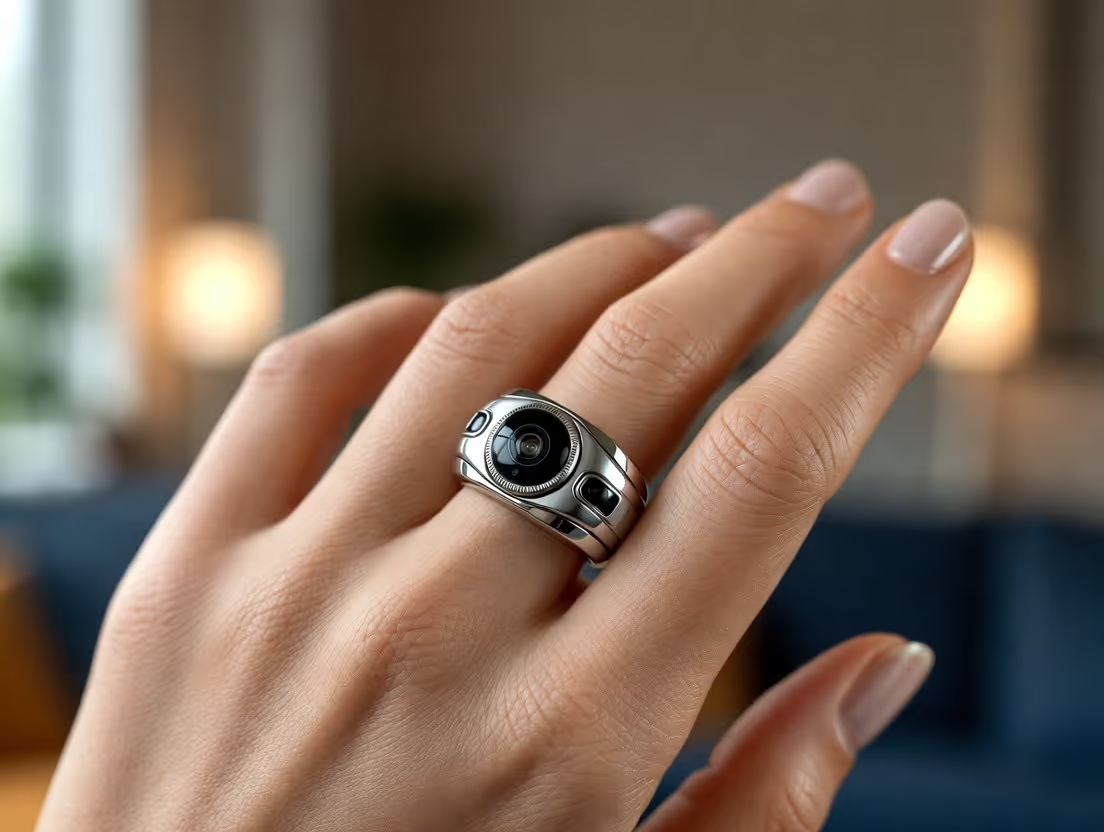
As we’ve explored the neuroscience of balance and the importance of foundational wellness, a crucial theme emerges: true emotional awareness requires objective data about our bodies. This is where modern wearable technology, specifically the smart ring, moves from being a novelty to an indispensable tool for emotional intelligence. The Oxyzen Smart Ring represents the next evolution in this space—a device designed not just to track metrics, but to foster a profound, continuous dialogue between you and your nervous system.
Unlike wrist-worn devices that can be bulky, prone to motion artifacts, and a constant source of digital distraction through notifications, a smart ring is elegantly simple. Worn on your finger, it leverages the rich vascular bed to capture clinical-grade physiological data with remarkable accuracy, 24 hours a day. The Oxyzen ring is engineered for this singular purpose: to be an unobtrusive, always-on biofeedback monitor that provides the missing link between how you feel and what your body is actually experiencing.
The ring’s sensors track the fundamental biomarkers of nervous system state and recovery:
The magic of Oxyzen is not in the raw data, but in its intelligent synthesis. The companion app transforms complex biometrics into intuitive, actionable insights:
This continuous feedback loop is transformative. It moves you from living in your head—with its stories, judgments, and denials—to honoring the intelligence of your body. When you feel a vague sense of numbness or agitation, you can check your data. You might discover it correlates with three nights of poor sleep or a week of consistently low HRV. This shifts self-blame to self-compassionate problem-solving. You’re not “broken” or “overly sensitive”; your nervous system is depleted and asking for support.
The ultimate goal of integrating a tool like Oxyzen is to refine your interoception—your internal sense of your body’s state—to the point where you need the device less. You begin to intuitively feel what the data shows. The ring accelerates this learning, providing an objective mirror that helps you trust your subjective experience again. To understand the philosophy behind this human-centered technology, you can explore our story and the vision that drives our development.
Theory and technology are powerful, but transformation happens in the small, daily choices. Let’s walk through a hypothetical day, illustrating how the principles of foundational wellness, mindfulness, and data-informed awareness weave together into a practical strategy for building emotional balance.
Morning (6:30 AM - The Compassionate Start):
Mid-Morning (10:30 AM - The Proactive Pause):
Afternoon (1:30 PM - The Intentional Boundary):
Evening (8:00 PM - The Digital Sunset):
Night (10:30 PM - The Reflective Close):
This daily flow isn’t about perfection. It’s about creating a rhythm that consistently signals “safety” and “care” to your nervous system. The smart ring acts as a gentle, objective coach throughout, helping you connect cause and effect and celebrate small wins. For more daily rituals and user experiences, our community shares their journeys in the testimonials section.
Human beings are wired for connection. Our nervous systems co-regulate—meaning a calm, present person can help soothe an agitated one, and vice versa. However, for those prone to emotional numbness or overwhelm, social interactions can be a major source of drain or a trigger for shutdown. Learning to engage authentically while protecting your energy is a master skill in emotional balance.
Highly sensitive or empathetic individuals often absorb the emotional states of those around them. If you lack strong internal boundaries, you can leave social interactions feeling burdened by emotions that aren’t yours, leading to exhaustion and a need to numb out. The key is to cultivate compassionate detachment—caring for others without taking on their emotional baggage as your own to carry.
Practice: Before and after significant social interactions, do a quick body scan. Notice if your shoulders have tightened, your stomach is in knots, or your breath has become shallow. Use a simple internal mantra like “I care for you, and I return to myself.” This mentally reinforces the boundary between your experience and another’s.
Your biometric data can provide fascinating, objective insight into your social well-being.
This information isn’t meant to make you avoid people. It’s meant to help you plan strategically. You might decide to limit draining interactions to shorter durations, ensure you have ample recovery time afterward, or practice specific grounding techniques before and during the event.
Emotional balance within relationships also requires the ability to express your own feelings honestly and respectfully—a skill known as assertive communication. Numbing often occurs when we repeatedly swallow our truth to avoid conflict.
A Simple Framework for Emotional Expression:
Example: Instead of bottling up resentment and then shutting down, you might say: “When we make plans and you cancel last minute, I feel disappointed and devalued, because I need reliability in our friendship. Would you be open to checking your calendar more thoroughly before we commit?”
This style of communication reduces defensiveness in the listener and honors your own emotional reality. It moves you from passive numbness or aggressive outbursts into the balanced middle ground of assertive clarity. For more on fostering healthy connections and personal well-being, our blog features regular articles on relational wellness.
The path to emotional balance is not linear. There will be days, or even weeks, where you feel you’ve lost all progress—where numbness returns, anxiety spikes, or old coping mechanisms resurface. It is critical to understand that setbacks are not failures; they are an expected and valuable part of the process. They are your system’s way of showing you where you still have tender spots, and they provide the very conditions under which resilience is built.
When you experience a setback, the most damaging thing you can do is layer shame and self-criticism on top of the original difficult emotion. This creates a secondary wave of suffering that often triggers a full retreat into numbness. Instead, practice a curious and compassionate inquiry:
This is where long-term biometric tracking proves its worth. When you look back over months of data in your Oxyzen app, you will no longer see isolated “bad days.” You will see cycles and rhythms. You’ll observe that after a dip in your Balance Score and a period of struggle, there followed a period of learning, adjustment, and eventual recovery to a new baseline. This panoramic view teaches you the most profound lesson of all: You are resilient. You have come through this before, and you will again.
This evidence-based perspective builds what psychologists call “self-efficacy”—the belief in your own ability to handle challenges. It transforms a crisis into a data point in your ongoing journey of self-mastery. If you ever have questions about interpreting your data or navigating a difficult period, our comprehensive FAQ and support resources are designed to help.
We have now laid the essential groundwork for building emotional balance without resorting to numbness. We’ve explored the physiological roots of shutdown in the nervous system and the importance of foundational wellness (sleep, movement, nourishment) as the bedrock of emotional capacity. We’ve introduced mindfulness as the practice of turning toward experience with acceptance, and emotional literacy as the skill of accurately naming what we feel.
We’ve looked at healthy release valves for emotional energy and the critical role of boundaries in managing our energetic resources. We’ve acknowledged the vital place of professional support and demonstrated how a tool like the Oxyzen Smart Ring can serve as a 24/7 companion, providing the objective data needed to move from guesswork to self-knowledge. Finally, we’ve walked through a practical day of integration and discussed how to navigate inevitable setbacks with resilience.
The throughline is this: Emotional balance is not a passive state you stumble upon. It is an active, daily practice of skilled engagement with your inner world. It is built on the radical premise that all of your feelings—the joy, the anger, the grief, the fear—belong. They are not enemies to be silenced, but messengers to be heard. The goal is not to control the messages, but to build a stronger, wiser, and more compassionate self who can receive them.
The journey from numbness is, at its heart, a journey back home to yourself. It is about replacing the fear of feeling with the courage to be present. It is about trading the dull, heavy armor of numbness for the vulnerable, vibrant, and sometimes messy experience of being fully human. As you continue to apply these principles, you will find that the capacity to feel deeply becomes not a source of suffering, but your greatest source of strength, connection, and wisdom.
This concludes the first portion of our comprehensive guide. In the next section, we will delve deeper into advanced practices for emotional alchemy, explore the long-term science of habit formation, and examine how to cultivate a lifestyle that sustains emotional balance for years to come. To discover the full potential of how technology can support this lifelong journey, visit our homepage to learn more about Oxyzen.
We’ve established the foundation and the daily practices. Now we venture into deeper work: the art of emotional alchemy. This is the process of consciously working with intense or painful emotions not just to release them, but to extract meaning, wisdom, and energy from them. It moves beyond tolerating distress to actively engaging with it as a catalyst for growth. When you practice alchemy, you no longer see a wave of anger or a pit of sadness as something to merely "get through." You learn to sit with it, question it, and discover what power it might hold.
This process can be framed in three stages, adapted from therapeutic and mindfulness traditions:
1. Containment: Creating the Vessel
Before you can transform an emotion, you must first be able to hold it without being flooded. This is where your foundational practices of grounding and mindfulness are critical. The goal here is to shift from “I am angry” (identification) to “I am experiencing anger” (observation). A powerful containment technique is “Putting It in a Chair.” Visualize the intense emotion as a separate entity sitting in a chair across from you. You can observe it, describe its qualities, even ask it questions, all from the safety of your own seat. This creates the psychological space necessary for alchemy to begin.
2. Curiosity and Dialogue: Listening to the Messenger
Once the emotion is contained, engage it with compassionate curiosity. Every emotion, especially the difficult ones, is a signal about an unmet need or a violated value. Your anger might be a boundary that was crossed. Your sadness might point to something precious that you’ve lost or are missing. Your anxiety might be a warning about a future threat you need to prepare for.
Ask the emotion questions (either in your mind or through journaling):
This dialogue honors the emotion as a form of intelligence. For example, a persistent, low-grade anxiety that arises during work might, upon inquiry, reveal a need for more competence or clarity. The emotion isn't the problem; it’s the flag, signaling where your attention and action are required.
3. Channeling and Integration: Using the Energy
Emotions are energy. Alchemy is about redirecting that raw energy into a constructive outlet. This is where you move from understanding to empowered action.
The key is to match the quality of the emotion with the quality of the action. This completes the cycle: the emotion is felt, heard, understood, and given a purposeful direction. It is integrated, not exiled.
Your biometric data from a tool like the Oxyzen ring can serve as a fascinating guide in this alchemical process. You can begin to see the physiological signature of different emotional states. Does creative flow correlate with a specific HRV pattern? Does righteous anger, when channeled into a productive task, lead to a different stress graph than suppressed resentment?
Furthermore, you can use the data to identify when you are physiologically ready for this deeper work. Attempting to alchemize intense emotion when your Balance Score is low and your body is depleted is like trying to forge metal in a cold furnace. The data can tell you, “Today is for rest and containment.” Another day, with high HRV and good sleep, it might signal, “Your system is resilient. Today you have the capacity to safely explore and channel that feeling.” This is the pinnacle of data-informed emotional intelligence.
Emotional balance is not a project with an end date; it is a way of living. The final stage of mastery is weaving these principles so seamlessly into the fabric of your life that they become your default mode of operation—not extra tasks on a to-do list, but the very ground you walk on. This requires a focus on lifestyle architecture and habit formation.
Your willpower is a finite resource. A far more effective strategy is to design your physical and digital environments to make balanced choices the easy, automatic choices.
The Oxyzen Smart Ring as an Environmental Cue: The simple act of wearing the ring is a constant, tactile reminder of your commitment to self-awareness. Its presence on your finger can serve as a gentle prompt to check in with your breath or posture throughout the day.
The grand goal of “emotional balance” can feel overwhelming. The secret is to forget the goal and focus entirely on the daily systems. James Clear, in Atomic Habits, emphasizes that you do not rise to the level of your goals; you fall to the level of your systems.
Build systems composed of tiny, undeniable habits:
The power of these micro-habits lies in their consistency. They wire your nervous system for balance through repetition. Each time you choose the mindful breath over scrolling, you strengthen the neural pathway for self-regulation. Over months and years, this compound interest results in a fundamentally different baseline of being. For inspiration on building these sustainable systems, our community shares their real-world experiences and routines in their testimonials.
A lifestyle is not static. Your needs, stresses, and capacities change with seasons, projects, and life stages. This is where the longitudinal data from your Oxyzen ring becomes your most valuable strategic asset.
Every quarter, set aside an hour to review your trends:
This practice transforms you from a passive experiencer of your life into an active author and scientist of your own well-being. It embodies the principle of lifelong learning applied to your inner world.
The journey of building emotional balance, while deeply personal, never exists in a vacuum. As you heal your relationship with your own emotions, the effects ripple outward into every domain of your life. This is the social and spiritual return on your investment in yourself.
When you are no longer hijacked by unprocessed emotions or hidden behind a wall of numbness, you show up differently with others.
You become the person others feel calm and understood around—not because you fix their problems, but because your own inner balance creates a space where they can access theirs.
Emotional blocks are creativity blocks. Numbness starves the creative spirit, which feeds on the full spectrum of feeling. As you open the channels of emotion, you also open the channels of inspiration.
Your professional life ceases to be a separate compartment and becomes an expression of your integrated self.
On a broader scale, every individual who does this work contributes to healing a collective wound. We live in a culture that often prizes stoicism, productivity, and positivity over authentic emotional experience. This has led to what some call an “epidemic of numbness.”
By courageously choosing to feel, you become a quiet revolutionary. You model a different way of being: strong yet sensitive, vulnerable yet resilient, compassionate yet boundaried. In your family, your workplace, your community, you demonstrate that it is possible—and profoundly powerful—to be a feeling human in a complex world. You help create a new norm where emotional honesty is seen not as a weakness, but as the ultimate sophistication. To learn more about our mission to foster this kind of holistic well-being, you can read about our vision and values on the about us page.
We have covered vast territory—from the neuroscience of numbness to the advanced art of emotional alchemy and sustainable lifestyle design. It may feel like a lot, but the path forward is taken one single, conscious step at a time. Here is a personalized roadmap to help you begin, progress, and master the art of emotional balance.
Building emotional balance without numbing feelings is perhaps one of the most courageous and rewarding endeavors a human can undertake. It is a rebellion against the easy escape of autopilot and a profound commitment to your own aliveness.
Remember, this path is not about achieving a state of placid, unchanging calm. That is not balance; that is stagnation. True emotional balance is dynamic, like a sailor skillfully adjusting the sails to the ever-changing wind and sea. It is the capacity to ride the waves of joy, grief, excitement, and fear without capsizing—to feel the storm fully, knowing you have built a seaworthy vessel.
You now hold the map, the tools, and the understanding. You have seen how the synergy of ancient wisdom, modern psychology, and supportive technology like the Oxyzen Smart Ring can guide you. The journey begins with a single, gentle choice: the choice to turn toward what you feel, just for a moment, with kindness.
Welcome home to yourself.
Your Trusted Sleep Advocate: Sleep Foundation — https://www.sleepfoundation.org
Discover a digital archive of scholarly articles: NIH — https://www.ncbi.nlm.nih.gov/
39 million citations for biomedical literature :PubMed — https://pubmed.ncbi.nlm.nih.gov/
Experts at Harvard Health Publishing covering a variety of health topics — https://www.health.harvard.edu/blog/
Every life deserves world class care :Cleveland Clinic - https://my.clevelandclinic.org/health
Wearable technology and the future of predictive health monitoring :MIT Technology Review — https://www.technologyreview.com/
Dedicated to the well-being of all people and guided by science :World Health Organization — https://www.who.int/news-room/
Psychological science and knowledge to benefit society and improve lives. :APA — https://www.apa.org/monitor/
Cutting-edge insights on human longevity and peak performance:
Lifespan Research — https://www.lifespan.io/
Global authority on exercise physiology, sports performance, and human recovery:
American College of Sports Medicine — https://www.acsm.org/
Neuroscience-driven guidance for better focus, sleep, and mental clarity:
Stanford Human Performance Lab — https://humanperformance.stanford.edu/
Evidence-based psychology and mind–body wellness resources:
Mayo Clinic — https://www.mayoclinic.org/healthy-lifestyle/
Data-backed research on emotional wellbeing, stress biology, and resilience:
American Institute of Stress — https://www.stress.org/


