


The Calm Mind Workspace: Designing Environments for Mental Peace
A calm mind workspace is organized, has calming elements (plants, soft light), and is free from excessive clutter and digital distractions.
A calm mind workspace is organized, has calming elements (plants, soft light), and is free from excessive clutter and digital distractions.
%402x.svg)
In an age of relentless digital pings, infinite scrolling, and the persistent hum of "always-on" culture, our minds have become the most contested spaces of all. We curate our social media feeds, optimize our morning routines, and track our physical health with precision, yet we often neglect the most profound determinant of our mental state: our immediate physical environment. The space where we work, create, and rest isn't just a backdrop; it’s an active participant in our cognitive and emotional processes. It can either be a source of constant, low-grade stress—a chaos of visual noise, poor ergonomics, and sensory assault—or it can be a sanctuary engineered for mental peace.
This is the foundation of the Calm Mind Workspace: a deliberate, holistic design philosophy that moves beyond mere aesthetics or productivity hacks. It’s about architecting environments that actively reduce cognitive load, regulate the nervous system, and foster a state of flow and tranquility. It's where neuroscience meets interior design, where biophilic principles intersect with personalized technology. We’re no longer just designing offices or home offices; we’re designing cognitive ecosystems.
The cost of ignoring this relationship is high. Chronic stress, burnout, and anxiety aren't just mental states; they manifest physiologically—in elevated cortisol, disrupted sleep, and a heightened fight-or-flight response. Our workspaces, often inadvertently, can trigger these states. The glare of a screen, the jarring mix of colors, an uncomfortable chair that causes subtle but persistent pain, the inability to control light or temperature—all these factors send micro-signals to our brain that something is wrong, keeping us in a state of mild but constant alertness.
Conversely, a space designed for mental peace acts as a buffer against the chaos of the world. It leverages natural elements, intentional layouts, sensory modulation, and data-driven personalization to create conditions where the mind can settle, focus can deepen, and creativity can surface naturally. This isn’t a luxury reserved for Silicon Valley CEOs; it’s an essential pillar of modern wellness that is accessible through intelligent design choices and tools.
This journey begins with understanding the profound dialogue between our surroundings and our inner world. From the neuroscience of spatial perception to the ancient wisdom of contemplative architecture, we will explore how to construct environments that don't just house our work but elevate our mental state. We’ll delve into the core pillars: light, sound, air, nature, ergonomics, and technology—not as passive elements, but as active tools for cultivating peace.
And in this new paradigm, technology plays a dual role. While often the source of our distraction, it also holds the key to profound personalization. This is where the integration of discreet, ambient intelligence, like that found in advanced wellness wearables, becomes transformative. Imagine a workspace that doesn't just sit there, but responds—dimming lights when it senses your focus is waning, suggesting a bio-break when stress markers rise, or playing soundscapes that correlate with your current heart rate variability. This seamless fusion of mindful design and responsive technology is the frontier of the Calm Mind Workspace. It’s about creating an environment that knows you, supports you, and fades into the background so your mind can truly find its calm.
As we explore these principles, remember that the goal is not to create a sterile, minimalist cage. It’s to design a living, breathing habitat for a calm and capable mind. A space where peace is not an occasional visitor, but a permanent resident. Let’s begin.

Before we move a single piece of furniture, we must understand the fundamental conversation happening between our surroundings and our neurology. Every color, shape, texture, and sound in your workspace is not passively observed; it is actively interpreted by your brain, triggering cascades of neurochemicals and shaping your mental state in real-time. Your environment is, quite literally, programming your brain’s operating system.
At the core of this interaction is the brain’s primary mission: to keep you safe and efficiently allocate energy. It constantly scans the environment for threats and rewards. A cluttered, chaotic, or over-stimulating space signals potential danger or inefficiency, activating the amygdala—the brain’s alarm bell. This triggers the sympathetic nervous system, releasing cortisol and adrenaline, priming you for "fight or flight." Your heart rate increases, your breathing shallowens, and your prefrontal cortex—the seat of focus, decision-making, and creative thought—is partially shut down. In essence, a stressful environment makes you literally dumber and more anxious.
Conversely, an environment perceived as safe, orderly, and pleasant activates the parasympathetic nervous system—the "rest and digest" mode. This state is mediated by neurotransmitters like serotonin and GABA, promoting feelings of calm, well-being, and mental clarity. The prefrontal cortex comes back online, allowing for deep work, innovative thinking, and emotional regulation. This is the neurochemical foundation of the Calm Mind Workspace: designing to promote parasympathetic dominance.
Three key neuroscientific principles guide this design:
1. Cognitive Load and Visual Processing: The brain has limited processing power. Visual clutter—stacks of paper, tangled cords, an overcrowded bulletin board—creates "visual noise." Each item competes for neural attention, forcing your brain to unconsciously process and re-process irrelevant information. This increases cognitive load, draining the mental energy needed for your actual work. A study from the Princeton Neuroscience Institute confirmed that physical clutter competes for your attention, resulting in decreased performance and increased stress. Reducing visual noise is not about minimalism for its own sake; it’s about freeing up precious cognitive resources.
2. Spatial Perception and the Sense of Control: The brain craves predictability and a sense of agency. A poorly organized space where you can’t easily find what you need creates a subtle but chronic sense of helplessness. Conversely, an orderly, intuitive space where everything has a designated place enhances your sense of control. This perceived control is a powerful buffer against stress. Neuroscientist Dr. Robert Sapolsky’s work on stress highlights that a lack of control is one of the most potent psychosocial stressors. Your workspace design can either exacerbate or alleviate this.
3. Sensory Integration and the Default Mode Network (DMN): When your external environment is overwhelming (too loud, too bright, too chaotic), your brain expends enormous energy just on sensory processing. When the environment is calmly coherent, the brain can enter a state of integrated rest. This is often associated with the activation of the Default Mode Network (DMN), a network of brain regions active during wakeful rest, introspection, and memory consolidation. The DMN is crucial for creativity, problem-solving, and making sense of complex information. A calm environment allows the DMN to operate without interference, facilitating those "aha!" moments that never come in the midst of chaos.
Understanding this neuroscience transforms design from a decorative art into a cognitive science. The choices we make—from paint color to desk layout—are direct interventions in our own neurochemistry. They are the levers we can pull to manually switch our brain from a state of stress to a state of serene capability. For a deeper dive into how technology can help you track these physiological states, our blog features extensive research on stress biomarkers and recovery.
You cannot transform what you do not first understand. Creating a Calm Mind Workspace begins not with buying new things, but with a clear-eyed, systematic audit of your existing environment. This is a diagnostic process, a "stress profile" of your space, where you shift from being a passive occupant to an objective investigator. The goal is to identify every element that contributes to cognitive load, sensory stress, and physiological disruption.
Conduct this audit over a typical workday. Be an anthropologist in your own space. Take notes, or even use your phone to take photos and record ambient sound at different times.
The Sensory Scan:
The Ergonomic & Functional Assessment:
The Psychological & Emotional Inventory:
This is more subjective but vital. What feelings does your current workspace evoke? Does it feel inspiring, or draining? Does it feel like "you," or like a generic, transient location? Are there items that trigger negative emotions—unfinished projects, unpaid bills, reminders of obligations? Conversely, are there any elements that actively bring you joy or calm?
Documenting this profile creates a powerful blueprint for change. It moves you from a vague sense of "this space doesn't feel good" to specific, actionable insights: "The glare from the overhead light on my screen causes eye strain," or "The unpredictable construction noise outside triggers my stress response every 20 minutes."
This audit is the first, crucial step in taking conscious control of your environment. It aligns perfectly with the philosophy behind Oxyzen's approach to wellness, which emphasizes data-driven self-awareness as the foundation of meaningful change. By diagnosing your space, you gather the data needed to prescribe the right design solutions.

Light is the most powerful environmental cue for the human brain. It doesn't just allow us to see; it tells our biology what time it is, directly governing our circadian rhythm—the 24-hour internal clock that regulates sleep, hormone production, metabolism, and cognitive function. In the context of the Calm Mind Workspace, mastering light is not optional; it is the single most effective intervention for aligning your environment with your biology.
The problem with the modern workspace is its fundamental disconnect from natural light cycles. We are bathed in static, artificial light that often works against our natural rhythms, leading to circadian disruption. This manifests as afternoon fatigue, poor sleep quality, mood fluctuations, and an inability to sustain focus.
The Science of Light Spectrum and Intensity:
Light is measured in both color temperature (Kelvin) and intensity (lux). Cool, blue-white light (5500K-6500K), which mimics midday sun, suppresses melatonin and promotes alertness and concentration. Warm, amber light (2700K-3000K), which mimics sunrise and sunset, allows melatonin to rise, signaling to the body that it's time to wind down.
A calm mind requires a workspace that can dynamically shift with these needs. Static, overhead fluorescent lighting, often too cool and too bright, creates a state of perpetual artificial midday, confusing your internal clock and preventing necessary transitions into restorative states.
Designing a Circadian-Lit Workspace:
The Dark Side: Respecting the Need for Darkness
Just as important as quality light is quality darkness. Exposure to blue light after sunset is profoundly disruptive. Implement an "electronic sunset" ritual: use software like f.lux or Night Shift on your devices, and consider wearing blue-light-blocking glasses in the evening. Your evening accent lighting should be exclusively warm and dim.
By treating light as a dynamic, therapeutic tool, you transform your workspace from a static box into a living system that supports your energy, focus, and ultimate relaxation. It’s one of the most direct ways to tell your brain, through your environment, that all is well and it’s safe to be calm, focused, or restful as needed. For those interested in how personalized data can optimize such cycles, exploring the capabilities of a smart wellness ring can provide fascinating insights into your unique circadian responses.
If light is the director of your circadian rhythm, sound is the conductor of your nervous system. Our auditory system is a primordial early-warning network, constantly on patrol even while we sleep. In a workspace, uncontrolled sound is not just a distraction; it’s a relentless stream of potential threats that keeps the brain in a low-grade state of alert. Designing for auditory peace, or "auditory hygiene," is about curating a soundscape that protects your attention and promotes physiological calm.
The enemy is not volume, but unpredictability. A consistent, low hum is often tune-out-able. It’s the sudden, intermittent sounds—a door slam, a phone ring, a fragment of conversation—that trigger an "orienting response." The brain is forced to interrupt its flow to assess the sound for danger, shattering concentration. This is why open-plan offices are so cognitively taxing.
Understanding Sound Masking and the Brain:
The goal is not utter silence (which can itself feel eerie and unnerving). The goal is to minimize disruptive, unpredictable noises and, when necessary, replace them with predictable, non-invasive sound. This is the principle of "sound masking" or using "sonic wallpaper."
Crafting Your Personal Auditory Environment:
Your auditory environment should feel like a protective bubble. It’s a filter that lets in what is nourishing and keeps out what is jarring. By mastering your soundscape, you give your brain the gift of predictable safety, allowing it to devote its full resources to the task at hand, free from the reflexive need to monitor for auditory threats. The profound impact of sound on stress is something we frequently explore with real-user data in our testimonials and case studies.
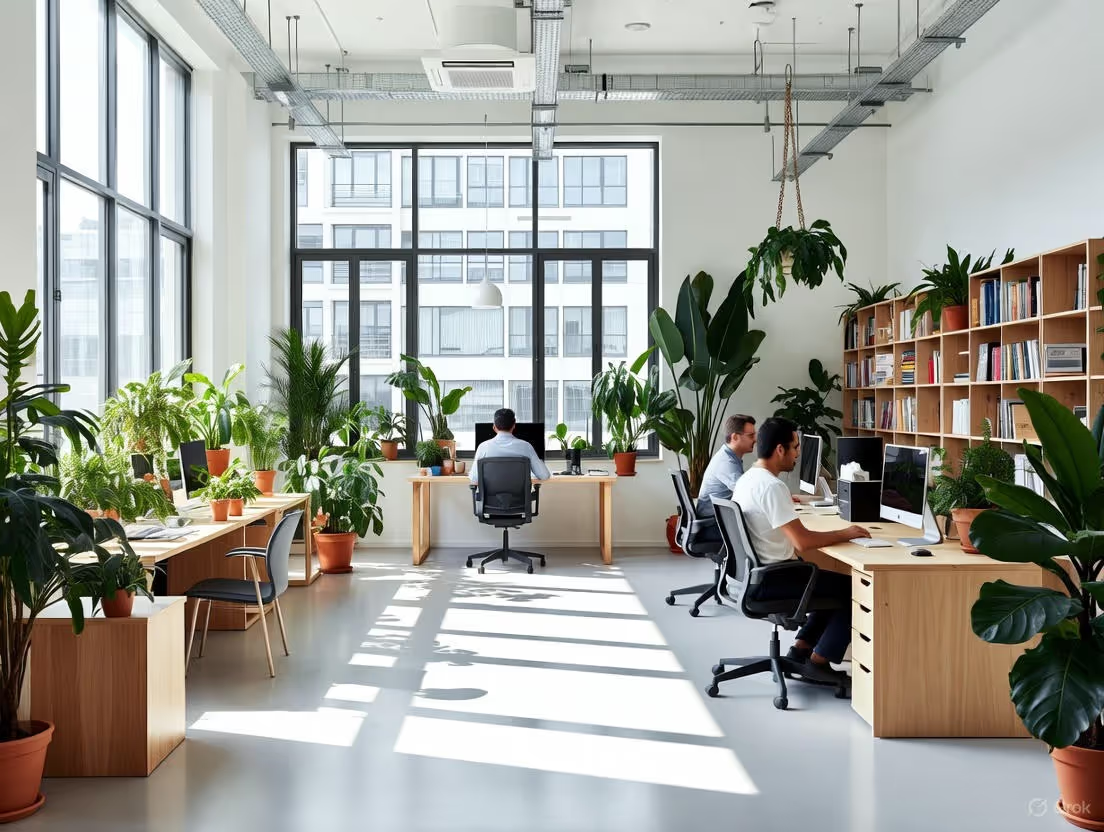
We are conscious of the food we eat and the water we drink, but we often give little thought to the 11,000 liters of air we breathe daily. The air in your workspace is not an empty void; it’s a gaseous soup of oxygen, carbon dioxide, volatile organic compounds (VOCs), particulate matter, and microbes. Its quality directly and immediately impacts brain function, energy levels, and emotional state. A calm mind cannot reside in a stagnant, polluted atmosphere.
The primary villains in indoor air are CO2 and VOCs. As you breathe in a confined space, CO2 levels rise. Far beyond causing simple drowsiness, elevated CO2 (levels above 1,000 ppm) has been proven in multiple studies to significantly impair cognitive function—reducing decision-making performance, strategic thinking, and information utilization by over 50%. VOCs, off-gassing from synthetic materials like carpets, paints, furniture, and cleaning products, can cause headaches, nausea, and "brain fog."
The Physiology of Clean Air:
Optimal air quality supports the brain in two key ways:
Strategies for Engineering Pristine Air:
Breathing clean, fresh air should be an unconscious given in your workspace. By engineering your air for quality, you remove a silent, pervasive drain on your cognitive resources and create a foundation of physiological vitality. Your brain, fueled by clean oxygen and free from chemical irritants, is primed for the clarity and peace that define a Calm Mind Workspace. For those curious about how environmental factors affect physiological metrics, our FAQ section addresses many questions on this interplay.
Biophilia is the innate human tendency to seek connections with nature and other forms of life. It’s not a passing design trend; it’s a hardwired evolutionary need. For 99% of human history, we lived in natural environments. Our brains evolved to process the fractal patterns, organic shapes, and dynamic processes of the natural world with ease and pleasure. The modern, rectilinear, synthetic workspace is a radical departure from this norm, and our minds pay a "bio-penalty" for the disconnect.
Biophilic design intentionally reintegrates nature into the built environment to reduce stress, enhance creativity, and improve cognitive function. It works because it speaks directly to our evolutionary psychology, signaling safety, abundance, and opportunity.
The Three Categories of Biophilic Design:
Implementing Biophilia in Your Workspace:
Biophilic design transforms your workspace from an artificial cell into a living niche. It tells your ancient brain, on a subconscious level, that you are in a resource-rich, safe environment. This reduces physiological stress and opens neural pathways associated with relaxation, curiosity, and diffuse-mode thinking—the very state where creativity and problem-solving flourish. The journey to integrate nature and technology for wellness is at the heart of Oxyzen's own story and vision.
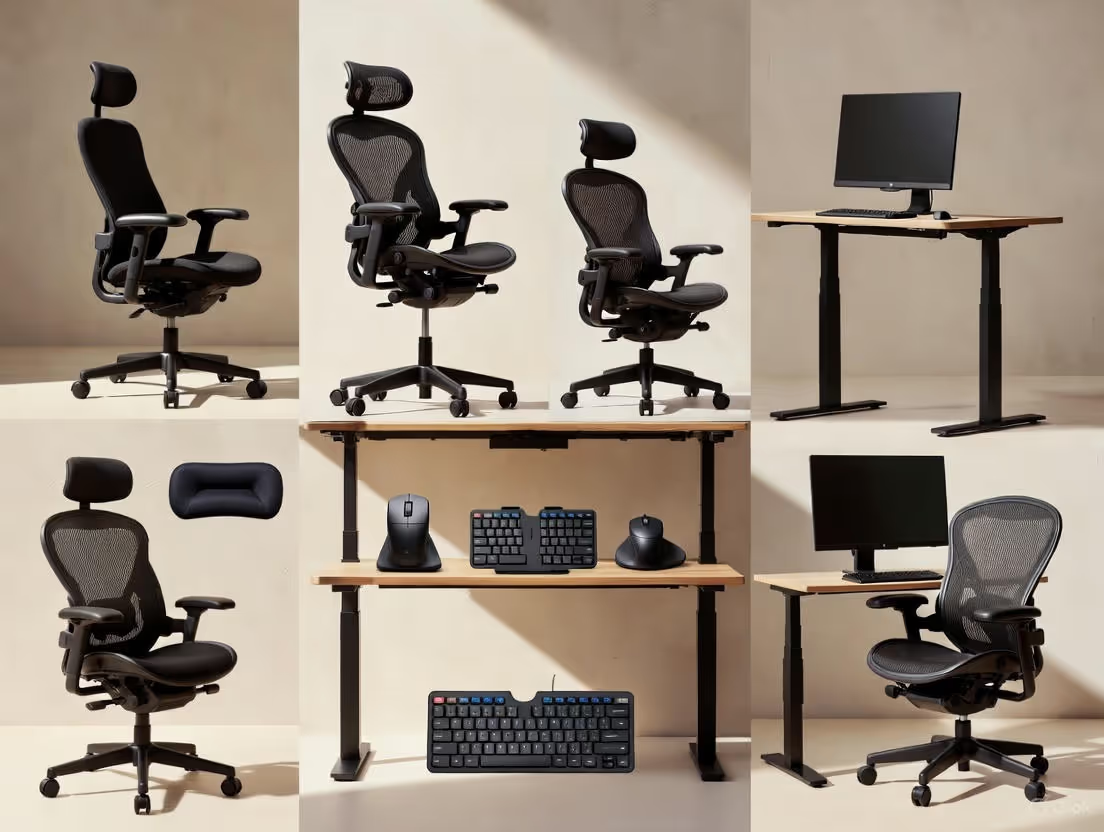
We have explored the sensory and atmospheric pillars—light, sound, air, and nature. Now we address the most intimate point of contact between you and your environment: your body's physical interface with your workspace. Ergonomics is often reduced to "getting a good chair," but it is far more holistic. It is the science of designing the environment to fit the user, minimizing physical strain and discomfort to maximize well-being and performance. The fundamental principle is simple: A body in pain or discomfort cannot host a calm mind.
Pain is the nervous system's highest-priority signal. Aches in your neck, shoulders, back, or wrists are not just minor annoyances; they are relentless distractions that pull cognitive resources away from your work and towards managing discomfort. This creates a background of low-grade stress and frustration, directly undermining mental peace.
The Core Tenets of Cognitive Ergonomics:
Building Your Ergonomic Sanctuary:
Ergonomics is an ongoing process of tuning, not a one-time setup. Your body changes from day to day. Listen to it. The moment you feel yourself slouching, leaning, or experiencing tension, it's a signal to adjust your chair, change your height, or take a movement break. A workspace that physically supports you becomes invisible; you are unaware of it because it causes no distress. This bodily ease is the stable platform upon which a calm, focused, and creative mind is built. It’s the tangible foundation of the entire Calm Mind structure.
Color is not merely decorative; it is a form of non-verbal communication that bypasses conscious thought and speaks directly to the limbic system, evoking powerful psychological and physiological responses. In your workspace, the color palette acts as a constant, ambient mood-setting tool. Choosing the right colors isn't about personal taste alone; it's about leveraging color psychology to cultivate the mental states you desire: focus, clarity, creativity, or tranquility.
The impact of color is influenced by hue (the color itself), saturation (its intensity or purity), and value (its lightness or darkness). A calm mind workspace generally favors lower saturation (muted, softer tones) and balanced values to avoid visual fatigue.
Decoding the Emotional Spectrum of Color:
Strategies for a Harmonious Color Application:
By intentionally curating your color environment, you create a visual "tonic" for your mind. The right palette doesn't shout for attention; it whispers reassurance, providing a harmonious visual field that supports, rather than disrupts, your inner peace and concentration. It’s the silent, pervasive background that makes every other element of your Calm Mind Workspace cohere into a unified, serene whole.
In the pursuit of a calm mind, the physical objects that surround us hold immense psychological weight. The prevailing narrative often champions extreme minimalism—a sterile, almost empty space. However, the true goal is not emptiness, but intentionality. This pillar is about creating an environment where every object earns its place, serving a clear functional or emotional purpose. It's the thoughtful curation of your physical world to reduce cognitive drag and create visual and mental breathing room.
Understanding the Cognitive Tax of Clutter:
Clutter is not just untidiness; it’s unattended decision-making. Each item left out—a stack of unsorted mail, a half-finished project, a gadget you never use—represents an unfinished task or a postponed choice. Psychologist Dr. Sherrie Bourg Carter calls clutter a "constant reminder of things that should be getting done." This creates a low-grade, chronic stress known as "clutter stress," which drains your cognitive bandwidth, reduces your ability to focus, and can even inhibit creative thinking. A Princeton University study found that a cluttered environment restricts your ability to process information, as the visual chaos competes for your attention.
However, "clutter" is highly personal. For one person, a shelf of books is inspiring; for another, it’s overwhelming. The key is distinguishing between chaotic clutter and meaningful collection.
Principles of Intentional Curation:
The Role of "Positive Clutter" or Soulful Objects:
This is where intentionality diverges from stark minimalism. A completely blank, impersonal space can feel alienating and uninspiring. Your workspace should reflect you and support your emotional well-being. The goal is to be surrounded only by items that "spark joy," to use Marie Kondo's phrase, or that serve a vital function.
Implementing the "Edited" Workspace:
Conduct a rigorous, kind edit of your space. Touch every item. Ask:
If the answer is no to all, thank it and let it go. What remains should be a blend of high-function tools and soul-nourishing objects. The resulting environment will feel both spacious and personal, efficient and warm. It tells your brain, "Everything here is here for a reason. There are no loose ends." This sense of order and completeness is a profound enabler of mental peace, freeing up vast reserves of mental energy for the work that truly matters. It’s a tangible expression of taking control, a theme central to understanding how personalized technology can empower your wellness journey.
Technology is the double-edged sword of the modern workspace. It is the source of our greatest distractions and our most powerful tools for focus and calm. This pillar is not about rejection, but about conscious integration. It’s about designing a digital habitat where technology serves your mental peace, rather than sabotaging it. This involves both the physical management of devices and the architectural design of your digital workflow.
The Physical Layer: Taming the Hardware Beast
Our desks are often jungles of cords, blinking lights, and multiple screens. This physical chaos contributes directly to sensory overload.
The Digital Layer: Architecting for Focus
This is the software and workflow strategy to protect your attention.
The Quantified-Self Layer: Data for Peace, Not Anxiety
Here is where the newest generation of wellness technology, like smart rings, becomes transformative. The goal is to use data not for obsessive tracking, but for compassionate insight and environmental automation.
By mastering this pillar, you transform technology from a fracturing force into a unifying, supportive layer of your Calm Mind Workspace. It becomes the intelligent nervous system of your environment, working quietly in the background to maintain homeostasis, allowing you to fully inhabit a state of undisturbed, peaceful productivity. To see how this integration works in practice, explore real user experiences and testimonials of harmonizing data with daily life.
A space is static; a mind is dynamic. The most beautifully designed environment can still be undermined by chaotic habits. This pillar bridges the gap between your space and your behavior. It’s about installing conscious rituals and rhythms that use your environment as a stage for mental state change. These practices create powerful psychological "anchors," training your brain to associate specific actions in your workspace with specific, desirable states of mind like focus, creativity, or relaxation.
The Science of Habit and Context: Charles Duhigg, in The Power of Habit, outlines the "habit loop": Cue > Routine > Reward. Your workspace itself can become the ultimate cue. By pairing consistent routines (rituals) with the consistent context (your designed space), you forge powerful neural pathways that make entering a desired mindset faster and more automatic.
Essential Workspace Rituals:
Designing for Rhythm, Not Just Marathon Sessions:
Human cognition operates in cycles, not a linear, endless grind. The Ultradian Rhythm theory suggests we have natural 90-120 minute cycles of high focus followed by a 20-30 minute period of lower alertness. Your workspace rituals should honor this.
By embedding these rituals into your use of the space, you activate its full potential. The environment ceases to be a passive container and becomes an active partner in your cognitive and emotional regulation. It provides the cues and the stage for behaviors that systematically build and protect your mental peace, day after day. For more on building sustainable wellness habits, our blog offers a wealth of actionable strategies.
Even within a single room, not all space is equal. The concept of a singular "workspace" can be limiting. This pillar advocates for the creation of dedicated micro-environments within your larger area, each engineered to support a specific mental mode. This spatial zoning leverages context-dependent memory and state-specific learning, powerfully cueing your brain to shift gears. It transforms a one-note room into a symphony of supportive spaces.
The Cognitive Benefits of Zoning:
When you consistently perform an activity in a specific location, your brain begins to associate that place with that mental state. Sitting at your main desk triggers "deep work" mode. Sitting in a specific chair with a book triggers "learning and absorption" mode. Standing at a high table might trigger "creative brainstorming" mode. This reduces the mental effort required to switch tasks and deepens your immersion in each one.
Key Zones for a Holistic Calm Mind Workspace:
Implementing Zones in a Small Space:
You don't need a large room to implement this. Ingenuity is key.
Creating these personal sanctuaries within your workspace acknowledges the multifaceted nature of your mind. It provides a dedicated "landing pad" for every mode of being, ensuring your environment has the right tool for every mental job. This not only boosts productivity in each area but, more importantly, provides a sense of psychological spaciousness and choice, which is fundamental to autonomy and calm. For inspiration on creating personalized systems, our FAQ covers many practical setup questions.
The human body is designed for movement, not for prolonged, static postures. Sedentary behavior is now labeled "the new smoking" for its detrimental health effects, but its impact on the mind is equally severe. Stagnation begets mental stagnation; physical restlessness fuels mental restlessness. This final foundational pillar moves beyond static ergonomics to champion a Kinetic Workspace—an environment intentionally designed to encourage and facilitate gentle, constant movement and varied postures throughout the day.
The Mind-Body Connection in Motion:
Movement increases blood flow, not just to muscles, but crucially, to the brain. This delivers oxygen and nutrients while clearing metabolic waste. Studies show that even micro-movements and postural changes can improve concentration, enhance mood, boost creativity, and reduce feelings of anxiety. When we sit statue-still, our physiology—and by extension, our cognition—dulls. A workspace that invites motion keeps the biological systems that underpin a calm mind actively nourished and regulated.
Strategies for a Kinetic Design:
The Posture Palette Concept:
Think of your body positions as a palette you can choose from throughout the day, just as an artist selects brushes. Your workspace should support this palette:
By rotating through these postures, you prevent repetitive strain, engage different muscle groups, and keep your sensory and motor cortexes lightly engaged—which helps keep the mind alert but not stressed.
Integrating kinetics completes the biopsychosocial model of the Calm Mind Workspace. You have addressed the mind (through neuroscience, ritual, psychology), the environment (through light, sound, air, nature, design), and now, explicitly, the body. A workspace that invites gentle, varied movement respects the fundamental truth that we are not brains on sticks, but integrated organisms. This physical vitality is the final, essential ingredient for sustaining mental peace, resilience, and flow throughout the demands of the day. It embodies the holistic philosophy of wellness that guides everything we do, a philosophy you can learn more about in our company's mission.
Having explored the eleven pillars that form the architecture of a Calm Mind Workspace, we now face the most crucial step: synthesis and action. Knowledge without application is merely trivia. This section is your practical blueprint—a phased, actionable guide to weaving these principles into the fabric of your unique environment. We will move from vision to reality, creating a personalized sanctuary that evolves with you.
The goal is not a perfect, magazine-ready transformation in a single weekend. It is a deliberate, conscious process of cultivation. Think of yourself as a gardener tending to an ecosystem, not a construction worker pouring concrete.
Phase 1: Clarify Your "Why" and Define Your Modes (The Foundation Plan)
Before you buy a single item, invest time in clarity.
Phase 2: The "Clean Slate" Reset (A Weekend Project)
This is a physical and psychological reset. Choose a weekend to:
Phase 3: Sequential Pillar Implementation (A 4-6 Week Plan)
Attempting all eleven pillars at once is overwhelming. Implement them sequentially, allowing each to settle before adding the next. Follow this suggested order, as earlier pillars create the substrate for later ones:
Phase 4: Integration and Personalization (Ongoing Cultivation)
With the core layers established, you can personalize and integrate the advanced concepts.
Remember, this is not a rigid prescription but a flexible framework. Your sequence might differ based on your audit. The key is intentional, sequential progress.
For those ready to elevate their Calm Mind Workspace to its most responsive and personalized level, the frontier lies in seamless bio-integration. This is where environmental design meets quantified self, creating a closed-loop system that adapts to your physiology in real time. This isn't science fiction; it's the logical next step using available technology.
The Concept of the "Responsive Environment":
Imagine a workspace that doesn't just sit there, but listens and responds. It uses passive biometric data as its input and adjusts environmental parameters as its output. The goal is to preempt stress and cognitive decline, and to proactively support optimal states.
How It Works – A Practical Scenario:
You are wearing a smart wellness ring like Oxyzen. As you work, it continuously measures your Heart Rate Variability (HRV)—a key marker of autonomic nervous system balance and stress.
Building Your Own Responsive System:
You can start building this today with consumer-grade smart home devices and a data source.
This advanced integration represents the ultimate personalization. Your environment becomes an extension of your own physiology, a true habitat for a calm mind that learns and adapts. It’s the pinnacle of treating your workspace not as a place you go, but as a living system that supports you. Reading about real user stories and integrations can provide powerful inspiration for this stage.
The ideal blueprint can feel daunting if you share your home with a family, work in a corner of your bedroom, or have a tight budget. The principles of the Calm Mind Workspace are scalable and adaptable. It’s about applying the essence of each pillar, not its most expensive manifestation.
For Shared Spaces (Home Offices, Coworking):
For Small Spaces (Bedrooms, Studio Apartments):
For Limited Budgets:
Constraints breed creativity. A Calm Mind Workspace is defined by its intentionality and effect, not its square footage or cost. By focusing on the principles—control your sensory input, support your body, curate your items—you can create peace in any context. For more tailored ideas and community solutions, our blog is a continual resource for adaptive strategies.
A workspace, like a garden or a relationship, cannot be set and forgotten. The final, and perhaps most important, aspect of the Calm Mind Workspace is the philosophy of curation and evolution. Your needs, projects, and even your aesthetic tastes will change. Your environment must be fluid enough to adapt, or it will become a relic that slowly ceases to serve you.
The Weekly "Reset" Ritual:
Incorporate a 15-minute weekly refresh into your schedule (Friday afternoon is ideal). This is not a deep clean, but a recalibration:
The Quarterly "Evolution" Audit:
Every season, conduct a mini-version of your original audit.
The Annual "Deep Re-Curation":
Once a year, consider a more substantial edit. This is a chance to ask the big questions again: Does this space still reflect who I am and what I need? Donate furniture or tools you no longer use. Repaint if the color no longer serves your mood. Re-wire your cable management. This annual ritual prevents stagnation and ensures your workspace grows with you.
This sustaining philosophy turns design from a project into a practice. It embeds the Calm Mind principles into your lifestyle, making the maintenance of your external environment a key ritual for the maintenance of your internal peace. It acknowledges that a calm mind is not a destination, but a way of traveling—and your workspace is the vehicle you meticulously care for to ensure a smooth, peaceful journey. This commitment to continuous improvement is woven into the very story and values of our mission.
We have journeyed from the neuroscience of stress to the kinetic design of movement, from the macro view of environmental pillars to the micro view of weekly rituals. The Calm Mind Workspace is not a prescription, but a palette—a rich set of principles, tools, and strategies from which you can paint your own unique sanctuary for mental peace.
Remember, the objective was never to create a photogenic, minimalist cage. It was to design a living, breathing habitat for a calm and capable mind. A space that actively participates in your well-being, reducing the friction between you and your best work, your deepest thoughts, and your most restorative rest.
Start where you are. Use what you have. Begin with a single pillar—perhaps by auditing your lighting or committing to a closing ritual. Each intentional step, no matter how small, is a declarative act of self-respect. It is a message to your nervous system: "You are safe here. You are supported here."
As you embark on this transformation, view your environment as your most steadfast ally in the quest for mental peace. Let it hold you, inspire you, and calm you. The external order you create will, in time, cultivate a profound internal order. Your calm mind awaits—not at the end of a perfect design, but in the very process of intentionally crafting the space that will nurture it, day after peaceful day.
For ongoing support, community ideas, and deeper dives into the technology that can personalize your journey, remember that this is just the beginning of the conversation. We invite you to explore our comprehensive blog for more insights, see how others have transformed their spaces, and discover the tools that can make your environment truly responsive. Your sanctuary is not just a place. It is the foundation for a calmer, more focused, and more fulfilling life.
Your Trusted Sleep Advocate: Sleep Foundation — https://www.sleepfoundation.org
Discover a digital archive of scholarly articles: NIH — https://www.ncbi.nlm.nih.gov/
39 million citations for biomedical literature :PubMed — https://pubmed.ncbi.nlm.nih.gov/
Experts at Harvard Health Publishing covering a variety of health topics — https://www.health.harvard.edu/blog/
Every life deserves world class care :Cleveland Clinic - https://my.clevelandclinic.org/health
Wearable technology and the future of predictive health monitoring :MIT Technology Review — https://www.technologyreview.com/
Dedicated to the well-being of all people and guided by science :World Health Organization — https://www.who.int/news-room/
Psychological science and knowledge to benefit society and improve lives. :APA — https://www.apa.org/monitor/
Cutting-edge insights on human longevity and peak performance:
Lifespan Research — https://www.lifespan.io/
Global authority on exercise physiology, sports performance, and human recovery:
American College of Sports Medicine — https://www.acsm.org/
Neuroscience-driven guidance for better focus, sleep, and mental clarity:
Stanford Human Performance Lab — https://humanperformance.stanford.edu/
Evidence-based psychology and mind–body wellness resources:
Mayo Clinic — https://www.mayoclinic.org/healthy-lifestyle/
Data-backed research on emotional wellbeing, stress biology, and resilience:
American Institute of Stress — https://www.stress.org/


