Can Sleep Tracking Cause Anxiety? The Orthosomnia Problem
Sleep tracking can cause anxiety and orthosomnia when monitoring becomes obsessive. This psychological guide examines when tracking helps versus hurts, identifies warning signs of unhealthy monitoring relationships, and provides strategies for mindful tracking that supports rather than undermines sleep quality.
Can Sleep Tracking Cause Anxiety? The Orthosomnia Problem
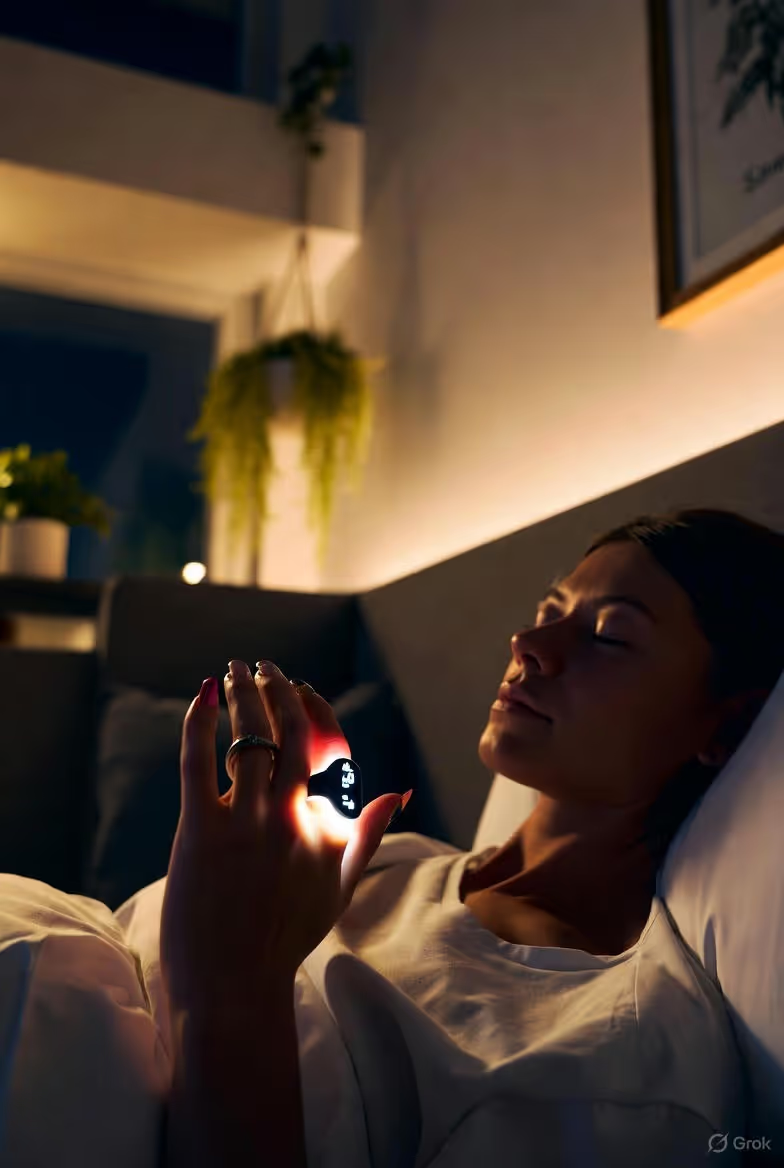
You wake up, and before you even open your eyes, you reach for your phone. A tap on the screen reveals your night, distilled into data: 6 hours 42 minutes of sleep, 72% sleep efficiency, 45 minutes of deep sleep, a heart rate dip of 12%, and a graph showing three distinct awakenings. The score: 78/100. "Fair," the app declares. Immediately, a narrative forms in your groggy mind. *Only 45 minutes of deep sleep? I need 90+ to feel restored. Why was my efficiency so low? Did that late snack ruin my score? I need to do better tonight.* The quest for the perfect 100 begins, casting a subtle shadow of anxiety over your entire day.
This ritual, repeated by millions every morning, represents a profound shift in our relationship with sleep. We’ve moved from subjective feeling—“I slept okay”—to quantified judgment, governed by algorithms and scores. Sleep, one of our most primal, instinctive biological functions, is now a performance metric. And for a growing number of people, this nightly audit is backfiring spectacularly, creating a paradox where the tool meant to improve health becomes a source of significant stress. Welcome to the era of orthosomnia—a perfectionistic pursuit of perfect sleep, fueled and exacerbated by consumer sleep technology.
This long-form exploration delves into the heart of this modern dilemma. We will trace the journey from the first sleep lab to the smart ring on your finger, uncover the neuroscience of sleep anxiety, and critically examine the gap between the data we collect and the truth about our rest. We’ll investigate how a wellness tool can morph into a source of obsession, and importantly, explore a more balanced path forward—one where technology serves us, not the other way around.
The Quantified Self Meets Slumber: A Brief History of Sleep Tracking
To understand orthosomnia, we must first understand how we arrived at this point of hyper-measurement. The human desire to understand sleep is ancient, but our ability to quantify it is remarkably recent.
For most of history, sleep was understood through metaphor, superstition, and vague subjective experience. The ancient Greeks believed sleep was caused by vapors rising from the stomach. The Renaissance saw it as a passive state of rest for the body and soul. It wasn't until the 20th century that we began to scientifically dissect the nocturnal landscape of the mind.
The watershed moment came in 1929 with the invention of the electroencephalogram (EEG) by German psychiatrist Hans Berger. For the first time, we could see the electrical symphony of the living brain. By the 1950s, researchers Eugene Aserinsky and Nathaniel Kleitman, using EEG alongside eye movement monitoring (EOG) and muscle tone tracking (EMG), made a groundbreaking discovery: sleep was not a uniform state. They identified distinct stages, most notably Rapid Eye Movement (REM) sleep, associated with vivid dreaming. This led to the standardized polysomnography (PSG)—the "gold standard" of sleep assessment conducted in clinical labs. PSG was, and remains, a complex, expensive, and intrusive procedure, reserved for diagnosing serious disorders like sleep apnea and narcolepsy.
The leap from the clinical lab to the consumer's wrist or nightstand began in the early 2000s with the rise of the "Quantified Self" movement. Pioneers used early wearable sensors and basic pedometers to log steps and activity. The first consumer sleep trackers were simple motion-based devices (actigraphs) that used accelerometers to detect movement, inferring wakefulness from motion and sleep from stillness. While a crude proxy for brain activity, it was a start.
The real explosion happened with the smartphone revolution and the advent of optical heart rate sensors. Companies like Fitbit, Jawbone, and later, Apple, Garmin, and Whoop, bundled actigraphy with heart rate variability (HRV), respiratory rate, and skin temperature data. They fed this multi-sensor data stream into proprietary algorithms, promising not just to track sleep, but to score it—providing a single, easily digestible number that claimed to represent sleep quality.
Today, the frontier of this technology is the smart ring. Devices like the Oura Ring and our own Oxyzen smart ring have moved sensing from the wrist to the finger, a location argued to provide more consistent physiological data due to better vasculature. They promise a clinical-grade understanding of your sleep architecture—deep, light, REM—all from a sleek, unobtrusive band of titanium. The promise is seductive: total awareness of your most private biological rhythms.
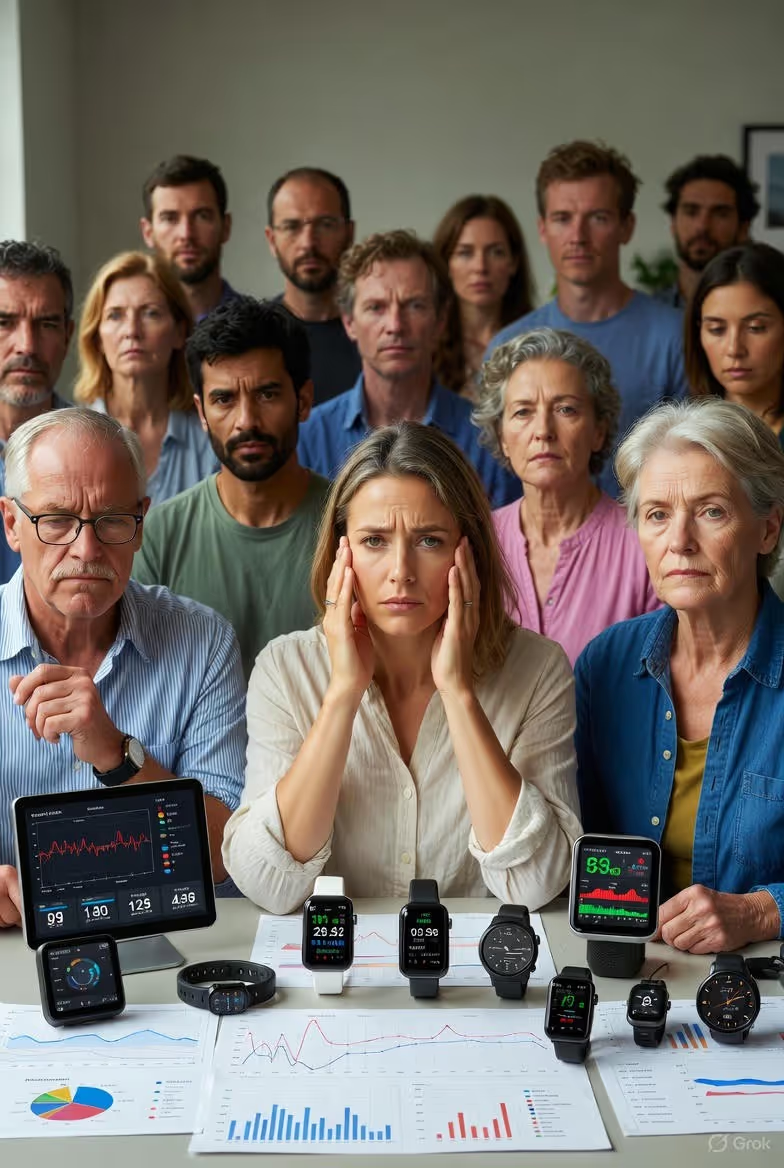
But this journey from the EEG lab to the consumer product has created a critical, and often overlooked, gap: the chasm between clinical intention and consumer interpretation. In a lab, data is interpreted by a trained sleep technician and a physician, placed in a holistic context, and used for specific diagnostic purposes. On your phone, that same type of data (or a consumer-grade approximation of it) is delivered raw, without mediation, to an individual who likely lacks the training to interpret its nuance, variability, and limitations. The stage was perfectly set for anxiety to take root in that gap.
What Is Orthosomnia? Defining the "Perfect Sleep" Disorder
The term orthosomnia is a clinical neologism, a portmanteau of ortho (meaning "correct" or "straight") and somnia (meaning "sleep"). It was first coined in a seminal 2017 case study published in the Journal of Clinical Sleep Medicine by researchers from Northwestern University's Feinberg School of Medicine. They defined it as "a perfectionistic quest for perfect sleep that is facilitated by consumer sleep-tracking technology and driven by the data these devices provide."
It is crucial to note that orthosomnia is not a formal sleep disorder like insomnia or sleep apnea listed in the Diagnostic and Statistical Manual (DSM-5). Rather, it is a behavioral condition, a problematic pattern of engagement with technology that creates or exacerbates sleep dysfunction. Think of it not as a disease of sleep, but a disease of measurement.
The core pathology of orthosomnia lies in a fundamental misplacement of trust and authority. Individuals with orthosomnia tendencies exhibit several key characteristics:
Data-Driven Identity: Their perception of their sleep's quality is almost entirely dependent on their tracker's score, overriding their own subjective feeling of rest. "I feel great this morning, but my score was 68, so I must be wrong."
Behavioral Rigidity: They engage in compulsive, often excessive, sleep hygiene rituals strictly to optimize their score. This goes beyond healthy habits like limiting caffeine. It may involve going to bed at a rigid time even when not tired, eliminating all light and sound to an extreme degree, or avoiding certain foods or evening activities not because they disrupt sleep, but because they might "hurt the data."
Catastrophic Interpretation: Minor fluctuations in data are interpreted as major health threats. A 10-point drop in HRV or 15 minutes less deep sleep than the night before can trigger significant anxiety about performance, health, and longevity.
Pre-Sleep Performance Anxiety: The pressure to "achieve" a good sleep score creates a state of anxiety at bedtime, which is biologically antithetical to the process of falling asleep. This creates a self-fulfilling prophecy: anxiety over sleep -> poorer sleep -> worse data -> increased anxiety.
Dr. Anya, a sleep psychologist (a composite of expert perspectives), explains the mechanism: "Sleep is a passive, autonomic process. You cannot make it happen through force of will. The moment you turn it into a performance metric—a test you must pass each night—you introduce cognitive activity and performance anxiety into a system that requires cognitive quietude. It's like trying to force yourself to salivate on command. The trying itself is the obstacle."
Orthosomnia shares features with other modern health anxieties, like over-exercising due to fitness tracker goals or developing disordered eating from calorie-tracking apps. It is a cousin to cyberchondria—the anxiety fueled by online medical searches. In this case, the "diagnostic" tool is always on your body, providing a nightly health report that feels authoritative, personal, and inescapable. For those curious about a more balanced approach to wearable data, our blog features several articles on cultivating a healthy relationship with wellness tech.
The rise of orthosomnia signals a critical moment in our engagement with health technology. It forces us to ask: When does self-knowledge become self-sabotage? And how do we reclaim the intuitive, restorative nature of sleep in an age of constant quantification?
The Anxiety Feedback Loop: How Tracking Disrupts the Sleep It Seeks to Measure
The irony of orthosomnia is profound: the act of measuring sleep can become the very thing that ruins it. This isn't a minor side effect; it's a fundamental clash between the neuroscience of sleep onset and the psychology of self-tracking. To understand this, we need to peek under the hood of both the technology and the human brain.
First, let's deconstruct the "sleep score." Your device isn't reading your mind. It's using proxy measures—movement, heart rate, heart rate variability, and sometimes temperature or breathing patterns—and feeding them into an algorithm. This algorithm is trained on data sets where these proxies were correlated with clinical PSG-confirmed sleep stages. The keyword is correlation, not direct measurement. Factors like lying still while awake, certain medications, or even your sleeping position can skew the data. The score is an educated guess, a model's interpretation, not a divine truth.
Now, enter the anxious user. At bedtime, they are no longer simply trying to rest. They are initiating a monitored performance. This triggers a cognitive and physiological cascade:
Increased Cognitive Arousal: The knowledge that you are being "tested" engages the prefrontal cortex—the brain's CEO, responsible for planning, analysis, and self-evaluation. Sleep requires this region to power down. The attempt to mentally "control" or "analyze" your sleep keeps it online, creating a state of cognitive hyperarousal that is the antithesis of drowsy relaxation.
Activation of the Threat System: For a perfectionist or someone prone to health anxiety, a low sleep score is perceived as a threat—to next-day performance, long-term health, or self-image. This perception, even if subconscious, can activate the sympathetic nervous system (the "fight-or-flight" response). Heart rate may increase, stress hormones like cortisol may rise, and the body enters a state of vigilance, making the gentle descent into sleep physiologically impossible.
Conditioned Arousal: Over time, the bed itself can become a conditioned cue for performance anxiety, not rest. This is a classic component of chronic insomnia. If night after night, you associate getting into bed with the pressure to generate good data, the bed environment loses its power as a sleep cue. You've essentially trained your brain to be alert in the one place it should be shutting down.
A 2023 study in Sleep Health illustrated this loop beautifully. Researchers tracked two groups of self-identified poor sleepers. One group used a sleep tracker with a visible score; the other used a tracker that collected data but did not display it. The group that saw their scores reported significantly higher pre-sleep anxiety and, paradoxically, took longer to fall asleep and reported poorer subjective sleep quality than the "blind" group. The data was the same; the interpretation of the data was the disruptive agent.
This creates a vicious cycle, which we can map out:
Trigger (e.g., "I need 8.5 hours") -> Pre-Sleep Performance Anxiety -> Increased Cognitive & Physiological Arousal -> Compromised Sleep Onset & Architecture -> "Poor" Sleep Data the Next Morning -> Reinforced Belief That Sleep is a Problem -> Increased Nighttime Anxiety...
Breaking this cycle requires a fundamental shift in perspective: from seeing sleep as an outcome to be optimized, to understanding it as a natural process to be entrusted. It requires questioning the authority we grant to a single number and re-engaging with the ancient, subjective wisdom of our own bodies. For those struggling with this cycle, our FAQ page offers guidance on resetting your relationship with sleep data.
Beyond the Score: The Critical Limitations of Consumer Sleep Technology
Placing blind faith in your sleep tracker's score is akin to navigating a complex city using only a cartoon map. It provides a stylized, simplified representation that may get you in the general vicinity, but it misses the nuance, the alleyways, the real-time traffic, and the lived experience of the place itself. To mitigate anxiety, we must become literate in the limitations of the maps we are given.
Consumer sleep technology, for all its advances, has several critical constraints that every user should understand:
1. The Problem of Proxy Data: As mentioned, no consumer device measures brain waves (EEG). They infer sleep stages from movement and cardiopulmonary signals. This leads to significant error margins, particularly in distinguishing between quiet wakefulness and light sleep, or between different stages of light and REM sleep. If you lie still in bed reading, your ring or watch may log that as "light sleep." If you have a period of very still, deep relaxation before sleep, it may be misclassified. A 2018 study in Sleep Medicine Reviews concluded that while consumer devices are reasonably good at detecting sleep versus wake (often >90% accuracy for that binary distinction), their accuracy in staging sleep (light, deep, REM) can be as low as 50-60%—barely better than a coin toss for specific stages.
2. The Algorithmic "Black Box": The exact algorithms used by companies like Fitbit, Oura, and Apple are proprietary secrets. They are constantly updated, often without clear user notification. A score of 82 one month might mean something slightly different after a silent firmware update the next month. This lack of transparency means you are trusting a corporate-owned, shifting metric to define your personal health.
3. The Individual Variability Blind Spot: Consumer algorithms are built on population averages. They define "good" or "optimal" based on what is typical for thousands of users. But sleep is intensely individual. The amount of deep sleep one person needs to feel rested can vary by 50% from another. Some people are naturally short sleepers; others need 9+ hours. Your tracker doesn't know your baseline. It judges you against a statistical aggregate, potentially pathologizing your normal, healthy variation.
4. The Missing Context of Subjective Feel: A device cannot measure how refreshed you feel. It cannot account for the emotional quality of dreams, the sense of psychological restoration, or the simple, profound feeling of "I slept well." This subjective component is arguably more important to daily functioning and long-term health than any specific number of deep sleep minutes. By focusing solely on the objective data, we discard this essential human element.
5. The Focus on "Sleep Debt" and Unrealistic Goals: Many apps prominently feature "sleep debt" calculations, often suggesting you need to repay hours of lost sleep. While chronic sleep restriction is harmful, this framing can create a punitive, stressful mindset. It can also lead to "sleep banking"—trying to force extra hours of sleep on weekends, which can disrupt your circadian rhythm further. The goal of a perfect, unbroken 8-hour sleep block every single night is also a modern construct not reflective of historical human sleep patterns (which were often biphasic).
Understanding these limitations is not to dismiss the value of sleep trackers entirely. They are powerful tools for observing trends over time (e.g., "My resting heart rate is consistently lower since I started meditating") and for providing behavioral nudges (e.g., consistent bedtime reminders). The problem arises when we treat the nightly score as a definitive report card rather than a piece of suggestive feedback.
The Psychology of Perfectionism: Who Is Most at Risk for Orthosomnia?
Orthosomnia does not strike at random. It emerges at the intersection of specific personality traits, cultural pressures, and the widespread availability of tracking technology. Understanding the risk profile is key to both prevention and intervention. Who is most vulnerable to having their quest for better sleep hijacked by anxiety?
1. The High-Achieving Perfectionist: This is the core demographic. Individuals who apply a relentless, goal-oriented mindset to all areas of life—career, fitness, nutrition—naturally extend this to sleep. For them, sleep becomes another domain to master, another metric to maximize. The sleep score transforms into a nightly grade on their health performance. A "poor" score isn't just data; it's a personal failure, a crack in the armor of their self-optimization project. The very traits that make them successful in their careers (drive, attention to detail, analytical thinking) become liabilities when applied to an involuntary biological process.
2. Individuals with Pre-existing Health Anxiety or OCD Tendencies: For someone prone to health anxiety (formerly hypochondriasis), a sleep tracker becomes a portable source of "evidence." Fluctuations in HRV can be interpreted as signs of impending illness; reduced deep sleep becomes proof of a hidden disorder. The compulsion to check and re-check the data mirrors checking behaviors in OCD. The device feeds the anxiety cycle with a constant stream of ambiguous data that demands interpretation—interpretation that an anxious brain will invariably skew toward the catastrophic.
3. The "Biohacker" and Extreme Self-Optimizer: Within the wellness and longevity communities, there is a strong emphasis on pushing human performance to its genetic limits. Sleep is rightly recognized as a pillar of this. However, for some, this can cross from informed practice into obsessive optimization. The pursuit of perfect sleep becomes entangled with nootropic stacks, precise light exposure protocols, and complex recovery routines—all monitored and adjusted based on tracker data. The line between hobby and obligatory, stressful ritual can blur.
4. People with a History of Insomnia: Ironically, those who seek out sleep trackers to solve their sleep problems can be among the most vulnerable. They come to the data with a pre-existing fear of poor sleep. The tracker, instead of providing reassurance, often provides "proof" of their worst fears ("See! I only got 10% deep sleep! I knew it!"). This confirmation bias strengthens their sleep-related anxiety, entrenching the insomnia further rather than alleviating it. They are using a magnifying glass to examine a wound, often making it feel larger and more threatening.
5. The Culturally Pressured Professional: In a culture that glorifies busyness and equates sleep with laziness, yet simultaneously preaches its importance for success, many professionals feel a double bind. They feel guilty for not sleeping enough (to optimize performance) and anxious about the performance implications of not sleeping well. The tracker becomes both the police officer enforcing the "sleep more" rule and the judge delivering the verdict on their fitness for the next day's work.
Recognizing oneself in these profiles is not a condemnation; it is the first step toward cultivating a healthier relationship with sleep data. It involves asking a crucial reflective question: "Is my engagement with this data freeing me to live better, or is it enslaving me to a nightly judgment?" For many, the honest answer evolves over time. Reading about real user experiences and how they balance data with intuition can be illuminating.
The common thread among all these groups is an external locus of control over sleep. They have transferred authority from their own internal sense of rest and well-being to an external device. Recovering from orthosomnia involves bringing that locus of control back home.
The Real Cost: How Sleep Anxiety Impacts Health Beyond the Night
The ramifications of orthosomnia extend far beyond a few restless nights. Chronic sleep anxiety, fueled by constant tracking, creates a ripple effect that can degrade physical health, mental well-being, and quality of life in profound ways. The tool meant to enhance health becomes a vector for harm, imposing what we can term the "orthosomnia tax."
1. The Physical Health Toll:
Cardiovascular Strain: Chronic pre-sleep anxiety keeps the sympathetic nervous system engaged, leading to elevated nighttime blood pressure and heart rate—the exact opposite of the dip (nocturnal dipping) associated with cardiovascular health. Over time, this can contribute to hypertension and increased cardiovascular risk.
Hormonal Dysregulation: Anxiety spikes cortisol, a hormone that should be at its lowest at night. Elevated cortisol not only blocks sleep onset but disrupts the natural secretion of growth hormone (released during deep sleep) and messes with insulin sensitivity, impacting metabolism and recovery.
Weakened Immune Function: Quality sleep is essential for immune memory and inflammatory regulation. The sleep fragmentation and stress caused by performance anxiety can blunt the immune response, making you more susceptible to infections and potentially reducing vaccine efficacy.
2. The Mental and Cognitive Consequences:
Exacerbation of Mood Disorders: Anxiety and sleep have a bidirectional relationship. Orthosomnia pours fuel on this fire. The frustration, worry, and sense of failure triggered by "bad" data can worsen symptoms of generalized anxiety disorder and depression. The lack of truly restorative sleep further depletes emotional resilience.
Impaired Daytime Functioning: Ironically, the intense focus on sleep optimization can lead to worse daytime performance. Cognitive resources are drained by nightly worry and morning data analysis. This can manifest as brain fog, reduced concentration, indecisiveness, and impaired memory—all the things good sleep is supposed to prevent.
Rumination and Obsession: The data provides endless material for rumination. "Why was my REM low?" "What did I do wrong?" This mental chewing on sleep data steals time and mental energy from relationships, hobbies, and present-moment engagement with life.
3. The Behavioral Spiral:
Compensatory Behaviors: To "fix" their scores, individuals may engage in counterproductive behaviors. This includes spending excessive time in bed trying to "catch up" on sleep (which fragments sleep further), using sleep medications or supplements prematurely, or eliminating evening activities that bring joy (like socializing or reading) for fear they will "hurt the score."
Avoidance and Fear: A clinical pattern of psychophysiological insomnia can solidify. The individual may begin to dread bedtime, avoiding the bedroom until exhaustion forces them in. The bedroom becomes a chamber of performance evaluation, not a sanctuary of rest.
Strained Relationships: The rigid rituals and anxiety can spill over to partners. Insisting on absolute darkness and silence, becoming irritable over pre-sleep routines, or constantly discussing sleep data can create tension and isolation.
The central paradox is laid bare: in the single-minded pursuit of one health metric (sleep score), orthosomnia sufferers inadvertently degrade multiple other pillars of holistic health—mental, emotional, social, and even physical. They are, in essence, optimizing for a number while sub-optimizing for the lived experience of health and vitality.
This underscores a principle that guides our philosophy at Oxyzen: technology should integrate seamlessly into your life story, not become the author of it. Data is a supporting character, not the protagonist. The next sections will explore how to rebalance this relationship, transforming the tracker from a judge into a curious, silent partner in your well-being.
Recalibrating the Relationship: From Obsessive Tracking to Insightful Awareness
Escaping the orthosomnia trap does not require throwing your smart ring or watch into a drawer (though a temporary "data detox" can be a powerful reset). The goal is a paradigm shift in how you engage with the technology. It's about moving from a state of anxious tracking to a state of mindful awareness. This recalibration involves intentional changes in both behavior and mindset.
Step 1: Conduct a "Data Detox" or "Blind Experiment." For one to two weeks, stop looking at your sleep score and stage data entirely. Allow the device to collect data in the background, but do not open the app in the morning. Instead, start your day with a simple, subjective practice:
The 2-Question Morning Check-In: Before getting out of bed, ask yourself: 1) "How do I feel physically?" (Rate from 1-10, with 10 being supremely rested). 2) "How is my mood and mental clarity?" (Note: foggy, sharp, calm, irritable). Keep a simple journal of these answers. After the detox period, you can review the hidden data. Often, people find their subjective feelings had a more complex and positive relationship with the data than they assumed, or they discover that they felt fine even on days the score was "low." This breaks the automatic "score = truth" neural pathway.
Step 2: Shift from "Score" to "Trends." Change your primary engagement from the nightly score to the longitudinal trend view. Look at your data over weeks and months, not days. Ask different questions:
"Is my average resting heart rate trending down over the last three months since I started regular exercise?"
"Do I see a consistent pattern of lower sleep efficiency when I have alcohol, even just one glass?"
"How does my HRV correlate with periods of high work stress versus vacation?" This macro view minimizes the noise of night-to-night variability and highlights meaningful, lifestyle-related signals. It turns data from a judgment into a narrative about your life.
Step 3: Use Data as a Hypothesis Generator, Not a Diagnosis. Treat a "poor" sleep score not as a verdict, but as a curious question. For example:
Data: "Low deep sleep."
Old Thought: "I failed. My brain didn't detox. I'll be useless today."
New Thought: "Hmm, that's interesting. I felt pretty good though. I did have that intense late-afternoon workout. Maybe my body prioritized muscular repair over deep sleep? Or maybe the algorithm is confused. I'll see if this pattern repeats with evening workouts." This engages your curiosity without triggering your threat system. You become a scientist observing patterns, not a student receiving a grade.
Step 4: Re-Anchor in Subjective Wisdom. Practice "body scanning" upon waking. Before you reach for your phone, lie still for 60 seconds. Notice sensations. Do your eyes feel gritty or clear? Is your body heavy or light? Is your mind busy or quiet? Develop your own internal "score" based on somatic and emotional cues. Over time, strive to let this internal assessment carry more weight than the digital one. Ask, "If I didn't have this device, how would I describe my sleep last night?" Your body's wisdom is the original and most important metric.
Step 5: Curate Your Dashboard and Notifications. Take control of your app. Turn off unnecessary notifications that pull you into obsessive checking. If possible, customize the home screen to show only the metrics you find truly helpful for trends (like readiness scores or resting heart rate) and hide the daily sleep score. Make the technology serve your mindful awareness, not your anxious vigilance.
By implementing these steps, you transform your wearable from a source of stress into a tool for compassionate self-inquiry. The data becomes one voice in a chorus that includes your physical feelings, your emotional state, and your intuitive sense of well-being. For more practical strategies on achieving this balance, our blog is a dedicated resource for mindful tech engagement.
The Role of Technology Design: Can Wearables Be Part of the Solution?
The orthosomnia problem is not solely a user error; it is also a design challenge. The way sleep data is presented, framed, and communicated by technology companies plays a massive role in shaping user psychology. The current model—a prominent score, color-coded metrics (red = bad), and simplistic goals—often incentivizes anxiety-driven engagement. But what if wearables could be designed to prevent orthosomnia, not provoke it? The path forward requires ethical, psychologically-informed design principles.
1. From Scores to Ranges and Contextual Bands. Instead of presenting "Deep Sleep: 45 min (Poor)" with a red bar, interfaces could show: "Your deep sleep typically ranges from 40-70 minutes. Last night: 45 min." Visualizing data within a personal, historical range normalizes night-to-night variation and reduces the "good/bad" binary. It teaches users that fluctuation is normal and healthy.
2. Emphasizing Trends with Gentle Nudges, Not Alarms. The primary interface should be the trend view. Daily data could be accessed with a tap, but the default screen would show weekly or monthly charts. Notifications should be framed as observations, not warnings: "We notice your sleep consistency has been lower this week. Remember, a regular bedtime can help stabilize your rhythms," instead of "ALERT: Poor Sleep Detected!"
3. Integrating Subjective Check-Ins. Progressive apps are beginning to include morning and evening journaling features. "How rested do you feel?" "What was your stress level yesterday?" By forcing the user to input subjective data before revealing objective metrics, the app reinforces the importance of internal feeling. It can then correlate subjective and objective data, perhaps showing: "You reported feeling 'Great' on mornings when your HRV was high, even if deep sleep was average."
4. Educational Bites Within the Data. When a metric is displayed, a simple "Learn" icon could explain its variability: "Heart Rate Variability (HRV): This measure naturally fluctuates daily. It's influenced by stress, training, diet, and hormones. Focus on your 30-day average, not daily changes." This built-in psychoeducation combats catastrophic misinterpretation.
5. "Rest Mode" or "Zen Mode" Features. A deliberate feature that, when activated, hides all scores and granular data for a set period, providing only a simple, binary indicator: "Your body showed signs of sufficient rest" or "Your body showed signs of needing more recovery." This forces a break from micromanagement for vulnerable users.
6. Framing Sleep as a Process, Not a Product. The language and copywriting within the app matter immensely. Instead of "Achieve perfect sleep," the messaging could be "Support your natural sleep process." Instead of "Sleep Score: 92/100 (Excellent!)," it could be "Last night's patterns suggest well-aligned rhythms." This linguistic shift is subtle but powerful in shaping user mindset.
At Oxyzen, we are deeply invested in this design philosophy. We believe the future of wellness technology lies not in more granular data, but in more intelligent, humane, and contextual interpretation of that data. The goal is to create a companion that fosters awareness without anxiety, providing insights that empower rather than judge, that support the human experience rather than attempting to overwrite it with a algorithmic ideal.
Integrating Wisdom: Building a Sleep-Supportive Life Beyond the Data
The journey out of orthosomnia and toward truly restorative sleep ultimately leads away from the screen and back into the lived experience of your body and your life. The goal is to use data as a occasional compass, not a constant GPS, while you cultivate an environment and lifestyle that naturally supports sleep's delicate biology. This involves harmonizing the four key pillars of sleep health: your Circadian Rhythm, your Sleep Pressure, your Hyperarousal State, and your Sleep Environment. When these are in balance, the need to micromanage data falls away, replaced by a reliable sense of ease at bedtime and refreshment in the morning.
The Circadian Anchor: Synchronizing with Your Body's Master Clock
At the core of all sleep-wake patterns is your circadian rhythm—the roughly 24-hour internal clock governed by a tiny region in your brain called the suprachiasmatic nucleus (SCN). This master clock regulates not only sleepiness and alertness but also hormone release (cortisol, melatonin), body temperature, digestion, and gene expression. Orthosomnia often involves fighting this rhythm through rigid, arbitrary bedtimes. The solution is to synchronize with it.
The Prime Zeitgeber: Light. Light is the most powerful cue ("zeitgeber") for your circadian clock. Specifically, it is the blue-wavelength light that signals "daytime" to your brain.
Morning Light Is Non-Negotiable: Getting bright, outdoor light within 30-60 minutes of waking is the single most effective way to set your clock. It suppresses lingering melatonin, sharply raises cortisol (which is healthy in the morning), and starts a countdown for melatonin release roughly 14-16 hours later. Even on a cloudy day, outdoor light intensity (measured in lux) is exponentially higher than indoor lighting. A 15-minute morning walk without sunglasses is more potent for circadian health than any supplement.
The Evening Dim-Down: As the sun sets, your environment should mimic this gradual dimming. This means reducing overhead lights, using lamps with warm-spectrum bulbs, and, most critically, implementing a digital sunset. The blue light from screens directly inhibits melatonin production. Using device night modes is a start, but better yet is establishing the last 60-90 minutes before bed as a screen-free buffer. This simple practice is often the most impactful change for improving both sleep onset and data-reported sleep quality.
Consistency Is King: Your circadian clock thrives on regularity. Going to bed and waking up at roughly the same time every day—even on weekends—is more stabilizing than chasing a perfect 8-hour window on a shifting schedule. A consistent wake-up time is arguably the most important lever. It anchors your clock, making evening sleepiness predictably follow.
Temperature Rhythm: Your core body temperature naturally dips at night to initiate sleep and rises in the morning to promote wakefulness. You can support this by avoiding hot baths or intense exercise too close to bedtime (which initially raises core temperature, delaying the dip), and ensuring your bedroom is cool (around 65-68°F or 18-20°C). This is one area where a smart ring’s temperature sensor can provide fascinating trend data, showing you your personal nocturnal temperature curve.
Cultivating Sleep Pressure: The Natural Drive for Slumber
While your circadian rhythm dictates when you feel sleepy, sleep pressure—driven by the neurotransmitter adenosine—is the need for sleep. Adenosine builds up in your brain from the moment you wake. The longer you’re awake, the more it accumulates, creating an increasing drive for sleep. During sleep, it’s cleared away. This system is sabotaged by two modern habits: napping and caffeine.
Strategic Napping: A short nap (10-20 minutes) early in the afternoon can be refreshing without significantly denting sleep pressure. However, long or late naps (after 3 p.m.) act like a pressure-release valve, clearing adenosine and making it harder to fall asleep at night. If you struggle with nighttime sleep, eliminating naps for a period can powerfully increase your sleep drive at bedtime.
Caffeine's Long Shadow: Caffeine works by blocking adenosine receptors. It doesn't stop adenosine from accumulating; it just blinds your brain to the feeling. A caffeine molecule has a half-life of 5-6 hours. That means if you have a coffee at 3 p.m., by 9 p.m., half the caffeine is still active in your system, blocking sleep pressure. For those sensitive to caffeine or struggling with sleep, establishing a hard caffeine curfew by noon (or at the very latest, 2 p.m.) can be transformative.
The beautiful synergy is this: A strong, consistent circadian rhythm tells you when to sleep, and a robust, un-medicated sleep pressure gives you the drive to actually do it. When these two forces are aligned, falling asleep stops being a performance and starts being an inevitable, natural surrender.
Quieting the Hyperaroused Mind and Body
This pillar addresses the core engine of orthosomnia: the cognitive and physiological arousal that turns bedtime into a battleground. You cannot force yourself to sleep, but you can systematically cultivate a state of relaxation that makes sleep the natural next step. This is about transitioning from sympathetic (fight-or-flight) dominance to parasympathetic (rest-and-digest) dominance.
The Wind-Down Ritual: Create a consistent, 45-60 minute buffer zone before your target bedtime. This is not just about avoiding screens; it's about actively engaging in calming activities. This ritual signals to your nervous system that the day's work is over. Effective elements include:
Light reading (physical books or e-ink readers without backlights).
Gentle stretching or restorative yoga (no vigorous exercise).
Listening to calming music, audiobooks, or podcasts.
Practicing gratitude journaling (which shifts focus from the day's stressors to positive aspects).
Simple breathing exercises, like the 4-7-8 technique (inhale for 4, hold for 7, exhale for 8), which directly stimulates the vagus nerve and the parasympathetic system.
Cognitive De-fusion for Sleep Anxiety: When anxious thoughts about sleep or the next day arise, practice mentally "setting them aside." You might visualize placing them in a box on a shelf to be dealt with tomorrow, or tell yourself, "That's a thought about sleep, not a command. I don't need to solve it now." This technique, drawn from Acceptance and Commitment Therapy (ACT), helps you disengage from the content of the anxiety rather than fighting it, which only gives it more energy.
The "If I Can't Sleep" Protocol: Have a plan for when you lie awake for more than 20-25 minutes. The worst thing you can do is stay in bed frustrated, strengthening the bed-insomnia association. The rule is: If you can't sleep, don't try. Get out of bed. Go to a dimly lit chair and do something quiet and boring: read a dull book (no screens), listen to a calm audio story, or do some gentle folding. Do not check the time. Return to bed only when you feel sleepy. This preserves the bed as a place for sleep, not for wakeful worry.
Optimizing the Sleep Sanctuary: Environment Matters
Your bedroom environment should be a cave: cool, dark, and quiet. This isn't about perfectionism; it's about removing unnecessary obstacles to sleep.
Darkness: Invest in blackout curtains or a high-quality sleep mask. Even small amounts of light from streetlights or electronics can disrupt melatonin production and sleep architecture. Cover or remove standby LED lights from chargers, TVs, and other devices.
Quiet: Use earplugs, a white noise machine, or a fan to mask disruptive sounds. Consistent, low-level noise is less disruptive than intermittent noises like traffic or a partner's snoring.
The Bed Is for Sleep (and Sex Only): Reinforce the powerful psychological association between your bed and sleep. Avoid working, eating, or watching thrilling/scary content in bed. This strengthens the mental cue that bed = rest.
Comfort: Ensure your mattress and pillows are supportive and comfortable. There’s no one-size-fits-all, but if you wake with aches or are constantly adjusting, it may be time for an upgrade.
When you weave these four pillars together—rhythm, pressure, relaxation, and environment—you build a robust sleep system that operates with or without a tracker. The data from your device can then be used to fine-tune this system (e.g., "Hmm, my deep sleep trend is lower on weeks I have evening commitments; I’ll be extra diligent about my wind-down ritual on those nights") rather than serving as its sole foundation and judge. It becomes a feedback loop for a process you are already gracefully engaged in, not the process itself.
When to Seek Help: Recognizing the Line Between Self-Management and Clinical Disorder
Despite our best efforts with lifestyle changes and mindset shifts, some sleep struggles are entrenched or signal a deeper issue. It is vital to recognize when the problem has crossed from manageable orthosomnia or situational insomnia into territory that requires professional intervention. Persisting in a self-managed, data-obsessed loop when a clinical disorder is present can be ineffective and prolong suffering.
Red Flags That Indicate It's Time to See a Professional:
Chronic Insomnia Disorder: If your sleep difficulties (trouble falling asleep, staying asleep, or early morning awakening) occur at least three nights per week, persist for three months or more, and cause significant daytime distress or impairment (fatigue, mood disturbances, cognitive issues), you likely meet the criteria for Chronic Insomnia Disorder. This is a legitimate medical condition that often benefits from Cognitive Behavioral Therapy for Insomnia (CBT-I), considered the first-line, gold-standard treatment.
Signs of a Primary Sleep Disorder:
Loud, chronic snoring, gasping, or choking sounds at night (reported by a partner).
Unrefreshing sleep despite adequate time in bed, and excessive daytime sleepiness (e.g., falling asleep in meetings, while driving, or during conversations).
An irresistible urge to move your legs, often accompanied by uncomfortable sensations, that worsens at night and is relieved by movement (suggesting Restless Legs Syndrome).
Acting out dreams, such as shouting, punching, or kicking during sleep (possible REM Sleep Behavior Disorder). These symptoms point to disorders like sleep apnea, periodic limb movement disorder, or others that require formal diagnosis via a sleep study (polysomnography) and specific medical treatments (like CPAP therapy for apnea).
Mental Health Correlations: If your sleep anxiety is severe and co-exists with persistent low mood, loss of interest, excessive worry, or panic attacks, you may be dealing with an underlying anxiety disorder or depression. These conditions are intricately linked with sleep, and treating the primary mental health condition is often essential to resolving the sleep problem.
Complete Loss of Perspective and Life Disruption: When thoughts about sleep and tracking consume hours of your day, when you decline important social or professional opportunities due to rigid sleep rituals, or when your relationship with your partner is severely strained by your sleep-related behaviors, the issue has surpassed simple self-help.
What Kind of Professional Should You See?
Start with Your Primary Care Physician: They can rule out underlying medical conditions (e.g., thyroid issues, pain, acid reflux) that affect sleep, order basic tests, and provide referrals.
Sleep Specialist: A physician (often a neurologist, pulmonologist, or psychiatrist) with specialized training in sleep medicine. They can diagnose and manage the full spectrum of sleep disorders.
Psychologist or Therapist Trained in CBT-I: This is the specialist for treating chronic insomnia and the anxiety component of orthosomnia. CBT-I is a structured, evidence-based program that addresses the thoughts, behaviors, and arousal that maintain insomnia. It is more effective and durable than sleep medication in the long term.
Seeking help is a sign of strength and self-awareness, not failure. It is the ultimate act of taking control—not by trying to control sleep itself, but by controlling your engagement with the resources available to help you. A professional can also help you interpret your consumer sleep tracker data in a sane, clinical context, something our support team can also help frame for you as you explore next steps.
The Future of Sleep Tech: Toward Holistic, Human-Centric Design
As we look beyond the current landscape of sleep scores and anxiety, the future of sleep technology holds promise for a more sophisticated, integrated, and ultimately more peaceful relationship with our rest. The next generation of devices and platforms will likely move beyond isolated sleep tracking toward holistic recovery monitoring and context-aware coaching, designed with psychological safety in mind.
1. The Integration of Multimodal Data: The future isn't more sleep data; it's smarter synthesis of data from multiple life domains. Imagine a system that correlates your sleep metrics with your digital activity (calendar stress, screen time), environmental data (local pollen count, weather changes), nutritional intake (via connected apps or journals), and social rhythms. The platform could then provide insights like: "Your sleep latency tends to increase on days with more than 4 hours of video calls," or "Your HRV recovery is strongest on days you have a vegetable-rich lunch." This moves the narrative from "Your sleep is bad" to "Here's how your life is impacting your system."
2. AI as a Contextual Interpreter, Not Just a Scorer: Advanced AI could learn your personal baselines and patterns over many months, recognizing what is normal for you. Instead of comparing you to population averages, it would flag only significant deviations from your own trends, and do so with contextual hypotheses: "You've had three nights of light, fragmented sleep, which coincides with your reported work deadline. This is a common stress response. Your body will likely rebound when the deadline passes. Prioritize wind-down rituals in the meantime."
3. Emphasizing "Daytime Readiness" Over "Nighttime Performance": The most useful metric for daily life is not how you slept, but how recovered and prepared you are for the day ahead. Future systems will focus on compiling a Readiness Score that integrates sleep data, HRV trends, physiological stress markers, and activity load to suggest optimal daily pacing: "Your recovery metrics are low today. Consider a gentle walk instead of a high-intensity workout, and prioritize hydration."
4. Seamless, Frictionless Sensing: The less you have to think about the device, the better. The ideal is complete passive monitoring with proactive, gentle insights. Smart rings are leading this charge by being wearable 24/7 without the discomfort or need to charge daily of a smartwatch. The technology fades into the background of your life.
5. Partnership with Clinical Pathways: The future will see a bridge between consumer tech and the healthcare system. With user permission, longitudinal sleep and recovery data could be securely shared with a clinician to inform diagnosis and treatment, providing a rich picture of home-based sleep patterns that a one-night lab study cannot capture.
This human-centric future aligns with a core belief at Oxyzen: that technology should illuminate your innate biology, not obscure it with noise. The goal is to create tools that foster self-compassionate awareness, helping you listen to the subtle language of your body so you can provide what it needs to thrive. In this model, the device doesn't give you a grade; it helps you write a more harmonious story of your own well-being.
Conclusion to Part One: Reclaiming Sleep as a Sanctuary
We have journeyed from the dawn of sleep tracking to the emerging anxiety of orthosomnia, through the neuroscience of sleep disruption, and arrived at a blueprint for a healthier, more balanced relationship with both our technology and our own rest. The central conflict of our age is not a lack of information about sleep, but an overload of uncontextualized data that we are ill-equipped to process calmly.
The path forward requires a conscious recalibration. It asks us to:
Demote the Data: Understand the limitations of consumer trackers. Treat the sleep score as a single, flawed data point in a much larger narrative of your health, not as the definitive truth.
Promote the Subjective: Re-engage with the ancient, internal wisdom of how you feel. Let your sense of refreshment, mood, and energy be your primary metrics.
Build a Bulletproof Sleep Foundation: Focus on the non-negotiable pillars of circadian health, sleep pressure, nervous system regulation, and environment. When these are solid, sleep becomes more resilient and less data-dependent.
Use Tech as a Guide, Not a God: Employ your wearable to observe long-term trends and generate curious hypotheses, not to pass nightly judgment. Activate its features that support mindfulness, not anxiety.
Sleep is not a metric to be optimized. It is a biological imperative, a restorative process, and a sanctuary from the waking world. It is the time when our body repairs, our brain consolidates memories, and our mind processes emotion. To turn this sanctuary into a nightly performance review is to rob ourselves of its deepest benefits.
The promise of technology like smart rings is not that they will give us perfect sleep, but that they can help us understand the unique rhythms of our own biology so we can live in better harmony with it. The true measure of success is not a score of 100, but the quiet confidence of lying down at night without fear, and waking in the morning feeling restored and ready for the day—regardless of what the graph says.
In the next portion of this exploration, we will dive even deeper into specific, evidence-based protocols for common sleep challenges, explore the cutting-edge science of sleep nutrition and supplementation, and provide a comprehensive guide to implementing CBT-I principles on your own. We’ll move from understanding the problem to mastering the solution, building a life where great sleep is a natural byproduct of balanced living, not an obsessive goal.
Part Two: Mastering the Solution – Protocols, Science, and Sustainable Sleep
Having laid bare the anatomy of orthosomnia and the path to recalibration, we now turn from problem to solution. This section is a deep, actionable guide to building sleep that is resilient, restorative, and free from the tyranny of data-driven anxiety. We move beyond general principles into specific protocols, evidence-based science, and sustainable practices that address the root causes of poor sleep, not just its symptoms.
The Gold Standard Intervention: Demystifying Cognitive Behavioral Therapy for Insomnia (CBT-I)
If orthosomnia or chronic insomnia has taken hold, the single most effective tool is not a better tracker, a new supplement, or a prescription. It is a structured, evidence-based psychological intervention: Cognitive Behavioral Therapy for Insomnia (CBT-I). Endorsed by the National Institutes of Health and the American College of Physicians as the first-line treatment for chronic insomnia, CBT-I boasts success rates that outperform sleep medications in the long term, with effects that persist long after therapy ends. It is the antidote to the performance anxiety and dysfunctional behaviors at the heart of orthosomnia.
CBT-I is a multi-component program that systematically dismantles the factors maintaining insomnia. Here’s how its core strategies directly counter orthosomnia patterns:
1. Stimulus Control Therapy: Rebuilding the Bed-Sleep Connection This addresses the conditioned arousal where the bed becomes a cue for anxiety and wakefulness. The rules are strict and powerful:
Go to bed only when sleepy (not just tired).
Use the bed only for sleep and sex (no reading, working, watching TV, or analyzing sleep data).
If you don’t fall asleep within 20-25 minutes, get out of bed. Go to another room and do something quiet and dull in dim light. Return only when sleepy. Repeat as needed.
Get up at the same time every morning, regardless of sleep duration.
Avoid daytime napping. For the orthosomnia sufferer, this breaks the ritual of lying in bed obsessing over data or "trying" to sleep. It forcibly uncouples the anxiety from the sleep environment.
2. Sleep Restriction: Consolidating Sleep and Building Drive This is often the most potent, yet initially challenging, component. It directly tackles low "sleep efficiency" (time asleep vs. time in bed)—a key metric that causes tracker anxiety.
You temporarily restrict your time in bed to match your actual average time asleep (e.g., if you report sleeping 6 hours per night but spend 8.5 hours in bed, your initial time in bed might be set to 6.5 hours).
This creates mild sleep deprivation, which dramatically increases sleep pressure (adenosine buildup), making sleep onset faster and more consolidated.
As sleep efficiency improves (you’re asleep for most of the time you’re in bed), your time in bed is gradually increased in 15-30 minute increments. This process teaches the brain that bed is for efficient, solid sleep. Witnessing this consolidation in your tracker data—less tossing and turning, longer continuous blocks—can be empowering when framed as part of a therapeutic process, not a personal failing.
3. Cognitive Restructuring: Challenging the Anxious Narrative This targets the catastrophic thoughts that fuel orthosomnia:
"I must get 8 hours, or I’ll be a wreck tomorrow." → "My body can function on varied sleep. Many factors influence my day."
"My low deep sleep means my brain isn’t detoxifying." → "Consumer trackers are poor at staging sleep. I will focus on how I feel."
"Another bad night proves I have a terrible sleep disorder." → "This is a temporary pattern that CBT-I is designed to reverse." Therapists help patients examine the evidence for and against these beliefs, developing more balanced, flexible thoughts about sleep.
4. Relaxation Training & Mindfulness: Lowering Physiological Arousal Techniques like progressive muscle relaxation, diaphragmatic breathing, and mindfulness meditation are practiced during the day and at bedtime to lower the baseline of nervous system hyperarousal. This directly counters the pre-sleep performance anxiety loop.
Accessing CBT-I: You can work with a licensed therapist specializing in CBT-I, use guided digital programs (like Sleepio or CBT-i Coach), or follow structured workbooks. The key is consistency. For those using sleep trackers while undergoing CBT-I, the guidance is clear: track only for the therapist, not for yourself. Often, therapists will advise a complete "data holiday" during treatment to redirect focus onto behavioral and cognitive changes.
CBT-I is the foundation upon which all other sleep hygiene practices rest most effectively. It is the operating system update for your sleep brain.
Nutritional Neurochemistry: Feeding Your Sleep
What you eat, and when you eat it, directly influences the neurotransmitters and hormones that govern your sleep-wake cycle. Moving beyond folklore, modern nutritional psychiatry provides a blueprint for using food to support, not sabotage, slumber.
The Key Players:
Tryptophan → Serotonin → Melatonin: This is the core biochemical pathway for sleep initiation. Tryptophan (an essential amino acid) is a precursor to serotonin, which is then converted to melatonin in the darkness. Strategy: Include tryptophan-rich foods (poultry, eggs, dairy, nuts, seeds, tofu) in your evening meal. Pairing them with complex carbohydrates (oats, sweet potato) can help tryptophan cross the blood-brain barrier more effectively.
Magnesium: Acts as a natural NMDA receptor blocker and GABA agonist, promoting relaxation and muscular calm. Deficiency is linked to insomnia and restless legs. Strategy: Incorporate magnesium-rich foods (leafy greens, pumpkin seeds, almonds, black beans, avocados) daily. An evening supplement of magnesium glycinate or bisglycinate is one of the most evidence-backed sleep supplements.
Glycine: This amino acid has been shown to lower core body temperature and improve subjective sleep quality. Strategy: Found in collagen, bone broth, and gelatin. A 3-gram supplement before bed is used in research.
Anti-Inflammatory Patterns: Systemic inflammation can disrupt sleep architecture. Diets high in processed foods, sugar, and unhealthy fats are pro-inflammatory. Strategy: Emphasize a whole-foods, Mediterranean-style diet rich in antioxidants, omega-3s (fatty fish, walnuts), and fiber.
The Timing Equation:
The Last Meal: Finish eating 2-3 hours before bedtime. Digestion elevates core body temperature and metabolic activity, countering the natural pre-sleep temperature dip. Large, heavy, or spicy meals too close to bed can cause discomfort and fragmented sleep.
The Fasting Window: Emerging research on time-restricted eating (TRE) suggests that aligning your eating window with daylight hours (e.g., finishing dinner by 7 p.m.) may support circadian rhythms and improve sleep quality, independent of weight loss.
The Sleep-Sabotaging Snack: High-glycemic carbs and sugar right before bed can cause reactive hypoglycemia (a blood sugar crash) a few hours later, potentially triggering a cortisol spike and an awakening.
Hydration & Sleep: Dehydration can lead to nocturnal leg cramps and dry mouth, disrupting sleep. However, chugging water right before bed guarantees disruptive bathroom trips. Strategy: Front-load your hydration during the day and taper off 60-90 minutes before bed.
Nutrition is a long-game tool. Track it not for daily sleep score correlations—which will drive you mad—but for weekly trends in energy and overall feeling of restfulness. For more on syncing nutrition with biometric data, our blog explores the intersection of diet and recovery metrics.
Movement as Medicine: How Exercise Shapes Sleep Architecture
The relationship between exercise and sleep is profound and bidirectional: good sleep improves exercise performance, and regular exercise promotes deeper, more efficient sleep. But type, timing, and intensity matter immensely.
The Aerobic Advantage: Consistent moderate-to-vigorous aerobic exercise (walking, running, cycling, swimming) is strongly associated with increased slow-wave sleep (deep sleep)—the most physically restorative stage. It also helps regulate circadian rhythms, reduce sleep onset latency, and decrease nighttime awakenings.
The Strength of Resistance Training: Weight training and bodyweight exercises also improve sleep quality, likely through their effects on metabolic health, anxiety reduction, and musculoskeletal comfort.
The Critical Timing Consideration:
Morning/Daytime Exercise: Ideal. It reinforces the circadian wake signal, boosts daytime energy, and allows body temperature to rise and fall naturally throughout the day, promoting a robust dip at night.
Evening Exercise: The old blanket rule to avoid it is outdated. The key is intensity and your personal response.
Gentle/Moderate Exercise (yoga, stretching, leisurely walk) 1-3 hours before bed can be beneficial for relaxation.
Vigorous, High-Intensity Exercise (HIIT, heavy lifting, competitive sports) within 60-90 minutes of bedtime can be overly stimulating for some people, raising core temperature, heart rate, and adrenaline. However, many individuals with a long habit of evening workouts sleep perfectly well.
The Orthosomnia Trap: Do not use your sleep tracker to minutely judge different workout timings. The night-to-night variability is too high. Instead, use your tracker’s trend data over 4-6 weeks. Try a block of consistent morning workouts and observe your average sleep duration, deep sleep, and HRV trends. Then compare to a block of consistent evening workouts. Look for macro-signals, not micro-judgments.
Mind-Body Practices for Direct De-arousal:
Yoga Nidra: A form of guided non-sleep deep rest (NSDR) that is clinically shown to reduce anxiety and improve sleep. A 20-30 minute session in the late afternoon or early evening can lower physiological arousal.
Tai Chi & Qigong: These gentle movement-meditation practices are excellent for calming the nervous system and have strong evidence for improving sleep quality in individuals with insomnia.
Movement should be a celebration of your body's capability, not a transaction for a better sleep score. Let the improved sleep be a welcome side effect, not the sole motivating goal.
The Supplement Landscape: Navigating Evidence, Hype, and Safety
The sleep supplement aisle is a crowded mix of potent nutrients, gentle botanicals, and outright hype. For the orthosomnia-prone individual, approaching supplements requires a mindset of curious experimentation, not desperate salvation. The goal is subtle support, not a knockout pill.
Tier 1: Strong Evidence & Safety (The Foundation)
Magnesium (Glycinate/Bisglycinate): As discussed, it’s a cofactor for GABA production and muscle relaxation. Dose: 200-400 mg 30-60 minutes before bed.
Melatonin: A hormone, not a herb. It is a chronobiotic—it signals "darkness" to your clock. It is not a sedative.
Best for: Circadian rhythm issues (jet lag, shift work, delayed sleep phase), not general insomnia.
Critical Dosage Insight: Less is more. Studies show efficacy at 0.3 mg to 1 mg. Many commercial pills are 3-10 mg, which can cause morning grogginess and suppress natural production. Use the lowest effective dose.
Glycine: 3 grams before bed shows good evidence for improving sleep quality and next-day alertness.
Tier 2: Good Traditional Use & Emerging Evidence
Apigenin: A flavonoid found in high concentration in chamomile. It acts as a mild GABA-A receptor modulator (similar to how some sedative drugs work, but much gentler). A popular source is chamomile tea (steep 2 bags for 10+ minutes) or supplements.
L-Theanine: An amino acid in green tea that promotes alpha brain waves (relaxed alertness) and may reduce sleep latency, especially in those with anxious minds. Dose: 100-400 mg.
Tart Cherry Juice/Concentrate: A natural source of melatonin and may also improve sleep via anti-inflammatory properties and boosting tryptophan availability. Studies use the equivalent of 8+ ounces of tart cherry juice about an hour before bed.
Tier 3: Proceed with Caution & Professional Guidance
Valerian Root: Traditional use for centuries, but modern studies are mixed. It may work for some through GABA modulation. Can have a "dirty" feeling for some and should not be mixed with alcohol or sedatives.
Kava: Effective for anxiety, but carries a risk of liver toxicity and should only be used under medical supervision for short periods.
Pharmaceuticals (Z-drugs, Benzodiazepines): These are last-resort options for short-term, crisis use under a doctor’s care. They disrupt natural sleep architecture (particularly deep and REM sleep), have tolerance and dependence issues, and do not address the underlying causes of insomnia.
The Golden Rule: Never add more than one new supplement at a time. Introduce it, use it for at least 2-3 weeks, and pay attention to your subjective experience first: Do I fall asleep easier? Do I feel more rested? Do I have any side effects? Only then might you glance at long-term trends in your wearable data for confirmation. Supplements are adjuncts to lifestyle, not replacements for CBT-I or sleep hygiene. For questions on how specific supplements might interact with your body's unique rhythms, consulting our FAQ or a healthcare professional is wise.
The Digital Ecosystem: Managing Light, Notifications, and Information Overload
Our sleep environment now extends far beyond the bedroom walls into the digital sphere. The light from our devices is only one part of the problem; the cognitive and emotional payload they deliver is equally disruptive. Managing this ecosystem is non-optional for sleep health.
The Blue Light Problem—Refined:
Intensity & Duration Matter More Than Just Blue Light: While blue light is most potent at suppressing melatonin, the total light exposure and duration matter. Scrolling Instagram for an hour in bed is catastrophic not just for blue light, but because it keeps your brain in a state of high cognitive and emotional engagement.
Practical Solutions:
Night Shift/Dark Mode: Helpful, but not a get-out-of-jail-free card. It reduces but does not eliminate the problem.
Blue-Blocking Glasses: Amber-tinted glasses worn 2-3 hours before bed can be highly effective, especially for those who cannot avoid screens. Look for lenses that block 100% of blue light (up to 550 nm).
The App-Free Bedroom: The ultimate goal. Charge your phone outside the bedroom. Use a traditional alarm clock or a dedicated sunrise alarm clock.
The Notification Purge: Every ping, buzz, or flash is a micro-interruption that can spike cortisol and adrenaline, even if you don't consciously register it.
Enable "Do Not Disturb" on a Schedule: Set it to activate 60 minutes before your bedtime and lift at your wake time. Allow only critical calls (from family) to come through.
Audit App Notifications: Be ruthless. Disable all non-essential social, news, and email notifications. Your morning will be more peaceful, and your pre-sleep mind will be quieter.
The Content Curfew: The brain needs time to disengage from stimulating content.
No Work Email or Messaging 1 Hour Before Bed: This includes Slack, Teams, etc. Set an auto-responder if needed.
Avoid Alarmist News, Thrilling Shows, or Heated Social Media Discussions: This content activates the threat and emotional centers of the brain. Opt for calming, neutral, or uplifting content in your wind-down period.
The Sleep Tracker Itself: Apply these principles to the very device meant to help you. Disable sleep score notifications. Do not have the app on your home screen. Schedule specific, limited times to review your data—perhaps once a week on a Sunday afternoon for a trend review, not every morning in bed.
Creating a digital sunset is an act of setting a boundary between the demands of the waking world and the sanctuary of sleep. It declares that your restoration is more important than the infinite scroll.
Advanced Biohacks or Common Sense? Cooling, Weighted Blankets, and Sound
Beyond the fundamentals lie a suite of tools that leverage specific physiological pathways. Some are backed by solid science; others live in a grey area of anecdote and early research.
Thermoregulation Hacks:
The Science: The body’s core temperature must drop by about 1-2°F to initiate sleep. This is why a cool room (65-68°F) is essential.
Advanced Tactics:
Cold Exposure Before Bed? A cold shower 60-90 minutes before bed can cause an initial vasoconstriction followed by a rebound vasodilation, potentially accelerating the temperature drop. However, it is stimulating for some. Experiment cautiously.
Feet-Out Method: Your extremities (hands, feet) are radiators for shedding heat. Having your feet outside the covers can facilitate cooling if you run hot.
Cooling Mattress Pads/Pillows: These can provide a consistent thermal draw and are highly rated by individuals with thermoregulatory sleep issues.
The Deep Pressure of Weighted Blankets:
The Theory: The even, distributed pressure (typically 10% of body weight) is thought to stimulate the proprioceptive system and increase parasympathetic activity, possibly boosting serotonin and melatonin. It mimics the feeling of being held or swaddled.
The Evidence: Studies show significant reductions in insomnia severity and anxiety, and subjective improvements in sleep quality for many. It’s a powerful tool for the anxious sleeper.
Caveat: They are not for everyone (can feel restrictive or hot) and are not recommended for those with respiratory or circulatory conditions.
The Soundscape of Sleep:
White/Pink/Brown Noise: Masks disruptive environmental noises (snoring, traffic) by providing a constant, predictable auditory buffer. Effective for many.
Binaural Beats: Playing slightly different frequencies in each ear is claimed to entrain brainwaves into sleep states (e.g., delta waves). The scientific evidence is preliminary but promising for some individuals, particularly for relaxation.
Auditory Sleep Conditioning: Using a specific, calming sound (like a particular piece of classical music) only at bedtime can, over time, condition your brain to associate that sound with sleep onset.
Building Your Personalized Sleep Protocol: A 4-Week Action Plan
Knowledge is only power when applied. This 4-week plan is designed to systematically integrate the strategies above, moving from reset to sustainable habit. Commit to tracking your progress via a simple journal of subjective feelings, not by obsessing over your wearable data.
Week 1: The Foundation & Digital Detox
Goal: Reset circadian rhythm and reduce digital arousal.
Actions:
Fix your wake-up time. Get bright light within 30 minutes of waking.
Implement a strict 60-minute digital curfew. No screens in bed. Charge phone outside bedroom.
Start a wind-down ritual (10 minutes of reading, gentle stretching, or breathing).
Do not look at your sleep tracker score. If you must, note only the time you went to bed/woke up.
Week 2: Optimize Environment & Pressure
Goal: Perfect your sleep cave and build strong sleep drive.
Actions:
Ensure bedroom is cool, dark (blackout curtains/mask), and quiet (earplugs/white noise if needed).
Enforce a "last meal" cutoff 3 hours before bed. Limit evening fluids.
Eliminate all caffeine after 2 p.m.
If not sleepy at bedtime, practice the 20-minute rule (get out of bed if not asleep).
You may review your sleep tracker data once this week, looking only for the trend in "time asleep" vs. "time in bed."
Week 3: Introduce Cognitive & Nutritional Support
Goal: Address anxious thoughts and add nutritional support.
Actions:
Practice cognitive de-fusion: When a sleep worry arises, say, "I notice I'm having the thought that I won't sleep. It's just a thought."
Add a magnesium glycinate supplement or a magnesium-rich food to your evening routine.
Incorporate a tryptophan-rich food at dinner (e.g., turkey, pumpkin seeds).
Experiment with a relaxation audio (CBT-I guided meditation, yoga nidra) during your wind-down.
Week 4: Integrate Movement & Advanced Refinement
Goal: Cement exercise habits and personalize your toolkit.
Actions:
Schedule at least 30 minutes of moderate exercise most days, ideally in the morning or afternoon.
Based on your journal, choose one "advanced" tool to try: a weighted blanket, tart cherry juice, or a specific binaural beats track. Use it consistently for the week.
Conduct your first mindful data review. Look at your wearable's 4-week trend view. Note one positive pattern (e.g., "My resting heart rate is trending down," or "My sleep consistency has improved"). Do not fixate on individual nights.
At the end of four weeks, your sleep will likely be more resilient. But more importantly, your relationship with sleep will have shifted. You will have built a fortress of habits that protects your rest, making you less vulnerable to the whims of a single night's data point.
The Long Game: Sleep as a Cornerstone of Lifelong Health
Finally, we must zoom out to the horizon. The ultimate goal of improving sleep is not to win a biohacking competition or achieve a perfect Oura score. It is to support the foundational role sleep plays in every aspect of human health and flourishing across the lifespan.
Sleep and Cognitive Resilience: During deep sleep, the brain's glymphatic system flushes out metabolic waste, including beta-amyloid proteins implicated in Alzheimer's disease. Sleep is not just for memory consolidation; it is for brain cleansing.
Sleep and Metabolic Health: Chronic sleep deprivation leads to insulin resistance, increased ghrelin (hunger hormone), decreased leptin (satiety hormone), and a preference for high-calorie foods. Prioritizing sleep is a critical, underutilized tool for metabolic health and weight management.
Sleep and Emotional Intelligence: REM sleep, with its intense emotional processing, is like a nocturnal therapy session. It helps modulate reactivity in the amygdala (the fear center) and integrates emotional experiences. Good sleep builds emotional resilience and empathy.
Sleep and Immune Vigilance: A full night's sleep enhances the adaptive immune response. Studies show that well-rested individuals develop stronger antibody responses to vaccines and are less susceptible to common cold viruses.
When we frame sleep in this grand context—as the nightly reboot for our brain, metabolism, emotions, and immune system—the pursuit of a perfect score seems myopic and small. The aim becomes sufficient, quality sleep that allows these vital processes to unfold. Some nights that will be 7 hours, some nights 8.5. Some nights will have more deep sleep, others more REM. The system is dynamic, not robotic.
The most sophisticated sleep technology, therefore, is the one that helps you see this big picture. It provides reassurance through trends, offers gentle nudges back on track, and then fades into the background, allowing you to live the healthy, engaged, and present life that good sleep makes possible. It becomes a quiet partner in a lifelong journey, not a loud critic in a nightly trial. This is the ethos we strive to embody with every piece of guidance and every product feature at Oxyzen.



%402x.svg)