


The Circadian Rhythm of Stress: Timing Your Management for Maximum Effect
Stress levels follow a circadian pattern; time your management strategies (e.g., vigorous activity in morning, relaxation in evening) for maximum effect.
Stress levels follow a circadian pattern; time your management strategies (e.g., vigorous activity in morning, relaxation in evening) for maximum effect.
%402x.svg)
Imagine if your stress was not a constant, unwelcome companion, but a predictable tide you could learn to navigate. What if the key to resilience wasn't just what you do to manage pressure, but when you do it? Welcome to the frontier of modern wellness: the circadian rhythm of stress. This is the groundbreaking understanding that our physiological and psychological response to stressors follows a powerful, innate 24-hour biological clock. Far from being a steady-state system, our stress machinery—hormones like cortisol, nervous system activity, even our emotional fortitude—ebbs and flows with precise daily timing.
Ignoring this rhythm is like trying to swim against a current; you exhaust yourself with minimal progress. But by aligning your stress management practices with your body’s internal chronobiology, you can transform your approach from reactive damage control to proactive, strategic mastery. This isn't about eliminating stress—a biological impossibility and, indeed, a detriment, as we need its acute bursts for growth and performance. This is about harmonizing with it, using its natural peaks and troughs to build resilience, enhance recovery, and unlock sustained vitality.
In this deep exploration, we’ll dismantle the myth of stress as a monolithic enemy and rebuild it as a nuanced, time-sensitive dialogue with your biology. We’ll journey through the hormonal symphonies of your morning, navigate the cognitive challenges of your afternoon, and master the essential art of evening decompression. This knowledge, once the domain of elite athletes and chronobiologists, is now accessible to anyone equipped with the right understanding and tools. Speaking of tools, the emergence of personal health technology, like advanced smart rings from innovators such as Oxyzen, is revolutionizing this space. These devices move beyond simple step counting to provide real-time, personalized insights into your stress biomarkers and sleep architecture, offering a tangible window into your unique circadian reality. Let's begin by understanding the master conductor of this daily cycle: your stress axis and its intimate dance with time.
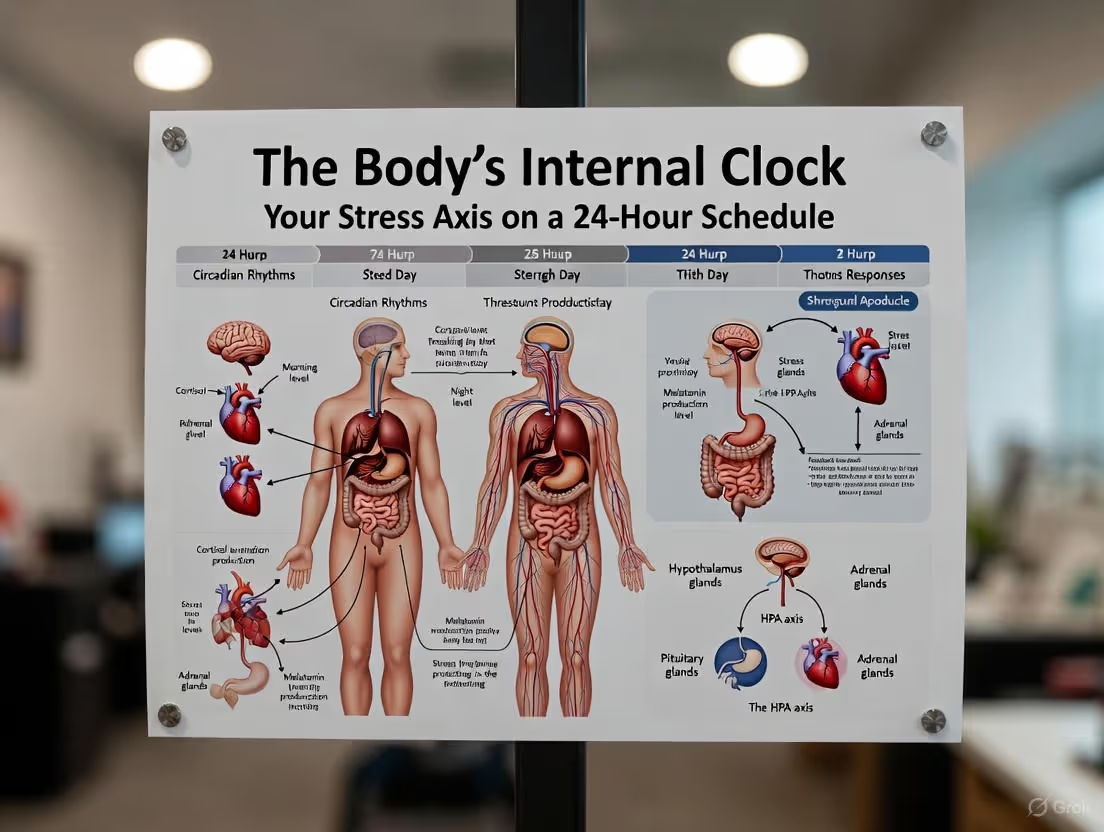
To master the circadian rhythm of stress, we must first meet the key players. At the heart of your stress response is the HPA axis: the hypothalamic-pituitary-adrenal axis. This is a delicate feedback loop between your brain’s command center (hypothalamus), its pituitary gland, and your adrenal glands perched atop your kidneys. When a stressor—physical, mental, or emotional—is perceived, the hypothalamus releases corticotropin-releasing hormone (CRH). This signals the pituitary to secrete adrenocorticotropic hormone (ACTH), which in turn instructs the adrenal glands to release the star of our show: cortisol.
Cortisol is a quintessential double-edged sword. In its optimal, rhythmic pattern, it is essential for life. It helps mobilize energy by regulating glucose metabolism, modulates inflammation, sharpens memory and focus, and supports cardiovascular function. Its secretion is not random; it is exquisitely timed by your central circadian clock, a tiny cluster of about 20,000 neurons in your brain called the suprachiasmatic nucleus (SCN). The SCN acts as your body’s master conductor, synchronized primarily by light exposure, especially the blue-wavelength light of morning sun.
This orchestration results in a classic, healthy diurnal cortisol curve:
This elegant rhythm exists for a reason. The morning surge primes you for action and challenge. The subsequent decline allows your systems to wind down. When this rhythm is flattened, inverted, or dysregulated—due to chronic stress, poor sleep, mistimed light exposure, or erratic lifestyles—the problems begin. High evening cortisol disrupts sleep, perpetuating a vicious cycle. A blunted morning spike leaves you feeling foggy and fatigued from the start. This dysregulation is a hallmark of burnout, metabolic syndrome, and mood disorders.
Understanding this axis is the first step. The next is recognizing that your entire physiology dances to this temporal tune. Your core body temperature, digestive enzyme secretion, immune cell activity, and even the expression of genes related to stress resilience all follow circadian patterns. This means the same stressor encountered at 9 AM may be handled with grace and adaptive energy, while at 9 PM, it could feel overwhelming and trigger maladaptive inflammation. Your goal is not to silence the HPA axis but to resynchronize it, allowing its powerful rhythm to work for you, not against you. Devices designed for continuous biometric monitoring, like the Oxyzen smart ring, can be invaluable here, helping you track markers like heart rate variability (HRV) and skin temperature that reflect the health of your circadian and stress systems, as detailed in resources on how Oxyzen works.
The first hours of your day present a powerful, yet fragile, opportunity. Your cortisol is naturally surging, and your nervous system is transitioning from the parasympathetic "rest and digest" state of sleep to the sympathetic "fight or flight" readiness for the day. How you engage with this transition sets the stage for everything that follows. The modern mistake is to hijack this natural momentum with jarring, anxiety-provoking inputs, turning a biological asset into a source of chronic distress.
The key principle for the morning is alignment, not addition. You don't need to create energy; you need to channel the energy your body is already generating. Here’s how to strategically cooperate with your morning biology:
1. Light: The Primary Zeitgeber
Within 30-60 minutes of waking, seek at least 10-15 minutes of bright, outdoor light. This is non-negotiable. The photons of morning sunlight, particularly rich in blue wavelengths, hit specialized cells in your retina that send a direct signal to your SCN. This does two critical things: it firmly anchors your circadian clock for the day, and it helps consolidate the sharp, healthy cortisol peak. It tells your body, "The day has begun; let's synchronize." Compared to the feeble, spectrum-limited light from your phone screen (which you should avoid first thing), natural light is thousands of times more powerful. If you live in a dark climate, a high-quality light therapy lamp can be a good substitute.
2. Movement: A Graceful Ignition
Following light, gentle to moderate movement is the ideal next step. This isn't the time for an exhaustive, high-intensity workout that could overwhelm an already-rising stress system. Instead, think of movement as a "proof of concept" for your body. A brisk walk, some yoga, dynamic stretching, or light cycling helps utilize the circulating cortisol and glucose, improving insulin sensitivity and reinforcing the wakefulness signal. It also generates a healthy dose of brain-derived neurotrophic factor (BDNF), a fertilizer for your brain cells. The goal is to feel energized and clear-headed, not drained.
3. The Strategic Pause Before the Storm
Before diving into emails, news, or complex problem-solving, create a buffer. This 15-30 minute period is for setting intention, not consuming information. Practice a short mindfulness meditation, journal briefly about your priorities, or simply enjoy your coffee in silence. This habit builds a cognitive "container" for the day’s stressors, preventing the cortisol surge from becoming a frantic, scattered reaction to external demands. It transitions the HPA axis activation from a reactive state to a proactive, regulated one.
4. Fueling the Rhythm
Breakfast should support, not sabotage, your hormonal curve. A meal combining protein, healthy fats, and complex carbohydrates provides sustained energy and avoids the blood sugar spike-and-crash that can trigger secondary stress responses later in the morning. Avoid large doses of caffeine on an empty stomach, as this can mimic a stress response and contribute to a jagged, dysregulated cortisol curve. Consider having your first coffee after your morning meal and light exposure.
By treating your morning as a sacred ritual of synchronization, you build a foundation of circadian resilience. You’re not avoiding stress; you’re preparing your system to meet it from a position of strength and rhythmic integrity. For more on building foundational daily rituals, our blog offers a wealth of related articles on morning routines aligned with chronobiology.

Around 2 to 4 PM, a phenomenon known as the "post-lunch dip" or "circadian trough" reliably occurs. This isn't a personal failing or a sign of poor sleep; it’s a hardwired part of your biology. Core body temperature dips slightly, melatonin secretion experiences a tiny, almost imperceptible rise (a phylogenetic remnant of the siesta), and alertness naturally wanes. In a well-synchronized system, this dip is mild. But when compounded by poor sleep, a heavy lunch, or accumulated morning stress, it can feel like a brick wall of fatigue.
The conventional, dysregulating response is to reach for a sugary snack and another large cup of coffee. This creates a vicious cycle: the sugar and caffeine provide a short, sharp boost that overrides your body’s natural signal to rest, often leading to a more severe crash a few hours later, interfering with evening wind-down, and thus compromising the next day’s rhythm. The strategic approach is to work with the dip, not wage war against it.
1. Reframe the Dip as a Signal, Not a Setback
First, acknowledge the dip as a normal, healthy part of your rhythm. It’s your body’s gentle suggestion for a micro-rest. Fighting it with stimulants is like yelling at your car’s low-fuel light instead of stopping for gas. This cognitive reframe alone reduces the secondary stress of feeling unproductive or lazy.
2. Strategic Movement Over Stimulation
When the fog rolls in, get up and move. But the type of movement matters. A 10-minute walk outside is ideal—it provides natural light (which helps counteract sleepiness without disrupting evening rhythms as much as caffeine does), increases blood flow, and can boost alertness. If you can’t go outside, try some simple bodyweight exercises, stretching, or even walking up and down a flight of stairs. This movement helps clear metabolic byproducts from the brain and muscles and can provide a cleaner, more sustainable energy lift than a stimulant.
3. The Power of the Non-Sleep Deep Rest (NSDR) Break
A more advanced tool is a short, 10-20 minute NSDR practice. This could be a guided meditation, a yoga nidra (yogic sleep) session, or even simply lying down and focusing on deep, diaphragmatic breathing. Studies show that these brief periods of deliberate rest can significantly improve subsequent alertness, cognitive function, and mood, often more effectively than a nap for those who struggle with sleep inertia. It’s a way of "rebooting" your nervous system without entering full sleep cycles.
4. Hydration and Smart Fueling
Dehydration is a major, often overlooked, contributor to afternoon fatigue. Before reaching for coffee, drink a large glass of water. If you need a snack, choose one that combines protein and fiber (like nuts, Greek yogurt, or an apple with almond butter) to provide slow-release energy without a glucose rollercoaster. Save caffeine, if you use it, for strategic, small amounts earlier in the day, and avoid it entirely after 2 PM to protect your evening rhythm.
By navigating the afternoon dip with grace, you preserve your circadian integrity. You acknowledge your biology’s need for a pause, respond with restorative (not jarring) interventions, and protect the critical evening wind-down that is essential for recovery and next-day resilience. This mindful approach to the daily rhythm is a core tenet of the philosophy behind companies like Oxyzen, whose story is rooted in harmonizing human performance with natural biological cycles.
If the morning is about strategic activation, the evening is about intentional deactivation. This is arguably the most critical phase for long-term stress resilience. A healthy stress rhythm demands a clear, unambiguous transition from the sympathetic-driven day to the parasympathetic-dominated night. The goal of your evening is to engineer the cortisol decline. When cortisol remains elevated into the night, it acts as a biological brake on melatonin production and secretion, leading to shallow, non-restorative sleep. Poor sleep, in turn, guarantees a dysregulated cortisol response the following morning, creating a self-perpetuating cycle of stress and exhaustion.
Your evening protocol should begin 2-3 hours before your target bedtime and focus on eliminating circadian disruptors and promoting parasympathetic dominance.
1. The Digital Sunset: Dimming the Blue Light
The single most disruptive evening practice is exposure to blue light from screens (phones, laptops, TVs). Blue light is the primary signal for your SCN that it’s daytime, directly suppressing melatonin. Instituting a "digital sunset" 60-90 minutes before bed is ideal. If this is impossible, use system-wide blue light filters (like Night Shift or f.lux) and consider wearing blue-blocking glasses. The ambient lighting in your home should also shift from bright white/blue lights to warmer, dimmer, amber-toned lights as the evening progresses.
2. Temperature Drop for Sleep Onset
Core body temperature must drop to initiate sleep. You can facilitate this by taking a warm bath or shower 60-90 minutes before bed. This might seem counterintuitive, but the warm water brings blood to the surface of your skin; when you step out, the rapid heat loss through your skin mimics the natural nocturnal temperature drop, sending a powerful signal to your brain that it’s time for sleep.
3. The Parasympathetic Practice: From Doing to Being
Deliberately shift your nervous system state. Engage in activities that are calming and non-goal-oriented. This could be gentle stretching, reading a physical book (not a thriller!), listening to calming music or a podcast, or having a calm conversation. The critical point is to avoid work, stressful discussions, or consuming anxiety-provoking news or social media. Practices like light journaling to "download" the day’s concerns from your mind or a brief gratitude exercise can also signal safety to the brain, reducing the need for a vigilant, cortisol-fueled state.
4. Consistency is the Secret Signal
Going to bed and waking up at roughly the same time every day—even on weekends—is the most potent, free circadian reset tool you have. It trains your SCN to predictably orchestrate the hormonal shifts of evening wind-down and morning awakening. An erratic schedule is like a conductor trying to lead an orchestra where every musician has a different watch.
Mastering the evening wind-down is how you break the stress-sleep-stress cycle. It’s how you convert the chaotic energy of the day into the ordered recovery of the night. This commitment to true recovery is what allows the HPA axis to reset, ensuring you greet the next day’s cortisol peak with readiness, not resistance. For those tracking their progress, seeing tangible improvements in sleep metrics and resting heart rate on a device like the Oxyzen ring can provide powerful reinforcement for these habits, a common theme in user experiences shared in testimonials.
Our discussion so far assumes a "standard" rhythm, but a crucial layer of personalization comes from your chronotype—your innate predisposition for the timing of sleep and activity. Ignoring your chronotype is like trying to run your own unique biological software on someone else’s operating system; it creates friction and inefficiency. Broadly, chronotypes exist on a spectrum, often categorized as:
Your chronotype is not a lifestyle choice; it’s genetically influenced, affecting not just sleep timing but also core body temperature rhythms, hormone secretion patterns, and even the best time for cognitive tasks and physical training. An Owl forcing themselves into a 5 AM workout schedule is invoking a massive circadian stressor. A Lark trying to do deep creative work at midnight is fighting their own biology.
Strategizing for Your Type:
Respecting your chronotype reduces internal stress. It’s the art of arranging your life’s demands in harmony with your biological blueprint, not in opposition to it. This self-knowledge turns daily struggles into flowing alignment. Understanding these individual differences is central to creating personalized wellness technology, a driving principle behind the team at Oxyzen, who design for personal biomonitoring, not one-size-fits-all solutions.
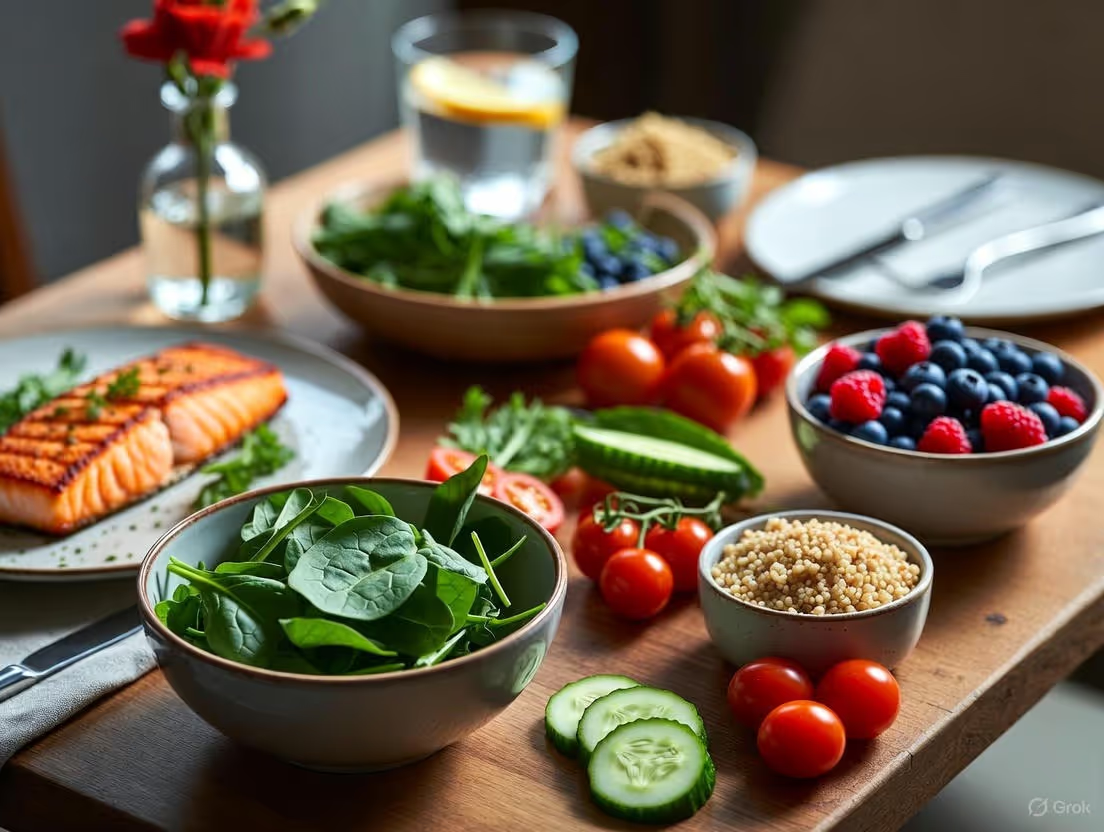
Chrononutrition—the timing of food intake in alignment with circadian rhythms—is a powerful, yet often neglected, lever for stress regulation. Your digestive system, liver enzymes, insulin sensitivity, and gut microbiome all exhibit strong daily rhythms. Eating at mismatched times confuses these peripheral clocks, contributing to metabolic stress, inflammation, and HPA axis dysregulation.
The Core Principle: Align Eating with Your Metabolic Day.
Your body is primed to process food during daylight hours. Insulin sensitivity is highest in the morning and declines throughout the day. Eating a large meal late at night, when your body is preparing for rest and repair, forces your metabolism into a daytime mode, raising core body temperature and cortisol when it should be falling, and impairing cellular cleanup processes like autophagy.
1. The Synchronizing Breakfast:
After the overnight fast, a morning meal helps synchronize peripheral clocks in the liver and gut. For most chronotypes, eating within 1-2 hours of waking is beneficial. As discussed, this meal should be substantial, balancing macronutrients to support the cortisol-energy curve without a sugar crash.
2. The Strategic Last Meal:
Aim to finish your last significant meal at least 2-3 hours before bedtime. This allows for digestion to largely complete before sleep, minimizing sleep-disrupting metabolic work and supporting the natural overnight fast. A shorter eating window (e.g., confining all calories to a 10-12 hour period) can often reduce systemic inflammation and improve metabolic markers, lessening the physiological load on your stress systems.
3. Nutrient Timing for Stress Support:
4. Caffeine and Alcohol: The Chrono-Disruptors
Caffeine has a half-life of 5-6 hours. For most people, consuming it after 2 PM means significant amounts are still circulating at bedtime, antagonizing adenosine (the sleep-pressure chemical) and interfering with sleep depth. Alcohol, while sedating initially, is a potent REM-sleep suppressant and can cause cortisol spikes later in the night as your body metabolizes it, leading to fragmented, non-restorative sleep. Treat both with strategic timing—or avoid them altogether if you are trying to reset a dysregulated rhythm.
By treating your meal schedule as a circadian cue as important as light, you reduce a massive source of internal, metabolic stress. You allow your digestion and metabolism to follow their natural, efficient rhythms, freeing up energy for repair, recovery, and resilience. For more on optimizing daily habits, explore our blog for deep dives on chrononutrition and sleep hygiene.
Physical activity is not just a stress reliever; it’s a potent circadian signal—a zeitgeber—that can help reset and reinforce your daily rhythms. However, the effect of exercise on your stress system is highly dependent on timing, intensity, and your individual chronotype.
Exercise synchronizes your clocks by affecting body temperature, hormone release, and gene expression in peripheral tissues like muscle. The strategic question is: when does exercise act as a harmonizing cue, and when might it become a disruptive stressor?
1. Morning Movement: The Anchor
As outlined earlier, gentle to moderate exercise in the morning (after light exposure) is ideal for most people. It reinforces the wakefulness signal, utilizes the natural cortisol and glucose surge, and boosts mood and cognitive function for the day. It also raises core body temperature early, promoting a strong, clear daily rhythm. For Larks, this is prime time. For Owls, "morning" may be later, but the principle holds: lighter activity upon waking helps signal the start of the active phase.
2. Afternoon/Evening Strength & Performance
For more intense training—high-intensity interval training (HIIT), heavy strength training, or competitive sports—the late afternoon to early evening (roughly 4-7 PM) is often the sweet spot for performance and rhythm harmony. Why? Core body temperature and muscle strength peak naturally during these hours. Furthermore, the stress of intense exercise causes a temporary spike in cortisol and adrenaline. Experiencing this spike earlier in the evening allows time for these hormones to decline adequately before bed. Completing a hard workout too late in the evening (within 2 hours of bed) can keep cortisol elevated and body temperature too high, impairing sleep onset.
3. The Evening Rule: Cool Down, Wind Down
Post-exercise, your body needs to cool down. You can facilitate this with a cool shower and by keeping your bedroom temperature low (around 65°F or 18°C). The post-exercise endorphin release can be relaxing, but the physiological arousal from a late-night session often outweighs this benefit. If your only time to exercise is late, opt for lower-intensity, mindfulness-based movement like yoga, tai chi, or a slow walk. These activities promote parasympathetic activation and can actually aid the wind-down process.
Listening to Your Biomarkers:
This is where technology bridges theory and practice. How do you know if your 6 PM CrossFit class is energizing you or disrupting your recovery? Biometric feedback is key. A device that tracks your Heart Rate Variability (HRV) and resting heart rate (RHR) overnight can provide objective data. If your HRV is consistently depressed and your RHR elevated on mornings after evening workouts, it’s a sign that the timing or intensity is creating too much systemic stress and interfering with recovery. This data-driven approach allows for true personalization, a capability at the core of advanced wearables. Learning to interpret these signals is part of mastering your personal rhythm, and support for understanding this data is available through resources like the Oxyzen FAQ.
By timing your movement intentionally, you use exercise as a tool to sculpt your stress rhythm, not just as an outlet for burning calories or steam. It becomes a deliberate signal to your body about what phase of the day it is in, strengthening the overall architecture of your circadian health.
We have touched on light, but the modern stressor of pervasive digital connectivity deserves its own spotlight. Our devices are not just sources of blue light; they are portals to a state of perpetual cognitive and emotional arousal that is fundamentally at odds with our circadian biology. The "digital circadian" disruption is a two-pronged attack: physiological (via light) and psychological (via content).
1. The Light-Based Attack (The Physiological Stressor)
As darkness falls, the lack of light should trigger melatonin secretion from the pineal gland. Melatonin is often called the "sleep hormone," but its role is more profound: it is the hormone of darkness that signals the time for rest and repair to every cell in your body. Even modest exposure to screen light—the equivalent of holding a tablet about a foot from your face at full brightness—can suppress melatonin by over 20%. The light tells your SCN it’s still daytime, slowing the cortisol decline and delaying the melatonin rise. This pushes your entire rhythm later, a state known as "social jet lag."
2. The Content-Based Attack (The Psychological Stressor)
This is the often-overlooked dimension. Scrolling through work emails activates cognitive circuits related to duty and problem-solving. Doomscrolling through news or social media triggers threat detection, outrage, anxiety, or social comparison—all potent activators of the HPA axis and sympathetic nervous system. Even "relaxing" with an exciting Netflix series can keep your brain in a state of high emotional and narrative engagement. This psychological arousal elevates cortisol and adrenaline independently of light, making true wind-down impossible.
Building a Digital Firewall:
To protect your circadian rhythm of stress, you must institute a digital firewall in the evening.
By reclaiming your evenings from digital intrusion, you defend the sanctity of your biological night. You create the dark, quiet, and safe space—both externally and internally—that is necessary for cortisol to fall, melatonin to rise, and the deep restorative processes that neutralize the day’s stress to take place. This conscious uncoupling is a radical act of modern self-care, a topic frequently explored by our community on the Oxyzen blog.

While cortisol is the headline hormone of the stress rhythm, the true maestro of your real-time recovery and resilience is your autonomic nervous system (ANS), best measured through Heart Rate Variability (HRV). HRV is the nuanced, millisecond variation in the time interval between your heartbeats. It’s not an arrhythmia; it’s a sign of a healthy, adaptable heart and nervous system.
A high HRV generally indicates a strong parasympathetic ("rest and digest") tone and good adaptability—your heart can rapidly and efficiently respond to changing demands. A low HRV indicates sympathetic ("fight or flight") dominance and a system that is stressed, fatigued, or inflexible. Crucially, HRV follows a clear circadian rhythm that mirrors and informs the cortisol curve.
The Healthy HRV Rhythm:
Using HRV as Your Daily Biofeedback:
Tracking your HRV—particularly your nighttime average or a morning resting measurement—provides an objective, non-hormonal window into your stress-recovery balance.
This is where continuous wearable technology becomes a game-changer. A smart ring that measures HRV throughout the night and day provides a rich, continuous data stream of your autonomic rhythm. You can see if your evening wind-down ritual actually raises your HRV. You can observe how your afternoon coffee affects your nervous system for hours. You can learn which types of exercise leave you with high HRV (signaling good adaptation) and which crush it (signaling excessive strain). This biofeedback loop turns abstract concepts of "stress" and "recovery" into tangible, personal data, empowering you to make daily adjustments. It’s a core feature for users who share their experiences with Oxyzen, allowing them to move from guesswork to precision in managing their energy.
By monitoring HRV alongside your understanding of cortisol timing, you gain a holistic, dynamic picture of your circadian stress rhythm. You’re no longer flying blind; you’re navigating with a sophisticated dashboard for your most valuable asset: your biological resilience.
Our 24-hour circadian rhythm exists within the broader context of the earth’s annual cycle. Changes in photoperiod (day length), light intensity, and temperature present an evolving challenge to our stress systems. For much of human history, these changes were gradual and predictable. Today, with artificial light and climate control, we can become profoundly disconnected from these seasonal cues, yet our biology still feels their pull.
Winter: The Challenge of Light Deprivation
Shorter days mean less of the crucial morning light needed to anchor your rhythm. This can lead to:
Winter Strategy: Aggressive light seeking. Morning light exposure is even more critical. A light therapy lamp used within the first hour of waking can be transformative. Maintaining strict sleep/wake times and evening wind-down routines is vital to provide structure when external light cues are weak. Social connection and physical activity become even more important to counteract the tendency toward withdrawal and lethargy.
Summer: The Challenge of Extended Light and Overstimulation
Longer days and more social activity can push rhythms later, leading to:
Summer Strategy: Defending the evening wind-down. Even though it's light out, you must create artificial darkness with blackout curtains and maintain your digital sunset. Be mindful of over-scheduling and protect your sleep time, even when social temptations are high. Morning light is still important, but you may need to be more diligent about blocking light at night.
Spring & Autumn: The Transition Stress
The shift in daylight saving time (particularly the "spring forward" loss of an hour) is a notorious, population-wide circadian stressor, linked to increases in heart attacks, strokes, and accidents. Your internal clock is suddenly out of sync with the external world by a full hour—the equivalent of mild jet lag.
Transition Strategy: Gradual adjustment. In the days leading up to a time change, shift your bedtime and wake time by 15-20 minutes each day. Maximize light exposure in the morning after the change to help reset your clock faster.
Honoring seasonal rhythms means accepting that your capacity and energy are not static year-round. It invites you to cycle your activities and expectations with the natural world—planning more intense projects in the spring and summer, and more reflection, consolidation, and recovery in the autumn and winter. This attunement reduces the stress of forcing a constant, year-round peak performance and allows for natural periods of renewal. This holistic view of human cycles is part of the broader vision and values that inspire holistic wellness technology.
Theory is powerful, but transformation happens in practice. Now, we synthesize everything into a flexible, personalized framework—your own circadian stress-resilience schedule. This is not a rigid prison of rules, but a conscious design of your day to work in harmony with your biology. Use the following template, then adapt it for your chronotype, lifestyle, and the biomarker feedback you gather.
The Idealized Framework (for a Hummingbird, 7 AM wake / 11 PM bed):
Personalization Steps:
This personalized schedule is your blueprint for a resilient life. It’s a living document, refined by your experience and your body’s feedback. For ongoing support and to see how others are implementing these principles, the community and resources available through Oxyzen can be an invaluable companion on this journey. By mastering the timing of your life, you master the rhythm of your stress, turning it from a foe into a powerful, rhythmic force for growth and vitality.
The idealized schedule we just mapped out assumes a stable, daylight-aligned world. But modern life is built on 24/7 operations, global connectivity, and social calendars that often disregard biology. For shift workers, frequent travelers, and even the average person battling "social jet lag," the circadian rhythm of stress faces its greatest adversaries. These lifestyles create a state of chronic internal desynchrony, where your central SCN clock is at odds with the clocks in your liver, gut, and immune system, and both are at odds with the external world. This isn't just inconvenient; it's a profound metabolic, cognitive, and immunological stressor linked to higher risks for numerous chronic diseases. The strategy here shifts from optimizing a natural rhythm to strategically managing a disrupted one, using light, darkness, and timing as your most potent tools.
The Core Principle: Master Light and Darkness to Create Artificial Dawns and Nights.
When you cannot rely on the sun, you must become the architect of your own light environment. The goal is to create a clear, consistent signal for your body about when "day" and "night" occur, regardless of the actual time on the clock.
1. Conquering Shift Work:
The most extreme circadian challenge. The key is to pick a schedule and stick to its relative timing, not the sun's absolute timing.
2. Taming Social Jet Lag:
This is the chronic, weekly discrepancy between your biological clock (dictated by your sleep on free days) and your social clock (dictated by your work/school schedule). A person who sleeps until 10 AM on Saturday and Sunday, but must wake at 6 AM for work Monday-Thursday, can have 4+ hours of social jet lag—equivalent to flying across four time zones every weekend.
3. Strategic Travel: The Art of the Pro-Zone
Jet lag is a sudden, severe state of circadian misalignment. Your strategy depends on the direction of travel and the length of your stay.
The unifying theme for hacking modern hurdles is proactive light management. You are no longer a passive recipient of environmental light; you are a curator. By wielding light and darkness with intention, you can build a fortress of circadian consistency even in the most chaotic of schedules, dramatically reducing the systemic stress of living against your biological grain.
We are not islands of biology. Our stress rhythms are deeply social, co-regulated by the people around us. This concept, "social synchrony," suggests that our circadian systems can entrain not just to light and food, but to consistent social cues. Positive, predictable social interactions act as a stabilizing zeitgeber, while social isolation or conflict are potent circadian disruptors.
The Biology of Connection:
Positive social engagement—laughter, touch, empathetic conversation—stimulates the release of oxytocin, serotonin, and endorphins. This neurochemical cocktail has a direct, dampening effect on HPA axis activity, lowering cortisol and promoting parasympathetic (rest-and-digest) tone. A warm hug or a deep conversation with a friend in the evening can be as effective as any supplement in helping cortisol decline. Conversely, chronic loneliness or being in a high-conflict relationship is associated with flatter, dysregulated cortisol rhythms, elevated evening cortisol, and poorer sleep.
Strategies for Social Synchrony:
The takeaway is that stress management is not a purely solitary pursuit. Investing in the quality and rhythm of your key relationships is an investment in your own circadian health. We are wired to co-regulate. By consciously creating synchrony with our loved ones, we build a web of external support that internally reinforces the very biological rhythms that keep us resilient.
Perhaps the most profound and underappreciated dialogue in circadian stress occurs between your brain and your gut. Your gastrointestinal tract houses your enteric nervous system, often called the "second brain," containing over 100 million neurons. Crucially, the microbial inhabitants of your gut—your microbiome—and the gut cells themselves operate on a robust circadian rhythm that talks directly to your HPA axis and your brain.
The Gut’s Daily Rhythm:
Gut motility, enzyme secretion, nutrient absorption, and the integrity of the intestinal barrier all fluctuate on a 24-hour cycle. The microbiome composition also shows diurnal shifts in activity. These rhythms are entrained by your feeding schedule and, in turn, influence systemic inflammation and stress hormone production.
The Dysregulation Loop: Stress ⇄ Gut Disruption
Strategies for a Resilient Gut Clock:
By honoring your gut’s rhythm, you calm a major source of internal inflammation and noise. A synchronized gut is a quiet gut, and a quiet gut means a less reactive HPA axis. It’s a foundational piece of the puzzle that highlights how deeply interconnected every aspect of our physiology is with the master circadian clock.
All the strategies discussed so far move from theory to empowered practice through one critical step: measurement. You cannot optimize what you cannot see. Your subjective feeling of "stress" or "energy" is a blurry snapshot; objective biomarkers provide the high-definition, time-lapsed film of your circadian rhythm in action. This is the era of the quantified self, applied to stress resilience.
Key Biomarkers for Your Circadian Stress Rhythm:
The Power of Continuous Wearables:
This is where a device worn 24/7, like a smart ring, becomes transformative. Unlike a morning weigh-in or a sporadic heart rate check, a ring gathers data passively across the entire circadian cycle—through work, exercise, meals, and sleep. It connects the dots:
This feedback loop turns you from a passenger into a pilot. You move from "I think I feel tired" to "My data shows my recovery has been poor for three days; I need to prioritize sleep and dial back intensity." It provides objective validation for what works for you and clear warning signs for what doesn’t. For anyone serious about mastering their stress rhythm, this objective data is non-negotiable. It demystifies the process, turning the invisible dance of hormones and neurons into a personalized roadmap you can follow. To understand how this technology can be seamlessly integrated into your life, you can explore the capabilities of the Oxyzen ring.
Our circadian system is not static; it evolves across the lifespan. Understanding these changes allows us to adapt our strategies for lifelong resilience and counters the narrative that increased frailty and stress sensitivity are inevitable byproducts of aging. In many ways, aging involves a de-synchronization of our internal clocks, and many "age-related" declines may be partially attributed to this weakening rhythm.
How the Stress Rhythm Changes with Age:
The Vicious Cycle: Circadian Fragmentation & Stress Acceleration
These age-related changes create a vulnerability: a dampened, fragile circadian system is less able to buffer stress. A stressor that a younger system would handle with a sharp, adaptive cortisol spike and recovery may cause a prolonged, dysregulated response in an older system. This chronic stress state then further accelerates cellular aging and circadian disruption—a dangerous feedback loop.
Strategies for Lifelong Circadian Resilience:
The goal is to view circadian health as a lifelong practice. By actively reinforcing our rhythms as we age—through light, timing, and community—we don't just add years to life, we add life to years. We preserve our system's ability to navigate stress with grace, maintaining vitality and cognitive function deep into our later decades. This philosophy of proactive, lifelong wellness is at the heart of the mission behind Oxyzen.
We have journeyed from the microscopic symphony of the HPA axis to the macroscopic cycles of the seasons and lifespan. The unifying thread is clear: stress is not a static state to be endured, but a dynamic, rhythmic force to be understood and harmonized with. The circadian rhythm of stress is the master framework that transforms our approach from haphazard coping to strategic mastery.
You now hold the knowledge that:
This is not about achieving a state of perpetual calm—an impossible and undesirable goal. It is about cultivating rhythmic resilience: the capacity to mount an effective, adaptive stress response when needed and to descend fully into recovery when the challenge has passed. It is about making stress work for you, on your schedule, according to your biological design.
The journey continues. In the next portion of this deep exploration, we will dive into the specific, advanced protocols for different goals: using circadian timing to enhance cognitive performance, to optimize physical training and body composition, to foster emotional and creative intelligence, and to build an unshakable foundation of mental health. We will explore the cutting-edge science of chronopharmacology (timing your medications and supplements) and compile your complete, personalized Circadian Stress-Resilience Playbook.
But for now, start with one rhythm. Anchor your morning with light. Protect one evening with a digital sunset. Observe how a single change ripples through your day, your sleep, and your sense of capacity. Your rhythm is your most ancient, intelligent guide to modern resilience. Listen to it, reinforce it, and trust it. The path to mastering your stress is, quite literally, a matter of time.
Your Trusted Sleep Advocate: Sleep Foundation — https://www.sleepfoundation.org
Discover a digital archive of scholarly articles: NIH — https://www.ncbi.nlm.nih.gov/
39 million citations for biomedical literature :PubMed — https://pubmed.ncbi.nlm.nih.gov/
Experts at Harvard Health Publishing covering a variety of health topics — https://www.health.harvard.edu/blog/
Every life deserves world class care :Cleveland Clinic - https://my.clevelandclinic.org/health
Wearable technology and the future of predictive health monitoring :MIT Technology Review — https://www.technologyreview.com/
Dedicated to the well-being of all people and guided by science :World Health Organization — https://www.who.int/news-room/
Psychological science and knowledge to benefit society and improve lives. :APA — https://www.apa.org/monitor/
Cutting-edge insights on human longevity and peak performance:
Lifespan Research — https://www.lifespan.io/
Global authority on exercise physiology, sports performance, and human recovery:
American College of Sports Medicine — https://www.acsm.org/
Neuroscience-driven guidance for better focus, sleep, and mental clarity:
Stanford Human Performance Lab — https://humanperformance.stanford.edu/
Evidence-based psychology and mind–body wellness resources:
Mayo Clinic — https://www.mayoclinic.org/healthy-lifestyle/
Data-backed research on emotional wellbeing, stress biology, and resilience:
American Institute of Stress — https://www.stress.org/


