


The Complete Guide to Biomarker-Based Stress Tracking in 2025
Biomarker-based tracking in 2025 uses multiple data streams (HRV, cortisol, sleep, activity) to give a holistic picture of stress load and recovery.
Biomarker-based tracking in 2025 uses multiple data streams (HRV, cortisol, sleep, activity) to give a holistic picture of stress load and recovery.
%402x.svg)
For decades, stress was a ghost in the machine—a pervasive feeling we knew was there, wreaking havoc on our sleep, focus, and long-term health, but one we could only describe in vague, subjective terms. We’d say we were “feeling overwhelmed” or “running on empty,” relying on introspection that was often clouded by our very state of exhaustion. The tools we had were blunt instruments: journaling, generalized surveys, or simply waiting for a physical symptom like a headache or burnout to sound the alarm. By then, the damage was often already done.
Welcome to a new paradigm. In 2025, understanding your stress is no longer an exercise in guesswork. We are witnessing a revolution in personal health technology, one that moves us from subjective feeling to objective, quantifiable data. This is the era of biomarker-based stress tracking—a frontier where sophisticated wearable devices, led by advanced smart rings, decode the intricate biological language of your nervous system in real time. This guide is your map to this new landscape.
Imagine ending a workday not just feeling "tired," but knowing precisely how your sympathetic nervous system (your "fight or flight" response) ramped up during a critical meeting, as measured by a spike in your heart rate variability (HRV) and skin conductance. Imagine seeing a clear, data-driven correlation between a poor night's sleep and your body's heightened cortisol rhythm the following afternoon. This is the power of biomarker tracking: it translates the invisible into the actionable.
At the forefront of this movement are devices like the Oxyzen smart ring, which exemplify how cutting-edge sensor technology, machine learning, and a deep understanding of human physiology are converging on your finger. By continuously monitoring a suite of key physiological signals, these devices provide an unprecedented, 24/7 window into your autonomic nervous system—the true control center of your stress response.
This guide will take you deep into the science, the technology, and the practical application of this transformative approach to wellbeing. We will demystify the core biomarkers, explore the technology that captures them, and provide a roadmap for moving from data to genuine, lasting resilience. This isn't about adding more noise to your life; it's about finally tuning into the most important signal of all: the story your body is telling you.
We’ve all experienced it: the racing heart before a presentation, the tight shoulders after a difficult conversation, the foggy brain following a series of interrupted nights. For most of human history, these sensations were the primary indicators of stress. But modern neuroscience and psychophysiology have peeled back the curtain, revealing a complex, highly orchestrated biological symphony—or cacophony—underlying these feelings. To master stress, we must first understand its language.
At its core, stress is not inherently bad. It is our body’s evolutionary survival mechanism, a rapid-response protocol designed to protect us from immediate threats. When your brain perceives a challenge—be it a looming deadline (a modern "predator") or an actual physical danger—it triggers the Hypothalamic-Pituitary-Adrenal (HPA) axis. This cascade results in the release of hormones like cortisol and adrenaline, which prepare your body for action: increasing heart rate, diverting blood to muscles, and sharpening focus. This is acute stress, and it’s meant to be short-lived.
The problem in our modern world is chronic stress. When the alarm system never fully switches off—due to constant emails, financial pressures, or social tensions—these physiological changes become maladaptive. Sustained high cortisol degrades sleep quality, impairs cognitive function, weakens the immune system, and increases the risk of cardiovascular disease and metabolic disorders. Chronic stress, therefore, is less about an emotion and more about a prolonged state of physiological dysregulation.
The primary conductor of this stress response is your Autonomic Nervous System (ANS), which operates largely below your conscious awareness. It has two main branches:
Optimal health isn't about a silent SNS; it's about autonomic flexibility—the dynamic, fluid dance between these two systems, allowing you to ramp up effectively when needed and recover deeply afterward. Chronic stress glues the SNS pedal to the floor and wears out the PNS brakes. Biomarker tracking is the first technology that allows us to measure this dance in real-time, moving beyond vague feelings to see the precise balance—or imbalance—of your ANS.
Relying solely on "how stressed you feel" is notoriously unreliable. Two phenomena explain this:
This disconnect is where traditional wellness approaches hit a wall. You can’t optimize what you can’t measure objectively. The shift to biomarker-based tracking is foundational because it bypasses the noisy filter of perception and goes straight to the source: the body itself. It reveals your physiological stress load, which is the true predictor of health outcomes.
This objective data empowers a proactive, rather than reactive, approach to wellbeing. Instead of waiting for burnout, you can see the precursors—a trend of declining recovery scores or restless sleep—and intervene. For a deeper dive into the intersection of technology and nervous system health, our resource library at the Oxyzen.ai blog offers ongoing insights and research breakdowns.

If your body is a complex city, biomarkers are the real-time dashboards for its power grid, communication networks, and emergency services. In the realm of stress, specific biomarkers serve as direct proxies for the activity of your Autonomic Nervous System and HPA axis. Let’s explore the key players that modern devices like smart rings are now able to track continuously and non-invasively.
HRV is arguably the single most important metric for tracking stress and recovery. Contrary to what the name implies, it doesn't refer to irregularities in heart rhythm as a problem. Instead, HRV measures the subtle, millisecond variations in the time intervals between consecutive heartbeats.
A higher HRV (more variability) generally indicates a strong, adaptable parasympathetic nervous system. It means your heart can respond fluidly to changing demands, a sign of good resilience and recovery capacity. A lower, less variable HRV suggests a dominant sympathetic drive—your heart is being told to beat in a more rigid, metronomic pattern, indicative of stress, fatigue, or overtraining.
Think of it like a skilled driver on a winding road (high HRV: smoothly accelerating and braking) versus a driver with one foot stuck on the gas (low HRV: rigid, less responsive). Devices like the Oxyzen ring use optical sensors to capture pulse-to-pulse intervals with impressive accuracy, transforming this profound biomarker into a daily, trackable score for your nervous system health.

While your instantaneous heart rate jumps during exercise or excitement, its resting state and daily trends are powerful stress indicators. A chronically elevated resting heart rate can be a clear signal of sustained sympathetic activation or systemic inflammation. Furthermore, examining how quickly your heart rate spikes in response to a minor stressor and, more importantly, how rapidly it recovers afterward, provides a window into your autonomic flexibility. Slow recovery is a classic marker of cumulative stress load.
This biomarker measures tiny, subconscious changes in the sweat gland activity on your skin, which alter its electrical conductance. Your sweat glands are densely innervated by sympathetic nervous fibers. When your SNS activates—even subtly from a stressful thought—it can trigger imperceptible sweating. EDA is a sensitive, direct measure of this sympathetic "arousal" or excitement. It’s particularly good at capturing acute emotional and cognitive stress responses that might not yet show up in your heart rate.
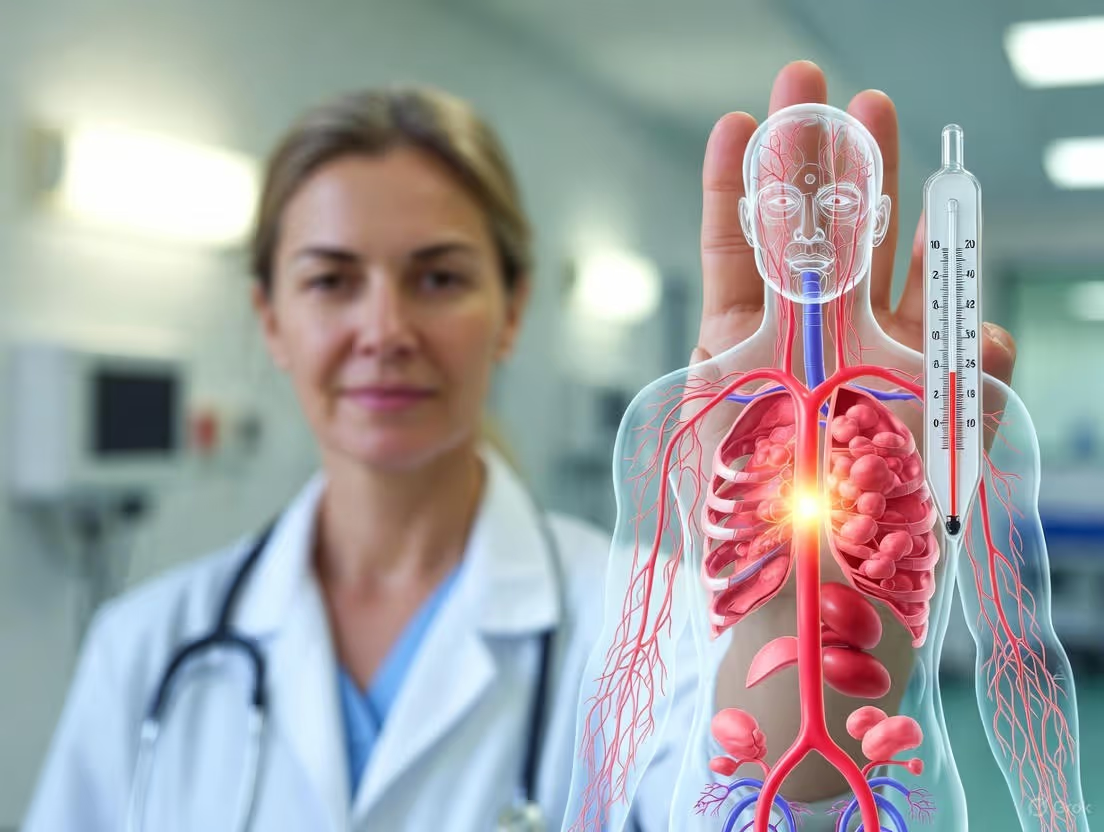
Chronic stress triggers vasoconstriction—the narrowing of blood vessels in the extremities—as blood is shunted toward core muscles. This can lead to consistently cooler skin temperature in the fingers. By tracking distal skin temperature trends, wearables can infer states of prolonged sympathetic dominance. A warming trend, conversely, can signal the onset of relaxation and parasympathetic activity.
Often overlooked, your breathing pattern is both a cause and a consequence of stress. Stress drives rapid, shallow chest breathing. A calm, balanced nervous system promotes slower, deeper diaphragmatic breathing. Monitoring respiratory rate, especially during sleep, provides critical context for other metrics. For instance, a heightened nighttime respiratory rate coupled with a low HRV paints a clear picture of poor recovery.
While continuous cortisol measurement via sweat or interstitial fluid is an active area of research, it’s not yet mainstream in consumer wearables. However, the true power of 2025’s technology lies not in viewing these biomarkers in isolation, but in their fusion.
Advanced algorithms now combine HRV, EDA, heart rate, temperature, and movement data into a single, comprehensive Physiological Stress Score. This multi-dimensional approach, pioneered by companies focused on holistic health like Oxyzen, cancels out the noise and provides a far more accurate and actionable picture of your total stress load than any single metric ever could. It’s the difference between checking the weather with a single thermometer versus a full meteorological station.

The quest to measure these intimate biomarkers once required bulky lab equipment, clinical visits, or intrusive sensors. The democratization of this profound health data is thanks to a quiet revolution in miniaturized sensor technology, low-power computing, and biomechanical design. At the vanguard of this revolution is an unlikely hero: the smart ring.
The finger offers unique advantages for continuous biomarker capture that the wrist simply cannot match.
A modern biomarker-tracking ring is a masterpiece of engineering. Packed within its sleek form factor you will typically find:
The sensors collect raw signals, but the magic happens in the algorithms. This is where companies distinguish themselves. Machine learning models are trained on massive physiological datasets to:
This transformation of raw voltage and light into a coherent narrative of your wellbeing is the true product. It’s a complex challenge that requires deep expertise in both hardware and physiology, a balance that is central to the Oxyzen mission of creating genuinely actionable health tools.
Given its paramount importance, Heart Rate Variability deserves its own dedicated exploration. Understanding HRV is key to unlocking the deepest insights from your biomarker data.
Your heart rate is not set by a single pacemaker. It’s a tug-of-war between the two branches of your ANS. The sympathetic nervous system sends signals to speed up the heart (decreasing the time between beats), while the parasympathetic nervous system, primarily via the vagus nerve, sends signals to slow it down (increasing the time between beats). The constant, subtle interplay of these opposing forces creates the natural, healthy variability between beats. When you inhale, your heart rate slightly increases; when you exhale, it decreases. This is called respiratory sinus arrhythmia, and it's a sign of a healthy, vagally-mediated system.
HRV is analyzed using several mathematical methods, each offering a slightly different lens:
For daily tracking, most consumer apps simplify this into a single, proprietary HRV Score or Recovery Score that integrates these analyses. The critical practice is to track your own trends over time, not compare your number to others. Your baseline is unique.
A dip in your HRV isn't automatically "bad." It's information. The causes are multifactorial:
By observing how your lifestyle choices move your HRV needle, you gain a powerful biofeedback tool. For instance, you might discover that a high-intensity workout on a day with a low baseline HRV leads to prolonged fatigue, whereas the same workout on a high-HRV day feels energizing. This is the essence of personalized training and stress management.
For consistent data:
Embracing HRV is like learning a new dialect of your body’s language. It provides an objective measure of your readiness to perform, to handle stress, and to recover. It moves wellness from a generic concept to a daily, data-informed practice.
While HRV tells us about the balance of the autonomic nervous system, Electrodermal Activity (EDA) tunes us directly into the sympathetic nervous system's moment-to-moment whispers and shouts. It’s the biomarker of arousal, excitement, and emotional valence.
EDA measures the conductivity of your skin, which increases when your sweat glands fill with fluid—a process solely activated by your sympathetic nervous system. These are not the large sweat glands for thermoregulation, but microscopic ones responsive to emotional and cognitive stimuli. An increase in skin conductance (an EDA "peak") can be triggered by a startling sound, a frustrating email, an exciting idea, or even a subconscious anxious thought. It is a direct, unfiltered physiological readout of your emotional and cognitive engagement with the world.
EDA data is analyzed in two primary ways:
Modern devices don't just show you a chaotic graph of peaks. They quantify this data into metrics like the number of significant EDA peaks per hour or a composite sympathetic stress score that combines EDA with heart rate acceleration.
The sensitivity of EDA opens fascinating applications:
By integrating EDA with HRV, you get a complete picture: HRV shows your capacity for recovery (parasympathetic strength), while EDA shows your real-time expenditure of energy (sympathetic arousal). Together, they tell you both your balance and your activity. Reading real user testimonials often reveals powerful stories of how this combined data helped individuals identify hidden stressors they had completely normalized.
Biomarkers do not exist in a vacuum. Their meaning is profoundly shaped by context. The two most critical contexts are sleep and physical activity. A high heart rate during a run is healthy; the same heart rate while sitting at your desk is a potential stress signal. Advanced tracking synthesizes these domains to tell a cohesive story of your day.
Sleep is the primary time for parasympathetic dominance, hormonal regulation (like cortisol decline and growth hormone release), and neural repair. Biomarker tracking during sleep provides your cleanest, most actionable baseline data.
Physical activity is a controlled, beneficial stressor (hormesis). It challenges your systems, and the adaptive response makes you stronger—but only if balanced with adequate recovery.
Your biomarkers follow a natural 24-hour rhythm. Cortisol should peak in the morning to help you wake, decline through the day, and be low at night. Core body temperature follows its own cycle. Disruptions to these rhythms (from irregular sleep, nighttime light exposure, or late eating) are a potent form of physiological stress.
By viewing your stress biomarkers through the lenses of sleep, activity, and circadian biology, you stop seeing random numbers and start seeing a dynamic, interconnected system. You can answer questions like: "Was my low recovery score due to poor sleep, a hard workout yesterday, or the stressful workday—or a combination of all three?"
Data is fascinating, but it is worthless without translation into action. The ultimate goal of biomarker tracking is not to create a spreadsheet of your suffering, but to build a personalized, iterative protocol for greater resilience. This is the shift from being a passive patient to an active participant in your own wellbeing.
Before you can change anything, you need to know your normal. Spend 2-4 weeks simply wearing your device and living your usual life. Observe without judgment. The goal is to collect enough data for the algorithms—and your own understanding—to establish your baseline ranges for HRV, resting heart rate, and sleep. This phase answers: "What does my body consider homeostasis right now?"
Now, begin the detective work. Look for correlations between your biomarker scores and your lifestyle log (many apps allow you to tag activities, meals, and moods).
This is the active experimentation phase, using your biomarkers as your outcome measures. It creates a feedback loop: Intervene → Measure → Learn → Adapt.
This systematic approach turns wellness from a collection of generic tips into a personalized science project on yourself. For those seeking structured guidance on starting this journey, our FAQ page addresses common questions on beginning with biomarker tracking and interpreting initial data.
Of all the interventions you can test, few are as immediate, powerful, and directly measurable as breathwork. Your breathing is the only autonomic function you can easily control voluntarily, and it has a profound, rapid effect on your biomarkers—especially HRV. This makes it a perfect partner for technology.
When you breathe at a slow, rhythmic pace of about 5 to 6 breaths per minute (an inhale of 5 seconds, exhale of 5 seconds), you entrain a resonance between your heart rate, blood pressure, and respiratory cycles. This is often called "resonant frequency" or "coherent" breathing. At this pace, the influence of the breath on heart rate variability is maximized, producing a smooth, sine-wave-like pattern in your heart rate. This pattern is associated with:
In essence, slow, rhythmic breathing sends a powerful signal to your brainstem that all is well, effectively "hacking" your vagus nerve to initiate the relaxation response.
This is where biomarker tracking becomes interactive. Many advanced platforms now offer guided breathing sessions where you can see your heart rate and HRV in real-time on your phone screen as you follow a pacer.
This direct line between a voluntary action (your breath) and an involuntary biomarker (your HRV) is one of the most empowering aspects of modern stress tracking. It proves, in real-time, that you can actively regulate your own nervous system state.
A common concern—and potential pitfall—with deep health data is the risk of becoming obsessive, anxious, or misinterpretating the numbers. This is sometimes called "orthosomnia" (an unhealthy preoccupation with perfect sleep data) or more broadly, "data anxiety." The goal is to use the technology as a compassionate guide, not a punitive judge.
There are times to take the ring off and trust your felt experience.
Reframe the data as your body’s way of communicating, not complaining. Instead of "My HRV is low again, I'm failing," try: "My body is signaling it needs more support right now. I wonder what would feel restorative?" This shifts you from a performance mindset to a partnership mindset with your own physiology. This philosophy of a compassionate, curious partnership with technology is woven into the very fabric of our story at Oxyzen.
While daily management of stress is invaluable, the longitudinal data from continuous biomarker tracking holds perhaps even greater promise: the potential to identify early risk patterns for chronic conditions long before clinical symptoms appear. This is the frontier of predictive, preventive health.
A vast body of research connects chronically low HRV (a marker of ANS imbalance) to a heightened risk of:
Persistently elevated resting heart rate and poor sleep biomarkers are similarly linked to these adverse outcomes. Your nightly HRV is not just a recovery score; it’s a proxy for your systemic health resilience.
By establishing your personal baseline, you create a sensitive early-warning system. A sustained, gradual drift outside your normal range can be a more meaningful signal than being outside a population average.
For individuals making major lifestyle changes to manage a condition (e.g., adopting a anti-inflammatory diet for autoimmunity, starting an exercise program for metabolic syndrome, or practicing mindfulness for anxiety), biomarkers provide objective proof of progress.
This long-view transforms the smart ring from a wellness gadget into a legitimate health monitoring tool. It empowers you with a continuous stream of data about your most fundamental systems, allowing you to partner with healthcare professionals in a more informed way and take ownership of your health trajectory. For a broader perspective on how this technology fits into the future of proactive health, explore Oxyzen to see our vision for this integrated approach.
The market for biomarker-tracking devices is expanding rapidly. From smart rings and wristbands to patches and "hearables," how do you choose the right tool for your journey? Here are the key considerations, with a focus on why the smart ring form factor is becoming the gold standard for comprehensive, non-intrusive stress tracking.
Choosing your device is the first step in a partnership. It should feel like a tool that empowers and enlightens, not another source of digital clutter. It’s an investment in understanding the most complex and important system you’ll ever manage: your own body. As you begin this journey, remember that the story of this technology is still being written, driven by pioneers who, like the team behind Oxyzen, believe in putting precise, actionable health insight directly on your finger.
The adage "you are what you eat" finds a powerful new expression in biomarker data. Every meal and nutrient is a biochemical instruction that directly influences autonomic balance, inflammation, and recovery. Biomarker tracking allows you to move beyond generic dietary dogma and discover your body’s unique nutritional triggers and supports for stress resilience.
Your digestive system and your brain are in constant, bidirectional communication via the vagus nerve—the primary highway of your parasympathetic nervous system. This gut-brain axis means that digestive stress is nervous system stress, and vice versa.
This is where you become a nutritional detective. By tagging meals and observing subsequent biomarker responses, you can identify patterns invisible to the naked eye.
Intermittent fasting has gained popularity, and biomarkers are the perfect tool to assess its personal impact, moving beyond weight to systemic health.
The goal is not to eat in fear of your ring’s data, but to use it to build a nourishing, supportive diet that fuels both your daily performance and your long-term recovery. It turns nutrition from a ideological pursuit into an evidence-based practice of self-care. For more on tailoring lifestyle to your unique physiology, the Oxyzen.ai blog regularly features deep dives on nutrition, fasting, and metabolic health.
Our modern environments are saturated with subtle, chronic stressors that our nervous systems did not evolve to handle. These "invisible loads" constantly whisper to our ANS, and only through biomarker tracking do we often realize their profound cumulative impact. Addressing them is a critical step in modern stress mastery.
The most pervasive environmental stressor is artificial light, especially the blue wavelengths emitted by screens and LEDs after sunset.
While the science is evolving, some individuals appear to be sensitive to the non-thermal effects of chronic exposure to electromagnetic fields from Wi-Fi routers, cell phones, and smart meters. The proposed mechanism is that EMFs can act as a mild cellular stressor, potentially increasing oxidative stress and affecting nervous system activity.
Chronic low-level noise pollution—traffic, office chatter, constant notifications—triggers micro-stress responses. Your brain must constantly process and filter this irrelevant auditory data, which activates the sympathetic nervous system.
Visual clutter and disorganization in your home or workspace can act as a chronic, low-grade cognitive stressor, demanding attentional resources and creating a subtle sense of overwhelm. While harder to pin to a single biomarker, reducing clutter often correlates with an overall improvement in subjective stress logs and a reduction in scattered, low-grade EDA activity throughout the day.
By using your device to identify which invisible stressors are most impactful for you, you can design your personal environment to be a haven for your nervous system, rather than a minefield. This is biohacking your immediate world for calm.
One of the most transformative applications of longitudinal biomarker data is in enriching the dialogue with your healthcare providers. You arrive not just with symptoms, but with a quantified, chronological record of your physiological state. This shifts the dynamic and enables a new level of personalized care.
Imagine visiting your doctor for fatigue. Instead of just saying "I'm tired," you can present a report showing:
This data narrative provides objective context that can help differentiate between potential causes like sleep apnea, adrenal dysfunction, autoimmune issues, or dietary triggers.
For healthcare professionals working in functional medicine, integrative psychiatry, or coaching, this data is gold.
To make this partnership effective:
This collaborative model represents the future of healthcare: proactive, personalized, and participatory. You are no longer a passive recipient of care, but an informed co-pilot. If you're curious about how this philosophy is applied in product development, you can learn more about the team and mission behind Oxyzen dedicated to enabling this very partnership.
Biomarkers provide an external mirror for internal states, creating a powerful bridge between the physical and the psychological. This connection can be harnessed to train cognitive and emotional resilience, using the data not as a critic, but as a compassionate coach for the mind.
When you see a stress spike on your device after a difficult interaction, you have a choice: you can react with frustration ("That person ruined my metrics!"), or you can use it as a moment of mindful cognitive reframing.
Chronic stress often comes with a feeling of helplessness—that external forces control your state. Biomarker experimentation directly counters this.
As mentioned earlier, data obsession is a risk. The psychological work here is to relate to the data with curiosity and compassion, not judgment.
By integrating the psychological with the physiological, you create a virtuous cycle: a calmer mind improves biomarkers, and improving biomarkers reinforces a calmer, more empowered mind. This holistic development is reflected in the stories of users who have transformed their relationship with stress, many of whom share their journeys in our community testimonials.
The technology you wear today is just the beginning. The field of continuous, non-invasive biomarker sensing is accelerating at a breathtaking pace. Here’s a look at what is transitioning from research labs to the near-future consumer market, promising an even richer picture of your health.
While CGMs are already used by diabetics, their integration with ANS data for the general wellness population is a game-changer. Blood glucose volatility is a major source of metabolic stress.
The holy grail of stress tracking is continuous cortisol measurement. Several technologies are nearing commercialization:
Some advanced wearables are exploring photoplethysmogram (PPG) waveform analysis to estimate pulse wave velocity—a marker of arterial stiffness and cardiovascular aging—and even continuous, cuffless blood pressure trends. Since BP is highly responsive to stress, seeing your real-time pressure trends in response to mental load would add another critical layer to stress impact assessment.
Future sensors may use multiple light wavelengths (spectroscopy) to estimate hydration status and key electrolyte balances at a tissue level. Given that hydration is fundamental to every cellular process and nervous system function, this would close a major data gap in daily self-care.
The future is not a single device, but a seamlessly integrated platform. Your ring tracks ANS metrics, a discreet patch handles cortisol/glucose, and your phone’s microphone (with consent) analyzes vocal tone for stress. A central AI, understanding your unique physiology, synthesizes it all into a holistic "Total Load" index and prescribes micro-interventions—a breathing prompt, a hydration alert, a walking suggestion—in real time. This is the direction in which leading innovators are focused, a vision you can explore further by discovering Oxyzen's comprehensive approach.
The ultimate goal is not to be tethered to a device forever, but to use it as a teacher. The aim is to internalize the lessons so thoroughly that you develop an embodied intuition aligned with your data. This chapter is about transitioning from reliance to mastery and building a lifelong practice of self-awareness.
Signs it might be time for a data holiday:
A planned break of 2-4 weeks can reset your relationship to the technology and allow you to reconnect with your innate interoceptive awareness. Often, when you return, you have a fresher, healthier perspective.
By the end of your first year, you should be able to draft your own protocol, a living document that outlines what works for you:
The true outcome of a sustained biomarker practice is not a perfect graph, but a transformed relationship with yourself. You become:
This journey of self-knowledge is profound, and every user's path is unique. To see how this philosophy translates into real-world impact, the our story page shares the foundational vision of empowering this very transformation.
As we invite these intimate devices deeper into our lives, we must consciously navigate the ethical landscape they create. The data they generate—a continuous readout of your subconscious nervous system—is arguably the most personal data that exists. Its stewardship demands careful consideration.
When choosing a platform, scrutinize their policies:
The insights you receive are filtered through proprietary algorithms. This creates two challenges:
As early adopters and informed users, we have a voice. We can:
The future of health is personal, predictive, and participatory. By navigating its ethical dimensions with care, we can ensure it remains empowering and humane. For any questions on how specific platforms handle these critical issues, always refer to their official policies and resources, like a comprehensive FAQ page.
Theory comes alive through practice. Let’s examine how biomarker tracking is being applied in specific, real-world scenarios. These vignettes illustrate the transformative power of moving from subjective guesswork to objective insight.
These stories, echoed in many user experiences shared in testimonials, demonstrate that biomarker tracking is not a niche tool for biohackers, but a universally applicable lens for understanding the human condition under modern stress.
We have journeyed from the fundamental biology of the stress response to the cutting-edge technology that illuminates it, and through the practical, ethical, and psychological frameworks for applying this knowledge. The journey of biomarker-based stress tracking is, at its heart, a journey back to yourself.
For too long, we have been strangers in our own bodies, speaking the vague language of symptom and emotion while our physiology whispered a precise, data-rich story we couldn't hear. The smart ring and its contemporaries are translators. They give voice to your autonomic nervous system, your circadian rhythms, your metabolic processes.
The goal is not to achieve a state of perfect, flat-line calm—that is neither possible nor desirable. The goal is autonomic flexibility: the dynamic, resilient capacity to mount an effective stress response when needed and to return swiftly, completely, to a state of restoration. It is the difference between a rigid twig that snaps under pressure and a supple bamboo that bends and rebounds.
This guide has provided the framework, but the work—the beautiful, personal, lifelong work—is yours. It begins with curiosity. It progresses through disciplined, compassionate experimentation. It culminates in wisdom: the deep, intuitive understanding of how you work.
Start by listening. Let the data tell you its story without judgment. Then, engage in a dialogue. Ask questions of your body through small changes, and listen closely to the answers it gives you in your nightly recovery score, your morning readiness, your stress response trends.
Remember that you are not optimizing a machine. You are cultivating a life. The numbers are guides, not gospels. The ultimate metric is a life lived with vitality, presence, and resilience—a life where you have the energy for what matters, the calm to navigate challenges, and the wisdom to rest.
The future of health is not in a distant clinic; it is on your finger, in your daily choices, and in your empowered partnership with the incredible, intelligent system that is you. This is the promise of biomarker-based stress tracking in 2025 and beyond: not just longer life, but a wider, deeper, more vibrant life.
To continue this exploration and stay updated on the latest in personalized health technology, we invite you to explore our blog and resources and become part of a community dedicated to living with greater awareness and resilience.
Your Trusted Sleep Advocate: Sleep Foundation — https://www.sleepfoundation.org
Discover a digital archive of scholarly articles: NIH — https://www.ncbi.nlm.nih.gov/
39 million citations for biomedical literature :PubMed — https://pubmed.ncbi.nlm.nih.gov/
Experts at Harvard Health Publishing covering a variety of health topics — https://www.health.harvard.edu/blog/
Every life deserves world class care :Cleveland Clinic - https://my.clevelandclinic.org/health
Wearable technology and the future of predictive health monitoring :MIT Technology Review — https://www.technologyreview.com/
Dedicated to the well-being of all people and guided by science :World Health Organization — https://www.who.int/news-room/
Psychological science and knowledge to benefit society and improve lives. :APA — https://www.apa.org/monitor/
Cutting-edge insights on human longevity and peak performance:
Lifespan Research — https://www.lifespan.io/
Global authority on exercise physiology, sports performance, and human recovery:
American College of Sports Medicine — https://www.acsm.org/
Neuroscience-driven guidance for better focus, sleep, and mental clarity:
Stanford Human Performance Lab — https://humanperformance.stanford.edu/
Evidence-based psychology and mind–body wellness resources:
Mayo Clinic — https://www.mayoclinic.org/healthy-lifestyle/
Data-backed research on emotional wellbeing, stress biology, and resilience:
American Institute of Stress — https://www.stress.org/


