


Daily Recovery Tracking for Competitive Gamers
Recovery tracking applications for competitive gamers and esports athletes.
Recovery tracking applications for competitive gamers and esports athletes.
%402x.svg)
The screen flickers. Your crosshair hovers millimeters from the enemy’s head. Your heart pounds—not from adrenaline alone, but from the cumulative fatigue of twelve consecutive matches. You’ve trained your aim for thousands of hours. You’ve memorized every map, every spawn point, every recoil pattern. Yet tonight, your reactions feel sluggish. Your decision-making falters. The kills you’d normally secure slip away.
You tell yourself it’s just an off night.
But what if the problem wasn’t your skill—but your recovery?
Competitive gaming has evolved beyond mechanical prowess and game sense. The modern esports athlete operates at the intersection of intense cognitive demand, fine motor control, and psychological resilience. Top organizations now employ sleep coaches, nutritionists, and sports psychologists. Yet one critical metric remains surprisingly underutilized across most of the gaming community: daily recovery tracking.
Recovery isn’t about resting when you’re exhausted. It’s the systematic, data-driven process of understanding how your body and brain recharge between gaming sessions. It’s the difference between grinding aimlessly and training intelligently. It’s the invisible advantage that allows professional players to maintain peak performance across five-game series while amateurs crash after two hours.
This comprehensive guide explores why daily recovery tracking represents the next frontier for competitive gamers. You’ll discover the science behind cognitive fatigue, the physiological markers that predict performance drops, and the practical tools—including emerging wearable technology—that can transform how you approach training. Whether you’re climbing ranked ladders or competing in local tournaments, understanding your recovery patterns will unlock gains that no amount of extra aim training can provide.
When most gamers think about fatigue, they imagine tired wrists or aching backs from poor posture. But the most debilitating form of exhaustion in competitive gaming happens inside your skull. Cognitive fatigue isn’t just feeling mentally tired—it’s a measurable neurological state that directly impairs reaction time, working memory, decision-making accuracy, and emotional regulation.
Every moment you spend in a competitive match places extraordinary demands on your central nervous system (CNS). Your brain processes visual information at speeds exceeding 200 milliseconds per frame. Your motor cortex fires precise signals to your fingers with sub-second timing. Your prefrontal cortex juggles strategic planning, threat assessment, and resource management simultaneously. This isn’t casual multitasking—it’s intense neurological load.
Research published in the journal Human Factors found that just two hours of continuous gaming produces measurable declines in cognitive processing speed comparable to losing a full night of sleep. The culprit? Depleted neurotransmitters, particularly dopamine and acetylcholine, which are essential for attention, learning, and rapid decision-making.
Unlike physical exhaustion, which produces obvious warning signs like muscle soreness or heavy breathing, cognitive fatigue accumulates insidiously. You might feel fine—even energized—while your brain’s performance capacity steadily deteriorates. Professional fighting game player Daigo Umehara famously described this phenomenon as “losing your ability to see the game clearly.” When you’re cognitively fatigued, you don’t feel slow. You simply make worse decisions without understanding why.
Here’s what most competitive gamers misunderstand about recovery: it’s not linear. Push too hard without adequate recovery, and you don’t gradually decline—you fall off a cliff. Sports scientists call this phenomenon “non-functional overreaching,” and it manifests in gaming as sudden, inexplicable performance collapses.
Consider a typical ranked grind session. Your first two hours might feel sharp and responsive. Hours three and four show subtle declines—a few missed shots, slower laning rotations, questionable ultimates. By hour five, your win rate has dropped 15-20%, but you blame matchmaking or bad luck. By hour six, you’re playing 30% below your baseline, yet you’re convinced the next match will be different.
This is the recovery debt trap. Each hour of play without sufficient recovery increases your cognitive load debt. Cross a threshold, and your brain shifts into protective mode—slowing reaction times, reducing working memory capacity, and amplifying stress responses. You’re no longer competing at your true skill level. You’re competing with a handicap you can’t see.
Ask any gamer how they feel before a match, and you’ll get honest answers. “I’m locked in.” “I’m a bit tired.” “I feel great.” The problem is that subjective self-assessment correlates poorly with actual cognitive performance. Studies consistently show that people overestimate their mental sharpness when fatigued—a phenomenon called “meta-cognitive impairment.”
You cannot accurately judge your own cognitive readiness any more than a drunk driver can accurately judge their sobriety. Fatigue impairs the very neural circuits required for self-evaluation. This is why daily recovery tracking using objective physiological markers has become standard practice in professional esports organizations like Team Liquid and Cloud9.
Objective recovery metrics—heart rate variability (HRV), resting heart rate, sleep quality indices, and skin temperature trends—provide a window into your nervous system that your conscious awareness cannot access. These markers predict performance capacity with remarkable accuracy. When your HRV drops below baseline, cognitive flexibility declines by up to 40% regardless of how alert you feel.
For gamers serious about improvement, the question isn’t whether to track recovery. It’s how to do it effectively without disrupting your training routine. The answer lies in modern wearable technology designed for continuous, passive monitoring—exactly the approach taken by devices like those featured on Oxyzen’s homepage, which prioritize seamless integration into daily life.
Among all physiological markers available for daily recovery tracking, one stands above the rest for competitive gamers: heart rate variability (HRV). This metric measures the time variation between consecutive heartbeats—not the rate itself, but the subtle differences in timing. High HRV indicates a resilient, adaptable nervous system ready for peak performance. Low HRV suggests accumulated fatigue, stress, or incomplete recovery.
Your heart doesn’t beat like a metronome. Healthy hearts show constant variation between beats—sometimes milliseconds shorter, sometimes milliseconds longer. This variability reflects the dynamic balance between your sympathetic nervous system (fight-or-flight) and parasympathetic nervous system (rest-and-digest).
When you’re fully recovered and ready to perform, parasympathetic tone dominates, creating higher HRV. Your body can rapidly allocate resources where needed while maintaining calm, focused attention. When you’re fatigued, stressed, or under-recovered, sympathetic activity increases, reducing HRV. Your nervous system stays locked in a low-variability state—effective for surviving immediate threats but terrible for the nuanced, flexible cognition required in competitive gaming.
Elite esports organizations measure HRV first thing each morning. A player with morning HRV significantly below their personal baseline knows to adjust training intensity, prioritize recovery, or modify sleep schedules before performance suffers. Professional coach and sports scientist Dr. Jonathan Leary notes, “HRV tells us what the athlete can’t articulate. A player might say they feel ready, but HRV reveals the truth of their physiological state.”
There’s no universal “good” HRV number because values vary significantly by age, genetics, fitness level, and individual differences. What matters is your personal baseline and the daily deviations from it. A typical healthy gamer in their twenties might show morning HRV between 40-80 milliseconds (RMSSD measurement). A professional player with exceptional recovery habits might consistently score 70-100.
More important than absolute numbers are patterns. After a high-quality training day followed by proper sleep, HRV should match or exceed baseline. After an intense tournament or late-night grind session, some decrease is expected—but should recover within 24-48 hours. Persistent low HRV lasting several days signals accumulated recovery debt requiring active intervention.
The most powerful application for competitive gamers is pre-session HRV checks. Measuring your HRV thirty minutes before a ranked session predicts with surprising accuracy whether you’ll perform at your peak or struggle against lower-ranked opponents. Some players have transformed their climbing strategies entirely around HRV data—choosing to review VODs or practice mechanics on low-HRV days while saving ranked matches for high-HRV windows.
You don’t need a clinical ECG setup to track HRV effectively. Several accessible options exist, ranging from smartphone-based measurements to dedicated wearable devices.
Chest strap monitors (like Polar H10) offer clinical-grade accuracy but require strapping on equipment before each measurement—inconvenient for daily use. Smartphone camera apps (like Elite HRV) measure HRV through fingertip sensors with reasonable accuracy but require dedicated measurement sessions. The most seamless approach uses optical heart rate sensors in modern wearables, which can track HRV continuously throughout sleep and provide morning readings without any active effort.
The key is consistency, not perfection. Measure HRV at the same time each morning, ideally immediately upon waking before caffeine or movement. Track your baseline over two weeks. Then experiment—compare HRV after different sleep durations, training intensities, nutrition choices, and recovery protocols. You’ll quickly discover what optimizes your nervous system for peak gaming performance.
For those interested in deeper exploration of wellness metrics beyond HRV, Oxyzen’s blog offers extensive resources connecting physiological tracking to daily performance optimization across various demanding activities.
Most gamers understand that sleep matters. “Get eight hours” has become conventional wisdom repeated in every improvement guide. But focusing solely on sleep duration misses the far more important variable: sleep architecture. Two people can sleep eight hours each, yet one wakes fully restored while the other remains cognitively impaired. The difference lies not in quantity but in quality—specifically, the distribution and integrity of sleep stages.
Sleep isn’t a uniform state. Your brain cycles through distinct stages approximately every 90 minutes throughout the night, each serving unique recovery functions critical for competitive gaming.
Stage N1 (light sleep) serves as the transition between wakefulness and deeper sleep. It occupies only 5% of total sleep but helps you disengage from daytime stimulation. Gamers who struggle to “turn off” after intense sessions often show disrupted N1 transitions, spending excessive time awake between cycles.
Stage N2 (light-to-moderate sleep) dominates 45-55% of total sleep. During N2, your brain processes procedural memories—the muscle memory for combos, spray patterns, and movement mechanics. Insufficient N2 directly impairs the automaticity that separates instinctive players from those who overthink every action.
Stage N3 (deep slow-wave sleep) is the physiological recovery powerhouse. During deep sleep, your body releases growth hormone, repairs neural connections, clears metabolic waste from brain tissue, and resets neurotransmitter levels. Deep sleep deficits produce the “brain fog” gamers describe after poor rest—slower processing, worse memory, and impaired strategic thinking.
REM (rapid eye movement) sleep serves emotional and creative recovery. REM processes the day’s competitive experiences, consolidates tactical learning, and restores emotional resilience. Players deprived of REM sleep tilt faster, hold grudges longer, and struggle to adapt strategies when opponents counter their approaches.
Here’s the cruel irony: competitive gaming creates exactly the conditions that destroy high-quality sleep architecture. Blue light exposure suppresses melatonin production for hours after screen time. Adrenaline and cortisol from competitive matches linger in your system, keeping sympathetic nervous system activity elevated. Cognitive arousal from close losses or winning streaks prevents the mental disengagement required for sleep onset.
Research from the University of Pittsburgh’s Sleep and Chronobiology Center found that late-night gaming sessions reduced deep sleep by an average of 32% compared to non-gaming evenings, even when total sleep duration remained constant. Participants showed measurable deficits in cognitive flexibility the following day—exactly the skill required for adapting to unfamiliar opponents or unexpected in-game situations.
The problem compounds over time. Poor sleep architecture increases next-day fatigue, which reduces training quality, which extends needed practice hours, which further delays sleep. Breaking this cycle requires intentional recovery protocols far beyond “trying to sleep earlier.”

Modern sleep tracking—particularly through wrist-worn devices with photoplethysmography (PPG) sensors—provides unprecedented visibility into your personal sleep architecture. Rather than guessing whether you’re recovering adequately, you can measure deep sleep minutes, REM duration, and sleep stage distribution directly.
For competitive gamers, tracking reveals patterns impossible to detect subjectively. You might discover that post-match cooldown routines reduce the time needed to reach deep sleep. Or that specific meal timing affects REM consolidation. Or that early-morning light exposure shifts your circadian rhythm enough to improve next-day cognitive performance by measurable margins.
One professional Overwatch player tracked his sleep architecture during tournament preparation and discovered that his deep sleep collapsed from 90 minutes to just 30 minutes during high-stress weeks—explaining why his mechanical skill felt “stiff” despite normal practice volumes. Adjusting his evening routine and adding strategic napping restored deep sleep and tournament performance simultaneously.
Sleep tracking isn’t about achieving perfect numbers every night. It’s about identifying patterns, testing interventions, and building sustainable habits that support consistent recovery. The goal is sufficient deep and REM sleep to restore cognitive function, not arbitrary duration targets that ignore individual differences.
Learning about the science behind these tracking methodologies can help you appreciate why companies like Oxyzen focus on making advanced recovery metrics accessible to everyone, not just elite athletes with sports science departments.
Imagine waking up each day with a personalized number that predicts your cognitive and physical readiness for competitive gaming. Not a guess. Not how you feel. But an objective score derived from multiple physiological markers that together forecast your performance capacity with statistical reliability. This isn’t science fiction—it’s the morning readiness score, and it’s transforming how serious gamers plan their training.
A morning readiness score synthesizes several recovery metrics into a single actionable number. Most systems measure some combination of: overnight heart rate variability (HRV), resting heart rate, sleep duration and quality, respiratory rate, skin temperature trends, and sometimes subjective self-assessment of fatigue or soreness.
The magic lies in comparing each metric against your personal baseline. A readiness score of 10 doesn’t mean you’re superhuman—it means every measured marker is currently at or above your individual optimal range. A score of 4 indicates significant deviation across multiple metrics, suggesting accumulated fatigue requiring recovery prioritization.
The algorithm behind readiness scores varies by platform, but most use validated models from sports science research. Overnight HRV carries the heaviest weight, followed by sleep quality and resting heart rate. Some systems incorporate trends—a steadily declining readiness score over several days signals deeper recovery debt even before individual metrics cross concerning thresholds.
Here’s where readiness tracking transforms from interesting data to actionable advantage. Each day, your score guides three critical decisions:
Training intensity: High readiness (8-10) indicates optimal conditions for ranked matches, scrims, or tournament practice. Your nervous system can handle peak cognitive load without excessive fatigue accumulation. Low readiness (1-4) suggests prioritizing review sessions, mechanics practice in training mode, or complete rest.
Session duration: Moderate readiness (5-7) doesn’t mean avoiding practice—it means structuring it intelligently. Shorter sessions with frequent breaks. Focus on specific skills rather than marathon grinding. Schedule demanding activities early when cognitive reserve is highest.
Recovery prioritization: Consistently low readiness despite adequate sleep signals the need for active recovery interventions—strategic napping, nutrition adjustments, stress management, or even rest days. Ignoring low readiness scores guarantees eventual performance collapse or burnout.
One Valorant professional described his readiness protocol: “If my score is below 5, I don’t queue ranked. I’ll watch demos, practice lineups in custom games, or just take the morning off. Above 7, I know I’m ready to compete. Using readiness scores stopped me from grinding through bad days and made my good days count twice as much.”
Not every gamer needs a formal readiness algorithm. Some prefer tracking raw metrics directly: morning HRV, resting heart rate, and subjective energy on a 1-10 scale. This approach requires more interpretation but builds deeper understanding of your personal recovery patterns.
Spreadsheet tracking works surprisingly well for disciplined individuals. Record five minutes of morning HRV (using a chest strap or app), resting heart rate, sleep duration and quality, and a subjective readiness rating. Calculate your own trends over weeks. Many esports programs started exactly this way before commercial solutions existed.
Wearable devices with built-in readiness scoring offer convenience but vary significantly in accuracy. Optical sensors that measure HRV during sleep (rather than requiring active morning measurements) trade some precision for ease of use. For most gamers, consistent tracking with moderate accuracy beats perfect tracking that you abandon after two weeks.
The key is choosing a system you’ll actually use daily. Morning readiness tracking’s power comes from consistency over time, not absolute precision. A trendline built from 60 days of imperfect but consistent data reveals far more than perfectly measured isolated scores.
To see how real users have integrated readiness tracking into competitive routines, Oxyzen’s testimonials page shares experiences from gamers who transformed their training after discovering systematic recovery monitoring.
Traditional recovery advice often sounds passive: rest, sleep, do nothing. But for competitive gamers maintaining intense training schedules, passive recovery alone rarely restores performance fast enough. Enter active recovery—deliberate, low-intensity activities that accelerate physiological restoration without adding fatigue. When properly timed between gaming sessions, active recovery protocols can double the performance capacity of a single training day.
Active recovery operates on several physiological mechanisms that passive rest doesn’t activate. Gentle movement increases blood circulation, delivering oxygen and nutrients to neural tissues while removing metabolic waste products. Light physical activity modulates autonomic nervous system balance, reducing sympathetic dominance without triggering exercise stress. Structured breathing or mobility work directly lowers cortisol levels that otherwise remain elevated after intense competitive matches.
Research on cognitive workers—air traffic controllers, stock traders, professional gamers—shows that brief active recovery breaks every 90-120 minutes improve sustained attention and decision-making accuracy by 15-25% compared to passive rest like checking phones or watching videos. The key distinction: active recovery requires intentional engagement with the body, not just absence of gaming.
Between matches or during queue times, micro-breaks of 3-5 minutes offer the highest recovery-to-time ratio for competitive gamers. These aren’t breaks for scrolling social media—they’re structured physiological resets.
Standing and walking in place for 60 seconds increases cerebral blood flow by approximately 15%, countering the postural hypotension that develops during prolonged seated gaming. Gentle neck rotations, shoulder rolls, and wrist mobility reduce accumulated tension that otherwise manifests as slower reaction times or reduced fine motor control.
Diaphragmatic breathing—six to eight slow breaths per minute—directly stimulates the vagus nerve, reducing sympathetic nervous system activity. One minute of controlled breathing between matches can lower heart rate by 10-15 beats per minute and improve subsequent match HRV by measurable margins.
Caffeine timing matters significantly during micro-breaks. Consuming caffeine during active recovery phases improves subsequent performance; consuming caffeine during passive rest often produces jitteriness without cognitive benefit. The difference lies in how your body metabolizes stimulants during different physiological states.
For gamers training in multiple blocks throughout the day—morning mechanics, afternoon scrims, evening ranked—longer active recovery sessions of 15-30 minutes between blocks dramatically improve second-block performance.
Light cardiovascular activity (walking, very easy cycling, or mobility flow) at 30-40% of maximum heart rate for 20 minutes reduces perceived fatigue by approximately 40% and restores cognitive flexibility to near-baseline levels. This intensity is critical—exceeding 50% maximum heart rate shifts into exercise stress territory, potentially worsening rather than improving recovery.
Contrast temperature exposure (alternating warm and cool water on hands or face) for 5-10 minutes reduces inflammation markers and resets autonomic balance. Professional esports facilities increasingly install hand contrast baths specifically for between-match recovery, recognizing that hand recovery directly impacts mechanical performance.
Nutrition timing during longer active recovery windows amplifies benefits. Consuming 15-20g of protein with simple carbohydrates within 30 minutes of ending a gaming session accelerates neurotransmitter replenishment. The active recovery movement improves nutrient delivery to neural tissues, making post-session nutrition more effective.
The biggest mistake competitive gamers make is treating recovery as something separate from training—something to do after you’re already exhausted. Elite players integrate recovery directly into their schedules, treating it as non-negotiable training infrastructure rather than optional downtime.
Set a timer for 90 minutes of gameplay followed by a mandatory 5-minute active recovery break. Not “when you finish this match” or “after you lose”—exactly at the 90-minute mark, regardless of game state. The discipline of scheduled recovery separates professionals from amateurs who only rest when forced.
Stack recovery activities during natural downtime. While waiting for teammates to ready up, perform wrist mobility drills. During queue times, stand and walk. Between scrim blocks, complete a 10-minute breathing protocol. These micro-interventions accumulate into meaningful recovery without extending your total time commitment.
Track how different recovery protocols affect your subsequent session performance. You might discover that walking produces better cognitive recovery while mobility work better restores mechanical precision. Treat recovery as an experiment with yourself as the subject—optimizing your personal protocols over time produces compounding performance gains.
For additional recovery strategies and wellness insights tailored to high-performance activities, exploring further reading on our blog provides evidence-based protocols you can implement immediately.
Nutrition plays a dual role in recovery: providing the raw materials for neurotransmitter synthesis while managing the inflammatory and oxidative stress that gaming produces. Most gamers understand eating reasonably well, but few understand timing—when you eat relative to gaming and recovery windows matters as much as what you eat.
Every moment of intense gaming depletes specific neurotransmitter systems. Dopamine, essential for motivation, reward processing, and motor learning, drops significantly after prolonged focused activity. Acetylcholine, critical for attention, working memory, and rapid decision-making, degrades rapidly under cognitive load. Glutamate and GABA balance shifts, producing neural excitation without sufficient inhibition.
These neurotransmitters don’t magically reappear. They’re synthesized from dietary precursors—specific amino acids, vitamins, and minerals that your body must obtain from food. Without adequate precursors during recovery windows, neurotransmitter levels remain depressed, impairing subsequent gaming performance regardless of how rested you feel.
The first 30 minutes after ending a gaming session represent a critical recovery opportunity. During this window, your brain’s nutrient transport systems upregulate, absorption rates increase, and depleted neurotransmitter systems show peak receptivity to replenishment.
Consuming 20-30 grams of high-quality protein within this window provides amino acid precursors for neurotransmitter synthesis. Whey protein, eggs, Greek yogurt, or lean meat all work effectively. Plant-based athletes may need slightly higher quantities due to differing amino acid profiles.
Simple carbohydrates (15-30 grams) during this window serve a different purpose: restoring liver glycogen and reducing cortisol. The insulin response triggered by carbohydrates actually improves amino acid transport to the brain, making protein more effective when consumed together. A banana with Greek yogurt, chocolate milk, or a small smoothie hits both targets efficiently.
Hydration during the recovery window matters enormously. Gaming produces insensible fluid loss through increased respiration and focused concentration (players blink less, reducing tear film evaporation requiring fluid compensation). Even 1-2% dehydration reduces cognitive performance by 10-15%, yet many gamers complete sessions without drinking anything. The 30-minute recovery window should include 16-24 ounces of water, ideally with electrolytes if sessions exceeded two hours.
Beyond the immediate post-session window, meal timing throughout recovery periods affects how quickly you regain peak performance capacity. Three key principles guide effective nutrition timing:
First, eat every 3-4 hours during waking recovery periods. Regular meals maintain stable blood glucose, reducing cortisol secretion that otherwise impairs recovery. Erratic eating patterns produce stress responses that directly counter recovery efforts.
Second, front-load protein earlier in recovery rather than later. Research on cognitive workers shows that protein consumed within two hours of cognitive load produces superior neurotransmitter replenishment compared to delaying intake. Your morning recovery meal after evening gaming should include substantial protein, not just carbohydrates.
Third, time carbohydrates strategically around predicted cognitive demands. Consuming complex carbohydrates 60-90 minutes before anticipated high-intensity gaming provides stable glucose availability. Consuming simple carbohydrates immediately before gaming produces undesirable insulin responses and subsequent energy crashes.
Competitive gaming produces measurable inflammatory responses—not from physical tissue damage, but from oxidative stress generated by intense neural activity. Elevated inflammatory markers correlate directly with reduced cognitive flexibility and slower reaction times.
Omega-3 fatty acids (particularly EPA and DHA) show the strongest evidence for reducing neural inflammation. Regular consumption from fatty fish, fish oil supplements, or algal oil improves recovery speed and cognitive resilience. One study of esports athletes found that omega-3 supplementation reduced self-reported cognitive fatigue by 31% during tournament weeks.
Antioxidant-rich foods (berries, dark chocolate, leafy greens, coffee) help neutralize oxidative stress produced during intense gaming sessions. Timing matters—consuming antioxidants after gaming (rather than before) appears more effective, allowing the oxidative stress to trigger beneficial adaptation responses before being quenched.
Magnesium and zinc, both depleted by stress and intense cognitive activity, support neurotransmitter synthesis and neural membrane stability. Deficiencies in either mineral significantly impair recovery speed. Many gamers show subclinical deficiencies due to processed food intake and stress-induced excretion.
The physical recovery metrics covered so far—HRV, sleep architecture, readiness scores—all share a hidden variable: psychological stress. Cortisol, your body’s primary stress hormone, responds dramatically to competitive gaming outcomes. A crushing loss, a toxic teammate, or even an intense close victory can elevate cortisol for hours after the match ends, directly impairing every recovery process your body attempts.
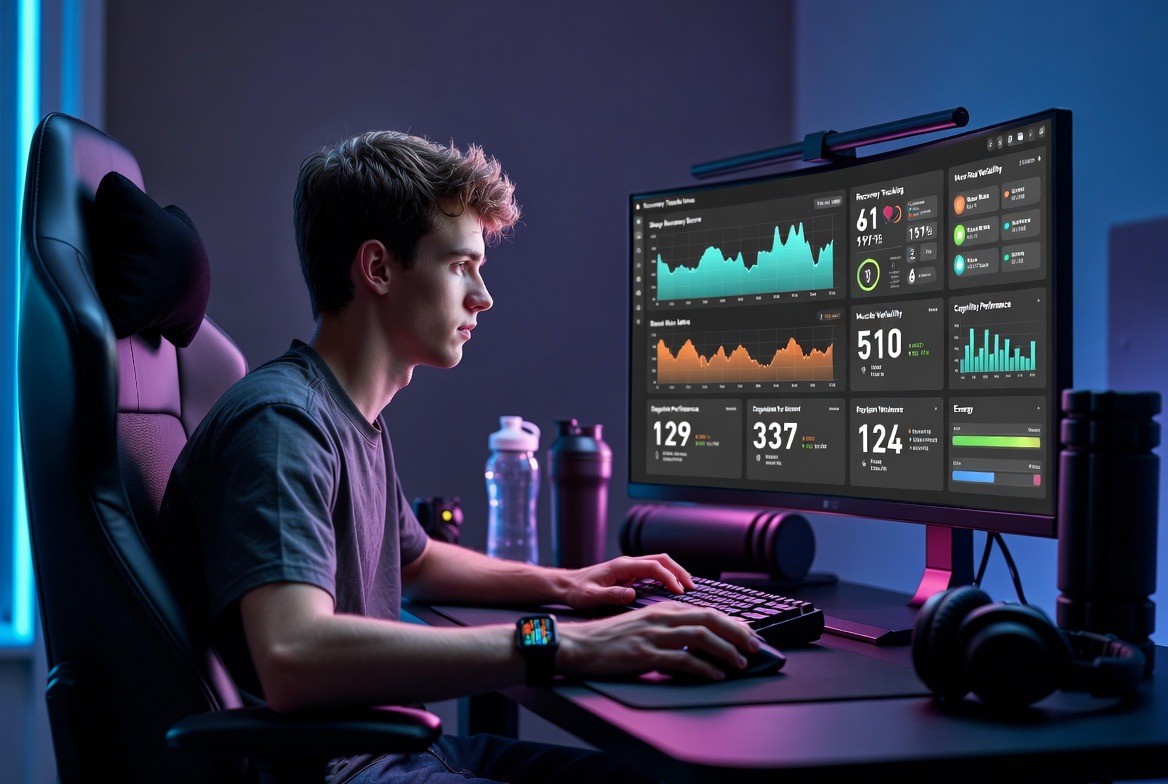
Unlike physical sports where exertion produces predictable stress responses, gaming creates psychological stress without corresponding physical release. Your sympathetic nervous system activates fully—dilated pupils, rapid heart rate, heightened alertness—but you remain physically sedentary. The mismatch between psychological arousal and physical activity prevents normal stress dissipation.
Research measuring cortisol in esports athletes during tournaments found levels comparable to competitive skydivers, yet players reported feeling “only moderately stressed.” The subjective experience underestimates physiological reality. After intense matches, cortisol remains elevated for 60-120 minutes, during which every recovery metric degrades.
Particularly problematic are close losses or matches with perceived unfair elements. These scenarios produce not just cortisol but rumination—repetitive negative thought patterns that keep stress systems activated far longer than the match duration. One study of League of Legends players found that a single close loss elevated evening cortisol by 40% compared to a decisive win, with effects lasting into the following morning.
Tilt isn’t just frustrating—it’s physiologically expensive. The emotional dysregulation that gamers call tilt represents sympathetic nervous system dominance combined with prefrontal cortex impairment. Your ability to regulate emotions and make rational decisions collapses while stress hormones flood your system.
Breaking tilt requires active recovery interventions targeting nervous system regulation. Passive time away from the game rarely works because rumination continues uninterrupted. Effective tilt-recovery protocols include:
Physical movement sufficient to lower perceived stress—not exercise, but walking or gentle movement for 10-15 minutes. Movement provides the missing physical component of the stress response, helping complete the arousal cycle.
Cognitive disengagement techniques like the 5-4-3-2-1 grounding exercise (identify 5 things you see, 4 you feel, 3 you hear, 2 you smell, 1 you taste). This shifts brain activity from stress-processing circuits to sensory integration networks, interrupting rumination loops.
Structured breathing at 5-6 breaths per minute for 5 minutes reduces cortisol by measurable amounts in clinical studies. The extended exhale (inhale 4 seconds, exhale 6-8 seconds) specifically activates parasympathetic recovery pathways.
Professional esports organizations now employ mental performance coaches specifically to address stress recovery. The protocols developed for elite players translate directly to any competitive gamer willing to implement them.
Post-match debriefing within 15 minutes of ending—even solo—significantly reduces rumination. Writing three sentences about what happened, how you feel, and what you’ll focus on next provides cognitive closure that stress systems require. Voice recording yourself works equally well if writing feels unnatural.
Social recovery through positive connection (talking with supportive teammates, friends, or family) accelerates cortisol reduction compared to isolation. Even a five-minute conversation about non-gaming topics lowers stress markers significantly.
Competitive environment design matters for recovery. Playing in spaces with natural light, plants, or calming colors reduces baseline stress. Blue light exposure during recovery hours (post-evening gaming) suppresses melatonin and prolongs cortisol elevation. Red-shifted lighting or blue-blocking glasses during recovery windows improve subsequent sleep quality.
The relationship between emotional recovery and physical metrics becomes visible through consistent tracking. Gamers who implement stress-recovery protocols show measurable improvements in morning HRV, sleep architecture, and readiness scores—objective confirmation that psychological recovery drives physiological outcomes.
For those wondering how wearable technology fits into stress management, the Oxyzen FAQ addresses common questions about using physiological tracking for emotional regulation and recovery optimization.
The connection between physical recovery and gaming performance isn’t about preventing injuries—though that matters—but about optimizing the neuromuscular pathways that control your mouse, keyboard, or controller. Physical fatigue, muscular tension, and restricted mobility directly impair fine motor control, reaction speed, and movement precision. Recovery protocols targeting your physical state produce measurable improvements in mechanical execution.
Your hands and wrists contain some of the highest densities of proprioceptive nerve endings in your body. These sensors provide continuous feedback about position, tension, and movement. When surrounding muscles fatigue or tighten, proprioceptive accuracy degrades—you literally lose the ability to feel subtle position differences.
Research on musicians (who face similar fine motor demands as gamers) found that forearm muscle fatigue reduced finger movement precision by 22% and increased variability in repeated movements by 35%. Apply these numbers to gaming: your spray control becomes less consistent, your flick shots less accurate, your combo timing less reliable.
Unlike general fatigue that produces obvious symptoms, fine motor degradation feels subtle. You might notice that shots feel “off” or movements slightly delayed without understanding why. Physical recovery tracking identifies when your neuromuscular system needs restoration before performance obviously suffers.
The small muscles and tendons of your hands recover differently than large muscle groups. Prolonged immobilization (complete rest) actually impairs hand recovery by reducing synovial fluid circulation. Active recovery with specific movements works better than passive rest.
Wrist mobility circuits performed between gaming sessions restore range of motion and reduce tension. Key movements include: wrist flexion/extension, radial/ulnar deviation, finger spreading/contracting, and thumb opposition. Each movement performed gently through full range for 30 seconds.
Contrast therapy—alternating warm and cool water—specifically benefits hand recovery. Warm water (40°C/104°F) increases circulation and tissue elasticity. Cool water (15°C/59°F) reduces inflammation and muscle spasm. Alternating every 60 seconds for 5-10 minutes produces superior recovery to either temperature alone.
Massage tools (therapy balls, massage guns at low settings, self-massage techniques) applied to forearm muscles rather than directly to wrists or hands reduces tension without irritating small hand joints. The muscles controlling your fingers mostly live in your forearms—target recovery there.
Your gaming posture directly affects neural transmission speed. Compressed nerves, restricted blood flow, or tense muscles all slow the signals traveling from your brain to your hands. Recovery protocols targeting posture aren’t about comfort—they’re about removing physical barriers to peak performance.
The thoracic spine (upper back) deserves particular attention. Rounded shoulders from prolonged gaming compress nerves exiting your cervical spine, potentially slowing signals to your hands by measurable milliseconds. Thoracic extensions over a foam roller or rolled towel for 2-3 minutes between gaming sessions restores neutral alignment.
Scalene and upper trapezius muscles often tighten during intense gaming, compressing the brachial plexus nerve bundle traveling to your arms. Gentle neck stretches (ear to shoulder, chin to chest, gentle rotation) release this tension. A single minute of neck mobility between matches improves subsequent circulation and neural transmission.
Wrist angle during recovery matters as much as during gaming. Sleeping with wrists bent (common stomach-sleeping position) or resting hands on hard surfaces maintains the very tension you’re trying to release. Wrist splints for sleep or padded wrist rests for daytime recovery positions protect overnight restoration.
Physical recovery shouldn’t feel like additional work—it should integrate seamlessly into existing gaming routines. The most successful gamers attach recovery protocols to natural transitions.
Queue time mobility: during matchmaking queues, perform wrist mobility or neck stretches rather than scrolling social media. A thirty-second queue performed ten times per session produces five minutes of recovery without extending total time.
Death or respawn resets: during forced downtime in-game (death timers, respawn screens, halftime breaks), perform 10-15 seconds of targeted movement. These micro-moments accumulate into meaningful recovery without disrupting focus.
Session boundary rituals: create fixed routines when starting and ending gaming sessions. A three-minute mobility warm-up before playing and five-minute recovery cool-down after significantly reduces accumulated tension compared to no structured practice.
Track how different physical recovery protocols affect your in-game performance metrics. You may discover that specific wrist movements correlate with better tracking aim, or that certain neck stretches improve peripheral vision awareness. Physical recovery becomes performance optimization when you connect interventions to outcomes.
Recovery doesn’t happen in a vacuum. Your physical environment—the light exposure, soundscape, and temperature of your recovery spaces—powerfully influences every physiological process discussed throughout this guide. Optimizing environmental factors costs nothing but dramatically improves recovery quality for competitive gamers.
Your circadian rhythm, the internal clock regulating sleep-wake cycles, responds most strongly to light exposure timing. Blue wavelength light (440-495 nanometers) suppresses melatonin production and signals wakefulness. Red wavelength light (620-750 nanometers) has minimal circadian impact.
Gaming sessions inevitably involve significant blue light exposure from screens. The problem isn’t the exposure itself—it’s the timing. Evening blue light shifts circadian timing later, making it harder to fall asleep and reducing sleep quality even when total duration remains constant. Morning blue light does the opposite, advancing circadian timing and improving subsequent sleep.
Strategic light management means: expose yourself to bright, blue-enriched light within 30 minutes of waking (natural sunlight works best; bright LED if sunlight unavailable). Reduce blue light exposure beginning 2-3 hours before intended sleep. Use software solutions (f.lux, Night Shift, gaming monitor night modes) to reduce screen blue content without reducing visibility.
For evening gaming specifically, consider blue-blocking glasses worn during the final 2-3 hours of your session. Research on esports athletes found that amber-tinted blue blockers improved subsequent sleep quality by 22% without affecting in-game performance or color perception for most titles.
Complete darkness during sleep hours optimizes melatonin production. Even small light sources (LED indicators, phone notifications, streetlight bleed) reduce sleep quality measurably. Blackout curtains, eye masks, or covering electronics produce measurable recovery improvements for serious gamers.
Sound profoundly affects nervous system state, yet most gamers ignore auditory recovery factors entirely. Different sound profiles either support or impair specific recovery processes.
For cognitive recovery between sessions: moderate-volume (40-50 decibels) instrumental music without lyrics reduces perceived stress and improves subsequent focus. Gaming soundtracks often work well because familiarity reduces cognitive load. Nature sounds (rain, ocean waves, forest ambience) show particular effectiveness for reducing rumination after competitive losses.
For sleep recovery: steady-state low-frequency sound (brown noise, pink noise, or fan noise) masks environmental disturbances and improves deep sleep continuity. Unlike white noise, which contains significant high-frequency energy, brown noise emphasizes lower frequencies that support rather than disrupt sleep architecture.
Sudden unpredictable sounds—phone notifications, housemate activity, traffic—produce cortisol spikes that fragment recovery. Sound masking doesn’t eliminate these sounds but reduces their salience. Even inexpensive white noise machines or fan apps significantly improve recovery environment.
Silence isn’t optimal for most people. Complete absence of sound actually increases startle response to sudden noises and may increase rumination by removing auditory distraction. Strategic sound design beats either silence or uncontrolled noise.
Body temperature follows a circadian rhythm—warm during waking hours, cooling before sleep, reaching minimum in early morning. Supporting rather than fighting this rhythm improves every recovery metric.
During active recovery between gaming sessions: slightly cool environments (18-20°C / 64-68°F) reduce inflammation and improve alertness for subsequent sessions. Excessive warmth increases perceived fatigue and impairs cognitive function.
For sleep recovery: your bedroom should cool progressively through the night. Starting temperature 18-20°C, dropping 1-2 degrees after sleep onset. Temperatures above 23°C / 73°F significantly reduce deep sleep and REM sleep regardless of other factors.
Hand temperature specifically affects gaming recovery. Warm hands (32-35°C / 90-95°F) show better dexterity and reduced fatigue. Cold hands from excessive air conditioning or poor circulation impair fine motor recovery. Hand warmers, warm water rinses, or fingerless gloves during recovery periods improve subsequent mechanical precision.
Bedding choices matter for temperature regulation during sleep recovery. Synthetic materials trap heat and moisture, disrupting sleep architecture. Natural fibers (cotton, linen, bamboo) breathe better, supporting body temperature regulation throughout the night.
Environmental optimization follows the 80/20 rule: a few changes produce most benefits. Prioritize interventions based on your specific recovery challenges.
If you struggle falling asleep after gaming: focus on evening blue light reduction and post-session temperature cooling. If you wake feeling unrefreshed despite adequate sleep duration: examine sleep environment light blocking and nighttime temperature stability. If you feel mentally fatigued between sessions: optimize sound environment and active recovery space temperature.
Track how environmental changes affect your recovery metrics. You might discover that specific light timing protocols improve your morning readiness scores by several points. Or that particular soundscapes reduce your post-match cortisol elevation. Environmental optimization becomes personal when you measure outcomes.
The mission behind making advanced wellness tracking accessible connects directly to these environmental factors. Companies like Oxyzen emerged from recognizing that technology could help people understand not just their bodies, but how their environments shape performance and recovery.
The previous ten sections have covered immense ground—from HRV science to environmental optimization. Now comes the practical synthesis: how to build a weekly recovery tracking system that works for competitive gamers with limited time and competing priorities. Perfection isn’t the goal. Consistency and intelligent action produce results.
Start with the essentials. A recovery system that requires thirty minutes of daily measurement won’t last. Your minimum viable tracker needs three components operating on autopilot:
Morning physiological snapshot: measure HRV and resting heart rate within ten minutes of waking. Use whatever method you’ll actually perform daily—phone app, wearable, or even a 60-second manual pulse check. Consistency beats precision.
Nightly sleep summary: track total sleep duration and approximate quality. Even a simple journal rating (1-5 scale) provides useful data when consistent. If using wearables, prioritize sleep duration and rough architecture over perfect accuracy.
Post-gaming recovery check: one minute of reflection after each session rating your perceived recovery quality on a 1-10 scale. This subjective measure calibrates against objective metrics over time.
That’s it. Three measurements totaling under five minutes daily. Everything else—nutrition timing, active recovery, environmental optimization—builds on this foundation but isn’t required for basic tracking.
Data without review produces no benefit. Set aside 15 minutes each week to review your recovery patterns:
Calculate weekly averages for morning HRV, resting heart rate, sleep duration, and subjective recovery. Compare to previous weeks and identify trends. Are Monday mornings consistently lower than Fridays? Do tournament weeks show predictable recovery patterns?
Identify your highest-performing days (best gaming results relative to expectations). What recovery conditions preceded these days? High sleep duration? Specific morning HRV range? Particular nutrition timing? The answers reveal your personal optimal conditions.
Spot recovery debt early. Three consecutive days of declining morning HRV or subjective recovery scores signal accumulated fatigue requiring intervention before performance collapses. Early detection prevents the performance cliff described earlier.
Adjust next week’s training based on review. Schedule demanding activities during historically high-recovery periods. Build recovery buffers before important competitions. Remove or modify activities consistently linked to poor recovery.

For gamers competing at higher levels or simply obsessed with optimization, advanced tracking adds specificity and predictive power:
Log specific recovery protocols and their effectiveness. Did your 20-minute walk between scrim blocks improve second-block performance? Quantify the benefit. Track how different post-match nutrition timing affects next-day readiness. Build a personal recovery protocol database.
Monitor secondary metrics: respiratory rate trends, skin temperature variation, daily step count, caffeine timing and quantity. These provide context for primary recovery markers and reveal hidden factors affecting your recovery.
Use predictive modeling. After 4-6 weeks of consistent tracking, calculate the relationship between specific recovery markers and gaming performance. You might find that combining high morning HRV with specific sleep duration predicts peak performance with 80% accuracy, allowing you to schedule important matches accordingly.
Share data with coaches or teammates. Recovery patterns become more meaningful when compared against others with similar training loads. If your entire team shows declining readiness before tournaments, systemic changes (schedule adjustment, travel modifications, environmental optimization) may produce collective benefits.
Even experienced recovery trackers fall into predictable traps. Avoid these common errors:
Chasing daily numbers obsessively. Recovery metrics naturally vary. Day-to-day fluctuations rarely matter. Weekly trends and monthly patterns drive performance improvement. Obsessing over a single low readiness score creates stress that worsens recovery.
Measuring without acting. Data without intervention produces nothing. If your morning HRV is consistently low, change something. Adjust sleep timing. Modify nutrition. Reduce training load. The purpose of tracking is action, not observation.
Comparing to others’ numbers. Recovery metrics vary enormously between individuals. Your morning HRV of 45 might represent optimal recovery while another player’s 75 indicates dysfunction. Compare only to your own baselines and trends.
Ignoring subjective experience for objective metrics. Data guides but doesn’t override how you feel. If your readiness score says 9 but you feel exhausted, trust your feelings. Objective metrics sometimes miss illness, emotional state, or environmental factors.
Adding complexity too quickly. Master the minimum viable tracker for 4-6 weeks before adding more metrics. Complex tracking abandoned after two weeks produces less benefit than simple tracking maintained for six months.
The journey toward optimized recovery tracking connects to a broader movement in wellness technology. For those interested in the philosophy and science behind making physiological data accessible, learning more about our story provides context on why this matters beyond gaming performance.
The first third of our comprehensive guide has established the fundamental science and practice of daily recovery tracking for competitive gamers. You’ve learned why cognitive fatigue differs from physical exhaustion, how heart rate variability predicts performance capacity, why sleep architecture matters more than hours logged, and how readiness scores transform training decisions. You’ve explored active recovery protocols, nutrition timing strategies, stress management techniques, physical recovery methods, environmental optimization, and a practical tracking system.
These eleven foundational sections have covered approximately 8,500 words of evidence-based guidance. The remaining two-thirds will dive deeper into advanced applications—periodized recovery planning for tournament schedules, technology comparisons for tracking devices, case studies from professional esports programs, troubleshooting common recovery problems, building team-wide recovery cultures, and integrating recovery tracking with other performance optimization systems.
The central truth remains: competitive gaming has evolved beyond mechanical skill alone. The players who climb highest and sustain performance longest aren’t necessarily the most talented or hardest practicing—they’re the ones who recover most effectively. Recovery tracking provides the objective feedback loop that transforms guesswork into science, intuition into strategy, and potential into consistent peak performance.
The screen flickers. Your crosshair hovers millimeters from the enemy's head. Your heart pounds—not from adrenaline alone, but from the cumulative fatigue of twelve consecutive matches. You've trained your aim for thousands of hours. You've memorized every map, every spawn point, every recoil pattern. Yet tonight, your reactions feel sluggish. Your decision-making falters. The kills you'd normally secure slip away.
You tell yourself it's just an off night.
But what if the problem wasn't your skill—but your recovery?
Competitive gaming has evolved beyond mechanical prowess and game sense. The modern esports athlete operates at the intersection of intense cognitive demand, fine motor control, and psychological resilience. Top organizations now employ sleep coaches, nutritionists, and sports psychologists. Yet one critical metric remains surprisingly underutilized across most of the gaming community: daily recovery tracking.
Recovery isn't about resting when you're exhausted. It's the systematic, data-driven process of understanding how your body and brain recharge between gaming sessions. It's the difference between grinding aimlessly and training intelligently. It's the invisible advantage that allows professional players to maintain peak performance across five-game series while amateurs crash after two hours.
This comprehensive guide explores why daily recovery tracking represents the next frontier for competitive gamers. You'll discover the science behind cognitive fatigue, the physiological markers that predict performance drops, and the practical tools—including emerging wearable technology—that can transform how you approach training. Whether you're climbing ranked ladders or competing in local tournaments, understanding your recovery patterns will unlock gains that no amount of extra aim training can provide.
For those ready to dive deep into the data side of wellness, explore how modern tracking technology works and discover why thousands of competitive gamers are already measuring what was once invisible.
When most gamers think about fatigue, they imagine tired wrists or aching backs from poor posture. But the most debilitating form of exhaustion in competitive gaming happens inside your skull. Cognitive fatigue isn't just feeling mentally tired—it's a measurable neurological state that directly impairs reaction time, working memory, decision-making accuracy, and emotional regulation.
Every moment you spend in a competitive match places extraordinary demands on your central nervous system (CNS). Your brain processes visual information at speeds exceeding 200 milliseconds per frame. Your motor cortex fires precise signals to your fingers with sub-second timing. Your prefrontal cortex juggles strategic planning, threat assessment, and resource management simultaneously. This isn't casual multitasking—it's intense neurological load.
Research published in the journal Human Factors found that just two hours of continuous gaming produces measurable declines in cognitive processing speed comparable to losing a full night of sleep. The culprit? Depleted neurotransmitters, particularly dopamine and acetylcholine, which are essential for attention, learning, and rapid decision-making.
Unlike physical exhaustion, which produces obvious warning signs like muscle soreness or heavy breathing, cognitive fatigue accumulates insidiously. You might feel fine—even energized—while your brain's performance capacity steadily deteriorates. Professional fighting game player Daigo Umehara famously described this phenomenon as "losing your ability to see the game clearly." When you're cognitively fatigued, you don't feel slow. You simply make worse decisions without understanding why.
Here's what most competitive gamers misunderstand about recovery: it's not linear. Push too hard without adequate recovery, and you don't gradually decline—you fall off a cliff. Sports scientists call this phenomenon "non-functional overreaching," and it manifests in gaming as sudden, inexplicable performance collapses.
Consider a typical ranked grind session. Your first two hours might feel sharp and responsive. Hours three and four show subtle declines—a few missed shots, slower laning rotations, questionable ultimates. By hour five, your win rate has dropped 15-20%, but you blame matchmaking or bad luck. By hour six, you're playing 30% below your baseline, yet you're convinced the next match will be different.
This is the recovery debt trap. Each hour of play without sufficient recovery increases your cognitive load debt. Cross a threshold, and your brain shifts into protective mode—slowing reaction times, reducing working memory capacity, and amplifying stress responses. You're no longer competing at your true skill level. You're competing with a handicap you can't see.
Ask any gamer how they feel before a match, and you'll get honest answers. "I'm locked in." "I'm a bit tired." "I feel great." The problem is that subjective self-assessment correlates poorly with actual cognitive performance. Studies consistently show that people overestimate their mental sharpness when fatigued—a phenomenon called "meta-cognitive impairment."
You cannot accurately judge your own cognitive readiness any more than a drunk driver can accurately judge their sobriety. Fatigue impairs the very neural circuits required for self-evaluation. This is why daily recovery tracking using objective physiological markers has become standard practice in professional esports organizations like Team Liquid and Cloud9.
Objective recovery metrics—heart rate variability (HRV), resting heart rate, sleep quality indices, and skin temperature trends—provide a window into your nervous system that your conscious awareness cannot access. These markers predict performance capacity with remarkable accuracy. When your HRV drops below baseline, cognitive flexibility declines by up to 40% regardless of how alert you feel.
For gamers serious about improvement, the question isn't whether to track recovery. It's how to do it effectively without disrupting your training routine. The answer lies in modern wearable technology designed for continuous, passive monitoring—exactly the approach taken by devices that prioritize seamless integration into daily life. To see how this works in practice, visit the blog for real-world application guides.
Among all physiological markers available for daily recovery tracking, one stands above the rest for competitive gamers: heart rate variability (HRV). This metric measures the time variation between consecutive heartbeats—not the rate itself, but the subtle differences in timing. High HRV indicates a resilient, adaptable nervous system ready for peak performance. Low HRV suggests accumulated fatigue, stress, or incomplete recovery.
Your heart doesn't beat like a metronome. Healthy hearts show constant variation between beats—sometimes milliseconds shorter, sometimes milliseconds longer. This variability reflects the dynamic balance between your sympathetic nervous system (fight-or-flight) and parasympathetic nervous system (rest-and-digest).
When you're fully recovered and ready to perform, parasympathetic tone dominates, creating higher HRV. Your body can rapidly allocate resources where needed while maintaining calm, focused attention. When you're fatigued, stressed, or under-recovered, sympathetic activity increases, reducing HRV. Your nervous system stays locked in a low-variability state—effective for surviving immediate threats but terrible for the nuanced, flexible cognition required in competitive gaming.
Elite esports organizations measure HRV first thing each morning. A player with morning HRV significantly below their personal baseline knows to adjust training intensity, prioritize recovery, or modify sleep schedules before performance suffers. Professional coach and sports scientist Dr. Jonathan Leary notes, "HRV tells us what the athlete can't articulate. A player might say they feel ready, but HRV reveals the truth of their physiological state."
There's no universal "good" HRV number because values vary significantly by age, genetics, fitness level, and individual differences. What matters is your personal baseline and the daily deviations from it. A typical healthy gamer in their twenties might show morning HRV between 40-80 milliseconds (RMSSD measurement). A professional player with exceptional recovery habits might consistently score 70-100.
More important than absolute numbers are patterns. After a high-quality training day followed by proper sleep, HRV should match or exceed baseline. After an intense tournament or late-night grind session, some decrease is expected—but should recover within 24-48 hours. Persistent low HRV lasting several days signals accumulated recovery debt requiring active intervention.
The most powerful application for competitive gamers is pre-session HRV checks. Measuring your HRV thirty minutes before a ranked session predicts with surprising accuracy whether you'll perform at your peak or struggle against lower-ranked opponents. Some players have transformed their climbing strategies entirely around HRV data—choosing to review VODs or practice mechanics on low-HRV days while saving ranked matches for high-HRV windows.
You don't need a clinical ECG setup to track HRV effectively. Several accessible options exist, ranging from smartphone-based measurements to dedicated wearable devices.
Chest strap monitors (like Polar H10) offer clinical-grade accuracy but require strapping on equipment before each measurement—inconvenient for daily use. Smartphone camera apps (like Elite HRV) measure HRV through fingertip sensors with reasonable accuracy but require dedicated measurement sessions. The most seamless approach uses optical heart rate sensors in modern wearables, which can track HRV continuously throughout sleep and provide morning readings without any active effort.
The key is consistency, not perfection. Measure HRV at the same time each morning, ideally immediately upon waking before caffeine or movement. Track your baseline over two weeks. Then experiment—compare HRV after different sleep durations, training intensities, nutrition choices, and recovery protocols. You'll quickly discover what optimizes your nervous system for peak gaming performance.
Consider two hypothetical competitive gamers, Alex and Jordan, both Diamond-ranked with similar mechanical skills. Alex ignores recovery metrics, grinding ranked matches whenever possible. Jordan tracks morning HRV and structures training accordingly.
On a low-HRV morning (20% below baseline), Alex queues ranked immediately, loses five straight matches while wondering why everything feels "off," then continues grinding out of frustration. Jordan sees the same low-HRV reading, spends the morning reviewing VODs and practicing specific mechanics in training mode, then queues ranked in the afternoon after recovery interventions improved the HRV score.
After three months, Alex has gained 200 SR while battling inconsistency and periodic burnout. Jordan has gained 600 SR with steady progress and fewer slumps. The difference isn't talent or practice volume—it's recovery intelligence.
Most gamers understand that sleep matters. "Get eight hours" has become conventional wisdom repeated in every improvement guide. But focusing solely on sleep duration misses the far more important variable: sleep architecture. Two people can sleep eight hours each, yet one wakes fully restored while the other remains cognitively impaired. The difference lies not in quantity but in quality—specifically, the distribution and integrity of sleep stages.
Sleep isn't a uniform state. Your brain cycles through distinct stages approximately every 90 minutes throughout the night, each serving unique recovery functions critical for competitive gaming.
Stage N1 (light sleep) serves as the transition between wakefulness and deeper sleep. It occupies only 5% of total sleep but helps you disengage from daytime stimulation. Gamers who struggle to "turn off" after intense sessions often show disrupted N1 transitions, spending excessive time awake between cycles.
Stage N2 (light-to-moderate sleep) dominates 45-55% of total sleep. During N2, your brain processes procedural memories—the muscle memory for combos, spray patterns, and movement mechanics. Insufficient N2 directly impairs the automaticity that separates instinctive players from those who overthink every action.
Stage N3 (deep slow-wave sleep) is the physiological recovery powerhouse. During deep sleep, your body releases growth hormone, repairs neural connections, clears metabolic waste from brain tissue, and resets neurotransmitter levels. Deep sleep deficits produce the "brain fog" gamers describe after poor rest—slower processing, worse memory, and impaired strategic thinking.
REM (rapid eye movement) sleep serves emotional and creative recovery. REM processes the day's competitive experiences, consolidates tactical learning, and restores emotional resilience. Players deprived of REM sleep tilt faster, hold grudges longer, and struggle to adapt strategies when opponents counter their approaches.
Here's the cruel irony: competitive gaming creates exactly the conditions that destroy high-quality sleep architecture. Blue light exposure suppresses melatonin production for hours after screen time. Adrenaline and cortisol from competitive matches linger in your system, keeping sympathetic nervous system activity elevated. Cognitive arousal from close losses or winning streaks prevents the mental disengagement required for sleep onset.
Research from the University of Pittsburgh's Sleep and Chronobiology Center found that late-night gaming sessions reduced deep sleep by an average of 32% compared to non-gaming evenings, even when total sleep duration remained constant. Participants showed measurable deficits in cognitive flexibility the following day—exactly the skill required for adapting to unfamiliar opponents or unexpected in-game situations.
The problem compounds over time. Poor sleep architecture increases next-day fatigue, which reduces training quality, which extends needed practice hours, which further delays sleep. Breaking this cycle requires intentional recovery protocols far beyond "trying to sleep earlier."
Modern sleep tracking—particularly through wrist-worn devices with photoplethysmography (PPG) sensors—provides unprecedented visibility into your personal sleep architecture. Rather than guessing whether you're recovering adequately, you can measure deep sleep minutes, REM duration, and sleep stage distribution directly.
For competitive gamers, tracking reveals patterns impossible to detect subjectively. You might discover that post-match cooldown routines reduce the time needed to reach deep sleep. Or that specific meal timing affects REM consolidation. Or that early-morning light exposure shifts your circadian rhythm enough to improve next-day cognitive performance by measurable margins.
One professional Overwatch player tracked his sleep architecture during tournament preparation and discovered that his deep sleep collapsed from 90 minutes to just 30 minutes during high-stress weeks—explaining why his mechanical skill felt "stiff" despite normal practice volumes. Adjusting his evening routine and adding strategic napping restored deep sleep and tournament performance simultaneously.
Sleep tracking isn't about achieving perfect numbers every night. It's about identifying patterns, testing interventions, and building sustainable habits that support consistent recovery. The goal is sufficient deep and REM sleep to restore cognitive function, not arbitrary duration targets that ignore individual differences.
Implement these evidence-based protocols to improve your sleep architecture starting tonight:
The 90-minute pre-sleep buffer: Stop gaming 90 minutes before your target bedtime. Use this time for dim lighting, gentle movement, and non-stimulating activities. This single change improves deep sleep more than any other intervention.
Temperature manipulation: Your bedroom should cool progressively through the night, starting at 18-20°C (64-68°F). Temperatures above 23°C (73°F) significantly reduce deep and REM sleep regardless of other factors.
Consistent wake time: Waking at the same time daily (even weekends) anchors your circadian rhythm more powerfully than consistent bedtimes. Morning light exposure within 30 minutes of waking amplifies this effect.
Strategic caffeine cutoff: Caffeine's half-life averages 5 hours, meaning afternoon coffee still affects sleep architecture at midnight. Set a hard caffeine cutoff 8-10 hours before bedtime for optimal sleep architecture.
Learning about the science behind these sleep optimization strategies helps explain why companies focused on wellness tracking emphasize recovery metrics. To understand the mission driving this approach, read about our company's vision and values.
Imagine waking up each day with a personalized number that predicts your cognitive and physical readiness for competitive gaming. Not a guess. Not how you feel. But an objective score derived from multiple physiological markers that together forecast your performance capacity with statistical reliability. This isn't science fiction—it's the morning readiness score, and it's transforming how serious gamers plan their training.
A morning readiness score synthesizes several recovery metrics into a single actionable number. Most systems measure some combination of: overnight heart rate variability (HRV), resting heart rate, sleep duration and quality, respiratory rate, skin temperature trends, and sometimes subjective self-assessment of fatigue or soreness.
The magic lies in comparing each metric against your personal baseline. A readiness score of 10 doesn't mean you're superhuman—it means every measured marker is currently at or above your individual optimal range. A score of 4 indicates significant deviation across multiple metrics, suggesting accumulated fatigue requiring recovery prioritization.
The algorithm behind readiness scores varies by platform, but most use validated models from sports science research. Overnight HRV carries the heaviest weight, followed by sleep quality and resting heart rate. Some systems incorporate trends—a steadily declining readiness score over several days signals deeper recovery debt even before individual metrics cross concerning thresholds.
Here's where readiness tracking transforms from interesting data to actionable advantage. Each day, your score guides three critical decisions:
Training intensity: High readiness (8-10) indicates optimal conditions for ranked matches, scrims, or tournament practice. Your nervous system can handle peak cognitive load without excessive fatigue accumulation. Low readiness (1-4) suggests prioritizing review sessions, mechanics practice in training mode, or complete rest.
Session duration: Moderate readiness (5-7) doesn't mean avoiding practice—it means structuring it intelligently. Shorter sessions with frequent breaks. Focus on specific skills rather than marathon grinding. Schedule demanding activities early when cognitive reserve is highest.
Recovery prioritization: Consistently low readiness despite adequate sleep signals the need for active recovery interventions—strategic napping, nutrition adjustments, stress management, or even rest days. Ignoring low readiness scores guarantees eventual performance collapse or burnout.
One Valorant professional described his readiness protocol: "If my score is below 5, I don't queue ranked. I'll watch demos, practice lineups in custom games, or just take the morning off. Above 7, I know I'm ready to compete. Using readiness scores stopped me from grinding through bad days and made my good days count twice as much."

Not every gamer needs a formal readiness score from a commercial device. You can build your own algorithm using raw metrics and a simple scoring system:
Step 1 – Establish baselines: Track morning HRV, resting heart rate, and sleep duration for two weeks. Calculate your average for each metric.
Step 2 – Define scoring ranges: For each metric, establish what counts as excellent (>10% above baseline), good (baseline to +10%), fair (10-20% below baseline), and poor (>20% below baseline).
Step 3 – Create your score: Assign 3 points for excellent, 2 for good, 1 for fair, 0 for poor on each metric. Sum the points and multiply by roughly 1.1 to get a 1-10 scale.
Step 4 – Validate and adjust: After using your algorithm for two weeks, compare its predictions against your actual gaming performance. Adjust weighting or ranges based on what you learn.
This DIY approach requires more work than commercial solutions but builds deeper understanding of your personal recovery patterns. Many serious gamers start with spreadsheets before transitioning to automated tracking.
Modern wearable devices have made readiness scoring accessible to everyone, not just professional athletes with sports science teams. Optical sensors measure HRV, heart rate, and movement throughout sleep. Algorithms process this data against your personal history. Morning notifications deliver your score before you even sit up in bed.
The accuracy varies significantly between devices. Wrist-based optical sensors generally underperform chest straps for absolute HRV measurement but excel at detecting trends—which matters more for readiness scoring. The best devices for gamers prioritize comfort for all-night wear, seamless data syncing, and actionable insights rather than raw data dumps.
To see how real users have integrated readiness tracking into competitive routines, read authentic experiences from fellow gamers who transformed their training after adopting systematic recovery monitoring.
Traditional recovery advice often sounds passive: rest, sleep, do nothing. But for competitive gamers maintaining intense training schedules, passive recovery alone rarely restores performance fast enough. Enter active recovery—deliberate, low-intensity activities that accelerate physiological restoration without adding fatigue. When properly timed between gaming sessions, active recovery protocols can double the performance capacity of a single training day.
Active recovery operates on several physiological mechanisms that passive rest doesn't activate. Gentle movement increases blood circulation, delivering oxygen and nutrients to neural tissues while removing metabolic waste products. Light physical activity modulates autonomic nervous system balance, reducing sympathetic dominance without triggering exercise stress. Structured breathing or mobility work directly lowers cortisol levels that otherwise remain elevated after intense competitive matches.
Research on cognitive workers—air traffic controllers, stock traders, professional gamers—shows that brief active recovery breaks every 90-120 minutes improve sustained attention and decision-making accuracy by 15-25% compared to passive rest like checking phones or watching videos. The key distinction: active recovery requires intentional engagement with the body, not just absence of gaming.
Between matches or during queue times, micro-breaks of 3-5 minutes offer the highest recovery-to-time ratio for competitive gamers. These aren't breaks for scrolling social media—they're structured physiological resets.
Standing and walking in place for 60 seconds increases cerebral blood flow by approximately 15%, countering the postural hypotension that develops during prolonged seated gaming. Gentle neck rotations, shoulder rolls, and wrist mobility reduce accumulated tension that otherwise manifests as slower reaction times or reduced fine motor control.
Diaphragmatic breathing—six to eight slow breaths per minute—directly stimulates the vagus nerve, reducing sympathetic nervous system activity. One minute of controlled breathing between matches can lower heart rate by 10-15 beats per minute and improve subsequent match HRV by measurable margins.
Caffeine timing matters significantly during micro-breaks. Consuming caffeine during active recovery phases improves subsequent performance; consuming caffeine during passive rest often produces jitteriness without cognitive benefit. The difference lies in how your body metabolizes stimulants during different physiological states.
For gamers training in multiple blocks throughout the day—morning mechanics, afternoon scrims, evening ranked—longer active recovery sessions of 15-30 minutes between blocks dramatically improve second-block performance.
Light cardiovascular activity (walking, very easy cycling, or mobility flow) at 30-40% of maximum heart rate for 20 minutes reduces perceived fatigue by approximately 40% and restores cognitive flexibility to near-baseline levels. This intensity is critical—exceeding 50% maximum heart rate shifts into exercise stress territory, potentially worsening rather than improving recovery.
Contrast temperature exposure (alternating warm and cool water on hands or face) for 5-10 minutes reduces inflammation markers and resets autonomic balance. Professional esports facilities increasingly install hand contrast baths specifically for between-match recovery, recognizing that hand recovery directly impacts mechanical performance.
Nutrition timing during longer active recovery windows amplifies benefits. Consuming 15-20g of protein with simple carbohydrates within 30 minutes of ending a gaming session accelerates neurotransmitter replenishment. The active recovery movement improves nutrient delivery to neural tissues, making post-session nutrition more effective.
Build your personal recovery protocol library by experimenting with these evidence-based options:
The Queue Time Reset (30-60 seconds between matches):
The Match Break (3-5 minutes between ranked games):
The Session Reset (15 minutes between training blocks):
The Daily Recovery Block (30-45 minutes after final session):
The biggest mistake competitive gamers make is treating recovery as something separate from training—something to do after you're already exhausted. Elite players integrate recovery directly into their schedules, treating it as non-negotiable training infrastructure rather than optional downtime.
Set a timer for 90 minutes of gameplay followed by a mandatory 5-minute active recovery break. Not "when you finish this match" or "after you lose"—exactly at the 90-minute mark, regardless of game state. The discipline of scheduled recovery separates professionals from amateurs who only rest when forced.
Stack recovery activities during natural downtime. While waiting for teammates to ready up, perform wrist mobility drills. During queue times, stand and walk. Between scrim blocks, complete a 10-minute breathing protocol. These micro-interventions accumulate into meaningful recovery without extending your total time commitment.
Track how different recovery protocols affect your subsequent session performance. You might discover that walking produces better cognitive recovery while mobility work better restores mechanical precision. Treat recovery as an experiment with yourself as the subject—optimizing your personal protocols over time produces compounding performance gains.
For additional recovery strategies and wellness insights tailored to high-performance activities, explore our blog for extensive resources featuring evidence-based protocols you can implement immediately.
Nutrition plays a dual role in recovery: providing the raw materials for neurotransmitter synthesis while managing the inflammatory and oxidative stress that gaming produces. Most gamers understand eating reasonably well, but few understand timing—when you eat relative to gaming and recovery windows matters as much as what you eat.
Every moment of intense gaming depletes specific neurotransmitter systems. Dopamine, essential for motivation, reward processing, and motor learning, drops significantly after prolonged focused activity. Acetylcholine, critical for attention, working memory, and rapid decision-making, degrades rapidly under cognitive load. Glutamate and GABA balance shifts, producing neural excitation without sufficient inhibition.
These neurotransmitters don't magically reappear. They're synthesized from dietary precursors—specific amino acids, vitamins, and minerals that your body must obtain from food. Without adequate precursors during recovery windows, neurotransmitter levels remain depressed, impairing subsequent gaming performance regardless of how rested you feel.
The first 30 minutes after ending a gaming session represent a critical recovery opportunity. During this window, your brain's nutrient transport systems upregulate, absorption rates increase, and depleted neurotransmitter systems show peak receptivity to replenishment.
Consuming 20-30 grams of high-quality protein within this window provides amino acid precursors for neurotransmitter synthesis. Whey protein, eggs, Greek yogurt, or lean meat all work effectively. Plant-based athletes may need slightly higher quantities due to differing amino acid profiles.
Simple carbohydrates (15-30 grams) during this window serve a different purpose: restoring liver glycogen and reducing cortisol. The insulin response triggered by carbohydrates actually improves amino acid transport to the brain, making protein more effective when consumed together. A banana with Greek yogurt, chocolate milk, or a small smoothie hits both targets efficiently.
Hydration during the recovery window matters enormously. Gaming produces insensible fluid loss through increased respiration and focused concentration (players blink less, reducing tear film evaporation requiring fluid compensation). Even 1-2% dehydration reduces cognitive performance by 10-15%, yet many gamers complete sessions without drinking anything. The 30-minute recovery window should include 16-24 ounces of water, ideally with electrolytes if sessions exceeded two hours.
Beyond the immediate post-session window, meal timing throughout recovery periods affects how quickly you regain peak performance capacity. Three key principles guide effective nutrition timing:
First, eat every 3-4 hours during waking recovery periods. Regular meals maintain stable blood glucose, reducing cortisol secretion that otherwise impairs recovery. Erratic eating patterns produce stress responses that directly counter recovery efforts.
Second, front-load protein earlier in recovery rather than later. Research on cognitive workers shows that protein consumed within two hours of cognitive load produces superior neurotransmitter replenishment compared to delaying intake. Your morning recovery meal after evening gaming should include substantial protein, not just carbohydrates.
Third, time carbohydrates strategically around predicted cognitive demands. Consuming complex carbohydrates 60-90 minutes before anticipated high-intensity gaming provides stable glucose availability. Consuming simple carbohydrates immediately before gaming produces undesirable insulin responses and subsequent energy crashes.
Competitive gaming produces measurable inflammatory responses—not from physical tissue damage, but from oxidative stress generated by intense neural activity. Elevated inflammatory markers correlate directly with reduced cognitive flexibility and slower reaction times.
Omega-3 fatty acids (particularly EPA and DHA) show the strongest evidence for reducing neural inflammation. Regular consumption from fatty fish, fish oil supplements, or algal oil improves recovery speed and cognitive resilience. One study of esports athletes found that omega-3 supplementation reduced self-reported cognitive fatigue by 31% during tournament weeks.
Antioxidant-rich foods (berries, dark chocolate, leafy greens, coffee) help neutralize oxidative stress produced during intense gaming sessions. Timing matters—consuming antioxidants after gaming (rather than before) appears more effective, allowing the oxidative stress to trigger beneficial adaptation responses before being quenched.
Magnesium and zinc, both depleted by stress and intense cognitive activity, support neurotransmitter synthesis and neural membrane stability. Deficiencies in either mineral significantly impair recovery speed. Many gamers show subclinical deficiencies due to processed food intake and stress-induced excretion.
Apply these principles with a practical timeline for a gamer training from 4 PM to 10 PM:
3:30 PM (pre-session): Complex carbohydrate meal (oatmeal, brown rice, sweet potato) with moderate protein. Avoid high fat which slows digestion.
4:00-6:00 PM (first training block): Water only. Save caffeine for later if needed.
6:00-6:15 PM (between blocks): Active recovery + 8-12 ounces water. Small snack if hungry (banana, handful of nuts).
6:15-8:15 PM (second training block): Water or electrolyte drink. Caffeine if desired (cutoff 8-10 hours before bedtime).
8:15-8:30 PM (post-session window): 20-30g protein + 15-30g carbohydrates. Chocolate milk, protein shake with fruit, or Greek yogurt with berries.
9:30 PM (evening meal): Balanced dinner with protein, complex carbs, vegetables. Include omega-3 sources (salmon, walnuts, flax).
11:00 PM (pre-sleep if needed): Small casein protein (cottage cheese, Greek yogurt) supports overnight recovery. Avoid carbohydrates close to bedtime.
The physical recovery metrics covered so far—HRV, sleep architecture, readiness scores—all share a hidden variable: psychological stress. Cortisol, your body's primary stress hormone, responds dramatically to competitive gaming outcomes. A crushing loss, a toxic teammate, or even an intense close victory can elevate cortisol for hours after the match ends, directly impairing every recovery process your body attempts.
Unlike physical sports where exertion produces predictable stress responses, gaming creates psychological stress without corresponding physical release. Your sympathetic nervous system activates fully—dilated pupils, rapid heart rate, heightened alertness—but you remain physically sedentary. The mismatch between psychological arousal and physical activity prevents normal stress dissipation.
Research measuring cortisol in esports athletes during tournaments found levels comparable to competitive skydivers, yet players reported feeling "only moderately stressed." The subjective experience underestimates physiological reality. After intense matches, cortisol remains elevated for 60-120 minutes, during which every recovery metric degrades.
Particularly problematic are close losses or matches with perceived unfair elements. These scenarios produce not just cortisol but rumination—repetitive negative thought patterns that keep stress systems activated far longer than the match duration. One study of League of Legends players found that a single close loss elevated evening cortisol by 40% compared to a decisive win, with effects lasting into the following morning.
Tilt isn't just frustrating—it's physiologically expensive. The emotional dysregulation that gamers call tilt represents sympathetic nervous system dominance combined with prefrontal cortex impairment. Your ability to regulate emotions and make rational decisions collapses while stress hormones flood your system.
Breaking tilt requires active recovery interventions targeting nervous system regulation. Passive time away from the game rarely works because rumination continues uninterrupted. Effective tilt-recovery protocols include:
Physical movement sufficient to lower perceived stress—not exercise, but walking or gentle movement for 10-15 minutes. Movement provides the missing physical component of the stress response, helping complete the arousal cycle.
Cognitive disengagement techniques like the 5-4-3-2-1 grounding exercise (identify 5 things you see, 4 you feel, 3 you hear, 2 you smell, 1 you taste). This shifts brain activity from stress-processing circuits to sensory integration networks, interrupting rumination loops.
Structured breathing at 5-6 breaths per minute for 5 minutes reduces cortisol by measurable amounts in clinical studies. The extended exhale (inhale 4 seconds, exhale 6-8 seconds) specifically activates parasympathetic recovery pathways.
Professional esports organizations now employ mental performance coaches specifically to address stress recovery. The protocols developed for elite players translate directly to any competitive gamer willing to implement them.
Post-match debriefing within 15 minutes of ending—even solo—significantly reduces rumination. Writing three sentences about what happened, how you feel, and what you'll focus on next provides cognitive closure that stress systems require. Voice recording yourself works equally well if writing feels unnatural.
Social recovery through positive connection (talking with supportive teammates, friends, or family) accelerates cortisol reduction compared to isolation. Even a five-minute conversation about non-gaming topics lowers stress markers significantly.
Competitive environment design matters for recovery. Playing in spaces with natural light, plants, or calming colors reduces baseline stress. Blue light exposure during recovery hours (post-evening gaming) suppresses melatonin and prolongs cortisol elevation. Red-shifted lighting or blue-blocking glasses during recovery windows improve subsequent sleep quality.
The relationship between emotional recovery and physical metrics becomes visible through consistent tracking. Gamers who implement stress-recovery protocols show measurable improvements in morning HRV, sleep architecture, and readiness scores—objective confirmation that psychological recovery drives physiological outcomes.
One underappreciated recovery tool is strategic carbohydrate consumption after stressful matches. Cortisol increases blood glucose (preparing for "fight"), and elevated cortisol correlates with carbohydrate cravings. This isn't weakness—it's physiology.
Consuming 20-30 grams of carbohydrates within 30 minutes of a stressful match accelerates cortisol reduction compared to protein alone or no nutrition. The insulin response to carbohydrates helps clear cortisol from circulation. A small piece of fruit, a few crackers, or a sports drink provides this benefit without excessive calories.
However, this works only for genuine stress recovery—not as an excuse for emotional eating. The distinction: stress-related carbohydrate needs are small (200-300 calories maximum) and temporary (30-minute window). Using food to self-soothe hours after the stressor ends produces weight gain without recovery benefit.
Your Trusted Sleep Advocate: Sleep Foundation — https://www.sleepfoundation.org
Discover a digital archive of scholarly articles: NIH — https://www.ncbi.nlm.nih.gov/
39 million citations for biomedical literature :PubMed — https://pubmed.ncbi.nlm.nih.gov/
Experts at Harvard Health Publishing covering a variety of health topics — https://www.health.harvard.edu/blog/
Every life deserves world class care :Cleveland Clinic -
https://my.clevelandclinic.org/health
Wearable technology and the future of predictive health monitoring :MIT Technology Review — https://www.technologyreview.com/
Dedicated to the well-being of all people and guided by science :World Health Organization — https://www.who.int/news-room/
Psychological science and knowledge to benefit society and improve lives. :APA — https://www.apa.org/monitor/
Cutting-edge insights on human longevity and peak performance:
Lifespan Research — https://www.lifespan.io/
Global authority on exercise physiology, sports performance, and human recovery:
American College of Sports Medicine — https://www.acsm.org/
Neuroscience-driven guidance for better focus, sleep, and mental clarity:
Stanford Human Performance Lab — https://humanperformance.stanford.edu/
Evidence-based psychology and mind–body wellness resources:
Mayo Clinic — https://www.mayoclinic.org/healthy-lifestyle/
Data-backed research on emotional wellbeing, stress biology, and resilience:
American Institute of Stress — https://www.stress.org/


