


Daily Stress and Sleep: Breaking the Vicious Cycle Tonight
Stress and poor sleep create a vicious cycle; breaking it requires managing stress to sleep better, and using good sleep to build stress resilience.
Stress and poor sleep create a vicious cycle; breaking it requires managing stress to sleep better, and using good sleep to build stress resilience.
%402x.svg)
Do you ever feel trapped in a relentless loop, where the anxieties of your day follow you into the night, sabotaging your rest, only to leave you exhausted and even more vulnerable to tomorrow’s stress? You’re not imagining it. The connection between daily stress and poor sleep isn’t just a frustrating correlation; it’s a tightly woven, self-perpetuating vicious cycle. It’s the reason you lie awake replaying a work conversation, the cause of that 3:00 AM cortisol spike that jolts you awake, and the source of the groggy, irritable mornings that make everything feel harder.
But what if tonight could be different? What if you could understand the precise biological mechanisms locking you in this loop and, armed with that knowledge, deploy targeted, science-backed strategies to break free? The journey to reclaiming your nights and transforming your days begins not with a magic pill, but with insight. Modern technology, specifically advanced wellness wearables like the Oxyzen smart ring, now offers an unprecedented, personalized window into your unique stress-sleep patterns. This isn’t about adding more data to your life; it’s about gaining the clarity needed to make meaningful change.
This guide is your deep dive into breaking the cycle. We’ll move beyond generic “sleep hygiene” tips to explore the intricate dance between your nervous system, hormones, and brainwaves. We’ll uncover how daytime stress silently erodes nighttime restoration and how poor sleep, in turn, resets your stress threshold to zero. Finally, we’ll build a personalized, actionable blueprint—leveraging both ancient wisdom and cutting-edge technology—to help you engineer your first peaceful night and create a new, virtuous cycle of calm and deep recovery. Let’s begin unraveling the threads so you can start weaving a tapestry of true rest.
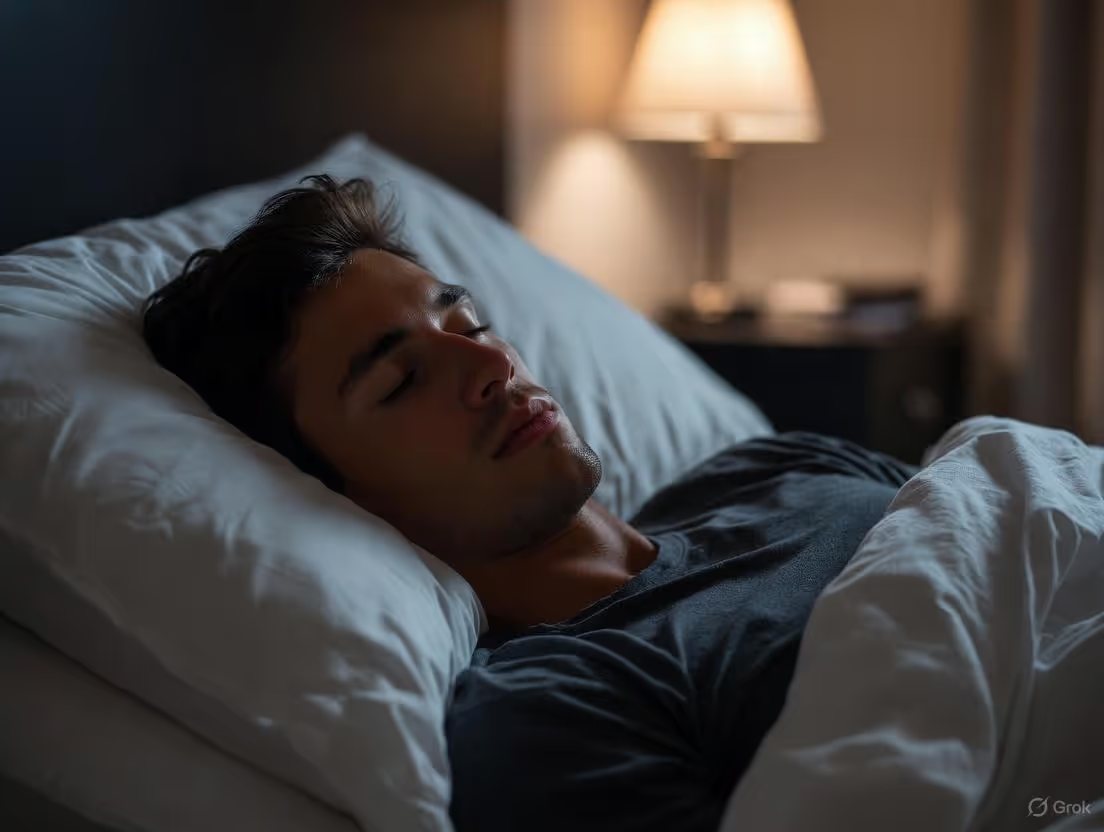
To break a cycle, you must first see its gears in motion. The stress-sleep connection is governed by a complex, bidirectional biological dialogue, primarily orchestrated by two key systems: the Hypothalamic-Pituitary-Adrenal (HPA) axis and the autonomic nervous system.
When you encounter a stressor—be it a looming deadline, a difficult conversation, or even relentless digital pings—your body doesn’t distinguish it from a physical threat. The HPA axis kicks into gear. Your hypothalamus signals your pituitary gland, which in turn instructs your adrenal glands to release cortisol, the primary “stress hormone.” Cortisol’s job is to mobilize energy: it increases your heart rate, elevates blood pressure, and sharpens your focus—all fantastic for escaping a predator, but problematic when the “predator” is your inbox.
Simultaneously, your autonomic nervous system shifts from its restorative parasympathetic state (often called “rest-and-digest”) into the reactive sympathetic state (“fight-or-flight”). This is an elegant, life-saving system—when it turns off. The crux of our modern sleep problem is that for many, it never fully disengages. Low-grade, persistent stress—known as allostatic load—keeps the HPA axis humming and the sympathetic nervous system subtly activated, even as you brush your teeth and climb into bed.
Here’s where the sabotage begins. For sleep to initiate, the body requires a drop in core body temperature and a significant decline in cortisol levels. The natural circadian rhythm dictates that cortisol should be high in the morning to help you wake and steadily decline throughout the day, reaching its lowest point around midnight. Chronic stress flattens this curve, leaving elevated cortisol circulating at night. This chemical signals to your brain that it’s still “go time,” directly opposing the sleep-inducing hormone melatonin. It’s like trying to fall asleep while someone is quietly blaring an alarm in your bloodstream.
Furthermore, this hyper-aroused state fragments sleep architecture. You might fall asleep, but you spend less time in the deep, restorative slow-wave sleep and rapid eye movement (REM) sleep, where critical functions like memory consolidation, emotional processing, and physical repair occur. Instead, you linger in lighter, less restorative stages, easily awakened by minor disturbances.
And the cycle completes its turn: a night of poor, fragmented sleep results in elevated cortisol the following afternoon and evening, priming you to be more reactive to stress and ensuring the next night’s sleep is also compromised. Research from the Sleep Medicine journal confirms that even partial sleep deprivation amplifies amygdala (the brain’s fear center) reactivity to negative stimuli by over 60%. You are, quite literally, neurologically set up to feel more stressed.
Understanding this internal feedback loop is the first, crucial step toward intervention. It moves the problem from a vague feeling of “tired and wired” to a identifiable biological process. With this map in hand, we can now explore the specific ways this cycle manifests in your daily life and, more importantly, how to chart a new course. As you’ll see, tools that provide objective data, like those developed by Oxyzen.ai, can turn this understanding from academic to personal, revealing your unique cortisol patterns and sleep stages.

We often frame poor sleep as a matter of fatigue and mood. While true, this drastically underestimates its systemic, insidious impact. When the stress-sleep cycle goes unchecked, it doesn’t just leave you yawning; it silently rewires your physiology, accelerating wear and tear on virtually every organ system. Think of it as a form of internal weather erosion, happening night after night.
Metabolic Mayhem: Sleep deprivation and stress are a perfect storm for metabolic dysfunction. Elevated nighttime cortisol promotes insulin resistance, encouraging your body to store fat, particularly visceral fat around the abdomen. It also dysregulates the hormones ghrelin and leptin, which control hunger and satiety. After a poor night’s sleep, ghrelin (the “hunger hormone”) spikes, while leptin (the “I’m full” hormone) plummets. This creates powerful cravings for high-calorie, high-carbohydrate foods—your brain’s desperate search for quick energy. Studies show this combination can mimic a pre-diabetic state, significantly increasing long-term risk for Type 2 diabetes.
Cardiovascular Strain: Every night of fractured sleep keeps your sympathetic nervous system engaged, meaning your heart rate and blood pressure don’t get the nocturnal dip they require (a phenomenon known as “non-dipping”). This constant tension on the cardiovascular system promotes inflammation, arterial stiffness, and hypertension. The American Heart Association now lists sleep duration as one of its eight essential metrics for heart health, placing it alongside diet and exercise.
Immune System Depletion: Deep sleep is prime time for your immune system. This is when the body produces and distributes key immune cells like cytokines, T-cells, and natural killer cells. Disrupt this phase, and you’re not just more likely to catch a cold; you undermine your body’s surveillance against pathogens and even abnormal cell growth. Chronic sleep disruption is linked to a state of persistent, low-grade inflammation, a known contributor to a host of chronic diseases, from arthritis to neurodegenerative conditions.
Cognitive Decline and “Brain Fog”: The glymphatic system, the brain’s unique waste-clearance system, is most active during deep sleep. It flushes out neurotoxic waste products that accumulate during the day, including beta-amyloid proteins, famously associated with Alzheimer’s disease. Poor sleep means a less effective clean-up, allowing metabolic debris to build up. This directly translates to the “brain fog” of the next day: impaired attention, slowed processing speed, and poor memory consolidation.
The terrifying elegance of this cycle is that these physical costs themselves become new sources of stress. Worrying about weight gain, feeling constantly run down, or struggling with focus adds new layers of anxiety, further fueling the HPA axis. It’s a cascade. Breaking the cycle, therefore, isn’t a luxury for better productivity; it’s a foundational pillar of long-term health preservation. Tracking nuanced health metrics can help you connect these dots, a benefit many users report when they review their long-term data on Oxyzen.ai.

Not all stress is created equal, and neither is its impact on sleep. The key to effective intervention is moving from a general understanding to a personal one—discovering your unique “Stress Signature.” This signature comprises your specific triggers, your body’s characteristic response patterns, and the timing of their fallout. It’s the difference between throwing generic solutions at a wall and using a precision key.
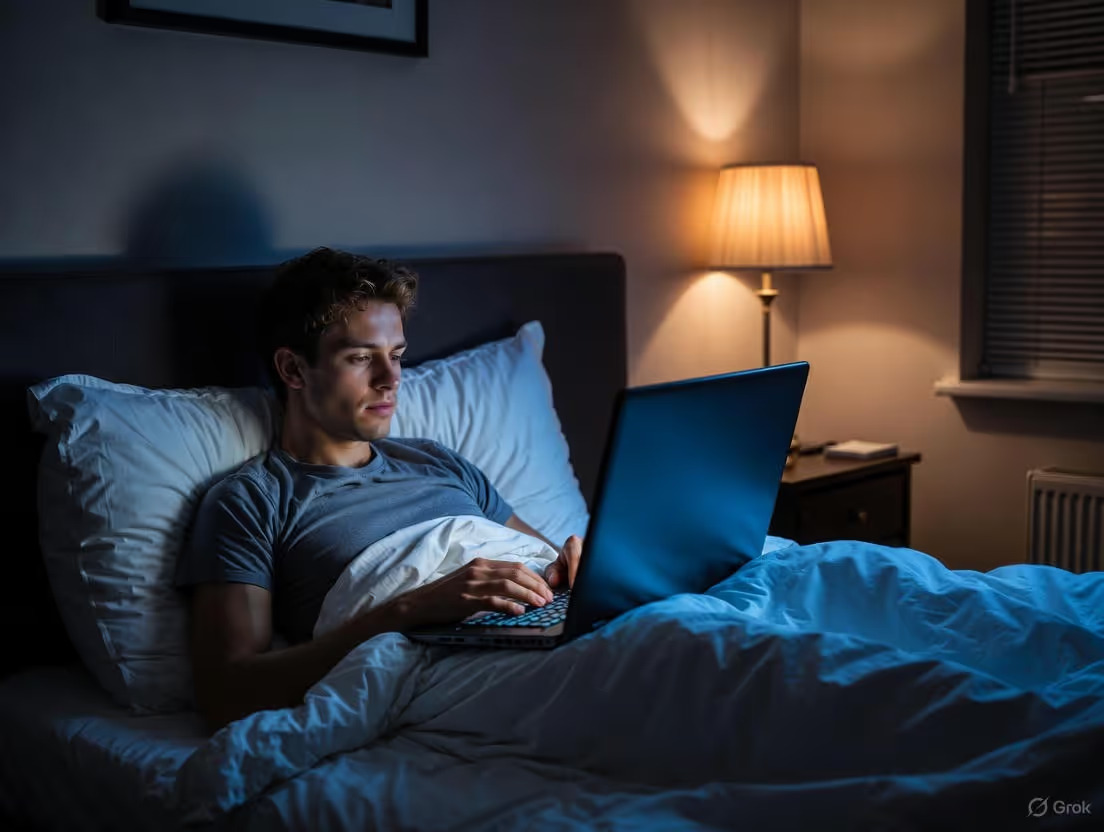
Leverage Objective Data: This is where modern wellness technology becomes transformative. A device like a smart ring worn 24/7 can detect patterns invisible to you. It can reveal if your resting heart rate remains elevated hours after a stressful event, indicating a prolonged sympathetic response. It can show if your heart rate variability (HRV)—a key metric of nervous system resilience—is chronically low, signaling a depleted capacity to handle stress. Most importantly, it can correlate your daytime activity and stress events with objectively measured sleep disruptions later that night.
By combining your subjective journal with this objective biometric data, you move from guessing to knowing. You might discover that your afternoon coffee, rather than your evening workload, is the prime culprit for your light sleep. Or that days with poor time management lead to a specific, measurable dip in HRV and subsequent sleep depth. This personalized audit is the non-negotiable foundation for building an effective, tailored intervention plan. For those curious about how this kind of tracking works in practice, Oxyzen.ai’s FAQ page offers detailed insights into the metrics and their meanings.
You cannot separate your day from your night. The quality of your sleep is largely determined by the choices you make from the moment you wake. Proactive stress mitigation is about strategically managing your nervous system’s arousal throughout the day to create a gradual, natural descent into restfulness by evening. Think of it as a carefully managed glide path, not a last-minute crash landing.
Master Your Morning Cortisol Awakening Response (CAR): Your body’s natural cortisol spike upon waking is healthy—it’s your physiological “get up and go.” You can harness it to set a stable rhythm.
By intentionally engineering your day with these pillars, you are not just “coping” with stress; you are systematically draining the pool of physiological arousal that would otherwise flood your night. This creates the essential preconditions for sleep. The journey from this foundation leads us to the critical, often-overlooked bridge between day and night: the deliberate wind-down ritual.
If your day is a symphony, your evening should be its deliberate, soothing coda. A wind-down routine is not a luxury or a “soft” practice; it is a biological imperative. It’s the active process of manually switching your nervous system from sympathetic (fight-or-flight) dominance to parasympathetic (rest-and-digest) dominance. Without this deliberate transition, you are asking your body to perform an instantaneous, impossible shift.
Phase 1: The Digital Detach (Minute -90 to -60):
This is the hard stop. Put all devices on their chargers, outside the bedroom if possible. This action serves two critical functions: it removes the source of stimulating light and content, and it performs a powerful psychological “closure of the day” ritual. Announce to yourself, “The workday is now closed.”
Consistency is the magic ingredient. Performing this sequence in the same order, at roughly the same time each night, creates powerful Pavlovian cues for your brain and body. It tells your HPA axis, “The threat is over. It is now safe to rest.” For more ideas on tailoring such rituals, you can often find inspiration and community tips on the Oxyzen.ai blog.
What you eat—and when you eat it—acts as direct software for your HPA axis and circadian biology. Food is not just fuel; it’s information that can either amplify calm or trigger a stress cascade that echoes into the night. Navigating this landscape is about strategic timing and choosing nutrients that support, rather than sabotage, your nervous system.
The Blood Sugar Rollercoaster: As mentioned, unstable glucose levels are a primary physiological stressor. A spike and subsequent crash trigger cortisol and adrenaline release, mimicking an anxiety attack. To avoid this:
By viewing your diet through the lens of circadian and nervous system support, you make food a powerful, proactive tool in your arsenal. It’s one of the most direct ways to send a daily “all is well” signal to your biology. This foundational work on your internal environment sets the stage for addressing the most challenging aspect of the cycle: the racing mind.
For the Overthinker, no perfect sleep environment or wind-down routine can silence the internal monologue. When you hit the pillow, the mental floodgates open. This is where cognitive-behavioral strategies become essential. They are not about forcing sleep, but about systematically disengaging from the thought patterns that block its natural arrival.
Reframe Your Relationship with Wakefulness:
A huge source of sleep anxiety is the catastrophic thought, “If I don’t sleep, tomorrow will be ruined.” This thought itself releases cortisol. Practice cognitive reframing:
Mastering these cognitive techniques provides you with a toolkit for the moments when biology and habit aren’t enough. They put you back in the driver’s seat of your attention. As you build this skill, you can enhance it further by understanding and harnessing the power of your body’s own rhythms, a principle central to the mission of companies focused on physiological insight, like the team at Oxyzen.ai.
Sleep is not a monolithic state you “get.” It is a dynamic, structured process governed by your internal biological clock, or circadian rhythm. Aligning your sleep schedule with this innate rhythm—a practice known as sleep-wake entrainment—is perhaps the most powerful single factor for achieving deep, restorative sleep and stabilizing daytime stress resilience.
Understanding Your Chronotype: Your chronotype is your genetically predisposed tendency to be a “morning lark,” a “night owl,” or somewhere in between. Fighting your chronotype is like swimming against a current—possible but exhausting.
The Power of Consistency: The single best way to strengthen your circadian rhythm is to wake up at the exact same time every single day, weekdays and weekends. Yes, weekends too. This fixed wake-up time is the “anchor” for your entire circadian system. It regulates the timing of your cortisol awakening response, your daytime energy dips, and your evening melatonin release far more powerfully than a variable bedtime does.
Adapting (Not Fighting) Your Rhythm: If you’re a night owl forced into an early schedule, you can gently nudge your rhythm earlier through relentless morning light exposure and very strict evening darkness. Conversely, larks should protect their early bedtime and avoid late-night social light exposure. The goal is to find the most harmonious alignment between your biological predisposition and your life’s requirements, minimizing the internal friction that itself is a source of stress. Understanding these deep biological principles is part of the broader story and vision behind creating technology that respects and reveals human physiology.
Technology has earned its reputation as the arch-nemesis of sleep. Yet, when used intentionally, it can transform from the problem into a core part of the solution. The distinction lies between passive consumption and active, data-driven self-mastery. We can leverage technology not to distract, but to diagnose, guide, and even directly modulate our state.
Biometric Tracking: The Power of Objective Insight:
This is the paradigm shift. Subjective feelings of “I slept okay” are often wildly inaccurate compared to physiological reality. Advanced wearables, like smart rings, provide a 24/7 lens into your autonomic nervous system.
Using the Data Intelligently:
The data is useless without interpretation and action. The goal is to identify personal cause-and-effect relationships.
The intelligent use of technology flips the script. Instead of being a source of endless stimulation, it becomes a mirror reflecting your internal state and a guidepost for your behavior. It empowers you to move from blindly following generic advice to executing a personalized sleep optimization protocol. For specific questions on how such technology integrates into daily life, resources like the Oxyzen.ai FAQ can be invaluable.
You can engineer your day, perfect your routine, and master your mind, yet sometimes, the cycle persists. This is not failure; it’s an indication that deeper physiological or psychological factors may be at play. At this stage, advanced strategies and professional guidance become the most effective and compassionate paths forward.
Asking for help is a strategic move, not a surrender. It brings expert insight and tools to bear on a complex problem. The journey to break the stress-sleep cycle is deeply personal, and sometimes the most powerful step is to enlist a guide. Throughout this process, connecting with others who have navigated similar paths can provide both encouragement and practical insight, something often found in community testimonials and shared experiences.
Information without integration is merely trivia. The final, crucial step is to synthesize everything you’ve learned about your triggers, your biology, your rhythms, and your obstacles into a cohesive, personalized, and sustainable action plan. This is not about implementing 20 new rules tomorrow, but about strategic, incremental change that compounds over time.
This blueprint is a living document. As your life changes, so too will your needs. The ultimate goal is to develop a deep, intuitive fluency with your own nervous system—to recognize the early signs of dysregulation and to have a repertoire of practices to course-correct. This is the essence of sustainable wellness. It’s a journey of continuous learning, and platforms dedicated to this exploration, like the Oxyzen.ai blog, can offer ongoing support and new insights as you progress.
We have now laid a comprehensive foundation, exploring the biological mechanisms, the systemic costs, and the personalized strategies required to interrupt the relentless stress-sleep cycle. This knowledge empowers you to move from being a passive victim of your physiology to an active architect of your recovery. The final portion of this guide will delve into maintaining momentum, preventing relapse, and exploring the profound, positive ripple effects that truly restorative sleep creates in every dimension of your life—from emotional intelligence and creativity to longevity and overall life satisfaction. The path to breaking the cycle starts with a single, intentional night. Let tonight be that night.
Achieving a night of deep, restorative sleep after being trapped in the stress-sleep cycle feels like a minor miracle. But its impact extends far beyond feeling less tired the next morning. It initiates a powerful, positive cascade—a virtuous cycle—that elevates your cognitive function, emotional resilience, physical health, and even your social connections. Understanding this ripple effect provides the most compelling motivation to protect your sleep: it’s the foundation upon which a better life is built.
Cognitive Clarity and Executive Function: During deep and REM sleep, your brain isn’t just resting; it’s actively organizing, integrating, and problem-solving.
Emotional Regulation and Resilience: The amygdala, your emotional alarm center, and the prefrontal cortex, its rational regulator, require sleep to communicate effectively.
Physical Performance and Recovery: For athletes and fitness enthusiasts, sleep is the ultimate performance-enhancing drug, but its benefits are universal.
This transformation isn’t subtle. When you consistently break the cycle, you don’t just become “not tired.” You become a more patient partner, a more creative problem-solver, a more resilient professional, and a more energetic participant in your own life. This positive reinforcement makes protecting your sleep feel less like a chore and more like a non-negotiable investment in your best self. It’s the ultimate reward that makes every step of the wind-down ritual worthwhile. To see how this transformation manifests in real life, the experiences shared by users on platforms like Oxyzen.ai often highlight these profound shifts in daily living.
While improved tomorrow is a powerful motivator, the most significant argument for prioritizing sleep is its role as a fundamental pillar of long-term health and longevity. Chronic sleep disruption is not an inconvenience; it is a slow-moving pathological process that accelerates biological aging and opens the door to chronic disease. Investing in sleep is investing in your healthspan—the number of years you live in good health.
Telomeres and Cellular Aging: Telomeres are the protective caps on the ends of your chromosomes, much like the plastic aglets on shoelaces. Each time a cell divides, telomeres shorten. When they become too short, the cell can no longer divide and becomes senescent or dies. This shortening is a primary marker of cellular aging.
The Glymphatic System: The Brain’ Nightly Detox: Perhaps one of the most critical discoveries in neuroscience this century is the detailed understanding of the glymphatic system. This waste-clearance network, primarily active during deep sleep, uses cerebrospinal fluid to flush out metabolic debris that accumulates between brain cells during waking hours.
Systemic Inflammation and Immunity: We’ve touched on this, but its importance for longevity cannot be overstated. Sleep is a potent anti-inflammatory. Deep sleep triggers the release of anti-inflammatory cytokines while suppressing pro-inflammatory ones.
Hormonal Harmony for Lifelong Health: The circadian regulation of hormones like cortisol, growth hormone, and sex hormones (testosterone, estrogen) is foundational. Chronic misalignment—such as that caused by shift work or persistent late nights—is classified as a probable carcinogen by the WHO. It dysregulates cell cycle repair and proliferation.
The message is clear: the habit of good sleep is a direct investment in your future self. It preserves your cognitive capital, maintains your physiological resilience, and slows the processes of cellular decay. It is the single most effective, universally available, and free “supplement” for healthy aging. This long-term perspective aligns deeply with the core mission of health-focused companies, whose vision and values often center on empowering this kind of preventative, foundational wellness.
Even with the best blueprint, life throws curveballs. The demands of non-traditional schedules, caregiving, and global travel present unique, intense challenges to circadian rhythm and sleep homeostasis. Success here isn’t about perfect consistency, but about strategic adaptation and damage control.
For the Shift Worker: Working against your innate circadian rhythm is profoundly difficult. The goal is to create relative consistency and leverage light with extreme precision.
For Parents (Especially of Newborns and Young Children): This phase is about survival and maximizing fragmented sleep. Abandon the ideal of 8 unbroken hours and adopt a “sleep banking” mindset.
For Frequent Travelers (Jet Lag): Jet lag is a literal mismatch between your internal clock and the external environment. You can’t avoid it, but you can hasten adaptation.
In all these scenarios, self-compassion is critical. Your sleep score might suffer temporarily, and that’s okay. The objective is to use strategic tools to support your biology through the disruption and to have a clear “recovery protocol” ready for when normalcy returns. For more nuanced strategies tailored to specific lifestyles, curated resources like those found on the Oxyzen.ai blog can offer ongoing, practical guidance.
Sleep is often considered a solitary pursuit, but it is, in fact, deeply social and relational. Your sleep quality affects your relationships, and the health of your relationships profoundly affects your sleep. Recognizing this interdependency is key to creating a supportive ecosystem for rest.
Sleep and Empathy: The Bidirectional Link:
Creating a Sleep-Conducive Partnership:
The Impact on Parenting and Family Dynamics: Parental sleep deprivation is a major risk factor for postpartum mood disorders and reduced parental sensitivity. Well-rested parents are more patient, attentive, and emotionally available. Furthermore, modeling good sleep hygiene—consistent bedtimes, calming routines, a screen-free bedroom—is one of the most powerful health lessons you can impart to your children.
Social Jet Lag and Weekend Oversleep: A common modern phenomenon is “social jet lag,” where your weekday sleep schedule (dictated by work) differs drastically from your weekend schedule (dictated by social life). This weekly shift of 2+ hours is akin to flying across time zones every weekend, imposing a metabolic and cognitive cost. While some weekend recovery is natural, striving for greater consistency (especially on wake-up time) minimizes this internal friction and leads to better overall mood and energy.
By fostering a shared culture of respect for sleep within your home and relationships, you create an environment where good sleep is easier to achieve. It transforms sleep from a personal responsibility into a collective value, providing mutual support and understanding—a critical element for long-term success. Sometimes, seeing how others have successfully navigated these conversations can be helpful, a topic occasionally explored in community-focused stories and testimonials.
Once the foundational habits of sleep hygiene, stress management, and circadian alignment are firmly in place, you may wish to explore advanced modalities that can further enhance sleep quality and recovery resilience. These are not substitutes for the basics but potential accelerants.
Temperature-Based Therapies:
Neuromodulation Through Sound & Vibration:
Advanced Supplementation (Under Professional Guidance):
The Importance of Professional Oversight: It cannot be overstated that these advanced tools should be explored thoughtfully, and ideally, with the guidance of a healthcare provider or sleep specialist, especially if you have underlying health conditions. They are part of a bespoke optimization toolkit, not a first resort. For individuals deeply invested in quantifying the impact of such modalities, advanced wearable technology that tracks HRV, sleep stages, and temperature can provide invaluable personal feedback on what truly works for their unique biology. Understanding the full potential of such feedback is a core focus for innovators in the space, as detailed on pages like Oxyzen.ai/about-us.
The true challenge isn’t achieving a week of good sleep; it’s maintaining that progress for months and years, through holidays, stressful projects, and life changes. Habit relapse is normal. The key is to have a plan for it, so a few bad nights don’t unravel into a renewed vicious cycle.
The Habit Loop and Identity Reinforcement: James Clear, in Atomic Habits, emphasizes that lasting change comes from identity shift. Instead of “I’m trying to sleep better,” adopt the identity “I am a person who prioritizes and protects my sleep.” This subtle shift makes choices automatic. Your wind-down isn’t something you have to do; it’s something you get to do because it’s who you are.
Designing Your Environment for Success:
Implementing "Habit Stacking": Anchor new sleep habits to existing, well-established routines.
Planning for Inevitable Disruptions:
Celebrating and Tracking Progress: Keep a simple log or use your wearable’s data to observe long-term trends. Notice how your average resting heart rate has dropped, or your deep sleep has increased over the past quarter. This macro view helps you see past daily fluctuations and appreciate the compound interest of your consistent efforts. It’s this long-term data perspective that many find so compelling when they explore detailed wellness tracking.
We are on the cusp of a revolution in how we understand and optimize sleep. The convergence of biometric sensing, artificial intelligence, and genomics is moving us from generic advice to hyper-personalized, predictive, and dynamically adaptive sleep medicine.
From Tracking to Predicting and Prescribing: Next-generation wearables and ambient sensors won’t just tell you how you slept; they will predict your sleep quality based on your day’s activities, stress load, and circadian timing. They may offer prescriptive suggestions: “Your HRV is low today; prioritize a 30-minute wind-down and aim for bed at 10:15 PM.”
Circadian-Aware AI Coaches: Imagine an AI that knows your chronotype, your work schedule, your travel itinerary, and your personal biometric data. It could dynamically generate a daily schedule: the optimal time for your morning coffee, your most productive work block, your ideal workout window, and a tailored evening protocol—all shifting in real-time based on your recovery status.
Sleep Pharmacogenomics and Nutrigenomics: Genetic testing is revealing why individuals respond so differently to sleep medications, caffeine, and even dietary components. In the future, your sleep supplement or medication regimen could be tailored to your unique genetic profile, maximizing efficacy and minimizing side effects.
Closed-Loop Sleep Environments: The smart bedroom will become a reality. Your bed, lighting, temperature, and soundscape will automatically adjust in real-time based on your sleep stage, heart rate, and movements—gently cooling you during REM, providing subtle sound cues to stabilize deep sleep, and gradually warming and lighting to wake you at the optimal point in your sleep cycle.
The Democratization of Sleep Health: As technology becomes more accessible and user-friendly, advanced sleep insights will move out of the specialized lab and into the homes of everyday people. This empowers individuals to take true ownership of their recovery, partnering with healthcare providers from a place of data-informed awareness.
This exciting frontier is built upon the very principles we’ve covered: the understanding of circadian biology, the stress-sleep connection, and the power of personalized data. The mission to make this science actionable and accessible is what drives forward-thinking wellness technology companies, a journey you can learn more about at Oxyzen.ai/our-story.
Knowledge is only power when applied. If the scope of this guide feels overwhelming, let’s distill it into a simple, actionable protocol you can start tonight. This is your on-ramp to breaking the cycle.
The "First Night" Protocol:
Commit to this for three nights. Observe how you feel. Notice any change, however small, in your sleep onset or morning alertness.
This is your starting point. From here, you can layer in the deeper strategies: identifying your stress signature, optimizing your diet, leveraging technology for insight, and fine-tuning your chronobiology.
The journey from being trapped in the stress-sleep cycle to establishing a virtuous circle of calm and recovery is perhaps the most profound investment you can make in your quality of life. It is a journey from reactivity to agency, from depletion to resilience, and from surviving your days to truly thriving within them.
We have traversed the complex biology that binds stress and sleep, uncovered the staggering systemic costs of their dysregulation, and mapped a comprehensive path forward—from personalized trigger identification and daily engineering to advanced cognitive techniques and long-term habit formation. This is not a quick fix but a foundational rewiring: a shift in how you relate to your own nervous system.
Remember, the goal is not a perfect sleep score every night. Life is dynamic, and sleep will ebb and flow. The goal is sleep fluency—the deep understanding of your own patterns and the possession of a versatile toolkit to navigate disruptions and return to balance. It’s the knowledge that after a stressful day or a poor night, you are not at the mercy of your biology; you have the protocols and practices to guide it back to equilibrium.
Tonight presents a new opportunity. With the insights from this guide, you are equipped to make one different choice: to institute a digital sunset, to practice a minute of deliberate breathing, to write down a single worry and a moment of gratitude. That single choice is the first intentional thread you pull to begin unraveling the entire cycle.
Your sleep is the bedrock of your health, your mind, and your spirit. Protect it, nurture it, and observe as the benefits ripple outward into every corner of your existence. The journey to better sleep is, ultimately, the journey to a more vibrant, resilient, and fully realized you.
Begin your experiment tonight. Your future self is waiting. And as you embark on this personalized journey, remember that you are not alone. A wealth of supportive resources, community experiences, and deeper dives into these topics are always available for those seeking further guidance, such as those curated at the Oxyzen.ai blog.
Your Trusted Sleep Advocate: Sleep Foundation — https://www.sleepfoundation.org
Discover a digital archive of scholarly articles: NIH — https://www.ncbi.nlm.nih.gov/
39 million citations for biomedical literature :PubMed — https://pubmed.ncbi.nlm.nih.gov/
Experts at Harvard Health Publishing covering a variety of health topics — https://www.health.harvard.edu/blog/
Every life deserves world class care :Cleveland Clinic - https://my.clevelandclinic.org/health
Wearable technology and the future of predictive health monitoring :MIT Technology Review — https://www.technologyreview.com/
Dedicated to the well-being of all people and guided by science :World Health Organization — https://www.who.int/news-room/
Psychological science and knowledge to benefit society and improve lives. :APA — https://www.apa.org/monitor/
Cutting-edge insights on human longevity and peak performance:
Lifespan Research — https://www.lifespan.io/
Global authority on exercise physiology, sports performance, and human recovery:
American College of Sports Medicine — https://www.acsm.org/
Neuroscience-driven guidance for better focus, sleep, and mental clarity:
Stanford Human Performance Lab — https://humanperformance.stanford.edu/
Evidence-based psychology and mind–body wellness resources:
Mayo Clinic — https://www.mayoclinic.org/healthy-lifestyle/
Data-backed research on emotional wellbeing, stress biology, and resilience:
American Institute of Stress — https://www.stress.org/


