The Deep Sleep Challenge: 30 Days to Better Restorative Sleep
Take the 30-day deep sleep challenge for better restorative sleep. Discover the comprehensive program combining evidence-based strategies to produce measurable increases in slow-wave sleep duration.
The Deep Sleep Challenge: 30 Days to Better Restorative Sleep
You wake up feeling like you barely slept. Your brain is foggy, your body feels heavy, and the day ahead seems like a mountain to climb. This isn't just about being tired; it's about a fundamental lack of restoration. You went to bed, you may have even slept for hours, but you didn't get the deep, healing sleep your body and mind desperately need.
Welcome to the modern sleep crisis. In a world of constant stimulation, blue light, and unrelenting stress, the sacred process of sleep has become fragmented and shallow for millions. We treat sleep as a passive state, an inconvenient pause between days, when in reality, it is an active, complex, and vital biological process. The most critical part of this process—deep, or slow-wave sleep—is often the first casualty of a busy life.
But what if you could change that? Not with a magic pill, but with understanding, intention, and the right tools.
This is the Deep Sleep Challenge: a 30-day journey designed to help you reclaim the most restorative stage of your sleep cycle. This isn't just about logging more hours in bed. It's about transforming the quality of your rest, unlocking the physical recovery, mental clarity, and emotional resilience that come from truly deep sleep. Over the next 30 days, we will systematically address the pillars of sleep hygiene, leverage cutting-edge insights from wearable technology, and build sustainable habits that will help you wake up not just awake, but renewed.
The journey begins now. Let's dive into the science of why sleep—and specifically deep sleep—matters more than you might realize, and lay the foundation for your most restful month yet.
The Modern Sleep Crisis: Why You're Tired Even After 8 Hours
Type image caption here (optional)
You drag yourself out of bed after a full night in bed, coffee has become a non-negotiable lifeline, and the 3 PM energy crash is a daily ritual. If this sounds familiar, you're experiencing the hallmark of the modern sleep crisis: the paradox of sleeping enough hours but waking up feeling utterly unrested. The problem isn't necessarily quantity; it's almost entirely about quality.
For generations, we've been sold the simple formula of "8 hours per night." While duration is important, it's a gross oversimplification of what constitutes restorative rest. Sleep is architecturally complex, composed of distinct stages that cycle throughout the night like a carefully choreographed dance. You can spend 8 hours in bed, but if those cycles are constantly interrupted, shortened, or skewed, you'll miss out on the most valuable phases.
At the heart of this crisis is a fundamental disconnect between our biology and our environment. Our bodies evolved to follow the sun, with hormonal cascades like melatonin release triggered by darkness. Today, we live in a world of perpetual artificial light. The blue glow from smartphones, tablets, and laptops doesn't just keep us entertained—it directly suppresses melatonin production, tricking our brains into thinking it's still daytime . This confuses our internal clock, or circadian rhythm, making it harder to fall asleep and disrupting the natural progression of sleep stages.
Furthermore, chronic stress, a sedentary lifestyle, poor dietary habits, and constant connectivity have created a perfect storm for shallow sleep. We're overstimulated and under-recovered. The initial, lighter stages of sleep may occur, but the journey into the profound, restorative depths of slow-wave sleep is often cut short or never fully reached. The consequence is what scientists call "sleep state misperception" or simply, unrefreshing sleep. Your sleep tracker might say you slept, but your body and brain know you didn't complete the essential work.
This is where the old advice falls short. "Sleep more" isn't a helpful directive when the very structure of your sleep is compromised. The solution requires a more nuanced approach: one that uses data to understand your unique sleep architecture and empowers you with targeted strategies to protect and enhance its most critical phase—deep sleep. To begin this transformation, you first need to understand what you're missing. The journey to better sleep starts with demystifying what happens after you close your eyes.
Demystifying Sleep Architecture: Your Nightly Journey Through Light, Deep, and REM
To fix your sleep, you must first understand it. Think of a night of sleep not as a blank period of unconsciousness, but as a series of meticulously organized cycles, each with a specific purpose. During a typical night, you will journey through four to six of these ~90-minute cycles, each containing distinct stages.
The Four Stages of Sleep:
NREM Stage 1 (N1 - Light Sleep): This is the doorway to sleep, lasting just a few minutes. Your body begins to relax, your heartbeat and breathing slow, and you can be easily awakened. It's a transitional, drowsy state .
NREM Stage 2 (N2 - Light Sleep): You are now officially asleep. Your body temperature drops, eye movements stop, and brain waves slow with occasional bursts of activity called "sleep spindles" thought to be crucial for memory consolidation and learning. You spend approximately 50% of your total sleep time in this stage, making it the workhorse of the night .
NREM Stage 3 (N3 - Deep Sleep): This is the gold standard of restorative sleep, also known as slow-wave sleep. It is characterized by the slowest brain waves (delta waves). During this phase:
Physical Restoration: Tissue growth and repair occur. The body releases growth hormone, which is essential for muscle repair, bone building, and cell regeneration.
Immune Function: Your immune system is strengthened.
Cognitive Maintenance: The brain clears out metabolic waste products. It's very difficult to be awakened from deep sleep, and if you are, you'll likely feel disoriented. This stage is longest and most prevalent in the first half of the night .
REM Sleep (Rapid Eye Movement): This final stage of the cycle is dramatically different. Your brain becomes highly active (similar to when you're awake), your eyes dart back and forth, and most vivid dreaming occurs. To prevent you from acting out your dreams, your body experiences temporary muscle paralysis. REM sleep is essential for:
Memory Consolidation: It helps process and store memories and learning from the day.
Emotional Regulation: It plays a key role in processing emotions and mental recovery.
Brain Development: It's particularly important for cognitive function.
REM periods become longer and more intense in the second half of the night .
The Critical Role of Deep Sleep While all stages are important, deep sleep is non-negotiable for physical health and daily functioning. It's the foundation of feeling restored. Without sufficient deep sleep, you accumulate a "recovery debt" that no amount of light sleep can repay. Studies suggest that a lack of deep sleep is linked to a weakened immune system, increased sensitivity to pain, impaired glucose metabolism, and difficulty with concentration and memory .
A healthy adult typically needs about 1.5–2 hours of deep sleep per night, which constitutes roughly 15-25% of total sleep time . The goal of the Deep Sleep Challenge is not to maximize this number unrealistically, but to ensure you are consistently reaching your personal, biological need for this profound state of restoration. The first step to doing that is to move from guessing about your sleep to actually knowing what's happening. This is where modern technology becomes an invaluable ally.
From Guesswork to Knowledge: The Rise of the Smart Sleep Tracker
For most of human history, understanding your sleep was pure guesswork. You could estimate duration based on the clock, but the intricate architecture of your night remained a mystery. The advent of consumer sleep trackers has changed that, turning the black box of sleep into a source of insightful, actionable data.
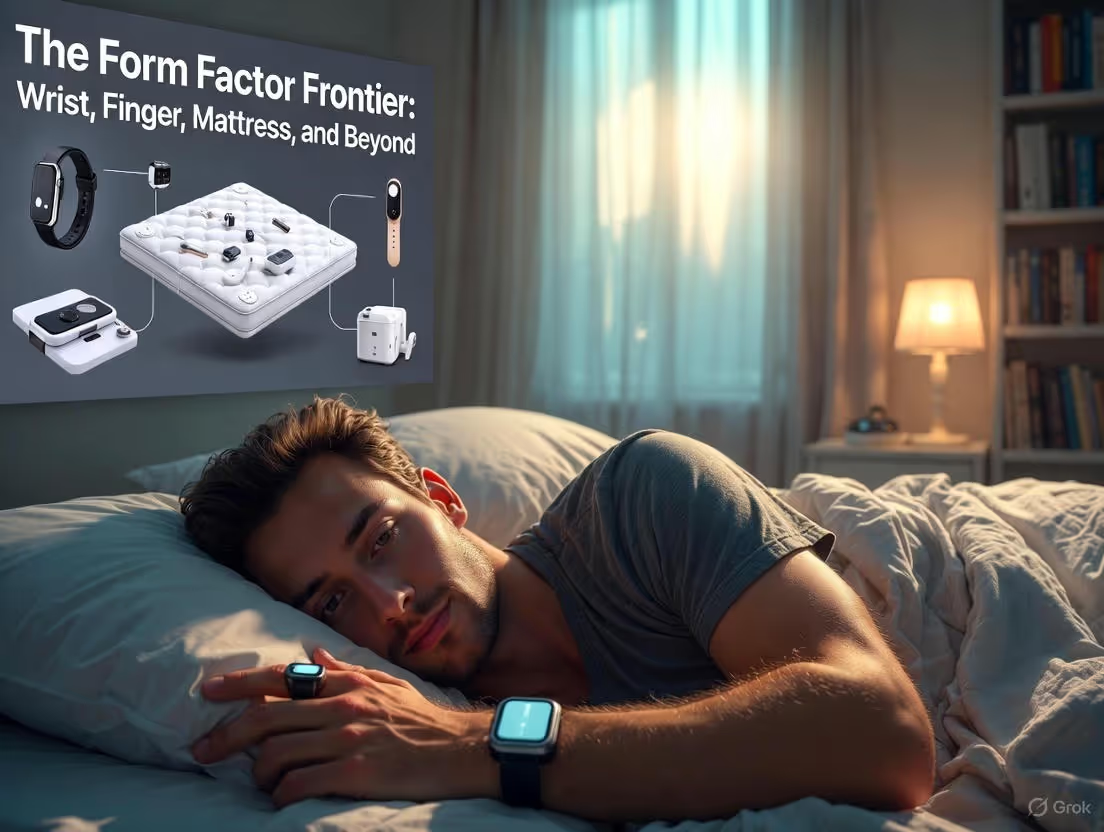
Early fitness bands and smartwatches introduced the concept of tracking movement (actigraphy) to estimate sleep and wake times. However, the latest generation of devices, particularly smart rings, have revolutionized personal sleep science by offering clinical-grade insights in a comfortable, 24/7 wearable form. Their value lies not in adding more digital noise to your life, but in providing quiet, profound clarity on your body's most essential recovery process .
Why Smart Rings Are a Game-Changer for Sleep
Unlike a smartwatch that buzzes with notifications, a smart ring is designed for passive, unobtrusive monitoring. This is its superpower for sleep tracking. Its small, lightweight design is comfortable enough to wear all night without disrupting your natural sleep posture, leading to more accurate data . By sitting on a finger with a rich supply of capillaries, it can employ advanced sensors to measure what wrist-based devices sometimes miss:
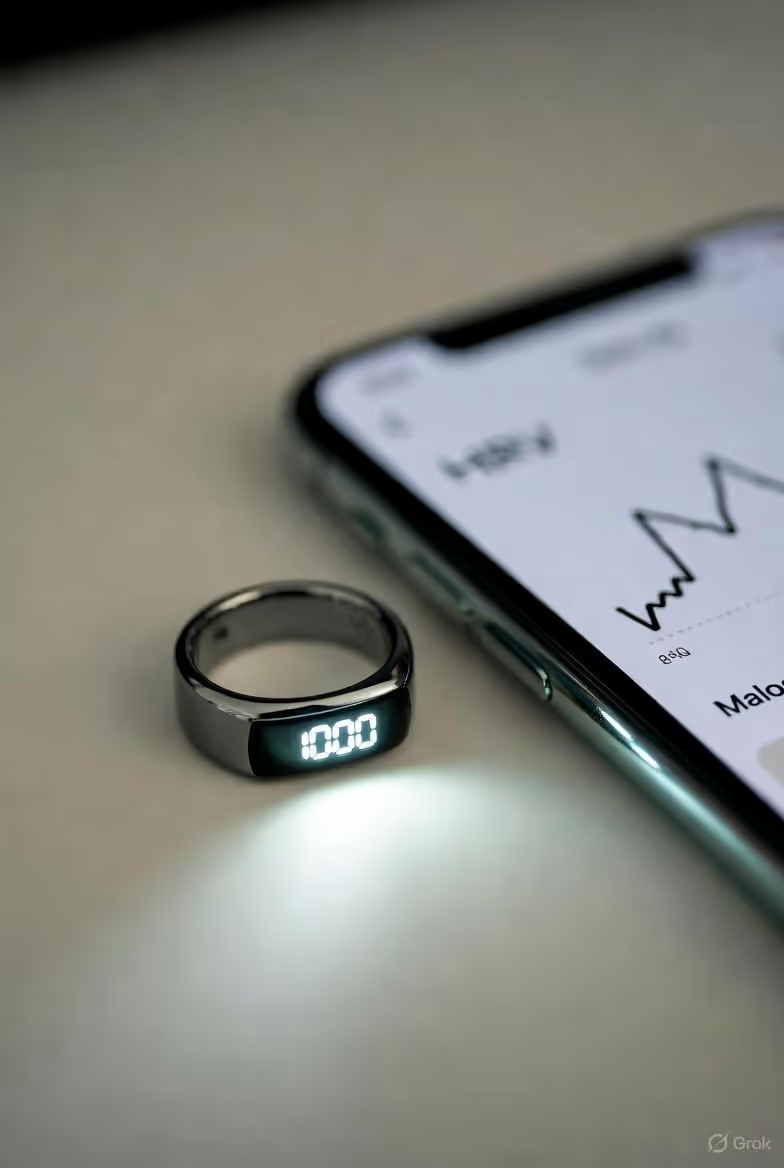
Photoplethysmography (PPG) Sensors: Using infrared and green LEDs, these sensors monitor your heart rate and, crucially, Heart Rate Variability (HRV)—the subtle variation in time between heartbeats, which is a key indicator of your nervous system's recovery state .
Temperature Sensors: These track your skin temperature trends. A natural drop in core body temperature is a key signal for sleep onset, and deviations can indicate restlessness or illness .
3D Accelerometer: This tracks movement and body position to determine restlessness and differentiate between sleep stages .
Blood Oxygen Sensing (SpO2): Available in advanced models, this can help identify potential breathing disturbances during the night .
By synthesizing data from these sensors, sophisticated algorithms can estimate not just when you're asleep, but how you're sleeping. Each morning, you can review a detailed breakdown of your sleep stages (light, deep, REM), your sleep latency (time to fall asleep), sleep efficiency (percentage of time in bed actually asleep), and waking events .
Accuracy You Can Trust You might wonder if a device on your finger can be as accurate as a medical test. The science is increasingly reassuring. A 2025 systematic review and meta-analysis published in a peer-reviewed journal analyzed six studies comparing the Oura Ring to medical-grade polysomnography (PSG) and actigraphy. It found no statistically significant differences between the devices for key metrics like Total Sleep Time, Sleep Efficiency, and time spent in Deep and REM sleep . Oura's own validation research claims 99% accuracy for heart rate and 98% for HRV compared to an ECG, with sleep staging accuracy at 79% compared to clinical polysomnography .
This means that while a smart ring isn't a medical diagnostic device, it is an exceptionally powerful self-monitoring tool. It provides a reliable, consistent baseline from which you can observe trends, measure the impact of lifestyle changes, and identify hidden patterns of disruption. It turns abstract feelings of fatigue into concrete data, empowering you to take targeted action. To learn more about how this technology can fit into a holistic wellness strategy, you can explore the resources available on the Oxyzen blog.
Armed with this knowledge and the right tools, you're ready to begin the practical work. The foundation of any sleep transformation is built long before your head hits the pillow. It starts with your daily routine and the environment you create for rest.
Laying the Foundation: Pre-Sleep Rituals and Environment Optimization
You cannot expect to dive into deep, restorative sleep if you spend your evening in a state of high stimulation. The transition from wakefulness to sleep is a physiological process that requires a gentle descent, not a sudden crash. The hour before bed—and the environment you sleep in—are the launchpad for your night's journey. For the Deep Sleep Challenge, we will treat this period as sacred.
Crafting Your Personal Wind-Down Ritual Your goal is to signal to your brain and nervous system that it's time to shift from "doing" mode to "being" mode. This requires replacing stimulating activities with calming ones.
The Digital Sunset: This is the single most effective change you can make. Implement a strict "no screens" policy for at least 60 minutes before bed. The blue light emitted suppresses melatonin production . If you must use a device, enable night mode/blue light filters hours in advance. Better yet, charge your phone outside the bedroom.
Embrace Dimmable, Warm Light: As the sun sets, mimic nature indoors. Switch bright overhead lights to lamps with warm-toned bulbs. Consider using smart bulbs that can automatically shift to a warm, dim setting in the evening.
Activate the Relaxation Response: Engage in activities that lower cortisol and promote a sense of calm. This could be:
Light Reading: A physical book (not an e-reader).
Gentle Stretching or Yoga Nidra: Focus on releasing physical tension.
Mindfulness or Breathing Exercises: A simple 5-minute guided meditation or a 4-7-8 breathing pattern can work wonders.
Gratitude Journaling: Writing down a few positive things from your day can reduce anxiety and promote positive thinking.
Consistency is Key: Try to start your wind-down routine at roughly the same time each night. This regularity reinforces your circadian rhythm.
Engineering the Ideal Sleep Sanctuary Your bedroom should have one primary function: sleep. Optimize it like a professional sleep lab would.
Temperature: The science is clear—a cool room is essential. Aim for a bedroom temperature between 60-67°F (15.5-19.5°C). Your body needs to drop its core temperature to initiate and maintain sleep, and a cool room facilitates this .
Darkness: Complete darkness is ideal. Invest in blackout curtains or a high-quality sleep mask. Even small amounts of light from chargers or street lamps can fragment sleep. Cover or remove all electronic light sources.
Quiet: Use earplugs, a white noise machine, or a fan to create a consistent, soothing sound buffer that masks unpredictable noises like traffic or a partner's snoring.
Your Bed is for Sleep (and Sex): Train your brain to associate your bed with rest, not work, watching TV, or scrolling on your phone. This strengthens the mental connection between bed and sleepiness.
By dedicating time to this foundation, you are not just "going to bed." You are preparing for deep sleep. You are systematically lowering the barriers that stand between you and restorative rest. This foundational work sets the stage for the next critical element: aligning your entire daily routine with your body's natural clock.
Syncing with Your Body Clock: Mastering Circadian Rhythms for Deep Sleep
Your ability to fall asleep and cycle properly through deep and REM stages isn't just about what you do at night—it's governed by a powerful internal timekeeper that operates on a roughly 24-hour cycle: your circadian rhythm. Think of it as the master conductor of your body's orchestra, coordinating the timing of hormone release, body temperature, digestion, and, most importantly, sleep-wake cycles. When this rhythm is in sync, sleep comes naturally and is deeply restorative. When it's disrupted, everything feels off.
The Power of Light: Your Rhythm's Primary Cue The most potent regulator of your circadian rhythm is light, especially sunlight. Light detected by your eyes signals to your brain's suprachiasmatic nucleus (SCN) that it's time to be awake. It suppresses the sleep hormone melatonin and boosts cortisol and other alertness-promoting chemicals. When darkness falls, the SCN triggers melatonin production, making you sleepy .
The modern problem is artificial light, particularly the blue-wavelength light from screens, which mimics sunlight and can delay melatonin production by hours if used late at night .
Daily Habits to Strengthen Your Circadian Rhythm:
Morning Sunlight Exposure: Within 30-60 minutes of waking, get outside for at least 10-15 minutes of natural light. Don't wear sunglasses for this initial exposure if it's safe. This morning light is a powerful signal that resets your clock for the day, promoting alertness now and better sleep later.
Daytime Light Matters: Seek bright light throughout the day. Open blinds, take walking meetings outside, or sit near windows. Consistent daytime light exposure strengthens the amplitude of your rhythm, making the contrast with night more powerful.
The Evening Wind-Down (Revisited): The pre-sleep ritual you established is fundamentally a circadian-support practice. Dim lights and avoiding screens is about removing the "false dawn" signals that confuse your internal clock.
Consistent Sleep and Wake Times: This is non-negotiable for rhythm health. Go to bed and wake up at the same time every day, even on weekends. A consistent schedule anchors your circadian rhythm, making sleep onset easier and more predictable. Variability is one of the biggest enemies of deep sleep.
Mind Your Meals: Try to eat your meals at consistent times each day. Avoid large, heavy meals within 3 hours of bedtime, as digestion can raise core body temperature and disrupt sleep onset. A small, sleep-promoting snack (like a banana or almonds) is fine if needed.
Understanding Your Chronotype Are you a natural night owl or an early bird? Your chronotype is your genetic predisposition for sleep timing. While society often favors early risers, fighting against your natural tendency can cause chronic misalignment. The goal of this challenge is to find a consistent schedule that works for your life and leans toward your natural inclination, not to force yourself into an unnatural mold. Use your smart ring data to track when you naturally fall asleep and wake on days without an alarm—this can be very revealing.
By honoring your circadian rhythm, you work with your biology, not against it. This alignment reduces the "friction" of falling asleep and creates the optimal internal environment for sustained deep sleep cycles. It's the bedrock upon which all other sleep-promoting habits are built. For more on the science behind holistic health and body rhythms, you can read about Oxyzen's mission and approach.
With your rhythm aligned and your sanctuary prepared, we now turn to the fuel that powers your body and your sleep: nutrition and hydration.
Fueling for Sleep: Nutrition and Hydration Strategies
What you eat and drink doesn't just affect your waistline and energy levels—it has a direct and profound impact on your sleep architecture. The wrong choices can sabotage your deep sleep, while the right ones can actively promote it. During the Deep Sleep Challenge, we'll treat food as a tool for better rest.
The Evening Meal: Timing and Composition Your last major meal of the day is a critical sleep signal. The goal is to be satisfied, not stuffed, and to allow for proper digestion before lying down.
The 3-Hour Rule: Aim to finish your dinner at least 3 hours before bedtime. This gives your body time to digest, so energy isn't diverted to your gut when it should be focused on cellular repair and brain restoration during sleep.
Macronutrient Balance: Focus on a meal that includes:
Complex Carbohydrates: Like sweet potatoes, brown rice, or quinoa. These can help facilitate the transport of tryptophan (a sleep-promoting amino acid) to the brain.
Lean Protein: Such as chicken, fish, tofu, or legumes. Provides steady amino acids without excessive fat.
Healthy Fats in Moderation: Avocado, olive oil, or nuts. Avoid heavy, greasy foods that are difficult to digest.
Foods to Embrace for Sleep:
Tart Cherries: A natural source of melatonin.
Kiwi: Studies suggest eating kiwi before bed may improve sleep onset and duration.
Fatty Fish: Rich in vitamin D and omega-3s, which are linked to better sleep regulation.
Nuts and Seeds: Almonds and pumpkin seeds contain magnesium, a mineral that plays a role in muscle relaxation and sleep regulation.
The Caffeine and Alcohol Trap These two common substances are among the biggest sleep disruptors.
Caffeine: It's a potent adenosine blocker. Adenosine is a chemical that builds up in your brain throughout the day, creating "sleep pressure." Caffeine masks this feeling of tiredness. Establish a caffeine curfew of at least 8 hours before bed. For some sensitive individuals, that may mean noon. Remember, caffeine is in coffee, tea, many sodas, chocolate, and even some medications.
Alcohol: While it may make you feel drowsy and help you fall asleep faster, alcohol is a deep sleep destroyer. It severely fragments the second half of the night's sleep, suppressing REM sleep and causing frequent awakenings. It also relaxes throat muscles, which can worsen snoring and sleep apnea. For the Deep Sleep Challenge, try to limit alcohol and avoid it entirely within 3 hours of bedtime.
Hydration: A Delicate Balance Dehydration can lead to nighttime leg cramps and a dry mouth, disrupting sleep. However, drinking a large volume of water right before bed will guarantee disruptive trips to the bathroom.
Strategy: Hydrate consistently throughout the day. Begin tapering your fluid intake about 2 hours before bed, having only a small sip if needed. This minimizes nocturia (waking to urinate) and protects your deep sleep cycles.
By being intentional with your nutrition, you remove a major source of internal sleep disruption and provide your body with the building blocks it needs for physical repair during deep sleep. With your body properly fueled, it's time to address the silent sleep thief that lives in your mind: stress.
Quieting the Mind: Stress Management and Mental Preparation for Sleep
You've optimized your environment, synced your rhythm, and eaten well, but if your mind is racing with the worries of today and the anxieties of tomorrow, deep sleep will remain elusive. Stress and sleep have a bidirectional, toxic relationship: poor sleep increases stress reactivity, and high stress makes quality sleep impossible. Breaking this cycle is essential for the Deep Sleep Challenge.
Understanding the Stress-Sleep Connection When you're stressed, your body's sympathetic nervous system—the "fight or flight" system—is activated. This increases cortisol, elevates heart rate, and puts your body and mind on high alert, which is the absolute opposite state required for the gentle descent into deep sleep. Chronic stress keeps cortisol levels elevated at night, directly interfering with the release of melatonin and the progression of sleep stages .
Practical Tools for a Quiet Mind:
The Brain Dump: Keep a notebook by your bed. Before starting your wind-down ritual, spend 5-10 minutes writing down everything on your mind—tasks, worries, ideas. The act of externalizing these thoughts gets them out of your cyclical thinking and onto paper, freeing your mind to relax.
Progressive Muscle Relaxation (PMR): This technique involves systematically tensing and then relaxing each muscle group in your body, starting from your toes and working up to your forehead. It teaches you to recognize the physical sensation of tension and release it, which has a direct calming effect on the mind.
Guided Sleep Meditations or Breathing Exercises: Don't try to "clear your mind." Instead, give it a simple, gentle focus. Use an app or recording for a guided body scan or a breathing practice like the 4-7-8 method (inhale for 4, hold for 7, exhale for 8). This stimulates the parasympathetic nervous system (the "rest and digest" system).
Cognitive Reframing: Challenge catastrophic or anxious thoughts about sleep itself. Thoughts like "If I don't sleep now, tomorrow will be ruined" create performance anxiety around sleep, which is a guaranteed way to stay awake. Practice replacing them with more neutral, accepting thoughts like "My body knows how to sleep. I will rest quietly and let sleep come when it's ready."
The 20-Minute Rule If you find yourself lying in bed unable to sleep, do not stay there. After approximately 20 minutes of wakefulness, get out of bed. Go to another dimly lit room and do a quiet, boring activity (like reading a physical book—no screens). Do not check the time. Return to bed only when you feel sleepy. This prevents your brain from forming an association between your bed and frustration/alertness.
Managing stress isn't about eliminating it—that's impossible. It's about creating a buffer between the stresses of the day and the sanctuary of the night. By developing a toolkit of relaxation practices, you build that buffer and protect your sleep. This mental work is as crucial as the physical and environmental preparations you've already made. For further support and answers to common questions about integrating wellness tech into your life, our comprehensive FAQ page is a valuable resource.
Now, with mind and body prepared, we look at the final piece of the puzzle: the specific role of technology not just as a tracker, but as an intelligent guide on this 30-day journey.
The Role of Technology: Using Your Smart Ring as a Guide, Not a Judge
In this challenge, your smart ring is your most valuable teammate. Its purpose is not to make you anxious about a low score or to turn sleep into a stressful competition. Instead, it's a coach, a biometrical translator, and a source of objective feedback. Used correctly, it transforms intuition into insight and guesswork into a guided journey.
Moving Beyond the Daily Score It's tempting to fixate on the single number—the Sleep Score—that your app provides each morning. For the purposes of this challenge, we want to look deeper. The score is a helpful summary, but the real gold is in the trends and the detailed metrics. A score of 75 one night isn't a failure; it's a data point. Ask: What contributed? Was my deep sleep low? Was my resting heart rate elevated? Did I have many awakenings? This is where the actionable insights live.
Key Metrics to Watch During the Challenge:
Deep Sleep Duration & Timing: Is it consistently within the 1.5-2 hour range? Is it clustered in the first half of your night as expected? A pattern of low deep sleep points to unmet physical recovery needs or high physiological stress.
Resting Heart Rate (RHR) & Heart Rate Variability (HRV): These are your recovery metrics. A lower overnight RHR and a higher HRV generally indicate better recovery and a more relaxed nervous system . Watch for trends: Is your RHR creeping up over the week? That's a sign of cumulative stress. Is your HRV trending downward? Your body may be asking for a lighter day.
Sleep Latency & Efficiency: How long does it take you to fall asleep? Improving latency is a direct measure of how well your wind-down routine is working. Sleep efficiency (time asleep/time in bed) shows how consolidated your sleep is. Aim for >85% .
Body Temperature Trend: Your smart ring tracks subtle temperature changes. A higher-than-baseline nighttime temperature can signal illness, inflammation, or a room that's too warm.
How to Use the Data Proactively:
Establish Your Baseline: For the first 3-5 days of the challenge, don't try to change anything radically. Just wear your ring and observe. This is your personal baseline—the "before" picture.
Run Experiments: Use the challenge's weekly focus (e.g., "Perfect the Wind-Down," "Optimize Mealtimes") to run a personal experiment. Implement the change for 3-4 days and watch the metrics. Did your deep sleep increase? Did your sleep latency decrease? This turns self-improvement into a data-driven discovery process.
Listen to Your Readiness: Many rings provide a "Readiness" or "Recovery" score based on your sleep, activity, and HRV data. Let this guide the intensity of your day. A low score isn't a command to be lazy; it's a suggestion to prioritize recovery—maybe choose a walk over an intense workout, or schedule a lighter workday.
Spot Patterns Over Time: This is the most powerful aspect. After a few weeks, you might see that deep sleep dips on nights after intense late-day workouts, or that HRV is highest on days you meditate. These personalized insights are far more valuable than generic sleep advice.
By partnering with your technology in this curious, non-judgmental way, you unlock its true potential. It becomes the compass for your 30-day journey, helping you see what's working, what's not, and guiding your next steps with precision. To see how others have used such technology to transform their wellness, you can explore real user experiences in our testimonials section.
You now have the complete toolkit: knowledge of sleep science, a prepared environment and body, a stress-managed mind, and a technological guide. It's time to put it all together and embark on the structured 30-day journey.
The 30-Day Deep Sleep Challenge Framework
This is your roadmap. The previous sections have armed you with the "why" and the "how." Now, we structure it into a manageable, progressive 30-day plan. The challenge is divided into four weekly phases, each with a specific focus. Remember, the goal is consistency and mindful experimentation, not perfection.
Week 1: Foundation & Observation (Days 1-7)
Focus: No major changes yet. Establish your baseline ritual and observe your natural patterns.
Daily Actions:
Consistently wear your smart ring day and night.
Choose a fixed wake-up time and stick to it every day.
Implement your 60-minute, screen-free wind-down ritual.
Do not analyze scores judgmentally. Simply log them and note how you feel subjectively each morning.
Goal: To collect honest baseline data and make your evening ritual automatic.
Week 2: Environment & Rhythm (Days 8-14)
Focus: Optimize your sleep sanctuary and strengthen your circadian rhythm.
Daily Actions:
Continue all Week 1 habits.
Engineer your bedroom: Ensure it is cool (aim for 65°F/18°C), pitch dark, and quiet.
Get 10-15 minutes of morning sunlight within 30 minutes of waking.
Move your dinner time to finish at least 3 hours before bed.
Goal: To create the external and biological conditions most conducive to deep sleep.
Week 3: Nutrition & Hydration (Days 15-21)
Focus: Refine your fuel for better sleep.
Daily Actions:
Continue all prior habits.
Enforce a caffeine curfew (e.g., no caffeine after 2 PM).
Limit or eliminate alcohol, especially within 3 hours of bedtime.
Hydrate well during the day, but taper fluids 2 hours before bed.
Experiment with one sleep-promoting evening snack (e.g., tart cherry juice, a small handful of almonds) if needed.
Goal: To remove dietary sleep disruptors and use nutrition to support sleep chemistry.
Week 4: Integration & Mastery (Days 22-30)
Focus: Solidify stress management and personalize your approach.
Daily Actions:
Continue all prior habits.
Integrate a 10-minute stress-reduction practice into your wind-down (e.g., PMR, meditation, journaling).
Practice the 20-minute rule if you can't sleep.
Actively review your ring data for trends. What has improved most? What is one metric you can still work on?
Goal: To make your sleep-supporting habits effortless and self-sustaining, using data for ongoing refinement.
This framework provides structure, but your journey is personal. Listen to your data and your body. The final piece is understanding what to expect and how to sustain this new relationship with sleep long after the 30 days are over.
Conclusion of Part One: Setting Expectations and Gearing Up for the Journey
You stand at the beginning of a transformative 30 days. You are not simply trying to "sleep better." You are embarking on a systematic exploration of one of the most vital aspects of your health. You have been equipped with a comprehensive understanding of sleep architecture, the disruptive forces of modern life, and a full suite of strategies—environmental, behavioral, nutritional, and technological—to combat them.
Setting Realistic Expectations: This is not a linear path to perfection. Some nights will be better than others. You may have a night of poor sleep despite doing everything "right." That's normal and human. The goal of the Deep Sleep Challenge is progress, not perfection. It's about raising your baseline, increasing your sleep resilience, and building habits that make deep, restorative sleep the default, not the exception.
The true measure of success won't just be a higher number on your sleep app. It will be:
Waking up feeling refreshed more often than not.
Experiencing less reliance on caffeine to get through the day.
Noticing improved mood, focus, and patience.
Developing a sense of trust in your body's ability to rest and restore.
Your smart ring will provide the objective map, but your lived experience is the territory. Pay attention to both.
You now have everything you need to begin. The first step is the simplest: tonight, start your wind-down ritual. Put your phone away, dim the lights, and begin the gentle descent. Tomorrow morning, observe your data with curiosity, not criticism.
This is the start of a lifelong journey toward better rest and, by extension, a healthier, more vibrant life. We are just beginning to explore the potential of what happens when we truly prioritize deep sleep. To understand the passion and science behind creating tools for this kind of holistic wellness, you can delve into Oxyzen's story and vision.
Week 1 Deep Dive: Laying Your Unshakeable Foundation
You’ve gathered your tools and understood the science. Now, the real work begins. Week 1 is not about dramatic transformation; it’s about becoming a scientist of your own sleep. Your primary objective is to establish a non-negotiable baseline of habits while gathering honest, judgment-free data about your current state. This week removes the pressure to perform and instead focuses on the practice of consistent observation.
The Power of the Fixed Wake-Up Time
Your first and most critical mission is to anchor your day with a consistent wake-up time. This single habit is the cornerstone of circadian rhythm regulation. By waking at the same time every day—yes, even on Saturday and Sunday—you provide a powerful, reliable signal to your brain’s master clock. This consistency makes your body’s production of cortisol (for morning alertness) and melatonin (for evening sleepiness) more predictable and robust.
How to Implement: Choose a wake-up time that is realistic for your life, even on your earliest day. Set your alarm for this time each day. When it goes off, get out of bed and expose yourself to bright light within 30 minutes. Do not hit snooze. Snoozing fragments the end of your sleep cycle and leads to sleep inertia, that groggy feeling that can last for hours.
The Weekend Myth: “Catching up” on sleep by sleeping in on weekends creates a phenomenon social jet lag. Your body experiences the same disorientation as flying across time zones every Friday and Sunday night. This one habit, if adhered to, will do more to regulate your sleep drive than almost any other.
Establishing Your Sacred Wind-Down Ritual
Simultaneously, you are building the bridge from your busy day to restful night. Your 60-minute, screen-free wind-down ritual is your daily practice in signaling safety and calm to your nervous system.
The Digital Sunset is Non-Negotiable: For this week, treat your phone, laptop, and TV like appliances that get unplugged at a specific time. Use app blockers or simply place devices in another room to charge. If the thought creates anxiety, ask yourself: What emergency requires my attention between 9 PM and 7 AM that cannot wait? The answer is usually “none.”
Ritual Over Routine: A routine is a series of actions; a ritual is a series of actions imbued with intention. Don’t just go through the motions. As you dim the lights, mentally acknowledge, “I am now transitioning from doing to being.” As you sip herbal tea, feel the warmth and allow it to soothe you. As you read a book, let the narrative pull your focus away from your to-do list. This mindful approach activates the parasympathetic nervous system more deeply than the actions alone.
The Art of Non-Judgmental Data Collection
This week, your smart ring is a passive observer. Your job is not to achieve a score of 90; it is to discover your truth.
Morning Review Protocol: Each morning, after you’ve gotten up and had a moment to wake, open your sleep data. Before looking at the score, ask yourself: “How do I feel?” Rate your subjective energy on a scale of 1-10. Then look at the data. Compare your feeling to the metrics.
Do you feel a 3/10 but the ring says you had 8 hours of sleep? This points to poor sleep quality.
Do you feel a 7/10 but your deep sleep was low? Perhaps your light sleep was particularly efficient, or other factors are at play.
Look for Patterns, Not Perfection: Note anything unusual from the previous day or evening. Did you have a stressful work meeting? Did you eat later than usual? Did you skip your walk? Jot down one or two of these observations alongside your data. By the end of the week, you may already see clear connections.
Week 1 Success is Measured By:
Sticking to your fixed wake-up time 7 out of 7 days.
Completing a screen-free wind-down ritual 7 out of 7 nights.
Having 7 days of baseline sleep data without trying to “game” the system.
You are building the container into which deep sleep will flow. With your foundational rhythm set, you now turn to optimizing the physical space where sleep happens.
Week 2 Deep Dive: Engineering Your Sleep Sanctuary and Mastering Light
With the consistent habits of Week 1 in place, Week 2 focuses on transforming your external environment to be the ultimate ally of your internal biology. We move from behavioral foundations to environmental engineering, targeting the two most potent external regulators of sleep: your bedroom and light exposure.
Transforming Your Bedroom into a Sleep Lab
Your bedroom should be a cave: cool, dark, and quiet. This isn’t just comfort; it’s neurobiology.
The Science of Cool: Your core body temperature needs to drop by about 1-2 degrees Fahrenheit to initiate and maintain sleep. A cool room facilitates this drop. The optimal range is 60-67°F (15.5-19.5°C). Use a thermostat, a fan, or a bed-cooling system to achieve this. Pay attention to your smart ring’s skin temperature trend; a successful cool-down should be visible in your data.
The Absolute Necessity of Darkness: Light is a signal for wakefulness, even through closed eyelids. Even small amounts of ambient light from a hallway, charger LED, or streetlamp can fragment sleep and suppress melatonin.
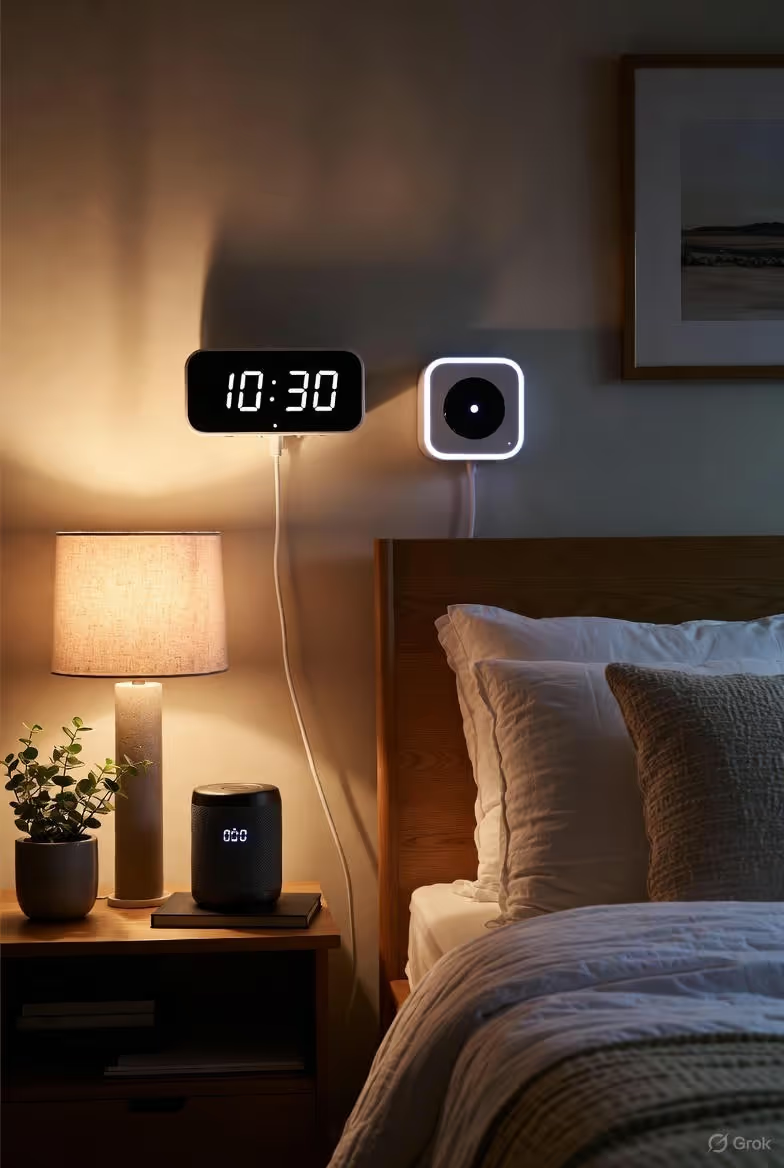
Action Steps: Invest in blackout curtains or a high-quality sleep mask. Apply black electrical tape over every tiny LED light on electronics in the room. Consider a digital clock that goes dark or can be turned away from the bed.
The Sound of Silence (or Consistent Noise): Sudden, unpredictable noises—a car alarm, a creaking house, a partner’s snore—can trigger micro-arousals, pulling you out of deep sleep without you ever remembering.
Solution: Use a white noise machine, a fan, or a smartphone app (played on a device outside the bedroom) to generate a constant, soothing sound blanket. This masks disruptive noises. For partners who snore, consider high-fidelity earplugs designed for sleep.
Harnessing Light: Your Circadian Rhythm’s Conductor
Light is the most powerful zeitgeber (time-giver) for your internal clock. This week, you will deliberately use light to strengthen your rhythm.
Morning Light: The Non-Negotiable Reset: Within 30-60 minutes of your fixed wake-up time, get 10-15 minutes of natural sunlight exposure. Look toward the sky (not directly at the sun) without sunglasses if possible. This morning light is exceptionally rich in blue wavelengths, which powerfully suppress any residual melatonin and signal to your brain that the day has begun. This sets a countdown for melatonin release roughly 14-16 hours later. On overcast days, you may need 20-30 minutes.
Daytime Light: Building Sleep Pressure: Don’t hide in dim offices all day. Seek bright light during daylight hours. Take walking breaks outside, sit near windows, or consider a light therapy lamp on your desk if you work in a dark environment. Consistent daytime light exposure builds a stronger “sleep pressure” signal for the evening.
Evening Darkness: Protecting Melatonin: Your wind-down ritual’s dim lights are a direct defense of your melatonin production. This week, be militant about it. If you must use a bathroom light at night, install a very dim, warm-colored nightlight. The goal is to navigate the night without ever flooding your eyes with bright white light.
The Data Connection in Week 2
As you implement these environmental changes, watch for specific shifts in your smart ring data:
Sleep Latency: With a cooler, darker room, you should see your time to fall asleep decrease.
Sleep Efficiency: The percentage of time in bed actually spent asleep should increase as environmental disruptions are minimized.
Resting Heart Rate (RHR): A lower overnight RHR can indicate a cooler body temperature and a deeper state of physical rest.
Week 2 Success is Measured By:
Waking and sleeping in a bedroom that meets the “cave” criteria.
Getting morning sunlight exposure at least 5 out of 7 days.
Observing measurable improvements in sleep latency or efficiency in your data compared to Week 1.
You have now synchronized your body with the natural day-night cycle and created a fortress for your sleep. Next, we address what you put into your body, ensuring your fuel supports—not sabotages—your restoration.
Week 3 Deep Dive: Nutritional Alchemy for Deep Sleep
Your body is a biochemical factory, and the raw materials you provide determine the quality of its output—including sleep. Week 3 shifts the focus inward to nutrition and hydration. We move from optimizing the external space to refining the internal environment, removing dietary disruptors and introducing sleep-supportive nutrients.
Mastering the Timing and Composition of Your Last Meal
The "what" and "when" of your evening meal are critical levers for sleep quality.
The 3-Hour Rule Revisited: Finishing your last substantial meal at least 3 hours before bedtime is crucial. This allows your body to complete the bulk of digestion (which raises core temperature and requires energy) before sleep begins. Going to bed with a full stomach can lead to acid reflux, discomfort, and fragmented sleep as your body works to digest instead of restore.
Building a Sleep-Supportive Plate: Aim for a dinner that balances macronutrients to provide steady energy without spikes.
Include Complex Carbohydrates: Foods like oats, brown rice, or sweet potatoes can help increase the availability of tryptophan in the brain.
Prioritize Lean Protein: Salmon, turkey, chicken, or lentils provide tryptophan, the amino acid precursor to serotonin and melatonin.
Incorporate Healthy Fats in Moderation: Avocado, olive oil, or nuts support hormone function but are best consumed in moderation at night as they slow digestion.
The Strategic Bedtime Snack: If you need a small bite before bed (e.g., if dinner was early), choose wisely. Opt for a combination of a complex carb and a little protein or healthy fat to stabilize blood sugar overnight. Examples:
A small banana with a tablespoon of almond butter.
A few whole-grain crackers with a slice of turkey.
A small bowl of plain yogurt with a sprinkle of chia seeds.
Eliminating the Chemical Sleep Saboteurs
Two of the most socially accepted substances are also among the most damaging to sleep architecture.
Caffeine: The Adenosine Blocker: Caffeine works by binding to adenosine receptors in your brain. Adenosine is a neurotransmitter that builds up throughout the day, creating "sleep pressure." Caffeine doesn't reduce adenosine; it masks its effects. When caffeine wears off, you can experience a "crash" as the built-up adenosine floods in. More critically, caffeine has a half-life of 5-6 hours. A coffee at 3 PM means that at 9 PM, 50% of that caffeine is still active in your system, interfering with sleep onset and depth.
Your Challenge: Institute a hard caffeine curfew at least 8 hours before bed. For most, this means no caffeine after 2 PM. Be mindful of hidden sources: tea, dark chocolate, soda, and some medications.
Alcohol: The Deep Sleep Destroyer: Alcohol is a sedative. It helps you fall asleep by depressing the central nervous system. However, as your body metabolizes it, the process creates fragmentation. Alcohol severely suppresses REM sleep in the first half of the night and leads to rebound arousals, lighter sleep, and frequent awakenings in the second half. It also relaxes throat muscles, exacerbating snoring and sleep apnea.
Your Challenge: For this week, aim to eliminate alcohol entirely, or strictly limit it to 1 drink, consumed at least 3 hours before bedtime. Observe the dramatic difference in your sleep continuity and morning feeling.
The Hydration Tightrope
Hydration is essential, but timing is everything for uninterrupted sleep.
Strategy: Front-load your fluids. Drink the majority of your water in the morning and afternoon. Begin a conscious taper 2 hours before bed. Have a small sip to quench thirst, but avoid large glasses of water. This minimizes the chance of nocturia (waking to urinate), which is incredibly disruptive to deep sleep cycles.
The Data Connection in Week 3
Watch your metrics closely this week as you clean up your nutrition:
Deep Sleep & REM Sleep: You may see a noticeable rebound in both, particularly after reducing or eliminating alcohol.
Resting Heart Rate (RHR) & HRV: Improved nutrition and hydration often lead to a lower RHR and higher HRV, indicating better systemic recovery.
Wake-Up Events: The number of times you wake up during the night should decrease, especially if you’ve tapered fluids and avoided alcohol.
Week 3 Success is Measured By:
Adhering to the 3-hour meal finish rule and caffeine curfew for 7 days.
Significantly reducing or eliminating alcohol within 3 hours of bed.
Noting improvements in sleep depth or continuity in your data.
With your body now fueled for restoration, we address the final, most intangible barrier: the busy mind and its companion, stress.
Week 4 Deep Dive: Mastering the Mind and Personalizing Your Practice
You’ve built the container, optimized the environment, and refined the fuel. Now, we address the captain of the ship: your mind. Week 4 integrates cognitive and emotional strategies to quiet mental chatter and solidify your habits into a sustainable, personalized lifestyle. This is where you move from following a plan to owning your unique sleep journey.
Building Your Mental Buffer Zone
The goal is not to eliminate thoughts, but to create a buffer between the stimulus of the day and the peace required for sleep.
The Evening Brain Dump: This simple practice is profoundly effective. Keep a notebook specifically for this purpose. During your wind-down, spend 5-10 minutes dumping every thought from your mind onto the page—worries, to-dos, ideas, frustrations. Don’t edit or judge; just transfer. The physical act of writing signals to your brain, "This is captured. It can be released for now." This clears cognitive "RAM" and reduces bedtime rumination.
Progressive Muscle Relaxation (PMR) for Sleep: PMR is a potent tool for linking physical relaxation with mental calm. Lie in bed and systematically tense (for 5 seconds) and then completely release (for 30 seconds) each muscle group. Start with your toes, move to your feet, calves, thighs, and so on, up to your face and scalp. This practice trains you to recognize bodily tension and deliberately let it go, which has a direct calming effect on the anxious mind.
Breathing Your Way to the Parasympathetic State: Your breath is a direct remote control for your nervous system. The 4-7-8 breathing technique is particularly effective for sleep:
Place the tip of your tongue against the ridge behind your upper front teeth.
Exhale completely through your mouth.
Close your mouth and inhale quietly through your nose for a count of 4.
Hold your breath for a count of 7.
Exhale completely through your mouth, making a whoosh sound, for a count of 8. Repeat this cycle 4-5 times. This practice slows the heart rate and promotes a state of calm.
Applying the 20-Minute Rule with Compassion
If sleep doesn’t come, lying in bed frustrated creates a negative association. The 20-Minute Rule is a behavioral technique to break that cycle.
The Protocol: If you’ve been lying in bed awake for roughly 20 minutes (don’t watch the clock), get up. Go to another dimly lit room. Engage in a quiet, boring activity: read a dull book (in print), listen to calm music, or do some light stretching. Avoid screens, food, or work. The key is to refrain from returning to bed until you feel genuinely sleepy—yawning, heavy eyelids. This preserves the association: Bed = Sleep.
From Generic Challenge to Personalized Protocol
By Week 4, you have 21 days of data and experience. Now is the time to analyze and personalize.
Review Your Data for "What Works For Me": Look back at your best nights of deep sleep. What did those days have in common? Was it the day you took a long walk? The day you meditated? The day you ate salmon for dinner? Conversely, look at your worst nights. What were the consistent disruptors? Late caffeine? An argument? A missed wind-down?
Identify Your Non-Negotiables: Based on your analysis, list your top 3-5 sleep-supporting habits. These are your personal non-negotiables—the things you will defend to protect your sleep, even when busy or traveling. For one person, it might be morning light and a 9 PM phone curfew. For another, it might be no coffee after noon and a 10-minute meditation.
The Data Connection in Week 4
This week, your data review becomes strategic:
HRV as a Guide: Let your Heart Rate Variability (HRV) trend inform your daily decisions. A consistently high or rising HRV suggests good recovery. A dip might mean you need a lighter day, more hydration, or an earlier bedtime. It’s your body’s whisper—learn to listen.
Spotting Long-Term Trends: You can now see the arc of improvement over the full month. This visual proof is a powerful motivator to continue.
Week 4 Success is Measured By:
Successfully using a mental relaxation tool (journaling, PMR, breathing) as part of your wind-down for 7 nights.
Applying the 20-Minute Rule if needed, without self-criticism.
Defining your personal list of "Sleep Non-Negotiables" based on your month of data.
You have completed the structured 30-day journey. But this is not an end; it's a new beginning. The final piece is understanding how to carry this practice forward for a lifetime of better rest.
Troubleshooting Common Deep Sleep Disruptors
Even with the best-laid plans, obstacles arise. This section equips you to diagnose and address the most common thieves of deep sleep, using your data as a diagnostic tool.
When You're Following the Program but Still Not Sleeping Deeply
If your data shows persistent low deep sleep despite good habits, consider these often-overlooked factors:
Overtraining or Underexercising: Both extremes disrupt sleep. Intense evening workouts can elevate core temperature and cortisol too close to bedtime, while a completely sedentary life doesn’t build sufficient sleep drive. Solution: Aim for moderate exercise, finishing at least 2-3 hours before bed. Watch your HRV; if it’s chronically low, you may need more rest days.
Hidden Medical Issues: Conditions like sleep apnea (pauses in breathing), restless legs syndrome (RLS), or chronic pain can severely fragment sleep and prevent deep stages. Clues in your data: Look for consistently elevated nighttime heart rate, frequent wake-ups, or low blood oxygen (SpO2) readings if your device tracks it.
Action: If you suspect a medical issue, consult a healthcare professional or a sleep specialist. A smart ring provides clues, not a diagnosis. You can find more information on when to seek professional help in our FAQ section.
Medications: Many common prescriptions (e.g., some antidepressants, beta-blockers, corticosteroids) and over-the-counter drugs (like decongestants) can interfere with sleep. Review your medications with your doctor or pharmacist.
Managing Sleep Disruptions You Can't Control
Life happens: travel, sick children, work deadlines, noisy neighbors.
For Travel (Jet Lag): Use light strategically. Upon arrival at a new time zone, seek bright light during the local daytime and avoid light during the local nighttime. Melatonin supplements (0.5-3 mg taken at local bedtime) can be a useful short-term reset tool—consult your doctor first. Stay hydrated.
For Stressful Periods: Double down on your non-negotiables, especially wind-down rituals and stress-management techniques. Temporarily, you might accept that sleep will be lighter. The practice of non-resistance ("It's okay that I'm not sleeping deeply tonight; I'm still resting") is often more helpful than fighting it.
For Environmental Noise: If white noise isn't enough, try brown noise (deeper sound) or pink noise, which some studies suggest may even help stabilize deep sleep. High-quality, comfortable earplugs are a worthwhile investment.
The Pitfall of Orthosomnia
A word of caution: becoming overly obsessed with perfect sleep data is a disorder called orthosomnia. It creates performance anxiety around sleep, which is itself a potent sleep disruptor.
The Antidote: Remember that your smart ring provides estimates, not absolute truth. There is natural night-to-night variability. If you find yourself feeling more anxious about your score than rested from your sleep, take a break from looking at the data for a few days. Reconnect with how you feel. The tool should serve you, not the other way around. For a balanced perspective on using wellness technology, our blog offers related insights.
By learning to troubleshoot, you build resilience. Your sleep practice becomes flexible and durable, able to withstand the unpredictability of real life. With this resilience in place, we look to the horizon—how to make these changes last and what the future of sleep science holds.
Beyond 30 Days: Making Restorative Sleep a Lifelong Habit
The Deep Sleep Challenge has provided a structured reset. Now, the goal shifts from a 30-day program to a sustainable, integrated lifestyle. This is about embedding your "Sleep Non-Negotiables" into the fabric of your life so they require less willpower and become automatic.
The 80/20 Rule for Sustainable Sleep Health
Aiming for perfection is a recipe for burnout. The 80/20 rule (or Pareto Principle) is a more sustainable framework: Aim to follow your ideal sleep habits 80% of the time.
What This Means: If you get your morning light, stick to your wind-down, and follow your nutrition rules on most weeknights, that’s a huge win. It allows for a late night out with friends, an occasional extra glass of wine, or a lazy weekend morning without triggering a sense of failure. Consistency over the long haul matters more than short-term perfection. Your body is resilient and can handle occasional deviations if the baseline is strong.
Seasonal and Life-Stage Adjustments
Your sleep needs and patterns are not static. They change with seasons, age, and life circumstances.
Seasonal Changes: You may naturally need more sleep in the dark winter months. The summer might bring earlier sunrises, shifting your schedule. Be flexible and adjust your routines while keeping the core principles (light management, consistency) intact.
Aging: Deep sleep naturally decreases with age. This makes the habits you’ve built even more critical to protect the deep sleep you can get. Prioritizing sleep quality becomes a cornerstone of healthy aging.
Major Life Events: Having a newborn, changing jobs, or experiencing grief will disrupt sleep. During these times, focus on sleep opportunity and rest rather than quality. Can you lie down even if you can’t sleep? Can you ask for help to get a nap? Be compassionate with yourself and trust that you can return to your foundational habits when the storm passes.
The Evolving Role of Your Smart Ring
Your relationship with your tracking device should mature.
From Daily Scorecard to Quarterly Check-Up: You don’t need to scrutinize your data every morning forever. Once habits are solid, you might check it only a few times a week, or use it to run a new mini-experiment (e.g., "What happens if I try magnesium supplements?" or "How does a 20-minute afternoon nap affect my night?").
Using Trends for Proactive Health: Over months and years, your data becomes a unique longitudinal health record. A gradual, sustained increase in resting heart rate or decrease in HRV could be an early indicator of overtraining, illness, or chronic stress, prompting you to take action before a major issue arises.
Continuing Your Education
Sleep science is rapidly advancing. Stay curious.
Explore Advanced Topics: Dive into the role of glymphatic system cleansing during deep sleep, the connection between gut health and sleep, or the impact of different sleep positions on breathing and spinal health.
Community and Sharing: Consider sharing your journey (anonymized data, lessons learned) with friends or online communities. Teaching others reinforces your own knowledge and builds a support system.
By adopting this long-term, flexible mindset, you transition from being on a "challenge" to being a person who values and protects deep sleep as a non-negotiable pillar of health. It becomes a part of your identity. To see how a commitment to this philosophy shapes a company’s mission, you can read about our story and long-term vision.
Conclusion: Reclaiming Your Night, Transforming Your Day
Thirty days ago, you may have seen sleep as a passive state, a void between days. Today, you understand it as an active, complex, and vital physiological process—the foundation of your physical health, mental clarity, and emotional resilience. You have moved from guesswork to knowledge, from frustration to strategy, and from being a victim of poor sleep to being an architect of your own restoration.
The Deep Sleep Challenge was never just about adding minutes of deep sleep to a graph. It was about:
Reconnecting with your biology, learning to work with your circadian rhythm instead of against it.
Creating sanctuary in a world of noise, both external and internal.
Developing self-awareness through data, learning the unique language of your own body.
Building resilience with a toolkit of habits that can withstand the pressures of modern life.
The most profound results are often felt, not measured. They are in the steady energy that carries you through an afternoon without a crash. They are in the patience you find during a stressful moment. They are in the clarity of thought when solving a complex problem. They are in waking up and feeling, genuinely, restored.
Remember, the journey doesn’t end here. Each night is a new opportunity to practice, to listen, and to restore. Continue to use your knowledge, your rituals, and your technology as guides, not masters. Be compassionate with yourself on the off nights, and celebrate the quiet victory of the good ones.
You have done the work. You have taken back your night. Now, go forward and transform your days. For continued inspiration and to see how others have sustained their wellness transformations, explore the real stories shared in our testimonials.



%402x.svg)