


The Deep Sleep Window: Why the First 3 Hours Matter Most
Understand why the first three hours of sleep matter most for deep sleep. Learn how to protect this critical window and maximize restorative benefits.
Understand why the first three hours of sleep matter most for deep sleep. Learn how to protect this critical window and maximize restorative benefits.
%402x.svg)
You’ve meticulously optimized your evening routine—dimming lights, powering down screens, sipping herbal tea—all in pursuit of that elusive perfect night’s sleep. You wake up, check your sleep tracker, and see a respectable “8 hours.” Yet, you still feel foggy, slow, and unrefreshed. The problem might not be the quantity of your sleep, but the quality of a single, critical period within it. The secret to waking up truly restored doesn’t lie in the full night’s journey, but in mastering the initial gateway: the first three hours.
This initial phase is your Deep Sleep Window, a non-negotiable biological imperative where the most profound, restorative work of sleep occurs. It’s when your brain flushes out metabolic toxins, your body repairs tissues and builds bone and muscle, and your memory consolidates into long-term storage. Disrupt this window, and you sabotage the entire night’s restorative potential, no matter how many hours of lighter sleep follow.
Emerging research from sleep neuroscience and data from advanced wearable technology, like the smart rings from Oxyzen, reveal that the architecture of these first 180 minutes is the single greatest predictor of next-day cognitive performance, emotional resilience, and physical vitality. It’s the foundation upon which everything else is built. By understanding and protecting this golden window, you can transform your sleep from a passive state into an active tool for health optimization.
In this deep dive, we will explore the intricate science of the Deep Sleep Window, uncover the cascading consequences of missing it, and provide actionable strategies to not only protect it but to prime your body and mind to dive deeper, faster. This is not just about sleep hygiene; it’s about sleep strategy. Your journey to unlocking the most restorative sleep of your life begins now, in the first three hours.
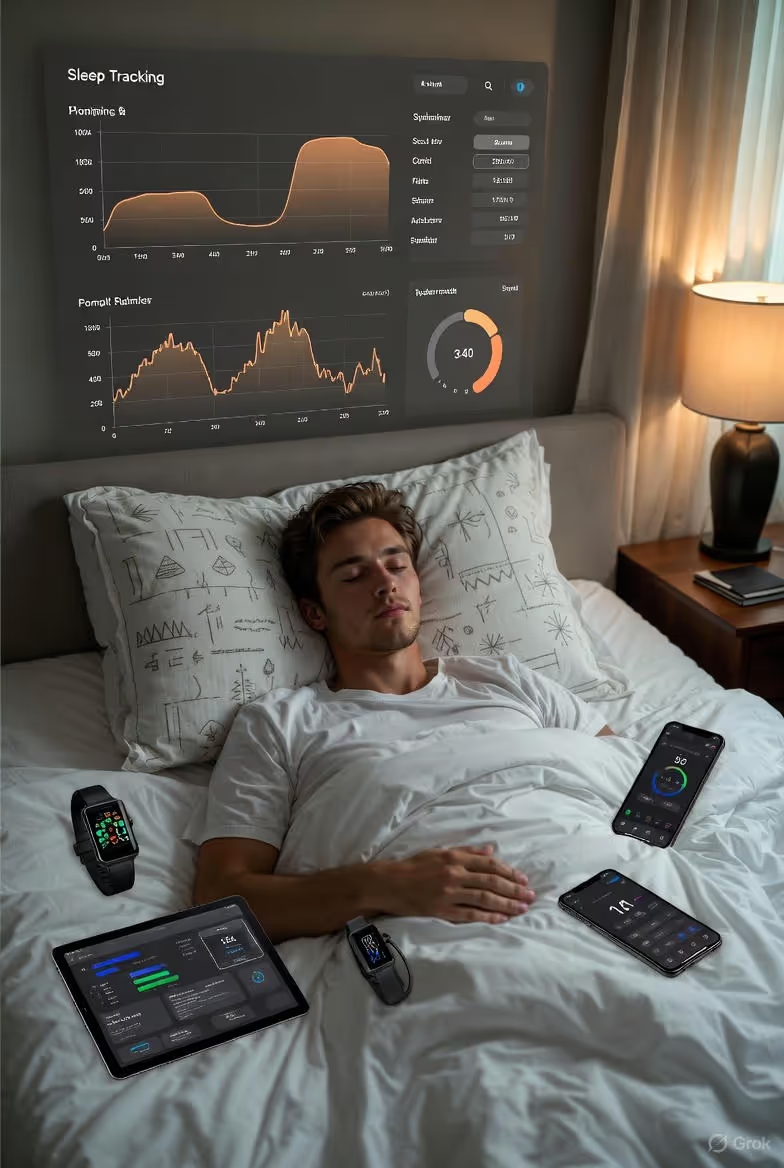
To grasp why the first three hours are so pivotal, we must first understand the elegant, cyclical architecture of a full night’s sleep. Sleep is not a monolithic state of unconsciousness but a dynamic journey through distinct stages, each with its own unique physiological and neurological signature. This journey is orchestrated by your brain with the precision of a master conductor, moving through repeated cycles that last approximately 90 to 110 minutes each.
A typical night consists of four to six of these cycles. Each cycle is composed of two broad categories of sleep: Non-Rapid Eye Movement (NREM) sleep and Rapid Eye Movement (REM) sleep. NREM sleep is further divided into three stages, progressing from light sleep to the deep, restorative slumber we are focusing on.
The magic, however, is in the distribution of these stages across the night. This is not a random pattern; it's a highly predictable cascade where deep sleep dominates the early cycles.
In your first sleep cycle, you descend rapidly from N1 through N2 and plunge into a long, rich period of N3 deep sleep. This initial deep sleep period can last 45-90 minutes. The second cycle also contains a substantial amount of deep sleep, though slightly less than the first. By the third and fourth cycles, the amount of deep sleep diminishes dramatically, often disappearing entirely in later cycles. Meanwhile, REM sleep periods, which are very brief in the first cycle, grow longer and more intense as the night progresses.
This means the majority of your deep sleep is packed into the first half of the night, primarily within the first three to four hours after sleep onset. Your body prioritizes this deep, physical restoration above all else. If you only slept for four hours, you would still obtain a significant portion of your night’s deep sleep. Conversely, if you disrupt or shorten the first half of your sleep, you disproportionately rob yourself of this critical stage, even if you "catch up" on total hours later.
This architectural blueprint explains why timing is everything. The Deep Sleep Window is your biological prime time for physical restoration. Missing it is like skipping the foundation of a building and trying to stabilize it with decorative finishes. For those looking to track this intricate architecture personally, advanced wearables like the Oxyzen smart ring provide fascinating insights into your unique sleep cycles, helping you see this pattern unfold night after night. You can learn more about how this technology decodes your sleep stages on the Oxyzen blog, where we explore the data behind wellness.

While you lie peacefully unaware, the first three hours of sleep trigger a meticulously timed hormonal concert. This isn't background noise; it's the essential symphony of restoration, conducted by your endocrine system. The release and suppression of key hormones during this window are fundamental to health, and deep sleep is their premier performance stage.
Growth Hormone (GH) Takes Center Stage: The undisputed star of the deep sleep show is human growth hormone (HGH). Over 75% of its daily secretion occurs during the pulses of slow-wave sleep in the first half of the night. HGH is not just for children's growth; in adults, it is the master regulator of repair. It stimulates protein synthesis, muscle growth, tissue repair, bone building, and fat metabolism. It boosts your immune function and helps maintain healthy body composition. Without robust deep sleep, this critical anabolic (building) signal is muted, slowing recovery from exercise, daily wear and tear, and injury.
The Melatonin and Cortisol Seesaw: As you prepare for sleep, your pineal gland secretes melatonin, the "darkness hormone," which helps initiate sleep. Its levels remain elevated throughout the night, but its presence is a key facilitator for entering deep sleep. Crucially, during the Deep Sleep Window, the production of the stress hormone cortisol reaches its daily nadir. This peaceful, low-cortisol environment is non-negotiable for the work of GH and other repair processes. Cortisol is catabolic (breaking down); its suppression during deep sleep allows the anabolic, building hormones to do their work unimpeded.
Leptin and Ghrelin: The Appetite Regulators: Deep sleep directly influences the hormones that control hunger and satiety. During this window, levels of leptin (the "I'm full" hormone) rise, signaling to your brain that energy stores are adequate. Simultaneously, levels of ghrelin (the "I'm hungry" hormone) decrease. This hormonal balance helps regulate appetite and prevents nocturnal (or next-day) cravings. Disrupt deep sleep, and this balance is upended: leptin falls, ghrelin rises, and you’re left with increased hunger and a preference for high-calorie, carbohydrate-rich foods.
The Detoxification and Cellular Cleanup Crew: Recent groundbreaking research has highlighted the glymphatic system, the brain's unique waste-clearance system. This system becomes dramatically more active during sleep, particularly during deep N3 sleep. During the Deep Sleep Window, cerebrospinal fluid floods the brain, flushing away metabolic waste products that accumulate during waking hours, including beta-amyloid proteins, which are associated with Alzheimer's disease. Think of it as your brain’s nightly power-wash. This crucial detoxification process is heavily concentrated in the first, deepest sleep cycles.
Sympathetic and Parasympathetic Balance: Your autonomic nervous system has two main branches: the sympathetic (fight-or-flight) and the parasympathetic (rest-and-digest). Waking life often keeps the sympathetic system engaged. The descent into deep sleep marks a profound shift toward parasympathetic dominance. Your heart rate reaches its lowest resting point, blood pressure drops, and digestion is facilitated. This state of profound physiological calm is the environment in which all other restorative processes can thrive.
The takeaway is profound: The Deep Sleep Window is not a passive state of inactivity. It is a period of intense, hormonally-driven biochemical activity. It's when your body transitions from defense and output to repair, rebuilding, and resetting. Compromising this window doesn't just make you tired; it disrupts core metabolic, cognitive, and immunological maintenance programs. For a deeper look at how our technology is designed to track the physiological markers of this symphony, you can learn more about Oxyzen and its holistic approach to health monitoring.
If deep sleep is the body's repair shop, it is equally the brain's sorting facility, archivist, and janitorial service. The cognitive processing that occurs during the first three hours is as vital as the physical repair, forming the bedrock of learning, memory, and next-day mental performance. This is where your experiences are transformed into lasting knowledge and your mental workspace is cleared for a new day.
Memory Consolidation: From Hippocampus to Hard Drive: Throughout the day, memories are initially formed and held in a small, seahorse-shaped region of the brain called the hippocampus. Think of the hippocampus as a sticky note—excellent for quick, temporary notes but with limited space. During deep sleep, particularly in the slow-wave oscillations of N3, a remarkable transfer occurs. The reactivation of neural patterns from the day (a process called "replay") helps shuttle these short-term memories from the hippocampus to the neocortex, the brain's massive outer layer responsible for long-term storage and higher-order thinking. Here, memories are integrated with existing knowledge networks, becoming more stable and permanent. This process is especially critical for declarative memory—the memory of facts and events.
Synaptic Homeostasis: Resetting Your Mental Whiteboard: The "synaptic homeostasis hypothesis" offers another crucial lens. When you are awake, you are learning, which means your brain is constantly forming new connections (synapses) between neurons. This process strengthens circuits but is also energetically expensive and leads to a kind of "saturation." Deep sleep acts as a global downscaler. During slow-wave sleep, the overall strength of synapses is selectively pruned back. This isn't about erasing memories, but about reducing the "noise." It weakens unimportant connections while preserving the stronger ones formed through active learning, thereby increasing the signal-to-noise ratio in your brain. This process restores synaptic plasticity, essentially resetting your brain's learning capacity for the next day. Without it, your mental whiteboard remains cluttered, impairing new learning and cognitive flexibility.
The Glymphatic System in Action: As mentioned in the hormonal symphony, the brain's glymphatic system is most active during deep sleep. The clearance of neurotoxic waste like beta-amyloid and tau proteins isn't just a housekeeping chore; it's a direct investment in long-term brain health and acute cognitive function. A brain burdened with metabolic debris operates less efficiently. By prioritizing the Deep Sleep Window, you are ensuring this essential cleanse occurs at full capacity, protecting your cognitive clarity both now and in the future.
Emotional Processing and Resilience: While REM sleep is more famous for emotional memory processing, deep sleep plays a foundational role. By consolidating the factual components of memories and reducing overall neural "static," deep sleep may help detach the emotional charge from memories. This allows the more emotional processing in REM to occur on a clearer dataset. A lack of deep sleep can leave you with raw, unintegrated emotional memories, contributing to increased anxiety, irritability, and emotional reactivity the following day.
The consequence of missing this cognitive window is stark. Studies show that after a night of disrupted deep sleep, individuals perform worse on tasks requiring recall, logical reasoning, and attention. Learning efficiency plummets. You cannot "make up" this type of cognitive restoration by sleeping in on the weekend. The brain's processing is tightly coupled to the first cycles of the night. Protecting the Deep Sleep Window is, therefore, the single most effective strategy for anyone looking to boost memory, enhance learning, maintain mental clarity, and build emotional resilience. For more insights on optimizing cognitive performance through data, our blog features numerous articles on sleep and brain function.

When the sanctity of the first three hours is violated—whether by choice, disorder, or environment—the bill comes due across every facet of your health. The consequences are not merely feeling "a bit tired"; they are systemic, insidious, and accumulate over time. Understanding these costs is the strongest motivation for defending this critical biological window.
Cognitive and Performance Deficits:
Metabolic & Endocrine Havoc:
Emotional & Mental Health Toll:
Cardiovascular Strain:
Immunodeficiency:
Long-Term Neurological Risk:
The evidence is unequivocal: A compromised Deep Sleep Window is a direct assault on your healthspan and lifespan. It's not an exaggeration to say that protecting these hours is as important as diet and exercise. It is the third pillar of foundational health. For those struggling to understand their own sleep patterns, checking our FAQ can be a great starting point for identifying common disruptors and solutions.
In our 24/7, always-on world, a host of factors conspire to fragment and shallow our sleep, with the Deep Sleep Window as the primary casualty. These saboteurs are often woven into the fabric of modern life, making them easy to overlook but devastating in effect.
1. Artificial Light & Blue Light Bombardment: This is public enemy number one for sleep onset and depth. Light, especially the blue wavelengths emitted by LEDs, smartphones, tablets, and computers, suppresses melatonin production more powerfully than any other wavelength. Using these devices in the two hours before bed effectively tells your suprachiasmatic nucleus (your brain's master clock) that it's still midday, delaying the signal to initiate sleep and weakening the depth of the first cycle. Even ambient light from streetlights or a charging indicator can have a measurable impact.
2. Irregular Sleep Schedules: Your brain thrives on predictability. Going to bed and waking up at wildly different times on weekdays versus weekends—a phenomenon known as "social jet lag"—confuses your circadian rhythm. This makes it harder to fall asleep quickly and disrupts the robust, synchronized neural activity required for deep sleep. The body doesn't know when to deploy its restorative resources most effectively.
3. Substance Use:
4. Late-Night Eating & Heavy Meals: Digesting a large, rich, or spicy meal close to bedtime raises core body temperature and keeps your digestive system active when it should be winding down. This can lead to discomfort, acid reflux, and a failure to achieve the drop in core temperature necessary to initiate and maintain deep sleep.
5. Chronic Stress & Anxious Rumination: An active, worried mind is the antithesis of the parasympathetic state required for deep sleep. High bedtime levels of cortisol and adrenaline are direct chemical blockers of the sleep initiation cascade. The phenomenon of "bedtime revenge procrastination"—staying up late to reclaim personal time—often stems from and exacerbates this cycle.
6. A Suboptimal Sleep Environment: A room that is too warm, too noisy, or too bright is fundamentally incompatible with deep sleep. The body needs a cool temperature (around 65°F or 18°C) to facilitate the thermoregulatory drop that accompanies sleep onset. Intermittent noises (a partner snoring, traffic, a dripping tap) can cause micro-arousals that pull you out of deeper stages without full awakening, fragmenting the sleep architecture.
7. Lack of Daytime Light Exposure & Physical Inactivity: The circadian rhythm is set by bright light exposure during the day. Insufficient natural light weakens the daytime signal, diluting the strength of the nighttime melatonin release. Similarly, regular physical activity promotes deeper sleep, but a sedentary life fails to build sufficient sleep pressure.
8. Certain Medications & Underlying Sleep Disorders: Medications like some antidepressants, beta-blockers, and corticosteroids can interfere with sleep architecture. More seriously, disorders like Sleep Apnea are deep sleep's arch-nemesis. The repeated breathing pauses cause continual micro-arousals to resume breathing, making sustained deep sleep virtually impossible. This is a medical condition requiring professional diagnosis and treatment.
Identifying your personal saboteurs is the first step toward reclaiming your Deep Sleep Window. Often, it's a combination of factors. The journey of creating Oxyzen was born from a desire to help people identify these invisible disruptors through data, a story you can read more about in our story. By bringing awareness to these patterns, we can begin to craft effective, personalized counter-strategies.
Optimizing your Deep Sleep Window doesn't begin at 10 p.m.; it starts the moment you wake up. Your daytime behaviors are the levers you can pull to build robust sleep pressure and align your circadian rhythm, setting the stage for a rapid, deep descent into restorative slumber. Think of it as priming the pump for the night ahead.
Harness the Power of Light: Your Circadian Anchor
Strategic Movement & Exercise:
Master Your Stress & Wind-Down Routine:
Nutrition & Hydration Timing:
By treating your entire day as preparation for sleep, you shift from being a passive recipient of whatever sleep you get to an active architect of your restoration. This proactive approach ensures that when your head hits the pillow, your biology is perfectly primed to dive deep, swiftly and effectively. For more detailed guides on crafting the perfect daytime routine for sleep, explore our blog for expert-curated strategies and insights.

The final hour and a half before sleep is your launch sequence. This is where intention meets biology. A deliberate, consistent pre-bed ritual serves as a powerful conditioned signal to your brain and body, telling them in no uncertain terms that it is time to power down and prepare for deep restoration. This ritual is the bridge between a busy day and a peaceful night.
Phase 1: The Digital Sunset (T-90 minutes)
Phase 2: The Environment Optimization (T-60 minutes)
Phase 3: The Mind & Body Wind-Down (T-45 minutes)
Phase 4: The Final Preparations (T-20 minutes)
The Consistency Key: The power of this ritual lies less in the specific activities and more in their consistency and intention. Performing the same sequence of calming activities in the same order, at roughly the same time each night, creates powerful Pavlovian conditioning. Your brain begins to associate these actions with the impending state of sleep, making the transition faster and more seamless.
By engineering this launchpad, you are not just hoping for good sleep; you are systematically removing obstacles and providing the ideal conditions for your Deep Sleep Window to open wide. It’s a daily practice of self-respect and biological wisdom. Our users often share how tracking the impact of such rituals with their Oxyzen ring provided the feedback loop needed to stick with them; you can read some of their testimonials here.
Your bedroom should be a sanctuary designed for one primary function: facilitating deep, uninterrupted sleep. Every element of the environment should be optimized to support, not sabotage, the delicate architecture of your sleep cycles, especially the critical first three hours. This goes far beyond a comfortable mattress.
1. The Temperature Triad: Cool, Constant, Controlled
2. The Absolute Dominion of Darkness
3. The Sound of Silence (or Consistent Noise)
4. The Air You Breathe
5. The Psychology of Space: A Bed-Only Zone
By treating your bedroom environment with the same deliberate care you would a high-performance workspace, you create the external stability necessary for internal restoration. This sanctuary becomes the fortress that protects your Deep Sleep Window from the chaos of the outside world. It’s a tangible expression of the commitment to your own well-being. For questions on how wearables can help monitor environmental impacts on your sleep, our FAQ page addresses many common inquiries.
In the quest to master your Deep Sleep Window, intuition alone is insufficient. You cannot feel your growth hormone pulse or perceive the depth of your slow-wave sleep. This is where modern wearable technology, specifically the advent of the smart ring, becomes a transformative tool. By providing objective, granular data about your sleep physiology, these devices move you from guessing to knowing, and from knowing to optimizing.
Why a Smart Ring? The Unobtrusive Advantage
Unlike wrist-worn devices, a smart ring worn on your finger offers a unique combination of continuous wearability and clinical-grade sensor placement. The finger hosts rich vascular beds, allowing for strong photoplethysmography (PPG) signals to track:
Decoding Your Deep Sleep Data: From Numbers to Strategy
With this data, you can move beyond the simplistic "sleep score" and engage in true sleep literacy:
Beyond Tracking: The Future of Personalized Sleep Coaching
The next frontier is actionable intelligence. Advanced platforms don't just show data; they interpret it and provide personalized recommendations. For example:
This transforms the device from a passive tracker to an active partner in your sleep optimization journey. Our mission at Oxyzen is rooted in this philosophy of empowering users with knowledge, a vision detailed in our about us page.
A Word of Caution: Data for Empowerment, Not Anxiety
The goal is informed awareness, not obsessive perfection. There will be nights with less deep sleep due to life's natural ebb and flow. The technology's value is in revealing long-term trends and providing feedback on controllable inputs, not in creating stress over a single night's score. Use the data as a guide, not a gospel.
By leveraging the objective insights from a smart ring, you close the loop between your daily habits, your overnight physiology, and your daytime feeling. You gain the power to defend and enhance your Deep Sleep Window with a level of personalization previously available only in sleep labs.
The exploration of the Deep Sleep Window reveals a fundamental, non-negotiable truth: the quality of the first third of your night dictates the quality of your next day, your long-term health, and your overall vitality. This is not a niche topic for biohackers; it is essential knowledge for anyone who wishes to live a full, energized, and resilient life.
We have journeyed through the intricate architecture of sleep, witnessing how deep sleep is front-loaded by our biology for a reason. We've listened to the hormonal symphony that plays only when the conditions are right and understood the profound cognitive restoration—the memory consolidation and neural cleansing—that occurs in this window. The high cost of disrupting this process is clear, impacting everything from our waistlines and hearts to our minds and moods.
The modern world, with its artificial light, irregular schedules, and constant stress, is expertly designed to sabotage this window. Yet, armed with knowledge, we are not powerless. By identifying the saboteurs, priming our biology with intelligent daytime habits, engineering a flawless pre-bed ritual, and crafting a sanctuary for sleep, we take back control.
Technology, like the advanced sensors in a smart ring from Oxyzen, now offers us a once-unimaginable lens into this hidden world, transforming abstract advice into personalized, actionable strategy.
Protecting your Deep Sleep Window is an act of profound self-respect. It is a commitment to giving your body and mind the time and conditions they need to repair, restore, and prepare. It is the foundation upon which all other wellness pursuits—nutrition, exercise, mindfulness—are built. You cannot build a temple on a shaky foundation.
This understanding is just the beginning. The principles outlined here are your map. The journey to consistently excellent sleep is personal and iterative. Start tonight. Choose one saboteur to eliminate, one ritual to implement, one aspect of your environment to optimize. Observe the difference. Your brain, your body, and your future self will thank you for it.
The quest for longevity is often framed by diet and exercise, but sleep—specifically deep sleep—is the silent, non-negotiable third pillar. It is during these first few hours of the night that your body engages in its most fundamental anti-aging and cellular maintenance work. Compromising deep sleep isn't just about being tired tomorrow; it's about accelerating the cellular aging process today.
Telomeres: The Chromosomal Clock
At the end of each chromosome lies a protective cap called a telomere. Think of it like the plastic aglet on a shoelace, preventing fraying. Each time a cell divides, telomeres shorten slightly. When they become too short, the cell can no longer divide and becomes senescent (dysfunctional) or dies. Telomere length is a powerful biomarker of biological aging.
Cellular Repair and Autophagy
During deep NREM sleep, the rate of cellular repair and growth peaks. This is when damaged proteins are cleared and organelles are recycled through a process called autophagy (literally "self-eating"). Autophagy is the body's essential quality control and renewal system, crucial for preventing the accumulation of cellular debris linked to neurodegenerative diseases, cancer, and aging.
Hormonal Balance and Metabolic Aging
As detailed earlier, the deep sleep hormonal symphony—the surge of growth hormone and the suppression of cortisol—is intrinsically anti-aging. Growth hormone supports muscle mass preservation, bone density, and skin integrity—all of which decline with age. Unchecked nighttime cortisol, on the other hand, promotes visceral fat accumulation, muscle breakdown, and insulin resistance, a cluster of conditions that accelerate metabolic aging.
Inflammation: The Common Pathway of Age-Related Disease
Low-grade, chronic inflammation ("inflammaging") is a root cause of nearly every major age-related disease: cardiovascular disease, diabetes, cancer, and neurodegeneration. Deep sleep is a powerful anti-inflammatory. During this window, the body produces anti-inflammatory cytokines while suppressing pro-inflammatory ones. Night after night of poor deep sleep creates a persistent pro-inflammatory state, effectively pouring gasoline on the slow-burning fire of age-related decline.
The Practical Longevity Prescription:
You cannot directly control your telomeres, but you can control the behaviors that influence them. Prioritizing your Deep Sleep Window is a direct intervention in your biological aging process. It is the time when your body focuses not on external output, but on internal renovation and defense. Framing sleep as your daily longevity supplement makes its protection non-negotiable. For those tracking holistic health metrics, understanding how sleep data interplays with other wellness indicators is key; a platform like Oxyzen is built on this integrative principle, which you can learn more about here.
For high achievers—whether on the athletic field, in the boardroom, or in creative pursuits—deep sleep is the ultimate performance enhancer. It is the original, and still unsurpassed, recovery technology. While everyone needs deep sleep, those pushing their physical and mental limits have a non-negotiable, elevated requirement for it.
The Athlete's Secret Weapon:
For physical performance, deep sleep is where the magic of adaptation happens. Training provides the stimulus; deep sleep delivers the results.
The Cognitive Performer's Advantage:
In the knowledge economy, your brain is your primary tool. Deep sleep sharpens that tool every single night.
The Performance Paradox of "No Time to Sleep":
The ambitious often see sleep as time stolen from productivity or training. This is a catastrophic error. Research is unequivocal: Extending sleep improves performance metrics across the board. A seminal study on Stanford University basketball players found that extending sleep to 10 hours per night improved free-throw accuracy by 9%, sprint times, and overall well-being. For cognitive workers, even modest sleep restriction reliably decreases output, creativity, and accuracy.
Strategic Sleep for Competition/Presentation:
Peak performers can use sleep strategically. In the nights leading up to a major event—a race, a keynote, a critical negotiation—protecting and even slightly extending the Deep Sleep Window is more important than any last-minute cramming or training. This is known as "sleep banking." While you can't fully compensate for chronic debt, a few nights of prioritized, high-quality sleep before a high-stakes day can provide a significant performance buffer.
In essence, deep sleep is the silent partner in every achievement. It is the difference between grinding and thriving, between plateaus and breakthroughs. It turns effort into results. For athletes and executives alike, tracking recovery metrics like HRV and deep sleep duration isn't just interesting; it's a critical part of the training plan, providing objective data on readiness. You can find discussions on optimizing these metrics in our blog's performance section.
Sleep is often viewed as a solitary act, but its quality—or lack thereof—creates powerful ripple effects that extend to your relationships, your workplace, and your community. A compromised Deep Sleep Window doesn't just leave you fatigued; it alters your social brain, impacting how you connect, communicate, and contribute to the people around you.
The Neuroscience of the "Social Brain" on Low Sleep:
Key regions of the brain involved in social interaction are exquisitely sensitive to sleep loss.
The Real-World Consequences:
The Contagion of Sleep (and Sleep Deprivation):
Sleep patterns, especially in close relationships, can be subtly synchronous. A partner's restlessness or snoring can disrupt your sleep. Conversely, committing to a shared wind-down ritual can improve both partners' sleep. In a team setting, a culture of "burnout bravado" that devalues sleep can pressure others to neglect their own needs, creating a collective performance and morale deficit.
Protecting Your Sleep is a Social Responsibility:
This reframes the imperative. Honoring your Deep Sleep Window isn't a selfish act of self-care; it's a foundational act of social responsibility. By ensuring you are emotionally regulated, empathetic, and cognitively sharp, you show up as a better partner, parent, colleague, and friend. You have more to give, and you give it more skillfully. You become a stabilizing, positive force in your social circles.
Creating a supportive sleep environment often requires household buy-in. Discussing the importance of a cool, dark, quiet bedroom or agreeing on a digital sunset as a family or couple turns sleep from a personal habit into a shared value that benefits everyone. For those navigating shared sleep spaces, our FAQ includes tips on managing different sleep needs and schedules.
Life is not a controlled laboratory. Stressful periods, time zone crossings, and the arrival of a new baby are classic disruptors of the sacred sleep window. During these transitions, the goal shifts from "optimal" to "protective." The strategy becomes about damage control and finding micro-opportunities for restoration, using your knowledge as a shield against total sleep deprivation.
1. Acute and Chronic Stress:
2. Jet Lag and Shift Work:
3. New Parenthood:
In all transitions, self-compassion is key. Your deep sleep metrics on a wearable will look terrible. That's okay. The goal is to use your knowledge to get the best possible sleep under the circumstances and to return to your optimal protocol as soon as the disruptive phase passes. For more on resilience and adapting wellness practices during life's changes, our community often shares their stories on the Oxyzen blog.
We stand at the frontier of a revolution in sleep science. The future moves beyond generic advice and reactive tracking into the realm of predictive, personalized, and proactive sleep optimization. This future is being shaped by advances in wearable technology, artificial intelligence, and a deeper understanding of individual genetics.
1. From Tracking to Predicting: AI-Driven Sleep Forecasting
Future devices and apps will not just tell you how you slept; they will predict how you will sleep and prescribe interventions. By analyzing vast datasets—your daily activity, stress (via HRV), light exposure, calendar events, and even dietary logs—algorithms will identify personalized risk factors for a poor night.
2. Closed-Loop Sleep Environments
Your bedroom itself will become an active participant in your sleep optimization. Imagine:
3. Acoustic & Sensory Stimulation to Enhance Deep Sleep
Early research shows promise for technologies that can safely augment deep sleep.
4. Genetic and Microbiome Personalization
Understanding your individual blueprint will become central.
5. Integrated Health Platforms
Sleep data will cease to live in a silo. It will be integrated with your continuous glucose monitor, fitness tracker, and electronic health record. Your doctor or health coach will see a holistic dashboard: "Poor deep sleep last night correlated with a glucose spike after dinner and elevated resting heart rate. Let's adjust meal timing and consider a stress-mitigation protocol."
Platforms like Oxyzen are pioneering this integrated view, where sleep is not an isolated metric but a core vital sign in dialogue with all others, a vision detailed in our story.
The future of sleep optimization is not about more gadgets for their own sake. It is about seamless, intelligent support that removes guesswork and friction, allowing your biology to function at its natural best. It turns the science of the Deep Sleep Window into an effortlessly maintained reality.
We have journeyed from the microscopic—the delta waves of a single neuron, the flushing of the glymphatic system—to the macroscopic: the impact on our longevity, our relationships, and our collective future. The resounding, evidence-based conclusion is unequivocal: The first three hours of your sleep are not merely the beginning of rest; they are the cornerstone of restoration.
This Deep Sleep Window is where your body conducts its most vital maintenance. It repairs tissue, consolidates memory, balances hormones, clears metabolic waste, and fortifies your immune system. To neglect it is to build your health on unstable ground. No amount of organic food, personalized training, or mindfulness apps can fully compensate for a consistent deficit in this foundational biological process.
The modern world is structurally hostile to this need. It glorifies busyness, inundates us with blue light, and fragments our time. Protecting your sleep, therefore, is not a passive act but a conscious, daily rebellion. It is a declaration that your long-term vitality and present-moment clarity are worth defending.
Your path forward is clear:
The pursuit of perfect sleep is a fool's errand. The pursuit of protected, prioritized, and understood sleep is the path of the wise. It is an ongoing practice, not a destination. By honoring your Deep Sleep Window, you are not just closing your eyes for the night. You are opening the door to more energized days, a healthier body, a sharper mind, and a more emotionally rich life.
Your journey to deeper sleep starts not tomorrow, but tonight. In the first three hours. Defend them.
Your Trusted Sleep Advocate: Sleep Foundation — https://www.sleepfoundation.org
Discover a digital archive of scholarly articles: NIH — https://www.ncbi.nlm.nih.gov/
39 million citations for biomedical literature :PubMed — https://pubmed.ncbi.nlm.nih.gov/
Experts at Harvard Health Publishing covering a variety of health topics — https://www.health.harvard.edu/blog/
Every life deserves world class care :Cleveland Clinic - https://my.clevelandclinic.org/health
Wearable technology and the future of predictive health monitoring :MIT Technology Review — https://www.technologyreview.com/
Dedicated to the well-being of all people and guided by science :World Health Organization — https://www.who.int/news-room/
Psychological science and knowledge to benefit society and improve lives. :APA — https://www.apa.org/monitor/
Cutting-edge insights on human longevity and peak performance:
Lifespan Research — https://www.lifespan.io/
Global authority on exercise physiology, sports performance, and human recovery:
American College of Sports Medicine — https://www.acsm.org/
Neuroscience-driven guidance for better focus, sleep, and mental clarity:
Stanford Human Performance Lab — https://humanperformance.stanford.edu/
Evidence-based psychology and mind–body wellness resources:
Mayo Clinic — https://www.mayoclinic.org/healthy-lifestyle/
Data-backed research on emotional wellbeing, stress biology, and resilience:
American Institute of Stress — https://www.stress.org/


