


How to Deepen Your Calm Mind Practice After the First Year
Deepen your practice after the first year by exploring longer sessions, retreats, different meditation styles, or integrating mindfulness more fully into life.
Deepen your practice after the first year by exploring longer sessions, retreats, different meditation styles, or integrating mindfulness more fully into life.
%402x.svg)
The first year of cultivating a calm mind is an undeniable triumph. You’ve established the routine, learned the basic techniques, and felt the initial, profound shift from constant reactivity toward a quieter center. The storms of the mind may not have vanished, but you’ve built a sturdy shelter. You know how to breathe through tension, observe your thoughts without getting swept away, and carve out precious moments of stillness in a noisy world.
But then, a subtle shift occurs. The practices that once felt revolutionary become familiar. The initial dramatic improvements plateau into a gentle, steady line. You might even encounter a quiet whisper of doubt: “Is this it?” You’ve reached the shoreline of beginner’s mind, and now a vast, uncharted ocean of deeper practice stretches before you. This isn’t a failure; it’s an invitation. The journey beyond the first year is where calm ceases to be just a practice you do and begins to transform into who you are. It’s the shift from cultivating tranquility to embodying wisdom.
This evolution requires a new map. It asks us to move beyond timed sessions on a cushion and integrate profound awareness into the fabric of our daily lives—our conversations, our work, our deepest relationships, and even our sleep. It demands that we listen to our physiology as intently as our thoughts, understanding that the mind and body are not separate domains. This is where the ancient art of mindfulness meets the modern science of biofeedback, and where a tool like the Oxyzen smart ring becomes more than a tracker; it becomes a compassionate, objective guide on this inward expedition.
In this comprehensive guide, we will explore the sophisticated terrain of advanced calm. We’ll move from foundational awareness to insightful awareness, from stress management to resilience engineering, and from practicing in peace to embodying peace in motion. Welcome to the next chapter of your journey. Let’s begin.
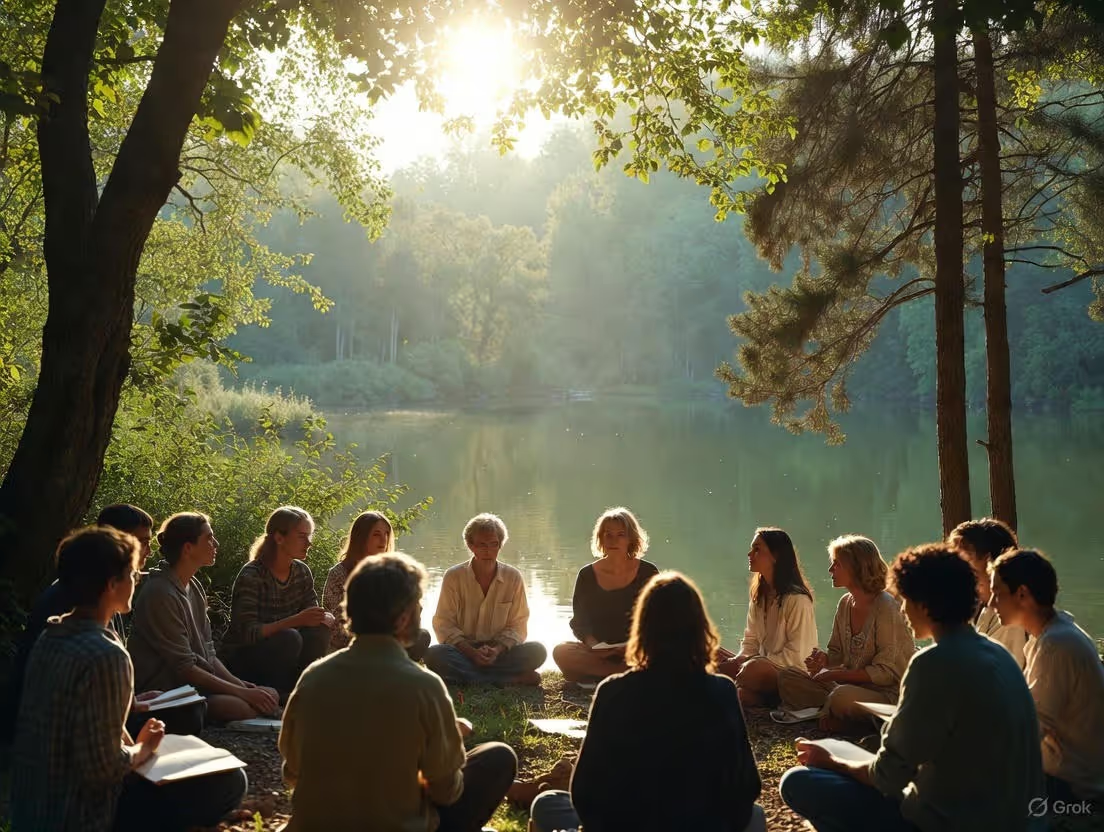
The first year taught you to notice the thoughts and feelings passing through your mind’s sky. You learned to label them—“thinking,” “worrying,” “planning”—and gently return to your breath. This foundational awareness is the bedrock of all that follows. But now, we go deeper. It’s time to move from simply noticing the clouds to understanding the weather patterns that create them.
Advanced practice involves discerning the subtle layers of your experience. Between the raw sensation in your body and the labeled thought in your mind lies a rich stratum of energy, mood, and subconscious patterning. You might notice a tightness in your chest before the thought “I’m anxious” arises. You might detect a faint, background hum of agitation that colors your entire afternoon, unrelated to any specific event. This is the domain of what some traditions call vedana—the felt tone of experience as pleasant, unpleasant, or neutral.
Deepening Exercise: The Sensation-Thought Gap
For the next week, during your sits, focus on widening the gap between physical sensation and mental narrative. When you feel an itch, don’t just label it “itching” and move on. Stay with the pure physical sensation: the exact location, its intensity, its texture. Observe for 10-15 seconds before the mind inevitably produces “This is annoying, I need to scratch.” Notice how the sensation and the story about the sensation are two distinct events. This practice trains you to catch the earliest somatic whispers of stress before they become full-blown mental stories.
This layered awareness is crucial because our physiological state is often the truest barometer of our inner world, frequently more honest than our conscious thoughts. A racing heart, shallow breath, or a subtle drop in heart rate variability (HRV) can signal rising stress long before our conscious mind admits, “I’m overwhelmed.” This is where objective data becomes a powerful ally. A device like the Oxyzen ring, worn continuously, provides a silent, non-judgmental reflection of your nervous system’s state. By checking your readiness score in the morning, you’re not just reading a number; you’re receiving a data point about the residual tension or deep recovery from the day before—information your thinking mind might rationalize away. You can discover how Oxyzen works to provide this kind of nuanced physiological insight, turning abstract awareness into concrete understanding.
The goal here is insight, not just awareness. Insight is the understanding of the cause-and-effect relationships within your mind and body. You begin to see, clearly: “When I consume news before bed, my sleep depth plummets and my morning HRV is low.” Or, “That difficult conversation spiked my stress, and the residue is still in my body three hours later.” This is the wisdom that fuels lasting change. For those eager to explore the science behind this mind-body feedback loop, our resource library offers deeper dives; you can always explore our blog for more wellness tips on topics like HRV and sleep hygiene.
Calm is not a vague, spiritual concept; it is a physiological state with a precise neurological and biochemical signature. After a year of practice, understanding this science can reinvigorate your motivation and provide a clear roadmap for advancement. At the heart of this is neuroplasticity—your brain’s lifelong ability to rewire itself based on experience. Every time you consciously choose to respond with a deep breath instead of a reactive outburst, you are strengthening the neural pathways associated with executive function (prefrontal cortex) and weakening the reactive loops of the amygdala, your brain’s alarm center.
One of the most critical biomarkers of this trained calm is Heart Rate Variability (HRV). HRV is not your heart rate; it’s the subtle, millisecond variation in the time between each heartbeat. A higher, more variable HRV indicates a heart that is responsive and resilient, seamlessly orchestrated by a balanced nervous system. It signifies strong vagal tone—the activity of your vagus nerve, which is the central command of your “rest-and-digest” parasympathetic system. A low HRV suggests a heart stuck in a rigid, metronomic pattern, often a sign of a stressed, sympathetic-dominant (“fight-or-flight”) state.
Your first year of practice has likely begun to positively influence your HRV. Now, the work is to deepen and stabilize that gain. This involves:
This is where precise tracking transforms practice. Without data, you’re guessing. You might feel you slept well, but your HRV and sleep stage data might tell a story of fragmented sleep and poor recovery. The Oxyzen ring acts as a continuous nervous system monitor, giving you an objective report card on how your lifestyle and mental practices are truly impacting your biology. Reviewing your weekly trends on the Oxyzen app moves you from subjective feeling (“I think I’m less stressed”) to objective knowing (“My average nightly HRV has increased by 12% this month, and my stress alerts have decreased by 40%”). To see how real users have applied this data to transform their well-being, you can read their accounts in our real customer reviews and social proof.
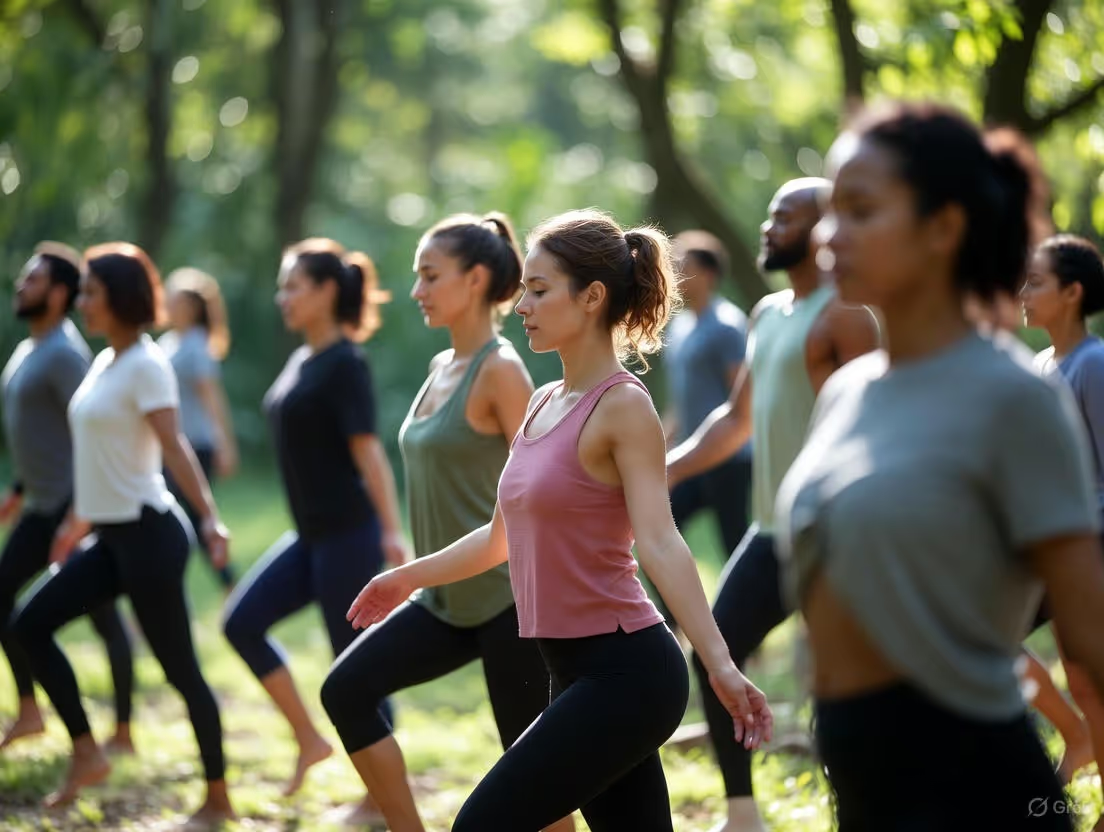
The true test of a deepened calm mind practice is not how serene you are in silence, but how present and composed you are in motion. Integration is the art of weaving mindfulness into the dynamic, often chaotic tapestry of daily life. The goal is to make your entire day a meditation.
Micro-Practices for Macro Impact:
The challenge in integration is remembering to remember. Our habits are strong, and autopilot is the default setting of the brain. This is another point where technology can serve as a gentle guide. Imagine your smart ring detecting a prolonged period of physiological stress—tense shoulders, elevated heart rate—while you’re hunched over your computer. A subtle vibration or notification can be the perfect, non-intrusive nudge to “remember.” It’s a call back to the present, an invitation to stretch, breathe, and reset. This bridges the gap between your formal practice and your lived experience. For more ideas on how to seamlessly blend mindfulness into a busy modern life, our team curates regular content; you can explore our blog for more wellness tips on practical integration.
The mind thinks in words; the body knows in sensations. Many advanced practitioners hit a plateau because they remain “stuck in the head,” observing thoughts with a disembodied awareness. To deepen calm, we must drop down from the cockpit of the mind and fully inhabit the vehicle of the body. This skill is called interoception—the perception of sensations from inside the body (heartbeat, breath, gut feelings, muscle tension).
Somatic practices teach us that calm isn’t just a mental state; it’s a physical one. Trauma and chronic stress live in the body as patterns of tension, holding, and numbness. By relearning to feel the body safely and fully, we can release these stored patterns and expand our capacity for calm.
Deepening Practices for Embodied Calm:
Using a device like the Oxyzen ring during these practices adds a layer of biofeedback. You can do a 10-minute resonant breathing session and immediately see its impact on your real-time stress levels and heart rate rhythm. This turns an internal practice into a visible, reinforcing dialogue with your own nervous system. It answers the question, “Is this working?” with immediate, objective data. Understanding the philosophy behind this integration of tech and somatic wisdom is part of our core mission; you can learn more about our approach on our brand journey and founding story.
Every sustained practice, from playing an instrument to athletic training, encounters plateaus. In meditation and calm practice, these can be particularly perplexing. The initial “honeymoon phase” of clear progress has ended, and you may feel stagnant, bored, or even more restless than when you began. In some contemplative traditions, this is referred to as a stage of purification or even a “dark night,” where latent stress and unresolved emotions rise to the surface to be processed now that the mind is quiet enough to see them.
First, know this is normal and a sign of progress. It means you’ve outgrown the beginner’s tools and are ready for more nuanced work.
Strategies for Navigating the Plateau:
You cannot cultivate a deeply calm mind in a chronically tired body. Sleep is the foundation of emotional regulation, cognitive function, and nervous system resilience. After the first year, your practice must intentionally embrace sleep not as a separate biological function, but as the ultimate daily meditation—a state of profound, passive restoration.
Advanced calm involves becoming a connoisseur of your own sleep. This means moving beyond just tracking duration and into the architecture of sleep: the cycles of Light, Deep, and REM sleep. Each stage plays a unique role in “cleaning house” for the brain and body. Deep sleep is crucial for physical repair and immune function, while REM sleep is where emotional memory is processed and integrated.
Tactics for Sleep Optimization:
By syncing your mindfulness practice with your circadian biology, you create a virtuous cycle. Daytime calm practices improve sleep quality, and superior sleep provides the neural substrate for greater mindfulness and emotional stability the next day. It’s the ultimate positive feedback loop for well-being. For a deeper exploration of the science of sleep and recovery, we publish regular insights that you can find on our blog for further reading.

As your calm deepens, you’ll encounter a more subtle challenge: attachment to the calm state itself. You may find yourself becoming frustrated by interruptions, irritable with people who seem “noisy,” or anxious about missing your meditation session. This is a beautiful paradox: clinging to peace is a form of suffering.
The advanced practice here is equanimity—a balanced, non-reactive mind that meets all experiences with an even heart. It’s the capacity to remain inwardly composed amidst both pleasure and pain, praise and blame, success and failure. Equanimity is not indifference; it is deep caring without desperate clinging or fearful aversion.
How to Cultivate Equanimity:
In our mission to foster this kind of balanced well-being, we believe in tools that support awareness without creating dependency. Learning about the philosophy behind creating such a tool can be found on our page detailing our vision and values.
Willpower is a finite resource. The advanced practitioner does not rely on it to maintain their practice; they design their environment and daily rhythms to make calm the default, path-of-least-resistance option. This is about creating rituals—intentional, repeatable sequences of actions imbued with meaning—that anchor your nervous system throughout the day.
Building Your Personal Calm Architecture:
These rituals transform discipline into devotion. You are no longer forcing yourself to be calm; you are lovingly curating a lifestyle that cultivates it from the inside out and the outside in. For inspiration on how others have built these supportive rhythms, our community’s stories offer powerful examples in our collection of real user experiences and testimonials.

A calm mind that exists in isolation is a beautiful but incomplete achievement. Our nervous systems are social; they co-regulate with those around us. Your deepened practice now becomes a gift you can offer to your relationships, family, and community. This is the practice of compassionate presence.
When you are deeply grounded, you become a “non-anxious presence” for others. In conflicts, you can listen more and react less. You can sense the unspoken emotions in a room. Your stable energy can help de-escalate a tense situation. This is applied calm.
Practices for Relational Calm:
Your wellness data can even inform this. You might notice that interactions with a certain person consistently spike your stress metrics. This isn’t for blame, but for awareness. It allows you to approach those interactions with extra preparation and self-care, perhaps by doing a brief centering practice beforehand. Understanding these patterns is part of a holistic journey, which we discuss in the context of our broader brand journey and vision.
In the quest for a calm mind, technology is often cast as the villain—the source of endless distraction and digital dopamine hits. But after the first year, you have the discernment to move from a reactive to a relational stance with your devices. Technology, particularly biofeedback technology, can transition from being a source of noise to becoming a channel for deeper self-dialogue.
The key is intentionality. The Oxyzen ring or any thoughtful wellness tool is not meant to make you obsessive about data. It’s designed to foster interoceptive awareness—to help you connect external numbers with internal feelings until the internal feeling becomes guide enough.
Principles for a Wise Tech Relationship:
When used this way, the technology disappears into the background, surfacing only to offer gentle, insightful reminders of your own physiological truth. It becomes a partner in your deepening self-knowledge. To understand the careful design and intent behind creating such a supportive tool, you can learn more about the company and its mission.
The final, and perhaps most important, insight for the practitioner moving beyond the first year is this: there is no finish line. The goal is not to achieve a permanent state of unflappable bliss, immune to life’s vicissitudes. That is a fantasy. The real goal is to develop a resilient, curious, and compassionate relationship with your ever-changing experience.
You will have bad days. You will lose your temper. You will forget to practice. This is not failure; it is data. Each “off” moment is an opportunity to practice self-compassion and begin again. This is the heart of the practice—the endless, gentle return.
Let your deepened calm be characterized not by perfection, but by adaptability. Let your tools, your rituals, and your knowledge serve this adaptability. Some days, your practice will be a 30-minute deep dive. Other days, it will be three conscious breaths before a meeting. Both are perfect.
Your journey now is one of refinement, nuance, and profound integration. You are learning the language of your own nervous system, designing a life that supports it, and extending the resulting peace into your world. This is the beginning of a truly mature practice—one that grows richer, deeper, and more beautifully human with every passing year. Continue to explore, question, and be kind to yourself. For continued support and exploration on this path, remember that a wealth of resources and a supportive community are always available; you can start by visiting our homepage to learn more about the holistic approach.
As you stand firmly in the understanding that calm is a lifelong path of curiosity, not mastery, you are ready to explore the sophisticated techniques that transform foundational practice into profound, embodied wisdom. The initial thrill of discovering mindfulness has settled into a steady rhythm. Now, we delve into the subtler arts—the practices that work not just on the mind, but through the body, emotions, and the very quality of your attention itself. This is where you begin to decode the deeper messages of your nervous system and craft a resilience that is proactive, not just reactive.
You understand the basics of Heart Rate Variability (HRV) and sleep stages. Now, let’s move from observation to active nervous system hacking. Advanced biofeedback is the process of using real-time physiological data to consciously influence your autonomic state, moving you from a passenger to a pilot of your own biology.
The Practice of Coherence Training:
Physiological coherence is a state of optimal function, characterized by a smooth, sine-wave-like pattern in your heart rhythm, high HRV, and synchronization between your heart, breath, and brainwaves. It’s the biomarker of peak calm and resilience. You can train yourself to enter this state on demand.
This isn’t just stress management; it’s resilience conditioning. You are literally training your heart and brain to default to a coherent, resilient pattern under pressure. It turns abstract calm into a tangible, reproducible skill. For those interested in the precise metrics behind this, our technical deep dives can be found if you explore our blog for more wellness tips on biofeedback protocols.
For the first year, the primary task was to cultivate focused attention (shamatha)—the ability to place your mind on an object (the breath) and hold it there. This builds the "muscle" of awareness. Now, we introduce investigative wisdom (vipassana)—using that stabilized attention to inquire into the very nature of experience.
These practices move you from calming the mind to understanding its fundamental operating system.
Deepening Practices:
These practices cultivate dispassionate insight. You see the impermanent, empty, and often impersonal nature of your experience, which leads to a profound and unshakable inner freedom. It’s the difference between bailing water out of a storm-tossed boat (basic stress relief) and understanding the nature of water, wind, and boat so thoroughly that you can sail peacefully in any weather. Sharing these insights and techniques is a core part of our educational mission, detailed further in our vision and values.
You cannot deepen an ocean by sprinkling water on the surface. Similarly, the subtle nuances of a calm mind practice often reveal themselves most clearly during periods of deep immersion. A retreat—whether a full weekend, a day, or even a dedicated 4-hour "mini-retreat" at home—creates the container for your nervous system to fully drop in, beyond the habitual pulls of daily life.
A retreat is not an escape; it’s an intensification. Without the distractions of to-do lists and notifications, the mind’s deeper patterns, resistances, and insights come into sharp relief.
Creating Your Own Home Retreat:
The post-retreat period is crucial. The challenge is to carry the profound quiet and clarity back into your daily life with grace, not griping. This "re-entry" is itself an advanced practice in integration.
A true test of an advanced calm mind practice is its applicability not just during peaceful moments, but during times of physical suffering. Chronic pain, illness, and fatigue are not distractions from your practice; they become the primary arena for it. This is the practice of making the unbearable, bearable by changing your relationship to sensation.
Mindfulness-Based Pain Management:
The goal is not to eliminate pain (though that can sometimes be a side effect), but to eliminate the secondary suffering—the fear, frustration, and story of "this shouldn’t be happening" that wraps around the primary sensation.
Biofeedback for Pacing and Acceptance:
For those with chronic fatigue or post-viral conditions, a device like the Oxyzen ring becomes an essential tool for pacing. By monitoring your stress and energy expenditure, you can learn your true limits. You might aim to stay below a certain stress threshold to avoid "boom and bust" cycles. Seeing the data can help you surrender to necessary rest without guilt, because the objective feedback overrides the mind's "I should be doing more" narrative. It teaches compassionate self-regulation. For support in using technology for these specific health challenges, our FAQ and support section offers guidance.
A deepened calm practice must not become a dry, austere, or joyless endeavor. A resilient nervous system is not just resistant to stress; it is also receptive to pleasure, connection, and joy. Appreciative Joy (Mudita) is the practice of taking delight in the happiness and success of others, without envy or comparison. It is an antidote to the scarcity mindset and a powerful expander of your own capacity for happiness.
Why This is an Advanced Practice: It requires you to overcome the deep-seated, often unconscious habits of comparison and self-centeredness. Feeling genuine joy for a colleague's promotion when you wanted it, or for a friend's thriving relationship when you feel lonely, is a profound training in selflessness and abundance.
Practices for Cultivating Mudita:
This practice directly impacts your physiology. Envy and resentment create tension and stress. Uncontrived joy supports coherence and relaxation. By training your mind to default to joy, you are literally training your nervous system toward a state of open, healthy engagement with the world. This holistic approach to well-being—encompassing mind, body, and social emotion—is central to the story of why we do what we do, which you can read about in our founding story.
As your inner world becomes more settled and clear, a natural imperative arises: to align your outer actions with that inner integrity. In Buddhist psychology, this is the path of Sila, or ethical conduct. It’s not about rigid moral rules, but about understanding that unskillful actions (lying, harming, stealing, gossiping, intoxication) create inner turbulence and fracture relationships, directly undermining the calm you’ve worked so hard to cultivate. Your practice now extends to how you move through the world.
Integrating Ethics into Daily Life:
Your biofeedback data can serve as a conscience here. You might literally see the physiological cost of engaging in gossip (elevated stress) versus the coherence fostered by an honest, kind conversation. It grounds ethics in the palpable reality of your own nervous system. For those exploring how to live a more integrated, values-aligned life, we share resources and perspectives regularly; you can explore our blog for more wellness tips on mindful living.
The calm, aware mind you cultivate during the day begins to influence the landscape of your night. Dream work is a fascinating frontier for the advanced practitioner, offering a window into the subconscious processing that occurs during sleep. Engaging with this material can lead to profound insights and creative problem-solving.
Setting the Stage for Lucidity and Recall:
Engaging with Dream Content:
Don’t just analyze dreams intellectually. Meditate on a dream image or feeling. Sit quietly and re-enter the dream state while awake, exploring the symbolism somatically. What does the "dark forest" feel like in your body? What message might the "helpful stranger" represent from your own psyche? This practice integrates fragmented parts of your subconscious, leading to greater wholeness and reduced internal conflict.
This advanced work acknowledges that calm is not just the absence of mental noise, but the integration of all levels of consciousness—waking, dreaming, and deep sleep. It’s about befriending your entire mind. The journey of understanding these layers is a personal one, and many in our community have shared their experiences; you can read about similar explorations in our collection of real user experiences.
After a year or more of practice, a crucial transition occurs: shifting from external guidance (apps, teachers, books) to trusting the inner teacher. This is the development of prajna—intuitive wisdom. You learn to listen to the subtle cues of your own being to guide the depth, direction, and style of your practice each day.
Cultivating Inner Guidance:
This autonomy is empowering. It means your practice is alive, responsive, and uniquely yours. It matures from a discipline imposed from the outside to a natural expression of your being from the inside. This principle of empowered self-knowledge is at the very heart of our product philosophy, which you can learn more about on our homepage.
The ultimate aim is a practice that is not a "self-improvement project" but a sustainable lifestyle that can endure and evolve over decades, through life’s myriad changes—career shifts, relationships, parenthood, aging, and loss. This requires flexibility, self-compassion, and a long-view perspective.
Principles for a Lifetime Practice:
This long-view turns practice into a faithful companion, a way of inhabiting your life with increasing depth, grace, and kindness, no matter what it brings. It is the culmination of all the advanced techniques: a calm that is wise, embodied, ethical, joyful, and enduring. For continued inspiration and resources to support this lifelong journey, remember that a wealth of knowledge awaits as you explore our blog for more wellness tips and deeper dives into sustainable well-being.
You have journeyed from foundational awareness to insightful inquiry, from biofeedback basics to nervous system coherence, and from personal practice to relational ethics. You stand at a point where calm is no longer a destination but the very lens through which you perceive and interact with the world. Now, we explore the final, integrative dimensions—how your deepened practice becomes the organizing principle for your creativity, your environment, your relationship with time, and your legacy. This is where the calm mind ceases to be a private refuge and becomes a transformative force in your life’s ecosystem.
A common misconception is that creativity thrives on chaos, angst, and last-minute pressure. While these can produce output, they often burn out the creator. Advanced calm practice reveals that the most profound, sustainable creativity arises from a state of open awareness—the same quality you cultivate on the cushion. This is the neuroscience of flow: a state of effortless concentration and timeless engagement, characterized by a specific brainwave pattern (often a mix of alpha and theta waves) associated with relaxation and inward focus.
Calm as the Gateway to Original Thought:
When the mind’s default mode network (the “storyteller” and self-referential thinker) is quieted through practice, it creates space for novel connections. Insights often “pop” into awareness not during forced effort, but in the spacious moments after formal practice—in the shower, on a walk, in the hypnagogic state before sleep.
Practices to Invite Creative Insight:
When calm underlies creativity, the output is not only more abundant but often more authentic and impactful. The work is no longer driven by a need for external validation (a major source of stress) but becomes an expression of your integrated being. For stories of how individuals have harnessed mindful awareness to fuel their passions, our community shares many such journeys in their real customer reviews and social proof.
Your environment is not a neutral backdrop; it is the constant, passive input to your nervous system. After a year of internal work, it’s time to audit and intentionally design your physical spaces—home, workspace, digital—to support and reflect the calm you’ve cultivated within. This is applied mindfulness through design.
Principles of a Calm-Enhancing Environment:
By crafting an environment that does the work for you, you conserve the mental energy required for willpower and decision-making. Calm becomes the path of least resistance. Our commitment to creating technology that harmonizes with, rather than disrupts, such an environment is part of our foundational ethos, detailed in our brand journey and vision.
A primary source of modern anxiety is our fractured relationship with time—the feeling of scarcity, of being perpetually behind, of life slipping through our fingers. Your calm mind practice now tackles this existential layer. The advanced practitioner works not just to manage time better, but to fundamentally alter their experience of time through the cultivation of patience and timeless awareness.
Patience as a Deep Practice:
Patience is not passive waiting; it is active, non-reactive abiding. It is the willingness to let things unfold according to their own rhythm, without the inner violence of impatience. To cultivate it:
Accessing Timeless Awareness:
In deep meditation, moments occur where the conceptual construct of time falls away. There is only the eternal present. You can invite this into daily life:
This shift liberates you from the tyranny of the clock. You still meet deadlines, but you are no longer internally enslaved by them. Time becomes a river you float on, not a treadmill you run on. For further exploration of how to cultivate this mindful relationship with technology and time, we offer resources that you can find on our blog.
Your calm is a gift to others, but to be truly received, it must be transmitted through the art of communication. Advanced practice here moves beyond mindful speaking to deep listening—the ability to listen with your whole being, creating a sanctuary of understanding for the speaker.
The Three Levels of Deep Listening:
Practicing Compassionate Communication (Nonviolent Communication):
When you communicate from this grounded, need-aware place, conflicts often de-escalate before they begin. You become a peacemaker in your relationships, not through appeasement, but through clear, compassionate connection. This skill is a cornerstone of emotional intelligence and is supported by the self-awareness fostered by tracking your stress responses during interactions. If you ever wonder how others navigate these challenges, our FAQ and support section often addresses the intersection of tech and interpersonal well-being.
Erik Erikson’s stage of Generativity vs. Stagnation describes the adult drive to create, nurture, and guide the next generation. A mature calm mind practice naturally flows into this stage. Your hard-won stability is not an end in itself; it becomes a resource you can offer to your community, family, and the world.
This is the practice of compassion in action. It moves beyond personal well-being to contribute to collective well-being.
Ways to Express Generative Calm:
This generative work creates a profound sense of meaning and connection, which are themselves powerful buffers against stress and despair. It completes the cycle: you cultivate calm within, which allows you to act wisely and compassionately in the world, which in turn deepens your sense of integration and peace. Our company’s mission is rooted in this generative ideal, which you can read more about in our section on our vision and values.
No exploration of depth is complete without acknowledging the shadow—the parts of ourselves we disown, reject, or hide: our anger, jealousy, pettiness, fear, and vulnerability. The “always calm” persona is a dangerous illusion. Advanced practice involves the courageous work of turning toward these disowned parts with the same mindful curiosity you bring to your breath.
Why This is Essential: Unexamined shadow material doesn’t vanish; it leaks out in passive-aggression, projections onto others, self-sabotage, or unexplained anxiety and depression. Integrating the shadow is not about acting out these impulses, but about acknowledging their existence with compassion, which robs them of their destructive power.
A Mindful Approach to Shadow Work:
This is perhaps the most challenging and liberating work. It leads to wholeness, where you no longer need to maintain a “spiritual” facade. You become more authentic, more resilient, and paradoxically, more genuinely calm because you are no longer at war with parts of yourself. Many who undertake this deep work find that tools providing objective physiological feedback, like the Oxyzen ring, help them stay grounded and compassionate when facing difficult internal states, as they can see the body’s stress response and consciously soothe it. For a look at the human stories behind this kind of integration, our real user experiences often touch on these themes.
The ultimate grounding for a calm mind is a deep, experiential understanding of impermanence (Anicca). Everything arises and passes away: sensations, thoughts, emotions, relationships, life stages, and life itself. This is not a morbid fixation, but a liberating truth. Your suffering is often rooted in resisting this fundamental law—clinging to what is pleasant, pushing away what is unpleasant, and ignoring the reality of change.
Practices to Cultivate Wisdom of Impermanence:
This wisdom brings a profound, unshakable equanimity. When you know loss is inevitable, you cherish what you have without desperate clinging. When you know difficulty will pass, you can bear it with grace. This is the calm that exists at the very heart of life’s flux. To delve deeper into the philosophical and practical aspects of this kind of mindful living, our resource library is always growing; you can explore our blog for more wellness tips on acceptance and resilience.
In the end, your deepened calm mind practice is your legacy in real-time. It’s not what you will leave behind, but how you live now. It’s the quality of attention you bring to your child’s story, the patience you exhibit in a crisis, the integrity you maintain when no one is watching, the joy you find in simple moments, and the compassion you extend even when it’s difficult.
This embodiment means your practice is seamless. There is no distinction between “meditating” and “living.” Every moment is an opportunity for presence, every interaction a field for compassion, every challenge a lesson in impermanence, and every joy a cause for grateful appreciation.
The Final Integration: Your tools—your meditation cushion, your breath, your biofeedback ring—are like training wheels. They have been essential. But the goal is to ride so fluidly that you forget the wheels are there. You live from the calm, clear, compassionate center they helped you discover and cultivate.
Continue to use your data as a friendly mirror, your practices as beloved rituals, and your community as a source of inspiration. But trust, above all, the quiet wisdom growing within you. It is your most reliable guide on this endless, beautiful path of awakening.
This concludes the first major portion of our exploration into deepening your calm mind practice. The journey continues as we examine specific applications for high-stress professions, the nuances of practice through different life stages, and the cutting-edge intersection of contemplative science and technology. For a comprehensive view of the tools and philosophy supporting this entire journey, you are invited to learn more about the holistic approach on our homepage.
Your Trusted Sleep Advocate: Sleep Foundation — https://www.sleepfoundation.org
Discover a digital archive of scholarly articles: NIH — https://www.ncbi.nlm.nih.gov/
39 million citations for biomedical literature :PubMed — https://pubmed.ncbi.nlm.nih.gov/
Experts at Harvard Health Publishing covering a variety of health topics — https://www.health.harvard.edu/blog/
Every life deserves world class care :Cleveland Clinic - https://my.clevelandclinic.org/health
Wearable technology and the future of predictive health monitoring :MIT Technology Review — https://www.technologyreview.com/
Dedicated to the well-being of all people and guided by science :World Health Organization — https://www.who.int/news-room/
Psychological science and knowledge to benefit society and improve lives. :APA — https://www.apa.org/monitor/
Cutting-edge insights on human longevity and peak performance:
Lifespan Research — https://www.lifespan.io/
Global authority on exercise physiology, sports performance, and human recovery:
American College of Sports Medicine — https://www.acsm.org/
Neuroscience-driven guidance for better focus, sleep, and mental clarity:
Stanford Human Performance Lab — https://humanperformance.stanford.edu/
Evidence-based psychology and mind–body wellness resources:
Mayo Clinic — https://www.mayoclinic.org/healthy-lifestyle/
Data-backed research on emotional wellbeing, stress biology, and resilience:
American Institute of Stress — https://www.stress.org/


