


The Discreet Smart Ring Benefits for Professional Environments
The advantage of a discreet device in workplace or formal settings.
The advantage of a discreet device in workplace or formal settings.
%402x.svg)
For the modern professional, maintaining peak performance is no longer just about skills and experience—it's about managing the unseen forces that shape our daily effectiveness. Beneath the polished presentations and strategic meetings, our bodies constantly communicate vital data about stress, recovery, energy, and resilience. Yet in corporate environments, where appearances often matter as much as results, how can we access this crucial information without broadcasting our vulnerabilities?
Enter the discreet smart ring—an elegant fusion of jewelry and technology that's quietly transforming professional wellness. Unlike clunky smartwatches that ping with notifications during client meetings or bulky fitness trackers that look out of place under a suit jacket, these minimalist devices offer continuous physiological monitoring while maintaining complete discretion. Worn on your finger like any conventional piece of jewelry, a smart ring provides 24/7 insights into the very metrics that determine professional success: cognitive function under pressure, recovery capacity between demanding projects, and sustainable energy management across long workdays.
The workplace challenges professionals face today are more physiological than we often acknowledge. From chronic sitting that impairs circulation and cognitive function to prolonged stress that silently builds toward burnout, our bodies respond to professional demands in measurable ways. Research increasingly shows that performance, creativity, and decision-making quality are deeply connected to physiological states like heart rate variability, sleep architecture, and nervous system balance . What if you could detect a stress spike before it compromised your presentation? Or receive a data-backed reminder to move when sedentary work begins affecting your concentration? This is the promise of wearable technology designed specifically for professional life—subtle enough for boardrooms yet powerful enough to provide genuinely transformative insights.
This comprehensive exploration will detail exactly how discreet smart rings serve as a professional's secret wellness weapon. We'll examine the scientific foundations that make these devices particularly effective in work environments, analyze their specific applications for common professional challenges, and provide practical guidance for integrating this technology into your career for sustainable high performance. The subtle revolution in professional wellness begins not with grand gestures, but with the quiet collection of data that empowers smarter daily choices.

The workplace has traditionally been a technology battleground—where new devices either earn their place through undeniable utility or get banished for creating distraction. Consider the journey of the smartphone: initially viewed as disruptive, it became essential. Smartwatches followed a similar path, though many organizations still restrict their visibility during client-facing interactions. This tension between technological advancement and professional decorum created an opening for a different approach—technology so subtle it becomes invisible to others while remaining powerfully present for the wearer.
The professional rejection of obvious wearables isn't merely about aesthetics; it's rooted in practical workplace dynamics. Visible tracking devices often send unintended signals. A smartwatch lighting up during a negotiation might suggest divided attention. A fitness tracker in a formal presentation could imply priorities elsewhere. "Many companies consider visible health tracking devices to be unprofessional or distracting," notes one analysis of workplace wearables. "Smart rings solve this problem by looking like ordinary jewelry, but with advanced sensors and powerful processing capabilities" .
What makes smart rings uniquely suited to professional environments isn't just what they do, but what they don't do:
The technological miniaturization enabling this discretion represents a significant engineering achievement. Today's smart rings house sophisticated sensors capable of measuring heart rate, blood oxygen, skin temperature, and movement within a form factor typically weighing less than 5 grams and measuring under 3mm thick . This represents the culmination of a decade of development in wearable technology, moving from conspicuous experimentation to refined, purpose-built tools for adults who need insights without intrusion.
Professionals face a genuine dilemma in today's health-conscious yet image-aware work cultures. We know physiological metrics profoundly impact performance—sleep quality predicts decision-making accuracy, stress levels influence creative problem-solving, and recovery capacity determines sustainable output. Yet traditional methods of accessing this data (taking breaks to check a device, wearing medical-looking equipment) often conflict with professional expectations of seamless, uninterrupted competence.
Smart rings resolve this conflict by operating continuously in the background. Whether you're presenting to executives, operating machinery, typing reports, or performing surgery, the ring maintains contact with your skin, gathering data about your physiological responses to different professional scenarios. This creates what workplace productivity experts call "ambient awareness"—an understanding of your physical state that doesn't require conscious checking but is available when needed .
Early smart rings targeted general wellness consumers, but recent iterations specifically address professional needs. Features like stress tracking during meetings, readiness scores for important decisions, and recovery analysis for demanding travel schedules reflect this professional orientation. Companies like Oura, RingConn, and Ultrahuman now design with professionals in mind, understanding that their users need data that translates directly to workplace performance, not just general wellness .
Perhaps most tellingly, these devices are increasingly adopted by professionals whose work demands both high performance and subtlety—executives, surgeons, trial lawyers, financial traders, and consultants. For these individuals, even minor advantages in stress management, cognitive clarity, or energy sustainability can significantly impact outcomes. Their adoption signals a shift toward accepting that optimal professional performance isn't separate from physiological management—it's dependent on it.

When considering wearable technology, we naturally default to the wrist—it's where we've worn timepieces for centuries. But for continuous, accurate physiological monitoring in professional settings, the finger offers distinct and often superior advantages. This isn't merely convenient positioning; it's a matter of physiology, physics, and professional practicality converging at the optimal location on your body.
Your fingertips represent one of the most vascular areas of your body, packed with capillaries close to the skin surface. This dense network of small blood vessels creates an ideal environment for photoplethysmography (PPG)—the optical sensing technology most smart rings use to measure heart rate, blood oxygen, and related metrics.
How this works in practice:
"The high density of capillaries in the fingertips and the strong pulsation amplitude result in a high signal-to-noise ratio," explains a technical analysis of smart ring technology. "This clarity allows algorithms for heart rate, HRV, SpO2, and respiratory rate to converge more quickly and remain stable" .
Consider a typical professional's day: typing at a keyboard, gesturing during presentations, shaking hands, operating equipment, writing notes. Throughout these varied hand activities, a ring maintains consistent contact with your skin, whereas wrist-based devices often experience gaps when arms bend or devices shift.
This continuous contact is particularly valuable for professionals because:
Different professions involve distinct movement patterns. A surgeon's hands move precisely but relatively little; a teacher's hands gesture expansively; an engineer's hands manipulate tools. Throughout these varied movements, the ring's position on the finger—typically at the base where movement is minimal relative to the rest of the hand—provides surprisingly stable monitoring conditions.
This stability matters because many professional stressors manifest in subtle physiological changes—a slight increase in resting heart rate over several hours, a small decrease in heart rate variability, minor variations in skin temperature. These signals can be lost in the "noise" of poor sensor contact or excessive movement artifacts. The finger's natural stability, combined with the secure fit of a ring, creates laboratory-like measurement conditions in real-world professional environments.
The advantages become particularly clear when comparing finger-based rings with traditional wrist-based wearables for professional use:
Harvard Health Publishing notes this advantage specifically: "Because of their small size, rings are more comfortable to wear, especially during sleep. Compared to smart watches, smart rings may be more accurate for sleep tracking but less accurate for tracking activity" .
For professionals seeking to understand their physiological patterns across entire sleep-wake cycles—critical for managing stress and recovery—this continuous, comfortable monitoring provides data simply unavailable from devices removed at night.
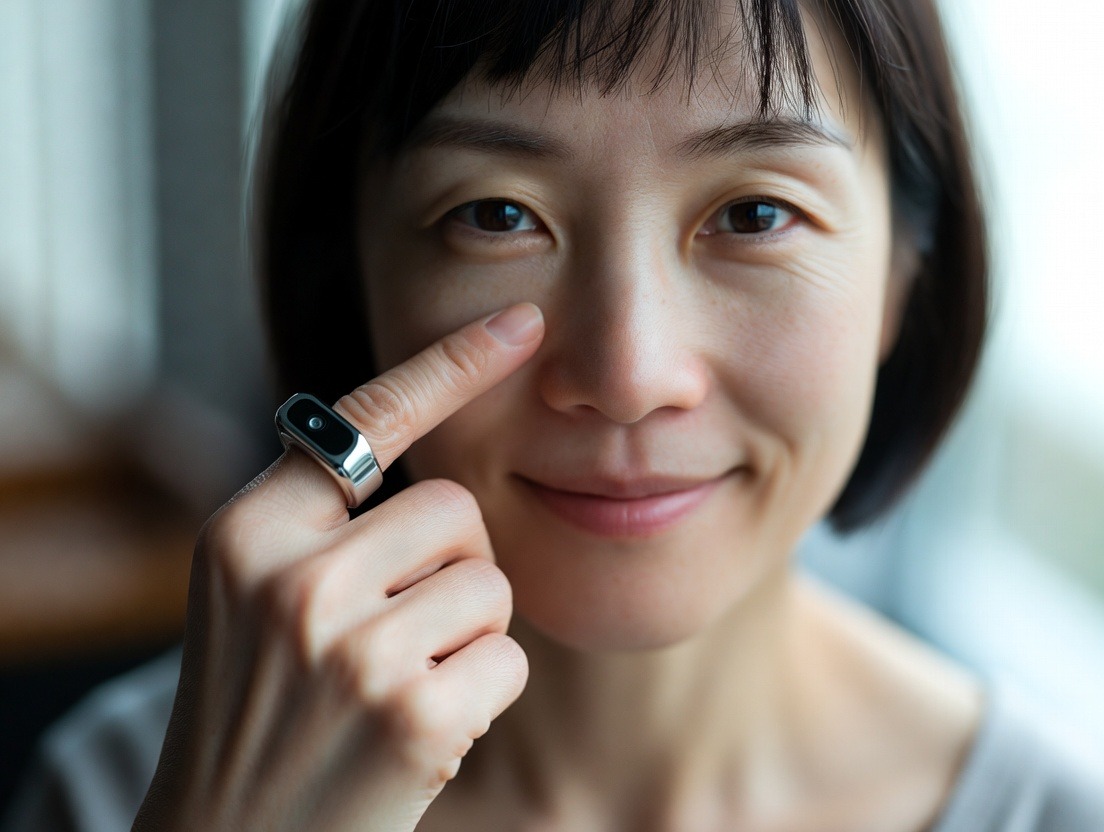
The remarkable capabilities of modern smart rings stem from sophisticated sensor technology miniaturized to fit within a slender band of metal. Understanding this science isn't just technical curiosity—it empowers professionals to interpret their data accurately and make informed decisions based on physiological insights rather than guesswork. At its core, smart ring technology represents a convergence of optics, thermodynamics, motion physics, and advanced algorithms, all working silently beneath a professional exterior.
The primary sensor in most smart rings uses photoplethysmography (PPG), a technology that sounds complex but operates on a beautifully simple principle. Small LEDs emit light (typically green, red, and infrared wavelengths) into the skin of your finger. As your heart pumps, blood volume in the capillaries fluctuates, changing how much light gets absorbed versus reflected back to sensors.
Why multiple light wavelengths matter:
This technology operates at remarkable speeds. "Some advanced sleep rings sample hundreds of times per second," notes a technical deep dive into smart ring sensors. "This rapid sampling ensures accuracy even during movement or exercise" .
For professionals, this means the ring detects not just your average heart rate, but the subtle variations between beats that reveal your nervous system state—critical information for managing stress responses during high-pressure situations.
Beyond optical sensors, most smart rings incorporate precision thermometers that measure skin temperature with remarkable sensitivity—often detecting changes as small as 0.1 degrees Celsius. While this might seem minor, these subtle variations can signal important physiological shifts relevant to professionals.
Why skin temperature matters in professional contexts:
During testing of various smart rings, one reviewer noted this capability in action: "When I had a mild fever, this ring caught my temperature was elevated by 0.57 degrees Celsius. It doesn't give you the more detailed, minute-by-minute breakdown, but it can tell you that your temp rose and when it's an anomaly" .
While often associated with basic fitness tracking, the motion sensors in smart rings serve more sophisticated purposes for professionals. Advanced algorithms interpret subtle movement patterns to distinguish between different types of activity and, importantly, different types of inactivity.
For desk-bound professionals, this capability proves particularly valuable:
The true magic happens not in individual sensors, but in how their data streams integrate. Modern smart rings contain specialized processors that continuously analyze multiple data types simultaneously, creating a multidimensional picture of your physiological state.
Consider what happens during a stressful professional encounter:
This integrated approach transforms raw sensor data into actionable professional insights. Rather than simply telling you your heart rate increased, a sophisticated ring can contextualize that increase within your activity level, time of day, sleep history, and temperature patterns to determine whether it represents healthy engagement or detrimental stress.
It's important to understand both the capabilities and limitations of this technology. Smart rings provide trend data and physiological insights rather than medical-grade diagnostics. Their value for professionals lies in pattern recognition over time, not in absolute clinical accuracy at any single moment.
Factors that can affect accuracy include:
Yet for the primary professional use cases—understanding stress patterns, tracking recovery trends, optimizing energy management—these devices provide sufficiently accurate and consistent data to inform better daily decisions. As the technology continues evolving, with companies regularly improving algorithms through software updates, the insights become increasingly personalized and relevant to individual professional lives.
The modern professional's body often pays a silent toll for cognitive work. We've created careers that increasingly value mental labor while discounting physical needs, resulting in epidemic levels of sedentary behavior with profound consequences for both health and performance. The average office worker now sits for 10-15 hours daily—during commutes, at desks, in meetings, and during evening relaxation. This isn't merely a lifestyle concern; it's a professional liability that smart rings are uniquely positioned to address through subtle, continuous monitoring and intelligent intervention.
Sedentary behavior triggers cascading physiological effects that directly impair professional capabilities:
"Prolonged desk sitting can cause health problems that gradually make good work performance difficult," observes an analysis of workplace wellness technology. "Smart rings can monitor your activity level throughout the day. They can realize when you've been sitting too long" .
Unlike generic reminders that interrupt at fixed intervals, sophisticated smart rings analyze your personal activity patterns to deliver contextually appropriate movement prompts. This personalized approach proves far more effective for professionals whose work demands vary daily.
How intelligent movement prompting works:
This isn't about achieving arbitrary step counts—it's about disrupting harmful sedentary patterns before they impair your professional performance. Brief movement breaks as short as two minutes every hour have demonstrated significant benefits for both physical health markers and cognitive function in workplace studies.
The most effective smart rings transform raw activity data into actionable professional insights. Instead of simply reporting you sat for six hours, they might correlate that sedentariness with your afternoon energy crash or decreased heart rate variability during evening recovery.
Consider these professional scenarios where activity monitoring proves valuable:
One reviewer testing smart rings noted their utility in tracking all types of movement: "The data it can track is also ever-expanding... I also loved that the smart ring tracked physical activity like housework which contributed to my overall daily activity stats" .
The true innovation for professionals lies in how smart rings facilitate movement integration rather than interruption. By analyzing your work patterns, these devices can identify natural break points in your schedule—between calls, after completing tasks, during expected energy dips—and suggest movement at these opportune moments.
Effective professional movement strategies include:
Advanced smart rings recognize that not all movement benefits professionals equally. The quality, timing, and context of activity prove as important as quantity for maintaining peak cognitive performance throughout demanding workdays.
Professional-optimized movement principles:
By providing data about how different activity patterns affect your stress levels, sleep quality, and next-day energy, smart rings enable professionals to develop personalized movement strategies that enhance rather than compete with their cognitive work.
In professional environments, stress functions as both fuel and fire—the necessary energy for high performance and the potential source of career-derailing burnout. The line between productive engagement and harmful overextension often becomes visible only in retrospect, after damage has accumulated. Discreet smart rings offer professionals something previously unavailable: an early warning system for stress patterns and recovery needs, providing objective data about physiological responses to work demands before subjective exhaustion signals become undeniable.
Stress manifests in the body through measurable physiological changes long before we consciously recognize emotional strain. During stressful professional situations:
Smart rings detect these physiological markers continuously, creating a stress signature unique to each professional. "Your body shows stress before your mind," notes an analysis of workplace smart rings. "These rings are excellent at detecting these subtle signals by monitoring heart rate and nervous system responses" .
The discreet nature of smart rings allows them to monitor stress responses during actual professional engagements—client negotiations, presentations, difficult conversations, deadline pressures—when awareness of rising stress proves most valuable.
Consider these professional applications:
One productivity expert frames this capability in professional terms: "High stress impacts your energy and concentration. Some smart rings monitor changes in heart rate variability to detect stress spikes. When your ring notices elevated stress, you can take a break before the pressure builds" .
Data alone doesn't manage stress; it's the actionable insights derived from patterns that create change. Advanced smart ring systems transform stress detection into stress management through several mechanisms:
Burnout rarely strikes suddenly; it accumulates through repeated stress without adequate recovery. Smart rings excel at detecting this accumulating pattern through metrics like:
"Burnout doesn't happen suddenly," observes a workplace wellness analysis. "It builds up over time due to prolonged stress without enough time to recover. Smart rings can monitor your stress levels over weeks and months, showing patterns that allow predicting when you're at risk of extreme burnout before the situation worsens" .
Equipped with personalized stress and recovery data, professionals can implement targeted strategies:
In competitive professional environments, stress management becomes a strategic advantage rather than merely a wellness concern. Professionals who understand their stress patterns can:
This physiological self-awareness represents a new dimension of professional competence—the ability to not only manage external work demands but also optimize internal responses to those demands for sustainable high performance.

In professional circles, sleep deprivation has somehow transformed from a health concern to a badge of dedication—a dangerous misconception that smart ring data powerfully contradicts. The reality illuminated by continuous physiological monitoring reveals sleep as the foundation of professional performance, influencing everything from decision-making accuracy to creative problem-solving, emotional regulation to complex learning. For professionals wearing discreet smart rings, sleep transforms from mysterious necessity to measurable resource, with quality and architecture directly correlating with next-day capabilities.
Sleep isn't a monolithic state but a carefully orchestrated cycle of distinct stages, each serving specific cognitive and physiological restoration functions:
Smart rings track these stages through movement patterns, heart rate variability, and sometimes breathing rhythms, providing professionals with unprecedented insight into what actually happens during their supposed rest. "Smart rings monitor sleep stages, offering you a detailed view of deep sleep, REM cycles, and overall sleep quality—better than conventional methods," notes an analysis of professional wearable technology .
Even minor sleep disturbances create measurable next-day impairments relevant to professional performance:
These effects accumulate, creating what sleep researchers call "sleep debt"—a deficit that impairs performance even when individuals feel acclimated to reduced sleep. Smart rings make this invisible debt visible through objective metrics rather than subjective feelings of tiredness.
While total sleep time matters, smart rings reveal the more nuanced aspects of sleep quality that prove equally important for professionals:
One smart ring reviewer discovered personalized insights beyond generic sleep tracking: "This was the only ring I tested to detect that—for some reason—at around 4AM, my heart rate plummets consistently, night after night. The Gen 2 Air registered this as a heart abnormality, even going so far to say that if it continues being a trend, I should consider seeing a doctor" .
Smart rings help professionals identify work-related factors that disrupt sleep, including:
For professionals who travel frequently, some smart rings offer specialized tracking: "Frequent travel disrupts sleep, circadian rhythm, and overall health. OxyZen measures oxygen saturation, nighttime breathing, circadian misalignment, and stress fluctuations caused by long flights and time-zone shifts" .
The true value for professionals lies in connecting sleep metrics to next-day capabilities. Advanced smart ring systems analyze sleep data to provide:
"Those who improve their sleep thanks to data from their device claim to concentrate better, be more creative, and handle stress more easily," observes an analysis of workplace smart rings. "The relationship between good rest and good work performance becomes evident when observing how lack of sleep leads to difficult work days" .
Armed with personalized sleep data, professionals can implement targeted improvements:
Perhaps the most profound shift smart rings facilitate is reframing sleep from personal luxury to professional necessity. When professionals see direct correlations between specific sleep metrics and next-day performance indicators, sleep transforms in professional priority from optional to essential. In competitive environments where marginal advantages matter, optimizing this fundamental restorative process represents one of the most significant—yet discreetly manageable—performance enhancements available.
Professional success increasingly depends not just on what you accomplish, but when you accomplish it—matching your natural energy rhythms to appropriate tasks. Traditional time management fails because it treats all hours as equal, ignoring profound biological variations in cognitive capacity, creative thinking, and stress resilience throughout the day. Discreet smart rings revolutionize this approach by providing continuous physiological data that reveals your personal energy patterns, enabling truly intelligent scheduling that aligns professional demands with biological readiness.
Energy isn't constant; it flows in predictable yet personalized patterns influenced by:
Smart rings track indicators of these rhythms through metrics like heart rate variability trends, skin temperature fluctuations, and activity-rest patterns, creating a personalized energy map unique to each professional's physiology and lifestyle.
Through continuous monitoring, smart rings help professionals discover their individual energy patterns:
"Not every day is a high-performance day," notes a productivity analysis of smart ring data. "Rings use metrics like HRV and sleep to calculate a readiness score. That score gives you an idea of how prepared your body is for mental and physical effort" .
The professional application of energy data lies in aligning specific types of work with appropriate energy states:
Professional energy management involves not just expenditure but recovery. Smart rings provide crucial data about:
Without energy awareness, professionals often schedule by convenience rather than capacity, resulting in:
Smart ring data makes these mismatches visible and correctable. One professional-focused smart ring system emphasizes this capability: "By identifying emotional triggers, work patterns, and daily fatigue windows, professionals can manage their schedules more effectively when their energy dips" .
Armed with personalized energy data, professionals can implement:
This represents a fundamental shift in professional philosophy—from managing time as a finite resource to investing energy as a renewable one. Time passes regardless of how we use it, but energy can be replenished, directed, and optimized. Smart rings provide the physiological feedback necessary to make this shift from watching the clock to understanding your internal resources.
For competitive professionals, this energy awareness creates significant advantages: completing complex work in less time through optimized timing, maintaining higher quality through aligned capacity, and sustaining performance through intelligent recovery. The discreet nature of the technology means these advantages accumulate without drawing attention—a true professional's edge worn quietly on one finger.
For globally engaged professionals, travel represents both opportunity and physiological disruption. The very mobility that enables international business simultaneously challenges the biological foundations of performance through time zone shifts, sleep disruption, irregular schedules, and environmental changes. Discreet smart rings offer traveling professionals something previously unavailable: continuous physiological monitoring across transitions, providing data-driven guidance for minimizing jet lag's cognitive and physical impacts while maintaining performance across borders.
Professional travel disrupts multiple biological systems simultaneously:
Smart rings track these disruptions through metrics like circadian rhythm indicators, sleep quality measurements, heart rate variability trends, and temperature patterns, creating a comprehensive picture of travel's physiological impact.
Sophisticated smart ring systems can guide preparation based on individual physiology:
One smart ring designed specifically for travelers emphasizes these capabilities: "Frequent travel disrupts sleep, circadian rhythm, and overall health. OxyZen measures oxygen saturation, nighttime breathing, circadian misalignment, and stress fluctuations caused by long flights and time-zone shifts" .
During travel itself, smart rings provide real-time feedback for making adjustment decisions:
The critical professional period after arrival, when business demands typically intensify just as physiological disruption peaks, benefits immensely from smart ring guidance:
Smart rings help professionals navigate the particular cognitive challenges of travel transitions:
Armed with physiological travel data, professionals can develop personalized strategies:
In global business contexts, travel resilience becomes a competitive advantage. Professionals who maintain performance across transitions can:
Smart rings provide the physiological intelligence to develop this resilience systematically rather than relying on guesswork or generic advice. By tracking individual responses to different travel patterns over multiple trips, these devices help professionals discover what specifically works for their physiology—eastward versus westward strategies, short versus long trip approaches, recovery techniques that yield measurable results.
The most sophisticated applications extend beyond circadian adjustment to comprehensive travel wellness:
For professionals whose value depends on maintained performance across geographic transitions, this comprehensive travel monitoring represents more than convenience—it becomes essential infrastructure for sustainable global engagement. The discreet nature of smart rings means this physiological intelligence travels unnoticed, providing guidance without drawing attention to the challenges of adaptation.
In professional environments where perception often influences reality, the visible technology we choose communicates unintended messages about priorities, attention, and values. Smart rings navigate this social landscape with unique effectiveness precisely because they don't appear to be technology at all. Their power for professionals lies not merely in their capabilities, but in their ability to provide those capabilities without crossing unspoken boundaries of professional appearance—a feat that wrist-worn devices, with their screens and notifications, struggle to achieve.
Smart rings succeed where other wearables falter through several design principles:
"Many companies consider visible health tracking devices to be unprofessional or distracting," observes an analysis of workplace wearables. "Smart rings solve this problem by looking like ordinary jewelry, but with advanced sensors and powerful processing capabilities" .
Every visible object in professional settings communicates, often beyond our conscious intent:
This social signaling matters particularly in client-facing roles, leadership positions, and formal environments where perceptions influence professional relationships and opportunities.
Smart rings operate within professional etiquette norms that other wearables often violate:
One productivity expert notes this advantage: "Smart rings are different from other wearables in a few key ways... Subtle Design: They blend in, a perfect tool for busy professionals" .
Different professional environments present distinct aesthetic challenges:
Smart rings navigate gender and cultural dimensions with particular flexibility:
There exists a paradoxical advantage in technology that doesn't appear to be technology: it provides capabilities without the social costs often associated with visible devices. Professionals can benefit from physiological monitoring without:
Perhaps most importantly, discreet smart rings allow professionals to maintain natural, technology-unmediated connections while still gathering valuable self-knowledge. In negotiations, mentoring relationships, collaborative sessions, and leadership interactions, the absence of visible technology supports:
Smart rings represent the latest evolution in professional technology integration—following the path of smartphones (initially restricted, now essential) and smartwatches (still navigating acceptance). Their discreet design accelerates this acceptance by minimizing the social friction that often slows workplace technology adoption.
As professionals increasingly recognize the performance benefits of physiological awareness, and as organizations understand the productivity advantages of healthier, more balanced employees, smart rings offer a socially elegant path toward this future—one that respects professional norms while quietly advancing capabilities. Their success lies not in demanding that professional environments change to accommodate technology, but in adapting technology to fit seamlessly within existing professional aesthetics.
In professional contexts where confidentiality matters and personal data carries both value and vulnerability, smart rings introduce important privacy considerations that differ significantly from other wearable technologies. For professionals handling sensitive information, operating in competitive industries, or simply maintaining appropriate boundaries between personal physiology and professional identity, understanding and managing these privacy dimensions becomes essential to smart ring adoption. Fortunately, the very discretion that makes smart rings professionally appealing also extends to their data handling, with thoughtful design choices that address legitimate privacy concerns.
Smart rings collect uniquely intimate data relevant to professional contexts:
This data intimacy creates legitimate professional concerns about who might access this information and how it could be used beyond personal optimization.
A key privacy advantage of smart rings lies in their operational architecture:
This architecture differs from always-connected devices that continuously transmit raw data to external servers, reducing exposure points for sensitive physiological information.
Different professional situations present distinct privacy considerations:
Leading smart ring manufacturers implement specific privacy protections:
One smart ring system emphasizes this privacy-first approach: "With no subscription fees and complete data privacy, Oxyzen empowers you to build long-term wellness strategies based on real physiology, not guesswork" .
Even with robust technical protections, professionals must establish personal boundaries:
Unlike many subscription-based wellness services where data becomes part of corporate assets, several smart ring systems emphasize user ownership:
As companies increasingly implement wellness programs, professionals face decisions about participation:
Ultimately, smart ring privacy requires both technological features and personal practices:
For professionals who successfully navigate these considerations, smart rings offer unprecedented self-knowledge without unacceptable exposure. The discreet nature of the technology extends beyond physical appearance to data handling—allowing professionals to gather insights privately, share selectively, and benefit personally without creating professional vulnerability. This careful balance between access and protection makes smart rings uniquely suitable for professional environments where both performance optimization and appropriate boundaries matter.
The journey toward professional excellence has always involved both external skill development and internal self-understanding. What distinguishes our current moment is the availability of tools that make this internal understanding objective, continuous, and actionable. Discreet smart rings represent a significant advancement in this journey—not because they introduce entirely new capabilities, but because they make existing capabilities accessible within the social and aesthetic constraints of professional life.
The professional advantages of smart rings accumulate through several interconnected pathways: the physiological optimization that comes from understanding your body's responses to work demands, the performance timing enabled by matching tasks to energy states, the stress resilience developed through pattern recognition and early intervention, and the recovery intelligence that transforms rest from passive necessity to active strategy. What makes these advantages particularly compelling for professionals is their discreteness—they accrue without fanfare, without social cost, without compromising professional presence or relationships.
As with any technology integration, success with smart rings depends on thoughtful implementation:
The future of professional wearables will likely see increasing integration with other aspects of professional life—scheduling systems that respect energy patterns, communication platforms that consider stress states, learning systems that adapt to cognitive readiness. Smart rings positioned discreetly on professionals' fingers will likely serve as the primary physiological interface for these integrations, gathering the data that makes intelligent adaptation possible while maintaining the social subtlety that professional environments require.
For professionals considering this technology, the question isn't whether smart rings can provide valuable insights—the evidence clearly demonstrates they can. The more relevant questions involve personal fit: Does a particular ring's design align with your professional aesthetic? Does its data presentation match your analytical preferences? Does its privacy approach align with your professional requirements? Does its battery life support your travel patterns? The good news is that, as this technology category matures, options proliferate to meet diverse professional needs and preferences.
Perhaps most importantly, discreet smart rings represent a step toward more humane professional environments—ones that acknowledge our physiological reality rather than pretending professionals operate as disembodied intellects. By making the invisible visible in socially graceful ways, these devices support professionals in bringing their whole selves to work while maintaining appropriate boundaries. They acknowledge that sustainable high performance requires not just skills and opportunities, but also managed energy, adequate recovery, and resilient physiology.
The professional wearing a smart ring isn't making a statement about technology or health obsession; they're quietly gathering the data needed to perform at their best while respecting the social norms of their environment. In this balance between self-knowledge and social intelligence lies the true promise of discreet wearable technology for professionals—not as a replacement for experience, judgment, or relationships, but as a subtle enhancement that helps professionals sustain their contributions over long careers rather than burning brightly but briefly.
The discreet revolution in professional wellness continues quietly, one finger at a time, gathering insights without drawing attention, enhancing performance without compromising presence. For professionals seeking every legitimate advantage in competitive environments, these unassuming devices offer something genuinely valuable: the ability to work with your body's natural capabilities rather than against them, to make informed decisions about energy investment, and to build sustainable success on a foundation of physiological intelligence.
As professionals integrate discreet smart rings into their daily routines, they unlock a new dimension of self-awareness that translates directly to workplace performance. Having explored the foundational aspects of how these devices function and their core benefits, we now turn to their sophisticated applications, practical integration strategies, and the measurable return on investment they offer in professional settings.
The true value of this technology emerges not in isolation but in how it interfaces with the complex realities of professional life—from navigating organizational dynamics to making data-informed decisions that balance ambition with sustainability. In this continuation, we'll examine how smart rings serve as decision-support systems, foster emotional intelligence, address industry-specific challenges, and evolve alongside both the wearer and workplace technology ecosystems.
In the relentless pursuit of quarterly results and career advancement, professionals often mortgage their long-term health for short-term gains—a transaction with compounding interest that eventually demands payment. Discreet smart rings introduce a different economic model to professional life: one of continuous, preventative investment in physiological capital. By providing early detection of subtle deviations from personal baselines, these devices transform health from a reactive concern addressed during crises to a strategic asset managed daily alongside other professional priorities.
Traditional healthcare models often identify problems only when symptoms become undeniable—after stress has crystallized into hypertension, sleep deprivation has eroded cognitive function, or sedentary patterns have metabolic consequences. For professionals, this delayed awareness carries specific costs:
Smart rings offer an alternative through continuous physiological surveillance that detects deviations long before they manifest as diagnosable conditions. "High stress impacts your energy and concentration," notes an analysis of workplace wearables. "Some smart rings monitor changes in heart rate variability to detect stress spikes. When your ring notices elevated stress, you can take a break before the pressure builds" .
The preventive power of smart rings lies in their capacity to establish personalized baselines against which daily measurements acquire meaning:
When deviations from these established patterns occur—a resting heart rate creeping upward over weeks, a heart rate variability trend declining gradually, sleep efficiency decreasing despite unchanged habits—the ring flags these changes as early warning signs worth investigating.
Early awareness proves valuable only when paired with appropriate responses. Sophisticated smart ring systems translate detection into actionable guidance:
Certain health risks carry particular significance for professionals given their impact on career-sustaining capabilities:
By tracking the physiological foundations of these risks, smart rings enable professionals to intervene at stages when modest adjustments yield significant preventive benefits rather than waiting until major lifestyle overhauls become necessary.
Viewing health through a professional investment framework changes decision calculus:
One smart ring system emphasizes this investment perspective: "With no subscription fees and complete data privacy, Oxyzen empowers you to build long-term wellness strategies based on real physiology, not guesswork" .
The most profound shift occurs when preventative health management becomes integrated into professional identity rather than competing with it. Smart rings facilitate this integration by:
Armed with longitudinal physiological data, professionals can engage in more productive health conversations:
Ultimately, smart rings support what geroscience researchers call "healthspan" extension—maintaining functional capacity across more years of professional life. In an era of longer careers and delayed retirements, this extended healthspan represents both personal and professional advantage:
By making the incremental benefits of daily health investments visible, smart rings transform prevention from abstract principle to practiced reality—turning what professionals know they should do into what they actually do because they see the immediate and cumulative benefits reflected in their own physiological data.
Professional success increasingly depends not just on what we know, but on how we communicate what we know—and emotional intelligence forms the foundation of effective professional communication. While often considered an intangible "soft skill," emotional intelligence has physiological correlates that discreet smart rings can detect and illuminate. By providing objective feedback about our physiological states during interpersonal interactions, these devices offer professionals unprecedented insight into the embodied dimension of communication, enabling more conscious, effective engagement with colleagues, clients, and teams.
Every professional interaction triggers physiological responses that influence and reflect communication effectiveness:
Smart rings detect these physiological signatures through continuous monitoring of heart rate variability, heart rate patterns, and sometimes skin conductance, creating a communication biofeedback system previously unavailable outside laboratory settings.
The first component of emotional intelligence—self-awareness—receives direct support from smart ring data:
"Your body shows stress before your mind," notes an analysis of workplace wearables. "These rings are excellent at detecting these subtle signals by monitoring heart rate and nervous system responses" .
Beyond awareness, smart rings provide feedback for deliberate skill development:
Different professional communication contexts present distinct physiological patterns:
Your Trusted Sleep Advocate: Sleep Foundation — https://www.sleepfoundation.org
Discover a digital archive of scholarly articles: NIH — https://www.ncbi.nlm.nih.gov/
39 million citations for biomedical literature :PubMed — https://pubmed.ncbi.nlm.nih.gov/
Experts at Harvard Health Publishing covering a variety of health topics — https://www.health.harvard.edu/blog/
Every life deserves world class care :Cleveland Clinic - https://my.clevelandclinic.org/health
Wearable technology and the future of predictive health monitoring :MIT Technology Review — https://www.technologyreview.com/
Dedicated to the well-being of all people and guided by science :World Health Organization — https://www.who.int/news-room/
Psychological science and knowledge to benefit society and improve lives. :APA — https://www.apa.org/monitor/
Cutting-edge insights on human longevity and peak performance:
Lifespan Research — https://www.lifespan.io/
Global authority on exercise physiology, sports performance, and human recovery:
American College of Sports Medicine — https://www.acsm.org/
Neuroscience-driven guidance for better focus, sleep, and mental clarity:
Stanford Human Performance Lab — https://humanperformance.stanford.edu/
Evidence-based psychology and mind–body wellness resources:
Mayo Clinic — https://www.mayoclinic.org/healthy-lifestyle/
Data-backed research on emotional wellbeing, stress biology, and resilience:
American Institute of Stress — https://www.stress.org/


