


The Grounding Method: 5-4-3-2-1 Technique for Immediate Calm
This grounding technique (name 5 things you see, 4 you feel, 3 you hear, 2 you smell, 1 you taste) anchors you in the present during overwhelm.
This grounding technique (name 5 things you see, 4 you feel, 3 you hear, 2 you smell, 1 you taste) anchors you in the present during overwhelm.
%402x.svg)
We’ve all been there. The heartbeat thrumming in your ears. The thoughts racing like a runaway train. The world narrowing to a single point of panic or overwhelm, whether it’s a looming deadline, a difficult conversation, or the simple, crushing weight of a thousand daily tasks. In our modern era, where notifications are constant and demands are unrelenting, our nervous systems are often stuck in a perpetual state of high alert. We’re living in a state of chronic “fight-or-flight,” disconnected from the calm, present moment.
What if you had a tool—simple, fast, and profoundly effective—that could pull you back from the brink in under a minute? A tool that requires no app, no subscription, and no special equipment, yet is powerful enough to short-circuit anxiety and anchor you firmly in the here and now.
Enter the 5-4-3-2-1 Grounding Technique.
This cognitive behavioral strategy is more than just a trendy mindfulness hack. It’s a clinically-informed sensory grounding exercise designed to engage your five senses to interrupt spiraling thoughts and physiological stress responses. By deliberately shifting your focus outward to your immediate environment, you force your brain to disengage from internal panic and reconnect with tangible reality. The result? Immediate calm, regained control, and a clear pathway out of emotional overwhelm.
In this comprehensive guide, we will dive deep into the anatomy of this powerful technique. We’ll explore not just the “how,” but the profound “why” behind its effectiveness, examining the neuroscience of anxiety, the psychology of presence, and the practical art of building this skill into your life’s fabric. We’ll also look at how modern technology, like the advanced wellness tracking from Oxyzen smart rings, can provide unique insights into your stress patterns and help you deploy grounding at the most critical moments. Consider this your masterclass in cultivating immediate calm, a skill that will serve you for a lifetime.
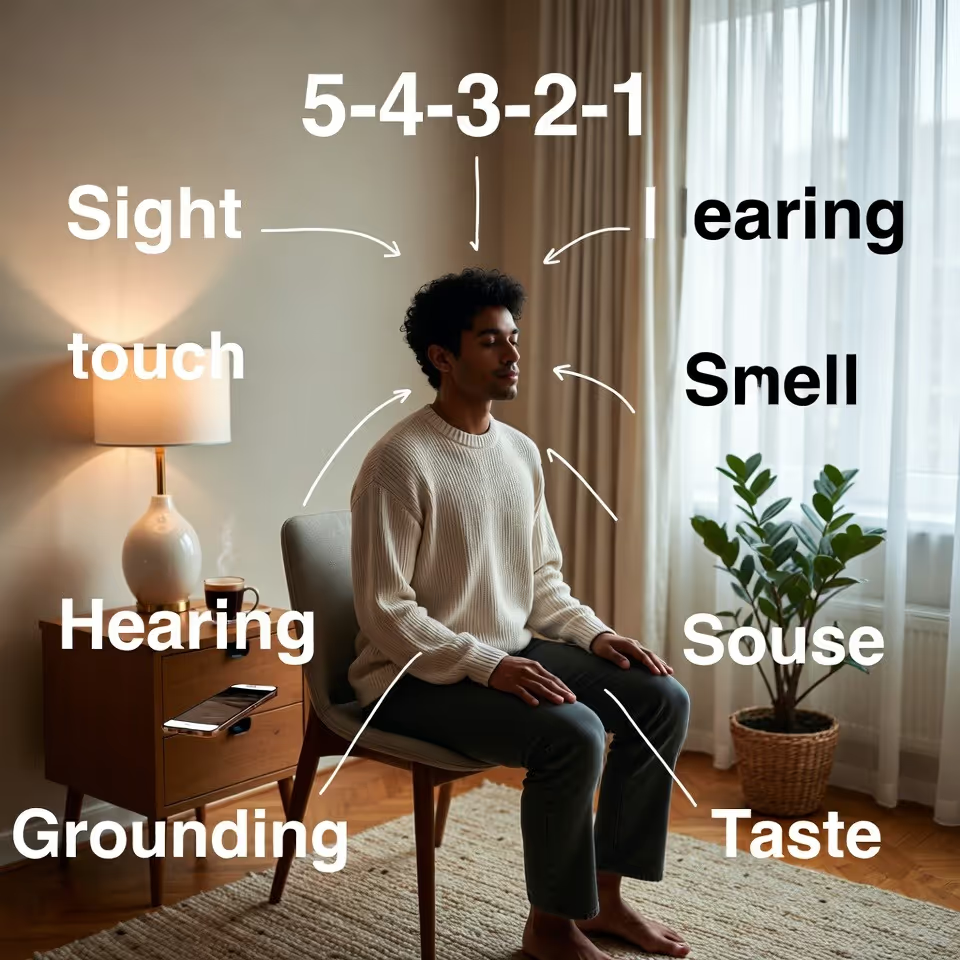
The 5-4-3-2-1 grounding technique is a sensory awareness exercise used as a coping tool for anxiety, panic attacks, PTSD flashbacks, and general emotional dysregulation. Its core directive is elegantly simple: using your five senses, you identify specific elements in your current environment.
Here is the step-by-step framework:
The sequence is purposeful. It begins with sight, our dominant and most easily accessible sense, to initiate the shift from internal to external focus. It then moves through touch, hearing, and smell—senses that require progressively more nuanced attention—before culminating in taste, often the most intimate and present-focused sense of all. This journey systematically pulls your cognitive resources away from catastrophic thinking and into a meticulous, non-judgmental inventory of your present-moment reality.
While its exact origins are hard to pin down, the technique is firmly rooted in principles of Cognitive Behavioral Therapy (CBT) and mindfulness-based stress reduction. It’s a form of “anchoring,” a concept used in therapies like Dialectical Behavior Therapy (DBT) to prevent emotional escalation. It’s not about solving the problem causing the anxiety; it’s about changing your relationship to the anxious experience in that moment, creating a vital pause between stimulus and reaction.
In a world that often pushes us to “power through” our stress, the 5-4-3-2-1 method is a radical act of self-compassion. It is a permission slip to stop, to feel, and to reconnect. For those interested in a deeper exploration of mindfulness and modern mental fitness tools, our resource hub at the Oxyzen blog offers a wealth of related articles and research.
To understand why the 5-4-3-2-1 technique is so effective, we must first take a brief tour of the anxious brain. When we perceive a threat—whether it’s a physical danger or a psychological stressor like an angry email—our body’s alarm system, the amygdala, is activated. This tiny, almond-shaped region in the limbic system triggers the hypothalamus and the adrenal glands to flood our system with cortisol and adrenaline. This is the classic “fight-or-flight” response: heart rate and breathing accelerate, blood diverts to muscles, and digestion halts. Our entire biology is mobilized for survival.
Simultaneously, to help us react quickly, higher-order thinking in the prefrontal cortex—the seat of rational thought, planning, and decision-making—is effectively dampened. This is an “amygdala hijack.” While brilliant for escaping a predator, it’s maladaptive when the “threat” is a crowded supermarket or a critical thought. We become reactive, irrational, and trapped in a feedback loop of fear.
Grounding techniques, and specifically the 5-4-3-2-1 method, work by exploiting the brain’s limited processing capacity. The prefrontal cortex, though suppressed, is not offline. By deliberately and systematically engaging it in a focused, sensory-based task, we essentially give it a “job” that competes with the amygdala’s panic signals.
Here’s what happens neurologically:
In essence, grounding creates a “cognitive wedge” between you and your anxiety. It doesn’t deny the feeling; it changes the channel your brain is tuned to. This biological basis is why the technique is recommended by therapists worldwide and is a cornerstone of many trauma-informed care practices. For individuals using advanced biofeedback devices, like those who share their journeys in our Oxyzen testimonials, observing the tangible drop in heart rate variability (HRV) after a grounding session can provide powerful visual confirmation of this neurological shift.

The value of the 5-4-3-2-1 technique extends far beyond the immediate sensation of relief. With consistent practice, it cultivates a suite of mental and emotional skills that contribute to long-term resilience and well-being. Here are the key evidence-backed benefits:
1. Immediate Anxiety and Panic Attack Reduction: This is its primary and most powerful use. Studies on sensory grounding and mindfulness consistently show a rapid decrease in subjective anxiety scores and physiological arousal. It acts as an emergency brake, providing a sense of control when feelings are most overwhelming.
2. Enhanced Emotional Regulation: By practicing the creation of a pause between feeling and reaction, you strengthen your brain’s capacity for emotional regulation. Over time, this makes you less susceptible to being hijacked by sudden emotions, leading to more thoughtful responses in relationships and high-pressure situations.
3. Improved Present-Moment Awareness (Mindfulness): The technique is a direct training exercise for mindfulness—the non-judgmental awareness of the present moment. Each time you hunt for four textures or three sounds, you are flexing your “attention muscle,” learning to observe your environment and internal state without immediately getting swept away by it.
4. Management of PTSD and Trauma Symptoms: For individuals with PTSD, intrusive memories or flashbacks can feel vividly present. Grounding in the current, safe reality (e.g., “I feel the solid chair beneath me in 2023”) is a core skill in trauma therapy to differentiate past danger from present safety.
5. Reduced Dissociation: Dissociation—a feeling of being disconnected from one’s body or thoughts—is a common stress response. The intense sensory focus of 5-4-3-2-1 literally “brings you back into your body,” re-establishing the connection between mind and physical sensation.
6. Accessible and Empowering Self-Care: Its greatest strength may be its simplicity. It requires nothing but your awareness, making it a tool of immense personal empowerment. You carry this “panic button” with you at all times, in any situation—a meeting, an airplane, a social gathering—without anyone knowing.
7. A Gateway to Deeper Practices: For those new to meditation or mindfulness, the highly structured nature of 5-4-3-2-1 makes it an accessible entry point. It provides a clear task for a wandering mind, paving the way for more open-ended practices in the future.
The cumulative effect is a profound shift in how you inhabit your daily life. Instead of being a passive passenger to your nervous system’s whims, you become an active pilot, capable of navigating turbulence and finding clear skies. To understand how integrating such practices with data can optimize wellness, you can learn more about Oxyzen’s holistic approach.
Knowing the steps is one thing; mastering the art of them is another. The depth of your engagement determines the potency of the effect. Let’s walk through each sense with a richer, more illustrative approach.
Step 1: 5 Things You Can SEE
Don’t just glance; truly see. Move beyond generic labels (“a computer”). Engage in visual archaeology.
Step 2: 4 Things You Can TOUCH or FEEL
Shift from passive feeling to active sensing. Distinguish temperature, texture, pressure, and weight.
Step 3: 3 Things You Can HEAR
Tune your ears like a sound engineer. Listen through the obvious silence or noise to the layers beneath.
Step 4: 2 Things You Can SMELL
This can be the most challenging step, especially in neutral environments. Get creative.
Step 5: 1 Thing You Can TASTE
This is the final anchor, bringing awareness to the interior of your body.
The entire exercise should take 60-90 seconds. Breathe normally throughout. There is no right or wrong, only the act of purposeful noticing.

The versatility of the 5-4-3-2-1 technique is its superpower. It’s not just for crisis moments; it’s a tool for daily maintenance and proactive stress management. Here are potent scenarios for its application:
The Proactive Morning Grounding: Before checking your phone or starting your workday, perform the exercise with your morning coffee. This sets a tone of intentional presence, building a buffer against the day’s incoming stressors.
The Pre-Meeting or Presentation Calm: Feeling jittery before speaking? In the restroom or at your seat, discreetly run through the senses. Notice the color of the walls, the feel of your notepad, the murmur of voices. This pulls you out of future-tripping (“What will they think?”) and into the present room.
The Commute Decompressor: Stuck in traffic or a crowded train? Instead of simmering in frustration, ground yourself. Five things outside the window, four feelings in your body, three sounds in the vehicle, two smells, one taste. It transforms lost time into a resilience-building practice.
The Sleep Onset Ritual: Lying in bed with a racing mind is torture. In the dark, adapt the exercise. Five things you can imagine seeing in the room (based on memory), four feelings of your body against the bed, three sounds in the night, two smells, one taste. This guides the mind away from narrative and toward sensation, promoting sleep.
During Conflict or Difficult Conversations: When you feel triggered or defensive, grounding can be done silently in a flash. Feel your feet on the floor (touch), notice the color of the other person’s shirt (sight), hear the tone of their voice (sound). This creates the crucial pause that prevents a reactive, regrettable comment.
Managing Sensory Overload: In overwhelming environments like a loud mall or a busy airport, grounding can help you filter chaos. Systematically focusing on specific elements (a single store sign, the feel of your luggage handle) can reduce the feeling of being bombarded.
For Chronic Pain or Discomfort: Pain anxiety amplifies suffering. Grounding can help separate the raw sensation from the catastrophic story about it. Acknowledge sights and sounds unrelated to the pain, feelings in parts of the body that are neutral. It can provide a mental refuge.
The key is to normalize the practice. Use it not just as an emergency fire extinguisher, but as a daily vitamin for your nervous system. For tech-integrated individuals, pairing this practice with a device that tracks physiological stress markers can offer fascinating insights into your personal triggers and recovery patterns, a topic often discussed in our FAQ section on biometric integration.
Once you’ve mastered the basic sequence, you can adapt and expand it to suit different moods, intensities of anxiety, or even to make it more engaging. Personalization increases ownership and effectiveness.
The “Slow Motion” Variation: For deep calm, spend 30-45 seconds on each sense. For sight, find five things, then observe the play of light on each one. For touch, explore four textures as if you’ve never felt them before. This is a mini-meditation.
The “Category” Variation: Add an extra cognitive layer. For sight: find five things that are blue. For touch: find four things that are soft. For sound: identify three sounds that are repetitive. This demands more focus, further crowding out anxious thoughts.
The “Gratitude” Twist: Infuse the practice with positive affect. Acknowledge five things you see that you’re grateful for (a photo, a window with light). Four comforting sensations (a cozy sweater, a warm mug). This combines grounding with a proven happiness booster.
The “Outdoor Amplification: Nature is the ultimate grounding environment. Perform 5-4-3-2-1 outside. The complexity of sights (cloud shapes, leaf details), sounds (birds, wind), textures (bark, soil), and smells (earth, air) is profoundly regulating.
For Moments of Extreme Panic (The “1-1-1” Emergency Version): When you’re too overwhelmed for the full sequence, default to a micro-version: Name 1 thing you can see, 1 thing you can feel, and 1 thing you can hear. Repeat as needed until you can expand back to the full practice.
The “Future Self” Grounding: When anxious about an upcoming event, ground yourself in the future environment. Imagine in detail: what will you see in that room (5 things)? What will you feel (4 things)? What might you hear (3 things)? This rehearses calm presence for a future scenario.
Remember, the goal is not rigid adherence to a script, but the functional outcome: a regulated nervous system. Experiment and find what resonates most deeply with you.
We’ve explored the cognitive neurology, but the 5-4-3-2-1 technique’s magic is profoundly physical. It works because the mind and body are not separate; they are a continuous, feedback-rich loop. Grounding initiates positive changes in the body that, in turn, signal safety back to the brain.
Breathing Regulation: While not a prescribed breathing exercise, the slowed, focused attention of grounding almost invariably leads to more measured, diaphragmatic breathing. When you pause to look for four textures, you’re likely not gulping air. This subtle shift increases oxygen efficiency and stimulates the vagus nerve, the commander of the parasympathetic nervous system.
Heart Rate Variability (HRV): HRV—the variation in time between heartbeats—is a key metric of nervous system resilience. Low HRV indicates a stressed, inflexible system (stuck in fight-or-flight). High HRV indicates a resilient, adaptable system. The calm, present-focused state induced by grounding has been shown to improve HRV almost immediately, reflecting a shift toward parasympathetic dominance.
Muscle Tension Release: Anxiety often manifests as unconscious bracing—clenched jaws, tight shoulders, fisted hands. The act of scanning for tactile sensations (Step 2) brings awareness to these areas. Simply noticing the tension can begin to release it, as you cannot fully attend to a sensation and maintain maximum contraction simultaneously.
Cortisol Reduction: While a single grounding session may not dramatically alter daily cortisol cycles, the regular practice of interrupting the stress response prevents the sustained elevated cortisol levels that lead to inflammation, immune dysfunction, and burnout.
This is where the synergy with modern wellness technology becomes exceptionally compelling. A device like an Oxyzen smart ring can passively and continuously track metrics like HRV, sleep quality, and body temperature. By noting when you use the 5-4-3-2-1 technique and observing the corresponding physiological data, you move from subjective feeling (“I feel calmer”) to objective insight (“My HRV increased by 12% within 3 minutes of grounding”). This biofeedback loop is incredibly empowering, turning self-care into a measurable science. It connects the ancient wisdom of sensory awareness with the modern precision of biometrics, a philosophy central to our story at Oxyzen.

Like any skill, grounding can feel awkward or ineffective at first. Here are common hurdles and strategies to clear them:
“My Mind Keeps Wandering Back to the Anxiety.”
“I Can’t Find 5/4/3/2/1 Things. My Environment is Boring/Blank.”
“It Feels Silly or Forced.”
“It Doesn’t Make the Anxiety Go Away Completely.”
“I Forget to Use It When I Need It Most.”
Overcoming these challenges is part of the process. Each obstacle navigated deepens your mastery and self-trust.
In our quest for optimal well-being, subjective feeling is essential, but objective data is transformative. This is the new frontier of personalized wellness: marrying intuitive practices like the 5-4-3-2-1 method with precise biometric tracking.
Imagine this scenario: Your smart ring, like one from Oxyzen, detects a significant dip in your Heart Rate Variability and a spike in your skin temperature—both early, subtle signs of escalating stress—often before you’re consciously aware of it. It sends a gentle, silent vibration to your wrist.
This isn’t an alarm; it’s an invitation. It’s your cue to pause and deploy your grounding technique. You spend the next minute engaging your senses. Two minutes later, you glance at the associated app on your phone. You see a clear graph: your HRV beginning to climb back toward its baseline, your stress score decreasing. The physical evidence confirms the internal shift.
This biofeedback loop offers profound advantages:
This synergy represents a paradigm shift. We are no longer guessing at what works for our well-being. We are engaging in a guided, data-informed conversation with our own nervous systems. To explore the technology that makes this possible, visit the Oxyzen homepage for a detailed look at features and capabilities.
The ultimate goal is to move the 5-4-3-2-1 technique from a conscious tool to an ingrained habit, a default setting your mind accesses almost automatically under stress. Habit formation science provides the blueprint.
1. The Cue (Make it Obvious):
2. The Routine (Make it Attractive & Easy):
3. The Reward (Make it Satisfying):
4. Integration (Make it Part of Your Identity):
Within a few weeks, you’ll likely find yourself beginning to ground spontaneously in mildly stressful situations—a subtle scan for three sounds when a notification dings, a quick note of five colors when you feel impatient. The technique has woven itself into the fabric of your awareness.
The power of this technique extends to your relationships. You can use it to become a more present, regulated partner, parent, friend, or colleague, and you can even guide others through it in moments of their distress.
For Becoming a Calmer Presence: Your own regulated nervous system is contagious (a phenomenon called “coregulation”). By consistently grounding yourself, you become a source of stability for those around you, especially children or emotionally sensitive partners. You are less reactive and more responsive.
To De-escalate a Situation: If someone is angry or highly anxious, their prefrontal cortex is offline. Logic often fails. You can model grounding through your own calm demeanor and, if appropriate, invite them into a shared sensory experience. Use “we” statements softly: “Wow, this is intense. Let’s both just take a breath. Hey, look at that painting on the wall—see the bright red in the corner?” This is not about fixing them, but about offering a shared anchor to the present.
Teaching the Technique: Share it as a useful tool, not a prescription. “I learned this really simple trick that helps me when my thoughts are spinning. Would you like me to share it?” Normalize its use by talking about your own practice casually.
Using grounding in a social context transforms it from a private coping mechanism into a skill for compassionate leadership and connection. It’s a way of saying, “I am here with you, in this moment, and we are okay.” For more resources on building resilience and mindful leadership, our blog offers a continuing stream of insights.
We have established the 5-4-3-2-1 technique as a powerful, portable tool for immediate calm. But its true potential is unlocked not in theory, but in the messy, beautiful, and demanding theater of real life. How does this practice translate when the pressure is at its peak, when the stakes are high, or when the challenge is not a momentary panic but a persistent state of burnout? This is where grounding moves from a technique to a discipline, and from a coping mechanism to a cornerstone of sustainable performance and well-being.
In this next portion of our exploration, we will move beyond the foundational framework and into the realms of advanced application, long-term integration, and synergistic practice. We will examine how grounding serves specific populations, enhances other wellness modalities, and, when paired with precise data, evolves into a deeply personalized art form for managing the human experience in the 21st century.
In the worlds of elite athletics, executive leadership, creative arts, and high-stakes professions, performance is often sabotaged not by a lack of skill, but by an overload of cognitive and emotional noise. Anxiety about outcomes, distraction by crowds or critics, and the physical manifestations of stress (tremors, rapid breath, tunnel vision) can undermine years of training. Here, grounding is not merely a wellness practice; it is a secret weapon for accessing flow state and peak performance.
Pre-Performance Routines: Top athletes use elaborate rituals to achieve ideal arousal states. The 5-4-3-2-1 method can be seamlessly integrated as the final, internalizing step before action. A musician backstage can use it to move from backstage chatter to a state of heightened sensory awareness, ready to connect with the instrument and the hall's acoustics. A CEO can use it in the car before a pivotal board meeting to center themselves, ensuring they lead from a place of calm authority rather than reactive stress.
In-The-Moment Recovery: Mistakes are inevitable. A missed shot, a fumbled line, a challenging question from an investor. The key is the speed of recovery. A quick, internalized grounding sequence (often a truncated 3-2-1 version) can reset the nervous system in the space of a breath, allowing the performer to re-engage with the next moment without carrying the weight of the last. This builds the mental resilience known as "short memory," a trait all great performers share.
Post-Performance Decompression: The adrenaline crash after a major event can be brutal, leading to exhaustion, low mood, or insomnia. Deliberately grounding helps the body and mind understand that the "event" is over, initiating the parasympathetic recovery process. An athlete might do a slow, elaborate grounding in the shower after a game, consciously washing away the competitive tension. This practice helps prevent chronic stress accumulation.
The common thread is intentional regulation. High performers understand that their internal state is the most critical variable they can control. By using grounding to manage that state, they turn what could be debilitating anxiety into sharpened focus and presence. For those in demanding careers seeking to optimize this balance, the data from a wearable like an Oxyzen ring can be invaluable for identifying performance-enhancing routines, a topic often explored by users in their shared testimonials.
While beneficial for general stress, the 5-4-3-2-1 technique is a clinically-relevant tool for managing specific mental health conditions. It’s crucial to note it is a skill and a complement to professional therapy, not a replacement. Here’s how it applies in different contexts:
For Generalized Anxiety Disorder (GAD): Individuals with GAD live with a background hum of "what if." Grounding provides a constant, accessible counter-move. It becomes a daily practice to interrupt the pattern of chronic worry, teaching the brain through repetition that it is safe to inhabit the present. Regular use can reduce the frequency and intensity of worry cycles.
For Panic Disorder: During a panic attack, the fear of the attack itself becomes the primary terror. Grounding offers a concrete, sequential task that is the antithesis of the chaotic, overwhelming sensations of panic. The directive "Find four things you can touch" is a lifeline to reality when feelings of unreality (derealization) set in. It provides a sense of agency during a moment of profound helplessness.
For PTSD and C-PTSD: Trauma can make the past feel vividly present. Grounding is a core skill in trauma therapies like CPT and DBT for this reason. It reinforces orientation to the current time and place. A therapist might guide a client: "You are remembering a past threat, but look around you now. Name five things that tell you you are in my office, in [current year], and safe." This builds the crucial capacity to differentiate memory from present-moment experience.
For ADHD: The ADHD brain can become overwhelmed by external stimuli or hijacked by internal distraction. Grounding acts as a voluntary "stimulus funnel." By choosing to focus on specific sensory inputs in a structured way, it can help calm sensory overload and improve task-initiation by creating a clear, manageable starting point for attention.
During Depression Flares: Depression can manifest as numbness, disconnection, and a dulling of the senses. Ironically, grounding can help here by "waking up" the sensory pathways. The act of actively seeking sensation—really feeling the warmth of sunlight, really tasting a piece of fruit—can gently pierce the emotional anesthesia and reconnect the individual to small, tangible experiences of being alive.
In all these applications, the principle is the same: using the secure, undeniable reality of the present moment sensory world as an anchor against the storms of internal distress. For individuals navigating these challenges, pairing this skill with therapeutic guidance and supportive tools can create a robust framework for management. Readers seeking more resources on mental fitness strategies can often find supportive content on our wellness blog.
What happens in the brain and mind after months or years of consistent grounding practice? The benefits compound, leading to what we might call a "psychological repositioning." This isn't just about managing discrete moments of stress; it's about fundamentally changing your baseline relationship to your own thoughts and feelings.
1. From Fusion to Defusion: In Acceptance and Commitment Therapy (ACT), "fusion" is when we get tangled up in our thoughts, believing them to be literal truth ("I'm having the thought that I'm a failure" becomes "I am a failure"). Grounding trains defusion—the skill of observing thoughts and feelings as passing events in the mind, not directives or absolute realities. You practice stepping back and watching the anxiety as an object of awareness, which reduces its power.
2. Strengthened Metacognition: This is "thinking about thinking." Grounding inherently builds metacognition because you are repeatedly observing your own attentional process. You become the aware "self" that notices the anxious "self." This observer perspective is the seat of conscious choice and emotional maturity.
3. Reduced Neuroticism: The personality trait of neuroticism is characterized by a tendency toward negative emotionality—anxiety, worry, irritability. While partly innate, it is malleable. By consistently interrupting negative emotional spirals and reinforcing present-moment safety, grounding can, over time, weaken the neural pathways of neurotic reactivity and strengthen those of calm observation.
4. Enhanced Interoceptive Awareness: This is your sense of the internal state of your body—hunger, tension, heartbeat, breath. Many people with anxiety have poor or over-sensitive interoception. Grounding, which starts exteroceptively (outside the body) and often moves inward (touch, taste), builds a bridge to healthier interoception. You learn to sense your body's signals with more clarity and less alarm.
5. Cultivation of the "Being" Mode: Our default is often the "doing" mode: goal-oriented, problem-solving, future-focused. This is essential, but when it dominates, it fuels anxiety. Grounding is a pure exercise in "being" mode: non-striving, present-centered, and experiential. Regular practice makes it easier to access this restorative mode at will, creating a vital balance in life.
This long-term shift is the ultimate goal. You are not just applying a Band-Aid to anxiety; you are undertaking the gradual, rewarding work of renovating the foundation of your mental and emotional house. This journey of self-mastery is one we are deeply passionate about supporting, a passion rooted in our company's own story and mission.
The 5-4-3-2-1 technique shines brightest not in isolation, but as part of an integrated wellness ecosystem. It combines powerfully with other practices, enhancing them and being enhanced in return.
With Breathwork: Breath is the direct remote control for the nervous system. Pair grounding with a simple breath pattern for a multiplied effect. Example: As you find 5 things you see, take a slow, deep inhale. As you move to 4 things you touch, take a long, slow exhale. Continue linking senses to breath. This marries the cognitive distraction of grounding with the potent physiology of coherent breathing.
With Meditation: For those who find open-monitoring meditation difficult, grounding is the perfect "concentration meditation" object. Use a single sense—like sound—as a moving meditation. "For the next two minutes, I will simply note every sound I hear, without judgment." This builds the same attentional muscle as meditation in a more structured way.
With Movement (Yoga, Tai Chi, Walking): Add a grounding layer to gentle movement. In a yoga pose, actively notice 5 visual details in the room, 4 points of contact your body makes with the mat, 3 sounds, etc. During a walk, perform a 5-4-3-2-1 sequence using only elements from nature. This creates a moving mindfulness practice that is deeply embodied.
With Journaling: Use grounding as a prompt for expressive writing. After completing a sequence, jot down what you noticed. Then, explore: "Just before I grounded, I was feeling... Now I feel..." This builds self-awareness of your triggers and the tangible benefits of the practice, creating a positive feedback loop.
With Therapy: As discussed, grounding is a staple in many therapeutic modalities. You can use it between sessions to manage difficult emotions that arise, making the therapeutic work more sustainable and putting you in a calmer state for your next session.
The message is one of integration, not competition. The 5-4-3-2-1 method is a versatile player on your wellness team. It’s the quick-relief pitcher you can call from the bullpen at any moment, who also helps the starters (like meditation and exercise) perform their long-term roles more effectively. For a holistic look at how various practices and technologies converge for total well-being, you can learn more about Oxyzen's integrated approach.
We live in the age of the quantified self. While grounding is an ancient, analog practice, modern biometric technology offers a revolutionary layer: the ability to see its impact in real-time and tailor it with unprecedented precision. This moves us from generic advice to personalized protocol.
1. Identifying Your Unique Stress Signature: Not all stress looks the same physiologically. For one person, stress may cause a dramatic heart rate spike. For another, it may cause a dip in HRV with a subtle skin temperature change. A device like an Oxyzen smart ring passively monitors these metrics, helping you learn your body's specific "tells" for escalating stress—often before you're cognitively aware of it.
2. Trigger Mapping and Proactive Grounding: By reviewing your biometric data alongside your daily log, you can identify patterns. Do your stress markers consistently rise before meetings? During your commute? After screen time past 9 PM? This allows you to schedule proactive grounding sessions at these vulnerable times, preventing the stress response from fully activating. You're not just putting out fires; you're installing a sprinkler system.
3. Measuring Efficacy and Optimizing Technique: Which variation of grounding works best for you? Does the "slow motion" version lower your heart rate more than the "category" version? By performing different variations and observing the corresponding physiological data in your app, you can experiment like a scientist on yourself. This turns the practice into a precision tool.
4. Biofeedback-Enhanced Grounding: This is the next level. Imagine your smart ring app displaying a simple, real-time graph of your HRV. You start your 5-4-3-2-1 sequence, and as you progress, you watch the line on the graph begin to climb, visually representing your nervous system calming down. This real-time feedback is incredibly powerful, reinforcing the mind-body connection and making the abstract practice concrete.
5. Long-Term Trend Analysis: Over months, you can see the macro-impact. Does your average resting heart rate trend down as your grounding habit solidifies? Do you see improvements in your sleep scores? This data provides objective, long-term motivation, showing you that these small, daily moments of presence are creating a healthier, more resilient physiology.
This technological partnership demystifies well-being. It answers the question, "Is this really working?" with a clear, data-driven "Yes." It empowers you to become the expert on your own nervous system. For technical questions on how this integration works, our FAQ section provides detailed support.
Theory and data are compelling, but human stories give them soul. Let’s explore hypothetical but realistic scenarios that illustrate the transformative power of this practice when applied consistently.
Case Study 1: The Burned-Out Manager
Case Study 2: The Student with Performance Anxiety
Case Study 3: The New Parent in Overwhelm
These stories underscore the universality of the tool. Its simplicity is its scalability, fitting into the cracks of any demanding life. Reading about the experiences of others can be a powerful motivator, which is why we value the real user experiences shared in our testimonials section.
Emotional regulation is a learned skill, and there is no better time to learn it than in childhood. The 5-4-3-2-1 technique can be wonderfully adapted for kids, giving them a lifelong gift of self-regulation. For families, it becomes a shared language for calm.
Making it Kid-Friendly:
Family Applications:
By teaching this skill, you are giving children agency over their inner world. You are building their emotional intelligence from the inside out, preparing them for the inevitable stresses of life with resilience and self-compassion. For families interested in exploring wellness as a shared value, our blog often covers family-friendly mindfulness strategies.
For the practitioner who has mastered the basic flow and seeks to deepen or expand its effects, here are advanced protocols that combine grounding with other evidence-based frameworks.
1. Grounding + The "RAIN" Technique (Tara Brach):
RAIN is a mindfulness practice for difficult emotions: Recognize, Allow, Investigate, Nurture.
2. Grounding + Progressive Muscle Relaxation (PMR):
PMR involves tensing and releasing muscle groups.
3. Grounding + Visualization for Future Success:
This is for anticipatory anxiety about a future event.
4. The "Sensory Dive" Extended Protocol:
Set a timer for 10 minutes. Choose ONE sense. For 10 minutes, do nothing but catalog every single experience of that sense. If you choose sound, note every car, bird chirp, rustle, hum, breath. Do not label or judge; just note. This is an intense meditation that builds phenomenal sensory focus and present-moment awareness.
These protocols are for those ready to explore the frontiers of their own self-regulation. They require more time and focus but offer correspondingly deeper rewards.
As we look ahead, the convergence of ancient wisdom practices like grounding with cutting-edge science and technology paints an exciting picture for the future of mental fitness. We are moving toward a paradigm of personalized, predictive, and participatory mental well-being.
The 5-4-3-2-1 technique is a timeless tool. Its future lies in how seamlessly and intelligently we can weave it into the fabric of our modern lives, making the path to calm not something we have to remember, but something our environment and tools help us cultivate effortlessly. This vision of accessible, data-empowered well-being is at the very heart of our mission at Oxyzen.
We have journeyed from the neurological mechanics of the 5-4-3-2-1 technique, through its practical applications and synergistic combinations, and arrived at a pivotal point: the art of true integration. Mastery is not merely about knowing the steps, but about internalizing the principle of grounding so deeply that it becomes your reflexive response to life's turbulence. It is about moving from using a tool to embodying a state of mindful presence.
This final portion of our guide is dedicated to this mastery. We will dismantle lingering myths, provide a robust framework for troubleshooting setbacks, and delve into the deeper philosophy that makes grounding more than a stress reliever—it becomes a way of engaging with reality. Finally, we will equip you with a concrete, actionable plan to weave this practice into the very fabric of your days, transforming your relationship with stress from one of resistance to one of skillful navigation.
Even the most effective tools can be misunderstood. Let's clear the air on common myths surrounding the 5-4-3-2-1 Grounding Technique to ensure you can practice with confidence and clarity.
Myth 1: "Grounding is just a distraction technique."
Myth 2: "If it doesn't make the bad feeling go away instantly, it's not working."
Myth 3: "It's too simple to be effective for real problems."
Myth 4: "You have to do it perfectly, in the right order, every time."
Myth 5: "It's only for moments of extreme panic."
Dispelling these myths frees you to practice with self-compassion and a clearer understanding of what grounding is truly designed to achieve: not the elimination of human emotion, but the empowerment to experience it without being overthrown by it.
Even with the best intentions, you will encounter hurdles. Here is a practical guide to navigating common roadblocks, ensuring your practice remains resilient.
Challenge 1: "I keep forgetting to do it."
Challenge 2: "I feel silly or self-conscious doing it."
Challenge 3: "My environment is too overwhelming/too bland."
Challenge 4: "It brings up more emotion or feels uncomfortable."
Challenge 5: "I don't have a full minute to spare."
Beyond the technique lies a profound philosophy. The 5-4-3-2-1 method is a training ground for a fundamental shift in consciousness: from living in the abstract world of thoughts about the past and future, to inhabiting the direct experience of the present.
The Tyranny of the "Conceptual Self": We spend most of our lives identified with our "conceptual self"—the story of who we are based on our memories, plans, judgments, and roles. This story is the primary source of our suffering, as it is filled with regrets about what was and anxieties about what might be. When you are lost in thought about a future meeting, you are not here; you are in a conceptual, simulated future, and your body reacts with present-moment stress.
The Liberation of the "Experiencing Self": Grounding is a direct line to your "experiencing self"—the part of you that is alive right now, perceiving through the senses. This self does not worry or ruminate. It simply experiences: light, sound, texture, scent, flavor. It is always calm, because the present moment, when experienced directly, is almost always fundamentally safe. There is no threat in the sensation of your breath, only in the thought about what it means.
Grounding as a Radical Act of Acceptance: To ground yourself is to accept reality as it is, sensorially, in this very second. It is to say, "For now, I am not trying to change anything. I am simply being with what is." This stance of acceptance is the antithesis of the anxious struggle against reality. It is from this place of acceptance that effective action can later arise, not from a place of frantic resistance.
This philosophical underpinning is what transforms grounding from a mere stress hack into a spiritual or existential practice. It is a way to taste freedom from the chattering mind, to remember that you are not your thoughts, but the aware space in which they arise and pass away. This journey towards mindful presence is one we champion, as reflected in the values and vision behind Oxyzen.
Knowledge must be translated into consistent action to become wisdom. This 30-day plan is designed to systematically integrate grounding into your life, moving from structured practice to natural habit.
Days 1-7: The Foundation Phase
Days 8-14: The Expansion Phase
Days 15-21: The Application Phase
Days 22-28: The Personalization Phase
Day 29-30: The Integration & Look-Ahead Phase
For those using biometric devices, this 30-day period is an excellent time to observe correlations. Does your sleep score improve in weeks 3 and 4? Does your afternoon stress graph look different? This data, as shared by many in our user testimonials, can be the ultimate motivator.
The power of a regulated nervous system is contagious. This principle, called "coregulation," means that calm begets calm. Therefore, grounding has powerful applications beyond the individual, in teams, classrooms, and communities.
In the Workplace:
In Educational Settings:
In Community & Healthcare:
When grounding becomes a shared cultural practice, it transforms the emotional ecosystem of a group. It moves the needle from a culture of relentless "doing" to one that values intentional "being" as a prerequisite for effective action. This aligns with a broader vision of human-centric wellness, a topic we are passionate about at Oxyzen, which you can read more about here.
Your relationship with grounding will evolve as you do. It is a flexible companion for every season of life.
In Times of Grief and Loss: When the mind is shattered by loss, the present moment can feel unbearably painful. Grounding here is not about feeling better, but about finding something solid to hold onto. The feeling of a solid chair beneath you, the sight of a steady flame on a candle, the taste of a glass of water—these become anchors in a world that has lost its meaning. It is a practice of returning, moment by moment, to the basic, sustaining facts of sensory reality.
During Major Life Transitions: Marriage, moving, career changes, retirement—these upheavals, even positive ones, deregulate the nervous system. Grounding provides a portable "home." No matter where you are, you can come home to your senses. It reinforces the part of you that is constant amidst external change.
As We Age: Cognitive health is supported by novel sensory experiences and present-moment awareness. Grounding becomes a daily brain-training exercise, sharpening attention and combating the tendency toward disengagement. It also helps manage the anxieties and physical discomforts that can accompany aging by providing a focus other than the worry or pain.
In Joy and Celebration: Grounding is not only for distress. Use it to amplify positive experiences. On a beautiful hike, consciously engage the 5-4-3-2-1 to fully savor the vista, the breeze, the sounds, the smells of pine and earth. This deepens gratitude and etches joyful memories more vividly into your neural circuitry.
In every season, the core instruction remains: Come back to what is real, right here, right now. This simple directive is a lifelong guide to equanimity.
We have traversed the complete landscape of the 5-4-3-2-1 Grounding Technique—from its biological mechanics to its philosophical depths, from basic instructions to advanced protocols for living. The evidence is clear: you possess within you, at this very moment, the capacity to calm your storm. You do not need to wait for external circumstances to change. You can begin the change internally, through the deliberate, gentle guidance of your own attention.
The modern world will not stop being demanding. Stressors will not disappear. But your relationship to them can undergo a fundamental transformation. You are no longer a passive victim of your nervous system's ancient alarms. You are a practitioner, equipped with a scientifically-grounded, time-tested method for self-regulation.
Your call to action is this:
The path to unshakable calm is built one sensory moment at a time. It is built by choosing, again and again, to land here, in this body, in this breath, in this point of contact with the world. It is not a destination of perpetual peace, but a practiced homecoming to the present, where true resilience and peace are always available.
You have the map. You have the method. The journey begins with a single, conscious look around the room you're in right now. What do you see?
Your Trusted Sleep Advocate: Sleep Foundation — https://www.sleepfoundation.org
Discover a digital archive of scholarly articles: NIH — https://www.ncbi.nlm.nih.gov/
39 million citations for biomedical literature :PubMed — https://pubmed.ncbi.nlm.nih.gov/
Experts at Harvard Health Publishing covering a variety of health topics — https://www.health.harvard.edu/blog/
Every life deserves world class care :Cleveland Clinic - https://my.clevelandclinic.org/health
Wearable technology and the future of predictive health monitoring :MIT Technology Review — https://www.technologyreview.com/
Dedicated to the well-being of all people and guided by science :World Health Organization — https://www.who.int/news-room/
Psychological science and knowledge to benefit society and improve lives. :APA — https://www.apa.org/monitor/
Cutting-edge insights on human longevity and peak performance:
Lifespan Research — https://www.lifespan.io/
Global authority on exercise physiology, sports performance, and human recovery:
American College of Sports Medicine — https://www.acsm.org/
Neuroscience-driven guidance for better focus, sleep, and mental clarity:
Stanford Human Performance Lab — https://humanperformance.stanford.edu/
Evidence-based psychology and mind–body wellness resources:
Mayo Clinic — https://www.mayoclinic.org/healthy-lifestyle/
Data-backed research on emotional wellbeing, stress biology, and resilience:
American Institute of Stress — https://www.stress.org/


