


Health Metrics Explained: Activity and Movement Tracking
Explaining how activity and movement are tracked and measured.
Explaining how activity and movement are tracked and measured.
%402x.svg)
In the quiet hum of a modern life, a silent revolution is taking place. It’s not on our phones or our laptops, but on our fingers. The rise of wearable technology, particularly the elegant and unobtrusive smart ring, has shifted the epicenter of personal health data from the clinic to the individual. We now have access to a stream of intimate biological insights—a digital pulse of our own existence. But this flood of data presents a new challenge: understanding what it all means.
A number on a screen is just a number. Is 8,000 steps a triumph or a shortfall? Does a resting heart rate of 58 bpm signal athletic prowess or a cause for concern? This article is your decoder ring. We’re moving beyond the simple dashboard and diving deep into the why and how behind the metrics that define our daily movement and activity. This knowledge transforms raw data into actionable wisdom, empowering you to make informed choices that genuinely enhance your well-being. As we explore, we’ll see how modern devices like the Oxyzen smart ring are designed not just to collect data, but to illuminate the intricate story of your health, a story you can learn more about by exploring our complete wellness philosophy.
Our journey begins with the most fundamental layer: step counting. From there, we’ll ascend through the tiers of physical activity, unravel the mysteries of metabolic burn, delve into the critical importance of non-exercise movement, and explore how all this data synthesizes to paint a holistic picture of your fitness, recovery, and overall vitality. This is not just about tracking; it’s about understanding the language of your body.

It’s the metric that started it all: the humble step count. For decades, the goal of “10,000 steps a day” has been etched into the collective consciousness as the golden standard for daily activity. But where did this number come from? Surprisingly, it wasn’t born from rigorous medical research. The origin is largely attributed to a 1960s Japanese marketing campaign for a pedometer called manpo-kei, which literally translates to “10,000-step meter.” The number was catchy, ambitious, and round—making it a perfect slogan.
Yet, its persistence speaks to an underlying truth: consistent, low-intensity movement is profoundly beneficial. Modern research has validated that aiming for a higher daily step count is associated with lower mortality rates, improved cardiovascular health, and better mental well-being. The magic, however, isn’t necessarily in the number 10,000 itself. A landmark study published in JAMA found that mortality benefits increased significantly up to about 7,500 steps per day for older women, with diminishing returns beyond that. For younger adults, the optimal target may indeed be higher.
This is where modern tracking technology evolves beyond simple pedometry. A basic pedometer uses a mechanical swing-arm to detect motion. Today’s advanced devices, like the Oxyzen smart ring, employ a sophisticated combination of 3-axis accelerometers and gyroscopes. These micro-sensors don’t just detect an “up-down” motion; they measure acceleration and rotational force in multiple dimensions. This allows the device’s algorithms to differentiate between a step, a hand gesture, or the jostle of a car ride.
The Algorithmic Intelligence: The raw sensor data is a chaotic stream of numbers. Sophisticated algorithms act as a filter and interpreter. They look for specific patterns—the rhythmic, cyclical signature of walking or running. They assess the intensity and frequency of the motion to disqualify non-step movements (like typing or brushing your teeth). This process, known as “step validation,” is what separates a accurate tracker from a glorified shake-counter. For those curious about the precise technology behind this, our FAQ section details how Oxyzen ensures accuracy.
But steps aren’t created equal. The context matters immensely:
So, while step count is the foundational metric, it’s merely the first chapter in your activity story. It tells us about volume. To understand the quality and impact of that movement, we must look to the next level: activity minutes and the science of intensity zones.
If step count tells us the quantity of movement, Active Minutes and Intensity Zones reveal its quality. This is the crucial leap from knowing you moved to understanding what that movement did for your body. Not all minutes of activity are created equal; the physiological impact of a leisurely stroll differs vastly from that of a heart-pounding sprint.
The concept is rooted in exercise science and is typically broken down into three primary zones, often based on a percentage of your maximum heart rate (MHR) or perceived exertion:
1. Moderate-Intensity Activity: The Fat-Burning & Health-Building Zone.
This is the sweet spot for sustainable health gains. In this zone, your heart rate is elevated to about 50-70% of your MHR. Your breathing deepens, but you can still hold a conversation (the “talk test”). Examples include brisk walking, leisurely cycling, or heavy gardening.
2. Vigorous-Intensity Activity: The Cardio-Strengthening Zone.
Here, things get serious. Your heart rate climbs to 70-85% of MHR. Breathing becomes labored, and speaking in full sentences is difficult. This includes running, high-intensity interval training (HIIT), competitive sports, or fast cycling.
3. Peak or High-Intensity Activity: The Maximal Effort Zone.
This is all-out, unsustainable effort—85-100% of MHR. It’s the final sprint, the heaviest lift, the maximum burst. You are breathless and can only manage a few words.
How Wearables Track This: Smart rings and watches don’t have chest-strap heart rate monitor accuracy, but they’ve become remarkably proficient. Devices like Oxyzen use optical heart rate sensors (PPG) to track blood flow changes, combined with sophisticated motion data from the accelerometer. The algorithms cross-reference your heart rate response with the type and vigor of your movement to assign intensity levels accurately. They tally the minutes you spend in each zone, giving you a clear picture of how your workout truly taxed your system.
This data moves you from a binary “I worked out” to a nuanced understanding: “I spent 25 minutes in the fat-burning zone and 10 minutes in vigorous cardio, which is perfect for my endurance goals today.” It allows for periodized training, ensuring you’re not just working hard, but working smart. For a deeper dive into how heart rate data informs overall wellness, our blog features several articles on the subject.
Understanding intensity zones naturally leads us to the question of energy: How many calories did all that effort actually burn? This brings us to one of the most discussed—and often misunderstood—metrics in health tracking.
“Calories Burned” is the grand, flashy number that sits prominently on most activity trackers. It promises a straightforward answer to a complex biological question: How much energy did I expend? However, it’s critical to understand that this figure is, and will always be, a highly educated estimate, not a direct measurement. Knowing how this estimation works empowers you to interpret it wisely.
The calculation is a multi-variable puzzle, solved by algorithms that combine several key pieces of data:
1. Basal Metabolic Rate (BMR): Your Body’s Idle Burn.
This is the cornerstone. BMR represents the calories your body needs at complete rest to maintain vital functions like breathing, circulation, and cell production. It accounts for 60-75% of your total daily energy expenditure. BMR is primarily determined by:
When you set up a device like Oxyzen, you input age, sex, height, and weight—these are used to calculate a baseline BMR using established equations like the Mifflin-St Jeor formula.
2. The Thermic Effect of Food (TEF).
This is the energy required to digest, absorb, and process the nutrients from your meals. It typically accounts for about 10% of your daily calorie expenditure. While advanced trackers might factor this in loosely based on meal logging, most general activity metrics focus on the next component.
3. The Thermic Effect of Activity (TEA) – The Tracker’s Main Focus.
This is the variable component—the calories burned through all physical movement, from fidgeting to running a marathon. This is where your device’s sensors earn their keep. The algorithm adds your estimated BMR to the calories it calculates you’ve burned through activity.
How Activity Calories are Estimated:
The device takes your real-time heart rate data (a proxy for metabolic exertion) and marries it with motion data (type and intensity of movement from the accelerometer/gyroscope). It references vast physiological databases to answer: “For a person with this profile, performing this type of movement at this heart rate, what is the likely energy cost?”
The Major Limitations & Why Context is King:
Therefore, the greatest value of the “Calories Burned” metric is in tracking trends and relative effort, not absolute precision. It answers: “Did I burn more today than yesterday?” or “Was that workout more demanding than last week’s session?” This trend data is invaluable for managing energy balance over time. For users who want to fine-tune their understanding, our support resources can help contextualize your data.
While we often fixate on dedicated exercise, the silent majority of our daily energy expenditure comes from something far more mundane, yet incredibly powerful: the movement we don’t even think of as exercise.
Forget the 30-minute spin class for a moment. The most significant lever you likely have for daily calorie expenditure isn’t in the gym—it’s in your living room, your office, and your kitchen. This is the realm of Non-Exercise Activity Thermogenesis (NEAT), the energy expended for everything that is not sleeping, eating, or sports-like exercise. It includes pacing while on the phone, gardening, typing, doing dishes, and, most famously, fidgeting.
The power of NEAT is in its volume and variability. Research, such as that conducted by Dr. James Levine of the Mayo Clinic, has shown that NEAT can vary by up to 2,000 calories per day between two individuals of similar size. A person with a “high-NEAT” lifestyle—who takes walking meetings, stands at their desk, tidies frequently—can burn hundreds more calories per day than a sedentary counterpart, without ever setting foot in a gym.
Why NEAT is a Metabolic Superpower:
How Smart Rings Uniquely Champion NEAT Tracking:
This is where the form factor of a device becomes critical. A smartwatch on your wrist is excellent for tracking arm swings during a walk, but it can miss the subtle, lower-body movements that define NEAT—shifting in your seat, tapping your foot, standing up and sitting down.
A smart ring like Oxyzen, worn on your finger, is in a unique position. Your hands are involved in almost all daily activities. The ring’s sensitive accelerometers can detect the micro-movements of typing, cooking, folding laundry, or even nervous fidgeting. This provides a more holistic and continuous picture of your total daily movement, capturing that crucial NEAT component that other wearables might underestimate. It reminds you that health isn’t just built in workout bursts; it’s woven into the minute-by-minute fabric of your day. You can read testimonials from users who’ve been surprised by how much “invisible” activity the ring captures, changing their view of daily movement.
Understanding the volume (steps), quality (intensity zones), energy cost (calories), and background activity (NEAT) gives us a comprehensive picture of our output. But the body isn’t just an engine; it’s a complex system that requires balance. To truly optimize, we must also listen to its signals for rest and repair. This brings us to one of the most critical modern metrics: Heart Rate Variability.
In the pursuit of more—more steps, more intensity, more calories burned—we often neglect the equally important signal to do less: recover. Overtraining is as detrimental as undertraining. This is where Heart Rate Variability (HRV) transitions from a obscure physiological measurement to your personal recovery compass and stress barometer.
What is HRV?
Contrary to what you might assume, a healthy heart does not beat with the metronomic regularity of a drum machine. The time interval between consecutive heartbeats fluctuates by milliseconds. This variation is HRV. It is a measure of the dynamic interplay between your sympathetic (“fight-or-flight”) and parasympathetic (“rest-and-digest”) nervous systems. A higher HRV generally indicates a more resilient, relaxed, and recovered state. A lower HRV suggests your body is under stress—be it from physical fatigue, emotional anxiety, illness, or poor sleep.
Why HRV is a Game-Changer for Activity Tracking:
The Challenge of Measurement and the Smart Ring Advantage.
Clinically, HRV is best measured with an electrocardiogram (ECG). Wearables use optical PPG sensors, which can be noisier. However, the nocturnal measurement is key. During deep, stable sleep, motion artifacts are minimized, and you get a clean signal of your autonomic nervous system at work.
This is another area where the smart ring form factor shines. Wearing a comfortable, unobtrusive ring like Oxyzen to bed is far easier than a watch, which can be bulky or have a bright screen. The ring can capture your nighttime HRV trend seamlessly, providing a robust, consistent baseline that is less affected by the random movements of the day. This reliable data allows the device to give you a true “readiness” or “recovery” score each morning, directly informing how you should approach your activity for the day. For a deeper exploration of how recovery metrics connect to performance, our blog offers extensive insights.
But movement isn't just about the heart and nervous system. It's about the structural workhorse of the body: the musculoskeletal system. To move well today and for decades to come, we must track not just how much we move, but the quality of that movement.
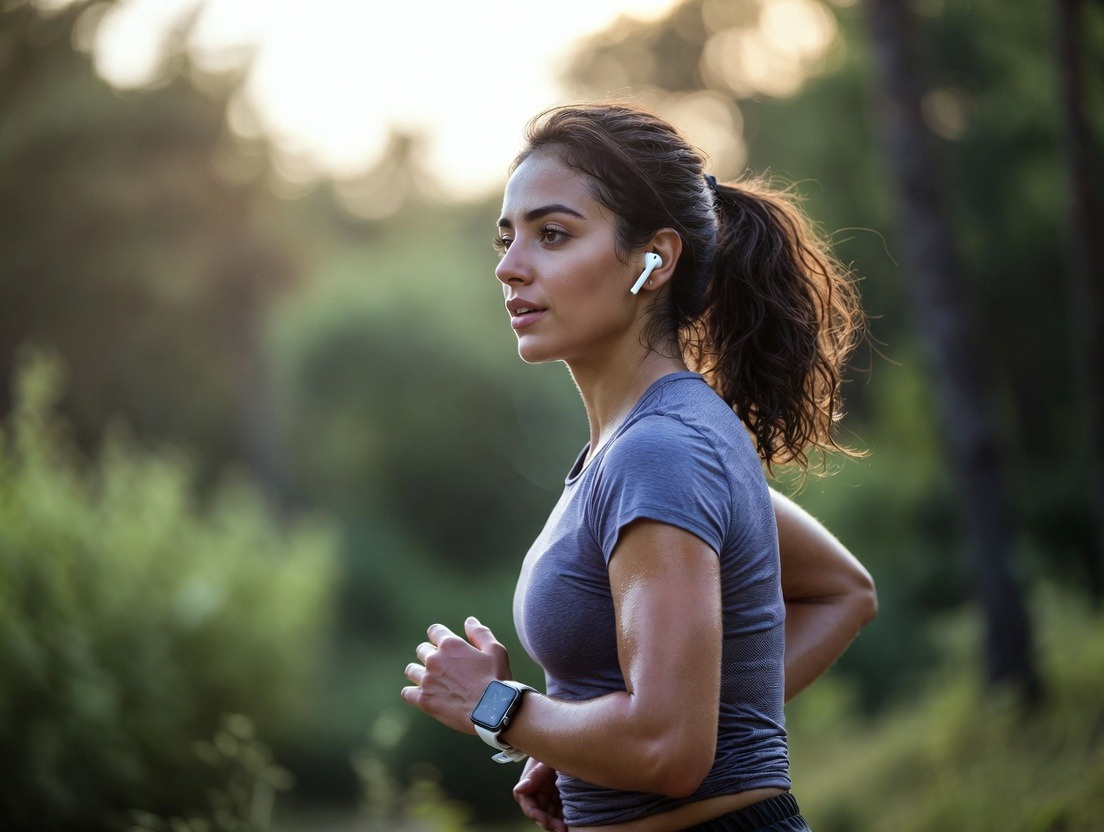
Early fitness trackers treated all movement as steps or "activity." The next frontier is activity recognition and form analysis—the device not only knowing that you’re exercising, but understanding what you’re doing and, in some advanced cases, how well you’re doing it. This transforms a passive recorder into an active training partner.
How Exercise Type is Identified:
Your wearable is a miniature motion laboratory. The accelerometer and gyroscope produce a unique motion signature for different activities.
Machine learning algorithms are trained on millions of these motion signatures. Your device compares your real-time sensor data to these models to make a probabilistic guess: “This pattern is 92% likely to be running, 5% likely to be elliptical, 3% likely to be stair climbing.”
The Emerging World of Form Feedback (The “How”):
This is the cutting edge. While full form analysis is more common in dedicated sensors (like in-shoe inserts or smart clothing), advanced wearables are beginning to offer insights:
The Smart Ring’s Perspective:
A ring on your finger offers a unique vantage point for upper-body-focused activities. It can provide exceptional insight into exercises involving hand movement—rowing, weightlifting (grip and arm path), boxing, or even swimming stroke detection (in water-resistant models). It complements lower-body data from other sources, offering a more complete picture of total body engagement. This commitment to understanding the nuance of movement is part of our core mission at Oxyzen to deliver meaningful, actionable health insights.
Tracking the type and quality of exercise is vital, but it’s only one half of the fitness equation. True fitness is about adaptation—the positive changes that occur in response to stress. To measure that, we need to look at the body’s capacity for work, starting with its most fundamental engine: aerobic fitness.
Imagine your body as a hybrid vehicle. NEAT and daily steps are like the efficient electric motor for city driving. But for highway speeds, endurance, and handling life’s steep hills, you need a powerful gasoline engine. In physiological terms, that engine is your aerobic system, and its maximum horsepower is measured by VO2 Max.
What is VO2 Max?
Technically, it’s the maximum volume of oxygen (V̇O₂) your muscles can consume per minute during intense exercise. It’s expressed as milliliters of oxygen per kilogram of body weight per minute (ml/kg/min). Think of it as the ultimate measure of your cardiorespiratory fitness: how well your heart can pump blood, your lungs can absorb oxygen, and your muscles can use that oxygen to produce energy.
Why It’s the “Gold Standard” Metric:
A high VO2 Max is one of the strongest predictors of long-term health and mortality. It’s linked to:
From Lab to Wrist (or Finger): The Estimation Game.
The true test requires lab equipment: a treadmill, a mask measuring gas exchange, and an all-out effort to exhaustion. Wearables provide a remarkably accurate estimate using sub-maximal data. They do this by modeling the relationship between your heart rate and your movement speed/power output during everyday activities and workouts.
The algorithm asks: “For a person of this age, sex, and weight, moving at this pace, why is their heart rate that high (or low)?” A lower heart rate at a given running speed suggests higher efficiency and a higher estimated VO2 Max. Devices like the Oxyzen smart ring continuously analyze these relationships during walks, runs, and other cardio activities to refine your personal cardio fitness score over time.
Interpreting Your Cardio Fitness Score:
Most devices translate your estimated VO2 Max into a simple score (e.g., 1-100) or an age/sex-based ranking (e.g., “Excellent for a 40-year-old male”). The key is to track the trend.
Improving your VO2 Max is one of the highest-return investments you can make in your healthspan. It represents your body’s fundamental capacity for vigorous life. This journey, from a simple step count to understanding your aerobic engine, is part of a larger story we are passionate about telling—a story of empowerment through data, which you can discover more about in our founding narrative.
Yet, even the most powerful engine needs a reliable chassis. Aerobic fitness tells us about the cardiovascular system, but for resilience, injury prevention, and functional independence, we must look to the pillars of strength: our muscles and bones.
For decades, fitness tracking was overwhelmingly cardio-centric. The modern understanding of holistic health demands we give equal weight to our musculoskeletal system—the muscles that move us and the bones that support us. While no consumer wearable can directly measure muscle mass or bone density, they can provide powerful proxy metrics and guide behaviors that directly impact these critical health pillars.
Muscle: The Metabolic Power Plant.
Skeletal muscle is not just for lifting weights. It’s a metabolically active tissue that regulates glucose, supports joint health, maintains posture, and is essential for functional independence as we age (a concept known as sarcopenia prevention).
Bone: The Living Scaffold.
Bone is dynamic tissue that responds to stress—specifically, the impact and mechanical load placed upon it. Weight-bearing and high-impact activities stimulate bone-forming cells, increasing density and strength, which is crucial for preventing osteoporosis.
The Critical Concept of “Load Management”:
This is where tracking becomes preventive. By monitoring your weekly activity volume and intensity, you can avoid the two extremes:
A smart ring, by providing a continuous record of your activity type and intensity, helps you manage this load. It can alert you to drastic changes and help you plan a progressive, sustainable approach to building and maintaining your musculoskeletal health. For users navigating how to balance different types of training, our community stories offer real-world examples.
We’ve now mapped the landscape of movement from the cellular level (VO2 Max) to the structural level (muscle and bone). But the human body is an integrated system. The final step in understanding our activity data is to see how all these disparate metrics interconnect to tell a unified story about our physiological state.

A single metric is a soloist; beautiful, but limited. True insight comes from the symphony—the way all your health data streams interact and inform one another. The most advanced personal health technology doesn’t just report numbers in silos; it seeks the correlations and causations between them, creating a dynamic, living model of your well-being.
Let’s explore the most powerful connections:
1. Activity & Sleep: The Bidirectional Lifeline.
This is the most fundamental rhythm of human health.
2. HRV & Training Load: The Recovery Feedback Loop.
As covered, HRV is your body’s whisper about its stress/recovery balance. Its true power is unlocked when viewed alongside your activity data.
3. The “Readiness” or “Body Battery” Synthesis:
This is where the algorithmic magic happens. Platforms like Oura, Whoop, and Oxyzen’s own system take your previous night’s sleep data (duration, stages, disturbances), your morning HRV and resting heart rate, and sometimes your body temperature, and synthesize them into a single “Readiness” or “Recovery” score. This score isn’t pulled from thin air; it’s the computational conclusion of how well-prepared your body is to handle physical (and mental) stress today.
4. Activity, Calories, and Goals: The Energy Management Triad.
Your daily activity calories (from TEA and NEAT) combine with your estimated BMR to give Total Daily Energy Expenditure (TDEE). When viewed alongside nutritional logging (even if manual), this creates the framework for managing weight, body composition, or athletic performance goals. Are you in a sustainable deficit for fat loss? Are you eating enough to support your training for muscle gain? The interconnected data guides these decisions far more effectively than any single metric could.
This symphony of data transforms reactive health care into proactive health cultivation. You’re no longer guessing why you’re tired or why your workout felt off; you have a data-informed narrative. This holistic approach is at the heart of what we believe in, a philosophy you can learn more about on our main site.
We’ve journeyed through the landscape of metrics—from the simplicity of steps to the symphony of interconnected data. But knowledge without application is merely trivia. The true power of this understanding lies in its ability to transform your daily life, not through rigid, obsessive tracking, but through informed, intuitive, and sustainable choices. This is about moving from being a data collector to a body listener, using technology as a translator rather than a dictator.
The first step is to establish your personal baseline. Forget generic goals for a moment. Spend a week or two observing your normal patterns without trying to change them. What is your average daily step count? Your typical weekly mix of moderate and vigorous activity? Your baseline HRV and resting heart rate? This isn’t about judgment; it’s about establishing your unique physiological starting point. As many users discover when they begin, this baseline phase can be an eye-opener, a sentiment echoed in the real-world experiences shared by our community.
With this baseline in hand, you can adopt the SMARTER framework for goal setting—a framework that leverages your data for personalized success:
The most profound shift comes when you learn to let your recovery metrics guide your intensity. This is the pinnacle of data-informed training. On a morning when your readiness score is high and HRV is elevated, that’s your cue to push harder in your workout—chase a personal best, add an extra interval, or tackle a challenging hill. Conversely, a low readiness score is not a failure; it’s valuable feedback. It’s permission to honor a recovery day with gentle movement, stretching, or true rest. This dynamic approach prevents burnout, reduces injury risk, and leads to better long-term results than any fixed weekly schedule.
Finally, embrace the power of micro-habits and NEAT. The goal isn’t to live in the gym; it’s to weave vitality into the fabric of your day. Use your tracker’s inactivity alerts as a gentle nudge to stand up. Celebrate the NEAT calories burned from gardening or cleaning. Take a “walking meeting” call. These micro-movements, validated by your device, compound into massive health benefits over months and years, building a lifestyle of integrated, effortless activity.
The technology that powers the devices on our wrists and fingers is advancing at a breathtaking pace. What we consider cutting-edge today will be foundational tomorrow. Understanding these emerging trends gives us a glimpse into a future where health tracking becomes even more seamless, predictive, and powerfully integrated into preventative medicine.
1. From Tracking to Predicting: AI-Driven Health Forecasting.
The next leap is from descriptive analytics (“This is what you did”) to prescriptive and predictive analytics (“This is what you should do, and here’s what might happen”). Advanced machine learning models will analyze your long-term data streams—activity, sleep, HRV, temperature—to identify subtle, pre-symptomatic patterns.
2. The Glucose & Metabolism Revolution.
While continuous glucose monitors (CGMs) are currently separate devices, their integration with mainstream wearables is on the horizon. Imagine your smart ring not only knowing you went for a run but understanding how that run impacted your blood sugar stability for the next 24 hours. This will create a profound feedback loop, showing you in real-time how different types, timings, and intensities of activity affect your metabolic health, personalized nutrition, and energy levels.
3. Advanced Biomarkers from PPG: The Blood Pulse as a Data River.
The optical PPG sensor in your smart ring is looking at a rich signal: your blood pulse waveform. Researchers are making strides in extracting more than just heart rate and HRV from this signal.
4. True Integration with Digital Healthcare.
The future isn’t a ring talking to your phone in isolation. It’s a secure, patient-owned data stream that can be shared with healthcare providers with your consent. Your physiotherapist could review your movement patterns post-injury. Your cardiologist could see your activity and HRV trends between appointments. This turns episodic care into continuous, remote patient monitoring, empowering more personalized and preventative treatment plans.
These innovations are not science fiction; they are the logical next steps in a journey that companies like ours are actively pioneering, a journey you can read more about in our story of innovation. The goal remains constant: to provide you with deeper, more meaningful insights into your own body, so you can live with more vitality and intention.
With this deep understanding of metrics, a practical question arises: what is the best tool for the job? The wearable market is dominated by wrist-worn smartwatches, but the smart ring category is rapidly gaining ground. Each form factor has distinct strengths and philosophies. Choosing between them isn't about which is universally "better," but which is better for you and your specific tracking goals.
The Smartwatch: The Versatile Command Center.
The Smart Ring: The Unobtrusive Biometric Specialist.
The Synergy Approach:
For the serious data enthusiast, there’s a compelling case for using both. A smartwatch with GPS for detailed workout tracking and on-the-go functionality, paired with a smart ring for continuous, comfortable biometric monitoring (especially sleep and recovery) can provide the most complete picture. The ring fills the data gaps left when the watch is charging or deemed too bulky to wear.
Ultimately, the choice hinges on your lifestyle and primary goal. If your focus is on holistic health, recovery, sleep, and seamless 24/7 insight with minimal distraction, a smart ring like Oxyzen represents a profound shift toward passive, yet powerful, self-awareness. You can explore the detailed specifications and philosophy to see if this approach aligns with your wellness journey.
We began this exploration by acknowledging a paradox: in an age of unprecedented data access, we often feel more confused about our health. We’ve now deconstructed the dashboard, learning the language of steps, zones, calories, NEAT, HRV, VO2 Max, and musculoskeletal load. We’ve seen how these metrics sing in harmony, informing our readiness and guiding our daily choices. We’ve looked to the future and evaluated the tools that capture this story.
The final, and most important, step is synthesis. The goal is not to become a slave to every fluctuation in your graph. The goal is to achieve health data literacy—the ability to observe the trends, understand the correlations, and then… listen to your lived experience.
Your body’s subjective feelings—energy, mood, motivation, soreness—are the most important data points of all. The numbers from your device should confirm or explain these feelings, not contradict them. If you feel fantastic and full of energy, but your readiness score is “low,” perhaps it’s the algorithm that needs calibration, not your intuition. Use the data as a compass, not a cage.
Craft your personal movement narrative. Let it be a story of consistency over perfection, of recovery as progress, and of joyful movement woven into the days of your life. Use the insights to celebrate the invisible work—the NEAT, the improved sleep, the steady HRV. Let the technology empower you to have more informed conversations with your body, your coach, or your doctor.
Remember, the most sophisticated wearable in the world is still just a tool. The real wisdom, agency, and capacity for change reside within you. The data is the map, but you are the traveler. May your journey be insightful, sustainable, and deeply your own. For continued learning and support on this journey, we invite you to explore the resources and community we’ve cultivated.
To truly master our movement, we must look beyond the day's workout and understand the body's internal timekeeper: the circadian rhythm. This 24-hour biological clock, governed by a master pacemaker in the brain's hypothalamus, influences nearly every physiological process—including your ability to perform, recover, and benefit from physical activity. It is the unseen architect of your daily energy landscape, and modern wearables are beginning to map its contours.
Your circadian rhythm isn't just about feeling sleepy at night. It orchestrates a daily symphony of hormone release, body temperature fluctuation, metabolism, and neuromuscular coordination.
How Wearables Track Circadian Alignment:
While no wearable can directly "see" your circadian clock, it infers its state through powerful proxies:
By analyzing these data streams, a wearable can provide insights not just on how much you moved, but when you moved relative to your body's optimal windows. It might suggest that your afternoon slump correlates with a late bedtime the night before, or that your best workouts consistently happen in the late afternoon. This empowers you to schedule your movement strategically, aligning high-demand activities with your physiological peaks and scheduling recovery during natural troughs. For those with shift work or irregular schedules, this data becomes invaluable for mitigating the health impacts of circadian disruption. You can learn more about tracking these fundamental rhythms by visiting our FAQ on biometric monitoring.
Understanding the circadian dimension adds a critical layer of temporal intelligence to our activity data. It reminds us that our bodies are not static machines but rhythmic organisms. With this in mind, we can explore another rhythmic principle fundamental to progress: the delicate balance between stress and recovery, known as hormesis.
The entire premise of fitness improvement rests on a biological principle called hormesis. It's the concept that a moderate, acute stressor triggers an adaptive, overcompensating response that makes the organism stronger and more resilient. Exercise is the quintessential hormetic stress: you break down muscle fibers and deplete energy stores, and in response, your body repairs them to be slightly stronger and more energy-efficient than before. The key words are "moderate" and "acute." Too little stress yields no adaptation; too much leads to breakdown.
This is where the concept of Training Load becomes your most important quantitative tool for managing hormesis. Training Load is a composite metric that seeks to quantify the total stress of a workout or a period of training, balancing both volume and intensity.
How Training Load is Calculated:
Different platforms use different formulas, but most are based on one of two models:
For the average user, wearables synthesize accelerometer data (how hard you're moving) with heart rate data (how hard your body is working) to create a proprietary "Effort" or "Strain" score for each activity. Your daily and weekly load is the sum of these scores.
The Magic of the Acute-to-Chronic Workload Ratio (ACWR):
This is the critical analytical tool for preventing injury and promoting adaptation. It compares your recent, short-term load to your longer-term baseline.
This single ratio, which your wearable app can calculate automatically, provides unparalleled guidance:
By monitoring your ACWR, you move from guesswork to guided progression. It answers the age-old question: "Is it safe to increase my mileage this week?" The data provides a clear, personalized answer. This scientific approach to managing the hormetic stress of exercise is a cornerstone of modern athletic training, now accessible to anyone with a sophisticated tracker. You can read stories from users who've used this data to finally overcome chronic injury cycles.
Hormesis applies to our muscles and cardiovascular system, but another form of stress—one we often ignore—has a profound impact on our movement quality and recovery: psychological stress. The mind and body are not separate entities, and our wearables are starting to prove it.
You've likely experienced it: a crushing work deadline leaves you feeling physically drained, or a brisk walk clears a mental fog. This is the mind-body connection in action, and it leaves clear fingerprints in your biometric data. Your wearable doesn't know you're stressed about a presentation, but it can see the physiological cascade that stress triggers.
The autonomic nervous system is the conduit. Psychological stress activates the sympathetic nervous system ("fight-or-flight"), which directly influences the metrics you track:
The Impact on Movement Quality & Performance:
This isn't just about feeling tired. The physiological state of stress directly degrades physical capacity.
Using Your Data for Mind-Body Awareness:
This is where tracking transcends fitness and becomes a tool for holistic self-awareness. By observing correlations between life events and your biometrics, you gain objective proof of stress's impact.
This feedback loop is empowering. It allows you to use physical metrics as a barometer for mental well-being and to use mindful movement as a lever to improve mental state. It validates the need for mental recovery with the same seriousness as physical recovery. For anyone on a journey to holistic wellness, this integration is pivotal, a topic we explore in depth on our blog about integrated health.
Just as stress leaves a signature, so do our daily habits. The fuel we provide our bodies—our nutrition—interacts with our activity in a dynamic dance, and emerging technology is beginning to shed light on this critical relationship.
We've meticulously tracked our energy output (calories burned) and our physiological response (HRV, load). But the input side of the equation—nutrition—has largely existed in a separate app, a manual log plagued by guesswork and inconsistency. The future of holistic health tracking lies in bridging this gap, creating a closed-loop understanding of how food fuels, sustains, and recovers from movement.
Today, this integration is mostly manual but powerful. When you log a meal (even roughly) in an app that syncs with your wearable, you can start to see fascinating correlations:
The Horizon: Passive, Dynamic Nutrition Insights.
This is where the next revolution awaits:
Practical Application Today:
Even without futuristic tech, you can use your current wearable to conduct personalized nutrition experiments.
This turns abstract nutrition advice into a personal discovery process, guided by your body's unique biometric responses. It moves you from following generic rules to becoming the expert on your own metabolism. This journey of self-discovery, powered by data, is central to the mission and vision of our company.
Our exploration has taken us from the cellular to the psychological, from the food we eat to the rhythms that govern us. To tie it all together, let's walk through a single day in the life of data, seeing how these streams converge to tell a complete and actionable story.
It's 7:00 AM. You wake up and check your wearable app. This isn't about a single score; it's about synthesizing a narrative from the overnight chapters to set the stage for the day ahead. Let's interpret a hypothetical, data-rich morning report:
Chapter 1: The Night's Repair Log (Sleep & Recovery Data)
Chapter 2: The Morning Readiness Forecast
Chapter 3: The Day's Blueprint – Making Informed Decisions
Armed with this narrative, you plan your day:
The Power of the Narrative:
This day demonstrates the shift from fragmented metrics to a continuous health narrative. The morning data informed activity choice. The activity data then updated your recovery status, which informed your evening choices to protect sleep. It’s a virtuous, data-informed cycle. The wearable isn't commanding; it's providing context for you to make smarter decisions that align with your body's actual state, not just your preconceived plan. For new users learning to navigate this daily narrative, our FAQ provides helpful starting guidance.
This narrative approach is the culmination of everything we've explored. It's the practical application of interconnected data. As we conclude this portion of our deep dive, we must address the final, foundational layer: the ethics, privacy, and philosophy behind collecting such intimate knowledge of ourselves.
We conclude not with a metric, but with a meditation. The ability to quantify our every heartbeat, step, and sleep cycle is a profound power. With it comes a profound responsibility—to ourselves, to our data, and to our own humanity. Navigating this landscape requires an ethical compass and intentionality.
The Privacy Imperative: Who Owns Your Biological Story?
The data generated by your wearable is Biometric Personally Identifiable Information. It is uniquely, intimately yours. When choosing a platform, its privacy policy is as important as its sensor accuracy.
The Pitfalls of Quantification: Avoiding Obsession and Anxiety.
The dark side of self-tracking is orthosomnia (an unhealthy preoccupation with perfect sleep data) or exercise addiction fueled by gamified metrics. The numbers can become a source of anxiety rather than liberation.
The Ultimate Goal: From Self-Tracking to Self-Awareness.
The highest purpose of this technology is to foster a deeper, more compassionate mind-body connection. The data should act as a translation layer, helping you understand the physical correlates of your feelings.
In the end, the most sophisticated algorithm cannot tell you the why behind a feeling, only the what. It cannot feel the joy of a sunset run or the peace of deep rest. Your role is to take the objective data and weave it with your subjective experience to craft a life of balance, purpose, and health. This is the art and science of modern well-being. For ongoing support and community in this balanced approach, we invite you to explore the resources and conversations we foster.
Your Trusted Sleep Advocate: Sleep Foundation — https://www.sleepfoundation.org
Discover a digital archive of scholarly articles: NIH — https://www.ncbi.nlm.nih.gov/
39 million citations for biomedical literature :PubMed — https://pubmed.ncbi.nlm.nih.gov/
Experts at Harvard Health Publishing covering a variety of health topics — https://www.health.harvard.edu/blog/
Every life deserves world class care :Cleveland Clinic - https://my.clevelandclinic.org/health
Wearable technology and the future of predictive health monitoring :MIT Technology Review — https://www.technologyreview.com/
Dedicated to the well-being of all people and guided by science :World Health Organization — https://www.who.int/news-room/
Psychological science and knowledge to benefit society and improve lives. :APA — https://www.apa.org/monitor/
Cutting-edge insights on human longevity and peak performance:
Lifespan Research — https://www.lifespan.io/
Global authority on exercise physiology, sports performance, and human recovery:
American College of Sports Medicine — https://www.acsm.org/
Neuroscience-driven guidance for better focus, sleep, and mental clarity:
Stanford Human Performance Lab — https://humanperformance.stanford.edu/
Evidence-based psychology and mind–body wellness resources:
Mayo Clinic — https://www.mayoclinic.org/healthy-lifestyle/
Data-backed research on emotional wellbeing, stress biology, and resilience:
American Institute of Stress — https://www.stress.org/


