


Healthy Aging Tips: How Your Wellness Ring Tracks What Matters
How a wellness ring tracks key metrics that matter for healthy aging.
How a wellness ring tracks key metrics that matter for healthy aging.
%402x.svg)
For centuries, humanity’s quest for longevity was guided by folklore, guesswork, and a hope that one’s genetics were favorable. Today, we stand at a revolutionary crossroads, where the science of healthy aging is no longer locked in academic journals but can be worn on your finger. Aging well is no longer a passive process; it's an active, data-informed pursuit of vitality, cognitive sharpness, and physical resilience. The paradigm has shifted from merely adding years to your life to adding vibrant life to your years.
This new era is powered by personal biometrics—a deep, continuous understanding of your body's unique language. Enter the modern wellness ring: a discreet, elegant device that transforms your finger into a 24/7 health observatory. Unlike sporadic doctor visits or reactive health measures, it offers a constant, personalized stream of insights into the core pillars of longevity: sleep, recovery, stress, activity, and cardiovascular health. It’s the difference between looking at a single snapshot and watching a full, detailed movie of your well-being.
In this comprehensive guide, we will delve into the most impactful, science-backed strategies for healthy aging and demonstrate how the nuanced data from a wellness ring—specifically technology like that found in the Oxyzen ring—moves these strategies from generic advice to a personalized action plan. This is about empowering you with knowledge, not just numbers, so you can make informed decisions that compound over time, turning daily habits into a lifelong advantage. Welcome to a smarter, more connected journey toward aging on your own terms.

The traditional narrative of aging is one of inevitable decline—a slow, steady loss of function, energy, and potential. This fatalistic view is not only disempowering but is now fundamentally outdated. The emerging science of geroscience invites us to see aging through a different lens: as a malleable process influenced by a collection of biological hallmarks that we can measure and, to a significant degree, modulate.
These hallmarks include genomic instability, telomere attrition, epigenetic alterations, loss of proteostasis, deregulated nutrient-sensing, mitochondrial dysfunction, cellular senescence, stem cell exhaustion, and altered intercellular communication. While these terms sound complex, their practical manifestations are what we feel daily: energy slumps, slower recovery, brain fog, and increased vulnerability to stress. The goal of healthy aging is to positively influence these underlying processes.
This is where continuous biometric monitoring becomes revolutionary. A wellness ring acts as your external proxy for these internal processes. You cannot feel your heart rate variability (HRV) dip in real-time, but it’s a direct window into your autonomic nervous system and recovery status. You might not objectively know how fragmented your deep sleep was, but it critically impacts glymphatic clearance—the brain’s nightly detox process linked to cognitive aging.
By tracking what matters, you shift from a reactive model (“I feel tired”) to a proactive model (“My data shows my recovery is low, so I’ll prioritize sleep and reduce intense training today”). This is dynamic optimization. It’s the understanding that your capacity is not fixed; it fluctuates daily based on sleep, stress, nutrition, and activity. Aging well means skillfully navigating these fluctuations to maintain your highest possible baseline of function. As the founders passionately detail on the Oxyzen our-story page, this vision of empowering individuals with actionable, personalized health intelligence is at the very core of the modern wellness movement. It’s about equipping you with the tools to write your own aging narrative.
To optimize the aging process, we must first understand its foundational pillars. Decades of longitudinal research, like the famous Framingham Heart Study and more recent findings from the Blue Zones, point to consistent, interconnected factors that separate merely long lives from long, healthy lives. A sophisticated wellness ring consolidates these pillars into a single dashboard, providing a holistic view of your healthspan.
1. Sleep Quality & Architecture: It’s not just about duration. The proportion of deep (N3) sleep and REM sleep is paramount. Deep sleep is essential for physical repair and growth hormone release, while REM sleep is crucial for memory consolidation and emotional regulation. Aging often disrupts this architecture. Tracking it allows for targeted interventions.
2. Recovery & Readiness: This is your body’s "green light" signal. It synthesizes data from sleep, HRV, resting heart rate (RHR), and temperature to answer a simple question: Is your body stressed and in need of rest, or is it primed for performance and challenge? Ignoring recovery leads to overtraining, burnout, and accelerated wear-and-tear.
3. Stress & Resilience: Chronic, unmanaged stress elevates cortisol, which accelerates cellular aging, promotes visceral fat accumulation, and impairs immune function. Tracking your stress through HRV and skin temperature trends helps you identify triggers and validate the effectiveness of de-stressing practices like meditation.
4. Metabolic & Cardiovascular Health: Resting heart rate and heart rate trends during activity are foundational indicators of cardiovascular fitness. Nocturnal HRV is one of the single best biomarkers of overall physiological resilience and autonomic nervous system balance.
5. Activity & Movement Balance: It’s the synergy of non-exercise activity thermogenesis (NEAT), purposeful cardio, and strength training. A ring tracks all-day movement, ensuring you avoid the dangers of prolonged sitting while monitoring the intensity and recovery needs of your workouts.
By making these invisible pillars visible, a device like the Oxyzen ring transforms abstract longevity principles into a personalized daily report card. For a deeper exploration of how these metrics interact, our blog features ongoing research and insights into the science of healthspan optimization.
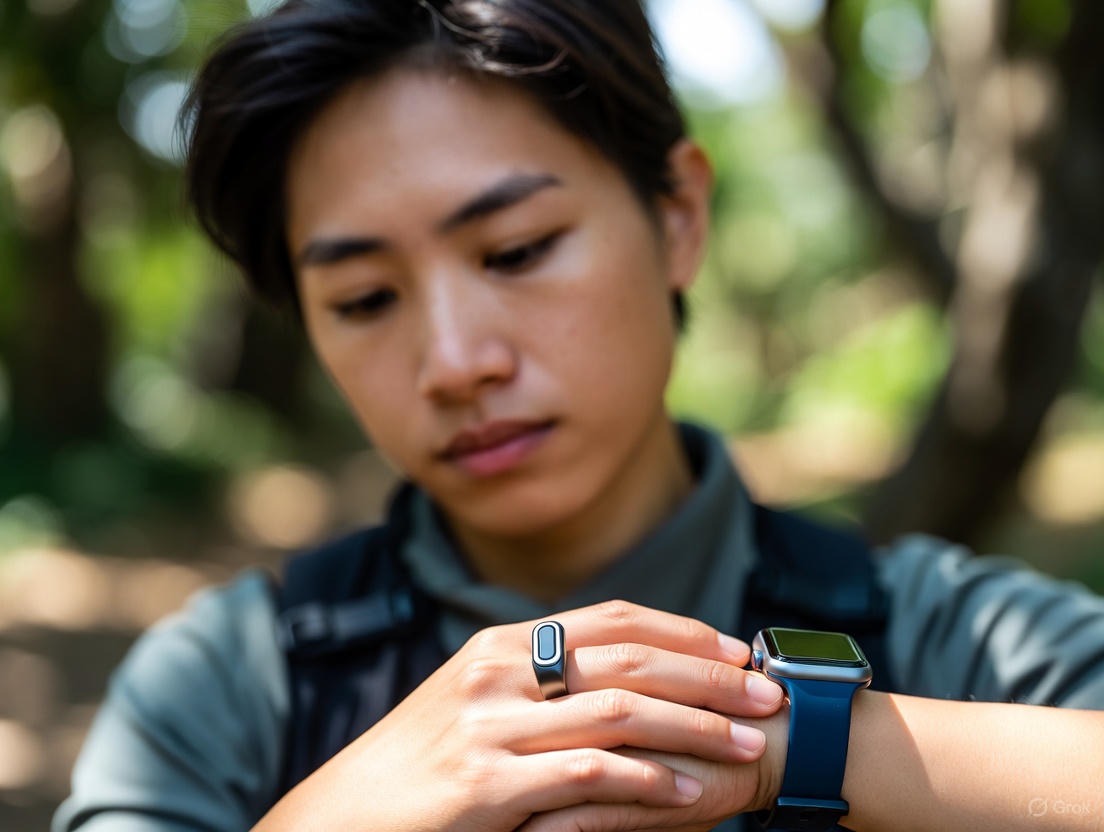
The notion that meaningful physiological data can be gleaned from your finger might seem futuristic, but it’s grounded in well-established medical science. The key lies in the rich vascular bed in your finger—specifically, the capillaries in your proximal phalanx. This location provides an excellent signal for photoplethysmography (PPG), the core technology behind heart rate and oxygen saturation monitoring in hospitals for decades.
A modern wellness ring like Oxyzen employs advanced multi-wavelength PPG sensors. By emitting specific wavelengths of light (typically red, infrared, and green) into the skin and measuring how much light is absorbed or reflected by blood flow, the sensor can discern a staggering amount of information:
The true magic, however, isn’t in the raw data collection—it’s in the proprietary algorithms and machine learning models that transform this raw signal into actionable insights. These algorithms, often developed and refined over years, filter out noise (like motion artifact) and interpret the complex interplay of signals to accurately deduce sleep stages, stress states, and recovery scores. This powerful fusion of biomedical engineering and data science is what makes your finger a continuous, personal health lab. If you’re curious about the technical specifics or have questions about how the data is processed, a great resource is our comprehensive FAQ page.

Sleep is the single most potent rejuvenator in our biological toolkit. For healthy aging, it is non-negotiable. But as we age, sleep naturally becomes more fragile—lighter, more easily disrupted, and often shorter in duration. The critical insight from ring data is that not all lost sleep is equal. Losing deep sleep has profoundly different implications for aging than losing REM sleep.
Here’s how a wellness ring decodes the symphony of your night and what each movement means for your healthspan:
By providing a nightly breakdown of these stages, a wellness ring moves you beyond the simplistic goal of "8 hours." It allows you to experiment and see, for example, that a consistent bedtime ritual increases your deep sleep, or that afternoon caffeine is slicing your REM sleep in half. This is precision health for your brain and body. For more on crafting the perfect sleep environment, our blog offers numerous evidence-based guides.
In a culture that glorifies "pushing through," the concept of recovery is often relegated to an afterthought. For healthy aging, this is a catastrophic mistake. Recovery is not the absence of training; it is the positive adaptation that happens because of training, provided you give your body the resources and time to rebuild. Your wellness ring provides an objective "Recovery" or "Readiness" score—a composite metric that tells you if you are genuinely recovering or quietly accumulating damaging stress.
This score is typically derived from several key nocturnal metrics:
When your ring presents a low recovery score, it’s a data-driven recommendation to take a restorative day. This could mean swapping an intense workout for gentle yoga or a walk, prioritizing hydration and nutrient-dense foods, and employing stress-management techniques. Ignoring this signal and training hard anyway is akin to continuing to dig a hole when you’re trying to build a foundation. It leads to plateaus, injury, and systemic inflammation that accelerates aging. Learning to honor your recovery score is perhaps the most powerful behavioral change a wellness ring can inspire. Many users share how this single metric transformed their relationship with exercise and stress on our testimonials page.

Stress is an inescapable part of life. However, it’s our body’s continuous exposure to stress hormones like cortisol and norepinephrine—not the acute stressors themselves—that does the cellular damage linked to accelerated aging. This "invisible storm" of chronic stress promotes inflammation, shortens telomeres (the protective caps on our chromosomes), and contributes to nearly every age-related disease. The problem is, we often become numb to our own stress levels, normalizing a state of constant, low-grade tension.
A wellness ring makes this invisible storm visible. It doesn’t ask you how stressed you feel (subjective); it shows you how stressed your body is (objective).
Armed with this data, you can move from being a victim of stress to being its manager. You can:
By learning to down-regulate your nervous system proactively, you protect your cells from the corrosive effects of chronic stress, directly contributing to healthier aging. To understand more about our mission to bring this kind of awareness to daily life, you can learn about our company’s philosophy here.
Physical activity is a cornerstone of healthy aging, protecting against sarcopenia (muscle loss), osteoporosis, cognitive decline, and cardiovascular disease. However, "more" is not always better. The optimal recipe includes the right balance of different activity types, all of which a wellness ring helps you quantify and balance.
1. Non-Exercise Activity Thermogenesis (NEAT): This is the energy you burn from everything that is not sleeping, eating, or sports-like exercise: walking, fidgeting, standing, gardening. NEAT is a huge contributor to daily metabolic health and is often the first thing to decline with a sedentary job or aging. Your ring tracks steps and general movement, serving as a constant reminder to stay "lightly active" throughout the day. Breaking up prolonged sitting every 45-60 minutes is a powerful, data-informed anti-aging habit.
2. Cardiorespiratory Training: This is your purposeful cardio—brisk walking, running, cycling, swimming. Your ring tracks active heart rate, duration, and estimated calorie expenditure. Crucially, by knowing your resting metrics, you can gauge the relative intensity of a workout. A run that spikes your heart rate higher than usual on a day of low recovery might be counterproductive. The ring encourages you to match workout intensity to your body’s readiness.
3. Strength & Resistance Training: While rings don’t track lifted weight, they are invaluable for monitoring the systemic impact of a strength session. A hard strength workout will typically lower next-night HRV and elevate RHR as the body repairs muscle micro-tears. This data prevents you from layering intense cardio on top of a day when your body is already busy with muscular repair. It ensures you periodize your training for true progress.
The ring’s holistic view prevents the common pitfall of being "active but sedentary"—someone who works out for 45 minutes but is otherwise immobile for 23 hours. It promotes a balanced, sustainable movement profile that supports a robust metabolism, strong joints, and a resilient cardiovascular system well into later life. For device-specific guidance on getting the most from your activity tracking, our support FAQ is an excellent resource.
Cardiovascular disease remains a leading threat to healthspan. Traditional monitoring—annual check-ups—provides only a single point in time. A wellness ring offers a continuous, dynamic picture of your heart’s function and fitness, turning your finger into a preventive screening tool.
By building a long-term baseline of your personal cardiovascular data, you become acutely attuned to deviations from your norm. This empowers you to take early, preventative action—adjusting lifestyle factors or seeking medical advice—long before a minor issue becomes a serious health event. This proactive stance is the essence of modern, data-empowered healthy aging. Discover how others have used these insights to take charge of their heart health by reading real user experiences and stories.
The outdated paradigm of health focused solely on weight and calorie counting. The modern, longevity-focused model prioritizes metabolic health—how efficiently your body processes energy, regulates blood sugar, and manages inflammation. A wellness ring provides several indirect but highly valuable windows into this critical system.
The ring shifts the focus from the stressful, often futile act of calorie counting to the empowering practice of system optimization. Instead of asking "How many calories did I burn?" you learn to ask: "Did I get the deep sleep needed for hormonal balance? Is my body recovered enough to handle nutrients efficiently? Did I move enough today to support my metabolism?" This holistic view is fundamental to maintaining a healthy weight, steady energy, and low disease risk as you age. For more on this holistic approach to wellness technology, you can explore the core principles behind Oxyzen.
Data without application is just noise. The ultimate power of a wellness ring lies in its ability to help you synthesize these interconnected streams of information into a coherent, personalized action plan for healthy aging. This is where you move from observation to transformation.
Start by identifying your baselines and trends. Don’t fixate on daily fluctuations; look at the 7-day and 30-day averages for your core metrics: Sleep Score, Recovery/Readiness, HRV, and RHR. This is your personal "normal."
Next, practice correlation and experimentation. This is the heart of personalization.
Finally, build feedback loops. Use the data to create simple, actionable rules for yourself:
Your action plan is dynamic, evolving as your life and body change. The ring provides the continuous feedback to keep it relevant. It turns the grand, sometimes overwhelming goal of "healthy aging" into a series of manageable, daily decisions informed by your body’s own signals. This is the true promise of personalized health technology: not just living longer, but living smarter and better every single day. To begin your own journey of integrated insight, the best starting point is to discover more about the Oxyzen platform.
Gathering exquisite data is only the first step. The true challenge—and opportunity—in healthy aging lies in translating those insights into lasting, sustainable behaviors. This is where the interplay between technology and behavioral psychology becomes critical. A wellness ring is not just a sensor; it can be a sophisticated habit-forming tool when understood and used correctly. It leverages core psychological principles to bridge the infamous "knowing-doing gap."
The Power of Immediate Feedback & Reinforcement: Unlike vague yearly check-up results, a wellness ring provides immediate and tangible feedback. When you see your sleep score jump after implementing a consistent bedtime, you receive a powerful positive reinforcement. This taps into the brain's reward system, making you more likely to repeat the behavior. The ring transforms abstract long-term benefits ("better sleep will help me age well") into concrete, short-term rewards ("I achieved a Sleep Score of 90!").
Making the Invisible Visible & Building Self-Efficacy: As discussed, stress and recovery are often invisible. By making them visible, the ring fosters self-efficacy—the belief in your own ability to influence outcomes. When you feel anxious and then see your stress graph spike, it validates your perception. More importantly, when you use a breathing technique and watch the graph descend, you receive direct proof of your personal agency. This builds the confidence needed to tackle other health behaviors.
Gamification and Personal Benchmarking: While not overtly game-like, the scoring systems (Sleep, Recovery, Activity) create a framework for personal benchmarking. You compete against your own past performance, not an arbitrary standard. Striving to improve your 7-day HRV average or maintain a "recovery streak" can provide motivational structure, turning self-care into a personally engaging challenge.
Contextual Awareness and Cue-Based Routines: The data provides context for your feelings. Waking up tired despite 8 hours in bed can be demoralizing. But if your ring shows your sleep was highly fragmented with low deep sleep, it provides an explanation and a cue for action ("I need to address sleep interruptions") rather than resignation ("I guess I'm just getting old"). This allows you to build if-then plans (implementation intentions) that are triggered by data cues, a proven method for habit formation.
The key is to move from a state of data obsession (checking scores constantly with anxiety) to data-informed mindfulness. The goal is to use the ring as a compass, not a critic. It’s a tool for compassionate self-experimentation, helping you discover what your unique system needs to thrive over the long term. For insights on building sustainable wellness routines, our blog features expert advice on behavioral change.
One of the most profound yet overlooked systems governing healthy aging is our circadian rhythm—the roughly 24-hour internal clock that regulates nearly every physiological process, from hormone release and cellular repair to digestion and cognitive function. Disruption of circadian rhythms (through irregular sleep, nighttime light exposure, or erratic eating) is strongly linked to accelerated aging, metabolic syndrome, neurodegeneration, and cancer. Your wellness ring is an unparalleled tool for observing and, ultimately, syncing with this fundamental biological rhythm.
A ring tracks several outputs of your circadian clock:
By analyzing this data, you can work towards circadian hygiene—practices that strengthen your natural rhythm:
Syncing your lifestyle with your circadian biology reduces systemic stress, optimizes hormone function, and improves cellular repair mechanisms. It is a foundational, non-negotiable strategy for slowing biological aging, and your ring provides the personal feedback loop to master it. Understanding these biological principles is part of our core mission, which you can read more about in our company's story.
Our genes load the gun, but environment pulls the trigger. The spaces in which we live, work, and sleep—our personal habitat—profoundly influence the biomarkers of aging. A wellness ring acts as a biofeedback device for your environment, helping you engineer surroundings that promote rather than undermine your healthspan.
The Sleep Sanctuary: Your nightly data is a direct report card on your bedroom environment.
The Workday Ecosystem: Daytime stress and activity data can inform your workspace design.
Social & Emotional Environment: This is a more subtle but critical layer. Your recovery metrics often reflect your social interactions.
This biofeedback allows you to consciously shape your social calendar and boundaries to support your nervous system. By treating your ring data as an objective assessment of your habitat’s impact, you become an architect of your own longevity-promoting environment. For more tips on creating a holistic wellness-supportive environment, explore the resources on our wellness blog.
The priorities and physiological challenges of healthy aging are not static. What your body needs at 35 is different from what it needs at 55 or 75. A major strength of continuous biometric tracking is its ability to evolve with you, providing relevant insights at every life stage. It’s a lifelong health companion.
In Your 30s & 40s (Prevention & Performance): This is the prime window for building a robust health foundation and preventing early decline. Focus here is on:
In Your 50s & 60s (Optimization & Early Detection): Hormonal shifts (menopause, andropause) and the early signs of metabolic slowdown become central.
In Your 70s and Beyond (Preservation & Stability): The goals shift to preserving function, preventing frailty, and maintaining independence.
At every stage, the ring provides a non-judgmental, objective mirror. It helps you adapt your strategies, celebrate the victories that matter (a stable HRV, a good night's sleep), and engage proactively with your health, fostering a sense of agency and hope throughout the aging journey. Users across all ages share how this adaptability has helped them on our testimonials page.
Human beings are social creatures, and our connections profoundly impact our health and longevity. Strong social ties are as predictive of a long life as not smoking. The latest evolution in wellness technology understands this, moving beyond solitary tracking to foster connected wellness. Sharing your journey—with a partner, family member, close friend, or a trusted community—can dramatically amplify motivation, provide accountability, and deepen understanding.
Partner Syncing for Mutual Support: When partners sync their data (with mutual consent), it creates a powerful dynamic for co-regulation and support.
Family Health Insights: For adult children concerned about aging parents, or for multi-generational households, shared data (with clear permissions and ethics) can provide peace of mind. Subtle, long-term trends in a parent’s activity levels, resting heart rate, or sleep patterns can be valuable information for supportive conversations or healthcare planning, always respecting autonomy.
The Power of Community: Some platforms offer community features or the ability to share anonymized insights. Learning how others interpret their data or what interventions worked for them can be incredibly educational. It combats the feeling of navigating complex health data alone.
This social layer transforms health from a private pursuit into a shared value. It builds ecosystems of support where individuals are encouraged and understood, making the path to healthy aging less daunting and more connected. It reinforces that we age not in isolation, but within the context of our relationships. To see how our technology fosters connection, you can learn about our community-focused approach.
With a constant stream of scores, graphs, and numbers, it’s easy to feel overwhelmed or to develop "metric anxiety," where the tool meant to reduce stress becomes a source of it. The key is to move from being a passive consumer of data to an empowered interpreter. Here’s a practical framework for engaging with your ring’s data wisely.
1. Establish Your Personal Baselines (The First 30 Days): For the first month, observe without judgment. Don't try to "fix" anything. Just wear the ring consistently and let it learn you. At the end of the month, note your averages:
2. Focus on Trends, Not Daily Dips: A single bad night or a low recovery day is meaningless noise. Life happens. Look at the 7-day and 30-day trend lines. Is your average HRV slowly trending upward over three months? That’s a massive win. Is your RHR creeping up over a few weeks? That’s a meaningful signal to investigate.
3. Use the "Three-Legged Stool" Model: Simplify by focusing on three core, interdependent metrics that summarize most of your system's state:
4. Ask "What" and "Why," Not Just "How Much": Don't just look at your sleep duration. Click into the breakdown. What was disrupted? Deep sleep? REM? Why might that be? Did you eat late? Drink alcohol? Have a stressful evening? This diagnostic approach turns data into actionable insight.
5. Schedule Data "Check-Ins," Not Constant Checking: Designate a specific, calm time to review your data—perhaps with your morning coffee. Avoid compulsive checking throughout the day, which can fuel anxiety. The goal is mindful review, not obsessive monitoring.
6. When in Doubt, Listen to Your Body Alongside the Data: The data is a tool to augment your inner awareness, not replace it. If you feel great but your recovery score is low, consider the context—maybe you’re emotionally energized. If you feel terrible but the data looks good, perhaps you’re fighting a virus the ring hasn’t yet detected. Always use the data in conversation with your subjective experience. For common questions on interpretation, our FAQ section provides clear guidance.
A wellness ring is a revolutionary personal health tool, but it is not a medical device. Its ultimate power is realized when its continuous, real-world data is integrated with the snapshot-in-time diagnostics of traditional medicine. This creates a richer, more complete picture for you and your healthcare provider, enabling truly personalized preventive care.
Preparing for Your Annual Physical: Instead of walking into your doctor’s appointment with only subjective complaints ("I'm tired"), you can bring objective data trends.
Correlating with Blood Biomarkers: You can start to see fascinating correlations between your lifestyle data and lab results.
Informing Specialists: For those working with functional medicine doctors, nutritionists, therapists, or coaches, ring data is invaluable.
A Note on Medical Emergencies: While a ring can detect anomalies like atrial fibrillation (through irregular heartbeat detection) or significant SpO2 drops, it is not a substitute for emergency medical attention. It is a screening and monitoring tool. Any concerning data should be discussed with a qualified healthcare professional.
By bridging the gap between daily life and clinical assessment, you become an informed, active partner in your healthcare. You move from a passive patient to a proactive health advocate, using tools like the Oxyzen ring to provide context that was previously invisible in the clinical setting. This collaborative model is the future of longevity medicine. Discover how we view our role in this integrated health landscape on our about us page.
Adopting any new technology, especially one that collects intimate health data, rightly comes with questions. Addressing concerns about accuracy, privacy, and security is essential for trust and peace of mind.
On Accuracy: Clinical-Grade vs. Consumer-Grade Insights
It’s crucial to set the right expectations. A wellness ring is not a diagnostic medical device like a hospital EKG or a clinical polysomnogram (sleep study). It is a highly accurate consumer wellness tool designed for trend analysis and lifestyle insight.
The goal is relative accuracy and consistency. Knowing if your HRV is 10% higher this month than last month is profoundly meaningful, even if the absolute number might vary slightly from a clinical device.
On Privacy & Data Security: Your Data, Your Control
This is arguably the most important consideration. A reputable company will be transparent and adhere to the highest standards.
At Oxyzen, we believe trust is our most important product. We are committed to building technology that empowers you without compromising your privacy. You can review our detailed policies and commitments on our main website and submit any specific questions through our dedicated support FAQ. Being an informed user allows you to reap the benefits of this technology with full confidence.
We are on the cusp of a monumental shift: moving from reactive and descriptive health tracking to predictive and prescriptive health intelligence. The future of healthy aging lies in devices and platforms that don't just tell you what happened last night, but can forecast what might happen tomorrow and guide you to prevent it.
This future is powered by longitudinal data and advanced machine learning. As you wear your ring for years, it builds a unique, deeply personal health model—a "digital twin" of your physiology. With this vast dataset, algorithms can begin to identify subtle patterns that precede downturns or signal opportunities for optimization.
Predictive Insights on the Horizon:
The Prescriptive & Integrated Ecosystem: The ring will evolve from a data source into the hub of a personalized health ecosystem. It could:
This is not science fiction; it is the logical next step. The goal is a seamless, anticipatory system that supports your healthspan effortlessly, turning the science of healthy aging into an intuitive, daily reality. We are actively working on this future, and you can follow our journey and updates on our blog.
As we've explored the depth of individual metrics—from HRV and deep sleep to activity balance and stress—a new challenge emerges: integration. The human body is a complex, interconnected system, not a collection of siloed data points. The most advanced wellness platforms are now moving beyond a dashboard of disjointed scores to provide a synthesized, holistic overview of your overall state. Enter the concept of a unified "Vitality Score" or "Healthspan Index."
This single, composite score is not an average, but a weighted algorithm that reflects the dynamic interplay between your core physiological systems. Think of it as your overall "operating system" version for the day. A high Vitality Score doesn't mean every metric is perfect; it means your systems are in relative harmony and resilient. A low score is a clear flag that one or more systems are under significant strain, requiring attention.
What a True Vitality Score Synthesizes:
The Practical Power of Synthesis: This single score performs a critical cognitive function: it reduces decision fatigue. Upon waking, instead of parsing 5 different graphs, you get one clear signal:
This synthesized intelligence is the culmination of personalized tracking. It turns a wealth of data into a simple, actionable compass, guiding your daily choices toward behaviors that compound positively for long-term healthspan. It answers the ultimate question: "Given my body's current state, what is the wisest thing for me to do today to support my future self?"
The conversation around aging has rightly expanded beyond the physical to encompass cognitive and emotional health. Depression, anxiety, and cognitive decline are significant threats to healthspan. Here, the wellness ring transitions from a fitness tracker to a powerful biofeedback device for the mind. It provides an objective, physiological mirror for our subjective emotional states, creating a potent feedback loop for mental fitness.
Breaking the Cycle of Anxious Rumination: Anxiety often lives in a closed loop of worried thoughts and physical sensations (racing heart, shallow breathing). The ring's stress timeline and HRV data can objectify the experience. Seeing a clear spike in your stress graph during a period of rumination makes the connection tangible. More importantly, it allows you to measure the impact of interventions.
Validating Mindfulness and Meditation Practices: Many people try meditation but abandon it, unsure if it's "working." With a ring, you can conduct a personal experiment. Meditate for 10 minutes and watch your real-time HRV on the app. Do you see a calming, coherent pattern emerge? Does your stress score decrease post-session? This direct validation reinforces the practice, turning it from a vague "should do" into a proven tool you can deploy with confidence.
Tracking the Physiological Impact of Emotional Events: Our emotions are electrochemical events in the body. A difficult conversation, a joyful reunion, or a sad movie will register in your nervous system. Reviewing your data afterward can foster emotional intelligence. You might see that a certain relationship consistently triggers a low-recovery state, or that time in nature reliably boosts your HRV. This data empowers you to make choices that support your emotional ecosystem.
Cognitive Load & Recovery: Intense periods of deep work or learning place a metabolic demand on the brain. It’s plausible that future algorithms will correlate specific sleep stage patterns (like REM for memory consolidation) with cognitive tasks. Already, seeing that a night of poor sleep leads to a day of low resilience validates the need to protect sleep for mental clarity.
By closing the loop between mind and body, the ring fosters somatic awareness—the ability to sense and interpret the body's signals. This skill is a cornerstone of emotional regulation and resilience, key components of aging with grace, wisdom, and psychological well-being. For more on integrating mental and physical wellness, explore related topics on our wellness-focused blog.
Nutrition is the fuel for the aging process. Yet, directly tracking micronutrient intake or glucose response with a ring is not currently possible. However, the ring provides a powerful downstream readout of your nutritional choices, and its integration with other data streams is where the future shines.
The Indirect Feedback Loop: Your ring doesn't see the pizza, but it measures the consequences.
The Future of Integrated Nutrition: The true potential lies in correlation. Imagine securely syncing your ring data with a continuous glucose monitor (CGM) or a detailed food-logging app. The insights would be revolutionary:
This creates a personalized nutrition feedback system. Instead of following generic diets, you use your biometrics to guide your choices. The goal becomes: "What eating pattern, for my unique body, yields my optimal sleep, recovery, and energy metrics?" The ring becomes the central hub that shows you the physiological outcome of your nutritional inputs, making you the expert on your own metabolism. To stay updated on how we view integration with other health tools, keep an eye on Oxyzen's official updates.
For a wellness tool to be effective, it must be worn consistently. This moves the discussion from pure functionality to wearability—encompassing design, comfort, and personal aesthetics. A device that is bulky, unattractive, or uncomfortable will end up in a drawer, no matter how powerful its sensors. The evolution of the wellness ring recognizes that to be a true health companion, it must seamlessly integrate into your identity and daily life.
The Psychology of Discreet Design: Unlike a smartwatch, which is a screen on your wrist demanding attention, a ring is subtle. It doesn't create a constant visual interruption or social friction. This subtlety has a psychological benefit: it allows the device to observe without judging. It collects data in the background of your life, not as the centerpiece. This reduces the likelihood of obsessive checking and helps foster a healthier, more balanced relationship with the data.
Comfort as a Non-Negotiable Feature: You must forget you're wearing it. This requires:
Personal Expression and Identity: For many, a ring is a piece of jewelry, a form of self-expression. Offering a range of finishes (brushed, polished, matte) and potentially even minimalist, elegant designs allows the device to align with personal style. When a tool is something you're proud to wear, compliance soars. It transitions from a "health gadget" to a part of you.
This focus on holistic design reflects a deep understanding of human behavior. The most accurate sensor in the world is useless if not worn. By prioritizing comfort, discretion, and aesthetics, companies like Oxyzen ensure that the path to gaining wisdom from your data is as smooth and integrated as possible. See how our design philosophy supports continuous wear on our our-story page.
To crystallize all these concepts, let's follow a hypothetical, data-informed year in the life of "Alex," a 52-year-old professional who begins using a wellness ring. This narrative illustrates the journey from awareness to mastery.
Months 1-3: The Baseline & Awakening
Alex wears the ring consistently. The first month is observational. Averages are established: Sleep Score 72, Recovery 68, RHR 68, HRV 35ms. Alex notices clear patterns: wine with dinner halves deep sleep; work deadlines crater HRV; weekend hikes boost next-day recovery scores. The first "aha" moment: seeing a direct correlation between late-night screen time and long sleep latency.
Months 4-6: Targeted Experimentation
Armed with baselines, Alex begins experimenting.
Months 7-9: Integration and Refinement
The data is now integrated into daily decision-making. Alex checks the morning readiness score to plan the day's workout intensity. The partner sync feature leads to a joint commitment to an earlier bedtime, improving both their scores. Alex prepares for an annual physical with a printout showing a 20% improvement in average HRV and a 5-bpm drop in RHR over 6 months, impressing his doctor.
Months 10-12: Predictive Avoidance and Mastery
During a stressful quarter at work, Alex sees a steady, week-long decline in recovery scores despite good sleep. Recognizing this as a sign of cumulative stress, Alex proactively blocks out a "recovery weekend"—disconnecting, spending time in nature, and prioritizing sleep. This prevents what would have likely culminated in burnout or illness. By year's end, Alex's baselines have fundamentally shifted: Sleep Score 85, Recovery 75, RHR 63, HRV 48ms. More importantly, Alex has developed a deep, intuitive connection between actions and physiological outcomes. The ring has become less of a coach and more of a confirmatory tool for a newly embodied wisdom.
This journey from data to insight to embodied habit is the ultimate promise of personalized health technology. It’s not about achieving perfect scores, but about cultivating a responsive, informed, and compassionate relationship with your own aging process.
As we embrace these powerful tools, we must navigate the emerging ethical landscape with intention. The aggregation of intimate biometric data raises critical questions about ownership, use, and potential societal pitfalls. A responsible user and a conscientious company must engage with these issues.
The Principle of User Ownership and Consent: The foundational ethic must be that you own your data. This means:
Guarding Against "Healthism" and Data Anxiety: Healthism is the preoccupation with personal health as a primary focus for identity and meaning, often leading to moral judgment of those who are ill or perceived as unhealthy. Biometric data can inadvertently fuel this.
The Role of the Company: Ethical companies in this space have a duty to design their apps and communications to mitigate these risks. They should emphasize trends over daily numbers, provide context for data, and avoid language that shames or induces anxiety. Their mission should be empowerment, not dependency or fear. At Oxyzen, we take these ethical considerations seriously, as outlined in our company values and mission.
One of the most beautiful and unforeseen consequences of wearable wellness technology is its potential to bridge generational gaps in health understanding. It creates a common, objective language around well-being that can facilitate supportive conversations between children, parents, and grandparents.
A Tool for Concerned Adult Children: For adults worried about aging parents living independently, a shared data stream (with full, respectful consent) can provide peace of mind without intrusion. A consistent pattern of good activity and stable vital signs is reassuring. Conversely, a noticeable, sustained drop in a parent's activity level or a disruption in their historically stable sleep pattern can be a tangible, non-confrontational starting point for a caring conversation: "I notice your activity has been lower this month, how are you feeling?" It moves the dialogue from vague worry to specific, data-informed concern.
Empowering Older Adults with Agency: For the older generation, these devices can be empowering. They provide concrete evidence of the benefits of their healthy habits. A grandparent can see that their daily walk improves their sleep score, reinforcing the behavior. It shifts the dynamic from being passively "checked on" to actively "managing and sharing" their health journey, maintaining dignity and autonomy.
Creating a Shared Family Health Project: Families can use this as a positive, unifying project. Setting gentle, supportive family step challenges or sharing "sleep victories" can make health a shared value rather than a solitary chore. It allows younger generations to learn from the consistency of older generations, and older generations to engage with technology in a meaningful, personally beneficial way.
This technology, when used with respect and consent, can soften the often difficult transitions around aging and care. It fosters a culture of proactive, communicative health support within families, turning potential sources of conflict into opportunities for connection and mutual empowerment. Read stories of families connecting through wellness on our testimonials page.
The journey of healthy aging is not a linear ascent. It is a path with peaks, valleys, and long plateaus. There will be periods of rapid improvement, times of backsliding due to life events, and stretches where despite your best efforts, the numbers seem stagnant. This is normal and expected. The true test of a longevity mindset—and the utility of your tracking tool—is how you navigate these inevitable phases.
The Plateau: When Metrics Stop Improving
After initial gains, you may hit a plateau. Your HRV stabilizes, sleep scores level off, and weight loss stalls. This is a critical moment.
The Setback: Illness, Injury, and Life Stress
A severe flu, a surgery, a period of grief, or a demanding work project will derail your best-laid plans. Your data will reflect this starkly.
The Long-Term Mindset: Playing the Infinite Game
Healthy aging is an infinite game—the goal is not to "win" but to keep playing, to perpetuate the game itself. Your ring is your scoreboard for this infinite game.
By accepting the non-linear nature of the journey, you free yourself from the tyranny of daily perfection. Your ring becomes a long-term companion that helps you navigate all seasons of life with grace and intelligence, ensuring that temporary setbacks don't become permanent declines.
We have journeyed through the foundational landscape of modern healthy aging, exploring how the continuous, intimate data from a wellness ring illuminates the path. We've moved from redefining aging as a dynamic process to understanding the core pillars of longevity—sleep, recovery, stress, activity, and cardiovascular health. We've demystified the science behind the sensors and delved into the profound importance of circadian rhythms, environmental design, and the behavioral psychology needed to turn data into lasting change.
We've seen how this tool adapts through life's phases, fosters social connection, and must be integrated thoughtfully with professional healthcare. We've confronted the ethical considerations and looked ahead to a future of predictive health. Most importantly, we've framed this not as a quest for biohacked perfection, but as a compassionate, intelligent partnership with your own body.
This is the end of the beginning. The theory is laid out. The power of this approach lies not in passive reading, but in active engagement. It lies in establishing your baseline, observing your unique patterns, and beginning those small, data-informed experiments that lead to profound, compounding gains over a lifetime.
Your healthspan is the most important project you will ever work on. It is the foundation upon which every other life experience is built. With the insights now available at your fingertips—quite literally—you are no longer navigating in the dark. You have a compass, a map, and a detailed logbook. The journey to a longer, healthier, more vibrant life is a deeply personal one, and it starts with understanding what your body is telling you. Ready to listen?
Ready to begin your own journey of discovery? Learn more about how Oxyzen can be your guide. For deeper dives into any of the topics covered here, from sleep science to stress management, our blog is a continually updated resource. And if you have questions, our community and support team are here to help you get started.
Your Trusted Sleep Advocate: Sleep Foundation — https://www.sleepfoundation.org
Discover a digital archive of scholarly articles: NIH — https://www.ncbi.nlm.nih.gov/
39 million citations for biomedical literature :PubMed — https://pubmed.ncbi.nlm.nih.gov/
Experts at Harvard Health Publishing covering a variety of health topics — https://www.health.harvard.edu/blog/
Every life deserves world class care :Cleveland Clinic - https://my.clevelandclinic.org/health
Wearable technology and the future of predictive health monitoring :MIT Technology Review — https://www.technologyreview.com/
Dedicated to the well-being of all people and guided by science :World Health Organization — https://www.who.int/news-room/
Psychological science and knowledge to benefit society and improve lives. :APA — https://www.apa.org/monitor/
Cutting-edge insights on human longevity and peak performance:
Lifespan Research — https://www.lifespan.io/
Global authority on exercise physiology, sports performance, and human recovery:
American College of Sports Medicine — https://www.acsm.org/
Neuroscience-driven guidance for better focus, sleep, and mental clarity:
Stanford Human Performance Lab — https://humanperformance.stanford.edu/
Evidence-based psychology and mind–body wellness resources:
Mayo Clinic — https://www.mayoclinic.org/healthy-lifestyle/
Data-backed research on emotional wellbeing, stress biology, and resilience:
American Institute of Stress — https://www.stress.org/


