


Heart Health and Recovery: The Overnight Restoration Your Ring Tracks
The overnight restoration of heart health tracked by your ring.
The overnight restoration of heart health tracked by your ring.
%402x.svg)
Imagine a world where your most critical health insights don’t come from an annual doctor’s visit filled with fleeting snapshots, but from a silent, continuous conversation happening every night as you sleep. This is not science fiction; it’s the reality ushered in by the latest generation of smart wearable technology. At the intersection of advanced biometrics and proactive wellness lies a profound truth: the secret to a resilient heart and a vibrant life may be decoded in the quiet, restorative hours of the night.
For decades, we’ve focused on daytime metrics—steps taken, calories burned, active minutes logged. While valuable, this is only half the story. The body’s most profound repair work, especially for the cardiovascular system, happens offline. Nighttime is when your heart rate descends to its lowest, your nervous system shifts from "fight or flight" to "rest and digest," and a symphony of hormonal and cellular processes orchestrate deep recovery. Until recently, this black box of nocturnal restoration was largely a mystery, its details inaccessible outside a sleep lab.
Now, a sleek, unobtrusive device worn on your finger—a smart ring—is turning that mystery into a dashboard of actionable intelligence. By harnessing the unique vascular access point of the finger, these devices capture clinical-grade data on your heart rate, heart rate variability (HRV), blood oxygen saturation, respiratory rate, and sleep architecture throughout the night. This isn’t just about counting sleep hours; it’s about measuring the quality of your restoration and, by extension, the functional state of your autonomic nervous system—the primary governor of your heart health.
This article is your deep dive into the nocturnal journey of your heart. We will explore how the silent language of your nighttime physiology, tracked by a smart ring, translates into a powerful narrative about your cardiovascular resilience, your capacity to handle stress, and your body’s innate ability to heal itself. We’ll move beyond the data points to understand their meaning: what a rising resting heart rate is whispering about inflammation, what a dipping HRV is shouting about systemic stress, and how your overnight recovery score is the ultimate predictor of your next day’s performance—both physical and mental.
Welcome to a new paradigm in personal health. Welcome to understanding the overnight restoration your ring tracks.
We often think of sleep as a passive state, a mere pause in the action of life. In truth, it is a period of intense, organized activity. For your cardiovascular system, the night shift is when the maintenance crew comes in, repairs the wear and tear of the day, and prepares the engine for another marathon. This critical work is governed by your autonomic nervous system (ANS), which has two primary branches: the sympathetic (gas pedal) and the parasympathetic (brake).
During the day, the sympathetic system is often engaged, elevating heart rate, increasing blood pressure, and releasing stress hormones like cortisol to help you meet demands. This is essential for performance but is inherently catabolic—it breaks the body down. Sleep, particularly deep sleep, triggers a powerful parasympathetic response. This is the anabolic, restorative phase. Your heart rate drops, blood pressure falls, and energy is redirected from external tasks to internal repair.
One of the most vital processes occurring during this time is glymphatic clearance. Think of it as the brain’s power-washing system. Cerebrospinal fluid flushes through brain tissue at an increased rate, clearing out metabolic waste products like beta-amyloid proteins, which are associated with cognitive decline when they accumulate. This nightly detox is crucial for neurological health, which is inextricably linked to cardiovascular health via the brain-heart axis.
Simultaneously, the cardiovascular system itself gets a tune-up. Blood vessels undergo repair, inflammation is modulated, and hormone levels like growth hormone (key for tissue repair) and melatonin (a powerful antioxidant) peak. The heart experiences longer periods between beats during deep sleep, which reduces its overall workload and allows for myocardial recovery. This is why consistently poor or insufficient sleep is a major, independent risk factor for hypertension, atherosclerosis, heart attack, and stroke. It’s not just about feeling tired; it’s about depriving your heart of its essential maintenance window.
A smart ring, like those developed by innovators at Oxyzen, acts as a passive sentinel during this critical period. By tracking the physiological markers of this parasympathetic shift, it quantifies how effectively your body is entering this restorative state. It doesn’t just tell you that you were in bed for eight hours; it reveals whether your nervous system successfully downshifted and how deeply your body engaged in the reparative "night shift." This foundational understanding transforms sleep from a vague concept of rest into a measurable pillar of heart health.
With a continuous stream of physiological data in hand, the most empowering phase begins: connecting the dots. You become a detective of your own well-being, learning the unique language of your body. This is where lifestyle moves from theory to observable science. Let's map how common daily habits directly write themselves into your heart's data log.
The Impact of Nutrition & Hydration
That heavy lunch? Watch for a gradual rise in resting heart rate throughout the afternoon as your body dedicates energy to digestion, potentially accompanied by a dip in HRV. Dehydration, even mild, often manifests as an elevated RHR and a more "jittery" heart rate pattern, as your blood volume drops and your heart works harder to maintain circulation. Conversely, a day of balanced meals and ample water intake typically supports a lower, steadier RHR and a healthier HRV. Tracking lets you identify specific food triggers and understand the true timeline of your body's response to what you consume.
Exercise: The Dose-Response Relationship
Exercise is a positive stress, and its impact is vividly clear in your data. A vigorous workout will show a strong heart rate elevation during the activity. The golden data, however, is in the recovery. A fit, well-recovered body will show a swift heart rate decline in the first minute post-exercise and a return to baseline within a reasonable timeframe. If you see your heart rate staying elevated for hours after a routine workout, or your HRV plummeting the next morning, it's a clear signal of excessive strain or insufficient recovery. This allows for intelligent training adjustments to prevent overtraining and promote positive adaptation.
Stress & Mental Load: The Invisible Weight
A demanding workday, an emotional conversation, or constant digital pinging may not leave you visibly sweating, but your heart feels it. Chronic mental stress often leads to a phenomenon called "sympathetic dominance," visible as a suppressed HRV, a slightly elevated resting heart rate, and a heart rate that is more reactive to minor stimuli. You might see your heart rate spike while simply reading a stressful email. Observing this gives you objective proof of your stress burden, motivating and guiding stress-management practices. The calming effect of a 10-minute meditation, for example, can sometimes be seen as a tangible increase in HRV almost in real-time.
Sleep: The Master Regulator
The data connection here is perhaps the most direct. A night of fragmented sleep or insufficient deep sleep will almost invariably result in a higher morning RHR and a lower morning HRV. You might also see more frequent nighttime awakenings or restless periods reflected in your heart rate graph. This objective feedback is powerful for prioritizing sleep hygiene. You can experiment and see the data reward: a consistent bedtime ritual leading to more deep sleep, or the negative impact of alcohol before bed on your sleep-stage architecture and next-day readiness score.
Caffeine & Alcohol: The Chemical Moderators
A morning coffee might give a slight, temporary RHR lift. Alcohol, however, is a major disruptor. Even a single drink can significantly suppress HRV, raise nighttime heart rate (often by 5-10 BPM or more), and disrupt sleep cycles, reducing restorative deep sleep. Seeing this data graphically can reshape your relationship with these substances, encouraging more mindful consumption.
By reviewing your daily log alongside your habit tracker, you stop guessing. You know that the poor sleep score on Wednesday was caused by Tuesday night's glass of wine. You see that your most resilient days follow an evening yoga session. This feedback loop is the core of empowered self-care. For more examples of how individuals have decoded their habits, explore the case studies and guides available on our blog.
A single day's data is a data point. A week's data is a trend. A month or a year of continuous data is transformative insight. The true power of daily tracking isn't in obsessing over every minute's fluctuation, but in zooming out to observe the patterns, correlations, and long-term trajectories that emerge over time. This macro view turns information into wisdom about your unique physiology.
Identifying Your Personal Baselines and Ranges
Every person is different. A "good" HRV for one individual might be 40ms, while for another it's 80ms. The key isn't comparing yourself to population averages, but establishing your own healthy baseline and understanding your normal range. With months of data, you can see your typical resting heart rate zone, your average HRV, and how you cycle through periods of strain and recovery. This personalized baseline makes deviations more meaningful. If your HRV drops 30% below your personal norm for several days, it's a far more significant signal than simply being "low" on a generic scale.
Correlating Lifestyle Clusters with Physiological Outcomes
Over time, you'll start to see powerful clusters. You may notice that periods of high work stress combined with poor sleep consistently precede a mild head cold. You might see that a week of consistent morning walks correlates with a steady, gentle rise in your HRV baseline. Perhaps you discover that your cardiovascular recovery is best not after complete rest, but after an active recovery day with light movement. These are personalized health discoveries no generic article can give you.
Observing the Impact of Life Changes
Are you starting a new training program, changing your diet, or practicing meditation? Longitudinal data provides an objective performance review. You can watch your resting heart rate trend downward over a 12-week fitness journey. You can see your sleep stability improve as you stick to a new bedtime. This turns motivation into a visible graph of progress, keeping you engaged and informed.
Predictive Potential and Early Warning
By understanding your patterns, you can sometimes get early warnings. A sustained, unexplained dip in HRV and rise in RHR can be an early sign of your body fighting off an illness, often before symptoms appear. Noticing this pattern might prompt you to prioritize rest, hydration, and nutrition, potentially mitigating the severity or duration of the bug. For those managing chronic conditions like hypertension or anxiety, these patterns become an essential management tool, showing the direct benefit of medication or therapy on their daily physiology.
This journey from data to patterns to personal wisdom is at the heart of modern preventive health. It represents a shift from a reactive, disease-centric model to a proactive, health-optimizing partnership with your own body. This partnership requires not just data, but a platform to synthesize it—a topic central to the vision behind Oxyzen, which you can learn more about on our about us page. The goal is to equip you with a deep, intuitive understanding of your heart's story, so you can write its healthiest chapters.
Data without action is merely trivia. The ultimate goal of all this tracking is to inform positive, sustainable change. When you understand the direct dialogue between your habits and your heart, you can move from generic advice to a personalized, iterative lifestyle plan that evolves with you. This is where insight becomes impact.
The Feedback Loop: Observe, Interpret, Act, Reassess
This is the core methodology:
This loop turns you from a passive recipient of health information into an active participant in your own biohacking.
Building Your Heart-Smart Daily Framework
Using your pattern knowledge, you can construct a daily framework that supports your cardiovascular system:
The Principle of Marginal Gains
You don't need to overhaul your life overnight. The power lies in the cumulative effect of small, data-informed tweaks—the 1% improvements. Improving sleep quality by 5%, reducing afternoon stress spikes, improving hydration, and adding 10 minutes of daily movement might each seem small, but together, over months, they compound into a dramatic improvement in your cardiovascular resilience and overall vitality. This philosophy of continuous, informed improvement is woven into the fabric of our approach; you can trace its origins in our story.
By closing the loop between data and action, you create a self-reinforcing cycle of wellness. Positive changes lead to better data, which motivates further positive changes. This personalized plan is dynamic, always informed by the latest feedback from your body, ensuring your path to heart health is as unique as you are.

The journey we've described—from continuous monitoring to personalized insight—is made possible by a quiet revolution in wearable technology. While smartwatches brought health tracking to the mainstream, a new generation of devices, particularly smart rings, are pushing the boundaries of what's possible by prioritizing seamless, clinical-grade data collection where it matters most.
The Unobtrusive Form Factor: A Gateway to Truthful Data
The wrist is a dynamic location. Watches can be bulky, interfere with certain activities (like typing or weightlifting), and are often removed for charging or during sleep—creating critical data gaps. The finger, however, is an ideal site for continuous photoplethysmography (PPG), the optical method used to measure heart rate and other biomarkers. A well-designed ring is comfortable, socially unobtrusive, and easy to wear 24/7. This compliance is not a minor feature; it is the foundational requirement for the longitudinal, gap-free data that reveals true patterns. People often forget they're wearing it, which means the data it collects is of their authentic, uninfluenced life.
Optimized for the Golden Hours: Sleep and Recovery
The most valuable physiological data is often collected when you are still—during sleep and periods of rest. A ring is arguably the perfect sleep tracker. It doesn't press against your wrist as you move, and its sensors maintain consistent contact with the rich vascular bed in the finger. This allows for highly accurate, nightly measurements of HRV, resting heart rate, blood oxygen (SpO2), and sleep stages. By mastering the measurement of recovery, these devices provide the cornerstone metric—your readiness—upon which a smart daily plan can be built.
Multi-Sensor Fusion for a Holistic Picture
Leading smart rings don't rely on a single sensor. They combine advanced PPG sensors with 3D accelerometers (for precise movement and sleep tracking), skin temperature sensors, and sometimes even galvanic skin response sensors. By fusing these data streams with sophisticated algorithms, they can derive a comprehensive picture of your autonomic nervous system balance, stress load, and recovery status. This moves beyond simple activity counting to true physiological insight.
The Power of a Dedicated Platform
The hardware is only half the story. The companion app and analytics platform are where data becomes insight. The best platforms don't just show numbers; they synthesize the data into intuitive scores (like Sleep Score, Readiness Score, and Stress Resilience), highlight meaningful trends, and offer contextual insights. They guide the user through the "Observe, Interpret, Act" loop, making complex biometrics accessible and actionable for everyone. The goal is to provide clarity, not clutter. Developing such a user-centric, insightful platform is a core part of our mission at Oxyzen.
This technological convergence—clinical-grade sensors in an always-worn form factor, powered by intelligent software—is what makes daily heart health tracking a practical, powerful reality. It democratizes access to a level of self-knowledge once available only in sleep labs or sports physiology clinics, putting you in the driver's seat of your cardiovascular well-being.
The impact of daily heart health tracking extends far beyond charts and graphs. On a profound level, this practice fosters a new, more intimate, and empowered relationship with your own body. It replaces fear and abstraction with knowledge and agency, changing how you experience your health on a day-to-day basis.
From Ignorance to Intimacy
For many, the body can feel like a black box. We get signals—fatigue, anxiety, poor sleep—but their origins are often mysterious, leading to frustration or neglect. Continuous tracking acts as a translation device. That afternoon slump isn't just a vague feeling; it's correlated with a spike in stress metrics at 11 AM and a poor sleep score from the night before. This connection fosters a sense of intimacy and understanding. You begin to see your body not as a separate, sometimes failing entity, but as a complex, communicating system that you are learning to understand and support.
Reducing Health Anxiety with Objective Data
Paradoxically, more data can lead to less anxiety for many. Worrying about your heart health in the abstract can be a source of significant stress. Having objective, daily reassurance that your resting heart rate is stable, your HRV is within your normal range, and your sleep is restorative can provide profound peace of mind. It turns the unknown into the known. Of course, this data should never replace professional medical advice, but it can provide a baseline of normalcy and prompt more productive conversations with your doctor. For common questions on how to integrate this data with professional care, our FAQ offers guidance.
Cultivating Mind-Body Awareness
Over time, you begin to internalize the feedback. You might start to feel when your HRV is likely to be low, or sense the physiological signs of stress before you check the app. This heightened interoceptive awareness—the sense of the internal state of your body—is a critical component of emotional regulation and overall wellness. The data acts as a teacher, helping you connect subtle physical sensations with their physiological correlates.
The Motivation of Visible Progress
Willpower is finite and often fails against abstract goals. The concrete, visible progress shown in your data is a powerful, sustainable motivator. Seeing your resting heart rate trend down over three months of consistent exercise, or watching your sleep stability improve as you stick to a new routine, provides a deep sense of accomplishment. This positive reinforcement makes healthy behaviors self-perpetuating. It turns "I should" into "I am, and I can see it's working." The stories of individuals who have experienced this transformation are a constant source of inspiration for us, many of which are shared on our testimonials page.
This shift in relationship is perhaps the most valuable outcome of all. When you view your body as an intelligent partner worthy of understanding, every choice becomes an opportunity for supportive dialogue. You move from battling your body to collaborating with it, building a foundation of health that is rooted in respect, knowledge, and empowered action.
With a new understanding of your body's language and the technology to interpret it, the final step is architectural: designing a daily routine that seamlessly integrates heart-smart practices. This isn't about a rigid, punishing schedule, but about creating a flexible, resilient framework that supports your cardiovascular system through the natural rhythms of your day. The goal is sustainability—a routine that feels supportive, not restrictive, and adapts to your life.
The Anchor Points: Morning, Midday, Evening
Structure your day around three key anchor points that allow you to check in, reset, and prepare:
Fueling the Engine: Nutrition Integrated
The Flexible Framework
This routine is a framework, not a prison. Some days will be high-stress; some nights, sleep will be poor. The power of tracking is that it gives you the insight to adapt. A low readiness score tells you to simplify your framework—maybe just hit the three anchors and let the rest go. The data provides the feedback to bend without breaking, ensuring your heart-centric routine is a resilient, lifelong practice. For more ideas on building and adapting such routines, a library of practical guidance is available on our blog.
If resting heart rate is the speedometer of your heart, then Heart Rate Variability (HRV) is the sophisticated diagnostic computer monitoring the engine’s efficiency and health. It is, without exaggeration, one of the most powerful and insightful metrics your smart ring provides, especially for understanding recovery and cardiovascular resilience.
At its core, HRV measures the subtle variations in time between successive heartbeats, measured in milliseconds. This might seem counterintuitive. Isn’t a steady, metronomic heartbeat the sign of a healthy heart? In fact, the opposite is true. A healthy, resilient heart is under constant, dynamic regulation by the two branches of your autonomic nervous system. The sympathetic system speeds the heart up slightly, the parasympathetic slows it down, and their continuous tug-of-war creates a natural, slight irregularity. High HRV indicates a strong, adaptable nervous system—one that can ramp up effectively for challenge and then powerfully apply the brakes for recovery. Low HRV suggests a nervous system that is stuck, often in a dominant sympathetic (stressed) state, and is a known biomarker for fatigue, overtraining, chronic stress, and increased cardiovascular risk.
Your smart ring calculates HRV most accurately during sleep, particularly during deep sleep, when external distractions are minimized. Tracking your nightly HRV trend provides a crystal-clear window into your overall recovery status.
For example, let’s say you have a demanding work project. You might see your nightly HRV dip slightly during the most intense days, reflecting the mental load. Then, after a relaxing weekend with good sleep, you see it rebound. This is a normal, adaptive response. However, if the dip continues for days without recovery, it’s a data-driven signal to prioritize rest, manage stress, and investigate potential causes before it manifests as burnout or illness.
Understanding HRV transforms how you approach your health. Instead of guessing if you’re "run down," you have an objective, physiological measure. It empowers you to make informed decisions: "My HRV is low today, so I’ll opt for a walk instead of a high-intensity workout," or "My HRV has been high all week, my body is ready to tackle that challenging training session." This is the essence of data-driven, personalized wellness. To dive deeper into the science of metrics like HRV and how they are captured, our blog offers a wealth of detailed resources.
Sleep is not a monolithic state. It’s a structured, cyclical journey through distinct stages, each with a specialized role in physical and mental restoration. For your heart, traversing these stages fully and repeatedly is non-negotiable for optimal health. Your smart ring maps this journey, showing you not just how long you slept, but how well you cycled through the necessary phases.
A typical sleep cycle lasts about 90 minutes and repeats four to six times per night. Each cycle includes:
The magic for heart health lies in the balance and cycling between these stages. Consistently achieving sufficient deep sleep is linked to better blood pressure regulation and glucose metabolism. Healthy REM sleep is tied to emotional resilience, which reduces chronic stress—a known enemy of the heart.
A smart ring uses movement, heart rate, and HRV patterns to estimate your time in each stage. Seeing your sleep architecture graphed out is enlightening. You might discover that while you get 8 hours in bed, a high percentage is light sleep, with fragmented deep and REM cycles—often due to factors like evening alcohol consumption, late-night eating, or an irregular schedule. This insight moves you from the generic goal of "more sleep" to the precise goal of "better quality, more structured sleep." It answers the question, "Why do I sleep for 8 hours and still wake up tired?" The answer is in the architecture, and optimizing it is a direct investment in your heart’s long-term health.
Your resting heart rate (RHR) is one of the most fundamental vital signs. When tracked dynamically overnight by a smart ring, it transforms from a static number into a dynamic story about your daily recovery, fitness level, and emerging health issues. Unlike a one-off check at the doctor’s office, your nightly RHR—measured during your deepest periods of sleep—provides a pristine, stress-free baseline.
For a healthy adult, a lower RHR (typically 50-70 beats per minute, and even lower for highly fit individuals) generally indicates a more efficient heart muscle and better cardiovascular fitness. Each beat pumps a greater volume of blood, so the heart doesn’t need to work as hard. However, the trend is infinitely more telling than any single number.
For instance, many users report seeing their RHR climb a day or two before they feel the scratchy throat of a cold. Others notice a spike after a day of intense travel or a difficult emotional conversation. It’s a non-judgmental, physiological report card on your day.
Furthermore, the relationship between RHR and HRV is key. Often, a spike in RHR coincides with a dip in HRV—a double confirmation that your nervous system is skewed sympathetically and recovery is compromised. Monitoring this allows for proactive intervention. You can learn to connect the dots: "That late-night heavy meal made my RHR 8 bpm higher all night," or "My meditation practice this week correlated with my lowest RHR in months."
This kind of feedback is at the heart of the mission behind companies focused on this technology. As explored in the Oxyzen story, the goal is to provide individuals with these intimate insights, empowering them to become the CEOs of their own health.
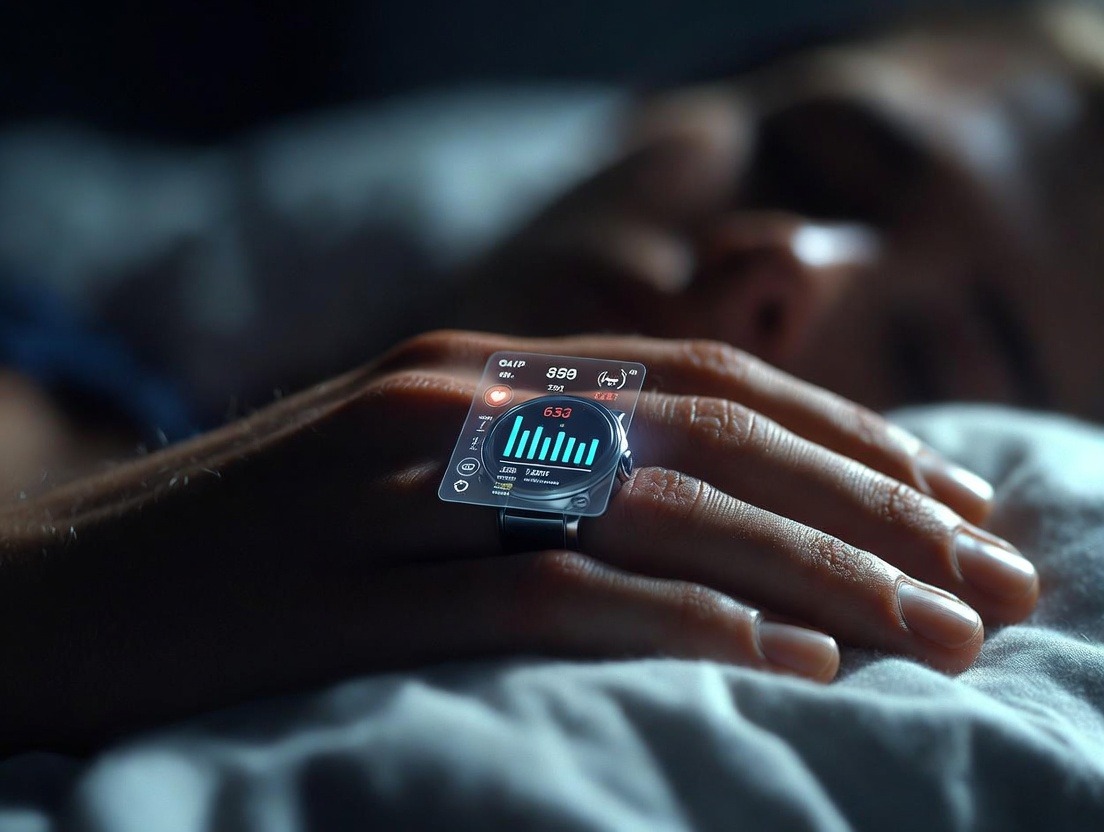
While heart rate gets much of the attention, two other nocturnal metrics provide a critical, often overlooked, window into cardiovascular and systemic health: blood oxygen saturation (SpO2) and respiratory rate. Your smart ring’s ability to monitor these passively throughout the night is a game-changer for preventative health.
Blood Oxygen Saturation (SpO2) measures the percentage of hemoglobin in your blood that is carrying oxygen. A normal, healthy level is typically 95% or above. During sleep, it’s normal for this to dip slightly, but consistent, significant dips—a condition known as nocturnal hypoxemia—are a serious concern. These dips are frequently caused by sleep-disordered breathing, most notably obstructive sleep apnea (OSA).
In OSA, the airway collapses repeatedly during sleep, causing breathing to stop (apneas) or become shallow (hypopneas). Each event triggers a drop in blood oxygen. Your brain, in a panic, sends a stress signal to jolt you partially awake to resume breathing. This cycle can happen dozens or even hundreds of times per night, placing immense strain on the cardiovascular system. Each oxygen drop causes a surge in blood pressure and heart rate, and the constant sleep fragmentation prevents entry into deep, restorative stages.
The long-term consequences are severe: untreated sleep apnea is a leading risk factor for hypertension, atrial fibrillation, heart failure, and stroke. The insidious part is that many people with sleep apnea are completely unaware they have it—they may just attribute their daytime fatigue to "not being a good sleeper."
Respiratory Rate, the number of breaths you take per minute, is another elegant metric. During deep sleep, it should be slow and steady. An elevated or highly variable nocturnal respiratory rate can also be a sign of sleep apnea, but also of other issues like heart failure or respiratory conditions.
A smart ring that tracks these trends gives you the power to spot potential issues. You might notice recurring patterns of SpO2 dips or an unusually high and variable respiratory rate graph. This isn’t a diagnosis, but it is a powerful, objective piece of evidence to take to a healthcare professional. It moves the conversation from "I’m tired" to "My data shows consistent oxygen desaturations during sleep." This can be the key that unlocks a proper sleep study and treatment, potentially averting long-term cardiovascular damage. For answers to common questions about how this tracking works and its accuracy, our FAQ section provides clear explanations.
You now understand the individual players: HRV, RHR, sleep stages, SpO2, and respiratory rate. The true magic of advanced smart ring analytics lies in how they synthesize this multi-dimensional data into a single, actionable metric: the Recovery Score (sometimes called a Readiness Score). This is your personalized, daily report card on your body’s physiological state, telling you not just how you feel, but how you are.
Think of it as your body’s own CEO, analyzing all the departmental reports (cardiovascular, nervous system, respiratory) from the night shift and delivering a bottom-line verdict on your operational capacity for the day ahead. This score, typically on a 0-100 scale, is algorithmically derived, weighing the various biomarkers based on their importance and your personal baselines.
A high recovery score (e.g., 80-100) is a green light. It indicates your body has successfully repaired, your nervous system is balanced and resilient, and you are physiologically prepared to take on stress, perform in workouts, and handle cognitive demands. It’s a signal that your lifestyle habits—sleep, nutrition, stress management—are in alignment.
A low recovery score (e.g., below 50) is a clear caution sign. It suggests your body is in a state of strain, recovery was incomplete, and additional stress should be managed carefully. On a low-score day, the intelligent response might be to prioritize rest, choose gentle movement like walking or yoga, hydrate thoroughly, and avoid heavy mental loads or intense exercise that could dig a deeper recovery hole.
The profound power of the Recovery Score is in its ability to objectify subjective feeling. We all have mornings where we "feel off" for no apparent reason. The score validates that instinct with data. Conversely, we sometimes feel a false sense of energy fueled by adrenaline after poor sleep (often called "tired but wired"). The score provides the sobering truth, preventing you from overreaching and causing further damage.
By making the Recovery Score a part of your morning routine—checking it alongside your coffee—you begin to make truly informed, body-led decisions. You learn to trust the data. This cultivates a deeper body awareness and a more sustainable approach to performance and health, moving away from rigid, prescriptive plans and towards a flexible, responsive partnership with your own physiology. It is the culmination of the insights discussed in the sections above, packaged for practical, daily use.
Armed with your overnight recovery data, you move from passive observation to active co-creation of your health. This is where the profound value of a smart ring is fully realized: it closes the feedback loop between your behaviors and their physiological impact, enabling you to make micro-adjustments that compound into macro results for your heart and overall well-being.
Your morning Recovery Score and the underlying metrics are not just for information—they are your guidebook for the day. This practice is often called "Heart Rate Variability (HRV)-guided training" or "readiness-based planning," but it extends far beyond the gym. It applies to your work schedule, social commitments, and mental load.
Let’s translate the data into action:
Beyond the score, individual metrics offer nuanced clues. A low score driven primarily by elevated resting heart rate might point to dehydration, lingering inflammation, or an oncoming illness. The prescription: extra fluids, anti-inflammatory foods (like berries and leafy greens), and extra rest. A low score driven by depressed HRV suggests nervous system overwhelm. The prescription: stress-modulating activities like meditation, diaphragmatic breathing, or a digital detox.
The real-world stories are compelling. A software developer notices her HRV plummets and RHR spikes every Thursday night. By reviewing her data journal, she connects it to a standing, high-pressure meeting every Thursday afternoon. With this insight, she institutes a post-meeting 15-minute breathing routine and schedules a walk. Within weeks, her Thursday night data normalizes. An amateur marathon runner uses his ring to avoid overtraining. After a particularly long run, he sees his recovery score remains low for two days. Instead of forcing his next run, he waits for the score to rebound, preventing a classic overuse injury.
This is personalized, precision wellness. It transforms health from a guessing game into a responsive dialogue. You learn your unique patterns, triggers, and effective interventions. This daily practice of checking in and adjusting builds a profound level of self-awareness and agency over your long-term heart health trajectory.

The nightly trends captured by your smart ring are more than just a daily readiness tool; they are a longitudinal window into your cardiovascular risk profile. While no consumer device is diagnostic, the patterns it reveals are powerfully correlated with known clinical risk factors for heart disease. By tracking these biomarkers over months and years, you build a personalized, preventative health timeline that can signal when to seek professional guidance.
Let’s examine the established links:
The power here is in trend analysis. A single night of poor data is meaningless. But a report showing that your average sleeping heart rate has increased by 5 bpm over the last six months, or that your deep sleep has decreased by 20%, provides objective, quantitative evidence of a shift in your health baseline. This is invaluable information to bring to a healthcare provider. Instead of vague symptoms, you can present a data trend: "My device shows my heart rate during sleep has been steadily rising, and my HRV has been falling over the past quarter, despite no change in my exercise routine."
This proactive, data-informed approach represents a paradigm shift from sick care to true health care. It allows for early intervention—lifestyle adjustments, stress management, or medical referrals—long before a condition progresses to a critical stage. It empowers you to be the primary guardian of your heart health, with data as your ally. For those inspired by the mission behind this kind of proactive health technology, learning more about the Oxyzen team reveals a passion for this preventative future.
The relationship between stress, sleep, and heart health is a classic, self-perpetuating cycle. Your smart ring not only illuminates this cycle but provides the exit map. Chronic psychological stress activates the sympathetic nervous system, releasing cortisol and adrenaline. This leads to:
Your ring’s data provides the objective evidence to interrupt this loop at multiple points.
By making the invisible visible, the ring helps you identify your unique stress triggers and measure the effectiveness of your coping strategies. This breaks the subjective guesswork. You learn that for you, a 30-minute evening walk is more effective at lowering next-morning’s resting heart rate than an extra hour of scrolling on your phone. You prove to yourself that turning off work notifications after 7 PM results in a higher HRV. This creates a powerful positive feedback loop: using data to reinforce the very behaviors that improve your heart health and break the stress-sleep-strain cycle. For more strategies on using data to optimize wellness and break negative cycles, our blog is a continual resource.
Accumulating data is the first step; transforming it into lasting behavior change is the ultimate goal. This is the journey from information to wisdom. Your smart ring is the perfect companion for this journey, enabling a "test, learn, and adapt" methodology for building habits that directly support your heart.
Here is a practical framework for using your overnight data to build a personalized heart-healthy lifestyle:
1. Establish Your Baseline: Wear your ring consistently for 2-4 weeks without trying to change anything. This gives you a true picture of your "normal"—your average sleep duration, sleep stages, RHR, and HRV. This baseline is your personal benchmark, not a comparison to anyone else.
2. Introduce Single, Specific Interventions: The key is to change one variable at a time and observe the effect over 1-2 weeks.
3. Experiment Systematically:
4. Create Positive Feedback Loops: When you see a positive result in your data—like a higher HRV after a day of hiking in nature, or a lower RHR after a week of consistent hydration—it provides powerful intrinsic motivation. This data-driven reinforcement is often more compelling than vague goals like "be healthier."
5. Build Your Personal Protocol: Over months, you will assemble a toolkit of proven, personalized habits. Your protocol might look like: *"For optimal recovery, I need to finish eating by 7 PM, do my breathing exercises at 9:30 PM, keep the room at 67°F, and avoid hard workouts after 4 PM. If my HRV is below my baseline, I prioritize a 20-minute afternoon walk and an extra 15 minutes of sleep."*
This iterative process turns you into an expert on your own body. It demystifies wellness, making it a tangible, data-informed practice. The cumulative effect of these personalized, optimized habits is a heart that is consistently supported in its nightly repair work, building resilience against the wear and tear of modern life. This journey of self-discovery is what drives the teams creating this technology, a story you can explore in the Oxyzen our story page.
Data in a vacuum is merely numbers. Its true power is unleashed in the context of human lives—in the "aha" moments, the prevented crises, and the empowered decisions. Across the globe, individuals using advanced smart ring technology are experiencing profound shifts in their understanding of their health, with the heart often at the center of the story. These testimonials are not just about technology; they are about reclaimed agency.
Story 1: The "Tired but Wired" Executive. Mark, a 45-year-old tech CEO, prided himself on his 5 AM workouts and 1 AM email check-ins. He felt perpetually exhausted but assumed it was the price of success. His ring told a different story. His Resting Heart Rate was consistently above 70 bpm at night, his HRV was chronically low, and his sleep graph looked like a city skyline—full of jagged awakenings. The data was a mirror he couldn’t ignore. He started using the recovery score as his daily guide. On low-score days, he swapped his punishing workout for a walk and meditated. He instituted a digital sunset. Within three months, his average sleeping RHR dropped into the low 60s, his HRV trended upward, and, most importantly, his daytime energy stabilized without sacrificing his edge at work. "I thought I was managing stress," he shared, "but I was just ignoring it. The ring showed me the physiological cost I was paying with my heart. It gave me permission to recover."
Story 2: The Athlete Who Avoided Overtraining. Sarah, a dedicated marathoner, followed a rigid training plan. Despite feeling increasingly flat and irritable, she pushed through, fearing lost fitness. Her ring’s data showed a steady, multi-week decline in her HRV and a creeping rise in her RHR—the classic signature of overreaching. One morning, after a particularly hard track session, her Recovery Score hit a personal low of 32. The data was the objective coach she needed. She took an unplanned three-day rest period, focusing on sleep and nutrition. Her scores rebounded above her baseline. She returned to training feeling stronger and later achieved a personal best. "I used to train by feel, and my feel was broken by fatigue," she said. "The ring’s recovery score was the truth-teller. It taught me that real progress isn't made in the workout; it's made in the recovery afterward."
Story 3: The Silent Signal of Sleep Apnea. David, 58, was told by his partner that he snored, but he dismissed it. His annual physicals were always "fine," but he had borderline high blood pressure. Out of curiosity, he started wearing a smart ring. The consistent pattern of significant blood oxygen (SpO2) dips throughout the night—sometimes into the high 80s—and a highly variable respiratory rate graph were impossible to dismiss. He brought screenshots of this data to his doctor, who immediately ordered a sleep study. David was diagnosed with moderate obstructive sleep apnea. After beginning CPAP therapy, not only did his overnight SpO2 line flatten into a healthy 95-98% range, but his sleeping heart rate dropped, his HRV improved, and his blood pressure medication was reduced. "I had no idea I was starving my heart of oxygen hundreds of times a night," David reflected. "That ring didn't diagnose me, but it gave me the evidence to get diagnosed. I believe it was a preventative intervention for my heart."
These stories underscore a common theme: the smart ring acts as a translator. It translates the body's silent language of strain and recovery into a clear dialect we can understand and act upon. It empowers individuals to move from a reactive model of healthcare ("I'll go to the doctor when something hurts") to a participatory, preventative model ("My data shows a trend I need to address"). For a collection of more experiences like these, you can explore real user testimonials on the Oxyzen site.
The current capabilities of smart rings are impressive, but they represent just the beginning of a revolution in personalized, predictive health. The future lies in deeper analytics, more sophisticated integrations, and a move from tracking to true forecasting. Here’s a glimpse of what the next generation of overnight heart health monitoring might entail:
1. Advanced Biomarker Integration: Future sensors may non-invasively track a wider array of cardiovascular and metabolic markers during sleep. Imagine monitoring nocturnal blood pressure trends (a key predictor of cardiovascular events), arterial stiffness via pulse wave velocity analysis, or glucose variability through indirect optical sensing. This would create a holistic, multi-system picture of overnight health.
2. AI-Driven Pattern Recognition and Predictive Alerts: Machine learning algorithms will get better at identifying subtle, individual patterns that precede negative health events. The system could learn that for you, a specific combination of rising RHR, falling HRV, and increased sleep fragmentation for three nights in a row has, in the past, preceded a migraine or a respiratory infection. It could then provide an early, personalized alert: "Your physiological patterns suggest your body is fighting something. Consider prioritizing rest and hydration today."
3. Seamless Healthcare Ecosystem Integration: The data from your ring won't live in a siloed app. With user consent, it will flow securely into Electronic Health Records (EHRs), providing clinicians with invaluable longitudinal data. A cardiologist could review a year's worth of a patient's nocturnal heart rate and HRV trends before an appointment, gaining insights no 10-minute consultation could provide. This facilitates a true partnership between patient-generated data and professional medical insight.
4. Closed-Loop Systems for Stress and Recovery: Imagine your ring communicating with other smart devices in your environment to actively foster recovery. If your HRV is low and your sleep is light, your smart lights could gradually dim earlier in the evening, your thermostat could adjust to the ideal sleeping temperature, and your meditation app could receive a signal to suggest a guided wind-down session. The environment itself would become an active participant in your heart health.
5. Population Health & Research: Anonymized, aggregated data from millions of users could provide unprecedented insights into sleep and cardiovascular health on a global scale. Researchers could study how major world events affect collective stress levels (as seen in HRV) or identify early physiological markers of seasonal illness trends.
The trajectory is clear: the smart ring is evolving from a descriptive tool (telling you what happened last night) to a diagnostic aid (helping identify issues like sleep apnea) and is on a path to becoming a predictive and prescriptive health companion. Its ultimate role is to provide you with a continuous, personalized health narrative, empowering you to make choices today that protect your heart for decades to come. This forward-looking vision is central to the mission and values of pioneering companies in this space.

We have journeyed through the science of nocturnal recovery, decoded the key metrics, and glimpsed the future. Now, let’s consolidate this knowledge into a practical, actionable framework—a Heart-Centered Living Plan, powered by your nightly data. This is your blueprint to move from passive reading to active transformation.
Phase 1: The Observation Month (Weeks 1-4)
Phase 2: The Sleep Optimization Phase (Weeks 5-8)
Phase 3: The Day-Night Integration Phase (Ongoing)
Phase 4: The Long-Term Tracking & Professional Partnership
The Mindset Shift: This plan is not about achieving a perfect score every day. It’s about cultivating a responsive, respectful relationship with your body. Some days will be low. Illness, stress, and life happen. The goal is resilience—the ability to dip and then efficiently recover. Your ring provides the map back to baseline.
By following this phased approach, you systematically translate the sophisticated data from your finger into tangible habits that fortify your heart night after night, year after year. You are no longer guessing; you are engaging in a scientifically-informed dialogue with the very core of your physical being. For ongoing support and deeper dives into each of these phases, the Oxyzen blog is a continually updated resource.
Your Trusted Sleep Advocate (Sleep Foundation — https://www.sleepfoundation.org/)
Discover a digital archive of scholarly articles (NIH — https://www.ncbi.nlm.nih.gov/
39 million citations for biomedical literature (PubMed — https://pubmed.ncbi.nlm.nih.gov/)
experts at Harvard Health Publishing covering a variety of health topics — https://www.health.harvard.edu/blog/)
Every life deserves world class care (Cleveland Clinic -
https://my.clevelandclinic.org/health)
Wearable technology and the future of predictive health monitoring. (MIT Technology Review — https://www.technologyreview.com/)
Dedicated to the well-being of all people and guided by science (World Health Organization — https://www.who.int/news-room/)
Psychological science and knowledge to benefit society and improve lives. (APA — https://www.apa.org/monitor/)
Cutting-edge insights on human longevity and peak performance
(Lifespan Research — https://www.lifespan.io/)
Global authority on exercise physiology, sports performance, and human recovery
(American College of Sports Medicine — https://www.acsm.org/)
Neuroscience-driven guidance for better focus, sleep, and mental clarity
(Stanford Human Performance Lab — https://humanperformance.stanford.edu/)
Evidence-based psychology and mind–body wellness resources
(Mayo Clinic — https://www.mayoclinic.org/healthy-lifestyle/)
Data-backed research on emotional wellbeing, stress biology, and resilience
(American Institute of Stress — https://www.stress.org/)


