


How Aromatherapy Works for Stress Relief (Essential Oils That Help)
Certain essential oils (lavender, chamomile) can signal the limbic system via smell to promote relaxation when used in diffusion or topical application.
Certain essential oils (lavender, chamomile) can signal the limbic system via smell to promote relaxation when used in diffusion or topical application.
%402x.svg)
You walk through your front door after a day that felt less like a schedule and more like a gauntlet. Your shoulders are wired to your ears, your mind is replaying a loop of unfinished tasks, and a vague, buzzing anxiety has taken up residence in your chest. You crave a hard reset, a way to signal to your entire being that the day’s battles are over. For centuries, across countless cultures, humanity has turned to a powerful, yet profoundly simple tool for this exact need: the power of scent.
Aromatherapy is often relegated to the realm of luxury spa add-ons or quaint diffusers, but this perception belies a profound and complex science. It is the practice of using natural plant extracts, known as essential oils, to promote psychological and physical well-being. And in our modern age of chronic stress—where our nervous systems are perpetually pinged by notifications, pressures, and an overwhelming pace of life—aromatherapy offers a direct, accessible pathway back to balance.
This isn’t merely about a pleasant smell. It’s about biochemistry. The moment you inhale the crisp, clarifying scent of peppermint or the grounding, woody aroma of sandalwood, a sophisticated chain reaction begins. These volatile molecules bypass the logical, thinking parts of your brain and travel directly to the limbic system—the command center for emotions, memories, and, crucially, your stress response. Here, they can act as gentle commands: to slow a racing heart, to quiet a storm of cortisol (the primary stress hormone), and to evoke a state of focused calm.
Imagine having a tool that doesn’t just mask your stress but helps to actively dismantle it at a physiological level. That’s the promise of evidence-based aromatherapy. In this comprehensive guide, we will journey from the ancient temples where this practice was born to the cutting-edge neuroscience labs that are now validating its mechanisms. We will demystify exactly how these botanical essences communicate with your body, profile the most powerful essential oils for quelling anxiety and fostering resilience, and provide you with practical, effective methods to integrate them into your daily life. This is more than a guide to smelling good; it’s a blueprint for building your personal olfactory toolkit for peace in a chaotic world. For a deeper dive into integrating such wellness practices with modern technology, you can always explore our blog for more insights.

To understand the true power of aromatherapy, we must first step back in time. The use of aromatic plants for healing, spiritual, and cosmetic purposes is as old as civilization itself, weaving a fragrant thread through human history. This isn’t a new-age fad; it’s a rediscovery of ancestral wisdom.
The story begins over 3,500 years ago in ancient Egypt, the true cradle of aromatherapy. Egyptians were masterful chemists of the natural world. They used cedarwood, myrrh, frankincense, and cinnamon in elaborate embalming processes, understanding their potent preservative and antibacterial properties. But their use was profoundly alive, too. Cleopatra famously used rose and jasmine to scent her sails, a powerful display of olfactory seduction and personal branding. Priests used specific incense blends to alter consciousness and facilitate communication with the divine, while physicians treated ailments with infused oils and unguents.
This knowledge flowed to ancient Greece and Rome. Hippocrates, the father of modern medicine, advocated the use of aromatic baths and massages for health. He is said to have fumigated Athens with aromatic herbs to combat plague. The Romans elevated aromatic luxury to an art form, with rose petals floating in their baths and saffron sprinkled on their floors. After the fall of Rome, the torch was carried and significantly advanced by Islamic scholars like Avicenna (Ibn Sina). In the 10th century, he perfected the process of steam distillation, the method still used today to extract the pure "essential" oil from plants. This was a revolutionary leap, isolating the very soul of the plant.
In the East, parallel traditions flourished. Ayurveda, India's 5,000-year-old "science of life," has always incorporated dhoop (incense) and medicated oils (tailams) for balancing the body's doshas and treating illness. Traditional Chinese Medicine used aromatic herbs like mugwort and sandalwood in acupuncture, moxibustion, and formulas to regulate Qi.
The term "aromatherapy" itself, however, is surprisingly modern. It was coined in 1937 by French chemist René-Maurice Gattefossé. The story goes that after badly burning his hand in a lab explosion, he plunged it into the nearest vat of liquid—which happened to be lavender essential oil. He was astonished by the rapid healing without infection or significant scarring. This personal experience led him to dedicate his career to studying the medicinal properties of essential oils, publishing the foundational work that gave the practice its name.
Today, we stand at a fascinating intersection. We have this rich, global heritage of empirical knowledge, now being illuminated by modern neuroscience and evidence-based research. We are moving beyond tradition and into understanding, able to pinpoint how linalool in lavender modulates GABA receptors or how 1,8-cineole in rosemary enhances cognitive focus. This marriage of ancient practice and modern science empowers us to use these powerful tools with greater precision and safety than ever before, a journey of wellness that companies like ours at Oxyzen are deeply passionate about.

Before we can appreciate how aromatherapy disarms stress, we must first understand the beast we’re dealing with. Stress, in its proper place, is not the enemy. It’s a brilliant, life-saving biological system known as the "fight-or-flight" response, orchestrated by the sympathetic nervous system. When our ancestors faced a physical threat like a predator, this system triggered a cascade of hormones—primarily adrenaline and cortisol—that prepared the body for action: heart rate and blood pressure soared to pump blood to muscles, breath quickened to oxygenate tissues, digestion shut down to conserve energy, and senses sharpened.
The problem in the 21st century is that the "saber-toothed tiger" has been replaced by a relentless barrage of psychological and social threats: an overflowing inbox, financial worries, traffic jams, social media comparison, and global news cycles. Our brain's alarm center, the amygdala, often cannot distinguish between a physical attack and a stressful email from a boss. It sounds the same alarm.
When this alarm is chronic, the acute stress response becomes maladaptive. We get stuck in a state of perpetual low-grade "fight-or-flight." Consistently elevated cortisol wreaks havoc: it impairs cognitive function and memory (by affecting the hippocampus), suppresses the immune system, increases blood pressure, contributes to weight gain (particularly abdominal fat), and disrupts sleep. This is the state of modern stress—a constant, grinding tension that lacks a clear resolution or physical outlet.
Our bodies also possess a counter-system: the "rest-and-digest" response, governed by the parasympathetic nervous system. This is the state of calm, repair, and restoration. The goal of effective stress management is not to eliminate stress entirely (an impossibility) but to become proficient at downshifting from sympathetic overdrive into parasympathetic calm. This is where aromatherapy shines. It offers a direct, sensory pathway to gently but firmly press the parasympathetic "on" switch, interrupting the stress cycle and signaling to the entire body that it is safe to stand down, relax, and heal. For individuals tracking their wellness journey, noting how interventions like aromatherapy affect physiological markers can be enlightening. Many users of our technology at Oxyzen find this data invaluable for making informed choices about their stress management routines.
How can something as ephemeral as a scent have such a concrete, powerful effect on our stress levels? The answer lies in the unique and privileged neuroanatomy of our olfactory system—a direct hotline to the emotional brain.
Unlike all our other senses, smell has a unique express route. When you see a sunset, the light information travels from your eyes to the thalamus (the brain’s "switchboard") and then to the visual cortex for processing. Sound follows a similar thalamic relay. But scent is different. When you inhale an aroma, the odor molecules bind to receptors high in your nasal cavity. These receptors send signals directly to two key limbic structures: the amygdala (the brain’s emotional and fear center) and the hippocampus (central to memory and learning).
This is a profound shortcut. The thalamus is bypassed. There is no initial "rational" filtering. The scent information hits the emotional and memory centers of your brain before you’ve even consciously identified what you’re smelling. This is why a whiff of a specific perfume can instantly transport you to a memory of your grandmother, or the smell of antiseptic might trigger a wave of anxiety from a past hospital visit—all before you can articulate the connection.
The limbic system, in turn, is intricately connected to the hypothalamus, the master regulator of the autonomic nervous system. The hypothalamus controls heart rate, blood pressure, breathing, and hormone secretion (including cortisol). So, a signal from the amygdala, triggered by a calming scent like lavender, can immediately tell the hypothalamus to dial down sympathetic activity and engage the parasympathetic nervous system. Your heart rate slows, your breathing deepens, and your muscles begin to relax—all within moments.
Furthermore, essential oil compounds are small and lipid-soluble, meaning they can cross the blood-brain barrier. When inhaled or absorbed through the skin (in diluted form), their bioactive molecules can interact with neurotransmitter systems. For instance, some compounds are known to influence GABA (a calming neurotransmitter), serotonin (a mood regulator), and even endorphin release.
In essence, aromatherapy works because it speaks the native language of your emotional and physiological brain. It uses a biological backdoor to send messages of safety and calm directly to the very systems that govern your stress response. It’s not thinking your way out of stress; it’s feeling your way out, using the most direct sensory pathway available.

While inhalation is the fastest and most direct route to the brain, it is not the only way essential oils confer their therapeutic benefits. These potent plant compounds can interact with our biology through several pathways, each with its own applications and considerations.
1. The Olfactory Pathway (Inhalation):
As detailed, this is the prime route for psychological and emotional effects. Methods include:
2. The Topical Pathway (Absorption through the Skin):
When diluted properly in a carrier oil (like jojoba, sweet almond, or fractionated coconut oil), essential oils can be absorbed through the skin. The molecules are small enough to penetrate the dermal layers and enter the bloodstream, where they are circulated throughout the body. This method is ideal for targeting localized issues—like using diluted peppermint oil on temples for a headache or a blend of anti-inflammatory oils on sore muscles. The act of topical application often includes the benefits of touch therapy, as the gentle massage further stimulates relaxation and enhances absorption. Critical Safety Note: Essential oils are highly concentrated and can cause irritation, sensitization, or phototoxicity if applied undiluted. Always dilute and perform a patch test.
3. The Internal Pathway (Ingestion):
This is the most controversial and potentially dangerous route and should only be undertaken under the guidance of a qualified healthcare professional or clinical aromatherapist trained in internal use. Some essential oils are used in minute quantities in food flavorings (like lemon or peppermint) and certain therapeutic protocols. However, improper ingestion can lead to serious mucosal damage, liver toxicity, or drug interactions. For the vast majority of home users, inhalation and topical application are perfectly sufficient and much safer.
Understanding these pathways allows us to tailor our use of essential oils. For an immediate calming effect during a panic attack, direct inhalation is key. For sustained relief of physical tension held in the shoulders throughout the day, a diluted topical blend is perfect. By combining methods thoughtfully, we can address both the mental/emotional and physical manifestations of stress in a holistic synergy. If you ever have questions about integrating such practices safely, our FAQ resource is a great place to start.
The burgeoning popularity of aromatherapy has led to a flooded market, rife with products of wildly varying quality. Not all essential oils are created equal. Using adulterated, synthetic, or low-quality oils can, at best, provide no benefit and, at worst, cause adverse reactions. Knowing how to select a true therapeutic-grade oil is the critical first step for safe and effective practice.
Here are the key markers to look for:
A Note on "Grading": Be wary of marketing terms like "therapeutic grade," "clinical grade," or "certified pure therapeutic grade." These are not standardized, regulated terms in the industry. They are proprietary branding. Your due diligence using the criteria above is a more reliable gauge of quality than any branded seal. Our commitment to integrity in our own products at Oxyzen mirrors this philosophy of transparency and quality.
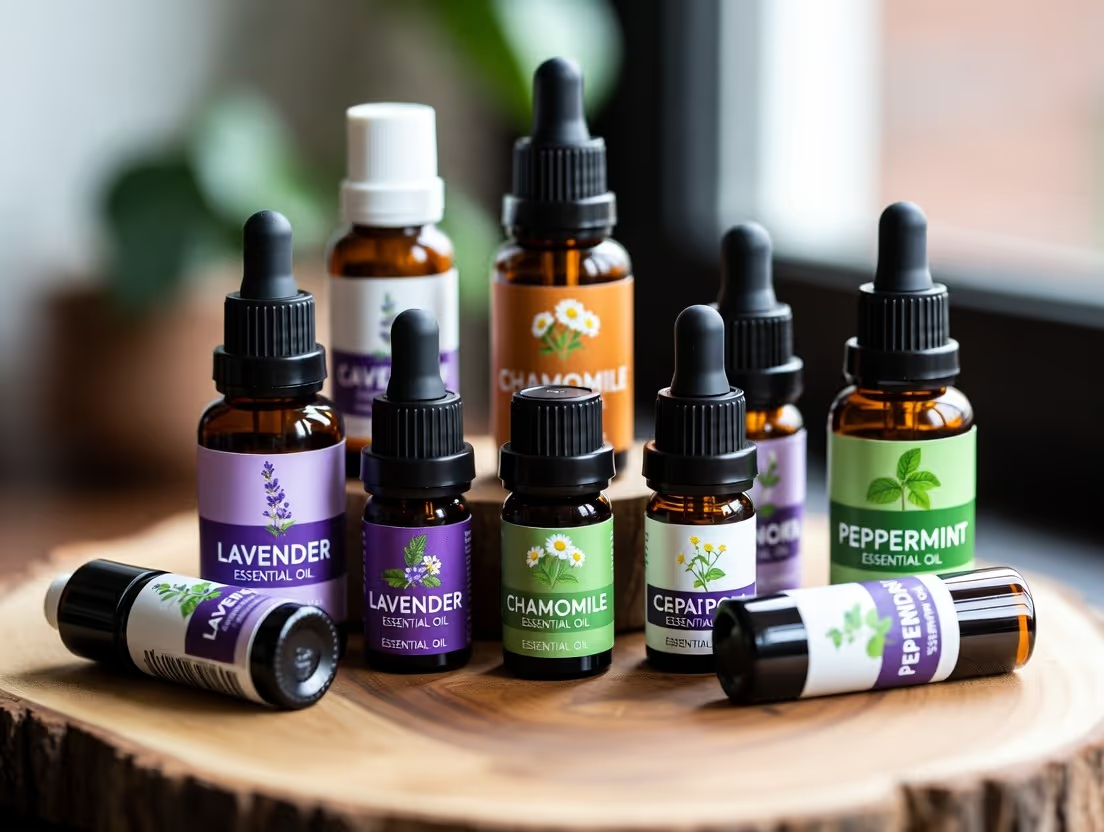
Now, let’s meet the star players. These ten essential oils are backed by both traditional use and a growing body of scientific research for their efficacy in calming the nervous system, easing anxiety, and promoting emotional balance. Think of this as your core stress-relief toolkit.
1. Lavender (Lavandula angustifolia): The Universal Calmant
The quintessential relaxing oil. Its key calming component, linalool, has been shown in numerous studies to have sedative, anxiolytic (anti-anxiety), and mood-stabilizing effects. Research indicates it can reduce cortisol levels, lower heart rate and blood pressure, and improve sleep quality. It’s gentle, versatile, and often the first oil people turn to for stress. Use it for: General anxiety, panic attacks, insomnia, restlessness, and creating a peaceful bedtime atmosphere.
2. Frankincense (Boswellia carterii or serrata): The Spiritual Grounder
Known as the "king of oils," frankincense has a deep, balsamic, woody aroma used for millennia in meditation and spiritual practice. It is profoundly grounding and centering. Neuroscientific research suggests it can reduce activity in the amygdala's fear circuits. It encourages slow, deep breathing and is excellent for calming a racing mind. Use it for: Meditation, emotional overwhelm, grief, feeling scattered or disconnected, and deepening spiritual practice.
3. Bergamot (Citrus bergamia): The Uplifting Citrus
Unique among citrus oils, bergamot (from the rind of a specific Italian citrus fruit) is both uplifting and calming. It can alleviate anxiety and feelings of depression while simultaneously promoting joy and energy. Studies highlight its ability to reduce cortisol response and induce positive feelings. Important: Bergamot is phototoxic; avoid sun exposure on skin where it's applied for 12-18 hours. Use it for: Stress-related sadness, fatigue, anxiety with low mood, and emotional exhaustion.
4. Clary Sage (Salvia sclarea): The Euphoric Balancer
With a sweet, herbaceous aroma, clary sage is a powerful nervine and known for its uplifting, euphoric qualities. Research has demonstrated it can significantly reduce cortisol levels and, for some, induce feelings of well-being and relaxation. It’s particularly helpful for stress related to hormonal fluctuations. Use it for: Tension, menstrual or menopausal stress, emotional volatility, and fostering a sense of happiness.
5. Ylang Ylang (Cananga odorata): The Heart Pacifier
This exotic, floral oil from the tropics has a heavy, sweet scent known to slow rapid breathing and heart rate. It acts as a mild sedative for the nervous system and is often used to combat anger, frustration, and nervous tension. Its traditional use is to "open the heart" and ease emotional constriction. Use it for: Palpitations from anxiety, intense emotional states, irritability, and as an aphrodisiac to counteract stress-related low libido.
6. Roman Chamomile (Chamaemelum nobile): The Gentle Soother
Like a warm, herbal hug, Roman chamomile is exceptionally gentle and soothing. Its esters have a pronounced calming effect on the nervous system, making it ideal for children and those in a state of high emotional sensitivity or shock. It helps soothe the "inner child" and eases the physical manifestations of stress like digestive upset. Use it for: Nervous tension, irritability, hypersensitivity, stress-induced stomachaches, and promoting gentle sleep.
7. Vetiver (Vetiveria zizanioides): The Earthy Anchor
With an intensely rich, earthy, and smoky aroma, vetiver is the ultimate grounding oil. It’s like roots for the soul, pulling scattered energy back into the body. It is exceptionally stabilizing for those who feel unmoored, spacey, or hyperactive from anxiety. Use it for: ADHD-like symptoms from stress, trauma, dissociation, grounding during emotional storms, and promoting deep, restorative sleep.
8. Cedarwood (Cedrus atlantica or Juniperus virginiana): The Woody Stabilizer
Warm, woody, and camphoraceous, cedarwood promotes emotional strength and stability. It has a sedative effect, encouraging the release of serotonin which is then converted to melatonin in the brain, supporting the sleep-wake cycle. It fosters a sense of inner strength and resilience. Use it for: Anxiety with obsessive thoughts, lack of confidence, insomnia rooted in worry, and building emotional fortitude.
9. Rose (Rosa damascena): The Heart Opener
Rose otto or absolute is one of the most precious and powerful oils for the heart and emotions. Its complex chemistry is deeply soothing and can help heal feelings of grief, sadness, and emotional wounding. It promotes self-love and compassion, which are often the first casualties of chronic stress. Use it for: Heartache, grief, emotional trauma, low self-esteem, and cultivating feelings of peace and love.
10. Patchouli (Pogostemon cablin): The Emotional Grounder
Often misunderstood, high-quality patchouli has a rich, earthy, and sweet aroma. It is deeply calming and grounding, with studies showing it can stimulate serotonin and dopamine release. It is excellent for pulling one out of obsessive mental loops and back into the physical body. Use it for: Anxiety with rumination, feeling disconnected from the body, and emotional exhaustion.
While single oils are powerful, the true alchemy of aromatherapy often lies in synergy—the principle that combining oils creates an effect greater than the sum of their individual parts. Molecules from different oils can interact to enhance benefits, round out harsh notes, or create a more complex and pleasing aromatic experience. Crafting your own blend is a personal and empowering practice.
Basic Principles of Blending:
Simple Starter Blends to Try (Diluted in 10ml of Carrier Oil):
Remember: Always dilute blends for topical use. A standard safe dilution for adults is 1-2% (approx. 2-4 drops of essential oil per teaspoon/5ml of carrier oil). The process of blending itself—focusing on the scents, the intention—becomes a mindful, stress-relieving ritual in its own right.
Diffusion is perhaps the easiest and most popular way to enjoy the benefits of essential oils, transforming any room into a personalized sanctuary for stress relief. By dispersing microscopic oil particles into the air, you create an ambient aromatic environment that everyone in the space can benefit from. It’s continuous, passive aromatherapy.
Types of Diffusers & How to Use Them:
Creating a Stress-Relief Diffusion Routine:
Safety & Etiquette: Always diffuse in a well-ventilated area. Use intermittent cycles (e.g., 30-60 minutes on, 30 minutes off) to prevent olfactory fatigue (your nose stopping noticing the scent). Be mindful of pets, pregnant individuals, and children, as some oils are not safe for them.
Topical application combines the biochemical benefits of absorption with the therapeutic power of touch. It allows you to target stress where it manifests physically in your body—be it tense shoulders, a nervous stomach, or a throbbing headache.
The Golden Rule: Dilution is Essential.
Never apply essential oils "neat" (undiluted) to the skin. They must be mixed with a carrier oil—a neutral, plant-based oil that "carries" the essential oil safely onto your skin. Popular carrier oils include:
Standard Dilution Guidelines:
Key Stress-Relief Application Points (Always Use Diluted Oil):
The Ritual of Self-Massage: The act of massaging the oil into your skin is as important as the oil itself. Use slow, deliberate strokes. Focus on your breath. This is a moment of intentional self-care, a physical declaration to your body that you are attending to its needs. This mindful integration of practice and product is at the core of holistic wellness, a principle that guides everything from ancient rituals to modern, data-informed wellness technology.
For moments when stress strikes suddenly—in a traffic jam, before a big presentation, in a crowded store—you need a tool that is immediate, potent, and private. This is where personal inhalation methods become your secret weapon.
1. Personal Inhaler Sticks (Nasal Inhalers):
These are small, portable tubes with a cotton wick inside. You add 10-20 drops of your chosen essential oil or blend to the wick, then snap the cap on. Whenever you need it, you simply uncap and take 3-5 deep, intentional breaths through your nose. The scent goes straight to your limbic system for near-instant effect.
2. Direct Inhalation from Hands or Tissue:
The simplest method. Place 1 drop of a gentle oil like Lavender or Bergamot in your palms, rub them together gently, cup your hands over your nose and mouth, and breathe deeply for 60 seconds. You can also place a drop on a tissue or cotton ball and keep it at your desk or in a pocket.
3. Steam Inhalation (The Bowl Method):
This method is incredibly potent for both stress relief and respiratory support, as the warm, moist air carries the oils deeply into your sinuses and lungs. Fill a large bowl with steaming hot water (not boiling). Add 3-5 drops of essential oil (Eucalyptus for congestion with stress, or Lavender/Chamomile for pure calm). Drape a towel over your head and the bowl to create a tent, close your eyes, and breathe deeply through your nose for 5-10 minutes.
The power of these methods lies in their immediacy and intentionality. The very act of stopping, retrieving your inhaler, and taking deliberate breaths is a behavioral interrupt—a mini-meditation that breaks the stress spiral and gives you back a sense of agency. It’s a tangible tool you control, a fact that in itself reduces the helplessness that often accompanies anxiety. For more practical strategies on managing daily stress, our blog offers a wealth of related techniques.
As we’ve established, essential oils are potent, bioactive compounds. With this power comes the critical responsibility to use them safely. Responsible aromatherapy is effective aromatherapy. Ignoring safety guidelines can lead to adverse reactions, from mild skin irritation to serious systemic issues. Let’s build a foundation of knowledge to ensure your journey into scent is both beneficial and secure.
1. The Dilution Imperative (Reiterated for Emphasis):
This cannot be overstated. With rare exceptions (like applying a single drop of undiluted lavender or tea tree to a small blemish), essential oils must be diluted in a carrier oil for topical use. Undiluted application can cause:
2. Key Contraindications & Special Populations:
3. Smart Usage Practices:
4. When to Seek Professional Guidance:
A qualified clinical aromatherapist (look for credentials like NAHA or AIA membership) can create personalized, safe protocols for complex health situations. They are trained in pharmacology, anatomy, and safe essential oil chemistry.
Using aromatherapy safely is a sign of respect for the potency of nature’s pharmacy. It ensures that your practice is sustainable, effective, and free from harm, allowing you to reap the profound benefits with confidence. For any specific questions on product safety or ingredient interactions, our FAQ section provides detailed support.
Knowing the oils and methods is one thing; weaving them seamlessly into the fabric of your daily life is where transformation happens. The goal is to move aromatherapy from an occasional remedy to a proactive practice—a series of olfactory anchors that structure your day for resilience and calm.
The Morning Anchor: Wake Up Calm, Not Jarred
Replace the blaring alarm with a gentle aromatic cue. Set your diffuser on a timer to turn on 15 minutes before you wake. A blend of 2 drops Grapefruit, 2 drops Peppermint, and 1 drop Rosemary is invigorating yet clear-headed. In the shower, place a drop of rosemary or eucalyptus on the floor (away from direct water) for an energizing steam. Post-shower, apply a diluted “Morning Focus” roller (Frankincense, Lemon, and a hint of Cedarwood) to your wrists and neck.
The Commute & Workday Shield
For a stressful commute, your personal inhaler is your best ally. A blend of Bergamot, Frankincense, and a touch of Vetiver can create a portable bubble of calm in traffic or on public transport. At work, a discreet desk diffuser (evaporative or ultrasonic) with a focus blend like Lemon, Rosemary, and Patchouli can improve concentration and mitigate office anxiety. Keep a rollerball of lavender diluted in jojoba oil in your desk; a quick application to your temples during a tense moment can reset your nervous system.
The Evening Unwind: The Digital Detox Ritual
Create a non-negotiable "aromatic curfew" to signal the end of the work day and the beginning of personal time. This is crucial for separating stress from sanctuary. One hour before your intended bedtime:
The Sleep Sanctuary Optimization
Make your bedroom an olfactory cue for sleep. Consistently use your bedtime diffuser blend. Apply a calming oil like lavender or cedarwood to your soles and pulse points. You can even create a linen spray (using distilled water, a dispersant like vodka or solubizer, and your sleep oils) to lightly mist your pillows and sheets. The consistent association between this specific scent profile and sleep will train your brain to relax the moment it detects the aroma.
The Micro-Moments: Stress First Aid
Have protocols for acute stress spikes:
By anchoring your day with these intentional aromatic practices, you stop reacting to stress and start proactively managing your state. It becomes a form of self-care that is sensory, tangible, and deeply effective. This philosophy of intentional, data-informed daily rituals is central to our approach at Oxyzen, where we believe technology should support these human-centric practices.
While stress relief is a primary application, the essential oils in your calming toolkit have a versatile range of benefits. Understanding these complementary uses allows you to get more value from your oils and address interconnected aspects of well-being that are often exacerbated by stress.
1. Enhancing Sleep Quality & Combating Insomnia:
Chronic stress is the arch-nemesis of deep sleep. Calming oils don’t just help you fall asleep; they promote the quality of sleep by reducing cortisol spikes that can interrupt sleep cycles.
2. Supporting Focus and Cognitive Function:
Paradoxically, calming the anxiety that clouds the mind can dramatically improve concentration and memory. Some oils are particularly adept at this dual action.
3. Easing Physical Manifestations of Stress:
The mind-body connection means emotional stress always manifests physically. These oils can help address those symptoms.
4. Emotional & Energetic Support:
This is where aromatherapy’s link to the limbic memory system shines. Oils can help process and soothe specific emotional states.
By viewing your essential oils as multi-tool supports for holistic health, you empower yourself to address the root cause (stress) and its myriad symptoms (poor sleep, foggy thinking, physical tension) with the same natural toolkit. It’s an efficient, elegant approach to self-care. For more on how tracking these interconnected wellness factors can provide insight, many of our users share their experiences with similar integrative practices.
Aromatherapy and mindfulness are natural, synergistic partners. One provides the sensory anchor; the other, the intentional focus. Together, they create a powerful feedback loop that can deepen relaxation, enhance present-moment awareness, and retrain a stressed brain.
How Scent Anchors the Wandering Mind:
The primary challenge in meditation is the “monkey mind”—the constant stream of thoughts, worries, and distractions. An aroma acts as a focal point for attention. Instead of trying to focus on “nothing,” you focus on the evolving scent: its notes, its intensity, how it makes you feel in your body. When your mind wanders (and it will), the scent is a gentle, non-judgmental cue to bring your attention back to the present moment. It’s a form of single-pointed concentration that is accessible to beginners and enriching for seasoned practitioners.
Creating a Mindful Aromatherapy Ritual:
Specific Meditative Pairings:
The Science Behind the Synergy: Research shows that mindfulness meditation reduces activity in the amygdala (the fear center) and strengthens the prefrontal cortex (involved in executive function). Aromatherapy directly accesses and can calm the amygdala. When combined, they create a dual-pathway assault on the neural architecture of stress. The scent makes it easier to enter a meditative state, and the meditation deepens the nervous system’s receptivity to the oil’s calming effects.
This practice demonstrates that aromatherapy is not a passive experience. When paired with mindful attention, it becomes an active training ground for your brain, teaching it to find calm on demand—a skill that permeates far beyond your meditation cushion into every stressful moment of your life.
As with any popular wellness trend, aromatherapy is surrounded by hype, misinformation, and overblown claims. To use these tools effectively and safely, it’s crucial to separate evidence-based fact from well-marketed fiction.
Myth 1: “If it’s natural, it’s always safe.”
The Truth: This is the most dangerous myth. Nature is full of potent toxins. Essential oils are highly concentrated plant chemicals. Hemlock and belladonna are also “natural.” Safety depends on dose, application, and individual health. Inappropriate use can cause harm. Respect for their potency is paramount.
Myth 2: “Ingesting essential oils is the most powerful method.”
The Truth: For stress relief and emotional support, inhalation is actually faster and more direct, as it targets the limbic system immediately. Internal use is a specific clinical application that carries significant risks (mucosal damage, liver toxicity, drug interactions) and must only be done under the guidance of a qualified professional. For the vast majority of users seeking stress relief, ingestion is unnecessary and risky.
Myth 3: “You can use essential oils neat (undiluted) on your skin if you have a ‘tough’ constitution.”
The Truth: Skin irritation and sensitization are not signs of weakness; they are biological reactions to chemical insults. Sensitization is an immune response that can develop over time, turning a once-tolerated oil into a lifelong allergen. Dilution is not a suggestion; it’s a fundamental safety protocol to prevent long-term harm.
Myth 4: “All lavender (or peppermint, or tea tree) oils are the same.”
The Truth: As covered earlier, chemotype (chemical profile), species, and origin matter immensely. Lavandula angustifolia is calming; Lavandula latifolia (Spike Lavender) is more stimulating and higher in camphor. Mentha piperita (Peppermint) and Mentha arvensis (Cornmint) are different. Knowing the Latin name and sourcing from reputable suppliers is non-negotiable for predictable effects.
Myth 5: “Essential oils can ‘cure’ serious illnesses like cancer or Alzheimer’s.”
The Truth: This is a harmful and exploitative claim. While research is exploring the potential supportive roles of certain oils (e.g., frankincense in cancer cell studies in vitro, or rosemary for cognitive support), they are not standalone cures. Aromatherapy is a wonderful complementary therapy that can significantly improve quality of life, manage symptoms like anxiety and pain, and support emotional well-being during illness. It should never replace conventional medical treatment.
Myth 6: “You need a huge collection of oils to get benefits.”
The Truth: A small, high-quality toolkit of 5-10 versatile oils is far more effective than a drawer full of low-quality or seldom-used bottles. Mastering the use of lavender, frankincense, peppermint, lemon, and a citrus oil like bergamot or sweet orange will allow you to address a massive range of stress-related issues.
Myth 7: “If you can’t smell it, it’s not working.”
The Truth: Olfactory fatigue is real—your nose receptors temporarily stop sending signals for a constant scent. This does not mean the bioactive molecules have stopped affecting your limbic system and physiology. It’s why intermittent diffusion (30 on, 30 off) is recommended. The effects continue even after your conscious mind stops noticing the aroma.
By grounding your practice in science and critical thinking, you protect yourself from misinformation and maximize the genuine, profound benefits that aromatherapy can offer. It’s about becoming an informed user, not just an enthusiastic one. This commitment to clarity and education is a value we hold deeply, as reflected in the resources we provide to our community.
In our data-driven world, the subjective feeling of "feeling more relaxed" is powerful, but pairing it with objective metrics can be profoundly motivating and insightful. How do you know your lavender diffusion is truly lowering your stress, not just providing a placebo effect? By learning to track key biomarkers and psychological states, you can move from hoping it works to knowing it works, and fine-tune your practice for maximum benefit.
1. Tuning Into Your Body's Biofeedback:
Your body provides real-time data on your stress levels. Aromatherapy aims to shift these markers. Become a detective of your own physiology.
2. Journaling the Subjective Landscape:
Quantitative data is complemented by qualitative insights. An emotion journal creates a map of your internal weather patterns.
3. Leveraging Technology for Deeper Insight:
Modern wellness technology can bridge the gap between subjective feeling and objective physiology seamlessly.
Creating a Personal Aromatherapy Protocol:
Armed with tracking, you can build a personalized, evidence-based regimen.
This empirical approach transforms aromatherapy from a pleasant hobby into a precision wellness tool. It empowers you to become an expert on your own nervous system, using scent as a lever to achieve measurable states of calm and resilience. For those interested in the intersection of biometric tracking and holistic practices, exploring how smart technology can support this journey is a natural next step.
Once you’re comfortable with basic blends, you can advance to the art of creating sophisticated synergies tailored to nuanced emotional and physiological states. This involves thinking like a perfumer and a herbalist combined, considering chemistry, aroma notes, and intended outcome.
Understanding Chemotypes & Constituents for Targeted Blending:
Go beyond the oil name and consider its dominant active molecules, which dictate its effect.
Creating Multi-Faceted Blends for Complex States:
Real-life stress is rarely one-dimensional. Craft blends that address layered needs.
The Importance of Balance and Olfactory Pleasure:
An effective therapeutic blend must also be aromatically pleasing. A discordant smell can create subconscious tension. Always waft the bottle cap after adding each oil to check the evolving harmony. Does it smell balanced, complex, and inviting? If it feels jarring, adjust. Often, adding a single drop of a citrus or gentle floral can round out a harsh or overly earthy blend. This artful, personalized approach to wellness—where data meets sensory experience—is at the heart of a modern, holistic lifestyle, much like the philosophy that drives innovations in personalized health technology.
Stress manifests differently across different lives. Tailoring your aromatherapy practice to your specific daily demands can make it a razor-sharp tool for resilience.
1. For the Corporate Professional & Knowledge Worker:
2. For Parents & Caregivers:
3. For First Responders, Healthcare & High-Stakes Professions:
4. For the Creative & Artist:
5. For Students:
By customizing your approach, aromatherapy becomes less of a generic remedy and more of a personal support system, integrated into the very architecture of your daily challenges and triumphs. Sharing these tailored strategies is part of a larger conversation about personalized wellness, a topic we explore in depth in our community resources.
While science provides the framework, personal stories paint the picture of transformation. These anonymized case studies illustrate how the principles of aromatherapy are applied in real-world scenarios of stress.
Case Study 1: Maria – The Burned-Out Project Manager
Case Study 2: David – The College Student with Performance Anxiety
Case Study 3: Lena – The New Mother with Overwhelm & Sleep Deprivation
These stories highlight common threads: intentionality, personalization, and consistency. Aromatherapy didn't erase their stressors, but it provided a portable, accessible toolkit to manage their response, reclaim agency, and build pockets of peace in demanding lives. It’s a testament to the power of combining ancient wisdom with modern understanding, a journey we are honored to support through our own mission of empowering personal wellness.
We stand at the frontier of a new era in aromatherapy, where tradition is converging with cutting-edge technology and precision science. The future points toward hyper-personalization, measurable outcomes, and seamless integration into our daily ecosystems.
1. Biometric-Guided Aromatherapy:
Imagine a smart diffuser that doesn't operate on a timer, but on your physiology. The next generation of wellness devices will likely integrate with wearables. Your smart ring detects a stress spike (rising HR, dropping HRV) and signals your home diffuser to release a calibrated burst of a calming lavender and vetiver blend. Conversely, it might detect afternoon fatigue and emit an invigorating rosemary and citrus profile. This moves aromatherapy from a scheduled practice to a responsive, real-time intervention.
2. Advanced Delivery Systems & Micro-Encapsulation:
Beyond diffusion, research into delivery systems is expanding. Micro-encapsulation technology can bind essential oil molecules to textiles, allowing for slow-release, all-day aromatherapy from clothing, pillows, or wristbands. Transdermal patches with precise, time-released doses of oils for sleep or focus are already in development, offering a consistent, hands-free method of delivery.
3. Olfactory VR & Digital Scent:
Virtual Reality is expanding to include the olfactory dimension. For stress relief, this could mean immersive VR meditation experiences in a forest, complete with the authentic, complex scent profiles of pine, damp earth, and petrichor (the smell of rain), enhancing the relaxation effect exponentially. Digital scent devices, which can synthesize and emit a wide range of scents on command, could allow for personalized "scent playlists" for different times of day or activities.
4. Genetic & Microbiome Personalization:
Emerging research suggests our olfactory receptors and our emotional responses to scent can be influenced by genetics and even our nasal microbiome (the community of bacteria in our nose). In the future, a simple test could inform a personalized aromatherapy profile: "Your genotype suggests you are highly responsive to linalool (in lavender) for calm, but less so to limonene (in citrus). Your stress protocol should prioritize oils X, Y, and Z."
5. Clinical Integration & Mainstream Healthcare:
The evidence base is growing. We are moving toward a future where aromatherapy is a standard complementary offering in hospitals for pre-operative anxiety, oncology units for nausea and emotional distress, and palliative care for comfort. It will be prescribed not as an alternative, but as an adjunct, with standardized protocols for specific conditions.
6. Sustainability & Ethical Sourcing as a Standard:
As demand grows, so does the imperative for sustainability. The future lies in regenerative agriculture, carbon-neutral distillation processes, and full transparency from seed to bottle. Blockchain technology could be used to verify ethical sourcing and purity, giving consumers absolute confidence in their oils' origins.
The Human Element Endures:
Despite the high-tech future, the core human experience remains unchanged: the direct, wordless connection between scent and emotion. Technology will not replace the simple, profound ritual of applying a personalized blend with intention; it will enhance our understanding and efficacy. It will provide the data to confirm what our ancestors knew instinctively: that the invisible world of scent is a powerful gateway to healing, balance, and inner peace. This fusion of human-centric ritual and intelligent technology is the very space where the future of holistic wellness is being written, a vision that guides our own development at Oxyzen.
Your Trusted Sleep Advocate: Sleep Foundation — https://www.sleepfoundation.org
Discover a digital archive of scholarly articles: NIH — https://www.ncbi.nlm.nih.gov/
39 million citations for biomedical literature :PubMed — https://pubmed.ncbi.nlm.nih.gov/
Experts at Harvard Health Publishing covering a variety of health topics — https://www.health.harvard.edu/blog/
Every life deserves world class care :Cleveland Clinic - https://my.clevelandclinic.org/health
Wearable technology and the future of predictive health monitoring :MIT Technology Review — https://www.technologyreview.com/
Dedicated to the well-being of all people and guided by science :World Health Organization — https://www.who.int/news-room/
Psychological science and knowledge to benefit society and improve lives. :APA — https://www.apa.org/monitor/
Cutting-edge insights on human longevity and peak performance:
Lifespan Research — https://www.lifespan.io/
Global authority on exercise physiology, sports performance, and human recovery:
American College of Sports Medicine — https://www.acsm.org/
Neuroscience-driven guidance for better focus, sleep, and mental clarity:
Stanford Human Performance Lab — https://humanperformance.stanford.edu/
Evidence-based psychology and mind–body wellness resources:
Mayo Clinic — https://www.mayoclinic.org/healthy-lifestyle/
Data-backed research on emotional wellbeing, stress biology, and resilience:
American Institute of Stress — https://www.stress.org/


