


How Breathwork Variations Target Different Stress Types
Time in darkness (sensory deprivation or simply a dark room) reduces sensory input, allowing the nervous system to downregulate.
Time in darkness (sensory deprivation or simply a dark room) reduces sensory input, allowing the nervous system to downregulate.
%402x.svg)
Imagine a tool so powerful it can shift your nervous system from a state of panic to one of profound peace in a matter of minutes. A tool that requires no subscription, no special equipment, and is accessible to you at this very moment. This is not science fiction; it’s the ancient, yet scientifically validated, practice of breathwork. But here’s the critical nuance most people miss: not all stress is created equal, and neither is all breathwork. Using a rapid, energizing breath pattern when you’re experiencing nervous system burnout can be like pouring gasoline on a smoldering fire. Conversely, using a deeply sedative technique when you need focused alertness can plunge you deeper into brain fog.
The modern wellness conversation has rightfully elevated breathwork, but it often presents it as a one-size-fits-all solution. This is a profound oversight. Stress manifests in distinct biological and psychological signatures—acute panic, chronic anxiety, cognitive overwhelm, emotional exhaustion, and physical tension, to name a few. Each of these "stress types" speaks a different language to your autonomic nervous system. The key to true resilience and recovery isn’t just breathing consciously; it’s speaking back to your stress in the precise dialect it understands.
This comprehensive guide bridges that gap. We will deconstruct the major archetypes of stress you encounter in modern life and map them to the specific breathwork methodologies engineered to address them. This is precision medicine for your mental and physical state, using your own breath as the most direct delivery system. Furthermore, we will explore how wearable technology, like the advanced smart rings from Oxyzen, is revolutionizing this practice by providing real-time, personalized biofeedback, moving you from guesswork to guided mastery. Prepare to learn not just how to breathe, but exactly what to breathe for the challenge directly in front of you.
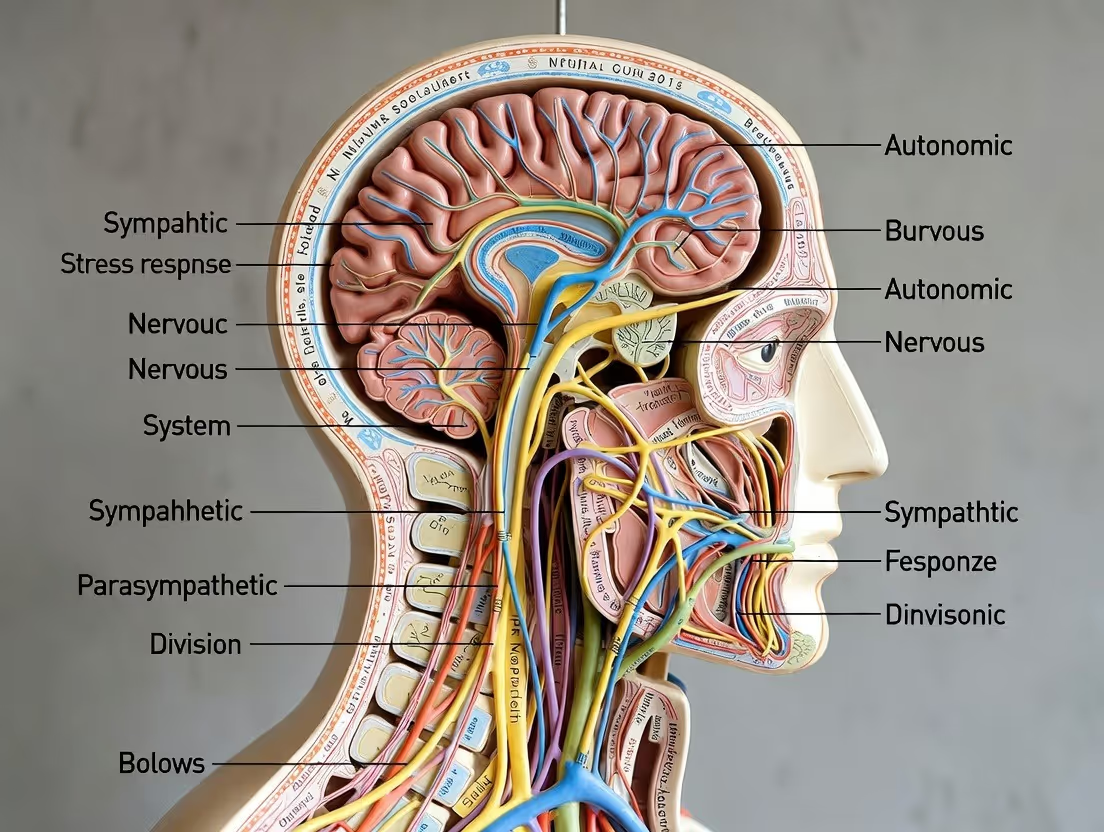
To understand why different breaths do different things, we must first meet the conductor of your inner orchestra: the autonomic nervous system (ANS). Operating largely below the level of conscious thought, the ANS regulates vital functions like heart rate, digestion, respiratory rate, and pupillary response. It’s divided into two primary branches that work in a dynamic, seesaw-like balance: the sympathetic nervous system (SNS) and the parasympathetic nervous system (PNS).
The Sympathetic Nervous System is your "accelerator." Often called the "fight-or-flight" response, it’s your body’s brilliant, ancient survival mechanism. When a threat is perceived—be it a looming deadline or an actual physical danger—the SNS kicks into high gear. It dilates your pupils, increases your heart rate and blood pressure, shunts blood away from your digestive organs and toward your muscles, and releases stress hormones like cortisol and adrenaline. This is the state of high alert, mobilization, and energy expenditure.
The Parasympathetic Nervous System is your "brake." Known as the "rest-and-digest" or "feed-and-breed" system, it promotes relaxation, recovery, and regeneration. When activated, the PSL slows the heart rate, lowers blood pressure, stimulates digestion, and supports immune function. It’s the state of calm, connection, and integration.
The problem in modern life is not the SNS itself; it’s a vital part of our biology. The issue is dysregulation—a stuck accelerator. Chronic stress, digital overload, and societal pressure can lead to a state where the SNS is perpetually idling high, while access to the calming PNS becomes elusive. We live in a state of persistent, low-grade "fight-or-flight," which is linked to a host of issues from anxiety and insomnia to cardiovascular disease and impaired immunity.
This is where breathwork enters as a direct line to the ANS. Unlike other autonomic functions, breathing is unique: it’s both automatic and under voluntary control. You don’t consciously tell your heart to beat, but you can decide to take a slow, deep breath right now. By consciously changing the rhythm, depth, and pattern of your breath, you send direct signals to the brainstem (the medulla oblongata and pons), which then cascades these signals to the rest of the ANS, effectively "hacking" your stress response.
Therefore, the foundational principle of targeted breathwork is this: To down-regulate (calm) a hyper-aroused state, use slow, extended exhales. To up-regulate (energize) a lethargic or depressed state, use sharp, forceful inhales. The following sections will build on this fundamental principle, applying it to the nuanced spectrum of stress we face. For a deeper dive into how technology can help you visualize this balance, our blog explores the science behind ANS tracking.
The Signature: This is the classic, overwhelming surge of panic. Your heart is pounding in your chest, thoughts are racing uncontrollably, you may feel dizzy, short of breath, or even have tingling in your extremities. It’s the body’s emergency alarm system blaring at full volume, often in response to an immediate perceived threat (a scary email, a sudden conflict, a phobic trigger).
The Physiology: The amygdala has hijacked the prefrontal cortex. Stress hormones like adrenaline have flooded your system, causing vasoconstriction, spiked heart rate, and rapid, inefficient chest breathing. The body is primed for explosive action, but since modern threats rarely require physical flight, this energy has nowhere to go, creating a terrifying feedback loop.
The Targeted Breathwork: The Physiological Sigh (or Double-Inhale Breath)
Developed by scientists at Stanford and popularized by Dr. Andrew Huberman, the Physiological Sigh is arguably the most potent real-time tool for quenching acute panic. It’s not a slow, mindful breath you learn in a calm yoga class; it’s a fast-acting physiological circuit breaker.
Actionable Practice: The moment you feel the crescendo of panic, stop and perform 2-3 physiological sighs. It’s discrete, fast, and profoundly effective. Think of it as manually resetting your respiratory system’s alarm.

The Signature: Unlike acute panic, chronic anxiety is a persistent, low-grade hum of unease. It’s a background soundtrack of "what ifs," restless energy, muscle tension (especially in the jaw and shoulders), and a mind that struggles to settle. You’re not in full-blown panic, but you’re certainly not at peace. It’s the mental hamster wheel that won’t stop turning.
The Physiology: This state is characterized by a dysregulated HPA (Hypothalamic-Pituitary-Adrenal) axis, leading to consistently elevated cortisol levels. The nervous system is stuck in a vigilant, scanning mode. Breathing is often unconsciously held or shallow, maintaining a subtle but constant SNS tone that fuels the cycle of worry.
The Targeted Breathwork: Coherent Breathing (or Resonant Frequency Breathing)
Coherent Breathing is the gold standard for retraining a dysregulated nervous system and establishing a new, calm baseline. Its goal is not to put out an immediate fire, but to lower the overall temperature of the system.
Actionable Practice: Dedicate a daily "anchor" session of 10 minutes of Coherent Breathing, ideally in the morning or evening. Use a gentle timer or a biofeedback device to help you maintain the precise rhythm. This is less a first-aid tool and more a foundational training regimen for your nervous system.
The Signature: Your brain feels like a browser with 100 tabs open. You’re mentally drained, struggling to focus, make decisions, or process information. There’s a sense of brain fog, forgetfulness, and irritability. This is the classic "burnout" of the knowledge worker, the student during exams, or the parent juggling infinite logistics.
The Physiology: The prefrontal cortex (PFC)—the brain's executive center responsible for focus, decision-making, and impulse control—is glucose-hungry and metabolically expensive. Chronic multitasking and cognitive load deplete its resources, leading to "cognitive fatigue." Blood flow and neural efficiency in the PFC diminish, while stress hormones further impair its function.
The Targeted Breathwork: Box Breathing (Four-Square Breathing)
Used by Navy SEALs, athletes, and executives to maintain peak performance under pressure, Box Breathing is a structured, mentally-engaging practice that clears the cognitive desktop and restores focus.
Actionable Practice: Before a crucial meeting, a deep work session, or when you feel mental scatter setting in, take 5 minutes for Box Breathing. Use it as a transition ritual to shift from a state of fragmented attention to one of directed focus.

The Signature: This is the deep weariness that comes from prolonged emotional labor, caregiving, or absorbing the distress of others (common among healers, teachers, therapists, and sensitive individuals). You may feel heavy, drained, "spongy," or as if your emotional boundaries are porous. It’s not just mental fatigue; it’s a feeling of being energetically depleted.
The Physiology: Chronic emotional engagement can keep the nervous system in a state of sympathetic arousal related to connection and vigilance (sometimes called the "tend-and-befriend" response). It can also lead to a phenomenon called "vagal exhaustion," where the very system meant to soothe us becomes over-taxed. The body’s energy resources are diverted to managing social and emotional stimuli, leaving little for the self.
The Targeted Breathwork: Heart-Centered Breathing (with Conscious Intent)
This practice moves beyond mere physiological regulation to incorporate the psychosomatic elements of emotion and energy. It often combines coherent breath rhythms with a focus on the heart center and the cultivation of renewing emotions.
Actionable Practice: Make this a daily cleansing ritual after emotionally demanding work or social interactions. It serves as a psychic shower, helping to wash away accumulated stress that isn’t your own.
The Signature: Stress that has concretized in the body. This manifests as chronic muscle tightness (neck, shoulders, back, jaw), tension headaches, fibromyalgia, or general aches and pains. The body is locked in a pattern of bracing and contraction, often without conscious awareness. The mind may be calm, but the body tells a different story.
The Physiology: Under stress, muscles contract reflexively as part of the SNS preparation for action. When stress is chronic, these muscles forget how to fully release, leading to ischemia (reduced blood flow), buildup of metabolic waste like lactic acid, and pain. This creates a pain-anxiety-tension cycle. Breathing in this state is often restricted, as tense abdominal and intercostal muscles inhibit full diaphragmatic movement.
The Targeted Breathwork: Diaphragmatic Breathing with Progressive Muscle Relaxation
This is a two-pronged approach that uses the breath as a direct messenger to release physical holding. It marries the physiological power of deep breathing with a systematic somatic release technique.
Actionable Practice: Practice this in bed before sleep to release the physical accumulations of the day. It is also exceptionally useful as a break during long periods of sitting or repetitive physical work.

The Signature: This is the opposite of anxious hyper-arousal. It’s feeling sluggish, foggy, demotivated, and physically drained. You might yawn frequently, crave caffeine or sugar, and struggle to initiate tasks. It can be a symptom of depression, burnout, poor sleep, or simply an afternoon slump.
The Physiology: This state can involve low blood pressure, sluggish circulation, under-activation of the SNS, and potentially an overactive PNS (a "freeze" or "collapse" response). Neurotransmitters like dopamine and norepinephrine, which drive motivation and energy, may be low. Breathing is often shallow and inefficient, failing to oxygenate the blood optimally.
The Targeted Breathwork: Kapalabhati Pranayama (Skull Shining Breath)
A traditional yogic kriya (cleansing technique), Kapalabhati is a potent energizing and warming practice. It is intentionally stimulating and should be practiced on an empty stomach, not when anxious.
Actionable Practice: Use this as a natural, zero-caffeine energy boost first thing in the morning or during the mid-afternoon dip. Follow it with a few minutes of calm breathing to integrate the energy.
The Signature: You are physically tired, but the moment your head hits the pillow, your mind switches on. Thoughts race, the day’s events replay, tomorrow’s to-do list expands. The body feels restless, and the transition into sleep feels impossible. This is a failure of the nervous system to make the essential shift from sympathetic arousal to parasympathetic dominance required for sleep.
The Physiology: The "cognitive engine" of the prefrontal cortex remains active, and cortisol levels, which should be dropping in the evening, may be elevated or dysregulated. Melatonin production may be inhibited by blue light exposure and mental stimulation. The body is in a state of psychological alertness, blocking the natural sleep gates.
The Targeted Breathwork: 4-7-8 Breathing (The Relaxing Breath)
Popularized by Dr. Andrew Weil, the 4-7-8 technique is a natural tranquilizer for the nervous system. Its elongated exhale and breath hold are specifically designed to maximize PNS activation and quiet mental chatter.
Actionable Practice: Make this a non-negotiable part of your bedtime routine. Perform it while lying in bed in the dark. Consistency trains the body to associate this breathing pattern with the imminent onset of sleep.

The Signature: A hot, reactive, and often impulsive energy. You feel agitated, snappy, and easily provoked. It’s a pressurized state that seeks an outlet, often leading to regrettable words or actions. This is the "fight" branch of the fight-or-flight response in a social or modern context.
The Physiology: Anger is associated with a surge of adrenaline and noradrenaline, increased heart rate and blood pressure, and a flood of blood to the muscles. The prefrontal cortex, responsible for impulse control and rational thought, becomes temporarily "offline," while the more primitive emotional centers (like the amygdala) take charge.
The Targeted Breathwork: Cooling Sitali Pranayama
This ancient yogic breath is physiologically cooling and calming, providing a direct counter-sensation to the "hot" energy of anger. It requires the ability to curl the tongue (if you can't, simply purse your lips).
Actionable Practice: At the first flush of frustration or anger, remove yourself for a moment if possible and perform 10-15 rounds of Sitali breath. Use it to create space and lower the physiological intensity before engaging or responding.
The Signature: A deep, sinking, or hollow feeling in the chest. A weight of sorrow, loss, or melancholy. It can feel stagnant, lonely, and immobilizing. Unlike anxiety, which is frantic, grief is often still and heavy. The breath itself may feel constricted or shallow, as if the heart itself is too weighed down to expand fully.
The Physiology: Profound sadness is linked to the "dorsal vagal" aspect of the PNS, which can induce a shutdown or "freeze" state—a conservation mode. Energy levels and motivation plummet. There may be a release of inflammatory cytokines and a general slowing of metabolic and social engagement systems.
The Targeted Breathwork: Supported, Rhythmic Belly Breathing
For grief, the approach is not to stimulate or forcefully change the emotion, but to provide gentle, rhythmic support and containment. The breath becomes a compassionate witness and a steady anchor in the midst of emotional turbulence.
Actionable Practice: When feelings of overwhelming sadness arise, create this simple supported setup. Even 10 minutes can provide a stabilizing container for the emotion, helping you to "be with" the grief without being consumed by it.
The Signature: The jitters before public speaking, an important presentation, an athletic competition, or a musical performance. It's a blend of excited anticipation and nervous fear, often marked by shaky hands, butterflies in the stomach, dry mouth, and distracting self-doubt.
The Physiology: This is a mixed state. Some SNS activation is beneficial—it sharpens senses and provides energy. However, when it tips over into anxiety, it impairs fine motor control, working memory, and fluid thinking. The challenge is to modulate the arousal into an optimal "peak state," not eliminate it entirely.
The Targeted Breathwork: Power Breathing with Visualization
This combines a breath pattern that builds confident energy with a mental rehearsal technique to prime the nervous system for success. It’s done before the event, not during.
Actionable Practice: Implement this ritual 10-15 minutes before you need to perform. It serves as a deliberate warm-up for your nervous system, moving it from a state of fear to one of prepared activation.
We have now mapped a sophisticated landscape, matching ten distinct stress signatures with ten precision breathwork protocols. This moves us far beyond the generic advice to "just breathe deeply." However, a significant challenge remains: self-awareness. In the grip of stress, it can be difficult to accurately self-diagnose which type we are experiencing. Is this lethargy or depression? Is this anxiety or repressed anger? Our perception is often clouded by the very state we wish to change.
This is where the next frontier of wellness technology creates a revolutionary partnership with ancient practice. Advanced wearable devices, like the Oxyzen smart ring, act as objective, real-time biofeedback systems, closing the loop between intention and physiological outcome.
Imagine this scenario: You feel "off" but can't pinpoint why. You glance at the Oxyzen app, which shows your Heart Rate Variability (HRV) has been low and trending downward all day, your resting heart rate is elevated by 10 BPM, and your body temperature is slightly high. This data cluster objectively suggests a state of chronic sympathetic arousal (Stress Type 2: Chronic Anxiety), even if your mind is telling you, "I'm just busy." Instead of guessing, you are guided to a 10-minute Coherent Breathing session on the app. As you breathe, you see your HRV coherence score rise in real-time on the screen, and your heart rate line smooths and descends. The technology provides not just a recommendation, but confirmation that the intervention is working.
This biofeedback is transformative for mastery. It:
This synergy of ancient wisdom and modern technology represents the ultimate personalization of well-being. It allows us to move from practicing breathwork in the dark to practicing with a gentle, guiding light, showing us the way back to balance with ever-greater precision and confidence. To understand the technology that makes this possible, you can learn more about how Oxyzen works.
We’ve established the "what" and the "when"—which breath pattern to use for which stress type. Now, let’s delve deeper into the "why." Understanding the robust neurophysiological mechanisms at play transforms breathwork from a wellness hack into a profound tool for neuroplasticity and systemic health. This isn't just folk wisdom; it's a direct intervention with measurable impacts on your brain structure, genetic expression, and organ function.
The Core Pathway: The Vagus Nerve and the Polyvagal Lens
The star of the breathwork show is undoubtedly the vagus nerve, the longest cranial nerve in the body. It is the main conduit of the parasympathetic nervous system, winding from the brainstem through the face, heart, lungs, and digestive organs. Think of it as a two-way communication superhighway. Slow, diaphragmatic breathing with extended exhalations directly stimulates the vagus nerve, sending "calm down" signals to the heart (slowing its rate), the lungs (promoting relaxation), and the brain (quieting the fear centers).
Dr. Stephen Porges' Polyvagal Theory refines this further, proposing a hierarchy within the autonomic nervous system. It describes not just "fight-or-flight" (sympathetic) and "rest-and-digest" (parasympathetic), but two distinct branches of the parasympathetic system:
Targeted breathwork, therefore, is an exercise in neuroception—consciously influencing our nervous system's perception of safety or threat to access the optimal state for the challenge at hand.
The Hormonal Symphony: Cortisol, GABA, and Endorphins
Breathwork acts as a master conductor for your endocrine system.
Brain Changes: From Amygdala to Prefrontal Cortex
fMRI scans reveal that consistent breathwork practice literally changes blood flow and activity in key brain regions.
This powerful, evidence-backed remodeling of our internal landscape is why a targeted breathwork practice is more than stress relief; it's a foundational practice for long-term mental and physical health. For a deeper exploration of these studies and their implications, our blog features ongoing analysis of breath science.
With this scientific foundation and a toolkit of ten targeted techniques, the next step is integration. A static, one-size-fits-all daily routine is less effective than a dynamic, responsive protocol. Your nervous system's needs change daily, even hourly. The goal is to build a personalized framework that includes both preventative maintenance and acute first-aid.
1. Establish Your Daily "Anchor" Practice (The Non-Negotiable)
This is your preventative medicine, done regardless of how you feel. It builds baseline resilience and increases your vagal tone—essentially training your "relaxation muscle" to be stronger and more accessible.
2. Create Your "Rapid Response" Kit (The First-Aid)
These are the techniques you deploy in the moment, as stress arises. Print a simple list or save a note on your phone as a quick reference guide.
3. Implement "Transition Rituals" (The Proactive Reset)
Use breathwork deliberately to shift states between major activities. This prevents stress accumulation.
4. Leverage Technology for Feedback and Guidance
This is where a device like the Oxyzen smart ring transitions your practice from intuition to precision. Use its biometric feedback to:
Your protocol should be living and adaptable. Check in with yourself—and your data—weekly. The most sophisticated protocol is the one that responds intelligently to the living system that is you.
Thus far, we've focused on the inhale and exhale. But the deliberate pause—the breath hold, or Kumbhaka in yogic tradition—is a powerful advanced tool for those looking to deepen their practice. Retention amplifies the effects of breathwork, creating stronger shifts in blood chemistry, autonomic tone, and mental focus. Important Note: Breath retention should be approached with caution, never forced, and avoided by those with hypertension, heart conditions, or who are pregnant.
Internal Retention (Antara Kumbhaka): Holding After the Inhale
This is the hold in Box Breathing. Holding on a full inhale increases intrathoracic pressure, temporarily slowing the heart rate (a phenomenon called sinus arrhythmia). It creates a mild, controlled stressor that, when followed by a slow exhale, leads to a powerful "rebound" relaxation and can enhance alertness and concentration. It’s useful for Stress Type 3 (Cognitive Overwhelm) when combined with structure.
External Retention (Bahya Kumbhaka): Holding After the Exhale
This is the hold at the end of the 4-7-8 breath. Holding on an empty lung creates a strong signal of safety to the brainstem (because you are voluntarily choosing not to breathe, rather than being suffocated). It powerfully stimulates the vagus nerve and the dorsal vagal complex in a restorative way, promoting deep stillness and reset. It is profoundly effective for Stress Type 7 (Sleep Onset Insomnia) and calming an overactive mind.
A Modern Application: The Wim Hof Method
This popular method combines a phase of hyperventilation (30-40 powerful breaths) followed by a long external retention. This drastically alters blood pH (raising alkalinity) and induces a controlled stress response, followed by a deep, peaceful recovery. It’s used to build resilience to cold and stress, boost energy, and modulate inflammation. It aligns most with building general resilience rather than targeting a specific emotional stress type, and should be learned carefully.
Guidance for Exploration: If you wish to explore retention, start with very short, comfortable holds (2-3 seconds) within a familiar pattern like Box Breathing. Never push to the point of strain. The sense after the hold should be one of relief and openness, not gasping. Advanced breathwork is best explored with a qualified teacher or a program that provides clear guidance, which you can often find through our recommended resources and FAQ.
Your daily demands heavily influence your dominant stress types. Tailoring your primary toolkit to your vocation can make practice instantly more relevant and effective.
For the Knowledge Worker / Remote Employee:
For the Healthcare Professional, Healer, or Caregiver:
For the Athlete & Fitness Enthusiast:
For the Parent or Homemaker:
Breathwork is not a standalone island; it’s a bridge that connects and amplifies other wellness practices.
With Movement: Yoga, Tai Chi, and Walking
Breath is the foundation of yoga (pranayama precedes asana in traditional texts). Syncing movement with breath turns exercise into a moving meditation, enhancing mind-body connection and fluidity. Try Coherent Breathing during a gentle yoga flow or a walk in nature—inhale for 4 steps, exhale for 6 steps.
With Cold Exposure:
The combination is potent. Using a calming technique like Box Breathing or extended exhales during a cold shower allows you to consciously manage the gasp reflex and stay in the parasympathetic-dominant state, reaping the anti-inflammatory benefits without the panic. The Wim Hof Method explicitly pairs the two.
With Mindfulness and Meditation:
Breath is the most common anchor for mindfulness. Targeted breathwork can be the perfect "on-ramp" for a meditation session. If you’re too agitated to sit, 5 minutes of Coherent Breathing will settle the nervous system enough to then transition into silent awareness.
With Therapy:
Breathwork is a powerful adjunct to talk therapy. It can help clients access somatic memories, regulate their arousal during difficult sessions, and develop concrete self-regulation tools to use between appointments. It embodies the cognitive work.
This integrative approach creates a holistic wellness ecosystem where each practice supports and deepens the other. For ideas on creating such a personalized ecosystem, explore our blog for curated routines and combinations.
As you build your practice, you may encounter hurdles. Here’s how to navigate them.
Challenge 1: "I can't focus; my mind wanders immediately."
Challenge 2: "It makes me feel anxious or claustrophobic."
Challenge 3: "I don't have 20 minutes a day."
Challenge 4: "I forget to do it when I'm stressed."
Challenge 5: "I'm not sure if it's working."
Remember, the path of mastery is iterative. Be a curious scientist of your own inner world, not a harsh critic. If you have persistent questions, our comprehensive FAQ section offers further support and answers.
As we embrace these powerful techniques, it’s vital to approach them with respect and awareness. Many breathwork modalities, especially those with Sanskrit names like Kapalabhati or Sitali (Pranayama), are deeply rooted in ancient spiritual traditions, primarily from Yoga (India) and Qigong (China). These systems view breath (prana or qi) as the vital life force, and the practices were developed over millennia within holistic frameworks for awakening consciousness, not just reducing stress.
Honoring the Roots:
When practicing these techniques, take a moment to acknowledge their origin. Seek out teachers and resources that honor the cultural and philosophical context from which these practices sprang. Avoid the "wellness washing" that strips them of their history and sells them as a purely biohacking commodity.
Personal Practice vs. Guided Facilitation:
The techniques outlined here are primarily for self-regulation. However, there are powerful group breathwork modalities (like Holotropic Breathwork, Rebirthing, or some forms of Pranayama) that involve intense, prolonged hyperventilation and can bring up strong emotional or physical catharsis. These should only be undertaken with a trained, certified facilitator in a safe, held setting. The line between self-care and therapeutic process is important to recognize.
A Modern Synthesis:
The beauty of our current moment is the synthesis of ancient wisdom and modern science. We can use fMRI and HRV data to validate what masters observed intuitively. We can wear a smart ring while practicing pranayama. This fusion, when done ethically, enriches both worlds. It allows us to integrate these timeless tools into modern lives with precision and gratitude, supporting the ultimate goal shared by both science and spirituality: the reduction of suffering and the enhancement of human flourishing. To understand how we strive to embody this synthesis in our technology and ethos, you can read about our company's journey and values.
We have journeyed from the basic physiology of stress to a sophisticated matrix of breathwork interventions, explored the science that validates them, and built a framework for personalized, integrated practice. The ultimate promise of this work is a profound shift in your relationship to your own experience.
You are moving from being a passive passenger in your nervous system's reactions—hijacked by panic, weighed down by anxiety, clouded by overwhelm—to becoming the skilled navigator. With your breath as the direct steering mechanism and your growing awareness (potentially guided by clear data) as the dashboard, you can chart a course through internal storms with increasing confidence.
This is not about achieving a perpetually calm state, which is neither possible nor desirable. It's about cultivating agility. The capacity to fluidly move from energized focus to deep rest, from compassionate engagement to healthy detachment, from processing grief to experiencing joy. Targeted breathwork is the practice that builds that agility, neuron by neuron, breath by breath.
The journey continues. In the next portion, we will explore the frontiers: breathwork for creativity and flow states, its role in healing trauma (with necessary cautions), community breathwork practices, and how to become a beacon of calm that influences those around you. The art and science of breathing is a lifelong exploration, one that continually reveals the vast, intelligent, and responsive universe within.
We have equipped ourselves with a robust toolkit for stress modulation, grounded in science and personalized through intention. Now, we look toward the horizons where this mastery truly shines: in unlocking peak human experiences, navigating deep healing, fostering connection, and cultivating a life lived from a foundation of conscious breath. This final section explores the expansive potential of breathwork beyond stress management, into the realms of creativity, trauma recovery, community, and lasting transformation.
Beyond calming the mind lies the ability to repattern it for genius. Creativity and insight are not merely cognitive functions; they arise from a specific neurobiological state often described as "flow"—a state of effortless concentration and timeless immersion. Targeted breathing can act as a key to this door.
The Physiology of Flow: Flow states are associated with a delicate balance in the brain. There is a down-regulation of the prefrontal cortex (specifically the dorsolateral PFC), which quietens our inner critic and analytical, self-conscious thinking—a process called "transient hypofrontality." Simultaneously, there is synchronized activity across brain regions, allowing for novel connections and "aha!" moments. The nervous system is in a state of calm alertness: sympathetic enough for engagement, parasympathetic enough to avoid anxiety.
Targeted Breathwork for Creative Access: Alternate Nostril Breathing (Nadi Shodhana)
This ancient yogic practice is renowned for balancing the hemispheres of the brain and calming the mind while maintaining alert focus—the perfect recipe for creative work.
The "Breath of Inspiration" Protocol: Before a creative session, sit quietly for 5 minutes of Alternate Nostril Breathing to unify and focus your mind. Follow this with 2-3 minutes of gentle Kapalabhati to energize and clear mental cobwebs, then settle into your work. If you hit a block, pause for 1 minute of Box Breathing to reset focus.
This is the most sensitive and crucial frontier. While breathwork can be a potent tool for healing trauma, it must be approached with utmost respect, knowledge, and often, professional guidance.
The Double-Edged Sword: Trauma is often stored in the body as dysregulated autonomic states and fragmented sensory memories. Breathwork, by directly accessing the autonomic nervous system and releasing stored tension, can facilitate the discharge of this trapped energy and support the recalibration of the nervous system. However, for someone with unresolved trauma, certain intense breathwork practices (especially those involving rapid breathing or prolonged retention) can inadvertently trigger re-traumatization, flashbacks, or overwhelming emotional release without the proper container for integration.
Safe Guidelines for Trauma-Informed Practice:
The Healing Potential: When applied sensitively, breathwork can help a trauma survivor reconnect with their body in a safe way, regulate overwhelming affect, and slowly expand their "window of tolerance." It is a slow, compassionate path of re-inhabiting the self. For those on this path, having a non-judgmental tool for daily regulation is essential, a topic often discussed in our community's shared stories of resilience.
Our nervous systems are not isolated; they are constantly communicating and co-regulating with those around us—a concept called "limbic resonance." We catch stress, calm, and emotion from others. Conscious breathwork can transform our role in this social ecosystem.
Becoming a Regulating Presence: When you cultivate a regulated nervous system through consistent breathwork, you become a source of stability for others. In a conflict, your ability to maintain slow, deep breathing can prevent escalation and help de-escalate the other person's agitated state. In a crisis, your calm is contagious. This is not about being emotionless, but about being anchored.
Breathwork for Connection and Empathy: Synchronized Breathing
A simple yet profound practice for couples, families, or close friends is to sit back-to-back or facing each other and synchronize your breath. Without talking, simply aim to breathe in and out at the same time. Start with 5 minutes. This practice fosters nonverbal attunement, reduces feelings of separation, and can create a deep sense of shared peace and connection. It’s a direct application of Heart-Centered Breathing in a relational context.
In Conflict: The Breath as Pause Button: When you feel triggered in a conversation, the first thing to leave is often your deep breath. Train yourself to take one discreet Physiological Sigh before responding. This tiny pause, governed by your breath, can be the difference between a reactive hurtful comment and a considered response. It creates space for choice.
The final challenge is moving from initial enthusiasm and structured protocols to a seamless, lifelong integration where conscious breathing becomes your default mode of being—not a task, but a way of living.
The Three Phases of Mastery:
Keeping the Practice Fresh:
Imagine the macro impact if this knowledge became commonplace. If in schools, children were taught Box Breathing before exams and Heart-Centered Breathing after conflicts. If in workplaces, meeting rooms had "breath reset" stations and leaders used breath-awareness to manage group stress. If in hospitals, breathwork was a standard adjunct for patient recovery and staff resilience.
This is not a utopian fantasy but an attainable evolution in human well-being. Technology like smart rings will democratize this awareness, moving biofeedback from the lab to the wrist, making the invisible visible. As more people discover they are not at the mercy of their stress chemistry, a ripple effect of emotional intelligence and self-regulation can spread.
It aligns with a broader shift towards proactive, personalized health—where we are the primary stewards of our nervous system health, equipped with timeless wisdom and modern tools. This vision of empowerment is at the core of our company's mission and story.
Let’s synthesize this entire journey into one actionable, living document for you to own and adapt.
My Breathwork Blueprint
1. My Current Primary Stress Types (Circle Top 3):
1-Acute Panic, 2-Chronic Anxiety, 3-Cognitive Overwhelm, 4-Emotional Exhaustion, 5-Physical Tension, 6-Lethargy, 7-Sleep Issues, 8-Anger/Irritability, 9-Grief/Sadness, 10-Performance Nerves.
2. My Daily Anchor Practice:
Technique: _________________
Time of Day: _________________
Duration: _________________
(Core intention: Non-negotiable maintenance)
3. My Rapid-Response Kit (First-Aid):
For [Stress Type]: Use [Technique] for [Duration]
(Example: For 1-Acute Panic: Physiological Sigh, 3 cycles)
4. My Transition Rituals:
Before Work: _________________
After Work: _________________
Before Sleep: _________________
5. My Tech-Enhanced Insights:
(If using a device like Oxyzen) My key biometric to watch is: _______________ (e.g., Morning HRV, Nighttime Resting HR). My goal is to see it trend toward: _______________.
6. My Exploration Goal:
One technique I want to explore deeper in the next 90 days is: _________________.
One lifestyle integration I will try is: _________________ (e.g., breath-aware walking).
7. My Compassion Clause:
When I fall off my practice, I will gently return by: _________________ (e.g., "doing just one minute of coherent breathing").
This concludes our deep exploration of how breathwork variations target different stress types. We have moved from biology to behavior, from ancient practice to modern technology, from individual coping to collective healing.
Remember, the breath is your most intimate relationship—one that continues from your first cry to your last sigh. This article is not an end, but an invitation to begin, or to deepen, the most important conversation you will ever have: the conscious dialogue with your own life force.
Start where you are. Use what you have. Breathe as you can. One conscious breath is a revolution against autopilot. A day of conscious breaths is a reclamation of your inner peace. A lifetime of conscious breaths is the ultimate masterpiece of a life well-lived.
The journey is yours. The tool is within you. The time is now. Breathe on.
Your Trusted Sleep Advocate: Sleep Foundation — https://www.sleepfoundation.org
Discover a digital archive of scholarly articles: NIH — https://www.ncbi.nlm.nih.gov/
39 million citations for biomedical literature :PubMed — https://pubmed.ncbi.nlm.nih.gov/
Experts at Harvard Health Publishing covering a variety of health topics — https://www.health.harvard.edu/blog/
Every life deserves world class care :Cleveland Clinic - https://my.clevelandclinic.org/health
Wearable technology and the future of predictive health monitoring :MIT Technology Review — https://www.technologyreview.com/
Dedicated to the well-being of all people and guided by science :World Health Organization — https://www.who.int/news-room/
Psychological science and knowledge to benefit society and improve lives. :APA — https://www.apa.org/monitor/
Cutting-edge insights on human longevity and peak performance:
Lifespan Research — https://www.lifespan.io/
Global authority on exercise physiology, sports performance, and human recovery:
American College of Sports Medicine — https://www.acsm.org/
Neuroscience-driven guidance for better focus, sleep, and mental clarity:
Stanford Human Performance Lab — https://humanperformance.stanford.edu/
Evidence-based psychology and mind–body wellness resources:
Mayo Clinic — https://www.mayoclinic.org/healthy-lifestyle/
Data-backed research on emotional wellbeing, stress biology, and resilience:
American Institute of Stress — https://www.stress.org/


