


How Caffeine Timing Affects Your Sleep Pattern
Consuming caffeine even 6-8 hours before bedtime can delay sleep onset and fragment your sleep pattern, reducing sleep quality.
Consuming caffeine even 6-8 hours before bedtime can delay sleep onset and fragment your sleep pattern, reducing sleep quality.
%402x.svg)
That morning cup of coffee is more than a beverage; it’s a ritual, a lifeline, a moment of quiet before the day’s storm. For millions, it’s the non-negotiable spark that ignites focus, energy, and productivity. Yet, in a quiet contradiction, that same beloved ritual could be the very reason you’re tossing and turning at night, staring at the ceiling in frustration, or waking up feeling like you never truly slept.
We live in a culture that runs on caffeine, celebrating its power to push us further. But we seldom connect the dots between our 3 PM latte and our 3 AM wakefulness. The truth is, caffeine’s relationship with sleep isn’t just about quantity—drinking less—it’s intricately governed by timing. The when is just as critical as the how much.
Imagine two people drinking the same amount of caffeine. One enjoys deep, restorative sleep, while the other suffers from fractured, shallow rest. The difference could simply be a matter of hours on the clock. This article delves deep into the hidden chronobiology of caffeine, exploring how its timing creates a ripple effect through your sleep architecture, circadian rhythms, and next-day performance. Armed with data from the latest sleep science and insights gleaned from modern wearables like advanced smart rings, we’ll map the invisible battle between adenosine and caffeine in your brain, and provide you with a personalized framework to master your intake.
Your journey to reclaiming your sleep starts by understanding the clockwork within. Let’s begin by pulling back the curtain on the primary combatants in this nightly struggle.
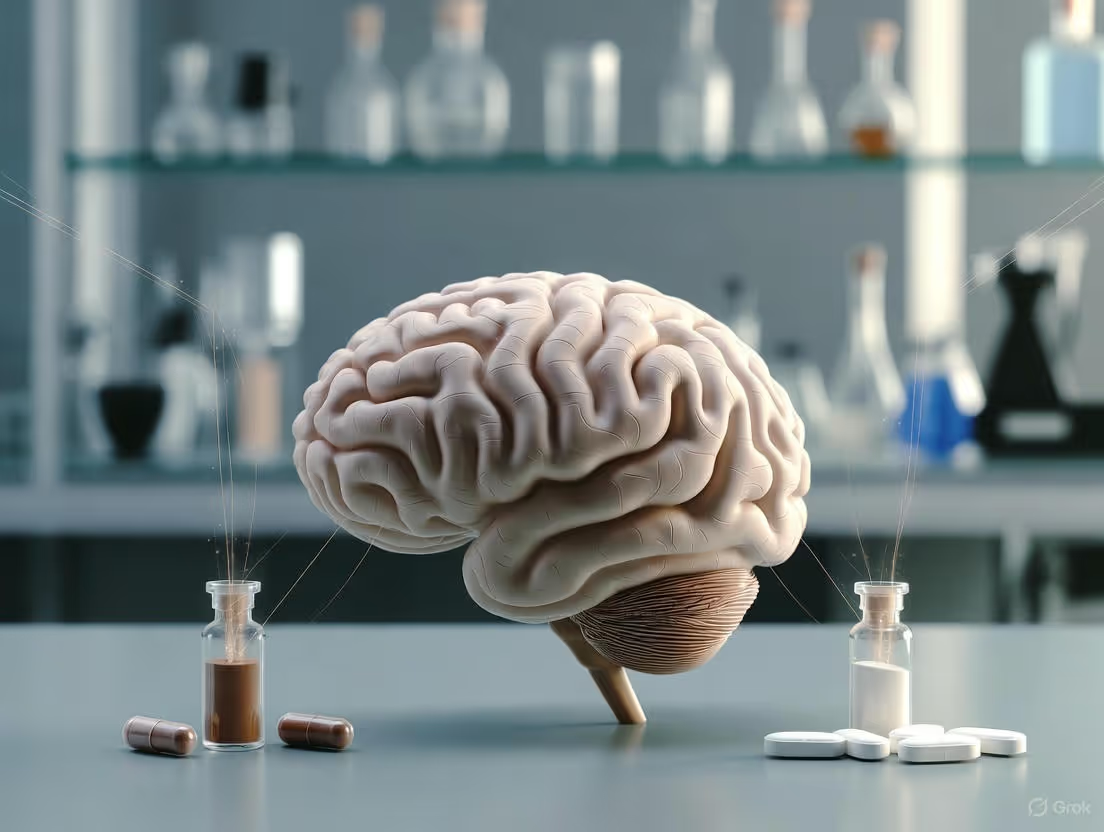
To understand why timing is everything, we must first visit the neurochemical arena where sleep is won or lost. The starring role belongs to a molecule called adenosine.
Throughout your waking hours, as your brain burns through its primary fuel, ATP (adenosine triphosphate), a byproduct is steadily accumulating: adenosine. Think of adenosine as a natural sleep pressure gauge. From the moment you open your eyes, it begins to build up in your brain, binding to specific receptors (primarily the A1 receptor) and slowly turning down the dials on neural activity. It promotes drowsiness, quietens alertness, and prepares your body for rest. This increasing adenosine concentration is a primary driver of homeostatic sleep pressure—the body’s innate need for sleep that grows stronger the longer you’re awake.
Enter caffeine, the world’s most popular psychoactive drug. Caffeine’s primary mechanism is deviously simple: it’s an adenosine receptor antagonist. This means it has a molecular shape similar enough to adenosine to slot perfectly into those same A1 receptors, but it doesn’t activate them. Instead, it blocks the door. By occupying these receptors, caffeine prevents adenosine from binding and delivering its “time to sleep” signal.
The immediate effect is a dramatic clearing of the fog. With adenosine blocked, stimulating neurotransmitters like dopamine and glutamate continue to flow unimpeded. You feel alert, focused, and energized. It’s a brilliant deception—caffeine doesn’t give you energy; it simply hides the signal of fatigue. The crucial, often overlooked detail is this: Adenosine doesn’t stop accumulating while caffeine is at work. It continues to build up in the background, biding its time.
This sets the stage for the “caffeine crash.” As caffeine is metabolized and cleared from your system (a process with a highly variable half-life, which we’ll explore later), the blockade at the receptors lifts. All that pent-up adenosine floods in at once, often leading to an intense wave of fatigue, sometimes worse than the original tiredness. More importantly for sleep, if caffeine is still partially blocking receptors as you approach bedtime, it disrupts the natural rise of sleep pressure, fragmenting your sleep onset and depth. It’s like trying to fall asleep while someone is persistently, quietly tapping you on the shoulder.
Understanding this biological tug-of-war is the first step. But to truly master caffeine timing, we need to understand the internal clock that governs this entire process: your circadian rhythm.
The adenosine buildup isn’t the only force guiding your sleep-wake cycle. It operates in a delicate duet with your circadian rhythm—your body’s internal, 24-hour master clock. Housed in the suprachiasmatic nucleus (SCN) of your brain, this clock is synchronized by light, primarily through exposure to sunlight in the morning. It regulates the ebb and flow of hormones, body temperature, and alertness levels throughout the day.
Your circadian rhythm creates predictable waves of energy and drowsiness. Most people experience a natural dip in alertness in the early afternoon (the post-lunch slump) and a powerful drive for wakefulness in the morning. Crucially, it also governs the release of melatonin, the “hormone of darkness,” which typically begins to rise in the evening, signaling to your body that it’s time to prepare for sleep.
Here’s where caffeine timing interacts with this sophisticated system in two critical ways:
The goal, therefore, is to align caffeine intake with your body’s natural energetic peaks and troughs, not fight against them. Tools like the Oura Ring or the upcoming Oxyzen Smart Ring have revolutionized our ability to track these subtle rhythms. By monitoring body temperature variability, sleep stages, and resting heart rate, these devices provide personal feedback on how your circadian rhythm is functioning and how interventions like late-day caffeine might be perturbing it. You can learn more about how this technology provides deeper insights on the Oxyzen.ai blog, which features articles on circadian health and wearable data.
Understanding your personal rhythm is key because the next piece of the puzzle—how long caffeine actually lasts in your system—is notoriously variable.
You’ve likely heard the standard advice: “Don’t drink caffeine after 2 PM.” This rule of thumb is based on caffeine’s average half-life—the time it takes for your body to eliminate half of the caffeine consumed. The commonly cited figure is 5 to 6 hours.
This average, however, is dangerously misleading. In reality, caffeine’s half-life varies wildly from person to person, ranging from 1.5 hours to 9+ hours. This massive disparity explains why your colleague can drink an espresso after dinner and sleep like a log, while you feel wired from a morning cup.
Several key factors determine your personal caffeine metabolism:
So, what does this mean for timing? If you’re a slow metabolizer, a 3 PM coffee could mean 25-50% of that caffeine is still active in your system at 9 PM, directly interfering with sleep onset and deep sleep. For a fast metabolizer, it might be negligible.
The old “5-hour rule” is a blunt instrument. A personalized approach requires paying attention to your body’s signals or, even better, using objective data. This is where the precision of a device like the Oxyzen smart ring becomes invaluable. Instead of guessing, you can see the direct correlation between your afternoon coffee and that night’s sleep latency (time to fall asleep), resting heart rate, and deep sleep duration. It transforms an abstract rule into a personal, data-driven insight. For questions on how wearables track these metrics, our FAQ page offers detailed explanations.
But the impact of caffeine isn’t uniform across all sleep. Its most profound damage is often done to the most restorative phase.

Sleep is not a monolithic state. It’s a dynamic journey through light sleep (Stages N1 & N2), deep sleep (Stage N3, or Slow-Wave Sleep), and REM (Rapid Eye Movement) sleep. Each cycle lasts about 90 minutes and repeats throughout the night.
Deep sleep is the cornerstone of physical restoration. During this stage, growth hormone is released, tissue repair occurs, the immune system is bolstered, and memories are consolidated. It’s the most difficult stage to be awakened from, and it’s predominantly front-loaded in the first half of the night.
Caffeine is a potent enemy of deep sleep. By antagonizing adenosine receptors, it directly suppresses the slow, synchronized brain waves (delta waves) that characterize this stage. Even if you fall asleep with caffeine in your system, studies show the architecture of your sleep is altered:
The insidious part? You might not consciously register this loss. Unlike waking up from a dream (REM sleep), deep sleep deficits are felt more subtly: as persistent fatigue, muscle soreness, brain fog, a weakened immune response, and a feeling of never being fully refreshed, no matter how long you spend in bed. You might be logging 8 hours of “sleep” but getting only a fraction of the restorative quality you need.
This hidden erosion of sleep quality is why timing is non-negotiable. The goal is to ensure caffeine is fully cleared from your adenosine receptors before you enter that crucial first deep sleep window. For slow metabolizers, this clearance deadline could be 10+ hours before bedtime. Understanding this impact on sleep architecture is a core part of the mission at Oxyzen—to move the focus from simple sleep duration to holistic sleep quality and recovery.
However, caffeine’s influence extends beyond deep sleep, altering the entire landscape of your night, including your dream life.
While deep sleep bears the brunt, caffeine’s disruption cascades through the entire sleep cycle, particularly affecting REM sleep. REM is the stage most associated with vivid dreaming, emotional processing, and cognitive functions like creativity and problem-solving.
Caffeine’s stimulating effects can suppress REM sleep in the early part of the night. However, the brain has a homeostatic need for REM, much like its need for deep sleep. If REM is suppressed early on, the brain often compensates later in the sleep period with a phenomenon known as REM rebound.
This rebound is not a gentle correction. It can lead to:
The result is a night that is both lighter and more agitated. You might spend more total time in bed but wake up feeling emotionally drained or mentally exhausted from a night of “busy” sleep.
Furthermore, caffeine’s diuretic properties can contribute to sleep fragmentation in a more direct way: by increasing the likelihood of nocturia (waking up to urinate). Even if you don’t fully wake, the need can pull you into a lighter stage of sleep.
This fragmented, low-quality sleep creates a powerful negative feedback loop that directly fuels the next day’s caffeine dependence—a cycle we must understand to break.
This is the engine of the modern sleep-caffeine dilemma. It’s a self-perpetuating trap that ensnares countless people:
This cycle creates caffeine tolerance. With consistent daily intake, your brain responds by creating more adenosine receptors. Now, you need more caffeine to block the increased number of receptors to achieve the same alerting effect. This also means that when caffeine wears off, there are even more receptors available for the accumulating adenosine to bind to, intensifying the crash and fatigue.
Breaking this cycle requires a strategic, two-pronged approach: systematically managing caffeine timing and dosage while simultaneously prioritizing sleep quality to reduce the need for caffeine. It’s not about willpower; it’s about system redesign. Many of our users at Oxyzen share how data from their wearable helped them identify and escape this exact cycle; you can read their experiences in our testimonials.
The first step in redesigning your system is to conduct an honest audit of your current intake, because caffeine hides in more places than you think.

When timing your caffeine, you must account for all sources. The obvious ones are coffee, black tea, and energy drinks. But the hidden contributors can sabotage even the most careful coffee schedule.
Common Hidden & Overlooked Sources:
This list is crucial because that afternoon piece of dark chocolate or evening decaf could be the final straw that tips your adenosine scale, especially if you are a slow metabolizer. Tracking your total daily intake from all sources is the foundation of effective timing. It’s impossible to manage what you don’t measure.
Once you have a clear picture of your intake, you can begin to apply personalized timing strategies. But first, you need to determine a critical personal metric: your own caffeine cutoff time.
Forget the generic “no caffeine after 2 PM” rule. Your personal Caffeine Cutoff Time (CCT) is a function of your metabolism, your sleep schedule, and your sensitivity. Here’s a framework to find it:
1. The 10-Hour Minimum Rule (A Starting Point):
Begin with the conservative assumption that you are a slow metabolizer. Calculate your CCT by counting back at least 10 hours from your target bedtime. If you aim to sleep at 10:30 PM, your initial CCT is 12:30 PM. This creates a wide buffer to ensure clearance.
2. The Self-Experiment:
For one week, strictly adhere to this 10-hour cutoff. Use a sleep tracker (the granular data from a device like the Oxyzen ring is ideal for this) to monitor:
3. Adjust Based on Data:
After a baseline week, if your sleep metrics are excellent, you could cautiously experiment by pushing your cutoff later by 30-minute increments every 3-4 days (e.g., 1:00 PM, then 1:30 PM). The moment you see a degradation in sleep latency or deep sleep, you’ve found your personal limit. Roll back to the last successful time.
4. Listen to Subjective Signals:
Data is king, but subjective feeling is the queen. Note how you feel upon waking. Are you refreshed? Is “brain fog” clearing? Do you need an alarm? The goal is to wake up naturally feeling restored, minimizing reliance on an alarm—a state our founders envisioned when building Oxyzen. You can learn more about the vision behind this approach to holistic wellness on our Our Story page.
For those who cannot imagine a life without an afternoon pick-me-up, there are strategic alternatives that can provide a boost without the sleep sabotage.

The mid-afternoon energy dip (typically 1-3 PM) is a circadian reality, not a personal failing. Reaching for more caffeine here is often a mistake. Instead, deploy these science-backed strategies:
Mastering the afternoon without caffeine strengthens your natural energy regulation and protects your sleep. However, timing is only one lever. The other is managing the dosage and type of caffeine you do consume.
Not all caffeine delivery is created equal. How you consume it affects its impact on your sleep and energy levels.
Ultimately, the most powerful tool you have is personalized data. This is where modern technology bridges the gap between generalized advice and your unique biology.
Wearable technology has moved far beyond simple step counting. Advanced smart rings like Oura and the soon-to-launch Oxyzen are powerful sleep and recovery labs worn on your finger. They provide the objective data needed to move from guesswork to precision in managing caffeine and sleep.
Here’s how you can use this technology:
This data-driven, personalized approach represents the future of wellness—a future where you are empowered with insights about your own body, not just population averages. It aligns perfectly with our mission at Oxyzen, which you can explore further on our About Us page.
What you consume alongside your caffeine isn't just about taste—it's a pharmacokinetic decision that dramatically alters the speed, strength, and duration of caffeine's effects, with direct consequences for your sleep.
The Empty Stomach Fallacy: Drinking coffee first thing on an empty stomach is a common ritual, but it may be a strategic error. Without food, caffeine is absorbed rapidly into the bloodstream, leading to a sharp, intense spike. This "bolus dose" can cause jitters, anxiety, and a more dramatic crash as it clears. It also coincides with your natural cortisol peak, potentially training your body to rely on an external stimulus for morning alertness. Furthermore, the acidic nature of coffee on an empty stomach can irritate the gastric lining.
The Fat & Fiber Advantage: Consuming caffeine with a meal containing healthy fats, protein, and fiber significantly slows its absorption. The caffeine molecules must navigate the digestive process alongside the food, leading to a gentler, more sustained release of energy. This smoother curve means less likelihood of a mid-morning crash and, crucially, a more predictable clearance time by evening. Think of it as a time-release capsule versus an instant shot.
Specific Nutrient Interactions:
The Dehydration Myth & Reality: Caffeine is a mild diuretic, but with habitual consumption, your body develops a tolerance to this effect. The water content in your coffee or tea largely offsets fluid loss. However, relying solely on caffeinated beverages for hydration is a mistake. Chronic under-hydration is a major, often overlooked cause of daytime fatigue. If you feel tired, drinking a large glass of water should be your first move, not another cup of coffee. Proper hydration supports every cellular process, including the liver's ability to metabolize caffeine and the brain's need for flush cycles during deep sleep.
Mastering these dietary intersections smooths out caffeine's impact, creating a more stable energy foundation. The next major player in this ecosystem is perhaps the most potent natural regulator of energy and sleep: physical activity.
Exercise and caffeine have a complex, bidirectional relationship. Used strategically, they can be powerful allies. Mis-timed, they can work at cross-purposes, undermining recovery.
Caffeine as a Performance Enhancer: There's robust evidence that caffeine can improve athletic performance. It increases adrenaline, enhances focus, lowers perceived exertion, and can mobilize fat stores for fuel. For this reason, many people pre-load with caffeine before a workout. The timing rule here is to consume it 30-60 minutes before exercise to hit peak blood concentrations at the start of your session.
The Post-Exercise Timing Trap: This is where danger lies for sleep. A late-afternoon or evening workout is fantastic for health, but if it's paired with a pre-workout supplement or coffee, you may be injecting a large dose of caffeine at precisely the wrong time. A 5:30 PM workout with a 200 mg pre-workout dose could mean significant caffeine is still active at 11:30 PM, directly opposing the body's natural post-exercise drive for recovery sleep. The post-exercise caffeine cutoff is even more critical than your general cutoff. For evening exercisers, you must either forgo caffeine entirely for that session or use a minimal, fast-metabolizing source (like a few sips of black tea) well in advance.
Exercise's Positive Influence on Sleep: Regular exercise is one of the most reliable ways to improve sleep quality and depth. It increases sleep pressure (adenosine buildup), helps regulate circadian rhythms through body temperature fluctuations, and reduces stress and anxiety. A consistent exercise routine can actually reduce your dependence on caffeine for energy, as your baseline vitality improves. This creates a virtuous cycle: better sleep from smart caffeine timing improves workout recovery and performance, which in turn promotes even better sleep.
The Data Connection: This is another area where a wearable like the Oxyzen smart ring provides indispensable feedback. You can literally see the impact of a late caffeinated workout on your nightly heart rate dip and HRV recovery. If you see your resting heart rate staying elevated and your HRV suppressed on nights after evening workouts with caffeine, it's a clear signal to adjust your protocol. The Oxyzen.ai blog frequently explores case studies on optimizing fitness recovery through sleep data.
Understanding how diet and exercise modulate caffeine's effects brings us to a deeper, often internalized consequence of mistimed consumption: its impact on stress and anxiety.
Caffeine doesn't just block adenosine; it stimulates the release of adrenaline and noradrenaline—your "fight or flight" hormones. In moderate doses at the right time, this can feel like alertness and motivation. In higher doses, or at the wrong time, it mimics the physiological symptoms of anxiety: increased heart rate, sweating, jitteriness, and racing thoughts.
This has a profound dual impact on sleep:
The Vicious Stress Cycle: Poor sleep from caffeine increases next-day anxiety and stress perception. This heightened stress leads to a greater desire for caffeine to cope, which further disrupts sleep. Breaking this cycle often requires addressing both sides simultaneously: strategically reducing and timing caffeine intake while actively employing stress-reduction techniques like mindfulness, deep breathing, or gentle yoga in the evening.
For individuals who are already prone to anxiety or experiencing a period of high stress, caffeine sensitivity is often heightened. In these cases, treating caffeine like a potent drug and adhering to a very strict, early cutoff (e.g., before 12 PM) or even eliminating it temporarily can be transformative for both daytime calm and nighttime sleep. The journey of understanding these deep interconnections is core to our philosophy at Oxyzen; you can read more about our holistic approach to wellness on our Our Story page.
For those looking to reduce their dependence or reset their sensitivity, a structured approach is far more effective than willpower alone.
If you recognize yourself in the vicious cycle of dependence, or if your experiments reveal you need ever-larger doses for the same effect, a tolerance reset may be in order. The goal isn't necessarily lifelong abstinence, but rather to resensitize your adenosine receptors and break the physiological and psychological habit loops.
1. The Gradual Taper (The Gentle Method):
This is the most sustainable approach for most people. Reduce your daily intake by about 10-25% each week.
2. The Cold Turkey Reset (The Intensive Method):
Complete abstinence for at least 2-4 weeks. This is the fastest way to fully reset receptor sensitivity and get a true baseline of your natural energy. Be prepared for 2-5 days of significant withdrawal symptoms. Plan this for a quieter period (like a vacation) and prioritize sleep, hydration, and light exercise. The benefit is a clear "after" picture: you'll discover what your unmedicated energy and sleep rhythms truly are.
3. Strategic Substitution:
During either process, have alternatives ready for your ritual moments.
4. Track Your "Why":
Use your smart ring data as motivation. As you reduce intake, you should see objective improvements: a lower resting heart rate, higher HRV, increased deep sleep, and faster sleep onset. This positive feedback is powerful reinforcement. Document how you feel subjectively upon waking. Many people report feeling a more stable, calm energy after resetting their tolerance. Our users often share these transformative experiences in their testimonials.
After a successful reset, you can reintroduce caffeine with intention, treating it as a strategic tool rather than a default habit. This leads us to the pinnacle of personalization: crafting your own daily blueprint.
This is the synthesis of everything we've covered—a practical, personalized guide for structuring your day. Your timeline will vary, but here is a research-backed template you can adapt.
5:00 AM - 7:00 AM | The Cortisol Window (Avoid Caffeine)
9:00 AM - 11:00 AM | The Strategic Peak (Primary Caffeine Dose)
12:00 PM - 3:00 PM | The Circadian Dip (Caffeine-Free Zone)
3:00 PM | The Absolute Hard Cutoff
6:00 PM - 10:00 PM | The Wind-Down Sanctuary (Adenosine Alliance)
Tracking & Refinement: This timeline is a starting template. Use your wearable data to refine it. Did your 10 AM coffee correlate with a great sleep score? Perfect. Did a 2 PM green tea cause fragmented sleep? Move your cutoff earlier. This iterative process of action, measurement, and adjustment is the core of a modern, data-informed wellness practice. For support on interpreting your data and refining your habits, our comprehensive FAQ is an excellent resource.
Understanding and implementing this personalized approach is the key to transforming caffeine from a sleep-stealing culprit into a refined tool. But what about the long game? How do these daily choices impact our health over decades?
The consequences of chronically mis-timed caffeine intake extend far beyond occasional groggy mornings. They contribute to a state of sleep debt and circadian misalignment, which are now recognized as significant risk factors for serious long-term health conditions.
This long-term perspective reframes caffeine timing from a simple productivity hack to a foundational health behavior. It's not about perfection, but about consistent alignment. Making your Caffeine Cutoff Time a sacred part of your routine is an investment in your lifelong metabolic, cognitive, and cardiovascular health. At Oxyzen, we believe this proactive, preventive approach is the future of healthcare—empowering individuals with the insights and tools to protect their long-term well-being.
Armed with this comprehensive understanding—from neurochemistry to circadian science, from personal experimentation to long-term health—you are now equipped to master the relationship between caffeine and sleep. The final step is to move from knowledge to consistent, empowered action.
Knowledge is only as valuable as the action it inspires. Here is your step-by-step plan to implement everything we've covered and become the master of your own energy and sleep.
Phase 1: The 7-Day Audit (Week 1)
Phase 2: The Strategic Intervention (Weeks 2-4)
Phase 3: Refinement & Integration (Ongoing)
This journey is not about creating a rigid, joyless regimen. It’s about cultivating awareness and making intentional choices that support your body’s innate wisdom. It’s about drinking your favorite brew not out of desperate need, but out of mindful enjoyment, secure in the knowledge that you have also safeguarded the profound restoration that awaits you each night.
By understanding the intricate dance of caffeine timing, you reclaim agency over your energy, your focus, and your sleep. You break free from reactive cycles and build a proactive foundation for sustained vitality. In this empowered state, you are not at the mercy of a molecule; you are its master, using it wisely to enhance a life that is already rich with natural, renewable energy. For continued learning and support on your wellness journey, we invite you to explore our blog for more wellness tips and join a community focused on data-driven health.
We established that the CYP1A2 enzyme is the master regulator of your caffeine clearance rate. While observational experiments with a smart ring can reveal your functional metabolism speed, direct-to-consumer genetic testing (through companies like 23andMe, AncestryDNA, or specialized nutrigenomic services) can provide the underlying genetic blueprint.
Interpreting Your Results:
The Empowerment of Knowing: This genetic insight removes the guesswork and self-judgment. If you are a slow metabolizer struggling with sleep, it’s not a lack of willpower—it’s biology. This knowledge empowers you to make unequivocally better choices without internal conflict. It also informs broader health decisions; for example, slow metabolizers may need to be more vigilant about caffeine’s potential interaction with blood pressure.
Integrating Data Streams: The future of personalized wellness lies in synthesizing genetic data with continuous physiological data from devices like the Oxyzen ring. Your genes set the range of possibility; your daily habits and real-time metrics show you where you are operating within that range. This holistic view is at the heart of modern, proactive health management, a principle we champion in our vision at Oxyzen.
Your genetic code is fixed, but your brewing method is a daily choice that significantly alters the caffeine profile you ingest.
Not all cups of coffee are created equal. The brewing technique affects caffeine concentration, the presence of other compounds, and even the speed of absorption, all of which can influence sleep.
Strategic Choice for Sleep: For the sleep-conscious, the key is knowing your total dose. A single espresso after lunch may be a lower total caffeine load than a large 16-oz cold brew in the morning. If you are sensitive, opt for filtered methods (drip, pour-over) to minimize other bioactive compounds and measure your intake by total milligrams, not just cup size. The ritual of brewing itself can be part of a mindful wind-down, but only if it’s decaffeinated after your cutoff time.
What you brew may interact with other substances in your system, leading to our next critical consideration.
Caffeine is a drug, and it interacts with other drugs. These interactions can amplify side effects, diminish efficacy, or alter metabolism times, making timing a matter of safety, not just optimization.
Common and Significant Interactions:
The Golden Rule: Always consult your pharmacist or physician about potential interactions with caffeine when starting a new medication. When in doubt, especially with antibiotics or stimulants, err on the side of caution and eliminate caffeine. Protecting your sleep is a crucial part of healing and treatment efficacy. For more on how to navigate wellness alongside medical treatments, our FAQ provides a resource for common questions.
Modern life doesn’t always conform to a 9-to-5 schedule. For millions, work happens when the sun is down, presenting the ultimate caffeine timing challenge.
Shift workers operate in direct opposition to their circadian rhythms. Using caffeine to maintain alertness during the night is often necessary for safety and performance, but doing so without sabotaging daytime sleep requires a tactical, disciplined approach.
The Strategic Principles for Shift Work:
The Data Imperative: For shift workers, a smart ring is not a luxury; it’s an essential tool for survival. Tracking daytime sleep quality, resting heart rate, and HRV provides objective feedback on whether your caffeine and light strategies are working or if you are accruing a dangerous sleep debt. It helps you find the precise balance between necessary alertness and sustainable recovery. Explore real user experiences to see how others in demanding schedules use data to manage their health.
Even with perfect caffeine timing, its benefits are capped if your sleep environment is working against you.
Caffeine timing removes a key obstacle to sleep. To fully capitalize on that, you must build an environment that actively invites and supports deep, restorative rest. Think of it as creating the perfect conditions for your cleared adenosine to work its magic.
The Pillars of a Sleep Sanctuary:
Synergy with Caffeine Timing: When your caffeine cutoff is respected, and you enter this optimized environment, the effects are multiplicative. Your sleep pressure is high, your circadian drive for sleep is aligned, and there are no environmental hurdles to overcome. This is the state where sleep efficiency—the percentage of time in bed actually spent sleeping—soars, and deep sleep thrives.
Creating this sanctuary is an act of self-respect. It declares that your recovery is a priority. It’s the final, critical piece that ensures your meticulous daytime management pays off in full each night. The journey to creating a holistic system like this is what we’re passionate about at Oxyzen; you can learn more about our integrated approach on our Our Story page.
You have journeyed from molecules to metabolism, from genetics to environment. Let’s condense this wisdom into a lifelong master checklist. Refer to this regularly to audit and maintain your mastery over caffeine and sleep.
Daily & Weekly Habits:
Monthly & Periodic Actions:
Mindset Shifts:
The story of caffeine and sleep is a modern parable of our relationship with technology—both biochemical and digital. We embraced a powerful tool for energy without fully understanding its long-term operating manual. The consequence has been a silent epidemic of fractured sleep and hijacked natural energy.
But as we have seen, the power to rewrite this story rests firmly in your hands. It begins with a simple, profound realization: Your body is not deficient in caffeine. It possesses exquisite, innate systems for energy and restoration—the adenosine pressure gauge, the circadian conductor, the deep sleep restorer.
Mastering caffeine timing is the act of getting out of the way of these systems. It’s removing the chemical blockade so your sleep pressure can rise and fall as nature intended. It’s aligning your habits with your rhythm, not against it. It’s using technology not to override your biology, but to listen to it more keenly than ever before.
This journey is not about deprivation. It’s about liberation. It’s about waking up refreshed because you slept deeply, not because you’re jolted by a stimulant. It’s about experiencing the calm, stable focus that comes from a nervous system at peace. It’s about drinking your morning coffee as a conscious choice of pleasure, not a desperate bid for consciousness.
You now have the map—from the microscopic battle at your adenosine receptors to the macroscopic shape of your daily timeline. You have the tools, from the precision of a smart ring to the simplicity of blackout curtains. The path forward is one of curious self-experimentation, guided by your own data and feelings.
Start tonight. Calculate your cutoff. Savor your last sip well before it. Begin the wind-down. And step into the sanctuary you’ve prepared, confident that you have done everything to honor your body’s profound need for rest. Tomorrow’s energy—clean, sustained, and truly yours—awaits.
Your Trusted Sleep Advocate: Sleep Foundation — https://www.sleepfoundation.org
Discover a digital archive of scholarly articles: NIH — https://www.ncbi.nlm.nih.gov/
39 million citations for biomedical literature :PubMed — https://pubmed.ncbi.nlm.nih.gov/
Experts at Harvard Health Publishing covering a variety of health topics — https://www.health.harvard.edu/blog/
Every life deserves world class care :Cleveland Clinic - https://my.clevelandclinic.org/health
Wearable technology and the future of predictive health monitoring :MIT Technology Review — https://www.technologyreview.com/
Dedicated to the well-being of all people and guided by science :World Health Organization — https://www.who.int/news-room/
Psychological science and knowledge to benefit society and improve lives. :APA — https://www.apa.org/monitor/
Cutting-edge insights on human longevity and peak performance:
Lifespan Research — https://www.lifespan.io/
Global authority on exercise physiology, sports performance, and human recovery:
American College of Sports Medicine — https://www.acsm.org/
Neuroscience-driven guidance for better focus, sleep, and mental clarity:
Stanford Human Performance Lab — https://humanperformance.stanford.edu/
Evidence-based psychology and mind–body wellness resources:
Mayo Clinic — https://www.mayoclinic.org/healthy-lifestyle/
Data-backed research on emotional wellbeing, stress biology, and resilience:
American Institute of Stress — https://www.stress.org/


