


How Music and Sound Support Restful Living
Calming music, nature sounds, or white noise can mask distractions and promote a tranquil atmosphere.
Calming music, nature sounds, or white noise can mask distractions and promote a tranquil atmosphere.
%402x.svg)
In the silent, spinning hours of the night, have you ever found yourself desperate for the very thing that seems to be slipping through your fingers? Rest. Not just sleep, but the profound, cellular-level restoration that comes from true restfulness—a state where the nervous system downshifts, the mind quietens, and the body repairs. In our modern world of relentless notifications, ambient light pollution, and chronic low-grade stress, achieving this state feels less like a natural human rhythm and more like a forgotten art.
Yet, there exists a tool, as ancient as humanity itself, that is wired directly into our biology and capable of unlocking this coveted state. It is not a pill, a protocol, or an expensive gadget—though technology can now help us harness it with precision. It is sound. From the rhythmic crash of ocean waves that lulls us into tranquility to the specific frequency of a mother’s heartbeat that soothes a newborn, our relationship with sound is primal and powerful. It can be the source of our greatest agitation or the architect of our deepest peace.
This exploration is not merely about putting on a relaxing playlist before bed—though that is a wonderful start. It is a deep dive into the architecture of sound itself and how it interacts with the very fabric of our being: our brainwaves, our nervous system, our circadian biology, and our emotional heart. We will decode the science of how specific frequencies can act as a "digital lullaby" for an overactive mind, how rhythmic entrainment can guide a frantic heartbeat back to calm, and how intentional sonic environments can rebuild the boundary between day and night that our hyper-connected world has blurred.
As we navigate this journey, we’ll also explore how modern technology, particularly wearable devices like advanced smart rings, are providing unprecedented personal data, allowing us to move from guesswork to precision in crafting our sonic sanctuary. Imagine not just hoping a soundscape helps you sleep, but knowing—with data on your heart rate variability, sleep stages, and physiological stress—exactly which frequencies and patterns your body craves for optimal restoration. This is the new frontier of restful living.
Welcome to the science, the art, and the practice of using music and sound not as background noise, but as intentional, foundational support for a life of deeper rest, resilience, and vitality. Let’s begin by understanding the most direct pathway sound has into our state of being: our nervous system.

Our autonomic nervous system (ANS) operates as the silent, behind-the-scenes manager of our entire physiological state, governing functions we don’t consciously control: heart rate, digestion, respiratory rate, and, most importantly for rest, the crucial shift between stress and recovery. It has two primary branches: the sympathetic (gas pedal, "fight-or-flight") and the parasympathetic (brake pedal, "rest-and-digest"). True restful living is impossible without a well-toned, responsive parasympathetic nervous system. Sound, as it turns out, is one of its most direct and potent conductors.
When a sudden, harsh noise—a car alarm, a slammed door—pierces the silence, it triggers an immediate sympathetic cascade. The amygdala, our brain’s threat detector, sounds the alarm. Stress hormones like cortisol and adrenaline flood the system, heart rate spikes, muscles tense, and all non-essential functions (like deep digestion and cellular repair) are put on hold. This is biology’s ancient survival mechanism. However, in the modern soundscape filled with traffic, pings, and fragmented noise, this system can become chronically activated, leading to a state of constant low-grade alertness that utterly sabotages rest.
Conversely, specific types of sound can trigger the parasympathetic response. This isn't just psychological; it's a measurable, physiological event. The mechanism often involves the vagus nerve, the longest cranial nerve and the command center of the parasympathetic system. Soothing, predictable, low-frequency sounds can stimulate vagal tone, leading to:
The Science of Sonic Predictability: Our brains are prediction engines. They constantly scan the environment, seeking patterns to reduce cognitive load and assess safety. Chaotic, unpredictable noise is inherently stressful because the brain cannot forecast it. In contrast, the predictable, repetitive patterns found in nature sounds (wave cycles, rainfall, wind) or in certain musical forms (drone notes, slow, steady rhythms) provide a signal of safety. The brain can "trust" the pattern, which allows the threat response to stand down. A study published in Scientific Reports found that listening to natural sounds reduced the body’s sympathetic response and increased parasympathetic activity more effectively than artificial noise control.
The Role of Frequency and Timbre: It’s not just the pattern, but the quality of the sound. Lower frequencies (think of a deep cello note, a drum’s resonance, or distant thunder) are often perceived as less threatening and more grounding than high-pitched, shrill tones. The timbre, or color, of the sound matters too—smooth, rounded waveforms are calming, while jagged, distorted ones can be agitating. This is why the shimmering, complex yet gentle sound of a wind chime or a singing bowl can be so effective; it provides rich auditory input without an edge of threat.
For those seeking to actively manage their well-being, understanding this connection is the first step. By intentionally curating the sounds around us—especially during wind-down periods—we act as our own nervous system conductors, using auditory tools to guide ourselves from states of sympathetic arousal to parasympathetic restoration. To learn more about how technology can help you track these physiological shifts, the team at Oxyzen has compiled valuable insights on biofeedback and the nervous system.
To understand how music and sound facilitate rest, we must look under the hood of consciousness itself—at our brainwaves. These electrical pulse patterns, measured by an EEG, are categorized by their frequency (cycles per second) and are associated with different states of mind, from high-alert focus to deep, dreamless sleep. Remarkably, our brain can synchronize its electrical activity to external rhythmic stimuli, a phenomenon known as entrainment. This is the neuroscientific key to using sound as a tool for rest.
Let’s break down the brainwave states relevant to restful living:
The journey to restful sleep is a descent down this frequency ladder: from Beta, to Alpha, to Theta, and finally into Delta. The problem for many is that a racing, Beta-dominated mind struggles to make the initial step down to Alpha. This is where sound intervenes.
Auditory Entrainment for Sleep Onset: By introducing an external auditory rhythm at a target frequency (e.g., in the Alpha range of 8-10 Hz), the brain can begin to "follow" this rhythm through a process called Frequency Following Response (FFR). This isn't always about hearing a pure tone; it can be achieved through the rhythmic structure of music, the binaural beats embedded within soundscapes, or the isochronic pulses in specialized audio tracks. As the brain synchronizes, it guides the listener’s state from alertness into calm, and eventually, into the Theta-Delta territory of sleep.
Music and Sleep Architecture: Beyond just getting us to sleep, research indicates that certain music can improve the quality of sleep architecture. A meta-analysis in the Journal of Advanced Nursing concluded that listening to soothing music at bedtime significantly improves sleep efficiency, reduces sleep latency (the time it takes to fall asleep), and can even increase the duration of deep sleep (Delta) stages. The music acts as a non-pharmacological sedative, reducing anxiety and creating a mental environment conducive to the brain’s natural sleep processes.
The Element of Personal Association: Neuroscience also acknowledges the power of personal meaning. A song that you associate with safety, love, or a peaceful memory can trigger a powerful neurochemical response—releasing oxytocin (the bonding hormone) and dopamine (the reward neurotransmitter)—which directly counteracts stress chemistry. This is why a "one-size-fits-all" sleep track may not work for everyone; the emotional and memory-based neural pathways are unique.
Harnessing this requires moving beyond random playlists to intentional auditory routines. It’s about selecting sounds not just for their melody, but for their rhythmic structure and personal resonance, to deliberately guide your brainwave descent each night. For a deeper exploration of sleep stages and how to track them, our FAQ on sleep metrics provides a clear breakdown.

Our quest for rest is not only a mental game; it is profoundly physical. Two of the most vital, rhythmic processes in our body—our heartbeat and our breath—are both gatekeepers and gateways to our state of calm. When stressed, they become rapid and shallow. When at rest, they become slow, deep, and coherent. What if you could use external rhythm to gently coax these internal rhythms back to their natural, restful state? This is the principle of cardiac and respiratory entrainment, and sound is a perfect tool for the job.
Resonance and the Breath: The most accessible entry point is the breath. The average adult respiratory rate at rest is 12-20 breaths per minute. Mindful breathing practices aim to slow this to 5-7 breaths per minute, which has been shown to maximize heart rate variability (HRV)—a key metric of nervous system resilience and recovery. Music or soundscapes with a slow, discernible tempo (around 60-70 beats per minute, or BPM) can act as a pacing mechanism. By subtly synchronizing your inhalations and exhalations to the gentle pulse of the music, you engage in a form of auditory-guided breathwork. This not only focuses a wandering mind but also creates physiological coherence between the breath and the heart.
From Breath to Heartbeat: The Rhythm of Coherence: As breath slows and deepens, it directly influences the heart via the vagus nerve, encouraging what’s known as respiratory sinus arrhythmia (RSA)—the natural, healthy variation in heart rate that occurs during the breath cycle. Music with a steady, slow rhythm supports this process. Furthermore, certain sound patterns, like the use of binaural beats, are theorized to influence the brainstem centers that regulate cardiovascular function, potentially promoting a state of cardiovascular coherence where heart rate, blood pressure, and respiration are synchronized and efficient.
The Power of Drumming and Low-Frequency Pulses: This isn't limited to gentle ambient music. The repetitive, low-frequency pulse of a shamanic drumbeat (often in the 4-4.5 Hz range, bordering the Theta brainwave state) has been used for millennia in cultures worldwide to induce trance, healing, and deep states of relaxation. This rhythm closely mirrors the resting heart rate and can have a profound entraining effect on the entire cardiovascular system, guiding it into a steady, grounded rhythm.
Practical Application for Restful Living: You can experiment with this by creating a pre-sleep ritual:
This practice transforms passive listening into an active, somatic exercise in self-regulation. It uses rhythm as a bridge, connecting the external sonic environment to your internal physiological state, masterfully conducting your body toward its innate capacity for rest. For those using wearable tech to monitor this interplay, seeing your HRV improve in response to specific sound practices can be powerful motivation. You can read testimonials from Oxyzen users who have tracked exactly this phenomenon.
Long before the invention of music, humanity fell asleep to the soundscapes of the natural world. This evolutionary history is etched into our neurobiology, making biophilic sounds—those derived from nature—some of the most universally effective tools for prompting relaxation and sleep. The rustle of leaves, the babble of a brook, the steady patter of rain, or the distant call of birds at dusk don’t just sound peaceful; they signal to our primal brain that the environment is safe, resources are abundant, and the community is secure. It is the ultimate "all-clear" signal.
The Acoustic Ecology of Safety: Evolutionary biologists suggest that our positive response to certain nature sounds is rooted in what they convey. The gentle, non-threatening sounds of water flowing or wind in trees indicate the absence of immediate predators and the presence of a viable habitat. In contrast, sudden silence in nature can signal danger. Therefore, these predictable, non-linear soundscapes promote a profound sense of safety, allowing the nervous system to fully disengage from hyper-vigilance.
The Complexity Within Simplicity: Unlike the flat, monotonous hum of a fan or white noise machine (which can be useful for masking), natural soundscapes are complex and fractal. They contain a rich tapestry of frequencies that are varied yet predictable, engaging our auditory processing in a gentle, non-demanding way. This "soft fascination," as described by attention restoration theory, holds our attention just enough to prevent it from snapping back to ruminative thoughts, but not so much that it requires cognitive effort. It’s the perfect balance to lull the mind into a state of wandering, then dreaming.
Specific Natural Sounds and Their Effects:
Incorporating these sounds into your living and sleeping space is a form of auditory biophilia—bringing nature's restorative acoustic properties indoors. For the modern urban dweller, this might mean using high-quality recordings or sound generators. The goal is to create an acoustic environment that doesn't just mask noise pollution, but actively replaces it with a signal of safety and serenity, effectively telling your ancient brain, "It’s time to rest now." To understand how one company is integrating these principles into holistic wellness technology, you can explore the vision and values behind Oxyzen.
As our understanding of sound and neuroscience has deepened, a new category of rest-enhancing audio has emerged: digitally engineered soundscapes designed with specific neurological outcomes in mind. These aren't songs or simple nature recordings; they are sonic tools that leverage precise frequencies and brainwave entrainment principles. For the tech-savvy individual seeking a data-driven approach to rest, these tools offer a fascinating and potent avenue for exploration.
Binaural Beats: The Brain's Frequency Dial. This is perhaps the most well-known form of auditory brainwave entrainment. The effect is created when two slightly different pure-tone frequencies are presented separately, one to each ear. The brain perceives a third, phantom frequency called the binaural beat, which is the mathematical difference between the two. For example, if a 300 Hz tone is played in the left ear and a 310 Hz tone in the right, the brain "hears" and begins to resonate with a 10 Hz binaural beat—an Alpha frequency, ideal for relaxation.
Isochronic Tones: A More Potent Pulse. Isochronic tones are considered by some researchers to be a more powerful entrainment method. They involve a single tone that is turned on and off at a precise, rapid interval, creating a distinct, pulsating rhythm. This sharp, clear pulse is easier for the brain to detect and synchronize with compared to the more subtle binaural beat. They can be effective even without headphones, though isolation enhances the effect.
Algorithmic and Generative Soundscapes: This is the cutting edge. Instead of a pre-recorded track, algorithmic soundscapes use software to generate ever-evolving, non-repetitive sound environments in real-time. They can respond to inputs like the time of day, your heartbeat (via a wearable), or even your sleep stage (if integrated with a sleep tracker). Imagine a soundscape that subtly changes its dominant frequency as it detects you moving from light to deep sleep, or that introduces a gentle, calming pulse if it senses a spike in your nighttime heart rate. This is personalized auditory support at its most advanced.
A Word of Caution and Curiosity: While the science behind the Frequency Following Response is solid, individual results with these digital tools can vary. Some people find them transformative, while others find them distracting or experience no effect. It’s a personal experiment. They are generally considered safe, but individuals with epilepsy or a history of seizures should consult a doctor, as flashing lights and rhythmic stimuli can be a trigger.
For the modern wellness enthusiast, these digital lullabies represent a fusion of ancient wisdom (the use of rhythm for trance) and futuristic biohacking. They allow us to move from merely listening to sound to actively programming our auditory environment for a targeted neurological state. To see how cutting-edge wearable technology is designed to work alongside these personalized wellness practices, you can discover how Oxyzen works on a deeper level.

Restful living is not a single event at bedtime; it is a state cultivated throughout the waking hours. Just as we practice sleep hygiene, we must now consider sonic hygiene—the intentional management of our daily auditory environment to reduce stress accumulation and build a foundation for evening rest. Chronic exposure to noise pollution is a pervasive, often overlooked stressor that depletes our physiological resources long before our head hits the pillow. Sonic hygiene is the practice of cleaning up our "sound diet."
Identify and Mitigate Noise Pollutants: The first step is an audit. What sounds permeate your home office, your commute, your kitchen? Common culprits include:
Create Zones of Sonic Intention: Designate specific areas or times for specific sonic environments.
Embrace Strategic Silence: Sonic hygiene isn't about filling every moment with "good" sound; it’s also about carving out periods of quiet. Just as intermittent fasting gives the digestive system a break, periods of silence allow the auditory processing regions of the brain to recover from constant stimulation. This could be a 10-minute silent morning coffee, a quiet walk without headphones, or designated "no audio" hours in your home.
By proactively managing our sound environment, we stop being passive victims of auditory stress and become active architects of auditory peace. This daily practice reduces the allostatic load (cumulative stress) on the body, making the final descent into sleep not a steep cliff to scale, but a gentle slope you’ve been navigating all evening. For more tips on creating holistic daily routines that support rest, our blog features a wealth of curated resources.
While frequencies and entrainment provide a universal scientific framework, the most powerful sound for an individual often lives in the realm of personal meaning. Music is a unique key that can unlock deep reservoirs of memory and emotion, creating a profound sense of psychological safety that is the ultimate prerequisite for rest. This is why a song from your childhood can calm you like nothing else, or why a certain album feels like "home."
The Neuroscience of Musical Memory: Music is processed across a wide network in the brain, including the auditory cortex, the limbic system (the emotional center, home to the amygdala and hippocampus), and the prefrontal cortex. When we hear music linked to a positive memory, the hippocampus activates to recall the memory, while the amygdala and nucleus accumbens trigger the associated emotional and reward responses, often releasing dopamine. This potent cocktail can instantly override present-moment anxiety and induce a state of comfort and nostalgia—a powerful antidote to the alienation of stress.
Creating Anchors of Safety: You can intentionally use music to create "auditory anchors" for relaxation. By consistently pairing a specific, calming piece of music with your pre-sleep routine—perhaps while reading, stretching, or doing breathwork—you create a classical conditioning response. Over time, the music itself becomes the trigger for parasympathetic activation. Your brain learns: "This sound means it is time to shift into rest mode."
Curating Your Restful Repertoire: Building this personal soundtrack is an act of self-discovery. Ask yourself:
The Caution with Lyrics and Association: For some, lyrical music can engage the analytical, language-processing parts of the brain (Wernicke’s and Broca’s areas), which can be counterproductive when trying to quiet the mind. Instrumental music is often safer for sleep. Also, be mindful of music tied to intensely emotional or energizing memories; a powerful love song or a gym workout anthem might stir the heart and body in the wrong direction for rest.
Ultimately, your personal soundtrack is a bio-individual tool. It leverages your unique life history and emotional wiring to craft a bridge from wakefulness to rest. It’s the art that complements the science of sound for sleep. As you explore what works for you, remember that the goal is to feel a sense of envelopment and safety, as if the sound is a auditory blanket tucking you in for the night. Understanding your personal biological responses is key, which is why many find value in tools that offer detailed insights into their unique physiology.
Knowledge is only as powerful as its application. Understanding the science of sound for rest is the first step; translating it into a consistent, effective nightly routine is where transformation occurs. A pre-sleep sound practice is more than pressing play on a track; it’s a intentional ritual that uses auditory cues to command a full psychophysiological shift. This routine builds a powerful conditioned response, telling your body and mind, in no uncertain terms, that the day is done.
Step 1: The Wind-Down Signal (30-60 Minutes Before Bed): Choose a specific piece of music or soundscape to act as your "curtain call" for the day. This should be distinctly different from the sounds you listen to during work or leisure. It could be a certain album, a nature soundscape generator, or a binaural beats track. The key is consistency. Start this audio at the same point in your evening each night, perhaps after brushing your teeth or turning off overhead lights.
Step 2: Pair with a Somatic Anchor: Combine your chosen sound with a simple, calming physical activity to deepen the association. This creates a multi-sensory ritual. Examples include:
Step 3: The Transition to Bed: As you move to your bedroom, allow the sound to continue. If using speakers, ensure they are positioned for optimal, immersive listening. If using headphones (essential for binaural beats), this is when you would put them on. The sound should now be the primary auditory focus, minimizing other inputs.
Step 4: Integration into Sleep: Decide on your sleep-sound strategy. Will you:
Troubleshooting and Personalization: If you find the sound distracting after a week, adjust. Try a different genre, remove rhythmic elements, or lower the volume to a subliminal level. The practice should feel supportive, not obligatory. The act of showing up for the ritual is often as important as the specific sound used.
This structured approach transforms abstract concepts into a tangible, repeatable wellness practice. It empowers you to become the composer of your evening, using sound as the primary instrument to orchestrate your descent into rest. For support in establishing or troubleshooting new wellness routines, our comprehensive FAQ section can be a helpful guide.
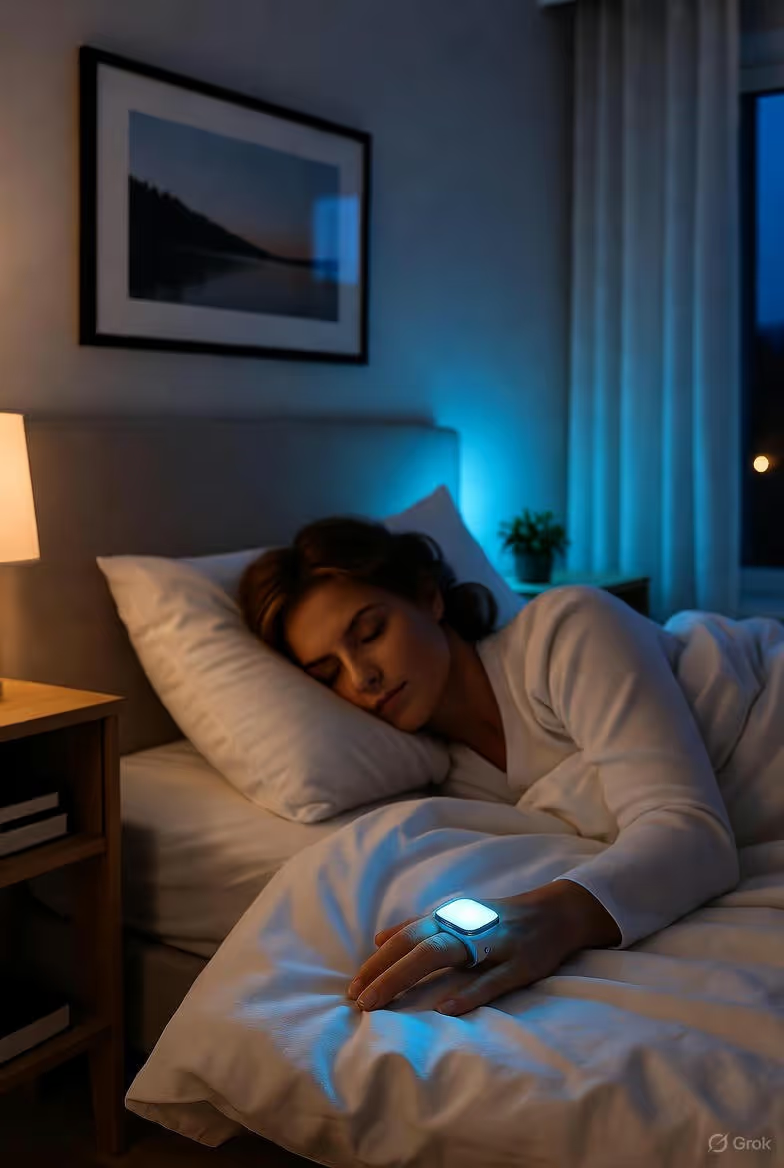
We stand at the precipice of a revolution in rest technology, where the passive listening of the past converges with active, biometric feedback to create fully personalized sonic ecosystems. The future of using sound for rest isn't a generic "rain sounds" track; it's an adaptive, responsive sound environment that reads your body's signals and responds in real-time to guide you deeper into restoration. At the heart of this revolution is the seamless integration of advanced wearable technology.
The Smart Ring as a Biometric Conductor: Imagine a device like a smart ring, worn continuously, that monitors your physiological readiness for rest: heart rate, heart rate variability (HRV), body temperature, and even sleep stages with clinical-grade accuracy. Now, imagine this device communicating with your sound system or headphones. As you begin your wind-down routine, it could:
Personalized Frequency Profiles: Future software could learn your unique neuro-acoustic profile. Through machine learning, it would determine which specific frequency ranges (e.g., 4.5 Hz vs. 5.5 Hz for Theta) your brain most readily entrains to, or which nature sound combinations yield the best HRV response for you. Your rest soundscape becomes as unique as your fingerprint.
Haptic-Acoustic Integration: The future may also combine sound with tactile vibration (haptics). A wearable could deliver a gentle, rhythmic pulse on your wrist synchronized with a binaural beat, creating a multi-sensory entrainment experience that is even more effective at guiding brainwave states.
This bio-acoustic feedback loop closes the gap between intention and outcome. We move from hoping a sound helps to knowing it is helping, with data as our guide. It represents a shift from wellness guessing to wellness precision. This synergy of ancient healing modality (sound) and cutting-edge biometrics is the cornerstone of a new, proactive approach to health. To see how this philosophy is being put into practice today, you can learn about the mission and technology behind one such integrative approach.
To look forward at the future of sound for rest, it is illuminating to look back. The therapeutic use of sound is not a New Age invention but a foundational pillar of human healing tradition, echoing through millennia and across continents. From the didgeridoo’s drone in Aboriginal dreamtime ceremonies to the Gregorian chants in monastic cloisters, our ancestors intuitively understood what science now confirms: structured sound can alter consciousness, promote healing, and induce states of profound rest. This historical tapestry provides not only validation but also a rich repository of techniques and wisdom.
Shamanic Rhythms and Trance States: In indigenous cultures worldwide, the drum is the heartbeat of ceremony. Shamanic drumming typically uses a steady rhythm between 4 and 4.5 beats per second (240-270 beats per minute), which resonates in the Theta brainwave range. This consistent, monotonous rhythm, often sustained for long periods, is a powerful tool for auditory driving. It helps quiet the default mode network (the brain’s “monkey mind”), enabling the practitioner to enter a trance state—a bridge between worlds used for healing, journeying, and accessing deeper wisdom. For the community, the rhythm creates a collective sonic container, synchronizing the group’s heartbeats and brainwaves, fostering unity and a shared state of relaxed, focused awareness.
The Sacred Drone and Harmonic Overtones: Many spiritual traditions utilize sustained, drone-like sounds to anchor meditation and prayer. The Tibetan singing bowls, the Australian didgeridoo, the Indian tanpura, and the monastic choir’s sustained note all create a complex field of fundamental tones and harmonic overtones. These sounds do not demand linear attention; instead, they provide a stable auditory foundation that allows the mind to settle and expand. The overtones themselves are believed to stimulate the body’s energy centers (chakras) and promote energetic balance, a concept now being explored through the lens of cymatics (the study of visible sound vibrations) and vibrational medicine.
Gregorian Chant and Coherent Breathing: The structured, monophonic melodies of Gregorian chant, sung in Latin, are a masterclass in using sound for physiological regulation. The chants are characterized by their free rhythm, which follows the natural cadence of the text, and their use of long, sustained phrases. To sing them requires a technique called neumonic breathing—slow, deep, diaphragmatic breaths. This practice naturally stimulates the vagus nerve and promotes heart rate variability coherence. For the listener, the slow, resonant male voices in a reverberant space create an atmosphere of timeless peace, reducing beta wave activity and promoting alpha and theta states. Studies have shown that listening to this type of chant can lower blood pressure and reduce levels of the stress hormone cortisol.
Folk Lullabies: The Universal Comfort Code: Perhaps the most intimate and widespread sound healing practice is the lullaby. Every culture has its own. Their universal features are telling: a slow tempo (matching a resting heart rate), a simple, repetitive melody, soft vocal timbre, and often a limited range of notes. The content is frequently nonsensical or soothingly repetitive. This isn’t about intellectual stimulation; it’s about biological regulation. The lullaby is a multisensory package of safety—combining rhythmic sound, physical vibration (from being held), and the familiar scent and warmth of a caregiver. It is the primordial protocol for guiding a vulnerable nervous system from arousal to sleep.
This historical context reminds us that we are not experimenting with a fad, but re-engaging with a deep human lineage. When we put on a theta-wave track or listen to a singing bowl meditation, we are participating in a modern iteration of an ancient human practice: using sound as a vehicle to transport us from the fragmented world of thought to the integrated world of rest and restoration. For more on how modern wellness brands are inspired by these timeless principles, you can explore the story behind Oxyzen’s founding vision.
Moving from tradition to clinical application, sound-based interventions are gaining significant traction in therapeutic settings for treating specific conditions that sabotage rest. While not a replacement for professional medical care, these evidence-backed protocols offer powerful adjunctive strategies for managing anxiety, chronic insomnia, and post-stress recovery. They provide a non-pharmacological, accessible, and side-effect-free toolset for reclaiming a restful state.
For Anxiety and PTSD: The Grounding Sound Protocol. Anxiety often involves a disconnection from the present moment and the physical body, with the mind trapped in future-oriented "what-if" scenarios or past traumatic echoes. Sound can be used as a powerful grounding technique to break this cycle.
For Chronic Insomnia: Structured Auditory CBT-I (Cognitive Behavioral Therapy for Insomnia). CBT-I is the gold-standard non-drug treatment for insomnia. Sound can be integrated into its core components:
For Stress Recovery and Nervous System Re-regulation: After periods of acute or chronic stress, the nervous system can remain "stuck" in a vigilant state. Sound can help guide it back to baseline.
These protocols demonstrate that sound can be moved from the realm of general wellness into targeted, therapeutic practice. They empower individuals with active techniques to manage their state, providing a sense of agency over rest. To understand how data from wearables can inform which of these protocols might be most effective for you, the Oxyzen blog delves into personalized wellness strategies.
In our enthusiastic pursuit of the right sounds for rest, we must not overlook their powerful counterpart: silence. True silence is not merely the absence of noise; it is a palpable presence, a fertile ground for the nervous system to reset and for authentic listening to occur. In a world saturated with sonic input, strategic silence is not a luxury—it is a necessary nutrient for cognitive function, creativity, and deep psychological rest. It is the blank canvas upon which meaningful sound is painted.
The Physiology of Silence: A landmark study published in the journal Heart found that two minutes of silence between periods of listening to music was more relaxing than the music itself, as measured by heart rate and blood pressure. This underscores that silence provides a release from the constant cognitive processing required by auditory input. It allows the brain’s default mode network (DMN)—associated with introspection, memory consolidation, and self-referential thought—to engage fully. This "resting state" of the brain is where we integrate experiences, make sense of our lives, and access deeper creativity. Chronic noise pollution starves the DMN of its operational space.
Silence as a Cognitive Reset (The "Silent Gap"): Neuroscientists have identified what they call the "attentional blink"—a brief moment after focusing on one stimulus when we miss a second one. Intentional silence acts as a broader cognitive reset. It clears the auditory buffer, reduces sensory load, and improves subsequent focus and auditory discrimination. Incorporating short "silent gaps" throughout the day—30 seconds of closing your eyes and listening to the absence of intentional sound—can reduce mental fatigue and prevent the buildup of auditory stress that impedes evening rest.
Practicing Deep Listening (Auditory Mindfulness): Silence also enhances our capacity for deep listening, which is fundamentally different from passive hearing. Deep listening, as pioneered by composer Pauline Oliveros, is a mindful practice of receiving sound without judgment or the need to label or analyze.
Designing Silent Sanctuaries: Just as we design sonic environments, we must intentionally design silent ones.
Balancing sound with intentional silence prevents auditory overload and ensures that the sounds we do use for rest remain potent and effective. It is the necessary contrast that makes the music meaningful. For individuals tracking their wellness metrics, periods of intentional silence often correlate with noticeable improvements in HRV and subjective calm, a connection explored in user experiences shared by Oxyzen.
Your bedroom is not just a visual and tactile sanctuary; it is an acoustic ecosystem. Its physical properties—the size, the materials, the layout—fundamentally shape the sound within it, affecting everything from how outside noise intrudes to how your chosen rest sounds behave. Optimizing this acoustic ecology is a critical, yet often neglected, step in building a foundation for restful sleep. It involves both defense (noise mitigation) and offense (sound enhancement).
The Problem: Reverb, Resonance, and Noise Intrusion.
Acoustic Treatment Strategies (The "Soft" Defense):
The Strategic Use of Sound Masking (The Active Defense): When you can’t block noise, mask it. The goal is to use a consistent, benign sound to raise the ambient noise floor just enough to obscure intrusions.
Speaker Placement and Quality (The Thoughtful Offense): How you deliver your rest sounds matters.
By treating your bedroom as an acoustic project, you create a controlled environment where your chosen sounds can work their magic without interference, and where unpredictable sonic stressors are minimized. It is the ultimate act of crafting a sanctuary for your senses. For more practical guides on optimizing your sleep environment, our FAQ section offers additional tips and insights.
We have journeyed through the science, the history, the clinical applications, and the environment. Now, it’s time to synthesize this knowledge into a living, breathing, personal practice. Curating your sonic sanctuary is not a one-time task but an ongoing experiment in self-discovery and physiological attunement. This guide provides a framework to build your unique prescription for restful living through sound.
Phase 1: The Self-Audit (Week 1-2)
Phase 2: The Strategic Intervention (Week 3-4)
Phase 3: Integration and Refinement (Ongoing)
The Role of Technology as a Guide: A smart ring or other biometric tracker can accelerate this process from guesswork to precision. Seeing that your HRV is 15% higher on nights you listen to "Soundscape X" versus "Soundscape Y" provides incontrovertible personal evidence. This biofeedback loop turns curation into a precise science. To see how this integration of data and daily practice is designed to work, you can learn more about the Oxyzen approach to holistic tracking.
Your sonic sanctuary is a living expression of self-care. It honors your unique biology, your personal history, and your current needs. By taking this architectural approach—building a strong foundation with acoustic hygiene, selecting the right materials (sounds), and continually refining the space—you create not just a tool for sleep, but a lifelong companion for resilience and restful living.
While our journey has largely focused on the individual's personal sonic sanctuary, the power of sound to foster rest extends powerfully into the communal sphere. Humans are inherently social beings, and our nervous systems are designed to co-regulate—to find calm in the presence of another calm, safe person. Shared sound experiences can amplify this effect, creating collective fields of relaxation that are greater than the sum of their parts. In an age of digital isolation, intentional communal sound rituals offer a profound antidote to loneliness and a path to shared, restorative rest.
Group Sound Baths and Gong Meditations: The modern sound bath is a direct descendant of ancient ceremony. Participants lie down in a shared space while a facilitator plays a variety of instruments—singing bowls, gongs, chimes, drums—in an improvised flow. The shared physical space means the sound waves are literally moving through every body in the room, creating a unified vibratory field. This experience transcends passive listening; it becomes a somatic, collective journey. The social agreement to be quiet and receptive, coupled with the shared physiological descent into Theta and Delta states, creates a powerful group resonance that many find more profound and grounding than solo practice.
Community Singing and Chanting: Singing together is a remarkable regulator of the autonomic nervous system. The requirements of group singing—synchronized breathing, attuned listening, and shared rhythmic pulse—force participants into a state of coherence. Studies on choirs have shown that singers' heart rates synchronize during performance. Practices like community mantra chanting (e.g., kirtan) or simple, repetitive group humming activate the vagus nerve through vocal vibration while simultaneously creating a sense of belonging and shared purpose. The resulting release of oxytocin (the "bonding hormone") alongside endorphins combats stress and promotes a deep, satisfied form of rest after the event.
Restorative Listening Circles: A simpler, more accessible practice is the restorative listening circle. A small group gathers with the express purpose of listening to a carefully selected piece of calming music or soundscape together in silence. Afterward, there is a space for optional, gentle sharing about the experience. This structures a shared, intentional downtime, free from the pressure of conversation or performance. It provides social connection without social exertion, which for introverts or the emotionally fatigued can be a uniquely restorative form of community.
The Family Lullaby and Intergenerational Sound: The most fundamental communal sound ritual is within the family. The act of a parent singing to a child, or partners creating a shared pre-sleep ritual with a piece of music, builds bonds and shared associations of safety. This can extend to creating "family soundscapes" for road trips or quiet evenings, where the auditory environment is consciously curated to lower the collective energy of the household, moving everyone toward a more peaceful state together.
These communal practices remind us that rest is not solely a solitary retreat. It can be a collective cultivation of peace, where we lend our calm to others and borrow theirs in return, co-creating a sanctuary of sound that holds everyone within it. For a brand built on the principle that technology should enhance human well-being, understanding these communal roots is essential; you can read about the values that guide Oxyzen’s mission in this space.
In our quest to use sound for rest, we must also confront the double-edged sword of the very technology that provides it: the digital soundscape. Streaming platforms, algorithmically generated playlists, podcasts, and constant audio-on-demand offer unprecedented access to restful sounds, but they also present new challenges that can inadvertently sabotage our goals. Navigating this landscape with intention is crucial for protecting our auditory peace.
The Paradox of Choice and Decision Fatigue: Opening a streaming service to find "sleep music" can present thousands of options: "Deep Sleep Piano," "Theta Waves for Insomnia," "Celestial Ambience," "Brown Noise 10 Hours." This abundance can trigger decision fatigue and anxiety—the very states we are trying to avoid. The time spent scrolling and previewing tracks can eat into our wind-down period and keep our minds in an analytical, beta-state mode of judgment and selection.
Algorithmic Agitation and Context Collapse: Streaming algorithms are designed for engagement, not necessarily for your optimal sleep hygiene. They may recommend a "Sleep" playlist that suddenly introduces a track with a jarring transition, a surprising dynamic swell, or even an ad. Furthermore, the same platform that hosts your sleep playlist also hosts your workout pump-up jams and breaking news podcasts. This "context collapse" can make it psychologically harder for your brain to associate the platform solely with rest, as it's linked to multiple arousal states.
The Podcast Paradox: Many turn to podcasts or audiobooks to quiet a racing mind. This can be effective as a cognitive distraction. However, the engaging, narrative, or informational content keeps the language-processing centers of your brain active. You may fall asleep, but you're likely missing crucial plot points or information, and the continued linguistic processing can potentially impact sleep quality and dream content. It's a tool best used with clear boundaries—perhaps a "sleep timer" function set for 30 minutes to allow for sleep onset, after which silence or pure tone takes over.
Strategies for Digital Sonic Hygiene:
The goal is to make technology a deliberate servant of your rest, not a distracting master. By setting boundaries around our interaction with the digital soundscape, we reclaim our attention and create cleaner, more potent associations between our chosen sounds and the state of rest they are meant to induce. For more discussions on managing technology for wellness, our blog features ongoing explorations of this balance.
We are standing at the frontier of a new era where sound, biometrics, and artificial intelligence converge to create hyper-personalized, adaptive sound environments for rest. This goes beyond playing a pre-recorded track; it involves a closed-loop system where sound responds in real-time to your physiology, creating a dynamic, living soundscape that is uniquely tuned to your moment-by-moment needs. This is the ultimate expression of the "quantified self" meeting ancient healing wisdom.
Closed-Loop Bio-Acoustic Systems: Imagine a system where your smart ring or EEG headband communicates wirelessly with your speaker system. As you lie down, it plays a baseline soundscape. Using photoplethysmography (PPG) to measure heart rate and HRV, it detects that your nervous system is still mildly agitated from the day. The system responds by subtly introducing a binaural beat in the Alpha-Theta border frequency (7-8 Hz) to encourage a deeper descent. As your heart rate slows and HRV increases, confirming relaxation, the beat fades, leaving only a gentle ocean wave sound. If it detects a micro-arousal during the night—a spike in heart rate—it might gently pulse a low-frequency tone to guide you back into deep sleep without full awakening.
AI-Generated, Endlessly Unique Soundscapes: Leveraging generative AI models, future apps could create soundscapes that are non-repetitive and evolve organically, eliminating the subconscious recognition of a 30-minute loop that can subtly disrupt sleep. You could prompt: "Generate a 9-hour soundscape of a Pacific Northwest rainforest in spring, with a slow transition from evening crickets to night wind to dawn birdsong, optimized for heart-rate coherence." The AI would create a unique, seamless auditory journey each night.
Personalized Frequency Profiling: Machine learning could analyze your biometric response data over weeks to build your personal "frequency fingerprint." It might learn that your deep sleep is most prolonged when exposed to a fundamental frequency of 108 Hz (a frequency often associated with crown chakra and peace in sound healing) or that your anxiety dissipates fastest with a specific binaural beat ratio. This data would then inform all generated or recommended soundscapes.
Haptic-Acoustic Integration for Deep Somatic Rest: The future includes wearable devices that deliver precisely calibrated vibrational frequencies (haptics) to the body in sync with auditory stimuli. A wristband or mattress pad could deliver a gentle, rhythmic pulse aligned with a binaural beat, creating a multi-sensory entrainment experience that is even more effective at guiding the nervous system into parasympathetic dominance. This is particularly promising for individuals with hearing impairments or those who are highly somatic responders.
These advancements point toward a future where our sonic sanctuary is not a static playlist, but an intelligent, responsive environment—a "sonic butler" that attends to our unconscious physiological needs throughout the night. It represents the full maturation of the concept: from sound as a blanket to sound as an active, intelligent partner in restoration. To see how this philosophy of personalized, data-informed care is being implemented today, explore the technology and story behind Oxyzen.
We have traversed a vast landscape—from the neurobiology of brainwaves and the vagus nerve to the history of shamanic drumming, from the acoustic design of bedrooms to the future of AI-generated soundscapes. The unifying thread is clear: sound is not merely entertainment or background; it is a fundamental, accessible, and profoundly powerful architect of our internal state. To ignore its potential is to overlook one of the most direct pathways we have to influence our nervous system and cultivate restful living.
The Core Principles Revisited:
An Invitation to Begin (or Deepen): You need not implement every strategy discussed. Start with one single, small, sustainable change.
The Role of Technology as an Ally: A device like the Oxyzen smart ring is not just a sleep tracker; it is a translator of your body's silent language. It can help you move from asking "I wonder if this sound helps?" to knowing "This sound protocol increases my deep sleep by 12%." This transforms your sonic practice from a hopeful ritual into a precise, confidence-building component of your health regimen. You can discover how this kind of precise, personalized feedback works in practice.
Ultimately, building your sonic sanctuary is an act of reclaiming agency over your well-being in a noisy world. It is a declaration that your rest matters. It is the practice of becoming the composer of your own calm, using the ancient, universal medium of sound to write a daily lullaby for your modern life. In the gentle swell of a wave, the steady pulse of a rhythm, or the deep silence between notes, you will find not just better sleep, but a more resilient, grounded, and restful way of being.
A Final Resonance: As you move forward, carry this understanding: the sounds you cultivate are not just something you hear. They are something you inhabit. They become the invisible architecture of your days and nights, shaping your nervous system, guarding your sleep, and supporting the quiet, essential work of restoration that makes a vibrant, awake, and engaged life possible. Begin tonight. Listen intentionally. Rest deeply.
Your Trusted Sleep Advocate: Sleep Foundation — https://www.sleepfoundation.org
Discover a digital archive of scholarly articles: NIH — https://www.ncbi.nlm.nih.gov/
39 million citations for biomedical literature :PubMed — https://pubmed.ncbi.nlm.nih.gov/
Experts at Harvard Health Publishing covering a variety of health topics — https://www.health.harvard.edu/blog/
Every life deserves world class care :Cleveland Clinic - https://my.clevelandclinic.org/health
Wearable technology and the future of predictive health monitoring :MIT Technology Review — https://www.technologyreview.com/
Dedicated to the well-being of all people and guided by science :World Health Organization — https://www.who.int/news-room/
Psychological science and knowledge to benefit society and improve lives. :APA — https://www.apa.org/monitor/
Cutting-edge insights on human longevity and peak performance:
Lifespan Research — https://www.lifespan.io/
Global authority on exercise physiology, sports performance, and human recovery:
American College of Sports Medicine — https://www.acsm.org/
Neuroscience-driven guidance for better focus, sleep, and mental clarity:
Stanford Human Performance Lab — https://humanperformance.stanford.edu/
Evidence-based psychology and mind–body wellness resources:
Mayo Clinic — https://www.mayoclinic.org/healthy-lifestyle/
Data-backed research on emotional wellbeing, stress biology, and resilience:
American Institute of Stress — https://www.stress.org/


