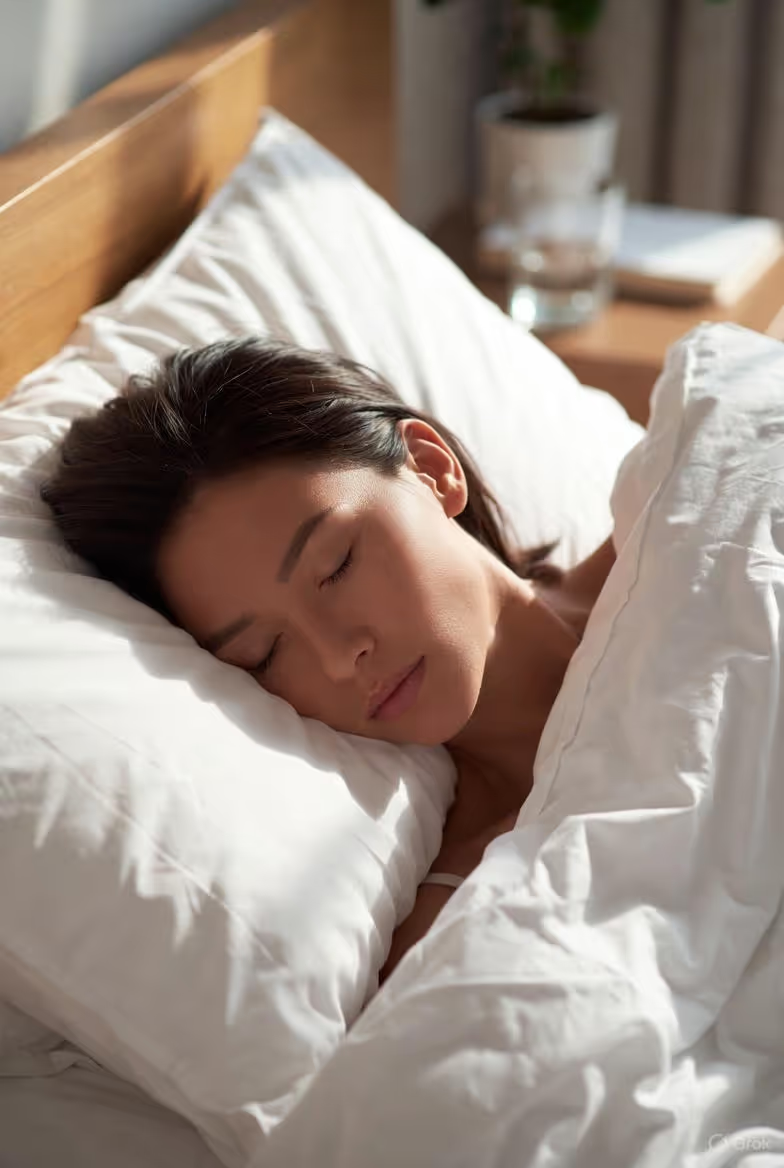
A higher sleep score is a strong predictor of higher self-reported energy and alertness the following day.
The Secret to Waking Up Recharged: How Your Sleep Score is a Crystal Ball for Your Next-Day Energy
You know the feeling all too well. The alarm blares, you drag yourself out of bed, and before you’ve even had your coffee, you’re already forecasting a day fueled by caffeine and sheer willpower. Meanwhile, your colleague bounces into the office, radiant and focused, having seemingly unlocked a secret reservoir of vitality. What’s the real difference between you two? It’s not just genetics or luck. The foundation of your entire day was laid hours before your alarm clock sounded, in the hidden architecture of your sleep.
For centuries, sleep was a mystery—a blank space in our personal diaries. We guessed at its quality based on how groggy we felt. But the era of guesswork is over. We now have a powerful, quantifiable metric that deciphers the night’s story: the Sleep Score. This single number, generated by advanced wearable technology like the Oxyzen smart ring, is more than just a report card on last night. It’s a remarkably accurate predictor of your next-day energy, cognitive sharpness, and emotional resilience.
This deep dive explores the profound, data-driven connection between your nightly sleep score and your daytime vitality. We’ll move beyond counting hours to understand the quality pillars that build true restoration, how your body uses the night to prepare for the day, and how you can harness this knowledge to not just track, but actively design, your energy levels. Welcome to a new paradigm in personal wellness, where understanding your sleep is the first step toward mastering your day.
The Anatomy of a Sleep Score: What is That Number Really Telling You?
You glance at your wellness app and see it: Sleep Score: 82. It feels good, but what does it actually mean? Is it like a test score, where 90 and above is an “A” for rest? The truth is far more fascinating. Your sleep score is a composite algorithm, a sophisticated distillation of multiple biological processes into one insightful figure. It’s the summary of a complex story written by your heart, brain, and body throughout the night.
Unlike basic trackers that only measure movement, modern systems like the Oxyzen smart ring use photoplethysmography (PPG) sensors to detect subtle changes in blood volume and heart rate variability (HRV). This allows them to map the landscape of your sleep with incredible precision. The score is typically built on several core pillars:
Sleep Duration: The foundation. This isn’t just time in bed, but total time spent actually asleep. While 7-9 hours is the general gold standard, the score weighs this in context with other factors.
Sleep Architecture (Stages): The quality of the building. This breaks down your night into the crucial cycles of Light, Deep, and REM (Rapid Eye Movement) sleep. Each stage serves a non-negotiable purpose. Deep sleep is for physical repair and immune function, while REM sleep is for memory consolidation and emotional processing. A high score requires a balanced, cyclical progression through these stages.
Restoration (Heart Rate & HRV): Your body’s internal work log. During deep sleep, your heart rate should drop to its lowest, most restful state, and your HRV—the variation in time between heartbeats, indicating nervous system recovery—should increase. A score reflects how effectively your body entered this restorative state.
Sleep Consistency & Timing: The rhythm of your life. Going to bed and waking up at consistent times, aligned with your circadian rhythm, is a huge scorer. A score penalizes erratic schedules, as they confuse your internal clock.
Sleep Disturbances: The interruptions. This counts how often you experience restlessness or wake up after initially falling asleep. Frequent disruptions fragment the sleep cycle, preventing you from reaching and maintaining the most restorative stages.
Think of it this way: Sleep Duration is the length of the concert, Sleep Architecture is the quality of the music played, Restoration is the emotional impact on the audience, and Consistency is the skill of the conductor. The sleep score is the critics’ composite review.
For a device to accurately capture this, it must be both sensitive and comfortable enough to wear all night. This is where the form factor of a smart ring shines, offering clinical-grade data from a platform that doesn’t disrupt sleep itself. As explored in the Oxyzen.ai FAQ, the precision of this data is what transforms a simple number into a actionable insight. When you see that score, you’re not seeing a guess. You’re seeing a data-driven analysis of your night’s biological repair work. And as we’ll see next, the efficiency of that repair work directly fuels the engine of your day.
The Biological Bridge: How Nighttime Processes Literally Fuel Your Day
To understand why your sleep score predicts your energy, we must cross the biological bridge that connects night to day. Sleep isn’t passive shutdown; it’s a state of intense, purposeful activity. The processes that earn you a high sleep score are the very same ones that manufacture your next-day fuel.
First, let’s talk about cellular energy currency: adenosine triphosphate (ATP). ATP is the molecule your cells use for virtually every energy-requiring task, from muscle contraction to neural firing. During waking hours, ATP is consumed, and a byproduct called adenosine accumulates in the brain, contributing to the feeling of sleep pressure. During deep sleep (the champion of physical restoration), the brain’s glymphatic system kicks into high gear. This waste-clearance system flushes out metabolic debris, including adenosine. Simultaneously, the production of ATP is replenished. A high deep sleep score indicates this cleanse-and-refuel cycle was successful, meaning you wake up with a clean slate and a full tank of cellular energy.
Second, consider hormonal regulation. Sleep is the prime time for your endocrine system to rebalance. Two key players are cortisol and growth hormone. Cortisol, your primary stress and alertness hormone, should follow a natural curve—dipping to its lowest around midnight and gradually rising to peak in the early morning, helping you feel awake. Poor, fragmented sleep can distort this rhythm, leading to a flat or elevated cortisol profile upon waking, which feels like anxiety-tinged fatigue. Conversely, growth hormone, crucial for tissue repair, muscle growth, and metabolism, is predominantly secreted during deep sleep. A low sleep score often correlates with suppressed growth hormone secretion, leaving you feeling physically depleted.
Finally, there’s neural reorganization and cognitive preparation. REM sleep is where your brain becomes a master editor. It processes emotional experiences, consolidates memories from the day, and prunes unnecessary neural connections. This is cognitive maintenance. A night rich in REM sleep, reflected in a higher score, means you wake up with a decluttered, optimized brain. Your prefrontal cortex—the CEO of your brain responsible for focus, decision-making, and emotional control—is primed for action. Without it, you experience brain fog, poor impulse control, and memory lapses.
In essence, a high sleep score is a receipt. It’s proof that your body completed its essential overnight maintenance: taking out the metabolic trash (adenosine), restocking the energy shelves (ATP), recalibrating the hormone clocks (cortisol/growth hormone), and defragmenting the hard drive (neural pruning). A low score suggests this work was left unfinished. You’re trying to run a new day on yesterday’s depleted battery and a cluttered operating system. It’s no surprise you feel sluggish. This isn’t just feeling “tired”; it’s a state of biological unpreparedness. For a deeper look at the science behind this tracking, our blog on wellness technology delves into how these insights are captured and interpreted.
Beyond Hours: Why Sleep Quality Trumps Quantity Every Time
“I got my eight hours, so why do I still feel exhausted?” This is the classic lament that exposes the fundamental flaw in our cultural sleep myth: the obsession with quantity over quality. You can be in bed for nine hours but, if your sleep is fragmented and shallow, you might emerge with a sleep score in the 60s, feeling worse than someone with six hours of solid, high-quality rest. The distinction is everything.
Imagine two people building a wall. One works for 8 hours but is constantly interrupted, uses poor tools, and has to redo sections. The other works a focused, uninterrupted 6 hours with excellent technique and materials. Who builds a better wall? Sleep works on a similar principle. The continuity and depth of your sleep cycles are the tools and techniques.
Sleep Fragmentation is the silent energy killer. Every time you stir, shift, or have a micro-awakening (even if you don’t remember it), you risk resetting your sleep cycle. You might be pulled out of precious deep or REM sleep back into light sleep. Your body then has to start the laborious process of descending back into the restorative stages. A night with many disturbances is like trying to descend a staircase but being bumped back to the top every few steps. You spend the night trying to get to the restorative levels but never accumulating substantial time there. Your score will reflect this through low “restoration” and “deep/REM sleep” metrics.
The Myth of "Catching Up." This leads to another critical point: sleep debt, particularly of high-quality sleep, is not linearly repayable. You cannot simply sleep 10 hours on Saturday and undo a week of poor sleep. While extra sleep can help, the lost deep and REM sleep from fragmented nights is not fully recoverable. The brain prioritizes certain stages when it’s deprived, but the intricate architecture of a naturally cycled night is hard to replicate. This is why consistency—scoring highly on the “timing” metric—is so crucial. It trains your brain and body to expect and efficiently execute the full sleep program at the same time every night.
Quality sleep is efficient sleep. It’s about maximizing the yield of restoration per minute spent asleep. A high sleep score signifies that efficiency. It tells you that the time you invested in sleep yielded maximum dividends in biological repair. This is the core reason why two people with the same sleep duration can have wildly different energy levels. One paid for premium, uninterrupted restoration. The other paid for a budget version full of ads and interruptions. Your energy the next day is the product you receive.
Decoding the Energy Signals: What a High vs. Low Sleep Score Feels Like
The prediction of your sleep score manifests in tangible, felt experiences throughout your waking hours. By learning to connect your score to these sensations, you become fluent in the language of your own body. It transforms a number from abstract data into a personal forecast.
Waking Up with a High Score (85+): This is the gold standard. You don’t just wake up; you awaken. The transition from sleep to consciousness feels natural, not jarring. There’s an absence of that heavy, groggy feeling (sleep inertia). Within 15-30 minutes, you experience:
Mental Clarity: Your thoughts feel organized and accessible. Brain fog is absent.
Sustained Focus: You can engage in deep work without your mind constantly wandering. You enter a state of “flow” more easily.
Emotional Equilibrium: You have a higher tolerance for minor stressors. You feel patient, resilient, and generally positive.
Physical Readiness: Your body feels light and energized, not achy or heavy. Exercise motivation is higher, and physical performance is improved.
Stable Energy: You experience consistent vitality throughout the day, without the dramatic 3 PM crash. Your energy curve is a gentle hill, not a series of cliffs.
Navigating the Day with a Medium Score (70-84): This is the “functional but not optimal” zone. You’ll get through the day, but it requires more conscious effort. You might feel fine initially, but your resilience is thinner.
The Conditional Crash: You may feel okay until a mentally demanding task or a stressful interaction drains your reserves quickly.
Caffeine Dependence: You likely need that morning coffee to “get started,” and may find yourself reaching for an afternoon pick-me-up.
Frayed Patience: Your emotional buffer is smaller. You’re more likely to feel irritable or overwhelmed by inconveniences.
Variable Focus: Your concentration comes in waves, requiring more effort to maintain.
Struggling Through with a Low Score (Below 70): Here, the prediction is one of deficit. You are starting the day in a biological hole and must climb out.
Persistent Fog: That groggy, clouded feeling lingers for hours, no matter how much coffee you drink.
Impulse Control Issues: You crave high-sugar, high-carb foods for quick energy. Decision-making feels taxing, leading to procrastination or poor choices.
Emotional Vulnerability: You feel more anxious, sad, or reactive. Small problems feel insurmountable.
Physical Dragging: Your body feels like it’s moving through mud. Coordination and reaction times may be slightly off.
Microsleeps: In extreme cases, you may experience brief, involuntary lapses in attention.
These are not just “bad days”; they are the direct physiological outcomes of an insufficient restorative process. By checking your sleep score in the morning, you’re essentially getting a weather report for your internal energy climate. You can plan your day accordingly. A low score might mean rescheduling that intense brainstorming session, while a high score signals it’s time to tackle your most challenging project. This level of self-awareness is at the heart of a proactive wellness strategy, something our users frequently highlight in their real-world testimonials.
The Pillars of Prediction: Deep Sleep, REM, and Heart Rate
If the overall sleep score is the final grade, then Deep Sleep, REM Sleep, and Resting Heart Rate are the major subjects. Their individual performance provides nuanced insight into what kind of energy you can expect.
Deep Sleep: The Physical Restoration Pillar Think of deep sleep as your body’s nightly non-negotiable maintenance shift. This is when growth hormone peaks, tissue repair accelerates, and your immune system releases cytokines to fight inflammation. Prediction Focus: Physical Energy & Immune Resilience.
High Deep Sleep: Predicts strong physical vitality. You’ll feel physically recovered, with less muscle soreness from previous exertion. Your immune system is fortified, making you less susceptible to catching that office cold.
Low Deep Sleep: Predicts physical depletion. You may feel bodily fatigue, general aches, and a weakened immune response. It’s the feeling of being “run down” in a very literal, physical sense.
REM Sleep: The Cognitive & Emotional Pillar REM sleep is your brain’s integration and optimization phase. It’s where learning is cemented, memories are processed, and emotional experiences are stripped of their sharp, reactive edges. Prediction Focus: Mental Sharpness & Emotional Stability.
High REM Sleep: Predicts cognitive agility and emotional balance. You’ll have better recall, more creative problem-solving skills, and a balanced mood. You’re emotionally resilient.
Low REM Sleep: Predicts brain fog and emotional reactivity. You may struggle with memory, learning new tasks, and feel emotionally fragile, anxious, or quick to frustration.
Resting Heart Rate (RHR) & Heart Rate Variability (HRV): The Nervous System Pillar Your nighttime cardiovascular metrics are a window into your autonomic nervous system’s recovery. During deep sleep, your RHR should dip to its lowest point of the day. Your HRV, which indicates the flexibility of your heart to respond to stimuli, should rise. This shows your body is in a dominant “rest-and-digest” (parasympathetic) state. Prediction Focus: Stress Resilience & Recovery Quality.
Low Nighttime RHR & High HRV: Predicts excellent nervous system recovery. You wake up feeling genuinely rested and calm, with a high capacity to handle stress.
High/Elevated Nighttime RHR & Low HRV: Predicts poor nervous system recovery. Even if you slept, your body was under subtle stress (from digestion, anxiety, alcohol, or illness). You wake up feeling “tired and wired”—fatigued but jittery, with a low stress threshold.
By examining these sub-scores within your overall sleep score, you can diagnose the specific nature of your next-day energy deficit. Are you physically drained? Check your deep sleep. Emotionally brittle? Look at your REM. Feeling overwhelmed and jittery? Your nighttime HRV and RHR hold the clues. This granular understanding is what empowers true change, moving you from knowing you slept poorly to understanding why and how it will affect you.
The Lifestyle Levers: What Boosts or Busts Your Sleep Score (and Next-Day Energy)
Your sleep score isn’t a predetermined fate; it’s a reflection of your daily choices. Certain behaviors act as powerful levers, directly pulling your score—and thus your tomorrow’s energy—up or down. Understanding these is the key to moving from passive prediction to active creation.
The Major Boosters:
Consistent Sleep/Wake Times: This is the single most effective habit for raising your score. It reinforces your circadian rhythm, making sleep onset easier and your cycles more robust. Your body learns to initiate the repair processes at the right time.
Evening Light Hygiene: Dimming bright lights and eliminating blue light from screens 60-90 minutes before bed allows your natural melatonin production to rise. This directly improves sleep latency (how fast you fall asleep) and increases the likelihood of entering deep sleep earlier in the night.
Managing Food & Drink: Finishing eating 2-3 hours before bed prevents your digestive system from working overtime, which can elevate nighttime heart rate and fragment sleep. Similarly, while alcohol may induce sleepiness, it is a potent REM sleep suppressor and leads to fragmented sleep later in the night, cratering your score.
Strategic Daytime Movement: Regular exercise, especially earlier in the day, promotes deeper sleep and increases sleep pressure. However, intense exercise too close to bedtime can be overstimulating for some, temporarily raising core body temperature and heart rate.
The Silent Saboteurs:
Chronic Stress & Unwound Minds: An anxious, racing mind at bedtime is the arch-nemesis of a high sleep score. It keeps your sympathetic nervous system (“fight-or-flight”) engaged, suppressing the drop in heart rate and rise in HRV needed for restoration. This is where practices like meditation or simple journaling can be transformative.
The “Hidden” Caffeine: That afternoon coffee or even dark chocolate can have a half-life of 6-8 hours for some individuals, subtly interfering with sleep architecture long after the conscious alertness has worn off.
Temperature & Environment: A bedroom that’s too warm disrupts the body’s natural thermoregulation process, which is crucial for initiating and maintaining sleep. The ideal is a cool, dark, and quiet cave-like environment.
Misaligned Sleep Windows: Being a natural “night owl” but forcing a 6 AM wake-up creates a state of permanent social jetlag. Your sleep during your off-rhythm window will be lighter and less restorative, even if the duration is the same.
The beautiful part of tracking your sleep score is that it provides immediate, objective feedback on these levers. Have a glass of wine with dinner? Check its impact on your REM and restoration score the next morning. Start a consistent meditation practice? Watch your deep sleep and HRV metrics respond over time. It turns wellness from a guessing game into a science experiment where you are both the researcher and the subject. For more practical tips on optimizing these levers, our wellness blog is a continuously updated resource.
Case Study: A Week in the Life – Tracking the Direct Correlation
Theory is powerful, but seeing the direct, day-to-day correlation makes it undeniable. Let’s follow “Alex,” who uses a smart ring to track his sleep score, and observe the predictable impact on his energy and performance.
Night 1 (Monday): Sleep Score 92. Alex had a relaxed Sunday, went to bed at 10:30 PM, and read a book before lights out. He woke up naturally before his alarm. Next-Day Energy: He crushed his Monday. He led a productive morning meeting, wrote a complex report with ease, and had a great workout after work. His focus was laser-sharp, and his mood was upbeat.
Night 2 (Tuesday): Sleep Score 78. Alex had a late work dinner. He ate a rich meal and had two glasses of wine, getting to bed past midnight. Next-Day Energy: Tuesday was a grind. He needed two coffees to feel alert. He was easily distracted at work, procrastinated on tasks, and felt irritable in a late-afternoon call. His workout felt heavy and unproductive.
Night 3 (Wednesday): Sleep Score 85. Learning from Tuesday, Alex ate an early, light dinner, avoided alcohol, and did a 10-minute meditation before a 11 PM bedtime. Next-Day Energy: A strong recovery day. Energy was steady, focus was good, and while not as stellar as Monday, he was productive and emotionally even-keeled.
Night 4 (Thursday): Sleep Score 65. A stressful work project caused anxiety. Alex lay in bed with his mind racing until 2 AM, despite being in bed at 11 PM. His sleep was fragmented. Next-Day Energy: A terrible day. He woke up with a headache and intense brain fog. He made a minor error in a client email, snapped at a colleague, and craved junk food all day. His planned workout was skipped due to exhaustion.
Night 5 (Friday): Sleep Score 88. Determined to break the cycle, Alex disconnected from work by 7 PM, took a warm bath, and used a breathing exercise to calm his mind. He was asleep by 11:30 PM. Next-Day Energy: A noticeable rebound. He felt refreshed, tackled the project with a clearer head, and ended the week on a high note.
This narrative isn’t exceptional; it’s a data-backed illustration of a universal pattern. The sleep score wasn’t just a post-game statistic; it was a pre-game energy forecast. Each morning, Alex could literally predict the kind of day he was about to have based on that single number and its underlying components (noting the low HRV and high resting heart rate on the stressful Thursday night). This feedback loop is the foundation of intelligent self-management. Stories like Alex’s, though fictionalized here, echo the real experiences shared in the Oxyzen community.
From Prediction to Prescription: Using Your Sleep Score to Plan Your Day
This is where knowledge becomes power. A sleep score is not just a verdict; it’s the most personal planning tool you have. By learning to “listen” to your score, you can adapt your day to match your biological readiness, optimizing performance and protecting your well-being.
The High-Score Day (80+): This is your Green Light Day.
Tackle Your Peak Tasks: Schedule your most demanding cognitive work—strategic planning, creative writing, complex problem-solving—for your peak focus hours (usually morning).
Embrace Physical Challenge: This is the day for that intense workout, long run, or heavy lifting session. Your body is recovered and ready for adaptation.
Make Important Decisions: Your prefrontal cortex is online. Use this clarity for financial decisions, difficult conversations, or important choices.
Socialize and Connect: Your emotional resilience is high, making it a great day for networking or deepening relationships.
The Medium-Score Day (65-79): This is your Yellow Light Day—Proceed with Caution.
Prioritize Administrative Work: Focus on necessary but less demanding tasks: clearing emails, organizing, routine meetings, and execution of existing plans.
Choose Moderate Movement: Opt for gentler exercise like walking, yoga, or light resistance training. It will boost energy without overwhelming a system that’s not at 100%.
Practice Conscious Energy Management: Schedule short breaks. Use the Pomodoro Technique (25 mins work, 5 mins break). Be mindful of caffeine intake to avoid a crash.
Defer Major Decisions: If possible, postpone signing big contracts or making life choices. Your cognitive bandwidth is reduced.
The Low-Score Day (Below 65): This is your Red Light Day—Prioritize Recovery.
Radical Prioritization: Identify the 1-3 absolute must-do items for the day. Delegate or defer everything else.
Gentle Nourishment & Movement: Choose whole foods, stay hydrated, and go for a short, slow walk in daylight to help regulate your circadian rhythm. Avoid intense exercise.
Damage Control on Focus: Use external tools—lists, timers, noise-cancelling headphones—to compensate for low internal focus.
Radical Evening Wind-Down: This day’s entire focus should be on setting up for a better tomorrow. Eat early, eliminate screens, and engage in a prolonged, calming pre-sleep routine. Consider it a non-negotiable appointment with your recovery.
This approach transforms your relationship with your body. Instead of fighting against your biological state with sheer willpower (a losing battle), you flow with it strategically. You respect the data. This level of personalized planning is the logical endpoint of a quantified self-journey, and it’s a philosophy deeply embedded in Oxyzen’s mission to provide tools for smarter, more intentional living.
The Long Game: How Consistent Sleep Scores Forecast Overall Wellness Trends
While the daily prediction is invaluable, the true power of tracking your sleep score reveals itself over weeks and months. Consistent sleep scores create a trend line that is a startlingly accurate predictor of your medium and long-term wellness—far beyond just daily energy.
The Cumulative Impact on Health Markers: Chronically low sleep scores (indicating poor sleep quality) are correlated with a host of health risks that no amount of daily willpower can overcome. Over time, they can predict:
Metabolic Disruption: Increased risk of insulin resistance, weight gain, and type 2 diabetes, as the hormones regulating hunger (ghrelin and leptin) become dysregulated.
Cardiovascular Strain: Consistently elevated nighttime heart rate and low HRV are indicators of chronic stress on the heart and nervous system.
Cognitive Decline: The persistent lack of deep and REM sleep impairs the brain’s glymphatic clearance, potentially increasing the long-term risk of neurodegenerative conditions.
Mental Health Vulnerability: A sustained deficit in restorative sleep is a major risk factor for anxiety and depression, as the brain loses its ability to effectively process emotional stimuli.
The Performance & Longevity Forecast: Conversely, a trend of consistently high sleep scores paints a picture of resilience and vitality. It predicts:
Enhanced Athletic Performance & Recovery: Athletes use sleep tracking as a core part of training, as it predicts recovery rate, injury risk, and performance readiness.
Professional Sustainability: The ability to maintain focus, creativity, and emotional intelligence under pressure is heavily dependent on sleep resilience. High scorers are less likely to experience burnout.
“Healthspan” Extension: Good sleep is one of the most powerful levers for healthy aging, supporting immune function, cellular repair, and cognitive health well into later life.
By observing your sleep score trends, you’re not just looking at last night; you’re looking at a leading indicator of your future self. A downward trend is an early warning system, a chance to intervene with lifestyle changes before problems manifest clinically. An upward trend is positive reinforcement, proving that your healthy habits are paying compound interest. This longitudinal view turns sleep from a daily chore into the cornerstone of a lifelong investment in your most valuable asset: your well-being. It’s a perspective that shapes everything we do, from product design to user education, as part of our larger story.
The Data-Driven Path to Perfect Sleep: Mastering Your Environment and Habits for a Higher Score
Having established that your sleep score is a powerful predictor and that its pillars—deep sleep, REM, and nervous system recovery—are the engines of next-day energy, we now turn to the most empowering question: How do we systematically improve it? This isn't about quick hacks or magic pills. It's about applying the principles of behavioral science and environmental design to create the conditions under which your biology can effortlessly perform its nightly restorative work. By mastering your habits and surroundings, you move from being a passive observer of your score to its active architect.
Think of your sleep potential as a seed. A high sleep score is the full, vibrant bloom of that seed. The seed contains all the genetic instructions, but its expression depends entirely on the environment: the quality of the soil (your daily habits), the amount of water and sunlight (your routines), and the protection from pests (your stress management). This section is your guide to cultivating the perfect garden for sleep to flourish.
Optimizing Your Sleep Sanctuary: The Non-Negotiables of Environment
Your bedroom is not just where you sleep; it is a sleep laboratory, and every element within it is an experimental variable affecting your score. The goal is to design an environment that passively supports the core sleep biology we've discussed: cooling the body, darkening the environment, and silencing the mind.
1. The Primacy of Darkness: Resetting Your Circadian Clock Light is the single most powerful cue for your circadian rhythm. The moment light, especially blue-wavelength light, hits your retina in the evening, it suppresses melatonin production—the hormone that opens the "sleep gate."
Action: Invest in blackout curtains or a high-quality sleep mask. They are non-negotiable for scoring high on "sleep latency" (falling asleep quickly). Eliminate all electronic light sources: cover LED indicators on chargers, TVs, and other devices with black electrical tape. Consider a red or amber nightlight for necessary bathroom trips, as these wavelengths are less disruptive to melatonin.
2. The Goldilocks Zone of Temperature: Thermoregulation is Key Your core body temperature needs to drop by about 1-2 degrees Fahrenheit to initiate and maintain sleep. A room that's too warm prevents this critical drop, leading to restlessness and lighter sleep stages.
Action: The science-backed sweet spot is between 60-67°F (15.5-19.5°C). This might feel cool, but it’s what your body needs. Use air conditioning, fans, or open windows to achieve this. Your bedding is part of the system: choose breathable, moisture-wicking materials like cotton, linen, or advanced cooling fabrics. Consider a chili-pad or cooling mattress topper if you chronically sleep hot.
3. The Sound of Silence (or Its Scientific Alternative) Unexpected noises—a car alarm, a snoring partner, a creaking house—cause micro-arousals that fragment your sleep cycles and demolish your "restoration" metric. Consistency of sound is more important than absolute silence.
Action: Use a white noise machine or a fan. White noise creates a consistent auditory blanket that masks disruptive variable sounds. For a more advanced option, try pink noise (deeper, like steady rain) or brown noise (even deeper, like a low rumble). Some studies suggest pink noise can enhance deep sleep by synchronizing brain waves. Experiment to see what your sleep score responds to best.
4. The Psychology of Your Space: Clutter vs. Calm Your bedroom environment subconsciously signals safety and permission to rest. A cluttered, chaotic room associated with work or stress can keep your nervous system subtly engaged.
Action: Make your bedroom a sleep-only zone. Remove work materials, exercise equipment, and piles of laundry. The goal is for your brain to have one unconscious association with this space: rest. The aesthetics should be calming—think minimal, organized, and peaceful. This mental hygiene directly supports the drop in heart rate and rise in HRV needed for a high score.
These environmental tweaks are the foundation. They work in the background, removing obstacles so your innate sleep drive can operate unimpeded. For many, addressing these factors alone can yield a 10-15 point jump in their sleep score within a week. It’s the low-hanging fruit of sleep optimization, and its impact is reflected in the positive experiences shared by users who have transformed their routines, as seen in numerous wellness journeys documented on our blog.
The 90-Minute Wind-Down: Programming Your Nervous System for Sleep
You cannot sprint into sleep. Transitioning from the alert, sympathetic-dominant state of modern life to the restful, parasympathetic state required for high-quality sleep is a process, not a switch. This process is the wind-down, and it should be treated as a sacred, non-negotiable ritual lasting at least 60-90 minutes before your target bedtime. Its purpose is to deliberately lower physiological arousal (heart rate, cortisol) and mental chatter.
Phase 1: The Digital Sunset (60 mins before bed) This is the single most effective wind-down intervention. The blue light from phones, laptops, and TVs is a direct signal to your brain’s suprachiasmatic nucleus (your master clock) that it is daytime. It delays melatonin onset and suppresses deep sleep.
Action: Set a strict "digital curfew." Put all devices on "Do Not Disturb" and place them in another room to charge. If you must use a device, enable a system-wide red-light filter hours in advance. Better yet, replace scrolling with a analog activity.
Phase 2: Lowering the Thermostat of the Body & Mind (60-30 mins before bed) This phase is about active relaxation.
The Body: A warm bath or shower 60-90 minutes before bed is scientifically potent. It raises your core temperature slightly, but as you exit, the rapid cooldown mimics the body's natural temperature drop, sending a powerful signal that it's time for sleep. Follow this with light, static stretching or gentle yoga (like legs-up-the-wall pose), focusing on deep diaphragmatic breathing to activate the vagus nerve and the parasympathetic system.
The Mind: This is where you address the "to-do list brain." A "brain dump" journaling session is profoundly effective. Write down everything on your mind—worries, tasks, ideas—to get them out of your head and onto paper. Follow this with a gratitude practice or positive reflection, which shifts your emotional state toward safety and contentment.
Phase 3: The Final Descent (30-0 mins before bed) The final moments should be utterly calm and predictable.
Action: Engage in a low-stimulation, enjoyable activity in dim light. This could be reading a physical book (fiction is often better than stimulating non-fiction), listening to a calm podcast or soft music, or having a quiet, positive conversation with a partner. The activity should feel like a reward, not an obligation. As your bedtime arrives, the transition to sleep should feel like a natural next step, not a jarring cessation of activity.
This wind-down ritual is like putting your body and mind on a gentle, descending escalator towards sleep. When you skip it, you're essentially asking your system to jump off a cliff. The data from your sleep score—specifically improvements in "sleep latency," "restoration," and fewer "disturbances"—will validate the effectiveness of your ritual. For those struggling to build this habit, our FAQ section on sleep routines offers practical, step-by-step guidance to get started.
Nutrition as a Sleep Lever: Timing, Composition, and Hidden Saboteurs
You are not just what you eat; you sleep how you eat. The timing and composition of your meals and beverages act as powerful chemical signals that can either support or sabotage your sleep architecture. This isn't about restrictive dieting, but about strategic fueling for recovery.
The Timing Equation: When to Eat for Optimal Sleep Your digestive system should be in rest mode, not active mode, when you're trying to sleep. Digesting a large meal elevates core temperature and requires energy, which can interfere with the onset of deep sleep.
The Rule: Aim to finish your last substantial meal at least 2-3 hours before bedtime. This allows for the majority of digestion to occur while you're still awake. A small, sleep-promoting snack 45-60 minutes before bed is acceptable if you're truly hungry (e.g., a banana, a handful of almonds, or a small bowl of plain yogurt).
Macronutrients: The Building Blocks of Sleep Chemistry
Complex Carbohydrates: Foods like oats, sweet potatoes, or whole-grain bread in the evening can facilitate the transport of tryptophan (a sleep-promoting amino acid) to the brain. However, avoid simple sugars and refined carbs close to bed, as they can cause blood sugar spikes and crashes that may wake you up.
Protein & Fats: Including a moderate amount of protein (like poultry, fish, or tofu) and healthy fats (like avocado, nuts, or olive oil) in your dinner helps stabilize blood sugar throughout the night, preventing hunger-induced awakenings. Fatty fish (saldom, mackerel) are doubly beneficial due to their omega-3 content, linked to increased sleep duration.
The Tryptophan Trick: Tryptophan is a precursor to serotonin and melatonin. Pairing tryptophan-rich foods (turkey, chicken, milk, seeds) with a small amount of complex carbs can enhance its effect, as insulin helps clear competing amino acids from the bloodstream.
The Major Saboteurs: Alcohol, Caffeine, and Spicy Foods
Alcohol: Perhaps the most deceptive saboteur. While it is a sedative that can help you fall asleep faster, it metabolizes into aldehydes that act as stimulants, severely disrupting the second half of your sleep. It is a potent suppressor of REM sleep and leads to fragmented, unrestorative sleep. Your sleep score will clearly show this with high "restlessness" and low "REM" metrics.
Caffeine: With a half-life of 5-6 hours (and longer for some), that 3 PM coffee means that at 9 PM, 50% of the caffeine is still active in your system, binding to adenosine receptors and interfering with sleep pressure. For optimal scores, establish a "caffeine curfew" by 2 PM.
Spicy & Acidic Foods: These can cause indigestion or acid reflux when lying down, leading to discomfort and awakenings. They can also raise core body temperature.
Tracking your food intake alongside your sleep score for a week can be an eye-opening experiment. You'll see the direct, data-backed impact of a late meal or a nightcap. It turns nutrition from a vague recommendation into a precise tool for engineering better sleep. For a deeper exploration of the science of nutrition and recovery, further resources are available on our comprehensive blog.
Movement & Light: Using Daytime Behaviors to Set the Night’s Stage
The quality of your night is largely determined by the quality of your day. Two of the most powerful daytime levers for your sleep score are physical movement and light exposure. They are the primary signals that set and strengthen your circadian rhythm, creating robust sleep-wake pressure.
Movement: The Dose-Response Relationship with Sleep Exercise is a stressor that, when applied correctly, leads to adaptation and deeper recovery—manifesting as improved deep sleep.
Timing Matters: Morning or afternoon exercise is ideal. It raises core body temperature and cortisol at the right time, reinforcing your daytime alertness signal. The subsequent drop in temperature hours later amplifies the sleep signal. For most people, finishing vigorous exercise at least 3 hours before bed is safe. However, gentle movement like yoga, stretching, or walking in the evening can be part of a beneficial wind-down.
Type & Consistency: Both aerobic exercise (running, cycling, swimming) and resistance training have been shown to improve sleep quality and duration. The key is consistency. Regular movers have higher sleep efficiency scores and spend more time in deep sleep. The data doesn't lie: compare your sleep score on days you exercise versus days you are sedentary.
Light: The Master Circadian Zeitgeber Your eyes contain a specialized photoreceptor called an intrinsically photosensitive retinal ganglion cell (ipRGC). It is exquisitely sensitive to bright, blue-rich light and sends a direct "IT IS DAYTIME" signal to your brain's master clock.
Morning Light: The Non-Negotiable Signal. Getting 10-30 minutes of bright, outdoor light within 60 minutes of waking is the most powerful thing you can do to set your circadian rhythm for the day. This light exposure suppresses lingering melatonin, boosts cortisol (in a healthy, alerting way), and starts a strong 24-hour timer for when melatonin will be released again ~14 hours later. It makes your sleep-wake cycle robust, leading to higher "consistency" scores.
Daytime Light: Building Sleep Pressure. Bright light exposure throughout the day, especially in the afternoon, helps maintain alertness and builds healthy sleep pressure for the evening.
The Evening Contrast: This is where the wind-down begins. By minimizing bright and blue light in the evening, you create a stark contrast with your morning light exposure. This high-contrast signal is what gives your circadian rhythm a clear, strong structure. A weak signal (dim days, bright nights) leads to a flat, poorly defined rhythm and low, erratic sleep scores.
Think of it as setting an alarm clock. Morning light and movement are the "set" button. Evening dimness and calm are the confirmation that the alarm is set for the right time. When these signals are strong and consistent, your sleep score reflects it with efficient sleep onset, solid architecture, and superb restoration. This holistic approach to wellness—connecting day and night—is central to the philosophy behind tools designed for 24/7 understanding, a principle you can learn more about through Oxyzen's story and vision.
Stress, Anxiety, and the Racing Mind: The Sleep Score's Greatest Adversary
You can have a perfect sleep environment, an impeccable diet, and a rigorous exercise routine, but if your mind is a storm of worry and rumination, your sleep score will suffer. Psychological stress is the arch-nemesis of restorative sleep because it activates the sympathetic nervous system—the very system that must disengage for sleep to occur. It elevates cortisol at the wrong time, raises resting heart rate, and crushes HRV.
How Stress Erodes the Pillars of Sleep:
Sleep Onset: A racing mind prevents the quieting of cognitive activity needed to transition into sleep, worsening "sleep latency."
Sleep Maintenance: Stress-induced cortisol spikes can cause micro-awakenings or full awakenings, especially in the second half of the night, leading to high "disturbance" counts.
Sleep Architecture: Stress prioritizes light, vigilant sleep over deep, vulnerable sleep. It also steals from REM sleep, as the brain remains in a state of hyper-alertness, impairing emotional processing.
Building Cognitive Shields: Evidence-Based Practices The goal isn't to eliminate stress (an impossibility), but to install a "buffer" between daily stressors and your sleep physiology.
Scheduled Worry Time: A cognitive-behavioral technique. Designate 15 minutes in the late afternoon or early evening to actively write down and process your worries. When anxious thoughts arise at bedtime, you can mentally defer them: "I've already addressed that in my worry time. Now is for rest."
Mindfulness & Meditation: Regular practice, even 10 minutes a day, thickens the prefrontal cortex and weakens the amygdala's reactive response. It increases parasympathetic tone. A simple body scan meditation in bed is incredibly effective for releasing physical tension and redirecting focus away from thoughts.
Gratitude & Positive Recall: Actively recalling three good things from your day or things you are grateful for, just before sleep, shifts your emotional state from threat (sympathetic) to safety (parasympathetic). This can directly improve your "restoration" metrics.
Breathing as a Direct Nervous System Lever: The 4-7-8 breath (inhale for 4, hold for 7, exhale for 8) or simple elongated exhalations stimulate the vagus nerve, forcing a physiological shift out of fight-or-flight. This is a direct tool to lower your heart rate on the spot.
Your sleep score, particularly the HRV and resting heart rate metrics, will be the direct biofeedback on your stress management efforts. A rising HRV trend over weeks is one of the clearest signs your nervous system is becoming more resilient. This is where sleep tracking transcends mere optimization and becomes a powerful tool for mental health and emotional resilience. Many users find that this aspect of tracking provides the most profound insights, as reflected in the personal stories shared on our testimonials page.
The Smart Tech Balance: Using Devices to Enhance, Not Erode, Sleep
In our quest for better sleep, we are surrounded by technology that promises to help, yet much of it is inherently designed to disrupt. The key is to become a discerning curator of your tech ecosystem, using tools that serve your biology while ruthlessly eliminating those that hinder it. This is about creating a human-first, tech-second approach to your sleep sanctuary.
The Disruptors: What to Eliminate or Strictly Manage
The Smartphone in the Bedroom: This is enemy number one. It is a portal to infinite stimulation, stress (work emails, social comparison), and sleep-disrupting blue light. Its very presence can create anticipatory anxiety (waiting for a notification).
Late-Night TV & Streaming: The compelling, cliffhanger nature of shows engages your cognitive and emotional faculties when they should be winding down. The light exposure is an additional negative.
Non-Sleep-Optimized Wearables: Bulky watches or chest straps can be uncomfortable, causing conscious or unconscious avoidance of certain sleep positions, which can fragment sleep.
The Enhancers: Technology in Service of Sleep
Dedicated Sleep Trackers (Like Smart Rings): The ideal sleep technology is unobtrusive, comfortable, and provides passive, accurate data without requiring interaction. A smart ring worn 24/7 can track not just sleep, but daytime readiness metrics (HRV, activity, temperature) that contextualize your sleep score. It provides the objective feedback loop without the disruptive glow of a screen.
Smart Environment Controllers: Use technology to automate your sleep sanctuary. Smart plugs can turn off routers and lamps on a schedule. Smart thermostats can lower the bedroom temperature at bedtime. Smart bulbs can be programmed to dim and shift to amber hues in the evening, simulating a sunset.
Guided Audio Platforms: Use apps or devices outside the bedroom to download or stream wind-down content: guided meditations, sleep stories, or soundscapes. The crucial step is to start them and then leave the device outside the room, or use a dedicated, simple audio player.
Creating a "Tech Lock-Down" Protocol:
90 minutes before bed: All screens (phones, tablets, laptops, TV) go into "Night Mode" or are turned off.
60 minutes before bed: All personal devices are plugged to charge outside the bedroom (kitchen, office, bathroom).
In the bedroom: Only sleep-enhancing tech is allowed: a white noise machine, a sunrise alarm clock (facing away from you), and perhaps your unobtrusive sleep tracker.
This protocol breaks the association between your bed/bedroom and wakeful stimulation. It turns your tech from a sleep competitor into a sleep concierge. The resulting improvement in your sleep score—especially in falling asleep faster and experiencing fewer awakenings—will be immediate and dramatic. For support in setting up a healthier relationship with technology for sleep, our FAQ section addresses common questions and challenges.
Navigating Shift Work, Jet Lag, and Social Jet Lag
For many, the ideal of a consistent 10 PM to 6 AM sleep schedule is a fantasy. Modern life imposes circadian challenges: night shifts, frequent travel across time zones, or the chronic "social jet lag" of staying up late on weekends and struggling on Monday mornings. These conditions are the ultimate test of your understanding of sleep biology, but they can be managed strategically to protect your sleep score and energy as much as possible.
Social Jet Lag: The Weekend Saboteur This is the discrepancy between your biological clock (set by your weekday schedule) and your social clock (your weekend late nights and sleep-ins). A >2 hour difference is significant.
Impact: It's like flying from New York to Chicago every Friday and back every Sunday. It desynchronizes your internal rhythm, leading to poor Sunday night sleep ("Sunday night insomnia") and a terrible Monday sleep score and energy level.
Mitigation Strategy: Limit the shift. Try to keep your wake-up time on weekends within 60-90 minutes of your weekday time. If you stay up late, get light exposure upon waking (even if later) to reset the clock for that day. Avoid sleeping past your normal wake time by more than an hour.
Jet Lag: The Transmeridian Assault Jet lag occurs when your internal clock is out of sync with the local light-dark cycle. Eastward travel (losing time) is typically harder than westward travel (gaining time).
Pre-Flight & In-Flight: Immediately switch your watch to your destination time. On the flight, align your sleep, meals, and light exposure with the new schedule as best you can. Use sunglasses and eye masks to block out light at inappropriate times (e.g., if it's nighttime at your destination but sunny outside the plane).
Upon Arrival: Light is Your Drug. Use light exposure strategically. For eastward travel, seek bright morning light to advance your clock. For westward travel, seek bright afternoon/evening light to delay your clock. Avoid light at counter-productive times. Short-term use of melatonin (0.5-3mg) taken at local bedtime can help reset the rhythm. Your sleep tracker is invaluable here, showing you how quickly your "restoration" metrics adapt to the new zone.
Shift Work: The Chronic Challenge This is the most difficult scenario, as it forces you to be awake and active during your biological night. The goal is damage control and maximizing adaptation.
Light Strategy is Paramount: Wear blue-blocking glasses on your commute home in the morning to prevent the morning sun from signaling "wake time." Create pitch-black darkness in your bedroom for daytime sleep using blackout curtains, an eye mask, and white noise.
Consistency, Even on Off-Days: The more consistent your sleep schedule (even on days off), the better your body can partially adapt. Sleeping during the day on work days and at night on off-days is the most destructive pattern.
Prioritizing Recovery: Nutrition, strategic caffeine use (only at the start of the shift, not near sleep time), and napping (a 20-30 minute nap before a night shift can help) become critical tools.
In all these scenarios, your sleep score is your compass. It tells you how well your strategies are working. You may never achieve a 90+ score while working nights, but you can learn what gives you a 75 versus a 60, and that 15-point difference is the difference between misery and manageable function. Understanding and navigating these complex schedules is part of our commitment to real-world wellness, detailed further in our company's mission and research focus.
When to Seek Help: Using Your Sleep Data to Identify Potential Disorders
While lifestyle is the lever for most, your sleep score can also serve as an early-warning system, highlighting patterns consistent with clinical sleep disorders that require professional medical attention. Tracking provides objective data that can move the conversation with a doctor from "I feel tired" to "My data shows consistently low deep sleep and 15 disturbances per night."
Red Flags in Your Sleep Data:
Consistently Poor Sleep Despite Optimal Habits: You've mastered your environment, wind-down, and schedule for 4+ weeks, yet your score remains stubbornly low (<70) and your daytime energy is impaired. This suggests an underlying issue.
Extremely High Disturbance Counts with Snoring/Gasping: If your partner reports loud, chronic snoring punctuated by pauses or gasps, and your data shows constant restlessness and never achieving deep restoration, this is a classic sign of Obstructive Sleep Apnea (OSA). The pauses (apneas) cause micro-awakenings to restart breathing, fragmenting sleep.
Uncontrollable Sleep Urges & Cataplexy: Falling asleep almost instantly (latency <5 minutes) with a high score is not a good sign if paired with daytime sleep attacks, especially if accompanied by cataplexy (sudden loss of muscle tone with emotion). This data could point toward Narcolepsy.
An Overpowering Urge to Move Legs at Night: If you have an irresistible need to move your legs in the evening when at rest, often relieved by movement, and your sleep data shows very long sleep latency and frequent disturbances, this may indicate Restless Legs Syndrome (RLS).
Consistently Advanced or Delayed Sleep Phase: If, despite all efforts, you cannot fall asleep before 2 AM (Delayed Sleep-Wake Phase Disorder) or you crash by 7 PM and wake at 3 AM (Advanced Sleep-Wake Phase Disorder), and this causes significant life impairment, you may have a circadian rhythm disorder.
Taking Your Data to a Professional:
Keep a Sleep Diary & Data Log: For 2 weeks, note your bedtime, wake time, habits, and subjective feelings alongside your sleep score and its component graphs (stages, HR, HRV).
Be Specific: "My device shows my resting heart rate doesn't drop below 70 BPM at night, I average 22 disturbances, and I get less than 10% deep sleep" is far more powerful than "I sleep badly."
Ask About a Sleep Study: This data can be the rationale for a referral to a sleep specialist for a polysomnogram (in-lab sleep study) or a home sleep apnea test.
Your smart ring data is not a diagnostic tool, but it is an exceptional screening and monitoring tool. It empowers you to be a proactive, informed participant in your healthcare. By providing a clear, long-term picture of your sleep patterns, it can help bridge the gap between subjective fatigue and objective diagnosis, leading to faster and more effective treatment. For more information on how data can guide your wellness journey, our resource library on the blog offers continuous insights.
Building Your Personal Sleep Protocol: From Insights to Actionable Intelligence
You are now armed with a deep understanding of what a sleep score is, why it predicts your energy, and how external factors influence it. This knowledge is powerful, but it remains theoretical until it is synthesized into a personalized, living system. This is the art and science of building your Personal Sleep Protocol—a dynamic set of rules and routines informed by your unique data, designed to systematically elevate your sleep score and, by extension, your waking life.
A protocol is more than a routine; it is a framework for experimentation and adaptation. It acknowledges that you are a complex, changing system and that the optimal formula for your sleep will evolve. Your sleep score is the feedback mechanism that guides this evolution. This section will guide you through creating, implementing, and refining a protocol that turns insights into sustained, high-energy living.
The Pillars of Your Personal Sleep Protocol
Your protocol should be built on the non-negotiable foundations of sleep science, customized to your lifestyle and validated by your personal data. Think of it as a three-part structure: Preparation, Execution, and Review.
Pillar 1: Preparation (The Daytime Protocol) This is about setting the biological stage for sleep. Your daytime actions are the first domino in the cascade that leads to a high night-time score.
Morning Light Anchor: Within 30 minutes of waking, get 10-15 minutes of bright, outdoor light. No sunglasses. If weather is poor, use a bright light therapy lamp.
Movement & Fuel: Schedule exercise for the morning or afternoon. Establish a caffeine curfew (e.g., 2 PM). Aim to finish your last large meal 3 hours before bedtime.
Stress Buffering: Incorporate a 5-10 minute mindfulness or breathing exercise in the late afternoon to lower sympathetic tone before the evening.
Pillar 2: Execution (The Nightly Ritual) This is the consistent sequence that tells your brain and body, "It is time to shift into restoration mode."
Digital Sunset: 90 minutes before target bedtime, activate blue-light filters on all devices. 60 minutes before bed, place all personal devices outside the bedroom to charge.
Environmental Check: Dim the lights. Ensure room temperature is between 60-67°F (15.5-19.5°C). Turn on white noise or a sound machine.
Conscious Wind-Down: Engage in your chosen 20-30 minute calming activity: reading (physical book), light stretching, a warm bath, or a gratitude journal.
The Final Cue: Go to bed at your consistent target time. Use the bed only for sleep and intimacy, reinforcing the powerful psychological association.
Pillar 3: Review (The Morning Audit) This is where data meets reflection. It transforms a habit into a learning system.
Check Your Score First: Before the day’s noise begins, note your overall sleep score and its key components (Deep, REM, Restoration).
Rapid Correlation: Ask: What did I do differently yesterday? Did I exercise later? Drink more water? Have a stressful meeting? Connect it to the data.
Set One Intent: Based on the review, set one small, actionable intention for the day to support tonight’s sleep (e.g., “Today, I will get morning light even if it’s cloudy,” or “I will finish dinner by 7 PM”).
This protocol is not rigid; it’s a template. The next step is to tailor it through systematic self-experimentation, using your sleep score as the ultimate measure of success. For inspiration on how others have structured their protocols, you can explore a variety of user-shared approaches and insights on the Oxyzen blog.
The Art of the Self-Experiment: Using Your Data to Find What Works for YOU
Pop science gives universal rules, but personal optimization requires personal evidence. The only way to know if a 6 AM workout gives you better sleep than a 7 PM yoga session is to test it and measure the outcome. This is where you become a scientist of your own life.
How to Run a Clean Sleep Experiment:
Choose ONE Variable: Isolate a single factor you want to test. Examples: “Does drinking chamomile tea 1 hour before bed improve my sleep latency?” “Does a 10-minute meditation increase my deep sleep %?” “Does eliminating all screens after 9 PM boost my overall score?”
Establish a Baseline: For 3-4 nights, maintain your current protocol and record your average sleep score and the relevant sub-metric. This is your control group.
Implement the Intervention: For the next 5-7 nights, change ONLY that one variable. Keep everything else as consistent as possible. Drink the tea, do the meditation, ban the screens.
Analyze the Results: Compare the average scores (overall and relevant sub-score) from your intervention period to your baseline. Look for a meaningful shift. A 2-3 point move might be noise; an 8-10 point sustained increase is a signal.
Draw a Conclusion & Integrate: Did it work? If yes, permanently integrate this variable into your Personal Sleep Protocol. If no, discard it and design a new experiment.
Key Areas for Experimentation:
Wind-Down Activity: Test reading fiction vs. non-fiction, listening to music vs. a podcast, taking a bath vs. a shower.
Nutritional Tweaks: Test a small protein-rich snack before bed vs. no snack. Test cutting off fluids 90 minutes before bed.
Temperature & Environment: Test one degree cooler on your thermostat. Test a weighted blanket vs. your regular blanket (monitor “restlessness” scores).
Supplementation (With Caution):* If considering supplements like magnesium glycinate or low-dose melatonin, introduce them one at a time as an experiment, tracking their impact over a week. Always consult with a healthcare provider before starting any new supplement regimen.
The goal is to build a protocol supported by your own empirical evidence. This process eliminates guesswork and fad-following. You build a deep trust in your habits because you’ve seen the data proving they work for you. This data-driven, personalized approach is central to the modern wellness philosophy that guides tools like those we develop, as part of our broader mission to empower personal discovery.
Mastering Your Chronotype: Aligning Your Sleep with Your Biological Rhythm
Not all high sleep scores are achieved at the same time. Your chronotype—your genetically influenced predisposition for sleep and wake times—is the master schedule your Personal Sleep Protocol must honor. Fighting your chronotype is like swimming upstream; it’s exhausting and yields poor results. Aligning with it is the ultimate hack for effortless, high-quality sleep.
The Major Chronotypes (Beyond "Early Bird" & "Night Owl"):
The Lion (Morning Type): Wakes early, full of energy. Peak productivity is before noon. Energy dips in the late afternoon. Best sleep window: 9 PM - 5 AM.
The Bear (Middle Type): Follows the solar cycle. Peak productivity is mid-morning to early afternoon. The most common chronotype. Best sleep window: 11 PM - 7 AM.
The Wolf (Evening Type): Struggles to wake early, hits stride in the late afternoon/evening. Truly comes alive at night. Best sleep window: 12 AM - 8 AM (or later).
The Dolphin (Light/Insomniac Type): Light, sensitive sleepers. Often intelligent, neurotic. May not have a clear, consistent sleep window and scores can be highly variable.
How to Determine and Work With Your Chronotype:
Listen to Your Natural Tendency: If you had no obligations (work, school, family), when would you naturally go to sleep and wake up? This is your baseline.
Analyze Your Historical Data: Look at weeks when you were on vacation or had a flexible schedule. When did you consistently achieve your highest sleep scores? Your tracker knows.
The MCTQ (Munich Chronotype Questionnaire): Find this free, validated scientific questionnaire online for a more formal assessment.
Tailoring Your Protocol to Your Type:
Lions: Your protocol should protect your early bedtime. Evening social events are your kryptonite. Schedule critical work and workouts for the morning.
Bears: You have the most social flexibility. Your protocol should focus on consistency and avoiding the “weekend lag.” Light exposure in the morning is crucial to keep your rhythm stable.
Wolves: Your greatest challenge is a 9-5 world. Your protocol must be militant about evening light hygiene (wear blue-blockers post-sunset) and a dark morning commute (sunglasses) to gradually shift your clock earlier. Negotiate for flexible start times if possible. Your peak performance hours are in the evening—schedule creative or demanding work then.
Dolphins: Your protocol should emphasize a hyper-consistent schedule, a flawless sleep environment (zero light, zero noise), and a prolonged, deliberate wind-down. Stress management is non-negotiable.
When you align your sleep window with your chronotype, you are sleeping in sync with your deepest biology. The result is not just a higher score, but a feeling of effortlessness. You fall asleep easier, sleep more soundly, and wake up more refreshed because you are no longer fighting yourself. Understanding this fundamental aspect of self is a key part of any sophisticated wellness journey, a topic frequently discussed in our community-driven content.
Beyond the Night: How Daytime Readiness Scores Complete the Picture
Your sleep does not exist in a vacuum. It is both the result of your previous day and the cause of your next one. Therefore, the most advanced personal protocols incorporate daytime readiness metrics to create a full 24-hour feedback loop. While your sleep score predicts your energy, your daytime physiology predicts your upcoming sleep score.
Key Daytime Metrics and What They Signal:
Resting Heart Rate (RHR) Trend: If your daytime RHR is 5-10+ BPM higher than your personal baseline, it’s a strong indicator of elevated stress, impending illness, dehydration, or insufficient recovery from training. This predicts a potentially lower sleep score that night.
Heart Rate Variability (HRV) Trend: HRV is the gold standard for measuring autonomic nervous system balance. A rising HRV trend indicates good recovery, adaptation, and resilience. A sharp or sustained drop in HRV is a red flag for cumulative stress, overtraining, or poor recovery, and often precedes a drop in sleep quality.
Body Temperature Trends: Basal body temperature, tracked continuously by a device like a smart ring, can show subtle shifts. A slightly elevated trend can indicate the onset of illness, menstrual cycle phases, or inflammation, all of which can disrupt sleep.
Activity & Strain: The amount of physical and mental output you’ve had during the day creates “sleep pressure.” A day of extreme physical exertion or high cognitive load should be followed by a greater need for (and potential to achieve) deep sleep. However, if your “readiness” metrics (HRV, RHR) are poor, it may indicate you haven’t recovered from yesterday’s strain, and another high-strain day will further degrade sleep.
The 24-Hour Protocol Integration: Your morning review should now include two data points: Last Night’s Sleep Score and Today’s Readiness Score (a composite of HRV, RHR, etc.).
High Sleep Score + High Readiness: Green Zone. You are fully charged and resilient. It’s a day to perform, challenge yourself, and be socially active.
Low Sleep Score + Low Readiness: Red Zone. Your system is depleted. The protocol for today is radical recovery: light activity, maximal stress management, early bedtime, and perfect sleep hygiene.
Mixed Signals (e.g., High Sleep Score + Low Readiness): Yellow Zone. This is a critical insight. It may mean you slept well but are fighting off an illness, or are emotionally stressed. The protocol is caution: prioritize rest, don’t add new strain, and monitor closely.
By responding to your daytime readiness data, you can proactively protect your next sleep score. If your HRV is low, you might choose a gentle walk over a hard workout, or a meditation session over a late work night. This creates a virtuous cycle: good days support good nights, which support good days. This holistic, 24/7 approach to understanding the body’s signals is at the forefront of personal wellness technology, a principle that informs the continuous development of our tools and resources, as detailed in our company’s story.
The Social and Relational Dynamics of Sleep
Sleep is often treated as a solitary pursuit, but for most adults, it is a shared experience. Your sleep score—and by extension, your energy—exists within an ecosystem that includes partners, children, pets, and even neighbors. Ignoring these dynamics is a major protocol flaw. Optimizing sleep often requires skillful negotiation and co-creation.
Navigating the Shared Bed: Divergent sleep schedules, snoring, different temperature preferences, and movement can all devastate scores for one or both partners.
The Data-Driven Conversation: Use objective data to depersonalize issues. “My tracker shows I had 22 disturbances last night, and my deep sleep was very low” is less accusatory than “You kept me up all night.”
Problem-Solving as a Team: Frame it as a shared project to improve both your wellness. Solutions can include:
For Snoring: Encourage a sleep study for apnea. Try side-sleeping aids, nasal strips, or mouthguards.
For Schedule Differences: Use separate blankets to avoid disturbance. The earlier sleeper might use a eye mask and white noise machine; the later sleeper agrees to use a small book light and be mindful of movement.
For Temperature: Dual-zone mattress toppers or separate bedding systems (duvets) can be revolutionary.
The Separate Room Solution: If differences are severe and impacting health, normalizing separate sleeping arrangements can be the ultimate act of care for each other’s rest and relationship health. It’s about sleep quality, not intimacy.
Family and Parenting: Parents of young children are in a unique sleep-deprivation zone. The protocol here is about damage control and maximizing opportunity.
Sleep When the Baby Sleeps is cliché but data-backed. Any sleep is better than none, and a 60-minute nap can marginally improve your sleep score’s “duration” metric and cognitive function.
Split Shifts: Partners can take turns handling night wakings, guaranteeing one of you gets a 4-5 hour consolidated sleep block, which is essential for cycling through sleep stages.
Managing “Mom/Dad Brain”: The chronic sleep fragmentation of parenting directly reduces deep and REM sleep. Be extra vigilant about your wind-down protocol in the precious minutes you have. A 10-minute meditation after the kids are down can have an outsized impact on your nervous system recovery metric.
Social Life & FOMO (Fear of Missing Out): The pressure to socialize in the evenings is a primary driver of “social jet lag.” Your protocol needs a social strategy.
Reframe “Sacrifice”: Viewing an early departure as “missing out” is draining. Reframe it as “choosing tomorrow’s energy, clarity, and mood.” You are trading a late hour for a superior tomorrow.
Be the Architect: Suggest daytime or earlier evening social activities (hike, brunch, early dinner).
Communicate Proactively: You don’t owe a detailed medical history, but a simple, “I have an early commitment tomorrow, so I need to head out” is perfectly acceptable. True friends will respect your commitment to your well-being.
Managing these dynamics requires your protocol to be flexible and resilient. It’s not a rigid set of rules, but a set of prioritized principles that you adapt to real-world constraints. The goal is progress, not perfection. Seeing the positive impact of these negotiated changes on your shared energy and relationship harmony can be incredibly rewarding, a sentiment echoed in many user testimonials about lifestyle transformation.
Long-Term Tracking and Beating Plateaus: The Journey to Sustainable Excellence
Initially, fixing the basics—better environment, consistent timing—leads to dramatic jumps in your sleep score. But after a few months, you may hit a plateau. Your score stabilizes in the “good” range (70s- low 80s) but won’t budge into the “excellent” zone (85+). This is normal. It means you’ve mastered the fundamentals. Breaking through a plateau requires finer adjustments, a focus on consistency over years, and sometimes, a shift in mindset.
Advanced Strategies for Breaking a Plateau:
Double Down on Consistency: The difference between an 82 and an 88 is often millimeter-level precision. Is your bedtime exactly the same? Is your weekend wake time within 15 minutes, not 60? This level of circadian discipline can yield the final few points.
Deep Dive into One Pillar: If your overall score is stuck at 78, look at the sub-scores. Is your Deep Sleep consistently at 15%? Make that your experimental focus for a month. Try targeted interventions like weighted blankets (for restlessness), pre-sleep protein (for growth hormone support), or adjusting exercise timing.
Consider Seasonal and Hormonal Shifts: Your sleep needs change. Women’s sleep architecture fluctuates with menstrual cycles, perimenopause, and menopause. Seasonal Affective Disorder (SAD) can impact sleep in winter. Track these cycles alongside your score and adjust your protocol accordingly (e.g., earlier bedtime in winter, different temperature settings in summer).
Address the “Hidden” Recovery Killers: Subclinical issues like mild sleep-disordered breathing, low-grade food intolerances causing inflammation, or chronic low-level stress (even if you think you’re managing it) can cap your score. This is where partnering with a functional medicine doctor or sleep specialist, armed with your long-term data, can be invaluable.
The Mindset Shift: From Optimization to Integration Chasing a perfect 100 every night is a recipe for orthosomnia (an unhealthy obsession with perfect sleep). The ultimate goal is not to maximize your sleep score, but to optimize your life energy. Your sleep protocol should serve you, not enslave you.
Embrace the 80/20 Rule: Your protocol should deliver great results 80% of the time. Allow for 20% life—the occasional wedding, the travel adventure, the spontaneous night out. Your baseline consistency will allow you to recover quickly.
View Data as a Guide, Not a Judge: A low score after a fantastic night with friends is not a failure; it’s information. It was a conscious trade, and your data simply confirms the cost. This is agency.
Focus on the Trend, Not the Daily Number: Look at your 30-day and 90-day average. Is it gently rising? That is true success. A single low score is a blip; a declining trend is a signal to re-engage.
Long-term tracking is the practice of self-awareness. It shows you how you age, how you adapt, and how resilient you are. A sustainable protocol is one that you can maintain for years, evolving with your life’s chapters, always with the goal of supporting your vitality and purpose. For ongoing support and new insights on sustaining high-level wellness, our resource hub is continually updated with the latest research and community wisdom.
The Future of Sleep Prediction: Where Technology and Personalization Are Headed
We stand at the frontier of a new era in sleep science. The simple sleep score of today is evolving into a sophisticated, predictive, and deeply integrated health dashboard. The future lies in hyper-personalization, proactive prediction, and seamless integration.
1. From Descriptive to Predictive and Prescriptive Analytics: Future algorithms won’t just tell you how you slept; they will predict how you will sleep tonight based on your daytime data (stress, activity, calendar, heart rate) and even external factors (weather, pollen count). They will then offer personalized, real-time prescriptions: “Your HRV is low and your schedule is clear. We suggest a 20-minute nap at 3 PM to protect tonight’s deep sleep,” or “You have a high-stress meeting at 4 PM. Schedule a 5-minute breathing exercise afterward to mitigate the impact on your sleep latency.”
2. Multi-Modal Sensing and Integration: The smart ring or wearable will be one node in a network of sensors. It will combine data with:
Smart Bed Technology: Measuring micro-movements, respiration, and sleep stages with even greater accuracy.
Environmental Sensors: Real-time data on bedroom CO2 levels, humidity, and light pollution.
Non-Wearable Biometrics: Advanced under-mattress sensors or contactless radar devices that track vitals. This fusion will create a flawless picture of your sleep ecosystem.
3. Closed-Loop Environment Automation: Your sleep protocol will execute itself. Based on your real-time physiology, your smart home will:
Begin dimming lights and lowering thermostat temperature 90 minutes before your predicted optimal bedtime.
Adjust white noise frequency to mask a sudden outside disturbance.
Seal your blackout shades if a streetlight flickers on.
Gently wake you with a simulated sunrise at the optimal point in your sleep cycle, when you are in light sleep.
4. Genomic and Microbiome Integration: Understanding your genetic predispositions (e.g., being a caffeine slow metabolizer, or having a propensity for lower melatonin production) will allow algorithms to tailor recommendations specifically to your biology. Emerging research on the gut-brain axis may lead to sleep recommendations based on your microbiome health.
5. The Era of the “Sleep Bank” and Longevity Forecasting: Long-term, aggregated sleep data will become a key biomarker for longevity and healthspan. Your “sleep fitness” score, built over decades, could be as common and influential as your cholesterol level. It will inform personalized healthcare, from mental health treatment to recovery protocols from illness.
This future is not about more numbers for the sake of it. It’s about reducing cognitive load and decision fatigue. The technology will work in the background to create the perfect conditions for your biology, so you can spend less time managing your sleep and more time benefiting from the energy, creativity, and health it provides. This vision of seamless, intelligent wellness is what drives continuous innovation, a journey you can learn more about through Oxyzen’s vision for the future.



%402x.svg)