


How Social Obligations Conflict With Sleep Patterns
Late-night social events, early morning obligations, and cultural norms often conflict with individual sleep patterns, leading to sleep sacrifice and debt.
Late-night social events, early morning obligations, and cultural norms often conflict with individual sleep patterns, leading to sleep sacrifice and debt.
%402x.svg)
You know the drill. The calendar notification pops up: *“Team Dinner - 8 PM.”* You’ve already been on back-to-back calls since 9 AM. Your body is whispering for rest, but your mind is already calculating: If I leave by 10:30, I’m home by 11, maybe asleep by midnight, up again at 6... that’s barely six hours. You sigh, type “Going!”, and add another entry to your ledger of social debt.
This isn’t just about being tired. It’s a profound, modern conflict waged every night in millions of homes and minds. On one side: our biological imperative for deep, restorative sleep, the non-negotiable foundation of mental clarity, physical health, and emotional resilience. On the other: the relentless pull of social obligations—the networking events, family gatherings, late-night work calls across time zones, the “quick drink” that isn’t, and the endless scroll of digital social validation that beckons from our pillows.
We are living in a collision between our evolutionary wiring and our 24/7 cultural expectations. The result is a global sleep deficit so normalized we wear it as a badge of busyness, unaware of the compound interest it extracts from our health, our relationships, and our very potential. This article isn’t just an exploration of that conflict; it’s a deep dive into its origins, its mechanisms, and the data-driven path to reclaiming the night. By understanding the intricate dance between our social selves and our sleeping selves, we can begin to negotiate a truce. And with the advent of precise, personal biometric technology like the advanced smart rings from innovators like Oxyzen, we finally have the tools to move from guessing to knowing, and from conflict to harmony.

Before we can understand the conflict, we must define the adversary. A “social obligation” in the 21st century extends far beyond a wedding invite. It is any perceived duty, expectation, or engagement that prioritizes social, professional, or familial connection over personal need, with sleep often being the first casualty. This ecosystem of obligation operates on multiple, interconnected levels.
The Professional Sphere: This is the most direct sleep antagonist for many. It includes the obvious—late meetings, business dinners, conference travel with jet lag—but also the insidious: the expectation of being “always on,” answering emails at 10 PM to show dedication, or participating in virtual calls with teams spread across the globe. The line between “work event” and “social obligation” blurs at networking mixers and corporate retreats, where saying no can be misconstrued as a lack of team spirit or ambition.
The Familial & Friend Sphere: These obligations carry the weight of emotion and expectation. Family holidays that run late, weekend visits that disrupt routines, friends’ birthday celebrations on a Wednesday night, or the pressure to be constantly available for a call or text from a loved one. The guilt associated with opting out here is particularly potent, making sleep seem like a selfish choice.
The Digital & Societal Sphere: This is the new, pervasive frontier. It’s the pressure to stay updated on social media, to respond to DMs, to watch the latest viral show to participate in watercooler chat, or to simply be available on communication apps. Society’s glorification of “hustle culture” and the “I’ll sleep when I’m dead” mentality frames adequate rest as laziness, creating a silent social pressure to burn the candle at both ends.
At the core of each obligation is a transaction: we trade time (often sleep time) for social capital, professional advancement, emotional peace, or a sense of belonging. The problem is that the cost of this transaction—the sleep lost—is chronically undervalued, while the currency of social credit is wildly overinflated. We are, in essence, making a bad deal night after night, and the compounding debt is paid with our health. To see how this plays out in real lives, from the boardroom to the living room, our blog features stories from those navigating these exact trade-offs.
To defend something, you must first understand its irreplaceable value. Sleep is not a monolithic state of “shutdown.” It is a highly structured, complex, and active physiological process essential for life. When social obligations chip away at sleep, they aren’t just stealing generic “rest”; they are robbing you of distinct, critical biological functions.
Architecture of the Night: A full sleep cycle lasts about 90 minutes and consists of four stages:
The Hypnotic Power of Circadian Rhythms: Governing this architecture is your internal master clock, the circadian rhythm. Located in the brain’s hypothalamus, this clock responds primarily to light cues, dictating the release of melatonin (the sleep hormone) and cortisol (the wakefulness hormone). It primes your body for sleep at a certain time and wakefulness at another. A late-night social event does more than keep you up; it bombards your system with artificial light, rich food, and stimulating conversation, sending chaotic signals to this delicate timing system. The resulting “social jet lag”—where your weekend sleep schedule drastically differs from your weekday one—can be as disruptive as crossing time zones.
The conflict, therefore, is biochemical. Your body is dutifully releasing melatonin, preparing for system maintenance, while you’re forcing it to metabolize canapés and produce cortisol to sustain a conversation. The science is clear: consistent, high-quality sleep is the bedrock of health. Undermining it for a social obligation isn’t a simple time swap; it’s a direct withdrawal from your biological bank account. For those ready to move from understanding theory to tracking their personal sleep reality, exploring a device like Oxyzen’s smart ring can provide the missing data link.
The decision to skip an event for sleep is rarely a clean, clinical calculation. It is mired in a complex psychological web we call the Guilt Matrix. This is the internal and external pressure system that makes “I’m prioritizing sleep” feel like an unacceptable, even shameful, excuse.
Internal Guilt Drivers: This stems from our own beliefs and conditioning.
External Pressure Systems: These are the messages and reactions from the world around us.
Breaking free from the Guilt Matrix requires a fundamental reframing. It means recognizing that prioritizing sleep is not a rejection of social or professional life, but an investment in showing up more fully, healthily, and present when you do engage. It’s about shifting from a scarcity mindset (“I’m missing out”) to an abundance mindset (“I’m building capacity for what matters”). Learning to navigate this mental shift is a journey, and reading about the experiences and values of companies built on holistic wellness can be a powerful first step in resetting your own priorities.
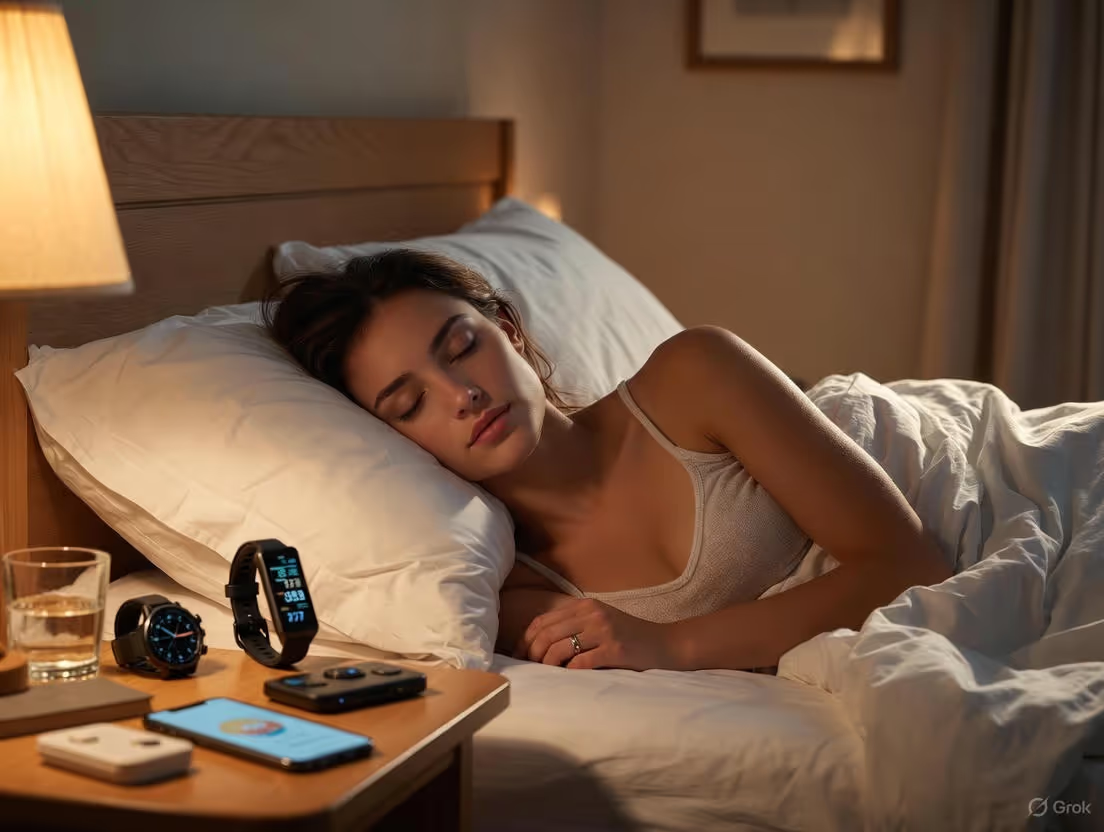
Our social world is now inextricably linked to a screen. The very devices that connect us to our obligations are among the most potent sleep disruptors, creating a conflict that follows us right into bed. This isn’t just about time wasted scrolling; it’s a direct physiological attack on the sleep process.
Blue Light: The Circadian Disruptor: The LED screens of smartphones, tablets, and laptops emit high levels of blue-wavelength light. During the day, this is beneficial, boosting attention and mood. But after sunset, this light is disastrous. It directly suppresses the production of melatonin, the key hormone that signals your brain it’s time to sleep. A 2014 Harvard study found that blue light exposure suppressed melatonin for about twice as long as green light and shifted circadian rhythms by up to 3 hours. Checking a work email or scrolling social media at 10 PM essentially tells your brain it’s 2 PM.
Cognitive & Emotional Arousal: The content itself is stimulating. A stressful work message triggers cortisol. An exciting social media post triggers dopamine. An argument in a comment section triggers adrenaline. This puts your nervous system into a state of “fight-or-flight” or engaged arousal, the polar opposite of the relaxed state required for sleep onset. Your heart rate increases, your mind races, and the quiet needed for sleep evaporates.
The Myth of "Wind-Down" Scrolling: Many believe that passive scrolling before bed is a way to relax. In reality, it’s a form of continuous partial attention that prevents true mental disengagement. The infinite scroll design is engineered to be captivating, not calming. You may be physically still, but your brain is in a state of high-alert processing, making the transition to sleep slow and fractured.
The digital obligation, therefore, is a double-edged sword. It allows social and professional life to continue unimpeded by time or location, but at the cost of invading the sacred, screen-free biological space required for sleep. Creating a “digital sunset”—a hard stop to screen use 60-90 minutes before bed—is one of the most effective sleep hygiene practices. It’s a tangible way to defend your sleep boundary against the most pervasive social invader. For more practical, tech-aware tips on creating healthier digital boundaries, our FAQ section addresses common questions about managing device use for better wellness.
In the modern workplace, a dangerous paradox has taken hold: sleep deprivation is often worn as a badge of honor, while being well-rested can be misperceived as a lack of dedication. This creates a powerful incentive to sacrifice sleep for professional social obligations, under the false premise that it will lead to greater success.
Presenteeism vs. Performance: The culture of late nights and early meetings confuses presence with productivity. An employee who stays late for a team dinner is seen as a “team player,” while one who leaves to protect their sleep routine may be labeled uncommitted. However, the data tells a different story. Chronic sleep loss impairs:
The Networking Trap: Professional advancement often hinges on networking, much of which occurs outside formal hours. The post-conference drink, the industry happy hour, the golf outing—these are where relationships are built. Opting out to sleep can feel like opting out of career opportunities. The key is to shift the narrative from quantity of networking to quality. A sharp, articulate, and engaging professional who is well-rested will make a far better impression in a 30-minute morning coffee chat than a fatigued, foggy one dragging through a three-hour late-night mixer.
The forward-thinking companies and individuals are beginning to recognize this. They understand that sustainable high performance is built on a foundation of recovery. Protecting sleep isn’t a career liability; it’s a long-term performance strategy. It’s about working smarter, with your biology as an ally, not an obstacle. To understand how data can help you prove your own peak performance patterns, consider how a detailed analysis of your sleep and readiness can inform your daily professional choices.

A common strategy for managing the weekly sleep debt from social obligations is the “weekend rebound.” The logic seems sound: burn the candle Monday through Thursday with dinners and events, then sleep in on Saturday and Sunday to “catch up.” Unfortunately, human physiology doesn’t work like a simple bank ledger. This pattern, while common, is deeply harmful and creates its own set of problems.
Metabolic Mayhem: Research, including a prominent 2019 study in Current Biology, has shown that “catch-up sleep” on weekends does not reverse the negative metabolic effects of weekday sleep loss. Participants who shifted their sleep schedules on weekends still showed reduced insulin sensitivity—a precursor to weight gain and Type 2 diabetes—compared to those with consistent sleep. Your body’s metabolic processes thrive on regularity, not compensatory bingeing.
Social Jet Lag: This is the chronic misalignment between your body’s internal circadian clock and your actual sleep-wake times. If you wake at 6:30 AM during the week but sleep until 10 AM on weekends, you’ve essentially given yourself a transatlantic flight’s worth of jet lag every weekend. This causes grogginess, digestive issues, and mood disturbances (the infamous “Sunday scaries” are partly driven by this dissonance). Come Monday morning, forcing your body back to its weekday schedule is a brutal shock, setting you up for a week of poor sleep from the very start.
The Fragmentation of Sleep Quality: Long, irregular sleep blocks on weekends often lead to more fragmented, lighter sleep. You may log nine hours in bed, but a significant portion may be inefficient, low-quality sleep, not the structured, cyclical deep and REM sleep your brain and body crave.
The weekend rebound is not a solution; it’s a symptom of the larger conflict. It treats sleep as a disposable commodity during the “productive” week and a leisure activity for the weekend, rather than the non-negotiable daily pillar of health it is. True sleep recovery comes from consistency, not compensation. It’s about defending your sleep window as a fixed, sacred appointment every single night, not just the nights with nothing “better” to do.
Family obligations form the emotional core of our social fabric, making them the most complex to navigate in the sleep conflict. The pressure here isn’t about professional advancement; it’s about love, duty, and belonging. Saying “no” to a family event for sleep can feel like rejecting the very people who matter most.
Multigenerational Time Zones: Modern family life often spans time zones and schedules. A late-night call to check in with aging parents across the country, helping a child with homework into the evening, or coordinating schedules with a shift-working partner can all systematically erode sleep. The desire to find “quality time” often gets pushed to the only available slot: the edge of the night.
Holidays & Gatherings: These are peak sleep-disruption events. Travel, disrupted routines, rich foods, alcohol, and the simple excitement or stress of family dynamics can obliterate normal sleep patterns for days. The obligation to participate fully—staying up late talking, preparing large meals, attending every event—is strong, and the guilt for stepping away to rest can be intense.
The Caregiver’s Dilemma: For parents of young children and caregivers for ill or elderly family members, the conflict is not optional but constant. Nighttime wake-ups are not social choices but necessary responsibilities. This group experiences a chronic, involuntary sleep debt that is one of the most severe forms of the social-sleep conflict, with profound health implications of its own.
Navigating the family equation requires compassion and communication. It involves setting gentle but firm boundaries (“I’d love to talk, but can we schedule our catch-up for Saturday morning instead of 10 PM?”), managing expectations around events, and, most importantly, reframing self-care as a family value. Being well-rested makes you a more patient parent, a more present partner, and a more resilient caregiver. It is not an act of separation, but an investment in the health of the family system. Sharing strategies and finding support is crucial, which is why many in our community find solace and tips in real user experiences from others balancing similar demands.
The tug-of-war between a late-night obligation and your bed isn’t just a scheduling conflict; it’s a hormonal battle. Two key players—cortisol and melatonin—are locked in a delicate dance, and social disruptions powerfully tip the balance.
Melatonin: The Gentle Conductor: As evening darkness falls, your pineal gland begins secreting melatonin. This hormone is the body’s internal signal that it’s time to wind down. It lowers body temperature, promotes drowsiness, and coordinates the timing of your circadian rhythms. It works best in a calm, dark, low-stimulus environment—the antithesis of a bustling restaurant or a glowing screen.
Cortisol: The Alertness Alarm: Cortisol, often labeled the “stress hormone,” has a natural daily rhythm opposite to melatonin. It should be highest in the morning to help you wake up and gradually decline throughout the day, reaching its lowest point at night. However, stress—including the psychological stress of a demanding social interaction or the physiological stress of late-night eating/drinking—triggers a cortisol spike. This directly opposes melatonin’s calming effects, telling your body it’s time for action, not rest.
The Vicious Cycle: This is where the conflict becomes a self-perpetuating cycle:
Chronic disruption of this axis is linked to a host of issues: weight gain (cortisol promotes abdominal fat storage), heightened anxiety, immune dysfunction, and inflammation. Protecting your sleep, therefore, is an act of biochemical regulation. It’s about creating the conditions for melatonin to do its job and for cortisol to follow its natural, healthy rhythm. It’s a direct investment in your endocrine health.
For generations, the impact of social obligations on sleep was a matter of subjective feeling: “I’m wrecked after that late night.” Today, biometric technology allows us to move from anecdote to data. Devices like advanced smart rings are revealing the precise, quantifiable cost of our social trade-offs in stunning detail.
Beyond Simple Duration: While knowing you slept 6 hours is useful, the real story is in the quality metrics that a device like the Oxyzen ring can track:
The Power of Correlation: This is where life-changing insight occurs. You can look at your calendar and correlate events with your biometric data.
This data strips away the guilt and the guesswork. It provides an objective, personal report card showing the true cost of your choices. It transforms sleep from a vague wellness concept into a manageable, optimizable pillar of health. It empowers you to negotiate with social obligations from a position of knowledge: “The data shows this really impacts my recovery, so I need to leave by 10 PM,” or “I’ll join the dinner, but I’ll skip the alcohol to protect my sleep architecture.” For those curious about the specifics of how this technology unlocks such insights, learning more about how Oxyzen works provides a detailed look at the science behind the sensors.
Armed with an understanding of the science, the psychology, and your own personal data, the goal shifts from experiencing the conflict to managing it. This means moving from a posture of passive sacrifice to one of active negotiation—with others, and more importantly, with yourself. It’s about redefining boundaries not as walls, but as the gates through which you choose when and how to engage.
The Art of the Strategic "Yes": You don’t have to become a hermit. The key is selectivity and modification.
Creating a Personal Sleep Protocol: This is your non-negotiable pre-sleep ritual that defends your biological boundary.
Communicating Your Why: This is how you dismantle the Guilt Matrix. When declining or modifying an obligation, you don’t owe a detailed medical history, but a simple, positive reframe can work wonders. “I’m prioritizing my morning energy so I can be my best self tomorrow.” “I’m tuning into my body’s need for rest tonight.” This frames your choice as a positive commitment to health and performance, not a rejection of the other person.
The journey from conflict to harmony is personal and ongoing. It requires the courage to value your own health as a legitimate, priority claim on your time. It is the ultimate act of self-respect in a world constantly demanding your attention. As you embark on this recalibration, knowing you have a community and resources for support can make all the difference.
The decision to prioritize sleep is often viewed as a solitary, even selfish act. But the data and experience reveal the opposite: it creates powerful positive ripple effects that enhance your entire social ecosystem. When you are well-rested, you don’t just benefit—everyone around you does too.
The Ripple of Emotional Regulation: Sleep deprivation turns the amygdala, the brain’s emotional alarm center, hypersensitive while weakening the prefrontal cortex’s ability to regulate it. This makes you more reactive, irritable, and prone to conflict. A well-rested brain, however, has greater emotional resilience. You are more patient with your partner, more playful with your children, more empathetic with friends, and more collegial with coworkers. You become a source of stability, not drama.
The Ripple of Presence: How many social interactions are endured with a fatigued, foggy brain, where you’re physically present but mentally miles away? Quality sleep sharpens focus and cognitive function. It allows you to be truly present in conversations—to listen actively, engage meaningfully, and connect authentically. A single hour of fully-engaged, high-quality time is worth more than three hours of distracted, fatigued coexistence.
The Ripple of Influence: Your choices set a precedent. By calmly and confidently setting sleep-supportive boundaries, you give others implicit permission to do the same. In a work team, it can help shift culture from burnout to sustainable performance. In a family, it can model self-care as a core value. You become a quiet ambassador for a healthier, more balanced way of living.
The Ripple of Health: Chronic sleep loss compromises your immune system, making you more susceptible to illness. Prioritizing sleep means you’re less likely to cancel plans at the last minute due to sickness. It also means you have more energy to engage in active social pursuits—a hike with a friend, playing with your kids—rather than defaulting to passive, sedentary interactions.
Ultimately, defending your sleep is a profoundly social and generous act. It is the foundation upon which you build the energy, empathy, and presence required to be the friend, partner, parent, and colleague you aspire to be. It transforms the narrative from “I need to sleep instead of seeing you” to “I am sleeping so that when I see you, I can truly be there.” This holistic perspective on wellness is at the very heart of our mission and vision, guiding everything we do.
We have mapped the battlefield—the relentless pull of social obligations clashing against our biological need for sleep. We’ve seen the hidden costs, from hormonal havoc to cognitive decline, masked by the fleeting social capital of a late-night “yes.” But awareness is only the first step. Now, we move from diagnosis to prescription, from understanding the conflict to building an actionable, personalized framework for resolution. This is the journey toward Sleep Sovereignty: the conscious, empowered authority over your sleep schedule, defended not with guilt, but with the quiet confidence of someone who knows the immense value of what they are protecting.
Achieving this sovereignty doesn’t require social isolation. It demands strategic engagement, intelligent compromise, and a toolkit of habits and technologies designed to fortify your most valuable asset: your restored mind and body. The following sections provide the blueprint.
Your environment is the silent partner in your quest for better sleep. While you cannot control the timing of every social demand, you have absolute sovereignty over the sanctuary you return to. Optimizing your sleep environment creates a powerful, passive defense that minimizes the impact of any unavoidable evening disruptions.
Mastering Light: Your Chronobiology’s Best Friend
Light is the primary driver of your circadian rhythm. After sunset, the goal is to eliminate blue and green spectrum light and embrace warmth and darkness.
Thermoregulation: The Cool Path to Deep Sleep
A drop in core body temperature is a key signal for sleep onset. Your sleep environment must facilitate this.
The Sound of Silence (or Consistency)
Unexpected noises are a primal trigger for micro-arousals, pulling you out of deep sleep stages even if you don’t fully wake.
Crafting this optimized cave isn’t an indulgence; it’s the foundation of sleep resilience. When you do have a late night, returning to this perfected environment allows your body to downshift into recovery mode as efficiently as possible. For more detailed guides on creating the perfect sleep sanctuary, our comprehensive resource library on the Oxyzen blog is continually updated with the latest research and tips.
No one can transition directly from the stimulation of a social or work event into deep, peaceful sleep. The space between “on” and “off” must be actively cultivated. This is the purpose of the pre-sleep ritual—a non-negotiable series of wind-down actions that act as a biochemical and psychological buffer against the outside world. Its power lies not in any single element, but in the consistent, repetitive sequence that cues your nervous system for shutdown.
Phase 1: The Digital Sunset (60-90 Minutes Pre-Bed)
This is your first and most critical defensive line. The goal is to end reactive, interactive, and blue-light-heavy screen time.
Phase 2: The Physiological Wind-Down (45-60 Minutes Pre-Bed)
Now, shift focus to your body, actively lowering its state of arousal.
Phase 3: The Mental Release (30 Minutes Pre-Bed)
Finally, quiet the mind. The goal is to move from doing to being.
This buffer is your grace period after a social event. Coming home at 11 PM and jumping into this 45-minute ritual is far more effective for sleep quality than coming home at 11:30 and collapsing into bed immediately. It’s the dedicated runway your brain and body need for a safe landing.
Sleep sovereignty hinges on reclaiming agency over your calendar. This doesn’t mean becoming a recluse; it means becoming a strategist. It involves mastering two key social skills: declining invitations with grace and accepting them on your own, sleep-protective terms.
The Graceful, Guilt-Free "No"
A clear decline is often kinder than a resentful, sleep-deprived “yes.” The formula is simple: Appreciation + Clear Decline + Optional Forward Look.
The Modified "Yes": Controlling the Controllables
Often, participation is important. The goal is to design your engagement to minimize sleep impact.
Reframing Your "Why"
When questioned (or feeling internal guilt), have a ready, positive reframe that focuses on gain, not lack.
We’ve identified the smartphone and laptop as primary sleep adversaries. However, when used intentionally, technology can become the most powerful guardian of your sleep sovereignty. This is the era of bio-hacking, where data empowers personalization.
The Quantified-Self Advantage: From Guesswork to Knowledge
This is the core of the modern sleep solution. A biometric device like a smart ring moves you from subjective feeling (“I’m tired”) to objective insight (“My HRV dropped 20% and my resting heart rate was elevated 8 bpm after that event, indicating high stress and poor recovery”).
Apps as Boundary Enforcers
Use technology to automate your defenses.
The Oxyzen Difference: Continuous, Unobtrusive Insight
While many trackers exist, a device like the Oxyzen ring offers unique advantages for the socially active individual. Its continuous wear provides 24/7 data, not just sleep snippets. You can see how the stress of a day-long conference impacts your nighttime recovery, or how a weekend of social jet lag throws off your weekly baseline. It’s worn on the finger, where it can accurately track metrics like blood oxygen variation and detailed heart rate dynamics—key indicators of sleep quality and stress—without the discomfort of a wristband during sleep or the social friction of a bulky device at an event. This seamless integration of monitoring into daily life is what makes it such a powerful tool for the modern professional. To understand the specific technology that enables this, you can explore the science behind Oxyzen in our detailed FAQ.
What you consume in the hours before bed is a direct chemical negotiation with your sleep systems. Social engagements often revolve around food and drink, making this a critical battlefield. Understanding the pharmacology of your evening choices is key to minimizing collateral damage.
The Caffeine Long Tail:
Caffeine’s half-life is 5-6 hours. That means if you have a coffee at 4 PM to power through the afternoon, at 10 PM, 50% of that caffeine is still active in your system, antagonizing adenosine (the sleep-pressure chemical) and fragmenting sleep architecture. Rule: Enforce a strict caffeine curfew at least 8 hours before your target bedtime. Be mindful of hidden sources: dark chocolate, some teas, and even some medications.
Alcohol: The Deceptive Sedative
This is the most misunderstood social sleep disruptor. Alcohol is a sedative, not a sleep aid.
The Heavy Meal Dilemma:
A large, rich, or spicy meal right before bed forces your digestive system into high gear, raising core body temperature and diverting resources from rest and repair. It can also cause acid reflux when lying down. Strategy: Try to finish large meals at least 3 hours before bed. If a late dinner is unavoidable, opt for smaller portions, lean proteins, and easily digestible carbohydrates, and avoid heavy, greasy, or very spicy foods.
Sleep-Supportive Nutrients:
Conversely, you can use nutrition to support sleep.
The goal is not to abstain from social dining but to make informed choices. Knowing that a heavy steak and two glasses of wine at a 9 PM dinner will likely cost you 60% of your REM sleep allows you to consciously decide if that trade is worth it tonight, or if you’d rather choose the fish and a single glass of wine, finishing with a herbal tea.
Business travel, destination weddings, and cross-border visits represent the extreme end of the social-sleep conflict. You are physically removed from your controlled environment and thrust into a whirlwind of scheduling, time zone shifts, and intense social programming. Navigating this requires a specialized tactical plan.
Pre-Travel Preparation (The Proactive Phase)
In-Transit Strategy (The Defensive Phase)
On-the-Ground Recovery (The Adaptive Phase)
The occasional late night is a minor skirmish. The real war is waged against the chronic, accumulated sleep debt fostered by a lifestyle of consistently prioritizing social obligations over rest. This debt doesn’t just make you tired; it fundamentally rewires your physiology toward disease. Understanding the stakes is the ultimate motivator for lasting change.
The Metabolic Cascade:
The Cardiovascular Toll:
The Neurological & Mental Price:
The Immune System Compromise:
Sleep is when your adaptive immune system “files” the memories of pathogens it has encountered. Studies show that people sleeping less than 7 hours are three times more likely to catch a cold than those sleeping 8 hours or more. Long-term, poor sleep is associated with poorer outcomes for cancer and reduced vaccine efficacy.
This is the sobering math of the social-sleep conflict. Every late-night obligation accepted at the expense of sleep isn’t just trading an hour of rest for an hour of fun; it’s making a micro-deposit into an account that pays out in chronic illness. The choice to protect your sleep is, unequivocally, a choice to invest in the longevity and quality of your life. This profound connection between daily habits and long-term health outcomes is central to our mission at Oxyzen.
Your environment isn’t just physical; it’s social. The people you surround yourself with can either be accomplices in your sleep deprivation or allies in your quest for sovereignty. Cultivating a sleep-conscious social circle reduces friction and creates a supportive ecosystem for your health goals.
Leading by Example (Without Preaching)
People are influenced by consistent, positive action more than by advice. When you start leaving events at a reasonable hour with a cheerful, firm goodbye, when you suggest active morning meet-ups instead of late-night bars, and when you visibly exhibit the energy and good mood that comes from being well-rested, you become a walking advertisement for the benefits. Others will notice.
The Power of Shared Language & Values
Start framing social plans around wellness.
Identifying & Managing Energy Vampires
Some individuals thrive on late-night drama and constant engagement and can be dismissive of boundaries. It’s important to recognize these dynamics. With such individuals, you may need to be more structured: “I can talk until 9 PM, but then I need to start my evening routine.” If they consistently disrespect this, it may be a sign to reassess the energy investment in that relationship.
Creating Sleep-Positive Rituals with Loved Ones
Turn sleep support into a bonding activity.
By subtly shifting your social gravity towards activities and people that align with a healthy rhythm, you build a life where protecting your sleep feels natural and supported, not like a constant struggle against the current. For those looking to connect with a like-minded community focused on data-driven wellness, exploring Oxyzen’s story reveals a brand built by and for people on this same journey.
It is crucial to distinguish between sleep disrupted by lifestyle choices and a clinical sleep disorder. While social obligations can exacerbate problems, they may also unmask an underlying condition. If you implement strong sleep hygiene, defend your boundaries, and still struggle with chronic insomnia, excessive daytime sleepiness, or other symptoms, it is time to consult a professional.
Red Flags That Signal a Need for a Sleep Specialist:
The Diagnostic Process:
A sleep specialist (often a neurologist or pulmonologist) will typically start with a detailed interview and may recommend:
Treatment is Life-Changing:
Successfully treating an underlying sleep disorder can be transformative. It’s not about trying harder to sleep; it’s about removing a physiological roadblock. The energy, mood, and cognitive clarity that return can make managing social obligations feel effortless by comparison. If you’re gathering data with a wellness tracker and see persistent, unexplainable poor scores, that data can be a valuable conversation starter with your doctor. For general questions about how wellness tracking complements medical care, our FAQ provides helpful guidance.
We stand at a fascinating crossroads. For decades, sleep has been the neglected stepchild of the wellness triad—diet and exercise stole the spotlight while rest was an afterthought. But a revolution is brewing, fueled by a potent combination of cutting-edge science, personal biometric technology, and a growing collective exhaustion. The narrative is shifting from “sleep when you’re dead” to “sleep to truly live.” This final section looks beyond personal habit change to the horizon: the emerging technologies, the evolving cultural norms, and the profound philosophical recalibration required to permanently resolve the conflict between our social and sleeping selves.
Current wearable technology excels at diagnosis—it tells us what is happening. The next frontier is prescriptive technology: systems that don’t just monitor but actively intervene to create the perfect conditions for sleep, in real-time, adapting to the disruptions of social life.
Adaptive Environment Controllers:
Imagine a system that syncs your wearable data with your home’s smart ecosystem.
Neuromodulation & Gentle Stimulation:
Non-invasive devices are emerging that use subtle stimuli to guide the brain into sleep states.
Personalized Sleep Nutrition & Supplementation:
Future apps, integrated with continuous biomarker data, could move beyond generic advice to offer hyper-personalized recommendations.
These technologies won’t eliminate the need for personal discipline, but they will act as intelligent co-pilots, automating defenses and making the path of least resistance the path to great sleep. The future of products in this space, as envisioned by pioneers like Oxyzen, is not just about a ring that tracks, but an ecosystem that intelligently responds.
Technology alone cannot solve a cultural problem. The ultimate resolution of the social-sleep conflict requires a fundamental shift in our collective values—a redefinition of what constitutes a successful, well-lived, and socially adept life.
The End of Hustle Culture:
The glorification of burnout is showing its cracks. High-profile athletes, CEOs, and thought leaders are increasingly vocal about sleep as their #1 performance tool. The narrative is pivoting from “I’m so busy I only sleep 4 hours” to “I’m so committed to my performance that I protect my 8 hours.” This reframes sleep not as a sign of weakness, but as a strategic, competitive advantage. Companies that encourage “sleep hygiene” and respect boundaries will attract and retain top talent who deliver sustainable high performance.
The Rise of Chronotype Acceptance:
We are not all wired the same. Society’s 9-5 structure is a relic of the industrial age, ill-suited for our information economy and natural biological diversity. The future is asynchronous productivity and social flexibility.
The "Right to Disconnect" as a Social Norm:
Legislation is already emerging in some countries granting employees the right to ignore work communications after hours. This legal trend will hopefully evolve into a broader social norm—a collective understanding that uninterrupted personal time, especially sleep time, is sacred. The “ping” of a midnight email will become a social faux pas, not a badge of dedication.
This cultural shift is already in motion, driven from the ground up by individuals reclaiming their time. By choosing to leave early, to schedule brunch, to not answer that 10 PM text until morning, we are voting with our actions for a new social contract—one that honors our humanity, including our need for deep, regular rest. You can be part of this movement by exploring stories of those designing lives and businesses around this very principle.
Beyond physiology and sociology lies a deeper layer: the philosophy of rest. To permanently resolve the conflict, we must elevate sleep from a mere biological function to a core ethical principle—a foundational element of a good life.
Sleep and Self-Respect:
Prioritizing sleep is the ultimate act of self-respect. It is a daily declaration that your health, your cognitive clarity, and your emotional equilibrium are valuable. It says, “I matter enough to be maintained.” This stands in stark opposition to the self-sacrificial, burnout-inducing ethic that treats our bodies as machines to be depleted. As we learn to respect our own need for rest, we naturally extend that respect to others, creating a more compassionate social sphere.
Sleep and Presence:
The ancient philosophical and spiritual traditions emphasize presence—being fully here, now. Fatigue is the enemy of presence. A sleep-deprived mind is a distracted, reactive, and foggy mind. It is halfway between yesterday’s stress and tomorrow’s anxiety. In contrast, a well-rested mind has the capacity for true presence: deep listening, thoughtful response, and genuine connection. Therefore, prioritizing sleep is not anti-social; it is the prerequisite for authentic social connection. When we are rested, we can offer our full attention, which is the greatest gift we can give in any relationship.
The Ethics of Collective Rest:
If we accept that a well-rested populace is healthier, more innovative, safer, and more empathetic, then promoting sleep becomes a societal good. It has implications for public policy: school start times, workplace regulations, urban lighting design, and healthcare priorities. Viewing sleep through an ethical lens asks us: What kind of society do we want to build? One that runs on fumes and stimulants, or one built on the solid foundation of a restored and resilient citizenry?
Adopting this philosophy transforms the internal dialogue. The question is no longer, “Can I get away with less sleep to do X?” It becomes, “Is X worthy of compromising my clarity, my health, and my ability to be present in my own life?” This shifts the power dynamic entirely. Sleep is no longer the flexible variable to be sacrificed; it becomes the fixed pillar around which a meaningful life is built.
We have explored the conflict from every angle—biological, social, technological, and philosophical. Now, we synthesize it into a living, breathing action plan. This is not a rigid set of rules, but a dynamic system you can adapt to your unique life.
Step 1: The Baseline Audit (Week 1-2)
Step 2: The Strategic Intervention (Week 3-4)
Choose ONE high-impact area from your audit to tackle.
Step 3: The Ritual Formation (Ongoing)
Build your 45-minute pre-sleep buffer ritual, starting with just two consistent actions (e.g., 5-minute journal dump + 10 minutes of reading a physical book). Adhere to it even on “good” nights. Consistency builds the neural pathway.
Step 4: The Social Recalibration (Ongoing)
Begin to gently steer your social engagements. Propose one alternative plan per week (coffee instead of drinks, an early movie). Practice your graceful “no” on a low-stakes invitation. Notice how it feels.
Step 5: The Review & Refine (Monthly)
Check your biometric data. Have your baseline scores improved? Celebrate wins, no matter how small. If a strategy isn’t working, adjust. Perhaps your wind-down needs more physical relaxation, or you need to be stricter with alcohol. Use the data, not just your feelings, to guide you. For ongoing inspiration and new strategies, the Oxyzen blog is a constant resource.
The Sovereign Mindset: Your plan is a contract with yourself. It is flexible, but it is respected. You are the curator of your energy, the guardian of your rest. Social obligations are now invitations to be evaluated against your sovereign standards: Will this add to my life without bankrupting my recovery?
The conflict between social obligations and sleep patterns is the defining wellness struggle of our hyper-connected age. But as we have seen, it is not a war you must lose. It is a negotiation you can learn to master.
The path forward is not about rejection, but about intentional integration. It’s about weaving a robust thread of self-care through the rich tapestry of your social and professional life. The tools are now in your hands: the science to understand the stakes, the strategies to defend your boundaries, the technology to quantify your progress, and the philosophy to underpin your choices.
Start tonight. Not with a drastic overhaul, but with a single, sovereign decision. Perhaps it’s charging your phone in the kitchen. Perhaps it’s declining a second drink. Perhaps it’s simply getting into bed 15 minutes earlier with a book.
Each choice is a vote for the person you want to be tomorrow: clearer, kinder, healthier, and more fully present. As you accumulate these choices, you will find something remarkable happens. The social obligations that once felt like demands begin to feel like choices. The guilt evaporates, replaced by the quiet confidence of someone who knows their own worth. And your social world, perhaps slowly, will begin to adapt to the radiant, well-rested energy you now bring to it.
The revolution begins in the dark, quiet hours you reclaim. It begins with the profound understanding that by honoring your need for sleep, you are not missing out on life. You are finally showing up for it.
Your Trusted Sleep Advocate: Sleep Foundation — https://www.sleepfoundation.org
Discover a digital archive of scholarly articles: NIH — https://www.ncbi.nlm.nih.gov/
39 million citations for biomedical literature :PubMed — https://pubmed.ncbi.nlm.nih.gov/
Experts at Harvard Health Publishing covering a variety of health topics — https://www.health.harvard.edu/blog/
Every life deserves world class care :Cleveland Clinic - https://my.clevelandclinic.org/health
Wearable technology and the future of predictive health monitoring :MIT Technology Review — https://www.technologyreview.com/
Dedicated to the well-being of all people and guided by science :World Health Organization — https://www.who.int/news-room/
Psychological science and knowledge to benefit society and improve lives. :APA — https://www.apa.org/monitor/
Cutting-edge insights on human longevity and peak performance:
Lifespan Research — https://www.lifespan.io/
Global authority on exercise physiology, sports performance, and human recovery:
American College of Sports Medicine — https://www.acsm.org/
Neuroscience-driven guidance for better focus, sleep, and mental clarity:
Stanford Human Performance Lab — https://humanperformance.stanford.edu/
Evidence-based psychology and mind–body wellness resources:
Mayo Clinic — https://www.mayoclinic.org/healthy-lifestyle/
Data-backed research on emotional wellbeing, stress biology, and resilience:
American Institute of Stress — https://www.stress.org/


