


How Technology Reveals Sleep Patterns You Never Noticed
Technology like sleep trackers can reveal subtle patterns in your sleep duration, restlessness, and heart rate that you wouldn't otherwise notice.
Technology like sleep trackers can reveal subtle patterns in your sleep duration, restlessness, and heart rate that you wouldn't otherwise notice.
%402x.svg)
You think you know your sleep. You go to bed, you close your eyes, and you wake up—feeling refreshed or foggy, rested or drained. For centuries, that subjective morning feeling was our only data point. The mystery of what truly happened between the moment your head hit the pillow and the alarm’s blare was locked inside a black box of consciousness. Was it a good night? A restless one? You’d make your best guess, often blaming the coffee, the stress, or the neighbor’s cat, with little more than intuition to guide you.
But what if you’re wrong? What if the story you tell yourself about your sleep is missing entire chapters, crucial plot twists, and hidden characters that directly control your energy, mood, and long-term health? The truth is, you are almost certainly unaware of the vast, intricate landscape of your nightly journey. You cannot feel the precise moment you slip from light sleep into the restorative depths of slow-wave sleep. You’re not consciously tracking the ebb and flow of your heart rate as your body repairs itself. You might recall a dream or a moment of wakefulness, but the silent, rhythmic architecture of your sleep cycles remains invisible.
This is where technology steps in, not as a cold, digital intruder, but as a revelatory lens. A new generation of sophisticated, accessible devices—led by the discreet power of the smart ring—is decoding the nocturnal symphony of your biology. We are no longer guessing about our sleep; we are measuring it with clinical precision from the comfort of our beds. This technology is unveiling patterns so subtle, so profound, and so deeply personal that they are revolutionizing our understanding of what it means to truly rest. It’s moving us from anecdote to evidence, from feeling to fact, and empowering us to make changes that actually work.
This journey into the unseen world of your sleep begins with a fundamental question: What are we missing, and why does it matter? The answer lies in the invisible forces that govern every single night of your life.
We often describe sleep as a single, uniform state—a period of "shutting down." In reality, it is a highly active, meticulously structured process composed of distinct stages that cycle throughout the night. Until recently, mapping this architecture required a night in a sleep lab, covered in wires and electrodes—a process called polysomnography. Now, that same foundational science is accessible through technology you can wear.
Sleep is not a linear plunge into unconsciousness but a rhythmic dance between four key stages, each with a unique physiological signature and purpose.
Stage 1 (N1 - Light Sleep): This is the doorway to sleep, lasting several minutes. Your muscles begin to relax, your brain waves start to slow from their waking patterns (alpha waves) into theta waves, and you can be easily awakened. Think of it as the body’s "system check" before descending further.
Stage 2 (N2 - Light Sleep): You are now unequivocally asleep. This stage typically constitutes the largest portion of an adult’s sleep cycle. Your heart rate slows, body temperature drops, and brain activity is marked by specific waveforms called "sleep spindles" and "K-complexes." These are believed to be crucial for memory consolidation—sorting and filing the day’s experiences—and for protecting the stability of sleep by suppressing responses to external noises.
Stage 3 (N3 - Deep Sleep or Slow-Wave Sleep): This is the most restorative and physically crucial phase. Brain waves slow to deep, synchronized delta waves. It is exceptionally difficult to wake someone from deep sleep. This is when the body undertakes major repair work: tissue growth and repair, immune system strengthening, and energy restoration. The pituitary gland releases pulses of growth hormone, essential for muscle and bone recovery. A lack of deep sleep leaves you feeling physically drained and weak.
REM (Rapid Eye Movement) Sleep: First occurring about 90 minutes after falling asleep, REM sleep is where dreams are most vivid. Your brain activity skyrockets to near-waking levels, your eyes dart back and forth (hence the name), but your voluntary muscles are temporarily paralyzed—a state known as atonia, likely to prevent you from acting out your dreams. REM is critical for emotional processing, memory consolidation (particularly for procedural and spatial memory), and cognitive functions like creativity and problem-solving.
These stages don’t happen in isolation. They are organized into approximately 90-minute sleep cycles. A full night’s sleep consists of four to six of these cycles. The composition of each cycle changes as the night progresses:
This elegant structure is the blueprint of quality sleep. Disrupting these cycles—through alcohol, sleep apnea, noise, or an inconsistent schedule—fragments the architecture. You might get 8 hours of "time in bed," but if your cycles are constantly interrupted, you’re missing the essential restorative phases. This is why you can sleep for a long duration yet still wake up exhausted. The quality and structure of your sleep cycles are far more important than the simple duration.
Modern sleep technology, like the advanced sensors found in a smart ring from Oxyzen, tracks these stages by monitoring the physiological proxies for them: minute body movements, heart rate variability (HRV), and temperature shifts. By analyzing this data, it reconstructs your personal sleep architecture each night, showing you not just how long you slept, but how well you cycled through these critical stages. For a deeper dive into the science of sleep stages, our wellness blog offers detailed resources that connect this biology to daily habits.
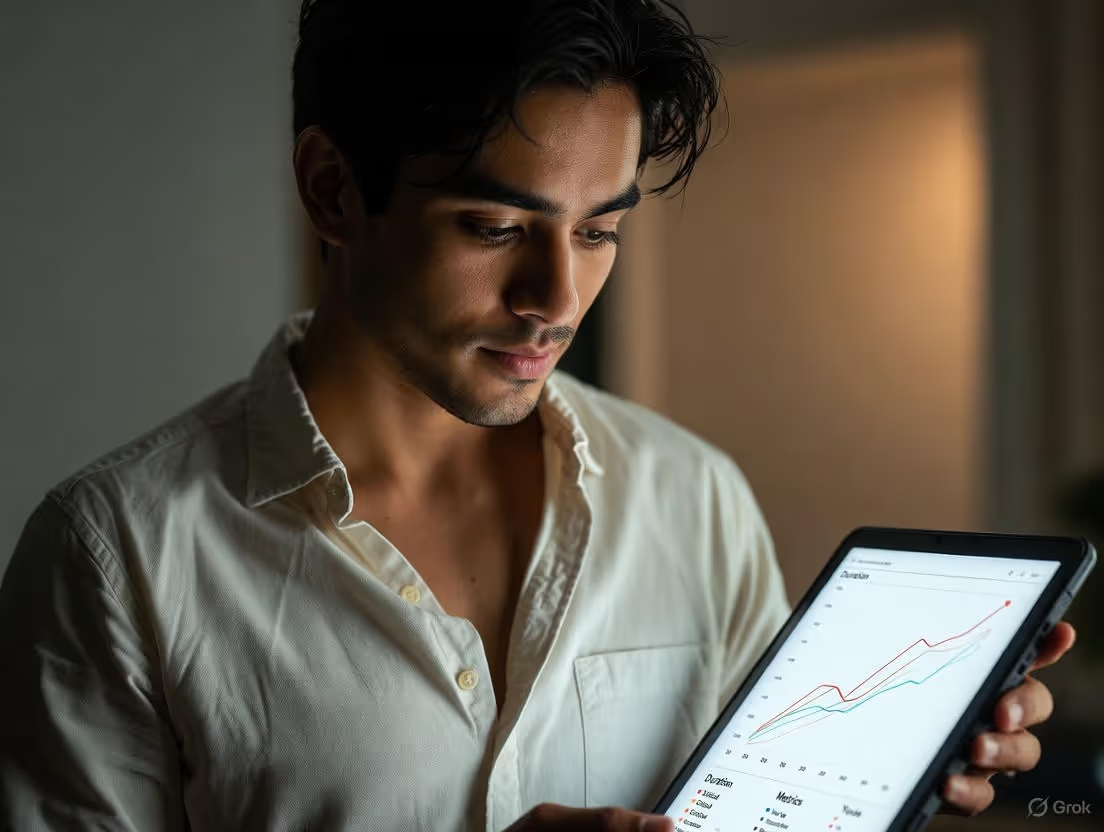
For decades, the singular question was, "How many hours did you get?" We now know this is akin to judging a symphony solely by its length, ignoring its melody, harmony, and rhythm. Duration is just the opening note. To truly understand your sleep’s impact, you must become fluent in the language of these deeper, more revealing metrics.
Sleep Latency: The golden window between lights out and actually falling asleep. Ideally, this should be between 10 and 20 minutes. A latency consistently shorter than 5 minutes may indicate significant sleep deprivation. A latency longer than 30 minutes can signal hyperarousal, anxiety, or poor sleep hygiene. Technology pinpoints this transition objectively, moving beyond the frustrating guesswork of "How long was I lying there?"
Sleep Efficiency: This is the stark reality check metric. It’s the percentage of time you were actually asleep compared to your total time in bed. If you spend 9 hours in bed but only sleep 7.5 hours, your sleep efficiency is 83%. Above 90% is considered excellent, while anything below 85% suggests significant restlessness or wakefulness. This metric powerfully highlights the difference between "time in bed" and true, restorative sleep, often revealing wasted hours of tossing and turning you may have forgotten by morning.
Wake After Sleep Onset (WASO): This is the total time you spend awake after initially falling asleep. Micro-awakenings (brief arousals you don’t remember) and longer, conscious periods of wakefulness all contribute to WASO. High WASO is a primary culprit behind non-restorative sleep, as it fragments those precious sleep cycles. You might not recall these awakenings, but your body and brain do, and the cumulative impact on your next day is profound.
Heart Rate Variability (HRV) During Sleep: Perhaps the most sophisticated metric now available outside a lab. HRV measures the subtle variations in time between each heartbeat. It is a direct window into your autonomic nervous system. A higher, more variable HRV during sleep indicates a strong, resilient, and relaxed state (parasympathetic dominance), where recovery is optimal. A low, flat HRV suggests your body is stuck in a stressed, "fight or flight" mode (sympathetic dominance), even while you’re asleep, severely hampering recovery. Tracking nightly HRV trends offers an unparalleled look at your body’s internal recovery landscape.
Resting Heart Rate (RHR) and Its Nocturnal Dip: Your heart rate naturally declines as you fall asleep and should reach its lowest point, or "nadir," during deep sleep. The magnitude of this dip is a key indicator of cardiovascular recovery. A blunted dip (where your heart rate doesn’t fall much from your daytime average) is associated with stress and increased cardiovascular strain. Observing this pattern nightly provides early, actionable insights into your overall physiological stress load.
Respiratory Rate: The number of breaths you take per minute during sleep. It’s a stable vital sign in healthy sleep, typically between 12-20 breaths per minute. Significant, unexplained deviations can be an early signal of emerging issues, from respiratory infections to sleep-disordered breathing.
Skin Temperature Trends: Your core body temperature must drop to initiate and maintain sleep. Advanced wearables track distal skin temperature, which fluctuates with blood flow as part of your circadian rhythm. Observing if your temperature drops adequately and at the right time can reveal disruptions to your circadian clock, often influenced by evening habits, meal timing, or screen exposure.
These metrics transform sleep from a vague concept into a rich, multidimensional dataset. They answer the "why" behind the morning fog. Was your efficiency low? Was your deep sleep truncated? Did your heart rate never truly settle? This is the power of technology: it reveals the invisible currents beneath the surface of your night. For those curious about how devices capture this data, our FAQ page breaks down the technology in simple terms.
You drift off peacefully, only to wake feeling like you’ve run a marathon in your sleep. The culprit? Invisible disruptors. These are the enemies of restorative sleep that operate below the threshold of conscious memory, fragmenting your cycles and stealing your recovery. Technology acts as a night-vision camera, capturing their every move.
The Silent Saboteur: Sleep Apnea and Hypopneas. Sleep apnea, particularly the more common Obstructive Sleep Apnea (OSA), involves repeated pauses in breathing during sleep. These apneas can last from seconds to over a minute and may occur dozens or even hundreds of times per night. Each event forces a micro-arousal (a shift to a lighter stage of sleep or brief awakening) to restart breathing, devastating sleep architecture. The sleeper is often completely unaware, remembering only unrefreshing sleep and daytime fatigue. Technology that tracks blood oxygen saturation (SpO2) and respiratory effort can detect these characteristic "dips" in oxygen and breathing disturbances, providing a crucial early warning sign to seek professional evaluation.
The Rhythm Wrecker: Periodic Limb Movement Disorder (PLMD). Characterized by repetitive, involuntary cramping or jerking of the legs during sleep, these movements can occur every 20-40 seconds, leading to continuous micro-awakenings. Like sleep apnea, the sleeper is usually oblivious to the movements themselves, only to the crushing fatigue that results. Advanced motion sensors in devices like smart rings can detect these specific, rhythmic movement patterns, distinguishing them from normal tossing and turning.
The Midnight Mind: Cortisol Awakenings and Stress Spikes. You don’t need a full-blown nightmare to have your sleep derailed by stress. The subconscious mind can trigger releases of cortisol (the primary stress hormone) during the night, elevating heart rate and pulling you into lighter sleep stages. You might not form a conscious memory of being "awake and anxious," but your sleep data will show an unexplained spike in heart rate and a corresponding drop in HRV, often during the later half of the night when REM sleep dominates.
The Environmental Invaders: Noise and Light Pollution. A car door slams, a partner snores, or light seeps in around the curtains. Even if these don’t fully wake you, they can trigger a shift from deep or REM sleep into lighter Stage 2 sleep, diminishing the quality of that cycle. While you might adapt to a consistent noisy environment subjectively, the objective data continues to show the fragmentation.
The Internal Clock Confuser: Circadian Misalignment. Going to bed and waking at wildly different times each day confuses your internal clock (circadian rhythm). This can lead to increased WASO, reduced sleep efficiency, and a mismatch between your sleep drive and your time in bed. The data reveals a chaotic, inconsistent sleep architecture instead of the strong, predictable cycles seen with a regular schedule.
By quantifying the impact of these disruptors, technology empowers you to move from being a victim of poor sleep to a detective solving your own case. That unexplained fatigue now has a potential source: "My data shows 15 oxygen dips per hour and a high resting heart rate. Maybe it’s time to talk to a doctor about sleep apnea." Or, "I see a cortisol spike at 3 AM every night I have a big meeting the next day. I need a better wind-down routine." This is the shift from guesswork to targeted action. Understanding these hidden battles is core to our mission at Oxyzen: to provide clarity that leads to better health.
A single night of data is a snapshot—interesting, but often misleading. A bad night can be an outlier; a good night can be a fluke. The true transformative power of sleep technology lies in longitudinal tracking: observing patterns, trends, and correlations over weeks, months, and seasons. This is where the hidden story of your life, as told through your sleep, truly emerges.
The Weekly Rhythm. You might discover that your sleep efficiency plummets and your resting heart rate climbs every Sunday night ("Sunday Scaries"), reflecting anxiety about the upcoming workweek. Or you may see that you consistently get your best, deepest sleep on Friday nights, finally released from the week’s accumulated stress.
The Monthly Cycle. For individuals who menstruate, tracking sleep alongside their cycle can reveal profound hormonal influences. It’s common to see a rise in resting heart rate and a drop in HRV in the luteal phase (after ovulation), with core body temperature remaining elevated and sleep quality suffering in the days leading up to menstruation. Seeing this pattern objectively normalizes the experience and allows for proactive adjustments—perhaps scheduling more demanding tasks for the follicular phase when recovery is better.
The Seasonal Shift. As daylight hours wax and wane, so too might your sleep architecture. You may objectively need more sleep in the dark winter months, or find your sleep timing naturally drifting later in the summer. Longitudinal data helps you harmonize your habits with these natural rhythms instead of fighting them.
The Lifestyle Correlation. This is the most powerful application. By overlaying your sleep data with lifestyle logs, you move beyond correlation to near-causation.
This longitudinal view turns data into wisdom. You are no longer asking, "Why did I sleep poorly last night?" You are observing, "My deep sleep is consistently lower on days when my work stress exceeds an 8/10," or "My HRV recovery is always strongest when I meditate in the afternoon." It provides the evidence base for personalized, effective change. Many of our users share how this long-term insight has changed their lives, a testament you can read in their own words.
Your sleep is not an isolated event. It is the anchor of your circadian rhythm—the roughly 24-hour internal master clock that governs not just sleep and wakefulness, but also hormone release, digestion, cell repair, and virtually every metabolic process in your body. This rhythm is synchronized primarily by light, especially morning sunlight. When your sleep patterns are misaligned with this internal clock—a state known as social jet lag—your health pays a price. Technology is now illuminating this invisible temporal architecture.
Chronotype Discovery: Are You a Bear, Wolf, Dolphin, or Lion? Popular chronotype categorizations (like the ones coined by Dr. Michael Breus) move beyond simple "morning lark" or "night owl" labels. Your chronotype is your genetically influenced propensity for sleep and activity times. Technology helps you discover yours objectively by tracking your natural sleep onset and wake times on free days (without alarms), alongside metrics like the timing of your body temperature minimum and cortisol rise. Seeing this pattern confirmed in data validates your biology and helps you schedule your life in harmony with it, rather than fighting against it.
Social Jet Lag Quantified. This is the difference between your biological clock (when your body wants to sleep) and your social clock (when work or life demands you to be awake). If your body wants to sleep until 9 AM but your alarm goes off at 6 AM, you have 3 hours of social jet lag every workday. This chronic misalignment is linked to increased risk for obesity, diabetes, depression, and cardiovascular disease. Wearable data vividly charts this disconnect, showing poorer sleep efficiency and elevated nighttime heart rate on forced early days versus free days. It makes the abstract cost of our "always-on" society viscerally clear.
The Impact of Light Exposure. Your devices can now track ambient light exposure (via connected phones or dedicated sensors). Correlating this with your sleep data reveals powerful insights: do you get bright light early in the day? It likely correlates with earlier sleep onset and better morning alertness. Is your evening dominated by bright, blue-rich artificial light? It likely correlates with delayed sleep latency and suppressed melatonin. This data empowers you to strategically use light—seeking morning sun and dimming evening lights—as the most powerful tool to reset and reinforce your natural rhythm.
Temperature Rhythm Tracking. Your core body temperature follows a circadian wave, peaking in the late afternoon and reaching its trough in the early morning hours. This drop is essential for initiating sleep. Wearables that track skin temperature can approximate this rhythm. A flattened or delayed temperature curve is a clear sign of circadian disruption, often tied to irregular schedules, poor light hygiene, or late-night eating. Observing this helps you time meals and activities to support, not hinder, your natural thermal cycle.
By exposing your circadian code, technology does more than improve sleep—it helps you align your entire life with your biology. It answers why you feel off-kilter after travel, why Monday mornings are so brutal, and how to structure your day for peak performance and resilience. This holistic view of rhythmic health is at the heart of what modern wellness technology aims to achieve. The journey to developing this holistic understanding is part of our own story at Oxyzen, born from a desire to make this deep biological insight accessible to everyone.
The quiet of the night is when your cardiovascular system reveals its most telling secrets. Freed from the demands of physical activity and conscious stress, your heart and blood vessels enter a state of repair and recalibration. Sleep technology transforms this period into a nightly cardiac stress test, offering insights that were once the sole domain of cardiologists.
Resting Heart Rate (RHR) – The Recovery Benchmark. Your sleeping RHR is your purest baseline, untainted by activity, food, or caffeine. Tracking its trend over time is incredibly powerful. A gradual downward trend indicates improving cardiovascular fitness and efficient autonomic regulation. A sudden, sustained increase can be one of the earliest signs of impending illness, overtraining, dehydration, or chronic stress. It’s your body’s silent alarm bell.
Nocturnal Heart Rate Dip – The Depth of Recovery. As mentioned, a healthy heart should slow significantly during sleep. The absence of this "nocturnal dip" (a condition called "non-dipping") is a clinically recognized risk factor for hypertension and cardiovascular events. By graphing your heart rate throughout the night, technology shows you the slope and depth of your dip. A shallow or absent dip is a clear, objective signal to evaluate lifestyle factors like stress, salt intake, or sleep apnea, and to consult a healthcare professional.
Heart Rate Variability (HRV) – The Master Metric of Resilience. We return to HRV because its nighttime reading is the gold standard. During deep sleep, your parasympathetic ("rest and digest") nervous system should be fully engaged, producing a high, wave-like HRV pattern. This is the state of maximal recovery. A low, flat-line HRV during sleep indicates your sympathetic ("fight or flight") system is still dominant—your body is literally on guard, unable to fully repair itself. Long-term trends in nightly HRV are arguably the single best wearable-derived indicator of your overall stress adaptation, recovery status, and autonomic nervous system health.
Blood Oxygen (SpO2) – The Breathing Barometer. Continuous overnight SpO2 monitoring is a game-changer for spotting breathing irregularities. While not a medical diagnosis, it can detect concerning patterns. Frequent, cyclical dips in blood oxygen saturation are the hallmark of sleep apnea. But beyond that, a generally lower overnight SpO2 average or more variability than usual can signal respiratory issues, like the onset of a cold or allergies, or even indicate problems with circulation.
Heart Rate During REM Sleep – The Emotional Pulse. REM sleep is a paradox: your brain is active, but your body is paralyzed. It’s also a time of emotional processing. It’s normal for heart rate to become more variable during REM. However, technology can reveal if your heart rate is excessively high during REM, which can be a sign of heightened emotional stress or anxiety playing out in your dreams, or a reflection of sleep apnea events that are often more severe during REM sleep.
This cardiovascular readout transforms your understanding of "recovery." It’s no longer just about muscle soreness; it’s about whether your nervous system has downshifted and your heart has found its restorative rhythm. This data provides an unprecedented, proactive window into your most critical system. For those with questions about how these metrics are captured and what they mean for daily life, we encourage you to explore our comprehensive support resources.
Your sleep is a direct mirror of your mind. Anxiety, stress, rumination, and emotional turbulence don't clock out when you do; they seep into the night, distorting your sleep architecture. Conversely, poor sleep fuels negative emotional reactivity, creating a vicious cycle. Technology breaks this cycle by providing an objective, non-judgmental report card on your mental load, allowing you to intervene with evidence.
The Anxiety Signature: Elevated RHR and Low HRV. The clearest footprint of a stressed mind on sleep data is a combination of a higher-than-baseline resting heart rate and a suppressed heart rate variability. This signals a body stuck in a state of sympathetic arousal. You might be "asleep," but your physiology is in a low-grade fight-or-flight mode, sabotaging recovery. Seeing this pattern objectively can be the catalyst to prioritize stress-management techniques.
The Rumination Pattern: Increased WASO and Fragmented Sleep. When your mind is unable to disengage, it manifests as frequent, brief awakenings (high WASO) and more time spent in light Stage 1 and 2 sleep at the expense of deep and REM sleep. The sleep graph looks choppy and inefficient. You may not remember consciously worrying at 3 AM, but the data shows your sleep was shallow and fragmented during that period. This pattern highlights the need for better cognitive "wind-down" routines before bed.
REM Sleep as an Emotional Regulator. REM sleep is crucial for processing emotional memories and stripping away the intense emotional charge from the day's experiences. Consistently low REM sleep percentage or disrupted REM cycles (often caused by alcohol or certain medications) can correlate with increased emotional reactivity, irritability, and difficulty managing stress the following day. Technology helps you protect this vulnerable but vital phase by showing you what harms it.
The Impact of "Screen Stress." It’s not just the blue light from devices; it’s the cognitive and emotional content. A late-night work email, a stressful news article, or a heated social media exchange can trigger a cortisol response that delays sleep onset and degrades sleep quality for hours. Correlating your sleep scores with your evening digital habits often provides a shocking "aha" moment, compelling a digital curfew.
The Recovery Feedback Loop. Here’s where it becomes empowering: you can use the data to test interventions. After introducing a 15-minute meditation before bed, does your sleep latency decrease and your deep sleep increase? After implementing a strict "no work talk after 8 PM" rule, does your nighttime HRV improve? The data provides immediate, positive feedback, reinforcing healthy mental habits. It turns the abstract goal of "less stress" into a tangible, measurable outcome: a calmer nervous system, reflected in your sleep.
By objectifying the mind-body connection at night, technology removes the stigma and guesswork from mental wellness. It shows you that your sleep struggles are not a personal failing, but a physiological response to load. This empowers you to address the root causes—be it through therapy, mindfulness, boundary-setting, or lifestyle design—with clear metrics to guide your progress. Sharing these insights and user journeys is a key part of the content on our Oxyzen blog, where we explore the practical side of data-driven wellness.
Your sleep is not created in the hour before bed; it is engineered from the moment you wake up. Every choice—from your morning light exposure to your afternoon coffee to your evening workout—sends a ripple through your circadian biology that culminates in the quality of your night. Sleep technology brilliantly exposes these long shadows, turning daily life into a series of sleep experiments.
The Morning Sun Dividend. Days that start with bright, ideally outdoor, light exposure show up in the data as stronger circadian signals. They often correlate with earlier sleep onset, more consolidated deep sleep in the first cycle, and a more robust temperature rhythm. The data quantifies the profound importance of this single, free habit.
Caffeine’s Half-Life Haunting. Caffeine has a half-life of 5-6 hours. That 3 PM coffee still has half its potency in your system at 8 PM. Technology vividly shows this: days with late caffeine consumption frequently correlate with prolonged sleep latency, reduced deep sleep percentage, and higher sleep-stage fragmentation, especially in the first half of the night. Seeing this graph can be the final push to move your last coffee to before noon.
Exercise Timing and Type. The relationship between exercise and sleep is nuanced. Regular exercise improves sleep quality overall. But timing matters. High-intensity exercise within 2-3 hours of bedtime can elevate core temperature and sympathetic nervous system activity, leading to delayed sleep onset for some people. The data allows you to personalize this: you might find that your sleep is impervious to evening workouts, or you might discover that shifting them to the morning or afternoon yields a marked improvement in sleep efficiency and HRV.
Nutrition and Meal Timing. A large, heavy, or high-fat meal right before bed forces your digestive system to work overtime, which can increase wakefulness and reduce deep sleep. Technology can show how late meals correlate with elevated nighttime heart rate and restlessness. Conversely, going to bed very hungry can also cause awakenings. The data helps you find your "Goldilocks zone" for evening nutrition.
Alcohol’s Deceptive Seduction. This is perhaps the most consistently dramatic correlation. Alcohol is a sedative; it knocks you out. But as your liver metabolizes it, it creates a surge of arousal. The data tells the true story: a rapid descent into sleep (short latency), followed by a near-total suppression of REM sleep in the first half of the night, and then a rebound of wakefulness, elevated heart rate, and fitful sleep in the second half. The net result is a longer time in bed but dramatically reduced restoration. Observing this objective wreckage often changes people’s relationship with nightcaps permanently.
Hydration and Electrolytes. Mild dehydration can increase nighttime heart rate and cause muscle cramps that lead to micro-awakenings. The data might reveal that your most restless nights follow days of poor hydration or intense sweat loss without adequate electrolyte replenishment.
By linking daily inputs to nocturnal outputs, technology fosters a powerful sense of agency. You begin to see your day as a series of levers you can pull to directly engineer a better night. This turns sleep hygiene from a list of vague rules ("avoid screens") into a personalized, evidence-based practice. You’re not following a generic prescription; you’re learning the unique language of your own body. This holistic approach is central to the vision and values behind our technology.

Raw data is overwhelming. Numbers, graphs, and percentages are meaningless without interpretation. This is where the true magic of modern sleep technology lies: in the sophisticated artificial intelligence and algorithms that act as your 24/7 personal sleep scientist, learning your unique baseline and providing contextual, personalized insights.
Establishing Your Personal Baseline. The first thing a good algorithm does is learn you. Over an initial period (typically 1-2 weeks), it observes your sleep patterns, heart rate, HRV, and temperature to establish what "normal" looks like for your body. This is crucial because population averages are often useless. Your optimal sleep duration, your normal RHR, your healthy HRV range—these are all personal. The AI uses this baseline as a reference point for all future analysis, flagging meaningful deviations instead of just comparing you to a generic average.
Contextual Interpretation. The AI doesn’t just spit out scores; it weaves a narrative. It correlates your sleep data with other data it has (like activity levels, reported stress, or lifestyle logs you input) to provide context. Instead of just saying "Your deep sleep was low last night," it might say, "Your deep sleep was 15% lower than your baseline, which often happens after days with high-intensity exercise. Make sure to prioritize recovery today." Or, "Your sleep latency was high, and your evening heart rate was elevated. This often follows late caffeine consumption. Consider moving your last coffee earlier."
Predictive Insights and Nudges. Advanced systems move from retrospective analysis to gentle, proactive guidance. By recognizing patterns, the AI might send a midday nudge: "Based on your elevated resting heart rate this morning and low sleep score last night, you may need more recovery today. Consider a lighter workout." Or, noticing a trend of late sleep onset, it might suggest an evening reminder: "Your natural wind-down time is starting. Consider dimming the lights to support melatonin production."
The Readiness Score Synthesis. Many platforms distill the complexity of last night’s data—sleep, HRV, RHR, temperature—into a single, easy-to-grasp Readiness or Recovery Score. This isn't a gimmick; it's the output of a complex algorithm weighing these inputs against your personal baseline. A high score tells you your body is primed for stress, performance, and learning. A low score is a clear signal to prioritize rest, nourishment, and gentle movement. It simplifies decision-making: "My score is 45/100? I’ll take the walking meeting, not the hard interval session."
Adapting to Life Phases. A powerful algorithm adapts. It learns that your baseline shifts during illness, after vaccination, during intense training blocks, or through periods of high work stress. It adjusts its expectations and recommendations accordingly, providing support that is relevant to your current life chapter, not a static ideal.
This layer of intelligent interpretation is what transforms a data tracker into a true wellness partner. It does the heavy lifting of analysis, so you can focus on action. It provides not just information, but actionable wisdom tailored to your biology and your life. To see how this philosophy is built into every aspect of our product, you can learn more about Oxyzen’s approach here.
To reveal these hidden patterns, the technology itself must be unobtrusive, accurate, and worn consistently. This is where the smart ring has emerged as the paradigm-shifting form factor for sleep and recovery tracking. Unlike bulkier wrist-worn devices, a ring is a silent partner, uniquely positioned to capture the body’s most honest signals.
The Perfect Physiological Sensor Location: The Finger. The arteries in your finger (the palmar digital arteries) are rich with pulse data and are close to the skin’s surface. This allows for a strong, consistent optical heart rate and HRV signal. Furthermore, the finger offers a stable location with minimal motion artifacts during sleep compared to the wrist, which can twist and turn under the weight of the head or blankets, leading to "noisy" data.
Continuous, Unobtrusive Wear. The ultimate goal of biometric tracking is to capture your body’s natural, undisturbed rhythms. A smart ring is lightweight, comfortable, and easy to forget you’re wearing. This leads to higher compliance for 24/7 wear, which is essential for establishing a true baseline and capturing circadian rhythms. You can’t get an accurate temperature rhythm or measure daily stress load if you only wear the device at night. The ring’s discreet form factor makes all-day, all-night wear a seamless habit.
A Suite of Medical-Grade Sensors in a Miniature Package. Modern smart rings pack a stunning array of sensors:
Advanced Algorithmic Processing. The raw sensor data is just the beginning. On-board and cloud-based algorithms perform the sophisticated task of turning light absorption waves and movement signals into sleep stages, respiratory rate, and recovery scores. They filter out noise, identify patterns, and compare them to vast, anonymized datasets to improve accuracy.
The Advantage Over Wrist-Based Wearables. While wrist-based trackers are popular, they have limitations for sleep. They can be uncomfortable for some to sleep in, their location is prone to movement artifacts, and their optical sensors can be obstructed by bone and tendon placement. The finger provides a more direct vascular path. Furthermore, a ring doesn’t have a bright screen to disturb you or a partner, making it a truly dark-room-friendly sleep tool.
By choosing a form factor that prioritizes consistency and physiological accuracy, the smart ring has become the preferred tool for those serious about understanding their sleep and recovery. It embodies the principle that the best technology is the one you don’t notice, quietly gathering the truth of your nights so you can wake up to more empowered days. For a detailed comparison of how this technology fits into your wellness journey, our blog features ongoing analysis and guides.
You wake up feeling groggy and declare, "I slept terribly last night." Another morning, you bounce out of bed convinced you had a perfect night's rest. But what if your internal narrator is an unreliable witness? One of the most humbling and enlightening revelations from sleep technology is the frequent disconnect between subjective sleep perception and objective sleep reality. Our feelings about our sleep are filtered through a complex lens of mood, expectation, and memory biases—a lens that technology helps to correct.
Your feeling upon waking is not a pure readout of sleep quality; it's an emotional state influenced by a cascade of neurochemicals as you transition from sleep to wakefulness. If you wake from deep sleep (due to an alarm), you experience "sleep inertia"—a period of grogginess and impaired performance that can last over an hour. This feeling can falsely label the preceding, potentially excellent sleep as "bad." Conversely, waking naturally from a light sleep stage often leads to a feeling of instant alertness, making you perceive the whole night as better than it was.
Technology removes this bias. It shows you that the night you felt was "restless" may have contained solid, uninterrupted blocks of deep and REM sleep. The night you felt "great" might reveal a surprisingly low sleep efficiency and high WASO. This objective feedback is crucial for accurately assessing the effectiveness of lifestyle changes.
The mere act of tracking can influence perception—a phenomenon known as the "orthosomnia" paradox, where an obsession with perfect sleep data creates anxiety that actually worsens sleep. If you see a low "sleep score," you may consciously or unconsciously feel more tired the next day, attributing every yawn to that number. Conversely, a high score can create a positive feedback loop, making you feel more energetic.
The key is to use technology as a guide, not a judge. The data is a report on your physiology, not a grade on your self-worth. The most sophisticated platforms understand this, framing insights not as failures but as neutral observations about how your body responded to various inputs. This balanced approach helps you avoid the nocebo trap and use data for positive reinforcement instead.
Sleep State Misperception is a clinical condition where individuals significantly underestimate their total sleep time. Someone who objectively slept 7 hours may insist they were "awake all night." This is common in insomnia. Technology provides powerful therapeutic validation in these cases, showing the individual concrete evidence of sleep they cannot recall. This can, in itself, reduce the anxiety that fuels the insomnia cycle.
Similarly, we forget the vast majority of our micro-awakenings (arousals lasting 3-15 seconds). You might have 20-30 of these in a normal night and remember none. But during periods of stress or poor sleep hygiene, these can multiply, fragmenting sleep architecture without leaving a trace in conscious memory. Your data, however, records the cascade of elevated heart rate and movement. This explains the mystery of waking exhausted despite no memory of being awake.
The real breakthrough happens when you start to correlate objective data with subjective feeling over time. You might discover:
By reconciling the objective with the subjective, you develop a more accurate, nuanced understanding of your own needs. You learn to trust the data when your feelings are misleading, and to listen to your body when the data shows a clean bill of health but you still feel off. This partnership between human intuition and machine measurement is where true self-knowledge flourishes. For individuals navigating the complex relationship between perception and data, our community stories and testimonials often highlight this transformative "aha" moment.
Collecting data is fascinating, but it is meaningless without translation into tangible change. This is the pivotal moment where technology empowers you to become the architect of your own sleep sanctuary. By identifying your unique disruptors and leverage points, you can engineer an environment and routine that systematically promotes restorative sleep.
Your sleep data acts as a diagnostic tool for your bedroom. Use it to run experiments:
Your daily log and sleep scores allow you to craft a pre-sleep ritual that actually works for you.
This is perhaps the most liberating application. Use your long-term data to define your natural chronotype. Then, use technology to defend it.
Building your sanctuary is an iterative process. You make one change, observe the data for 1-2 weeks, then adjust. It turns sleep improvement from a vague hope into a structured, rewarding science project on yourself. For a wealth of actionable tips and evidence-based routines, our wellness blog is a constantly updated resource.
The implications of understanding your sleep patterns extend far beyond feeling sharp for a morning meeting. The metrics gathered night after night form a longitudinal health dashboard, offering early-warning signals and tracking the impact of your lifestyle on your long-term wellness trajectory. This transforms sleep from a personal habit into a cornerstone of preventative healthcare.
Technology makes the link between poor sleep and weight gain undeniably personal.
Your body fights infection and repairs itself during deep sleep. Your sleep data provides a real-time readout of your immune system’s workload.
Nightly sleep is a non-negotiable service for your brain. The data forecasts your cognitive capacity.
Epidemiological studies consistently link short and poor-quality sleep to increased all-cause mortality. Your personal sleep data allows you to move from population-level statistics to personal risk management. Trends matter more than single nights. A gradual, sustained decline in sleep efficiency or a creeping elevation in baseline resting heart rate over months is a far more meaningful health signal than any single morning’s fatigue. It’s a prompt to investigate root causes—be it undiagnosed sleep apnea, chronic stress, or a misaligned lifestyle—with your healthcare provider.
By framing sleep data as a core vital sign, technology elevates its importance in the personal health hierarchy. It’s no longer about just feeling tired; it’s about managing systemic inflammation, metabolic health, and cognitive reserve. This profound understanding is central to the mission of companies like Oxyzen, which aim to put this powerful health intelligence directly in your hands.
For athletes and fitness enthusiasts, sleep isn't merely restorative; it's the primary and non-negotiable pillar of performance enhancement. It is during deep sleep that human growth hormone (HGH) is released, facilitating muscle repair and adaptation. It's during all stages that the nervous system re-calibrates and energy stores are replenished. Modern sleep and recovery technology has become the athlete's secret weapon, transforming subjective feelings of fatigue into an objective, quantifiable training variable as important as load, volume, or intensity.
The fundamental principle of athletic improvement is stress + recovery = adaptation. Without precise recovery metrics, you're only measuring half the equation. This is where nocturnal data becomes critical.
HRV: The North Star of Autonomic Readiness. For athletes, Heart Rate Variability is arguably the single most important daily metric. A trend of rising HRV indicates positive adaptation and supercompensation—your body is becoming more resilient. A sharp or sustained drop in HRV is a red flag for overtraining syndrome (OTS) or excessive fatigue, often appearing before a decline in performance or an increase in resting heart rate. By tracking HRV nightly, an athlete can adjust training in real-time: a low HRV score suggests a day for active recovery or complete rest, while a high score signals readiness to attack a high-intensity session.
Resting Heart Rate (RHR) and Its Trends. While HRV is more sensitive, RHR provides complementary information. A morning RHR elevated by 5-7 beats per minute above your personal baseline that persists for several days is a classic sign of incomplete recovery, impending illness, or dehydration. Smart technology tracks this automatically, providing a clear, at-a-glance status check.
Sleep Architecture as a Performance Blueprint. An athlete’s sleep data should be scrutinized for quality, not just quantity.
This technology enables a feedback loop of unparalleled precision. The workflow looks like this:
Sleep technology can pinpoint non-training factors that hinder athletic recovery.
For the modern athlete, sleep data is no longer a luxury; it's a critical component of the marginal gains philosophy. It provides the evidence needed to balance the relentless drive for more training with the biological imperative for recovery. It turns rest from passive downtime into an active, measurable component of the training program itself. This performance-focused application of wellness technology is a topic we explore in depth on the Oxyzen blog, featuring insights from coaches and active users.
We are standing on the precipice of a revolution in personal sleep science. The current generation of technology provides a brilliant map of what is happening. The next generation, powered by advances in artificial intelligence (AI) and personalized genomics, will tell us why it’s happening and predict what we should do about it with startling specificity. The future of sleep technology is not just tracking; it’s deep understanding and proactive co-piloting.
Current algorithms learn your baseline. Future AI will operate as a true sleep therapist and coach, with capabilities like:
Your genes significantly influence your sleep. We’ve known about broad chronotypes, but genomics is getting specific. Soon, data from consumer DNA tests could integrate with your sleep tracker to explain your personal predispositions.
With this integrated polygenic profile, your sleep advice becomes hyper-personalized. The AI wouldn’t just say "avoid caffeine late"; it would say, "Based on your slow caffeine metabolism genotype, caffeine has a 12-hour half-life for you. Cut-off is 10 AM for optimal sleep." This merger of real-time physiology (from the ring) with static genetics (from DNA) creates a complete picture of your sleep biology.
The future sleep sanctuary will be an integrated, responsive ecosystem.
This future is not science fiction; the foundational technologies exist today. The next decade will be about integration, sophistication, and moving from descriptive analytics to prescriptive and predictive intelligence. The companies leading this charge, like those with a deep commitment to research and user-centric design, will fundamentally change how we relate to our own health and rest.
As sleep technology becomes more powerful and pervasive, it raises profound ethical questions. The data gleaned from our nights is uniquely intimate—a window into our mental state, our physical health, and our unconscious lives. Who owns this data? How is it used? And what are the responsibilities of both users and companies in this new landscape? Navigating this with awareness is crucial for a healthy relationship with the technology.
The core question is one of ownership and control. When you use a sleep tracker, you generate a continuous stream of highly personal biometric data.
The insights we rely on are generated by proprietary algorithms. This creates a "black box" problem.
As touched on earlier, the pursuit of perfect sleep data can backfire.
Sleep data can enter shared spaces, like a couple’s bedroom, with complex implications.
Engaging with sleep technology wisely means being an informed consumer. It means choosing companies that prioritize privacy, transparency, and user well-being over data exploitation. It means using the data as a tool for self-compassion and improvement, not self-criticism. As this field evolves, our collective dialogue about these ethics must evolve with it. For users with questions about how their data is handled, a company's FAQ and About pages should provide clear, reassuring answers.
While the principles of sleep science are universal, life circumstances create unique challenges. Technology must be adaptable, providing context and insights that are relevant to the real-world constraints of different populations. For these groups, sleep tracking isn't about achieving an ideal; it's about strategically managing recovery within a non-ideal framework.
For nurses, pilots, factory workers, and first responders, the enemy is a schedule that fights directly against innate biology. For them, technology is a survival tool.
The sleep of new parents is famously disrupted. Here, technology shifts its focus from achieving perfect cycles to managing recovery in a state of chronic fragmentation.
As we age, sleep naturally changes: it becomes lighter, more fragmented, and shifts earlier. Technology helps distinguish normal aging from problematic disorders.
For these populations, the value of sleep technology is immense. It provides clarity, strategy, and a sense of control in situations where sleep feels utterly out of control. It offers not judgment, but understanding and pragmatic pathways to better rest within the reality of their lives. The shared experiences of these diverse users contribute powerfully to the evolving story of why this technology matters.
We are in the midst of a silent, global epidemic of sleep deprivation and disruption. The World Health Organization has declared a sleep loss epidemic in industrialized nations. The societal costs—in lost productivity, increased healthcare burdens, and accident rates—are staggering. While this is a macro-level problem, the micro-level data from millions of personal sleep trackers is creating a new, powerful tool for public health understanding and intervention.
Sleep labs provide deep but narrow data on small groups under artificial conditions. Consumer wearables provide shallower but vastly broader data on millions of people in their natural environments. This creates an unprecedented dataset for observational research.
The data makes the business case for sleep undeniable. A well-rested employee is more focused, creative, resilient, and healthy.
The healthcare system is notoriously poor at addressing sleep, due to time constraints and a lack of objective data in the outpatient setting. Personal sleep technology can bridge this gap.
The global sleep crisis demands solutions at scale. While personal technology is, at its core, an individual tool, the aggregation of its data and the principles it teaches have the potential to shift cultural norms, inform smarter policies, and create a society that values and protects sleep as the fundamental pillar of health it truly is. Exploring these broader implications is part of our commitment to the conversation, as reflected in the content on our blog and about pages.
Your Trusted Sleep Advocate: Sleep Foundation — https://www.sleepfoundation.org
Discover a digital archive of scholarly articles: NIH — https://www.ncbi.nlm.nih.gov/
39 million citations for biomedical literature :PubMed — https://pubmed.ncbi.nlm.nih.gov/
Experts at Harvard Health Publishing covering a variety of health topics — https://www.health.harvard.edu/blog/
Every life deserves world class care :Cleveland Clinic - https://my.clevelandclinic.org/health
Wearable technology and the future of predictive health monitoring :MIT Technology Review — https://www.technologyreview.com/
Dedicated to the well-being of all people and guided by science :World Health Organization — https://www.who.int/news-room/
Psychological science and knowledge to benefit society and improve lives. :APA — https://www.apa.org/monitor/
Cutting-edge insights on human longevity and peak performance:
Lifespan Research — https://www.lifespan.io/
Global authority on exercise physiology, sports performance, and human recovery:
American College of Sports Medicine — https://www.acsm.org/
Neuroscience-driven guidance for better focus, sleep, and mental clarity:
Stanford Human Performance Lab — https://humanperformance.stanford.edu/
Evidence-based psychology and mind–body wellness resources:
Mayo Clinic — https://www.mayoclinic.org/healthy-lifestyle/
Data-backed research on emotional wellbeing, stress biology, and resilience:
American Institute of Stress — https://www.stress.org/


