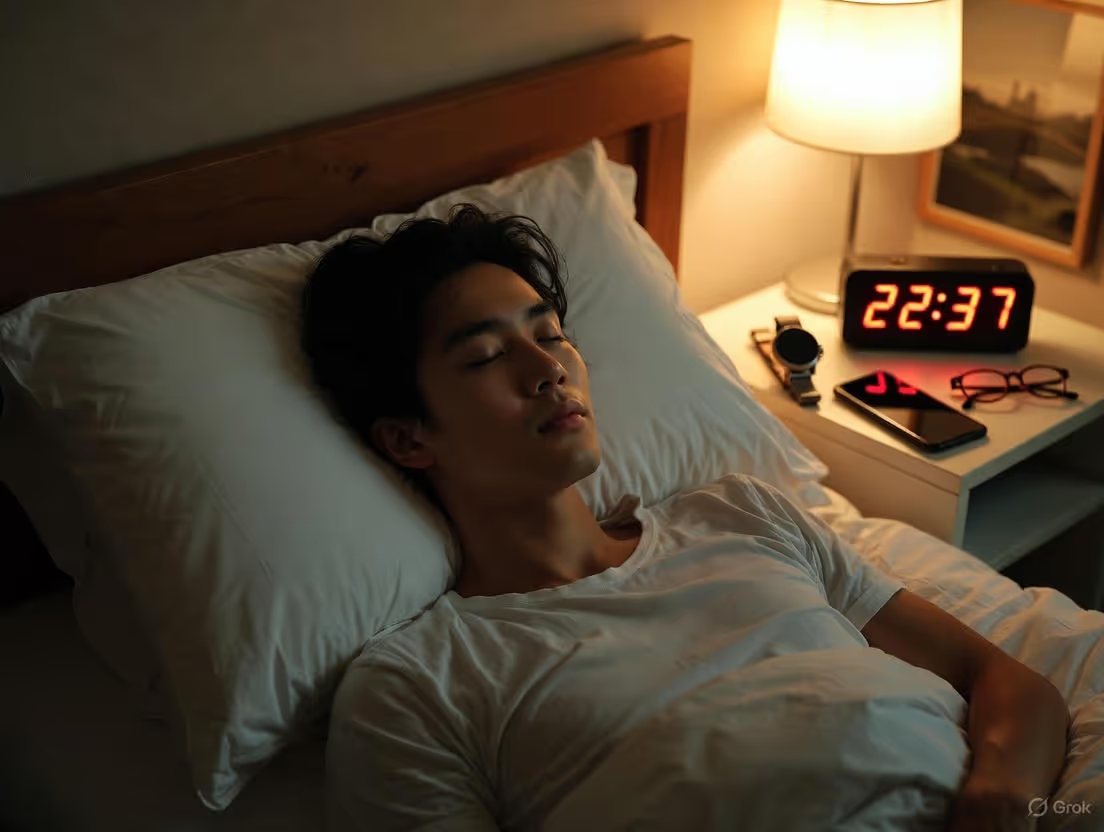
How to Assess Your Current Sleep Health (Simple Self-Test)
A simple self-test involves asking about your daytime sleepiness, ability to stay awake, and overall satisfaction with your sleep.
The Silent Epidemic: Why Your Sleep Health is the Unseen Foundation of Everything
We live in a culture that celebrates burnout and wears sleep deprivation as a badge of honor. We sip our third latte, boast about "hustling" on five hours of rest, and power through the day in a foggy, caffeine-fueled daze. But what if this fundamental aspect of our biology—this non-negotiable one-third of our lives—isn't just about rest, but the very bedrock of our mental clarity, physical health, emotional resilience, and overall life performance?
You wouldn't drive your car for 100,000 miles without ever checking the oil, yet we routinely operate our minds and bodies for decades without a genuine assessment of our sleep health. We accept constant fatigue, brain fog, and irritability as "just part of modern life." But here’s the truth: you cannot optimize what you do not measure. Before you can fix your sleep, you need to understand it. This comprehensive guide is your first, crucial step.
Welcome to a journey of self-discovery that happens with your eyes closed. This is not just about counting sheep or buying a better pillow. This is a deep, evidence-based dive into how to conduct a thorough, holistic self-assessment of your current sleep health. We’ll move beyond simplistic questions like "Did you sleep well?" and equip you with the tools, frameworks, and knowledge to become the expert on your own nocturnal life. By the end of this guide, you will have a clear, quantified, and actionable picture of your sleep’s strengths and weaknesses. You’ll learn to listen to the subtle signals your body has been sending for years.
Think of this as your personal sleep audit. No lab coats, no intimidating sleep clinics (yet), just you, some honest reflection, and a structured approach to uncovering the truth about your rest. The goal is empowerment—to move from feeling passively tired to actively understanding why, so you can build a personalized path to truly restorative sleep.
Let’s begin.
What is Sleep Health, Really? Moving Beyond Hours in Bed
Most of us equate sleep health with duration. "I got my 8 hours," we say, considering the job done. But sleep scientists and wellness experts now understand that sleep health is a multidimensional construct. It's the difference between eating a handful of nuts for calories versus consuming a balanced meal full of varied nutrients for true nourishment. Duration is just one vitamin in the complex formula.
True sleep health encompasses several interconnected pillars. Understanding these is critical because a deficiency in one can undermine the others, leaving you feeling unrefreshed even if you technically spent enough time in bed.
The Five Pillars of Holistic Sleep Health:
Sleep Duration: The total sleep time. While individual needs vary, the consensus for most adults is 7-9 hours per 24-hour period.
Sleep Quality (or Efficiency): This isn't a feeling, but a metric. It’s the percentage of time you are actually asleep while in bed. Lying awake for two hours in a nine-hour window results in poor sleep efficiency, no matter the total.
Sleep Timing & Regularity: When you sleep is governed by your circadian rhythm. Going to bed and waking up at consistent times (even on weekends) is arguably as important as duration for regulating your internal biological clock.
Sleep Architecture: This is the structure of your sleep cycle—the progression through light sleep (N1, N2), deep sleep (N3), and REM (Rapid Eye Movement) sleep. Each stage serves a unique, vital function: physical restoration in deep sleep, memory consolidation and emotional processing in REM.
Daytime Alertness & Impact: The ultimate litmus test. How do you function during the day? Do you sustain energy, focus, and a stable mood, or do you experience crashes, brain fog, and dependence on stimulants?
A self-assessment that only asks "how long did you sleep?" is like diagnosing a car's health only by its mileage. You need to check the engine, the tires, the electrical system, and its performance on the road.
The modern challenge is that our brains are terrible at objectively assessing these pillars while we’re unconscious. We notoriously misremember how long it took to fall asleep, underestimate nighttime awakenings, and have no innate ability to measure our deep sleep. This is where intentional self-assessment bridges the gap between subjective feeling and objective reality. For those ready to move beyond guesswork, tools like the advanced Oxyzen smart ring provide unparalleled, objective data on these very pillars, from heart rate variability to sleep staging, directly on your finger as you rest. It’s like having a sleep lab technician with you every night, offering the concrete data to complement your subjective observations. You can learn more about how this technology personalizes sleep insight on the Oxyzen.ai homepage.
By redefining sleep health through this multifaceted lens, we set the stage for a self-test that is comprehensive, meaningful, and truly illuminating.
The High Cost of Ignorance: Why You Can't Afford to Guess About Your Sleep
Before we dive into the "how," it's essential to fully grasp the "why." Ignoring your sleep health isn't a neutral act; it's an active, often detrimental, choice with cascading consequences across every facet of your existence. The data is unequivocal and alarming. Treating sleep as an optional luxury is perhaps the single greatest modern mistake we make for our long-term wellbeing.
Let’s talk about the brain first. During sleep, particularly deep sleep and REM, your brain isn't offline—it's in maintenance mode. The glymphatic system, a waste-clearance pathway, kicks into high gear, flushing out toxic metabolic byproducts like beta-amyloid, a protein closely linked to Alzheimer's disease. Sleep is essentially power-washing your brain. Skimp on it, and you allow neurotoxic debris to accumulate. Furthermore, memory consolidation—the process of transferring short-term memories to long-term storage—occurs during these cycles. That study session or important presentation practice is literally cemented into your neural architecture while you sleep. Poor sleep means fragile, inaccessible memories.
The physical toll is just as severe. Chronic sleep deprivation (defined as consistently getting less than 7 hours) is a primary risk factor for a staggering list of conditions:
Cardiovascular Disease: It increases blood pressure, resting heart rate, and inflammatory markers, straining the heart and blood vessels.
Metabolic Dysfunction: It throws hormones like leptin and ghrelin (which regulate hunger and satiety) into chaos, leading to increased cravings, insulin resistance, and a significantly higher risk for Type 2 diabetes and obesity.
Compromised Immunity: Consistent good sleep strengthens your adaptive immune system. Just one night of poor sleep can reduce the effectiveness of killer T-cells. You become more susceptible to infections, from the common cold to more serious illnesses.
Hormonal Imbalance: Sleep is crucial for the regulation of cortisol (the stress hormone), growth hormone (for tissue repair), and reproductive hormones.
Perhaps the most immediate cost is to your daily performance and safety. The cognitive impairment from being awake for 18 hours is comparable to having a blood alcohol content (BAC) of 0.05%. At 24 hours awake, it mimics a BAC of 0.10%—over the legal driving limit in most countries. This manifests as slowed reaction time, impaired judgment, decreased situational awareness, and emotional volatility. It’s no coincidence that major industrial disasters like Chernobyl, the Space Shuttle Challenger explosion, and the Exxon Valdez oil spill all occurred in the early morning hours, with sleep-deprived decision-makers implicated.
On a personal level, the cost is in lost potential. It's the creative idea that never surfaced, the patience you didn't have with your partner or child, the workout you skipped because you were too drained, the joy you didn't fully feel because you were draped in a veil of fatigue. By not assessing your sleep, you are flying blind in the very vehicle meant to carry you through your life's ambitions and relationships. For a deeper look at how real people have transformed their health by confronting this data, the stories and reviews shared on the Oxyzen.ai testimonials page offer powerful, relatable examples of this awakening.
The message is clear: guessing about your sleep is a high-stakes gamble with poor odds. The alternative is knowledge. And knowledge begins with assessment.
The Foundational Self-Test: The 2-Week Sleep Diary & Journal
We begin with the most powerful, timeless, and accessible tool in sleep science: the Sleep Diary. Before any gadget or app, this simple practice is the gold standard for initial assessment, often used by sleep physicians themselves. It creates a crucial baseline of your subjective experience and habits, providing context that raw data alone cannot.
A sleep diary is more than a log of times; it's a structured narrative of your night and day. The goal is to identify patterns, triggers, and correlations you would otherwise miss.
How to Conduct Your 2-Week Sleep Diary Assessment:
Timing: Commit to a minimum of 14 consecutive days. This captures variations across work weeks and weekends.
Method: Use a notebook by your bed or a dedicated notes app. Fill it out twice daily:
Morning (Within 30 minutes of waking): Record details about the night just passed. This is when recall is most accurate.
Evening (Before bed): Record details about the day that just ended, which influences the coming night.
What to Record Each Morning:
Time you got into bed.
Estimated time you fell asleep.
Number and duration of nighttime awakenings (e.g., "woke at 2:30am for ~15 minutes").
Final wake-up time.
Time you got out of bed.
Subjective Sleep Quality: Rate on a scale of 1 (very poor) to 5 (excellent).
Morning Alertness: Rate your feeling upon waking (e.g., groggy, refreshed, foggy).
Notes on sleep disturbances (noise, pain, anxiety, partner's snoring, etc.).
What to Record Each Evening:
Consumption of caffeine (time and amount), alcohol (time and number of drinks), and nicotine.
Medications or supplements taken.
Exercise (type, duration, and time of day).
Major stressors or emotional highs/lows of the day.
Napping (duration and time).
Pre-bedtime activities (e.g., 1 hour of social media, 30 minutes of reading, a hot shower).
The Analysis Phase: After 14 days, look for patterns. Don't just look at averages—look at extremes.
Is your weekend sleep schedule drastically different, causing "social jet lag" every Monday?
Do you see a direct correlation between evening alcohol and poor-quality ratings or nighttime awakenings?
Does a late afternoon coffee consistently link to a longer "time to fall asleep"?
Do days with high stress predict restless sleep?
The sleep diary transforms vague feelings ("I sleep terribly") into specific, testable hypotheses ("On days I have coffee after 3pm, it takes me over 45 minutes to fall asleep"). This is the cornerstone of personalized sleep optimization. For those who wish to deepen this journaling practice with research-backed insights, our comprehensive resource library at the Oxyzen.ai blog offers articles on interpreting sleep diary patterns and building better bedtime routines.
This foundational practice grounds you in your own experience. It builds self-awareness and sets the stage for the more objective and technological assessments to follow.
Listening to Your Body: The Physical Symptoms Checklist
While your diary tracks behaviors and perceptions, your body has been keeping its own score. Chronic sleep debt and disordered sleep manifest in a myriad of physical ways that we often dismiss as "normal" or attribute to other causes. This self-assessment section asks you to play detective with your own physiology.
Perform a systematic scan of these common physical indicators of compromised sleep health. Mark which are persistent issues for you.
The Craniofacial & Oral Dashboard:
Morning Headaches: Frequent tension-type headaches upon waking can indicate sleep apnea (oxygen deprivation) or bruxism.
Jaw Pain or TMJ Tenderness: A classic sign of nighttime teeth grinding (bruxism), which is highly correlated with stress and sleep disruption.
Dry Mouth or Sore Throat Upon Waking: This can be a telltale sign of mouth breathing during sleep, often associated with airway obstruction or sleep apnea.
Swollen or Puffy Eyes (Despite sleep duration): Chronic fluid retention around the eyes can point to poor sleep quality affecting circulatory and lymphatic systems.
The Systemic Signals:
Unexplained Weight Gain or Stubborn Weight Loss Resistance: As mentioned, sleep disrupts leptin and ghrelin, turning your appetite regulation against you.
Increased Blood Pressure or Resting Heart Rate: Check your own metrics over time. Elevated morning resting heart rate can be a sign your nervous system didn't get the restorative "downtime" it needed.
Frequent Illnesses: Do you catch every cold that goes around? Your immune system's logs are pointing directly to a lack of sleep-based maintenance.
Loss of Libido or Hormonal Irregularities: Sleep is a potent endocrine regulator. Disrupt it, and you disrupt testosterone, estrogen, and other critical hormones.
Persistent Muscle Aches or Slow Recovery from Exercise: Growth hormone, essential for tissue repair, is primarily secreted during deep sleep. Without it, you break down more than you build up.
The Daytime Physical Experience:
Excessive Daytime Sleepiness: The classic sign. Do you struggle to stay awake in meetings, while reading, or—critically—while driving?
Tremors or Clumsiness: Fine motor skills deteriorate without sleep. Do you find yourself dropping things or feeling unusually uncoordinated?
Extreme Dependence on Caffeine/Stimulants: Needing multiple doses just to function at a baseline level is a major red flag that your body is not generating its own energy through proper rest.
Creating Your Symptom Profile: Don't just note these in passing. Create a list. How many of these boxes do you tick? The presence of multiple symptoms, especially clusters like morning headache + dry mouth + daytime fatigue, strongly suggests an underlying sleep disorder like sleep apnea and is a clear signal to consult a healthcare professional.
This checklist moves the assessment from the abstract to the tangible. Your body is talking. It’s time to start listening with intention.
The Mental & Emotional Audit: How Sleep Shapes Your Inner World
If the body keeps the score, the mind writes the story. The impact of sleep on cognitive function and emotional regulation is so profound that it can alter your personality, your decision-making, and your perceived quality of life. This self-assessment requires brutal honesty about your mental state.
Cognitive Performance Markers: Rate your typical experience over the past month.
Brain Fog & Concentration: Do you struggle to focus on complex tasks, find your mind constantly wandering, or lose your train of thought mid-sentence?
Memory Lapses: Is forgetfulness a daily issue—forgetting why you walked into a room, missing appointments, or struggling to recall specific words or names?
Decision Fatigue & Indecisiveness: Do even small choices feel overwhelming? Does your judgment feel impaired?
Slowed Processing Speed: Do you feel like you're "buffering" in conversations, needing extra time to understand questions or formulate responses?
Creativity & Problem-Solving Block: Does your thinking feel rigid, lacking in insight or novel solutions?
Emotional & Psychological Indicators:
Emotional Reactivity: Do you have a "shorter fuse," crying or getting angry more easily than you feel is appropriate? Sleep deprivation hijacks the amygdala (the emotional center) and weakens the prefrontal cortex (the rational regulator).
Anxiety & Rumination: Does your mind race with worry, especially at night or upon waking? Poor sleep is both a cause and a consequence of anxiety, creating a vicious cycle.
Low Mood & Anhedonia: Do you feel a persistent flatness, sadness, or inability to feel pleasure in things you usually enjoy? The link between chronic sleep issues and depression is exceedingly strong.
Stress Resilience: Do you feel overwhelmed by minor stressors that you could previously handle? Sleep deprivation dramatically lowers your threshold for stress.
Social Withdrawal: Do you find yourself avoiding social interactions because you lack the mental or emotional energy to engage?
The Narrative Test: Ask yourself this key question: "Is this really me, or is this sleep-deprived me?" Often, we mistake the traits of chronic fatigue for our core personality—labeling ourselves as "scatterbrained," "moody," or "unmotivated." This audit helps separate the state from the trait. The irritability you feel at the end of a poor-sleep week isn't your true nature; it's a symptom of a depleted system.
By cataloging these mental and emotional effects, you quantify the intangible cost. You realize that optimizing sleep isn't about getting more hours to be "less tired"—it's about reclaiming your mental clarity, emotional stability, and fundamental sense of self. The mission of companies like ours, which you can read about in depth at Oxyzen.ai/about-us, is rooted in this understanding: that true wellness is the seamless integration of physical data and emotional wellbeing, starting with restorative sleep.
Your Environment & Routine: The External Audit of Your Sleep Sanctuary
We've assessed the internal landscape—your body and mind. Now, we turn outward. Your sleep environment and daily routines are the stage and script for your nightly restoration play. Even the most genetically gifted sleeper can be undone by a poor environment and harmful habits. This assessment is a room-by-room, habit-by-habit inspection.
The Bedroom Environment Scan (Do this with the lights off):
Light Pollution: Is your room truly dark? Can you see the outline of windows, the glow of electronics, or light from under the door? Even small amounts of light, especially blue spectrum, can suppress melatonin.
Noise Levels: Is your sleep interrupted by traffic, a partner's snoring, household noises, or a too-quiet environment that makes minor sounds startling? Consistent white noise can mask disruptive sounds.
Temperature: Is your room cool (generally recommended between 60-67°F or 15-19°C)? Your core body temperature needs to drop to initiate and maintain sleep.
Comfort & Allergens: Is your mattress supportive? Are your pillows causing neck strain? Is your bedding breathable? Could dust mites or pet dander be causing subtle nighttime congestion or restlessness?
The "Brain Association" Test: Is your bed used primarily for sleep and intimacy, or is it also your office, dining area, and entertainment center? A strong mental association between bed and sleep is critical.
The Daily Routine & Habit Inventory:
The Caffeine Timeline: When is your last cup of coffee, tea, or caffeinated soda? The half-life of caffeine is 5-6 hours, meaning a 3pm coffee still has a significant amount in your system at 9pm.
Alcohol & Evening Nutrition: Do you use alcohol as a sleep aid? While it may induce drowsiness, it metabolizes into a stimulant, fragments sleep, and decimates REM sleep. Do you eat large, heavy, or spicy meals close to bedtime?
Exercise Timing: When do you work out? Vigorous exercise too close to bedtime can be activating for some, while for others, it promotes sleep. You need to know your personal response.
Nicotine Use: A potent stimulant that can delay sleep onset and cause fragmentation.
Evening Light Exposure: How much screen time do you have in the 1-2 hours before bed? Phones, TVs, and laptops are the primary sources of sleep-disrupting blue light.
The Wind-Down Routine: Do you have a consistent, relaxing 30-60 minute pre-sleep ritual to signal to your brain that it's time to shift gears, or do you work/scroll/stress until the moment you close your eyes?
The Weekend Variable: Assess your weekend behavior separately. Do you stay up and sleep in significantly later? This "social jet lag" can be the equivalent of flying across time zones every weekend, making Monday morning a brutal reset.
This external audit identifies the levers you can pull. These factors are largely within your control. Changing them forms the basis of "sleep hygiene," the behavioral foundation upon which all other improvements are built. For practical, step-by-step guides on optimizing each of these areas, from building the perfect sleep sanctuary to crafting a wind-down routine, a wealth of actionable advice can be found on the Oxyzen.ai blog.
The Partner & Social Check: How Your Sleep Affects (And Is Affected By) Others
Sleep is not an isolated act. For those who share a bed or a household, it is a deeply social and interdependent behavior. Your sleep health can be a significant source of relationship strain, and conversely, relationship dynamics can be a primary disruptor of sleep. This part of the assessment requires communication and observation.
The Bed Partner Impact Assessment: If you have a bed partner, their experience is a critical data point in your self-test.
Do you snore? This isn't just a nuisance; loud, persistent snoring, especially when punctuated by gasps or pauses in breathing, is the hallmark of obstructive sleep apnea. Your partner is your best witness.
Do you display unusual behaviors during sleep? This includes frequent, violent limb movements (Potential Restless Legs Syndrome or Periodic Limb Movement Disorder), talking, yelling, or acting out dreams (a potential REM Sleep Behavior Disorder).
Do your sleep schedules conflict? Are you a night owl trying to share a bed with a morning lark, leading to disturbances from different bedtimes, reading lights, or alarm clocks?
Is there "cover-hogging" or temperature dispute? Physical discomfort caused by sharing a bed can fragment sleep for both parties.
Having an open conversation with your partner about your—and their—sleep can unveil issues you are completely unaware of because you were unconscious at the time. Their observation that you "stopped breathing for a bit" is a medical red flag you must not ignore.
The Social & Professional Ripple Effect: Your sleep health doesn't stay in the bedroom. Assess its impact on your wider world.
Social Life: Do you decline evening social invitations because you're too tired? Do you lack the energy to connect meaningfully with friends and family?
Work Performance: Are you missing deadlines, making uncharacteristic errors, or struggling to contribute in meetings due to fatigue? Is "presenteeism" (being at work but not fully functional) an issue?
Parenting or Caregiving: Do you have the patience and presence required? Sleep deprivation is a major challenge for parents and caregivers, affecting the quality of care and the emotional bond.
Emotional Availability: Can you be a supportive, listening partner, friend, or colleague, or is your depleted state causing you to be self-absorbed or irritable?
This social assessment reframes sleep from a personal luxury to a relational responsibility. Good sleep health enables you to show up as a better partner, parent, friend, and colleague. It is the foundation of your social capital. Understanding this interconnectedness is a core part of our philosophy at Oxyzen; you can explore the human-centered values behind our technology on Oxyzen.ai/our-story.
The Technology Boost: Using Wearables & Apps for Objective Data
Up to this point, our assessment has relied on subjective recall and observation. Now, we enter the modern age of bio-tracking. Wearable technology—from smart rings and watches to under-mattress sensors and dedicated sleep trackers—offers a layer of objective, quantifiable data that can validate or challenge your subjective perceptions. This is where the art of self-assessment meets the science of data.
What Can Wearables Actually Measure? Understanding the capabilities and limitations is key. Most consumer devices use a combination of accelerometers (for movement) and optical photoplethysmography (PPG) to measure heart rate and heart rate variability (HRV). Advanced algorithms then estimate:
Sleep Stages (Light, Deep, REM): These are estimates, not medical-grade readings. However, they are excellent for tracking trends over time. Is your deep sleep percentage consistently low? Does alcohol cause a visible plunge in your REM graph?
Sleep Duration & Consistency: They provide precise "lights out" and "wake up" times, often more accurate than your own perception.
Sleep Latency: How long it took you to fall asleep.
Sleep Restlessness/Awakenings: Detected by movement and heart rate spikes.
Heart Rate Variability (HRV): A critical, non-sleep metric that indicates autonomic nervous system balance. A higher HRV generally suggests better recovery and resilience. It often plummets after poor sleep or high stress.
Resting Heart Rate (RHR): Your sleeping RHR is a pure metric of cardiovascular load. A trend of increasing RHR can indicate illness, overtraining, or chronic sleep debt.
Respiratory Rate: Some devices track breaths per minute, which can flag unusual patterns.
How to Use This Data in Your Self-Assessment:
Trends Over Averages: Don't obsess over a single night's score. Look at weekly and monthly trends. Is your sleep score improving after you made a change to your caffeine cutoff?
Correlation is Key: Use your sleep diary in tandem with the data. Did a night you rated as "poor quality" also show very little deep sleep and a high resting heart rate in the app? This validates your feeling with data.
Identify Personal Patterns: You might discover that for you, exercising after 8pm doesn't hurt sleep latency but does reduce deep sleep. Or that a glass of wine with dinner has a more severe effect on your REM sleep than one before bed.
Choosing a Tool: The Smart Ring Advantage While watches are common, smart rings like Oxyzen are emerging as the preferred tool for sleep tracking. Worn on the finger, they often provide more consistent and comfortable heart rate/HRV data during sleep (no tight wristband, less interference from wrist movements). They are also unobtrusive, making it easier to wear them consistently—the single most important factor in tracking. For a detailed comparison of how this form factor works and answers to common questions, the Oxyzen.ai FAQ is an excellent resource.
Technology doesn't replace introspection; it illuminates it. It turns "I feel tired" into "My data shows my deep sleep has been below 10% for a week, and my HRV is in the 'low' zone, confirming a high recovery need." This empowers targeted, intelligent intervention.
Putting It All Together: Creating Your Personal Sleep Health Snapshot
You have now gathered intelligence from multiple fronts: your subjective diary, your physical symptoms, your mental state, your environment, your social sphere, and your wearable data. This final step of the initial assessment is synthesis. It’s time to create your Personal Sleep Health Snapshot—a one-page dashboard that tells the story of your rest.
This is not a diagnostic tool, but a profiling tool. Its purpose is to organize your findings into clear strengths, weaknesses, and actionable hypotheses.
Primary Challenges (The 'Low-Hanging Fruit'): (e.g., "Caffeine after 4pm," "No wind-down routine," "Weekend jet lag," "Evening screen overload")
Section 4: The Social/Partner Feedback
Key Observations from Others: (e.g., "Partner notes loud snoring," "Frequently too tired for social plans")
Section 5: Initial Hypotheses & Action Plan Seeds This is the most important section. Based on your synthesis, draft 2-3 specific, testable hypotheses.
Hypothesis 1: "My afternoon caffeine habit is likely prolonging my sleep latency. I will test cutting off caffeine after 2pm for two weeks and monitor my 'time to fall asleep' metric."
Hypothesis 2: "My partner's observation of snoring, combined with my morning headaches and daytime fatigue, suggests I should discuss sleep apnea screening with my doctor."
Hypothesis 3: "My complete lack of a wind-down routine and high evening screen time are likely preventing my nervous system from calming down. I will implement a 30-minute, screen-free ritual starting at 10pm."
Your Personal Sleep Health Snapshot is a living document. It is the output of this deep self-test and the input for your optimization phase. It moves you from a place of confused fatigue to one of structured understanding. With this snapshot in hand, you are no longer a passive victim of poor sleep; you are an informed investigator with a clear set of clues to follow. The journey towards truly restorative sleep has now decisively begun.
Interpreting the Data: What Your Sleep Metrics Actually Mean
You’ve done the hard work of gathering data from your diary, your body, your environment, and your wearable. Now, you’re faced with charts, percentages, and scores. The critical question becomes: What does this all actually mean? Interpreting your sleep data correctly is the bridge between simple tracking and true insight. Misunderstanding a metric can lead you down a fruitless or even counterproductive path.
Let’s demystify the key metrics you’re likely encountering, moving beyond the simplistic “sleep score” to understand the underlying physiology.
Deep Sleep (Slow-Wave Sleep): The Physical Restorer
What it is: The most physically restorative stage. It’s characterized by slow brain waves (delta waves), and it’s very difficult to wake someone from deep sleep. This is when tissue growth and repair occur, energy is restored, and crucial hormones like growth hormone are released.
What your data says: A typical adult spends about 13-23% of their sleep in deep sleep, with the proportion decreasing with age. A consistently low percentage (e.g., under 10%) is a significant red flag.
Causes of Low Deep Sleep: Intense physical stress (overtraining, illness), psychological stress, chronic pain, sleeping in a hot environment, alcohol consumption (which suppresses deep sleep in the second half of the night), and aging.
Actionable Insight: If your deep sleep is low, prioritize recovery. This means not just more sleep, but better conditions for restoration: ensuring your room is cool, managing stress proactively, timing exercise appropriately (not too close to bedtime), and critically evaluating alcohol use. Don’t chase more deep sleep by spending excessive time in bed; chase the conditions that allow it to occur naturally.
REM Sleep: The Mental & Emotional Integrator
What it is: The stage of vivid dreams, characterized by rapid eye movements, increased brain activity (similar to wakefulness), and temporary muscle paralysis. REM is essential for memory consolidation, learning, emotional processing, and creativity.
What your data says: REM typically constitutes 20-25% of total sleep, with most of it occurring in the second half of the night.
Causes of Low/Disrupted REM: Alcohol is the arch-nemesis of REM sleep—it severely suppresses it. Certain antidepressants (SSRIs), sleep apnea (due to repeated awakenings), and irregular sleep schedules can also rob you of REM.
Actionable Insight: If your REM sleep is consistently low, look first at alcohol consumption. Even one drink can have an impact. Also, examine sleep continuity; frequent awakenings will truncate your REM periods. Protecting the later hours of your sleep (when REM dominates) is crucial. Cutting your sleep short by waking up early sacrifices a disproportionate amount of REM.
Sleep Latency: The Gatekeeper of Sleep
What it is: The time it takes you to fall asleep after turning out the lights.
What your data says: An ideal sleep latency is between 10 and 20 minutes. Falling asleep in under 5 minutes is not a sign of being a "good sleeper"—it’s a classic sign of significant sleep deprivation or a disorder like sleep apnea. Consistently taking over 30 minutes suggests hyperarousal, which could be due to anxiety, poor sleep habits (like using your phone in bed), caffeine, or an inconsistent schedule.
Actionable Insight: Use this metric to test your wind-down routine and circadian timing. If latency is too long, your body isn’t ready for sleep when you are. If it’s too short, you likely need more total sleep or should be assessed for sleep disorders.
Sleep Efficiency: The Gold Standard of Quality
What it is: (Total Time Asleep / Total Time in Bed) x 100. This is a critical metric that sleep specialists use.
What your data says: 85% or higher is considered good sleep efficiency. For example, if you’re in bed for 8 hours but only sleep 6.5, your efficiency is 81%, indicating significant room for improvement. Low efficiency means you’re spending too much time awake in bed, which can condition your brain to associate the bed with wakefulness.
Actionable Insight: If your efficiency is low, practice “sleep restriction” in a healthy way: only go to bed when you are truly sleepy, and if awake for more than 20 minutes, get out of bed and do a quiet activity until drowsy. This strengthens the bed-sleep connection.
Heart Rate Variability (HRV) & Resting Heart Rate (RHR): The Recovery Duo
What they are: HRV is the variation in time between heartbeats. A higher HRV indicates a resilient, adaptable nervous system. Your sleeping RHR is your heart’s baseline workload.
What your data says: Trends are everything. A downward trend in HRV and/or an upward trend in RHR over days or weeks is a clear signal from your body that it is under strain from stress, poor recovery, illness, or chronic sleep debt. A single night’s reading is less important than the direction of the line on the graph.
Actionable Insight: These are your body’s “readiness” scores. If HRV is trending down and RHR up, it’s a day to prioritize rest, gentle movement, stress management, and an early bedtime—not to push for a personal best at the gym. This is where tools like the Oxyzen ring shine, providing this nuanced recovery data directly from your finger, helping you align your daily actions with your body’s actual capacity. You can explore the science behind these metrics further in articles on the Oxyzen.ai blog.
Interpreting data in context prevents obsession and fosters intelligent action. Your goal isn’t to maximize every metric every night—that’s impossible. Your goal is to understand the story they tell about your habits, your health, and your life, so you can write a better next chapter.
Red Flags & When to See a Professional: Beyond Self-Assessment
A thorough self-assessment is empowering, but it also has a critical boundary: it is not a diagnosis. Part of being a responsible steward of your health is recognizing the signs that indicate a need for professional medical intervention. Ignoring these red flags can allow serious, treatable conditions to worsen.
This section outlines the clear warning signals that your sleep issues may be pathological, not just behavioral.
The Major Red Flags:
Loud, Chronic Snoring, Especially with Witnessed Pauses in Breathing: This is the cardinal symptom of Obstructive Sleep Apnea (OSA). If a partner reports you gasp, choke, or stop breathing during sleep, take it seriously. OSA is linked to high blood pressure, stroke, heart failure, and diabetes.
Excessive Daytime Sleepiness That Impairs Safety: Falling asleep unintentionally during conversations, while eating, or—most critically—while driving is a severe medical symptom. It could indicate OSA, Narcolepsy, or another hypersomnia.
The Unrefreshing Sleep Paradox: Consistently sleeping 7+ hours but waking up feeling as tired as when you went to bed. This is a hallmark of non-restorative sleep seen in disorders like OSA or Periodic Limb Movement Disorder.
Frequent, Violent Limb Movements or Restless Sensations at Night: Kicking, jerking, or an irresistible urge to move your legs (Restless Legs Syndrome) that disrupts sleep onset or continuity.
Acting Out Dreams: Physically moving, punching, kicking, or yelling out during vivid dreams. This is a potential symptom of REM Sleep Behavior Disorder (RBD), which can be associated with neurological conditions.
Chronic Insomnia That Persists Despite Excellent Sleep Hygiene: If you have rigorously implemented behavioral changes for 4-6 weeks (consistent schedule, optimal environment, wind-down routine) and see no improvement in your ability to fall or stay asleep, underlying anxiety, depression, or medical issues may be at play.
Waking with Morning Headaches, Dry Mouth, or a Sore Throat: These can all be signs of overnight breathing difficulties.
Severe “Brain Fog” or Cognitive Decline: When memory and concentration issues are severe and directly linked to poor sleep, a professional assessment is needed to rule out sleep-disordered breathing or other causes.
The Professional Pathway: Who to See and What to Expect
Start with Your Primary Care Physician (PCP): Bring your Personal Sleep Health Snapshot. This organized data is invaluable. Describe your symptoms and red flags clearly. Your PCP can rule out underlying conditions (like thyroid issues or anemia) and provide a referral to a specialist.
The Sleep Specialist: Typically a neurologist, pulmonologist, or psychiatrist with specialized training. They will conduct a detailed history and may recommend a diagnostic test.
The Sleep Study (Polysomnography): The gold standard for diagnosing many sleep disorders. It can be done in a lab or, increasingly, with a simplified home test kit for suspected OSA. It monitors brain waves, eye movements, muscle activity, heart rhythm, and breathing.
The Role of Your Self-Assessment in the Clinical Process: Your detailed work is a gift to your doctor. Instead of saying “I’m tired,” you can say: “I average 6.5 hours of sleep with 78% efficiency. My wearable shows low deep sleep and an elevated resting heart rate. My partner reports loud snoring with pauses, and I have morning headaches 4 days a week.” This precise, data-driven description accelerates the path to an accurate diagnosis and effective treatment.
Understanding when to seek help is not a failure of self-care; it is its highest expression. The mission behind creating accessible health technology, as detailed in Oxyzen.ai/our-story, is to empower this very transition—from personal awareness to professional guidance with concrete evidence in hand.
Building Your Baseline: The 30-Day Consistency Challenge
Armed with interpretation skills and awareness of red flags, the next phase is action. But effective action requires a stable foundation. You cannot accurately measure the impact of a change if the ground beneath you is constantly shifting. This is why the single most important intervention for most people is not a supplement, a gadget, or a special tea—it is consistency.
The 30-Day Consistency Challenge is designed to anchor your circadian rhythm, the master internal clock that regulates sleep, hormones, temperature, and metabolism. By fixing your sleep-wake times, you give your body the predictability it craves.
The Core Rule: Fix Your Wake-Up Time. For the next 30 days, you will wake up at the exact same time every single day, no more than a 30-minute variance, even on weekends and holidays. This is non-negotiable.
Why the Wake Time is King: Your wake time is the most powerful cue for your circadian rhythm. A consistent wake time:
Anchors your entire daily cycle of hormone release (cortisol in the morning, melatonin at night).
Makes falling asleep easier at night, as your body learns to predict sleep onset.
Eliminates "social jet lag," the debilitating Monday-morning hangover caused by weekend oversleeping.
How to Execute the Challenge:
Choose Your Time Wisely: Pick a wake-up time you can realistically maintain on your earliest work/school day. It should allow you to get to bed early enough to achieve your sleep duration goal (e.g., a 6:00 AM wake-up requires a ~10:00 PM bedtime for 8 hours).
Commit to the Alarm: Set your alarm for this time every day. When it goes off, get out of bed immediately. Expose yourself to bright light (sunlight is best) within 30 minutes to signal "daytime" to your brain.
Let Bedtime Float: In the beginning, do not force yourself to bed early. If you normally go to bed at midnight but now have to wake at 6:00 AM, you will be tired. Go to bed only when you feel sleepy. Your bedtime will naturally advance as your body adjusts to the new, fixed wake time. Do not nap to compensate for lost sleep; this will undermine the process.
Track Religiously: Use your sleep diary and tracker. Watch for the magic metrics: Sleep latency should decrease (you’ll fall asleep faster), and sleep efficiency should increase (less time awake in bed). Your subjective feeling of morning alertness should improve within 1-2 weeks.
Manage Expectations: The first 3-5 days may be difficult. You are resetting a biological rhythm. Persist. By day 14, it should feel significantly easier. By day 30, it will feel automatic.
The Profound Impact: This simple, free intervention often solves a multitude of perceived "sleep problems" on its own. It reduces insomnia symptoms, improves mood, stabilizes energy levels, and provides a rock-solid baseline from which to experiment with other changes. Once your rhythm is stable, you can then ask precise questions: "Now that I'm consistent, what happens if I stop caffeine after 2 PM?" The signal of that change will be clear against the stable background noise of your rhythm.
Consistency is the cornerstone upon which all other sleep optimization is built. It is the first and most profound habit to master. For support, community stories, and tips on sticking with a health challenge, reading the real-world experiences of others on the Oxyzen.ai testimonials page can provide that extra layer of motivation and proof that the effort is worth it.
The Iterative Optimization Cycle: Test, Measure, Refine
With a consistent baseline established, you graduate from passive assessment to active experimentation. You are now the lead scientist in your personal sleep lab. The goal is to move from generic advice to a personalized sleep protocol that works uniquely for you. This is done through the Iterative Optimization Cycle: a systematic process of forming hypotheses, testing interventions, measuring results, and refining your approach.
Step 1: Identify One Lever (The Hypothesis) Based on your Personal Sleep Health Snapshot, choose one single factor to modify. Do not change multiple things at once, or you won’t know what caused any effect. Examples:
"Hypothesis: Moving my last coffee from 4 PM to 2 PM will decrease my sleep latency."
"Hypothesis: Installing blackout curtains will increase my deep sleep percentage."
"Hypothesis: A 30-minute screen-free wind-down routine will improve my sleep efficiency."
Step 2: Design the Experiment (The Intervention) Define the change precisely and commit to it for a minimum of two full weeks. The body adapts slowly, and you need to capture trends, not just one-night reactions.
Intervention: "For 14 days, I will consume no caffeine after 2:00 PM. I will drink herbal tea or water instead."
Control: Keep everything else—wake time, exercise, diet, evening routine—as consistent as possible.
Step 3: Measure the Outcome (The Data Collection) Continue using your sleep tracker and diary. Pay particular attention to the 1-3 metrics most relevant to your hypothesis.
For the caffeine hypothesis: Primary metric = Sleep Latency. Secondary metrics = Sleep Efficiency, subjective "ease of falling asleep" rating.
For the wind-down hypothesis: Primary metric = Sleep Efficiency. Secondary metric = Subjective Sleep Quality rating.
Step 4: Analyze & Refine (The Insight) After 14 days, analyze the data.
Clear Positive Result: The metric moved meaningfully in the desired direction (e.g., average sleep latency dropped from 25 to 15 minutes). Conclusion: This change works for you. Lock it in as a new habit. It is now part of your permanent protocol.
Clear Negative or No Result: The metric didn’t change or got worse. Conclusion: This specific variable may not be a primary lever for you, or the intervention needs adjustment (e.g., maybe caffeine cutoff needs to be 12 PM, not 2 PM). Abandon or modify the hypothesis.
Mixed/Unclear Result: Some days better, some worse. Look for confounding variables in your diary (stressful workday, unusual exercise). You may need to run the experiment for another week or tighten your controls.
Step 5: Repeat the Cycle Once you have integrated a successful change and it has become habitual (after ~30 days), return to your Snapshot. Choose the next most promising "low-hanging fruit" lever and run a new experiment.
Philosophy of the Cycle: This process turns sleep optimization from a vague, frustrating chore into an engaging, discovery-based practice. It eliminates dogma ("blue light blockers don't work!") and replaces it with personalized evidence ("For me, blue light blockers made no measurable difference, but a hot shower 90 minutes before bed boosted my deep sleep by 5%").
This empirical, self-led approach is perfectly complemented by precise tracking technology. The ability to see subtle trends in HRV, deep sleep, and latency is what makes the "measure" step so powerful. For answers to common questions on how to best use data in this iterative way, resources like the Oxyzen.ai FAQ can be incredibly helpful.
Navigating Setbacks & The Myth of Perfect Sleep
As you embark on your optimization cycle, a critical reality will inevitably emerge: progress is not linear. You will have nights, or even weeks, where your data backslides, your energy plummets, and old patterns resurface. This is not failure; it is part of the process. How you navigate these setbacks will determine your long-term success far more than any single perfect night of sleep.
The modern wellness industry often sells an idealized, static vision of "perfect sleep": eight uninterrupted hours, 20% deep sleep, waking with the sun, feeling blissfully refreshed. This myth is not only unattainable but harmful. It sets an impossible standard that turns natural variability into perceived failure, fueling sleep anxiety—the very thing that keeps you awake.
Embracing the Non-Linear Reality of Sleep:
Sleep is a dynamic, living system influenced by dozens of variables: stress, illness, menstrual cycle phases, changing seasons, social obligations, travel, and even positive excitement. A "bad" night is not a sign that your protocol is broken. It is data.
The Stress Spike: A major work deadline causes a predictable dip in HRV and a rise in resting heart rate, with lighter, more fragmented sleep. This is your nervous system doing its job—prioritizing alertness. The goal isn't to prevent this reaction, but to observe it, accept it, and then intentionally guide your system back to baseline with recovery practices.
The Illness Dip: Your body fights a virus in your sleep. Your tracker shows elevated heart rate, zero deep sleep, and frequent awakenings. This is not poor sleep health; this is sleep doing its essential health work. Pushing for "normal" metrics here is counterproductive.
The Vacation Paradox: You sleep in a beautiful, quiet hotel room… and your sleep score is terrible. Your circadian rhythm is confused by the new environment, different light, and a disrupted routine. This is normal adaptation.
The Anti-Fragile Mindset: Building Resilience Through Setbacks
Instead of chasing perfection, cultivate anti-fragility in your sleep practice. An anti-fragile system doesn't just resist shocks; it gets stronger from them. Your response to a poor night of sleep is what builds this resilience.
The Setback Protocol (What to Do After a "Bad" Night):
Radical Acceptance (The 24-Hour Rule): Verbally acknowledge: "Last night's sleep was disrupted. That's okay. It's one data point." Forbid yourself from catastrophizing ("I'll never sleep well again") or making it part of your identity ("I'm a bad sleeper"). This thought pattern activates stress hormones, creating a self-fulfilling prophecy.
Prioritize Rhythm, Not Compensation: This is the most critical step. Do not sleep in. Do not nap excessively. Stick ruthlessly to your fixed wake-up time. This protects your circadian rhythm, which is your long-term anchor. A 20-minute power nap before 3 PM is acceptable, but sleeping in resets your clock and makes the next night harder.
Double Down on Daylight & Movement: Get bright light exposure first thing in the morning and engage in gentle, rhythmic movement like walking. This reinforces your wake signal and helps regulate energy levels without overstressing your system.
Practice "Strategic Surrender" for the Day: Adjust your expectations. It's not the day for a high-stakes presentation or a personal best workout. Focus on administrative tasks, gentle movement, and hydration. Listen to your body's recovery signals.
Trust the Evening Process: Do not go to bed excessively early "to catch up." This can lead to prolonged wakefulness in bed, harming sleep efficiency. Follow your normal wind-down routine. Your sleep drive, amplified by the prior short night, will do its job.
By applying this protocol, you teach your nervous system that a disrupted night is a temporary event, not an existential threat. You prove to yourself that you can function and adapt. Over time, the anxiety around sleep diminishes, and the natural, self-correcting power of your sleep system strengthens.
Remember, the stories we see of "perfect" sleep are curated highlights. Real progress is seen in the trend line over months, not the spike on a single night. For a realistic look at the journey, including the challenges and breakthroughs, the authentic narratives shared by users on Oxyzen.ai/testimonials provide a powerful antidote to the perfection myth, showing that sustainable change is built on consistency, not perfection.
Advanced Self-Assessment: Correlating Sleep with Diet, Exercise & Stress
Your sleep does not exist in a vacuum. It is the final common pathway for everything that happens during your waking hours. The most sophisticated level of self-assessment involves mapping the intricate correlations between your daily inputs—nutrition, movement, and psychological stress—and your nocturnal outputs. This is where you move from optimizing sleep in isolation to optimizing your entire lifestyle for synergistic recovery.
The Food-Sleep Connection: Timing and Composition
What and when you eat acts as a powerful circadian signal and alters your sleep architecture.
Macronutrient Timing: A large, high-fat, or high-protein meal right before bed forces your digestive system to work overnight, raising core body temperature and potentially disrupting sleep. Conversely, going to bed hungry can also cause awakenings. The sweet spot is a moderate-sized meal 2-3 hours before bedtime.
Carbohydrate Controversy: While heavy carbs late can cause energy spikes and crashes, a small amount of complex carbohydrates (like a small bowl of oatmeal) as part of your evening meal may aid the transport of tryptophan (a sleep-promoting amino acid) to the brain for some individuals.
The Alcohol Illusion: Alcohol is a sedative, not a sleep aid. It reliably suppresses REM sleep and causes sleep fragmentation in the second half of the night as it metabolizes. Track this: correlate nights with 1-2 drinks against your REM and "restlessness" metrics. The data is often stark.
Caffeine's Long Shadow: Revisit your caffeine experiment with deeper nuance. Beyond a cutoff time, assess your total daily dose. 500mg of caffeine (from pre-workout, multiple coffees, and soda) has a different physiological impact than a single 100mg cup, even if both are consumed before noon.
Assessment Action: For two weeks, log your final meal's size, composition, and timing alongside your sleep depth and efficiency scores. Do you see a pattern?
The Movement-Sleep Balance: Strain vs. Recovery
Exercise is one of the most potent promoters of sleep quality, but its effects are dose- and timing-dependent.
The Goldilocks Zone: Regular, moderate-intensity exercise consistently improves deep sleep and reduces sleep latency. However, excessive exercise volume or intensity without adequate recovery creates systemic stress, elevating cortisol and inflammatory markers, which can trash sleep quality and tank HRV.
Timing Matters (But It's Personal): For most, vigorous exercise within 1-2 hours of bedtime can be overly stimulating due to elevated core temperature and endorphins. For others, it poses no problem. Your data holds the answer. Run an experiment: track sleep on days with evening workouts versus afternoon or morning workouts. Look at sleep latency and heart rate during the first sleep hour.
Recognition of Overtraining: A sustained upward trend in resting heart rate paired with a downward trend in HRV and poor sleep is a classic sign of non-functional overreaching or overtraining. Your sleep data is your early-warning system to pull back.
Assessment Action: Correlate your workout type, duration, intensity (perceived exertion), and timing with your HRV trend and deep sleep percentage. Is your movement fueling recovery or hindering it?
The Stress-Sleep Vortex: The Bidirectional Relationship
This is the most profound correlation. Stress disrupts sleep, and poor sleep lowers stress resilience, creating a vicious cycle.
Cognitive & Emotional Tension: The mind that races with worry, replaying the day's events or anticipating tomorrow's challenges, keeps the sympathetic nervous system ("fight or flight") engaged, directly opposing the parasympathetic state ("rest and digest") required for sleep onset.
Physiological Load: Chronic stress leads to elevated cortisol. An elevated cortisol level at night (when it should be at its nadir) is a primary driver of insomnia and light, unrefreshing sleep.
Using HRV as Your Stress Barometer: HRV is your most direct metric of autonomic nervous system balance. A day of high emotional stress will often show a sharp dip in nightly HRV before you even consciously feel the physical effects. Conversely, practices like meditation, diaphragmatic breathing, and nature exposure often produce a measurable rise in HRV, correlating with better sleep.
Assessment Action: In your evening diary, rate your daily stress on a 1-10 scale. Note the primary source (work, relationship, financial). Plot these ratings against your sleep latency and HRV. This visualization can be enlightening, showing you exactly which stressors hit your sleep hardest.
Mastering these correlations turns you into a holistic health conductor. You learn that the decision to have a second glass of wine, to skip the walk, or to ruminate on an email isn't just a discrete choice—it's a direct input into the quality of your night, and by extension, your tomorrow. For deeper dives into the science behind these lifestyle-sleep connections, the resource library at the Oxyzen.ai blog is an invaluable tool for your ongoing education.
The Long-Term View: From Fixing Sleep to Building Sleep Capital
Thus far, the focus has been largely on assessment and tactical optimization—fixing what's broken. But there is a higher, more proactive level to aspire to: building Sleep Capital. Think of this as your physiological retirement fund. Just as financial capital provides resilience against economic downturns, sleep capital provides resilience against life's inevitable stressors—illness, intense work projects, grief, travel, and aging.
Sleep capital is the cumulative buffer of consistent, high-quality rest that protects your cognitive function, emotional stability, and physical health when you cannot get ideal sleep. It’s what allows you to push through a demanding week, recover quickly from a red-eye flight, or weather a period of stress without completely crumbling.
How Do You Build Sleep Capital?
Consistency as an Investment: Every night you maintain your consistent schedule and healthy habits, you are making a deposit. You are strengthening your circadian rhythm, optimizing hormone regulation, and enhancing your sleep efficiency. This isn't about one perfect night; it's about the compound interest of hundreds of good nights.
Proactive Recovery: Instead of waiting until you're burned out, schedule recovery. After a night of poor sleep or a high-stress day, consciously choose a lighter day. This is like rebalancing your portfolio—it prevents a major drawdown.
Lifestyle Integration: The correlations you've mapped (diet, exercise, stress) become your guide for maintenance. You learn to eat, move, and manage your mind in ways that consistently support sleep, not just occasionally optimize it.
Mindset Shift: You stop viewing sleep as a chore or a problem to be solved and start viewing it as the non-negotiable foundation of your capability. You protect it not out of fear of fatigue, but out of respect for your potential.
The Evidence of Ample Sleep Capital:
Resilience: You can handle a short night or a stressful period with minimal functional decline and bounce back quickly.
Stable Metrics: Your HRV and RHR maintain a healthy baseline despite normal life fluctuations.
Mental Clarity: You retain focus and emotional regulation even under pressure.
Physical Robustness: You get sick less often and recover faster when you do.
The Dangers of a Depleted Sleep Account: Operating with low sleep capital—the state of most chronically sleep-deprived people—means you are living paycheck-to-paycheck, physiologically speaking. Any unexpected demand (a sick child, a work crisis) forces an overdraft, resulting in immediate and severe consequences: illness, emotional outbursts, cognitive failure.
Your long-term self-assessment, therefore, shifts from "How did I sleep last night?" to "What is the trend of my sleep capital over the last 90 days?" and "What actions am I taking today to invest in it?"
This philosophical shift is at the heart of sustainable wellness. It’s about playing the long game. The technology and rituals you use, whether a sophisticated tool like the Oxyzen ring or a simple bedtime routine, are not just for troubleshooting; they are the instruments for building this vital capital. To understand the long-term vision behind creating tools for this very purpose, you can explore the foundational principles on Oxyzen.ai/our-story.



%402x.svg)