How to Create a Restful Home Environment (Room by Room)
Create a restful home by decluttering, using calming colors and soft lighting, and designating tech-free zones.
How to Create a Restful Home Environment (Room by Room)
In a world of relentless notifications, endless to-do lists, and the persistent hum of digital life, our homes have evolved from mere shelters into sanctuaries. They are no longer just places where we sleep and store our belongings; they are the foundational ecosystems for our mental, emotional, and physical restoration. A restful home environment isn't a luxury reserved for glossy magazines—it's a critical, non-negotiable component of modern wellness. It’s the silent partner to our health, influencing our stress levels, sleep quality, and overall sense of peace in ways we are only beginning to fully quantify.
Yet, creating such a sanctuary often feels overwhelming. Where do you even begin? The answer lies in moving away from a one-size-fits-all approach and instead adopting a mindful, room-by-room methodology. Each space in your home serves a distinct purpose, and by intentionally aligning its design, sensory inputs, and function with that purpose, you can architect an environment that actively supports your well-being.
This comprehensive guide will walk you through the transformative process of crafting a deeply restful home, one room at a time. We’ll delve beyond aesthetics into the science of environmental psychology, sensory design, and practical decluttering. You'll learn how to curate spaces that don’t just look calm but feel calm, from the moment you step through the front door to the time you slip into bed. Along the way, we’ll explore how integrating smart wellness technology, like the advanced sensors in a Oxyzen smart ring, can provide you with personal, quantifiable data to tailor these environments precisely to your body’s unique needs. Your journey toward a more peaceful, restorative, and harmonious home begins here.
The Foundational Philosophy: What Makes a Home Restful?
Before we pick up a single paint swatch or storage bin, we must establish a shared understanding of what "restful" truly means in the context of our living spaces. Restfulness is not synonymous with minimalism, though they can overlap. It’s not about achieving a sterile, museum-like quiet. A restful home is a responsive and nourishing environment. It is a space that reduces cognitive load, soothes the nervous system, and supports your desired state of being—whether that’s focused productivity, social connection, or deep relaxation.
The core pillars of a restful home environment are:
Psychological Safety: Your home should be a judgement-free zone, a container where you can be authentically yourself. This sense of security is the bedrock of relaxation.
Sensory Harmony: This involves managing the inputs to all five senses. It means balanced lighting that follows natural circadian rhythms, a soundscape free from jarring noise pollution, tactile textures that are comforting, and air that smells clean and fresh.
Intentional Function: Every item and piece of furniture should have a clear purpose or spark genuine joy (as Marie Kondo famously advises). Clutter is visual noise; it represents unmade decisions and drains mental energy.
Personal Connection: A restful space should reflect you. It’s filled with meaningful artifacts, cherished memories, and colors that resonate with your soul, not just what’s trending.
Biophilic Connection: Humans have an innate need to connect with nature. Incorporating natural light, plants, wood, stone, and views of the outdoors directly reduces stress and improves cognitive function.
The modern challenge is that our internal states are often disconnected from our environments. We might feel agitated but not know why, or struggle with sleep without connecting it to the blue light flooding our bedroom or the poor air quality. This is where a data-informed approach becomes revolutionary. By wearing a device like the Oxyzen ring, you move from guessing to knowing. You can see on your dashboard how your heart rate variability (HRV)—a key metric of nervous system recovery—dips when your home office is chaotic, or how your sleep depth improves after you implement blackout curtains and a cooler room temperature. It turns abstract concepts of "rest" into tangible, optimizable goals. For a deeper dive into the science behind this kind of biometric tracking, you can explore the research and technology on our blog.
Creating a restful home, therefore, is a dynamic interplay between timeless design principles and personalized, data-driven insight. It’s a continuous process of refinement, not a one-time project. With this philosophy as our guide, let’s begin our room-by-room journey at the very threshold of your personal sanctuary: the entryway.
The Entryway & Mudroom: Crafting Your Transitional Sanctuary
The entryway is the psychological airlock between the outside world and your inner sanctum. It’s where you shed the day’s burdens, both literal and metaphorical. A chaotic, cluttered, or dysfunctional entryway forces you to bring the stress of the outside world directly into your home’s core. A restful one, however, facilitates a deliberate and calming transition, setting the tone for the entire household.
The Science of Transitional Spaces: Anthropologists and architects have long understood the importance of liminal spaces—thresholds that mark a change in state. A well-designed entryway acts as a ritual space for decompression. It signals to your brain, "You are now home. It is safe to downshift."
H3: The Decluttering Imperative: A Place for Everything
The single most important function of an entryway is containment. Its primary restful design goal is to prevent clutter from migrating inward.
Shoe Management: Implement a strict "no shoes beyond this point" policy if possible. Provide a low bench with storage underneath or a dedicated shoe rack. This reduces dirt and allergens and symbolizes leaving the "grounding" of the outside world behind.
Coat & Bag Home: Install sturdy hooks at varying heights for coats, bags, and dog leashes. A small, closed cabinet or a set of cubbies can hide away items like backpacks, briefcases, and reusable shopping bags.
The "Drop Zone" Tray: A simple, beautiful bowl or tray on a console table is the designated home for keys, wallets, mail, and pocket change. This eliminates the frantic morning search and the visual chaos of these items scattered about.
H3: Sensory Resets: Sight, Smell, and Sound
After addressing clutter, use this space to engage the senses in a calming way.
Visual Anchor: Place a piece of art, a framed photo of a cherished memory, or a small vase with a fresh flower or leafy branch where you will see it immediately upon entering. This provides an immediate positive visual cue.
Olfactory Welcome: Use a natural, subtle scent to define the space. A reed diffuser with a clean scent like linen, eucalyptus, or sandalwood can be far less overwhelming than synthetic sprays. The goal is a hint of freshness, not a perfumed assault.
Auditory Buffer: If your entryway opens directly into a noisy part of the house, consider a small tabletop fountain or even a wireless speaker playing a gentle, consistent nature soundscape (like rain or distant ocean waves) to mask harsh transitions.
H3: Practical Rituals for a Restful Transition
Design the space to encourage behaviors that support the transition.
The One-Minute Pause: Teach everyone in the household (including yourself) to take 60 seconds upon entering. Hang up your coat, put away your bag, and take three deep breaths while looking at your visual anchor.
The Outward-Bound Station: Restfulness isn't just about coming home; it's about leaving peacefully. Use part of the entryway as a launchpad. Keep a charger for devices, a notepad for last-minute reminders, and a mirror for a final check. This reduces pre-departure anxiety.
Seasonal Rotation: Keep this space dynamic and relevant. A basket for winter gloves and hats in December can become a home for sun hats and sunscreen in July. A simple seasonal swap keeps the space functional and mentally refreshing.
By transforming your entryway from a dumping ground into a curated transitional zone, you build a powerful ritual into every homecoming. This small space becomes a proactive tool for stress management, ensuring you cross the threshold with greater calm and presence. As we move inward, the next space we encounter often serves as the heart of the home: the living room.
The Living Room: Designing for Connection and Calm
The living room is the communal heart of the home, a multipurpose space meant for relaxation, connection, entertainment, and sometimes even work. This very multiplicity is its design challenge. A restful living room must be versatile without feeling chaotic, cozy without being cluttered, and stimulating enough for socializing yet serene enough for quiet solitude. The key is to create "zones of intention" within the room.
From Passive to Active Relaxation: A truly restful living room moves beyond passive consumption (mindlessly scrolling or watching TV) and supports active relaxation—reading, conversing, playing games, or simply being present with loved ones. Your environment should nudge you toward these more restorative activities.
H3: Furniture Arrangement for Flow and Focus
The placement of your furniture is the architecture of interaction.
The Conversational Circle: Arrange seating (sofas, chairs) to face each other in a rough circle or semi-circle, not all pointed at the television. This subconsciously encourages conversation and connection. Ensure the primary seating has a clear view of any focal point, like a fireplace or a window with a nice view.
Create Nooks: If space allows, carve out a dedicated reading nook with a comfortable armchair, excellent task lighting, and a small side table. Another corner could be a games or puzzle table. These defined zones give permission for specific, restful activities.
Traffic Flow: Ensure there are clear, unobstructed pathways around the room. People should not have to squeeze between the coffee table and the sofa or navigate an obstacle course. Easy physical movement reduces subconscious stress.
H3: The Lighting Layering System
Overhead lighting is the enemy of coziness. A restful living room uses a minimum of three layers of light.
Ambient Light: This is the soft, general fill light. It can come from dimmable overhead fixtures, but is often better achieved with indirect sources like wall sconces, cove lighting, or a central floor lamp with a shade that diffuses light upward.
Task Light: This is brighter, directional light for specific activities. Include table lamps next to seating for reading and a focused floor lamp for hobby areas.
Accent Light: This is the mood-setting layer. Use it to highlight art, architectural features, or plants. Think of LED strip lights behind a media console, small picture lights, or a cluster of candles on the mantel.
The ability to adjust these layers throughout the day—bright and cheerful in the morning, warm and dim in the evening—is crucial for supporting your natural circadian rhythm. Notice how your body responds to these changes; a tool like the Oxyzen ring can track how evening exposure to bright, cool-toned light might be suppressing your melatonin and disrupting your wind-down process, giving you the data you need to adjust your lighting habits.
H3: The Textural Tapestry and Digital Boundaries
Comfort is communicated primarily through touch and sound.
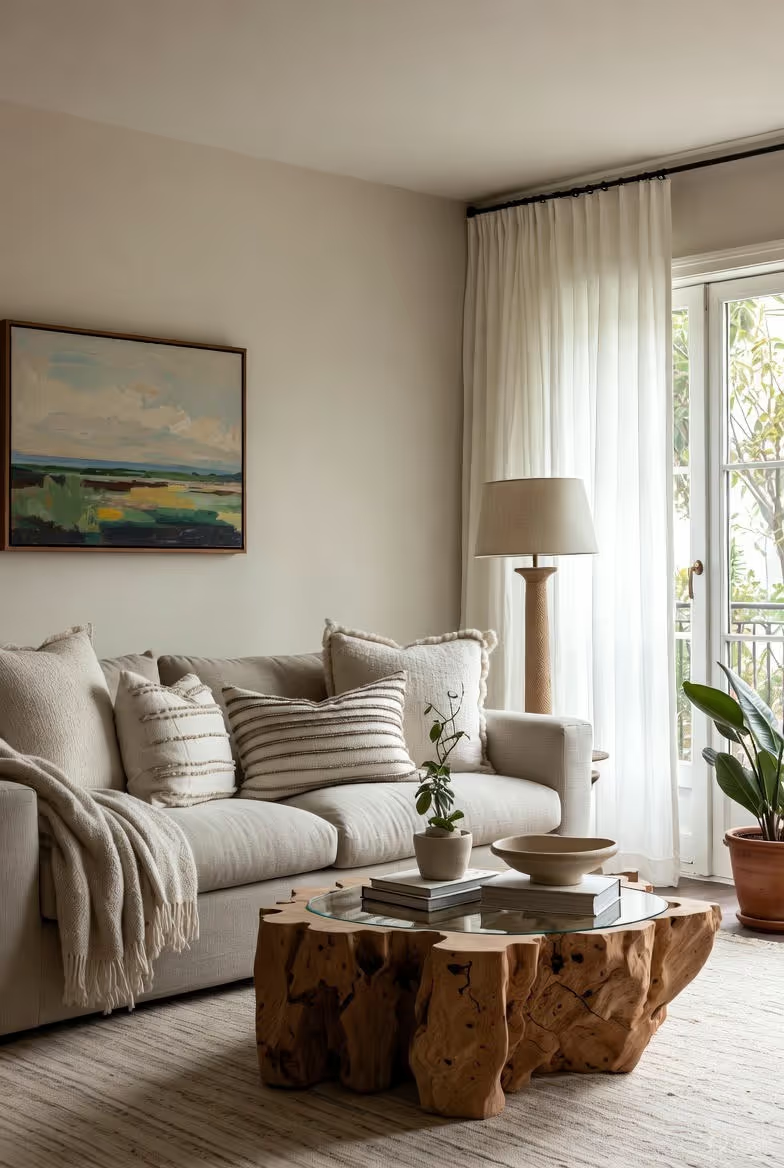
Texture is Tactile Therapy: Incorporate a variety of inviting textures: a chunky knit throw, a smooth leather chair, a soft wool rug, velvety cushions, and a cool stone or warm wood coffee table. This rich textural landscape is deeply soothing to the nervous system.
Acoustic Softening: Hard surfaces (floors, windows, walls) create echo and amplify sound, raising stress levels. Soft furnishings are your best acoustic treatment. Rugs, curtains, upholstered furniture, and even fabric wall hangings or bookshelves filled with books absorb sound, creating a quieter, more intimate atmosphere.
The TV Dilemma: The television is often the loudest, brightest, and most attention-demanding object in the room. When not in use, make it disappear. Place it in an armoire, behind sliding panels, or simply make a ritual of covering it with a beautiful tapestry. Establish household "screen-free" hours to reclaim the space for other forms of connection.
By thoughtfully zoning your living room, mastering light, and embracing softness, you create a space that doesn’t dictate activity but beautifully supports your choice of how to rest and connect. For more ideas on creating tech-healthy boundaries in shared spaces, our community FAQ offers practical tips from other users navigating the same challenges. Next, we venture into the space where our bodies are literally nourished: the kitchen.
The Kitchen: Cultivating a Nourishing and Mindful Hub
The kitchen is uniquely potent in the ecosystem of a restful home. It is a place of alchemy where we transform raw ingredients into sustenance, often a social gathering point, and for many, a source of both creativity and stress. A chaotic, inefficient, or sterile kitchen can make the daily act of feeding ourselves feel like a chore. A restful kitchen, however, promotes mindfulness, efficiency, and even joy in the process of nourishment. It becomes a place where you care for yourself and others with intention.
The Connection Between Space and Nourishment: There is a profound link between our environment and our eating habits. A calm, organized kitchen makes it easier to choose and prepare whole foods, while a disordered one can lead to reaching for processed convenience. The kitchen's design directly influences the quality of your physical nourishment.
H3: The Zen of Countertops: Clear Space, Clear Mind
The state of your kitchen counters is the state of your cooking mind.
The Clear Counter Policy: Adopt a "clear at night" rule. Every appliance, utensil, or item that does not earn its keep through daily use should be stored away. This single act creates a vast sense of visual peace and ready-to-use workspace.
The "Golden Triangle" Revisited: The classic work triangle between sink, refrigerator, and stove should be unobstructed. Keep the pathways between these points clear to allow for efficient, frustration-free movement.
Intentional Display: If you must keep items out, let them be beautiful and useful. A sleek knife block, a hand-thrown ceramic utensil crock, a row of clear glass jars holding staples like flour and oats. These items should feel curated, not cluttered.
H3: Sensory Sanity: Smell, Sound, and Sight
The kitchen is a sensory powerhouse. Managing these inputs is key to keeping it restful.
Aromatherapy Through Cooking: Instead of masking odors with harsh chemicals, focus on creating positive ones. Simmer pots with citrus peels and herbs, bake cinnamon, or keep a bowl of fresh lemons on display. Use a high-quality range hood to efficiently remove unwanted cooking smells.
Soften the Soundscape: Kitchens are notoriously loud with clanging pots, whirring appliances, and hard surfaces. Add a washable rug, use cork or felt drawer liners to quiet cabinet closures, and consider soft-close hinges. Playing calm music or a podcast can also define the auditory environment.
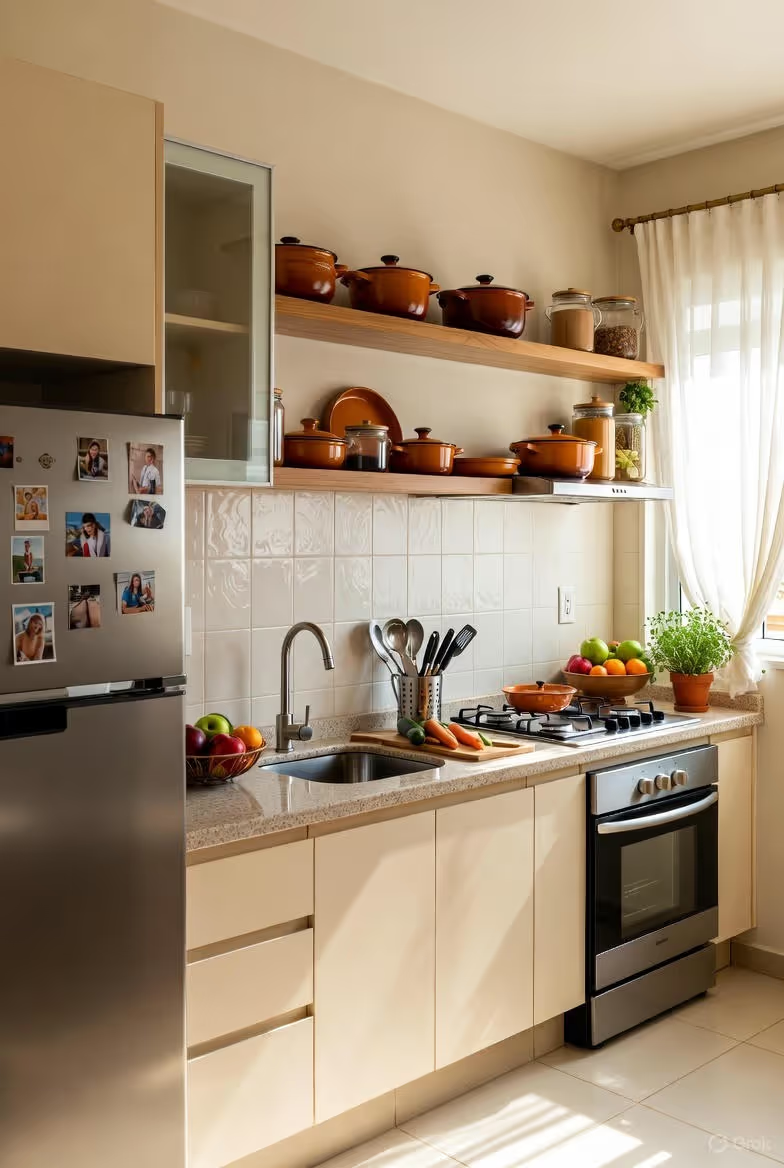
Open Shelving with Care: While popular, open shelving can quickly become visual noise. Use it sparingly and only for items you use daily and find aesthetically pleasing. Group items by color or material for a cohesive look.
H3: Organizing for Effortless Flow
A place for everything reduces decision fatigue and speeds up cleanup.
Zone Your Storage: Store items where they are first used. Keep coffee mugs near the coffee maker, pots and pans near the stove, cutting boards and knives near the primary prep area. This "mise en place" philosophy for storage creates intuitive workflow.
The "First-In, First-Out" System: In pantries and refrigerators, organize food with the oldest items in front. This reduces waste and the anxiety of discovering spoiled food. Use clear, uniform containers for dry goods to see what you have at a glance.
The Mindful Cleanup: Designate a "dirty" zone (dishwasher or one side of the sink) and make it a habit to clean as you go. A kitchen that stays relatively tidy during the cooking process makes the final cleanup less daunting and preserves the sense of calm.
By treating your kitchen as a sacred space of preparation and care, you elevate a daily necessity into a practice of self-respect. The mindfulness you cultivate here spills over into the meals you eat and the energy you bring to the table. Speaking of the table, this leads us naturally to the dining area, a space dedicated to the ritual of shared meals.
The Dining Area: Fostering Ritual and Uninterrupted Connection
In our era of eating on the go, in front of screens, or over the kitchen sink, the dedicated dining area has become an endangered space. Yet, its role in a restful home is irreplaceable. It is the stage for one of humanity's most fundamental bonding rituals: the shared meal. A restful dining space isn't about formality; it's about creating a dedicated, distraction-free container for nourishment and connection, both with food and with each other.
The Lost Art of Breaking Bread: Studies consistently show that regular family meals are linked to better academic performance, higher self-esteem, healthier eating patterns, and reduced risk of substance abuse. For adults, they are a vital practice of community and decompression. The dining area physically and symbolically holds this space open.
H3: The Table as Altar: Centering the Space
The dining table is the unambiguous heart of this room. Its treatment sets the tone.
Keep it Clear: The table should be a clean, inviting surface, not a permanent home for mail, school projects, or clutter. A simple centerpiece—a bowl of fruit, a low vase with seasonal greenery—can act as a beautiful anchor.
Scale and Comfort: Ensure the table is the right size for the room and your typical gathering. People should be able to sit down and get up without squeezing. Invest in comfortable chairs; mealtime should not be physically taxing.
The Power of a Tablecloth: Using a cloth, even a simple cotton one, instantly defines the space for a special occasion. The tactile feel and visual softness elevate an ordinary meal into a considered event.
H3: Ambiance Engineering: Light, Sound, and Temperature
The atmosphere around the table is what encourages people to linger and connect.
Warm, Dimmable Light: Harsh overhead lighting is the enemy of a relaxed meal. Always use a dimmer switch. The ideal dining light is a pendant or chandelier hung low (about 30-36 inches above the table) to create a warm, intimate pool of light that focuses attention on the food and faces. Candles are the ultimate restful dining light, providing a flickering, primal warmth.
Auditory Boundaries: Make this a device-free zone. Establish a rule that phones are not brought to the table, or are placed in a communal basket during the meal. The only sounds should be conversation, clinking cutlery, and perhaps some soft background music if desired.
Comfortable Climate: Ensure the dining area is neither too hot nor too cold. A stuffy room will make people want to leave quickly; a chilly one will make them tense. A small fan or space heater can help regulate the temperature for comfort.
H3: Cultivating the Ritual
The space enables the ritual, but your actions bring it to life.
The Shared Beginning and End: Start the meal with a simple moment of gratitude—for the food, for the cook, for the company. Similarly, ending the meal by clearing plates together reinforces a sense of shared responsibility and community.
Conversation Catalysts: For families or groups, have a ritual question to spark conversation: "What was your high and low today?" or "What's something you learned this week?" This moves talk beyond logistics.
Flexibility for All Occasions: Your dining space should be able to scale. A large table can feel intimate for two with placemats set closely together. Have extra chairs readily available. The space should feel welcoming for both a Tuesday night dinner and a weekend gathering.
By reclaiming your dining area as a sacred space for undistracted breaking of bread, you invest in the relational health of your household. It’s a daily practice in mindfulness and connection. After nourishing the body and soul, we move to the space designed for cognitive nourishment and focus: the home office or study.
The Home Office / Study: Architecting a Space for Deep Focus
The rise of remote and hybrid work has permanently blurred the lines between our professional and personal lives. For a restful home, this presents a critical challenge: how to create a workspace within your sanctuary that promotes productivity without poisoning your peace. A restful home office isn't about replicating a corporate cubicle; it's about designing an environment that minimizes distraction, supports physical well-being, and allows you to enter a state of deep focus—and then leave it completely behind at the end of the day.
The Cognitive Load of Context Switching: When your workspace is your living space, the mental act of "switching off" becomes difficult. A poorly defined office leads to work thoughts infiltrating relaxation time, and home distractions sabotaging work focus. Spatial and sensory boundaries are non-negotiable.
H3: The Sacred Boundary: Physical and Visual Separation
If at all possible, dedicate a room with a door. If you must use a nook or corner, create powerful symbolic boundaries.
The "Door" Signal: Even in an open space, use a room divider, a large bookshelf, or a distinctive area rug to demarcate the "office zone." When you step onto that rug, you are "at work."
The End-of-Day Shutdown Ritual: This is the most important practice. At a set time, physically shut down your computer (don't just sleep it), tidy your desk, turn off the dedicated office light, and if possible, close a door or pull a curtain across the space. This ritual signals to your brain that work is over. A device like the Oxyzen ring can provide fascinating feedback here; you might see your stress markers decrease measurably after you implement a consistent shutdown ritual, proving its physiological impact.
Out of Sight, Out of Mind: Have closed storage for work materials. At the end of the day, file away papers, put notebooks in a drawer, and tuck away work-specific devices. A clean, minimal desk surface after hours is visually calming.
H3: Ergonomic Foundations: When Comfort Equals Focus
Physical discomfort is a relentless source of distraction and long-term harm.
Invest in Your Throne: Your chair is your most important tool. It should provide lumbar support and allow your feet to rest flat on the floor. Your monitor should be at eye level, about an arm's length away, to prevent neck strain.
The Dynamic Setup: Incorporate movement. A standing desk converter, or even just a timer to remind you to stand and stretch every 30 minutes, is crucial. A small footrest or an anti-fatigue mat can also vary your posture.
Lighting for Eyes and Mind: Combine abundant, glare-free natural light with excellent task lighting. Position your desk perpendicular to a window to avoid screen glare. Use a high-quality, adjustable desk lamp for detailed work. Avoid cool, blue-heavy light in the afternoon to protect your evening wind-down.
H3: Minimizing Digital and Mental Clutter
A cluttered digital desktop or a noisy environment is as draining as a cluttered physical one.
Cable Management: Use clips, sleeves, or trays to bundle and hide cables. A tangle of wires is visual chaos and a dust magnet.
Digital Hygiene: Keep your computer desktop and digital files as organized as your physical ones. Use virtual desktops or full-screen modes for focused work. Employ website blockers during deep work sessions if needed.
Acoustic Control: If your space is noisy, invest in a good pair of noise-canceling headphones. For calls, a dedicated microphone can improve sound quality and reduce the strain of being heard. Conversely, if you need to create sound, use focus playlists or ambient noise generators (like brown noise) to mask distracting sounds.
By treating your home office not as an afterthought but as a intentionally designed cockpit for concentration, you protect both your professional output and your home's restorative atmosphere. The principles of focus and well-being you apply here are part of a larger philosophy, one you can learn more about in our company's story and mission. After a day of mental exertion, the body craves movement and release, which brings us to spaces for physical activity.
Dedicated Spaces for Movement & Relaxation (Yoga, Meditation, Exercise)
A truly holistic, restful home caters not just to the mind but also to the body's need for movement and conscious stillness. Whether it's a corner for morning yoga, a garage gym, or a cushion for meditation, dedicating space for physical practice signals a commitment to integrated wellness. These spaces, however small, transform exercise from a scheduled outing into a natural, accessible part of your daily home rhythm.
The Mind-Body-Space Connection: The environment in which you move or meditate profoundly affects the quality of that practice. A cramped, cluttered, or uninspiring space can become a barrier, while a thoughtfully prepared one acts as an invitation and a support system.
H3: Carving Out Your "Movement Nook"
You don't need a full room. You need intentional, dedicated square footage.
The Bare Minimum: Clear a space roughly the size of a yoga mat (6' x 2'). This is your non-negotiable territory. Keep it clear of furniture and clutter at all times. Its very emptiness is an open invitation.
The Multi-Purpose Strategy: In small homes, this space can serve dual purposes. A living room corner can be cleared for a morning routine. A guest bedroom can house a foldable treadmill or a set of resistance bands stored neatly in a basket.
The Visual Cue: Keep your primary tool—your mat, your meditation cushion, your kettlebell—visible and beautifully placed. Seeing it regularly serves as a passive reminder and reduces the friction of starting.
H3: Curating the Atmosphere for Practice
The sensory environment should support your intended state, be it energized flow or deep calm.
For Energy & Focus (Exercise Zones):
Lighting: Bright, cool-toned light stimulates alertness. Ensure good overall illumination to prevent injury.
Sound: High-energy playlists or podcasts are great. Consider a solid Bluetooth speaker. Ventilation is key—a fan or open window is essential.
Sight: Place a mirror if form-check is important (e.g., for weightlifting). Use inspiring imagery or simple, bold colors that feel motivating.
For Calm & Stillness (Yoga/Meditation Zones):
Lighting: Soft, warm, dimmable light. Natural light is ideal for morning practice. Candles or salt lamps can create a serene, flickering ambiance for evening sessions.
Sound: Soundproof as much as possible. Use a white noise machine to mask household sounds. For meditation, a simple singing bowl or a timer with a gentle chime is perfect.
Sight: Face a blank wall, a serene piece of art, or a window with a natural view. Keep visuals minimal and peaceful. A small shelf with a plant, a crystal, or an incense holder can ground the space.
H3: Storage as a Ritual
How you put things away is as important as how you take them out.
The "Studio" Feel: Use attractive storage: a woven basket for blocks and straps, a wall rack for mats, a sleek cabinet for smaller equipment. This maintains the aesthetic of your home while keeping tools accessible.
The Ritual of Setup and Takedown: If your space is multi-use, create a quick, satisfying ritual for converting it. Rolling out your mat can be a mindful act of claiming the space for practice. Similarly, neatly putting everything away signifies the end of the session and restores order.
Biophilic Elements: Nothing enhances a movement or meditation space like a connection to nature. A large, healthy plant (like a fiddle leaf fig or peace lily), a small indoor fountain, or even a beautiful stone or piece of driftwood can root the practice in the natural world.
By honoring your body's need for movement and stillness with dedicated space, you make a powerful statement that physical and mental wellness are woven into the fabric of your home life. These practices, supported by your environment, build resilience that carries through your entire day. As evening falls, our attention turns to the ultimate sanctuary for restoration: the bedroom and the science of truly regenerative sleep.
The Bedroom: The Ultimate Sanctuary for Regenerative Sleep
The bedroom is the crown jewel of a restful home. It is not merely a place to sleep; it is a biological repair station, an emotional reset button, and a sanctuary for intimacy and deepest privacy. Yet, it is often the most neglected room from a design-for-wellness perspective, doubling as a home office, entertainment center, and storage unit. To reclaim it as a sanctuary is to make a fundamental investment in your health. The quality of your sleep—dictated largely by your bedroom environment—impacts every facet of your life: cognitive function, mood, immune resilience, and even metabolic health.
Sleep as a Non-Negotiable Foundation: We cannot achieve restfulness in waking life without achieving it in sleep. The bedroom's singular, non-negotiable purpose is to support the complex neurobiological processes of sleep. Every design choice should be interrogated with one question: "Does this help or hinder my sleep?"
H3: The Sensory Blackout: Sight, Sound, and Smell
Your sleep cycle is exquisitely sensitive to environmental cues. The goal is to create a sensory void that allows your body's natural rhythms to take over.
Pitch-Perfect Darkness: Light exposure at night, even from tiny LED indicators or streetlights, suppresses melatonin production. Achieve cave-like darkness with:
Blackout Solutions: Invest in high-quality blackout curtains or shades. Test them by standing in the room during the day; you should see no pinpricks of light. Consider a blackout roller shade behind your decorative curtains for a layered effect.
Light Elimination: Remove or cover all electronic light sources. Use black electrical tape on chargers, routers, and smoke detectors. Consider a sleep mask as a personal, portable blackout tool.
The Sound of Silence (or Consistency): Sudden, intermittent noises (a door slam, a dog bark) are far more disruptive than continuous noise. Create a consistent soundscape:
White Noise is Your Ally: A white noise machine, a fan, or a dedicated app playing brown or pink noise masks disruptive sounds and provides a steady auditory blanket. This is one of the most effective, low-cost interventions for improving sleep continuity.
Address the Source: If possible, fix squeaky doors, quiet noisy air vents, and add draft seals to doors to minimize sound transfer from the rest of the house.
Olfactory Calm: The bedroom is not the place for strong, stimulating scents. Opt for subtle, calming aromas that you associate with safety and rest.
Lavender & Chamomile: These have mild, evidence-backed sedative effects. A few drops of essential oil on a cotton ball near your bed or in a diffuser (set to turn off after 30 minutes) can be helpful.
Clean Air is Key: Prioritize air quality. An air purifier with a HEPA filter can remove allergens and dust, while a humidifier can prevent dry air that irritates sinuses and disrupts breathing. Monitor your bedroom's environment; users of the Oxyzen smart ring often find a direct correlation between improvements in air quality/humidity and their measured sleep scores and resting heart rate data.
H3: The Temperature & Airflow Sweet Spot
Your core body temperature needs to drop to initiate and maintain sleep. The bedroom environment must facilitate this.
The Goldilocks Zone: For most people, the ideal sleep temperature is between 60-67°F (15.5-19.5°C). This is often cooler than people expect. Set your thermostat accordingly.
Bed-Specific Cooling: If you can't control the whole house temperature, focus on your microclimate. Use breathable, natural fiber bedding (cotton, linen, bamboo), consider a cooling mattress pad or pillow, and use a dedicated bedside fan.
Air in Motion: Stagnant air can feel oppressive. Gentle airflow from a fan or an open window (if outdoor noise and temperature permit) not only cools but also provides that consistent white noise.
H3: The Psychology of the "Sleep Cave"
Beyond the senses, the bedroom must feel psychologically safe and dedicated to rest.
The No-Electronics Rule: Banish televisions, computers, and exercise equipment. The bed should be for sleep and intimacy only. This strengthens the powerful mental association between your bed and rest. Charge your phone in another room.
Clutter is Cognitive Noise: A messy room leads to a messy mind, even subconsciously. Maintain clear surfaces, under-bed storage (with closed containers), and a tidy closet. Make your bed every morning—it's a quick win that transforms the room's energy.
Color and Texture for Calm: Opt for a muted, soothing color palette—think earthy tones, soft blues, gentle greens, or warm neutrals. Layer textures for comfort: a plush rug beside the bed, soft linen sheets, and a weighted blanket if you find it comforting.
By treating your bedroom as a sacred, single-purpose laboratory for sleep, you give yourself the greatest possible gift: a foundation of daily, deep restoration. For those looking to fine-tune this environment with precision, exploring our blog for tips on sleep optimization alongside biometric data can be transformative. From the private sanctuary, we move to the shared, utilitarian spaces that also demand a sense of calm: the bathroom and laundry room.
The Bathroom: Transforming Daily Routines into Rituals of Care
The bathroom is a space of inescapable intimacy, where we perform our most fundamental acts of self-care. Yet, it is often designed for cold efficiency, not warmth and restoration. A restful bathroom transforms these daily routines—bathing, grooming, preparing for the day—from mundane tasks into mindful rituals. It becomes a personal spa, a place where you care for your body with respect and attention, setting a tone of self-regard that echoes throughout your day.
From Clinical to Curative: The goal is to shift the bathroom’s identity from a sterile, clinical space to a curative, nurturing one. It should feel clean, but not cold; organized, but not impersonal; private, and profoundly peaceful.
H3: The Spa Sensibility: Engaging the Senses
The power of a bathroom lies in its ability to engage multiple senses in a compact space, making it ideal for creating immersive, calming experiences.
Hydrotherapy at Home: The shower and bath are your primary tools.
Shower Upgrades: A rainfall showerhead reduces the aggressive, pinpoint sensation of water. If possible, install a thermostatic valve to prevent sudden temperature swings. Keep shower products minimal and in simple, unified containers (glass or neutral-pump bottles) to reduce visual clutter.
The Bathing Ritual: Create a dedicated bath caddy to hold a book, a candle, and perhaps a beverage. Keep Epsom salts, baking soda, or a few drops of essential oils (like eucalyptus or cedarwood) nearby to transform a simple soak into a detoxifying or muscle-relaxing experience.
Warm, Flattering Light: Harsh, overhead lighting is unflattering and jarring, especially first thing in the morning or late at night.
Layer the Light: Install dimmable sconces or vertical light strips on either side of the mirror to eliminate face shadows. For overall ambient light, use a dimmable ceiling fixture with a warm color temperature (2700K).
Candlelight Magic: For baths or evening routines, use candlelight exclusively. It is the most flattering and calming light known to humankind.
Tactile Luxury: Because you are often undressed here, the feel of everything matters.
Textile Upgrade: Invest in the highest-quality, plush towels and bath mats you can afford. They are a daily luxury that never loses its value. A heated towel rack is a sublime indulgence that elevates the entire experience.
Warm Surfaces: Where possible, incorporate warm materials—a teak bath mat, a stone vessel sink, or even just a small wooden stool or tray.
H3: The Sanctuary of Order and Cleanliness
Clutter and grime are the antithesis of a restful bathroom. Order here feels particularly vital.
The Vanity Edit: The countertop should be as clear as possible. Store daily-use items in drawers or in a simple tray or basket to corral them. Anything used less than weekly should be in a cabinet. Adopt a "one-in, one-out" policy for products.
Medicine Cabinet & Storage Mindfulness: Regularly purge expired medications and old products. Use clear, labeled organizers within drawers for categories (dental, skincare, haircare). This eliminates the frantic "dig and search" that can start the day with stress.
The "Clean Enough to Relax" Standard: A bathroom doesn't need to be surgically sterile, but it must feel sanitized. Establish a quick daily wipe-down habit (counters, mirror, sink) and a deeper weekly clean. The sight of water spots or toothpaste splatters is subtly agitating.
H3: Creating Mini-Rituals
Use the built-in routines of the bathroom to insert moments of mindfulness.
The Morning Preparation Pause: Instead of rushing through your routine, use the time applying moisturizer or brushing your teeth as a moment to set an intention for the day. Feel the textures, notice the scents, be present.
The Evening Wind-Down Wash: Transform your evening face wash or shower into a ritual of washing away the day. Use a calming cleanser scent, move slowly, and pair it with deep breaths.
Aromatherapy Integration: Since the bathroom is often steamy, it's the perfect place for aromatherapy. A few drops of peppermint or citrus oil in the shower can invigorate a morning; lavender or vetiver on a cotton ball can calm an evening.
By elevating your bathroom from a purely functional room to a curated space for sensory self-care, you embed small acts of restoration into the very fabric of your day. This mindful approach to personal care complements a data-informed understanding of your body's needs, something our users often discuss in shared testimonials and experiences. Next, we address a space that, when mastered, provides a unique and profound peace: the laundry and utility room.
The Laundry & Utility Room: Finding Peace in Practicality
The laundry room, mudroom, or any utility space is the unsung hero of a restful home. It is the engine room where the unseen work of maintaining domestic order happens. When these spaces are chaotic, disorganized, or unpleasant, household chores feel like overwhelming burdens. When they are efficient, pleasant, and systematized, they provide a deep, often overlooked sense of peace: the peace of practicality. A restful utility room makes maintenance effortless, freeing up mental and physical energy for more enjoyable pursuits.
The Psychology of Completed Cycles: Laundry is the quintessential never-ending chore. A well-designed space helps you see it not as a monolithic task, but as a simple, completable cycle: sort, wash, dry, fold, put away. Reducing friction at each stage is the key.
H3: Engineering for Effortless Workflow
Treat this space like a small, efficient factory for fabric care.
The Linear Process Flow: If space allows, arrange machines and surfaces to follow the natural order of the task. A counter for sorting/folding between the washer and dryer is ideal. Use wall space above machines for supplies.
Sorting Simplified: Have multiple, clearly labeled hampers or bins for darks, lights, and delicates. This makes sorting a one-step action at the point of undressing, not a pre-wash chore. A small, pull-out sorting drawer system can be a space-saving miracle.
The "Right Where You Need It" Principle: Store detergents, stain sticks, and dryer sheets immediately above or beside the machines. Use a wall-mounted drip-dry rack or a retractable clothesline. The fewer steps you have to take mid-task, the smoother it goes.
H3: Elevating the Atmosphere
Just because it's a utility space doesn't mean it has to be grim.
Good Lighting is Non-Negotiable: You need to see stains and sort colors accurately. Install bright, daylight-balanced LED fixtures. Under-cabinet lighting over a folding counter is incredibly helpful.
Ventilation is Vital: This is a hot, humid space. Excellent ventilation prevents mildew smells (which can permeate your clean clothes) and makes time spent there more comfortable. Ensure your dryer is vented properly, and consider an additional exhaust fan.
Add a Touch of Joy: Paint the room a cheerful, clean color you love. Add a small, durable rug that feels good underfoot. Hang a piece of whimsical art or a funny laundry-related sign. A single, hard-to-kill plant (like a snake plant) can add life.
H3: Systems That Prevent Pile-Ups
The dread of laundry often comes from the mountain of clean clothes waiting to be folded.
The "Fold Immediately" Habit: Design the space to make this easy. A dedicated, comfortable-height folding counter is crucial. Play a podcast or music you enjoy and fold a load as soon as it's dry. This breaks the task into manageable, 10-minute increments.
Designated "Clean" and "Dirty" Zones: Never let clean and dirty clothes mingle. Have a specific basket, shelf, or rod for clothes fresh from the dryer that are awaiting folding. This contains the visual chaos.
A Home for Lost Socks & Mending: Have a small "lost sock" basket and a mending kit (needles, thread, buttons) in a drawer. This stops single socks from littering surfaces and makes quick repairs possible on the spot.
By mastering the utility room, you conquer a significant source of background domestic stress. It becomes a place of quiet efficiency, a testament to the fact that caring for your home and belongings can be a simple, almost meditative practice. This systematic approach to your environment reflects a broader commitment to intentional living. For those curious about the philosophy behind creating products that support such a lifestyle, you can read more about our founding vision and values here. Our journey now takes us outside the home's primary walls to a space with unparalleled restorative potential: the outdoor areas.
Outdoor Spaces (Balcony, Patio, Garden): Extending Your Sanctuary into Nature
Your restful home does not end at your exterior walls. Outdoor spaces—whether a sprawling backyard, a modest patio, or a tiny balcony—are potent extensions of your sanctuary. They provide the most direct access to the single most restful element known to humanity: nature. Engaging in what the Japanese call shinrin-yoku or "forest bathing," even in micro-doses, lowers cortisol, boosts mood, and improves focus. A restful outdoor space invites you to breathe deeply, move freely, and reconnect with the rhythms of the natural world.
The Alchemy of Biophilia: Incorporating natural elements isn't just decorative; it's biological necessity. A well-designed outdoor area satisfies our innate biophilic needs, offering sunlight, fresh air, greenery, and perhaps the sound of water.
H3: Defining "Rooms" Under the Open Sky
Treat your outdoor space with the same intentional zoning as your interior.
The Conversation Zone: This is your outdoor "living room." Arrange durable, comfortable seating (all-weather wicker, teak, or powder-coated metal with thick cushions) in a cluster to encourage conversation. Define the area with an outdoor rug.
The Dining Zone: An outdoor table and chairs, preferably under some form of shade (a pergola, umbrella, or tree), creates a space for alfresco meals, which inherently feel more leisurely and celebratory.
The Solitude Nook: Even in a small space, create a single-person retreat. A comfortable hanging chair, a bench nestled among plants, or a simple hammock strung between posts offers a dedicated spot for reading, contemplation, or simply being.
The Active/Growing Zone: Designate space for whatever brings you alive—a container garden for herbs and tomatoes, a small patch of grass for yoga, or a cleared area for a fire pit.
H3: Engaging the Senses with Natural Elements
Craft an immersive experience that delights all five senses.
Sight: The Layered Garden: Create visual depth and interest. Use tall plants or trellises in the back, medium shrubs in the middle, and low-growing flowers or ground cover in front. Incorporate plants with varying leaf textures and colors. Add solar-powered fairy lights or lanterns for magical evening ambiance.
Sound: The Music of Nature: Mask urban noise with more pleasant sounds. A small fountain or birdbath provides the soothing, consistent sound of trickling water. Wind chimes, bamboo rustling, or plants that attract birds and bees create a natural symphony.
Smell: Aromatic Planting: Plant for fragrance. Jasmine, gardenia, lavender, rosemary, and mint release beautiful scents, especially in the evening or when brushed against. This is natural aromatherapy at its finest.
Touch: Textural Variety: Incorporate different surfaces underfoot: smooth stone, soft grass, warm wood decking. Have textiles like outdoor cushions and blankets that invite you to touch and settle in.
Taste: The Edible Landscape: If you have even a sliver of space, grow something you can eat. The act of tending and harvesting herbs, strawberries, or cherry tomatoes is profoundly satisfying and connects you to your food in a primal way.
H3: Creating Privacy and Protection
To feel truly at rest outdoors, you need a sense of enclosure and comfort.
Natural Screening: Use fast-growing vines on trellises, tall ornamental grasses, or strategic placement of large potted plants (like bamboo or arborvitae) to create privacy from neighbors and define your space.
Shelter from the Elements: Provide options for sun and rain. A large market umbrella, a pergola with a retractable canopy, or even a simple cantilevered shade sail can make the space usable for more hours of the day.
The Indoor-Outdoor Flow: Make it easy to move between inside and out. If you have the option, use similar flooring materials or colors to blur the boundary. Keep a basket by the door with outdoor essentials: a blanket, citronella candles, and a towel for drying morning dew off chairs.
By thoughtfully cultivating your outdoor spaces, you effectively increase the square footage of your sanctuary and tap into the most ancient, powerful source of restoration available. It’s a place to practice digital disconnection and earthly reconnection. As we near the conclusion of this portion of our guide, we turn to a final, unifying principle: the integration of intelligent technology to personalize and perfect the restful environments we have so carefully built.
Integrating Smart Wellness Technology: Personalizing Your Sanctuary with Data
We have journeyed room by room, applying timeless principles of design, decluttering, and sensory management to craft a deeply restful home. But in our modern age, we possess a powerful new ally: intelligent, personalized data. Smart wellness technology allows us to move from generalized best practices to a precision approach to rest. It turns your home from a static environment into a responsive partner in your well-being, capable of adapting to your body's unique and fluctuating needs. This isn't about replacing human intuition; it's about augmenting it with objective insight, creating a feedback loop where your environment and your physiology inform each other.
From Guesswork to Guided Optimization: For generations, we've relied on how we "feel" to gauge our rest. But feelings can be subjective and misleading. You might feel you slept poorly, but data could show you achieved solid deep sleep. Conversely, you might feel fine, while biometrics reveal elevated nighttime stress or poor recovery. Technology like the Oxyzen smart ring provides an impartial, 24/7 dashboard for your nervous system, offering a language to understand what your environment is truly costing—or gifting—your body.
H3: The Biometric Feedback Loop: Your Body as the Ultimate Guide
The core of this integration is establishing a feedback loop: you make a change to your home environment, and you measure your body's objective response.
Sleep Quality as the North Star: Your bedroom interventions (temperature, darkness, sound) have a direct, measurable impact. With a wellness tracker, you can see not just "hours slept," but sleep stages (light, deep, REM), sleep latency (how long it takes to fall asleep), and restlessness. Did lowering your thermostat by 2 degrees increase your deep sleep percentage? Did using a white noise machine reduce your wake-ups? The data provides clear, actionable answers.
Stress and Recovery Metrics: Key metrics like Heart Rate Variability (HRV) and resting heart rate (RHR) are windows into your autonomic nervous system. A high, resilient HRV indicates good recovery and adaptability. You can experiment: does a 20-minute evening meditation in your dedicated quiet corner elevate your next morning's HRV? Does a chaotic, screen-filled living room evening correspond with a depressed HRV score? This turns abstract concepts of "stress" into quantifiable patterns linked to specific spaces and times of day.
Activity and Readiness Scores: These composite scores (offered by devices like Oxyzen) analyze your sleep, stress, and activity data to suggest your daily capacity. A low "readiness" score might be your cue to prioritize your restful environments—to take a bath, spend extra time in your meditation nook, or turn in an hour earlier—rather than pushing through fatigue.
H3: Environmental Synchronization: Making Your Home "Body-Aware"
With data in hand, you can program your home's technology to work in harmony with your biology.
Circadian Lighting Automation: Use smart bulbs (like Philips Hue or Lutron) programmed to a circadian schedule. They can blast cool, bright light in your home office during morning focus hours, gradually shift to warm white in the afternoon, and emit a dim, amber glow in the living room and bedroom in the evening to protect melatonin production. Your sleep data will show the impact.
Climate Control for Sleep Optimization: A smart thermostat (like Nest or Ecobee) can be programmed to lower the temperature in your bedroom 30-60 minutes before your typical bedtime, facilitating the core body temperature drop essential for sleep onset. It can then warm the house slightly before your wake-up time.
Soundscapes on Demand: Smart speakers can be programmed with routines. A morning routine might play uplifting music in the kitchen. An evening "wind-down" routine could start playing a specific sleep story or brown noise soundscape in the bedroom at a set time, triggered by your voice or a schedule.
H3: The Ethical, Balanced Approach: Technology as a Servant, Not a Master
The goal is to use technology to create a more natural, attuned environment, not a more distracting one. This requires conscious boundaries.
Data-Informed, Not Data-Obsessed: Check your dashboard once a day, perhaps in the morning, to review the previous night and set an intention. Don't compulsively check metrics throughout the day. Let the device work passively in the background.
The "Do Not Disturb" Sanctuary: Your bedroom and other rest zones should be largely free of intrusive tech. Ensure all smart home notifications are silenced in these spaces. The technology should work silently to support the environment, not interrupt it.
Personalization Over Prescription: The data is about you. What works for one person (a very cold room, a specific sound) may not work for another. Use the trends over time to discover your personal formula for rest. For common questions on how to interpret data and apply it, our comprehensive FAQ is an excellent resource.
By integrating smart wellness technology thoughtfully, you complete the circle of a modern restful home. You move from creating a space that should be calming to curating an environment that you know is helping you recover, based on the direct signals from your own body. It’s the ultimate personalization of your sanctuary. This holistic, data-aware approach is at the core of our mission to empower personal wellness, a journey you can learn more about here.
Maintaining the Restful Home: The Art of Sustainable Peace
Creating a restful home is a profound achievement, but the greater challenge—and opportunity—lies in maintaining it. A sanctuary is not a static museum exhibit; it is a living ecosystem that requires gentle, consistent stewardship. Without maintenance, clutter creeps back in, systems break down, and the serene atmosphere can quickly evaporate under the pressures of daily life. Sustainable peace in the home is not about perfection; it’s about establishing simple, repeatable rituals and a forgiving mindset that makes upkeep feel like caring for a beloved companion, not a relentless chore.
The Rhythm of Renewal: Think of home maintenance not as a linear task with an end point, but as a cyclical rhythm, much like the seasons or your own breath. It involves daily "micro-resets," weekly "tune-ups," and seasonal "deep refreshes" that work together to preserve the restful foundation you've built.
H3: Daily Rituals: The 10-Minute Reset
The single most powerful tool for maintenance is the short, daily ritual. These prevent small messes from becoming overwhelming projects.
The Evening Reset: Dedicate the last 10-15 minutes before bed to a quick home reset. This is not a deep clean. It is simply returning the environment to its baseline of order: loading the dishwasher, returning cushions to the sofa, putting away stray items, wiping down kitchen counters, and ensuring the entryway is clear. Waking up to a tidy home is a gift to your future self and sets a calm tone for the day.
The "One-Touch" Rule: A powerful mindset shift is to handle items only once. When you take off your coat, hang it up immediately. When you finish a letter, file or shred it. When you bring in mail, sort it right away. This eliminates the "pile-forming" intermediate stops that create clutter.
Mindful Appreciation: As you perform your evening reset, do so with a sense of gratitude. Touch the fabrics of your sofa, appreciate the clean line of an uncluttered counter, and take a moment to feel the peace you’ve cultivated. This reframes maintenance from a duty to an act of love for your sanctuary.
H3: Weekly and Seasonal Rhythms: Beyond the Surface
While daily rituals handle the surface, deeper rhythms preserve the structure.
The Weekly Home "Meeting": Set aside 30-60 minutes each week (perhaps on a Sunday evening) for a slightly deeper tune-up. This includes tasks like changing bed linens, vacuuming all rugs, cleaning bathrooms, taking out all trash/recycling, and watering plants. Having a designated time for these tasks prevents them from becoming a source of low-grade anxiety during the week.
The Seasonal "Sacred Edit": Four times a year, align with the change of seasons to conduct a more thorough review. This goes beyond cleaning:
Clothing & Linens: Rotate seasonal clothing, donating items no longer worn. Swap out heavy bedding for lighter layers, or vice versa.
Pantry & Fridge: Do a full purge of expired food, wipe down shelves, and reorganize.
Digital Declutter: Clean up your computer desktop, organize digital photos, and unsubscribe from unwanted emails.
Space Re-assessment: Walk through each room. Is it still serving its intended purpose? Has any clutter silently accumulated? Does the furniture arrangement still feel good? This is the time to make small tweaks and course corrections.
H3: The Mindset of Graceful Imperfection
A restful home must be lived in. It will not always be pristine, and that is not only okay—it’s essential.
Embrace "Lived-In" Moments: A blanket crumpled on the couch after a cozy reading session, a puzzle spread out on the table, art supplies in use—these are signs of life, not failure. The goal is a baseline of order that can comfortably accommodate joyful activity.
Focus on Systems, Not Perfection: Your energy should be on maintaining the systems (the landing strip in the entryway, the clear counter policy, the laundry workflow), not on achieving a state of sterile perfection. If the system is sound, returning to order is always just a few minutes away.
Involve the Household: A sanctuary maintained by one person can become a source of resentment. Clearly communicate the "why" behind systems—how a clear entryway reduces everyone's morning stress, how a tidy living room makes movie night more enjoyable. Assign age-appropriate tasks to make maintenance a shared family value.
By adopting a rhythmic, systematic, and graceful approach to maintenance, the restful home becomes a self-reinforcing cycle. The peace it provides gives you the energy to maintain it, and the act of maintaining it becomes a peaceful, mindful practice in itself. This is the art of sustainable domestic peace.
Conclusion of Part One: Your Home as an Ecosystem of Restoration
Our journey through the rooms of a restful home reveals a fundamental truth: your living space is far more than a collection of walls and furniture. It is a dynamic ecosystem of restoration, an active participant in your well-being. From the intentional transition of the entryway to the sleep-optimized cave of the bedroom, from the mindful nourishment of the kitchen to the nature-embracing reach of the outdoors, each space offers a unique opportunity to support a different facet of your health.
We have moved beyond mere decoration into the realms of environmental psychology, sensory design, and biophilic integration. We have seen how clutter is cognitive noise, how light dictates biology, and how personal sanctuary is both a right and a ritual. And we have explored how modern technology, when applied with wisdom, can personalize this environment, turning generic advice into a precise blueprint for your recovery.
The work described in this guide is not about achieving a final, photographed state of perfection. It is an ongoing practice—a conversation between you and your space. It begins with a single, conscious change in a single room. Perhaps you clear your bedside table tonight. Maybe you add a plant to your desk tomorrow. Each intentional act is a vote for a more peaceful life.
Remember, the ultimate metric of success is not how your home looks, but how it makes you feel. Do you breathe a little easier when you walk in the door? Do you fall asleep more readily? Do you find yourself more present with your loved ones? These are the true measures of a restful home.
This foundational understanding sets the stage for the next phase of our exploration. In the continuation of this guide, we will delve into advanced layers of creating a holistic sanctuary. We will explore:
The Role of Color Psychology & Advanced Acoustics: Going beyond "calm colors" to the specific emotional and energetic impacts of hues, and sophisticated soundscaping for focus and relaxation.
Nurturing a Restful Home for Families & Children: Designing multi-generational sanctuaries that respect both communal joy and individual quiet, and teaching children the value of restorative spaces.
Addressing Special Challenges: Creating restful environments in small apartments, open-concept spaces, and homes shared with roommates, where boundaries are both physical and communicative.
The Spiritual & Energetic Dimension: Incorporating principles of spatial harmony like Feng Shui, the use of sacred geometry, and creating altars or intention spaces for personal reflection.
Sustainable & Non-Toxic Living: How choosing low-VOC materials, natural fibers, and eco-friendly home products contributes not just to planetary health, but to the pure, clean atmosphere of your personal sanctuary.
Community & Neighborhood as Extended Sanctuary: How to foster a restful micro-community and buffer your home from external noise and visual pollution.
Your home is your most constant companion. By investing intention into making it restful, you are investing in your long-term resilience, joy, and health. Continue this journey with us to build a sanctuary that doesn’t just shelter you, but actively heals and inspires you. For further inspiration and detailed guides on weaving wellness into every aspect of your life, we invite you to explore the full collection of resources on our blog.



%402x.svg)