


How to Improve HRV During High-Stress Periods (Proven Strategies)
Proven strategies to improve HRV even during periods of high stress.
Proven strategies to improve HRV even during periods of high stress.
%402x.svg)
You know the feeling. Your heart pounds against your ribs, your breath shortens, and a relentless pressure sits on your chest. It’s 3 PM on a Wednesday during your busiest quarter, and your to-do list is laughing at you. This isn't just stress; it's your body's symphony of survival playing in a frantic, dissonant key. But what if you had a conductor’s baton? What if you could actually measure the subtle rhythm behind that chaos and learn to calm it? Enter Heart Rate Variability (HRV)—your body’s most honest, real-time feedback loop on stress, resilience, and recovery.
For decades, HRV was a metric confined to cardiology labs and elite athletic training facilities. Today, thanks to wearable technology like advanced smart rings, it’s a personal dashboard for your nervous system, accessible right from your finger. It doesn’t just count beats; it listens to the space between them. A higher, more variable rhythm indicates a flexible, resilient system—a body that can adapt to challenge and then rest deeply. A low, stagnant HRV is a flashing warning light: your stress reserves are depleted, your system is stuck in “fight or flight,” and your health is paying the price.
This article is your definitive guide to wielding that knowledge. We’re moving beyond theory into actionable, proven strategies. Whether you're facing a crushing project deadline, navigating personal turmoil, or simply living in our always-on world, you will learn how to consciously influence your autonomic nervous system, elevate your HRV, and build a fortress of resilience. By the end, you won't just understand your stress; you'll master it.
You cannot optimize what you do not understand. Before we dive into the powerful strategies to improve your Heart Rate Variability during stress, we must first build a foundational blueprint. What is HRV, really? Why is it such a critical biomarker, and how does it whisper the secrets of your inner state? This knowledge transforms HRV from a confusing number into a meaningful conversation with your body.
At its core, HRV measures the millisecond variations in time between each heartbeat. Contrary to what you might assume, a healthy heart does not tick with the monotonous regularity of a metronome. It dances. This dance is conducted by your autonomic nervous system (ANS), which has two primary players: the sympathetic (“gas pedal” or fight-or-flight) and the parasympathetic (“brake pedal” or rest-and-digest) branches.
When you encounter a stressor—be it an angry email or a near-miss on the highway—your sympathetic nervous system surges, releasing adrenaline and cortisol. This makes your heart beat faster and, critically, more uniformly to prepare for action. The intervals between beats shorten and become more consistent. HRV drops.
Conversely, in a state of safety and relaxation, your parasympathetic nervous system, primarily via the vagus nerve, takes the lead. It slows the heart rate and introduces subtle, adaptive variations between beats. This high variability is a sign of a system at ease, one with high “vagal tone” that can efficiently regulate itself. Think of it as a skilled driver smoothly alternating between the gas and brake to navigate traffic, versus someone slamming on the pedals in a panic.
Why has HRV captivated physiologists, coaches, and biohackers alike? Because it is non-invasive, profoundly sensitive, and predictive. It’s a window into your systemic resilience.
Historically, measuring HRV required an electrocardiogram (ECG). The advent of photoplethysmography (PPG) technology in wearables changed everything. By shining light onto the skin and measuring blood volume changes in the capillaries, devices like advanced smart rings can now detect your pulse with remarkable accuracy.
This is where choosing the right tool is paramount. While wrist-based wearables can be useful, they are prone to motion artifacts—the data is often unreliable during sleep or intense movement. A smart ring worn on the finger, a less mobile location with strong capillary flow, often provides superior, clinical-grade data, especially for nocturnal HRV readings which are considered the gold standard for establishing your baseline. For a deep dive into how this technology translates into actionable insights, you can explore our detailed guide on smart ring technology.
Your nocturnal HRV average, taken during deep sleep when external influences are minimized, is your true north. It’s this number you’ll learn to nurture and protect through the strategies ahead. Tracking it consistently reveals your unique patterns, helping you identify your personal stress triggers and the most effective recovery modalities for your biology.
If you seek one single, non-negotiable lever to pull for improving your HRV during stress, it is this: protect and optimize your sleep. During high-stress periods, sleep is often the first sacrifice we make, yet it is the very resource we desperately need. Sleep is not downtime; it is active, critical maintenance for your nervous system. It’s when your body performs its most profound parasympathetic restoration, directly reflected in your HRV.
The relationship between sleep architecture and HRV is a intimate dialogue. During non-REM sleep, particularly the deep, slow-wave sleep (SWS) stages, your body enters its most potent state of physical repair and nervous system reset. Heart rate drops, blood pressure falls, and parasympathetic activity dominates. This is when HRV naturally rises, and your body "files away" the neurological stimuli of the day, clearing metabolic waste from the brain.
Research consistently shows that higher amounts of deep sleep correlate with higher overnight HRV. Conversely, sleep deprivation, fragmentation, or disorders like sleep apnea (characterized by repeated nighttime arousals) are brutal assassins of HRV. Each time you’re jolted from sleep, your sympathetic system fires, spiking your heart rate and crushing HRV. You wake up feeling unrefreshed because, physiologically, you never truly reached the restorative depths.
Optimizing sleep for HRV isn't just about duration; it's about quality and consistency. Here is your evidence-based protocol:
1. Cement Your Circadian Rhythm: Your body craves predictability. Go to bed and wake up at the same time every day, even on weekends. This regularity strengthens your circadian drive, making it easier to fall into deep, HRV-friendly sleep. Morning sunlight exposure within 30 minutes of waking is the most powerful cue to set this 24-hour clock.
2. Engineer a "Vagal" Bedtime Routine: The hour before bed must be a parasympathetic bridge. This means:
* Digital Sunset: Implement a strict 60-90 minute pre-bed ban on phones, laptops, and TVs. The blue light suppresses melatonin, but the cognitive and emotional stimulation is just as harmful for HRV.
* The Temperature Drop: Core body temperature must fall to initiate sleep. Take a warm bath or shower 1-2 hours before bed. As you exit, your body’s rapid cooldown mimics the natural nocturnal drop, signaling sleep readiness.
* Darkness is Non-Negotiable: Use blackout curtains and cover any electronic lights. Even small amounts of light can fragment sleep architecture.
3. Leverage Technology for Insight, Not Interference: Use your wearable data intelligently. A device like a smart ring can show you exactly how last night’s late dinner or stressful day impacted your deep sleep and HRV. Instead of causing anxiety, let this data empower you. Notice patterns: Does alcohol, even one glass, crater your HRV? Does a gentle yoga session before bed raise it? This biofeedback loop is invaluable. For real-world examples of how users have transformed their sleep, our testimonials page shares powerful stories.
4. The Daytime Foundations: What you do during the day dictates your night. Daytime physical activity (but not too close to bedtime), managing stress, and avoiding heavy meals and caffeine in the late afternoon all contribute to a more resilient sleep structure.
When stress mounts, guard your sleep schedule like your life depends on it. Because in terms of your physiological resilience, it truly does. A high-HRV night of sleep doesn’t just make you feel better; it literally rewires your capacity to handle the next day’s challenges.
If sleep is the foundational, long-term strategy for HRV, then breathwork is the immediate, on-demand tool. Your breath is the only autonomic function you can consciously control with ease, and it has a direct, bi-directional link to your heart’s rhythm. Through specific breathing patterns, you can effectively “hack” your nervous system, switching from sympathetic stress to parasympathetic calm in a matter of minutes. This is the principle of respiratory sinus arrhythmia (RSA)—the natural rise and fall of heart rate with each inhalation and exhalation.
Coherent breathing, also known as resonance frequency breathing, is arguably the most potent and research-backed breathing technique for HRV enhancement. The goal is to breathe at a rate that maximizes the amplitude of your HRV, creating a smooth, wave-like pattern in your heart rate that synchronizes with your breath.
For most adults, this resonant frequency is around 5 to 6 breaths per minute (typically a 5-second inhale followed by a 5-second exhale). At this pace, the rhythms of your heart, breath, and blood pressure waves enter a state of harmony, optimally stimulating the vagus nerve and promoting a powerful parasympathetic shift. Studies show that just 10-20 minutes of coherent breathing daily can significantly increase baseline HRV over time and provide acute stress relief.
Here are specific techniques to deploy based on your situation:
For an Acute Stress Spike (The 5-Minute Reset): When you feel the flood of anxiety or anger, step away if possible.
1. Sit upright with a straight spine.
2. Place one hand on your chest and one on your belly.
3. Inhale softly and deeply through your nose for a count of 5, feeling your belly expand.
4. Exhale slowly and completely through your nose (or pursed lips) for a count of 5, feeling your belly soften.
5. Repeat for 5 minutes. Focus solely on the count and the physical sensations. This interrupts the stress feedback loop and forcibly lowers your heart rate, boosting HRV.
For Building Chronic Resilience (The Daily Tune-Up): Schedule two 10-minute sessions daily—perhaps upon waking and before bed.
1. Use a guided breathing app or a simple metronome set to 5.5 beats per minute (one beat for inhale, one for exhale).
2. Adopt a comfortable seated or reclined position.
3. Breathe at the paced rhythm, allowing your body to relax into the pattern. Don’t force it; let it become effortless.
4. Observe. Often, a sense of calm and mental clarity emerges as your physiology coheres.
The 4-7-8 Method (For Sleep Onset): Developed by Dr. Andrew Weil, this technique is excellent for triggering the relaxation response before bed.
1. Exhale completely through your mouth.
2. Inhale quietly through your nose for a count of 4.
3. Hold your breath for a count of 7.
4. Exhale forcefully through your mouth, making a "whoosh" sound, for a count of 8.
5. Repeat this cycle 4 times.
The beauty of breathwork is its accessibility and immediacy. You carry this HRV-modulation tool with you everywhere. By making these practices habitual, you train your nervous system to default to a more resilient state, making you less reactive to stressors when they inevitably arise. For more techniques and the science behind them, our blog is a continually updated resource.
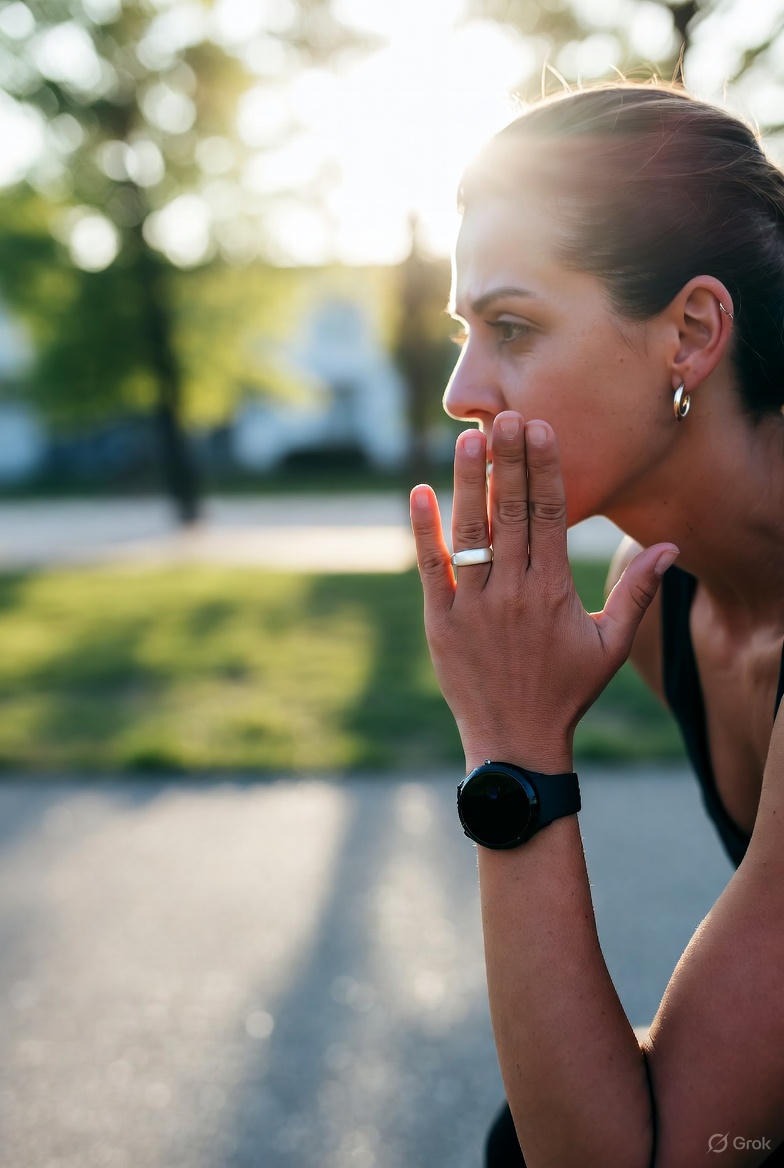
The relationship between exercise and HRV is a nuanced curve, not a straight line. While chronic sedentary behavior leads to low HRV, the wrong kind of exercise during high-stress periods can be equally detrimental. The key is understanding the difference between training and stressing your body. Intelligent movement should be a tool to build resilience, not another source of systemic drain.
After a single bout of intense exercise—think heavy strength training, high-intensity interval training (HIIT), or a long endurance session—your HRV will typically drop acutely. This is a normal sign of physiological stress and the impetus for adaptation. With proper recovery (fuel, sleep, hydration), your HRV should rebound to baseline or higher within 24-48 hours, indicating supercompensation and increased fitness. This is positive stress, or eustress.
The danger arises during high-life-stress periods. If you are already sympathetically dominant from work and emotional pressures, layering on intense physical stress can push your system into a state of overload. The HRV drop becomes deeper and the recovery prolonged. If you ignore these signals and consistently train hard while stressed, you risk entering a state of non-functional overreaching or overtraining syndrome, characterized by chronically low HRV, fatigue, irritability, and illness.
This is where tracking HRV transforms your fitness approach from guesswork to precision. The principle is simple: let your daily HRV reading (specifically, your morning or nocturnal baseline) guide your exercise intensity for the day.
Never underestimate the power of walking, especially in a green space. LISS activity, maintained at a pace where you can hold a conversation, promotes parasympathetic activity, reduces inflammatory markers, and aids metabolic health without the catabolic stress of intense training. A daily 45-minute walk is one of the most reliable, sustainable habits for maintaining a healthy HRV during protracted stressful times. It’s active recovery that also clears the mind.
By aligning your movement with your nervous system’s readiness, you stop fighting your body and start collaborating with it. This strategic approach ensures exercise remains a pillar of your resilience, not a contributor to your burnout. If you're curious about how specific activities affect your personal physiology, tracking with a consistent wearable can provide that clarity. Discover how Oxyzen works to provide this kind of actionable, daily guidance.
You are not just what you eat; your nervous system is, too. Every morsel of food carries information that can either soothe or agitate your autonomic balance. During high-stress periods, nutritional choices often deteriorate—reaching for quick sugars, processed carbs, and caffeine for energy. Unfortunately, these very choices sabotage the HRV you’re trying to protect. Strategic nutrition provides the raw materials for neurotransmitter production, modulates inflammation, and supports the gut-brain axis, all of which directly influence vagal tone and HRV.
Chronic, low-grade systemic inflammation is a primary antagonist of high HRV. Inflammatory cytokines can directly disrupt autonomic function, favoring sympathetic overdrive. The modern diet, high in refined sugars, industrial seed oils (high in omega-6 fatty acids), and processed foods, is inherently pro-inflammatory. To boost HRV, your dietary foundation must be anti-inflammatory.
A significant portion of your vagus nerve—the main conduit for parasympathetic signals—is in constant communication with your gut. An unhealthy, inflamed gut microbiome can send distress signals up the vagus nerve, keeping your system on alert. Cultivating a diverse, healthy gut flora is thus a direct strategy for improving HRV.
Think of food not just as calories, but as information for your nervous system. By choosing foods that reduce inflammation and support gut health, you build a biochemical environment where high HRV and resilience can thrive. For more on crafting a lifestyle that supports these goals, learn more about our holistic approach.
The mind’s chatter is the nervous system’s script. A mind racing with worry, regret, or future-tripping keeps the sympathetic system on a low, constant simmer, eroding HRV. Conversely, cultivating present-moment awareness directly engages the prefrontal cortex, which has inhibitory control over the amygdala (the fear center), facilitating a parasympathetic shift. Mindfulness and meditation are not spiritual abstractions; they are practical, neural training exercises for your autonomic nervous system.
Regular meditation practice induces neuroplastic changes. It strengthens the neural pathways associated with attention, emotional regulation, and body awareness. Studies using fMRI show increased gray matter density in brain regions linked to vagal tone. On a physiological level, most forms of meditation:
The result is a system that becomes less reactive to stressors. Instead of a hair-trigger sympathetic explosion, you develop a pause—a buffer zone where you can choose a response. This flexibility is the very essence of high HRV.
You don’t need to sit on a cushion for an hour. Consistency with short practices is far more powerful than occasional marathons.
1. Body Scan Meditation (10-15 minutes): This practice directly connects the mind to bodily sensations, a key interoceptive skill.
* Lie down or sit comfortably.
* Bring your attention slowly to each part of your body, starting at your toes and moving up to your scalp.
* Notice sensations without judgment—tingling, warmth, tension, stillness.
* When your mind wanders (it will), gently bring it back to the body part you're scanning. This practice is profoundly grounding and parasympathetic.
2. Loving-Kindness (Metta) Meditation (10 minutes): Surprisingly effective for HRV, this practice cultivates positive emotional states.
* Silently repeat phrases of well-wishing, first for yourself ("May I be safe, may I be healthy, may I be at ease"), then for a loved one, a neutral person, and even a difficult person.
* This practice can reduce inner conflict and social stress, both of which tax HRV.
3. Integrative Mindfulness (The 1-Minute Check-In): This is your all-day tool.
* Set random phone reminders or use transitions (before starting the car, opening an email) as cues.
* Stop. Feel your feet on the floor. Take three conscious breaths. Scan for tension in your jaw, shoulders, or gut. Simply acknowledge it. This tiny reset breaks the accumulation of micro-stresses.
4. HRV Biofeedback Training: This is the high-tech edge of mindfulness. Using a device that provides real-time feedback on your HRV (often through a breathing pacer or a simple graph), you can literally see when your mind and body are in coherence. You learn which thoughts or focus points raise your HRV and which lower it, accelerating the mind-body connection. It’s training wheels for meditation.
The goal is not to empty the mind, but to become the calm, observant space within which thoughts and stresses arise and pass. This internal stance is the psychological counterpart to a high-HRV physiology—flexible, adaptable, and resilient. For many, starting this journey is easier with guidance. You can find supportive resources and community stories on our blog.

Your nervous system is perpetually sampling your environment. Light, sound, temperature, and even the air you breathe send constant signals that shape your autonomic state. During high-stress periods, when your resilience is thin, these environmental factors move from background noise to critical levers you can pull to support your HRV. Creating a "HRV-friendly" habitat is a form of external nervous system regulation.
As mentioned with sleep, light is the most powerful zeitgeber (time-giver) for your circadian rhythm. Disrupted circadian biology is a direct path to low HRV.
Chronic noise exposure—traffic, office din, constant notifications—is a potent, often unrecognized stressor that elevates cortisol and suppresses HRV. Conversely, certain sounds can promote relaxation.
By intentionally shaping your sensory inputs, you reduce the hidden tax on your nervous system. You create spaces—your bedroom, your office, your home—that actively support recovery rather than silently contributing to stress. It’s about building an external world that mirrors the internal calm and balance you seek. For insights into how we designed technology to fit seamlessly into a mindful lifestyle, you can read our story of intentional design.
Humans are inherently social creatures, and our nervous systems are wired for connection. Loneliness and social isolation are profound stressors, linked to increased inflammation, poorer sleep, and—you guessed it—lower HRV. Conversely, high-quality social connections, feelings of belonging, and even simple acts of kindness activate neural pathways for safety and contentment, stimulating the parasympathetic system. Your social ecosystem is not separate from your physiology; it is a key determinant of it.
Feeling chronically disconnected or unsupported triggers a primordial threat response. The brain interprets social isolation as a danger, activating the sympathetic nervous system and the hypothalamic-pituitary-adrenal (HPA) axis. This state of hypervigilance and chronic stress directly depresses HRV. Research shows that perceived loneliness can be a more significant predictor of poor health outcomes than smoking or obesity in some studies.
Positive social interactions have the opposite effect. They trigger the release of oxytocin (the "bonding hormone"), which has a calming, anti-stress effect and can enhance vagal tone. Laughter with friends, a warm hug, or a deep, empathetic conversation can cause an immediate, measurable shift toward parasympathetic dominance.
You can be strategic about this pillar of health:
Nurturing your social world is not a luxury; it is a critical component of your stress resilience strategy. By investing in meaningful connections, you build a psychological and physiological buffer against the slings and arrows of life’s stressful periods. This human element is central to our vision, and you can see how community plays a role in our mission.
Knowledge is power, but personalized knowledge is transformation. All the strategies outlined—sleep, breath, movement, nutrition, mindfulness, environment, social connection—interact with your unique biology in a unique way. What profoundly boosts one person’s HRV may have a neutral or even negative effect on another. This is why passive, consistent tracking is the linchpin that turns general advice into a precise, personal operating manual. You move from guessing to knowing.
You cannot rely solely on how you "feel" to gauge your nervous system state. The human capacity for adaptation is a double-edged sword. We can feel "normal" while operating in a state of chronic sympathetic overload with low HRV—this is the definition of burnout. Conversely, after an effective intervention, you might not feel dramatically different immediately, but your HRV can show objective improvement, confirming you’re on the right track before subjective benefits fully manifest.
Data provides objectivity. It reveals hidden patterns and triggers you’d never consciously connect:
Adopt the mindset of a scientist of your own life.
As mentioned, for accurate, user-friendly HRV tracking—especially the critical nocturnal reading—a smart ring is often superior. Worn on the finger, it avoids the motion artifacts of wrist-based devices and provides seamless, continuous data without requiring you to remember to charge it daily or take manual readings. The goal is to make data collection effortless so you can focus on interpretation and action. If you have questions about how to get started or interpret your data, our FAQ section provides detailed support.
By embracing tracking, you exit the realm of generic health advice and enter a personalized partnership with your body. You learn its unique language, spoken in the rhythm of your heart. This self-knowledge is the ultimate empowerment, turning the daunting challenge of a high-stress period into a navigable journey of resilience-building.
In a culture that glorifies "grinding" and views rest as laziness, we have forgotten a fundamental biological truth: growth and adaptation do not occur during the stress itself, but in the recovery period that follows. For your HRV, these periods of deliberate downtime are not empty spaces; they are the active construction sites where resilience is built. When stress is chronic, these recovery windows shrink to nothing, and your system never gets the signal that the "threat" has passed. The solution is to architect recovery into your day with the same intentionality you apply to work. These are not passive breaks, but active rituals that send a powerful, physiological message of safety to your brain.
Instead of waiting for a two-week vacation once a year (which often begins with three days of crashing illness), the modern approach to resilience is parasympathetic pulsing. This is the practice of inserting short, potent recovery rituals throughout your day to periodically lower your heart rate, engage the vagus nerve, and reset your autonomic balance. Think of it as hitting the "save" button on your nervous system before it crashes.
Research on ultradian rhythms suggests our bodies operate in roughly 90-minute cycles of focus and fatigue. Pushing beyond these natural cycles without a reset leads to diminishing returns and sympathetic strain. A 5-10 minute recovery pulse every 90-120 minutes can dramatically improve sustained focus and protect your HRV from the death-by-a-thousand-cuts of continuous stress.
1. The Non-Sleep Deep Rest (NSDR) Protocol: Popularized by Dr. Andrew Huberman, NSDR, which includes Yoga Nidra, is a game-changer for HRV. It's a state of conscious, deep relaxation that can be achieved in 10-20 minutes and has been shown to rival the restorative benefits of light sleep.
* How to do it: Lie down in a comfortable position. Follow a guided Yoga Nidra script (widely available on apps like Insight Timer or YouTube). The guide will systematically move your awareness through the body, inviting profound letting go. The physiological shift is measurable: heart rate drops, breath slows, and HRV rises sharply. Use this as a lunchtime reset or an afternoon battery recharge.
2. Vagus Nerve Stimulation Techniques: Direct, mechanical stimulation of the vagus nerve can trigger an immediate parasympathetic response.
* Humming and Singing: The vagus nerve is connected to your vocal cords. Humming, chanting, or singing loudly creates vibrations that directly stimulate it. Try humming a low, steady tone for 2-3 minutes.
* Gargling: The act of vigorous gargling with water activates the same muscles and nerve endings. Do it until your eyes water a bit—that's the vagal response.
* Cold Exposure to the Face: The "diver's reflex." Splashing very cold water on your face, or placing a cold pack over your eyes and cheeks, can instantly slow heart rate and boost vagal tone.
3. Tactile Grounding and Weighted Blankets: Deep pressure touch is incredibly calming to the nervous system.
* Self-Massage: Massaging your own neck, shoulders, or feet can release muscular armoring that is part of the stress posture.
* Weighted Blankets: The evenly distributed, deep pressure from a weighted blanket (typically 10% of body weight) has been shown in studies to increase parasympathetic activity and feelings of safety, lowering anxiety and improving sleep quality—all beneficial for HRV.
4. The "Tech-Free" Sanctuary Break: This is a behavioral circuit breaker. For 10 minutes, step away from all screens and external input. Sit or walk silently. Look out a window at the sky. Let your mind wander without an agenda. This simple disconnection from the digital world reduces cognitive load and sensory bombardment, allowing your nervous system to default to its resting state.
The cumulative effect of these micro-rituals is profound. They teach your body that stress is temporary and punctuated by safety. This pattern builds autonomic flexibility—the very definition of high HRV. For a deeper exploration of how to integrate technology to enhance, not hinder, these practices, you can explore our philosophy on mindful tech integration.
While lifestyle is the bedrock, targeted nutritional supplementation can act as a powerful adjunct, especially during periods of intense stress when dietary intake may be suboptimal or nutrient demands are higher. The goal of supplementation for HRV is not to bypass healthy habits, but to support the underlying biochemistry of stress resilience: calming the nervous system, reducing inflammation, and providing cofactors for energy production and neurotransmitter synthesis. Always consult with a healthcare professional before starting any new supplement regimen.
These two are so critical they bear repeating in a supplement context, as dietary intake is often insufficient.
Adaptogens are a class of herbs that, true to their name, help the body "adapt" to stress by modulating the HPA axis. They are best used cyclically (e.g., 5 days on, 2 days off) to prevent habituation.
A Critical Note on Tracking: This is where your data becomes invaluable. When you introduce a new supplement, monitor your HRV, sleep, and subjective energy closely for 3-4 weeks. Did your nocturnal HRV trend upward? Did your sleep depth improve? The answer is highly individual. For example, some people find Ashwagandha incredibly calming, while others feel it induces lethargy. Your body’s response, as shown in your HRV data, is the only verdict that matters. If you're navigating these choices, our FAQ has answers to common questions on health and technology.
Here lies one of the most potent and overlooked levers for HRV improvement: your mindset about stress itself. The work of Dr. Alia Crum and others has revolutionized our understanding, showing that your belief about stress—whether you see it as enhancing or debilitating—can dramatically alter its physiological impact, including on your cardiovascular system. You can have two people facing the identical external pressure, with one experiencing a catastrophic HRV crash and the other maintaining resilience, based purely on their psychological framing.
Your brain is always interpreting sensations. When you interpret stress signals (racing heart, quick breath) as signs of "fear" or "inadequacy," you reinforce the threat narrative, amplifying sympathetic output and crushing HRV. This is the debilitating mindset.
The enhancing mindset involves a cognitive reappraisal. You learn to reinterpret those same physical signals as signs of "excitement," "challenge," or "your body rising to the occasion." This isn't positive thinking fluff; it's a neurological shift. Studies show that individuals who view stress as a tool for performance show healthier cortisol profiles, increased release of DHEA (a neurosteroid that helps the brain grow under stress), and yes—better cardiovascular reactivity, which is closely tied to HRV.
This psychological work doesn't eliminate the stressor, but it changes your body's response to it. It can turn a sympathetic surge from a prolonged, HRV-crushing event into a sharp, adaptive spike followed by a swift and complete recovery. Your HRV data will reflect this: under similar workloads, you'll see less dramatic dips and faster returns to baseline. To see how others have applied mindset shifts in their wellness journey, real user experiences can be incredibly motivating.

Our devices are a double-edged sword. They provide the tools to track and understand our HRV, yet their very use is one of the greatest modern disruptors of it. The constant connectivity, the infinite scroll, the barrage of notifications, and the blue light emission create a perfect storm for sympathetic dominance. A strategic, non-dogmatic approach to technology—a digital detox protocol—is essential for reclaiming your nervous system's equilibrium.
The goal isn't to abandon technology, but to become its master. Design rules that serve your biology.
1. The Notification Purge: Go through every app on your phone and computer and disable ALL non-essential notifications. The only things that should be allowed to interrupt you are direct calls or messages from key people. Every "like," "update," or "news alert" is a hijack of your attention and autonomic state.
2. Designated Tech Zones and Times:
* The 60/10 Rule: For deep work, use a timer. Work in focused, uninterrupted 60-minute blocks with your phone in another room and all messaging apps closed. Then take a true 10-minute tech-free break.
* Charging Sanctuary: Make your bedroom a phone-free zone. Charge your devices in another room. This eliminates the temptation for nighttime scrolling and allows your sleep sanctuary to be just that.
3. Implement a "Digital Sunset": As part of your sleep hygiene, institute a firm rule: no screens 60-90 minutes before bed. Replace this time with any of the recovery rituals mentioned earlier: reading a physical book, gentle stretching, conversation, or meditation.
4. Curate Your Inputs: Audit who you follow and what media you consume. Does it leave you feeling informed and inspired, or anxious and angry? Unfollow accounts that trigger comparison or negativity. Use app blockers (like Freedom or Cold Turkey) during work hours to prevent mindless browsing.
By taking conscious control of your digital environment, you drastically reduce the number of unscheduled, autonomic intrusions into your day. You create space for boredom, creativity, and spontaneous thought—all states that are associated with the default mode network and a more relaxed physiological state. This deliberate disconnection is, paradoxically, what allows you to use your connected devices—like your wellness tracker—more effectively. For more strategies on creating a balanced relationship with technology, our blog offers ongoing insights and tips.
Resilience is not a static state you achieve and hold. It is a dynamic capacity built through cycles of stress and recovery, challenge and rest. The final, master strategy for maintaining and improving HRV through life's inevitable high-stress periods is the concept of periodization—borrowed from athletic training and applied to your entire life. It is the intentional planning of your stress exposure and recovery to foster long-term adaptation, rather than chronic depletion.
Look at your year. Identify your known high-stress seasons: a major product launch at work, tax season, the holidays, a training marathon. Now, apply the principles of athletic periodization:
Apply the same principle to your weeks and days.
This philosophy moves you from being a passive victim of stress cycles to an active architect of your resilience. You stop fighting fires constantly and start designing a life that naturally integrates the rhythm of effort and ease. Your HRV becomes your guide in this process, telling you if you're in a healthy build phase, if you're dangerously depleted, or if you've successfully recovered.
By embracing periodization, you understand that a low HRV during a planned stress block isn't failure; it's data. And a high HRV during a recovery phase is the sign of successful adaptation. This long-term, strategic relationship with your own biology is the ultimate goal. It represents a shift from hacking metrics to cultivating sustainable vitality. This journey of deep self-understanding is at the very heart of our mission to empower individuals with meaningful data.
This concludes the first portion of the comprehensive guide. You now possess a deep understanding of Heart Rate Variability and a powerful toolkit of nine foundational strategies—from sleep and breath to mindset and periodization—to improve it during high-stress periods. The forthcoming sections will dive into advanced biohacking techniques, the intersection of HRV with specific health conditions, and long-term integration strategies to make this knowledge a permanent part of your resilient life.
For those who have mastered the foundational pillars and seek to push the boundaries of nervous system resilience, a world of advanced, evidence-based techniques awaits. This isn't about reckless experimentation, but about leveraging deeper physiological principles and emerging technologies to create profound, rapid shifts in autonomic balance. These are the strategies employed by elite athletes, peak performers, and those recovering from significant burnout to accelerate their journey back to high HRV and robust health.
While breathwork is a potent tool, heart-brain coherence training elevates it with real-time physiological feedback. This practice, pioneered by the HeartMath Institute, is designed to synchronize your heart rhythms, respiratory patterns, and brain waves. The state of "coherence" is marked by a smooth, sine-wave-like pattern in your heart rate, indicating optimal communication between the heart and brain via the vagus nerve.
PEMF therapy uses low-frequency electromagnetic fields to stimulate and support cellular function. Think of it as a "tune-up" for your cells' energy production. Every cell in your body has a magnetic charge, and stress, inflammation, and environmental toxins can disrupt this charge, impairing function.
PBM involves exposing the body to specific wavelengths of red and near-infrared light. This light is absorbed by mitochondria, the power plants of your cells, stimulating them to produce more ATP (cellular energy). This boost in fundamental cellular energy has cascading benefits for repair, regeneration, and system-wide function.

Neurofeedback trains the brain by providing real-time feedback on its own electrical activity (brainwaves). By using sensors on the scalp, users can learn to consciously increase or decrease specific brainwave frequencies associated with calm, focus, or relaxation.
These advanced tools are most effective when layered upon a solid foundation. They are accelerants, not replacements, for sleep, nutrition, and breathwork. For the individual facing extreme stress or seeking peak optimization, they offer a pathway to deeper restoration and control. To understand how we integrate cutting-edge sensing with accessible user guidance, you can learn more about our approach to technology.
Heart Rate Variability is not just a wellness metric; it's a critical clinical biomarker that intersects with numerous health conditions. Understanding these relationships empowers you to use HRV not only for general stress management but as a targeted monitor for specific health journeys. If you have any diagnosed condition, always work with your healthcare provider and use HRV as a complementary feedback tool.
The link between low HRV and mood disorders is one of the strongest in psychophysiology. It’s often described as a "bi-directional relationship": poor mental health lowers HRV, and low HRV exacerbates mental health symptoms by impairing emotional regulation.
This is where HRV originated as a research metric. Low HRV is a powerful, independent predictor of adverse cardiovascular events, including arrhythmias, heart attack, and stroke, in both healthy and patient populations.
Post-viral syndromes like Long COVID and Myalgic Encephalomyelitis/Chronic Fatigue Syndrome (ME/CFS) present with severe autonomic dysfunction, often diagnosed as Postural Orthostatic Tachycardia Syndrome (POTS) or other forms of dysautonomia. HRV is typically very low and flat.
Insulin resistance, obesity, and metabolic syndrome are states of chronic inflammation and sympathetic overdrive, closely tied to low HRV.
By viewing HRV through the lens of specific conditions, it transforms from a general wellness score to a personalized management system. It empowers you to become an active participant in your health journey, using concrete data to navigate the path to recovery. For personal accounts of how data has guided individual health paths, our user testimonials offer powerful narratives.
Your HRV does not exist in a vacuum. It dances to the primordial rhythms of your biology: the 24-hour circadian rhythm and the 90-120 minute ultradian cycles. Ignoring these rhythms is like sailing against the current; aligning with them lets you harness a powerful tailwind for your resilience. Optimizing HRV isn't just about what you do, but when you do it.
Your HRV follows a predictable diurnal pattern. It is typically lowest in the early morning as cortisol rises to wake you, climbs throughout the day, peaks in the late evening, and reaches its absolute highest point during deep sleep. Stress and modern life disrupt this natural wave, flattening it.
Your brain can only maintain focused attention for 90-120 minutes before it needs a short break. Pushing past these cycles leads to fatigue, errors, and sympathetic stress.
By syncing your day with these innate rhythms, you reduce the internal friction that drains your autonomic reserves. You stop forcing performance and start flowing with it. This alignment is perhaps the most elegant form of stress prevention, creating a daily structure that inherently supports high HRV. For more on designing a day that honors your biology, our blog features numerous lifestyle integration guides.
Despite your best efforts, there will be periods where your HRV plummets. An unexpected work crisis, a family illness, travel, or even a festive holiday period can send your carefully built resilience into a nosedive. Viewing this as a failure is counterproductive and adds psychological stress to physiological stress. Instead, learn to see a crash as a signal, not a verdict. Your expert response to a low-HRV period is what separates a temporary setback from a prolonged slump.
When you see a significant, sustained drop in your HRV (e.g., 20%+ below your rolling baseline for two days), initiate a deliberate recovery sequence.
Once you've stabilized with 1-2 days of radical recovery, investigate. Don't just blame the obvious external stressor. Look deeper.
The biggest mistake after a crash is to return to 100% intensity as soon as you feel slightly better. This often re-triggers the crash.
A crash is not a sign that your system is broken; it's proof that your feedback loop is working. It's your body's most emphatic way of saying, "Change course." By responding with expert care, you build trust with your biology and deepen your self-knowledge. If you're ever unsure how to interpret a major data shift, remember that our FAQ and support resources are designed to help.
Understanding the theory of HRV and having a toolbox of strategies is only the beginning. The final, crucial step is synthesis: creating a personalized, sustainable action plan that integrates these strategies into the fabric of your life. This plan must be flexible, non-perfectionist, and centered on consistent practice rather than perfect outcomes. Here is how to build yours.
A sustainable plan adheres to the 80/20 rule. Aim to follow your habits and alignment 80% of the time. The 20% is for life: weddings, travel, unexpected crises, and pure enjoyment. A glass of wine with friends or a late night out is not a failure if it's a conscious part of your 20%. It becomes a problem only when it becomes the 80%.
Self-compassion is your most important HRV supplement. Beating yourself up for a low score or a missed habit activates the very stress response you're trying to quell. When you slip up, practice the same kindness you would offer a friend: "That's okay. Let's just get back on track with the next decision."
Your personal HRV action plan is a living document. It evolves as you do, as your life changes, and as you learn what your unique body needs. It is the ultimate expression of moving from being a passive passenger in your health to being the skilled, attentive pilot. This journey of empowered self-care is at the core of our vision for a healthier, more attuned future.
Your Trusted Sleep Advocate (Sleep Foundation — https://www.sleepfoundation.org/)
Discover a digital archive of scholarly articles (NIH — https://www.ncbi.nlm.nih.gov/
39 million citations for biomedical literature (PubMed — https://pubmed.ncbi.nlm.nih.gov/)
experts at Harvard Health Publishing covering a variety of health topics — https://www.health.harvard.edu/blog/)
Every life deserves world class care (Cleveland Clinic -
https://my.clevelandclinic.org/health)
Wearable technology and the future of predictive health monitoring. (MIT Technology Review — https://www.technologyreview.com/)
Dedicated to the well-being of all people and guided by science (World Health Organization — https://www.who.int/news-room/)
Psychological science and knowledge to benefit society and improve lives. (APA — https://www.apa.org/monitor/)
Cutting-edge insights on human longevity and peak performance
(Lifespan Research — https://www.lifespan.io/)
Global authority on exercise physiology, sports performance, and human recovery
(American College of Sports Medicine — https://www.acsm.org/)
Neuroscience-driven guidance for better focus, sleep, and mental clarity
(Stanford Human Performance Lab — https://humanperformance.stanford.edu/)
Evidence-based psychology and mind–body wellness resources
(Mayo Clinic — https://www.mayoclinic.org/healthy-lifestyle/)
Data-backed research on emotional wellbeing, stress biology, and resilience
(American Institute of Stress — https://www.stress.org/)


