


How to Improve Your Sleep Score in Just One Week
Improve your score by focusing on consistent bed/wake times, optimizing your bedroom, and implementing a relaxing pre-sleep routine.
Improve your score by focusing on consistent bed/wake times, optimizing your bedroom, and implementing a relaxing pre-sleep routine.
%402x.svg)
You wake up, groggy and disoriented, reaching for your phone to silence the alarm that feels like an assault. The day stretches ahead, demanding energy and focus you simply don’t have. You check your sleep tracker—a dismal 62. A wave of frustration hits. Another night of poor sleep. You’ve tried everything, from cutting caffeine to expensive mattresses, yet that elusive "good" sleep score feels like a mythical creature. But what if you could change that in just seven days? Not with a magic pill, but with a precise, science-backed protocol that systematically rewires your sleep habits and environment.
Forget generic advice like "sleep more." This is a tactical, data-driven journey. We live in an age of biofeedback, where devices like the advanced smart rings from Oxyzen.ai give us unprecedented insight into our sleep architecture—our light, deep, and REM sleep, our heart rate variability, our nocturnal oxygen levels. Your sleep score isn't just a number; it's a comprehensive report card on your physical and mental restoration. Improving it means improving everything: your mood, your immune function, your cognitive performance, and your long-term health.
This guide is your one-week blueprint. We will dissect the pillars of sleep science and translate them into actionable, daily steps. By understanding the "why" behind each strategy and measuring its direct impact with your own data, you’ll not only boost your score but also forge a lasting relationship with quality sleep. This is about becoming the architect of your own recovery. Let's begin.
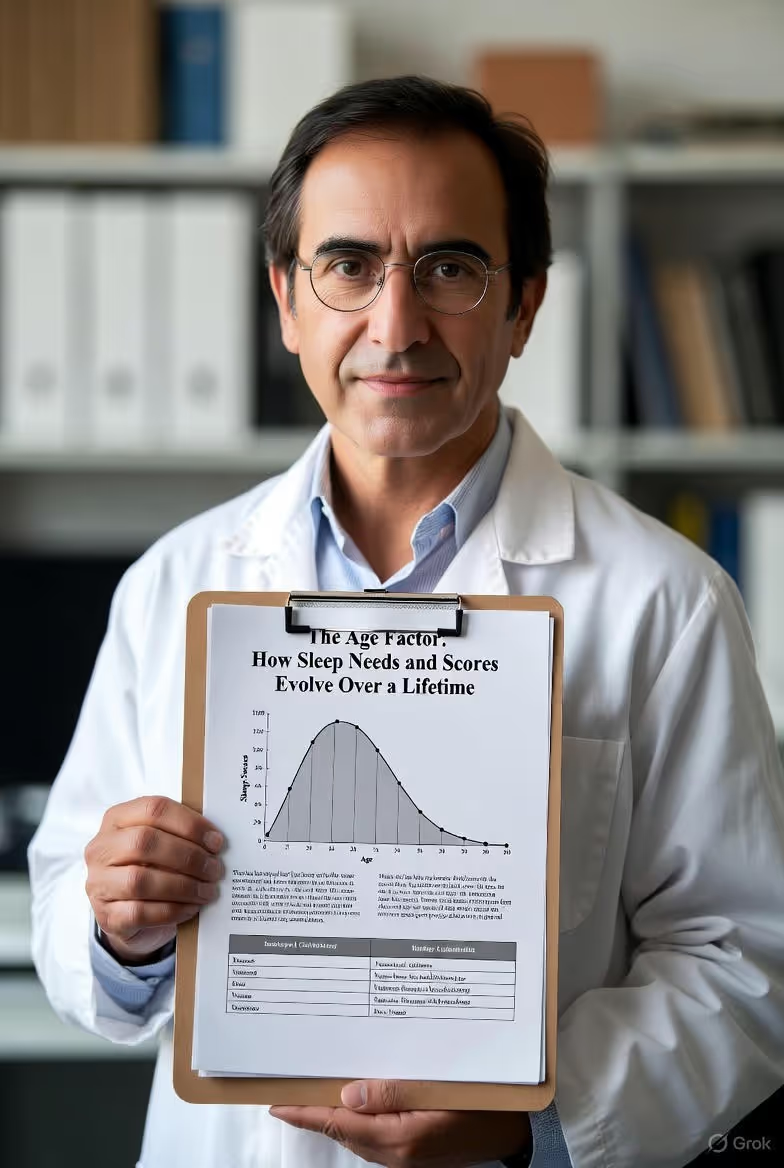
Before you can improve your sleep score, you must understand what it’s actually measuring. It’s not just a simple count of hours in bed. Modern sleep scores, like those generated by sophisticated wearables, are complex algorithms synthesizing multiple physiological data points. Think of it as your nightly wellness GPA.
The Core Components of a Sleep Score:
A typical advanced score, such as one you might get from a device tracked through the Oxyzen.ai platform, considers several key metrics:
When you see a low score, the question isn't just "how do I sleep more?" but "which of these pillars is weak?" A high score reflects a harmonious night where your body and mind cycled smoothly through the necessary restorative phases with minimal disruption. For a deeper dive into the technology that makes this tracking possible, you can explore the Oxyzen.ai blog for articles on biometric sensing.
Why Chasing a Number is Actually About Chasing Health:
This isn't a vanity metric. Consistently low scores are correlated with tangible risks: impaired glucose metabolism, heightened stress (cortisol), reduced cognitive function, a weakened immune response, and increased inflammation. Improving your score is a direct investment in your cellular repair, mental clarity, and emotional resilience. By the end of this week, you won’t just be aiming for a higher number; you’ll be cultivating a foundational pillar of health. The story of why companies like Oxyzen focus so deeply on this data is rooted in a mission to empower this exact kind of actionable health insight, a journey you can read about in their Our Story page.
You can't change what you don't measure. Day 1 is dedicated to radical honesty and establishing your baseline. We are not implementing major changes yet—we are observing.
Step 1: The Pre-Bed Audit (Tonight):
For one night, live exactly as you normally would. However, become a scientist observing the subject (you). One hour before your typical bedtime, note the following:
Step 2: The Morning After Analysis (Tomorrow):
As soon as you wake up—before you check your phone for anything else—grab a notebook or your notes app. Do not look at your sleep score yet. First, do a subjective assessment:
Now, check your sleep tracker. Record the score and its breakdown (duration, efficiency, stages, restlessness). Compare your subjective feeling to the objective data. Do they align? Often, people with poor deep sleep feel physically drained, while those lacking REM feel emotionally off or forgetful.
Step 3: Identifying Your Personal Sleep Saboteurs:
Based on your audit and data, circle your likely top 1-3 saboteurs from this common list:
This baseline is your ground zero. It removes guilt and replaces it with clarity. From here, every single intervention you make in the coming days will have a clear "before" state to measure against. For common questions on how to best use your tracking device during this phase, the Oxyzen.ai FAQ can be an invaluable resource.
Light is the single most powerful cue for your circadian rhythm—your internal 24-hour clock that regulates sleep and wakefulness. Today, you will become a maestro of light exposure.
The Science of Melatonin Suppression:
When light (especially blue wavelengths) hits photoreceptors in your eyes, it signals to your brain's suprachiasmatic nucleus (SCN) that it's daytime. The SCN tells your pineal gland to halt melatonin production, the hormone that makes you sleepy. An evening dose of blue light from LEDs, TVs, and smartphones tricks your brain into a perpetual, low-level jet lag.
Your Daily Light Protocol:
Tonight's Implementation:
Your goal is to feel drowsy as bedtime approaches, a sign your melatonin is rising naturally. Notice if falling asleep feels easier. This single intervention often yields the most immediate improvement in sleep latency and overall score consistency. Many users tracking with Oxyzen devices report noticeable changes in their sleep onset data within days of strict light hygiene, a testament shared in their testimonials.
Your body temperature follows a circadian rhythm, dipping at night to initiate and maintain sleep. The optimal ambient temperature for sleep is surprisingly cool: between 60-67°F (15.5-19.5°C). Tonight, you will optimize your personal thermal environment.
The Biology of the Temperature Drop:
As you approach bedtime, your body begins to shed heat from its core to its extremities (hands and feet). This drop in core temperature is a key signal for sleep onset. A room that's too warm inhibits this release, leaving you feeling restless. A room that's too cold causes your body to work to stay warm, disrupting sleep stages.
Your Action Plan for Thermal Optimization:
Monitoring the Impact:
A room that is too hot is a common culprit for fragmented sleep and reduced deep sleep. After implementing these changes, check your sleep data for reduced restlessness and improved sleep efficiency. You may find you wake up less frequently in the middle of the night. This principle of creating the ideal environment for the body's natural processes is central to the philosophy behind holistic wellness tech, an approach detailed in the broader vision at Oxyzen.ai/about-us.

Your brain loves predictability. A consistent, relaxing pre-sleep ritual acts as a series of cues, telling your nervous system to shift from sympathetic (fight-or-flight) dominance to parasympathetic (rest-and-digest) dominance. Today, you design your personal 45-60 minute "sleep gate" ritual.
The Principle of Conditioned Relaxation:
By performing the same sequence of calming activities each night, you create a powerful neurological association. Over time, starting the ritual will automatically trigger physiological changes—slower breathing, lower heart rate, quieter mind—that pave the way for sleep.
Crafting Your Ritual: Components to Choose From:
Your ritual should be screen-free and consist of 3-4 activities you find genuinely soothing. Mix and match from these categories:
Your Ritual in Action:
Example: At 9:45 PM, you turn off the TV. You dim the lights, put on a playlist of ocean sounds, and write your brain dump list for 10 minutes. You then brew a cup of chamomile tea and read a novel for 20 minutes. At 10:15, you brush your teeth, do a quick skincare routine, and get into bed by 10:30. The consistency is key. By the end of the week, this sequence will feel like a natural, irresistible slide into sleepiness.
What you consume in the hours before bed has a direct biochemical impact on your sleep architecture. Today, you optimize your evening fuel for better sleep, not against it.
The Major Players: Caffeine, Alcohol, and Food Timing:
Hydration Strategy:
Drink the majority of your water earlier in the day. Start tapering fluid intake 1-2 hours before bed to minimize disruptive bathroom trips. A small sip if you're thirsty is fine, but avoid guzzling water in the evening.
Tonight's Experiment:
Implement your caffeine curfew and meal timing rule. If you typically have a nightcap, skip it. Note how you feel both during your wind-down ritual and upon waking. Many people are shocked to see their REM sleep percentages increase and their restlessness decrease simply by shifting their evening nutrition habits.
Sleep is not an isolated event. It is the culmination of your day. Your activity, stress management, and even social interactions lay the foundation for your night. Today, you reinforce that foundation.
Exercise: The Goldilocks Principle:
Regular exercise is one of the most effective ways to improve sleep quality and duration—it deepens slow-wave sleep and helps regulate circadian rhythms. However, timing and intensity matter.
Stress & The Cortisol Curve:
Cortisol, your primary stress hormone, should be high in the morning and drop steadily throughout the day, reaching its lowest point at night. Chronic stress flattens this curve, leaving you with elevated evening cortisol, which directly opposes melatonin. To combat this:
Social Connection & Purpose:
Feelings of loneliness and a lack of purpose are linked to poor sleep. A positive social interaction, a moment of laughter, or engaging in a meaningful activity during the day can lower stress and promote a sense of safety and calm that carries into the night.
By building a day filled with balanced activity, managed stress, and positive engagement, you essentially write a perfect script for your body to follow when it's time for the main event: deep, restorative sleep.
Your bedroom should have one primary purpose: sleep (and intimacy). It should be a sanctuary engineered for that single objective. On Day 7, you conduct a final, meticulous audit of your sleep environment from a sensory perspective.
Sight (Beyond Light):
We addressed darkness, but also consider visual clutter. A messy room can subconsciously contribute to a restless mind. Aim for a clean, tidy, and serene space. Choose calming colors for your bedding and decor.
Sound:
Complete silence isn't always ideal for everyone, as sudden noises become more jarring. Consistent, masking noise is often better.
Touch (Comfort):
Your mattress and pillow are critical. There's no one-size-fits-all, but they should support spinal alignment. A good rule: if your mattress is over 7-8 years old, it's likely past its prime. Your sheets should feel comfortable to you (high-thread-count cotton, breathable linen, soft bamboo).
Smell:
As part of your wind-down ritual, a calming scent like lavender can be conditioned to become a sleep trigger. Use a diffuser with pure essential oils (not synthetic fragrances, which can be irritating).
The Final Sanctuary Checklist:
When you walk into this optimized space, your brain should receive one unified message: It is time to shut down and restore.
You have spent a week systematically testing, tuning, and transforming your sleep habits and environment. The dramatic improvement in your sleep score you’ve likely seen is a direct result of this focused protocol. But the real challenge—and victory—lies in making these changes stick.
The 90-Day Rule for Habit Formation:
Neuroscience suggests it takes an average of 66 days for a new behavior to become automatic. The one-week reset has given you the "proof of concept"—you feel better, your data looks better. Now, you must commit to the long game. Your wind-down ritual, light hygiene, and cool bedroom must become as non-negotiable as brushing your teeth.
Using Your Data for Long-Term Motivation:
This is where a smart wellness tracker transitions from a reporter to a coach. Don't just glance at your score.
Troubleshooting Plateaus:
If your score plateaus or dips after this initial boost, return to your audit framework. Ask:
Your data is the feedback loop that keeps you accountable and informed. By continuing to observe and adjust, you master your sleep for life, turning a one-week challenge into a permanent pillar of elite health and performance. For ongoing support and to explore the science behind these principles further, a wealth of information is available on the Oxyzen.ai blog, where you can deepen your understanding of the intricate dance between daily habits and nocturnal recovery.
To truly master your sleep score, you must appreciate the intricate ballet that occurs every night within your brain and body. Sleep is not a monolithic state of unconsciousness; it is a dynamically shifting series of stages, each with a distinct physiological purpose. Disrupting this architecture is like interrupting a symphony—the overall composition suffers. Your smart ring’s ability to track these stages provides the roadmap to your restoration.
The Four Stages of Sleep: A Cycle of Renewal
A full sleep cycle lasts about 90-120 minutes, and a healthy sleeper will journey through four to six of these cycles each night. The composition of these cycles changes as the night progresses, with deep sleep dominating the first half and REM sleep lengthening in the second.
How Your Sleep Score Reflects Your Architecture
A high sleep score isn't just about total time; it's about the quality and distribution of these stages. An optimal night shows:
Common architectural problems a low score might reveal:
By learning to read your stage data, you move from chasing a generic number to targeted optimization. For instance, if your data shows low deep sleep, you double down on cool temperature, consistent timing, and pre-sleep relaxation. If REM is lacking, you scrutinize alcohol intake and stress management. This personalized, architectural approach is what transforms sleep from a mystery into a measurable, improvable system. It’s this philosophy of actionable, data-driven insight that guides the development of tools you can learn more about through Oxyzen.ai.
Your circadian rhythm is your body's internal, 24-hour conductor, orchestrating the timing of sleep, hormone release, body temperature, digestion, and even gene expression. It is not a suggestion; it is a fundamental biological program. Working with it is the secret to effortless sleep and vibrant days. Working against it—a state known as "circadian misalignment"—is a primary driver of poor sleep scores, metabolic disorder, and chronic fatigue.
The Suprachiasmatic Nucleus (SCN): Your Brain’s Timekeeper
At the heart of this system is a tiny region in your hypothalamus called the SCN. It acts as a master pacemaker, receiving direct input from the light-sensing cells in your eyes. When light hits these cells, especially in the blue-green spectrum, a signal is sent via the retinohypothalamic tract to the SCN, which then suppresses melatonin production and promotes the release of cortisol and other alertness-promoting neurotransmitters.
The Hormonal Symphony: Cortisol and Melatonin
These two hormones have an inverse, seesaw relationship crucial for sleep-wake timing.
A healthy circadian rhythm shows a strong, clear separation between these curves. A disrupted rhythm shows a flattened cortisol curve (low in the morning, higher at night) and a blunted, delayed melatonin curve. This is the classic profile of someone who feels groggy in the morning but wired at 11 PM.
Practical Strategies for Circadian Entrainment (Beyond Light):
While light is the primary zeitgeber (time-giver), other factors reinforce your rhythm:
What Your Data Tells You About Your Rhythm:
A wellness tracker can reveal circadian health through trends:
By viewing your sleep not as an isolated event but as the vital dark phase of your daily cycle, you begin to optimize your entire 24-hour biology. This holistic view of health, where sleep is integrated into a full picture of well-being, is core to the mission shared at Oxyzen.ai/about-us. Syncing with your circadian rhythm is the ultimate form of biohacking, allowing you to harness your body's innate wisdom for peak performance and restorative sleep.
Even with perfect sleep hygiene, some individuals will struggle with persistently low sleep scores due to an underlying sleep disorder. Recognizing the signs is crucial, as these conditions often require professional diagnosis and treatment. Self-optimization is powerful, but it is not a substitute for medical care.
1. Insomnia: More Than Just Trouble Sleeping
Insomnia is characterized by persistent difficulty falling asleep, staying asleep, or waking too early, despite having adequate opportunity for sleep. It causes significant daytime impairment (fatigue, mood changes, poor concentration). Key Differentiator: It’s not just a few bad nights; it’s a chronic pattern lasting at least three months. Cognitive Behavioral Therapy for Insomnia (CBT-I) is the gold-standard, first-line treatment and is highly effective.
2. Sleep Apnea: The Silent Disruptor
Sleep apnea involves repeated pauses in breathing during sleep, often caused by a collapsed airway (obstructive sleep apnea) or a brain signaling issue (central sleep apnea). Each pause (apnea) or reduction in breathing (hypopnea) causes a micro-arousal to restart breathing, fragmenting sleep architecture. Signs your data might show:
3. Restless Legs Syndrome (RLS) & Periodic Limb Movement Disorder (PLMD)
RLS involves an uncontrollable urge to move the legs, usually accompanied by uncomfortable sensations, that begins or worsens during periods of rest or inactivity in the evening. PLMD involves involuntary, repetitive limb movements during sleep, which can cause frequent awakenings. Both lead to significant sleep fragmentation. Your sleep data may show high restlessness scores and many brief awakenings.
4. Circadian Rhythm Disorders
These are chronic misalignments between your internal clock and the 24-hour day.
When to Consult a Sleep Specialist:
A sleep specialist can conduct a thorough evaluation, which may include an overnight polysomnogram (sleep study) to diagnose the root cause. Treating an underlying disorder can be life-changing and is the most important step you can take for your health. For general questions on how wellness technology complements professional care, the Oxyzen.ai FAQ can provide helpful context.
Once you have mastered the foundational pillars of sleep hygiene and circadian alignment, you may wish to explore advanced tools and supplements that can provide an extra edge. It is critical to view these as adjuvants, not substitutes, for the core behaviors. Always consult with a healthcare provider before starting any new supplement regimen.
Supplements with Scientific Support:
Important Caveats: "More" is not better. Start with one supplement at a low dose to assess tolerance. The goal is subtle support, not a knockout effect.
Technology and Tools:
The Principle of Marginal Gains:
The goal of advanced biohacking is not to rely on any one "silver bullet" but to stack multiple, small, evidence-based advantages. A 1% improvement from magnesium, a 2% improvement from a dawn simulator, and a 3% improvement from perfect temperature control can compound into a significant overall elevation in sleep quality and score. However, never forget that the 80/20 rule applies: 80% of your results will come from the foundational 20% of behaviors—consistency, light, and environment.
For many, the body is ready for sleep, but the mind is a runaway train of thoughts, worries, and mental to-do lists. This cognitive hyperarousal is a primary driver of sleep onset insomnia and middle-of-the-night awakenings. Taming this mental chatter requires specific psychological tools.
Cognitive Distortions That Steal Sleep:
Core CBT-I Techniques You Can Apply:
Mindfulness & Meditation Practices:
A daily mindfulness practice, even for 10 minutes, trains your brain to observe thoughts without becoming entangled in them. A body scan meditation before bed is particularly effective for shifting awareness from the mind to physical sensations, promoting relaxation. Apps like Calm or Headspace offer guided sleep meditations specifically designed for this purpose.
By applying these psychological strategies, you address sleep disruption at its root for many people: the belief that sleep is fragile and the mind that won't shut off. Combining this mental training with the physiological optimizations from earlier sections creates a comprehensive, unbeatable approach to sleep mastery. For more resources on managing stress and mental chatter, you can find supportive content on the Oxyzen.ai blog.
Your one-week reset was a brilliant burst of focused change. But the human body is not static; it is a dynamic system influenced by aging, stress, lifestyle shifts, and seasons. Therefore, your approach to sleep must be dynamic as well. Long-term success lies in adopting the mindset of a lifelong sleep scientist, continually curious and responsive to your data.
Establishing Your Personal Baselines:
Over the next month, use your tracker to establish your personal "zone" for key metrics when you're feeling and performing at your best.
These become your personalized benchmarks. A deviation isn't a failure; it's data. It asks, "What's different?"
Creating a Weekly Sleep Review Ritual:
Set aside 10 minutes every Sunday morning to review your weekly sleep data. Look for:
This review is not for self-judgment but for pattern recognition. It turns anecdotes ("I felt rough Wednesday") into evidence ("Ah, Wednesday I had coffee after 3 PM and my sleep latency was 40 minutes").
Adapting to Life’s Changes:
Your sleep needs and responses will change. Be prepared to iterate.
When to "Reset":
If you find your scores have gradually declined and stayed lower for two weeks despite your best efforts, it may be time for another intentional "Reset Week." Go back to the foundational days: audit your current reality, re-implement strict light hygiene, thermal optimization, and ritual. Often, we drift away from core habits without realizing it.
This journey of lifelong optimization, supported by precise data, is what separates a fleeting experiment from a transformed life. The countless individuals who have used this approach often share a common thread: the empowerment that comes from understanding and influencing one's own health. You can read some of their transformative experiences in the Oxyzen.ai testimonials. By committing to this ongoing process, you ensure that the improvements you made in just one week become the foundation for decades of restorative sleep and the profound health benefits that come with it.
Emerging research is illuminating a profound and bidirectional connection between the gut and the brain, often called the "gut-brain axis." This communication highway doesn’t shut off at night; in fact, your gut microbiome—the trillions of bacteria residing in your digestive system—plays a surprisingly direct role in regulating sleep quality, duration, and architecture. Optimizing your gut health may be a missing link in your sleep optimization protocol.
The Biochemical Pathways: How Your Gut "Talks" to Your Sleep Centers
Your gut bacteria produce a vast array of neurotransmitters and metabolites that influence brain function. Key players in sleep include:
Dietary Strategies to Cultivate a Sleep-Supportive Microbiome
Your food choices are the primary tools for shaping your gut ecosystem. Focus on:
The Timing of Meals Revisited:
Your gut’s circadian rhythm means digestive efficiency wanes in the evening. A large, heavy meal close to bedtime forces your gut to work overtime when it should be winding down, potentially causing discomfort, indigestion, and elevated core temperature. This is another compelling reason to maintain that 2-3 hour gap between your last substantial meal and bedtime. A light, microbiome-friendly evening snack, if needed, could be a small bowl of plain kefir or a banana.
Listening to Your Gut Data:
While direct microbiome testing is complex, you can infer gut health from other metrics. Persistent sleep issues alongside digestive complaints (bloating, irregularity) may point to this axis. Furthermore, improvements in diet often show up indirectly in your sleep data—better sleep efficiency, more stable heart rate overnight, and a higher HRV—before you even notice digestive changes. This holistic interplay between different bodily systems is a fascinating area of modern wellness science, a topic frequently explored in resources like the Oxyzen.ai blog.
By nourishing your gut, you are, in effect, nourishing the biochemical factories that produce the very building blocks of peaceful sleep. It’s a foundational, long-term strategy that supports every other sleep hack you employ.
Sleep is a powerful endocrine regulator. It directly influences the secretion and sensitivity of nearly every major hormone in your body. Conversely, hormonal imbalances can shatter sleep. Understanding this relationship is key, especially for women navigating menstrual cycles, perimenopause, or menopause, and for anyone concerned about metabolic health.
Key Hormones Orchestrated by Sleep:
Special Considerations: Women’s Sleep Across the Lifespan
Hormonal Feedback Loops and Your Sleep Score:
Your sleep tracker provides clues about your hormonal state:
Improving your sleep score isn’t just about rest; it’s about systematically restoring a healthy hormonal milieu. Better sleep leads to better hormone regulation, which in turn leads to easier, deeper sleep. It’s the ultimate positive feedback loop for overall health. For individuals navigating these complex hormonal landscapes, the detailed feedback from a wellness tracker can provide invaluable, objective insights to discuss with a healthcare provider, a use case often highlighted in Oxyzen.ai testimonials.
Your sleep doesn’t exist in a vacuum. It is constantly being shaped by external pressures: demanding work schedules, social obligations, family needs, and the ambient environment of our 24/7 world. Learning to set boundaries and engineer your broader environment is the final frontier of sleep protection.
1. Work Culture & "Hustle" Mentality:
The glorification of busyness and the erosion of boundaries between work and home life is a major sleep thief. Constant connectivity via email and Slack on your phone means your brain never fully disengages from work-related stress.
2. Social Jet Lag & Weekend Rebound:
Staying up late and sleeping in on weekends might feel like a reward, but it’s akin to flying across time zones every week. It confuses your circadian clock, making Monday mornings brutal and setting you up for a low weekly sleep score average.
3. Family and Caregiver Responsibilities:
Parents of young children, or those caring for elderly relatives, face unique, often uncontrollable, sleep disruptions. While perfect sleep may be temporarily unrealistic, optimization is still possible.
4. Noise and Light Pollution:
Even with good curtains, urban environments can infiltrate your sanctuary with sirens, traffic, and light seepage.
5. Travel: The Ultimate Sleep Disruptor
Business travel and vacations present extreme challenges (time zones, unfamiliar beds, disrupted routines).
By acknowledging these external forces and developing proactive strategies to mitigate them, you move from being a passive victim of your environment to an active architect of your sleep, no matter what life throws your way. This proactive, problem-solving approach to well-being is emblematic of the modern health enthusiast, and it’s a mindset supported by the insights gained from dedicated tracking platforms like Oxyzen.ai.
You have now absorbed a vast toolkit of strategies, from the foundational to the advanced, from the physiological to the psychological. The final step is to synthesize this knowledge into a living, breathing, personalized sleep protocol—a one-page guide you can reference and adjust for the rest of your life. This is your bespoke blueprint for optimal sleep.
Step 1: Identify Your Non-Negotiables (The Pillars)
Based on your one-week experiment and ongoing data, what 3-5 core practices yielded the biggest improvements in your sleep score? These are your pillars. They are non-negotiable, 80% of your results. For most, this list looks like:
Step 2: Define Your Supportive Routines
These are daily or weekly habits that reinforce your pillars.
Step 3: Create Your Troubleshooting Checklist
When your score dips for 3+ days, you don’t panic—you investigate. Have a printed checklist:
[ ] Have I been consistent with my Wake Time?
[ ] Has my Light Hygiene slipped? (Phone in bed? Late TV?)
[ ] Has Caffeine/Alcohol timing crept later?
[ ] Is my Bedroom still cool/dark/quiet?
[ ] Has Stress spiked? Do I need extra meditation or a brain dump?
[ ] Am I coming down with an illness? (Elevated RHR, lower HRV often signal this early).
Step 4: Establish Your "Reset" Protocol
Life happens. A vacation, a stressful project, or an illness will disrupt your sleep. Have a pre-defined 3-day "Reset" plan to get back on track quickly. It should be a simplified version of your Week 1:
Step 5: Integrate Seasonal & Life-Stage Adjustments
Your protocol should have footnotes for different phases.
Putting It All Together: Your Sleep Protocol Document
Create a simple document or note on your phone with the following structure:
MY PERSONAL SLEEP PROTOCOL
Last Updated: [Date]
Current Baseline Sleep Score: [Range]
Core Pillars (Non-Negotiables):
This living document turns overwhelming information into empowered action. It makes you the expert on your own sleep. For inspiration on how others structure their holistic wellness journeys, including sleep, you can explore the community and stories shared at Oxyzen.ai/our-story.
You have journeyed from the frustration of a low sleep score to possessing a comprehensive, scientific, and deeply personal understanding of how sleep works and how to master it. This isn't just about a number on an app; it's about reclaiming a fundamental pillar of your health, your cognitive edge, and your emotional resilience.
Recall that initial feeling of groggy helplessness. Contrast it with the empowerment you now have. You understand the architecture of your sleep, the rhythm of your circadian clock, the profound dialogues between your gut, your hormones, and your brain. You have tools to quiet a racing mind, defenses against the stealers of modern life, and a personalized protocol to guide you.
The one-week challenge was your catalyst—a proof of concept that change is possible and measurable. The real triumph, however, is the knowledge that you can iterate, adapt, and optimize for the rest of your life. You are no longer guessing. You are observing, hypothesizing, testing, and refining. You are a sleep scientist with a sample size of one: the most important subject in the world.
Your Call to Action: Do not let this knowledge remain passive. Open your tracker app right now and look at your last week's data with new eyes. Start your personalized sleep protocol document. Tonight, execute your wind-down ritual with the intention of someone who knows exactly why each step matters.
Sleep is not lost time; it is the foundation upon which every waking moment is built. By investing in it, you are investing in the very quality of your life. The journey to a perfect sleep score is the journey to becoming your most alert, vibrant, and healthy self. That journey continues tonight. Sweet dreams.
Your Trusted Sleep Advocate: Sleep Foundation — https://www.sleepfoundation.org
Discover a digital archive of scholarly articles: NIH — https://www.ncbi.nlm.nih.gov/
39 million citations for biomedical literature :PubMed — https://pubmed.ncbi.nlm.nih.gov/
Experts at Harvard Health Publishing covering a variety of health topics — https://www.health.harvard.edu/blog/
Every life deserves world class care :Cleveland Clinic - https://my.clevelandclinic.org/health
Wearable technology and the future of predictive health monitoring :MIT Technology Review — https://www.technologyreview.com/
Dedicated to the well-being of all people and guided by science :World Health Organization — https://www.who.int/news-room/
Psychological science and knowledge to benefit society and improve lives. :APA — https://www.apa.org/monitor/
Cutting-edge insights on human longevity and peak performance:
Lifespan Research — https://www.lifespan.io/
Global authority on exercise physiology, sports performance, and human recovery:
American College of Sports Medicine — https://www.acsm.org/
Neuroscience-driven guidance for better focus, sleep, and mental clarity:
Stanford Human Performance Lab — https://humanperformance.stanford.edu/
Evidence-based psychology and mind–body wellness resources:
Mayo Clinic — https://www.mayoclinic.org/healthy-lifestyle/
Data-backed research on emotional wellbeing, stress biology, and resilience:
American Institute of Stress — https://www.stress.org/


