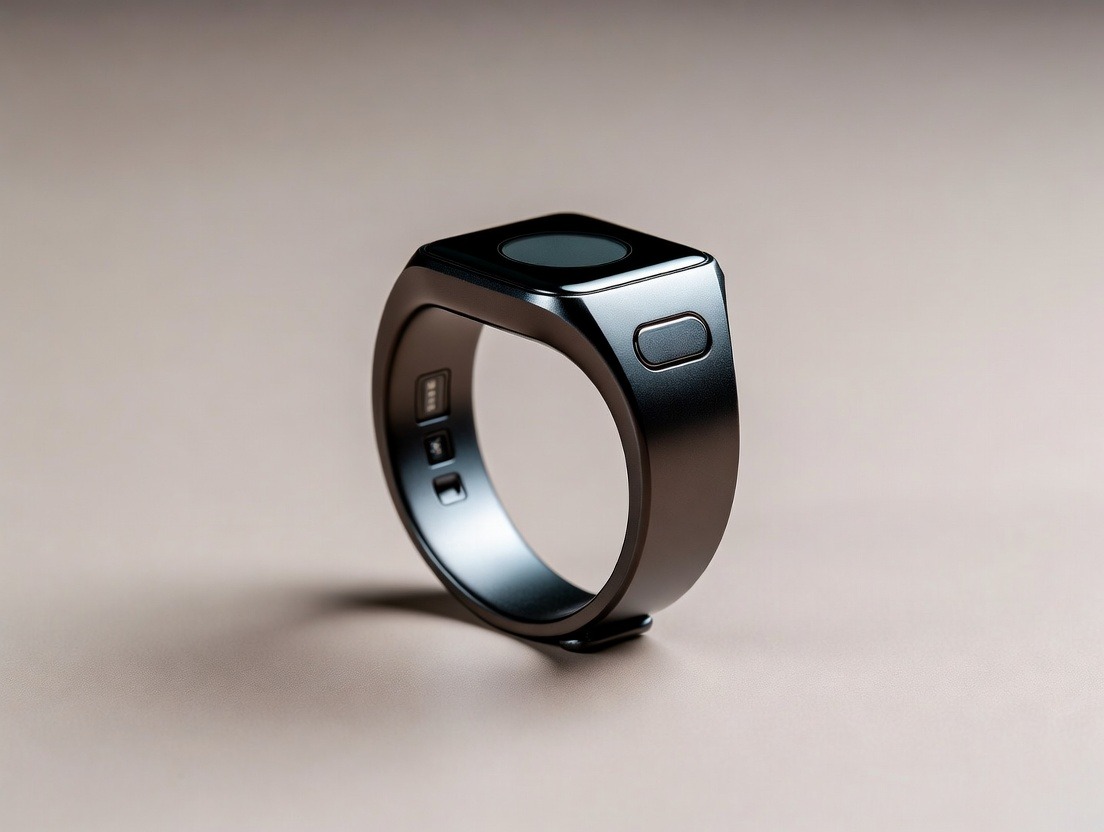
How to Master Daily Energy Management Using Your Smart Ring as Energy Coach
Master daily energy management by using your smart ring as an energy coach: analyze its data on sleep, recovery, and daytime stress responses to identify your personal energy peaks and crashes, then schedule demanding tasks for your peak times and restorative breaks for your low periods, using the ring's alerts to stay in balance.
How to Master Daily Energy Management Using Your Smart Ring as Your Personal Energy Coach
Do you remember the last day you felt truly, vibrantly energized from the moment you woke up until you peacefully drifted off to sleep? Not just "not tired," but a state of sustained, focused vitality where your mind was sharp, your body felt capable, and your emotional resilience was unshakable. For most of us, such days feel like rare gifts—random occurrences dictated by mysterious forces of sleep, stress, and caffeine.
But what if those forces weren't so mysterious? What if you could predict your energy peaks and valleys with scientific precision? What if you had a personal coach on your finger, continuously translating your body’s silent signals into a clear, actionable plan for sustained vitality? This is no longer a futuristic fantasy. With the advent of advanced smart rings, the power to master your daily energy is now literally at your fingertips.
This article is your comprehensive guide to transforming your smart ring from a passive data collector into an active, insightful Energy Coach. We will move beyond simply tracking metrics and into the realm of intelligent interpretation and actionable strategy. You will learn to decode the complex language of your heart rate variability (HRV), resting heart rate (RHR), sleep architecture, body temperature, and activity levels to create a personalized blueprint for energy optimization. We'll dismantle the one-size-fits-all approach to wellness and replace it with a system designed uniquely for your biology, your lifestyle, and your goals.
Forget generic advice about "eight hours of sleep" or "10,000 steps." We’re entering the era of personal health insights, where your unique data reveals what your body truly needs to thrive. This is the first step toward a life where you are no longer a passenger on your energy rollercoaster, but the engineer, conductor, and driver.
The End of Guesswork: Why Your Body Needs a Data-Driven Energy Coach
We live in a world obsessed with optimizing external performance—productivity hacks, efficiency apps, and time-management systems. Yet, we attempt to fuel this external drive with an internal system we understand only through gross approximations: "I slept okay," "I'm pretty stressed," "I feel rundown." This is like trying to pilot a spacecraft using only a sundial and a gut feeling.
The fundamental problem with managing energy by intuition alone is that our subjective perception is often flawed and滞后. By the time you "feel" exhausted, your body has been operating in a deficit for hours or even days. Stress accumulates silently long before you snap at a colleague. Your recovery from a workout isn't complete just because your muscles don't ache. We miss the subtle, early-warning signals our nervous system is constantly broadcasting.
Enter the smart ring. Worn on the finger—a location rich with capillaries and ideal for consistent, medical-grade physiological readings—this device becomes a 24/7 listening post. It captures the objective truth of your body's state, bypassing the noise of your conscious perception. It tracks your autonomic nervous system (ANS), the unconscious control center that regulates your energy expenditure (sympathetic "fight or flight" mode) and energy restoration (parasympathetic "rest and digest" mode).
The magic of using a smart ring as an Energy Coach lies in this continuous, passive data collection. It creates a baseline of you. It doesn't compare you to population averages; it learns what is normal for you. This is the critical foundation of all personal health insights: understanding your individual baseline. Is your normal resting heart rate 55 bpm or 70 bpm? Does your HRV typically dip on Sundays or spike after a yoga session? Your smart ring reveals this unique fingerprint of your physiology.
Think of it this way: a traditional energy management plan is a static map of a generic city. Using your smart ring as a coach provides you with a live, GPS-enabled navigation system for the unique and ever-changing landscape of your own body. It tells you when to push forward, when to take a detour around stress, and when to pull over and rest. It ends the guesswork, replacing it with knowledge. And as you'll learn, this knowledge is the first and most powerful step toward reclaiming control over your daily vitality. To appreciate the full scope of this transformation, consider exploring the 15 key smart ring benefits that justify the investment in 2025, which extend far beyond simple step counting.
Your Ring’s Dashboard: Decoding the Core Energy Metrics (HRV, RHR, Sleep & Temperature)
To effectively coach yourself, you must first understand the language your coach speaks. Your smart ring’s app dashboard isn't just a collection of numbers; it's a vital signs report for your daily capacity. Let's translate the four most critical energy metrics.
1. Heart Rate Variability (HRV): The Master Metric of Resilience & Recovery HRV is not your heart rate. It is the subtle, millisecond variation in the time interval between each heartbeat. A higher HRV (within your personal range) generally indicates a strong, adaptable autonomic nervous system. It means your body is in "rest and digest" mode, primed for recovery, and resilient to stress. A lower-than-normal HRV is your body’s white flag—a sign of accumulated stress, inadequate recovery, impending illness, or overtraining. For your Energy Coach, HRV is the single most important readout of your readiness to perform and handle demands. Tracking your unique HRV pattern is essential for distinguishing a normal daily fluctuation from a meaningful warning sign.
2. Resting Heart Rate (RHR): The Engine’s Idle Speed Your RHR is your heart’s baseline workload. A well-rested, fit body operates with an efficient engine, resulting in a lower RHR. A sustained elevation of 5-10 beats above your personal baseline is a glaring indicator that your body is under stress—physical, emotional, or immune-related. It’s working harder just to maintain basic functions, leaving less energy for everything else. Your smart ring tracks this precisely overnight, giving you a pure reading free from daily activity's influence.
3. Sleep Architecture: The Quality Behind the Quantity Sleep is non-negotiable for energy restoration, but not all sleep is created equal. Your Energy Coach looks beyond just "7.5 hours in bed." It analyzes:
Sleep Stages: The balance of Light, Deep (critical for physical repair), and REM (critical for cognitive and emotional processing) sleep.
Restfulness: How often you toss, turn, or wake up briefly, fragmenting the restorative process.
Latency: How quickly you fall asleep, a key indicator of nervous system wind-down. A night with 8 hours of light, restless sleep is far less restorative than 6.5 hours of deep, uninterrupted sleep. Understanding what your unique sleep patterns reveal is the key to optimizing this foundational energy pillar.
4. Body Temperature & Respiratory Rate: The Subtle Early-Warning System Worn on the finger, smart rings can detect subtle shifts in peripheral body temperature and breathing rate during sleep. A elevated temperature trend can be one of the earliest signs of inflammation, onset of illness, or hormonal changes. Similarly, changes in nocturnal respiratory rate can signal disruptions. These metrics allow your Energy Coach to advise you to prioritize rest before full symptoms derail your week.
By learning to read this dashboard holistically—seeing the story woven between a dipping HRV, a rising RHR, and poor deep sleep—you move from seeing isolated data points to understanding your body’s integrated energy narrative. For a deeper exploration of how these metrics combine to explain daily energy fluctuations, dedicated resources can illuminate the connections further.
Establishing Your Personal Baseline: The 30-Day Discovery Phase
You cannot manage what you do not measure, and you cannot accurately measure without a baseline. The most common mistake new smart ring users make is reacting to daily scores without context. Is an HRV of 45 ms good or bad? The answer is: compared to what? Your what.
The inaugural mission with your new Energy Coach is a 30-day (minimum) Discovery Phase. The goal is not to change anything, but to observe everything. During this period:
Wear Your Ring Consistently: Especially during sleep, for the most reliable physiological data.
Live Your Normal Life: Don't try to be perfect. The goal is to capture your authentic baseline—with its late nights, stressful meetings, good workouts, and lazy Sundays.
Log Simple Notes: Use your app’s journal feature to tag days with basic context: "Big project deadline," "60-min run," "dinner out," "felt amazing," "felt rundown."
After 30 days, patterns will begin to emerge. You will discover:
Your Personal Ranges: Your average HRV, RHR, and sleep scores, establishing your "normal" zone.
Your Weekly Rhythm: Do you see a predictable slump mid-week? A strong recovery trend on weekends?
Initial Correlations: Does your data reflect your subjective notes? Did that stressful day correspond with a low HRV? Did you sleep deeper after the intense workout?
This baseline is your new truth. It reveals the unique biological blueprint you are working with. Perhaps your baseline HRV is naturally lower than a friend's, but incredibly stable—that’s a valuable insight! Maybe your deep sleep peaks on nights you finish eating 3 hours before bed. This phase is about gathering these personal health insights that beat generic health advice. It moves you from asking "Is this number good?" to asking "What does this number mean for me?" The discovery of these patterns over time is a fascinating process, as chronicled in explorations of how a smart ring discovers personal health insights across time.
From Data to Insight: Learning Your Unique Energy Patterns & Triggers
With a baseline established, your smart ring transitions from a historian to a detective. Now, you start actively investigating the cause-and-effect relationships that govern your energy. This is where you move beyond the "what" and into the "why." The goal is to identify your personal energy catalysts and energy drains.
Start by looking for deviations from your baseline and cross-referencing them with your life log.
Identify Your Energy Drains (Negative Triggers):
Work Stress: Does a day of back-to-back meetings reliably crash your HRV by evening? Does a poor night’s sleep predict a higher RHR the next day?
Social & Dietary Factors: Does alcohol, even one glass, fragment your sleep and suppress your deep sleep stage? Does a late, heavy meal delay your body temperature drop, prolonging sleep latency?
Overtraining: Does that second hard workout day in a row result in a plummeting HRV and skyrocketing RHR, signaling insufficient recovery? Your ring can show how your body recovers differently from various stressors.
Identify Your Energy Catalysts (Positive Triggers):
Recovery Activities: Does a 20-minute afternoon walk in nature improve your sleep score? Does a meditation session before bed visibly increase your overnight HRV?
Ideal Workout Timing: Does a morning workout energize you for the day without harming sleep, while an evening workout leaves you restless?
Sleep Hygiene Wins: Does keeping a consistent bedtime, even on weekends, stabilize all your morning readiness scores?
This investigative process is the core of the coaching relationship. For example, you may subjectively feel that coffee after 2 PM doesn't affect you. But your ring’s data may tell a different story, showing reduced deep sleep and elevated resting heart rate on those nights. That’s an objective insight you can act on.
By compiling these insights, you are effectively building your unique stress response profile and discovering your personal health triggers. This knowledge is empowering. It means a stressful period at work doesn't have to decimate your energy if you know which recovery levers (e.g., an earlier bedtime, 10 minutes of breathwork) most effectively counterbalance it for your system.
The Daily Readiness Score: Your Personalized Go/No-Go Signal
Most advanced smart ring platforms synthesize your overnight data (HRV, RHR, sleep, temperature) into a single, easy-to-understand metric: the Daily Readiness or Recovery Score. This is your Energy Coach’s primary directive for the day. Think of it not as a judgment, but as a strategic assessment of your body’s resources.
High Readiness Score (e.g., 80-100): Your body is well-recovered, resilient, and primed for challenge. This is the day to tackle that hard workout, have the difficult conversation, or power through a creative project. Your energy tank is full—use it strategically.
Moderate Readiness Score (e.g., 50-79): Your body is in a maintenance state. You’re not fully optimized, but not depleted. Focus on moderate activity, steady-state work, and supportive habits. It’s a day for maintenance tasks, lighter exercise like walking or yoga, and being mindful not to overextend.
Low Readiness Score (e.g., below 50): This is a clear "recovery priority" signal. Your body is signaling strain from physical, mental, or immune stress. The coaching imperative here is to rest, not test. Prioritize gentle movement, stress reduction, hydration, and an early bedtime. Pushing through on a low score is the fastest way to burnout or illness.
The revolutionary shift here is letting an objective measure guide your daily intensity, not your ambition or your ego. The athlete learns to swap a planned interval run for mobility work when their score is low, preventing injury. The executive learns to delegate and schedule focused deep work instead of marathon meetings on a moderate day, preserving cognitive resources.
Your score personalizes over time as your ring’s AI learns what combinations of metrics correlate with your successful (or unsuccessful) days. This is the pinnacle of actionable personal health insights, moving data from a dashboard directly into your daily decision matrix. To see how this works in practice, you can explore guides on how to act on personal health insights from your wellness ring.
Sleep Optimization: Using Your Ring to Engineer Perfect Recovery Nights
Sleep is the most powerful lever in your energy management toolkit. Your smart ring transforms sleep from a black box into an engineering project. Optimization isn't about forcing more hours; it's about systematically improving the quality and consistency of those hours based on your data.
Step 1: Pinpoint Your Disruptions Your sleep breakdown is your starting point. Are you:
Struggling with Sleep Onset (Latency)? This points to nervous system arousal at bedtime.
Missing Deep Sleep? This is crucial for physical repair and immune function.
Lacking REM Sleep? This affects memory, learning, and emotional regulation.
Experiencing High Restlessness? This fragments sleep and prevents sustained restorative stages.
Step 2: Implement Targeted Interventions Use your data to test hypotheses:
For Latency & Low HRV: Experiment with a 60-minute digital sunset, a guided breathing exercise (see your ring’s breathing session feature), or a warm bath 90 minutes before bed. Observe the impact on your "time to sleep" and overnight HRV.
For Deep Sleep: Test closing your eating window earlier. Data often shows a direct link between late meals and reduced deep sleep. Experiment with room temperature, aiming for a cool 65-68°F (18-20°C).
For Restlessness & Temperature Spikes: Investigate alcohol intake, heavy evening exercise, or an overheated bedroom. Your ring’s temperature graph will show the correlation.
Step 3: Lock In Your Personalized Routine Once you find what works—perhaps a consistent bedtime, no food within 3 hours of sleep, and 10 minutes of meditation—your ring provides the positive reinforcement. You’ll see the direct result in higher sleep scores, more balanced stage distribution, and a higher morning readiness score.
This process of iterative testing turns you into an expert on your own sleep. You’re not following generic tips; you’re conducting personal experiments with clear, data-driven outcomes. This is how you move from hoping for good sleep to knowing how to create it, a fundamental step to improve sleep quality based on your unique physiology.
Stress Monitoring & Active Recovery: Navigating Your Nervous System in Real-Time
Modern stress is insidious. It’s not just the acute "bear attack" moment; it’s the chronic, low-grade drip of emails, notifications, and worries that keeps our sympathetic nervous system subtly engaged for hours on end. This constant state of low-grade arousal is an energy leak of the highest order. Your smart ring acts as a real-time gauge for this leak.
Daytime Stress Monitoring: Many rings now offer daytime on-demand or continuous stress scoring by analyzing heart rate patterns and HRV dynamics. A quick check during a hectic afternoon can provide an objective mirror: "My stress score is 85/100. I need to step back, not double down."
The Power of the Breathing Coach: The most direct tool your ring provides is the guided breathing session. When your data indicates stress or you feel it subjectively, a 1-5 minute breathing exercise (often paired with haptic vibrations to guide your rhythm) is a direct intervention. This stimulates your vagus nerve, shifting your nervous system from "fight or flight" to "rest and digest." The proof is in the data: you can often see your real-time HRV rise and heart rate settle during and after the session. It’s a micro-dose of recovery you can deploy anywhere.
Active Recovery, Defined by Data: The fitness world knows active recovery—light movement on rest days. Your Energy Coach personalizes this concept. A "rest day" isn't just about not lifting weights. On a day with a low readiness score, your coach might suggest a genuinely restorative 30-minute walk in nature, which data shows improves your mood and subsequent sleep without imposing strain. Conversely, on a moderate day, a gentle yoga or mobility session might be ideal to promote blood flow without demanding heavy recovery.
By using these features, you learn to navigate your nervous system proactively. You don’t wait for burnout; you intercept stress accumulation throughout the day and you define "recovery" not by a generic plan, but by what your body’s signals are requesting. This builds incredible resilience and ensures your energy isn't constantly being siphoned off by unseen stress. For those in high-pressure roles, understanding how top smart ring benefits serve busy professionals can be particularly enlightening.
Activity & Workout Personalization: Syncing Exercise with Your Energy, Not Against It
The old paradigm of exercise was punitive and rigid: "No days off!" "Push through the pain!" The new, data-informed paradigm is collaborative and strategic: exercise as a dialogue with your body. Your smart ring is the translator in this dialogue, ensuring your activity builds energy and resilience instead of depleting it.
Using Readiness to Guide Intensity: This is the most powerful application. Your Daily Readiness Score should be the primary filter for your workout plan.
High Readiness: Go for that high-intensity interval training (HIIT), heavy strength session, or long run. Your body has the resources to handle the stress and will adapt positively.
Moderate Readiness: Opt for moderate, skill-based, or social exercise. A tempo run, technique-focused weightlifting, a cycling class, or a team sport. The goal is to maintain, not break new ground.
Low Readiness: Mandatory recovery. This is for walking, gentle stretching, foam rolling, or rest. The goal is to promote circulation and mobility without adding systemic stress.
Tracking True Exertion and Recovery: Beyond the readiness score, your ring provides deeper workout insights:
Training Load & Effect: It estimates the strain of a workout (not just duration) and predicts the impact on your recovery. You can see if yesterday’s workout is responsible for today’s low score.
Heart Rate Zones During Activity: Ensuring you spend time in the correct zones for your goals (e.g., building aerobic base vs. anaerobic capacity).
Recovery Heart Rate: How quickly your heart rate drops after exercise is a classic indicator of cardiovascular fitness and fatigue. Your ring tracks this automatically.
This personalized approach prevents the all-too-common cycle of overtraining, fatigue, and frustration. It teaches you that sometimes the most productive thing you can do for your fitness and energy is to take a genuine rest day. It reveals your individual response to different types of exercise, allowing you to optimize workouts for maximum benefit and minimum unnecessary strain.
Fueling Your Engine: Discovering Nutritional & Hydration Insights (Indirectly)
While smart rings don't track calories or macronutrients directly, they are exceptionally powerful indirect nutrition and hydration sensors. They measure the outcome of your intake on your physiology. This provides a feedback loop no food log can match.
The Experimentation Framework: Use your ring’s tagging or journal feature alongside its data to run n=1 experiments.
Tag a Day or Meal: Note "Pizza dinner," "High-sugar day," "Plenty of veggies," "Fasted until noon," "Drank 3L water."
Observe the Physiological Response:
Sleep Quality: Did that late, high-fat meal decimate your deep sleep? Did alcohol cause a temperature spike and restless night?
Morning Readiness: Did a day of processed foods lead to a higher RHR and lower HRV upon waking?
Hydration: Did a day of poor water intake correlate with a higher daytime resting heart rate and lower HRV? Subtle dehydration is a common, silent energy drain.
Inflammation: A sustained upward trend in your nocturnal body temperature can sometimes indicate a dietary intolerance or systemic inflammation.
Identifying Personal Triggers: This method can help you reveal hidden food sensitivities and optimal eating patterns. You might discover that a larger lunch and lighter dinner lead to better sleep scores. You might see that gluten or dairy, for you, causes next-day inflammation reflected in your temperature and RHR. The data provides objective evidence to support dietary choices that genuinely fuel your energy, moving you away from fads and toward what works for your unique metabolism. This process of using data to explain why you're different is at the heart of personalized nutrition.
Circadian Rhythm Alignment: Finding Your Unique Chronotype & Peak Performance Windows
We all know the concepts of "morning larks" and "night owls," but your chronotype is more nuanced than that. It’s your body’s innate, genetically influenced timetable for energy, focus, sleep, and hormone secretion. Fighting your chronotype is a guaranteed path to chronic energy mismanagement. Your smart ring helps you discover and honor yours.
How Your Ring Reveals Your Rhythm:
Sleep-Wake Consistency: The app shows your natural fall asleep and wake-up times when you’re not using an alarm. Do you consistently fall asleep after midnight and wake after 8 AM? That’s powerful data.
Energy Patterns: Correlate your subjective energy notes with your daytime heart rate and activity data. Do you see a natural lull post-lunch (a normal circadian dip) that is especially pronounced?
Body Temperature Rhythm: Your core body temperature has a clear circadian cycle, dipping to its lowest point during sleep and rising for wakefulness. The timing of this drop and rise is a core marker of your rhythm.
Optimizing Your Schedule Around Your Rhythm: Once you understand your pattern, you can schedule your life strategically:
Peak Cognitive Windows (For "Owls"): If your data shows you are alert and focused in the late morning and evening, schedule demanding analytical work, creative sessions, and important meetings during those times.
Peak Physical Windows (For "Larks"): If you wake with a low RHR and high readiness, schedule your hardest workouts in the morning. Your body is primed for performance.
Administrative & Maintenance Tasks: Schedule these for your biological low points—the post-lunch dip or your pre-bed wind-down period.
Consistent Sleep Schedule: The single best thing you can do for your circadian rhythm is to go to bed and wake up at roughly the same time, even on weekends. Your ring’s sleep consistency score will reward you for this with more stable energy.
By aligning your life with your internal clock instead of an arbitrary societal one, you reduce the energy tax of constant jet lag. You work with your biology, not against it. This alignment is a profound secret to sustained energy, helping you understand your unique circadian rhythm and its impact on every facet of your life.
Long-Term Trend Analysis & Health Forecasting: Your Proactive Energy Strategy
The true genius of having a continuous data stream isn't just in managing today—it's in shaping tomorrow. Your smart ring becomes a longitudinal health diary, revealing trends that allow you to forecast and prevent energy crashes and health dips before they happen.
Spotting Meaningful Trends: Look beyond the daily and weekly noise. Use the app’s monthly or yearly view to ask:
Seasonal Shifts: Do your sleep scores and HRV dip in the winter? This might indicate a need for more Vitamin D, stronger light exposure in the morning, or adjusted expectations.
Training Progression: Is your resting heart rate trending downward over 6 months of consistent training? Is your HRV baseline rising? These are objective signs of improved cardiovascular fitness and resilience.
Stress Accumulation: Is there a slow, steady creep downward in your average HRV over a busy quarter at work? This is a red flag signaling chronic stress adaptation (allostatic load) before it results in burnout or illness.
Life Transition Impact: Starting a new job, moving, or having a child will leave a clear signature in your data. Tracking this helps you navigate the transition with self-compassion and targeted recovery.
From Reactive to Proactive Management: This long-term view transforms your role from firefighter to architect.
Predictive Rest: Seeing a downward trend, you can proactively schedule a "recharge weekend" with extra sleep, nature time, and digital detox.
Informed Experimentation: Want to try a new diet or training program? Your long-term baseline is the perfect control group. Implement the change and watch the trend lines over 4-6 weeks for an objective assessment of its impact.
Early Illness Detection: A sustained elevation in RHR and body temperature, coupled with a drop in HRV, is a classic precursor to illness. Seeing this pattern, you can proactively prioritize sleep, hydration, and rest, potentially shortening the severity or duration of the sickness.
This is the ultimate goal: using your personal historical data to make smarter future decisions. It empowers you to prevent future health problems by recognizing your body's unique warning patterns long before they become crises. Your ring becomes less of a daily coach and more of a lifelong health strategist, helping you understand your individual health trajectory and navigate it with wisdom.
Integrating External Factors: The Holistic Energy Ecosystem (Work, Social, Environment)
Your body does not exist in a vacuum. The data on your ring’s dashboard is the final output of a complex equation where your internal biology meets the external world. To achieve true mastery, you must learn to factor these external variables into your energy calculus. Your smart ring provides the "what," and you must become the detective of the "why" in your broader life context.
1. The Workload-Energy Interface: Cognitive and emotional labor are as physiologically taxing as physical labor. Use your ring to map your work’s true cost.
Meeting Marathons: Tag days with back-to-back calls. You’ll likely see a suppressed HRV and elevated stress scores, even if you were just sitting. This validates the need for "buffer zones" between meetings for nervous system reset.
Deep Work vs. Shallow Work: Compare days of uninterrupted, focused creation versus days fractured by emails and admin. Which pattern leads to better recovery scores? The data often confirms that fragmented attention is a significant energy drain, guiding you to block time for focused work.
Commute Impact: Does your 45-minute drive in traffic spike your daytime heart rate and set a stressful tone for the day? Seeing this data might motivate solutions like audiobooks for relaxation, alternative routes, or adjusted work hours.
2. The Social Energy Exchange: Relationships can be both our greatest source of energy and our most significant drain. Apply objective metrics to subjective experiences.
Social Recharging: Did a night out with close friends, even if it involved a later bedtime, result in a stable or even improved readiness score due to laughter and connection? This highlights a positive social trigger.
Social Depletion: Conversely, did an obligatory social event you dreaded correspond with poor sleep and low HRV? This isn't about blaming others, but about recognizing the physiological impact of inauthentic interaction and empowering you to set boundaries.
Family Dynamics: The predictable stress of certain family interactions will often show up in the data, providing a non-judgmental basis for managing your physiology before, during, and after with intentional recovery practices.
3. Environmental Modulators: Your surroundings constantly interact with your nervous system.
Light Exposure: Your circadian rhythm is tightly governed by light. Use your ring’s sleep and readiness data to test the impact of morning sunlight viewing (which can improve evening sleep depth) and minimizing blue light after sunset.
Noise Pollution: Living or working in a noisy environment creates chronic low-grade stress. You might see this reflected in a higher average resting heart rate or elevated daytime stress scores, prompting investment in noise-canceling headphones or white noise machines.
Nature Immersion: Tag days with significant time outdoors in green spaces. The growing field of "forest bathing" research is often borne out in individual data, showing improvements in HRV and stress scores, making a compelling case for prioritizing nature time.
By consciously logging and correlating these external factors, you build a comprehensive map of your personal health insights that guide daily decisions. You move from managing energy in a lab-like setting to managing it in the real, messy, beautiful world. This holistic view is essential for developing strategies that are not just effective, but also sustainable and integrated into your actual life.
Building Your Personal Energy Rituals: The Daily & Weekly Action Plan
Insights are useless without action. The culmination of your detective work is the creation of a personalized, non-negotiable set of energy rituals. These are not generic wellness tips; they are data-validated behaviors that you know work for your unique system. Think of this as building your owner’s manual.
The Daily Energy Protocol: This is your "what I do regardless" foundation, designed to stabilize your baseline.
Morning (Based on Chronotype): If data shows you’re a slow riser, your ritual might be 10 minutes of gentle stretching and natural light, not a high-intensity workout. If you’re a lark, it might be that workout followed by a mindful breakfast.
Daily Stress Reset: Schedule two 5-minute breathing sessions via your ring’s coach—one post-lunch and one mid-afternoon—to proactively manage nervous system arousal. Treat these like important meetings.
Evening Wind-Down: Your sleep data dictates this. If latency is your issue, your ritual might start 90 minutes before bed: no food, phones away, perhaps a bath and 10 minutes of reading fiction. The specific activities are less important than their consistent, data-informed application.
The Weekly Energy Rhythm: Your data will reveal a weekly cadence. Build your schedule around it.
High-Readiness Days (Often Monday/Tuesday after weekend recovery): Block these for your most demanding cognitive work, important decisions, and intense workouts.
Mid-Week Rebalance (Often Wednesday/Thursday): Schedule lighter meetings, creative brainstorming (less analytical strain), and moderate exercise like walking or yoga. Proactively deploy more recovery techniques.
Recovery Focus (Friday - Sunday): Use Friday to taper. Let your readiness score guide weekend activity. A high score might mean a fun hike or social event. A low score is permission for true rest without guilt. This rhythm prevents the all-too-common Sunday night dread and Monday exhaustion.
The Adaptive Rule Set: These are your "if-then" guidelines, powered by your ring’s daily readiness score.
IF readiness is < 50, THEN workout is 30-min walk max, evening is screen-free by 8 PM, and I say no to extra commitments.
IF readiness is 50-79, THEN I follow my moderate plan: steady-state work, skill-based exercise, and am mindful of stress.
IF readiness is > 80, THEN I go for it: tackle the big project, hit a personal record in my workout, or lead that important presentation.
By codifying these rituals, you automate positive decision-making. You no longer debate whether to work out or what to eat for dinner; your system, informed by your data, guides you. This removes willpower from the equation and turns energy management into a series of graceful, automatic habits. This is the essence of how you act on personal health insights in a structured, impactful way.
Navigating Setbacks & Plateaus: Troubleshooting Your Energy Data
Progress is not linear. There will be weeks where, despite your best efforts, your scores trend downward. There will be plateaus where you feel stuck. This is not failure; it’s a critical part of the process and a rich source of learning. Your smart ring provides the objective compass to navigate these phases without panic.
Diagnosing a Setback: When your metrics dip for 3+ days, systematically investigate.
Check for Obvious Triggers: Review your log. New medication? Intense travel? Emotional stressor? Often the cause is clear.
Look for Stealth Stressors: No obvious cause? Dig deeper. Could it be:
Subclinical Illness: Your elevated temperature and RHR might be fighting something off before symptoms appear. Prioritize rest.
Overtraining (Even "Life" Overtraining): You might not be exercising hard, but the cumulative load of work stress, poor sleep, and family demands is a form of allostatic overload. Your body is waving the same red flag.
Dietary or Environmental Shift: A new supplement, change in water source, or seasonal allergens could be the culprit.
The "Do Less" Prescription: When in doubt, the data-driven response to a setback is to simplify and restore. Return to your core recovery rituals: prioritize sleep hygiene, hydrate meticulously, eat simple whole foods, and engage in gentle movement. Observe how the data responds.
Breaking Through a Plateau: If your baseline scores have been stable but unimproved for months, it’s time for a strategic shake-up.
Change Your Stimulus: If you always do the same workout, your body has adapted. Use a high-readiness day to safely introduce a new form of exercise or intensity. See how your body responds.
Reverse-Engineer Your Best Days: Go back into your data history and find your top 5 readiness score days in the last year. What did they have in common? Was it a specific sleep duration? A particular type of workout two days prior? A certain food? These patterns are gold mines for personal health insights behind your best days.
Consider a Deload or Reset: Schedule a "data vacation" or a deliberate recovery week. Wear the ring but ignore the scores. Focus solely on pleasure, rest, and connection. Often, releasing the performance pressure of tracking allows the nervous system to deeply reset, leading to a higher new baseline afterward.
The key mindset shift here is to see setbacks and plateaus not as the system breaking down, but as the system providing its most valuable feedback. It’s your body communicating that something is off or that it’s ready for a new challenge. By troubleshooting calmly with data, you cultivate resilience and a deeper trust in your own physiology. This process is central to understanding your body's unique communication patterns.
The Future of Coaching: AI, Predictive Insights & The Evolving Human-Machine Partnership
The technology on your finger is not static. The frontier of smart rings lies in advanced artificial intelligence (AI) and machine learning that will transform your Energy Coach from a reactive advisor to a predictive partner. Understanding this direction helps you leverage your device today and anticipate its growing role tomorrow.
From Descriptive to Predictive Analytics: Current rings are brilliant at describing your past night and current state. The next leap is prediction.
Illness Prediction: AI models are being trained to recognize the specific combination of rising RHR, falling HRV, and temperature changes that predict a cold or flu 24-48 hours before symptoms. Imagine getting an alert: "High probability of onset of illness detected. Prioritize recovery today."
Performance Forecasting: Beyond daily readiness, AI could analyze long-term trends, workout data, and calendar stress to predict: "Based on your current load and upcoming project deadline, your recovery capacity will be lowest next Thursday. Suggest scheduling a light day."
Personalized Habit Nudges: Instead of generic reminders to "move," your ring's AI could learn that a 10-minute walk at 3:15 PM reliably improves your evening stress score and sleep latency, and prompt you at that exact time.
Hyper-Personalized Recommendations: The AI will move from showing data to prescribing action with stunning specificity.
Dynamic Sleep Schedules: Rather than a fixed bedtime, your ring could analyze your accumulated sleep debt and circadian rhythm to advise: "You have a sleep debt of 45 minutes. Go to bed at 10:17 PM tonight for optimal recovery," or "You're well-rested; you can safely stay up until 11:30 PM without significant impact."
Micro-Strain Detection: Future sensors may detect signs of localized muscular strain or asymmetry from movement patterns, suggesting specific mobility exercises to prevent injury.
Nutrient Deficiency Clues: By correlating long-term physiological patterns with dietary logs, AI might surface insights like: "Your HRV consistently improves 12 hours after meals high in magnesium-rich foods. Consider increasing your intake."
The Evolving Partnership: This future isn't about the machine taking over. It's about a profound collaboration. The human provides context, emotion, and qualitative experience—the "why" behind the hard data. The machine provides unbiased measurement, pattern recognition at scale, and predictive modeling beyond human cognitive capacity.
Your role will evolve from a data consumer to a director of your own health narrative, using AI-powered insights as your most trusted advisor. This partnership will enable precision personal health insights, allowing you to optimize not just for the absence of illness, but for the presence of extraordinary vitality. To grasp the full potential of this technology, it's valuable to understand the hidden smart ring benefits that often go unmentioned, which form the foundation for these advanced AI features.
Beyond the Individual: Social Synchrony & Shared Energy Dynamics
Human beings are not isolated energy systems; we are deeply interconnected. Our physiological states can synchronize with those around us—a phenomenon known as "interpersonal physiological synchrony." Your smart ring, when considered within a family, partnership, or team context, opens a fascinating new dimension for collective energy management.
The Couple's Energy Dance: Partners often experience mirrored stress and recovery patterns.
Shared Baseline: Two people wearing rings can see how their sleep scores, resting heart rates, and HRV covary. A stressful period for one partner often shows up in the other's data, highlighting the shared emotional load.
Optimizing Shared Recovery: Data can inform better mutual support. If one partner has a terrible sleep score, the other, seeing their own high readiness, can take on more household tasks to facilitate recovery. It turns empathy into actionable, data-informed support.
Conflict Resolution: Post-argument, you might see both partners' HRV suppressed and RHR elevated. Agreeing to revisit a discussion only after both readiness scores have recovered can lead to more productive and less reactive conversations.
Family Health Ecosystem: For families, this becomes a powerful tool for holistic wellness.
Child & Parent Stress Links: A parent’s high stress score can be a cue to check in with their child, as children often absorb ambient stress. It encourages a family-wide approach to calm.
Illness Containment: If one family member’s ring shows early signs of illness (elevated temp, RHR), proactive hygiene and rest can be encouraged to prevent the whole household from succumbing.
Modeling Healthy Habits: Sharing age-appropriate data with children teaches them to listen to their bodies, connecting feelings to physical states in an educational way.
Team Performance & Organizational Wellbeing: Forward-thinking companies are exploring this at a group level (with privacy-first, opt-in, anonymized aggregation).
Identifying Collective Burnout: If a team's aggregate readiness scores are trending down for weeks, it's a powerful, objective signal for leadership to intervene with reduced deadlines, no-meeting days, or wellness resources—before productivity crashes and turnover spikes.
Meeting Effectiveness: Could a meeting scheduled at 4 PM, when aggregate team circadian energy is low, be shortened or made more engaging? Data could help design smarter collaborative schedules.
Psychological Safety Indicator: Teams with high psychological safety may show less volatile stress responses and better recovery. This data could be a novel metric for organizational health.
This application transforms the smart ring from a purely personal tool into a relational and systemic one. It fosters a shared language of wellness, moving from "I'm tired" to "Our data shows we're all depleted; let's prioritize recovery." It underscores that managing our energy is not a selfish act, but a contribution to the health of our relationships and communities. This aligns with the concept of using technology not to isolate, but to foster deeper body awareness mastery by combining intuition with objective data.
Long-Term Integration: Making Your Energy Coach a Seamless Part of Life
The novelty of a new device can fuel initial engagement, but true transformation happens when its use becomes as habitual and thoughtless as brushing your teeth. The goal is for energy awareness to become a background process, not a daily chore. Here’s how to achieve seamless integration for the long haul.
1. From App Checking to Intuitive Sensing: Initially, you may check your app multiple times a day. Over time, aim to shift this relationship.
Scheduled Reviews: Designate two key moments for conscious data review: first thing in the morning (to set your daily intention based on your readiness score) and one weekly recap (every Sunday evening to review trends and plan your week). Outside of these times, trust the system you’ve built.
Haptic Alerts as Gentle Nudges: Utilize your ring’s silent vibration alerts for time-based reminders (e.g., a breathing session prompt) or threshold-based alerts (e.g., a persistent high-stress notification). This keeps the guidance contextual and in-the-moment without requiring you to constantly open an app.
Develop Data-Informed Intuition: The ultimate sign of mastery is when your subjective feeling and the objective data converge. You’ll start to feel a low-readiness day in your body before you check the score. The ring then serves as validation, not revelation. This fusion of tech and instinct is explored in depth in our guide on body awareness mastery by combining intuition with smart ring data.
2. The Quarterly "Energy Audit": Just as businesses conduct quarterly reviews, schedule a personal energy audit every 3-4 months.
Review Long-Term Trends: Look at your 90-day graphs for HRV, RHR, Sleep Score, and Readiness. Is the overall trend flat, improving, or declining? What life events correspond to the major dips and peaks?
Reassess Your Baselines: As you get fitter, manage stress better, or age, your physiological baselines will shift. Update your mental model of what "normal" looks like for you now. A resting heart rate of 58 might be your new normal, down from 65.
Refine Your Rituals: Are your daily and weekly rituals still serving you? Has a new job or family dynamic rendered them obsolete? Use the audit to tweak and optimize your action plan. This ensures your system evolves with your life.
3. Syncing with Your Digital Ecosystem: For true seamlessness, allow your smart ring to talk to other apps (with privacy controls).
Calendar Integration: Some platforms allow you to see your daily readiness score on your calendar. This lets you visually align important meetings or deep work blocks with your predicted energy peaks.
Fitness App Syncing: Sync workout and recovery data with platforms like Strava or Apple Health. This creates a unified health dashboard, giving you a single source of truth for all your activity and recovery metrics.
Automated Logging: Use integrations with apps like Gyroscope or Exist to automatically pull in data from other life areas (weather, location, computer usage) to find even deeper correlations without manual entry.
By weaving your smart ring’s insights into the fabric of your existing routines and digital tools, you prevent "tracking fatigue." It ceases to be a separate task and becomes an invisible intelligence layer over your life, quietly optimizing your decisions in the background.
Maintaining Motivation & Avoiding Data Obsession or Anxiety
Data is a powerful servant but a terrible master. One of the most significant pitfalls in quantitative self-tracking is the shift from empowered curiosity to anxious obsession or demotivating fixation on numbers. Protecting your psychological relationship with your data is paramount for long-term success.
1. Establish Healthy Boundaries with Data:
The "Why" Over the "What": Always anchor yourself in your overarching goal—vibrant energy, better mood, sustained performance—not in chasing a specific HRV number. If your score is lower but you feel great and are performing well, trust the feeling. The data is a guide, not a gospel.
Designate Data-Free Zones & Times: Meals, time with loved ones, and the first hour after waking should be sacred spaces for experience, not analysis. Do not check your scores during these times.
Embrace the "Good Enough" Day: Not every day will be a 90+ readiness score. Aim for consistency within your personal range, not perfection. A week of steady 75s is far healthier and more sustainable than a volatile week swinging from 40 to 95.
2. Reframe "Bad" Data as Neutral Feedback: The language you use internally matters immensely.
From "My HRV is terrible today" to "My body is signaling a need for extra recovery."
From "I failed at sleep" to "My sleep data gives me clues for how to support my system better tonight."
From "I'm stressed" (a judgment) to "My stress score is elevated" (an observation).
This clinical, neutral reframing disidentifies you from the data. It is not a report card on your worth; it is diagnostic information about your complex biological system.
3. Combat Demotivation with Process Goals: If you hit a plateau, shift your focus from outcome goals (e.g., "get my HRV to 80") to process goals (e.g., "complete my morning breathing exercise for 21 days straight" or "hit my sleep consistency target of 85% this month"). Process goals are entirely within your control and build the habits that naturally lead to improved outcomes. Celebrate sticking to your rituals, not just the numbers they produce.
4. Practice Periodic Detachment: If you feel yourself becoming anxious or compulsive about the data, prescribe yourself a "ring vacation." Wear the device for consistency (to maintain its baseline learning) but hide the scores in the app or simply commit to not opening it for 3-7 days. Reconnect with listening to your body’s raw signals. This reset often provides perspective and reinforces that you are in charge, not the device. This balanced approach is one of the hidden smart ring benefits no one talks about—the potential to develop a healthier relationship with your health, not a more anxious one.
The Ethical & Privacy Imperative: Owning Your Data, Protecting Your Insights
In an era where personal data is a valuable commodity, wearing a biometric sensor 24/7 necessitates a thoughtful approach to ethics and privacy. Being an empowered user means understanding where your data flows and who controls it.
1. Understanding the Data Lifecycle:
Data on the Device: What raw data is stored on the ring itself, and is it encrypted?
Data in Transit: When it syncs to your phone and the cloud, is that transmission secure (using end-to-end encryption)?
Data at Rest: How is your data stored on the company’s servers? Is it anonymized and aggregated? Who within the company has access to your individual, identifiable data?
Data Sharing & Third-Party Access: Does the company sell or share your aggregated, anonymized data for research? Do they share identifiable data with third parties (like insurers or employers)? What controls do you have over this?
2. Exercising Your Rights & Controls:
Privacy Settings Audit: Periodically review the privacy and security settings in your app. Opt out of any data sharing that makes you uncomfortable.
Data Ownership & Portability: Understand the company's policy on data ownership. Can you export all of your raw data in a standard format (like CSV or through the Apple Health/Google Fit ecosystem)? Truly owning your data means you can take it with you if you switch platforms.
The Deletion Option: Know how to permanently delete your account and all associated data if you choose to.
3. The Mindset of Informed Consent: Using a smart ring is an ongoing act of informed consent. Stay informed about your device manufacturer’s privacy policies (they do update) and make conscious choices. The value of the personal health insights you gain should be weighed against your personal comfort level with how the data supporting those insights is managed. Choose companies that are transparent, treat data as a sacred trust, and give you granular control. Your most intimate biometric patterns are the data story only you can tell; you must be the ultimate author and guardian of that narrative.
Conclusion of This Portion: Your Invitation to a Life of Designed Vitality
As we conclude this first major portion of our guide, you now stand at the threshold of a profound shift. You are no longer a passive recipient of fatigue and fluctuating energy. You are now armed with the knowledge, the tool, and the framework to become the active architect of your daily vitality.
You have learned that your smart ring is far more than a sleep tracker. It is a continuous biometric interpreter, a personal baseline detective, a readiness advisor, and a recovery strategist. You understand how to decode its core metrics, establish your unique normal, and investigate the personal triggers that make you feel invincible or drained. You have a blueprint for building daily rituals, navigating setbacks with data as your compass, and integrating this practice sustainably into your life.
The journey ahead is one of curious experimentation and gentle optimization. It is not about rigidly adhering to numbers, but about engaging in a respectful dialogue with your body, using objective data to enhance your subjective experience. It is about moving from generic wellness advice to a truly personalized science of self.
You are now equipped to use your smart ring to:
Predict and prevent energy crashes by honoring your readiness signals.
Engineer restorative sleep based on your unique architecture.
Personalize your fitness to build strength without burnout.
Identify hidden stressors in your diet, environment, and relationships.
Navigate life’s challenges with resilient, data-informed strategies.
This is the promise of modern wellness technology at its best: not to make us more robotic, but to make us more human—more energized, more resilient, more in tune with the incredible biological wisdom we each carry. Your smart ring is the key to unlocking that wisdom. The next phase of your journey involves deepening these practices, exploring advanced correlations, and solidifying this partnership for lifelong vitality.
Troubleshooting Common Data Misconceptions and "Weird" Readings
As you live with your data, you’ll inevitably encounter readings that seem to contradict expectations or common knowledge. These "weird" data points are often the most valuable, pushing you beyond surface-level understanding. Let’s demystify some common scenarios.
Misconception 1: "A High HRV is Always Good. A Low HRV is Always Bad."
Reality: Context is everything. A chronically low HRV relative to your baseline indicates poor resilience. However, an acute, sharp drop in HRV after a hard training session is a sign of a proper training stimulus—your body is responding to the stress. The key is the rebound. If it bounces back above baseline in 24-48 hours, it's positive adaptation. If it stays low, it's a problem. Conversely, an unusually high HRV, especially paired with a low resting heart rate, can sometimes indicate a state of "vagal dominance" that precedes illness—your body is shifting all resources to immune function. The trend and the context tell the real story.
Misconception 2: "My Ring Says I Was 'Awake' When I Know I Was Asleep."
Reality: Most rings use movement (accelerometer) and heart rate patterns to determine wakefulness. You can be completely motionless but in a very light stage of sleep, which the ring may interpret as "awake." More advanced rings using PPG more sensitively can detect these micro-arousals that you are not consciously aware of. Rather than dismissing it, investigate: is this "awake" time correlated with a snoring partner, a hot room, or alcohol consumption? It’s likely pointing to fragmented, low-quality sleep you weren’t consciously registering.
Misconception 3: "My Readiness Score is Low, But I Feel Great. The Ring is Wrong."
Reality: This often reflects the difference between perceived energy (mental/emotional state) and physiological readiness. Your nervous system may be prioritizing resources for repair (hence low HRV, the basis of a low score), while your mind is riding a wave of motivation or excitement. The ring is suggesting that while you may feel capable of intense output, your body's foundation for recovery is compromised. Pushing through consistently on low readiness scores is a reliable path to eventual burnout or injury.
Misconception 4: "I Slept for 9 Hours, But My Sleep Score is Terrible."
Reality: This is the ultimate lesson in sleep quality over quantity. A long sleep duration with a poor score almost always reveals severe fragmentation (many awakenings), insufficient deep or REM sleep, or terrible sleep consistency (e.g., going to bed at 10 PM one night and 3 AM the next). The ring is quantifying the inefficiency of those 9 hours. It directs you to fix the structure of your sleep, not just extend it.
When you encounter confusing data, pause and investigate. Cross-reference with your log. Look at the broader trends. This diagnostic process itself cultivates a deeper understanding of your body's unique communication patterns, turning confusion into clarity.
Building a Community of Practice: Sharing Insights Without Comparison
The journey with a smart ring can feel solitary. However, there is immense value in a "community of practice"—a group of people using similar tools to share learnings, ask questions, and provide support. The crucial caveat is that this must be done without the trap of comparison.
The Perils of Comparison: Your data is yours alone. Comparing absolute numbers (e.g., "My HRV is 45, yours is 80, so I'm unhealthy") is meaningless and counterproductive. Individual baselines vary wildly due to age, genetics, fitness, and even the ring's algorithm. A person's 45 might be their robust, healthy high, while another's 80 might be a sign of overreaching.
The Power of Shared Learning: A healthy community focuses on patterns and strategies, not numbers.
Problem-Solving Together: "Has anyone else seen a correlation between X habit and a dip in deep sleep? Here’s what I tried..." This crowdsources troubleshooting.
Sharing Protocol Ideas: "I’ve been experimenting with a 10-minute afternoon breathing exercise. Here’s a screenshot of how it's flattening my afternoon stress spike." This provides inspiration, not benchmarks.
Normalizing the Journey: Seeing others post about their plateaus, weird data days, and setbacks reduces anxiety and fosters resilience. It reminds you that the path to sustained energy is non-linear for everyone.
Whether this community is a small group of friends, an online forum, or a coached program, it transforms the experience from a solo data-analysis task into a shared human exploration of well-being. It helps you act on personal health insights with the support of others on a similar path.
The Long Game: How Smart Ring Data Evolves With You Over a Lifetime
Your energy blueprint is not static. Your body and your life are in constant flux. The true, unparalleled value of a smart ring is its ability to document and help you adapt to these changes across months, years, and decades. It becomes a longitudinal diary of your physiology, offering insights no annual doctor's visit can provide.
Tracking Your Evolving Baseline: What is "normal" for you at 25 is not normal at 45. Age, changing fitness levels, hormonal shifts (menopause/perimenopause/andropause), and lifestyle changes all alter your baseline metrics.
A Graceful Acceptance of Change: Seeing your average HRV slowly decline with age, while your RHR gently rises, is not a failure. It’s data. It allows you to adjust your expectations and your protocols accordingly—perhaps prioritizing recovery more, or shifting workout types.
Early Detection of Shifts: A more sudden deviation from your personal long-term baseline can be an early, sensitive indicator of a health issue, sometimes long before symptoms appear. This is the power of personal health insights that can predict future health problems by knowing what is truly abnormal for you.
Life Transition Support: Major life events—a career change, a move, having a child, a significant loss—profoundly impact your physiology. Your ring data from these periods is invaluable.
Objective Measurement of Impact: It quantifies the physiological cost of stress or the positive impact of a positive change, moving it out of the realm of subjective feeling.
A Tool for Navigating Transition: During a difficult period, the ring’s daily readiness score can be a simple, compassionate guide. On a low score day, it gives you permission to truly rest. On a higher score day, it might nudge you to take a small, positive step.
Creating a Health Legacy: Imagine having a decade-long record of your sleep, stress, and recovery patterns. This dataset is a treasure trove for any healthcare provider. It moves conversations from "How have you been feeling?" to "I can see from your longitudinal data that your sleep efficiency started declining six months ago. Let's investigate." It empowers you to be the expert on your own health history.
This long-term perspective is the final piece of the mastery puzzle. It’s not about hacking your way to peak performance for a month. It’s about building a sustainable, adaptable, and deeply informed relationship with your energy across the full span of your life. It represents the ultimate mastery of understanding your unique health blueprint.
Conclusion of the Guide: Your Journey to Mastering Sustained Energy
We began this exploration with a simple premise: your sustained energy is not a mystery. It is the logical, measurable output of your daily habits interacting with your unique biology. The smart ring is the key that unlocks this understanding, translating the silent language of your autonomic nervous system, your sleep, and your recovery into a clear, actionable narrative.
You have learned to move from guessing to knowing, from following generic advice to building a personalized Energy Blueprint. You've explored how to be a data detective, uncovering hidden correlations and lagged effects. You've seen how to integrate this data with other health streams and how to apply it to the specific challenges of your lifestyle. You've navigated the ethical landscape and embraced the long-term view.
The journey ahead is one of continuous curiosity and compassionate experimentation. Some days, the data will be your cheering section, confirming that your positive habits are building a more resilient you. Other days, it will be a gentle, objective coach, suggesting you pull back and rest. Always, it is a tool to foster a deeper dialogue between your conscious mind and the wise, ancient systems of your body.
Remember, the goal was never a perfect score. The goal is a life lived with vitality, presence, and purpose. It’s having the energy to be fully engaged in your work, your relationships, and your passions. Your smart ring is simply the compass that helps you navigate toward that life, day by day, habit by habit. You now hold the map and the tools. The path to sustained energy is yours to walk.



%402x.svg)