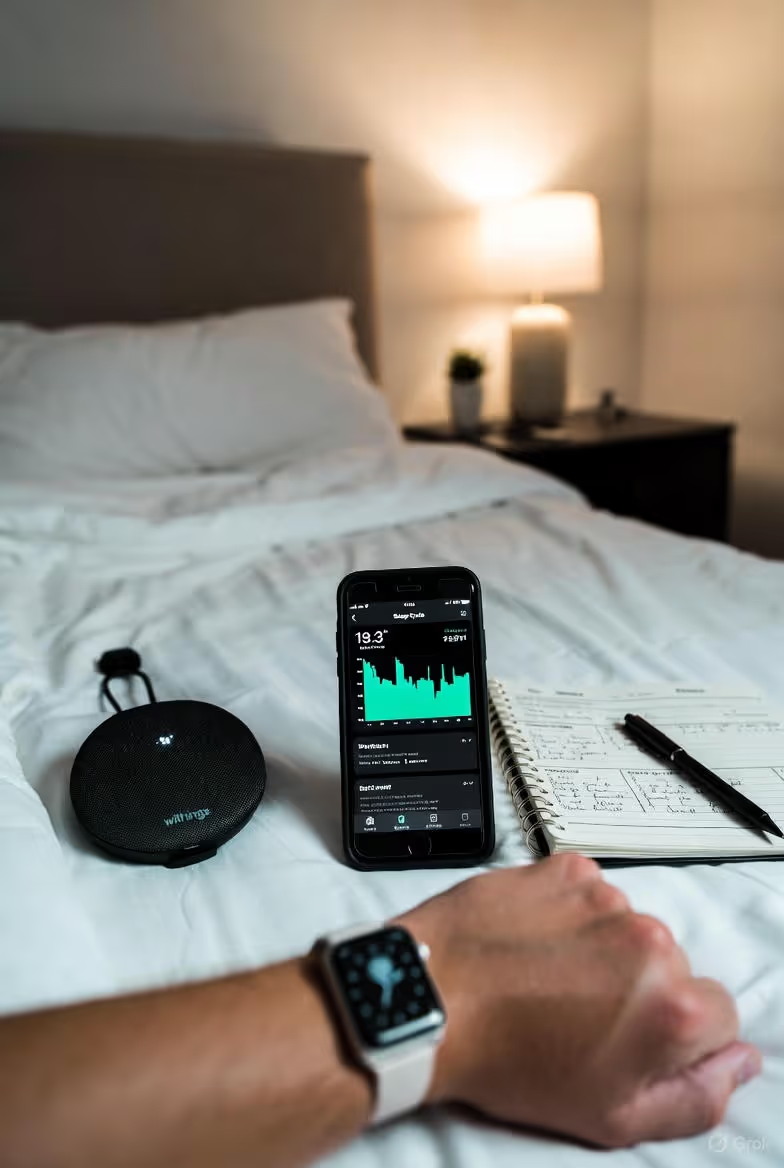
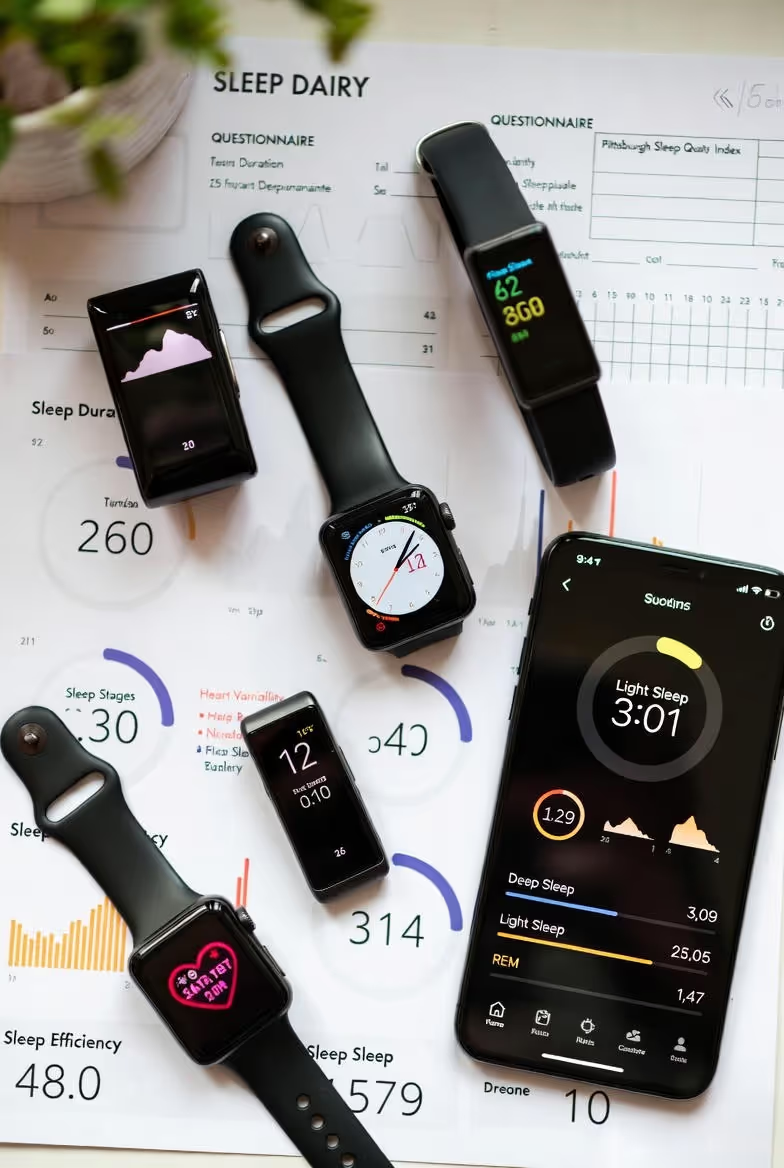
You don't need expensive sleep lab testing to accurately measure sleep quality. This guide explores at-home assessment methods including wearable devices, smartphone apps, sleep diaries, and self-assessment techniques. Learn which monitoring approaches provide reliable insights and how to interpret your data for meaningful improvements.
How to Measure Sleep Quality Without a Sleep Lab
For years, the sleep lab was the undisputed gold standard. The image is iconic: a sterile room, a tangle of wires glued to your scalp, a technician observing from behind a glass window as you try to sleep in a strange bed. Polysomnography (PSG) is a marvel of medical diagnostics, capturing brain waves, eye movements, muscle activity, heart rhythm, and breathing with clinical precision. It’s essential for diagnosing complex disorders like sleep apnea, narcolepsy, and parasomnias.
But here’s the paradox: to measure something as personal, natural, and environmentally sensitive as sleep, we remove you from your own bed, your own pillow, and your nightly routine. We measure your sleep in its most unnatural state. Furthermore, it’s a single snapshot in time—expensive, inaccessible, and impossible to perform night after night. Yet, sleep quality isn't a static metric; it's a dynamic, evolving story told over weeks, months, and years, influenced by daily habits, stress, diet, and environment.
The revolution in understanding our sleep is no longer confined to the lab. It has moved into our homes, onto our wrists, and onto our fingers. A new era of accessible, continuous, and deeply personal sleep tracking is here, powered by consumer technology that fits seamlessly into your life. You no longer need a referral and a night in a clinic to gain profound insights into your sleep. You need curiosity, the right tools, and the knowledge to interpret the data you can now collect yourself.
This guide is your comprehensive roadmap to becoming the expert of your own sleep. We will dismantle the mystery of sleep quality and equip you with the methods, metrics, and mindset to measure it accurately and consistently—all from the comfort of your own bedroom. We’ll explore everything from the foundational journaling techniques used for centuries to the cutting-edge biometric sensors in devices like smart rings. You’ll learn not just how to measure, but what the measurements mean, and most importantly, how to use that knowledge to actually improve your rest. Your journey to better sleep, and by extension, a better waking life, begins not in a lab, but right here.
The Pillars of Sleep Quality: What Are We Actually Measuring?
Before we can measure something, we must define it. "Sleep quality" is a phrase we use casually, but it’s a multifaceted concept composed of several distinct, measurable pillars. Think of it not as a single number, but as a dashboard with several key gauges. Understanding these components is the first critical step to tracking them effectively.
Sleep Latency: The Gateway to Sleep This is the time it takes you to fall asleep after turning off the lights with the intention to sleep. The ideal window, according to sleep medicine, is between 10 and 20 minutes. Falling asleep in under 5 minutes might signal significant sleep deprivation, while taking 30 minutes or longer regularly could indicate insomnia or poor sleep hygiene. It’s the first checkpoint of the night, telling you how effectively your body and mind can transition from wakefulness to rest.
Sleep Efficiency: The Ratio of Time in Bed vs. Time Asleep This is a brutally honest metric. It’s the percentage of time you’re actually asleep while in bed. Calculated as (Total Sleep Time / Total Time in Bed) x 100, a score of 85% or higher is generally considered good. If you spend 8 hours in bed but are only asleep for 6, your sleep efficiency is a mere 75%. This metric highlights issues with frequent awakenings or prolonged periods of lying awake, providing a clear picture of your night’s “productivity.”
Sleep Architecture: The Stages of the Night Sleep is not a monolithic state. It’s a cyclical journey through different stages, each with a unique purpose:
Light Sleep (N1 & N2): This is the transitional and restorative phase that makes up about 50-60% of your night. It’s vital for memory consolidation and physical recovery.
Deep Sleep (N3 or Slow-Wave Sleep): The most physically restorative phase. This is when tissue repair, immune function strengthening, and energy restoration occur. It’s crucial for feeling physically refreshed.
REM Sleep (Rapid Eye Movement): The mentally restorative phase, associated with dreaming, emotional processing, and memory integration. It’s essential for cognitive function and mental health.
A "good" night of sleep isn't just about total hours; it's about getting the right balance and progression through these cycles throughout the night. Disruption to this architecture is a core component of poor sleep quality.
Wake After Sleep Onset (WASO): The Intruder of Continuity This measures the total time you spend awake after initially falling asleep. Brief awakenings are normal, but excessive WASO fragments your sleep, preventing you from completing full, restorative cycles. It’s often the culprit behind feeling unrefreshed despite a long "time in bed."
Subjective Feeling: The Morning Verdict All the objective data in the world must be reconciled with how you actually feel. Do you wake up feeling refreshed and alert, or groggy and fatigued? This subjective rating—your personal sense of restoration—is the ultimate bottom-line metric. A high sleep score on a device means little if you consistently feel terrible.
By tracking these pillars, you move from a vague sense of "I slept badly" to a precise diagnosis: "My sleep latency was high, my deep sleep was low, and my WASO was 45 minutes." This clarity is the foundation for targeted improvement. To dive deeper into the science of these stages and how modern technology interprets them, our blog features a series of detailed explorations on sleep architecture.
Why Tracking at Home Changes Everything
The power of home tracking lies in context and continuity. A sleep lab gives you a high-resolution snapshot. Home tracking provides a lower-resolution but infinitely more valuable movie of your sleep life. You can see the impact of that late-afternoon coffee, the stressful workday, the evening workout, or the weekend alcohol. You can identify patterns a one-night lab study never could. This longitudinal data transforms sleep from a mysterious nightly event into a manageable, influenced aspect of your daily wellness. It empowers you to become an active participant in your rest, making incremental changes based on personal evidence.
The Analog Toolkit: Mastering Sleep Diaries and Subjective Scales
Long before the first digital sensor was invented, sleep researchers and individuals relied on simple, powerful analog tools to gain insight. These methods remain profoundly valuable, often providing context that raw data cannot. They engage your conscious awareness and capture the subjective essence of your sleep experience.
The Sleep Diary: Your Nightly Narrative A sleep diary is more than a log; it’s a structured narrative of your habits and their consequences. Consistently maintained over weeks, it can reveal powerful cause-and-effect relationships that any device would miss.
What to Track in Your Sleep Diary:
Evening Variables: Caffeine/alcohol intake (time and amount), meal size and timing, medication, exercise, perceived stress levels, evening wind-down activities.
Sleep Attempt: Bedtime (lights out), estimated time to fall asleep.
Night Variables: Number and duration of awakenings, reasons for waking (e.g., noise, bathroom, anxiety).
Morning Variables: Wake time, final rise time, total estimated sleep time, subjective sleep quality (rate 1-5), morning alertness, and any notable dreams or disturbances.
The magic happens when you review a week or two of entries. You might see that wine with dinner, while helping with latency, correlates with fragmented sleep and poor morning ratings. Or that a consistent wind-down routine leads to faster sleep onset. The diary builds self-awareness and personal accountability.
Validated Subjective Scales: The Clinical Benchmarks Several researcher-created scales turn subjective feelings into quantifiable data. Integrating these into your monthly check-in can provide a standardized measure of progress.
The Pittsburgh Sleep Quality Index (PSQI): A broader questionnaire assessing sleep quality and disturbances over a one-month period. It provides a global score differentiating "good" from "poor" sleepers.
The Epworth Sleepiness Scale (ESS): Measures your general level of daytime sleepiness by rating how likely you are to doze off in eight common situations (e.g., sitting and reading, as a passenger in a car). This connects your night to your day.
A Simple Morning Rating: Don’t underestimate the power of a consistent 1-10 scale for "Sleep Quality" and "Morning Refreshment." Charting these numbers alone can reveal trends and the impact of lifestyle changes.
The Power of Combining Analog and Digital While a smart ring can tell you what happened (e.g., high WASO), your diary can tell you why (e.g., "neighbor's dog barked at 2 AM" or "mind racing about work meeting"). The diary provides the "qualitative data" that explains the "quantitative data" from a tracker. This combination is where true, personalized sleep optimization begins. For a deeper look at interpreting your subjective data and next steps, our FAQ section offers guidance on common patterns and solutions.
Wearables 101: From Fitness Bands to Smartwatches
The explosion of the wearable market brought sleep tracking to the masses. Wrist-worn devices from brands like Fitbit, Garmin, Apple, and Whoop use a combination of sensors to act as mini sleep labs on your wrist. Understanding their capabilities and limitations is key to using their data wisely.
The Core Technology: Actigraphy and Heart Rate Most wearables rely on two primary methods:
Actigraphy: Using an accelerometer to detect movement. Minimal movement suggests sleep, while significant movement suggests wakefulness. This is effective for determining sleep vs. wake periods but is less accurate for discerning sleep stages.
Photoplethysmography (PPG): This is the green LED light on the back of the device. It measures blood volume changes in your wrist capillaries, which correlates with your heart rate and, more subtly, your heart rate variability (HRV). By detecting the autonomic nervous system shifts that occur between sleep stages (e.g., a steadier heart rate in deep sleep), the device attempts to predict light, deep, and REM sleep.
Strengths of Wrist-Based Trackers:
Accessibility and Convenience: They are widely owned and worn daily.
Rich Ecosystem Data: They integrate sleep data with daily activity, exercise, and often GPS, providing a holistic activity-sleep picture.
Good Estimates for Macro-Structure: They are generally reliable for measuring total sleep time, time awake, and often, the broad proportions of sleep stages over time (trends).
Limitations and Considerations:
The Wrist Placement Challenge: The wrist moves a lot independently of the torso. Tossing, turning, or simply reading in bed can be misinterpreted as sleep or wakefulness. This can inflate or deflate sleep time accuracy.
Sleep Stage Estimation: While improving, the accuracy of wrist-based sleep stage detection (especially distinguishing between light and REM sleep) is not medically validated to the level of a PSG. The data is best viewed as an educated estimate of your sleep patterns rather than a clinical truth.
Comfort: Some users find wearing a watch to bed uncomfortable or forget to put it on after charging.
Making the Most of Your Wearable:
Focus on Trends, Not Absolute Numbers: Don’t fixate on a single night’s "deep sleep" score. Look at your weekly averages. Is your deep sleep trending up or down?
Use the Consistency Metrics: Most apps now provide a "sleep schedule consistency" score. This is one of the most powerful, evidence-based metrics for improving overall health.
Correlate with How You Feel: Always cross-reference the device’s score with your subjective morning feeling. Does a high score match how you feel? If not, explore why.
Wearables democratized sleep data, creating a foundational layer of awareness for millions. They are excellent tools for establishing baselines and observing broad trends. For those ready to take the next step in accuracy and physiological insight, however, technology has moved to a new location on the body—one that may be more ideal for nocturnal biometrics.
The Rise of the Smart Ring: Why the Finger is a Game-Changer
As wearable technology evolved, a critical insight emerged: for nocturnal biometric monitoring, the finger may be superior to the wrist. This realization birthed a new category of health tech: the smart ring. Sleek, minimalist, and worn 24/7, devices like the Oura Ring, Ultrahuman Ring Air, and others are redefining personal sleep tracking by leveraging the unique advantages of the finger.
The Anatomical Advantage: A Superior Signal The finger offers a stronger, cleaner physiological signal for two key reasons:
Denser Vascular Access: The capillaries in the finger are richer and closer to the surface than in the wrist. This allows the PPG sensor (often using red and infrared LEDs alongside green for better accuracy) to get a stronger, less noisy reading of your heart rate and, crucially, heart rate variability (HRV).
Reduced Motion Artifact: During sleep, your fingers move far less than your wrists. When your arm moves, your fingers often remain relatively still. This dramatically reduces false readings caused by movement, leading to more accurate determination of sleep vs. wake periods and more reliable data for sleep stage analysis.
The Core Sleep Metrics Enhanced: This superior signal fidelity translates directly into more trusted insights across the pillars of sleep quality:
Sleep Stages: With cleaner HRV data, algorithms can more accurately detect the autonomic signatures of deep sleep (high HRV amplitude) and REM sleep (variable heart rate). While still an estimate, the data is considered by many sleep researchers to be closer to clinical-grade actigraphy.
Heart Rate Variability (HRV): This is the star metric for many. HRV—the variation in time between heartbeats—is a direct window into your autonomic nervous system balance and overall recovery status. A higher HRV during sleep generally indicates better recovery and resilience. The finger’s strong signal makes it the premier location for tracking this critical biomarker overnight.
Respiratory Rate: By detecting subtle, rhythmic changes in the PPG signal correlated with breathing, smart rings can track your breaths per minute throughout the night. An elevated or irregular nighttime respiratory rate can be an early sign of illness, stress, or sleep-disordered breathing.
Body Temperature: Many rings include a skin temperature sensor. Tracking your nocturnal temperature trend (which naturally dips and rises) can provide insights into circadian rhythm alignment. A significant deviation from your personal baseline can also signal the onset of illness, stress, or, for women, track menstrual cycle phases.
The Unobtrusive Design Philosophy: A smart ring eliminates the discomfort of sleeping with a watch. It’s always on, always collecting, without requiring a conscious decision to "wear your tracker to bed." This leads to more consistent, gap-free data collection, which is essential for spotting long-term trends. The design intentionally fades into the background of your life, making the pursuit of data effortless.
For those committed to a deep, quantitative understanding of their sleep physiology, the smart ring represents a significant leap forward. It provides a more intimate, continuous, and accurate dialogue with your body’s nocturnal rhythms. To understand the philosophy behind creating such a seamless health-tracking experience, you can learn more about our mission and design principles on our story page.
Decoding Your Night: Key Sleep Metrics and What They Really Mean
You now have the tools collecting data. This section is your decoder ring. We’ll move beyond the simple "sleep score" and dive into the rich, often misunderstood, metrics that define your sleep health. Understanding these will transform numbers into actionable knowledge.
Total Sleep Time vs. Total Time in Bed: The Honest Audit This is the most basic but critical distinction. Your goal is to maximize sleep time within your time in bed. A consistent, large gap here points to sleep inefficiency. Ask yourself: Am I going to bed before I’m truly sleepy? Am I spending too much time on my phone in bed? Is anxiety or discomfort keeping me awake?
Sleep Stages Breakdown: Interpreting the Architecture
Deep Sleep (Slow-Wave Sleep): This is your physical restoration phase. Expect it to be higher in the first half of the night. If your tracker consistently shows low deep sleep, consider: Are you giving yourself enough time to sleep (it gets prioritized early)? Is alcohol or cannabis use suppressing it (they are known deep sleep disruptors)? Are you overtraining or experiencing high physical stress?
REM Sleep: This is your mental and emotional restoration phase. It dominates the later cycles of the night. Suppressing REM sleep through chronic sleep deprivation or certain substances (like alcohol) can impact mood, memory, and learning. If REM is consistently low, ask: Am I cutting my sleep short and missing my later, REM-rich cycles?
The Cycle Flow: A healthy night shows a rhythmic, 90-120 minute oscillation between these stages. A jagged, fragmented graph suggests frequent disruptions (from environment, pain, or sleep disorders).
Resting Heart Rate (RHR) & Heart Rate Variability (HRV): The Vital Signs of Recovery
Resting Heart Rate: Your average heart rate during sleep. A lower RHR generally indicates better cardiovascular fitness and efficient autonomic function. Track its trend. A sudden, sustained increase can indicate strain from illness, dehydration, overtraining, or high stress.
Heart Rate Variability (HRV): This is not your heart rate; it’s the variation in the interval between beats. A higher HRV indicates a healthy, resilient autonomic nervous system that can easily switch between stress (sympathetic) and recovery (parasympathetic) modes. It is one of the single best objective metrics for overall recovery status. Focus on your long-term baseline and trends. A sharp drop in your nightly HRV average is a clear signal from your body that it is under extra physical or mental load and needs more rest. Comparing your personal HRV trends with other wellness metrics can be enlightening, as discussed in various case studies on our testimonials page.
Respiratory Rate: The Silent Messenger Your nighttime breathing rate is remarkably stable for a given individual. Typical adult ranges are 12-20 breaths per minute. Track your personal baseline. A consistent elevation of 2-3 breaths per minute above your norm can be an early, non-specific sign of infection, heightened stress, or a potential breathing-related sleep issue. It’s a subtle but powerful metric.
Body Temperature: Your Circadian Rhythm Gauge Your core body temperature follows a circadian rhythm, falling as you prepare for sleep and reaching its nadir in the early morning. A smart ring tracks the proximal temperature at your finger. Deviations from your personal baseline trend can signal:
Circadian Misalignment: An erratic temperature rhythm if your sleep schedule is highly irregular.
Illness Onset: A feverish spike.
Metabolic Change: For women, the cyclical rise and fall associated with ovulation and menstruation.
Environmental Issues: A room that is too warm, disrupting the body’s natural cooling process essential for sleep initiation.
By learning this language, you stop being a passive recipient of data and become an active interpreter of your body’s signals. The next step is to create the ideal environment for those signals to flourish.
Crafting the Perfect Sleep Sanctuary: Environment Tracking
Your bedroom is not just a room; it’s a sleep ecosystem. The data from your body interacts intimately with this environment. Even the most accurate tracker cannot compensate for a poor sleep setting. Here, we move from measuring your body to measuring and optimizing its surroundings.
Light: The Master Circadian Cue Light exposure is the most powerful regulator of your sleep-wake cycle. It’s not just about darkness while sleeping, but about the pattern of light throughout the evening.
The Evening Dim-Light Rule: In the 2-3 hours before bed, minimize exposure to blue-wavelength light (emitted by phones, tablets, computers, and LED bulbs). This light suppresses melatonin production. Use device night modes, consider blue-light blocking glasses, and switch to warm, dimmable lamps.
Pitch Black Darkness: Even small amounts of ambient light (from a streetlamp, charger LED, or crack under the door) can fragment sleep and reduce sleep quality. Invest in blackout curtains, cover or remove electronic lights, and consider a comfortable sleep mask. Your goal is a room so dark you cannot see your hand in front of your face.
Morning Light Anchor: Get bright, natural light exposure within 30-60 minutes of waking. This resets your circadian clock, boosts daytime alertness, and strengthens the subsequent nighttime sleep drive.
Sound: The Disruption of Silence Noise is a primary cause of increased WASO and sleep stage shifts, even if you don’t fully remember waking.
White Noise & Sound Machines: A constant, masking sound like white, pink, or brown noise can drown out unpredictable disturbances (traffic, snoring partners, barking dogs). It creates an auditory blanket of consistency.
Earplugs: For a portable, simple solution, high-fidelity earplugs can be transformative. Find a comfortable, reusable pair.
Temperature: The Goldilocks Zone Your body needs to drop its core temperature to initiate and maintain sleep. The ambient room temperature is critical for facilitating this.
The Ideal Range: For most people, the optimal bedroom temperature is between 60-67°F (15.5-19.5°C). A room that is too warm is one of the most common, yet overlooked, causes of restless sleep and poor sleep efficiency.
Bedding and Pajamas: Use them to fine-tune your microclimate. Moisture-wicking, breathable fabrics (like cotton, bamboo, or advanced synthetics) are preferable to non-breathable materials.
Routine: The Power of the Cue Your environment includes your behavioral patterns. A consistent, wind-down routine 30-60 minutes before bed signals to your brain that sleep is imminent. This could include light reading (physical book), gentle stretching, meditation, or a calming hygiene routine. The consistency is key. It builds a powerful associative cue that reduces sleep latency.
By systematically auditing and optimizing these four environmental pillars—Light, Sound, Temperature, and Routine—you create a sanctuary that supports, rather than sabotages, the delicate physiology of sleep that your devices are measuring. For more practical tips on building this sanctuary and troubleshooting common issues, our blog is a repository of detailed guides and user-shared experiences.
The Day-Before Effect: Tracking Lifestyle’s Impact on Sleep
Sleep is not an isolated event. It is the final act of your day, deeply influenced by every scene that came before it. The most sophisticated tracking looks backward, connecting the dots between daytime choices and nighttime outcomes. This is where true empowerment lies: in seeing the cause and effect.
Nutrition & Hydration: The Fuel and the Timer
Caffeine: Its half-life is about 5-6 hours. That means if you have a coffee at 3 PM, at 9 PM, 50% of the caffeine is still in your system, potentially increasing sleep latency and reducing deep sleep. Track your cut-off time and observe the effect on your data.
Alcohol: It’s a sedative, not a sleep aid. While it may help you fall asleep faster, it notoriously suppresses REM sleep and leads to fragmented, low-quality sleep in the second half of the night as your body metabolizes it. Note alcohol consumption in your diary and look for correlations with high WASO and low REM scores.
Large, Late Meals & Spicy Food: Digestion requires energy and can cause discomfort, leading to difficulty falling asleep and more awakenings. Aim to finish large meals 2-3 hours before bed.
Hydration: Being dehydrated can disrupt sleep, but drinking large volumes right before bed guarantees disruptive bathroom trips. Balance is key—hydrate well throughout the day and taper off in the evening.
Exercise: The Powerful Regulator Physical activity is one of the best sleep promoters, but timing matters.
Regular Exercise: Consistent daily activity, especially aerobic exercise, is strongly linked to increased deep sleep, shorter sleep latency, and better sleep continuity.
Timing Intensity: For most people, vigorous exercise too close to bedtime (within 1-2 hours) can be overly stimulating due to elevated core temperature and endorphins. However, gentle movement like yoga or stretching can be part of a beneficial wind-down routine. Track your workout times and intensities against your sleep data to find your personal optimal window.
Stress & Mental Load: The Nighttime Echo The day’s stress doesn’t disappear when your head hits the pillow. Unmanaged stress leads to elevated cortisol and a hyper-aroused nervous system, which is the antithesis of the state needed for sleep.
Cognitive Buildup: A racing mind is a primary cause of long sleep latency.
Physiological Impact: Chronic stress can lower HRV, raise RHR, and reduce overall sleep efficiency.
The Tracking Link: Use your diary to note daily stress levels. Pair this with your device’s HRV and RHR data. You will likely see a direct correlation: high-stress days are often followed by nights with lower HRV, higher RHR, and poorer sleep scores. This objective feedback can be the motivation needed to prioritize stress management techniques like mindfulness, journaling, or digital detoxes.
Digital Diet: The Blue Light and Cognitive Feast Evening screen time is a double assault: it emits sleep-disrupting blue light and delivers cognitively/emotionally stimulating content (work emails, social media, intense shows). This keeps your brain in an engaged, alert state. Tracking your screen-off time and observing its impact on sleep latency can be a revelation.
By consciously tracking these daytime levers, you move from being a victim of poor sleep to being the architect of good sleep. You gain the evidence to make informed, personalized decisions. The final piece of the puzzle is knowing when the data is pointing to something that requires a deeper look.
When to Seek Professional Help: Interpreting Red Flags in Your Data
Self-tracking is a powerful tool for optimization and awareness, but it is not a substitute for medical diagnosis or treatment. Your at-home data can serve as a critical early warning system, providing objective evidence to take to a healthcare professional. Knowing the red flags is crucial.
Persistent, Unexplained Symptoms: If you are consistently tracking poor sleep and experiencing debilitating daytime symptoms despite making lifestyle and environmental improvements, it’s time to consult a doctor. Symptoms include:
Excessive daytime sleepiness that interferes with daily life.
Loud, chronic snoring punctuated by gasps or pauses in breathing (as reported by a partner).
Unrefreshing sleep, no matter how long you spend in bed.
An irresistible urge to move your legs at night (Restless Legs Syndrome).
Acting out dreams, sleepwalking, or other unusual nighttime behaviors.
Data Patterns Suggestive of Sleep Disorders: Your tracker may pick up patterns highly suggestive of specific disorders:
Obstructive Sleep Apnea (OSA): Look for consistently elevated and irregular nighttime respiratory rate, coupled with frequent spikes in heart rate (associated with micro-arousals from breathing struggles). Some advanced wearables and rings now offer a feature estimating "sleep regularity" or breathing disturbances. This data can be a compelling conversation starter with your doctor.
Insomnia: The data will show consistently long sleep latency, high WASO, and low sleep efficiency—essentially, a quantified picture of the complaint "I can't fall asleep or stay asleep."
Circadian Rhythm Disorders: Extremely irregular sleep onset and wake times, or a consistent, uncontrollable drift in your sleep schedule, visible over weeks of tracking data.
Unexplained Tachycardia: A resting heart rate during sleep that is chronically and significantly elevated above your established baseline without clear cause (illness, intense training).
The Role of Your At-Home Data in a Clinical Setting: Bringing months of sleep graphs, HRV trends, and respiratory rate data to a sleep specialist is incredibly valuable. It provides a long-term view far beyond a lab’s single night. It can help:
Justify a Referral: Concrete data strengthens your case for further testing.
Inform the Diagnosis: Patterns visible over time add context.
Track Treatment Efficacy: If you are prescribed a CPAP for apnea or therapy for insomnia, you can use your tracker to objectively monitor improvements in your sleep efficiency, RHR, and HRV over time.
A Important Disclaimer on Data Accuracy: Always remember that consumer devices are not medical devices. They provide estimates and trends. Do not use them to self-diagnose. A doctor will not diagnose sleep apnea based on your smart ring data alone, but they may use it as one piece of information alongside a clinical evaluation and potentially a home sleep test or in-lab polysomnography. For answers to common questions about the capabilities and limitations of this technology, our comprehensive FAQ resource is available.
By becoming an educated self-tracker, you transform from a passive patient into an active, informed partner in your own healthcare. You bring data to the table, enabling more precise and productive conversations with professionals. This collaborative approach is the future of personalized sleep medicine.
Integrating the Data: Creating Your Personal Sleep Improvement Plan
Data without action is just trivia. The ultimate goal of all this tracking is to form a closed feedback loop: Measure → Interpret → Act → Re-Measure. This final section of our guide is about synthesis and action—turning your insights into a living, breathing plan for better sleep.
Step 1: Establish Your Personal Baseline (4+ Weeks) Before trying to change anything, simply track consistently for a month. Use your chosen tools (diary, wearable, or ring) to gather data under your current normal conditions. Do not judge or intervene yet. The goal is to establish honest averages for your key metrics: average sleep time, efficiency, latency, HRV, RHR, etc. This is your neutral starting point.
Step 2: Identify ONE Primary Lever After a month, review your data holistically. Look for your weakest pillar or the most obvious opportunity. Don’t try to fix everything at once. Choose one initial focus area based on your data and how you feel. Examples:
If Sleep Latency is >30 mins: Your lever is "Evening Routine & Light Exposure."
If Sleep Efficiency is <80%: Your lever is "Sleep Environment (Temperature, Sound) or Reducing WASO."
If Deep Sleep is consistently low: Your lever is "Exercise Timing & Alcohol Consumption."
If HRV is low and trending down: Your lever is "Stress Management & Recovery."
Step 3: Design a Small, Sustainable Experiment For the next 2-3 weeks, implement a single, clear change related to your chosen lever.
Bad Experiment: "I'll sleep better."
Good Experiment: "For the next 14 nights, I will turn off all screens at 9:30 PM and read a book with a warm light until 10:30 PM bedtime. I will track my sleep latency score each morning."
Step 4: Measure the Impact Continue tracking diligently during your experiment. At the end of 2-3 weeks, compare the data from this period to your original baseline. Look at the averages.
Did your sleep latency decrease?
Did your sleep efficiency improve?
Did your subjective morning rating go up? Use the data to see if the intervention worked for you. Personalization is key—what works for others may not work for your unique physiology.
Step 5: Iterate and Add
If it worked: Lock in that new habit. It is now part of your lifestyle. Then, identify your next weakest pillar and design a new experiment.
If it didn’t work: Don’t be discouraged. This is valuable information. Tweak the experiment (e.g., try a 9 PM screen curfew instead of 9:30) or choose a different lever to test. The process is iterative.
Building Your Long-Term Sleep Dashboard: Over months, you will create a personalized protocol. It might look like:
"I need 8 hours in bed, a 65°F room, no caffeine after 2 PM, and a 30-minute wind-down with no screens to get my optimal sleep."
"My HRV plummets if I drink alcohol or have two high-intensity workouts without a rest day, so I plan accordingly."
This systematic, data-informed approach removes the guesswork and frustration from sleep improvement. It replaces willpower with strategy and self-knowledge. You are no longer blindly following generic advice; you are engineering your own restoration based on the direct feedback from your body. To see how others have applied these principles and transformed their rest, explore the real-world journeys shared on our testimonials page.
This concludes the foundational portion of our complete guide to measuring sleep quality without a lab. You are now equipped with the philosophy, the tools, the interpretive knowledge, and the action framework to begin your own journey. Remember, the goal is not a perfect score every night, but a deeper understanding and a better relationship with the one-third of your life that powers the other two-thirds.
The journey to mastering your sleep is a continuous process of learning and adaptation. Having established a foundational understanding of the key metrics, tools, and the framework for a personal improvement plan, we now delve deeper. This section expands on advanced interpretation, addresses common tracking pitfalls, explores the synergy of complementary practices, and looks toward the future of personal sleep science. The goal is to refine your expertise, ensuring your tracking efforts yield not just data, but wisdom and lasting change.
Beyond the Basics: Advanced Interpretation of Biomarkers
Once you are comfortable with the core metrics, a world of subtle, interconnected signals awaits. Advanced interpretation involves looking at the relationships between biomarkers and understanding what their patterns over time reveal about your overall physiological state. This is where sleep tracking transcends basic rest and becomes a window into systemic health.
Heart Rate Variability (HRV) Balance and Trends: While your absolute HRV number is personal (higher isn’t universally "better"), its dynamics are universally informative.
The Nightly Curve: A healthy HRV trace during sleep typically shows a marked rise as you enter deep sleep (peak parasympathetic activity) and may become more variable during REM. A flat, low-variability line throughout the night can indicate an overtaxed nervous system stuck in a sympathetic-dominant state, even during rest.
The HRV Baseline & Acute Drops: Establishing your personal rolling average (e.g., a 7-day average) is critical. An acute, significant drop below this baseline is one of the clearest objective signals your body can send that it is under strain—be it from an oncoming illness, excessive training load, intense emotional stress, or poor recovery habits. Conversely, a steady upward trend in your baseline HRV over months is a powerful indicator of improved fitness and resilience.
HRV and Training: The Recovery Compass: For athletes and active individuals, nocturnal HRV is arguably the most important recovery metric. The rule of thumb: if your HRV is at or above your baseline, your body is likely recovered and ready for strain. If it’s significantly depressed, it’s a signal to prioritize rest, active recovery, or a lower-intensity day. Ignoring this signal can lead to overtraining and injury.
Nocturnal Heart Rate (HR) and its Dip: Your sleeping heart rate should be your lowest of the 24-hour period. The degree of this "nocturnal dip" is meaningful.
The Ideal Dip: A healthy dip is typically a 10-20% decrease from your daytime resting average. This robust dip reflects a strong circadian rhythm and efficient switching to a restorative state.
A Blunted or Absent Dip: A minimal dip (e.g., only 5-8%) is associated with increased cardiovascular risk, chronic stress, and conditions like hypertension. In your data, a consistently blunted dip, especially paired with a high resting HR, is a flag to discuss cardiovascular health with a doctor and to seriously evaluate chronic stress load.
Respiratory Rate (RR) Variability and Stability: Beyond just the average number, the stability of your breathing is telling.
Consistent Stability: A steady, rhythmic breathing rate is a sign of autonomic stability and sound sleep.
Erratic Patterns or Climbing Trends: Periods of erratic breathing or a gradual climb in RR throughout the night can be subtle signs of sleep-disordered breathing events or increased upper airway resistance. While not diagnostic, a persistent pattern like this, especially with associated SpO2 drops (if your device measures it) and elevated HR, provides strong impetus for a sleep apnea screening.
The Sympathetic-Parasympathetic Dance: Advanced wearables and rings often derive a "stress" or "readiness" score. At their core, these scores are algorithms interpreting the balance between your sympathetic (fight-or-flight) and parasympathetic (rest-and-digest) nervous systems, primarily through HRV, RHR, and RR data. A high "recovery" or "readiness" score doesn't just mean you slept well; it indicates your body has achieved a state of physiological calm and is prepared for the demands of the coming day. Learning to trust this objective measure over your sometimes-misleading subjective morning grogginess can be transformative for decision-making about training, workload, and self-care.
Mastering this level of interpretation turns your sleep data into a daily report card on your body's internal state. It allows for proactive, rather than reactive, health management. For those who wish to explore the technical nuances of these biomarkers further, our blog features in-depth analyses and research summaries.
Common Tracking Pitfalls and How to Avoid Them
Even with the best technology, inaccurate data or misinterpretation can lead you astray. Awareness of these common pitfalls will help you become a more discerning and effective self-tracker.
1. The Obsession with a Single Night’s Score: This is the most frequent and counterproductive mistake. Sleep is inherently variable. A single night of poor data due to a late dinner, an emotional event, or a noisy environment is not a trend. Focus on weekly and monthly averages. The trend line is truth; the daily datapoint is just noise. Allow yourself grace on off nights—your body does.
2. Misplacing or Improperly Wearing the Device: Accuracy is dependent on proper wear.
Smart Rings: Must be snug but not tight. Worn on the index, middle, or ring finger. A loose ring will produce noisy, unreliable data. Ensure the sensors on the inner band are in contact with the skin.
Wrist Wearables: Should be worn securely, about a finger's width above the wrist bone. Too loose, and the PPG sensor loses contact; too tight, it can be uncomfortable and restrict circulation. A simple habit: when you put on your tracker, give it a slight twist. If it moves easily, it's too loose for reliable nighttime data.
3. Confusing Correlation with Causation (The False Positive): Your data shows low deep sleep. You also had a glass of wine. You conclude wine destroys deep sleep. This might be true, but was it the wine, the spicy dinner that accompanied it, the stressful conversation you had, or the fact you went to bed an hour later? Use your sleep diary to log multiple variables. Only by observing a pattern over many instances can you begin to infer true causation. Be a scientist: hypothesize, but require repeated evidence before drawing firm conclusions.
4. Ignoring the Subjective-Objective Mismatch: Sometimes your tracker gives you a "great" score of 88, but you feel terrible. Other times, it reports a "poor" 72, yet you feel refreshed. Your subjective feeling is the ultimate metric. When a mismatch occurs, don't dismiss your feelings. Investigate. Was your sleep efficient but shallow? Did you get lots of light sleep but miss deep cycles? Did you have a long, unbroken stretch but at the wrong circadian time (e.g., sleeping 4 AM to 12 PM)? The mismatch is a clue, not an error.
5. Letting Tracking Itself Disrupt Sleep (Orthosomnia): A recently identified phenomenon, "orthosomnia," refers to an unhealthy preoccupation with achieving perfect sleep data, which in turn increases anxiety and worsens sleep. Signs include:
Going to bed or staying in bed longer solely to improve a device score.
Experiencing significant anxiety or frustration over a "bad" score.
Making excessive lifestyle changes based on single data points. The remedy is to remember: the device is a tool to serve you, not a master to be served. Periodically, take a week off from looking at the scores. Just live, and note how you feel. Recalibrate your internal sense of sleep quality.
6. Overlooking the Partner/Environment Factor: Your data reflects your total sleep environment, which often includes a partner. Their movements, snoring, or different schedule can significantly impact your WASO and sleep stage continuity. If you see unexplained fragmentation, consider this variable. Solutions like separate bedding, white noise, or even discussing schedules can be informed by the data.
By sidestepping these pitfalls, you ensure the data you rely on is accurate, your interpretations are sound, and your relationship with tracking remains healthy and productive. For ongoing support and answers to common user questions about device usage and data interpretation, our dedicated FAQ page is an excellent resource.
Synergistic Practices: Combining Sleep Data with Other Wellness Trackers
Sleep does not exist in a vacuum. It is the cornerstone of a pyramid that includes nutrition, activity, and mental well-being. When you combine sleep data with other streams of wellness information, you unlock a holistic view of your health, revealing powerful interdependencies.
Nutrition & Glucose Monitors: Continuous Glucose Monitors (CGMs), once solely medical devices, are now available for wellness insights. Pairing CGM data with sleep tracking is revelatory.
The Evening Glucose Crash: A large spike in blood glucose from a late, high-carb meal can lead to a subsequent crash a few hours later, often accompanied by a cortisol release that can wake you up. You may see this correlation as a glucose dip paired with a spike in your nocturnal heart rate and a wake-up event.
Sleep and Metabolic Health: Consistently poor sleep (short duration, low efficiency) is linked to insulin resistance. Tracking both can show you, in real-time, how a bad night of sleep might lead to poorer glucose control the next day, creating a vicious cycle. This feedback can powerfully motivate sleep hygiene adherence.
Activity and Workload Trackers: Integrating data from your fitness watch or training app completes the recovery-activity loop.
Training Load vs. Sleep Metrics: Platforms like Garmin, Whoop, and Strava calculate training load or strain. You can manually (or sometimes automatically) correlate this with your subsequent night's deep sleep percentage and HRV. This allows you to find your personal "recovery threshold"—the amount of strain beyond which your sleep quality reliably suffers.
Non-Exercise Activity Thermogenesis (NEAT): General daily movement outside of formal exercise is a huge component of energy expenditure. A sedentary day might correlate with poorer sleep quality or longer sleep latency, while a day with ample walking and movement might correlate with better sleep efficiency.
Mindfulness and Stress Apps: Apps like Calm, Headspace, or Whoop's mindfulness trainer provide data on your conscious recovery efforts.
Meditation Impact: Does a 10-minute evening meditation session correlate with a lower sleep latency or a higher HRV that night? Tracking this can reinforce the value of the practice.
Daytime Stress Scores: Some apps provide a subjective or HRV-based stress score throughout the day. A highly stressed afternoon, logged in such an app, is a strong predictor of poorer sleep data that night. Seeing this link objectively can be the nudge needed to implement midday stress-reset techniques.
The Unified Dashboard: The Future of Holistic Health The frontier of wellness tech is interoperability—the seamless flow of data between different devices and platforms. Imagine a dashboard that shows:
Last night's low HRV (from your ring) + Today's high training load (from your watch) + Elevated afternoon glucose variability (from your CGM) = A strong, automated recommendation to prioritize a rest day, choose lower-glycemic foods, and do a breathing exercise before bed. This integrated, algorithmic guidance is where personal health tracking is headed. By consciously combining your data streams today, even manually, you become an early adopter of this holistic model. To explore how different technologies can work together for comprehensive wellness, our blog often reviews and compares integrative approaches and device ecosystems.
The Role of Cognitive and Behavioral Tracking
While physiological metrics are objective, the cognitive and behavioral components of sleep are equally vital. Tracking these aspects provides the "why" behind the "what" of your biometric data, closing the loop on the mind-body connection of sleep.
Dream Journaling and Sleep Mentation: Dream recall can be a window into your emotional processing during REM sleep.
The Practice: Keep a notebook or voice memo app by your bed. Upon waking, before you move or check your phone, jot down any fragments, feelings, or narratives from your dreams.
The Insight: Over time, you may notice themes. Periods of high stress in waking life often manifest as anxiety dreams (being chased, unprepared for an exam). Tracking dream content alongside life events and sleep scores can reveal how well you are processing daily emotions. A lack of dream recall, while common, when paired with low REM sleep data, might indicate a REM-suppressed state.
Morning Alertness and Cognitive Testing: How you perform upon waking is a direct functional output of your sleep.
Simple Reaction Time Tests: Use a free app that tests reaction time or cognitive speed first thing in the morning. Track your scores. Do they correlate with your sleep efficiency or deep sleep scores from the night before? This creates a direct, tangible link between sleep quality and daily performance.
The Subjective Alertness Scale: Consistently rate your mental clarity, focus, and energy on a scale of 1-10 at 10 AM, once any sleep inertia has worn off. This "mid-morning alertness" score is a crucial performance metric often more telling than how you felt immediately upon waking.
Behavioral Triggers and the "Pre-Sleep Ritual" Audit: Use your diary to meticulously track the final 90 minutes before bed. Beyond just "screen time," note:
Content Type: Were you watching a stressful news program, having a heated discussion, or reading a light novel?
Mental Activity: Were you planning tomorrow's schedule, worrying about a problem, or practicing gratitude?
Physical State: Were you completely sedentary, doing gentle yoga, or rushing around doing chores? By categorizing these pre-sleep behaviors and correlating them with your subsequent sleep latency and HRV-on-sleep-onset data, you can identify which specific activities are true "wind-down" behaviors and which are covert stimulants for your nervous system. You might discover that "reading the news on my tablet" is far more detrimental than "watching a familiar, lighthearted TV show," even though both involve screens.
This cognitive-behavioral layer of tracking empowers you to engineer not just your sleep environment, but your mental environment. It fosters mindfulness about the transition from day to night, which is often the most critical period for determining sleep quality. For those interested in structuring their wind-down routine with evidence-based practices, we have compiled a variety of user-tested approaches and guides available on our website.
Navigating Sleep Across the Lifespan and Lifestyles
Sleep needs and patterns are not static. They evolve with age, are shaped by life phases like parenthood or menopause, and must be adapted to challenging schedules like shift work. Effective tracking requires adjusting your expectations and interpretations to your current life context.
Sleep and Aging: Changing Baselines As we age, sleep architecture naturally changes. Understanding this prevents misinterpreting normal changes as poor sleep.
Deep Sleep Decline: The percentage of slow-wave deep sleep gradually decreases from middle age onward. A 60-year-old will naturally have less deep sleep than a 25-year-old. The goal is to optimize your deep sleep for your age, not against a younger benchmark.
Fragmentation Increase: Nocturnal awakenings (WASO) become more frequent and longer. Sleep efficiency may naturally decrease. Tracking can help you differentiate this normal increase from excessive fragmentation caused by remediable factors like pain, medication side effects, or sleep disorders, which are also more common with age.
Circadian Shift: Older adults often experience a phase advance—feeling sleepy earlier in the evening and waking earlier in the morning. Fighting this natural rhythm can lead to poor sleep. Tracking can help you identify and then embrace your new, natural sleep window.
Parenthood and Sleep Fragmentation: For new parents, the concept of "consolidated sleep" is temporarily suspended. Tracking during this phase serves a different purpose:
Managing Expectations: Seeing the objective data—frequent awakenings, short sleep bouts—can validate the experience and reduce anxiety about "never sleeping again."
Optimizing When Possible: When a partner takes a shift, or when the baby has a longer stretch, tracking can show you how to maximize recovery during those windows. It can inform discussions about shared nighttime responsibilities based on data about each parent's sleep needs and recovery.
Monitoring Parental Health: The extreme sleep deprivation of early parenthood is a health risk. Tracking can alert you if your metrics (like RHR or HRV) are going into truly dangerous territory, signaling the need to seek more support.
Menopause and Sleep Disruption: Hormonal changes can profoundly disrupt sleep through hot flashes, night sweats, and increased insomnia.
Temperature Correlation: A smart ring tracking skin temperature is particularly useful here. You can objectively see the spikes in temperature associated with reported hot flashes and correlate them with wake-up events. This data can be invaluable when discussing symptom management with a healthcare provider.
Focus on Sleep Continuity: During this transition, the goal may shift from maximizing deep sleep to simply preserving sleep continuity. Tracking helps evaluate the efficacy of interventions like cooling mattress pads, hormone therapy, or mindfulness for reducing WASO.
Shift Work and Circadian Misalignment: For shift workers, sleep tracking is essential for survival and health preservation.
Darkness and Light Management: Use your tracker to see how effectively your blackout curtains and light exposure strategies are working. Does sleeping days after a night shift yield any deep sleep? The data will show you.
Melatonin Timing: Data can help fine-tune the timing of melatonin supplementation to better entrain your shifted schedule.
Prioritizing Recovery Metrics: For shift workers, HRV and RHR become critical indicators of cumulative strain. The data provides an objective basis for knowing when you are approaching a breaking point and need to prioritize days off and rigorous sleep protection.
By contextualizing your sleep data within your life stage and unique circumstances, you move from generic advice to personalized strategy. You learn to work with your biology, not against it. This empathetic, informed approach is the heart of sustainable sleep health. To read personal stories of individuals navigating these specific life-stage challenges, our testimonials section shares diverse and inspiring journeys.
The Future of At-Home Sleep Tracking: Emerging Technologies
The field of personal sleep science is advancing at a breathtaking pace. The tools of tomorrow will make today's devices seem rudimentary, offering even deeper, more seamless, and more diagnostic insights.
Advanced Biometric Sensing:
Blood Oxygen (SpO2) Monitoring: Once a feature of high-end wearables, overnight SpO2 tracking is becoming standard. It’s crucial for identifying potential sleep apnea events (characterized by repetitive drops in blood oxygen saturation). Future devices will provide more detailed hypoxic burden metrics.
Core Body Temperature Estimation: Moving beyond skin temperature, new non-invasive methods and algorithms aim to estimate core body temperature trends, providing the gold-standard metric for circadian rhythm phase and ovulation tracking.
Electrodermal Activity (EDA): Already in some devices, EDA measures subtle changes in skin conductance linked to emotional arousal and sympathetic nervous system activity. This could help track stress levels and micro-arousals during sleep with incredible precision.
Non-Contact Radar and Sonar: Devices placed on a nightstand can use ultra-wideband radar or sonar to detect chest movement, heart rate, and breathing patterns without any wearables. This technology promises clinical-grade respiratory and cardiac monitoring for the mass market, ideal for those who dislike wearing anything to bed.
AI-Powered Personal Sleep Coaching: The next evolution is not just more data, but smarter interpretation and prescription.
Predictive Analytics: Algorithms will analyze your historical sleep, activity, and calendar data to predict your sleep quality for the coming night and suggest pre-emptive adjustments. ("Based on your intense workout today and late meeting tomorrow, we recommend starting your wind-down routine at 9:15 PM to protect your deep sleep.").
Hyper-Personalized Insights: Generic advice will be replaced by AI that knows your body. It will learn that for you, yoga at 8 PM improves sleep latency, but for your spouse, it increases WASO. It will provide cause-and-effect insights unique to your physiology.
Integrated Behavioral Intervention: Future apps may incorporate elements of Cognitive Behavioral Therapy for Insomnia (CBT-I), the gold-standard treatment, delivering personalized sleep restriction, stimulus control, and cognitive restructuring guidance based on your ongoing data.
Seamless Integration and the "Health Span" Dashboard: The ultimate goal is a fully integrated health ecosystem.
Smart Home Integration: Your sleep tracker will communicate with your smart home to automatically dim lights, lower thermostat temperature, and activate white noise as you begin to fall asleep, based on your real-time biometrics.
The Longitudinal Health Record: Your decades of sleep, activity, and biomarker data will form a priceless personal health record, allowing you and your doctors to see the long-term impact of lifestyle on health outcomes and catch deviations from your personal baseline that signal early disease risk.
These innovations point toward a future where understanding and optimizing your sleep is as effortless, precise, and integral to daily life as checking the weather. Staying informed about these advancements allows you to make wise choices about the technology you adopt. We are passionate about being at the forefront of this evolution, and you can learn more about our vision for the future of personalized wellness on our about us page.
Building a Sustainable Sleep-Centric Lifestyle
The culmination of all this knowledge and tracking is not a perfect night of sleep, but a resilient, sleep-centric lifestyle. This means building habits and an environment where good sleep is the default, not an achievement. It’s about shifting your identity from someone who "tries to sleep better" to someone who "prioritizes recovery."
Sleep as a Non-Negotiable Pillar: Reframe sleep in your hierarchy of values. It is not lost time or laziness; it is the foundational input for every output in your life—creativity, productivity, emotional stability, physical health, and longevity. Schedule your sleep time with the same immovable priority as a critical business meeting or your child's school event.
Creating Routines That Scale: Your pre-sleep and morning routines should be simple enough to maintain on your worst days, not just your best.
The 2-Minute Wind-Down: On a chaotic day, your routine might just be brushing your teeth and taking 5 deep breaths by the window. Have a scalable version.
The Consistent Wake-Up Anchor: Even more important than a consistent bedtime is a consistent wake-up time, seven days a week. This is the single strongest cue for anchoring your circadian rhythm. Use your tracker to see the powerful stabilizing effect this has on your sleep architecture over time.
Environmental Design for Automatic Success: Engineer your physical and digital environments to make good sleep easy and bad sleep hard.
Physical: Invest in blackout curtains, a comfortable mattress, and cool bedding. Make your bedroom a temple for sleep and intimacy only.
Digital: Use app blockers (like Freedom or StayFocusd) to shut down stimulating apps and websites in the evening. Charge your phone outside the bedroom. Use an old-fashioned alarm clock.
Community and Accountability: Share your journey. Join online communities (like those often fostered by device brands) where you can discuss data, share tips, and find support. Having a sleep-oriented accountability partner—someone you check in with about your consistency—can dramatically increase adherence. Seeing how others interpret their data and solve problems can be incredibly educational. We foster such a community around shared learning, and you can connect with others through conversations started on our blog.
The Lifelong Learner Mindset: Your sleep needs and challenges will change. Stay curious. View setbacks not as failures, but as data points. Continue to read, learn, and experiment. The science of sleep is always advancing, and so should your personal practice.
By integrating these principles, you move beyond measurement and into mastery. You build a life that is not constantly patching sleep problems, but one that is inherently structured to support deep, restorative rest night after night. This is the ultimate promise of learning to measure your sleep quality without a lab: the empowerment to create a lifetime of better sleep, and therefore, a better life.
The Consistency Conundrum: Tracking and Maintaining Healthy Habits
Knowledge is only potential power; consistent application is kinetic. The greatest challenge for most individuals isn’t what to do, but doing it night after night. This section provides a battle-tested strategy for building and, more importantly, sustaining sleep-positive habits using your tracking data as both compass and reward.
The "Keystone Habit" Principle: Don’t attempt to overhaul ten habits at once. Identify the one sleep habit that, according to your data, will have the greatest ripple effect. For many, this is consistent wake time. Tracking proves its value: when you stabilize your wake time, even if bedtime fluctuates, you will see improvements in sleep efficiency, mood, and daytime energy. Focus all your willpower on this single habit for 30 days. Use your tracker's consistency score as your primary metric of success.
Leveraging Data for Motivation (The Gamification of Sleep): Human brains respond to feedback. Turn your sleep data into a compelling feedback loop.
Set Process-Oriented Goals: Instead of "get a sleep score of 90," set goals like "maintain a sleep schedule consistency of 85% this month" or "achieve an average sleep efficiency of 88% this week." These are actions within your control.
Create a Visual Progress Chart: There is power in seeing your weekly sleep efficiency scores plotted on a graph, watching the line trend upward. Or color-code a calendar: green for nights with >7 hours, yellow for 6-7, red for <6. The visual streak becomes motivating.
Pair Data with a Reward: Establish a non-food reward for hitting a weekly process goal. For example, if you hit your consistency target, you get a Saturday morning leisurely coffee and reading session. The tracker provides the objective proof you earned it.
The "Never Miss Twice" Rule: Perfection is the enemy of progress. You will have off nights—a social event, a sick child, a work crisis. The critical mistake is letting one off night become a week-long derailment. The rule is simple: Never miss your keystone habit twice in a row. If you sleep in on Saturday, you must get up at your target time on Sunday. Your tracker will show you the rapid recovery this enables, preventing a full circadian disruption.
Contextualizing Setbacks with Data: When you have a poor night, instead of feeling defeated, become a detective. Open your app and your diary.
"My latency was 45 minutes. My diary shows I had a difficult conversation right before bed and scrolled through work emails."
"My HRV is very low. My activity tracker shows I ran a personal best yesterday, and I also skipped lunch." This reframes the "failure" as a valuable data point in your lifelong self-experiment. It removes judgment and installs curiosity.
Building Identity-Based Habits: The most powerful sustainable change occurs at the level of identity. Shift from "I'm trying to sleep better" to "I am a person who prioritizes recovery." Every time you choose your wind-down routine over one more episode, or get up at your consistent time, you are voting for this identity. Your tracker is the record of those votes. Over time, the evidence accumulates: "Look at all this data. I am someone who values and protects my sleep."
For ongoing motivation and to see how others have successfully built these rituals, the personal stories shared on our testimonials page can be a source of inspiration and practical ideas.
Sleep and Specific Health Conditions: A Two-Way Street
Sleep is both a sentinel and a determinant of health. Its interaction with specific medical conditions is profound. Tracking your sleep can provide critical management insights for these conditions, while managing the conditions can, in turn, transform your sleep.
Cardiovascular Health (Hypertension, Heart Disease):
Sleep as a Monitor: Nocturnal blood pressure should dip by 10-20% ("dipping"). Non-dipping is a significant risk factor. While consumer wearables don't measure BP, a blunted heart rate dip and elevated nighttime resting heart rate are strong surrogate markers for autonomic dysfunction linked to non-dipping. Tracking these trends provides early, objective evidence of cardiovascular strain.
Sleep as Therapy: Improving sleep quality, particularly increasing deep sleep, has been shown to help lower blood pressure. By tracking your deep sleep and HRV, you can monitor the positive impact of CPAP therapy (for sleep apnea) or lifestyle changes on your cardiovascular autonomic balance.
Metabolic Health (Diabetes, Insulin Resistance):
The Vicious Cycle: Poor sleep (especially short duration and fragmentation) increases insulin resistance and dysregulates hunger hormones (ghrelin and leptin). This can lead to poor glucose control and increased cravings.
Tracking for Management: If you use a Continuous Glucose Monitor (CGM), correlate your glucose graphs with your sleep data. You will likely see:
Higher fasting glucose after nights of poor sleep efficiency.
More glycemic variability on days following fragmented sleep. This direct feedback makes abstract health advice ("sleep is important for blood sugar") personally and undeniably real, powerfully motivating sleep hygiene adherence as a core part of diabetes management.
Mental Health (Anxiety, Depression):
Sleep Architecture as a Biomarker: Depression is strongly linked to REM sleep abnormalities—specifically, shortened REM latency (entering REM too quickly) and altered REM density. Anxiety disorders are often linked to increased sleep latency and high WASO (hypervigilance).
The Feedback Loop: Tracking can show how a period of increased anxiety precipitates a week of poor sleep, which in turn worsens mood, creating a feedback loop. Conversely, it can objectively demonstrate how a new medication or therapy (like CBT or CBT-I) begins to normalize sleep architecture and improve sleep continuity, providing hope and evidence of treatment efficacy.
Using Data for Intervention: Seeing a correlation between late-day caffeine and nighttime anxiety spikes, or between a missed meditation session and longer sleep latency, provides concrete behavioral levers to pull.
Chronic Pain and Inflammatory Conditions:
The Pain-Sleep Vortex: Pain disrupts sleep (increasing awakenings, reducing deep sleep), and poor sleep lowers pain tolerance and increases inflammatory cytokines, worsening pain perception.
Tracking for Pacing and Patterning: Sleep data can help identify your personal pain-sleep threshold. You may learn that activity beyond a certain point (visible on your activity tracker) leads to pain that night and poor sleep. This enables better daily "pacing." Furthermore, tracking can help identify the best times for rest or medication based on your circadian pain patterns.
Hormonal Health (Thyroid Disorders, Menopause):
Hyperthyroidism often presents with a very low resting heart rate and high HRV—a clear deviation from your baseline that tracking can spotlight.
Hypothyroidism can cause fatigue, yet also disrupt sleep with symptoms like restless legs. Tracking can differentiate between sleeping enough hours but poorly (pointing to sleep quality issues) versus genuinely needing more sleep time.
Menopause, as discussed, can be intricately monitored via temperature spikes correlated with wake-ups, providing objective data for treatment discussions.
In each case, sleep tracking transforms you from a passive patient into an active collaborator with your healthcare team. You bring longitudinal, objective data about how your condition manifests at night and how interventions affect it. This is the epitome of personalized medicine. For more condition-specific insights and user experiences, our blog frequently covers the intersection of sleep technology and chronic health management.
Protocols for Common Sleep Complaints: A Data-Informed Approach
Armed with your tracking tools, you can now move beyond generic advice to targeted, data-driven protocols for specific issues. Treat these as structured experiments for your personal sleep lab.
Protocol for High Sleep Latency (>30 minutes regularly):
Week 1-2: Baseline & Light Audit. Track normally. Use your diary to log evening activities and mood. Confirm the latency issue with your device data.
Week 3-4: The Digital Sunset Experiment. Implement a strict 60-minute screen curfew before target bedtime. Replace with a non-screen activity (book, puzzle, conversation). Keep all else consistent.
Measure: Compare average sleep latency from Weeks 3-4 to Weeks 1-2. Did it drop?
Week 5-6: Temperature & Routine Layer. If improvement was minimal, add a cool-down protocol: a warm bath 90 minutes before bed (raises core temperature, leading to a compensatory drop) and setting bedroom thermostat to 65°F (18°C).
Refine: Your data will show which combination worked. Lock in the effective ritual.
Protocol for Frequent Night Awakenings (High WASO):
Investigate with Data: Use your tracker and diary to pattern-match. Are awakenings at consistent times? Linked to bathroom trips? Preceded by noise or partner movement?
The Environmental Control Experiment:
For Noise: Introduce a consistent white noise machine for 7 nights.
For Light: Ensure absolute darkness with a sleep mask or blackout shades.
For Temperature: Ensure room is cool; consider moisture-wicking sheets if night sweats are suspected.
The Fluid & Nutrition Experiment: Eliminate fluids 90 minutes before bed. Note any alcohol or heavy, spicy food in diary. Observe changes in WASO.
Measure: Compare WASO and sleep efficiency before and after each targeted intervention. The data will pinpoint your primary disruptor.
Protocol for Non-Restorative Sleep ("I sleep 8 hours but wake up tired"): This complaint points to poor sleep architecture, often low deep or REM sleep.
Data Diagnosis: Check your sleep stage breakdown. Is deep sleep consistently below 15-20% of your night? Is REM sleep low or erratic?
The Alcohol Elimination Test: If you consume alcohol, even moderately, eliminate it completely for 14 days. Alcohol is a potent deep and REM sleep suppressant. This single change is often transformative.
The Exercise Timing Test: If you exercise in the evening, shift it to morning or afternoon for 2 weeks. Vigorous exercise close to bedtime can impede deep sleep initiation for some.
The Sleep Extension Test: Go to bed 30 minutes earlier for a week. Your deepest sleep cycles occur in the first half of the night. You may be cutting off your sleep before completing sufficient cycles, even with 8 hours in bed.
Measure: Track your subjective morning feeling (1-10 scale) alongside your deep and REM sleep percentages. Look for correlations with the interventions.
Protocol for Irregular Schedules (Shift Work, Jet Lag):
Use Light Strategically: Your goal is to shift your circadian clock. Use your tracker's sleep log as proof of concept.
To Advance (Sleep Earlier): Seek bright light immediately upon morning awakening (even if that "morning" is 4 PM after a night shift). Wear blue-blocking glasses 2-3 hours before your target bedtime in the new time zone.
To Delay (Sleep Later): Avoid bright light in the first part of your "day" and seek it in the late afternoon/evening.
Anchor Your Sleep: Even with shifting schedules, protect a core 4-5 hour sleep block at the same time each "day" relative to your shift. Use naps (tracked with your device) strategically before or after to supplement, but keep the core block sacred for maintaining some rhythm.
Measure: Track your sleep efficiency during your core block. The goal is to maximize its quality, even if total sleep is supplemented.
By applying the scientific method—hypothesis, experimentation, measurement, conclusion—to your sleep, you escape the cycle of frustration. Each protocol turns a complaint into a question, and your tracker helps provide the answer. For a library of these structured protocols and community-generated solutions, our FAQ section is continually updated with evidence-based strategies.
The Social and Relational Dynamics of Sleep
Sleep is rarely a solitary pursuit. It occurs in a social ecosystem—with a partner, family, or pets. These dynamics can be a significant source of disruption or a powerful foundation for support. Tracking can bring objectivity to these often-emotional conversations.
Sleeping with a Partner: The Data-Driven Duo
Identifying the Disruptor: Objective data can depersonalize issues. "You're keeping me up!" becomes "My tracker shows an average of 12 wake events per night, and my diary notes 8 of them correlate with snoring or movement." This is a fact-based starting point for a solution.
The "Sleep Divorce" Experiment: Framed as a data-gathering experiment, sleeping in separate beds or rooms for a week can provide clear evidence of the partner effect. Compare your WASO, sleep efficiency, and sleep stages. If scores improve dramatically, it's not a commentary on the relationship, but a physiological fact. This evidence can lead to creative solutions: separate bedding, a larger mattress, or permanent separate rooms, all for the health of both individuals and the relationship.
Syncing Routines: Use shared tracking (if both partners consent) to find mutually beneficial wind-down times and wake times. Seeing how one partner's late bedtime affects the other's sleep can foster empathy and cooperation.
Family Sleep and Parenting:
Modeling Behavior: When children see parents prioritizing and tracking sleep, it teaches them that sleep is a valued health behavior, not a punishment.
Data for Decision-Making: For older children and teens, using a wearable tracker can make sleep science tangible. Showing them the direct correlation between a late phone use night and poor sleep scores or next-day athletic performance can be more effective than parental nagging.
Managing Parental Sleep Deprivation: As mentioned, tracking during infancy helps manage expectations. It can also inform tag-team strategies: "My data shows I recover better with the first shift, you take the later one."
The Social Life Trade-Off: Tracking makes the cost of social choices explicit. You can see the impact of a late night out on your next 48 hours of recovery metrics. This isn't to say you should never go out, but it allows for informed, conscious trade-offs. You might decide the event is worth a two-day recovery period, or you might choose to leave early to protect your sleep. The data returns agency to you.
Navigating sleep socially requires communication and compromise. Objective data serves as a neutral third party in these discussions, replacing blame with problem-solving and fostering a shared commitment to health. To understand how our products fit into diverse family and relationship dynamics, you can read real-user experiences on our testimonials page.
Beyond the Night: Daytime Practices to Enhance Nocturnal Metrics
The preparation for excellent sleep begins at dawn. Certain daytime practices have a proven, measurable impact on nocturnal biomarkers. Integrate these into your routine and watch your sleep data respond.
Morning Light Exposure: The Circadian Anchor
The Practice: Within 30-60 minutes of waking, get at least 10-15 minutes of bright, outdoor light. Overcast days count. This suppresses melatonin, signals "daytime" to your master clock, and strengthens the sleep-wake drive for the evening.
The Tracked Impact: Consistent morning light leads to more robust circadian temperature rhythms, improved sleep efficiency, and often, earlier and more stable sleep onset times. It can help reduce sleep latency.
Strategic Exercise Timing:
The Practice: Moderate to vigorous aerobic exercise is one of the best deep sleep promoters. For most, morning or afternoon exercise yields the greatest benefit to sleep architecture.
The Tracked Impact: Expect to see increases in your deep sleep percentage and HRV on nights following days with adequate exercise. Note the timing effect: if evening exercise disrupts your sleep, the data will show it (elevated pre-sleep heart rate, longer latency).
Mindfulness and Stress Resilience Training:
The Practice: Daily meditation, deep breathing exercises (like physiological sighs), or yoga. This trains your autonomic nervous system to access the parasympathetic (rest-and-digest) state more easily.
The Tracked Impact: The most direct correlation will be with your HRV. A consistent practice typically leads to a higher HRV baseline. You may also see a lower resting heart rate and improvements in sleep latency as your mind's ability to detach from daytime stress improves.
Caffeine and Alcohol Curfews:
The Practice: Establish a personal "last call" for caffeine (often 10-12 hours before bedtime) and alcohol (3-4 hours before bedtime, though for sleep quality, earlier is better).
The Tracked Impact: This is often the most dramatic. Removing evening alcohol can lead to a significant increase in REM and deep sleep and a decrease in WASO. Adhering to a caffeine curfew can sharply reduce sleep latency.
Nutritional Timing and Composition:
The Practice: Aim to finish large meals 2-3 hours before bed. If you need a snack, choose one with a balance of complex carbs and protein/healthy fat (e.g., banana with almond butter) over simple sugars.
The Tracked Impact: This can reduce sleep-disrupting digestive activity and minimize blood sugar spikes/crashes that cause awakenings, improving sleep efficiency.
By viewing your day as the preparation phase for sleep, you create a powerful positive feedback loop. Good days make for good nights, and good nights make for good days. Your tracker provides the hard evidence of this loop, reinforcing the value of these daytime investments. For more on crafting a holistic daytime routine that supports stellar sleep, our blog offers numerous guides and expert interviews.
Conclusion of this Portion: Integrating Knowledge into a Cohesive Philosophy
As we reach the end of this extensive guide, it's time to step back from the individual data points and see the mosaic they form. Measuring sleep quality without a lab is not ultimately about the gadgets, the graphs, or the scores. It is about cultivating a relationship with your own biology. It is a practice of self-awareness, grounded in evidence.
You have learned that sleep quality is a multi-dimensional construct, best understood through the pillars of latency, efficiency, architecture, and continuity. You have explored tools ranging from the humble sleep diary to the advanced smart ring, understanding the strengths and appropriate applications of each. You have become fluent in the language of biomarkers—HRV, RHR, respiratory rate—and now see them as vital signs of your daily recovery.
More importantly, you have a framework for action. You know how to design personal experiments, avoid common tracking pitfalls, and build sustainable habits. You understand how sleep intertwines with your broader health and relationships. You are equipped to tackle common complaints with targeted protocols and to use daytime behaviors to set the stage for nocturnal success.
The future of this journey is one of refinement, not revolution. It involves periodic check-ins with your data, curiosity about mismatches between scores and feelings, and an openness to adjust your practices as your life changes. Remember the core principles:
Seek Trends, Not Perfection.
Your Subjective Feeling is Sovereign.
Context is Everything.
Consistency Trumps Intensity.
The goal is to reach a point where the tracking itself becomes less frequent—not because you've stopped caring, but because you have internalized the rhythms. You know what a good night feels like, and you know the simple, non-negotiable habits that generate it. The devices become occasional check-ups, not daily crutches.
You now possess the knowledge and tools that were, until recently, available only in sleep clinics to those with severe disorders. This democratization of insight is a profound empowerment. Use it not to foster anxiety about perfect sleep, but to build compassion for your body's needs and to create a life that inherently supports rest, restoration, and resilience.
Your journey to mastering your sleep—and thereby enhancing every waking moment—is well underway. The lab is now yours, the data is yours, and the quality of your nights and days is, more than ever, in your hands.



%402x.svg)