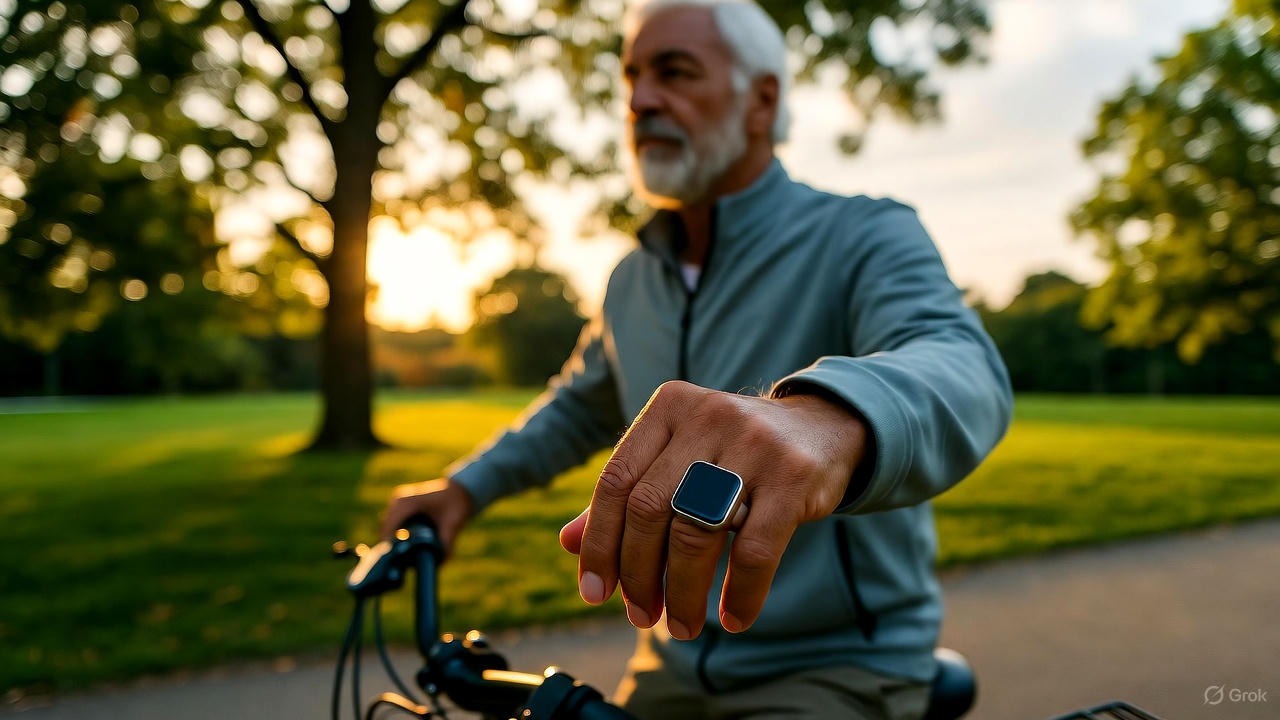
How to Use Your Smart Ring's HRV Feature From Day One
How to start using your smart ring's HRV feature from the first day.
Your Heart's Hidden Rhythm: How to Master Your Smart Ring's Most Powerful Feature
You wake up, check your phone, and see it. A simple number, quietly calculated overnight by the sleek ring on your finger. Your Heart Rate Variability—or HRV—score. Maybe it's a high number that fills you with a sense of calm readiness, or a low one that confirms the stressful week you've just endured. But what does that number really mean? More importantly, how do you move from passively observing it to actively using it to transform your energy, resilience, and health from day one?
Most smart ring users glance at their HRV as a vague "wellness score," a digital pat on the back or a gentle nudge to take it easy. But this is like using a supercomputer solely as a paperweight. HRV is not just another metric; it is the single most profound biometric your wearable provides. It is your nervous system's native language, a real-time broadcast of your body's capacity to handle stress, recover, and thrive. When you learn to listen and respond, you unlock a level of self-knowledge that transcends step counts and sleep stages.
This guide is your master key. We are going beyond the basics, bypassing the jargon, and diving straight into actionable strategy. Whether your ring is fresh out of the box or you've been wearing it for months, the journey to mastery starts here. We’ll decode the science into practical steps, establish your personal baseline, build foundational habits, and integrate HRV wisdom into your daily decisions. This is not about achieving a perfect score; it's about cultivating a profound dialogue with your own body. By the end, you won't just be tracking your HRV—you'll be conducting the symphony of your own wellbeing.
Let's begin.
What HRV Really Is: Your Body's Secret Stress Dial, Explained
To wield a tool effectively, you must first understand its fundamental nature. Heart Rate Variability is often misunderstood. It is not the measure of your average heart rate. If your heart beats 60 times per minute, it is not a perfect, robotic tick-tick-tick like a metronome. Instead, the time between each beat fluctuates by milliseconds—a subtle, complex dance orchestrated by your autonomic nervous system (ANS).
Think of your ANS as your body's automatic pilot. It has two primary co-pilots constantly vying for control:
The Sympathetic Nervous System (SNS): Your "gas pedal" or fight-or-flight response. It accelerates your heart, prepares for action, and is essential for acute stress and performance.
The Parasympathetic Nervous System (PNS): Your "brake pedal" or rest-and-digest system. It slows your heart, promotes recovery, digestion, and healing.
HRV is the dynamic tension between these two forces. A higher HRV indicates a robust, adaptable system where the brake and gas pedals are both responsive and balanced. Your body can react powerfully to a challenge (hitting the gas) and then swiftly return to a state of calm and repair (hitting the brakes). A lower HRV suggests a nervous system that is stuck—often with the sympathetic gas pedal chronically pressed, leaving less capacity to respond to new demands. It's a sign of allostatic load, or the cumulative wear and tear from chronic stress.
"The story of HRV is the story of adaptability," explains a leading sports physiologist. "It's not about being relaxed all the time. It's about having the resilience to engage fully with life's stressors and then recover completely from them."
Why does this matter for you, right now? Because HRV provides a quantifiable window into your resilience that is far more sensitive than how you "feel." You might feel "fine" through weeks of poor sleep, work pressure, and skipped workouts, but your HRV will often tell the true story of your draining reserves. It’s an early-warning system and a progress tracker rolled into one.
For the smart ring user, this is revolutionary. Unlike chest straps used in sporadic workouts, a ring like Oura, Ultrahuman, or the one from Oxyzen, worn 24/7, captures this critical data during the most telling window: your sleep. During deep sleep, external influences are minimized, offering a pure read of your recovery state. Your morning HRV reading isn't just a number; it's a summary of your nervous system's overnight repair work and its readiness for the day ahead. Understanding this turns a piece of data into a powerful conversation with your own biology. To continue this conversation and explore the technology that makes it possible, you can learn more about the science behind our approach at Oxyzen.
Before You Even Look at the Data: The Critical 14-Day Baseline Period
Here is the most common, and most detrimental, mistake new smart ring owners make: they put on the ring, open the app, see their first HRV number, and immediately judge it as "good" or "bad." This is meaningless—and often anxiety-inducing. Your absolute HRV number is personal. Comparing your 45 ms to someone else's 85 ms is like comparing your shoe size to theirs; it holds no value for assessing health.
The only meaningful comparison for your HRV is you. This is why your first mission is not to optimize, but to observe. We call this the Critical 14-Day Baseline Period. For the first two weeks, your goal is to collect data under your typical conditions to establish your personal normal.
Your Baseline Protocol:
Wear Consistently: Wear your ring day and night, only removing it for charging (shower time is perfect). Consistent data is clean data.
Live Normally (With One Rule): Don't make drastic changes to your routine. If you typically have two glasses of wine on Friday, do so. If your sleep schedule is erratic, let it be. We need a true snapshot. The one rule: avoid major, one-off stressors like running a marathon or pulling an all-nighter specifically for this period, if possible.
Log Context, Not Judgement: Use your app's tagging or note feature (or a simple journal) to log neutral context.
"Dinner out, spicy food, 1 cocktail."
"45-minute evening workout, felt strong."
"Argument with partner before bed."
"8.5 hours in bed, read before sleep." Do not write "bad HRV today" or "good sleep." Just the facts.
After 14 days, you will have your foundational metrics:
Your Personal Average HRV: This is your current physiological set point.
Your Range: What does a "high" and a "low" day look like for you? Notice the spread.
Correlation Clues: Start to see patterns. Does alcohol dip your score? Does a heavy workout? Does a weekend of relaxation boost it?
This baseline is your new compass. Every future data point gains meaning only in relation to this personal map. A "low" day is now defined as "significantly below my average," which is a powerful, personalized alert from your body. Without this baseline, you are navigating without a reference point, prone to misinterpretation and futile comparisons. For more foundational tips on getting started with your wearable, our blog offers a wealth of beginner-friendly resources.
Decoding Your Daily Score: How to Interpret Morning HRV and Readiness
Your ring delivers a readiness or recovery score each morning—a composite index typically heavily influenced by your nocturnal HRV. Now, with your baseline in mind, you can graduate to intelligent interpretation. This is where you move from "What is my score?" to "What is my score telling me to do today?"
A Framework for Your Morning Check:
HRV is At or Above Your Baseline + You Feel Good: This is a Green Light Day. Your body is signaling readiness. This is the day to lean in: tackle that intense workout, schedule important meetings, be socially active, or learn something new. Your system has the resilience to handle stress productively.
HRV is At or Above Your Baseline + You Feel Tired/Sore: This is a Yellow "Steady State" Day. Your nervous system is resilient, but your perceived energy is low. This often follows a day of high physical output. Focus on moderate activity (like a walk or light mobility), maintenance tasks, and solid nutrition. Don't force intensity, but don't collapse on the couch either. You're recovering while functioning.
HRV is Moderately Below Your Baseline: This is a Yellow "Proceed with Caution" Day. Your body is under some strain—from stress, poor sleep, an immune fight, or digestion. The goal today is stress mitigation. Prioritize:
Early bedtime. Think of this as nurturing your system back to baseline.
HRV is Significantly Below Your Baseline: This is a Red "Recovery Priority" Day. This is a clear signal from your body that resources are depleted. Your primary job is restoration. Cancel non-essential plans. Prioritize sleep above all else. Focus on hydration, gentle nutrition, and absolute minimal stress. This is not a failure; it's a smart interception. Ignoring this signal consistently is how burnout and injury happen.
Crucial Nuance: A single low HRV score is not a crisis. Look at the trend. Is it a one-day dip (likely a specific cause) or a 3+ day downward trend (a sign of accumulating strain)? Trends are more powerful than single points. This interpretive skill transforms your smart ring from a reporter into a trusted advisor.
The Foundational Levers: Sleep, Nutrition, and Hydration
You have your baseline. You can interpret your daily score. Now, we focus on the primary, daily levers that have the most direct and powerful impact on your HRV. Mastery here creates the platform for all other advanced optimizations.
Sleep: The Non-Negotiable Foundation
Sleep is not just downtime; it is your nervous system's prime repair shift. Deep sleep (N3) is particularly crucial for PNS activation and recovery. Your smart ring's sleep data and HRV are intrinsically linked.
Consistency is King: Aim to go to bed and wake up at roughly the same time every day, even on weekends. This regulates your circadian rhythm, which directly governs ANS balance.
Protect the Wind-Down: The hour before bed is a transition ritual for your nervous system. Ditch screens, opt for dim light, and engage in calming activities (reading, light stretching, conversation). This gently presses the parasympathetic "brake."
Listen to the Data: If you see a night of poor sleep depth followed by a low HRV, let it confirm the connection. Don't just note it—let it reinforce your commitment to your sleep ritual that evening.
Nutrition & Hydration: Fueling Resilience
What you put in your body directly affects the energy required for digestion and the inflammatory load on your system—both reflected in HRV.
The Timing Factor: A large, heavy, or spicy meal within 2-3 hours of bedtime can significantly suppress nocturnal HRV. Your body is forced to digest instead of diving deep into repair. Aim for an earlier, lighter dinner.
The Alcohol and Caffeine Effect: These are potent ANS disruptors. Alcohol may help you fall asleep but notoriously wrecks sleep architecture and craters HRV. Caffeine has a long half-life; afternoon coffee can still be stimulating your SNS at bedtime. Use your baseline to see your personal sensitivity.
Hydration's Hidden Role: Dehydration increases heart rate and reduces blood volume, forcing your heart to work harder and reducing HRV. Consistent, all-day hydration (especially with electrolytes if you sweat) is a simple, high-impact lever.
Implementing these foundations isn't about perfection. It's about creating a stable, supportive base camp from which you can explore other stressors like exercise, knowing your recovery systems are primed. For personalized guidance on navigating these foundational habits, our FAQ section addresses many common user questions.
The Movement Paradox: How Exercise Stresses and Strengthens Your HRV
This is a critical chapter in your HRV education. Exercise is a controlled, beneficial stress—a "hormetic" stressor that, when applied correctly, makes you more resilient. But when misapplied, it becomes a primary drain. Your HRV is the perfect guide to navigate this paradox.
The Acute Effect vs. The Adaptive Effect
Acute Suppression (The Right Kind of Dip): A hard training session—heavy strength training, high-intensity intervals, a long run—will acutely lower your HRV that night or the next morning. This is normal and desirable. It signals a legitimate stress that your body will now adapt to, provided you give it recovery. If you don't see this sometimes, you might not be training hard enough.
Chronic Suppression (The Warning Sign): If your HRV remains suppressed for 48+ hours after a workout or is on a consistent downward trend over a training week, it's a sign of non-functional overreaching heading toward overtraining. You are not recovering from the stress you're applying.
Using HRV to Guide Your Training:
On Green Light Days: Schedule your most intense, system-stressing sessions. Your body is primed to handle the load and will respond with a positive adaptation.
On Yellow Caution Days: Opt for moderate exercise (steady-state cardio, technique work, mobility) or active recovery. The goal is movement without significant systemic stress.
On Red Recovery Days: Genuine rest. A walk, gentle stretching, or complete rest. This is when the actual adaptation (strength gain, speed improvement) happens. Working out on a red day digs a deeper recovery hole.
This approach is called HRV-Guided Training. It moves you from a rigid, calendar-based plan ("I must deadlift on Monday") to a dynamic, responsive one ("My body is ready for deadlifts today"). It prevents injury and plateaus by ensuring you only apply serious stress when your system is ready to benefit from it. Countless athletes have found this to be the "missing link" in their training, as shared in many user experiences documented in our testimonials.
The Silent Sculptor: Mastering Chronic Stress and Mental Load
While exercise is an obvious stressor, the chronic, low-grade stress of modern life—the mental load of work deadlines, financial worry, relationship tensions, and digital overload—can be a more insidious and constant suppressant of HRV. This is where your smart ring becomes a mindfulness tool.
Your ANS does not distinguish between a physical threat (a bear) and a psychological one (an angry email). A sustained state of mental worry or anxiety keeps the sympathetic gas pedal subtly but persistently engaged, eroding your HRV over time.
Strategies to Use Your HRV as a Stress Barometer:
Identify Invisible Stressors: You might have a "normal" Tuesday with no workouts and perfect sleep, yet see a dipped HRV. Scan your mental state. Was it a day of back-to-back Zooms? A difficult conversation? A looming project deadline? The data prompts you to connect the dots between internal experience and physiological impact.
Practice Direct ANS Intervention: The beauty of the ANS is that we can influence it through the breath and body. Practices that stimulate the vagus nerve (the main highway of the PNS) can boost HRV, often within minutes.
Coherent or Box Breathing: Inhale for 4 counts, hold for 4, exhale for 6, hold for 2. Just 2-5 minutes of this can shift state.
Slow, Exhalation-Focused Breathing: Simply making your exhalations longer than your inhalations triggers the PNS brake.
Schedule "Stress Recovery" Blocks: Just as you schedule workouts, schedule 10-15 minute recovery blocks in your calendar for breath work, a quiet walk without your phone, or meditation. Use a low HRV trend as the impetus to actually put these in your diary.
By paying attention to how life's mental and emotional demands show up in your data, you gain objectivity. A low score becomes not a judgement, but a compassionate alert: "My system is under pressure. What do I need to let go of or process?" This turns stress management from a vague concept into a data-informed practice.
Beyond the Morning Reading: Tracking Your HRV Throughout the Day
Your nocturnal HRV is your North Star, but the story doesn't end at dawn. Many advanced smart rings, through on-demand or periodic readings, can show you how your HRV fluctuates in response to daily events. This is a masterclass in self-awareness.
How to Use Daytime HRV Checks:
Pre- and Post-Event Snapshots: Take a reading before and after a known stressor (e.g., a big presentation, a meditation session, a coffee). Did the presentation crash your score for an hour? Did the meditation lift it? This provides immediate biofeedback on what activities are truly draining or nourishing for your system.
Recovery Tracking After Exercise: Check your HRV a few hours after a workout. Is it already bouncing back (a sign of good fitness), or is it still in the tank? This can inform your evening plans.
The Power of the Positive Spike: Notice what causes a spontaneous increase in your daytime HRV. Is it laughing with a friend? Being in nature? Listening to music? These are your personal, active recovery tools—identify and deploy them strategically on Yellow and Red days.
A Note on Measurement: Daytime HRV is more variable due to movement, posture, and talking. For consistent readings, try to take them in a calm, seated position after a few minutes of quiet. The value is in the relative change, not the absolute number.
This practice cultivates interoceptive awareness—the ability to perceive the sensations inside your body. You start to feel the physiological correlate of a dipped HRV before you even check it: perhaps a tightness in the chest, shallow breathing, or mental agitation. The data trains your intuition, making you more responsive and less reactive to life's ebb and flow. To understand the technology that enables this continuous, nuanced tracking, you can discover more about our product's capabilities at Oxyzen.
Context is Everything: The Art of Logging and Pattern Recognition
Data in a vacuum is noise. HRV + Context = Wisdom. Your smart ring app provides graphs, but you provide the narrative. Diligent, simple logging is what transforms random fluctuations into an intelligible story of your life's impact on your biology.
What to Log (The Simple Version):
Don't overcomplicate this. Aim to note just a few key things each day:
Stress Level: On a scale of 1-10.
Energy Level: On a scale of 1-10.
Key Events: "Heavy legs session." "Client dinner, 2 drinks." "Felt anxious all afternoon." "30-min nature walk at lunch."
Diet Deviations: "Ate very late." "Tried a new probiotic." "Sugar-heavy afternoon."
The Monthly Review Ritual:
Once a month, sit down with your app's weekly view and your notes. Look for patterns, not daily blips.
"Every time I have alcohol on a weeknight, my HRV drops for two nights."
"My highest HRV weeks correlate with my weekly yoga class."
"My score starts dipping every month before my project deadlines."
"I feel tired, but my HRV is high—maybe I'm fighting a bug?"
This review is where true, personalized insight sparks. It reveals your unique sensitivities and superpowers. It moves you from following generic health advice ("alcohol is bad") to understanding your personal truth ("two glasses of wine costs me 48 hours of recovery"). This self-knowledge is empowering and irreversible. For more insights on interpreting your data and building effective routines, our team has compiled extensive resources on the blog.
Troubleshooting Common HRV Confusions and Plateaus
As you embark on this journey, you will encounter puzzling readings. This is normal. Let's demystify some common scenarios.
"My HRV is high, but I feel terrible." This is a classic sign your body may be fighting an illness. The immune response can initially stimulate the nervous system in a way that elevates HRV. It's a reminder that HRV is one piece of the puzzle—always combine it with subjective feeling. If this persists, your body might be in a state of chronic, high-alert stress.
"My HRV is low, but I feel great and performed amazingly." Sometimes, a significant, positive stressor (like a race-day performance or a major creative breakthrough) can create a "productive dip." The key is the rebound. Do you recover back to baseline swiftly? If so, it was a well-tolerated stress.
"My HRV isn't improving despite doing everything 'right'." First, ensure you're giving it time (think months, not weeks). True physiological adaptation is slow. If you're plateaued, consider:
Are you in a chronic, unaddressed stress situation? (A toxic job, a bad relationship).
Are you over-exercising? Check for a chronic downward trend.
Could it be diet? Inflammation from food sensitivities (gluten, dairy) can be a silent suppressor.
Are you getting enough variety in your training? The same stimulus stops provoking adaptation.
"The data is making me anxious." This is vital to address. Your smart ring is a servant, not a master. If checking the app induces stress, you've broken the tool. Implement a "data detox"—check only once in the morning to set your day's intention, then put it away. Remember, the goal is to develop your internal sense of readiness, not an addiction to the external metric.
These nuances are where the journey moves from a technical pursuit to a deeply personal one of learning, adjusting, and respecting your body's complex, intelligent language. For further support on these and other topics, our community and support team are always available to help.
The Deep Integration: Syncing HRV with Sleep, Body Temperature, and Activity
Mastering HRV in isolation is a powerful start, but its true genius is revealed when you view it as the conductor of your body's entire biometric orchestra. Your smart ring doesn't just measure HRV; it tracks sleep stages, resting heart rate (RHR), and subtle changes in body temperature. When you learn to read these signals in concert, you gain a holistic, multi-dimensional picture of your health that no single metric can provide.
The Core Trio: HRV, RHR, and Sleep
Consider these three metrics as a closely-knit team:
HRV: Your nervous system's flexibility and readiness (the conductor).
Resting Heart Rate (RHR): Your cardiovascular system's baseline effort (the engine's idle speed).
Sleep (especially Deep & REM): The quality of your system's repair and recalibration shift (the maintenance crew's work log).
How They Interact: A common, telling pattern is low HRV + elevated RHR + poor sleep depth. This trio is a red-alert combination, screaming that your body is under significant strain—fighting an infection, digesting a massive stress load, or desperately needing a deload week. Conversely, high HRV + low RHR + high sleep quality is the gold-standard trifecta of robust recovery.
But the nuance lies in the exceptions. For instance:
High HRV + Elevated RHR: This can be an early sign of overtraining syndrome or the onset of an illness. Your body is in a heightened state of alert (high RHR) but is maintaining nervous system variability. It's a fragile, volatile state.
Low HRV + Low RHR in a Well-Trained Athlete: Sometimes, after an extreme endurance event, an athlete's system can be so fatigued that both metrics plummet. This isn't readiness; it's deep systemic exhaustion requiring extended rest.
The lesson is simple: Never judge your state by HRV alone. Make your morning check a three-point scan: HRV trend, RHR trend, and sleep quality. Let the combination guide your judgment. For a deeper dive into how these biomarkers work together, our blog features expert analyses and case studies.
The Power of Peripheral Temperature & Respiratory Rate
Advanced rings track two more subtle, but incredibly insightful, metrics:
Body Temperature Deviation: A sustained elevation in your nightly peripheral temperature (often just a degree or so) is one of the most reliable early indicators of illness, inflammation, or menstrual cycle onset. If you see a temperature spike alongside a dipping HRV, it's a strong signal to prioritize rest and immune support—you might be fighting something off before you even feel symptoms.
Respiratory Rate: This is a remarkably stable metric. A consistent increase of 1-2 breaths per minute above your personal norm can indicate respiratory strain, anxiety, or metabolic stress. It’s another confirming clue to add to your diagnostic picture.
Practical Integration: Create a simple morning checklist. "HRV: Steady. RHR: Slightly elevated. Sleep: Low deep sleep. Temp: Up 0.5°C. Conclusion: My body is working on something—maybe a bug. I'll take a Green Light day and make it a Yellow Steady State instead, hydrate aggressively, and get to bed early."
This integrated analysis transforms you from a data collector into a skilled interpreter of your own physiology. You're no longer just reading numbers; you're diagnosing your state and prescribing your own daily protocol.
The Long Game: Analyzing Trends for Life Planning and Major Decisions
While daily and weekly HRV guidance is transformative, the macro-view—looking at trends over months and seasons—unlocks a strategic layer of life management. Your HRV data becomes a longitudinal journal of your physiological response to life itself.
Identifying Your Seasonal & Cyclical Rhythms
Almost everyone has biological rhythms. Your data will reveal yours.
The Monthly Cycle: For those who menstruate, HRV often follows a predictable pattern: lower in the luteal phase (post-ovulation) and higher in the follicular phase. Tracking this isn't about pathologizing the dip, but about planning with it. Schedule important presentations, intense training blocks, or major social events for your high-resilience follicular phase. Plan more admin days, restorative yoga, and self-care during your luteal phase. This is biohacking meets radical self-acceptance.
Seasonal Shifts: Do you see a dip in HRV every February? A rise every September? Many people are affected by seasonal changes in light, allergens, or workload. Recognizing your personal seasonal pattern allows you to anticipate and adapt—perhaps by using a light therapy lamp in winter or planning a lighter workload during your low-resilience season.
Using HRV to Guide Major Life Decisions
This is where the data becomes profoundly life-altering. By observing multi-month trends, you can make objective assessments of your lifestyle.
The Job Stress Audit: Are you considering a new job or role? Compare your 3-month HRV average during a "normal" period at your current job to a 3-month average during an intense project. The data quantifies the cost of that stress. You might use it to negotiate for different resources, or as a decisive factor in leaving a toxic environment for a more sustainable one. Real users have shared how this data gave them the courage to make necessary changes, as seen in some powerful user experiences and testimonials.
Relationship Dynamics: Do you consistently see a 2-day HRV dip after visiting certain family members? Does a weekend with your partner boost your scores? The data, stripped of emotional narrative, can highlight which relationships are truly nourishing and which are depleting, guiding you to set healthier boundaries.
The Big Move or Change: Considering a move to a new city, having a child, or starting a business? These are massive stressors. By understanding your baseline resilience and how you typically respond to stress, you can better plan your support systems, timeline, and self-care rituals during the transition.
Viewing your HRV dashboard over a 6-month or yearly view is an exercise in self-compassion and intelligent design. It shows you the cost of your choices and the reward of your healthy habits, allowing you to architect a life that doesn't just look good on paper, but feels sustainable in your very cells.
Goal-Specific Protocols: Leveraging HRV for Fat Loss, Muscle Gain, and Peak Cognition
Now we enter the realm of high-performance optimization. Once you are fluent in the language of your HRV and have stable foundational habits, you can tweak your levers to bias your system toward specific outcomes. HRV becomes your feedback loop to ensure you're pursuing these goals in a sustainable, adaptive way.
Protocol for Sustainable Fat Loss
Fat loss is a catabolic (breaking down) process that imposes systemic stress. Pushing too hard crashes HRV, triggers hunger hormones, and leads to rebound. The HRV-informed approach is gentle and steady.
Caloric Deficit with HRV Guardrails: Implement a modest calorie deficit (300-500 calories). Monitor your HRV trend weekly. If it holds steady or improves, you're in a sustainable zone. If it shows a consistent downward trend for 7-10 days, it's a signal that the deficit is too large or you're missing key nutrients. Time to increase calories slightly or have a "maintenance" week to allow recovery and reset hormones.
Fast Smart, Not Just Hard: If you use intermittent fasting, note its impact. For some, a 16-hour fast boosts HRV; for others, it crashes it. Use your data to find your optimal fasting window. Generally, avoid very long fasts (>20 hours) if your goal is HRV-supported fat loss, as the stress can become counterproductive.
Prioritize Sleep & Protein: These are non-negotiable. Poor sleep during a deficit will annihilate HRV and increase muscle loss. Adequate protein protects muscle mass, keeping your metabolism robust.
Protocol for Lean Muscle Gain
Building muscle is an anabolic (building up) process that requires stress + ample recovery. HRV tells you if you're nailing the recovery piece.
Train on Green Lights, Recover on Yellows and Reds: This is the core principle. Your hardest hypertrophy sessions must be reserved for days when your nervous system is primed to handle the load. This maximizes muscle protein synthesis and minimizes injury risk.
The Surplus Signal: You need a caloric surplus to build muscle. A healthy, well-fed body should show a stable or slightly improving HRV trend. If your HRV is dipping in a surplus, you might be gaining fat, not muscle, or your training volume is too high. Dial it back.
Focus on Sleep & Post-Workout Nutrition: Deep sleep is when growth hormone peaks. That post-workout meal isn't just for muscles; it's a recovery signal for your entire system. Seeing a good HRV rebound after training is a sign you've fueled and rested appropriately.
Protocol for Peak Cognitive Performance
Your brain is your most energy-hungry organ. Its function is inextricably linked to your autonomic state. A balanced, high-HRV state is the foundation for focus, creativity, and emotional regulation.
Align Demanding Work with Your Biological Green Lights: Schedule deep work sessions, important strategic thinking, and creative brainstorming for the mornings after high-HRV readings. Your prefrontal cortex (the seat of executive function) has the metabolic resources to operate optimally.
Use HRV Breaks to Reset: Cognitive work depletes glucose and increases stress markers. When you feel focus waning, don't just push through. Take a 5-minute "HRV boost break": practice coherent breathing, do a short walk, or look at something green. Check your ring's on-demand reading afterward—you'll likely see a tangible lift, confirming a neural reset.
Fuel the Brain: Notice how different foods affect your afternoon HRV and mental clarity. A heavy, high-carb lunch might create a crash. Stable blood sugar from a balanced meal supports stable HRV and sustained cognition.
By tying your specific goals to your HRV data, you move beyond generic advice into a realm of personalized, dynamic self-experimentation where your body confirms what is working and warns you about what is not.
The Social and Environmental Dimension: How People and Places Shape Your HRV
Our physiology is not an isolated system. It is continuously responding to the invisible networks of our social connections and the tangible qualities of our environments. Your smart ring can measure the impact of these forces, giving you empirical evidence to curate a more nourishing life.
The Physiology of Connection
Social interactions have a direct, measurable effect on your nervous system.
The "Coherence" Effect: A positive, warm, and connected conversation with a loved one can synchronize heart rhythms and boost HRV in both people. This phenomenon, known as physiological coherence, is a state of optimal function. Your ring can show you the literal uplift from a good chat.
The Drain of Toxic Interactions: Conversely, conflict, gossip, or interactions with emotionally draining individuals can trigger a defensive SNS response, tanking your HRV for hours. The data provides objective proof to support the gut feeling of "that person exhausts me."
Loneliness vs. Solitude: There's a crucial difference. Chosen solitude for recharging can lift HRV. Involuntary loneliness or social isolation often suppresses it. Tracking this can encourage you to reach out when needed or protect your alone time without guilt.
Action Step: After social gatherings or key interactions, take a quick mental note or an on-demand HRV reading. Build a "People Audit" over time. Which friendships consistently leave your physiology in a better state? Invest in those.
Designing an HRV-Supportive Environment
Your surroundings are a constant, passive input to your ANS.
Nature's Instant Calm: Multiple studies show that spending time in "green" or "blue" (water) spaces boosts HRV. Your ring can prove it to you. A 20-minute walk in a park will likely show a more significant HRV uplift than the same walk on a busy city street. Make nature exposure a non-negotiable part of your weekly routine.
The Digital Environment: The constant ping of notifications, the endless scroll, the hyper-arousing content—all are low-grade SNS activators. Try a simple experiment: put your phone in another room for an evening and note your next morning's HRV. For many, it's significantly better. Implement "digital sunsets" and phone-free zones.
Your Home Sanctuary: Clutter, noise pollution, and poor lighting (especially a lack of natural light) contribute to cognitive load and subtle stress. Use your HRV as a gauge. Does a clean, tidy, quiet space help you settle into rest? Does bright, artificial light late at night disrupt your sleep and next-day score? The data empowers you to make small, impactful changes to your living space.
Understanding these dimensions turns self-care from an inward-focused practice into an exercise in curating your entire ecosystem. You become the architect of a life that doesn't just happen to you, but is intentionally designed to support your biological flourishing.
Advanced Tactics: Breathwork, Cold Exposure, and Biofeedback Loops
With a solid foundation and integrated understanding, you can explore potent, direct interventions that can rapidly influence your HRV. These are tools for acute recovery and for training your nervous system's resilience, like taking it to the gym.
Breathwork as Direct ANS Intervention
Breathing is the only autonomic function we can easily consciously control, making it a remote control for your nervous system.
Coherent Breathing (5.5 breaths per minute): Inhale for 5 seconds, exhale for 5 seconds. This specific pace has been shown to maximize HRV and create entrainment between heart rate, blood pressure, and respiratory rhythms. Just 10-20 minutes daily can raise your baseline HRV over time.
The Physiological Sigh: A double-inhale through the nose (filling the lungs completely), followed by a long, slow exhale through the mouth. This is a rapid, on-the-spot anxiety breaker and HRV booster, effective in under a minute. Use it before a stressful event or when you feel overwhelmed.
Box Breathing (4-4-4-4): Inhale 4, hold 4, exhale 4, hold 4. Used by Navy SEALs for calm focus, it provides a structured rhythm that quiets mental chatter and stabilizes the ANS.
Pro Tip: Use your ring's on-demand mode during a breathwork session. Start with a reading, do 5 minutes of coherent breathing, and take another reading. The immediate feedback is powerfully motivating and proves the technique's efficacy directly to you.
Cold Exposure: The Adaptive Stressor
Intentional, acute cold exposure (cold showers, ice baths) is a hormetic stressor—it shocks the system in a way that, upon recovery, makes it more resilient.
The Acute Effect: Immersion in cold water causes a massive sympathetic spike (gasping, high heart rate). But after you get out, a powerful parasympathetic rebound often occurs, leading to a significant elevation in HRV that can last for hours.
The Chronic Effect: Regular practice improves your body's ability to handle stress and return to balance, often reflected in a gradually rising baseline HRV.
Safety & Protocol: Start gentle (30 seconds of cold at the end of your shower). Never force it to the point of panic. Consistency trumps intensity. Track the effect on your sleep and next-morning HRV; for some, doing it too close to bedtime can be overstimulating.
Creating Biofeedback Loops
This is the pinnacle of active engagement with your data. You use the real-time or near-real-time feedback from your ring to consciously shift your state.
The Real-Time Stress Test: Feeling anxious, sit down and put your ring in on-demand mode. See the low HRV number. Now, engage in your chosen intervention (e.g., physiological sigh, box breathing, thinking of a grateful memory) for 2-3 minutes. Take another reading. Witnessing the number rise is a profound lesson in self-efficacy—you have the power to change your physiology.
The Pre-Sleep Wind-Down Ritual: An hour before bed, put your ring on and do a gentle 10-minute yoga nidra or breathing session. Check the app. A calming routine that consistently lifts your nocturnal HRV score is one you'll stick with because the reward is tangible and immediate.
These advanced tactics move you from being a passenger in your body to being an active pilot, with your smart ring as the instrument panel. You're not just observing resilience; you're actively building it.
When to Ignore the Data: Cultivating Intuition and Avoiding Obsession
This may be the most important chapter in your HRV mastery journey. The ultimate goal of any biometric tool is not to create a slave to the metric, but to cultivate such deep somatic awareness that the tool becomes a periodic check-in, not a crutch. There will be days when the wisest choice is to take the ring off and live.
The Pitfalls of Data Obsession
Orthosomnia: The unhealthy pursuit of perfect sleep data. Similarly, one can develop an unhealthy fixation on a "perfect" HRV score, creating anxiety that itself lowers HRV—a vicious cycle.
Paralysis by Analysis: Spending more time analyzing your readiness score than actually living your life. Over-planning your day around a number rather than listening to real-time cues.
The Diminishment of Joy: Skipping a spontaneous night out with friends because you're "protecting your HRV," or feeling guilty about a low score instead of seeing it as neutral information.
Rules for a Healthy Relationship with Your Data
The "Feel Over Numbers" Rule: If you feel energetic, joyful, and strong, but your HRV is low, trust your feeling. The data is a suggestion, not a command. Proceed with your day, just with a slightly more attentive eye to recovery later.
Schedule Data Reviews: Don't check your app constantly. Make your morning check intentional—a 60-second planning session. Then close it. Perhaps check once more in the evening to assess the day's impact. Live in the world, not in the dashboard.
Regular "Ring-Free" Days or Weeks: Once a quarter, consider taking a full week off from wearing the ring. Reconnect with your innate sense of energy, hunger, and readiness. This prevents you from outsourcing your intuition to a device. You'll likely return to the data with a refreshed, healthier perspective.
Focus on Trends, Not Dots: Drill this into your mindset. A single data point is noise. The 3-day, weekly, and monthly trend is the signal. This perspective automatically reduces daily anxiety over a low score.
The most advanced users of this technology are not those with the highest scores, but those who have used the data to forge such a strong mind-body connection that they can often predict what their ring will tell them. The ring becomes a confirming mentor, not a dictating manager. This balanced approach is central to our philosophy, which you can read more about in our company's mission and values.
The Future Is Personalized: Where HRV Tracking and AI Are Heading
We are standing at the edge of a revolution in personalized health. The current model of tracking HRV and providing generic interpretations is just the first chapter. The convergence of continuous biometrics, artificial intelligence, and personalized genomics points toward a future where your smart ring doesn't just report data—it becomes a proactive, hyper-personalized health guardian.
From Reactive to Predictive Analytics
The next generation of algorithms won't just tell you how you recovered from yesterday. They will predict your readiness for tomorrow, or next week.
Illness Prediction: By analyzing subtle, multi-day shifts in the combination of HRV, RHR, temperature, and respiratory rate, AI models will be able to alert you: "There's an 85% likelihood you are coming down with a viral infection in the next 48 hours. Suggested action: Increase sleep to 9 hours, boost Vitamin C and Zinc, and postpone your intense training." This shifts healthcare from reactive to truly preventive.
Injury Risk Forecasting: For athletes, the system could analyze training load against recovery metrics and flag: "Your connective tissue strain is accumulating. Your current plan has a 40% increased risk of tendonitis next week. Suggested action: Replace Thursday's sprint session with pool work."
Truly Individualized Baselines and "N of 1" Insights
The concept of a static baseline will evolve. Your baseline will be a dynamic, learning model that understands your unique rhythms.
Context-Aware AI: The system will learn that for you, a glass of red wine has X effect, while a hard deadline has Y effect. It will know your menstrual or seasonal patterns better than you do and adjust your "personal normal" range accordingly.
Integrated Life Data: Future devices and apps will (with your permission) integrate other data streams—calendar stress, weather, pollen count, even genetic data (e.g., do you have a MTHFR mutation affecting stress response?). The interpretation of your HRV will happen within this rich, personal context, yielding insights no human alone could piece together.
The Seamless Integration into Daily Life
The interface will fade into the background. Insights will be delivered not as a dashboard to check, but as gentle, timely nudges in your daily flow.
Ambient Suggestions: Your car or smart speaker might say, "Based on your recovery data, you might benefit from a calming playlist for your commute today."
Automated Environment Adjustment: Your smart home could dim the lights earlier because your data shows you need more wind-down time, or adjust the thermostat for optimal sleep based on your personal temperature rhythm.
This is the horizon. The journey you are starting today—learning your baseline, interpreting signals, integrating data—is preparing you for this future. You are becoming the expert on you, and the technology is evolving to be your perfect, silent partner in that endeavor. To see how we're thinking about this future, you can explore the vision and journey that drives our development at Oxyzen.
Building a Sustainable Practice: From 30-Day Experiment to Lifelong Habit
The initial thrill of data discovery often fades after a few months. The ring becomes just another piece of jewelry, the app another unopened icon. This is the critical juncture where most people's journey with biometrics ends. The transition from a short-term experiment to a seamless, lifelong practice is the true marker of mastery. It’s not about relentless tracking, but about integrating awareness so deeply that it becomes unconscious competence.
The Cycle of Engagement: Anticipating the Dip
Understand that your relationship with this data will naturally ebb and flow in cycles, much like your HRV itself.
Phase 1: The Honeymoon (Weeks 1-8): Everything is fascinating. You check the app constantly, run experiments, and see immediate correlations. Motivation is high.
Phase 2: The Disillusionment (Months 2-4): The novelty wears off. You’ve learned the major patterns (alcohol = bad, sleep = good). Progress plateaus. The data feels repetitive, and the effort to log and analyze can feel like a chore. This is where most people stop.
Phase 3: Integration & Sophistication (Month 5+): You push through the disillusionment by changing your goal. The goal is no longer "discovery," but "refinement and maintenance." You check the data less frequently but with more purpose. Your habits have solidified, and the ring’s primary role shifts from teacher to sentinel.
Strategies for Long-Term Adherence
To navigate successfully to Phase 3, implement these strategies:
Shift Your "Why": Move from "I want to track my HRV" to larger, value-based goals. "I use my HRV data to support my goal of being a patient parent." "I use this data to sustain my energy for my creative work." "This helps me be more resilient for my team." This connects the daily habit to your core identity.
Create Quarterly Reviews, Not Daily Obsession: Set a calendar reminder every 3 months for a "Biometric Quarterly Review." Export your data, look at long-term trends, and ask one big strategic question: "Based on the last 90 days, what is one small change I can make to improve my recovery resilience for the next quarter?" This makes the practice strategic and sustainable.
Form a Pod or Find a Partner: Share the journey. Having one or two trusted friends or colleagues who also use this technology creates accountability and a shared language. A quick text: "My HRV tanked after that project launch—how was yours?" normalizes the experience and provides social reinforcement. Our community has found great value in this, as echoed in many shared user experiences and testimonials.
Embrace Seasonality: Your practice should change with the seasons. In summer, maybe the focus is on managing heat stress and social overcommitment. In winter, the focus shifts to light exposure and combating seasonal mood dips. Let your environmental context guide what you look for in the data.
Sustainability is achieved when the practice no longer feels like a separate "health task" but is woven into the fabric of how you assess your life and make decisions. The ring is on your finger, and the awareness is in your mind, operating quietly in the background.
The Collective Rhythm: Sharing Data with Coaches, Doctors, and Partners
Your biometric data is powerful in isolation, but its value multiplies exponentially when shared thoughtfully with key people in your life. This turns personal insight into shared understanding and collaborative optimization.
Working with a Coach or Trainer
For fitness and performance coaches, your HRV data is a game-changer. It moves the relationship from guesswork to precision.
Providing Context, Not Just Numbers: Don’t just send a screenshot of a low score. Provide the narrative. "Hey Coach, my HRV has been on a 5-day downward trend. I've been stressed at work, and sleep has been poor. How should we adjust this week's volume?" This allows for intelligent, collaborative programming.
The Coach's Perspective: A good coach can use your trends to periodize your training more effectively, deload you proactively before you break down, and identify which types of workouts you personally recover from best. It transforms the coaching dynamic from prescriptive to responsive.
Informing Your Healthcare Provider
While your doctor cannot diagnose based on smart ring data, you can provide incredibly valuable longitudinal context.
Pre-Appointment Prep: Instead of saying "I'm tired," you can say: "Over the past three months, my resting heart rate has averaged 5 BPM higher than my normal, and my HRV trend shows a consistent dip, despite adequate sleep. This started around the time of X event." This is objective, trend-based information that can guide more effective testing and diagnosis.
Tracking Treatment Efficacy: Starting a new medication, therapy, or supplement? Monitor its impact on your HRV/RHR/sleep stack. A positive shift can be an early sign of efficacy. A negative one can prompt a timely conversation with your doctor about side effects. Always consult with your provider before making changes based on this data.
Deepening Intimate Partnerships
Sharing this data with a spouse or partner can be an act of profound intimacy and practical teamwork.
Objective Communication About Stress: "My nervous system is really depleted today" carries a different, less blame-oriented weight than "You're stressing me out." It externalizes the stress as a shared problem to manage, not a personal failing.
Synchronizing Rhythms: Couples often find their sleep and stress cycles are linked. Seeing this in the data can lead to cooperative wind-down routines, shared breathing exercises, or agreeing on a "recovery weekend" together.
Family Planning and Life Stages: For partners considering major life changes—having a child, moving, career shifts—having a shared understanding of each other’s physiological resilience can inform timing and how to support one another through the transition.
The key to sharing is consent and purpose. Share with the intent to collaborate and seek support, not to blame or prove a point. When used respectfully, this data can build bridges of understanding in your most important relationships, making your personal journey a supported one. For more on how we think about data as a tool for connection, you can explore our company's philosophy and values.
Navigating the Gray Areas: Illness, Aging, and Non-Typical Responses
The textbook HRV responses don't always apply. Life is messy, bodies are complex, and your data will sometimes confuse you. Navigating these gray areas with curiosity, not fear, is the sign of a true adept.
HRV During Illness and Injury
Sickness throws a wrench into the normal patterns.
The Acute Phase: During a full-blown fever or active infection, expect everything to be low—HRV, RHR variability, and sleep quality. Your body is allocating all resources to the immune battle. The goal here is not to "improve" metrics, but to rest. The data simply confirms the need for it.
The Convalescence Phase: This is the critical, and often mismanaged, period. As you start to feel better, your HRV may remain low or behave erratically. This is your body saying the internal repair work is not finished. This is the most important time to heed the data. Returning to intense exercise or high stress because you "feel fine" while your HRV is still suppressed is a prime way to relapse or develop post-viral complications. Let your HRV return to at least 80% of your baseline before resuming full activity.
The Aging Curve: Redefining Your "Normal"
HRV has a natural, gradual decline with age. This is not a sign of failing health, but a biological reality. The focus shifts from comparing to your 25-year-old self to optimizing within your current decade.
Focus on Stability, Not Peak: As you age, minimizing drastic swings and maintaining a stable, resilient baseline becomes more valuable than chasing a high peak. A consistent HRV that responds well to recovery practices is a fantastic sign of "healthy aging."
The Levers Become More Critical: The foundational habits—sleep, nutrition, stress management, and consistent moderate movement—become non-negotiable pillars. Their impact on HRV becomes even more pronounced.
Reframe Your Baseline: Every few years, take time to consciously redefine your baseline. The average for a healthy 50-year-old is different from a healthy 30-year-old. Work with your new normal.
When You Are the Outlier
Some people are physiological outliers. You might find that:
Intense exercise improves your next-night HRV. (Common in very fit individuals with great recovery capacity.)
Alcohol doesn't seem to affect your score. (Rare, but possible depending on metabolism and other factors.)
Your HRV is naturally low, but you have high energy and performance.
In these cases, trends and correlations are everything. Your personal truth is in the direction of change relative to your own history, not the absolute number. If you're an outlier, your journaling and pattern recognition are doubly important. You are writing your own textbook.
Embracing these complexities prevents dogmatic thinking. Your data is a story about you, not a verdict against you. It requires you to be the compassionate, discerning author of that story.
The Ethical Self: Privacy, Data Ownership, and the Philosophy of Self-Tracking
As you generate this deeply intimate stream of data about your inner state, a crucial parallel journey must unfold: the ethical consideration of what this data means, who owns it, and how it shapes your sense of self. This is the meta-layer of biometric mastery.
Privacy and Data Sovereignty
You must become an informed citizen of your own digital health.
Read the Privacy Policy: Understand what your ring company does with your aggregated, anonymized data. Is it used for research? Sold to third parties? How is it encrypted? This isn't paranoia; it's due diligence. We believe in radical transparency here, which you can read about in our commitment to user privacy and data ethics.
Own Your Narrative: Your data is a digital extension of your body. Be thoughtful about where and with whom you share the raw feed. Use the app's sharing features judiciously.
The Right to Be Unmeasured: Assert your right to have days or experiences that are not quantified. Not everything worth knowing can be measured, and not everything measured is worth knowing.
The Quantified Self vs. The Qualified Self
This is the central philosophical tension. There is a risk that the relentless pursuit of optimization can strip life of its spontaneity, joy, and meaning—the very qualities that make us human.
Beware of "Good" and "Bad" Labels: A low HRV after a night of laughter with old friends is not "bad." It's the cost of a profoundly "good" human experience. The data is neutral. Your valuation of the trade-off is personal.
Don't Let the Map Replace the Territory: The score is a representation of your state, not the state itself. The feeling of vitality, the calm focus, the deep sleep—these are the real experiences. The number is just a guidepost.
Track What You Want to Improve, Not Just What You Can: It's easy to get sucked into optimizing the things that are easy to measure (sleep hours, HRV). Ensure you are also attending to the harder-to-quantify aspects of wellbeing: connection, purpose, creativity, and joy. Use the stability gained from biometric tracking as a platform to engage more fully in these unmeasurable realms.
The ethical, mature use of this technology means holding it lightly. It is a servant to your broader human flourishing, not the definition of it. It should expand your agency and self-knowledge, not contract your life into a series of metrics to be gamified.
Your HRV-Powered Life: A Concluding Manifesto for the Self-Aware Human
You began this journey looking at a single, mysterious number. You now understand it as the heartbeat of a complex, intelligent system—yourself. You have learned its language, felt its rhythms, and discovered the levers that gently sway it. This is not the end of learning, but the beginning of a new way of being.
Let this be your manifesto, the principles forged from data and lived experience:
1. You Are Your Own Best Expert. No guru, diet, or generic wellness plan knows your body's whispers and shouts like you now can. Your combined subjective feeling and objective data create an authority that cannot be outsourced. Trust it.
2. Resilience is a Practice, Not a Trait. You do not simply "have" high HRV. You cultivate it daily, through a thousand small choices: the breath you take when stressed, the water you drink, the boundary you set, the extra hour of sleep you prioritize. It is the art of skillful living, reflected in a millisecond rhythm.
3. Data Informs, But Wisdom Decides. The ring tells you the "what." You must supply the "so what." Use the data to make more informed, compassionate choices, not to abdicate your intuition or your right to occasionally choose the path of delightful imbalance.
4. The Goal is Not a Perfect Score. The Goal is a Resilient Life. A perfect HRV graph is a flatline. The beautiful, healthy graph has peaks and valleys—it shows a system that engages fully with challenge and recovers deeply. It mirrors a life fully lived.
5. This Knowledge is a Gift to Be Shared Gently. Use your understanding to support others, not to judge them. Offer insight when asked, model sustainable habits, and remember that everyone is on their own path, listening to their own body's unique language.
Your smart ring is a tool of liberation. It frees you from vague guesses about your energy and replaces them with confident knowledge. It liberates you from one-size-fits-all health advice and delivers a personalized, dynamic blueprint. It frees you to engage with life's stresses, not as an enemy to be avoided, but as a stimulus for growth, provided you have the wisdom to recover.
As you move forward, let your awareness be gentle. Check in with your body as you would a dear friend—with curiosity, not criticism. Let the data on your phone serve as a occasional mirror, reflecting back not just your physiology, but your courage in choosing to know yourself this deeply.
The ring on your finger is a reminder: you are now in a continuous, conscious dialogue with the most miraculous system you will ever encounter. You are not just wearing technology. You are wearing a lens into your own vitality. You are living, pulse by variable pulse, a measured and yet profoundly wild, human life.
Ready to go deeper? This guide has laid the foundation. The journey of application is lifelong. For continued learning, community support, and the latest insights on living a data-informed, wise life, we invite you to explore the ongoing conversation on our blog and to reach out with your questions and stories. Your story, told through your own unique rhythm, is the most important one of all.



%402x.svg)