


HRV vs Heart Rate: The Critical Difference Your Smart Ring Shows You
Explains the key difference between HRV and heart rate shown by smart rings.
Explains the key difference between HRV and heart rate shown by smart rings.
%402x.svg)
For decades, the steady beep… beep… beep of a heart rate monitor has been the universal soundtrack of vitality. We’ve been conditioned to believe that a lower resting heart rate is an indisputable badge of fitness, a single number promising health and longevity. But what if that singular metric is only whispering a fraction of the story? What if, beneath that seemingly steady rhythm, lies a far more profound, dynamic, and telling conversation happening within your nervous system—a conversation you can now hear clearly for the first time?
Welcome to the new frontier of personal health awareness, powered not by bulky hospital machines, but by the elegant, continuous technology of the smart ring. This shift moves us from a simplistic, one-dimensional view of our heart to a nuanced, multidimensional understanding of our entire body’s state. The critical players in this revolution are two metrics often mentioned together but rarely understood in their profound duality: Heart Rate and Heart Rate Variability (HRV).
Think of it this way: Your heart rate is the volume of the music—how many beats per minute. HRV is the complexity, rhythm, and emotional depth of the symphony. A metronome is perfectly steady; a masterful musical performance is rich with subtle, meaningful variations between notes. Which one is more alive? Which one better reflects a state of resilience, adaptability, and health? The answer, unequivocally, is the latter.
This isn't just academic theory. It's a practical, daily insight that can transform how you manage stress, optimize recovery, predict illness, and enhance performance. For the modern individual striving for balance in a world of constant demand, understanding this difference is not just interesting—it’s critical. And the tool making it accessible is the smart ring, a device that silently gathers this data from the most honest source you have: your body itself, 24/7.
In this deep exploration, we will dismantle the myths, dive into the science, and reveal the actionable wisdom locked within the interplay of HRV and heart rate. You’ll learn why a "good" number in one can be misleading without the context of the other, how your autonomic nervous system uses these signals to communicate, and how to interpret what your smart ring is telling you to make smarter decisions about training, sleep, and stress. This is more than data; it’s a new language of self-awareness. Let’s begin by understanding the fundamental biology behind the beat.
Your heart is not a simple mechanical pump. It is an intelligent, electrically governed organ, finely tuned by a constant conversation between two competing branches of your autonomic nervous system: the sympathetic (your gas pedal, responsible for "fight or flight") and the parasympathetic (your brake pedal, responsible for "rest and digest"). Every single heartbeat is the result of this intricate, moment-to-moment negotiation.
The spark begins in the sinoatrial (SA) node, your heart’s natural pacemaker. But the timing of that spark is where the story gets fascinating. The SA node doesn’t fire in a sterile vacuum; it’s bombarded with neural inputs. When your brain perceives a stressor—a looming deadline, a sudden loud noise, a steep hill on your run—the sympathetic nervous system shouts "GO!" This releases neurotransmitters like norepinephrine, urging the SA node to fire more quickly, increasing heart rate to pump more blood to your muscles and brain.
Conversely, in moments of calm, safety, and recovery, the parasympathetic nervous system, via the vagus nerve, whispers "SLOW." It releases acetylcholine, applying a gentle brake to the SA node, slowing the heart rate and promoting restorative functions like digestion and cellular repair.
This is the core of the matter: Heart rate is essentially the average outcome of this tug-of-war. A resting heart rate of 60 beats per minute (BPM) tells you the net result is a relative calm. But it tells you nothing about the intensity of the battle to achieve that average. Were both systems quiet? Or was there a furious, balanced tug-of-war resulting in that same 60 BPM?
This is where Heart Rate Variability enters as the crucial narrator. HRV measures the precise, millisecond variations in the time intervals between consecutive heartbeats, known as R-R intervals. If your heart beat exactly once per second (60 BPM), the interval would always be 1000 milliseconds. That is low HRV—a sign of a system under dominant sympathetic stress or poor health. A high HRV shows intervals that might be 980 ms, then 1015 ms, then 990 ms, then 1020 ms. This complex variability is a sign of a strong, responsive parasympathetic brake and a resilient nervous system that can adapt fluidly to change.
In essence:
A smart ring, unlike a periodic chest strap or wrist check, captures this dynamic interplay continuously and passively—especially during sleep, when external influences are minimized, and your body’s true baseline is revealed. It moves us from snapshots to a living, breathing movie of your inner state. To fully appreciate this, we must first separate and define these two metrics that form the cornerstone of modern biofeedback.
To master their interpretation, we must first clearly define each metric in isolation, understanding their origins, typical ranges, and what they have traditionally been used to signify.
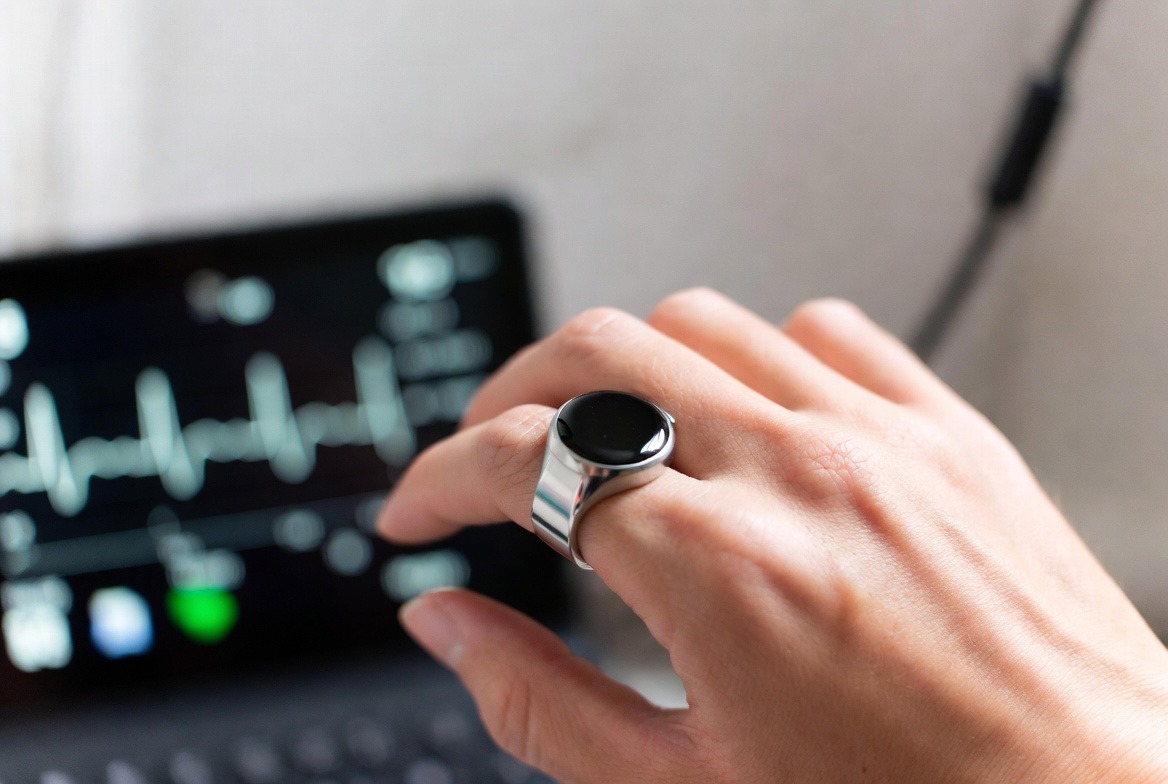
Heart rate, expressed in beats per minute (BPM), is the number of times your heart contracts in a 60-second period. It’s one of the oldest and most fundamental vital signs in medicine.
Heart Rate Variability (HRV) is a measure of the variation in time between successive heartbeats. It is quantified in milliseconds (ms). Unlike heart rate, a higher HRV is generally associated with better health, resilience, and fitness.
The magic—and the critical insight for any smart ring user—happens not when you view these metrics in isolation, but when you learn to read them in concert. They are a dialogue. In the next section, we’ll translate that dialogue into a story you can understand every morning.
Waking up and checking your smart ring app should be more than just logging numbers. It should be a daily briefing from your body. Here’s how to interpret the interplay between your HRV and resting heart rate (RHR) to understand what your body experienced yesterday and what it needs today.
Scenario 1: The Green Light – High Readiness
Scenario 2: The Yellow Flag – Strained Recovery
Scenario 3: The Disconnect – The Deceptive Calm
Scenario 4: The Rebound – Supercompensation
By reading these two metrics together each morning, you move from guessing to knowing. You can answer the fundamental question: "Does my body need more challenge today, or more care?" This daily practice forms the core of a truly personalized, biofeedback-driven approach to wellness, a philosophy central to the mission at Oxyzen. With this interpretative framework in mind, let's explore the master conductor behind these signals: the autonomic nervous system.
To truly harness the power of your smart ring data, you need to understand the conductor behind the symphony: your autonomic nervous system (ANS). The ANS is the unconscious control center for your body’s vital functions—heart rate, digestion, respiratory rate, and more. It operates through two primary, opposing branches that are in a constant, dynamic balance, and their tug-of-war is directly mirrored in your HRV and heart rate.
Often called the "fight or flight" system, the SNS prepares your body for action. It’s activated by physical threats, psychological stress, excitement, and exercise.
Primarily mediated by the vagus nerve (the longest cranial nerve), this is the "rest and digest" or "feed and breed" system. It promotes calm, recovery, and restoration.
HRV is the direct numerical expression of this battle. High HRV doesn’t mean the SNS is absent; it means the PNS brake is powerful and can quickly modulate the SNS accelerator, allowing for rapid, appropriate responses to change. It’s a sign of a system with a wide dynamic range—like a high-performance car with both a powerful engine and excellent brakes.
Low HRV indicates a system where the SNS is dominant or the PNS brake is weak. The heart’s rhythm becomes more rigid, less responsive. This state is associated with chronic stress, anxiety, fatigue, and increased risk for cardiovascular events.
Your smart ring, by tracking HRV, is effectively giving you a nightly and daily readout of your vagal tone and ANS balance. It answers: Is my system stuck in "go" mode, or does it have the capacity to downshift into "recharge" mode effectively? Understanding this puts you in a powerful position to intervene. You can actively "hack" your nervous system through specific behaviors, which we'll explore later. First, let's examine why HRV is the ultimate biomarker for the modern, complex stressors we face.
The stressors of the 21st century are rarely a saber-toothed tiger requiring a sprint. They are chronic, psychological, and multifaceted: an overflowing inbox, financial worries, social comparisons, the constant "on" culture, and information overload. Our sympathetic nervous system, evolved for acute physical threats, often reacts to these with the same physiological alarm—but the "fight or flight" response has nowhere to go. The energy mobilized isn't spent in physical action; it simmers internally as sustained tension.
This is where the traditional metric of resting heart rate reveals its profound insufficiency, and HRV emerges as the essential biomarker for our times.
The Shortfall of Resting Heart Rate in Chronic Stress:
Your body is incredibly adept at adaptation, including maintaining homeostasis. Under sustained psychological stress, it may successfully keep your average resting heart rate from skyrocketing through various compensatory mechanisms. You might check your RHR and see a "normal" 65 BPM and assume all is well, while underneath, your nervous system is running a marathon. You’ve adapted to a higher level of background stress, mistaking it for normal. This is the path to burnout.
The Superior Sensitivity of HRV:
HRV, however, has no such camouflage. It is exquisitely sensitive to the subtle, ongoing friction of modern life. The constant low-grade sympathetic activation and suppressed parasympathetic activity directly erode the complex variability between your heartbeats. HRV declines as your system’s flexibility declines.
Scientific Backing: Research consistently links low HRV to:
Your smart ring, by tracking your HRV trend, becomes a continuous stress audit. It doesn’t measure your perceived stress (which you can normalize or deny); it measures your physiological stress burden. It can show you that while you "felt fine" during a hectic work week, your nervous system was accumulating a significant debt.
This makes HRV an unparalleled tool for prevention. A sustained downward trend in your HRV is a biological red flag waving long before you develop insomnia, irritability, fatigue, or illness. It allows you to intervene with recovery strategies proactively—to take a rest day, practice meditation, or say no to an extra commitment before your body forces you to through breakdown. For practical ways to improve your HRV and manage this modern stress, our blog is a dedicated resource full of science-backed strategies.
Now, let's apply this knowledge to one of the most powerful use cases: optimizing physical performance and avoiding the dreaded state of overtraining.
For anyone engaged in serious fitness or athletic training, the line between peak performance and overtraining syndrome (OTS) is perilously thin. For decades, athletes and coaches relied on perceived exertion, soreness, and sometimes resting heart rate to gauge recovery. This approach is flawed, as it’s reactive and subjective. HRV-guided training represents a paradigm shift, moving from pre-planned, rigid schedules to dynamic, adaptive training based on your body’s daily readiness.
Overtraining isn't just being tired; it's a state of prolonged maladaptation where the stress of training chronically outstrips the body’s ability to recover. The hormonal, neural, and immune systems become dysregulated. The smart ring pattern for impending overtraining is classic and critical:
The modern approach uses morning HRV (and often RHR) as a daily biological "green light" or "red light."
Real-World Example: A runner using this method sees a 15% drop in their weekly average HRV and a 5 BPM rise in RHR after a week of intense interval work. Instead of proceeding with a planned long run, they swap it for a gentle swim and two nights of prioritizing 8+ hours of sleep. Their HRV rebounds in 48 hours, and they then complete the long run feeling strong, avoiding a potential downward spiral.
This method prevents overtraining, reduces injury risk, and ensures you apply your hardest efforts when your body is most capable of benefiting from them. It turns training from a guessing game into a dialogue. Companies like Oxyzen design their technology with this precise, performance-focused use case in mind, empowering athletes to train smarter, not just harder. But performance is only one piece of the puzzle. The silent, nocturnal data captured by your smart ring holds even deeper secrets about your overall health.
While daytime spot-checks have value, the most reliable, clean data comes from the one time your body is (ideally) free from voluntary movement, food, and conscious stress: during sleep. Nightly tracking is the gold standard for establishing your true physiological baseline. Here, HRV and resting heart rate weave a detailed story about your sleep architecture, recovery quality, and long-term health trajectory.
During sleep, your body cycles through stages, each with a distinct ANS signature reflected in your heart metrics.
A smart ring that tracks heart rate and HRV throughout the night can effectively estimate these sleep stages and, more importantly, quantify the quality of your recovery. You’re not just told you slept 7 hours; you’re shown how much of that was restorative deep sleep based on your physiological signals.
The patterns in your nightly HRV and RHR over months and years are powerful predictors of future health.
By establishing your personal nightly baseline and watching the trends, your smart ring becomes an early-warning system. A gradual, sustained downtrend in average nightly HRV is a powerful motivator to have a conversation with your doctor or to audit your lifestyle long before a disease manifests. It shifts healthcare from reactive to proactive and deeply personal. For many users, seeing this data is the catalyst for meaningful change, a story echoed in the authentic experiences shared in our testimonials section.
One of the most practically valuable aspects of HRV monitoring is its role as a harbinger of illness. Your immune system and your autonomic nervous system are in constant communication. When your body detects a pathogen (a virus or bacteria), it launches an inflammatory immune response. This inflammatory cascade is sensed by the brain, which, in turn, shifts the ANS balance towards sympathetic dominance to support the fight. This happens hours or even days before you develop a sore throat, cough, or fever.
This is where HRV shines with almost spooky prescience.
The Pre-Symptomatic Plunge: In the 24-72 hours before you "feel sick," your HRV will often show a sharp, significant drop from your baseline. It’s your body’s internal alarm declaring, "We are under internal attack. Resources are being diverted to the immune system. Do not add more stress." Your resting heart rate may also begin to creep up, but the change in HRV is typically more dramatic and earlier.
Why This is a Game-Changer:
Heart Rate's Lagging Role: Resting heart rate will often rise during full-blown illness, especially with fever, as metabolism increases to fight infection. However, it’s a less sensitive early indicator than HRV. By the time your RHR is significantly elevated, you’re already in the throes of feeling unwell.
This predictive capability transforms your smart ring from a fitness device into a true health guardian. It externalizes your body’s subtle whispers, giving you the chance to listen and respond with care. Of course, technology is only as good as its application. Let’s move from insight to action and explore the most effective ways to improve your HRV and, by extension, your health.

Seeing your HRV data is the first step. The next, and most important, step is using it to make positive changes. Improving your HRV means strengthening your parasympathetic brake and increasing your nervous system's resilience. This has far broader implications than simply achieving a lower resting heart rate, as it touches on stress capacity, emotional regulation, and overall vitality. Here are the most potent, evidence-based levers you can pull.
This is the number one driver. Nothing repairs and resets the ANS like deep, sufficient sleep.
Slow, diaphragmatic breathing is a direct "on switch" for the vagus nerve and parasympathetic system.
Chronic mental stress is a silent HRV killer. You must actively downshift.
As discussed, follow an HRV-guided approach.
Loneliness and social conflict are profound stressors. Positive social engagement is calming.
Why This Matters More Than Just Lowering RHR: You can lower your resting heart rate through aerobic conditioning alone. But you can have a low RHR and still have low HRV and be chronically stressed (the "disconnect" scenario). Improving HRV ensures that low RHR reflects a state of true recovery and resilience, not just cardiac efficiency. It’s the difference between being a finely-tuned engine that’s idling smoothly but ready to redline at any moment (low RHR, low HRV) and an engine that’s both powerful and supremely adaptable to any condition (low RHR, high HRV).
For those seeking a community and more detailed protocols on these practices, our FAQ addresses many common questions on optimizing data from your wearable. These actions form the foundation of a lifestyle that doesn't just track health, but actively builds it.
Understanding the profound insights from HRV and heart rate is one thing. Trusting the device on your finger to deliver medical-grade accuracy is another. This trust hinges on the sophisticated technology packed into a sleek, wearable form. Unlike the occasional chest strap or fingertip pulse oximeter, a smart ring’s power lies in its continuous, unobtrusive, and nocturnal data capture. But how does it actually work?
At the heart of every advanced smart ring is a technology called Photoplethysmography (PPG). While the term is complex, the principle is elegant. Tiny LEDs (typically green and sometimes infrared) shine light into the dense capillary beds on the underside of your finger. A photodetector then measures the amount of light that is reflected back.
Here’s the key: Blood absorbs light. With each heartbeat, a surge of blood pulses through your capillaries, momentarily absorbing more light. Between beats, less blood is present, so more light is reflected back. The photodetector captures these rhythmic oscillations in light absorption, creating a waveform called a photoplethysmogram. Each peak in this waveform corresponds to a heartbeat, allowing the device to calculate the beats per minute—your heart rate.
But for HRV, the precision needs to be much higher. The device isn’t just counting beats; it’s timing the exact millisecond interval between each beat. This requires a high-frequency sampling rate (often many times per second) and advanced algorithms to pinpoint the precise moment of each pulse wave peak, known as the "R-wave" in clinical terms. The sequence of these time intervals (in milliseconds) is your raw HRV data.
You might wonder why a ring, and not the more common wrist. The finger, particularly the base, offers distinct advantages:
The ring’s work doesn’t stop at collection. The raw, millisecond interval data is processed through a series of sophisticated algorithms that perform critical tasks:
This technological marriage of precise biometric sensing, optimal placement, and intelligent software is what transforms a piece of jewelry into a powerful health dashboard. It democratizes access to data that was once confined to clinical stress tests or expensive ambulatory monitors. For a deeper dive into the engineering philosophy behind creating such a seamless user experience, you can explore our story and the journey to perfecting this technology. As this field advances, we are moving beyond just tracking and into the realm of truly predictive and personalized health insights.
We are on the cusp of a revolution in preventative healthcare, shifting from a model of diagnosing illness to one of predicting and preserving wellness. At the forefront of this shift is the continuous, longitudinal dataset provided by smart rings tracking HRV and heart rate. This isn't just about reporting yesterday's stress; it's about forecasting tomorrow's health risks and personalizing interventions in real time.
Current wearables are largely descriptive. They tell you what happened: "Your HRV was low last night." "Your resting heart rate was elevated." The next evolution is predictive analytics, powered by machine learning models trained on vast, anonymized datasets.
Imagine your smart ring app sending you a notification: *"Based on your declining HRV trend over the past 5 days and a slight, consistent rise in nighttime resting heart rate, there's an 85% probability you are facing heightened immune stress. A common cold is likely in the next 24-48 hours. Suggested action: Prioritize 9 hours of sleep tonight, increase zinc and vitamin C intake, and consider postponing your high-intensity workout."*
This is not science fiction. Early research and pilot programs are already demonstrating the ability to predict:
The ultimate application is the creation of a "digital twin" for your health—a dynamic, computer-based model of your physiology that is constantly updated with your smart ring data, alongside other inputs like nutrition logs, workout types, and even genetic information.
This model could be used to run simulations:
This level of personalization moves wellness from generic, one-size-fits-all advice ("get 8 hours of sleep") to precise, individual prescriptions ("your personal sleep need this week, based on your cumulative stress load, is 8 hours and 15 minutes, with a bedtime of 10:45 PM to maximize deep sleep").
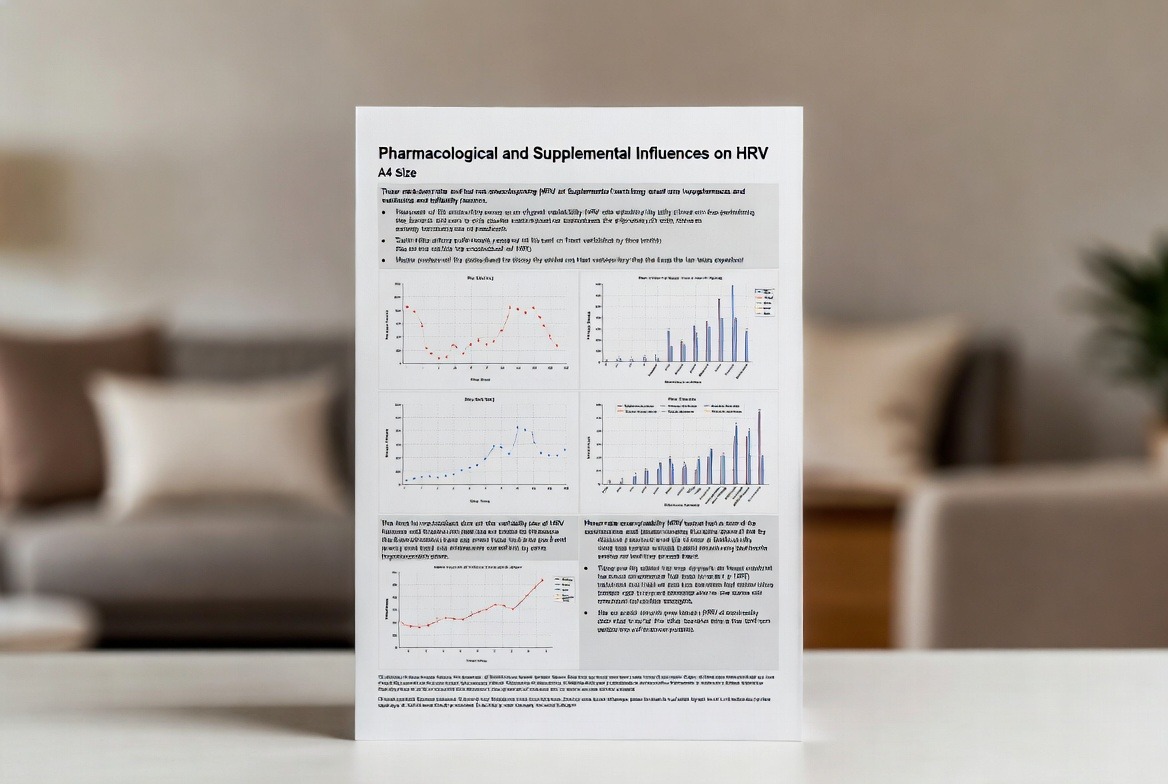
The smart ring is uniquely positioned to be the cornerstone of this digital twin. It provides the two most fundamental, continuous, and informative streams of physiological data—heart rate and HRV—which serve as the master integrators of overall systemic stress and resilience. While other devices track steps or calories, the smart ring tracks the state of the system itself.
The journey to this future is built on the foundation of daily data literacy we are developing today. Every morning check-in, every observation of how alcohol affects your graph, every correlation you notice between a stressful meeting and a daytime HRV dip, is you training yourself in this new language. Platforms that foster this understanding, like the resources available on the Oxyzen blog, are essential guides in this transition. As we integrate this data more deeply into our lives, we must also navigate its limitations and use it wisely.
With great data comes great responsibility. As we embrace the power of HRV and heart rate monitoring, it is imperative to approach it with a clear-eyed understanding of its limitations. A smart ring is a phenomenal tool for biofeedback and trend analysis, but it is not a medical device for diagnosis. Responsible use is the key to harnessing its benefits without falling into the traps of obsession or misinterpretation.
By embracing these principles, you turn your smart ring from a potential source of stress into a powerful ally in self-awareness. It becomes part of a holistic practice, much like the holistic vision that guides companies focused on genuine wellness innovation, a vision you can explore further in our about us section. This journey of data-informed self-care is ultimately what leads to lasting, intelligent well-being.
You now understand the science, the technology, and the philosophy behind HRV and heart rate monitoring. The final, crucial step is weaving this knowledge into the fabric of your daily life. This isn’t about adding another chore to your morning; it’s about establishing a simple, insightful ritual that informs your choices and empowers your day. Here’s a practical guide to conducting meaningful daily and weekly check-ins with your smart ring data.
Your goal each morning is to answer one question: "What is my body's request for today?" Do this before checking email or social media, to get an unbiased reading of your physiological state.
Step 1: Observe the Primary Metrics.
Open your app and look at your Sleep Score or Recovery Score (an aggregate metric combining HRV, RHR, and sleep data). This is your quick, overall headline. Then, dive into the components:
Step 2: Interpret the Pattern.
Apply the storytelling framework from earlier:
Step 3: Make One Data-Informed Decision.
Based on the interpretation, consciously choose one action to align with your body's state.
This ritual transforms data from passive information into an active daily planning tool.
Once a week (Sunday evening is ideal), take a deeper look at the trends. This is where you move from tactical daily adjustments to strategic lifestyle insights.
Step 1: Review the Weekly Graphs.
Look at the 7-day trend lines for HRV and RHR. Ask:
Step 2: Correlate with Lifestyle Logs.
Cross-reference your physiological trends with your personal calendar and notes. This is detective work to find what uniquely moves your metrics.
Step 3: Plan for the Week Ahead.
Use your insights to make a proactive plan.
This weekly review turns anecdotes into evidence. You stop guessing what works for you and start knowing. For more ideas on structuring these rituals and learning from community experiences, our blog is a continually updated resource. As you become fluent in this language, you’ll start to see its profound implications not just for physical performance, but for your emotional and mental landscape.
We’ve established that HRV is a direct reflection of autonomic nervous system balance. This system is not just the governor of your pulse; it is the physiological substrate of your emotional experience. The state of your ANS dictates your capacity to regulate emotions, focus your attention, and respond resiliently to psychological challenges. In this way, your smart ring’s HRV reading is, in part, a numerical snapshot of your emotional and mental fitness.
When you experience an emotion—frustration in traffic, joy from good news, anxiety before a speech—it triggers a cascade of neural and hormonal responses orchestrated by your ANS and limbic system (the emotional brain). A resilient system can have an emotional response and then efficiently return to baseline. A dysregulated system gets "stuck" in a state of high arousal (anger, anxiety) or low arousal (lethargy, sadness).
High HRV is the hallmark of that resilient return to baseline. It indicates strong vagal tone, which acts as a "vagal brake" on the heart and the emotional centers of the brain. Think of it as emotional shock absorption. Individuals with higher HRV consistently demonstrate:
Conversely, low HRV is linked to emotional dysregulation. It is associated with:
Your daily HRV score can serve as an objective barometer for your emotional weather, often more honest than your subjective perception, which can be biased.
The brain is the most energy-hungry organ, and its function is exquisitely sensitive to autonomic state. The prefrontal cortex (PFC)—responsible for executive functions like decision-making, focus, and complex thought—requires a calm, steady physiological state to operate optimally. High sympathetic activity (low HRV) literally impairs PFC function, shifting control to more primitive, reactive brain regions.
Therefore, checking your HRV can tell you if your biology is primed for deep work.
By viewing HRV as a mind-body metric, you integrate emotional and cognitive wellness into your quantitative health picture. It validates the deep connection between how you feel, how you think, and how your body functions. This holistic perspective is at the core of a thoughtful approach to wearable technology, a principle that guides the vision behind Oxyzen's mission. Next, we will explore how this powerful tool applies to a critical, often overlooked population: women, whose physiological cycles add a fascinating layer of complexity to HRV interpretation.
The vast majority of early sports science and health research was conducted on male subjects. This has led to a one-size-fits-all approach to metrics like HRV and resting heart rate that can be misleading—and sometimes counterproductive—for women. Female physiology is not a variation of the male model; it is a dynamic, cyclical system governed by hormonal rhythms that profoundly influence autonomic nervous system function. For any woman using a smart ring, ignoring this context means misinterpreting her data. Let’s correct that.
The menstrual cycle (and its absence in menopause, or its artificial regulation via hormonal birth control) is a powerful moderator of HRV and heart rate.

For women, a smart ring becomes more than a fitness device; it’s a key to understanding their unique biological rhythm. It fosters self-compassion and intelligent adaptation, turning what was often seen as a liability into a strategic advantage. This journey of personalized discovery is a story shared by many in our community of users, whose diverse experiences you can find in our testimonials. Understanding these individual differences brings us to a broader societal application: the potential of this technology to transform workplace wellness from a perk into a science.
The burnout epidemic and the "Great Resignation" have made it painfully clear to organizations that employee well-being is not a soft concern—it is a hard business imperative. Traditional workplace wellness programs, focused on step challenges and annual biometric screenings, have proven largely ineffective. They are episodic, generic, and fail to address the root cause of modern burnout: chronic, unmanaged nervous system dysregulation. This is where the insights from HRV monitoring, aggregated anonymously and ethically, could revolutionize organizational health.
Companies currently measure employee health through absenteeism, presenteeism, and engagement surveys—all lagging indicators, reflective of a problem that has already occurred. HRV data offers a leading indicator of collective stress, resilience, and recovery capacity.
Imagine an organization that, with full employee consent and robust privacy safeguards, can view aggregate, anonymized trends in team or department-level HRV. This would reveal:
With this data, HR and leadership can move from guesswork to targeted, empathetic action.
This application is fraught with ethical complexity and must be navigated with extreme caution. The following are non-negotiable principles:
When implemented ethically, this approach shifts workplace culture from one that extracts value to one that builds capacity. It signals that the company values the human system behind the employee ID. It’s a profound alignment between personal well-being tools like the smart ring and organizational health, a synergy explored in forward-thinking resources like the Oxyzen blog. As we consider these macro-applications, we must also ground ourselves in the foundational reason we track this data: to make better, simpler daily choices for our health.
Your Trusted Sleep Advocate (Sleep Foundation — https://www.sleepfoundation.org/)
Discover a digital archive of scholarly articles (NIH — https://www.ncbi.nlm.nih.gov/
39 million citations for biomedical literature (PubMed — https://pubmed.ncbi.nlm.nih.gov/)
experts at Harvard Health Publishing covering a variety of health topics — https://www.health.harvard.edu/blog/)
Every life deserves world class care (Cleveland Clinic -
https://my.clevelandclinic.org/health)
Wearable technology and the future of predictive health monitoring. (MIT Technology Review — https://www.technologyreview.com/)
Dedicated to the well-being of all people and guided by science (World Health Organization — https://www.who.int/news-room/)
Psychological science and knowledge to benefit society and improve lives. (APA — https://www.apa.org/monitor/)
Cutting-edge insights on human longevity and peak performance
(Lifespan Research — https://www.lifespan.io/)
Global authority on exercise physiology, sports performance, and human recovery
(American College of Sports Medicine — https://www.acsm.org/)
Neuroscience-driven guidance for better focus, sleep, and mental clarity
(Stanford Human Performance Lab — https://humanperformance.stanford.edu/)
Evidence-based psychology and mind–body wellness resources
(Mayo Clinic — https://www.mayoclinic.org/healthy-lifestyle/)
Data-backed research on emotional wellbeing, stress biology, and resilience
(American Institute of Stress — https://www.stress.org/)


