


The Humming and Chanting Method: Vagal Nerve Stimulation
The body shaking method (like shaking out your limbs) is used to discharge the physical energy of stress that gets trapped in the body.
The body shaking method (like shaking out your limbs) is used to discharge the physical energy of stress that gets trapped in the body.
%402x.svg)
Imagine a switch inside your body—a biological lever that, when activated, can lower your heart rate, quiet the storm of anxious thoughts, improve your digestion, and usher in a profound sense of calm. This isn't science fiction; it’s the reality of your vagus nerve. And the key to activating it might be as simple as the vibrations you create with your own voice.
In a world saturated with digital noise, relentless notifications, and chronic low-grade stress, we’re in a collective state of “fight or flight.” Our nervous systems are stuck on high alert, with consequences for our sleep, focus, relationships, and long-term health. While wellness technology like the advanced smart rings from Oxyzen provides unparalleled insight into our stress and recovery metrics, the crucial next step is knowing what to do with that data. How do we actively shift our physiology from survival mode to a state of repair and connection?
Enter the ancient, yet scientifically validated, practice of humming and chanting. From Gregorian monks to Tibetan Buddhist chanters, from Om-chanting yogis to your own absent-minded humming in the shower, these vocal vibrations have been a subconscious tool for self-regulation for millennia. Today, we understand this isn’t just spiritual tradition; it’s a direct form of Vagal Nerve Stimulation (VNS)—a powerful, non-invasive way to hack your nervous system using nothing but your breath and your voice.
This article is your deep dive into the humming and chanting method. We’ll explore the incredible anatomy of the vagus nerve—your "wandering nerve" of calm—and decode exactly how sonic vibration communicates safety to your entire body. We’ll journey through the science, the diverse techniques from cultures around the world, and provide a practical, modern framework for integrating this potent practice into your daily life. You’ll learn how to pair this ancient wisdom with modern biometrics from a device like the Oxyzen ring, creating a perfect feedback loop where you can measure your stress and then master your response to it.
Ready to turn down the volume on stress and tune into your body’s innate capacity for peace? Let’s begin by meeting the master conductor of your inner calm.

The vagus nerve is the tenth cranial nerve, and its name, derived from Latin, means “wanderer.” This is a fitting title for the longest and most complex nerve in your autonomic nervous system. Unlike nerves that target specific muscles, the vagus nerve is a vast information superhighway, a bi-directional channel that meanders from your brainstem down through your neck, branching out to touch your heart, lungs, digestive organs, liver, spleen, and even your gut—often called your “second brain.”
Think of your autonomic nervous system as having two primary settings, controlled by a biological seesaw. On one side is the sympathetic nervous system (SNS), your gas pedal, responsible for the “fight, flight, or freeze” response. It speeds up your heart, redirects blood flow to muscles, and sharpens your focus in perceived danger. On the other is the parasympathetic nervous system (PNS), your brake pedal, governing “rest, digest, and repair.” The vagus nerve is the primary component of this parasympathetic system, specifically a branch known as the ventral vagal complex. This is the part associated with social engagement, calm connection, and physiological restoration.
When your vagus nerve is toned and active—a state known as high vagal tone—it acts like a skilled conductor, ensuring your body’s systems work in harmony. It keeps your heart rate variable and responsive (a key marker of health), promotes efficient digestion, regulates inflammatory responses, and supports emotional resilience. A high vagal tone means you can recover from stress quickly; you’re adaptable.
Conversely, low vagal tone is linked to a nervous system that’s easily knocked off balance. It’s associated with conditions like anxiety, depression, gut disorders, chronic inflammation, and heart rate abnormalities. The modern predicament is that our environment constantly taps the sympathetic gas pedal, while we’ve forgotten how to consciously engage the parasympathetic brake.
This is where humming and chanting enter the scene. They aren’t merely relaxing activities; they are mechanically and neurologically precise tools for stimulating the vagus nerve. The nerve has several key “access points” in the body, including in the throat (via the pharyngeal and laryngeal branches), behind the ears, and through the diaphragm. Vocal vibrations and controlled breathing directly massage and stimulate these points, sending a cascade of safety signals from the body back to the brain.
This process is known as the vagal brake. By engaging it, you can voluntarily slow a racing heart, deepen shallow breath, and shift your entire neurobiological state. As you begin to understand this internal landscape, you can appreciate why tracking your physiological metrics is so powerful. A device like the Oxyzen smart ring provides the real-time data—heart rate, heart rate variability (HRV), sleep quality, and stress scores—that shows you when your system is out of balance and, crucially, confirms when practices like humming are effectively pulling the brake. For a deeper look at how this technology translates biometrics into actionable insights, you can explore our blog for detailed guides on interpreting your wellness data.
To understand why humming is so uniquely effective, we need to move beyond metaphor and into the realms of biophysics and neuroanatomy. The connection isn't mystical; it's mechanical, electrical, and deeply rooted in our physiology.
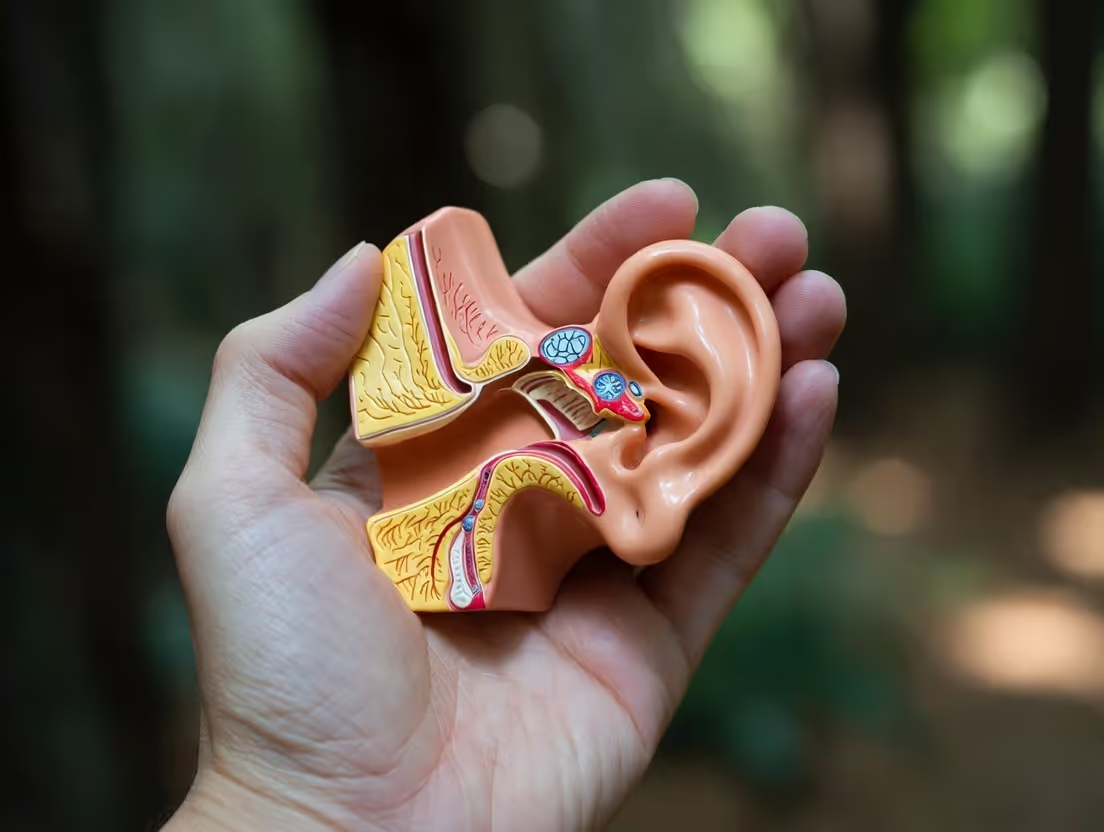
When you hum or chant, you create a sustained vocal tone. This tone is produced by your vocal cords vibrating within your larynx (voice box), which is nestled in your throat. These vibrations don't just travel outwards as sound waves; they also resonate inwards, conducting through the soft tissues, bones, and fluids of your head, neck, and chest cavity. This internal resonance is key.
The vagus nerve has several branches that pass directly through and around this area:
Stimulation of these vagal branches triggers afferent signals—messages traveling from the body to the brainstem. These signals are interpreted by the brain as indicators of a state of safety and calm. When the brain receives this “all is well” message from the periphery, it responds by amplifying the parasympathetic response, further slowing the heart rate via efferent signals and downregulating the stress response systems.
This creates a powerful positive feedback loop: gentle vibration and deep breath → vagus nerve stimulation → signal of safety to brain → enhanced parasympathetic output → deeper relaxation and more coherent vibration. It’s a self-reinforcing cycle of calm.
Emerging research adds another fascinating layer: nitric oxide (NO). This molecule is a potent vasodilator, meaning it relaxes and widens blood vessels, improving circulation and lowering blood pressure. The sinuses (located in the bones around your nose) are a major production site for NO. The vibrations from humming have been shown to dramatically increase sinus ventilation and nitric oxide production—by up to 15-20 times compared to quiet exhalation.
Increased nitric oxide from humming not only improves cardiovascular health but may also have antimicrobial effects in the airways and enhance oxygen uptake in the blood. This creates a trifecta of benefits: neurological (via vagus nerve), cardiovascular (via NO), and respiratory.
The scientific literature is beginning to catch up with ancient wisdom. Studies have shown:
This scientific foundation transforms humming from a simple pastime into a targeted wellness practice. By combining this knowledge with modern wearable tech, you move from guessing to knowing. For instance, performing a 5-minute humming session while wearing your Oxyzen ring allows you to see the direct impact on your live HRV and heart rate graphs, turning an internal feeling into an external, validated result. For those curious about the precise technology that makes this tracking possible, you can discover how Oxyzen's sensors capture these vital metrics.

Long before fMRI machines and HRV monitors, humanity intuitively discovered the power of vocal vibration to alter consciousness, promote healing, and connect to something greater. The humming and chanting method is not an invention of modern biohacking; it is a rediscovery of a primordial human technology, woven into the spiritual and medicinal fabric of cultures across the globe. This historical perspective enriches our practice, connecting us to a lineage of seekers who understood the body’s innate wisdom.
In the yogic traditions of India, the primal syllable “Om” or “Aum” is considered the sound of the universe itself. Chanting Om is a central practice in meditation (mantra japa). It is not merely a word but a vibrational experience, comprising three sounds—A (ah), U (oo), and M (mm)—that resonate in the belly, chest, and head, respectively, before dissolving into silence. This progression is believed to align the physical, mental, and spiritual planes. Neurologically, the prolonged “M” (the humming element, known as bindu) creates intense vibration in the cranial cavity, directly stimulating the vagus nerve and the pineal gland, promoting deep tranquility.
In Western Christian monastic traditions, Gregorian chant flourished. This form of plainchant, characterized by its monophonic, unaccompanied melody and free rhythm, was designed for liturgical prayer. The monks spent hours in reverberant stone chapels, their voices blending in unison. The sustained tones, slow breathing, and harmonic resonance induced a state of contemplative peace, reducing individual ego and fostering a collective spiritual focus. Similarly, the Byzantine chant of Eastern Orthodoxy uses specific scales and ison (a continuous drone note) to create a sonic environment that elevates the mind and soothes the soul. The physiological effect was a disciplined, breath-controlled stimulation of the vagus nerve, facilitating a prayerful, parasympathetic state.
Tibetan Buddhist practices employ deep, throaty chants, often in low registers, such as the famous “Om Mani Padme Hum.” These chants are not just prayers but tools for transforming energy and cultivating compassion (bodhicitta). The physical effort and vibration are believed to clear energetic channels (nadis) and balance the body’s subtle energies. The sonic vibration serves as a focus to quiet the “monkey mind,” with the vagal stimulation providing the physiological bedrock for that mental stillness.
From the throat singing of the Inuit and Tuvan peoples to the icaros (medicine songs) of Amazonian shamans, indigenous cultures have long used vocalization as a bridge to healing and the spirit world. These practices often involve complex overtone singing, rhythmic patterns, and sounds that mimic nature. They are used in ritual to alter states of consciousness, promote healing, and connect with ancestral wisdom. The vibrational component works directly on the nervous system of both the practitioner and the community, inducing trance states and communal bonding—a function deeply tied to the social engagement system of the vagus nerve.
We need not look only to formal ritual. Think of a mother humming a lullaby to her child. The calm, repetitive vibration soothes the infant, regulating its nervous system and strengthening the bond. This is primal, biological communication. We hum unconsciously when we’re content, when we’re concentrating, or when we’re comforting ourselves. These are all instinctual attempts at self-regulation through vagal stimulation.
This global tapestry shows us that the humming and chanting method is a human universal. While the contexts—spiritual, medicinal, communal—differ, the core mechanism is the same: using self-generated sound to harmonize the internal state. Today, we can honor this tradition by integrating its essence into our secular, science-informed lives. We strip away dogma but keep the core technology: the conscious use of breath and vibration for nervous system regulation. To explore how modern innovators are bridging such ancient practices with cutting-edge wellness technology, you might appreciate learning about the vision and values behind Oxyzen’s approach.

Understanding the cultural history gives context, but feeling the practice in your own body makes it real. The humming and chanting method is a profoundly somatic experience. Let’s take a tour of the physical landscape—from your sinuses to your solar plexus—to map exactly where and how these vibrations create change. This is where theory becomes felt sense.
Place your fingers lightly on the bridge of your nose and the sides of your face near your cheekbones. Now, take a deep breath in and hum a steady “Hmmmmmm” on the exhale. Do you feel the buzzing? That’s vibration resonating in your frontal and maxillary sinuses. As mentioned, this dramatically increases nitric oxide production. Beyond the biochemical benefit, this vibration can relieve sinus pressure, clear “brain fog,” and create a sensation of lightness and openness in the head. Many practitioners report a feeling of their “head expanding” or pressure releasing after a humming session.
The vibration originates here, in your larynx. As you hum, you can feel your throat gently buzzing. This direct, gentle massage of the laryngeal muscles and the vagus nerve branches is the primary stimulus. It can relieve tension held in the throat—tension often linked to unspoken words, stress, or anxiety (the proverbial “lump in the throat”). Over time, regular practice can lead to a more relaxed, open, and resonant speaking voice.
Close your lips, hum, and now gently plug your ears with your fingertips. The sound becomes a deep, pervasive rumble inside your skull. This internal conduction stimulates not only the auditory system but also the temporal bones and the vestibular system, which can have a grounding, stabilizing effect. It’s a feeling of being “full” of sound, which can crowd out intrusive thoughts and bring intense focus to the present moment.
Place a hand on your chest as you hum a low-pitched note. You’ll feel your sternum and rib cage vibrating. This area houses your heart and lungs. The vibration, coupled with the slow, regulated breath of humming, encourages heart rate variability coherence—a smooth, wave-like pattern in your heart rhythm associated with emotional stability and peak mental function. It’s a physical feeling of your heart space being “massaged” by sound, often accompanied by an emotional sensation of warmth or tenderness.
True humming for vagal tone requires diaphragmatic breathing. As you inhale deeply to prepare for a long hum, your diaphragm contracts and moves downward. As you exhale and hum, it releases upward. This deep, rhythmic movement is a gentle internal massage for your organs and, most importantly, for the vagus nerve fibers that intertwine with the diaphragm. This is why shallow humming from the throat is less effective; the power must come from the breath.
While harder to measure with current science, many traditions speak of vibration affecting subtle anatomy. In yoga, humming is said to stimulate the Ajna (third eye) and Vishuddha (throat) chakras, centers of intuition and expression. In Chinese medicine, the sounds are thought to regulate Qi flow in specific meridians. Whether you subscribe to these models or not, the subjective experience often aligns: people report clearer intuition, easier expression, and a sense of energetic alignment.
Practical Exploration: Try this simple scan. Sit comfortably, breathe deeply, and hum for 2-3 minutes. Afterward, sit in silence and scan your body from head to toe. Notice:
This body mapping is your personal research. It connects the abstract science to your lived experience, proving that you have direct agency over your nervous system. For those who love to quantify their experiences, pairing this felt sense with data from a smart ring creates a powerful duo: subjective awareness meets objective validation. If you have questions about how wearables can track such subtle physiological shifts, our FAQ section provides detailed answers on capabilities and accuracy.
Now that you understand the why and the where, it’s time for the how. Building an effective humming practice is less about perfect pitch and more about intention, attention, and consistency. Think of it as training a muscle—your vagal tone “muscle.” Here are the foundational techniques to build a practice that is both sustainable and deeply effective.
Your body’s alignment is the foundation for free vibration and breath.
This is the essential practice.
Om chanting incorporates the hum but structures it into a transformative wave.
This combines breath control with vibration for maximum nervous system regulation.
Your practice doesn’t need to be 30 minutes on a meditation cushion.
Pro-Tip: Measure Your Practice. Before and after a 5-minute humming session, check in. How do you feel subjectively? If you use a device like the Oxyzen ring, take a quick look at your HRV graph. Did it rise? Did your heart rate drop? This feedback is incredibly motivating and turns your practice into a tangible, data-driven wellness ritual. To see how others have successfully integrated such biofeedback into their routines, you can read real customer reviews and experiences on our testimonials page.
Once the foundational hum feels comfortable and familiar, you can explore more advanced territories. These techniques, drawn from various traditions, offer different “flavors” of vibration and can be used to target specific states of being—from deep grounding to energetic clearing. Think of them as tools in your vagal toolkit, each with a unique resonance profile.
A cornerstone of yogic breathing (pranayama), Bhramari is famous for its immediate calming effect on the mind and nervous system.
In tantric traditions, specific Sanskrit syllables (like Lam, Vam, Ram, Yam, Ham, Om) are believed to resonate with the energy centers (chakras) of the body. Chanting them is a way to tune and balance these areas.
This advanced technique, found in Tuvan and Mongolian throat singing as well as in Gregorian chant, involves shaping the vocal cavity to amplify the natural harmonics (overtones) present in any sustained tone. While complex to master, even simple attempts can create fascinating internal vibrations.
The power of collective vibration is profound. Singing in a choir, chanting in a meditation group, or even humming in unison with a partner synchronizes heart rhythms and breath, creating a powerful shared parasympathetic state. This taps into the social engagement system of the vagus nerve, linking calm with connection. If a group isn’t available, chanting or humming along to a recording of resonant music (like low-frequency singing bowls or drone music) can also create a sense of external resonance that amplifies the internal effect.
Safety Note: Always practice within comfort. Never strain your voice or breath. The goal is gentle, sustained stimulation, not forceful exertion. These advanced techniques are explorations, not tests. The journey into deeper practice is a personal one, and for those interested in the intersection of advanced wellness techniques and supportive technology, our blog often features in-depth explorations of these topics.
The ancient practitioners relied on felt experience. Today, we have the extraordinary advantage of being able to see the inner workings of our nervous system in real-time. This is the biohacker’s edge: moving from anecdotal practice to data-optimized protocol. By quantifying your vagal nerve response, you can identify what works best for your unique physiology, track progress over time, and stay motivated with concrete evidence.
Your vagus nerve’s activity is reflected in several measurable physiological signals:
A device like the Oxyzen ring becomes your personal vagal-tone lab. Here’s how to use it strategically:
Use the data to answer questions:
This objective feedback is transformative. It turns a wellness “maybe” into a scientific “yes.” You’re no longer just hoping it works; you have a graph proving it does. This is the modern synthesis: ancient technique meets cutting-edge biometrics. For anyone new to the world of HRV and physiological tracking, our FAQ section is a great resource to understand these metrics in simple terms.
Knowing the techniques and tracking the data is only half the battle. The real magic—and the real challenge—lies in integration. How do you weave this primordial practice into the frantic tapestry of 21st-century life? The answer is through both micro-moments of instant regulation and macro-rituals of deep restoration. Here is a blueprint for making humming and chanting an effortless, indispensable part of your daily ecosystem.
These are your stealth tools for in-the-moment stress disruption. They require no special setup and can be done anywhere.
Habit stacking is the most reliable way to build a new practice. Attach humming to something you already do without thinking.
Once or twice a week, create a longer, immersive session.
Use technology to support, not distract.
The goal is fluidity. The practice shouldn’t feel like another item on a overwhelming to-do list, but rather like a secret superpower you can access at will—a touchstone of calm in your pocket. This seamless integration is at the heart of modern wellness, a principle that guides everything we do at Oxyzen. To understand more about this philosophy of integrated, data-informed well-being, you can learn more about our mission and approach.
One of the most remarkable journeys of the vagus nerve is its direct line to your gastrointestinal system, often called your “second brain” or enteric nervous system. This isn’t poetic metaphor; your gut contains over 100 million neurons and produces a significant portion of the body’s neurotransmitters, including about 90% of its serotonin. The vagus nerve is the main communication channel between your head-brain and your gut-brain. Therefore, stimulating the vagus through humming doesn’t just calm your mind—it directly soothes your digestion and influences your gut microbiome.
The vagus nerve innervates most of your digestive organs—esophagus, stomach, pancreas, liver, gallbladder, small intestine, and part of the large intestine. It sends signals in both directions:
When you hum, you strengthen vagal tone, which enhances this communication in a positive, calming direction.
Anecdote & Data: Many practitioners report less bloating and more regular digestion when they incorporate humming. From a data perspective, you might not see a “gut score,” but you can correlate your practice with reductions in stress metrics that are known gut-aggravators. Improved sleep and HRV from consistent practice, as shown on your Oxyzen dashboard, are strong indirect indicators of a happier, better-regulated gut-brain axis.
This connection powerfully illustrates that humming isn’t just a “brain hack” or “stress trick.” It’s a holistic practice that resonates through your entire being, from your thoughts to your physical core. By nurturing your vagus nerve, you are fundamentally nurturing the vital dialogue between every part of yourself. For more resources on holistic approaches to wellness that encompass mind, body, and data, our blog offers a wealth of continuing reading.
Like any meaningful practice, the path of humming and chanting isn’t always a straight line of blissful resonance. You’ll encounter mental resistance, practical obstacles, and days when it feels like nothing is happening. This is normal. The key to long-term success isn’t perfection; it’s compassionate consistency. Here’s how to navigate the common hurdles and build a practice that lasts.
Define your absolute bare-minimum practice. This is your lifeline on chaotic days. It could be: “Three deep breaths with a hum on each exhale.” That’s 30 seconds. By honoring this tiny commitment, you maintain the neural pathway and the identity of “someone who cares for their nervous system.” You prevent the “all-or-nothing” collapse that derails so many wellness endeavors.
Remember, the journey of vagal toning is a marathon, not a sprint. Some days will be deeply resonant and peaceful; others will feel mechanical. Both count. The cumulative effect of showing up for your nervous system, day after day, is what rebuilds resilience from the inside out. It’s the foundation upon which all other health goals are built. For ongoing support and answers as you build this practice, remember that resources like our FAQ and community insights are always available.
We stand at a fascinating crossroads in human history, where one of our oldest self-care technologies is being illuminated by our newest. The future of practices like humming and chanting isn’t about replacing tradition with gadgets; it’s about creating a synergistic fusion that deepens our understanding and amplifies our results. This is the frontier of personalized, proactive wellness.
Imagine a future app or device interface that provides real-time visual or auditory feedback while you hum. Your phone’s microphone or your smart ring’s sensors could analyze the steadiness of your exhalation, the frequency of your hum, and your concurrent heart rhythm. The app could then guide you: “Lower your pitch slightly to increase heart coherence,” or “Your vibration is steady—maintain for 10 more seconds to boost HRV.” This turns practice into an interactive training session, optimizing your technique in the moment for maximum vagal impact.
As research advances, we may identify that specific frequencies or chanting patterns have particular effects. Your biometric data, tracked over time by a device like Oxyzen, could be analyzed by algorithms to suggest a personalized humming protocol. For example: *“Your data shows high morning cortisol. Try 5 minutes of low-pitched (90-110 Hz) humming upon waking for the next two weeks.”* Or, *“Your sleep data indicates restless REM. Our suggestion: a 7-minute Om chant practice 30 minutes before bed.”*
Virtual and Augmented Reality could create deeply immersive chanting environments. You could put on a headset and find yourself in a virtual Tibetan monastery with perfect acoustics, chanting alongside resonant avatars, with biofeedback woven into the environment (e.g., the virtual stones glow warmer as your heart coherence increases). This could make deep, focused practice more accessible and engaging, especially for beginners.
Wearable technology could allow for group biofeedback in choir settings, meditation groups, or even online communities. Imagine seeing a collective “resonance map” where the synchronized heart rate patterns of a chanting group are displayed, visually demonstrating the physiological power of communal practice. This could revolutionize group therapy, spiritual gatherings, and even workplace wellness retreats.
AI could analyze massive datasets linking specific vocal practices (duration, pitch, technique) with longitudinal health outcomes (sleep, mood, inflammation markers, HRV trends). From this, it could generate entirely new, evidence-based “chanting sequences” tailored not just to vagal tone, but to specific wellness goals like creative focus, athletic recovery, or emotional processing.
Despite these thrilling technological possibilities, the core of the practice will remain beautifully, humanly simple: your breath, your intention, and the self-generated vibration that whispers “safety” to your deepest biology. Technology at its best doesn’t complicate this; it clarifies it, validates it, and helps us integrate it more effectively into our fragmented modern lives.
The mission of modern wellness brands is to bridge this gap. At Oxyzen, we believe in providing the tools that illuminate your inner state, so you can apply timeless practices with precision and confidence. This synergy is where true, sustainable health is born—in the marriage of self-knowledge and self-care. To see how this philosophy is put into practice through our products and vision, you are invited to discover more about our story and journey.
The quest for perfect sleep has become a modern obsession—and for good reason. It’s the foundation of mental clarity, emotional stability, and physical health. Yet, for many, the moment their head hits the pillow is when the mind races loudest. The sympathetic nervous system, activated by the day’s demands, refuses to hand over the reins to the parasympathetic system that governs deep, restorative sleep. This is where humming and chanting cease to be just a wellness practice and become a precise, non-pharmacological sleep aid.
Humming directly addresses the core sleep obstacle: an underactive vagal brake at bedtime. By stimulating the vagus nerve, you actively shift your physiology from "doing" to "being," creating the ideal internal environment for sleep to occur naturally.
Your sleep cycle, particularly the transition into deep (N3) sleep and REM sleep, is heavily influenced by autonomic balance. High vagal tone is strongly correlated with:
When you hum before bed, you are essentially "priming" your vagus nerve to maintain its calming influence throughout the night, leading to less nighttime awakenings and more coherent sleep cycles.
This protocol is designed to be a consistent signal to your body that the day is over.
Phase 1: The Digital Sunset & Physical Release (Minutes 0-5)
Phase 2: The Resonant Shift (Minutes 5-15)
If you wake up at 2 a.m. with a racing mind, avoid picking up your phone. Instead:
This is where your smart ring becomes an invaluable partner. By consistently following this protocol, look for these changes in your Oxyzen sleep data over 2-3 weeks:
The beauty of this protocol is its self-reinforcing nature. Better sleep improves your vagal tone the next day, which makes your evening humming practice more effective, which leads to even better sleep. It creates a virtuous cycle of recovery. For those struggling with sleep, combining this physiological approach with other insights can be transformative. Explore our blog for a holistic library of sleep optimization strategies.
Anxiety, in its many forms, is essentially the sympathetic nervous system sounding a false alarm. It's a state of perceived threat with no clear physical danger. While cognitive strategies are vital, they often struggle to gain traction when the body is already in a physiological storm. Humming and chanting offer a bottom-up approach: they calm the body first, which then sends the "all clear" signal to the anxious mind. This makes them effective both as an in-the-moment rescue tool and a long-term resilience builder.
During acute anxiety:
Humming intervenes at every point:
Use this when you feel panic rising, before a stressful event, or in the midst of overwhelming feelings.
To raise your baseline and reduce overall anxiety frequency and intensity, a daily practice is essential.
For those with anxiety, subjective feelings can be unreliable—you might feel calm but have a racing heart, or feel anxious while your physiology is stable. A smart ring provides objective truth.
Humming doesn't make life's challenges disappear, but it restores your capacity to face them from a state of physiological balance, not hijack. It returns agency to you. Many users have found this combination of ancient practice and modern feedback to be life-changing, as reflected in the personal stories shared in our user testimonials.
The concept of peak performance is evolving. It’s no longer just about grinding harder; it’s about optimizing the interplay between intense focus and profound recovery. The vagus nerve sits at the center of this dance. High vagal tone isn’t about being perpetually calm; it’s about having a highly responsive system—one that can ramp up sympathetic drive for a challenge and then swiftly downshift into parasympathetic recovery afterward. This is the biology of flow states and sustainable excellence. Humming and chanting are the training tools for this flexibility.
A flow state—that experience of being "in the zone"—is characterized by complete absorption, loss of self-consciousness, and effortless action. Neurologically, it involves a harmonious balance of brainwave states and autonomic regulation. Paradoxically, achieving this state of high-performance focus often requires an initial state of calm, centered awareness. This is where pre-task humming comes in.
Use this before an important work session, creative endeavor, athletic competition, or presentation.
During long sessions, performance degrades as mental fatigue and stress accumulate. Scheduled breaks are more effective than waiting until you’re depleted.
The true mark of an athlete or high-performer is not just their output, but the speed and quality of their recovery. Active recovery via vagal stimulation is far more effective than passive collapse.
Your wearable is your performance coach. Track these metrics to see the impact:
This approach reframes humming from a purely relaxation technique to a versatile performance-enhancing tool. It’s about mastering the rhythm of effort and ease. To delve deeper into the science of biometrics and performance optimization, our blog features ongoing analysis and guides.
The vagus nerve has a lesser-known but profoundly important function: it is the biological substrate of our social engagement system. This branch of the parasympathetic system (the ventral vagal complex) governs our ability to connect, communicate, empathize, and co-regulate with others. It’s why eye contact, a soothing voice, and facial expressions can calm us. When this system is strong, we feel safe to be social. Humming, especially in a group, is a direct and powerful way to tone this social vagus, enhancing our relationships and sense of belonging.
Co-regulation is the process by which one person’s nervous system influences another’s toward greater stability. A mother soothing her child is the primal example. Our polyvagal theory-informed understanding shows that this happens largely through vagal pathways. A calm, resonant voice and steady breathing in one person can literally help regulate the heart rate and emotional state of another.
When a group hums or chants together, they engage in a powerful, multi-layered form of co-regulation:
While harder to measure in a group setting, individual wearables can show the effect of social connection. After positive, resonant social interactions, you might see:
By consciously using humming to strengthen your social vagus, you invest in the quality of your relationships. It’s a practice that moves wellness from a solitary pursuit to a communal one, recognizing that our nervous systems are wired to connect. Our commitment at Oxyzen is to support not just individual well-being, but the health of the communities our users belong to—a vision you can learn more about in our company story.
The beauty of vagal nerve stimulation through vocalization is its universality and adaptability. It requires no special equipment, is low-risk, and can be modified for every age and ability. From soothing a colicky infant to supporting neurological health in older adults, the humming and chanting method offers benefits across the entire human lifespan.
Children are not born with fully developed self-regulation skills; they rely on co-regulation from caregivers. Humming is a primal, instinctual tool for this.
This age group faces academic pressure, social dynamics, and digital overload.
(This has been the focus of much of the article—managing career, family, and societal stress through targeted protocols for sleep, anxiety, and performance.)
As we age, vagal tone naturally tends to decline, which is associated with increased inflammation, slower recovery, and cognitive changes. Humming is a gentle, accessible practice with significant potential benefits.
Imagine a family where humming is a shared language of reset:
The practice scales because it taps into a fundamental human biology. It democratizes nervous system care, making it available to all, regardless of socioeconomic status or physical ability. For families looking to integrate technology with these timeless practices, understanding the tools available is key—our FAQ addresses many common questions about getting started.
As with any practice that bridges ancient wisdom and modern science, misconceptions arise. Let’s clarify common myths and answer frequently asked questions to ensure your humming practice is grounded, effective, and free from unnecessary mystery.
Myth 1: "You need a perfect pitch or a 'good voice' for this to work."
Myth 2: "It's a religious or cult-like practice."
Myth 3: "More is always better—louder and longer hums are best."
Myth 4: "The benefits are just placebo."
Q: How long until I feel results?
Q: What if I feel dizzy when I hum?
Q: Can humming replace medication for anxiety or high blood pressure?
Q: When is the best time of day to practice?
Q: I have a cold or sinus congestion. Should I still hum?
Q: How does this integrate with using my Oxyzen ring?
By dispelling myths and providing clear answers, we empower you to practice with confidence and clarity, focusing on the tangible, physiological benefits this ancient-modern tool provides.
Your Trusted Sleep Advocate: Sleep Foundation — https://www.sleepfoundation.org
Discover a digital archive of scholarly articles: NIH — https://www.ncbi.nlm.nih.gov/
39 million citations for biomedical literature :PubMed — https://pubmed.ncbi.nlm.nih.gov/
Experts at Harvard Health Publishing covering a variety of health topics — https://www.health.harvard.edu/blog/
Every life deserves world class care :Cleveland Clinic - https://my.clevelandclinic.org/health
Wearable technology and the future of predictive health monitoring :MIT Technology Review — https://www.technologyreview.com/
Dedicated to the well-being of all people and guided by science :World Health Organization — https://www.who.int/news-room/
Psychological science and knowledge to benefit society and improve lives. :APA — https://www.apa.org/monitor/
Cutting-edge insights on human longevity and peak performance:
Lifespan Research — https://www.lifespan.io/
Global authority on exercise physiology, sports performance, and human recovery:
American College of Sports Medicine — https://www.acsm.org/
Neuroscience-driven guidance for better focus, sleep, and mental clarity:
Stanford Human Performance Lab — https://humanperformance.stanford.edu/
Evidence-based psychology and mind–body wellness resources:
Mayo Clinic — https://www.mayoclinic.org/healthy-lifestyle/
Data-backed research on emotional wellbeing, stress biology, and resilience:
American Institute of Stress — https://www.stress.org/


