


The Long-Term Project of Emotional Balance: Patience and Progress
Building long-term stability involves integrating regulation practices into daily life and gradually strengthening neural pathways for calm.
Building long-term stability involves integrating regulation practices into daily life and gradually strengthening neural pathways for calm.
%402x.svg)
In our modern culture of instant notifications and overnight success stories, we’ve been conditioned to expect immediacy. Our meals are delivered in minutes, our questions answered in seconds, and our fitness goals promised in weeks. Yet, when it comes to the most profound aspect of our humanity—our emotional world—we often confront a frustrating paradox. We seek quick fixes for anxiety, hacks for happiness, and shortcuts to serenity, only to find that true emotional balance remains stubbornly out of reach.
This is because emotional well-being is not a destination you arrive at one Tuesday afternoon. It is not a switch you can flip or a ten-point plan you can complete by the weekend. Emotional balance is a long-term project, a continuous, dynamic, and deeply personal construction effort that spans a lifetime. It requires two fundamental, yet often undervalued, virtues: patience and a commitment to progress over perfection.
Think of it not as building a fragile sandcastle against an incoming tide, but as cultivating a resilient, diverse garden. Some plants (your joys and passions) will flourish in seasons of sun. Others (your coping mechanisms and resilience) have deep roots to weather storms. Weeds (stress, unhelpful thought patterns) will inevitably appear and require consistent, gentle attention. This garden doesn’t grow overnight; it evolves through cycles, requiring different kinds of care at different times.
The challenge in this long-term project is visibility. How do you measure the growth of a root? How do you appreciate the slow strengthening of a stem? In the physical realm, we have scales, mirrors, and fitness trackers. In the emotional realm, we’ve historically been left with only our subjective, often unreliable, internal barometer—our feelings about our feelings.
This is where the modern pursuit of emotional balance is being revolutionized. We are no longer limited to introspection alone. The emergence of biometric technology, like the advanced smart rings developed by pioneers such as Oxyzen, provides an objective lens into the subtle language of our nervous system. By tracking physiological markers like heart rate variability (HRV), sleep quality, and body temperature, these devices offer a concrete map of our inner landscape. They help us see the invisible progress—the gradual calming of our physiological stress responses, the deepening of restorative sleep—that fuels our emotional resilience.
This article is your guide to embracing the long-term project of emotional balance. We will dismantle the myth of the “quick fix” and explore why patience is your most powerful tool. We’ll define what true progress looks like—often non-linear, frequently subtle, and always personal. We’ll journey through the neuroscience of habit formation, the architecture of emotional resilience, and the practical, daily disciplines that compound over time into profound well-being. We will also examine how integrating data-driven insights from wearable tech can transform this project from a vague hope into a guided, intentional practice. Welcome to a new understanding of balance, one built on the solid foundations of patience and the quiet, consistent celebration of progress.

We live in an age of optimization. From productivity apps that promise to hack our workday to supplements that pledge peak cognitive performance, the message is clear: with the right tool or technique, any aspect of life can be streamlined and perfected, rapidly. This mindset has inevitably bled into the realm of emotional health, giving rise to a pervasive and damaging myth—the myth of instant emotional mastery.
It manifests in the allure of the “5-minute meditation to cure anxiety,” the “three-step method to eliminate stress forever,” or the bestselling book that guarantees happiness in 30 days. Social media amplifies this, presenting curated snapshots of perpetual calm and joy, creating the illusion that everyone else has figured it out, and you’re behind for still having a bad day. This cultural narrative sells a compelling fantasy: that difficult emotions are problems to be solved, quickly and permanently, rather than signals to be understood and integral parts of the human experience to be managed.
This pursuit of instant mastery creates a cruel cycle. When we inevitably fail to achieve permanent, flawless emotional control, we don’t blame the flawed premise. We blame ourselves. We interpret the return of anxiety, the flare of anger, or the fog of low mood as personal failures—proof that we are not trying hard enough, not using the right hack, or are simply broken. This internalization of failure adds a secondary layer of suffering—shame—on top of the original emotion, making the emotional load heavier and the path to balance seem even more distant.
The fundamental flaw in this myth is a misunderstanding of human physiology and psychology. Our emotional system is not a software program to be debugged. It is a complex, evolved biological system, deeply intertwined with our nervous system, shaped by genetics, life experiences, and immediate circumstances. The limbic system, the brain’s emotional center, reacts in milliseconds, often bypassing our slower, logical prefrontal cortex. You cannot reason your way out of a fear response triggered by an amygdala hijack any more than you can think your way out of a sneeze. These systems operate on timelines governed by biology, not willpower.
True emotional balance, therefore, is not about achieving a static state of perpetual peace where negative emotions are eradicated. That is not balance; that is numbness. Balance is about developing capacity and flexibility. It’s the capacity to feel a strong emotion without being overwhelmed by it—to feel anger without exploding, to feel grief without collapsing, to feel anxiety without fleeing. It’s the flexibility to navigate emotional waves, to recover from setbacks, and to access a baseline of calm more readily. This kind of capacity is built, not bought. It is forged through repeated practice, like building muscle memory for the soul.
The first, and perhaps most critical, step in your long-term project is to consciously reject the myth of instant mastery. Let go of the timeline. Surrender the expectation of a finish line. As you’ll discover in the resources and user journeys shared on the Oxyzen blog, the most transformative stories are not of overnight success, but of gradual, data-verified improvement seen over months and years. This shift in mindset—from impatient fixer to patient cultivator—is the foundational soil in which all other progress will grow.
If emotional balance is a long-term project, then our conventional, goal-oriented metrics of success often do more harm than good. We’re trained to view progress as a straight, upward-sloping line: better sleep every night, calmer reactions every day, steadily rising happiness scores. When our actual experience looks more like a chaotic stock market graph—peaks, crashes, plateaus, and unpredictable swings—we mistakenly conclude we’re failing.
To succeed in this project, we must radically redefine what progress means. Progress in emotional work is inherently non-linear. It is cyclical, spiral-like, and full of productive dips. A period of intense stress or grief isn’t a deviation from the path; it is the path. It’s the terrain you are learning to navigate. The “progress” isn’t in avoiding the valley, but in developing better boots, a more accurate map, and greater stamina for the journey through it.
This is where the concept of micro-wins becomes essential. A macro-win might be “achieve life-long emotional balance.” That’s vague, daunting, and miles away. A micro-win is tangible, immediate, and achievable: “I noticed my shoulders were tense during a work call and took three deep breaths.” “I felt a wave of irritation rising and chose to pause for 60 seconds before responding.” “I honored my tired body and went to bed 30 minutes earlier, despite the inbox being full.”
These micro-wins are the fundamental units of long-term emotional progress. They are the reps in your emotional gym. Individually, they seem insignificant. But cumulatively, they rewire your brain. Each time you choose a mindful breath over a reactive outburst, you strengthen the neural pathway for that choice, making it slightly more accessible next time. This is the neuroscience of self-directed neuroplasticity—you are literally, physically sculpting a more resilient brain, one micro-decision at a time.
The challenge is that our minds, biased toward negativity, often dismiss these small victories. We forget the ten times we breathed through frustration and only remember the one time we snapped. This is where objective data becomes a powerful ally in redefining progress. A device like a smart ring doesn’t have feelings or a negativity bias. It simply records.
Imagine looking at your Heart Rate Variability (HRV) trend over six months and seeing a gradual, albeit wobbly, upward climb. That data point isn’t just a number; it’s an objective testament to your nervous system’s increasing resilience, likely built from hundreds of those forgotten micro-wins. Seeing your resting heart rate gently decline or your deep sleep percentage increase provides a form of validation that quietens the inner critic. It tells the story your conscious mind might miss: you are, in fact, getting stronger.
This data-driven perspective, often discussed in detail on our FAQ page regarding how metrics are tracked and interpreted, transforms the journey. A “bad” emotional day is no longer just a failure; it’s a data point. You can correlate it with poor sleep (shown by your ring), a stressful meeting (perhaps marked in your journal), or a physiological dip. This shifts the question from “Why am I so broken?” to “What are the conditions that lead to my depletion, and how can I influence them?” This is the essence of a progress mindset: moving from judgment to curious, compassionate investigation. It’s about building, as detailed in our story, not just a product, but a framework for seeing yourself with more clarity and kindness.
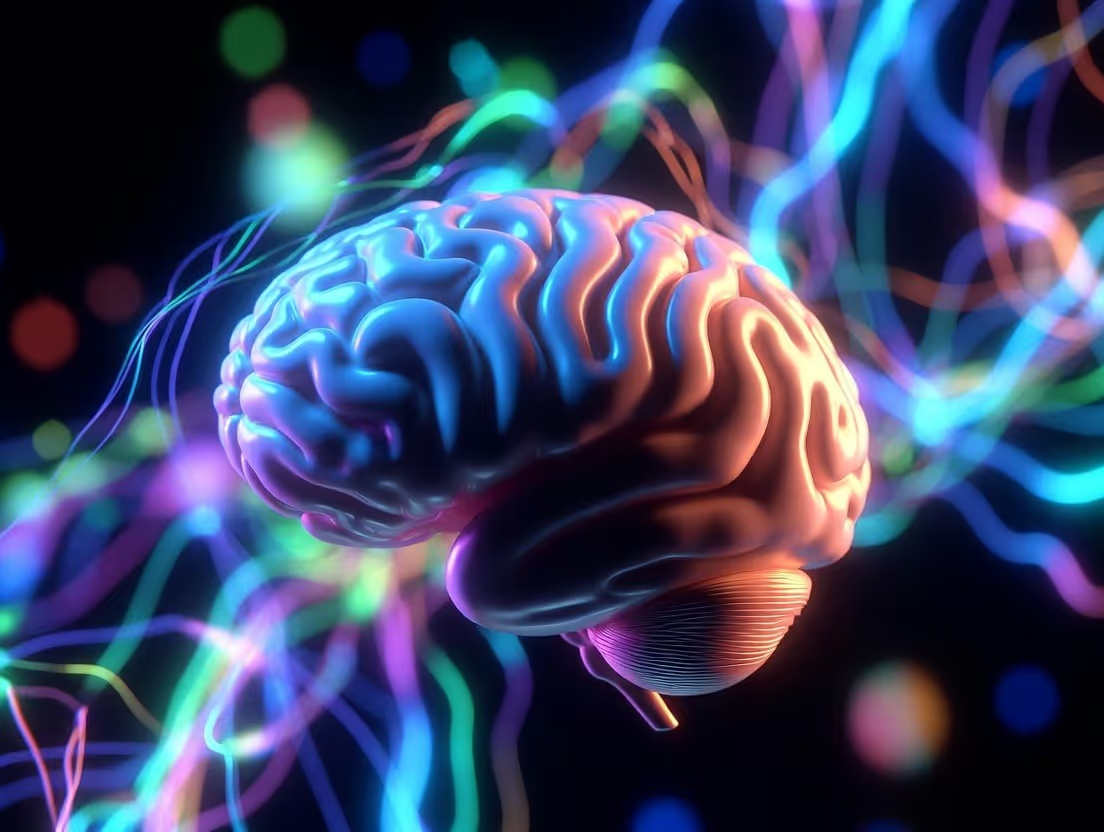
Patience is often framed as a moral virtue, a matter of sheer willpower to “wait calmly.” But from a neurological standpoint, patience is far more fascinating: it is a trainable skill rooted in the physical structure and function of your brain. Understanding this science transforms patience from a passive state of waiting into an active process of brain training, central to your long-term emotional project.
At the heart of impatience and emotional reactivity is the amygdala, your brain’s threat detection alarm. When triggered by stress, frustration, or uncertainty, it initiates a fight-or-flight response, flooding your system with cortisol and adrenaline. This cascade shuts down your prefrontal cortex (PFC)—the brain’s executive center responsible for rational thought, impulse control, and, crucially, long-term perspective. When the PFC goes offline, you are biologically incapable of patience. You are in survival mode, demanding immediate resolution or relief.
Therefore, building patience is fundamentally about strengthening the connection and communication between your PFC and your amygdala. It’s about training your brain to press “pause” on the alarm long enough for your wise, executive brain to assess the situation and choose a response. This is achieved through a process called top-down regulation.
How do you build this neural muscle? Through consistent, repetitive practices that engage the PFC in the presence of low-to-moderate stress. This is the “workout” for patience.
The magical compounder in this process is neuroplasticity—your brain’s ability to reorganize itself by forming new neural connections throughout life. Every time you practice mindfulness, reframe a thought, or breathe through frustration, you strengthen the synaptic connections in your PFC and its pathways to the limbic system. Over weeks and months, what was once an exhausting conscious effort becomes a more automatic, effortless response. The “space” between trigger and reaction widens. This is the neurobiological foundation of emotional balance.
Technology can serve as a remarkable feedback mechanism in this training. By monitoring a metric like HRV, which reflects the balance between your stress (sympathetic) and calm (parasympathetic) nervous systems, you get real-time insight into your neurological state. Seeing your HRV dip during a stressful work period is a cue to engage your PFC with a brief breathing exercise. Noticing it recover and rise over months of practice provides irrefutable, physiological proof that your brain is, indeed, becoming more resilient. It turns the abstract concept of “building patience” into a tangible, trackable physiological endeavor, a core part of the mission we champion at Oxyzen.
You cannot discuss long-term emotional balance without addressing its most fundamental prerequisite: sleep. If emotional resilience is a savings account, then sleep is your primary currency of deposit. Every night of deep, restorative sleep is a direct investment in your emotional capital for the following day. Conversely, sleep deprivation is a form of high-interest emotional debt that you will inevitably pay back with compounded interest in the form of irritability, anxiety, poor focus, and emotional volatility.
The science behind this is unequivocal. During slow-wave (deep) sleep and REM sleep, your brain performs essential emotional and cognitive housekeeping. It’s like a nightly therapy and maintenance session for your mind.
Therefore, prioritizing sleep is not self-indulgence; it is the first and most strategic action in your long-term emotional project. You can have the best mindfulness practice in the world, but if you are chronically sleep-deprived, you are trying to build a sandcastle in a hurricane.
This is where sleep tracking technology shifts from a novelty to a necessity. Subjectively, we are terrible judges of our own sleep quality. We might think we “slept okay” but feel terrible, or fret over a wake-up yet feel refreshed. Objective data cuts through the guesswork.
A comprehensive wellness tracker analyzes:
By reviewing this data, you move from a vague intention (“I should sleep more”) to a targeted strategy. You might discover that late-night screen time is obliterating your deep sleep, that alcohol—though it may help you fall asleep—severely fragments your sleep architecture, or that your weekend sleep-in is throwing your circadian rhythm into chaos, creating “social jet lag.”
Armed with this knowledge, you can experiment. What happens to your deep sleep if you institute a 60-minute device-free buffer before bed? How does your resting heart rate change if you finish eating three hours before sleeping? Does a brief daytime walk improve your sleep efficiency? This data-driven, iterative approach to sleep optimization is the ultimate act of patience and self-compassion in your emotional project. It’s building your foundation, brick by brick, night by night. For anyone beginning this journey, the Oxyzen blog offers a wealth of science-backed strategies for leveraging sleep data for emotional well-being.
For generations, emotional work was confined to the mind: talk therapy, journaling, cognitive exercises. While these are profoundly effective, they represent only half of the equation. Emotions are not just psychological events; they are full-body experiences. Anxiety knots your stomach. Embarrassment flushes your skin. Grief feels physically heavy. To master the long-term project of emotional balance, you must learn to listen to the wisdom of your body and understand the constant, silent conversation between your physiological state and your emotional state.
This conversation is governed by your autonomic nervous system (ANS), which operates below the level of conscious thought. It has two main branches:
Emotional dysregulation is often a sign of an ANS stuck in a sympathetic-dominant state—a body perpetually idling in high alert. The key to balance is not to eliminate sympathetic activation (which is necessary for life and passion) but to cultivate a flexible, responsive ANS that can ramp up appropriately for challenges and then efficiently downshift into recovery.
The most powerful window into your ANS is Heart Rate Variability (HRV). Contrary to what you might assume, a healthy heart does not beat with the metronomic regularity of a drum machine. The time between beats varies slightly. Higher HRV indicates a strong, resilient ANS that can fluidly switch between sympathetic and parasympathetic states. It’s a sign of cardiovascular fitness and emotional adaptability. Lower HRV suggests a stressed, fatigued, or inflexible ANS, often correlated with anxiety, burnout, and poor recovery.
This is where wearable technology creates a revolutionary biofeedback loop. Previously, only athletes and astronauts had access to this kind of physiological insight. Now, you can track your HRV, resting heart rate, and skin temperature continuously.
How to Use This Biofeedback Loop in Your Long-Term Project:
This process of listen (data), learn (interpret), and act (intervene) creates a powerful partnership between your conscious mind and your unconscious physiology. You are no longer a passenger in your emotional life, blindsided by stress or mood swings. You are the pilot, with a sophisticated instrument panel. You learn that a rising resting heart rate in the afternoon might be a cue for a walk, not another coffee. That a low HRV score is a mandate for an early night, not more Netflix.
Embracing this biofeedback loop is a profound practice of patience. You are learning a new language—the language of your own body. It requires curiosity over judgment. As many users share in their testimonials, this objective feedback is often the key that unlocks a deeper, more compassionate relationship with themselves, making the long-term project feel guided and purposeful.

Willpower is a notoriously finite resource. Relying on sheer mental force to "be more patient" or "stay calm" is like trying to heat a house by striking matches—it’s intense, unsustainable, and leaves you in the dark once it’s spent. The architects of long-term emotional balance understand this. Instead of depending on willpower, they build structures that make the desired behavior the default, easy choice. These structures are your daily routines and rituals.
A ritual, in this context, is a mindful, intentional practice embedded into the rhythm of your day. It’s not an item on a to-do list to be checked off; it’s a non-negotiable part of your personal operating system. Rituals automate progress by creating predictable pockets of recovery, grounding, and self-connection, preventing your emotional reserves from ever hitting zero.
Think of your nervous system as a cup. Each stressor—a work deadline, a difficult conversation, traffic—adds a drop to the cup. Without rituals, the cup fills relentlessly until it overflows into anxiety, anger, or exhaustion. Daily rituals are like a small, steady leak in the bottom of that cup, constantly draining stress and creating capacity. They keep the cup from ever getting too full.
Key Rituals for Emotional Balance:
The role of technology here is not to become another source of stimulation but to support and remind. A smart ring can provide gentle, silent vibration alerts reminding you to move if you’ve been sedentary too long (accumulated stress often manifests physically as stiffness). Its sleep data validates your evening ritual—you can see objectively how a screen-free wind-down improves your sleep latency and deep sleep percentage.
The beauty of rituals is that they build compound interest for your emotional well-being. One calm morning doesn’t change your life. But 300 calm mornings over a year fundamentally reshape your baseline stress level and your capacity for patience. They are the daily, humble bricks in the grand architecture of your long-term project. For inspiration on building these non-negotiable practices, exploring the journeys of others on the Oxyzen blog can provide practical ideas and motivation.
A common experience in emotional turmoil is a feeling of being overwhelmed by a vague, undifferentiated storm of "bad feeling." It’s a swirling mass of anxiety, sadness, frustration, and shame that feels unmanageable because it’s unidentified. The ancient and powerful psychological principle at play is: You cannot manage what you do not name.
Developing emotional granularity—the ability to identify and label your emotions with precise, nuanced vocabulary—is a master skill in the long-term project of emotional balance. Neuroscientist Lisa Feldman Barrett’s research demonstrates that this is not just semantics; it’s a form of real-time brain regulation. The act of consciously labeling an emotion (“I am feeling disappointed”) activates the prefrontal cortex and reduces activity in the amygdala, effectively turning down the volume on the emotional alarm.
Think of it like a sound engineer in a recording studio. Before granularity, all the emotional channels are slammed into the red, creating a painful, distorted noise. The act of naming is like isolating individual tracks: “Okay, that loud frequency is frustration at the traffic. That lower rumble is worry about being late. And that background hiss is helplessness.” Simply by accurately labeling them, you gain a measure of control. The distortion lessens.
How to Cultivate Emotional Granularity:
This practice requires patience because we are often rushing past our feelings to get to a solution or a distraction. Granularity asks you to slow down and get curious about the distress itself. It’s a paradoxical act: by turning toward the emotion with a label, you diminish its overwhelming power.
Wearable data can serve as a powerful pre-verbal cue in this practice. You might be mentally immersed in a task, ignoring your rising stress, when you feel a gentle vibration alert from your ring indicating a significant spike in heart rate or a dip in HRV. This isn’t an alarm; it’s a biofeedback nudge. It prompts you to pause and check in: ”My body is showing signs of stress. What am I feeling right now? What just happened? What thought just crossed my mind?” This bridges the gap between unconscious physiological arousal and conscious emotional awareness, giving you the chance to apply granularity before you react reflexively.
By becoming a connoisseur of your own emotional landscape, you move from being at the mercy of the weather to being a skilled observer and navigator. You learn that “anxiety” about a presentation might actually be “anticipation” mixed with “eagerness to share.” This reframe alone can change your physiological response. This nuanced self-awareness is a cornerstone of the mindful, data-informed approach to wellness that defines the philosophy behind Oxyzen.
The pursuit of emotional balance can feel like a profoundly solitary endeavor. We sit alone with our thoughts, track our personal data, and work on our private rituals. Yet, human beings are wired for connection. Our nervous systems are designed to co-regulate—to calm in the presence of another safe, calm person. To ignore the social dimension of emotional well-being is to build your long-term project on an incomplete blueprint.
Isolation amplifies emotional distress. When we struggle in silence, our minds can catastrophize, and shame festers. Sharing our journey, even in small ways, performs a vital function: it normalizes the struggle. Hearing that others also experience non-linear progress, have bad data days, and sometimes forget their own rituals is an antidote to the perfectionism that derails so many. It reminds us that patience is not just an individual virtue but a collective experience.
This doesn’t mean you need to share your deepest vulnerabilities with everyone. A “community” in this context can take many forms:
Community provides two irreplaceable elements for the long-term project:
In the modern context, technology can facilitate meaningful connection rather than replace it. Imagine comparing notes with a trusted friend who also uses a wellness tracker. You’re not competing; you’re collaborating. “My HRV always tanks on Mondays, what about yours?” “I found that a hot bath before bed really improved my deep sleep score, want to try it?” This shifts the focus from abstract feelings to shared, objective exploration. It makes the journey feel less lonely and more like a shared expedition into well-being.
Furthermore, learning about the mission and values of the creators behind your tools can foster a sense of shared purpose. Understanding the story and vision of a company dedicated to holistic well-being can make you feel part of a larger movement toward integrated health, rather than just a consumer of a gadget.
By intentionally weaving community into your project, you build an external support structure that mirrors the internal one you are cultivating. You are reminded that the goal is not a solitary, perfect equilibrium, but a connected, flexible resilience—the ability to stay balanced in relationship to the world and others around you.

No long-term project proceeds without setbacks. In fitness, it’s an injury or a missed week of workouts. In finance, it’s an unexpected expense. In the project of emotional balance, setbacks are inevitable: a major life stressor that shatters your sleep, a period of burnout that depletes your patience, or simply falling off your ritual wagon for a week (or a month). The critical factor that determines whether a setback derails your entire project or becomes a valuable lesson is your response to the setback itself.
The default, culturally conditioned response is often a cascade of self-judgment. “I knew I couldn’t stick with it.” “All my progress is gone.” “I’ve failed.” This mindset is catastrophic. It takes a temporary lapse—a bend in the road—and interprets it as the car hurtling off a cliff. This judgment triggers shame, which is paralyzing, making it even harder to restart.
The skill to develop here is the Compassionate Reset. This is a structured, kind, and data-informed process for getting back on track without drama or self-flagellation. It treats the setback as data, not destiny.
The Steps of a Compassionate Reset:
This entire process is an enactment of patience. It accepts that progress is spiral-shaped. Sometimes the spiral loops back over old ground, but from a higher perspective. The setback you navigate today with a Compassionate Reset prepares you for a future, similar challenge with more skill and less fear.
Embracing this art turns what could be demoralizing failures into integral chapters of your growth. It is the practical application of the patience you are cultivating, ensuring that your long-term project is not brittle but anti-fragile—gaining strength from the occasional, inevitable stressors and disruptions. For support in interpreting your data during these times, resources like the Oxyzen FAQ can help you understand what your body’s signals might be telling you.
In this long-term project, we’ve positioned technology—specifically, biometric wearables like advanced smart rings—as a central tool. But a tool is only as wise as the hand that wields it. The final, crucial skill in this first phase of your journey is learning to translate data into wisdom, to integrate the objective numbers on your app with the subjective experience of your life. Without this integration, data is just noise, or worse, a new source of anxiety and obsession.
The goal is to move up the hierarchy: Data → Information → Insight → Wisdom.
How to Cultivate Data Wisdom and Avoid Data Anxiety:
When used wisely, this technology becomes an extension of your own self-awareness. It’s like having a translator for a language your body has been speaking all along. It demystifies your emotional and physical states, giving you agency. You learn your personal formulas: For me, X amount of sleep + Y type of morning ritual + Z boundaries around work enable A level of patience and B level of emotional presence.
This journey of integration is at the heart of modern, holistic well-being. It’s about marrying the ancient wisdom of self-knowledge with the modern power of self-quantification. It’s the practical application of a philosophy that views the human being as an integrated system, a belief that is central to the vision behind tools designed for this very purpose, as you can explore in the broader context of Oxyzen’s mission. By moving from chasing data points to cultivating data wisdom, you ensure that technology serves your long-term project of emotional balance, rather than becoming another distracting or stressful demand within it.
Beneath all the rituals, data analysis, and skill development lies the most fundamental meta-skill of all: the ability to cultivate the Observer Self. This is the part of your consciousness that can step back and witness your thoughts, feelings, and bodily sensations without immediately fusing with them. It is the silent, spacious awareness that notices, “Ah, here is a feeling of anxiety,” rather than ”I am anxious.” This subtle shift from fusion to observation is the cornerstone of psychological flexibility and the ultimate expression of patience.
When you are fused with an emotion, you are the storm. It consumes your identity and dictates your reactions. The Observer Self allows you to stand on the stable shore and watch the storm, knowing it is a passing weather pattern within you, not the totality of who you are. This creates the critical psychological space—the “pause”—where choice resides.
How to Strengthen the Observer Self:
The biofeedback from wearable technology provides a unique, objective anchor for the Observer Self. When you feel emotionally agitated, you can look at your real-time heart rate or HRV. Seeing the elevated number is a concrete, external fact. You can then observe: “My heart rate is 95. My body is in a state of arousal.” This external data point helps dislodge you from the purely subjective, fused experience of “I AM PANICKED.” It gives the Observer something tangible to focus on: “I am observing a body that is currently showing signs of stress.” This can be the first step in initiating a calming practice.
Cultivating the Observer Self is the ultimate long-term practice. It requires infinite patience because the default mode of the mind is to fuse, to get lost in story. You will forget a thousand times. The practice is in remembering the ten thousand and first time.
This meta-skill is what ties your entire project together. It is the consciousness that patiently watches the non-linear progress, that implements the Compassionate Reset after a setback, that chooses a ritual over reactivity, and that interprets data with curiosity rather than judgment. It is the quiet, steady presence that understands emotional balance is not about having a perfectly calm sea, but about becoming a more skilled and spacious captain who can navigate all waters. This journey of developing inner witness is a deeply personal one, and learning about the founding story and values of companies in this space often reflects a commitment to supporting this very kind of profound, internal growth.
For many, the workplace is the primary arena where emotional balance is both most needed and most strained. Deadlines, interpersonal dynamics, performance reviews, and constant digital pings create a potent cocktail of chronic, low-grade stress that can deplete our reserves and trigger reactivity. Viewing work merely as a source of stress, however, misses a profound opportunity. Reframed, the workplace can become your most valuable emotional gym—a daily training ground for practicing patience, focus, and resilience under pressure.
The key is to shift from being a passive recipient of workplace stress to an active architect of your cognitive and emotional environment. This requires strategic interventions at three levels: physiological, cognitive, and behavioral.
1. Physiological Grounding: Managing the Stress Response
Your body cannot distinguish between a looming project deadline and a physical threat. Both trigger the same sympathetic cascade. The first line of defense is to introduce micro-interventions that activate the parasympathetic nervous system throughout the day, preventing stress from accumulating to overflow levels.
2. Cognitive Reframing: From Threat to Challenge
How you label a stressful situation dramatically alters your physiological and emotional response. Stanford psychologist Dr. Alia Crum’s research on stress mindsets shows that viewing stress as enhancing (a challenge to be met) rather than debilitating (a threat to be avoided) leads to better performance, health, and growth.
3. Behavioral Boundaries: Creating Cognitive Sanctuaries
The always-on digital work culture is the enemy of deep focus and emotional regulation. You must build fences to protect your focus.
The workplace, approached with this strategic mindset, ceases to be a drain and becomes a forge. Each challenging interaction is a rep in patience. Each managed deadline strengthens your stress resilience. And the objective data from your wearable serves as your coach, showing you when you’re overtraining (chronic elevated stress markers) and when you’re effectively building capacity (improving recovery metrics even amidst demand). It turns the daily grind into a deliberate practice, making professional life a powerful contributor to—not a detractor from—your long-term emotional project.
If the workplace is the gym for stress resilience, then our intimate relationships—with partners, family, close friends—are the master class in emotional balance. Relationships act as powerful mirrors, reflecting back our unprocessed triggers, our communication patterns, and our capacity for empathy and patience like nothing else. A long-term project that only focuses on inner peace in isolation is incomplete. True balance is tested and expressed in the dynamic dance of connection.
Emotional dysregulation is contagious; so is regulation. This is the principle of co-regulation. When one person in a dyad becomes highly reactive (flooded with sympathetic arousal), it almost inevitably triggers a defensive or reactive response in the other, leading to destructive cycles. The goal is to move from co-dysregulation to intentional co-regulation, where one person can maintain enough equilibrium to help calm the system.
Skills for Relational Emotional Balance:
The Role of Data in Relational Understanding:
Wearable technology, used consensually and ethically, can foster remarkable empathy and depersonalize conflict. Imagine a couple both using wellness trackers. After a recurring argument pattern, they review their data together. They might see that their conflicts almost always occur on nights when Partner A’s deep sleep was under 10% the night before, or when Partner B’s daytime stress score was above 80%.
This data shifts the conversation from “You’re always so snappy on Thursday nights!” to “Look at the data. My system is consistently depleted on Thursdays after my intensive work meetings. It’s not about you; I’m running on empty. How can we structure Thursday evenings to be low-demand for both of us?” This data-informed empathy removes character assassination and turns problems into shared puzzles to solve as a team.
Furthermore, tracking shared metrics like sleep can reveal unseen dynamics. If one partner’s restless sleep consistently correlates with the other’s, it might point to an issue like mismatched sleep schedules or sleep apnea, affecting both people’s emotional resilience. This objective insight, much like the real-world experiences shared in Oxyzen testimonials, can guide solutions that benefit the relationship system as a whole.
Cultivating emotional balance within relationships is the ultimate practice of patience. It requires holding space for another’s emotional reality while tending to your own. It accepts that progress is slow, ruptures will happen, and repair is the skill that matters most. By bringing the principles of the long-term project into our connections, we build not only individual resilience but the resilient, flexible bonds that form the bedrock of a meaningful life.
While relationships with others are master classes, the relationship you have with yourself is the foundation upon which all others are built. Your inner dialogue—the running commentary in your mind—is the most consistent relationship of your life. For many, this dialogue is harsh, critical, and impatient, a relentless inner critic that magnifies setbacks and minimizes victories. You cannot achieve sustainable emotional balance if your internal world is a battlefield. Therefore, the long-term project must include the deliberate cultivation of self-compassion.
Self-compassion, as defined by researcher Dr. Kristin Neff, is not self-indulgence or lowered standards. It is comprised of three core components:
Transforming the Inner Critic into an Inner Coach:
The goal is not to silence the inner voice but to transform it from a critic into a compassionate coach. A critic says, “You failed. You’re pathetic.” A coach says, “That didn’t go as planned. What can we learn from this? How can we adjust for next time?”
Practical Steps for Building Self-Compassion:
Self-Compassion as the Engine of Patience:
Impatience with our emotional progress is often rooted in self-judgment. We are impatient with ourselves. Self-compassion is the antidote. It acknowledges the difficulty of the journey (“This is hard”) and normalizes the struggle (“Everyone has setbacks”), which instantly reduces the secondary suffering of shame. From this calmer, more connected place, patience arises naturally. It becomes safe to go slowly because you are not berating yourself for your pace.
This inner work is supported by technology when used correctly. The data serves as a non-judgmental mirror. It doesn’t care about your worth; it simply reflects state. You can then choose to bring a compassionate interpretation to that reflection. A low readiness score becomes an invitation to care, not a verdict of failure. This aligns perfectly with a wellness philosophy that seeks to empower, not shame, the user—a core value you can sense in the foundational principles shared in Oxyzen’s story.
Cultivating a compassionate inner dialogue is perhaps the most profound part of the long-term project. It means building a safe home within yourself, a home where you are accepted as a work in progress. From this secure internal base, you can engage with the stressors of work and the complexities of relationships from a place of grounded strength, not fragile defense. It is the quiet, continuous practice of becoming your own greatest ally.
We have explored regulating emotions (managing intensity) and understanding them (granularity). Now we move to the advanced skill of emotional agility: the ability to be with your emotions with curiosity, acceptance, and then to choose your actions based on your values, even in the presence of difficult feelings. Coined by psychologist Dr. Susan David, emotional agility is the opposite of being controlled by or suppressing emotions. It’s about showing up to your feelings, stepping out of them, and moving on in a values-aligned direction.
Think of it as navigating a river. Reactivity is being swept away by the current. Rigid control is trying to dam the river. Emotional agility is having a sturdy boat and skilled oars—you feel the push of the water (the emotion), but you can still steer toward your chosen destination (your values).
The Four Steps of Emotional Agility:
Emotional Agility in Practice:
How Data Informs Agility:
Your biometric data provides the “showing up” cue with unparalleled objectivity. Often, we are in denial or unaware of rising emotional tides until they crest. A steady climb in your resting heart rate over an hour, or a dip in your HRV, can be the first sign that an emotion is building beneath consciousness. This early warning system allows you to engage the agility process proactively, before you are flooded. It helps you catch the wave early and choose your board, rather than being tumbled by it.
Developing emotional agility is a lifelong practice that embodies the ethos of patience and progress. It accepts that difficult emotions will come, and it trusts in your developing capacity to move through them with intention. It turns the entire emotional landscape—even the dark, uncomfortable parts—into useful terrain for navigating toward a life of purpose and connection. This sophisticated skill set represents the high-level application of all the foundational work we’ve covered, a synthesis of awareness, regulation, and values-based action that is the hallmark of true emotional maturity.
Our exploration of emotional balance has journeyed through the mind, the nervous system, and our relational world. Yet, we cannot ignore the foundational layer: the physical body. Your brain, the organ of emotion, is a physical entity that runs on biochemical fuel. What you eat, how you move, and the rhythms you keep directly govern the hormonal and inflammatory milieu in which your emotions arise. To neglect the physical levers is to try to software-update a computer while ignoring its power supply and cooling fan.
Nutrition: The Gut-Brain Axis
The gut-brain axis is a bidirectional communication superhighway. Your digestive system produces about 95% of your body’s serotonin, a key neurotransmitter for mood regulation. An inflamed gut, imbalanced microbiome, or blood sugar roller coaster can directly manifest as brain fog, anxiety, and irritability.
Movement: The Original Mood Regulator
Exercise is not just for the body; it is one of the most potent, evidence-based tools for emotional regulation.
Using Data to Personalize Your Physical Strategy:
This is where wearable technology shines, moving you from generic advice to personalized insight.
Viewing nutrition and movement as core components of your emotional project reframes self-care from an aesthetic or disciplinary pursuit to a biochemical necessity for mental health. You are literally building a healthier, more stable platform from which your emotions can operate. It is a profound act of patience to tend to this physical foundation day after day, trusting that the compound effect—a steadier energy supply, a less inflamed system, a more resilient stress response—will create the physiological conditions for emotional balance to flourish. For ongoing, research-backed insights on integrating these physical levers, the Oxyzen blog serves as a valuable repository of actionable information.
In our long-term project, we’ve focused on regulating our internal environment. But we live immersed in an external digital environment that exerts a powerful, often unexamined, influence on our nervous systems. The constant stream of notifications, the infinite scroll of social media, the blue light after sunset—this is not a neutral backdrop. It is an active, designed ecosystem that often hijacks our attention and dysregulates our emotions. Therefore, digital hygiene is not a peripheral concern; it is a critical discipline for emotional balance.
The digital world impacts us on three key levels:
Strategies for a Balanced Digital Diet:
Technology as an Ally in Digital Balance:
Ironically, technology can help us manage technology. Use your wellness tracker to measure the impact of your digital habits.
Curating your digital environment is an act of reclaiming your cognitive sovereignty and emotional attention. It is a declaration that your inner calm is more valuable than external noise. It requires the patience to sit with the initial discomfort of boredom or FOMO, trusting that on the other side is a more focused mind, a more stable mood, and a richer engagement with the offline world. This discipline is essential for anyone serious about creating sustainable conditions for emotional balance in the 21st century. For support and common questions on integrating tech for wellness, not distraction, our comprehensive FAQ can be a helpful guide.
We have now surveyed the vast landscape of the long-term project: from neuroscience to nutrition, from self-compassion to digital hygiene. The final, crucial step is synthesis. Knowledge without application is inert. The risk at this stage is overwhelm—the temptation to implement all 20 strategies at once, leading to quick burnout. The antidote is to build your personal, evolving toolkit. This is not a rigid, one-size-fits-all program, but a curated collection of practices that you can draw upon, depending on your season of life, energy levels, and specific challenges.
Your toolkit should have compartments for different needs: Daily Maintenance, Emergency Response, and Periodic Tune-ups.
1. The Daily Maintenance Kit (Non-Negotiables):
These are the 2-4 foundational rituals that protect your baseline. They should be so simple that you can do them even on your worst day.
2. The Emergency Response Kit (For Flooding & Setbacks):
When you are emotionally flooded or in a setback, your cognitive capacity is low. You need pre-programmed, ultra-simple actions.
3. The Periodic Tune-Up Kit (Deep Practice & Learning):
These are the practices you engage when you have more bandwidth, to deepen your skills and refresh your motivation.
How to Assemble Your Toolkit:
Building this toolkit is the ultimate expression of the long-term project. It is an acknowledgement that you are the chief scientist and caretaker of your own well-being. It combines self-knowledge with strategic action, and patience with a commitment to progress. It ensures that the journey toward emotional balance is not a exhausting sprint, but a sustainable, ever-unfolding walk—a walk you are now fully equipped to navigate, one mindful step at a time.
Your Trusted Sleep Advocate: Sleep Foundation — https://www.sleepfoundation.org
Discover a digital archive of scholarly articles: NIH — https://www.ncbi.nlm.nih.gov/
39 million citations for biomedical literature :PubMed — https://pubmed.ncbi.nlm.nih.gov/
Experts at Harvard Health Publishing covering a variety of health topics — https://www.health.harvard.edu/blog/
Every life deserves world class care :Cleveland Clinic - https://my.clevelandclinic.org/health
Wearable technology and the future of predictive health monitoring :MIT Technology Review — https://www.technologyreview.com/
Dedicated to the well-being of all people and guided by science :World Health Organization — https://www.who.int/news-room/
Psychological science and knowledge to benefit society and improve lives. :APA — https://www.apa.org/monitor/
Cutting-edge insights on human longevity and peak performance:
Lifespan Research — https://www.lifespan.io/
Global authority on exercise physiology, sports performance, and human recovery:
American College of Sports Medicine — https://www.acsm.org/
Neuroscience-driven guidance for better focus, sleep, and mental clarity:
Stanford Human Performance Lab — https://humanperformance.stanford.edu/
Evidence-based psychology and mind–body wellness resources:
Mayo Clinic — https://www.mayoclinic.org/healthy-lifestyle/
Data-backed research on emotional wellbeing, stress biology, and resilience:
American Institute of Stress — https://www.stress.org/


