


How to Maintain Calm Mind Practices During Travel
Maintain practices during travel by having portable anchors (breath, a mantra) and adapting routines to new environments.
Maintain practices during travel by having portable anchors (breath, a mantra) and adapting routines to new environments.
%402x.svg)
Before we pack a single bag, we must pack the right mindset. The core of travel anxiety lies in our relationship with control. At home, we command our environment—our bed, our kitchen, our schedule. Travel, by its nature, strips away that illusion of control. Flights get canceled, reservations vanish, languages become barriers. Our primitive brain interprets this unpredictability as threat, triggering a stress response.
The first step to calm is a philosophical shift: from demanding control to cultivating adaptability. This isn't passive resignation; it's active resilience. It’s the understanding that your peace is not contingent on perfect conditions. The ancient Stoics called this the "dichotomy of control"—focusing your energy only on what you can influence (your reaction, your breath, your next action) and releasing attachment to what you cannot (weather, traffic, other people’s behavior).
Consider travel as a series of mindfulness exercises in disguise. That long security line? It’s a forced pause, an opportunity to observe your impatience without judgment and return to your breath. The unfamiliar meal? A lesson in sensory presence, tasting without comparison. By reframing disruptions as practice, you transform your journey from a stressor to a teacher.
This foundational shift is supported by understanding your unique stress signatures. This is where personalized data becomes powerful. Devices that track physiological metrics like heart rate variability (HRV) and sleep quality, such as those developed by Oxyzen.ai, can help you identify your personal triggers and baseline. Knowing, for instance, that your HRV consistently drops after poor sleep allows you to prioritize rest before a big travel day proactively. It turns abstract stress into a measurable, manageable variable. For more on the science behind these metrics, our FAQ section offers detailed explanations.
Ultimately, portable peace is the art of carrying your inner sanctuary with you. It's built on the twin pillars of intentional mindset and informed self-awareness, setting the stage for every practical technique that follows.

A calm journey begins long before you reach the airport. The days leading up to departure are critical for establishing a buffer of resilience. This phase is about proactive preparation—not just of your suitcase, but of your nervous system.
The Digital Detox & Intentional Planning: Start by decluttering your mental space. Dedicate an evening to meticulous trip planning—confirming bookings, saving digital copies of documents, and creating a loose, flexible itinerary. The goal is to get logistics out of your working memory and into a trusted system (a travel app or notebook). Once this is done, initiate a gentle digital detox. Reduce doom-scrolling and work emails, which heighten background anxiety. Instead, consume content that inspires calm or curiosity about your destination.
Physiological Priming: Your body is your travel vessel; prepare it like a premium vehicle. In the 72 hours before travel, prioritize:
The "Calm Kit" Curation: Assemble a small, dedicated kit for your mental well-being. This is as important as your passport. It might include:
By investing in these pre-travel rituals, you depart not from a place of frantic last-minute scrambling, but from a grounded center. You are not fleeing your life; you are bringing your whole, prepared self to a new experience.
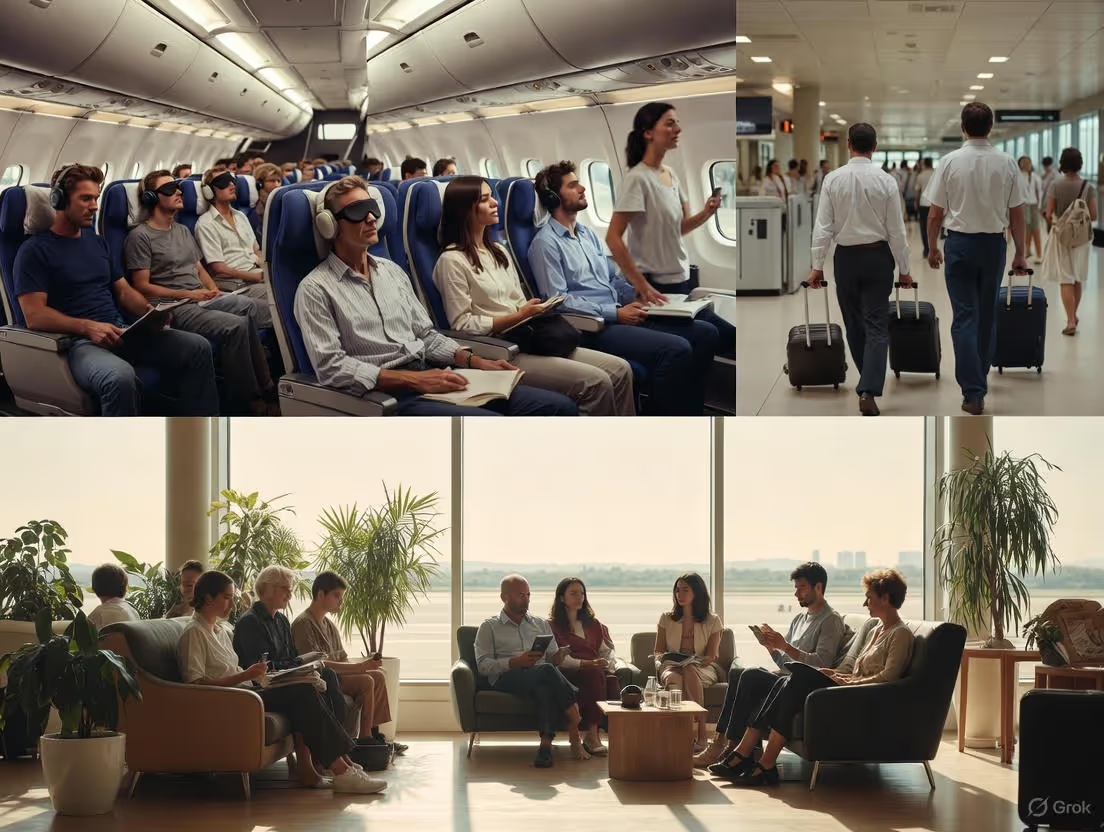
This is the crucible of travel stress: the chaotic, noisy, and often frustrating transit environment. Your mission here is not to fight the chaos, but to carve out islands of serenity within it.
The Airport as a Mindfulness Gym: See the airport not as an obstacle, but a landscape of practice opportunities.
The In-Flight Sanctuary: The plane cabin is a unique space—a pressurized tube where you are physically confined but mentally free.
The Power of Micro-Moments: You don't need an hour of yoga. Calm is built in seconds. While waiting for anything—boarding, the lavatory, baggage—drop your shoulders. Unclench your jaw. Take three conscious breaths. Observe one specific detail in your surroundings: the pattern on the carpet, the sound of a foreign language, the feeling of your bag strap. These micro-practices are like compound interest for your peace.
Throughout this stage, objective feedback can be a game-changer. A quick glance at your wellness ring’s app can reveal if your heart rate is elevated due to stress or just physical exertion from rushing. That data allows you to respond intelligently—perhaps with a breathing exercise—instead of reacting blindly to a feeling. To understand how this technology integrates into daily life, you can learn more about our story and mission.
You’ve arrived. The journey is over, but the transition is just beginning. Jet lag, culture shock, and the disorientation of a new place can swiftly undermine the calm you’ve cultivated. This phase is about intentional grounding—signaling to your mind and body that you are here, you are safe, and this new space is now your temporary home.
The First Hour Ritual: Upon entering your accommodation, resist the urge to immediately unpack or go out. Dedicate the first 60 minutes to a grounding ritual.
Combating Jet Lag with Light and Rhythm: Jet lag is a physiological disruption of your circadian rhythm. You can hack it.
The Neighborhood Walk: Once grounded, take a short, aimless walk. Don't navigate or shop. Simply observe. Notice the smells from cafes, the architecture, the pace of life. This non-goal-oriented exploration begins the process of emotional and psychological acclimation, moving you from a stressed "tourist" to a curious "temporary local."
The excitement of a new place lies in its novelty. Yet, our minds crave some predictability to feel secure. The secret is to establish lightweight, flexible "daily anchors"—small, non-negotiable rituals that tether you to yourself, no matter what the day brings.
The Morning Anchor (10-15 minutes): This sets the tone for your entire day. It should be simple and portable.
The Evening Anchor (20-30 minutes): This facilitates the transition from stimulation to restoration.
The Mealtime Anchor: Use meals as mindful pauses. In a restaurant, put your phone away for the first ten minutes. Truly taste your food. If alone, bring your journal. Eating is not just fuel; it's a sensory experience and a built-in break.
Data as an Anchor: Here, wearable technology shines. Checking your wellness metrics in the morning can inform your day. Did you get poor sleep? Maybe today is for gentle exploration, not a 10-mile hike. Is your stress score already elevated? Schedule a café sit-down for some deep breathing. This objective feedback acts as a compassionate, external anchor, guiding you to honor your body’s needs. For a deeper understanding of how this data can be interpreted and used, our FAQ resource is invaluable.
These anchors don't restrict your spontaneity; they provide the stable foundation from which you can confidently explore.
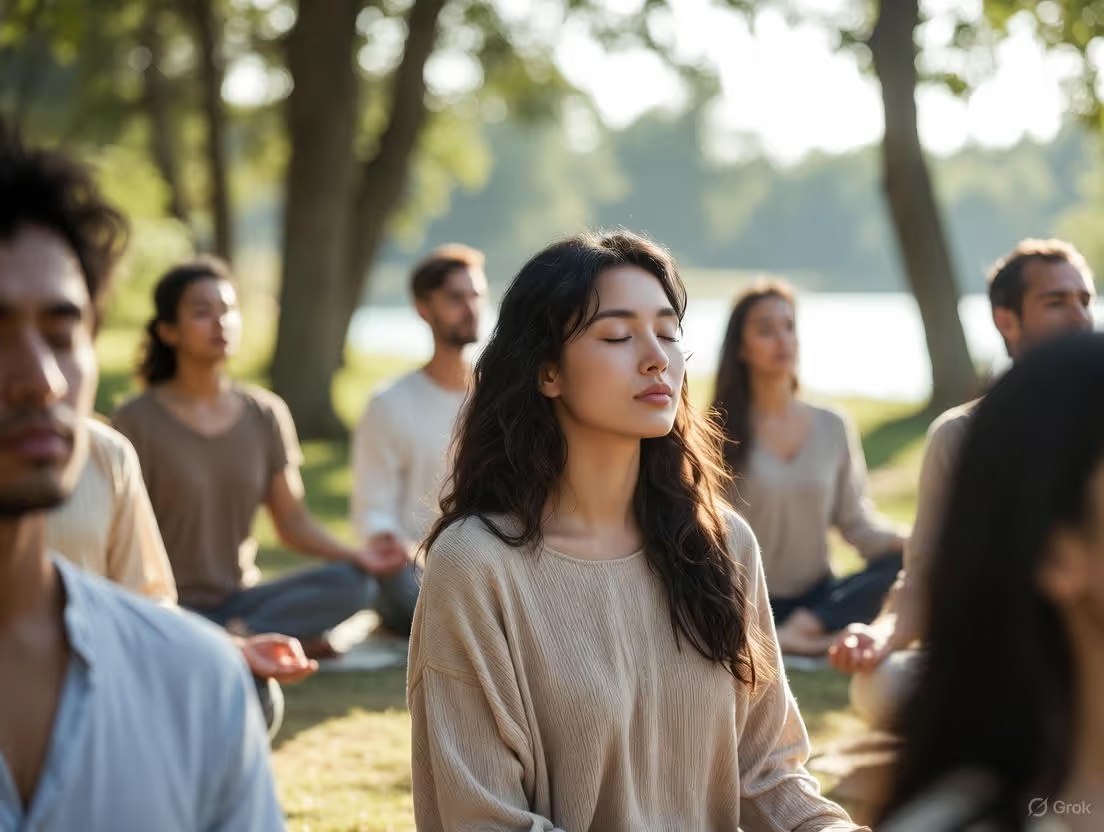
We travel to see, to feel, to experience. Yet, in our zeal to "see everything," we often fall into the "checklist trap," moving from site to site with our attention divided between the monument and our phone camera. Mindful exploration is the art of depth over breadth, presence over documentation.
The Practice of Single-Tasking Sightseeing: Choose one activity or one location for a block of time and commit your full attention to it. At a museum, instead of trying to see every wing, spend an hour with three paintings. Observe the brushstrokes, the play of light, the emotions evoked. In a market, pick a stall and watch the interactions—the exchange of money, the wrapping of goods, the brief conversations. This deep observation is infinitely more memorable than a superficial sweep.
Engage All Senses: Consciously move beyond the visual. At a historic site, close your eyes for a moment. What do you hear? The wind through ruins, distant bells, children playing? What do you smell—damp stone, earth, incense? This multi-sensory imprint creates a richer, more durable memory.
The Photography Balance: Photography isn't the enemy; unconscious photography is. Before taking a picture, pause. Take in the scene first with your own eyes. Then, ask: "Am I capturing this to share, or to remember?" Consider taking one intentional, well-composed photo, then putting the camera away for the next 20 minutes. Better yet, try a "sense memory" exercise: spend five minutes deeply observing, then walk away and jot down a detailed description in your journal. You’ll be surprised by how much more you retain.
Embrace Aimless Wandering (Flânerie): Schedule time with no destination. Get "deliberately lost" in a safe neighborhood. Follow intriguing side streets. Sit in a public square and people-watch. This unstructured time allows your mind to process, make unexpected connections, and simply be. It’s in these moments that you often stumble upon the true soul of a place—a hidden courtyard, a local bakery, a street musician—that never makes the guidebook.
This mindful approach naturally reduces the "fear of missing out" (FOMO) that drives so much travel anxiety. You realize the richest experiences aren't ticketed; they are felt. As we often explore in content on our blog about conscious living, this quality of attention transforms not just travel, but your entire relationship with the world.
Our devices are travel lifelines—for maps, translation, and memories. But they are also the primary thieves of presence. Digital wellness on the road is about strategic use, ensuring technology serves your experience rather than subsumes it.
The Pre-Trip Tech Purge: Clean your phone before you go. Delete unused apps. Organize essential travel apps into a single folder. Turn off non-essential notifications (social media, news, shopping). This reduces digital clutter and the compulsive "checking" habit.
Designated "Connection Windows": Instead of being constantly connected in a shallow way, schedule 2-3 specific, short times per day to check email, social media, and messages. Perhaps once in the morning over coffee and once in the evening. Outside these windows, keep your phone on "Do Not Disturb" or even flight mode during dedicated exploration blocks. This allows you to be fully immersed without the subconscious pull of your pocket.
Use Apps as Enablers of Presence, Not Distraction:
The Charging Ritual: Don't sleep with your phone by your head. Charge it across the room. This serves two vital purposes: it improves your sleep by removing temptation and radiation, and it makes your morning anchor ritual phone-free. You start the day with your own thoughts, not the world's input.
Let Your Wearable Handle the Background Tracking: This is a key advantage of a dedicated wellness device. While your phone is a source of distraction, a smart ring from Oxyzen.ai works silently in the background, gathering crucial data on your sleep, activity, and stress without requiring your attention or screen time. It provides the benefits of self-quantification—informing your decisions about rest and pace—without any of the digital distraction. It’s technology that facilitates mindfulness, rather than fracturing it. To see how this principle is embedded in our design philosophy, you can learn more about our company's mission.
Travel reshuffles our social world. We may be alone, with a partner, with family, or meeting new people. Each dynamic presents unique challenges to maintaining inner calm.
Traveling Solo: Cultivating Comfort in Your Own Company: Solo travel is a profound practice in self-reliance and self-enjoyment.
Traveling with Others: The Art of Harmonious Co-Journeying: Shared travel requires negotiation of pace, interests, and energy.
Interacting with Locals and New Acquaintances: These interactions can be the highlight of a trip, but can also be sources of anxiety.
Your internal state is your social barometer. If you notice your stress metrics trending up after several days of intense socializing (whether with a partner or new friends), that’s objective data telling you to schedule some solo recharge time. Learning to read these signals is part of the journey, a topic often highlighted in customer stories we've gathered.

No amount of planning can eliminate the unforeseen. The true test of your portable peace is not when things go right, but when they go wrong. Your response to crisis is where practice becomes performance.
The P.A.U.S.E. Protocol: When a stressor hits—a missed train, a stolen wallet, a heated misunderstanding—institute this immediate mental protocol:
The Lost Item Meditation: Loss happens. After taking practical steps, practice letting go. The item is gone. The energy spent on regret is energy stolen from the rest of your journey. Acknowledge the feeling, then consciously release the attachment. Often, the story of the loss becomes a more interesting travel memory than the item itself.
De-escalating Conflict: In misunderstandings with officials, service staff, or companions, your calm is your superpower.
In these high-stress moments, having an objective measure of your state can be remarkably grounding. Seeing a high stress reading on your device isn't a judgment; it's a confirmation. It tells you, "Your body is in stress mode—now is the time to deploy your P.A.U.S.E. protocol." It externalizes the signal, giving you a moment of clarity to choose your response. For support on using technology in challenging times, our FAQ page can be a helpful resource.
Calm is not a purely mental state; it is a full-body experience. The mind and body are in constant dialogue via the nervous system. To master the mind on the road, we must learn to speak the body's language and use technology to understand that dialogue.
Heart Rate Variability (HRV): Your Stress Resilience Score: HRV is the time variation between heartbeats. A higher, more variable HRV generally indicates a resilient, adaptable nervous system ready to handle stress. A low, steady HRV suggests your body is in "fight-or-flight" mode. Travel stress, poor sleep, and dehydration can crush your HRV.
Sleep Architecture: The Foundation of Emotional Regulation: Travel destroys sleep. The "first-night effect," time zone changes, and unfamiliar beds lead to fragmented sleep, robbing you of deep (NREM) and dreaming (REM) sleep. This directly impairs the prefrontal cortex—the brain region responsible for emotional control and decision-making.
The Role of the Smart Ring: This is where a device like the Oxyzen ring becomes a true travel companion. Worn 24/7, it gathers this physiological data passively and presents it in an accessible way. It translates the whispers of your body into clear insights. You’re not guessing if you’re run down; you know. This scientific self-awareness empowers you to make choices that proactively support calm, turning reactive stress management into proactive wellness stewardship. The journey to creating such intuitive technology is part of our foundational story.
Beyond the Ring: Syncing with Your Cycle: For women, hormonal fluctuations add another layer. Tracking your cycle alongside stress and sleep data can reveal powerful patterns. You may find you’re more susceptible to travel overwhelm in your luteal phase, for example, and can plan heavier travel days for your follicular phase. This is biohacking your calm at the most personal level.
By understanding and respecting your body’s signals, you stop fighting yourself. You become a collaborative team—mind, body, and data—navigating the world with intelligence and grace.
The final, and often most neglected, part of travel psychology is the return. "Post-vacation blues" and re-entry shock can violently dismantle the peace you worked so hard to build. The transition back to "normal life" needs to be managed as intentionally as the departure.
The Pre-Return Mindset Shift: On your last full day, begin the mental pivot. Reflect on your journey—what did you learn about yourself? What calm practices worked best? Acknowledge that re-entry will be a process, not an event. Give yourself permission to feel disoriented and sad; it’s a testament to the richness of your experience.
The Buffer Day: If possible, build a full buffer day between your return and your return to work or obligations. This day is sacred. Its rules:
Selective Integration: What from your travel mindset do you want to bring home? Was it the daily morning meditation? The habit of aimless evening walks? The digital sunset? Choose one or two key practices and formally commit to integrating them into your home life. Your travel calm becomes a catalyst for permanent lifestyle upgrade.
Review Your Data: In the days after returning, review the data from your trip. Look at your stress and sleep graphs. Identify the patterns: "My sleep was best on days I walked 10,000 steps," or "My stress spiked every afternoon before I instituted my café sit-down." This isn't just travel data; it's a blueprint for your ideal daily life. It shows you the conditions under which you thrive. For more ideas on building a sustainable wellness routine, our blog is a continual resource.
Returning home is not an ending, but a integration. You are not the same person who left. You've proven your capacity for calm amidst chaos. You've gathered data on your own resilience. The goal is to weave those threads into the fabric of your everyday life, so the peace of the journey never truly ends.
While foundational breathing is a powerful tool, advanced breathwork allows you to tailor your nervous system’s response to the exact challenge at hand. Think of these as precision instruments for your mind, each designed for a specific travel stressor.
For Pre-Flight Anxiety (The 4-7-8 Breath): This technique, popularized by Dr. Andrew Weil, is a natural tranquilizer for the nervous system. It’s ideal for the moments of heightened anxiety at the gate or during takeoff.
For Overstimulation in Crowds (Box Breathing): In dense markets, busy train stations, or crowded festivals, sensory overload can spike cortisol. Box breathing (also used by Navy SEALs) creates a mental “box” of focus, blocking out chaos.
For Jet Lag and Fatigue (The Energizing Breath or Bellows Breath - Bhastrika): Upon arrival when you need to stay awake to adjust to local time but your body is leaden, a stimulating breath can help.
For Frustration and Irritability (The Sighing Breath): When faced with a minor but grating inconvenience—a slow line, a confusing map, a missed bus—this breath releases tension instantly.
Integrating these techniques transforms you from a passive victim of circumstance to an active regulator of your state. For more detailed guides on breathwork and other biohacking techniques, our blog features regularly updated content. Pairing these practices with data from a wearable device like an Oxyzen ring allows you to see their direct impact—watching your heart rate dip in real-time after a 4-7-8 breath cycle is a powerful reinforcement of your own agency.
A generic wellness plan often fails under the unique pressures of travel. Your protocol must be as personalized as your packing list. This is a strategic document you create before you leave, blending the techniques we’ve discussed into a daily flow that matches your itinerary and personal tendencies.
Step 1: Self-Assessment & Trip Typing
First, audit your stress profile and your trip’s nature.
Step 2: The Three-Tiered Protocol Structure
Build your daily plan with three layers of intervention: Preventative, Responsive, and Restorative.
1. The Preventative Layer (Your Daily Non-Negotiables):
These are the anchors you commit to every day, regardless of what happens. For a high-intensity trip, this might be light: 5 mins of morning meditation, a daily gratitude note, and a digital sunset. For a slow travel retreat, it could be more robust: 30 mins of morning yoga, an afternoon nature walk, and an evening journal session.
2. The Responsive Layer (Your "If-Then" Toolkit):
This is a pre-written playbook for predictable stressors. It turns decision-making in the moment into automatic pilot.
3. The Restorative Layer (Your Scheduled Recharge):
This is proactive planning for deep recovery. Schedule one significant restorative activity every 2-3 days. This isn’t passive; it’s intentional. Examples:
Step 3: Packing for Your Protocol
Your packing list should reflect your protocol.
Step 4: The Post-Trip Review
After your journey, review your protocol. What worked flawlessly? What felt like a chore? Did you use your responsive tools? This review, especially when cross-referenced with objective data from your wearable ("On days I did my morning anchor, my average stress was 20% lower"), turns a single trip’s experience into lifelong wisdom. You are not just taking a trip; you are conducting a field study on your own well-being. This iterative process of learning is at the heart of the philosophy behind brands like Oxyzen.
Modern wellness technology has evolved from passive trackers to active guides. For the traveler, this shift is revolutionary. It moves us from simply knowing we’re stressed to receiving actionable intelligence on how to resolve it.
Passive Monitoring: The Unbiased Baseline
A device that continuously monitors heart rate, HRV, skin temperature, and sleep provides an objective story of your journey, free from the distortions of mood or memory. You may feel fine, but a consistently depressed HRV trend over three days tells the true story: your nervous system is under cumulative strain and needs support before you "crash." This is the early warning system every traveler needs.
Active Guidance: The Context-Aware Nudge
The next evolution is guidance. Imagine your device, recognizing a spike in heart rate combined with loud environmental noise (detected via your phone’s mic), sending a gentle notification: "High-stress environment detected. Try a 1-minute breathing exercise?" This isn’t an alarm; it’s a compassionate cue to use the tools you have.
Personalized Insights: The Travel Readiness Score
Advanced algorithms can synthesize your data into simple, powerful metrics. A "Travel Readiness Score" each morning could combine your sleep quality, recovery (HRV), and previous day’s activity to suggest: "High Readiness: Great day for a long hike," or "Low Recovery: Consider a lighter, restorative day." This turns overwhelming data into one clear, actionable piece of advice.
The Smart Ring as the Ideal Form Factor
For travel, form is function. A ring is superior to a watch or wristband for several reasons:
The goal of this technology is not to create a dependency, but to foster informed intuition. Over time, by correlating the objective data with your subjective feelings, you begin to internalize the guidance. You start to feel when your HRV is likely low. You learn to anticipate your need for recovery. The technology becomes a teacher, and eventually, its lessons become your own innate wisdom. To see how this vision is brought to life, you can explore the story behind our approach.
Viewing travel stress as isolated incidents misses a crucial point: each journey leaves an imprint on your nervous system. Understanding this long-term impact reframes calm travel from a luxury to a necessity for sustained health.
The Accumulation of Allostatic Load
"Allostatic load" is the wear and tear on the body that accumulates from chronic stress or repeated, severe acute stress. A single delayed flight is acute stress. But a lifestyle of frequent, high-pressure business travel without recovery strategies creates a high allostatic load. This manifests as:
Travel as Nervous System Training
The flip side is that travel, approached mindfully, can be a powerful gym for your nervous system. Just as muscles grow stronger under progressive, managed stress, so does your resilience.
The Role of Positive Experiences (The "Broaden and Build" Theory)
Travel isn't just about managing negative stress. The positive emotions of awe (seeing a grand landscape), joy (sharing a meal with new friends), and curiosity (learning a new skill) have a profound, lasting effect. Psychologist Barbara Fredrickson's "Broaden and Build" theory posits that positive emotions broaden our awareness and encourage novel thoughts and actions, and over time, this builds enduring personal resources—intellectual, social, and psychological. In essence, joyful travel makes you more creative, connected, and resilient long-term.
Creating a Positive Net Balance
The key is to ensure your travel life has a positive net impact on your nervous system. This requires intention:
By honoring the long-term conversation between your journeys and your nervous system, you transform travel from a series of taxing events into a curated life practice that builds, rather than depletes, your core vitality.
The ultimate goal is not to master calm only while traveling, but to weave the principles of mindful travel into the fabric of your daily life. When your everyday existence is grounded, present, and resilient, travel becomes a seamless extension of that state, not an escape from its opposite.
The "At-Home" Travel Mindset
Practice seeing your own city with a traveler’s eyes. Once a month, take a "destination day." Be a tourist in your hometown. Visit a museum you’ve never entered, take a walking tour, eat at a restaurant from a cuisine you don’t know. This combats autopilot and cultivates the curiosity that is central to the travel mindset.
Ritualize Your Anchors at Home
The daily anchors you use on the road should be non-negotiable at home. The morning meditation, the evening digital sunset, the weekly restorative block—these are the pillars of a calm life. At home, you have the chance to deepen them: a longer meditation session, a more elaborate Sunday rest ritual.
Design Your Environment for Calm
Your home should be your ultimate sanctuary. Declutter not just physically, but sensorially. Create zones for specific energies: a reading nook with soft light, a workspace that feels organized, a bedroom optimized solely for sleep. This makes "coming home" from any daily stressor—work, errands, or a long journey—an immediate return to peace.
Cultivate a Flexible Relationship with Plans
Adopt the travel philosophy of "structured flexibility" in your daily planning. Have a plan, but hold it lightly. When a weekday meeting cancels, see it not as a scheduling gap to be filled, but as "found time"—an opportunity for a mindful walk or a moment of pause, just as you would with a flight delay. This trains the adaptability muscle daily.
Use Your Technology as a Lifestyle Coach
Allow your wearable to guide your non-travel life as well. Let it help you find your natural sleep chronotype and design your schedule around it. Notice how your body responds to different types of work, socializing, and exercise. Use the data to craft a life that minimizes chronic stress and maximizes recovery. This ongoing optimization is the essence of modern wellness, a topic we delve into on our about page.
The Community of the Calm
Finally, share the journey. The practices of mindful living and travel are enriched in community. Discuss your anchors with friends. Share how you handled a stressful situation with grace. Compare insights from your wellness data (respecting privacy, of course). This creates a culture that values inner peace as much as outer achievement.
When your life is built on this foundation, travel is no longer a disruption. It is simply another expression of your ongoing commitment to presence, adaptability, and deep well-being. You pack your bags not to leave yourself behind, but to bring your whole, calm self to new horizons.
A truly calm mind is not an isolated fortress; it is connected and compassionate. Our internal state directly influences how we interact with the places and people we visit. Mindful travel, therefore, carries an inherent ethical responsibility—to move through the world in a way that preserves our peace without exploiting or disrupting the peace of others.
The Paradox of "Wellness Tourism"
The pursuit of our own calm can sometimes have chaotic consequences for destinations. Over-tourism in serene locales, resource strain from luxury retreats, and cultural appropriation of spiritual practices are real issues. A calm mind should be wise enough to see these impacts.
Principles for Conscientious Calm:
Using Technology Ethically
Even our tools should be chosen with conscience. Supporting companies that prioritize ethical sourcing, data privacy, and sustainable practices aligns your personal wellness with planetary wellness. When you choose a device, understanding the values and mission of the company behind it is part of being a conscious consumer. It’s about ensuring the pursuit of your inner peace doesn’t contribute to external conflict or harm.
Traveling with a calm and conscious heart creates a positive feedback loop. The more respectfully you engage with a place, the more warmly you are often received, which deepens your experience and your sense of connection—further nourishing your inner calm. It transforms travel from a transactional activity into a reciprocal relationship.
We have traversed a wide landscape together—from the philosophical shifts required to embrace uncertainty, through the practical, stage-by-stage techniques for airports, accommodations, and exploration, to the advanced science of breathwork, personalized protocols, and the long-term stewardship of your nervous system. We’ve explored how technology can be a guide, not a distraction, and how true calm extends outward into ethical, conscious engagement with the world.
The thread connecting all these ideas is agency. You are not at the mercy of travel. You have a vast and sophisticated toolkit. You have the capacity to reframe, to breathe, to anchor, to respond, and to restore. The goal is not to eliminate all stress—that would be to eliminate life itself—but to change your relationship with it. To see it as information, as practice, as an opportunity to strengthen your resilience.
Remember, the most important piece of travel gear you will ever pack is your mindset. And the most valuable souvenir you can bring home is a deeper knowledge of your own capacity for peace.
Your Next Steps:
The path to an unshakeable calm mind during travel is a practice, a fascinating journey in its own right. It starts with a single conscious breath, taken right where you are.
What we consume while traveling does more than just satiate hunger; it directly fuels—or depletes—our mental state. The erratic schedules, tempting local treats, and limited options can derail even the most disciplined eaters. Yet, with strategy, food can become one of your most reliable anchors for calm.
The Blood Sugar-Mood Connection: The single biggest nutritional factor affecting travel calm is blood sugar stability. Sharp spikes and crashes from sugary snacks, refined carbs, and irregular meals trigger the release of stress hormones like cortisol and adrenaline, manifesting as anxiety, irritability, and brain fog. Your goal is a gentle, sustained energy curve.
Strategic Eating on the Move:
Hydration: The Elixir of Clarity: Dehydration is a primary cause of travel fatigue and headaches, often mistaken for jet lag. Cabin air is extremely dehydrating.
Navigating Local Cuisine Mindfully: Experiencing local food is a joy, not a threat to your calm.
The Smart Ring’s Dietary Insight: This is where biometric feedback becomes fascinating. By observing your wellness metrics, you might discover clear correlations. Does your resting heart rate elevate or your sleep quality plummet after a late, heavy meal? Does your stress score remain lower on days you prioritize protein at breakfast? This personalized data moves you from generic advice to knowing exactly how your body's calm is affected by food on the road. It turns every trip into a learning lab for your personal nutrition. For more on interpreting this data, our FAQ section provides guidance.
By treating food as foundational fuel for your nervous system, you build a layer of physiological resilience that supports every other calm practice you employ.
The body is meant to move, yet travel often involves prolonged periods of confinement. Physical stagnation creates mental stagnation—pent-up energy transforms into restlessness and anxiety. Integrating intentional movement is not about fitness; it’s about kinetic release and re-establishing mind-body connection.
The Physiology of Motion: Movement stimulates the lymphatic system (crucial for detoxification and immunity), releases endorphins (natural mood elevators), and helps regulate cortisol. It also provides proprioceptive input—the sense of where your body is in space—which is deeply grounding for an anxious mind.
Movement Micro-Practices for Confined Spaces:
Exploration as Movement: Reframe sightseeing as mindful movement. Choose walking over vehicles when possible. Practice a walking meditation: "Lifting, moving, placing," with each step. Feel the ground beneath your feet—cobblestone, sand, grass. This connects you to the place physically and calms the mind through rhythmic, focused attention.
Finding Local Movement Culture: Integrate into the local flow. Join a morning Tai Chi group in a Chinese park, a casual beach volleyball game, a salsa class in a Latin American square, or a group hike. This combines movement, social connection, and cultural immersion—a triple threat against stress. Your wellness device can track the positive impact of this joyful movement on your heart rate variability, showing you the tangible benefits of play.
Restorative Movement for Recovery: On days of high mental stimulation or poor sleep, choose restorative, not intensive, movement.
By listening to your body's wisdom—its need for release, for grounding, for play, or for gentle care—you use movement as a direct dial to adjust your mental state. It’s the physical expression of your portable peace.
In an age of constant connectivity, the most radical act of calm while traveling may be strategic disconnection. Digital minimalism isn’t about Luddism; it’s about curating your information environment with the same intention you curate your physical one. It’s the practice of ensuring technology serves your experience, rather than hijacks it.
The Pre-Trip Digital Declutter:
Creating "Connection Ceremonies":
Instead of being always-on-lite, create powerful, intentional connection moments.
The Camera Conundrum: The camera is the biggest double-edged sword of modern travel.
Using a Wearable as Your Primary "Check-In" Device: This is a paradigm shift. Instead of checking your phone for dopamine hits, you can check your smart ring’s app for actual, meaningful data about your well-being. A glance tells you: Are you recovering well? Are you stressed? Do you need water or movement? This redirects the "checking" habit from the external, chaotic digital world to your internal, objective state. It’s a check-in that actually informs and improves your next action. To understand how this seamless integration is designed, you can explore our company's approach.
By practicing digital minimalism, you reclaim your most precious travel resource: your attention. You direct it toward the rich, real-world experience in front of you, deepening your memories and your sense of calm immersion.
Theory is powerful, but application is transformative. Let’s examine how these principles come alive in different travel scenarios. These composite case studies are drawn from common experiences and the kinds of insights shared in real user testimonials.
Case Study 1: The Anxious Business Traveler (Maria)
Case Study 2: The Overwhelmed Family Vacation (The Chen Family)
Case Study 3: The Solo Soul-Searcher (David)
These cases illustrate that the principles of calm travel are universally adaptable. They are not about adding more tasks, but about a more intentional, aware way of moving through the journey itself.
Beyond tactics and protocols lies your personal travel philosophy—a concise set of core principles that act as your guiding compass when plans dissolve and stress mounts. This is your "why," your North Star for how you choose to move through the world.
Drafting Your Philosophy:
Answer these questions to distill your essence as a traveler:
Example Philosophies:
Living Your Philosophy:
This philosophy informs every decision. The Restorer will skip a crowded night market for a sunset coastal walk. The Connector will choose a homestay over an anonymous hotel. When a flight is canceled, The Curator will recall their principle ("This is part of the story") and begin journaling about the unexpected experience at the airline service desk.
How Technology Serves Philosophy: Your wearable device becomes the instrument that measures alignment with your philosophy. If your philosophy is "Restoration," but your stress data shows constant high arousal, it's objective feedback that you're off-course. It prompts you to ask: Am I trying to do too much? Have I neglected my anchors? This creates a powerful feedback loop between your stated intentions and your lived reality.
Your travel philosophy is the ultimate internal link, connecting your deepest values to your daily actions on the road. It is the bedrock upon which portable peace is built. For those interested in the philosophy behind mindful technology, our story page delves into these foundational ideas.
The final, and perhaps most important, integration is this: the skills you hone for calm travel are the skills for a calm life. The boundary between "travel" and "daily life" begins to blur in the most beautiful way. You start to live with a traveler's mindset at home—curious, present, adaptable.
Bringing Travel Mindset Home:
The Evolving Practice: Your calm practice will not be static. It will evolve with your life stages, health, and interests. The breathwork that served you at 30 might be complemented by different restorative practices at 50. The key is maintaining the core habit of self-awareness—the continual, kind observation of your inner state.
The Role of Community: Share your journey. Talk about mindful travel and mindful living. You might start a walking group, share your favorite calm apps with friends, or discuss the insights from your wellness data with a partner. This creates a culture that values inner exploration as much as outer achievement. Reading others' journeys, like those shared in our testimonials, can provide inspiration and solidarity.
A Final Reflection: The Souvenir of Self-Knowledge
When you commit to maintaining a calm mind during travel, you are not just ensuring more pleasant trips. You are embarking on a lifelong journey of self-discovery. You learn your triggers, your capacities, your needs for connection and solitude. You learn that peace is not a location, but a practice. You learn resilience, adaptability, and profound presence.
The greatest souvenir you will ever bring home is not a trinket or a photo, but this deepened knowledge of yourself—a self that can find sanctuary in a bustling foreign square, in a quiet hotel room, or simply in the next conscious breath, taken anywhere on Earth.
Your Invitation to Continue the Journey
This guide has provided a comprehensive map to cultivating an unshakeable calm mind during travel. But the real territory is your own lived experience. We invite you to take these ideas, experiment with them, adapt them, and make them your own.
For ongoing support, deeper dives into specific techniques, and the latest insights at the intersection of wellness and technology, we encourage you to explore the wealth of resources available on our blog. If you have questions about integrating these practices or the tools that can support them, our FAQ page is a great place to start.
Remember, the journey to a calmer, more present life—whether at home or circumnavigating the globe—begins with a single, intentional step. May your travels be filled with wonder, and may you carry your peace with you, everywhere you go.
Your Trusted Sleep Advocate: Sleep Foundation — https://www.sleepfoundation.org
Discover a digital archive of scholarly articles: NIH — https://www.ncbi.nlm.nih.gov/
39 million citations for biomedical literature :PubMed — https://pubmed.ncbi.nlm.nih.gov/
Experts at Harvard Health Publishing covering a variety of health topics — https://www.health.harvard.edu/blog/
Every life deserves world class care :Cleveland Clinic - https://my.clevelandclinic.org/health
Wearable technology and the future of predictive health monitoring :MIT Technology Review — https://www.technologyreview.com/
Dedicated to the well-being of all people and guided by science :World Health Organization — https://www.who.int/news-room/
Psychological science and knowledge to benefit society and improve lives. :APA — https://www.apa.org/monitor/
Cutting-edge insights on human longevity and peak performance:
Lifespan Research — https://www.lifespan.io/
Global authority on exercise physiology, sports performance, and human recovery:
American College of Sports Medicine — https://www.acsm.org/
Neuroscience-driven guidance for better focus, sleep, and mental clarity:
Stanford Human Performance Lab — https://humanperformance.stanford.edu/
Evidence-based psychology and mind–body wellness resources:
Mayo Clinic — https://www.mayoclinic.org/healthy-lifestyle/
Data-backed research on emotional wellbeing, stress biology, and resilience:
American Institute of Stress — https://www.stress.org/


