How to Manage Performance Review Stress and Anxiety
Manage digital overload by turning off non-essential notifications, scheduling email checks, and using technology intentionally.
Mastering the Art of Calm: Your Ultimate Guide to Conquering Performance Review Anxiety
The notification pops up in your calendar, and instantly, your stomach clenches. It’s that time again: Performance Review Season. For weeks, a low-grade hum of dread has been your unwanted background noise. You replay past feedback, agonize over every minor mistake, and lie awake scripting defensive answers to critiques that haven't even been uttered. Your heart rate spikes just thinking about that closed-door meeting. You are not alone.
Performance review stress and anxiety are near-universal workplace experiences. A recent study by the American Psychological Association found that nearly 60% of employees consider performance reviews a significant source of stress, with many reporting physical symptoms like sleep disturbances and loss of appetite in the lead-up. This isn't just about "butterflies." It’s a potent cocktail of perceived judgment, financial insecurity, professional identity, and future uncertainty, all distilled into a single, high-stakes conversation.
But what if we could reframe this experience entirely? What if, instead of a source of debilitating anxiety, the performance review could be transformed into a tool for empowered self-awareness and strategic growth? This guide is your comprehensive roadmap for doing exactly that. We will dissect the psychological roots of review anxiety, provide actionable strategies for every phase of the process, and introduce you to a revolutionary tool for building unshakeable emotional and physiological resilience: the modern wellness smart ring.
By harnessing data-driven insights into your stress, sleep, and readiness, you move from being a passive subject of evaluation to an active architect of your best performance. The journey to mastering review anxiety begins with understanding its source and ends with you walking into that meeting with clarity, confidence, and control. Let's begin.
Understanding the Beast: The Psychology of Performance Review Anxiety
Before we can manage performance review anxiety, we must first understand its complex anatomy. This isn't simple nervousness; it's a deeply wired psychological and physiological response triggered by perceived threat.
At its core, the performance review is a modern-day ritual of evaluation that taps into primal human needs for security, belonging, and esteem. Our brains, remarkably, don't fully distinguish between the threat of a negative comment from a manager and the threat of a predator on the savanna. The amygdala, the brain’s alarm center, activates the same fight-or-flight response: cortisol and adrenaline flood the system, heart rate accelerates, and focus narrows to the perceived danger. This biological reality explains why you might physically tremble or your mind might "go blank"—your body is preparing for survival, not for a nuanced discussion about Q3 deliverables.
Several key psychological drivers fuel this fire:
Fear of Judgment and "Fixed Mindset" Traps: Psychologist Carol Dweck’s work on mindset is crucial here. Those with a "fixed mindset"—the belief that abilities are static—experience reviews as a definitive verdict on their inherent worth. Negative feedback isn't constructive; it's a devastating label of "not smart enough" or "a failure." Conversely, a "growth mindset" sees feedback as information for development, which significantly reduces the threat perception.
The Uncertainty Factor: Humans have a fundamental need for predictability. The review process is often shrouded in ambiguity—unclear criteria, subjective opinions, and unknown outcomes. This uncertainty creates a vacuum that our anxiety rushes to fill with worst-case scenarios.
Imposter Syndrome Amplification: For many high-achievers, the review is a stage where they fear being "found out." The focus on accomplishments can feel like a spotlight, intensifying the belief that their success is a fluke and critique will reveal their incompetence.
The High-Stakes Illusion: We catastrophize the outcomes. A "meets expectations" rating feels like a career death sentence; a single piece of critical feedback is woven into a narrative of future stagnation or job loss. This cognitive distortion magnifies the event's importance beyond its realistic impact.
Understanding these drivers is the first step toward disempowering them. It allows you to step back and observe your anxiety as a natural, albeit unhelpful, reaction to a specific set of triggers, rather than an undeniable truth about the situation. By recognizing the "why," you can begin to apply targeted strategies to calm the nervous system and reframe the narrative. For a deeper dive into the science of stress and how technology can help you track it, our blog features extensive resources on managing workplace well-being.
The Pre-Review Foundation: Building Resilience Months in Advance
The battle against performance review anxiety is won long before the meeting is scheduled. It's a continuous practice of building psychological and physiological resilience that turns you into a fortified castle, unshaken by the seasonal storm. This foundation rests on three pillars: Sleep, Stress Management, and Self-Awareness.
1. Prioritize Sleep as Non-Negotiable Performance Fuel: Sleep is not downtime; it is critical cognitive maintenance. During sleep, your brain processes emotional experiences, consolidates memories (including your achievements), and clears stress hormones like cortisol. Chronic sleep deprivation leaves you emotionally volatile, cognitively foggy, and hyper-reactive to stress—a perfect recipe for review anxiety. Aim for 7-9 hours of quality sleep consistently, not just the week before the review. Establishing a wind-down ritual—away from screens—signals to your nervous system that it's safe to rest.
2. Develop a Sustainable Stress Management Practice: You cannot eliminate stress, but you can train your body to recover from it more efficiently. Integrate micro-practices into your daily routine:
Diaphragmatic Breathing: Just 5 minutes of deep, belly breathing activates the parasympathetic nervous system, dialing down the fight-or-flight response.
Mindfulness or Meditation: Apps offering short, guided sessions can train your mind to observe anxious thoughts without being hijacked by them.
Physical Movement: Regular exercise is a potent cortisol-burner. It doesn't have to be intense; a daily 30-minute walk can dramatically improve stress resilience.
3. Cultivate Continuous Self-Awareness & Documentation: The single most powerful antidote to review anxiety is preparation rooted in evidence. Avoid the "annual amnesia" panic by maintaining a "Brag File" or "Accomplishments Log" in a simple document or note-taking app. Each week, jot down:
Completed projects and their impact (use metrics: "increased efficiency by 15%," "resolved 50+ customer tickets").
Positive feedback from colleagues or clients (copy-paste that praise email!).
New skills learned or challenges overcome.
Instances where you embodied company values.
This living document serves two purposes: it provides irrefutable data for your review, and it becomes a personal testament to your growth, directly combating imposter syndrome. Reviewing it regularly reinforces a growth mindset and a sense of competence.
This is where modern wellness technology transitions from a gadget to a foundational resilience tool. A device like the Oxyzen smart ring operates silently in the background, providing objective data on these very pillars. It tracks your sleep stages, resting heart rate, and heart rate variability (HRV)—a key biomarker of your nervous system's resilience and recovery capacity. By monitoring trends in your body stress and readiness scores, you gain an objective dashboard of your physiological preparedness. You can see, for instance, if a week of poor sleep is lowering your resilience capacity, prompting you to prioritize recovery before a high-stress period. This data-driven self-awareness transforms well-being from a vague concept into a manageable, optimizable system. To understand how this technology integrates into daily life, you can explore our FAQ for detailed insights on how these metrics are tracked and interpreted.
Reframing the Narrative: From Judgment to Joint Dialogue
With a foundation of resilience in place, the next critical step is a cognitive overhaul. You must consciously dismantle the anxiety-inducing narrative of the performance review and reconstruct it as something far more useful and far less threatening. This is the art of cognitive reframing.
The default frame for most is "The Judgment." In this frame, you are the defendant, your manager is the judge and jury, and the review is a verdict on your past worth. This frame is disempowering, passive, and inherently stressful.
The empowered frame to adopt is "The Strategic Dialogue." In this frame, you and your manager are aligned partners reviewing a project (your work over the past period) to gather data, assess progress toward shared goals, and collaboratively plan the next phase. You shift from a passive recipient of feedback to an active participant in a business conversation.
Here’s how to operationalize this shift:
Own Your Agenda: A review is a two-way conversation. Prepare your own agenda items. What do you want to discuss? Your career aspirations, desired projects, skill development goals, or even the type of feedback that is most helpful to you? Walking in with your topics establishes you as a proactive agent.
Focus on the Future (While Contextualizing the Past): While reviews must cover past performance, mentally pivot the purpose toward future development. Every piece of feedback, positive or constructive, is not a final grade but a data point for your growth plan. Ask questions like: "Based on that, what would you suggest I focus on developing next?" or "How can I apply that learning to my goals for next quarter?"
Normalize Constructive Feedback: Separate your work from your worth. Excellent professionals receive constructive feedback; it is the currency of improvement. Reframe it in your mind as "This is an area where my manager sees potential for an even greater impact" rather than "This is proof I'm bad at my job."
Practice Perspective-Taking: Consider your manager’s position. They are likely also stressed about delivering reviews, balancing objectivity with empathy, and managing their own workload. Viewing them as a human with complexities can reduce the "ominous authority figure" perception.
By reframing the event, you change your brain's classification of it from a "threat" to a "challenge." Challenges are stimulating and require energy, but they are not life-threatening. This subtle shift in perception can dramatically alter your physiological and emotional response, allowing for clearer thinking and more confident communication. For stories on how a shift in perspective transforms professional journeys, you can find inspiration in the real-world experiences shared on our testimonials page.
The Strategic Preparation: Your 2-Week Pre-Review Action Plan
With the right mindset, preparation becomes a strategic exercise in confidence-building, not frantic cramming. This actionable plan, starting two weeks before your review, ensures you walk in feeling prepared and grounded.
Weeks 2-1 Before: The Gathering Phase
Audit Your Accomplishments Log: Review your ongoing brag file. Don't just list tasks; translate them into impact. For each project, ask: What was the goal? What did I do? What was the result? Use numbers, percentages, and testimonials.
Revisit Official Documents: Carefully review your job description, previous review goals, and any company competencies or values frameworks. Align your accomplishments with these official benchmarks.
Solicit Informal Feedback: Reach out to 2-3 trusted colleagues, peers, or even cross-functional partners. Ask: "I'm preparing for my review and value your perspective. Is there one thing you felt I contributed well to our work this cycle, and one area where you think I could have a greater impact?" This broadens your perspective beyond your manager's.
Week Of: The Synthesis & Rehearsal Phase
Draft Your Narrative: Create a 1-2 page summary. Structure it around core themes or company values (e.g., Innovation, Collaboration, Execution). Under each theme, list 2-3 key accomplishments with impact statements.
Prepare Your Goals: Draft 3-5 SMART (Specific, Measurable, Achievable, Relevant, Time-bound) goals for the next period. This shows forward-thinking initiative.
Anticipate & Plan for Tough Questions: Honestly assess areas that may be discussed. For each, prepare a balanced response: Acknowledge the point, briefly explain context without defensiveness, and focus on what you learned or your plan to improve. Practice saying these responses out loud.
Schedule a "Calm Prep" Session: The day before, block 60 minutes not for frantic last-minute work, but for a confidence-building ritual. Review your prepared documents, visualize a positive and constructive conversation, and then stop. Do not ruminate.
The Day Before & Of: The Physiological Calm Phase
Prioritize Sleep: Use your wellness data. If your smart ring shows a dip in readiness or high nighttime stress, make sleep non-negotiable. A well-rested brain is a resilient brain.
Mindful Movement: Engage in light exercise, like a morning walk or yoga, to burn off nervous energy.
Utilize Breathwork: If you feel anxiety rising, employ a 4-7-8 breathing technique (inhale 4, hold 7, exhale 8) to instantly engage the parasympathetic nervous system.
Anchor in Evidence: Right before the meeting, skim your accomplishments list. This is your evidence-based confidence booster.
This structured approach replaces chaotic worry with a sense of mastery. You are not waiting to be assessed; you are arriving to present your case and plan your future. For more detailed strategies on goal-setting and personal performance tracking, our blog offers a wealth of complementary guides and resources.
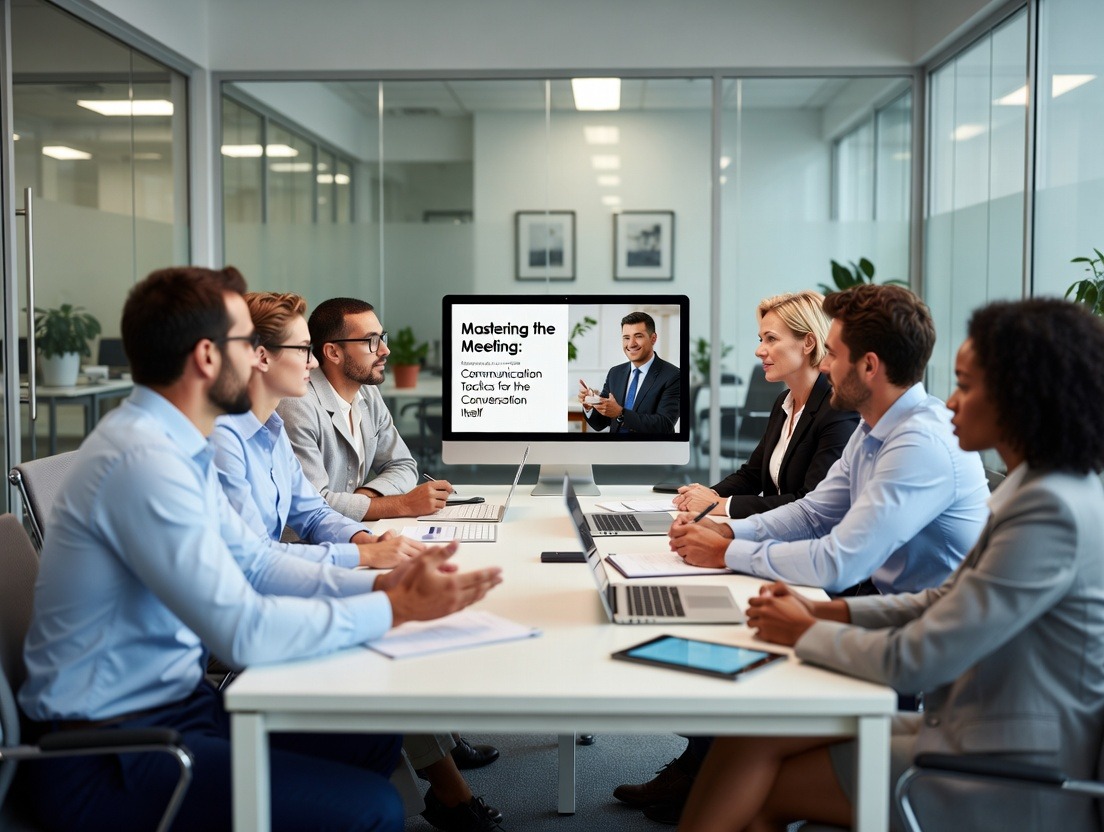
Mastering the Meeting: Communication Tactics for the Conversation Itself
The meeting arrives. This is the moment where preparation meets presence. How you communicate in this room can define the entire experience. Here are key tactics to ensure you are heard, remain composed, and steer the dialogue productively.
1. The Opening Gambit: Set the Tone Don't wait for your manager to start. Begin with a positive, collaborative statement. Try: "Thank you for taking the time to discuss my work this past cycle. I've been looking forward to this as a chance to review the progress on my goals and align on the priorities for the next quarter." This immediately establishes the "strategic dialogue" frame.
2. Active & Reflective Listening: The Power of the Pause When receiving feedback, especially constructive criticism, your primary job is to listen to understand, not to reply. Fight the urge to interrupt or defend.
Use non-verbal cues: Nod, maintain soft eye contact.
Pause before responding. A 2-3 second silence feels long but conveys thoughtfulness.
Practice reflective listening: "So, what I'm hearing is that you'd like to see me take more initiative in client meetings by speaking up earlier. Is that accurate?" This ensures understanding, shows respect, and buys you processing time.
3. Manage Emotions with Real-Time Physiology Hacks Feel your heart racing or palms sweating? Use subtle, in-the-moment techniques:
Grounding: Press your feet firmly into the floor. Feel the sensation of gravity. This connects you to the present.
Covert Breathing: Take a slow, deep breath while your manager is speaking. Focus on extending the exhale, which directly calms the nervous system.
The Water Bottle Trick: Having a drink of water gives you a natural pause to collect your thoughts.
4. Responding to Criticism: The "Acknowledge, Align, Advance" Method This three-part script transforms defensive reactions into professional dialogue:
Acknowledge: Validate the feedback without agreeing or disagreeing. "Thank you for sharing that perspective. I appreciate you flagging it."
Align: Show you're on the same team with the goals. "I completely agree that [the underlying goal, e.g., project timeliness] is critical."
Advance: Pivot to solutions and the future. "Moving forward, my plan is to [specific action]. Would that address the concern effectively?"
5. Champion Your Achievements with Confidence When discussing your wins, use strong, affirmative language. Instead of "I tried to help with the project," say "I led the data analysis phase, which identified the key bottleneck." Use the evidence from your preparation. Weave in the positive feedback you collected: "I was also gratified to hear from the design team that the templates I created streamlined their workflow."
6. Drive the Agenda for Your Growth This is your chance. Bring up your prepared goals and development interests. Ask strategic questions: "Based on the company's direction, what skills should I be building?" or "What opportunities exist for someone at my level to have more impact in X area?"
By combining these communication tactics, you transform the meeting from a monologue delivered to you into a balanced, adult conversation with you. You demonstrate emotional intelligence, professionalism, and leadership—qualities that are often more impactful than the content of any single feedback point.
The Science of Calm: Leveraging Biomarkers and Data for Self-Regulation
Beyond mindset and tactics lies a powerful, objective layer of self-knowledge: your own physiology. Performance anxiety manifests in measurable ways—elevated heart rate, decreased heart rate variability, disturbed sleep. The emerging field of biowearables, specifically advanced wellness smart rings, allows you to move from feeling stressed to understanding and managing your stress load with precision.
Key Biomarkers of Stress and Readiness:
Heart Rate Variability (HRV): This is the holy grail of resilience metrics. HRV measures the subtle variations in time between your heartbeats. A higher, more variable HRV indicates a flexible, resilient nervous system that can adapt to stress and recover efficiently. A low, stagnant HRV suggests a system stuck in "fight-or-flight" (sympathetic) overdrive. Monitoring your HRV trend shows your body's true capacity to handle stressors like a high-pressure review period.
Resting Heart Rate (RHR): Your heart rate at complete rest is a barometer of overall cardiovascular fitness and stress. A chronically elevated RHR can be a sign of sustained physiological stress.
Sleep Architecture: It's not just about hours in bed. The balance of deep sleep (physical restoration), REM sleep (emotional and memory processing), and light sleep is crucial. Review anxiety often sabotages deep sleep, leaving you physically and mentally un-restored.
Body Stress & Readiness Scores: Sophisticated algorithms synthesize data from multiple sensors (temperature, movement, heart rate) to estimate your real-time physiological stress load and provide a daily "Readiness" score. This is your personal green, yellow, or red light for the day's demands.
How to Use This Data Proactively:
Establish Your Baselines: During a low-stress period, observe your normal ranges for HRV, RHR, and sleep. This is your "calm baseline."
Identify Your Stress Signature: As review season approaches, watch for deviations. Does your HRV dip 10%? Does your sleep become fragmented? Does your "body stress" metric stay elevated into the evening? This is your unique physiological signature of anxiety.
Deploy Targeted Interventions: When you see your data trending toward stress, you don't have to guess what to do. You can deploy your most effective recovery tools:
If sleep is poor: Enforce a strict digital sunset, use a cooling bedroom, or try a guided sleep meditation.
If HRV is low: Prioritize a 20-minute walk in nature, a yoga session, or 10 minutes of breathwork instead of an intense workout.
If daytime stress is high: Schedule deliberate "stress-buffer" breaks—five minutes of diaphragmatic breathing between tasks.
This is the core of the Oxyzen philosophy: empowering you with objective, personalized data to make informed decisions about your well-being. Instead of pushing through burnout, you learn to intelligently navigate your energy and resilience. By understanding the science of your own calm, you gain a profound sense of agency over your performance state. To learn about the specific technology that enables these insights, you can discover how Oxyzen works on our main site.
The Post-Review Processing: How to Debrief Without Spiraling
The meeting is over. You walk out, and a wave of relief—or perhaps confusion, or lingering anxiety—washes over you. This post-review period is critically vulnerable. Without a deliberate process, the mind can ruminate, fixating on a single phrase and spinning into negative narratives. A structured debrief is essential to cement learnings, manage emotions, and move forward productively.
Step 1: The Immediate Emotional Download (The 24-Hour Rule) Give yourself permission to feel whatever you feel—relief, disappointment, pride, frustration—without judgment. But, implement a strict 24-hour no-action rule. Do not fire off defensive emails, do not make dramatic career decisions, and do not rehash the conversation excessively with colleagues. Your emotional brain is still in the driver's seat. Write down your raw thoughts and feelings in a private journal to get them out of your head.
Step 2: The Objective Analysis (After 24 Hours) Return to your notes with a cooler head. Create two columns: Facts and Interpretations/Feelings.
Facts: What was explicitly said? What were the agreed-upon ratings or goals? What specific feedback points were listed?
Interpretations: What did I make of those facts? ("She said I need to speak up more" = Fact. "She thinks I'm passive and not leadership material" = Interpretation.)
This exercise powerfully separates the objective event from your subjective story, often revealing that your anxiety built a narrative far more extreme than the reality.
Step 3: Extract the Signal from the Noise Not all feedback is created equal. Analyze it strategically:
Identify Themes: Is there one core area (e.g., communication, strategic thinking) that emerged?
Consider the Source: Evaluate the feedback against your own self-awareness and the informal feedback you gathered. Does it align? Is it an outlier?
Prioritize Actionable Items: Discard vague, unactionable criticism ("be more of a leader"). Focus on specific, behavioral feedback ("take the lead on the next client proposal draft").
Step 4: Craft Your Official Response & Plan This is a crucial, often overlooked step of professional closure. Within a few days, send a concise, professional thank-you email to your manager. This email should:
Thank them for their time and feedback.
Briefly confirm your understanding of 1-2 key takeaways.
State your commitment to acting on 1-2 specific, high-priority items.
Attach or mention your draft goals for the next period, inviting their input.
This email does three things: it demonstrates maturity and professionalism, it ensures alignment, and it proactively shifts the focus from past evaluation to future action. It puts you back in the driver's seat.
Step 5: Schedule a "Future-Focus" Follow-Up If significant development areas were discussed, don't let them languish for a year. Propose a casual 30-minute check-in in 6-8 weeks to discuss your progress on those specific actions. This shows immense initiative, creates accountability, and transforms a point of criticism into a visible demonstration of your growth mindset.
Building a Culture of Continuous Feedback (For Individuals and Managers)
While this guide focuses on managing your personal anxiety, a significant part of the stress stems from the traditional, high-stakes, once-a-year "event" model of reviews. The most powerful long-term strategy for eradicating review anxiety is to advocate for and participate in a culture of continuous feedback. This dismantles the "big scary judgment day" by making feedback a normal, frequent, and low-stakes part of your work rhythm.
How Individuals Can Proactively Cultivate This:
Seek Feedback Regularly: Don't wait. After a presentation, a project milestone, or a client call, ask a specific question: "What's one thing you thought went well with that report, and one thing I could tweak for even greater impact next time?" This normalizes receiving feedback and makes it feel like coaching, not criticism.
Give Feedback to Others: Become a generous source of specific, constructive feedback for your peers. Creating a reciprocal environment changes the cultural norm.
Schedule Informal "Pulse Checks": With your manager, suggest a brief, monthly 15-minute chat. Frame it as a "priority alignment and quick feedback" session. This prevents surprises at the annual review and builds a more fluid communication channel.
Use the "Feedback Frame": When giving or receiving feedback, use a simple structure: "I observed [specific behavior]. The impact I saw was [specific result]. I suggest/suggest we consider [actionable idea]." This depersonalizes and objectifies the conversation.
A Note for Managers (Even if You're Not One, Understanding This Reduces Anxiety): If you are in a leadership role, you have the power to single-handedly reduce your team's review anxiety. Implement these practices:
Decouple Feedback from Compensation: If possible, separate the performance conversation from the salary/bonus discussion. This allows the review to be purely developmental.
Make it a Dialogue, Not a Monologue: Use a 50/50 model. The employee should speak half the time, discussing their self-assessment, achievements, and goals.
Focus on Behaviors, Not Personality: Critique actions and results, not character. "The report contained three data errors" is better than "you were careless."
Practice Radical Candor: Be kind, be clear, be honest. Vague feedback is anxiety-inducing because the mind fills the void with worst-case scenarios.
By actively working to build this culture, you reclaim power over the process. The formal review then becomes a simple synthesis of dozens of smaller conversations you've already had, stripping it of its terror and making it a bureaucratic formality rather than a psychological trial. At Oxyzen, we believe in building a culture of holistic well-being, starting from within. You can learn more about our company's mission and values that drive this belief on our about-us page.
Long-Term Anxiety Management: Building Unshakeable Professional Resilience
Conquering performance review anxiety is not a one-cycle trick. It is the byproduct of cultivating deep, professional resilience that serves you in every high-pressure situation—client crises, tight deadlines, public speaking. This is the meta-skill that makes you antifragile, growing stronger from stressors. Here’s how to build it for the long haul.
1. Develop a "Process over Outcome" Mentality: Anchor your self-worth and daily focus on the quality of your efforts, your learning, and your adherence to your values, not solely on results or external praise. Did you prepare thoroughly, act with integrity, and learn from mistakes? If yes, you succeeded, regardless of the review outcome. This internal locus of control is impervious to managerial whims.
2. Cultivate a Robust Professional Identity Outside Your Job: When your entire sense of competence is tied to one role at one company, every review feels existential. Invest in other identities: be a mentor, a writer, a community volunteer, a skilled hobbyist. This portfolio of identity acts as a psychological safety net.
3. Practice "Stress Inoculation" in Low-Stakes Environments: Just as vaccines expose you to a weakened virus to build immunity, you can train your resilience by voluntarily facing manageable stressors. Take on a small project outside your comfort zone, volunteer to present at a team meeting, or engage in a debate on a topic you know well. Each success builds your "evidence bank" of handling pressure.
4. Foster a Trusted Support Network: Have 2-3 people—inside and outside work—with whom you can process professional challenges authentically. They provide perspective, reality-checks, and encouragement. This breaks the isolation that amplifies anxiety.
5. Integrate Mind-Body Practices as Non-Negotiable Maintenance: This is where data from a tool like a wellness smart ring becomes transformative for long-term resilience. Don't just use it during review season. Use it to:
Identify your personal recovery triggers: Does a 20-minute meditation spike your HRV? Does a weekend in nature normalize your sleep?
Prevent burnout: By tracking long-term trends, you can see chronic stress accumulation before it leads to exhaustion or illness, allowing for proactive intervention.
Optimize your performance peaks: Learn how to time your most demanding cognitive work for when your "readiness" data shows you are physiologically primed for focus and creativity.
Building this resilience is a lifelong practice, but it pays dividends far beyond a calm review season. It makes you a more adaptable, confident, and effective professional in an unpredictable world. For those interested in the journey of creating technology that supports this very mission, the founding vision and challenges are detailed in our company's story.
Real Stories: How Data and Mindset Transformed Review Experiences
Theory and strategy come alive through human experience. Here are anonymized composites of real individuals who shifted their relationship with performance reviews from dread to opportunity, often by leveraging a new understanding of their own data.
Alex, The Chronic Overthinker: Alex, a software engineer, would spend weeks in a spiral before reviews, mentally cataloging every bug and missed deadline. Despite strong performance, he was paralyzed by imposter syndrome. After starting to wear a wellness ring, he noticed a clear pattern: his resting heart rate would climb steadily for 10 days before his review, and his deep sleep vanished. The data was the objective proof he needed that "this is a physiological stress event, not a reflection of reality." He used this awareness to trigger pre-emptive calm practices. He scheduled daily breathwork sessions when his stress score rose, and he protected his sleep schedule fiercely. "Walking into the review, I could literally see on my app that my body was in a calmer state than the previous year. It gave me a tangible confidence. I focused on the conversation, not the catastrophe in my head. The feedback was positive, but the bigger win was feeling in control of my own reaction."
Sam, The Defensive High-Performer: Sam, a sales director, was successful but hated reviews. She perceived any feedback as a challenge to her expertise and would become argumentative, damaging her rapport with her manager. Her breakthrough came through reframing. She consciously decided to treat the next review as a "business intelligence gathering session." Her goal was to leave with one piece of actionable data to make her even better. She went in with questions, not rebuttals. When her manager suggested she could be more collaborative with marketing, instead of defending her territory, she said, "Help me understand that more. What would ideal collaboration look like to you?" The conversation shifted to problem-solving. Afterwards, she reflected, "It stopped being about me vs. them. It became us vs. a problem. I left energized, not enraged."
Jordan, The Burned-Out Manager: Jordan was on the other side—a manager stressed about delivering reviews to a large team. The pressure to be fair, motivating, and critical all at once was exhausting. They started using a readiness score to plan their review week. On days they had three consecutive review meetings, they saw their physiological stress skyrocket and recovery plummet. They changed their tactic: they never scheduled more than two reviews in a day, and they inserted a mandatory 30-minute walk outside between them. "It changed the quality of the conversations. I was more present, less rushed, and more empathetic because I wasn't already fried from the previous talk. My team noticed the difference, and the whole process became more human and less bureaucratic."
These stories illustrate that the principles of preparation, reframing, and physiological awareness are universally powerful. They transform the review from a passive experience into an active, manageable component of your career journey. For more such transformative experiences from individuals using data for well-being, a collection of user journeys is available on our testimonials page.
When Anxiety Becomes Overwhelming: Recognizing Signs and Seeking Support
While this guide provides robust strategies for managing common performance review stress, it is crucial to acknowledge when anxiety crosses a threshold from a manageable reaction to a sign of a deeper issue. Chronic workplace stress can be a gateway to generalized anxiety disorder, burnout, or depression. Your well-being is paramount.
Recognize the Red Flags: It may be time to seek professional support if your anxiety:
Is Disproportionate and Debilitating: It causes panic attacks, extreme insomnia, or makes you unable to function in daily tasks for an extended period.
Persists Long After the Event: Intense dread, rumination, or physical symptoms last for weeks or months after the review is over.
Leads to Avoidance Behaviors: You call in sick on review day, actively seek to cancel or postpone the meeting repeatedly, or consider leaving a job you otherwise enjoy just to escape the process.
Impairs Your Self-Worth: You experience intense shame, hopelessness, or feelings of worthlessness tied to your professional performance.
Manifests in Physical Harm: This includes drastic changes in appetite, reliance on substances to cope, or self-harm ideation.
Pathways to Professional Support:
Employee Assistance Program (EAP): Most companies offer a confidential EAP that provides short-term counseling sessions at no cost. This is an excellent, private first step.
Therapy/Counseling: A therapist, particularly one specializing in Cognitive Behavioral Therapy (CBT) or workplace stress, can provide tools to rewire deep-seated thought patterns and build coping mechanisms.
Career Coach: If the issue is specifically tied to career trajectory, communication skills, or navigating company politics, a certified career coach can provide strategic guidance.
Talk to Your Doctor: Rule out any underlying physiological conditions (like thyroid issues) that can mimic or exacerbate anxiety symptoms.
Seeking help is a sign of strength and self-awareness, not weakness. It is the ultimate act of taking control of your mental health and professional life. A holistic approach to wellness acknowledges that sometimes the best tool is a qualified human professional who can provide personalized support. For general questions on how wellness technology can complement a professional care plan, our FAQ section addresses common queries on this topic.
Fueling Your Focus: The Critical Role of Nutrition and Exercise in Cognitive Performance
Your ability to think clearly, manage emotions, and articulate your value isn't just a mental game—it's a biochemical one. In the weeks leading up to a performance review, what you eat and how you move directly fuel (or sabotage) the cognitive and emotional machinery you need to perform. This isn't about crash diets or extreme fitness; it's about strategic, evidence-based habits that stabilize your energy, sharpen your focus, and build physiological resilience against stress.
The Brain-Gut Connection: Eating for Mental Clarity and Calm
Your gut is often called your "second brain," and for good reason. The vagus nerve creates a direct communication highway between your gut and your brain, and the microbiome (the trillions of bacteria in your digestive system) produces a significant portion of your body's neurotransmitters, including about 90% of its serotonin—a key regulator of mood and anxiety.
The Stress-Eating Cycle and How to Break It: Under stress, we crave high-sugar, high-fat "comfort foods." This is biological: these foods can temporarily dampen the stress response. But the crash is brutal—leading to blood sugar spikes and plummets that cause brain fog, irritability, and even more anxiety. To break this cycle, focus on nutritional stability:
Prioritize Steady Blood Sugar: This is rule number one for sustained cognitive energy and emotional balance. Avoid skipping meals. Combine complex carbohydrates (like oats, quinoa, sweet potatoes) with quality protein (like eggs, chicken, lentils, Greek yogurt) and healthy fats (like avocado, nuts, olive oil) at every meal. This combination slows digestion, providing a steady drip of glucose to the brain.
Key Nutrients for Cognitive Function & Stress Modulation:
Omega-3 Fatty Acids (DHA & EPA): Found in fatty fish (salmon, mackerel, sardines), walnuts, and flaxseeds. These are critical for brain cell membrane health and have been shown to reduce inflammation and symptoms of anxiety.
Magnesium: Known as the "relaxation mineral," it's depleted by stress. Found in leafy greens, almonds, pumpkin seeds, and dark chocolate, it supports nerve function and helps regulate cortisol.
B Vitamins (especially B6, B9, B12): Essential for neurotransmitter synthesis (like serotonin and dopamine). Find them in eggs, legumes, spinach, and lean meats.
Antioxidants (from colorful fruits & vegetables): Stress creates oxidative damage. Berries, bell peppers, and dark leafy greens combat this, protecting brain cells.
Hydrate for Brain Function: Even mild dehydration (as little as 2%) can impair concentration, short-term memory, and mood. Your brain is about 75% water. Aim for consistent water intake throughout the day, not just when you're thirsty. Herbal teas like chamomile or peppermint can be excellent, non-caffeinated options.
Strategic Movement: Exercise as a Cognitive Power Tool
If you think of exercise as just for weight loss or physical health, you're missing its most powerful benefit for the professional: it is the single most effective, immediate, and free tool for managing anxiety and boosting cognitive performance.
How Exercise Combats Review Anxiety:
Neurochemical Reset: Physical activity increases endorphins (natural painkillers and mood elevators) and boosts levels of serotonin and norepinephrine, which moderate the brain's response to stress.
Cortisol Regulation: While intense exercise temporarily spikes cortisol, regular, moderate exercise helps improve the body's overall cortisol response system, making you more resilient to psychological stress.
Brain-Derived Neurotrophic Factor (BDNF): Exercise stimulates the production of BDNF, a protein that acts like fertilizer for your brain. It supports the growth of new neurons, enhances synaptic plasticity (your brain's ability to learn and adapt), and improves memory—key for recalling your accomplishments during a review.
Metabolic Clearance: It helps clear cortisol and adrenaline from your bloodstream after a stressful event, aiding in recovery.
Designing Your Anti-Anxiety Movement Protocol:
Consistency Over Intensity: A daily 30-minute brisk walk is far more effective for stress management than one punishing weekly gym session you dread.
Align Exercise with Your Stress Data: This is where a wellness tracker becomes a game-changer. Use your readiness score and HRV data to guide your movement.
High Readiness/High HRV: This is the day for more intense, cognitively engaging exercise like interval training, a challenging strength session, or a competitive sport. This leverages your body's capacity for stress to build greater resilience.
Low Readiness/Low HRV: Your body is signaling it's under recovery stress. Opt for genuine recovery movement: gentle yoga, a leisurely walk in nature, or stretching. This promotes parasympathetic ("rest and digest") activation without additional strain.
"Exercise Snacks" for Acute Stress: Feeling a wave of pre-meeting panic? Do 2 minutes of jumping jacks, take the stairs, or power-walk around the block. This can burn off the acute stress hormones flooding your system and provide immediate mental clarity.
Mind-Body Practices: Yoga, Tai Chi, and Qigong are uniquely powerful as they combine physical movement with breath awareness and mindfulness, directly training the body's relaxation response.
By treating nutrition and exercise as non-negotiable components of your professional preparation, you stop fighting your own biology and start partnering with it. You are not just preparing your talking points; you are biohacking your system to be calm, focused, and resilient on demand. This foundational work supports every other strategy, ensuring you have the raw mental and emotional capacity to execute them effectively. For more on integrating these habits with technology for seamless tracking, explore our blog for articles on building sustainable wellness routines.
Advanced Biohacking: Techniques for Peak Mental State and Emotional Control
Once you've mastered the fundamentals of sleep, nutrition, and movement, you can explore advanced techniques to deliberately engineer your peak mental and emotional state. "Biohacking," in this context, simply means using science and self-experimentation to optimize your biology for a specific purpose—in this case, performing with composure and clarity under evaluation pressure.
Cold Exposure for Stress Inoculation and Mood Elevation
Intentional, controlled exposure to cold is one of the most potent tools for building resilience. It works by applying an acute, manageable physical stressor, which trains your nervous system and your mind to stay calm and in control under duress—a perfect metaphor for a performance review.
The Science: Cold exposure (via cold showers, ice baths, or cold plunges) significantly increases norepinephrine production in the brain by up to 500%, leading to improved focus, alertness, and mood. It also elevates dopamine, creating a sustained sense of well-being. It teaches your autonomic nervous system to down-regulate the stress response more efficiently.
Practical Application: You don't need an ice bath. Start your shower warm, then turn it to cold for the final 30-60 seconds. Focus on steady, deep breathing while under the cold stream. The goal is not to suffer, but to practice maintaining calm, controlled breathing while your body signals an alarm. This mental discipline translates directly to staying calm when you receive unexpected feedback.
Breathwork as a Precision Tool
While deep breathing is a foundational practice, specific breathwork protocols can induce targeted states. Two are particularly useful for the review cycle:
Box Breathing (for In-the-Moment Calm): Inhale for 4 seconds, hold for 4, exhale for 4, hold for 4. Repeat for 5-10 cycles. This technique, used by Navy SEALs to remain calm in high-stakes situations, quickly synchronizes the heart and lungs, activating the parasympathetic nervous system. Use it in the waiting room before your review or to recover after a tense moment.
Physiological Sigh (for Rapid Anxiety Reduction): This is the fastest known way to calm yourself. Take a double inhale through the nose (a full inhale, then a second, shorter "sip" of air to fully expand the lungs), followed by a long, slow exhale through the mouth. Do this just 2-3 times. It rapidly offloads carbon dioxide and improves oxygen exchange, signaling safety to the brain.
Strategic Caffeine and Nootropic Use
While substances should be approached with care, intelligent use can support performance.
Caffeine Timing: Caffeine is an adenosine blocker, enhancing alertness. However, it also increases cortisol. Never consume caffeine on an empty stomach, especially when anxious, as it can amplify jitters. Have it with food, and ideally, delay your first dose by 90 minutes after waking to avoid an afternoon crash. Cease all caffeine at least 8-10 hours before your target bedtime to protect sleep architecture.
Adaptogens: These are herbs that help the body "adapt" to stress by modulating the HPA axis (your body's stress-response system). Consider:
Ashwagandha: Shown in studies to significantly reduce perceived stress and cortisol levels.
Rhodiola Rosea: Known to combat fatigue and improve symptoms of burnout.
L-Theanine (often paired with caffeine): An amino acid found in green tea that promotes relaxed alertness without drowsiness, smoothing out the edges of caffeine's effects.
Crucial Note: Always consult with a healthcare professional before starting any new supplement regimen. Biohacking is about personalization, and what works for one person may not work for another. The most powerful biohack is tracking your own response. Use a device like the Oxyzen ring to monitor: Does your new supplement protocol improve your HRV trend and sleep score over 2-3 weeks? Or does it cause restlessness? Let objective data, not just subjective feeling, guide your choices.
Digital Fasting and Cognitive Hygiene
Your environment hacks your biology. The constant ping of notifications and the endless scroll of social media create cognitive fragmentation and low-grade stress, eroding your capacity for deep focus—the very skill needed to prepare for and engage in a meaningful review.
Implement "Focus Blocks": Use app blockers or simply turn off notifications for 90-120 minute blocks to engage in deep work on your review preparation.
Pre-Sleep Digital Sunset: The blue light from screens suppresses melatonin, disrupting sleep. Implement a strict 60-minute screen-free buffer before bed. This is non-negotiable for review-season sleep quality.
Consume Uplifting Content: In the days before your review, be ruthless about your media diet. Avoid doom-scrolling, stressful news, or professional content that triggers comparison. Instead, listen to inspiring podcasts, read something unrelated to work, or watch something that makes you laugh.
By integrating these advanced techniques, you move from being a passive participant in your biology to an active, skilled conductor of your own nervous system. You develop a toolkit of levers you can pull to induce calm, focus, and resilience, ensuring you walk into your review not just prepared, but optimally primed.
Crafting Your Personal Post-Review Recovery Protocol
The review meeting concludes. You've exchanged pleasantries and returned to your desk. What happens next is just as critical as the preparation that came before. Without a deliberate recovery protocol, the residual adrenaline, mental fatigue, and emotional vulnerability can lead to a post-event crash, rumination, or burnout. A structured recovery plan helps you metabolize the experience, extract value, and return to equilibrium.
Phase 1: The Immediate Aftermath (First 24 Hours)
This phase is about emotional and physiological decompression.
The "Brain Dump" Journaling Session: Within an hour of the meeting, find a quiet space. Open a notebook or document and do a stream-of-consciousness download for 10-15 minutes. Answer: What was said? How do I feel? What surprised me? What am I relieved about? What's nagging at me? Do not edit or judge. This gets the swirling thoughts out of your head and onto the page, freeing up cognitive bandwidth.
Physiological De-escalation: Your body is still in a heightened state. Actively signal safety.
Move: Take a 10-15 minute walk outside, ideally in a green space. Don't ruminate; instead, practice sensory awareness—notice the air, the sounds, the sights. This helps clear stress hormones from your bloodstream.
Nourish: Eat a balanced meal with quality protein and complex carbs. Avoid the temptation to "treat" or "punish" yourself with junk food. Your nervous system needs stable fuel to recalibrate.
Hydrate: Drink water. Stress and talking are dehydrating.
The Digital Disconnect: Give yourself permission to disconnect from work email and messaging for the rest of the day if possible. If you must be available, set a strict boundary (e.g., "I will check once at 4 PM"). You need mental space.
Phase 2: Strategic Integration (Days 2-7)
Now, with cooler emotions, you can strategically integrate the feedback and plan your path forward.
Formalize Your Notes and Action Plan: Return to your "brain dump." Create a clean, structured document with three sections:
Key Takeaways: A bulleted list of the 3-5 most important points from the review (both positive and developmental).
Agreed-Upon Goals: Copy the formal goals set for the next period.
My Personal Action Plan: For each developmental point or goal, list 1-2 concrete, immediate actions you will take. (e.g., For feedback on "public speaking": Action 1: Enroll in a Toastmasters intro session next month. Action 2: Volunteer to present the weekly team update for the next quarter).
Schedule a Follow-Up (If Needed): If any feedback was unclear or requires more discussion, schedule a brief, focused 15-minute check-in with your manager in the next week to clarify. Frame it as, "I've been reflecting on our conversation, and I want to make sure I'm clear on X so I can execute effectively."
Conduct a "Lessons Learned" Review: Look at your entire process—from your physical preparation to the meeting itself. Ask yourself:
What did I do that worked well? (e.g., "My accomplishment log was a lifesaver.")
What would I do differently next time? (e.g., "I need to practice pausing before responding.")
How did my wellness data correlate with my experience? (e.g., "My sleep was deep the night before, and I felt noticeably calmer.") This turns the entire cycle into a personal growth experiment, not just a corporate procedure.
Phase 3: Energetic and Social Recovery
Recovery isn't just about tasks; it's about replenishing your emotional and social energy.
Engage in a Restorative Activity: Do something purely for joy and flow—play an instrument, cook a elaborate meal, hike a favorite trail, read fiction. This reminds your brain of your identity beyond your job title.
Connect Socially: Spend quality time with friends or family who support you unconditionally. Engage in light, fun conversation. Avoid rehashing the review in detail; let the connection itself be the medicine.
Monitor Your Recovery Data: Pay close attention to your wellness metrics in the days following the review. It's common to see a dip in readiness or sleep as the body releases the accumulated tension. Honor this. Don't jump into a major new project immediately. Use the data to give yourself permission to prioritize recovery. Seeing a tangible "recovery needed" signal can help you avoid pushing into burnout. This kind of data-informed self-care is central to the philosophy at Oxyzen, where we believe recovery is an active, measurable component of performance.
The Role of Ritual: Creating Closure
Finally, create a simple ritual to mark closure. This could be as simple as organizing your desk, archiving your review prep documents into a "Past Reviews" folder, or writing down one thing you're proud of from the process on a sticky note and displaying it. This symbolic act tells your brain, "This chapter is complete. We have learned, we have planned, and now we move forward."
A deliberate recovery protocol ensures that the energy expended in the review process is converted into growth and momentum, rather than leaving you drained and anxious for the next cycle. It completes the loop, transforming a potentially traumatic event into a mastered professional competency.
The Future of Work: Integrating Well-Being and Performance Seamlessly
The intense stress surrounding traditional performance reviews is a symptom of a deeper disconnect in the modern workplace—the artificial separation of "performance" from "human being." We are expected to be outputs and outcomes, while the complex, biological, emotional systems that generate those results are often ignored or seen as a liability. But a new paradigm is emerging, driven by data, neuroscience, and a demand for more humane work cultures. In this future, managing performance review anxiety won't require a 20,000-word guide because the very structures that create the anxiety will have evolved.
The Shift from Episodic Judgement to Continuous Flow
The future belongs to organizations that dismantle the annual "event" in favor of integrated, real-time feedback systems. Imagine:
Regular, lightweight check-ins powered by simple apps that facilitate ongoing goal tracking and feedback exchange.
Project-based reviews that occur at natural milestones, providing immediate, relevant feedback tied to specific work.
Feedback as a embedded feature of collaboration tools, allowing for micro-affirmations and course-corrections in the flow of work.
In this model, there is no "big surprise" because you are constantly aware of your standing and trajectory. Anxiety diminishes because the stakes of any single conversation are lowered, and the focus remains on near-term development.
The Rise of the Quantified Self at Work
Wellness technology will transition from a personal consumer gadget to an integrated professional development tool, with appropriate privacy safeguards and user control. We will move beyond guessing at our capacity to knowing it.
Teams might share aggregated, anonymized readiness data to help managers plan workloads and deadline intensity, preventing collective burnout.
Individuals could use their personal data to make a case for flexible scheduling ("My cognitive data shows I'm most effective drafting reports in the morning, can I adjust my core hours?").
Training and development could be personalized based not just on skills gaps, but on an individual's learning style and optimal timing, informed by their cognitive rhythm data.
This isn't about corporate surveillance; it's about empowering individuals with self-knowledge and creating a culture where well-being is seen as the foundation of sustainable performance, not its opposite. The mission of companies pioneering this space, like Oxyzen, is to put this power and insight directly into the hands of individuals, helping them advocate for their own best working conditions.
Redefining Leadership and Psychological Safety
The managers of the future will be trained not just in business metrics, but in fundamentals of neuroscience, motivational psychology, and creating psychological safety—the belief that one can speak up, take risks, and be vulnerable without fear of punishment. In a psychologically safe team, a performance conversation feels like a coaching session with a trusted advisor. Leaders will be evaluated on their ability to develop people, not just extract output from them.
Your Role in Shaping This Future
You don't have to wait for your company to catch up. You can be a pioneer of this integrated approach today:
Model the Behavior: Use your own data to manage your energy and performance. Speak openly about taking a walk to clear your head or protecting your sleep for a big presentation. This destigmatizes well-being practices.
Advocate for Modern Practices: Suggest piloting more frequent feedback cycles or incorporating well-being questions into team meetings ("How are we managing our collective workload this week?").
Choose Employers Wisely: As you progress in your career, prioritize organizations that demonstrate a commitment to holistic employee well-being and modern management practices. Look for signs of this in their values, policies, and the questions they ask in interviews.
The culmination of managing performance review anxiety is not just about surviving a single meeting. It is about participating in the creation of a work world where such profound anxiety is obsolete—a world where feedback is helpful, not terrifying; where your humanity is seen as an asset, not a hindrance; and where you have the tools and the cultural permission to perform at your best, sustainably. This journey begins with the steps outlined in this guide, and it continues with each of us advocating for a smarter, kinder, and more human-centered future of work. To learn more about the technology and philosophy that supports this future, we invite you to explore the full vision and journey behind Oxyzen on our story page.
From Surviving to Thriving: Building a Career Immune to Review Anxiety
Having navigated the immediate cycle—from preparation through the meeting and into recovery—the ultimate goal is to architect a career so resilient that the performance review becomes a mere formality, not a source of dread. This is about building professional anti-fragility, a system that gains from stressors. It requires shifting your identity from "employee" to "CEO of Your Career, Inc." This mindset empowers you to see every evaluation, every piece of feedback, and every metric as market data for your one-person enterprise.
The Portfolio Career Mindset
The most significant psychological shift is to stop viewing yourself solely through the lens of your current job title and company. Instead, cultivate a "portfolio" of professional assets. This portfolio includes:
Your Core Role & Achievements: The primary output of your current "client" (your employer).
Your Transferable Skills: Abilities that hold value across industries (e.g., project management, data analysis, persuasive communication).
Your Network & Relationships: The quality and depth of your professional connections, both inside and outside your company.
Your Personal Brand & Thought Leadership: Your visible expertise, perhaps through a blog, speaking engagements, or a thoughtful presence on professional platforms like LinkedIn.
Your Side Projects & Learning: Initiatives that demonstrate curiosity, initiative, and skill development beyond your job requirements.
When your sense of worth and security is distributed across this portfolio, a single performance review at one "client" loses its existential weight. A less-than-stellar review becomes a data point about one business relationship, not a verdict on your entire enterprise. You maintain agency because you are constantly investing in and managing the other assets in your portfolio.
Implementing a Quarterly "Career CEO" Review
To operationalize this, institute a personal, quarterly review that you conduct for yourself. This is your strategic board meeting. Block 2 hours every quarter to assess:
Financials: Are you on track with your income and savings goals? Does your compensation reflect your market value?
Business Development (Skills): What new skills have you acquired? What certifications or learning have you completed? What's on your learning roadmap for next quarter?
Client Satisfaction (Current Role): Based on all feedback, formal and informal, how is your main "client" relationship? What's working? What needs adjustment?
Marketing & Brand (Visibility): How have you increased your professional visibility? Have you connected with 3-5 new people in your field? Have you shared your expertise publicly?
Product Development (Well-being): How is the "infrastructure" of your business—your health, energy, and resilience? Are you managing stress effectively? Are you recovering adequately?
This ritual makes the company's annual review just one of many inputs into your own strategic planning. It puts you in the driver's seat, transforming you from a subject of evaluation to the primary evaluator of your own trajectory.
The Power of Strategic Network Building
Your network is your career safety net and your most valuable source of objective feedback and opportunity. A robust network outside your immediate team provides perspective that inoculates you against the myopia and politics of a single workplace.
Build Advocates, Not Just Contacts: Focus on building deep, reciprocal relationships with 5-10 key people in your industry. These are individuals who understand your work and character and would vouch for you without hesitation.
Seek "360-Degree" Feedback Externally: Regularly have coffee or virtual chats with mentors, former colleagues, and peers in other companies. Ask them for their candid observations on the market, your skills, and your trajectory. This external viewpoint is often more valuable and less biased than internal feedback.
Use Your Network to Reality-Check Review Feedback: If you receive confusing or particularly harsh feedback, discussing it (discreetly and professionally) with a trusted external mentor can provide crucial context. They can help you discern if it's a valid growth area, a company-specific cultural mismatch, or an isolated managerial opinion.
When you know you are valued and have options in the broader market, the power dynamic inherent in a review subtly shifts. You engage from a place of choice, not fear.
The Manager's Guide: Reducing Team Anxiety and Fostering Growth
For those in leadership roles, you hold immense power to either amplify or eliminate the anxiety your team feels around reviews. By shifting your approach, you can transform reviews from a source of dread into a powerful engine for engagement, development, and retention. This section provides actionable strategies for managers who want to lead with empathy and effectiveness.
Reframing Your Role: From Judge to Coach
Your mindset as a manager sets the tone. Enter every review with the primary goal of unlocking the individual's potential for the benefit of the team and the company. Your role is not to pass judgment on the past, but to diagnose and plan for a more successful future. This is a coaching, not a courtroom, dynamic.
The Pre-Review Foundation: Eliminating Surprises
The cardinal rule of effective review management is: No surprises. If feedback in the formal review is the first time an employee is hearing about an issue, you have failed as a manager. Performance discussions must be ongoing.
Implement Regular, Informal Check-ins: Schedule brief, weekly or bi-weekly 1:1s that are sacred and agenda-driven by the employee. Use these to provide real-time, bite-sized feedback.
Practice "In-the-Moment" Feedback: Deliver praise and constructive observations close to the event. This makes it relevant, actionable, and far less charged than an accumulation of unspoken critiques delivered months later.
Preview Major Points: A week before the formal review, share a brief, written preview of the 2-3 main topics you’d like to discuss. This gives the employee time to prepare mentally and gather their thoughts, reducing defensive reactions and creating space for a more mature dialogue.
Structuring the Conversation for Psychological Safety
The structure of the meeting itself can induce calm or anxiety. Adopt a balanced, collaborative framework.
The 50/50 Rule: Aim for the employee to speak at least 50% of the time. Start with open-ended questions: "How do you feel this past cycle went?" "What are you most proud of?" "What was most challenging?" Listen actively.
The "Situation-Behavior-Impact" (SBI) Model for Feedback: This model depersonalizes feedback and makes it objective.
Situation: "During the Q3 client presentation last Tuesday..."
Behavior: "...I noticed you presented the data from slides 5-8 without connecting it to the client's stated goals..."
Impact: "...The impact was that the client team seemed disengaged, and we lost an opportunity to demonstrate strategic alignment." This is far more effective and less inflammatory than "You're not a strategic thinker."
Separate Compensation Discussions: If at all possible, decouple the performance/development conversation from the compensation announcement. Even scheduling them a week apart allows the employee to fully absorb developmental feedback without the noise of financial implications.
Focus on the Future: Dedicate at least half the conversation to forward-looking planning. Co-create goals. Ask: "What support do you need from me to achieve this?" "How can I best help you develop in this area?"
Post-Review: The Follow-Through That Builds Trust
The manager's job isn't done when the form is submitted. Your actions after the review determine its lasting impact.
Document and Share Notes: Send a concise summary of the discussion, agreed-upon goals, and your commitments as a manager. This ensures alignment and provides a reference point.
Provide Resources: If a development area was identified, proactively suggest or provide resources—a course, a mentorship introduction, a new project opportunity.
Check In on Progress: Refer back to the goals in subsequent 1:1s. This shows you are invested in their growth, not just in evaluating them.
By managing reviews in this way, you build profound trust. Your team will see the process as fair, supportive, and geared toward their success. This not only reduces their anxiety but also directly boosts their performance, loyalty, and your effectiveness as a leader. For managers interested in using objective data to better support team well-being—a key component of modern leadership—our blog explores the intersection of leadership and wellness technology.
Navigating Specific High-Stress Review Scenarios
Even with the best preparation and mindset, certain review scenarios are inherently more challenging. Having a pre-rehearsed strategy for these high-stakes situations can prevent you from being blindsided and help you maintain professionalism under pressure.
Scenario 1: The "Unexpectedly Negative" Review
You prepared for a balanced conversation, but the feedback is overwhelmingly critical, or a major issue you were unaware of is presented.
Your Immediate Response: Do not react defensively. Take a deep breath and deploy your active listening skills. Your goal in the moment is to understand, not to rebut. Use phrases like, "This is important for me to understand. Can you share a specific example?" or "Help me see this from your perspective."
Buy Time: If you are too shocked to respond coherently, it is perfectly acceptable to say, "Thank you for this feedback. I need some time to process it thoughtfully. Can we schedule a brief follow-up in 24-48 hours to discuss my plan forward?" This demonstrates maturity, not avoidance.
Post-Meeting Analysis: Use your "Facts vs. Interpretations" framework. Is the feedback truly about performance, or could it be tied to misaligned expectations, poor communication, or external factors? Consult your external network for perspective.
The Follow-Up: In your scheduled follow-up, present a calm, professional demeanor. Acknowledge the feedback, present your understanding of the root causes, and—critically—present a concise, written plan for improvement. This shifts the narrative from "you failed" to "here is how I will succeed."
Scenario 2: The "Vague and Unactionable" Review
The feedback is filled with platitudes ("be more of a leader," "increase your visibility") but lacks concrete examples or actionable steps.
Your Strategy: Gently Guide to Specifics. Your role here is to interview your manager to extract usable data.
"When you say 'increase visibility,' what would that look like in action in our team? Would it be presenting more in leadership meetings, or writing more project summaries?"
"Can you recall a recent situation where I could have demonstrated more leadership? I want to ensure I understand the desired behavior."
"To make sure I'm targeting the right thing, could we define 1-2 measurable outcomes for 'being more strategic' next quarter?"
Document the Clarification: In your follow-up email, summarize the clarified expectations. "As per our discussion, we agreed that increasing my visibility will involve me leading the monthly project demo for the next two quarters."
Scenario 3: The "Biased or Unfair" Review
You have clear evidence that the feedback is inaccurate, contradicts documented praise, or feels personally motivated.
Stay Fact-Based and Unemotional: This is the most difficult scenario, requiring extreme discipline. Do not accuse. Do not bring emotion into it.
Present Contradictory Evidence Calmly: "I appreciate this feedback. To help me understand fully, I'd like to provide some additional context. On [Date], I received written praise from [Client/Colleague] for [Specific Achievement], which seems at odds with the point about [the criticism]. Can we explore this discrepancy?"
Escalate Professionally (If Warranted): If the bias is severe and the manager is unresponsive, you may need to involve HR or a skip-level manager. Frame it not as a complaint, but as a search for clarity and alignment. "I'm committed to my development, but I'm receiving conflicting signals about my performance. I would appreciate help in getting a clear, consistent set of expectations to succeed in my role." Always have your documented evidence (emails, project outcomes, 360 feedback) organized and ready.
Scenario 4: The "Promotion or Raise Denial" Review
You were expecting a promotion or significant raise, and the review results in a denial or a much smaller increase than anticipated.
Manage Initial Disappointment: Use your breathwork. Acknowledge the disappointment internally but maintain a professional facade.
Seek the "Why" and the "Path": Your primary question shifts from "Why not?" to "What exactly do I need to demonstrate or achieve to be ready for this in the next cycle?"
"Thank you for the transparency. To ensure I'm perfectly aligned, what are the specific, measurable gaps between my current performance and the requirements of the [desired role/compensation level]?"
"Can we co-create a 6-month plan with clear milestones that, if hit, would make me a unequivocal candidate?"
Evaluate Your Options: With this clarified path in hand, you now have a business decision to make. Is the investment of effort worth the reward at this company? Does the newly defined path seem fair and achievable? This data point is critical input for your "Career CEO" quarterly review and may inform your decision to invest further or to activate your external network.
Navigating these scenarios with grace and strategy turns potential career setbacks into demonstrations of your highest professional caliber. It shows you can handle adversity with emotional intelligence, a focus on solutions, and unwavering self-advocacy.
The Role of Technology and Tools in a Modern Review Process
While mindset and strategy are paramount, the right tools can dramatically reduce the administrative and emotional burden of the review cycle, for both employees and managers. Leveraging technology effectively can create clarity, transparency, and a sense of control.
For the Employee: Personal Performance Operating Systems
Your "Brag File" shouldn't be a chaotic Notes app doc. Use tools designed for personal knowledge management and goal tracking.
Digital Accomplishment Trackers: Apps like Notion, Evernote, or even a dedicated section in your project management tool (like Asana or ClickUp) allow you to create a templated log. You can easily tag entries by skill, project, or company value, making year-end synthesis a matter of filtering and sorting, not frantic remembering.
Goal & Habit Tracking Apps: Tools like Strides, Habitica, or even the goals feature in your wellness ring app allow you to track progress on your personal development goals outside of official company systems. Seeing visual progress bars on skills you're building is a powerful motivator and confidence-builder.
Feedback Aggregators: Some platforms allow you to privately request and store 360-degree feedback from colleagues on an ongoing basis, giving you a rich, multi-source view of your strengths and areas for development.
For the Manager and Organization: Modern Performance Management Platforms
Forward-thinking companies are moving away from clunky, annual HR systems to agile, integrated platforms. Look for features that promote continuous feedback:
Integrated Goal Setting (OKRs, etc.): Tools that allow company, team, and individual goals to be visible and aligned, so employees always see how their work contributes to the bigger picture.
Real-Time Feedback and Recognition: Platforms with features for giving and receiving peer-to-peer praise and constructive feedback in the flow of work, making it frequent and low-stakes.
Pulse Surveys and Engagement Tools: Regular, anonymous short surveys that give managers data on team morale and stress levels, allowing for proactive intervention before issues fester.
Bias-Checking Features: Some advanced tools use AI to analyze review language for unconscious bias (e.g., gendered language, vague phrasing), prompting managers to provide more objective, actionable feedback.
The Central Role of Well-being Technology
This is where a holistic approach truly converges. Your wellness smart ring is not just a stress tracker; it is the integrating dashboard for your personal performance operating system.
Correlate Performance with Physiology: Did your most productive, creative week correlate with high HRV and strong sleep? Did the week you made an uncharacteristic error follow three nights of poor recovery? This data helps you identify the personal habits that underpin your professional best.
Use Data for Self-Advocacy: Objective data can help you have more effective conversations. "I've noticed my focus is optimal in the morning. Can we schedule our brainstorming sessions before noon?" is a more powerful, evidence-based request.
Manage Energy, Not Just Time: These tools help you move beyond time management to the more sophisticated practice of energy management. They tell you when to deploy your most demanding cognitive work and when to schedule administrative tasks, optimizing your output and protecting your resilience.
The intelligent integration of these technologies creates a seamless loop: You set goals, you work towards them, you track your output and the well-being inputs that enable it, you receive feedback, and you adjust. It turns the chaotic, emotional experience of a performance review into a calibrated, data-informed professional development cycle. To see how one company has built its entire mission around this integrative philosophy, you can learn more about Oxyzen's approach on our main site.
Creating a Personal Mantra and Visualization for Success
Beyond tactics, data, and strategy lies the power of the mind. Elite athletes and performers have long used mental rehearsal and anchoring phrases to access peak states under pressure. You can use these same techniques to program your subconscious for a calm, confident review experience.
Crafting Your Personal Performance Mantra
A mantra is a short, positive, present-tense statement that encapsulates how you want to feel and who you need to be in the review. It should be personal, powerful, and easy to recall.
Examples:
"I am calm, prepared, and worthy of this conversation."
"I listen with curiosity and respond with clarity."
"This is a dialogue for my growth. I am an equal participant."
"My value is not defined by one conversation. I am capable and resilient."
How to Use It:
Repeat it Daily: For the two weeks leading up to your review, repeat your mantra during your morning routine, while commuting, or during meditation.
Anchor It with Breath: Pair it with deep breathing. Inhale deeply, and on the exhale, silently or softly say your mantra. This creates a neuro-association between the calm of the breath and the message.
Deploy it In-the-Moment: If you feel anxiety rising in the meeting itself, take a discreet sip of water, and in that moment, repeat your mantra internally. It acts as a cognitive reset button.
The Practice of Mental Visualization
Visualization, or mental rehearsal, is the process of vividly imagining yourself successfully navigating the review from start to finish. This isn't mere "positive thinking"; it's a neural training exercise. The brain's motor cortex is activated similarly when you vividly imagine an action and when you physically perform it. You are laying down neural pathways for success.
The Guided Visualization Script (Do this for 5-10 minutes daily):
Find a quiet space, close your eyes, and take several deep breaths.
Visualize the Night Before: See yourself getting a restful night's sleep, waking up refreshed. See your readiness score high on your app.
Visualize the Morning Of: See yourself having a nourishing breakfast, reviewing your notes calmly, feeling prepared.
Visualize the Walk to the Meeting: See yourself walking with good posture, a slight smile, feeling confident.
Visualize the Meeting Opening: See yourself sitting comfortably, making eye contact, opening the conversation with your prepared, collaborative statement. Hear your voice sounding calm and clear.
Visualize Receiving Feedback: See yourself listening intently, nodding, asking a clarifying question calmly. See yourself handling a piece of constructive feedback with grace, using your "Acknowledge, Align, Advance" script.
Visualize the Conclusion: See yourself summarizing agreed points, discussing future goals, and shaking hands (or smiling warmly on video). Feel the sense of completion and respect.
Visualize the Aftermath: See yourself walking out, taking a deep breath of relief, and engaging in your post-review recovery ritual.
By repeatedly visualizing this positive outcome, you reduce the "novelty" and "threat" of the event for your brain. When you actually live it, it feels more familiar, more manageable, and more like a path you've already successfully walked. This technique directly reduces anticipatory anxiety.
Combining a potent personal mantra with detailed mental rehearsal programs your nervous system for the exact state you desire: one of calm, confident, capable engagement. It is the final, master-level layer of preparation that ensures your inner world is fully aligned with your outer strategy.



%402x.svg)