


Mindful Living and Creativity: Accessing Flow States Through Presence
Mindfulness helps in recovery by increasing awareness of triggers, managing cravings, and building self-compassion.
Mindfulness helps in recovery by increasing awareness of triggers, managing cravings, and building self-compassion.
%402x.svg)
In a world that praises constant motion and measures productivity in notifications cleared, we have lost touch with our most potent source of energy and innovation: the present moment. The very act of creation—whether painting a canvas, writing a symphony, solving a complex equation, or simply crafting a meaningful day—demands a quality of attention that our fragmented modern lives systematically dismantle. We scroll while we eat, plan while we listen, and worry while we work, our mental resources scattered like light through a broken lens. The result is a pervasive creative stagnation, a feeling of being perpetually busy yet fundamentally unproductive in the pursuits that truly matter to our souls.
Yet, there exists a coveted zone of ultimate performance, a state where time dissolves, self-consciousness vanishes, and action and awareness merge into a seamless, exhilarating whole. Psychologists call this “flow.” Artists know it as being “in the zone.” It is the engine of genius and the heartbeat of authentic creativity. For centuries, accessing this state was seen as a mystical byproduct of talent or luck. But what if the key to unlocking this profound creative capacity isn’t about adding more—more tools, more stimulation, more pressure—but about cultivating more presence?
This is the powerful intersection of mindful living and unleashed creativity. Mindfulness, the practice of purposefully paying attention to the present moment without judgment, is far more than a stress-reduction technique. It is the foundational training ground for the mind of a creator. It is the deliberate sharpening of the very instrument we use to perceive, imagine, and bring forth the new. By learning to anchor our awareness in the here and now, we quiet the mental static of past regrets and future anxieties. In that quiet, we gain access to deeper cognitive currents, heightened sensory perception, and the intuitive leaps that characterize breakthrough ideas.
This journey is not about passive meditation alone; it is about active, engaged presence applied to the creative act. And in our quest to cultivate this state, modern technology, often the culprit behind our distraction, can paradoxically become a powerful ally. Wearable devices like the Oxyzen smart ring are emerging as unique tools in this endeavor. By providing objective, real-time data on our physiological state—our stress, our readiness, our sleep—they offer a mirror to our inner landscape. This biofeedback creates a closed loop, helping us identify the precise conditions under which our minds settle and our creative flow naturally arises. It turns the abstract goal of “being more present” into a tangible, optimizable practice.
In this exploration, we will dismantle the myth of the tortured, distracted artist and build a new model: the mindful creator. We will delve into the neuroscience of flow and presence, map the practical pathways to accessing your own creative zone, and examine how harmonizing mind and body is the ultimate catalyst for work that is not only prolific but profoundly fulfilling.

We live in an age of unprecedented access to information, tools, and platforms for creative expression. Yet, a paradoxical sense of creative drought is widespread. Writers face blank pages with a mind full of fog, designers cycle through endless revisions without spark, and problem-solvers hit mental walls that feel impenetrable. This isn't a lack of talent or ideas; it is a crisis of attention. Our cognitive environment has become hostile to the very processes that birth originality.
The human brain’s creative engine doesn't run on multitasking; it requires deep, sustained, and often meandering focus. Neuroscientists studying the “default mode network”—the brain system active during wakeful rest and daydreaming—have found it to be crucial for generative thinking, self-referential thought, and making remote associations. This is the biological stage for the “aha!” moment. However, the constant, reactive ping of notifications, emails, and social media updates keeps our brains in a state of perpetual “task-positive network” activation, geared for shallow, rapid-response processing. We are stuck in a cognitive gear meant for spotting threats on the savanna, not for composing sonnets or devising elegant code.
The cost is quantifiable. A study from the University of California, Irvine, found that it takes an average of 23 minutes and 15 seconds to return to a deep focus state after a single interruption. Given that the average knowledge worker is interrupted every 3-5 minutes, the opportunity for entering a flow state is virtually eliminated before it even begins. This fractured attention directly stifles the three core components of creativity:
The consequence is not just less output, but a more profound loss: the erosion of the joy and meaning inherent in creative work. When we are distracted, we are disconnected from the sensory details of our task—the feel of the brush, the rhythm of the words, the subtle patterns in the data. This disconnect turns creation into a chore, fueling burnout and a sense of inauthenticity. To reclaim our creativity, we must first declare war on the architecture of distraction and rebuild a mental sanctuary for sustained presence. For those seeking structured approaches to rebuild this focus, our resource hub offers practical guides on creating distraction-free environments.
To navigate toward creative flow, we must first understand its coordinates and the territory that surrounds it. The terms mindfulness, presence, and flow are often used interchangeably, but they represent distinct, interconnected states on a spectrum of conscious engagement.
Mindfulness is the foundational practice. It is the deliberate, non-judgmental awareness of present-moment experience. It’s the act of noticing your breath as it enters and leaves your body, observing the chatter of your thoughts without getting on the train with them, or feeling the sensation of your feet on the ground. Mindfulness is a training regimen for the mind’s muscle of attention. It’s often practiced in stillness, but its ultimate purpose is to inform motion.
Presence is the applied state. It is mindfulness brought into active engagement with a task or interaction. When you are fully listening to a friend without mentally drafting your response, or you are completely absorbed in sketching a preliminary idea, you are in a state of presence. Your cognitive resources are fully allocated to the sensory and procedural reality of what is happening right now. Presence is the gateway through which flow enters.
Flow, as defined by pioneering psychologist Mihaly Csikszentmihalyi, is the peak experience. It is characterized by a specific set of conditions:
Think of mindfulness as learning the scales on a piano (focused attention). Presence is playing a piece of music with feeling and technical precision (engaged attention). Flow is the jazz improvisation where the music seems to play itself through you, novel and perfect, born entirely of the moment (transcendent attention).
Understanding this hierarchy is liberating. It means we don’t have to magically “achieve” flow every time we sit down to create. Our daily work is to cultivate mindfulness, strive for presence, and create the conditions where flow is invited to visit. As our founders discovered in their own journey, this shift from chasing outcomes to nurturing conditions is often the pivotal breakthrough in both personal wellness and creative potential.

The experience of flow feels transcendent, but its origins are firmly rooted in the intricate electrochemistry of the human brain. When we enter a flow state, a symphony of neurological events unfolds, creating the perfect internal environment for peak creative performance.
The journey begins with the prefrontal cortex (PFC), the brain’s executive center responsible for self-criticism, time perception, and conscious decision-making. During deep flow, this region undergoes a fascinating process called transient hypofrontality—a temporary down-regulation of its activity. This is the scientific explanation for the loss of self-consciousness and the distorted sense of time. With the inner critic silenced, the mind is free to make bold, unconventional associations without fear of judgment.
As the PFC quiets, other networks take center stage. The dopaminergic system, originating in the brain’s ventral tegmental area, floods the circuit with dopamine. This neurotransmitter isn’t just about pleasure; it’s a key player in motivation, focused attention, and pattern recognition. It reinforces the engaging activity and sharpens our cognitive resources, creating that feeling of energized focus.
Simultaneously, the brain coordinates a delicate balance between its major networks. The default mode network (DMN), associated with mind-wandering and self-referential thought, and the task-positive network (TPN), responsible for focused attention, begin to synchronize. In ordinary states, these networks are often antagonistic (when one is active, the other is suppressed). In flow, they cooperate, allowing for both generative, imaginative thinking (DMN) and precise, executive action (TPN). This collaboration is likely the neural basis for the “effortless effort” of flow, where ideas seem to arise spontaneously and are executed seamlessly.
Furthermore, the brain enters a state of heightened neuroplasticity. The neurochemical cocktail of flow (including norepinephrine, anandamide, and endorphins) primes the brain to form new synaptic connections more easily. This means that learning and skill consolidation happen at an accelerated rate during and after a flow state. You’re not just performing well; you’re literally rewiring your brain to be better at the task for next time.
This biological blueprint reveals a crucial insight: flow is not a mystical gift, but a psychophysiological state with identifiable triggers. It is the brain operating at its optimal efficiency for creation, unhindered by the cognitive “friction” of self-doubt and distraction. By understanding these mechanics, we can move from hoping for flow to architecting it, using practices like mindfulness to train our brain’s ability to quiet the PFC and synchronize its networks on demand. For a deeper look at how technology can help you identify these optimal biological states, explore the science behind our approach.
You cannot summon a hurricane, but you can learn to read the barometer and set sail when the winds align. Similarly, you cannot force a flow state, but you can cultivate a mind so clear, stable, and receptive that flow becomes a frequent and welcome visitor. This cultivation is the daily practice of mindfulness—the deliberate strengthening of your attention muscle to build creative readiness.
Mindfulness trains the core cognitive skills required for both presence and flow:
Building the Foundation: Practical Anchors
Your daily creative practice should begin not at the desk, but in moments of deliberate stillness. Start small:
This mindful foundation does more than reduce stress; it creates a mental “clear space.” When you sit down to create, you are not bringing the entire chaotic clutter of your day into the session. You have developed the skill of letting that clutter settle, allowing the deeper, quieter layers of insight to surface. It is from this clear, aware space that truly original ideas can emerge. Many of our users have found that integrating mindfulness with physiological feedback creates a powerful synergy; you can read their stories of enhanced focus and readiness.

With a mindful foundation in place, the act of creation becomes a ritual of transition—a deliberate crossing from the mundane world into the sacred space of deep work. Setting the stage for flow is both a practical and a psychological art. It involves designing your environment, your tools, and your mindset to minimize friction and maximize the probability of immersion.
1. The Ritual of Beginning: A consistent pre-creative ritual signals to your brain that it’s time to shift gears. This could be as simple as brewing a specific tea, arranging your tools in a particular order, or listening to a certain piece of music. The ritual acts as a psychological “on-ramp,” helping to down-regulate the distracting PFC and narrow your attention toward the task.
2. The Architecture of Environment: Your physical space must be a sanctuary for focus.
3. The Goldilocks Challenge: Flow exists in the sweet spot between anxiety (challenge too high, skills too low) and boredom (skills too high, challenge too low). To access it:
4. The Feedback Loop: Immediate feedback is essential for flow. In video games, this is obvious—you see your score change instantly. In creative work, you must build it in. For a writer, it could be reading aloud the last paragraph you wrote to hear its rhythm. For a coder, it’s running the code to see if it works. For an artist, it’s stepping back to view the canvas from a distance. This feedback keeps you engaged and allows for real-time adjustment, maintaining the balance of challenge and skill.
By treating the start of your creative work with this level of intention, you move from hoping to be captured by inspiration to actively courting it. You are not waiting for flow; you are constructing the channel through which it can flow. For common questions on integrating these practices with wearable tech for optimal readiness, our comprehensive FAQ provides detailed guidance.
Even with the perfect environment and intention, every creator encounters the inner wall: Resistance. Named by author Steven Pressfield, Resistance is the universal force of self-sabotage that manifests as procrastination, fear, self-doubt, perfectionism, and that overwhelming urge to do anything but the important work. It is the final guardian before the territory of flow. Mindfulness provides the most effective toolkit for disarming it.
Resistance is fundamentally a fight-or-flight response to the vulnerability of creation. Putting something new into the world is risky; it opens us to judgment, failure, and the exposure of our inner selves. The amygdala, our brain’s threat detector, interprets this vulnerability as danger and triggers a cascade of avoidance behaviors.
Mindfulness approaches this not as a battle to be won, but as a pattern to be understood and dissolved.
By meeting Resistance with mindful awareness instead of brute force, you transmute its energy. The fear becomes focused excitement. The doubt becomes curiosity. The urge to flee becomes the commitment to stay with the discomfort, where all creative growth occurs.
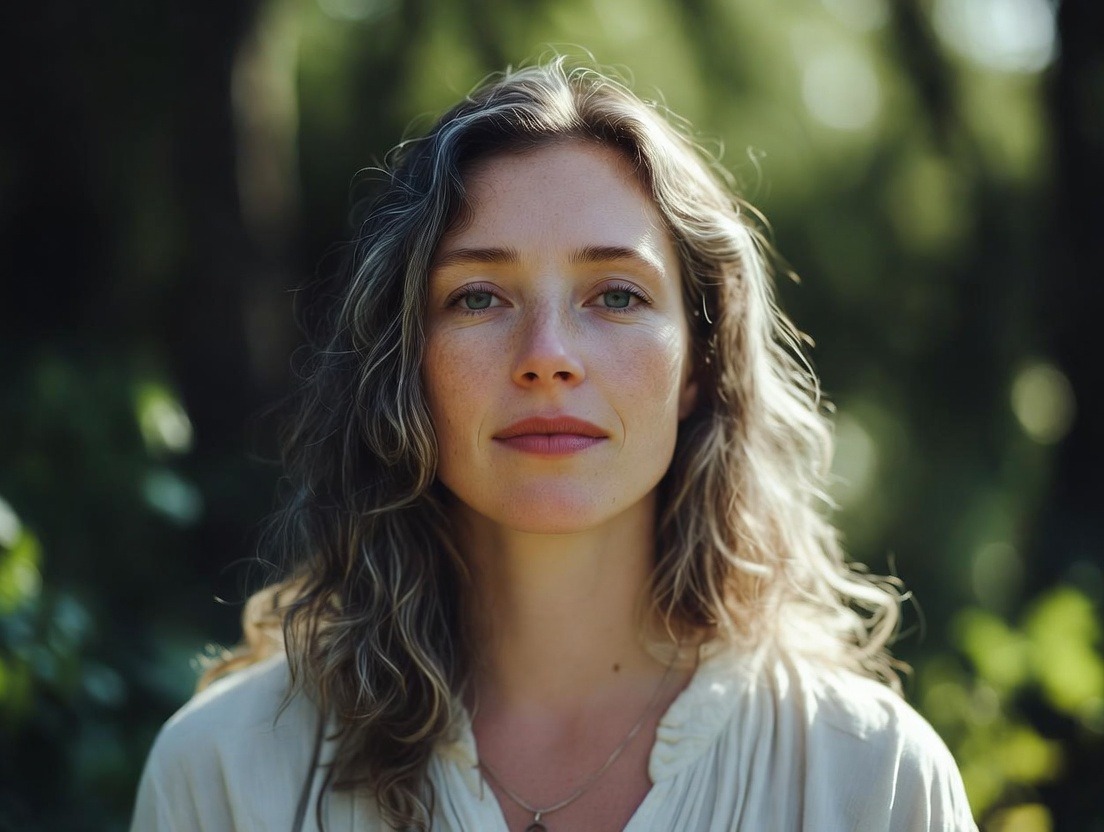
The Western creative myth often pictures the genius as a disembodied brain, toiling in a garret, separate from the physical self. Neuroscience and lived experience reveal the opposite: the body is the primary instrument of the mind, and its state dictates the quality of our creative output. Flow is not just a mental state; it is a full-bodied experience. To access it consistently, we must learn to tune our physiology.
Our nervous system is the interface. When we are stressed, anxious, or tired, our sympathetic nervous system (“fight-or-flight”) is dominant. This state is characterized by high cortisol, scattered attention, and cognitive rigidity—the absolute antithesis of flow. Creativity in this state is shallow, reactive, and fueled by panic.
The flow state, conversely, is allied with the parasympathetic nervous system (“rest-and-digest”), but with a critical twist: it’s a state of parasympathetic activity coupled with heightened focus and arousal. It’s calm, but energized. Relaxed, but ready. This is often called the “growth and thrive” state or the “flow zone” of the autonomic nervous system.
How to Physically Cultivate the Flow Zone:
Honoring the body is not secondary to creative work; it is its prerequisite. By learning to read and regulate your physiological state, you ensure that when you sit down to create, your primary instrument is not working against you, but is finely tuned, resonant, and ready to channel the signal of your ideas into the world.
The final, and perhaps most profound, internal shift required to live a creatively fluid life is the adoption of a specific mindset. This is the cognitive soil in which the seeds of mindfulness and flow can grow. It requires letting go of cultural conditioning about what creation “should” look like and embracing attitudes that are inherently present-centered.
1. The Cult of Process Over Product: Our outcome-obsessed culture teaches us to fixate on the finished book, the sold painting, the launched app. This focus on the distant future is a potent source of anxiety and a guaranteed flow-blocker. The mindful creator inverts this. The primary relationship is with the process itself—the feel of the clay, the puzzle of the code, the discovery in the research. The product becomes a natural byproduct of a series of well-lived, present moments. When your reward is the engagement itself, you are intrinsically motivated, and flow follows naturally. Ask not, “How many words did I write?” but “How deeply was I immersed in the writing today?”
2. The Wisdom of Imperfection (Wabi-Sabi): Drawing from the Japanese aesthetic of wabi-sabi, which finds beauty in imperfection, transience, and the handmade, we can release the tyranny of the “flawless” idea. Mindfulness teaches us to observe without judgment. Apply this to your work. Can you see the awkward transition in your draft not as a failure, but as an interesting feature that reveals something new? Can you appreciate the “happy accident” of a paint drip that suggests a new direction? This mindset transforms mistakes from dead ends into the most fertile ground for creative evolution.
3. Beginner’s Mind (Shoshin): Another Zen concept, Shoshin, is the attitude of approaching every task, no matter how familiar, with the openness, curiosity, and lack of preconception of a beginner. The expert often operates on autopilot, relying on old patterns. The beginner, because they don’t know “how it’s done,” must pay close attention. They are inherently present. Before you begin your creative work, consciously say, “I don’t know what this will be. Let me discover it.” This empties the mind of stale solutions and makes room for novel insights.
4. Non-Attachment to Results: This is not apathy, but freedom. It means pouring your full effort and presence into the work while simultaneously holding the outcome lightly. You cannot control how your work will be received, whether it will be a “success,” or if it will change the world. You can only control your dedication to the process in this moment. This detachment is not a lack of care; it is the ultimate form of care—for your own sanity and for the work’s organic integrity.
Adopting this mindset is a daily practice. It is the application of mindfulness principles directly to the identity of “being a creator.” It frees you from the rollercoaster of external validation and anchors your creative worth in the only thing you truly own: your conscious, engaged experience of making. To see how this philosophy shapes the tools we build, you can learn about our core mission and values.
Sustainable creativity is not about sporadic bursts of inspiration followed by burnout. It is a lifestyle engineered to support the regular emergence of flow. This requires designing your days, weeks, and seasons with intentional rhythms that balance deep work with essential recovery, recognizing that one cannot exist without the other.
The Daily Architecture:
The Weekly Rhythm:
The Role of Recovery as Active Creation:
Our productivity culture vilifies rest as idleness. For the mindful creator, rest is an active, skilled component of the creative process. It includes:
Designing this lifestyle is an ongoing experiment in self-awareness. It requires listening to the feedback from your own body and mind more attentively than the demands of external calendars. Many creators find that using a device like the Oxyzen ring provides the concrete data needed to optimize these rhythms, revealing their personal formula for balancing strain and recovery. You can discover more about optimizing your daily rhythms on our blog.
The path of the mindful creator is supported by both ancient tools and modern technology. The key is to choose tools that enhance presence and focus, rather than fragmenting it. Your toolkit should serve as an extension of your intention, helping you capture, focus, and understand your creative process.
The Analog Foundation:
The Digital Enhancers (When Used Intentionally):
The Biofeedback Layer: The Smart Ring
This is where technology transcends mere utility and becomes a partner in self-awareness. A device like the Oxyzen smart ring operates in the background, collecting objective physiological data that is often invisible to our conscious mind.
The mindful creator is not a Luddite, but a selective technologist. You choose tools that create space for the human mind to do what it does best: imagine, synthesize, and feel. The right tools should feel like a well-worn brush or a perfect pen—an invisible conduit between your inner vision and its expression.
Theory must culminate in practice. Here are specific, actionable exercises to directly infuse mindfulness into the heart of your creative work, tailored to different modalities. The goal is to make presence the default mode of your craft.
For Writers & Verbal Creators:
For Visual Artists & Designers:
For Problem-Solvers, Coders, & Strategic Thinkers:
The thread connecting all these exercises is slowing down perception to speed up insight. By deliberately engaging your senses, bypassing judgment, and anchoring your attention in the procedural act of creating, you are not just making art or solving problems—you are practicing the art of presence itself. This is the forge where mindful living and creativity become one and the same.
Having established the foundational practices, we now venture into more nuanced territory. Accessing an initial flow state is a triumph, but the true art lies in deepening its quality, extending its duration, and cultivating the resilience to return to it consistently. This is the alchemy of attention, where we move from being occasional visitors to becoming sovereigns of our creative state. The journey now involves refining our internal environment, leveraging specific psychological triggers, and learning to navigate the inevitable turbulence that arises in any prolonged creative endeavor.
One of the most powerful yet overlooked aspects of sustained flow is the management of creative energy, not just time. We often schedule hours for work, but we fail to account for the energetic cost of different types of thinking. The mindful creator learns to distinguish between generative energy (for new ideas), evaluative energy (for editing and refining), and connective energy (for research and collaboration). By mindfully allocating your peak energetic resources to the tasks that demand them most, you create a sustainable rhythm that prevents burnout and makes deep flow more accessible. This requires a level of self-honesty that asks not “Do I have time?” but “Do I have the energy for this type of focus right now?”
Furthermore, we must address the plateau—the point in a flow state where initial momentum fades and the work becomes challenging in a less exhilarating way. This is often where projects are abandoned. Mindfulness teaches us to meet this plateau not with frustration, but with investigative curiosity. Is the resistance a signal that the project needs a new direction, or is it simply the necessary friction of mastering a new skill level? By applying non-judgmental awareness to the plateau itself, we can discern the difference between a dead end and a gestation period, allowing us to persist with intelligence rather than brute force.
The advanced practice is about building flow resilience: the capacity to encounter interruptions, doubts, and fatigue without being completely ejected from a state of engaged presence. It’s the ability to take a phone call, then use a brief breathing exercise to re-enter the creative stream with minimal loss of depth. This resilience transforms creativity from a fragile, ephemeral experience into a reliable skill. As we explore these advanced strategies, remember that this is not about adding more complexity, but about cultivating a simpler, more profound relationship with the creative act itself. For insights into how consistent physiological tracking can build this very resilience by highlighting your personal recovery needs, our user testimonials reveal powerful patterns.
While internal readiness is paramount, our external and social worlds are filled with potent levers that can dramatically increase the likelihood of entering a flow state. These are the catalysts—the specific conditions that, when intentionally arranged, act as a direct invitation to deep immersion. Understanding and employing these triggers systematically allows you to design not just a session, but an entire ecosystem for genius to flourish.
Environmental Triggers: Crafting Your Sacred Space
Beyond a tidy desk, the environment speaks directly to our subconscious. Advanced environmental design considers:
Psychological Triggers: The Inner Architecture
These are the mental frameworks you adopt before beginning.
Social Triggers: The Power of the Collective Field
Flow is often seen as solitary, but it can be powerfully socially induced.
By consciously layering these triggers—creating a ritual in a sacred space, framing a curious investigation with tight feedback loops, and perhaps tapping into a collective energy field—you stack the odds overwhelmingly in favor of a profound and sustained creative experience. This is the engineering of inspiration. For a deeper look at how our founders intentionally designed their environment and company culture to foster these states, you can explore our brand’s origin story.
Like any potent state, flow has a shadow. Its very appeal—the loss of self, the distortion of time, the intrinsic high—can lead to maladaptive patterns if not approached with mindful wisdom. The desire to escape the mundane pressures of life can subtly transform a healthy pursuit of flow into a form of avoidance or even addiction. Recognizing and navigating this shadow is critical for a balanced and sustainable creative life.
Flow as Avoidance: This is a subtle but common trap. The intense engagement of a flow state can be used to avoid unpleasant emotions, difficult conversations, or necessary life tasks. The writer who spends 12 hours in a flow state on a novel to avoid dealing with relationship strife, or the coder who dives into a fascinating technical problem to escape feelings of anxiety, is using flow as a psychological escape hatch. Mindfulness provides the check-in: Am I moving toward something meaningful, or am I fleeing from something uncomfortable? The answer isn’t always clear, but the practice of pausing to ask the question is essential.
Flow Addiction & Neglect: The dopamine rush of flow is powerful. The craving for that state can lead to neglecting biological and social needs. Skipping meals, forgoing sleep, ignoring loved ones, and abandoning physical health in the pursuit of “staying in the zone” is a recipe for long-term creative and personal bankruptcy. The body and relationships are not external to the creative process; they are its foundation. A device that tracks readiness and recovery metrics can serve as a crucial, objective boundary-keeper, providing hard data that it’s time to stop and replenish, even when the mind is craving more.
The Problem of Re-Entry: Exiting a deep flow state can be psychologically jarring. Returning to the noisy, demanding, slow-paced “real world” after hours of seamless, self-directed creation can cause irritability, disorientation, and a sense of deflation—a kind of creative jet lag. This difficult re-entry can subconsciously make us reluctant to enter flow, knowing the crash awaits.
Mindful Strategies for Integration:
By bringing mindful awareness to the potential pitfalls of flow, we transform it from a compulsive pursuit into a harmonious rhythm. We learn to enjoy its depths without drowning in them, and to return to the surface with grace, carrying the treasures we found below back into the wholeness of our lives.
The pinnacle of creative expression is not always a solo performance. The most complex and impactful innovations—from scientific breakthroughs to cinematic masterpieces—often emerge from the synergistic space of a team. However, group dynamics are notoriously fertile ground for ego, miscommunication, and fractured attention. Mindful collaboration is the practice of applying the principles of presence to the collective, creating the conditions for group flow: a state where the team becomes more than the sum of its parts, operating with a unified, intuitive intelligence.
Group flow requires a delicate chemistry. Psychologist Keith Sawyer, studying improvisational jazz and theater groups, identified key prerequisites that align perfectly with mindfulness:
How to Foster Mindful Collaboration:
In a state of group flow, the creative process feels like a collective discovery. Ideas seem to emerge from the center of the group, not from any single individual. The mindful team learns to trust this emergent intelligence, understanding that their greatest work arises not from a collection of competing geniuses, but from a field of shared, present-moment awareness. This philosophy extends to how we support our community; for questions on fostering such environments, our support resources are always available.
Our industrial mindset wants linear, constant production: more output, faster cycles, endless growth. But the creative mind, like nature, operates in seasons. There are times of explosive growth (spring), sustained, fruitful labor (summer), harvest and release (autumn), and necessary fallow rest (winter). Ignoring these natural rhythms leads to creative barrenness and burnout. Mindful living attunes us to our internal seasons, allowing us to cooperate with them rather than fight against them.
Spring: Germination & Play
Summer: Growth & Deep Work
Autumn: Harvest & Completion
Winter: Rest & Incubation
A mindful creative life dances with these seasons, both in macro-arcs (annual cycles of projects) and micro-arcs (weekly or even daily rhythms). By honoring winter, you make spring inevitable. By not forcing harvest in summer, you ensure the fruit is sweet. This cyclical view liberates you from the tyranny of constant production and aligns your creative work with the most fundamental law of the universe: everything in its right time.
Ultimately, the integration of mindfulness and creativity is not a project with an end date; it is the cultivation of a creative identity that is fluid, resilient, and ever-evolving. This identity is not defined by external output or accolades, but by an ongoing, committed relationship with the process of conscious creation itself. It’s about becoming a person for whom presence is the default mode of engagement with the world, making every moment a potential site for creative insight.
This evolved identity rests on several pillars:
1. Non-Identification with Output: You learn to see your creations as artifacts of a process, not as definitions of your worth. A failed project is feedback, not identity. A successful one is a milestone, not a summit. Your core identity remains the aware presence that does the creating, not the things that are created. This detachment provides the freedom to take bigger risks and learn more profoundly.
2. Embracing the “Eternal Student” Mindset: Mastery is not a plateau to be reached, but a horizon that recedes as you approach it. The mindful creator remains perpetually curious, always willing to be a beginner in some new aspect of their craft or in a completely new field. This lifelong learning keeps the mind plastic and the creative spirit youthful.
3. Integration Over Balance: The quest for “work-life balance” often sets up a false dichotomy. The mindful creative seeks integration. Creativity isn’t a compartmentalized “work” activity; it’s a way of perceiving that infuses how you cook a meal, solve a problem with a child, or listen to a friend. You look for the creative opportunity in all of life, and you allow life to fuel your formal creative work. The data from your life—your emotions, relationships, and physical state—all become grist for the mill.
4. Compassion as the Core Fuel: This may be the most vital pillar. You replace the whip of self-criticism with the supportive voice of self-compassion. When you hit a block, you respond as you would to a valued collaborator: “This is hard right now. What do you need?” This inner climate of safety is the only one in which true innovation can thrive. It allows you to persist through difficulty without cruelty to yourself.
Building this identity is the work of a lifetime. It is supported by daily practice, a compassionate community, and tools that provide feedback and insight. It’s about showing up, day after day, not with the burden of needing to be brilliant, but with the simple intention to be present with whatever arises in the creative act. In that steadfast, gentle presence, something far more valuable than sporadic genius is forged: a reliable, joyful, and endlessly renewable source of creative aliveness. For continued exploration of these themes and evolving practices, our blog serves as an ongoing resource.


