


Are You a Morning Person or Night Owl? Understanding Your Pattern
Determining if you're a morning person (early chronotype) or night owl (late chronotype) helps you understand your innate biological rhythm for energy and sleepiness.
Determining if you're a morning person (early chronotype) or night owl (late chronotype) helps you understand your innate biological rhythm for energy and sleepiness.
%402x.svg)
The alarm blares at 6:00 AM. For some, this is a welcome signal—a chance to spring out of bed, greet the sunrise, and attack the day with vibrant energy. For others, it’s a brutal, soul-crushing interruption to precious sleep, a siren demanding they function in a world that feels hazy and hostile for hours. This daily divide is more than just a preference for coffee strength; it’s a fundamental expression of our internal biology, a signature written into our DNA known as our chronotype.
Are you a morning person, a night owl, or something in between? This isn't merely about when you like to sleep, but about when your body is primed for peak performance, cognitive sharpness, and emotional equilibrium. Your chronotype dictates the intricate rhythm of your hormones, body temperature, metabolism, and neural activity. Fighting against it isn't just a matter of willpower—it can lead to a state of perpetual jet lag, undermining your health, productivity, and overall well-being.
In our modern, always-on society, the early bird is often glorified. The narrative of successful CEOs waking at 4:00 AM perpetuates the idea that mornings equal morality and productivity. Meanwhile, night owls are frequently labeled as lazy or undisciplined, forced to contort their natural rhythms to fit a 9-to-5 mold. This misunderstanding creates a significant biological mismatch for a huge portion of the population.
But what if you could move beyond the labels and truly understand your unique temporal blueprint? What if you could align your work, your workouts, your meals, and even your creative pursuits with your body’s innate schedule? The payoff is profound: enhanced mental clarity, improved metabolic health, stronger immunity, and a greater sense of harmony in daily life. This understanding is the cornerstone of personalized wellness, a concept we champion at Oxyzen.ai. By leveraging precise biometric data, such as that gathered by advanced wellness technology, you can stop guessing and start knowing how your body truly operates across the 24-hour cycle.
This article is your deep dive into the science of chronotypes. We'll explore where these patterns originate, how they impact every facet of your life, and most importantly, how you can harness this knowledge to craft a life that doesn't fight your biology, but flows with it. Whether you're a lark, an owl, or a hummingbird in between, understanding your pattern is the first step toward unlocking a more energized, focused, and healthy you.
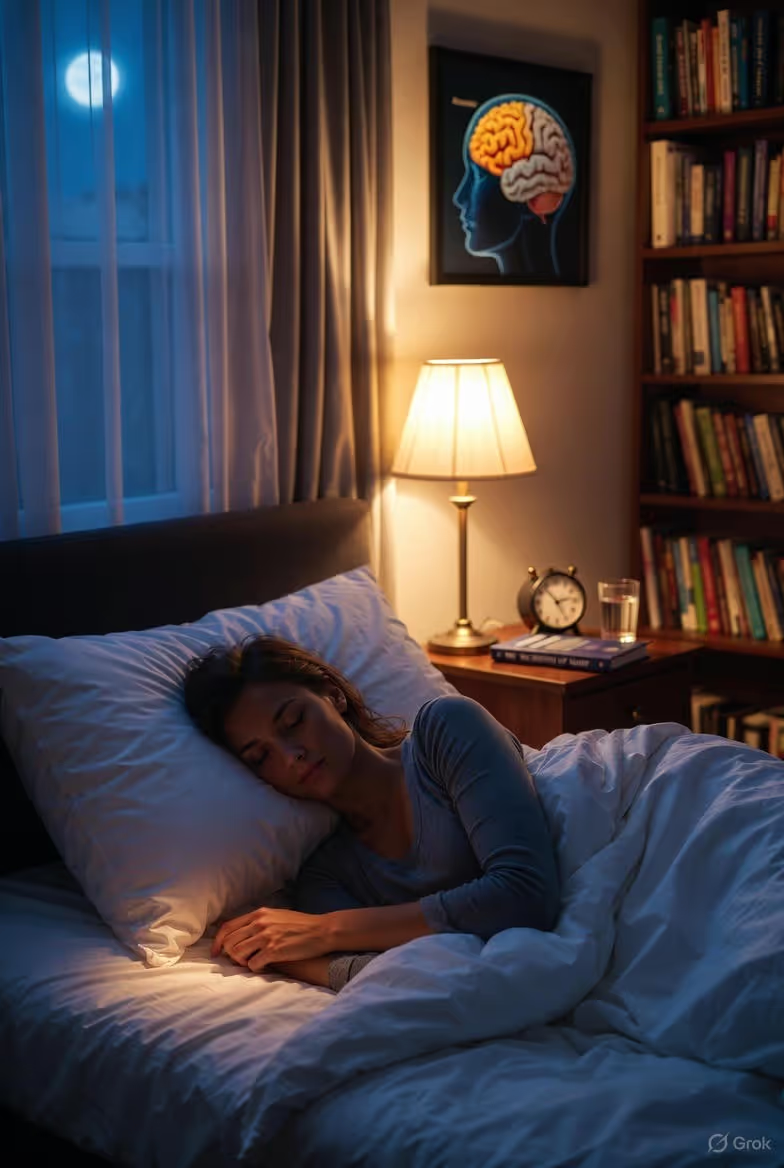
To comprehend why you’re wired the way you are, we must first journey inside the brain, to a tiny, masterful region called the suprachiasmatic nucleus (SCN). Nestled in the hypothalamus, this cluster of about 20,000 nerve cells acts as your body’s primary circadian pacemaker. Think of it as the conductor of a grand, 24-hour biological orchestra, cueing the release of hormones, the rise and fall of body temperature, and the cycles of sleep and wakefulness.
The SCN doesn’t operate in a vacuum. It is exquisitely sensitive to environmental cues, most importantly light. Specialized photoreceptor cells in your eyes, distinct from those used for vision, detect light intensity and wavelength, sending direct signals to the SCN. When morning light hits your retina, it signals the SCN to suppress the production of melatonin (the sleep hormone), increase cortisol (a wakefulness hormone), and raise your core body temperature. This cascade primes your body for action. As daylight fades, the SCN triggers the pineal gland to release melatonin, initiating the wind-down process for sleep.
But here’s the critical twist: not all SCNs are set to the same exact time. Your chronotype is essentially your personalized phase of entrainment—the specific alignment of your internal clock with the external 24-hour day. Genetic factors play a massive role in determining this setting. Dozens of genes, often dubbed "clock genes" (like PER, CRY, and CLOCK), govern the speed and amplitude of your circadian rhythm. Variations in these genes can make your intrinsic cycle slightly shorter or longer than 24 hours, or shift your entire rhythm earlier or later.
This is why "just go to bed earlier" is infuriatingly simplistic advice for a night owl. Their internal conductor might be programmed to start the melatonin symphony hours later than an early bird’s. Forcing sleep outside this window leads to social jet lag—the chronic misalignment between your biological clock and your social clock (work, school). Studies show this state is associated with increased risks for obesity, diabetes, cardiovascular disease, and mood disorders. Understanding that your drive is biological, not moral, is liberating and crucial for crafting effective strategies.
Modern technology now allows us to observe these internal rhythms with unprecedented precision. A device like the Oxyzen smart ring tracks subtle, continuous biometrics like nocturnal core body temperature, heart rate variability (HRV), and sleep stages. This data provides an objective window into your unique circadian rhythm, far more accurate than subjective self-assessment. You can see exactly when your body temperature hits its nightly nadir (a key marker of circadian phase) or when your nervous system begins its evening wind-down. To see how this data translates into actionable insights, you can explore real user experiences on our testimonials page.
While we often simplify the discussion to "morning people" vs. "night people," human chronotypes exist on a rich and varied continuum. Researchers typically categorize them into three main types, with some models adding a fourth. Understanding where you fall on this spectrum is the key to personalizing your approach.
The Early Lark (Morning Chronotype):
The Night Owl (Evening Chronotype):
The Hummingbird (Intermediate Chronotype):
The Biphasic or Siesta Chronotype (Less Common):
So, how do you find your place on the spectrum? While formal questionnaires like the Munich Chronotype Questionnaire (MCTQ) or the Morningness-Eveningness Questionnaire (MEQ) are the gold standard, you can start by asking yourself:
Tracking your biometrics removes the guesswork. By monitoring your 24/7 readiness and sleep data, you can objectively identify your personal peaks and troughs. For a deeper exploration of these concepts and related wellness topics, our blog offers a wealth of additional resources.
The question of "why" these differences exist is fascinating, touching on genetics, anthropology, and evolutionary psychology. Your tendency toward mornings or evenings isn't random; it may be a trait inherited from ancestors whose varied sleep patterns increased the survival odds of the group.
From a genetic standpoint, twin studies suggest that about 50% of our chronotype preference is heritable. Specific gene variants, such as those in the PER3 gene, are strongly linked to morningness. Longer versions of this gene are associated with early rising, while shorter versions are linked to eveningness. Other genes influence your sensitivity to light, the length of your intrinsic circadian cycle (which can naturally be 23.5 or 24.5 hours instead of 24), and your hormonal release schedules. This is why chronotype tends to run in families, though not always predictably.
The evolutionary "Sentinel Hypothesis" offers a compelling theory for why this variation persisted. In a small hunter-gatherer group, having a mix of early risers and late sleepers would mean that someone was always on a slightly different watch schedule. The early larks would be lightest sleepers in the early morning hours, while the night owls would be most vigilant in the late evening. This natural staggering of alertness could have provided a crucial survival advantage, protecting the community from predators or threats across the entire night. In this light, night owls weren't lazy—they were the night watch.
Our chronotype also isn't static across our lifespan. It undergoes profound, predictable shifts:
This lifelong journey underscores that your chronotype is a core, biological characteristic, not a personality flaw. At Oxyzen.ai, we believe that honoring your biology is the foundation of true wellness. Our mission is built on providing the tools to decode these personal rhythms, a philosophy rooted in our own journey of discovery, which you can learn more about in our story.
The mismatch between your internal clock and your external life does more than make you groggy. It creates systemic stress, known as circadian misalignment, which has cascading negative effects on nearly every system in your body.
Metabolic Health and Weight:
Your circadian clock tightly regulates metabolism, appetite hormones, and glucose processing. When you eat at a time when your body is biologically prepared for rest (e.g., a night owl eating a large meal late at night, or anyone eating during their biological night), the results are problematic.
Cardiovascular System:
Blood pressure, heart rate, and vascular tone all follow a daily rhythm. The morning surge in cortisol and blood pressure helps you mobilize for the day. However, chronic misalignment can lead to a sustained, unhealthy elevation of these markers. Studies consistently show that night owls, who are forced into early schedules, have a higher risk of hypertension and cardiovascular events, even after controlling for sleep duration and lifestyle factors.
Immune Function and Inflammation:
Your immune system is also under circadian control. The production and release of various immune cells and inflammatory cytokines fluctuate throughout the day. Disrupting this rhythm can lead to a state of chronic, low-grade inflammation and a less robust immune response. This may explain why shift workers are more susceptible to infections and why chronic circadian disruption is linked to inflammatory diseases.
Athletic Performance and Recovery:
Your chronotype significantly predicts your physical performance peak. For morning types, strength, flexibility, and endurance often peak in the late morning. For evening types, these metrics can improve by as much as 20% in the evening hours. Training against your chronotype not only feels harder but may also increase injury risk. Furthermore, critical recovery processes like muscle repair, human growth hormone release, and tissue regeneration are heavily concentrated during deep, aligned sleep. Disrupted sleep directly impairs recovery.
Tracking these subtle health metrics is where modern wellness technology shines. By observing trends in your resting heart rate, heart rate variability (a marker of nervous system balance and recovery), and sleep quality, you can directly see the impact of alignment or misalignment. If you consistently see poor recovery scores after late-night meals or early forced awakenings, you have objective data to guide change. For common questions on how tracking works to reveal these insights, our FAQ section provides clear answers.
Just as your physical capabilities ebb and flow, your cognitive powers are under the strict command of your internal clock. Scheduling your most demanding mental work in sync with your chronotype can be a game-changer for productivity and output quality.
The Cognitive Arc of the Day:
Creativity and Divergent Thinking:
Interestingly, while analytical thinking peaks with alertness, some research suggests that creative insight and divergent thinking may flourish during our "off-peak" times. For a morning person, that slightly fuzzy, less-inhibited state in the late evening might be when novel connections are more easily made. For a night owl, the quiet, uninterrupted early morning hours (if they are awake) might serve the same purpose. This isn't about peak focus, but about a different cognitive state conducive to brainstorming and innovation.
Learning and Memory Consolidation:
The timing of learning matters. Studies indicate that you learn and retain information best when training occurs at your peak circadian time. Furthermore, sleep is when memories are consolidated. For a memory formed during your optimal time to be effectively cemented, it needs to be followed by a period of good, aligned sleep. Chronically learning or working during your biological "down" time and then sleeping poorly creates a double deficit for memory.
This understanding allows for chrono-productivity—designing your day around your mental energy map. A morning person might schedule creative brainstorming for late afternoon when their analytical guard is down, saving deep work for the morning. A night owl might use mornings for administrative, low-cognitive-load tasks and protect their late afternoons for intense, focused project work. The goal is to stop fighting your cognitive rhythm and start riding its waves.

The relationship between your sleep-wake pattern and your emotional landscape is profound and bidirectional. Your chronotype influences your vulnerability to mood disorders, your daily emotional fluctuations, and even your social interactions.
Vulnerability to Depression and Anxiety:
A robust body of research shows a clear correlation between evening chronotype and higher rates of depression, anxiety, and other mood disorders. This link persists even after accounting for sleep duration. The reasons are likely multifaceted:
Daily Emotional Rhythms:
Your positive and negative emotions follow a circadian pattern. Morning people often report their most positive affect (mood) in the morning, which declines across the day. Evening types show the opposite pattern, with mood improving as the day progresses. This means a morning person may be genuinely cheerful at 7:00 AM, while an evening person may be authentically grumpy—it's not personal, it's biological. Recognizing this in yourself and others can foster greater self-compassion and interpersonal understanding.
Social and Relationship Dynamics:
Chronotype mismatch is a real issue in relationships—a classic "lark and owl" pairing. Conflicts can arise over bedtime, morning routines, and when to schedule social activities. The morning person may resent their partner's late-night energy, interpreting it as a lack of desire to connect in the evening. The night owl may feel nagged and misunderstood, pressured to conform to a schedule that feels alien. The key is to frame this not as a difference in values or effort, but as a biological difference. Solutions involve compromise, creativity (e.g., the morning person has quiet time in the evening while the owl is active, and they connect over late breakfast), and mutual respect for each other's biological needs. Understanding these deep-seated patterns is part of a holistic approach to wellness that we explore through various lenses on our blog.
Our culture is saturated with pro-morning bias. From Ben Franklin's "Early to bed and early to rise..." to the cult of the 5:00 AM CEO routine, the message is clear: early risers are more virtuous, successful, and disciplined. It's time to dismantle these myths with science and nuance.
Myth 1: Morning People Are More Successful.
Myth 2: Night Owls Are Lazy or Lack Discipline.
Myth 3: You Can Easily Change Your Chronotype with Willpower.
Myth 4: Sleeping In on Weekends "Fixes" Social Jet Lag.
The truth is, neither chronotype is inherently "better." Each has its own set of evolutionary advantages and modern-world challenges. The optimal strategy is to identify, accept, and optimize your type. This philosophy of personalized, data-informed acceptance is central to our vision at Oxyzen.ai. For a deeper look at the principles that guide our approach, we invite you to read about our foundational values and journey.
Our ancestors lived in sync with the sun. The modern environment, however, is a cacophony of circadian disruptors, creating what scientists call "circadian toxicity." Understanding these disruptors is the first step in mitigating their impact.
The Blue Light Dilemma:
While daylight is the primary Zeitgeber (time-giver), artificial light—especially the blue-wavelength light emitted by LEDs, smartphones, tablets, and computers—is a powerful signal to the SCN. Exposure in the evening tricks your brain into thinking it's still daytime, suppressing melatonin production and delaying sleepiness. For night owls who are already phase-delayed, this can exacerbate the problem. For morning types, it can erode their earlier sleep window.
The 24/7 Society and Work Schedules:
Standard 9-to-5 work schedules, early school start times, and the global "always-on" digital culture are inherently biased toward morning types. Shift work, which forces people to be awake and eat during the biological night, is classified as a probable carcinogen by the WHO due to the severity of circadian disruption it causes. Even frequent travel across time zones creates acute and chronic misalignment.
Irregular Meal Timing:
Food intake is a secondary Zeitgeber. Erratic eating patterns, especially late-night snacking, send conflicting signals to peripheral clocks in your liver, pancreas, and gut, desynchronizing them from the master clock in the brain. This internal metabolic misalignment is a key driver of the health issues associated with chronodisruption.
How to Fight Back: Strategies for All Chronotypes:
Implementing these strategies blindly can be hit-or-miss. This is where objective feedback is invaluable. A device that tracks your sleep and readiness provides a feedback loop. You can experiment with evening light restriction and see if your sleep latency (time to fall asleep) decreases. You can try an earlier dinner and observe if your nocturnal heart rate and HRV recovery improve. This data-driven approach turns guesswork into a precise science of self-optimization.
In the quest to understand your inner rhythm, subjective feeling can be misleading. You might feel awake in the evening, but is your nervous system truly recovered and ready for deep work? Technology, particularly continuous biometric tracking, provides an objective, data-rich mirror to reflect your true circadian state.
The Power of 24/7 Biometric Data:
Wearables like advanced smart rings track metrics that are direct outputs of your circadian system:
From Data to Insight:
By aggregating this data over weeks and months, patterns emerge. You can generate a personal circadian phase map that shows:
This moves you from the general categories of "lark" or "owl" to a precise understanding of your specific, personal chronotype. For example, you might discover you're an owl with a natural sleep period from 2:00 AM to 10:00 AM, or a lark with a period from 9:00 PM to 5:00 AM.
Personalized Experimentation:
Armed with this data, you can run self-experiments:
This process of quantified self-discovery demystifies your biology. It replaces rigid, one-size-fits-all sleep advice with a personalized, iterative approach to finding what works for your clock. At Oxyzen.ai, we've built our technology to serve as this precise, insightful guide on your journey to alignment. If you have questions about how this kind of tracking works in practice, our comprehensive FAQ is a great resource.

Knowledge is power, but only when applied. Now that you understand your chronotype and the factors that influence it, it's time to construct a daily routine—a circadian protocol—that respects your biology. Here are tailored frameworks for each major type.
The Early Lark's Optimal Day:
The Night Owl's Optimal Day (Adjusted for a 9-5-ish World):
The Hummingbird's (Intermediate) Guiding Principles:
Remember, these are templates. The most effective routine is the one you can stick to consistently. Consistency in sleep and wake times is the most powerful circadian cue of all, even more important than perfect light management for many. Use your biometric data to refine your template over time, noting what changes lead to better Sleep Scores and Readiness Scores.
Our exploration thus far has laid the essential foundation. But the science of chronobiology goes even deeper, offering insights into hormonal cycles, gender differences, and long-term health optimization. Mastering your rhythm is a lifelong practice that evolves with you.
Sex Hormones and Chronotype:
There is a notable gender difference in chronotype distribution. On average, men are more likely to be evening types than women. Furthermore, the menstrual cycle introduces another layer of rhythmic complexity. Core body temperature rises after ovulation due to progesterone. Some women report changes in sleep quality and energy levels across their cycle. While research is ongoing, it suggests that women may benefit from cycle-syncing their activities in tandem with their chronotype—perhaps scheduling demanding tasks during the follicular phase (when energy is often higher) and more restorative activities in the luteal phase.
The Cortisol-Melatonin Seesaw:
These two key hormones have an inverse, complementary relationship. Cortisol should peak in the first 30-60 minutes after waking (the cortisol awakening response - CAR) and gradually decline throughout the day. Melatonin should begin rising as cortisol reaches its nadir in the evening. Chronic stress can flatten the cortisol curve (low in the morning, high at night), directly opposing the melatonin signal and wrecking sleep. Practices like mindfulness, stress management, and avoiding late-night work are crucial for protecting this hormonal rhythm. Tracking HRV is an excellent proxy for monitoring the balance of your stress-recovery systems.
Chronopharmacology: The Timing of Medication:
An emerging field recognizes that the efficacy and side effects of medications can vary dramatically depending on the time of day they are administered, aligned with circadian rhythms in liver metabolism, cell cycle phases, and hormone levels. For example, blood pressure medication is often more effective when taken at night. While you should never change medication timing without consulting your doctor, it's a fascinating area that highlights the pervasiveness of circadian biology.
Lifelong Adaptation and Acceptance:
Your chronotype journey will change. The teenage owl may become a young adult hummingbird and eventually an older adult lark. Life stages—parenthood, career changes, retirement—will all impose new schedules. The goal is not rigid adherence to one perfect routine forever, but to cultivate circadian awareness. This means:
This journey of deep self-knowledge and biological alignment is at the heart of modern, personalized wellness. It's a journey that moves you from being a passive passenger in your own body to becoming an informed, compassionate pilot. We built Oxyzen.ai to be a trusted co-pilot on that journey, providing the clarity and insight needed to navigate your unique 24-hour world. To see how this philosophy translates into real-world experiences, we encourage you to read the stories of others who have embarked on this path.
One of the most common and practical challenges of chronobiology plays out in the shared space of a home. When a morning lark and a night owl partner up, or when parents and children have conflicting sleep-wake patterns, it can become a source of persistent low-grade friction. This isn’t a difference in values—it’s a difference in biological hardwiring. The key to harmony lies in reframing, strategy, and compromise.
The Romantic Partnership: From Conflict to Complementarity
A classic scenario: The lark is bright-eyed at 6 AM, eager to chat and start the day, while the owl is in a sleep-deprived haze, craving quiet. Come 10 PM, the lark is fading, seeking connection and bedtime, while the owl is just hitting their stride, energized and wanting to share ideas or watch a movie.
Parenting Across Chronotypes:
Parenting adds a layer of beautiful chaos, often overriding any adult’s natural rhythm. However, understanding your child’s developing chronotype can reduce frustration.
The core principle is mutual respect for biological reality. This extends to all shared living situations. By leveraging tools like shared calendars (to block focus time for owls in the evening, or quiet mornings for larks) and even shared biometric data, families can build empathy and design a home life that allows each member to thrive. For more insights on building harmonious, health-focused routines, our blog features ongoing discussions on modern wellness strategies.
The societal cost of forcing square biological pegs into round schedule holes is immense: reduced productivity, increased healthcare costs, poorer academic outcomes, and diminished well-being. A growing awareness of chronobiology is slowly driving a revolution toward more flexible, human-centric systems.
The Case for the Chrono-Friendly Workplace:
The traditional 9-to-5 office schedule is a relic of the industrial age, designed for standardized labor, not knowledge work or creative innovation. A circadian-aware workplace recognizes that peak performance happens at different times for different people.
Transforming Education: The Start Time Revolution:
The evidence on school start times is unequivocal. The American Academy of Pediatrics, the American Medical Association, and the CDC all recommend that middle and high schools start no earlier than 8:30 AM to align with adolescent biology.
The Role of Leadership and Culture:
Change starts at the top. Leaders who share their own chronotype preferences and respect for flexible work model the behavior. Companies can offer wellness education on sleep and chronobiology, helping employees understand and advocate for their own needs. At Oxyzen.ai, our mission is to empower not just individuals but organizations with the data and understanding needed to foster these healthier, more productive environments. We believe that when people are allowed to work with their biology, innovation and well-being flourish in tandem.
This shift represents a move from a one-size-fits-all model to a culture of circadian inclusivity. It acknowledges that a team’s strength lies in its diversity of thought—and that this diversity is intrinsically linked to a diversity of temporal rhythms. For organizations looking to understand the tangible benefits of such an approach, the real-world results and testimonials from data-informed individuals speak volumes.
Even with the most perfectly crafted routine, life happens. Jet lag, shift work, and life events (a new baby, illness) can violently disrupt your circadian alignment. While you can’t prevent all disruption, you can manage it strategically to minimize the damage and recover more quickly.
Conquering Jet Lag: A Chronotype-Specific Guide:
Jet lag is acute circadian misalignment. Your internal clock is stuck in your departure city’s time zone while your body is in a new light-dark cycle. The direction of travel matters: Eastward travel (losing time) is typically harder than westward travel (gaining time), as it requires advancing your clock, which is biologically more difficult than delaying it.
Surviving and Thriving in Shift Work:
Shift work, especially night shifts, is a severe physiological stressor. It flips the natural light-dark cycle and disconnects you from social Zeitgebers. If you are a shift worker, optimization is critical for health.
Navigating Life’s Temporary Disruptions:
For new parents, caregivers, or during periods of high stress, perfect sleep is off the table. The goal shifts from optimization to damage control and opportunistic recovery.
In all these disruptive scenarios, having an objective measure of your body’s state is invaluable. A wellness tracker can show you the real impact of a night shift or a red-eye flight on your nervous system, guiding your recovery strategy with data, not guesswork. For practical guidance on using technology through life’s disruptions, our FAQ section addresses many common use-case questions.
The field of chrononutrition reveals that our bodies process food differently depending on the time of day, as dictated by our internal clocks. Aligning your eating patterns with your chronotype can optimize metabolism, energy, and weight management.
The Science of Metabolic Rhythms:
Your pancreas, liver, gut, and fat cells all have their own circadian clocks, synchronized by the master clock in the brain and by food intake.
Practical Chrononutrition for Each Chronotype:
The goal is to consume the majority of your calories, especially carbohydrates, during the window of highest insulin sensitivity and metabolic activity.
For the Early Lark:
For the Night Owl (Adjusted Schedule):
The Critical Importance of Meal Timing Consistency:
Eating at wildly different times each day confuses your peripheral clocks and can contribute to metabolic disorder. Try to keep your first and last meal within a 60-90 minute window each day, even on weekends. This regularity is a powerful Zeitgeber.
Intermittent Fasting (IF) and Chronotypes:
IF can be a powerful tool, but it should be aligned with your rhythm, not fought against it.
Listening to your body’s true hunger signals—which become clearer when you are in circadian alignment—is the ultimate guide. Tracking how your body responds to different meal timings through metrics like next-morning resting heart rate and HRV provides objective feedback on what works for your unique system.
Just as with eating, the effects of exercise—on performance, injury risk, and even metabolic adaptation—are influenced by the time of day you do it. Synchronizing your workouts with your chronotype can make them feel easier, more effective, and more enjoyable.
Circadian Rhythms in Athletic Performance:
Core body temperature, muscle strength, flexibility, reaction time, and anaerobic power all follow a daily rhythm, typically peaking in the late afternoon to early evening for most people. This is when injury risk may be lowest and perceived exertion is often reduced.
Tailored Exercise Recommendations:
For the Morning Lark:
For the Night Owl:
For the Hummingbird (Intermediate):
You have the most flexibility. Late morning through mid-afternoon is likely your sweet spot. You can use exercise timing as a tool: morning workouts to feel more alert and advance your phase slightly; evening workouts to lean into your natural peak or delay your phase if needed.
The Non-Negotiables: Consistency and Listening to Your Body.
The best time to exercise is the time you can do it consistently. A lark forcing evening workouts they hate will not stick with it. An owl dragging themselves to 6 AM spin class will burn out.
Use your biometric data as a guide:
Let this feedback loop inform your schedule. The goal is to make exercise a sustainable, supportive pillar of your circadian health, not another source of stress or misalignment. For a deeper exploration of how data can optimize all aspects of your wellness routine, from sleep to nutrition to fitness, our blog offers continuous research and insights.
Your sleep-wake pattern, stress response system, and mental health exist in a delicate, three-way dialogue. Disrupt one, and you disrupt the others. Building circadian resilience—your system’s ability to withstand and recover from disruptions—strengthens this entire mind-body network.
The Vicious Cycle of Stress and Sleep Disruption:
Building Circadian Resilience:
This is your buffer against life’s inevitable disruptions. It’s built through daily habits that strengthen the regularity and robustness of your internal clock.
The Role of Mindfulness and Acceptance:
A significant part of circadian stress comes from fighting against your own nature. Mindfulness practices help you observe your energy patterns without judgment. You learn to notice, “My energy is low now; this is my dip,” rather than spiraling into, “Why am I so lazy and unproductive?” This acceptance reduces secondary stress about your performance, creating a positive feedback loop for your nervous system.
Monitoring your HRV is like having a direct readout of your circadian and stress resilience. A high, stable HRV indicates a robust, flexible system. Seeing dips in HRV can alert you to the need for more recovery before pushing further. This objective feedback is central to the approach at Oxyzen.ai, where we believe that understanding your body’s signals is the first step toward lasting well-being. To understand how this technology supports a holistic health journey, you can discover the story behind our approach.
We have now traversed the science, the social implications, and the practical strategies. The final step is synthesis: weaving these threads together into a cohesive, personalized lifestyle plan—your Chrono-Blueprint. This is a living document, a set of guiding principles unique to you, informed by both knowledge and ongoing self-experimentation.
Step 1: Establish Your Baseline (The Discovery Phase)
Step 2: Design Your Ideal Day (The Alignment Phase)
Using the templates from earlier as a starting point, draft your ideal, chronotype-aligned weekday and weekend. Be specific:
Step 3: Implement, Track, and Iterate (The Optimization Phase)
Your Chrono-Blueprint as a Foundation, Not a Prison:
This is not about creating a rigid, joyless schedule. It’s about creating a framework of rhythm that liberates energy. When you are not constantly fighting your biology, you have more cognitive bandwidth, emotional stability, and physical vitality to actually enjoy spontaneous moments, social events, and life’s adventures. You say “yes” to a late-night concert with friends, knowing how to strategically nap and manage light to recover gracefully. You negotiate a work deadline from a place of understanding your own productive capacity.
This empowered, self-aware approach to living is the ultimate goal. It transforms your relationship with time from one of struggle to one of partnership. You are no longer a victim of the clock; you are the architect of your day, working in harmony with the timeless rhythms within you. For ongoing support, community stories, and the latest research on living in sync with your biology, we encourage you to explore the resources and community at Oxyzen.
Your Trusted Sleep Advocate: Sleep Foundation — https://www.sleepfoundation.org
Discover a digital archive of scholarly articles: NIH — https://www.ncbi.nlm.nih.gov/
39 million citations for biomedical literature :PubMed — https://pubmed.ncbi.nlm.nih.gov/
Experts at Harvard Health Publishing covering a variety of health topics — https://www.health.harvard.edu/blog/
Every life deserves world class care :Cleveland Clinic - https://my.clevelandclinic.org/health
Wearable technology and the future of predictive health monitoring :MIT Technology Review — https://www.technologyreview.com/
Dedicated to the well-being of all people and guided by science :World Health Organization — https://www.who.int/news-room/
Psychological science and knowledge to benefit society and improve lives. :APA — https://www.apa.org/monitor/
Cutting-edge insights on human longevity and peak performance:
Lifespan Research — https://www.lifespan.io/
Global authority on exercise physiology, sports performance, and human recovery:
American College of Sports Medicine — https://www.acsm.org/
Neuroscience-driven guidance for better focus, sleep, and mental clarity:
Stanford Human Performance Lab — https://humanperformance.stanford.edu/
Evidence-based psychology and mind–body wellness resources:
Mayo Clinic — https://www.mayoclinic.org/healthy-lifestyle/
Data-backed research on emotional wellbeing, stress biology, and resilience:
American Institute of Stress — https://www.stress.org/


