


Morning Routine Optimization for Parents: Ring Strategies Despite Chaos
Morning routine advice for parents, using ring data to stay healthy despite unpredictable mornings.
Morning routine advice for parents, using ring data to stay healthy despite unpredictable mornings.
%402x.svg)
The alarm screams. It’s 5:45 AM. Before you can even process the sound, a tiny foot is in your ribs, a preschooler is yelling about a missing stuffed animal, and the smell of yesterday’s forgotten laundry permeates the air. This is not a drill; this is the parental morning. The very concept of a "routine" can feel like a cruel joke—a Pinterest fantasy that dissolves upon contact with the beautiful, unyielding chaos of family life.
Yet, what if the secret to mastering the morning isn't about rigid schedules or superhuman discipline, but about intelligent adaptation? What if you had a silent, insightful partner on your finger, continuously gathering the data you need to navigate the tumult with more calm, energy, and intention? This is the promise of the modern smart ring. It’s not just a sleep tracker; it’s a biofeedback powerhouse, a personal health oracle that provides the missing link between your body’s needs and your life’s demands.
For parents, who operate as the chief operating officers of a perpetually startup-like household, this technology is transformative. It moves us from reactive survival ("I'll survive on coffee and cortisol") to strategic resilience. This guide is not about adding more to your plate. It’s about using precise, personalized data from your smart ring to streamline, energize, and reclaim your mornings. We will explore how to translate raw metrics—Heart Rate Variability (HRV), resting heart rate, sleep stages, body temperature, and activity—into actionable strategies that work despite the spilled cereal, last-minute permission slips, and toddler meltdowns. Let’s build a morning routine that doesn't fight the chaos, but flows through it.

You’ve read the articles about billionaire morning routines: 4 AM wake-ups, ice baths, 90 minutes of focused work before dawn. You may have even tried to implement a sliver of this discipline, only to be derailed by a child with a fever or a sleepless night of your own. The failure isn't personal; it's a fundamental mismatch of context.
The parental morning is a unique operational environment characterized by three core paradoxes:
This is where generic advice breaks down. A 20-minute yoga session that’s perfect on paper is useless if you woke up four times with a newborn. The solution is a dynamic routine—one that adapts to your body’s actual state, not an idealized one. Your smart ring provides the critical data to make this possible. By understanding your readiness score (a composite of HRV, sleep quality, and resting heart rate), you stop guessing how you should feel and start responding to how you actually are. This fundamental shift—from a static, guilt-inducing checklist to a fluid, responsive strategy—is the first step to optimizing your mornings amidst the beautiful chaos of parenthood. For a deeper exploration of how foundational well-being supports your capacity to navigate these paradoxes, our complete evidence-based foundation guide offers essential insights.
Your morning doesn't start at 6 AM; it starts at 10 PM the night before. For parents, sleep is less a continuous state and more a series of negotiations with your environment (and your children). A smart ring, worn overnight, becomes your objective sleep historian, cutting through the fog of "I think I slept okay" with hard data.
The key metrics to analyze each morning are:
The Morning Application:
Instead of a one-size-fits-all wake-up, let your sleep data dictate your first actions.
This data-driven approach removes the moral judgment from sleep. A bad night isn't a failure; it's a diagnostic tool that tells you precisely what kind of support your system needs to face the day ahead. To understand just how critical this foundation is, learn more about how sleep forms the foundation of mental wellness.
If you have even a sliver of time before the little feet come pattering down the hall, this is the most potent way to use it. It’s not about a 30-minute meditation; it’s about a 5-minute nervous system hack using your smart ring’s most powerful metric: Heart Rate Variability (HRV).
HRV is the time variation between your heartbeats. A higher HRV generally indicates a more resilient, adaptable nervous system—one that can handle stress and recover quickly. A lower HRV suggests your body is in "fight-or-flight" mode (sympathetic dominance). For parents, morning HRV is a direct readout of your physiological stress buffer for the day ahead.
The 5-Minute HRV-Informed Breath Reset:
This practice does not require silence or perfect peace. It’s a stealth operation to fortify your inner calm before the outer storm begins. By consciously raising your HRV and lowering your resting heart rate, you are not just "calming down." You are biologically engineering a state of greater resilience, patience, and emotional regulation—the exact traits needed to handle sibling squabbles and morning meltdowns with grace. This connection between physiological state and mental state is profound; for a deeper dive into the biochemical pathways, see how exercise supports mental wellness, as the principles of nervous system regulation are closely linked.
The blaring digital alarm is an act of violence against a sleeping nervous system, especially one already frayed by parental sleep. It triggers a cortisol spike, setting a stressful tone for the day. Smart ring technology offers a more intelligent entry into consciousness: the dynamic, bio-aligned wake-up.
Here’s how to leverage your device for a gentler start:
This strategy transforms your wake-up from a jarring, one-size-fits-all event into a responsive dialogue with your own physiology. You begin the day by listening to your body, not overriding it—a crucial practice for parents who spend the rest of the day attentively listening to everyone else.
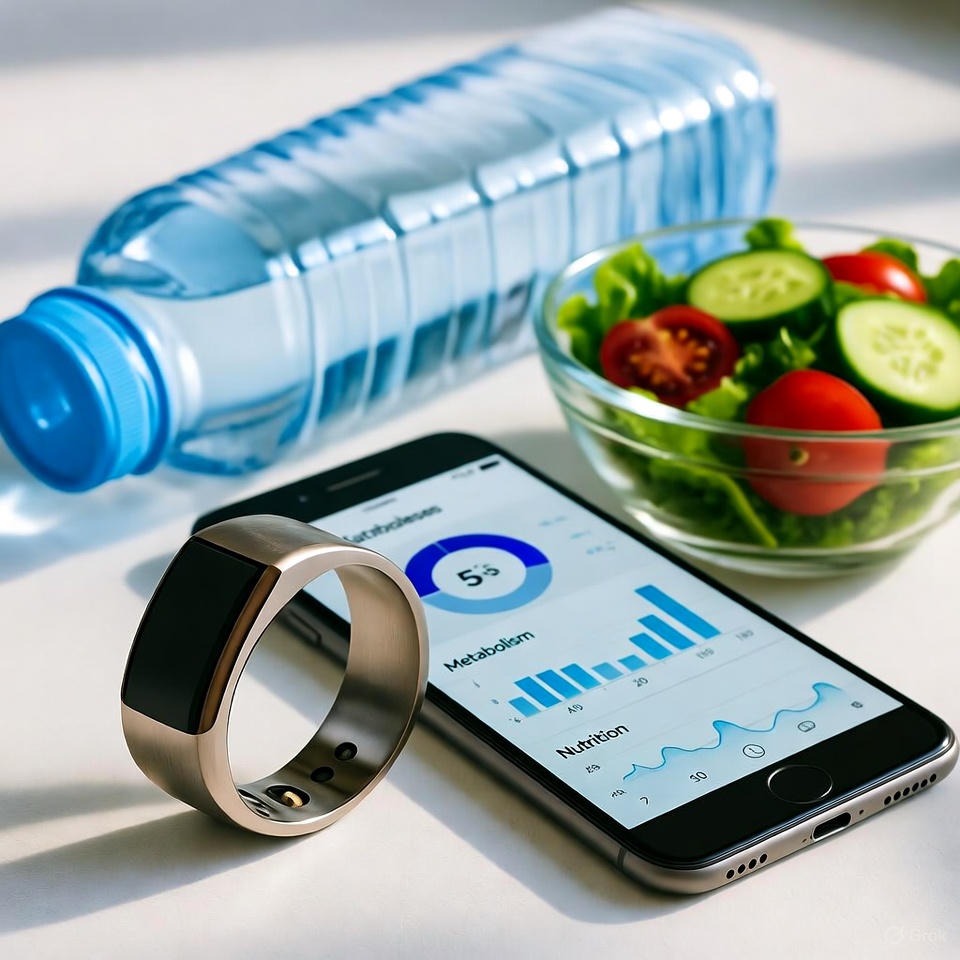
The classic advice—"drink a glass of water and eat a protein-rich breakfast"—is sound, but for a parent in the trenches, execution is everything. Your smart ring’s data can provide the why and when to make these habits stick.
This turns nutrition from a rule into a responsive strategy. You’re not following a diet; you’re using biofeedback to fuel the specific physical and mental demands revealed by your own body’s data.
For a parent, "finding time to exercise" in the morning can be a laughable concept. But what if your daily chores became part of your activity and recovery metrics? This reframe is revolutionary. The goal is not to add a workout, but to optimize the movement you’re already doing and understand its impact.
By integrating micro-movement mindfully, you erase the false dichotomy between "taking care of the house" and "taking care of yourself." Every action becomes a potential data point for wellness, building a sense of agency and accomplishment from within the whirlwind. This sustainable integration is key to long-term well-being, a concept explored in our article on mental wellness and work-life balance.
No amount of planning can prevent the 7:42 AM crisis: the missing shoe, the spilled milk, the sudden refusal to wear clothes. These moments trigger real, measurable physiological stress responses—a spike in heart rate, a drop in HRV. Your smart ring can act as an early-warning system, not for you, but for your own nervous system.
This biotechnological feedback loop is transformative. The ring moves you from being in the stress to being an observer of it. That small shift in perspective—facilitated by the data on your finger—is what allows you to respond with patience instead of reacting with frustration. Learning to recognize these early physiological red flags is a core skill; our guide on how to recognize mental wellness red flags early delves deeper into this vital awareness.
If you parent with a partner, the morning is a team sport requiring flawless (and often silent) communication. Two smart rings on one household create a powerful data dashboard for optimizing your collective effort.
This data-informed collaboration reduces resentment, increases empathy, and turns the morning from a battle of attrition into a coordinated mission. It provides a neutral, objective language to discuss needs and capabilities, strengthening the family unit's foundation. The importance of this social component to overall well-being cannot be overstated, as detailed in the social component of mental wellness.

The moment the last child is handed off at daycare or school, a profound shift occurs. The immediate demands vanish, and the transition to your workday (whether at home or at an office) begins. This 10-15 minute window is a critical, underutilized recovery and mindset shift opportunity. Your smart ring provides the perfect tool to maximize it.
This practice ensures you don’t bring the heightened stress state of the morning chaos into the rest of your day. You are using the commute not as lost time, but as a dedicated recovery and transition zone, guided by the biometrics gathered on your finger.
After weeks of collecting this rich data, you move from daily reaction to long-term strategy. You begin to see patterns and can build your own personal "Morning Algorithm"—a dynamic decision tree for your routine based on your ring’s key metrics.
Your algorithm might look like this:
This algorithm isn't rigid; it's a fluid framework that removes decision fatigue. You wake up, check your data, and know which "playbook" to run. It turns overwhelming choice into simple recognition. The ultimate goal is to build mental wellness habits that last a lifetime, and this data-informed algorithm is a powerful tool for that very purpose.
The sheer volume of data—graphs, scores, trends—can itself become a source of stress, another thing to "get right." The final, most important strategy is to avoid becoming a slave to the metrics. The ring is a tool for self-awareness, not a report card.
By simplifying the story, you ensure the smart ring remains a empowering partner in your parenting journey. It provides the silent, objective insight that helps you navigate the morning chaos not as a frazzled manager, but as a resilient, adaptive, and responsive leader of your family—and your own well-being. For those ready to take this personalized approach further, consider exploring how to create a mental wellness plan that fits your life.
The silence is palpable. The last lunchbox has been handed over, the final hug exchanged. You are now, suddenly, alone with your thoughts and your to-do list. This first hour of "freedom" is the most valuable real estate in a parent's day. It's also a common pitfall. Without structure, it can evaporate into a blur of scrolling, reactive email-checking, and household tidying, leaving you feeling busy but unaccomplished.
Your smart ring provides the biological blueprint to structure this hour with ruthless, personalized efficiency. This isn't about time management; it's about energy management, guided by the data from your chaotic morning.
Step 1: The 5-Minute Triage (Using Your Morning Data)
Before you touch a single task, spend five minutes consulting the data from the storm you just weathered.
Step 2: The 55-Minute Focus Block (Guarded by Your Ring)
Set a timer for 55 minutes. This is your sacred focus block.
This Power Hour, structured by your biological data, ensures you capture your best mental energy for your most important work, transforming what was once lost time into a pillar of daily productivity and professional identity.
It hits like clockwork: 10:47 AM. The caffeine has worn off, the focus from your Power Hour is fading, and a wave of fatigue or mental fog descends. For parents, this slump is often compounded by residual sleep debt and the energy expenditure of the morning. The key is not to react to the slump, but to predict and prevent it using the historical and real-time data from your smart ring.
Predictive Analysis: Understanding Your Personal Pattern
Over weeks, your ring’s data will reveal your personal slump signature.
Proactive, Data-Informed Interventions:
Once you see your pattern, you can build proactive defenses into your morning routine.
By treating the mid-morning slump as a predictable biological event—not a personal failing—you can engineer your routine to flow over it seamlessly, maintaining steady energy and focus through the critical late-morning hours. This proactive stance is a cornerstone of a preventive approach to mental wellness.
Lunch for a busy parent is often an afterthought: leftovers scarfed down at the kitchen counter, a quick sandwich while answering emails, or worse, skipped entirely. This missed opportunity has profound consequences for the second half of your day, which includes the demanding "second shift" of parenting. Your smart ring data provides a compelling case for transforming lunch from mere fuel into a strategic recovery tool.
The Post-Lunch Data Dip: Why It Happens
You may notice a common pattern in your afternoon data: a significant drop in HRV and a rise in resting heart rate or stress score in the 60-90 minutes after eating. This is often a sign of:
Designing a "Recovery Lunch" Using Data:
Think of lunch not as a pause in your day, but as the pit stop that determines your performance for the rest of the race. A recovery-focused lunch, informed by your body's feedback, is the single best investment you can make in your afternoon patience, productivity, and parental presence. The profound connection between what you eat and how you feel is explored in depth in our article on the gut-brain axis and mental wellness.

The workday winds down, but for a parent, the most demanding job is just beginning: the "second shift" of childcare, homework, activities, dinner, and bedtime. Arriving at this shift already depleted is a recipe for burnout and family tension. Your smart ring's activity and energy data from the day so far provides a precise audit, allowing you to strategically conserve or generate energy for the evening ahead.
Conducting Your 3 PM Audit:
At mid-afternoon, take a strategic pause to assess your resources.
Strategic Energy Planning for the Evening:
Based on your audit, choose your pre-second-shift activity wisely:
This proactive audit transforms you from a passive victim of afternoon exhaustion into an active energy manager. You walk into the chaos of the evening shift not by chance, but by design, with a reservoir of the right kind of energy to be the parent you want to be.
Between 4:30 PM and 7:00 PM lies the parental proving ground known as the "witching hour." Hunger, tiredness, and accumulated stress converge for both children and adults. Homework battles, sibling conflicts, and dinner pressure create a perfect storm for emotional dysregulation. This is where your smart ring shifts from a planning tool to a real-time biofeedback intervention device.
Setting Up for Success:
The Real-Time Intervention Protocol:
When you feel the familiar surge of frustration—a child refusing to cooperate, a spill at the dinner table—your instinct is to react. Your ring provides a powerful interruption to that loop.
This practice doesn't eliminate the chaos of the witching hour, but it changes your relationship to it. You become a scientist observing a stress experiment, with the power to alter the outcome. This mindful use of technology in high-stress moments is a critical skill for navigating mental wellness in the digital age.
The evening routine is a collective effort that sets the stage for the next day's success. It's not just about getting food on the table and kids into bed; it's about co-regulating the entire family's nervous systems to enable restful sleep. Your smart ring data can help you structure this rhythm in a way that respects everyone's biological needs, including your own.
Data-Informed Dinner Timing & Environment:
The Wind-Down Protocol (For You and Them):
The hour before bed should be a gradual descent, not an abrupt crash.
By designing the evening as a collaborative wind-down, you are not just managing children; you are cultivating a home environment that prioritizes biological readiness for rest. This collective rhythm is one of the most powerful gifts you can give your family's long-term well-being. For parents looking to instill these principles early, our resource on mental wellness basics for parents offers a foundational framework.
Once the children are asleep, a precious window opens. It's tempting to use this time to "finally get things done" or to zone out with stimulating content. However, how you spend this final hour determines the quality of your sleep and, by extension, your readiness for the next day's chaos. Your smart ring provides a personalized report card on your day, which should directly inform your pre-sleep ritual.
Conducting Your End-of-Day Review:
Spend 5 minutes with your ring's app, not with judgment, but with curiosity.
Designing Your Personalized Sanctuary Ritual:
Based on your data, choose 2-3 activities from the following to create a 30-45 minute wind-down ritual:
The Non-Negotiables:
Regardless of your data, two rules stand:
This ritual is your daily gift to yourself. It’s the closing of the day’s ledger and the gentle preparation for renewal. It ensures you don't just fall into bed exhausted, but that you arrive there ready to receive deep, restorative sleep.
For parents who share nighttime responsibilities—whether for infants, sick children, or early risers—the night can become a source of silent resentment and sleep deprivation one-upmanship. "I was up more than you" becomes a marital battleground. Smart ring data transforms this emotional argument into a neutral, logistical planning session. It enables a true partnership in sleep management.
Creating a Shared Data Dashboard:
Strategies for Data-Informed Coordination:
This approach depersonalizes the struggle. It's not about who is more tired; it's about how to optimally manage the family's collective sleep resources. You become co-CEOs of "Family Sleep, Inc.," making strategic decisions based on the company dashboard. This level of collaborative problem-solving is essential for maintaining mental wellness and work-life balance within a partnership.
The weekend for parents is often a paradox: a desperate need for rest collides with a backlog of chores, errands, and children's activities. The result is a Monday morning feeling just as depleted as Friday evening. Your smart ring’s weekly and monthly trend data is the key to breaking this cycle. It shows you what true recovery looks like for your body, so you can plan a weekend that actually recharges you.
Analyzing Your Weekly Trend Report:
Each Friday, review the weekly summary.
Designing a "Reboot Weekend" Based on Data:
The One Non-Negotiable Weekend Rule:
Protect one extended period of true solitude or partnership. This could be a 90-minute block where one partner takes the kids solo, allowing the other to do something purely for themselves—without guilt. This is not laziness; it's essential system maintenance. Your ring data from the following week will show the positive impact of this protected time on your stress resilience.
By letting your long-term data guide your weekend planning, you ensure that your days off are actually restorative, breaking the cycle of perpetual depletion and setting a stronger foundation for the week to come.
The smart ring is a powerful personal device, but its ultimate value is realized when its insights are woven into the fabric of your family's life. It becomes a tool not just for self-optimization, but for fostering a shared language of well-being, teaching your children foundational habits, and creating a home environment that supports everyone's health.
Creating a Family "Wellness Vocabulary":
Use the data to start age-appropriate conversations about how bodies work.
Informing Broader Lifestyle Choices:
Your ring's data is a compelling advocate for household changes.
Knowing When Data Is Enough: The Role of Professional Insight
Your smart ring is a brilliant wellness tool, but it is not a medical device. It's crucial to recognize its limits and understand when to seek deeper expertise. The ring might reveal persistent, troubling trends:
In these cases, your ring's data becomes a valuable conversation starter with a healthcare professional. It provides objective evidence to discuss, moving the conversation beyond "I feel tired" to "My physiological data shows a pattern of poor recovery." This proactive step is a critical part of knowing when to seek professional help for mental wellness.
By integrating the ring's insights into your family's culture and knowing its scope, you elevate it from a personal gadget to a cornerstone of a proactive, health-literate household. It fosters an environment where well-being is observed, discussed, and prioritized—a legacy far more valuable than any single metric.
The journey with a smart ring often begins as a quest for control—a way to hack the chaos of parenthood with superior data. But over time, a profound shift occurs. The focus moves from micromanaging daily scores to cultivating a deep, intuitive wisdom about your own body and rhythms. This is the transition from being a data consumer to a resilience architect. For parents, this long-term perspective is everything. It’s not about winning the morning; it’s about building a nervous system robust enough to thrive across the entire, beautiful marathon of raising a family.
The Quarterly Review: Spotting Macro-Trends in the Micro-Chaos
Set a calendar reminder every three months for a "Data Retrospective." This is where true insight lives.
This cultivated wisdom allows you to start predicting your needs before your ring even does. You’ll feel the early signs of depletion and know, from your historical data, exactly which intervention will be most effective. This is the foundation of true, unshakeable resilience. For a deeper exploration of building this enduring foundation, our guide on building mental wellness habits that last a lifetime provides essential frameworks.
Perhaps the most important optimization your smart ring facilitates is not of your schedule, but of your mindset. The data consistently teaches one brutal, liberating truth: You are not a machine. You are a complex, adaptive biological system influenced by sleep, stress, relationships, and seasons. The "optimized parent" is not the one with the most rigid, color-coded schedule. It is the one who has mastered the art of the fluid pivot.
How Your Ring Data Cultivates a Fluid Mindset:
This fluid mindset is your ultimate weapon against chaos. When the plan explodes—and it will—you don't explode with it. You assess your internal data, you access your toolkit, and you pivot. You become an adaptable, resilient force of nature, modeling for your children that strength lies not in never falling, but in knowing how to get back up with grace and intelligence.
A profound irony of the quantified-self movement is that the relentless pursuit of optimization can itself become a source of stress. Checking scores obsessively, feeling defeated by a low number, or trying to "game" your metrics can lead to digital wellness burnout. For a parent, whose mental load is already immense, the ring must be a servant, not a master. Sustainable integration is key.
Principles for a Healthy Relationship with Your Data:
The ring's greatest gift should be a heightened connection to yourself, not to a screen. By setting boundaries with the device, you ensure it enhances your presence in your life and with your family, rather than pulling you into another layer of digital distraction. This mindful approach is crucial for overall well-being in our connected world, a topic explored in navigating mental wellness in the digital age.
When you commit to a data-informed, fluid approach to your own well-being, the effects cascade through your entire household in powerful, often unexpected ways. You are not just optimizing your morning; you are architecting a family culture of health. This is the most meaningful ROI of your efforts.
Modeling Self-Regulation: Children learn emotional regulation by watching you regulate. When they see you pause, take a deep breath after a frustrating moment, and calmly state, "I'm feeling stressed, I need a minute," you are giving them a masterclass in emotional intelligence. Your ring is the silent coach that helped you build that skill. They internalize that feelings are manageable, not overwhelming.
Creating Predictable Rhythms: Your commitment to a wind-down routine, informed by sleep data, creates a stable, predictable environment for your children. Their nervous systems, which are even more sensitive than yours, begin to sync with these calming rhythms. Bedtime battles often decrease not because of stricter rules, but because the entire home environment has shifted towards calm, signaling safety to their brains.
Instilling a Proactive Health Mindset: By talking openly (and age-appropriately) about how sleep helps your body, how food fuels your play, and how movement lifts your mood—using your ring's data as a neutral talking point—you teach them to view health as a fascinating, personal science project. They learn to be curious about their own bodies, not fearful or disconnected. This sets them up for a lifetime of proactive self-care, aligning with the principles of teaching mental wellness basics to children.
This ripple effect means that the time and energy you invest in your own optimization pays a compound interest in the form of a calmer, healthier, more emotionally literate family. The ring on your finger becomes a tool for generational well-being.
The principles you master for the morning chaos are not exclusive to that time block. They are a universal operating system for navigating any high-stress, low-control transition—a hallmark of the parenting experience. Once you become fluent in the language of your own biometrics, you can apply this fluency anywhere.
The Work-to-Home Transition: The evening commute home is a classic stress zone. Use the same "commute calm-down" strategy you use post-drop-off. Before walking in the door, check your stress graph from the workday. Take 2 minutes of coherent breathing in the car to transition from "professional" to "parent" mode. Walk in the door biologically ready for connection, not needing to decompress from your family.
Managing Weekend Overwhelm: Weekends can be over-scheduled and under-restorative. Before committing to activities, check your weekly recovery data. If your HRV trend is low, advocate for a quieter plan. Use the ring's activity goal to ensure weekend fun includes movement, but let your readiness score dictate the intensity—a gentle hike versus a competitive sport.
Navigating Family Visits & Holidays: These are peak stressors, often disrupting sleep, nutrition, and routine. Wear your ring consistently. Let the data be your objective advocate for self-preservation: "My data shows I need a quiet 20-minute walk to manage the sensory load," or, "I'm going to turn in early; my sleep has been poor this week." The data provides a neutral reason to set boundaries, reducing family friction.
In each case, the ring moves you from being passively acted upon by events to actively managing your physiological response to them. You carry a personal sanctuary of awareness on your finger, allowing you to stay grounded and regulated through all of life's beautiful, chaotic transitions.
After 6-12 months of consistent use, you may hit a plateau. Your scores stabilize, and the dramatic improvements level off. This is a sign of success—you’ve built a strong, stable baseline. But for those seeking continued growth, this is the time to delve into more nuanced, advanced techniques, using your now-familiar data in new ways.
The HRV Resonance Challenge: HRV is highly trainable. Once you're adept at raising it with breath, introduce a daily 10-minute "HRV resonance training" session using a biofeedback app that pairs with your ring. The goal is to consciously maintain a high HRV for extended periods, strengthening your vagal tone like a muscle. Track how this dedicated practice affects your overnight HRV average and your stress resilience during difficult parenting moments.
Circadian Rhythm Fine-Tuning: Go beyond sleep duration. Use your ring’s body temperature and resting heart rate data (which have circadian rhythms) to pinpoint your exact biological prime time. When does your body temperature naturally peak? That’s likely your cognitive and physical peak. Align your most demanding tasks—whether a work project or planning a complex family outing—with this window. Conversely, schedule administrative tasks for your natural dips.
The Stress Inoculation Protocol: In a controlled way, use short, manageable stressors to build resilience. This could be a 60-second cold shower at the end of your warm shower, or a high-intensity interval training (HIIT) workout 2-3 times a week. Monitor your ring’s data closely: How quickly does your HRV recover after these acute stressors? Over time, you should see recovery times shorten, a clear sign your system is becoming more robust and adaptable—a key trait for parenting’s unpredictable demands.
Plateaus are an invitation to go deeper, not a sign to give up. They mark the transition from foundational health to optimized performance, even if that "performance" is measured in patience, presence, and joyful energy with your family.
As you integrate this powerful technology into your life, you are also modeling a relationship with devices for your watching children. This presents a critical teaching opportunity about the ethical, balanced use of personal technology. The ring becomes a tangible object to discuss bigger ideas.
Transparency and Purpose: Explain to your children, in simple terms, why you wear the ring. "It helps me understand how my body feels, so I can be a more patient and playful mom/dad." This frames technology as a tool for self-knowledge and service to others, not just for entertainment or escape.
Discussing Data Privacy: As they get older, have conversations about what data is, who owns it, and why privacy matters. "My ring collects information about my body to help me. We never share other people's private information without their permission." This lays early groundwork for digital citizenship.
Balancing the Digital and the Real: The physical act of taking off your ring during "sacred" family times (like dinner or story time) is a powerful nonverbal cue. It says, "Right now, you are my only data point. You have my full attention." This teaches them that human connection always takes precedence over digital feedback.
By being intentional about your own use, you show that technology can be harnessed to enhance our humanity, not replace it. You demonstrate that we can use tools without being used by them, a lesson that will serve your children immeasurably in their own tech-saturated futures.
The chaos of parenting is not static. It morphs from the physical demands of infancy to the logistical frenzy of the elementary years, into the emotional complexity of adolescence. Your smart ring is a constant companion through these stages, but the questions you ask of it—and the strategies you employ—will evolve beautifully.
The Infant/Toddler Phase (Survival & Recovery): Your primary data focus is sleep debt and nervous system recovery. Strategies are built around micro-rest, strategic napping when possible, and using breath to manage acute sleep-deprivation stress. The goal is physiological stabilization.
The School-Age Phase (Logistics & Energy Management): Your focus shifts to managing energy across complex schedules. You’ll use activity data to ensure you’re moving enough amidst carpool lines, and stress data to navigate homework battles and social dynamics. The goal is sustainable rhythm and patience.
The Adolescent Phase (Emotional Co-Regulation & Letting Go): Your data becomes crucial for managing your own stress in response to their big emotions. You’ll watch for stress spikes during conflicts and use your ring’s biofeedback to stay regulated so you can be a calm anchor, not a reactive participant. The focus is on your HRV as a buffer for their turbulence. This aligns with understanding how mental wellness needs shift across the lifespan.
Anticipating these shifts allows you to proactively adjust your routines. The ring provides the continuity to see your own strength and growth across these phases, offering a longitudinal view of your resilience that can be incredibly affirming during difficult transitions.
As we conclude this first deep exploration, it’s vital to remember that "optimization" is not a finish line you cross. It is a lens through which you view the ongoing journey of parenthood and selfhood. The smart ring is not a magic wand that eliminates chaos; it is a compass that helps you navigate it with more awareness, agency, and grace.
You have learned to start your day not by fighting your body’s signals, but by listening to them with sophisticated tools. You’ve discovered how to turn necessary chores into recovery metrics, how to use real-time biofeedback as an emotional circuit breaker, and how to align your family’s rhythms with the biological imperatives of sleep and recovery. You are building a practice of fluid resilience.
The data on your finger tells a story. At first, it’s a story of survival—of peaks and valleys, of sleep debt and stress spikes. But over time, as you apply these strategies, the story changes. The peaks of stress become less jagged, the valleys of recovery become deeper and more frequent. The trend lines slowly, surely, bend toward resilience. You are not just getting through the mornings; you are building a self, and a family, that is fundamentally stronger, more adaptable, and more joyful.
This is the true promise of morning routine optimization for parents: not a picture-perfect, silent sunrise, but the embodied knowledge that no matter what the day holds—the spilled milk, the sudden fever, the unexpected joy—you have the internal resources and the intelligent tools to meet it, not with frantic survival, but with strategic, compassionate resilience. The journey continues, one data point, one deep breath, and one heartfelt connection at a time.
Your Trusted Sleep Advocate: Sleep Foundation — https://www.sleepfoundation.org
Discover a digital archive of scholarly articles: NIH — https://www.ncbi.nlm.nih.gov/
39 million citations for biomedical literature :PubMed — https://pubmed.ncbi.nlm.nih.gov/
Experts at Harvard Health Publishing covering a variety of health topics — https://www.health.harvard.edu/blog/
Every life deserves world class care :Cleveland Clinic - https://my.clevelandclinic.org/health
Wearable technology and the future of predictive health monitoring :MIT Technology Review — https://www.technologyreview.com/
Dedicated to the well-being of all people and guided by science :World Health Organization — https://www.who.int/news-room/
Psychological science and knowledge to benefit society and improve lives. :APA — https://www.apa.org/monitor/
Cutting-edge insights on human longevity and peak performance:
Lifespan Research — https://www.lifespan.io/
Global authority on exercise physiology, sports performance, and human recovery:
American College of Sports Medicine — https://www.acsm.org/
Neuroscience-driven guidance for better focus, sleep, and mental clarity:
Stanford Human Performance Lab — https://humanperformance.stanford.edu/
Evidence-based psychology and mind–body wellness resources:
Mayo Clinic — https://www.mayoclinic.org/healthy-lifestyle/
Data-backed research on emotional wellbeing, stress biology, and resilience:
American Institute of Stress — https://www.stress.org/


