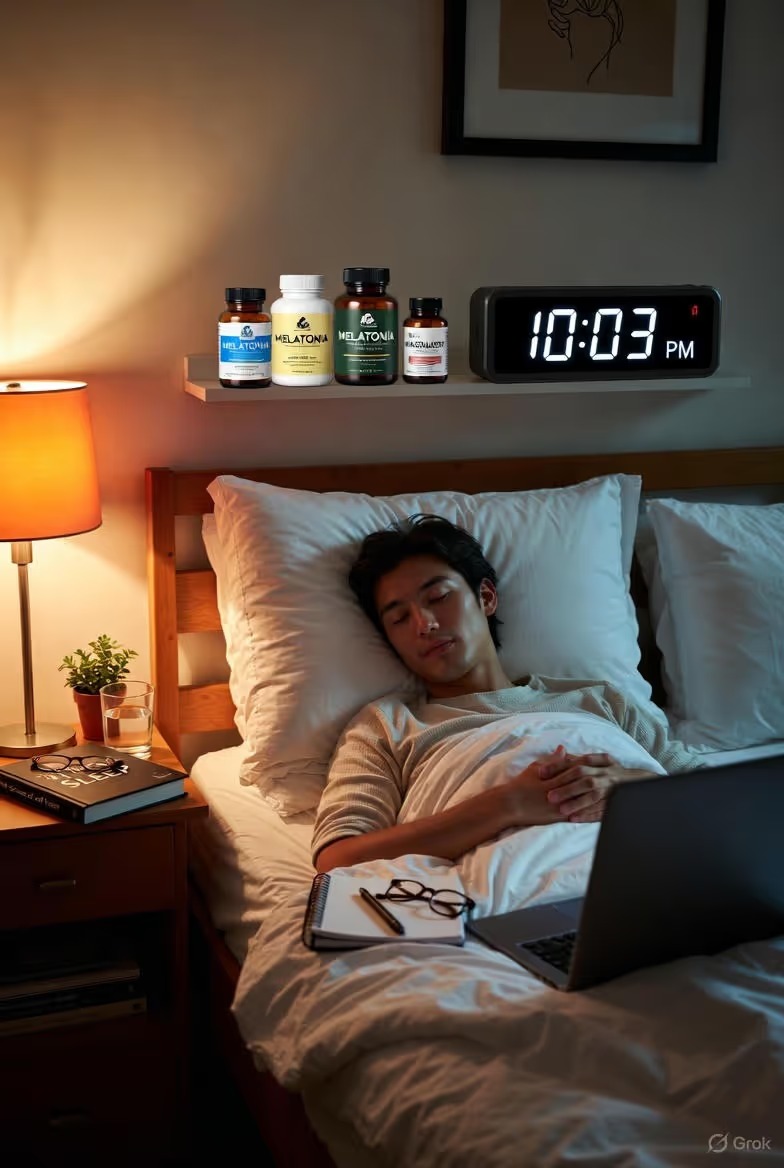
The Natural Sleep Environment: Optimizing Your Bedroom
Your bedroom environment profoundly affects natural sleep quality. This optimization guide addresses temperature, lighting, noise, bedding, air quality, and organization to create the ideal sleep sanctuary using natural, non-technological adjustments that enhance rest through environmental modifications alone.
The Natural Sleep Environment: Optimizing Your Bedroom for Deep, Restorative Sleep
You’ve tried the weighted blankets, the sleep podcasts, and the herbal teas. You’ve sworn off blue light and embraced morning sunlight. Yet, you still find yourself staring at the ceiling at 2 AM, your mind racing, or waking up feeling like you’ve run a marathon in your sleep. What’s missing?
The answer may not be in your routine, but in your room.
For centuries, humans slept in sync with the natural world—cool caves, quiet nights, and the gentle rhythm of dusk and dawn. Today, our bedrooms have become multi-purpose hubs of noise, light, and digital distraction. We’ve engineered the nature out of our nests, and our health is paying the price. The science is clear: sleep is not a passive state but a vital, active process of restoration, memory consolidation, and hormonal regulation. And the single greatest external factor influencing this process is your sleep environment.
This isn’t about buying a more expensive mattress. This is a deep dive into the architecture of slumber itself. We’ll explore how to transform your bedroom from a mere place you crash into a scientifically-optimized, biologically-aligned sanctuary for recovery. By harnessing principles from neuroscience, environmental psychology, and circadian biology, you can create a space that doesn’t just allow sleep, but actively promotes it.
Imagine a room that cools you down as you drift off, that bathes you in soothing darkness, and whose silence is broken only by sounds that cue your brain for rest. This is the promise of the natural sleep environment. And with the advent of precise personal biometric tracking from devices like the Oxyzen smart ring, we can now move beyond guesswork. We can see, in cold, hard data, how each tweak to our bedroom—from the color of the walls to the quality of the air—translates into measurable improvements in sleep latency, heart rate variability, and deep sleep duration.
This guide is the first step in reclaiming your birthright to perfect sleep. Let’s begin at the foundation: understanding why your bedroom matters more than you think.
The Foundational Science: Why Your Bedroom is Your Most Important Health Tool
We often think of health tools as things we consume or do: a vitamin, a workout, a meditation app. We rarely consider our physical spaces as active instruments of wellness. Yet, you spend approximately one-third of your life in your bedroom. This makes it arguably the most consistent environmental health intervention you have.
The core concept is environmental sleep medicine, a field that examines how our surroundings directly modulate our sleep physiology. Your brain’s sleep-wake cycle, governed by the suprachiasmatic nucleus (SCN) in your hypothalamus, is exquisitely sensitive to environmental cues, known as zeitgebers (German for "time-givers"). The most potent zeitgeber is light, but temperature, sound, and even air composition play critical roles.
When you enter your bedroom at night, you are sending a cascade of signals to your SCN. A bright LED bulb screams "midday sun!" A stuffy, warm room signals "active daytime metabolism!" The ping of a smartphone notification triggers a micro-surge of cortisol and alertness. Your brain, confused, hesitates to initiate the complex neurochemical cascade required for sleep onset. The result is fragmented, shallow sleep, even if you manage to be unconscious for eight hours.
Conversely, a well-optimized bedroom works in harmony with your biology. Darkness stimulates melatonin production. A drop in core temperature is a required physiological signal for sleep initiation—a cool room facilitates this. Quietness allows your brain’s default mode network to settle into the restorative patterns of non-REM sleep.
"The bedroom should be a cave: cool, dark, and quiet," says Dr. Matthew Walker, renowned sleep scientist and author of Why We Sleep. "Every degree of temperature, every photon of light, and every decibel of sound is a conversation with your circadian rhythm. We must learn to speak its language."
Modern technology, while often the disruptor, can also be the savior. This is where biometric feedback becomes revolutionary. Using a device like the Oxyzen smart ring, you can move from subjective feelings ("I slept okay") to objective data ("My deep sleep increased by 22% after I installed blackout curtains and lowered the thermostat to 65°F"). This creates a powerful feedback loop, allowing you to personalize your sleep sanctuary based on your unique physiology. For those curious about how this technology translates personal data into actionable insights, you can discover how Oxyzen works on our homepage.
The stakes extend far beyond feeling groggy. Chronic sleep disruption is linked to a suppressed immune system, impaired glucose metabolism, increased inflammation, and heightened risk for cardiovascular disease and neurological disorders. By optimizing your bedroom, you’re not just investing in better sleep; you’re investing in long-term systemic health. It’s a non-negotiable foundation, and the following sections will provide the blueprint.
Mastering Darkness: The Non-Negotiable Priority for Melatonin Production
If you could only optimize one element of your sleep environment, it should be darkness. Light is the primary conductor of your circadian orchestra, and its absence is the cue for your body to begin its nocturnal symphony of repair.
Your eyes contain intrinsically photosensitive retinal ganglion cells (ipRGCs). These cells are especially sensitive to blue-wavelength light and are directly wired to your SCN. When they detect light, particularly after sunset, they suppress the pineal gland’s production of melatonin—the "hormone of darkness" that signals sleepiness and helps regulate your sleep-wake cycle. Even small amounts of ambient light from a hallway, an electronic charger LED, or a streetlamp outside your window can significantly blunt melatonin production.
Creating true sleep darkness requires a systematic approach:
Blackout Window Coverings: This is your first line of defense. Invest in high-quality blackout curtains or shades. Ensure they are installed flush with the wall to prevent light leakage at the edges. For a complete seal, consider a combination of blackout curtains and a blackout roller shade.
The Digital Purge: Every tiny LED is a pollutant. Use black electrical tape to cover power indicators on chargers, TVs, air purifiers, and other electronics. If a device has a display that can’t be covered, face it away from the bed or place it in a drawer.
Strategic Lighting for the Evening: In the 1–2 hours before bed, dim overhead lights and use warm, amber-toned lamps (under 2,700 Kelvin). Consider installing smart bulbs that can automatically dim and shift color temperature at sunset. This supports your body’s natural melatonin ramp-up.
The Sleep Mask Consideration: A well-fitting, contoured sleep mask is an excellent portable solution and is essential for travel. It’s also a great option if you share a bedroom with a partner who has different sleep schedules.
The goal is not just to block light when you’re trying to fall asleep, but to maintain darkness throughout the night. Your sleep cycles, particularly in the early morning hours, remain sensitive to light intrusion. The payoff for this vigilance is profound. Studies have shown that sleeping in total darkness can improve sleep efficiency (the percentage of time in bed actually spent sleeping) and increase the duration of crucial slow-wave sleep.
Many of our users at Oxyzen first notice the impact of darkness optimization in their sleep data. They see a reduction in "sleep latency" (the time it takes to fall asleep) and fewer mid-night awakenings, which you can read about in real customer reviews and user experiences. It’s often the most immediate and impactful change one can make.
The Thermal Sweet Spot: How Temperature Dictates Sleep Architecture
While darkness sets the stage, temperature directs the performance. Your body does not maintain a static temperature; it follows a circadian rhythm. In the evening, as part of the sleep preparation process, your core temperature begins to drop. This drop is not just a side effect of sleepiness—it is a critical signal that initiates sleep.
Sleep scientists have identified a clear thermal sweet spot for most adults: a bedroom temperature between 60–67°F (15.6–19.4°C). This cool environment facilitates the necessary decline in core body temperature. If the room is too warm, your body struggles to shed heat, leading to restlessness, more frequent awakenings, and a reduction in precious REM and deep sleep.
To harness the power of thermal regulation:
Thermostat as a Sleep Tool: Program your thermostat to lower the temperature 60-90 minutes before your bedtime. This pre-cooling aligns with your body’s natural thermoregulatory drop.
Focus on Microclimate: The temperature of your immediate sleeping microenvironment (under the covers) is more important than the ambient room air. The goal is to use bedding that wicks moisture and allows heat to dissipate. Natural, breathable materials like cotton, linen, and wool are superior to many synthetic alternatives.
The Warm Feet Paradox: While a cool core is essential, warm extremities (hands and feet) actually help redistribute body heat and accelerate core cooling. Don’t be afraid to wear socks if you have cold feet, as counterintuitive as it may seem.
Pre-Sleep Rituals: A warm bath or shower 1–2 hours before bed is a powerful technique. The warm water dilates blood vessels at your skin’s surface, and when you step out, the rapid evaporation and heat loss mimic and enhance the body’s natural cooling signal.
It’s important to note that the "ideal" temperature is personal. Your age, sex, metabolism, and even the composition of your bedding will influence your preference. This is another area where biometric data is invaluable. By tracking your sleep stages and restlessness with a device like the Oxyzen ring, you can experiment with thermostat settings and observe the direct impact on your sleep quality. For more personalized insights and support on this kind of experimentation, our FAQ and support page can be a helpful resource.
Engineering Silence: Soundscaping for the Sleeping Brain
Noise is the stealth disruptor of sleep. Unlike light, which you can see, or temperature, which you can feel, noise can invade your sleep without waking you fully. It triggers micro-arousals—brief activations of the sympathetic nervous system that fragment sleep architecture and prevent you from descending into and maintaining deep, restorative stages.
The enemy isn't just loud, sudden noises. Low-level, continuous noise from traffic, HVAC systems, or a partner’s snoring can elevate stress hormones like cortisol, keeping your brain in a state of low-grade alertness.
The solution is not necessarily utter silence (which can feel unnatural to some), but the creation of a controlled, soothing soundscape:
White Noise & Sound Machines: These devices generate a consistent, broadband sound that masks disruptive noises. The key is that the sound is steady and featureless, giving your auditory processing centers nothing to "lock onto." Pink noise or brown noise, which have more energy in lower frequencies, are often even more effective at masking low rumbles like traffic.
The Power of Earplugs: For a physical barrier, high-fidelity earplugs designed for sleep (like soft silicone or moldable wax) can be transformative. They attenuate harmful noise while still allowing you to hear important sounds like a morning alarm.
Nature's Soundtrack: For many, the most psychologically soothing soundscape is one that mimics a safe, natural environment. Recordings or apps that play gentle rainfall, ocean waves, or a distant thunderstorm can be profoundly relaxing. These sounds are non-threatening and rhythmically predictable, promoting a sense of safety.
Addressing the Source: Where possible, take practical steps to dampen noise. Use thick rugs, heavy curtains, and bookshelves on shared walls to absorb sound. Ensure windows are properly sealed.
The impact of sound control is often seen in improved "sleep continuity." You may not sleep longer, but you sleep more solidly, with fewer unconscious arousals. This leads to feeling more refreshed. As you explore different soundscapes, pay attention to how you feel upon waking. Does the sound of rain leave you more serene than white noise? Your personal preference is a valid data point, and tuning your environment to it is a key part of the process. For more ideas on creating holistic wellness routines that include soundscapes, you can explore our blog for more wellness tips.
The Air You Breathe: Optimizing Ventilation, Humidity, and Purity for Respiratory Health
You are, in a very literal sense, merging with your bedroom environment for eight hours a night. The quality of the air you breathe during this extended period directly affects your respiratory system, sinus health, and even your brain's clearance of metabolic waste during sleep.
Stale, dry, or polluted air can lead to dry mouth and throat, aggravated allergies, snoring, and overall restless sleep. The goal is to create an atmosphere that is fresh, clean, and slightly humidified.
Ventilation is Key: Whenever possible, sleep with a window slightly open to promote air exchange. This prevents the buildup of carbon dioxide (which you exhale) and introduces fresh oxygen. If outdoor air quality or noise is an issue, a simple fan or an HVAC system with a fresh air intake can help circulate air.
The Humidity Balance: The ideal relative humidity for sleep is between 40% and 60%. Air that is too dry (<30%) can irritate mucous membranes and skin. Air that is too damp (>70%) promotes mold and dust mite growth. A hygrometer can help you monitor levels. Use a humidifier in dry climates/seasons and a dehumidifier in damp ones.
Air Purification: For those with allergies, asthma, or in urban environments, a HEPA air purifier can be a worthwhile investment. It captures particulate matter like dust, pollen, and pet dander. For broader chemical and odor control, look for units with activated carbon filters. Place the purifier near the bed, but not pointing directly at you to avoid a draft.
The Green Clean: Be mindful of the cleaning products, detergents, and air fresheners you use in the bedroom. Opt for fragrance-free, natural alternatives to reduce your exposure to volatile organic compounds (VOCs) that can off-gas and cause irritation.
Think of your bedroom air as a nutrient. Clean, fresh air supports the parasympathetic "rest and digest" state, while stale or irritating air keeps the body subtly stressed. Ensuring good air quality is a foundational step that supports all the other optimizations you put in place.
The Psychology of Space: Decluttering for a Decluttered Mind
Your visual field is a direct input to your brain’s cognitive and emotional centers. A bedroom cluttered with laundry, work papers, unfinished projects, or general disorder sends subliminal signals of chaos, obligation, and unfinished business. This can elevate anxiety and make it difficult for your mind to settle into the quietude required for sleep.
The field of environmental psychology demonstrates a clear link between orderly spaces and reduced stress. A minimalist, intentional bedroom design acts as a visual sedative.
The "Bedroom-Only" Rule: Reclaim your bedroom’s primary purpose: sleep and intimacy. Relocate workstations, exercise equipment, and hobby corners to other rooms. If you must have a desk, use a room divider or screen to hide it from view at bedtime.
The Nighttime Visual Field: What do you see from your pillow? The wall or space opposite your bed should be calm and soothing. Avoid busy art, crowded shelves, or a visible pile of clutter. Opt for a simple piece of art, a serene color, or nothing at all.
Hidden Storage: Utilize under-bed storage with rolling bins, bedside tables with drawers, and closet organizers. The goal is to have a place for everything so that surfaces can remain clear and calm.
A Pre-Bed Tidy: Spend 5 minutes each night returning the room to its serene state. Put away clothes, clear the bedside table, and fluff the pillows. This ritual acts as a cognitive cue, signaling to your brain that the day’s activities are complete and the space is now dedicated to rest.
This isn’t about achieving a sterile, magazine-perfect look. It’s about creating a visual environment that reflects and reinforces the internal state you wish to cultivate: peace, safety, and release. The act of physically decluttering often leads to a perceptible mental "lightening," making the transition into sleep far smoother. Our journey at Oxyzen has always been rooted in this principle of reducing friction between you and your wellness goals, a philosophy you can learn about in our brand journey and founding story.
Material Matters: How Your Bedding and Pajamas Influence Thermoregulation and Comfort
You are in direct physical contact with your bedding and sleepwear for the entire night. These materials are not passive; they are active participants in your thermal regulation, moisture management, and tactile comfort. Choosing them wisely is a direct investment in sleep quality.
The Breathability Hierarchy: Natural fibers generally outperform synthetics for breathability and moisture-wicking.
Linen: The gold standard for hot sleepers. Incredibly breathable, moisture-wicking, and gets softer with each wash.
Cotton: A classic, reliable choice, especially long-staple varieties like Egyptian or Pima cotton for their softness and durability. Look for percale weaves for a crisp, cool feel.
Bamboo (Viscose/Rayon): Made from bamboo pulp, this fabric is silky-soft, thermoregulating, and highly absorbent.
Wool: Surprising to some, merino wool is exceptional for temperature regulation year-round. It wicks moisture away brilliantly and provides warmth without overheating.
Avoiding Synthetics: Polyester, nylon, and other petroleum-based fabrics tend to trap heat and moisture, creating a clammy microclimate that can disrupt sleep.
The Mattress Protector & Pillow Factor: Don’t overlook these. A breathable, waterproof mattress protector is essential for hygiene but should not feel like a plastic bag. Similarly, choose pillows with natural fills (down, wool, latex) or advanced cooling gels if you sleep hot.
Pajama Philosophy: Your sleepwear should be loose-fitting and made from the same breathable materials listed above. Tight or restrictive clothing can hinder circulation and feel uncomfortable during position changes throughout the night.
Your skin is your largest organ and a primary thermoregulator. By dressing it and surrounding it in breathable, non-irritating materials, you remove a potential source of discomfort and support your body’s innate cooling mechanisms. Treat your bedding as a critical piece of sleep technology.
The Light Spectrum and Timing: Harnessing Dawn and Dusk Indoors
We’ve established that darkness at night is paramount. But the story of light and sleep is a 24-hour cycle. Just as you need darkness to signal "night," you need bright, blue-rich light to signal "day." Proper light exposure during waking hours strengthens your circadian rhythm, making the contrast at night more effective.
Morning Light is Non-Negotiable: Aim to get at least 15-30 minutes of bright, outdoor light within 60 minutes of waking. This resets your internal clock, suppresses lingering melatonin, and boosts cortisol (in a healthy, alerting way). If you wake before the sun, consider a sunrise-simulation alarm clock that gradually fills your room with light.
Daylight in Your Day: Maximize your exposure to natural light throughout the day. Take breaks outside, sit near windows, and keep indoor spaces well-lit. This reinforces a robust day-night signal.
The Evening Wind-Down (The "Digital Sunset"): 90 minutes before bed, begin to dim lights and reduce screen time. For unavoidable screens, use system-wide blue light filters (like Night Shift or f.lux) and/or wear blue-light-blocking glasses. The goal is to mimic the natural shift to the long, red wavelengths of a setting sun.
Bedside Lighting: Your last light before sleep should be the dimmest and warmest. Use a small, amber or red-toned reading light if you must read. Red light has the least impact on melatonin and ipRGCs.
By consciously managing your light diet throughout the entire 24-hour period, you train your circadian rhythm like a muscle. A strong, well-entrained rhythm falls asleep more easily, sleeps more deeply, and wakes more naturally. This holistic approach to light is a cornerstone of modern sleep hygiene and is a topic we frequently delve into with additional resources and related articles.
Biophilic Design: Reconnecting with Nature to Reduce Pre-Sleep Anxiety
Biophilia is the innate human tendency to seek connections with nature and other forms of life. Integrating biophilic principles into your bedroom can reduce stress, lower blood pressure, and create a profound sense of calm—all of which are conducive to sleep.
This isn’t about turning your room into a jungle (though plants are great!). It’s about incorporating natural elements, patterns, and materials.
Natural Materials: Use wood (for furniture or accents), stone, cotton, wool, and linen. The varied textures and organic patterns are inherently soothing.
The Plant Life Effect: A few carefully chosen houseplants (e.g., Snake Plant, Peace Lily, English Ivy) can improve air quality and add a living, calming presence. Ensure they are non-toxic and suited for lower light if your room is dark.
Nature's Palette: Use a color scheme inspired by the natural world: soft greens (forest, sage), blues (sky, water), earthy browns, and gentle neutrals. Avoid harsh, stimulating colors like bright reds or oranges.
Organic Shapes and Forms: Choose furniture with curved lines and organic shapes over harsh, geometric industrial designs. Incorporate art or photographs depicting serene natural landscapes.
The Sound of Nature: As mentioned in the sound section, using nature-based soundscapes is an auditory form of biophilia.
Biophilic design works on a subconscious level to counteract the artificial, high-stimulus environments we inhabit during the day. It signals to your primal brain that you are in a safe, resource-rich, and peaceful place—the perfect setting for letting your guard down and surrendering to sleep. This connection to natural principles is core to our vision, which you can explore further by learning about our mission and values.
The Pre-Sleep Ritual: Creating a Behavioral Bridge to Your Sleep Sanctuary
You can have the most perfectly optimized cave, but if you sprint into it at 11 PM with your mind racing from work and a smartphone in hand, you’ve undermined its potential. The final, crucial element is the transition ritual. This is a consistent, wind-down routine that acts as a behavioral and psychological bridge from the busyness of the day to the tranquility of your sleep sanctuary.
An effective ritual should last 60-90 minutes and gradually lower nervous system arousal.
The Digital Curfew: This is the most important step. Set a firm time to turn off all non-essential screens (phones, tablets, TVs, computers). Place your phone in another room to charge, or at the very least, enable "Do Not Disturb" and place it face down.
The Light Dimming: As part of your ritual, dim the lights throughout your home, culminating in the very low light of your bedroom.
Calming Activities: Fill this time with low-stimulus, enjoyable activities. This could include:
Reading a physical book (not an e-reader with a backlight)
Gentle stretching or restorative yoga
Listening to calm music or a podcast (on a device with the screen covered)
Taking a warm bath or shower
Journaling or writing a gratitude list to offload worries
Light tidying (as mentioned in the decluttering section)
Consistency is the Catalyst: Try to begin this ritual at roughly the same time each night, even on weekends. This consistency reinforces your circadian rhythm more powerfully than almost anything else.
Your pre-sleep ritual is the software that runs in your perfectly engineered hardware (the bedroom). It tells your body and mind, in no uncertain terms, that it is now time to shift states. Over time, simply starting the ritual will begin to trigger physiological changes—a drop in cortisol, a rise in melatonin—preparing you for seamless sleep onset the moment your head hits the pillow.
This comprehensive exploration of the natural sleep environment provides the foundational knowledge and actionable steps to begin your transformation. We’ve covered the non-negotiable pillars of darkness, temperature, and silence, and delved into the supportive roles of air quality, psychology, materials, light timing, biophilic design, and ritual.
Implementing even a few of these strategies can yield noticeable improvements. But remember, the journey to perfect sleep is personal and iterative. What works for one person may need tweaking for another. The key is to become a scientist of your own sleep, observing, experimenting, and refining.
In the next portion of this guide, we will move beyond the static environment and into the dynamic interplay between your daily habits and your sleep sanctuary. We will explore how diet, exercise, and stress management techniques must align with your bedroom optimization to create an unbreakable cycle of renewal. We will also delve into advanced tracking and how to interpret your biometric data to solve stubborn sleep challenges, ensuring your sanctuary evolves with you.
Your path to deeper, more restorative sleep begins tonight. Start with one change—perhaps taping over those glaring LEDs or adjusting your thermostat—and observe. Your body, and your future well-rested self, will thank you.
The Dietary Foundation: How What You Eat (and When) Programs Your Sleep
Your digestive system is on a circadian schedule just like your brain. Eating at the wrong times or consuming foods that disrupt blood sugar and core body temperature can sabotage even the most pristine sleep environment. The goal of sleep-supportive nutrition is to stabilize energy, support melatonin production, and facilitate the natural nighttime drop in core temperature.
The Chrononutrition Principle: Aim to align your eating window with daylight hours. Finishing your last meal at least 3 hours before bedtime is a powerful rule. This allows your body to complete the active work of digestion (which raises core temperature and metabolic activity) before you attempt to sleep. A stomach busy digesting a heavy meal is a direct competitor to the brain's sleep initiation processes.
Macronutrients for Sleep:
Complex Carbohydrates in the Evening: Contrary to outdated fear-mongering, a modest portion of complex carbs at dinner (e.g., sweet potato, quinoa, oats) can be beneficial. They help shuttle tryptophan (an amino acid) into the brain, where it converts to serotonin and then melatonin. The key is choosing high-fiber, low-glycemic options that won't cause a blood sugar spike and crash later.
The Protein Balance: Adequate protein throughout the day provides the steady stream of amino acids, including tryptophan. However, a very large, protein-heavy meal right before bed demands significant digestive effort and can be disruptive.
Fats for Satiety: Healthy fats (avocado, olive oil, nuts) slow digestion and promote satiety, helping to prevent wakefulness due to hunger. A small handful of almonds, which contain both melatonin and magnesium, can be an ideal mini-snack if needed.
Specific Sleep-Supportive Nutrients & Foods:
Magnesium: Known as "nature's relaxant," magnesium plays a role in over 300 enzymatic reactions, including those that regulate the nervous system and melatonin production. Dietary sources include leafy greens, nuts, seeds, and dark chocolate. Many find a magnesium glycinate supplement before bed to be profoundly calming.
Tart Cherry Juice: A natural source of melatonin and phytochemicals that may improve sleep quality and duration. A small glass in the evening can be a helpful ritual.
Herbal Allies: Chamomile, passionflower, and valerian root teas are traditional, research-backed relaxants that can form a soothing part of a pre-bed ritual.
Substances to Sideline:
Caffeine: Its half-life is 5-6 hours. That means if you have a coffee at 3 PM, 50% of the caffeine is still in your system at 8 PM. For the sleep-sensitive, a strict cutoff by noon is advisable.
Alcohol: It is a sedative, not a sleep aid. While it may induce initial drowsiness, it severely fragments the second half of the night's sleep, decimating REM sleep and leading to non-restorative, light sleep.
Heavy, Spicy, or High-Sugar Foods: These can cause indigestion, reflux, and blood sugar rollercoasters that wake you up.
Tracking your food intake alongside your sleep data can reveal powerful personal insights. You might discover, for instance, that a high-sodium dinner leads to increased restlessness, or that a magnesium-rich snack correlates with higher deep sleep scores. This level of personalization is where the journey from good sleep to great sleep truly begins. For guidance on how to correlate lifestyle factors with your biometrics, our FAQ and support page offers helpful starting points.
Movement as Medicine: Timing Exercise to Enhance, Not Hinder, Sleep
Physical activity is one of the most potent non-pharmacological sleep aids available. It increases sleep drive (the homeostatic pressure to sleep), reduces anxiety, and helps regulate circadian rhythms. However, its impact is heavily influenced by timing, intensity, and type.
The General Rule: Move More, Sleep Better. A sedentary life is a recipe for shallow sleep. Regular exercise, even just daily walking, is associated with longer total sleep time and greater time spent in deep, slow-wave sleep.
The Timing Spectrum:
Morning & Afternoon Exercise (Ideal): This is the gold standard. Exercising in natural daylight provides a dual circadian benefit: the bright light exposure reinforces your wake cycle, and the physical exertion builds healthy fatigue. Your body has the entire day to recover, allowing cortisol and body temperature to follow their natural downward curve in the evening.
Evening Exercise (Proceed with Caution): The old admonition to avoid evening exercise is being nuanced. The key factor is intensity and individual response.
High-Intensity Interval Training (HIIT), Vigorous Cycling/Running: These significantly raise core temperature, heart rate, and stimulate the sympathetic nervous system. For most, finishing such activities at least 3 hours before bed is wise to allow physiology to calm.
Low-Intensity & Mind-Body Movement (Highly Recommended): Gentle yoga, stretching, Tai Chi, or a leisurely walk after dinner can be incredibly beneficial. They promote relaxation, aid digestion, and initiate the wind-down process without over-stimulation.
The Recovery-Sleep Feedback Loop: Exercise creates micro-tears in muscle; sleep, particularly deep sleep, is when human growth hormone is released to repair them. The better you sleep, the better you recover from exercise, and the more energy you have to exercise again—a virtuous cycle. Conversely, poor sleep hinders recovery, increases injury risk, and saps motivation.
Listen to your biometrics. If you notice that your evening spin class consistently leads to a higher resting heart rate overnight and less deep sleep, it's a clear signal to shift that workout earlier. Your body’s data doesn't lie, and it provides the ultimate personal guide to optimizing this powerful lever. Many athletes in our community use the Oxyzen ring specifically to fine-tune this balance, as shared in some of their real customer reviews and user experiences.
Mindfulness and the Stress Detox: Quieting the Mind to Prepare the Body
Your sleep environment can be a physical fortress, but if your mind is a fortress under siege, sleep will not come. The pre-sleep hours are when the noise of the day—unresolved conflicts, tomorrow's to-do list, general anxieties—often crescendos. Chronic stress keeps cortisol elevated and the nervous system in a state of "fight or flight," directly opposing the "rest and digest" state required for sleep.
Cognitive hyperarousal is one of the most common causes of insomnia. Therefore, a systematic practice of down-regulating the nervous system is not optional; it is essential.
Evidence-Based Techniques for Pre-Sleep Calm:
Progressive Muscle Relaxation (PMR): A systematic tensing and relaxing of muscle groups from toes to head. This teaches the body to recognize and release physical tension, which often mirrors mental tension.
Diaphragmatic Breathing (4-7-8 Breath): Breathing in for 4 counts, holding for 7, and exhaling slowly for 8. This stimulates the vagus nerve, the main nerve of the parasympathetic nervous system, triggering a relaxation response that lowers heart rate and blood pressure.
Body Scan Meditation: Lying in bed, bring gentle awareness to each part of the body in sequence, noticing sensations without judgment. This practice cultivates present-moment awareness and draws focus away from racing thoughts.
Gratitude Journaling: Writing down 3-5 things you are grateful for from the day. This simple act shifts cognitive focus from worries and lacks to positives and abundances, inducing a calmer, more contented state.
The "Brain Dump": Keep a notebook by your bed. If thoughts are racing, write them all down—tasks, ideas, worries. This externalizes them, giving your brain permission to let them go for the night, knowing they are captured safely on paper.
The goal is not to empty the mind, but to become a detached observer of its chatter. By practicing these techniques consistently before you feel stressed about sleep, you build a skill set that you can deploy on difficult nights. Over time, the ritual of the practice itself becomes a conditioned cue for sleep. This philosophy of using small, consistent practices for profound change is central to our approach, which you can learn more about in our story.
The Digital Detox Zone: Reclaiming Your Sanctuary from Technological Intrusion
This may be the most challenging yet transformative optimization of the modern age. Your smartphone is a sleep environment weapon of mass destruction. It is a portal to stress (work email, news), a source of melatonin-suppressing blue light, and a vehicle for cognitive and emotional arousal (social media, engaging content).
The bedroom must become a Digital Detox Zone. This is a non-negotiable boundary.
The Charging Station is Elsewhere: The single most effective rule is to charge all phones, tablets, and laptops outside the bedroom. Use a traditional alarm clock. This removes the temptation to scroll, eliminates notification anxiety, and sanctifies the space.
Enable "Do Not Disturb" Schedules: If the phone must stay for emergency reasons, use automated features to silence all non-essential calls and notifications from, say, 9 PM to 7 AM.
No TVs in the Bedroom: The television is a passive, attention-hijacking device that floods the room with stimulating light and content. Its presence undermines the room's core purpose.
Smart Devices with Caution: While smart thermostats and lights can aid sleep, be wary of devices with bright displays or intrusive notifications. Ensure their sleep modes are activated.
The psychological benefit is profound. When your bedroom has no digital demands, it becomes a place of pure association with rest and intimacy. You break the constant cycle of stimulation and give your brain the uninterrupted space it needs to power down. This boundary is a gift you give to your sleep and your relationships. For more on building sustainable, low-tech wellness habits, we often publish related content on our blog for further reading.
Personalization Through Biometrics: Becoming a Scientist of Your Own Sleep
We have now covered a vast array of environmental and lifestyle factors. But which ones matter most for you? Is it the temperature, the late-afternoon coffee, or the pre-screen time that's holding you back? Guessing leads to frustration. Data leads to clarity.
This is the era of personalized sleep optimization, powered by accessible biometric tracking. A device like the Oxyzen smart ring provides an objective, nightly report card on the factors you can control.
Key Metrics to Monitor and What They Mean:
Sleep Latency: The time it takes you to fall asleep. Improving this often points to wind-down ritual effectiveness, light exposure, and stress management.
Sleep Stages (Light, Deep, REM): The architecture of your night. Are you getting enough deep sleep for physical restoration? Enough REM for cognitive and emotional processing? Lifestyle factors like exercise timing, alcohol, and diet heavily influence these.
Resting Heart Rate (RHR) & Heart Rate Variability (HRV): Your nightly RHR is a profound health indicator; a lower trend is generally positive. HRV, the variation in time between heartbeats, is a direct measure of your nervous system's resilience and recovery status. A higher HRV suggests better stress adaptation. These metrics are incredibly sensitive to training load, stress, and alcohol.
Restlessness & Awakenings: How many times do you move or wake briefly? This can indicate environmental disruptions (noise, temperature swings, partner movement) or internal factors (digestion, sleep apnea, pain).
The Experimentation Protocol:
Establish a Baseline: Wear your tracker for a week without changing anything. Understand your starting point.
Change One Variable at a Time: For the next week, implement one change—e.g., set the thermostat to 66°F, or take a magnesium supplement, or institute a strict 8 PM digital curfew.
Analyze the Data: After 5-7 days, look at the trends. Did deep sleep increase? Did sleep latency decrease? Did overnight HRV improve?
Iterate: Keep what works, discard what doesn't. Then test the next variable.
This method transforms you from a passive recipient of sleep tips into an active architect of your own recovery. It removes dogma and replaces it with personal evidence. The journey of Oxyzen has been fueled by empowering users with this exact capability, a principle rooted in our vision and values.
Advanced Environmental Tweaks: Niche Factors for the Sleep Enthusiast
Once the fundamentals are mastered, you can explore finer details that can provide an extra edge. These are the "master class" optimizations for those seeking the pinnacle of sleep quality.
Earth Grounding (Earthing): The theory that direct skin contact with the Earth's surface electrons can reduce inflammation and improve sleep. While more research is needed, some find that using a grounded mattress sheet (connected to a properly installed ground port in an electrical outlet) subjectively improves sleep depth and reduces morning stiffness.
Geomagnetic Field Considerations: Some emerging, albeit controversial, research suggests that aligning your bed in a North-South orientation (headboard North) may align with the Earth's magnetic field and promote more stable sleep. If you're renovating, it's a simple consideration with no downside.
Far-Infrared & PEMF Technology: Some advanced sleep systems use far-infrared mats to promote gentle, deep-heat relaxation or pulsed electromagnetic field (PEMF) therapy to support cellular recovery. These are cutting-edge and investment-level tools, but anecdotally reported to be beneficial by some biohackers.
Advanced Air Quality: Beyond a HEPA filter, you can monitor CO2 levels with a dedicated meter. High CO2 (>1000 ppm) from poor ventilation can directly impair cognitive function and sleep quality. Ensuring fresh air exchange becomes a data-driven priority.
Customized White Noise: Using apps that allow you to mix your own soundscape (e.g., brown noise with a distant thunderstorm) to find the perfect, personalized auditory mask.
Remember, these are refinements. They are meaningless without the bedrock of darkness, cool temperature, and quiet. But for the enthusiast who has optimized all else, they offer new frontiers for exploration and potential gain.
Addressing Shared Spaces: The Art of the Compromise Sanctuary
Optimizing a bedroom becomes a more complex, diplomatic mission when you share it with a partner, pet, or child. Different temperature preferences, sleep schedules, noise tolerances, and habits must be harmonized.
The Temperature Divide: This is the most common challenge. Solutions include:
Dual-Zone Bedding: Each side of the bed has its own duvet/blanket of appropriate warmth.
Bed Cooling/Heating Systems: Advanced mattress pads like the Eight Sleep Pod allow each side of the bed to be set to an independent temperature.
Strategic Pajamas and Bedding: The warmer sleeper uses lighter pajamas and sheets; the colder sleeper uses warmer ones, all under a shared top layer for aesthetic cohesion.
The Snoring/Noise Challenge:
For the listener: High-quality earplugs or a white noise machine on your bedside.
For the snorer: Encourage evaluation for sleep apnea. Other aids include nasal strips, mandibular advancement devices, or positional therapy (encouraging side-sleeping).
Divergent Schedules: If one partner goes to bed later or wakes earlier:
Use red or amber headlamps/low lights for the night owl to navigate without flooding the room with blue light.
The early riser should prepare clothes and items in another room to avoid disturbing their partner.
A white noise machine can mask the sounds of one person entering or leaving.
Pets in the Bedroom: While the emotional comfort is real, pets can disrupt sleep with movement, sounds, and allergens. If they stay, establish a firm sleeping spot for them (e.g., a dedicated dog bed on the floor) and maintain impeccable cleanliness.
The key is communication and a shared commitment to viewing the bedroom as a mutual wellness project. The goal is a compromise that respects both individuals' needs while protecting the sanctity of the shared sleep space. Finding tools and technologies that support individual needs within a shared space is a common theme in the experiences shared by our user community.
Seasonal Adjustments: Adapting Your Sanctuary to the Changing Year
Your sleep environment is not a "set it and forget it" system. As the external world changes with the seasons, so too must your internal one. The challenges of a humid, bright summer are different from those of a dry, dark winter.
Summer Optimizations:
Temperature Priority: Maximize cooling. Use air conditioning, fans (ceiling fans are ideal for air circulation without direct draft), and cooling mattress toppers or pillows made from phase-change materials.
Light Control: Longer days mean earlier sunrises. Ensure blackout curtains are completely secure to prevent premature waking.
Humidity Management: Use a dehumidifier to keep humidity in the 40-50% range, making the cool air feel more effective.
Winter Optimizations:
Light Therapy: Combat Seasonal Affective Disorder (SAD) and maintain circadian strength with a 10,000-lux light therapy lamp used for 20-30 minutes in the morning.
Humidity & Heat: Dry winter air from heating systems is a major disruptor. A humidifier is essential. Be careful not to overheat the room; keep the thermostat in the cool sleep range (60-67°F) even when it's cold outside. Use warmer bedding instead.
Evening Ritual Emphasis: With longer nights, the temptation for screen time grows. Reinforce your digital curfew and wind-down practices.
The Transitional Seasons (Spring/Fall): These are ideal times for a deep refresh. Wash all bedding thoroughly, flip or rotate your mattress, and declutter the space. Use the natural temperature swings to practice sleeping with open windows for superior ventilation before bugs or extreme temperatures make it impractical.
By attuning your sleep sanctuary to the rhythms of nature, you deepen your own circadian entrainment and maintain high-quality sleep year-round. For more detailed guides on seasonal wellness adjustments, you can always explore our blog for related articles.
The Natural Sleep Environment: Optimizing Your Bedroom (Conclusion)
The blueprint is now complete. You have a sanctuary engineered for darkness, coolness, and quiet. You’ve aligned your daily rhythms of food, movement, and mind to build a powerful, natural sleep drive. You’ve personalized it all with data and adapted it for shared spaces and shifting seasons. This is the architecture of perfect sleep.
Yet, a masterpiece requires curation. The final mastery lies not just in creation, but in sustainment, resilience, and integration. What happens when life intrudes—when you travel, when stress spikes, or when, despite your best efforts, sleep remains elusive? How do you maintain this exquisite environment so it serves you for decades? And ultimately, what is the broader life that this foundation of perfect sleep enables you to build?
This concluding section moves from optimization to philosophy. We will cover the practicalities of maintaining your sleep sanctuary, the art of creating "sleep resilience" for travel and disruption, and a systematic guide to troubleshooting stubborn sleep issues. Finally, we will zoom out to see the sleep-optimized bedroom not as an end in itself, but as the launchpad for a life of heightened energy, clarity, and health. This is where your investment pays its infinite dividends.
Maintenance and Mindfulness: The Upkeep of Your Sleep Sanctuary
An optimized bedroom is a dynamic ecosystem, not a static installation. Without regular upkeep, dust accumulates, filters clog, routines slip, and the environment slowly degrades. A mindful maintenance protocol ensures your sanctuary remains perpetually effective.
The Weekly & Monthly Refresh:
Linens: Wash sheets and pillowcases weekly in hot water (at least 130°F/55°C) to eliminate dust mites, dead skin cells, and oils. Use fragrance-free, hypoallergenic detergent.
Surface Sanctity: Weekly, dust all surfaces—nightstands, blinds, top of the headboard—with a microfiber cloth. A vacuum with a HEPA filter is ideal for floors and rugs.
Electronics Check: Monthly, inspect all devices for new, un-taped LEDs. Check and clean air purifier and humidifier filters according to manufacturer instructions. A clogged filter is worse than no filter.
Mattress Care: Every season, vacuum your mattress surface thoroughly. Rotate it (or flip if double-sided) every 3-6 months to prevent body impressions and ensure even wear. Use a washable, breathable mattress protector and wash it monthly.
The Quarterly Deep Audit:
Every few months, conduct a full sensory audit of your room at bedtime.
Sight: Lie in bed. Is any new light source visible? Has a streetlamp been installed outside? Re-tape LEDs, adjust curtains.
Sound: Listen. Is there a new hum from an appliance? Has the white noise machine developed a rattle? Address it.
Touch: Feel the sheets. Have they lost their crispness? Is the mattress protector creating a crinkly sound? It might be time to refresh materials.
Smell: Breathe deeply. Does the air feel stale? Is there a musty odor indicating a need for better ventilation or a dehumidifier? Refresh the air.
This maintenance is not a chore; it is a ritual of respect for the space that restores you. It reinforces the cognitive association that this room is a special, cared-for place dedicated to a single vital purpose. For long-term inspiration on building and maintaining such intentional wellness practices, you can always dive deeper into our story and philosophy.
Sleep Resilience: Portable Strategies for Travel and Disruption
Life doesn't always happen in your perfect bedroom. Business trips, vacations, family visits, and unforeseen disruptions will test your sleep. The goal is not to replicate your home environment perfectly everywhere, but to build sleep resilience—the ability to protect the core pillars of your sleep biology in suboptimal conditions.
The Travel Sleep Toolkit:
The Non-Negotiables (Always Pack These):
A High-Quality Sleep Mask: This is your portable darkness. A contoured, blackout mask is the single most effective travel sleep aid.
Earplugs: Carry multiple types (foam, silicone) to handle different noise profiles.
Portable White Noise: Use a smartphone app (with the screen covered and on airplane mode) or a tiny, dedicated travel white noise machine.
The Hotel Room Reset: Upon arrival, transform the space.
Unplug or tape over every LED light.
Set the thermostat between 65-68°F.
Use the "Do Not Disturb" sign to prevent early housekeeping knocks.
Rearrange furniture if needed to move the bed away from noisy HVAC units or light sources.
Managing Jet Lag Proactively: If crossing time zones, use light strategically.
For eastward travel, seek morning light at your destination and avoid afternoon/evening light.
For westward travel, seek afternoon and evening light and avoid morning light.
Consider a small, properly timed dose of melatonin (0.5-3 mg) upon destination bedtime for the first few nights, after consulting with a healthcare provider.
Maintain Your Ritual Anchor: Even in a new place, perform your core 20-minute wind-down ritual—reading, breathing, gentle stretching. This behavioral consistency signals safety to your brain.
Building resilience means you no longer dread travel for its sleep cost. You arrive prepared, knowing you have the tools to claim your rest anywhere. This empowers you to engage fully with the world without sacrificing your core wellness. Many of our most frequent-flyer users share how biometric tracking helps them manage jet lag and maintain routines on the go, a topic often discussed in real customer reviews and user experiences.
Troubleshooting the Stubborn Issues: A Systematic Diagnostic Guide
You've done everything "by the book," but sleep is still fractured, unrefreshing, or elusive. Don't despair. This is where you move from general optimization to focused detective work. Use this diagnostic framework, ideally with your biometric data in hand.
Step 1: Is it Sleep Initiation or Sleep Maintenance?
Problem: "I Can't Fall Asleep" (Sleep Onset Insomnia). This typically points to circadian or cognitive factors. Re-examine:
Light Exposure: Are you getting bright morning light? Are you absolutely strict about evening darkness and blue light?
Wind-Down Ritual: Is it long enough and truly relaxing? Is worry or planning creeping in?
Caffeine/Timing: Could a hidden source of caffeine (chocolate, medication, afternoon tea) be the culprit?
Problem: "I Wake Up and Can't Get Back to Sleep" (Sleep Maintenance Insomnia). This often points to physiological or environmental factors. Investigate:
Temperature Swing: Does the room heat up significantly in the early hours? Program the thermostat to stay cool, or use lighter bedding.
Noise: Is there a 4 AM garbage truck, a partner's snoring, or a creaky house? Revisit sound masking.
Blood Sugar: Did you eat a high-sugar or high-carb dinner? This can cause a hypoglycemic dip that wakes you up.
Stress & Cortisol: An early morning awakening (3-5 AM) with a racing mind is a classic sign of high cortisol. Intensify daytime stress management and pre-sleep mindfulness.
Step 2: Interrogate Your Biometric Data. Look for patterns in your Oxyzen data:
Consistently High Resting Heart Rate: Suggests systemic stress, overtraining, or illness. Prioritize recovery, not just sleep.
Low Heart Rate Variability (HRV): Indicates your nervous system is struggling to recover. This is a flag to dial back intense exercise, manage emotional stress, and avoid alcohol.
Frequent Restlessness: Correlate it with your sleep position, meal times, or alcohol consumption. You may discover a direct link.
Step 3: Know When to Seek Professional Help. If your own detective work hits a wall, consult a professional. You may be dealing with an underlying condition:
Sleep Apnea: Characterized by loud snoring, gasping for air, and daytime fatigue despite long hours in bed. It requires a sleep study and professional treatment (like a CPAP machine).
Restless Legs Syndrome (RLS): An irresistible urge to move the legs, often in the evening. It has genetic and nutritional components (iron, magnesium) and can be managed with medical guidance.
Chronic Insomnia: If sleep difficulties persist more than three nights a week for three months, a cognitive behavioral therapy for insomnia (CBT-I) program with a sleep psychologist is the gold-standard, drug-free treatment.
Remember, the goal of optimization is to solve the problems within your control. For the problems that aren't, expert guidance is the wisest next step. For common questions on how tracking data relates to these conditions, our FAQ and support page can provide preliminary insights.
The Keystone Habit: How Your Sleep Sanctuary Rippates Through Your Life
We end by zooming out to the panoramic view. James Clear, in Atomic Habits, writes about "keystone habits"—small changes or habits that "ripple" into other areas of life, sparking a chain reaction of positive behavior.
Your sleep-optimized bedroom is the ultimate keystone habit. Why?
It Demands Evening Ritual: To benefit from the sanctuary, you must enter it calmly. This forces the creation of a digital curfew, a wind-down routine, and mindfulness practice—habits that reduce anxiety and improve mental health overall.
It Improves Daytime Energy & Decision-Making: With deep, restorative sleep, you wake with more willpower, focus, and energy. This makes you more likely to choose nutritious food, have a productive workout, and be patient and present with loved ones.
It Provides Unassailable Recovery: In a world of constant stress, your bedroom becomes a non-negotiable recovery pod. This built-in resilience protects you from burnout and chronic disease.
It Reinforces Self-Worth: The act of creating and maintaining this space is a profound statement of self-care. It says, "My health and restoration are important." This mindset permeates other choices you make for your well-being.
The bedroom ceases to be just a room. It becomes the control center for your vitality. The sleep you cultivate there fuels the energy, creativity, and health you express in the world. This holistic impact—where a single environmental focus unlocks systemic life improvement—is at the very heart of what we believe at Oxyzen. You can learn more about this integrated vision on our about page.
Conclusion: Your Sanctuary Awaits
The journey to perfect sleep is not a destination, but a practice—a loving and attentive dialogue with your own biology. It begins with the profound acceptance that your environment is not a backdrop to your health, but an active participant in it.
You have the knowledge. You understand the non-negotiable pillars of darkness, temperature, and silence. You see how diet, exercise, and mindfulness are the daylight partners to your nocturnal sanctuary. You are equipped to personalize, maintain, and troubleshoot. You see the bigger picture of how this foundation supports every dream you wish to pursue while awake.
Now, begin. Start not with overwhelm, but with a single, simple intervention. Tape over the brightest LED in your room tonight. Program your thermostat to drop one degree. Charge your phone in the hallway.
Observe. Feel the difference. Then, consult your data, and take the next step.
Night by night, adjustment by adjustment, you will transform not only your bedroom but your relationship with rest itself. You will move from chasing sleep to effortlessly inhabiting it, welcomed each night into a sanctuary crafted by your own hand, perfectly tuned to the natural rhythm of your life.
Welcome home to the deepest, most restorative sleep of your life. For continued learning and inspiration on this journey, we invite you to explore our blog for more wellness tips and deep dives. Your sanctuary awaits.
The Natural Sleep Environment: A Guide to Implementation and Lasting Change
You have now journeyed through the science, the strategies, and the soul of creating the perfect sleep sanctuary. From the photons of light to the psychology of space, you hold the blueprint for the most important room in your life. But knowledge without action is merely potential energy. This final chapter is about converting that potential into the kinetic energy of consistent, restorative sleep.
Here, we provide a clear roadmap for implementation, a distillation of the most critical principles, and answers to the final questions that arise when you are ready to begin. Consider this your field manual, your quick-reference guide, and your source of encouragement as you build the sleep you deserve.
From Blueprint to Reality: Your 30-Day Sleep Sanctuary Implementation Plan
Attempting to overhaul your bedroom and habits overnight is a recipe for burnout. Instead, follow this phased, four-week plan. Each week builds on the last, creating sustainable change without overwhelm.
Week 1: The Foundation of Darkness & Ritual
Goal: Master light control and establish a consistent pre-sleep buffer.
Actions:
The Digital Sunset: Set an alarm for 60 minutes before your target bedtime. When it sounds, all non-essential screens go off. Use this time for non-screen activities.
The LED Purge: In one 15-minute session, use black electrical tape to cover every single LED power light in your bedroom (chargers, speakers, air purifiers).
Assess Your Darkness: On a clear night, turn off all lights and stand in your room for 5 minutes. Can you see your hand in front of your face? Identify light leaks from windows, under doors, or from electronics. Order blackout curtains or a quality sleep mask if needed.
Focus: Consistency with the digital curfew is more important than perfection this week.
Week 2: Dial in Temperature & Sound
Goal: Create the optimal thermal and auditory climate.
Actions:
Set the Thermostat: Program your thermostat to lower to 66°F (or your chosen target) 60 minutes before your bedtime.
Conduct a Sound Audit: Lie in bed for 10 minutes in silence. List every sound you hear (fridge hum, traffic, house creaks). Decide if each is best solved by removal, masking (with a white noise machine or fan), or acceptance.
Upgrade One Piece of Bedding: Swap out your most synthetic pillowcase or sheet for one made of a natural, breathable fiber like cotton, linen, or bamboo.
Focus: Pay attention to how your body feels. Does it fall asleep easier in the cool, masked silence?
Week 3: Optimize Air & Declutter the Mind
Goal: Enhance air quality and establish a cognitive wind-down.
Actions:
Refresh the Air: Sleep with a window cracked open an inch (if safe and quiet) or set a fan to circulate air. If you have allergies, ensure your air purifier filter is clean and running on low.
The 5-Minute Tidy: Make it a non-negotiable part of your evening ritual to clear all clutter from surfaces (nightstands, dresser, floor) and put away any stray items.
Introduce a Mindfulness Practice: Choose one technique from the guide—the 4-7-8 breath, a 5-minute body scan, or gratitude journaling—and practice it for just 5 minutes before getting into bed.
Focus: Notice the mental clarity that comes from a tidy space and a brief moment of mindfulness.
Week 4: Personalize & Track
Goal: Use data to refine your sanctuary and lock in habits.
Actions:
Review Your Data: If you’re using a biometric tracker like the Oxyzen ring, spend 15 minutes looking at your sleep trends over the past three weeks. Note any improvements in sleep latency, deep sleep, or resting heart rate.
Run a Mini-Experiment: Based on your data or curiosity, test one change. Examples: Try a magnesium supplement; shift your dinner time 30 minutes earlier; switch from white noise to pink noise.
Solidify Your Ritual: By now, your wind-down routine should be taking shape. Write down your ideal 60-minute pre-sleep sequence and commit to following it for the next week.
Focus: Celebrate your progress. You have fundamentally changed your relationship with your sleep environment.
The Core Principles: A Cheat Sheet for Lifelong Sleep Hygiene
When life gets busy, return to these non-negotiable pillars. They are the irreducible fundamentals of your sleep sanctuary.
Darkness is Sacred. Your bedroom must be pitch black. No LEDs, no streetlight glow, no charging lights. This is the single most effective environmental change you can make.
Cool is Crucial. Your core body temperature must drop to initiate sleep. A bedroom temperature of 60-67°F (15.6-19.4°C) facilitates this. Err on the side of too cool.
Quiet is a Signal for Safety. Consistent, intrusive noise fragments sleep. Use earplugs or white/brown/pink noise to create a blanket of consistent, soothing sound.
The Bed is for Sleep (and Intimacy) Only. Break the association of your bed with wakeful activities like work, scrolling, or watching stressful TV.
Wind Down to Power Down. A consistent 60-90 minute pre-sleep ritual that lowers light, stress, and stimulation is not a luxury; it is the necessary ramp onto the highway of sleep.
Day Fuels Night. Your daytime habits—morning light, physical activity, caffeine timing—are the primary drivers of your sleep quality. The bedroom receives the baton you hand it at night.
You Are Your Own Best Scientist. Personalize everything. Use your subjective feeling and objective biometric data to determine what "optimal" truly means for you.
These principles are the foundation upon which our philosophy at Oxyzen is built. To understand the core values that drive this focus on fundamental biology, you can read about our mission and journey here.
Frequently Asked Questions (The Final Layer)
Even with a comprehensive guide, specific questions arise. Here are answers to some of the most common final-tier queries.
Q: I share a bed with a partner who has opposite needs (e.g., they want it warmer, need a TV to fall asleep). How do we find a compromise that doesn’t ruin my sleep? A: This requires negotiation and technology. For temperature, dual-zone bedding (separate duvets) is a must. For a partner who needs TV, propose a compromise: they can watch on a tablet with headphones until they are drowsy, but the main room TV stays off. Use a high-quality sleep mask and white noise machine to create your personal bubble. The key is a shared agreement that both people’s sleep health is a priority worth accommodating.
Q: I’ve done everything, but I still feel like my mind won’t “turn off” when I get into bed. What now? A: This points to cognitive hyperarousal, often the core of insomnia. Your environment is set, so the work is now cognitive. Two powerful strategies:
The "Brain Dump" Journal: Keep a notebook by your bed. 30 minutes before bed, write down every thought, worry, and to-do item. Close the book physically and mentally.
Paradoxical Intention: If you’re in bed unable to sleep, get up. Go to a dimly lit chair and read a dull book (no screens). Do not return to bed until you feel sleepy. This breaks the anxiety loop of "trying" to sleep in bed.
Q: Are weighted blankets worth the hype for sleep optimization? A: For many, yes. The deep pressure touch stimulation (DPTS) they provide can increase serotonin and melatonin production and lower cortisol, reducing anxiety. They are particularly helpful for those with restlessness, anxiety, or ADHD. However, they can make some people feel trapped or overheated. If you try one, opt for a weight around 10% of your body weight and ensure the filling is breathable.
Q: How do I know if I need a new mattress, or if optimizing my environment is enough? A: A good test: if you consistently wake up with stiffness, pain, or pressure points, or if your mattress has visible sagging (>1.5 inch dip), it’s likely the mattress. If you wake up without pain but feel unrefreshed and alert, the issue is more likely environmental (light, noise, temperature) or lifestyle-based. A biometric tracker can help differentiate—poor sleep with high restlessness might point to discomfort.
For a broader collection of answers to common questions about sleep and wellness technology, our dedicated FAQ and support page is a valuable resource.
The Ripple Effect: Envisioning Your Well-Rested Life
Take a moment to project yourself six months into the future. You have consistently nurtured your sleep sanctuary and habits. What has changed?
Your Mornings: You wake before your alarm, feeling genuinely refreshed. There is no groggy, hour-long fog. You have energy for a morning ritual—a moment of reflection, a bit of movement, a nutritious breakfast.
Your Days: Your focus is sharper. Decision fatigue is reduced. You handle stress with more resilience because your nervous system is not starting from a depleted state. Your workouts are stronger, your recovery faster.
Your Health: Key biomarkers—like resting heart rate, blood pressure, and HRV—trend in optimal directions. Your immune system is robust.
Your Relationships: You are more patient, present, and emotionally available because you are not perpetually running a sleep deficit.
Your Self-Trust: You have proven to yourself that you can master your environment and your habits. This sense of agency spills over into other areas of your life.
This is the true promise of the natural sleep environment. It is not an exercise in obsessive control, but an act of profound self-respect. It is the recognition that by honoring this fundamental biological need, you unlock the best version of yourself for every other pursuit. This vision of holistic, empowered well-being is what inspires our work every day, and you can discover more about this perspective on our homepage.
Your Invitation to Begin
The door to your sanctuary is open. The path is clear. You do not need to walk it all at once. Start with a single step—tonight.
Turn off a screen one hour early. Feel the quiet. Tape over a single blue LED. Embrace the dark. Turn the thermostat down one degree. Welcome the cool.
Listen to your body’s sigh of gratitude. Observe the data that begins to shift. This is how a revolution begins—not with a bang, but with a deeper, more peaceful breath in a room made for rest.
Your journey to perfect sleep is the foundation of your journey to a more vibrant, healthy, and fulfilling life. We are honored to have been your guide. Now, go and build your sanctuary. Sleep well.
For continued learning, community stories, and the latest insights on sleep and holistic wellness, we invite you to become a part of our ongoing conversation. You can read real stories from others on this same journey in our testimonials and explore deeper topics on our blog. Thank you for investing in your rest.



%402x.svg)