


The Neuroscience of Emotional Contagion: Managing Others' Emotions
During hormonal transitions, expect emotional shifts and prioritize self-care, support, and possibly medical consultation.
During hormonal transitions, expect emotional shifts and prioritize self-care, support, and possibly medical consultation.
%402x.svg)
Have you ever walked into a room and instantly felt the tension, thick enough to cut with a knife? Or shared a coffee with a jubilant friend and found your own spirits inexplicably lifted? This isn’t just social intuition or coincidence—it’s a profound, hardwired biological process happening in real-time within your brain. You are constantly catching feelings as if they were the common cold. Welcome to the world of emotional contagion, the subconscious, non-verbal transmission of emotion from one person to another.
This phenomenon is more than just empathy. While empathy involves consciously understanding another’s emotional state, emotional contagion is automatic and often invisible. It’s why a team can rally behind a passionate leader’s vision, why panic spreads through a crowd in an instant, and why a partner’s bad mood can derail your entire evening. Your brain is equipped with a sophisticated neural Wi-Fi network, constantly broadcasting and receiving emotional signals.
In our hyper-connected, high-stress modern world, managing this emotional osmosis is no longer a soft skill—it’s a critical component of mental wellness, professional success, and healthy relationships. We are bombarded by emotional stimuli: from the anxiety-laden news cycle to the curated envy of social media, and the palpable stress of colleagues and family. Without awareness and tools, we become passive hosts to the emotional states of everyone around us, leading to burnout, compassion fatigue, and a loss of our own emotional sovereignty.
But what if you could decode this process? What if you could understand the precise neural mechanisms that make you “catch” a feeling, and more importantly, learn to shield yourself from toxic emotional climates while amplifying positive, constructive ones? This journey into the neuroscience of emotional contagion will equip you with that knowledge. We’ll explore the mirror neurons that reflect the world’s emotions back at us, the physiological signatures of contagion in your body, and the actionable strategies to become an emotional gatekeeper. Modern technology, like the advanced biometric tracking in smart rings from pioneers such as Oxyzen, now offers a real-time window into these subconscious processes, allowing us to move from being passive recipients to active managers of our emotional landscape.
This is not about becoming emotionally detached or isolated. It’s about cultivating emotional intelligence at a neural level. It’s about building resilience so you can connect with others deeply without losing yourself. It’s about harnessing the science of shared feeling to foster healthier teams, happier homes, and a more centered you. Let’s begin by understanding the very bedrock of this phenomenon: the remarkable brain cells that make it all possible.
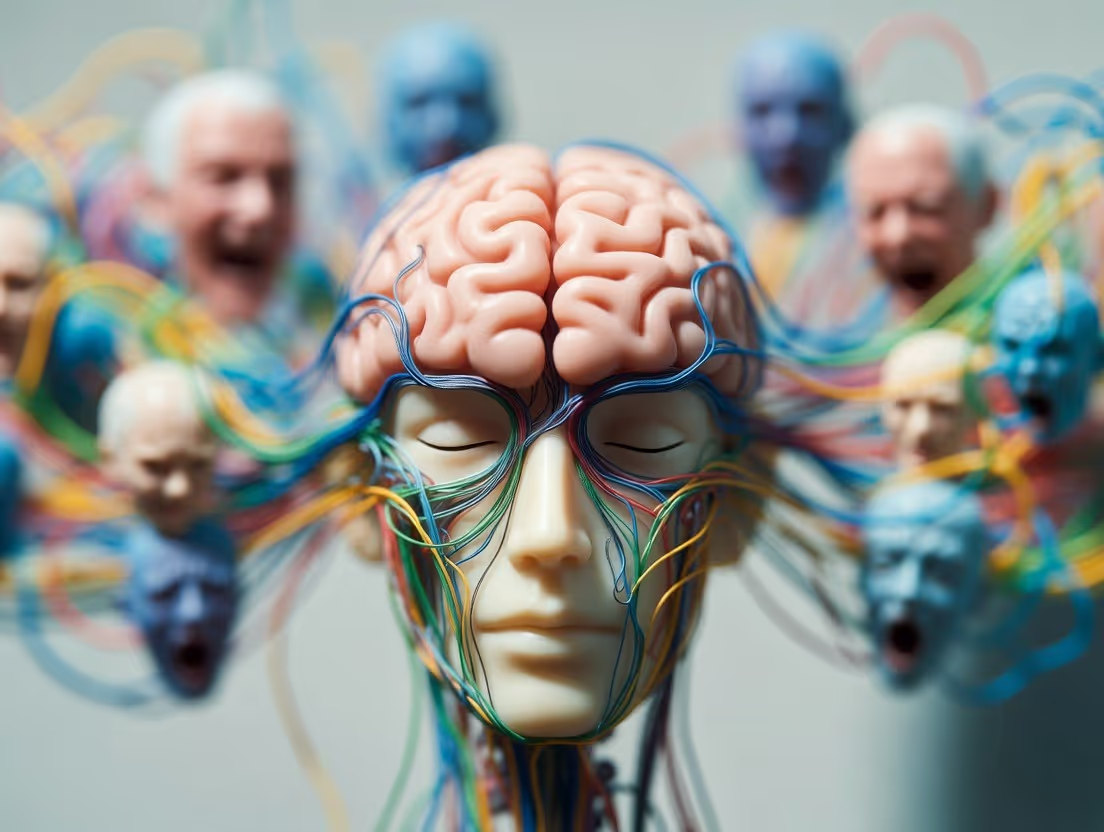
Deep within the premotor cortex and inferior parietal lobule of your brain resides one of the most fascinating discoveries in modern neuroscience: the mirror neuron system. First identified in the early 1990s by researchers studying macaque monkeys, these neurons fired not only when the monkey performed an action, like grasping a peanut, but also when it merely observed another monkey performing the same action. It was as if the brain was internally mirroring the external world. This finding exploded our understanding of learning, empathy, and, crucially, emotional contagion.
Think of mirror neurons as your brain’s built-in, high-definition simulation software. When you see someone smile, a subset of your mirror neurons dedicated to facial expression and emotional processing fires in a pattern that mimics the act of smiling yourself. This simulation doesn’t always reach your facial muscles to produce a full grin (though it often does, in what we call micro-expressions), but it sends a cascade of signals to your limbic system—the emotional center of the brain. Your brain effectively says, “I am executing the motor and emotional program for smiling,” and your conscious mind then experiences the associated feeling of happiness or amusement. You’ve “caught” the emotion by internally rehearsing it.
This process is foundational to human connection. It allows an infant to learn from a parent’s joyful expressions, enables us to feel the thrill of an athlete’s victory from the stands, and makes us wince in shared pain when we see someone get hurt. It’s the neural substrate for our profound social interconnectedness. Without this system, we would be cognitive islands, unable to truly grasp the inner lives of others. As neuroscientist Marco Iacoboni puts it, mirror neurons allow us to “grasp the minds of others not through conceptual reasoning but through direct simulation. Feeling, not thinking.”
However, this powerful neural Wi-Fi has no inherent filter for quality or intent. It mirrors the distressed face of a worried colleague with the same fidelity as a child’s laughter. In a tense meeting, your neurons are mirroring the crossed arms, the furrowed brows, and the tight jaws around the table, activating your own stress and defensive pathways. This is why understanding this system is the first step to managing emotional contagion. By recognizing that your brain is designed to reflect its social environment, you can begin to question: Is this emotion truly mine, or is it a reflection I’ve picked up?
The activity of your mirror neuron system is intimately tied to your physiological state, which is where next-generation wellness technology becomes invaluable. A device like the Oxyzen smart ring, worn continuously, can detect the subtle physiological precursors to emotional contagion—shifts in heart rate variability, skin temperature, and sleep patterns that signal your nervous system is mirroring external stress or calm. By correlating these objective biometric data points with your social interactions, you gain an unprecedented level of self-awareness. You can begin to see, in concrete data, the direct impact of your social environment on your nervous system, moving the invisible process of contagion into the visible realm. For a deeper dive into how biometrics illuminate subconscious states, our blog features extensive research on the topic.
Emotional contagion doesn’t happen in a single, magical moment. It unfolds in a predictable, three-stage cycle that operates largely below our conscious awareness. Understanding this cycle—Mimicry, Feedback, and Contagion—is like obtaining the schematic for an emotional chain reaction, giving you the chance to intervene at multiple points.
Stage 1: Mimicry (The Unconscious Copy). This is the initial, automatic mirroring we perform in microseconds during social interaction. When you converse with someone, you subconsciously synchronize with their nonverbal behavior: their posture, their gestures, their facial expressions, their speech rate and tone. This is not mockery; it’s a fundamental social glue that facilitates rapport and understanding. A 1999 study by psychologist Ulf Dimberg demonstrated this powerfully. He showed participants pictures of angry and happy faces while measuring their subtle facial muscle activity with electromyography (EMG). Within fractions of a second, participants’ own facial muscles began to twitch into configurations matching the faces they saw—a smile for a smile, a frown for a frown—entirely without their conscious intent.
Stage 2: Affective Feedback (The Body Informs the Mind). Here’s where the loop closes and the emotion becomes “yours.” The classic James-Lange theory of emotion posits that we don’t run because we’re afraid; we feel afraid because we are running. Similarly, in emotional contagion, the physical act of mimicry generates physiological and sensory feedback that your brain then interprets as an emotional state. When you unconsciously mirror a friend’s slumped posture and downturned mouth (mimicry), your body sends signals of fatigue and sadness to your brain. Your brain, receiving this data, infers, “I must be feeling tired and sad,” and thus, you begin to experience those feelings. The copied behavior creates the genuine emotion.
Stage 3: Contagion (The New Broadcast). Now, imbued with this “caught” emotion, you become a new carrier of it. Your own nonverbal behavior, voice, and energy shift to align with your newly acquired state. You begin to broadcast the same emotional signals you just received, potentially infecting others in your social sphere. This creates the self-reinforcing loops we see in organizations (“the culture is so toxic”) or families (“everyone was on edge”). A leader who walks into the office radiating calm under pressure can, through this very cycle, settle an entire team. Conversely, a single panicked individual can trigger collective hysteria.
This cycle highlights a critical insight: our bodies are not just vessels for emotions; they are active participants in generating them. This gives us a powerful point of leverage. By consciously altering our physical state, we can interrupt the feedback loop before it solidifies into a full-blown “caught” emotion. If you feel the weight of a colleague’s anxiety settling onto you (Stage 1 mimicry), you can consciously adjust your posture, take deep, deliberate breaths, or even force a gentle smile. This sends new, contrary feedback to your brain, short-circuiting the descent into shared anxiety.
Monitoring this cycle in real-time is where modern wearables show their transformative potential. Imagine receiving a gentle vibration alert on your smart ring when your heart rate variability dips into a pattern indicative of stress absorption during a difficult conversation. This biofeedback acts as a timely interrupt, pulling the process from the subconscious into conscious awareness. It’s a cue to enact your intervention strategy—to consciously adjust your breathing or posture—before the contagion cycle completes. This fusion of ancient wisdom (mind-body connection) and cutting-edge technology represents the frontier of emotional self-regulation. To understand how individuals are applying these insights, the real-world experiences shared in Oxyzen testimonials provide compelling evidence of this powerful feedback loop in action.
While the drama of emotional contagion begins in the brain, its full impact is a whole-body experience. The emotions we catch are not abstract mental events; they are concrete physiological storms that influence everything from our heart rhythms to our hormonal balance. When you absorb someone else’s stress, anger, or joy, your body undergoes measurable changes that affect your health, energy, and cognition.
The Autonomic Nervous System (ANS) as the Conduit. The ANS, comprising the sympathetic (“fight-or-flight”) and parasympathetic (“rest-and-digest”) branches, is the primary pathway for emotional physiology. Emotional contagion directly hijacks this system. Witnessing a partner’s anger can trigger a sympathetic surge in you: your heart rate accelerates, blood pressure rises, digestion halts, and muscles tense. Conversely, relaxing with a serene friend can promote parasympathetic activity, slowing your heart rate, promoting digestion, and inducing a state of calm. Your ANS is essentially syncing with the emotional environment, often without your conscious permission.
The Hormonal Cascade. This neural activity triggers a corresponding endocrine response. Catching chronic stress or anxiety from a toxic work environment leads to elevated levels of cortisol, the primary stress hormone. Persistently high cortisol impairs immune function, disrupts sleep, contributes to weight gain, and can damage hippocampal cells crucial for memory. On the flip side, positive contagion—like shared laughter or excitement—can boost endorphins (natural painkillers and mood elevators) and oxytocin (the “bonding hormone”), promoting feelings of connection and well-being.
The Respiratory and Cardiovascular Link. Our breathing pattern is intimately tied to emotion and is highly contagious. In a state of collective anxiety, you’ll notice shallow, rapid chest breathing becomes the norm, which physiologically reinforces the stress response. Shared calm, however, is often marked by synchronized, deep diaphragmatic breathing. This is why breathwork is such a potent tool for managing contagion—it’s a direct line to the ANS. Your cardiovascular system is equally responsive. Studies have shown that emotions like anger and hostility, when chronically experienced or absorbed, are significant risk factors for hypertension and heart disease.
This profound mind-body connection means that unmanaged emotional contagion is not just a psychological nuisance; it’s a physical health hazard. It contributes to the allostatic load—the cumulative wear and tear on the body from chronic stress. This is the missing link in many discussions of workplace burnout or caregiver fatigue: it’s not just the cognitive workload, but the relentless physiological cost of absorbing the emotional states of others.
This is precisely why passive self-reporting (“I feel stressed”) is often inadequate. Our perception is filtered through layers of denial and habituation. Objective biometrics cut through this noise. A smart ring that tracks heart rate variability (HRV)—a supremely sensitive indicator of ANS balance and resilience—provides an unfiltered readout of your body’s response to your social ecosystem. A sustained drop in HRV after interactions with a particular person or in a specific environment is a strong, data-driven signal that you are absorbing significant negative emotional leakage. It transforms a vague feeling of being “drained” into a quantifiable, actionable insight. For those curious about the science behind these metrics, Oxyzen’s FAQ details how these physiological signals are captured and interpreted to support emotional well-being.
Emotional contagion is a force of nature, but unlike gravity, it is not neutral. Its valence—positive or negative—determines whether it acts as a social superglue or a psychic poison. The impacts of these two poles are asymmetrical, a phenomenon rooted in our evolutionary neurobiology often referred to as the negativity bias.
Negative Emotional Contagion: The High-Velocity Threat. Our brains are wired with a hair-trigger alarm system for danger, making negative emotions far more contagious and potent than positive ones. Anger, fear, anxiety, and disgust spread faster and embed more deeply. This made evolutionary sense: in a ancestral environment, missing a threat (a predator, a rival) was far more costly than missing an opportunity. In the modern office, this translates to a single sarcastic comment or a leader’s display of frustration rippling through a team with devastating efficiency, eroding trust, stifling creativity, and increasing psychological withdrawal. Research by Sigal Barsade at Wharton has consistently shown that negative mood contagion in groups leads to显著ly worse cooperation, increased conflict, and poorer task performance.
Positive Emotional Contagion: The Sustained Nourishment. Positive emotions like joy, calm, enthusiasm, and gratitude are also contagious, but they often require more consistent exposure and a foundation of psychological safety to take root. Their effects, however, are profoundly beneficial and build over time. Barsade’s work also demonstrates that groups exposed to positive mood contagion exhibit higher levels of collaboration, better cognitive flexibility, and more effective decision-making. Positive contagion builds emotional capital—a reservoir of goodwill, resilience, and shared purpose that groups can draw upon during challenges. It’s the foundation of legendary company cultures and deeply connected families.
The critical management insight here is that you cannot simply “stop” contagion. The goal is to become a conscious carrier. This involves two key responsibilities:
Technology can serve as a crucial ally in this curation. By tracking your physiological trends, you can identify which relationships and contexts are primary sources of negative emotional load (consistent spikes in stress markers) and which are sources of positive emotional renewal (patterns of improved HRV and recovery). This data empowers you to make informed decisions about how you allocate your most precious resource: your social and emotional energy. It moves you from a reactive stance (“Why do I always feel awful after talking to them?”) to a proactive one (“My data shows this interaction consistently drains my resilience; I need to adjust my approach or boundaries”). Learning to harness positive contagion intentionally is a core theme explored in depth on the Oxyzen blog, where we discuss strategies for building emotional resilience.
One of the most potent defenses against unwanted emotional contagion is also one of the most elegant: the simple, precise act of naming the emotion. Psychologists call this skill emotional granularity—the ability to differentiate between specific, nuanced emotional states. Instead of a vague, overwhelming sense of “feeling bad,” high granularity allows you to identify whether you are experiencing anxiety, resentment, melancholy, or embarrassment. This is not semantic nitpicking; it’s a neurobiological intervention.
When you attach a precise label to a diffuse feeling, you engage the prefrontal cortex—the brain’s executive control center. This act temporarily dampens the reactivity of the amygdala, the alarm bell of the limbic system. Neuroscientist Lisa Feldman Barrett describes this as “affect labeling,” and fMRI studies show it reduces the intensity of the emotional experience. By saying, “This tightness in my chest is not my own anxiety; it’s the secondhand stress I’m picking up from my manager’s tone,” you create critical psychological distance. You transform from being immersed in the emotion to being an observer of it. You begin to separate the “me” from the “not-me.”
This skill is your primary tool for auditing contagious emotions. When you feel an emotional shift after an interaction, pause and ask:
Developing high emotional granularity requires practice and a rich emotional vocabulary. It’s about moving beyond “happy, sad, mad” to terms like “apprehensive,” “disillusioned,” “content,” “fierce,” or “serene.” Journaling, mindfulness, and even reading fiction can build this lexicon.
Here, biometric data acts as a powerful corroborating witness. Your subjective feeling of “unease” can be validated or challenged by objective data. For instance, if you label a feeling as “absorbed agitation” after a meeting, you can check your stress-level graph from your wellness tracker. Seeing a clear correlation—a pronounced spike during that interaction—powerfully reinforces your granular assessment and strengthens your interoceptive awareness (your sense of what’s happening inside your body). This creates a virtuous cycle: better internal awareness improves your interpretation of the data, and clearer data sharpens your internal awareness. It’s a partnership between human intuition and machine measurement, a core principle behind the technology developed at Oxyzen. Understanding the mission behind such tools can provide deeper context; you can learn more about our story and vision here.

With an understanding of the cycle, physiology, and language of contagion, we arrive at the practical core: how do we stop being emotional sponges and become selective filters? Setting boundaries is often discussed psychologically, but to manage contagion effectively, we must set bio-psychological boundaries—physical and mental barriers that protect our physiological state.
1. Pre-Interaction Preparation (The Buffer Zone). Before entering a potentially emotionally charged situation—a difficult conversation, a high-stakes meeting, a family gathering—consciously prepare your nervous system. This is like donning psychological PPE. Engage in 2-3 minutes of box breathing (inhale 4, hold 4, exhale 4, hold 4) to activate your parasympathetic nervous system and raise your emotional baseline. Set a somatic intention: “I am grounded and calm. I observe emotions without being engulfed by them.” This creates a buffer, making you less susceptible to the initial mimicry stage.
2. In-the-Moment Anchoring (The Physiological Bailout). During the interaction, maintain a subtle connection to your own body to prevent full absorption. This can be a physical anchor—feeling your feet firmly on the floor, subtly pressing your fingertips together, or maintaining a gentle, open posture (which counteracts the defensive postures you might mirror). These micro-actions send continuous feedback to your brain that you are in your own body, maintaining sovereignty.
3. Post-Interaction Decontamination (The Reset Ritual). After exposure, deliberately shed the accumulated emotional energy. Do not carry it into your next activity. This could be a short walk, a minute of vigorous shaking out of your limbs (a practice from trauma therapy to discharge stress), washing your hands with cold water while visualizing rinsing away the residue, or a brief meditation. The key is a ritual that signals to your brain and body: “That interaction is over. I am now returning to my own state.”
Technology integrates seamlessly here as a boundary-setting tool. You can use a smart ring’s silent vibration alarm as a pre-set reminder to check in with your posture and breath during a long meeting. You can review your stress exposure data at the end of the day to identify “contagion hotspots” and adjust your schedule or strategy for tomorrow. This objective feedback loop helps you refine your boundary-setting techniques, showing you what works. For example, you might see that on days you practiced a 5-minute pre-work meditation, your physiological stress exposure was 30% lower, providing concrete reinforcement for the habit. For those seeking support in implementing these techniques, Oxyzen’s support resources offer guidance on using data to build these essential rituals.

For anyone in a position of leadership—be it a CEO, a team manager, a teacher, or a parent—the neuroscience of emotional contagion presents both a monumental responsibility and a powerful lever for change. A leader’s emotional state is not a private matter; due to the power differential and the team’s heightened attention, it is the most contagious signal in any group. This is the leader’s dilemma: your emotions will infect your team, for better or worse, whether you intend them to or not. The choice is whether to manage this process consciously.
The Biology of the "Leader's Mood." Research in organizational neuroscience confirms that a leader’s emotional displays directly shape the collective emotional, cognitive, and even physiological states of their followers. A leader’s anxiety triggers cortisol releases in team members. A leader’s authentic optimism and calm can boost oxytocin and dopamine, enhancing trust, focus, and creative problem-solving. The team’s mirror neurons are locked onto the leader, making them the de facto emotional pacemaker for the group.
Conscious Emotional Architecture. Therefore, effective leadership in the 21st century requires conscious emotional architecture. This involves:
Forward-thinking leaders are now using team-level wellness data (aggregated and anonymized) to gauge the collective emotional climate. Tracking aggregate trends in team HRV or sleep scores can provide an early warning system for widespread burnout or toxic contagion before it manifests in plummeting productivity or mass attrition. This allows for proactive interventions—adjusting workloads, addressing cultural friction points, or modeling new recovery behaviors. It represents a shift from managing outputs to stewarding the human systems that produce them. The vision for integrating well-being science into leadership is a key part of the story behind Oxyzen, which aims to equip individuals and organizations with these insights.
Our exploration would be incomplete without addressing the dominant social ecosystem of our time: the digital world. Digital emotional contagion is the large-scale, algorithmically-mediated spread of affect through social media platforms, news feeds, and digital communication. Its mechanisms are similar—mimicry via emotive language and powerful imagery, feedback loops in our own bodies as we react—but its scale and lack of modulating human presence make it uniquely potent.
The 2014 landmark experiment by Facebook (the “emotional contagion” study), though controversial, demonstrated this empirically. By subtly manipulating the emotional valence of content in users’ News Feeds, researchers found they could subsequently influence the emotional tone of the users’ own posts. Less positive feed content led to less positive user posts; less negative content led to less negative posts. The platform wasn’t just a mirror; it was an emotional amplifier.
The Neurological Toll of Doomscrolling. The endless, passive consumption of negatively charged digital content—outrageous news, conflict, curated displays of superior lifestyles—triggers a low-grade, chronic sympathetic nervous system response. We are in a state of perpetual, diffuse threat vigilance. This not only makes us more anxious and irritable but also primes us to be more susceptible to negative contagion in our physical lives. It lowers our resilience threshold.
Managing Digital Contagion: The strategies here are both technological and behavioral.
Your biometric data can be a stark revealer of digital contagion’s impact. You may notice your resting heart rate is elevated on evenings spent arguing on Twitter, or your sleep score plummets after late-night news binges. This objective feedback makes the cost visible, motivating healthier digital hygiene. It answers the question, “Is this just how I am, or is this what my digital diet is doing to me?” For more resources on building a healthy relationship with technology, our blog offers a wealth of practical guides.
The ultimate goal in mastering emotional contagion is not to build an impenetrable emotional fortress. Fortresses are static and can be worn down. Instead, we should aim to cultivate antifragile emotional systems—systems, as Nassim Taleb defines the term, that gain from volatility, stress, and disorder. In this context, it means developing a psyche and physiology that can be exposed to the full spectrum of human emotion without being harmed, and indeed, can grow wiser and more resilient from the experience.
This is built on two pillars: Vagal Tone and Cognitive Reappraisal.
Pillar 1: High Vagal Tone – The Physiological Foundation. Vagal tone refers to the activity of the vagus nerve, the longest cranial nerve and the command center of the parasympathetic nervous system. High vagal tone is associated with faster physiological recovery from stress, better emotional regulation, and greater resilience. It’s the body’s ability to “bounce back” after absorbing an emotional shock. You can strengthen your vagal tone like a muscle through consistent practices: cold exposure, humming/singing, deep diaphragmatic breathing, and laughter.
Pillar 2: Cognitive Reappraisal – The Psychological Framework. This is the mental skill of reframing an emotional stimulus. When faced with a colleague’s anger, instead of the automatic thought (“They are attacking me, I must defend”), reappraisal allows for alternative interpretations (“They are under immense pressure. This is about their situation, not my worth”). This doesn’t excuse bad behavior, but it prevents you from absorbing the toxic emotional core of it. You observe the fire without jumping into it.
Together, a strong vagal tone and skilled reappraisal create a dynamic system. The body recovers quickly, and the mind interprets events in ways that minimize lasting damage and maximize learning. You become like a tree with deep roots (vagal tone) and flexible branches (reappraisal); you can weather strong emotional winds without breaking.
Monitoring Heart Rate Variability (HRV) is the premier way to track your progress toward antifragility. HRV is a direct proxy for vagal tone. A high, resilient HRV pattern indicates a system that can adapt and recover efficiently. By tracking your HRV trends over time as you practice vagus nerve exercises and reappraisal techniques, you get direct, positive reinforcement that your efforts are strengthening your very biology. This journey from fragility to antifragility is at the heart of modern wellness technology, a mission you can explore further here.
As we stand at the confluence of neuroscience, psychology, and biotechnology, the future of managing emotional contagion is moving from the realm of abstract skill into one of precise, personalized science. The next frontier is the integration of continuous, multimodal biometric feedback into our daily practice of emotional intelligence.
Imagine a world where:
This is not about outsourcing our emotional wisdom to machines. It is about using technology as a mirror and a guide. The raw biometric data—the spikes, the dips, the trends—is the mirror, reflecting back the truth of our embodied experience without judgment or story. The insights, prompts, and correlations derived from it act as a guide, pointing us toward practices and choices that align with resilience and well-being.
The ethical considerations are profound and must be navigated with care—privacy, data ownership, and the avoidance of a new form of biometric determinism are paramount. The goal is augmented introspection, not surveillance; empowerment, not coercion.
This vision of a future where we understand and manage the invisible forces that connect us is what drives innovation in this space. It’s a future where we no longer have to be passive participants in the emotional matrix, but conscious, skilled, and compassionate architects of our shared emotional landscape. To see how this future is being built today, from the core philosophy to the technology, you can discover our complete story. The journey continues as we delve into the practical applications for specific relationships and environments in the next portion of this exploration.
We’ve explored the mechanics of how emotions spread, but the ultimate mastery lies in reversing the flow. Instead of being a passive channel for whatever emotional energy comes your way, you can learn to become an emotional buffer—a stabilizing presence who absorbs turbulence and radiates calm. This isn’t about suppressing emotions or being emotionless; it’s about embodying a regulated state so consistently that it begins to influence the emotional field around you, modeling safety and grounding for others.
This ability hinges on a concept from polyvagal theory called co-regulation. Co-regulation is the reciprocal process by which one person’s regulated nervous system helps bring another person’s dysregulated nervous system back into balance. A mother calming her crying infant, a therapist holding space for a client’s panic, a leader steadying a team in crisis—these are all acts of co-regulation. When you cultivate your own inner calm, you become a potential source of co-regulation for others, actively spreading a “contagion of calm.”
The Anatomy of an Emotional Buffer:
Becoming a buffer requires you to manage your own internal state so effectively that you have excess capacity to hold space for others. This is where the consistent practice of self-regulation pays a social dividend. The technology you use can transition from a personal alert system to a professional tool for excellence. For instance, a smart ring’s real-time stress-level indicator can serve as a private biofeedback monitor during a high-stakes negotiation or a client conflict. Watching the data allows you to make micro-adjustments—a deeper breath, a subtle shift in posture—to maintain your own calm, ensuring you remain the emotional anchor in the room. For professionals looking to elevate their leadership presence, resources on our blog detail how biometric awareness can enhance executive function and interpersonal influence.
Nowhere is emotional contagion more potent, or more consequential, than within our most intimate circles: our romantic partnerships and our families. These relationships are characterized by deep attachment bonds, high emotional investment, and constant proximity, creating a hyper-efficient network for emotional transmission. The neural and hormonal links are so strong that partners can literally synchronize heart rhythms and cortisol cycles.
Romantic Partnerships: The Dyadic Emotional Loop. Couples create a shared emotional ecosystem. Research by Dr. John Gottman shows that partners continuously send “bids” for emotional connection. How these bids are met—with “turning toward” or “turning away”—creates a cascade of positive or negative contagion. A classic negative pattern is the “demand-withdraw” cycle, where one partner’s critical anxiety (demand) triggers the other’s defensive stonewalling (withdraw), each intensifying the other’s negative state. Conversely, when one partner self-regulates and responds with softness instead of reactivity, it can break the cycle and invite the other back into connection.
The Family System: Multigenerational Emotional Transmission. Families operate as an emotional unit. A parent’s unresolved anxiety can become a child’s temperamental baseline. Siblings pick up on and amplify each other’s moods. This isn’t just psychological; it’s embedded in family routines, communication styles, and even epigenetics. The family system seeks homeostasis, often resisting individual members who try to change the emotional climate (e.g., the “identified patient” or the person who goes to therapy and starts setting boundaries).
Strategies for Healthy Intimate Contagion:
In these intimate settings, biometric data can be used not as a weapon (“see, you are stressing me out!”) but as a shared language for empathy. Couples or families can review anonymized, aggregate trends—seeing, for example, that Sunday evenings show elevated stress for everyone—and problem-solve collaboratively. “What’s happening on Sundays that we all absorb stress? How can we redesign that time?” It depersonalizes blame and focuses on the system. Understanding each other’s unique physiological responses can foster deeper compassion, a journey many of our users share in their testimonials.
The modern office, whether physical or virtual, is a petri dish for emotional contagion. The open-floor plan, the relentless pace, the constant digital pings, and the high stakes of performance create an environment where emotions spread at lightning speed. A company’s “culture” is, in large part, the sum of its dominant emotional contagion patterns. Leaders now have a neuroscientific imperative to design not just for productivity, but for emotional hygiene.
Architectural and Ritual Interventions:
The Role of Leadership in Climate Control: Managers must be trained not just as taskmasters, but as emotional climate engineers. This involves:
Organizations at the forefront of this movement are beginning to incorporate well-being analytics into their people strategy. By offering voluntary, anonymized aggregate reporting from wearable devices, they can move from guessing about “employee sentiment” to understanding collective nervous system load. They can answer questions like: Do our “no-meeting Wednesdays” actually lower physiological stress? How does a major re-org impact the company’s HRV trends? This data-informed approach allows for iterative, evidence-based cultural design. To understand how such a philosophy is embedded into a company’s DNA, you can explore our about page, which details a mission rooted in human-centric science.
With a deep understanding of emotional contagion comes significant power—the power to influence the feelings of others, often without their conscious awareness. This raises critical ethical questions. When does influencing a mood become manipulation? How do we use this knowledge for empowerment rather than control? Navigating this requires an ethics of emotional influence, built on transparency, consent, and benevolence.
Manipulation vs. Empowerment: The Key Distinctions.
Principles for Ethical Emotional Practice:
In this ethical framework, technology like a smart ring is not a tool for manipulating others but for governing oneself. It provides the self-awareness necessary to ensure you are entering interactions with a clear, regulated, and ethical emotional baseline. It’s about managing your own broadcast with integrity. For those with questions about the responsible use of such personal data, our comprehensive FAQ section addresses privacy, security, and ethical design principles.
For individuals in caregiving, healing, or service professions—therapists, nurses, doctors, social workers, first responders, teachers—emotional contagion is not an occasional phenomenon; it is the very substance of the work. Day after day, they are exposed to the trauma, pain, fear, and anxiety of others. Without robust protective practices, this chronic exposure leads to compassion fatigue (the cost of caring) and ultimately, burnout (a state of emotional, physical, and mental exhaustion).
The Neuroscience of Empathic Distress: There’s a crucial neurological difference between empathic concern (which leads to compassionate action) and empathic distress (which leads to overwhelm and withdrawal). Empathic distress involves the pain networks of the brain (anterior insula, anterior cingulate cortex) firing in resonance with another’s pain, without the concomitant activation of the prefrontal regulation and reward centers. Essentially, you feel their pain so acutely it becomes your own, and you have no sense of efficacy or reward to buffer it. This is the state of compassion fatigue.
Building a Sustainable Practice: Managing this requires moving from porous empathy to compassion with boundaries.
This professional application underscores that managing emotional contagion is sometimes a matter of vocational survival. The technology provides an objective measure of the invisible emotional toll, empowering caregivers to advocate for their own needs and sustain their ability to serve others. Reading about the real-world impact from those in helping professions can illuminate this critical use case.
Because emotional contagion is a full-body experience, our most effective defenses and clearing mechanisms are also somatic. Thinking our way out of a caught emotion is often ineffective; we must use the body to regulate the brain. This toolkit consists of practices that actively discharge accumulated stress energy, reset the autonomic nervous system, and strengthen your physiological resilience.
1. Discharge Practices (For Immediate Release):
2. Grounding Practices (To Return to the Present):
3. Strengthening Practices (To Build Long-Term Capacity):
Integrating a wearable device turns this toolkit into a precision system. You can run a personal experiment: after a draining meeting, try one somatic practice (e.g., 2 minutes of box breathing) and watch your real-time stress graph respond. Over time, you’ll learn which practices are most effective for your unique physiology, building a personalized first-aid kit for emotional contagion. For a continually updated repository of science-backed somatic practices, our blog is a dedicated resource.
Not all emotional sharing is contagion, and not all contagion is unhealthy. Deep empathy and shared joy are the pinnacle of human connection. The final skill, therefore, is emotional discernment—the wise judgment of when to open your heart fully and when to shield your energy. This is the balance between compassion and self-preservation.
Signs It’s Healthy Engagement:
Signs It’s Time to Protect:
The Practice of Compassionate Detachment: This is the key to discernment. It means you can care about someone without being overwhelmed by them. You can listen with kindness while silently maintaining an inner boundary that says, “This is your experience, not mine. I honor it, but I do not absorb it.” Visualization can help: imagine a stream of light or water flowing from them, passing through you, and draining away, leaving you clean and clear.
Your biometric data serves as the ultimate litmus test for discernment. Your body’s response doesn’t lie. If your HRV crashes every time you interact with a certain family member, or your sleep is disrupted after conversations with a particular friend, that is objective data telling you that this relationship, as currently configured, is costing you a physiological price. It doesn’t mean you cut them off; it means you need to engage with more structure, stronger boundaries, and greater self-care. It empowers you to make relationship choices from a place of informed self-awareness rather than guilt or obligation. For support in navigating these complex personal dynamics, our community and support resources can be a helpful guide.
This first third of our exploration has laid the comprehensive foundation—from the microscopic firing of mirror neurons to the macroscopic patterns in our families and workplaces. We have equipped you with the science, the ethics, and the practical toolkit to begin the vital work of managing your emotional ecosystem. In the next portion, we will delve into advanced applications: using this knowledge for conflict resolution, parenting, healing collective trauma, and ultimately, harnessing the positive power of aligned emotion to create extraordinary collective outcomes. The journey from passive host to conscious architect of your emotional world continues.
Conflict is emotional contagion in its most volatile form. What begins as a disagreement over facts or resources quickly escalates into a clash of dysregulated nervous systems. Each person’s defensive anger, fear, or contempt triggers a mirroring response in the other, creating a feedback loop of escalating arousal—the hallmark of a “heated” argument. Navigating conflict effectively, therefore, requires bypassing the content temporarily to directly address the contagious physiology driving it.
The Neurobiology of Escalation: During high conflict, the prefrontal cortex (responsible for reason, empathy, and impulse control) goes offline as the amygdala hijacks resources for survival. In this state, people are not thinking; they are reacting. Their capacity for listening or nuance is severely diminished. Your goal is not to “win the argument” but to lower the collective amygdala activation enough for prefrontal functions to come back online.
De-escalation as a Bio-Behavioral Intervention:
For mediators, leaders, or anyone regularly in high-stakes negotiations, biometric wearables offer a revolutionary training tool. By reviewing your HRV and stress-level data after a conflict interaction, you can pinpoint the exact moment your own physiology became dysregulated. Was it a specific phrase? A tone of voice? This forensic analysis allows you to identify your personal “triggers” and practice earlier intervention strategies. Over time, you can train yourself to recognize the internal somatic early-warning signs (a tight chest, warm face) before you lose cognitive capacity, turning conflict into a domain of skilled practice rather than a threat. For more on building these high-stakes interpersonal skills, explore related content on our blog.
Children are supremely susceptible to emotional contagion. Their mirror neuron systems are highly active, and their prefrontal cortices are underdeveloped, leaving them with poor innate capacity for self-regulation. They depend entirely on the adults in their lives for co-regulation. Therefore, parenting and teaching are fundamentally about managing emotional contagion: absorbing a child’s distress, modulating it within your own mature nervous system, and reflecting back a calmer, organized state.
The “Serve and Return” of Emotional Regulation: A toddler has a meltdown because their block tower fell. Their amygdala is in full alarm. A parent practicing effective co-regulation doesn’t join the panic (“Stop screaming!”) or dismiss the emotion (“It’s just blocks!”). Instead, they attune: they get down to eye level, use a calm voice (“You’re so frustrated! That was a tall tower.”), and maybe offer a hug or a deep breath. The child’s dysregulated state is “served” to the parent, who “returns” a regulated one. Through thousands of these repetitions, the child’s brain internalizes the pathway from dysregulation back to calm.
The Pitfall of Counter-Contagion: The most common mistake is when a parent “catches” the child’s dysregulation. The child’s whining triggers the parent’s own latent stress, leading to an angry, escalated response. Now, two dysregulated nervous systems are in a destructive loop. The child learns that big emotions are dangerous and overwhelming, not manageable.
Strategies for the Regulated Caregiver:
Educators can apply this on a classroom scale. A teacher who starts the day frazzled will infect the entire class. A teacher who begins with a mindful minute, using a calm and predictable tone, sets a collective physiological baseline for learning. Some innovative schools are even exploring quiet rooms with biofeedback displays, teaching students to literally see their heart rates slow as they practice breathing, making the abstract concept of self-regulation concrete and learnable. The vision for a future where well-being is a taught skill is deeply connected to the story behind Oxyzen, which aims to provide the tools for such foundational learning.
Emotional contagion operates not just in real-time, but across generations. Intergenerational trauma refers to the transmission of the psychological and physiological effects of trauma from survivors to their descendants. This isn’t merely through stories; it’s conveyed through altered stress biology, attachment patterns, and the constant, subthreshold emotional atmosphere in a family. The unprocessed fear, grief, or hypervigilance of a grandparent who survived war or oppression can be absorbed by a grandchild as a free-floating anxiety they can’t explain—a legacy emotional contagion.
The Biological Pathways: Epigenetic changes (modifications in how genes are expressed, not the genes themselves) can be passed down. A seminal study on the descendants of Holocaust survivors found altered cortisol profiles—a flatter, dysregulated diurnal rhythm—mirroring patterns seen in PTSD sufferers. Furthermore, the parenting styles of trauma survivors (which may be detached, anxious, or overprotective) create attachment experiences that shape the child’s nervous system, perpetuating the cycle.
Healing as Disrupting Contagion: Breaking this chain requires conscious interruption of these automatic transmissions.
On a societal level, collective trauma (from a natural disaster, a violent event, or systemic injustice) spreads through powerful emotional contagion, creating a community-wide state of grief, fear, or anger. Healing requires communal co-regulation: shared rituals, public spaces for mourning, and leaders who acknowledge the pain while modeling a pathway toward collective resilience.
Here, biometrics can play a humble but insightful role on the individual level. For someone healing intergenerational trauma, seeing their HRV improve over months of therapy and somatic practice provides objective evidence of their nervous system’s increasing resilience. It validates the hard, often intangible, work of healing. It shows that the legacy emotional load is not a life sentence, but a pattern that can be rewritten. Reading about others’ journeys toward breaking these cycles can be profoundly affirming, as seen in some user testimonials focused on healing and growth.
While we’ve focused heavily on managing negative contagion, the ultimate application is the strategic cultivation of positive emotional contagion to catalyze peak performance states. In sports, the arts, business, and academia, the highest levels of achievement often occur in states of collective flow—a group-level phenomenon where attention is shared, self-consciousness dissolves, and performance feels effortless. This is positive emotional and cognitive contagion at its zenith.
The Neurochemistry of Collective Flow: This state is associated with a specific cocktail of neurotransmitters:
Designing for Positive Contagion in Teams:
For elite performers and teams, biometric data shifts from a defensive tool to an offensive optimization tool. An athlete can learn what physiological baseline (specific HRV, resting heart rate) precedes their best performances. A team can review aggregate data to see if their “flow block” protocols actually produce lower collective stress and higher HRV coherence. Was the post-productivity euphoria reflected in improved sleep scores? This creates a science of high-performance culture, moving beyond guesswork to datified insight about what truly creates aligned, innovative, and contagious states of excellence. The pursuit of this kind of optimized human potential is central to the mission you can learn more about here.
Beyond the laboratory and the office, the phenomenon of emotional contagion touches on ancient spiritual and philosophical concepts about the interconnectedness of all beings. What science calls “contagion,” wisdom traditions might call “shared energy,” “resonance,” or “oneness.” This perspective doesn’t contradict the neuroscience; it frames it within a broader, experiential understanding of human connection.
From Mirror Neurons to Mystical Experience: At its extreme, the capacity to feel what others feel is the foundation of compassion (literally, “to suffer with”). Spiritual practices across traditions are designed to expand this capacity systematically, breaking down the perceived barriers between self and other. The Buddhist practice of tonglen (taking in the suffering of others on the inhale, sending out relief on the exhale) is a disciplined training in managing emotional contagion for altruistic ends. It strengthens the “muscle” of compassionate absorption without becoming overwhelmed.
The Contagion of Awe and Transcendence: Just as fear and anger are contagious, so are profound positive states. Awe—the feeling of vastness in the face of something greater than oneself—is highly contagious. Witnessing someone else’s awe-struck silence in a cathedral or at a mountain vista can trigger a similar state in you. Shared spiritual or peak experiences in groups (from concerts to religious ceremonies) leverage this contagion through synchronized chanting, singing, or movement, creating powerful states of collective effervescence that dissolve ego boundaries.
Practical Wisdom for the Seeker:
In this realm, technology like a smart ring is not a spiritual tool, but a grounding one. It can serve as a reminder of your embodied, individual self when exploring non-ordinary states of consciousness. It can provide data that, for example, a particular group practice consistently improves your sleep and HRV, suggesting it is a nourishing form of connection. Or, it might reveal the opposite, prompting discernment. It anchors the flight of spiritual experience in the wisdom of the body. For those exploring the intersection of technology and holistic well-being, our blog often tackles these integrative topics.
Knowledge without application is inert. We now synthesize everything into a actionable, living document: your Personal Emotional Contagion Management (PECM) Plan. This is not a rigid set of rules, but a dynamic framework for self-observation and intentional action.
Step 1: The Audit – Identify Your Sources and Patterns.
Step 2: Strategy – Build Your Toolkit.
Step 3: Integration – Use Your Technology Wisely.
Step 4: Evolution – Review and Adapt.
This systematic approach transforms you from a passive subject of your social world into an active researcher and engineer of your own well-being. For support in creating and sticking with such a plan, Oxyzen’s FAQ and support resources are designed to help users maximize their understanding and application of their data.
As we look forward, the implications of understanding emotional contagion extend beyond personal and team mastery. We are moving toward a future where we can design entire emotional ecosystems—homes, schools, hospitals, cities—with psychological and physiological well-being as a primary architectural and policy goal.
Biophilic Design Meets Neuro-Awareness: Buildings will incorporate not just natural light and plants (biophilia), but spaces explicitly designed for different emotional and autonomic states: active collaboration zones, deep focus pods, and serene recovery sanctuaries. Soundscaping and lighting will be used dynamically to guide collective mood transitions throughout the day.
The Ethical Use of Group Biomarkers: In controlled, consenting environments like team-based care units or elite sports teams, anonymized, aggregate biometric data could provide real-time feedback on collective stress or coherence, allowing for micro-interventions (a team breath, a pause, a change in music) to maintain optimal group function and prevent burnout cascades.
Policy Informed by Emotional Epidemiology: Public health may begin to track indicators of collective emotional climate (through anonymized data trends, language analysis) much like it tracks infectious disease. Interventions could be designed to combat epidemics of loneliness, anxiety, or civic despair, promoting community-wide practices that foster positive contagion like social connection and shared awe.
In this future, the role of the individual wearable evolves. It becomes a node in a compassionate network—providing you with personal insights while also contributing (with full privacy controls) to a broader understanding of human well-being in different contexts. It helps you navigate the world not just as a consumer of space, but as a conscious participant in the collective emotional field.
This journey, from the firing of a single mirror neuron to the design of humane futures, underscores a profound truth: we are wired for connection. Our emotions are not private events. They are a social reality. The choice before us is whether we will navigate this reality by default or with design. By embracing the science, honing the skills, and leveraging ethical technology, we can transform emotional contagion from a hidden source of drain into a visible source of resilience, empathy, and collective flourishing. This vision of integrated, human-centric well-being is the core of our story and ongoing mission. The final portion of this exploration will bring all these threads together into a unified manifesto for living and leading in an emotionally connected world.
Your Trusted Sleep Advocate: Sleep Foundation — https://www.sleepfoundation.org
Discover a digital archive of scholarly articles: NIH — https://www.ncbi.nlm.nih.gov/
39 million citations for biomedical literature :PubMed — https://pubmed.ncbi.nlm.nih.gov/
Experts at Harvard Health Publishing covering a variety of health topics — https://www.health.harvard.edu/blog/
Every life deserves world class care :Cleveland Clinic - https://my.clevelandclinic.org/health
Wearable technology and the future of predictive health monitoring :MIT Technology Review — https://www.technologyreview.com/
Dedicated to the well-being of all people and guided by science :World Health Organization — https://www.who.int/news-room/
Psychological science and knowledge to benefit society and improve lives. :APA — https://www.apa.org/monitor/
Cutting-edge insights on human longevity and peak performance:
Lifespan Research — https://www.lifespan.io/
Global authority on exercise physiology, sports performance, and human recovery:
American College of Sports Medicine — https://www.acsm.org/
Neuroscience-driven guidance for better focus, sleep, and mental clarity:
Stanford Human Performance Lab — https://humanperformance.stanford.edu/
Evidence-based psychology and mind–body wellness resources:
Mayo Clinic — https://www.mayoclinic.org/healthy-lifestyle/
Data-backed research on emotional wellbeing, stress biology, and resilience:
American Institute of Stress — https://www.stress.org/


