


Nightly Recovery for Athletes: Sleep as Your Best Training Tool
For athletes, sleep is a crucial training tool that enhances performance, reduces injury risk, and improves reaction time.
For athletes, sleep is a crucial training tool that enhances performance, reduces injury risk, and improves reaction time.
%402x.svg)
Every athlete knows the burn of the final rep, the grit required for that last mile, and the euphoria of a personal best. Training logs are meticulously kept, nutrition is measured to the gram, and every workout is optimized for peak performance. Yet, in the relentless pursuit of greatness, there is one fundamental, game-changing tool that is overwhelmingly neglected, misunderstood, and left untapped: sleep.
This is not about passive rest. This is about Nightly Recovery – a dynamic, physiological reconstruction project that occurs when the lights go out. While you lie still, your body enters its most active state of repair. Human Growth Hormone (HGH) floods your system, muscle tissue is rebuilt stronger, neural pathways are solidified, and the hormonal balance essential for strength, endurance, and mental toughness is restored. For the athlete, sleep is not downtime; it is the most critical, non-negotiable training session of the day.
Imagine finishing an intense weightlifting session and then skipping the protein synthesis that repairs your muscles. It’s unthinkable. Yet, by consistently sacrificing sleep, you are doing precisely that—halting the very biological process that turns training stress into tangible gains. The world’s elite performers have known this for decades. From LeBron James prioritizing 12 hours of sleep to Roger Federer’s strict 10-hour sleep regimen, the secret weapon at the highest level of sport isn’t a magical supplement; it’s a commitment to the night.
But how do you move from knowing sleep is important to actively engineering it for performance? How do you measure, track, and optimize this invisible pillar of recovery? This is where modern technology bridges the gap between intention and execution. Devices like the Oxyzen smart ring are revolutionizing athletic recovery by moving beyond simple step-counting to providing deep, actionable insights into your sleep architecture, heart rate variability (HRV), blood oxygen saturation, and nocturnal core temperature—all from a sleek, unobtrusive device you wear 24/7. By quantifying the previously unquantifiable, you can transform sleep from a black box into a coachable, improvable skill. To understand how this technology fits into a holistic wellness journey, you can explore the mission and vision behind such innovations at Oxyzen’s About page.
In this comprehensive guide, we will dismantle the myth of sleep as mere rest and rebuild it as the cornerstone of athletic excellence. We will journey through the science of sleep cycles, explore the direct link between deep sleep and muscle repair, decode the stress-recovery metric of HRV, and provide a practical, actionable blueprint for creating the perfect sleep environment and routine. We will also confront the modern plagues of sleep—from the blue light of our devices to the impact of travel and competition anxiety—and provide evidence-based strategies to overcome them.
Your potential is not just forged in the gym, on the track, or in the pool. It is solidified in the quiet darkness of night. This is your guide to harnessing it. Let’s begin.

To master sleep for recovery, you must first understand what you’re optimizing. Sleep is not a monolithic state of unconsciousness. It is a highly structured, cyclical process of distinct stages, each with a specialized role in physical and cognitive restoration. For an athlete, missing any one of these stages is like skipping leg day—it creates a weak link in your performance chain.
A full night’s sleep consists of multiple 90-minute cycles, each comprising two primary types: Non-Rapid Eye Movement (NREM) sleep and Rapid Eye Movement (REM) sleep. NREM sleep is further divided into three stages (N1, N2, N3), progressing from light to profoundly deep sleep.
Stage N1 (Light Sleep): This is the gateway, lasting just a few minutes. Your muscles begin to relax, heart rate and breathing slow, and brain waves start to transition from the alert patterns of wakefulness. It’s easy to be awoken here.
Stage N2 (Light Sleep): You spend nearly 50% of your total sleep in this stage. Body temperature drops, eye movements stop, and brain waves show characteristic "sleep spindles" and "K-complexes"—believed to be crucial for memory consolidation and sensory processing. This stage acts as a stabilizer and preparer for deep sleep.
Stage N3 (Deep Sleep or Slow-Wave Sleep): This is the holy grail for physical recovery. Characterized by slow, delta brain waves, this is the most restorative phase. It is during deep sleep that the pituitary gland releases a pulse of human growth hormone (HGH)—the primary driver of muscle repair, tissue growth, and bone building. Blood flow to muscles increases, delivering oxygen and nutrients while removing metabolic waste products like lactic acid. The immune system is also supercharged, producing cytokines that help fight inflammation and infection. For an athlete, deep sleep is the equivalent of a pit crew working on a Formula 1 car. Interrupting this stage means your body misses its most critical window for physical repair.
REM Sleep: Following deep sleep, you enter REM sleep, where the brain becomes highly active, dreaming occurs, and eyes dart rapidly. While it seems physically passive, REM is the brain’s recovery phase. It is essential for memory consolidation, learning motor skills, and emotional regulation. For an athlete, this is where the neural patterns of a perfect golf swing, a free-throw routine, or a complex playbook are hardwired into muscle memory. It’s also critical for mental resilience and processing the psychological stress of competition.
The balance of these stages is paramount. A study published in the Journal of Sports Sciences found that athletes who increased their sleep duration demonstrated significant improvements in sprint times, shooting accuracy, and reaction times. The mechanism? More sleep allows for more complete cycles, translating to greater cumulative time in both deep and REM sleep.
The Role of the Circadian Rhythm: Governing this intricate sleep architecture is your internal body clock, or circadian rhythm. This 24-hour cycle, influenced primarily by light and darkness, regulates not only sleepiness and alertness but also core body temperature, hormone release (like cortisol and melatonin), and metabolism. An athlete with a misaligned circadian rhythm—due to late-night training, screen use, or irregular schedules—is fighting their own biology, compromising both sleep quality and daytime performance.
Understanding this science transforms sleep from a vague concept into a series of measurable, optimizable events. The first step to better recovery is knowing what you need to recover from and what biological processes are doing the work. As we delve deeper, we’ll explore how to measure the output of this nightly performance lab, starting with the most telling metric of all: Heart Rate Variability.
If you could have one number to guide your daily training intensity—to tell you whether to go all-out, take a moderate day, or fully rest—what would it be? For the modern athlete, that number is increasingly derived from Heart Rate Variability (HRV).
At its core, HRV is a measure of the subtle variations in time between each heartbeat. Contrary to popular belief, a healthy heart does not tick like a metronome. The tiny, millisecond differences between beats are a sign of a robust, responsive autonomic nervous system (ANS). Your ANS has two key branches: the sympathetic ("fight-or-flight") and the parasympathetic ("rest-and-digest"). HRV is the window into their balance.
A high HRV generally indicates strong parasympathetic activity and a body that is recovered, resilient, and ready for stress. It suggests your heart can quickly adapt to changing demands. A low HRV indicates dominant sympathetic tone, meaning your body is under stress—whether from intense training, psychological pressure, illness, or poor sleep. For an athlete, a sustained drop in HRV is a red flag: it signals systemic fatigue and a heightened risk of overtraining, injury, and illness.
The Sleep-HRV Connection: This is where sleep becomes non-negotiable. Quality sleep is the most powerful parasympathetic activator we have. During deep sleep, your body shifts firmly into "rest-and-digest" mode. Heart rate drops, blood pressure decreases, and the vagus nerve—the command center of the parasympathetic system—goes to work. This nocturnal recharge is what resets your HRV. A night of poor or insufficient sleep means your nervous system doesn’t fully recover, leaving you in a state of heightened sympathetic arousal the next day. Your HRV will reflect this, often dropping significantly.
Tracking HRV for Precision Training: This is no longer theoretical. Athletes are using wearable technology, like the Oxyzen smart ring, to track their HRV seamlessly. Worn overnight, these devices capture your HRV during the most stable period (usually the last few hours of deep sleep), providing a consistent, daily baseline. By tracking trends over time, you can:
The power of HRV lies in its personalization. There is no "good" or "bad" universal number—only what is high or low for you. By establishing your own baseline, you move from training by a generic calendar to training by your body’s actual feedback. This biofeedback loop turns recovery from a passive hope into an active, data-driven process. For a deeper dive into how this technology works and answers to common questions, many athletes find valuable resources in the Oxyzen FAQ.
As we layer this understanding of nervous system recovery with the physical repair processes of deep sleep, a complete picture of nightly recovery begins to emerge. Next, we must address a silent threat that can undermine both: nocturnal oxygen deprivation.

You’ve dedicated yourself to perfect sleep hygiene. You track your cycles and monitor your HRV. But what if an invisible thief is robbing you of recovery right under your nose? For many athletes, particularly in strength and endurance sports, that thief is sleep-disordered breathing, ranging from loud snoring to full obstructive sleep apnea (OSA).
During an apnea event, the airway collapses, blocking breathing for 10 seconds or more. This causes blood oxygen saturation (SpO2) to plummet, sometimes dramatically. Your brain, in a panic, triggers a micro-arousal—a brief awakening you likely won’t remember—to restart breathing. This fragments your sleep, pulling you out of precious deep and REM stages hundreds of times a night.
The Athletic Performance Toll: The consequences are severe:
A Problem for the Fit and Healthy? Absolutely. The classic stereotype of sleep apnea patients being older and overweight is dangerously misleading. Athletes, with their larger neck musculature and often lower body fat, can still have airway collapsibility due to anatomical factors. Endurance athletes with very low resting heart rates may have longer gaps between breaths that can destabilize breathing during sleep. The sheer physical stress of intense training can also be a contributing factor.
Monitoring Your Nocturnal Oxygen: This is where next-generation wellness wearables provide a critical early-warning system. A device like the Oxyzen ring, with its medical-grade SpO2 sensor, can track your blood oxygen levels throughout the night, identifying significant dips and trends. While it is not a diagnostic tool for sleep apnea, it can be a powerful indicator that something is wrong, prompting a conversation with a sleep specialist. Seeing a graph of your oxygen levels dropping repeatedly is a tangible, undeniable piece of data that can motivate seeking help.
Beyond Apnea: Other Causes of Low SpO2: Even without sleep apnea, athletes training at altitude or recovering in polluted environments may experience lower nocturnal oxygen. Monitoring SpO2 can help you understand your adaptation to altitude training or assess your recovery environment’s quality.
Addressing sleep-disordered breathing can be transformative. Treatment, often with a CPAP machine or oral appliance, can lead to dramatic improvements in sleep quality, HRV, daytime energy, and ultimately, performance. It turns a night of chaotic, stressful struggle into one of true, restorative recovery. For real-world accounts of how monitoring these metrics has changed training regimens, the Oxyzen testimonials page shares powerful user experiences.
With our recovery foundation threatened by poor breathing, we must now turn to the master conductor of it all: your body’s internal clock, and how to align it for peak performance.
Your circadian rhythm is the invisible conductor of your biology, orchestrating the timing of sleep, hormone release, metabolism, and even muscle function. For an athlete, being in sync with this internal clock isn’t just about feeling awake; it’s about unlocking periods of naturally higher strength, faster reaction times, and greater pain tolerance. Conversely, fighting against it—a state known as circadian misalignment—guarantees subpar sleep and compromised recovery.
The Master Clock and Zeitgebers: Your central circadian pacemaker is a tiny region in the brain called the suprachiasmatic nucleus (SCN). It sets a rhythm close to, but not exactly, 24 hours. To stay synced with the solar day, it relies on external time cues, or zeitgebers ("time-givers"). The most powerful zeitgeber is light, especially the blue-wavelength light from the morning sun.
The Athletic Performance Curve: Research reveals a predictable daily fluctuation in performance metrics:
The Recovery Alignment: Your circadian rhythm doesn’t just optimize performance windows; it dictates recovery windows. The rhythm of hormones critical for recovery is tightly controlled:
If your sleep schedule is erratic—going to bed at 10 PM one night and 2 AM the next—you desynchronize this hormonal orchestra. The release of HGH and the depth of your sleep suffer, directly impairing physical repair.
Strategies for Circadian Optimization:
By respecting and optimizing your circadian rhythm, you ensure your training stress is applied at the right time and that your recovery systems are fully operational and timed to perfection at night. This alignment is the foundation upon which all other sleep optimization is built. To explore more about the philosophy of aligning technology with human biology for wellness, the team at Oxyzen shares their story of creating tools for this very purpose.
Now that we understand the internal clock, we must design the perfect external environment to let it run smoothly.
You can have perfect circadian alignment and the best intentions, but if your sleep environment is working against you, recovery will be compromised. Your bedroom should be a sanctuary purpose-built for one thing: facilitating deep, uninterrupted, restorative sleep. For an athlete, this isn't a luxury; it's as essential as a well-maintained training facility.
The Pillars of the Perfect Sleep Environment:
1. Darkness: The Non-Negotiable Signal
Complete darkness is crucial for triggering and maintaining melatonin production. Even small amounts of light from an LED clock, a crack under the door, or streetlights can penetrate your eyelids and disrupt sleep cycles.
2. Cool Temperature: The Thermoregulatory Key
Your core body temperature needs to drop by about 1-2 degrees Fahrenheit to initiate and maintain sleep. A room that’s too warm prevents this drop, leading to restlessness and lighter sleep.
3. Silence and Sound: Controlling Auditory Disruption
Unexpected noises—a door slam, traffic, a partner snoring—can cause micro-arousals and shift you out of deep sleep stages, even if you don’t fully wake up.
4. Comfort: The Foundation of Stillness
An uncomfortable mattress or pillow can cause pain, pressure points, and frequent tossing and turning, preventing sustained deep sleep.
5. Air Quality and Cleanliness: The Breath of Recovery
Poor air quality (dust, allergens, dry air) can irritate airways, promote snoring, and disrupt breathing during sleep.
The "Cave" Analogy: Think of your ideal sleep space as a cool, dark, quiet cave. It should feel separate from the activity and stimulation of the rest of your life. This mental association is powerful; simply entering your sleep sanctuary should begin to trigger a physiological wind-down.
The Digital Detox Zone: Crucially, your bed should be for sleep (and intimacy) only—not for work, scrolling social media, or watching stressful news. This strengthens the brain’s association between bed and sleep. Charge your phone and other devices outside the bedroom. If you use a device like the Oxyzen ring for tracking, its silent, non-invasive nature means it won’t introduce light or distraction into this carefully crafted environment.
By taking control of your sleep environment, you remove external barriers to recovery, allowing your body’s innate repair processes to operate at full capacity. With the stage set, we now turn to the rituals that prepare the performer—the pre-sleep routine.
Walking directly from the high-stimulus, high-stress world of daily life (and often, late-night training) into bed and expecting instant, deep sleep is like slamming a Formula 1 car from 200 mph into reverse. You need a buffer—a systematic wind-down ritual—to transition your nervous system from sympathetic dominance to the parasympathetic state required for sleep. For the athlete, this ritual is the cooldown for the brain.
A consistent pre-sleep routine, performed in the same order 60-90 minutes before your target bedtime, signals safety and predictability to your brain, allowing sleep hormones to rise and stress hormones to fall.
Components of an Athlete’s Power-Down Ritual:
1. The Digital Sunset (90-60 minutes before bed):
This is the single most effective step. The blue light from screens suppresses melatonin, and the engaging content (emails, social media, intense shows) activates the mind.
2. The Temperature Drop (60 minutes before bed):
Leverage your body’s thermoregulation. A warm bath or shower raises your core temperature slightly, but the rapid cooling after you step out is a powerful somnogen (sleep-inducer) that mimics the natural pre-sleep temperature drop.
3. Mindful Decompression (45 minutes before bed):
The athlete’s mind is often racing—replaying workouts, planning the next session, or managing competition anxiety. This mental chatter needs quieting.
4. Nutrition & Hydration Strategy (Last 90 minutes):
What you consume can support or sabotage the wind-down.
5. Light Environment Transition (Throughout the ritual):
As you move through your evening, dim the lights in your living space. Use lamps instead of overhead lights. This gradual dimming supports your body’s natural melatonin production.
6. The Final Connection (15 minutes before bed):
Perform a final, calming activity that you only do before sleep. This creates a powerful Pavlovian response.
Consistency Over Perfection: The magic of the ritual is in its consistency. Doing it most nights, even imperfectly, trains your nervous system to recognize the sequence as a precursor to sleep. Over time, simply starting the ritual will begin the physiological shift toward recovery mode.
This conscious, deliberate wind-down is what separates those who just "get sleep" from those who actively engineer recovery. It’s the process of turning off the external world so the internal repair work can begin without interference. For more strategies on creating holistic wellness habits, a wealth of information can be found on the Oxyzen blog.
Once we’ve mastered the environment and the ritual, we must address the fuel for recovery: what you consume and when.
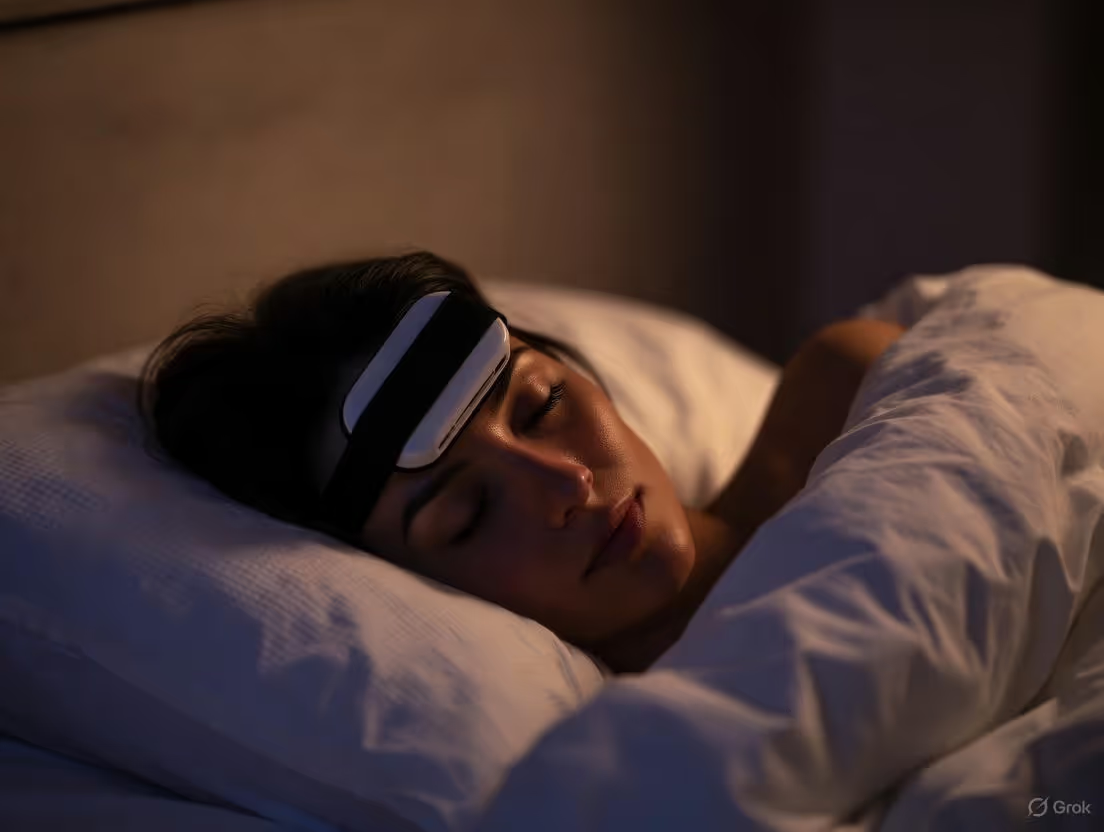
You wouldn’t put low-grade fuel in a race car and expect peak performance. Similarly, the nutrients you provide your body—and their timing—profoundly influence the quality of your sleep and the efficiency of the recovery processes that occur within it. Nutritional sleep support is a two-way street: certain nutrients promote better sleep, and high-quality sleep improves nutrient metabolism and hormonal balance.
Macronutrients and the Sleep Cycle:
Key Micronutrients for Sleep and Recovery:
Hydration Strategy: Dehydration can lead to nighttime cramps and dry mouth, disrupting sleep. However, overhydration right before bed guarantees disruptive trips to the bathroom. The strategy: Hydrate consistently throughout the day and taper fluid intake in the last 60-90 minutes before bed.
Foods and Compounds to Limit or Time Carefully:
The Pre-Sleep Snack: If you need a snack 60-90 minutes before bed, ideal combinations include:
By viewing your evening nutrition as deliberate "recovery fuel," you prime your physiological systems for the work ahead. You are not just eating for satiety; you are providing the raw materials for hormonal regulation, tissue repair, and neural restoration. This strategic approach turns your kitchen into an extension of your recovery protocol.
With the body fueled, we must next address the mind, which can often be the greatest obstacle to sleep.
The body is willing, but the mind is racing. This is the nightly battle for countless athletes. Performance anxiety, replaying mistakes, worrying about tomorrow's training, or the general stress of competition can create a state of "cognitive hyperarousal" that is utterly incompatible with sleep. Psychological recovery is as vital as physical recovery, and the two are inextricably linked. You cannot achieve deep physical restoration if your brain is stuck in fight-or-flight mode.
Understanding the Sleep-Stress Cycle: Stress (both physical from training and psychological) activates the hypothalamic-pituitary-adrenal (HPA) axis, releasing cortisol. While cortisol should be low at night, a stressed mind can keep it elevated. High cortisol blocks melatonin, increases heart rate, and promotes alertness—the exact opposite of the sleep state. This creates a vicious cycle: poor sleep lowers stress tolerance, making you more reactive to stress the next day, which then further impairs sleep.
Evidence-Based Psychological Tools for Sleep:
1. Stimulus Control Therapy:
This classic cognitive-behavioral therapy for insomnia (CBT-I) technique is powerful. Its core principle: strengthen the association between bed and sleep.
2. Constructive Worry Time / Brain Dump:
Schedule a 15-minute "worry session" earlier in the evening, well before your wind-down ritual. During this time, write down everything on your mind—training concerns, life stresses, to-do lists. For each item, jot down the next actionable step, if any. By externalizing and organizing these thoughts, you prevent them from hijacking your mind at bedtime.
3. Mindfulness and Meditation:
These practices train your brain to observe thoughts without becoming entangled in them. They increase parasympathetic activity and reduce pre-sleep cognitive arousal.
4. Imagery Rehearsal and Reframing:
Instead of replaying failures, use this mental energy constructively.
5. Acceptance and Commitment:
Sometimes, the struggle to sleep creates more anxiety than the initial sleeplessness. Practice accepting that you may have a night of poorer sleep without catastrophizing it. Remind yourself that lying still in a dark room with a calm mind still provides significant rest and recovery, even if it's not perfect sleep. The commitment is to the process (your ritual, your environment), not to the outcome of a specific number of sleep hours.
Creating psychological distance between your identity as an athlete and your need for rest is crucial. You are not "being lazy" by prioritizing sleep; you are engaging in your most potent form of active recovery. By mastering these mental skills, you protect your sleep sanctuary from internal invaders, ensuring your mind is as recovered as your body. For athletes looking to integrate these strategies with data-driven insights, understanding the full capabilities of their tools is key, which is detailed in resources like the Oxyzen homepage.
Having addressed the internal environment of the mind, we now confront one of the greatest modern disruptors of both mind and body: technology.
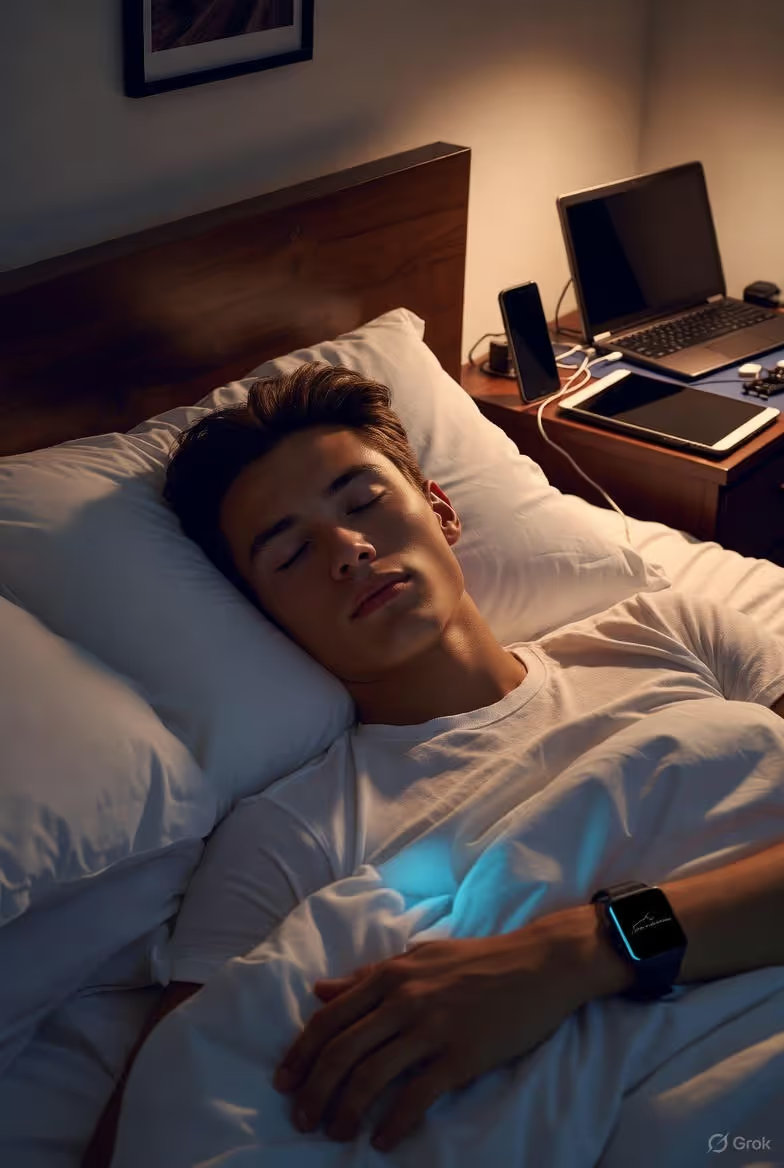
We live in an age of ubiquitous technology, a force that simultaneously threatens and enhances our sleep. On one hand, the blue light and endless engagement of smartphones are potent sleep disruptors. On the other, advanced wearables provide unprecedented insight into our recovery physiology. For the athlete, navigating this dichotomy is essential—you must weaponize technology for good while guarding against its harms.
The Disruptors: Blue Light and Cognitive Arousal
The science is unequivocal: short-wavelength blue light from LEDs, smartphones, tablets, and computers is the most powerful suppressor of melatonin secretion. A 2014 study in Proceedings of the National Academy of Sciences found that using a light-emitting e-reader before bed delayed melatonin onset by over 90 minutes and reduced REM sleep compared to reading a physical book.
The Enhancers: The Rise of the Sleep & Recovery Wearable
This is where the landscape has transformed. Modern devices, like the Oxyzen smart ring, move far beyond simple step counting. By being worn overnight, they capture data during the most physiologically stable period, offering metrics critical to athletes:
How to Use Data Wisely (And Avoid Orthosomnia):
The term "orthosomnia" describes the anxiety caused by an unhealthy obsession with perfect sleep data. This paradox can actually worsen sleep. The key is to use data as a trend-based guide, not a nightly report card.
Technology, when harnessed correctly, provides the feedback loop that turns sleep from a mystery into a manageable component of your training. It allows you to see the direct impact of a late-night training session, a poor meal, or an extra rest day. It empowers you with self-knowledge. The goal is not to become a slave to the numbers, but to use them as a compass, guiding you toward more consistent, high-quality recovery. As we gather this data, it naturally leads to the final, critical skill for the athlete: listening to your body and knowing when to push and when to rest.
The concept of periodization is second nature to any serious athlete: structuring training into distinct phases (macro, meso, and microcycles) to peak at the right time while minimizing injury and burnout. Yet, most athletes apply this sophisticated planning only to their waking hours, leaving sleep as a static, passive background variable. This is a critical error. Sleep must be periodized alongside your training load. Your nightly recovery needs are not constant; they fluctuate with the intensity, volume, and type of stress you apply. Treating sleep as a dynamic, adjustable component of your program is the final frontier of performance optimization.
Understanding Recovery Demand Fluctuations:
A deload week, where volume and intensity are purposely reduced, presents a fundamentally different physiological demand than a high-intensity overload microcycle focused on strength gains, which in turn differs from a competitive peaking phase or the metabolic stress of a high-volume endurance block. Each phase places unique stresses on the nervous, muscular, endocrine, and immune systems, and your sleep should be strategically tuned to meet those specific recovery demands.
The Periodized Sleep Blueprint:
1. Base/Volume Phase (High Workload):
2. Intensity/Strength Phase (High Neurological Load):
3. Competition/Taper Phase (Peaking):
4. Active Recovery/Transition Phase:
The Microcycle View: Daily Adjustments
Even within a weekly microcycle, you can adjust:
Using Data to Guide Periodization: This is where a wearable like the Oxyzen ring becomes an indispensable coaching tool. By tracking your HRV trend, you can objectively validate your periodization plan. A successful overload phase should see a gradual, controlled decline in HRV. A successful taper should see a clear rebound. If your HRV crashes dramatically during a base phase, your volume may be too high too soon. This biofeedback allows for truly individualized, responsive periodization.
By periodizing sleep, you acknowledge its active role in the adaptation process. You are no longer just "trying to get good sleep"; you are deliberately modulating your recovery tool to match the specific stressor, ensuring you recover smarter, not just harder. For more on integrating data into a holistic training approach, the Oxyzen blog offers continuous insights and case studies.
The pursuit of elite performance has moved beyond the constraints of a single nightly recovery period. For the athlete managing two-a-days, high academic or professional loads, or simply the relentless accumulation of training stress, the strategic nap is a powerful tool to augment recovery, enhance learning, and maintain cognitive sharpness. When deployed correctly, napping is not a sign of laziness; it is a targeted intervention in the 24-hour recovery cycle.
The Science of the Nap: What Happens in 20-90 Minutes?
Naps are categorized by their duration, each offering distinct benefits:
Optimizing the Athlete’s Nap:
1. Timing is Everything:
The post-lunch dip (circadian-driven period of lower alertness around 1-3 PM) is the ideal biological window for napping. Napping too late in the day (after 4 PM for most) can compromise nighttime sleep onset by reducing sleep pressure.
2. The Environment Matters:
A nap is not just closing your eyes on the couch. Mimic your sleep sanctuary: find a dark, cool, quiet place. Use an eye mask and earplugs. The goal is to fall asleep quickly to maximize the benefits of the short window.
3. The Caffeine Nap (A Pro-Tech):
For a guaranteed alertness boost, try the caffeine nap. Drink a small cup of coffee immediately before lying down for a 20-minute power nap. Caffeine takes about 20 minutes to hit your bloodstream. You wake up just as the caffeine is taking effect, synergistically combining the neurological reset of the nap with the stimulant, often resulting in remarkable alertness.
4. Managing Sleep Inertia:
If you take a longer nap and wake groggy, give yourself 15-20 minutes of light activity (a walk, gentle stretching) in bright light before engaging in complex motor skills or decision-making.
Napping for Competition:
The Limits of Napping:
A nap is a supplement, not a replacement. It cannot fully replicate the hormonal cascade and immune system overhaul of a full night of sleep. It is a tool to manage acute fatigue and debt, not a solution for chronic sleep deprivation. The foundation must always be a solid night of sleep.
Integrating strategic napping into your periodized recovery plan creates a multi-layered defense against fatigue. It allows you to interrupt the accumulation of stress within the day itself, making your primary sleep that night more effective. It turns recovery from a passive, nightly event into an active, daily practice.
For the competing athlete, travel is inevitable. But crossing time zones disrupts the very foundation of recovery—the circadian rhythm—leading to the debilitating condition known as jet lag. The symptoms—fatigue, insomnia, digestive issues, impaired cognitive function, and decreased performance—are the antithesis of peak readiness. Winning on the road requires a proactive, science-based protocol to rapidly realign your internal clock with your new environment.
Understanding Jet Lag:
Jet lag occurs when your internal circadian clock, still synced to your home time zone, is out of sync with the local cues (light, food, social schedules) of your destination. The severity depends on the number of time zones crossed and the direction of travel.
The Athlete’s Pre-Travel and In-Flight Protocol:
1. Pre-Adapt (If Possible):
In the days leading up to travel, gradually shift your sleep schedule toward your destination time zone. For eastward travel, go to bed and wake up 15-30 minutes earlier each day. For westward, shift later. Even a partial shift reduces the shock to your system.
2. Master Light Exposure (The Most Powerful Tool):
Light is your primary reset button. The goal is to seek or avoid light at specific times to "nudge" your clock in the right direction.
3. Hydrate and Eat Strategically:
4. Sleep On the Plane (Wisely):
If it’s nighttime at your destination, try to sleep. Use noise-canceling headphones, a high-quality neck pillow, and an eye mask. If it’s daytime at your destination, fight to stay awake. Short, strategic naps (20 mins) are okay if you’re desperately fatigued, but avoid long sleeps that will anchor you to the wrong time zone.
The Arrival and Acclimatization Protocol:
1. Immediate Light Implementation:
Get outside in the natural light at the prescribed times. Do not hide in a dark hotel room. A brisk walk in the appropriate light is more effective than any supplement.
2. Use Melatonin Supplementation Judiciously:
Melatonin can be an effective phase-shifter. For eastward travel, taking 0.5-3 mg of melatonin 30-60 minutes before your desired bedtime in the new time zone for the first few nights can help advance your clock. For westward travel, it’s less critical but can be used to help you fall asleep at the new, later local time if needed. It is a chronobiotic (timing agent), not a powerful sedative.
3. Train Smart Upon Arrival:
The first 24-48 hours are for acclimatization, not intense training. Light, movement-based exercise (a dynamic warm-up, light skill work, a very easy jog) in the appropriate light can help with rhythm adjustment. Avoid maximal efforts or heavy CNS loading until you feel physiologically adjusted (often 1 day per time zone crossed is a good rule of thumb).
4. Optimize Your Hotel Sleep Sanctuary:
Take control of your environment. Use portable blackout clips for curtains, a white noise app on your phone, and set the thermostat to your ideal cool temperature (usually 67°F/19°C). Bring your own pillow if possible.
By treating travel as a physiological challenge to be managed with the same rigor as a training session, you turn a major disadvantage into a manageable variable. You arrive not as a jet-lagged zombie, but as an athlete ready to perform. This level of meticulous preparation is what separates professionals from amateurs, and it’s a philosophy shared by those dedicated to optimizing every facet of performance, as seen in the commitment detailed in Oxyzen’s Our Story.
For the athlete who has mastered sleep hygiene, environment, and nutrition, the frontier of recovery extends into advanced technologies and targeted interventions. These are not replacements for foundational sleep, but force-multipliers that can enhance its quality or accelerate specific recovery processes. It’s a landscape ranging from well-researched tools to cutting-edge biohacks, and navigating it requires a critical, evidence-based eye.
Cold Exposure (Cryotherapy):
Heat Exposure (Sauna):
Photobiomodulation (Red Light Therapy):
Electrical Stimulation (EMS/PEMF):
The Role of Advanced Wearables:
Devices like the Oxyzen smart ring allow you to test the impact of these interventions on your own physiology. Did your HRV improve the night after a sauna session? Did your deep sleep percentage drop after late-night cryotherapy? This personal biofeedback turns anecdote into actionable data, allowing you to personalize which advanced tools are worth your investment and how to time them for maximal recovery and sleep benefit. For athletes curious about the integration of such data into daily life, the Oxyzen FAQ addresses common questions on data accuracy and application.
The key with all advanced interventions is to layer them upon a solid foundation. No amount of red light or cryotherapy can compensate for chronic sleep deprivation or a misaligned circadian rhythm. They are the precision tools in a recovery toolkit that is built on the bedrock of high-quality, consistent sleep.
Ultimately, nightly recovery does not exist in a vacuum. It is the culmination of choices made throughout the day—the sum total of your lifestyle. The athlete who views sleep as an isolated 8-hour segment will always be fighting an uphill battle. True mastery comes from building a recovery-centric lifestyle, where all daily behaviors are aligned to support, rather than sabotage, the nightly repair process. This is the shift from managing sleep to living in a way that makes high-quality sleep the natural, effortless outcome.
The Pillars of a Recovery-Centric Lifestyle:
1. Stress Management as a Daily Practice:
Chronic psychological stress is a constant drip of cortisol into your system, raising resting heart rate, lowering HRV, and priming your nervous system for alertness at night.
2. Intelligent Training Scheduling:
Respect the bidirectional relationship between training and sleep. Hard training improves sleep quality, but only if you allow for the subsequent recovery.
3. Nutrition as Foundational Support:
View every meal as either supporting or hindering your recovery engine.
4. Digital Discipline:
The omnipresence of technology is the single greatest modern antagonist to a recovery-focused life.
5. Social and Environmental Alignment:
Your environment and social circle must support your goals.
The Mindset Shift: Recovery as Productivity
The core of this lifestyle is a fundamental mindset shift. In a culture that glorifies "hustle" and sleeplessness, you must reframe recovery as your most productive activity. Every hour of high-quality sleep is generating more tangible performance ROI than an extra hour of late-night, half-focused work or mindless scrolling. It is the process that converts your hard work into results.
This holistic approach ensures you are not constantly using willpower to force sleep. Instead, you have engineered a life where good sleep is the natural byproduct of your daily choices. It’s the difference between treating symptoms and creating health. This philosophy of holistic, data-informed wellness is at the core of what drives modern recovery technology, a journey you can learn more about by visiting Oxyzen’s About page.
As we stand on the precipice of a new era in sports science, the future of athletic recovery is moving from generalized best practices to hyper-personalized, predictive sleep medicine, powered by artificial intelligence (AI) and vast datasets. The goal is no longer just to track what happened last night, but to predict what you need tonight and tomorrow to perform at your absolute peak.
The Rise of the Multimodal Data Ecosystem:
The next generation of recovery tracking won’t rely on a single device. It will synthesize data from multiple streams:
AI as Your Personal Recovery Coach:
An AI algorithm, trained on millions of athlete-days of data, will analyze this multimodal input in real-time.
Genetic and Biomarker Personalization:
The future may include:
The Ethical and Practical Landscape:
This hyper-personalized future raises questions about data privacy, athlete autonomy, and the potential for an "optimization overload." The goal must be empowerment, not anxiety. The technology should simplify decision-making, not complicate it. The human coach-athlete relationship will remain vital for interpreting AI suggestions within the broader context of psychology, motivation, and the unquantifiable aspects of sport.
For the athlete, this future promises an end to guesswork. It means your recovery protocol will be as unique as your fingerprint, dynamically adapting to your life, your training, and your body’s real-time signals. It represents the ultimate integration of technology and biology, where the sole purpose is to unlock human potential by mastering the ancient, essential art of restoration. To see how these principles are being applied today by pioneering users, explore the real-world impacts documented in Oxyzen testimonials.
Your Trusted Sleep Advocate: Sleep Foundation — https://www.sleepfoundation.org
Discover a digital archive of scholarly articles: NIH — https://www.ncbi.nlm.nih.gov/
39 million citations for biomedical literature :PubMed — https://pubmed.ncbi.nlm.nih.gov/
Experts at Harvard Health Publishing covering a variety of health topics — https://www.health.harvard.edu/blog/
Every life deserves world class care :Cleveland Clinic - https://my.clevelandclinic.org/health
Wearable technology and the future of predictive health monitoring :MIT Technology Review — https://www.technologyreview.com/
Dedicated to the well-being of all people and guided by science :World Health Organization — https://www.who.int/news-room/
Psychological science and knowledge to benefit society and improve lives. :APA — https://www.apa.org/monitor/
Cutting-edge insights on human longevity and peak performance:
Lifespan Research — https://www.lifespan.io/
Global authority on exercise physiology, sports performance, and human recovery:
American College of Sports Medicine — https://www.acsm.org/
Neuroscience-driven guidance for better focus, sleep, and mental clarity:
Stanford Human Performance Lab — https://humanperformance.stanford.edu/
Evidence-based psychology and mind–body wellness resources:
Mayo Clinic — https://www.mayoclinic.org/healthy-lifestyle/
Data-backed research on emotional wellbeing, stress biology, and resilience:
American Institute of Stress — https://www.stress.org/


