


Nightly Recovery Score Explained: What Your Number Means
A nightly recovery score is a metric from wearables that estimates how restorative your sleep was based on duration and quality.
A nightly recovery score is a metric from wearables that estimates how restorative your sleep was based on duration and quality.
%402x.svg)
You wake up. Before you even open your eyes, a question floats to the surface of your mind: Did I sleep well? For centuries, the answer was pure guesswork—a groggy, subjective feeling. But now, a new era of bio-tracking has dawned. Strapped to your finger is a silent sentinel, a sleek piece of technology that has measured your night down to the millisecond. It presents you with a single, definitive number: your Nightly Recovery Score.
This number, often hovering somewhere between 0 and 100, holds immense power. It dictates the confidence of your morning stride, informs your daily decisions, and quantifies a process that has long been shrouded in mystery. Is an 85 something to celebrate? Should a 42 send you straight back to bed? For users of advanced wellness wearables like the Oxyzen ring, this score becomes a daily ritual, a piece of personalized health data that is both fascinating and, at times, perplexing.
This article is your definitive guide to decoding that crucial metric. We will move beyond the simple number to explore the intricate biological symphony it represents. We’ll dissect the algorithms, explore the contributing biomarkers, and teach you how to interpret the fluctuations. More than just understanding what your score is, you’ll learn why it is, and most importantly, what you can do to influence it. This isn't just about sleep; it's about your body's remarkable journey of repair and preparation that happens every night, and how you can harness that knowledge to elevate your days. Consider this your masterclass in nocturnal optimization.

For generations, our assessment of sleep was trapped in the realm of the qualitative. We relied on vague impressions: "I tossed and turned," "I slept like a log," or the non-committal "Fine, I guess." This subjective fog made it impossible to connect cause and effect with any real precision. Did that late coffee truly ruin your rest, or was it the looming work deadline? Was your fatigue due to poor sleep or an oncoming illness? We were left navigating in the dark.
The first wave of sleep tracking, led by wrist-based fitness bands, brought a new layer of data: duration and gross movement. We learned how long we were in bed and got a crude estimate of "restlessness." While a step forward, this was like judging a complex gourmet meal solely by how long it took to cook. The essential ingredients—the nuanced flavors of sleep architecture, the silent physiological repairs—were completely missing.
The paradigm truly shifted with the advent of advanced biometric wearables, particularly those worn on the finger. The finger provides a superior vascular signal for measuring key physiological metrics compared to the wrist. Devices like the Oxyzen ring ushered in the era of the Nightly Recovery Score—a holistic, algorithmically-derived metric that synthesizes multiple data streams into one actionable insight.
This represents a fundamental change in focus: from sleep tracking to recovery quantification. Sleep is the activity; recovery is the outcome. You can have long sleep with poor recovery (like lying awake for hours) or, in some cases, moderately shorter sleep with high recovery (deep, efficient, and restorative). The score is the report card on that outcome.
It transforms recovery from an invisible, silent process into a visible, tangible metric. This empowers a proactive, rather than reactive, approach to health. Instead of wondering why you’re tired, you can review a 72 Recovery Score and immediately investigate the contributing factors—was it elevated nighttime heart rate, low heart rate variability (HRV), or disrupted sleep stages? This clarity is revolutionary, turning anecdotal guesswork into a science of the self. As you’ll see on the Oxyzen.ai/blog, this data-driven approach is reshaping personal wellness routines worldwide.
Your Nightly Recovery Score is not a simple average or a random guess. It is the result of a sophisticated algorithm, a proprietary formula that weighs and interprets a constellation of biometric data collected throughout the night. Think of it as a highly skilled analyst, working through the night to compile a report on your body’s repair operations. To trust the score, it’s essential to understand its primary inputs.
At its core, the algorithm evaluates three fundamental pillars of nocturnal physiology:
These three pillars—HRV, RHR, and Sleep Architecture—form the trinity of most advanced recovery algorithms. Some systems, including Oxyzen’s, integrate additional data points like body temperature variability (a key indicator of circadian rhythm health and onset of illness) and respiratory rate, creating an even more comprehensive picture. The final score is a weighted composite, where a stellar performance in one area can partially offset a subpar night in another, though consistently high scores require harmony across all metrics.
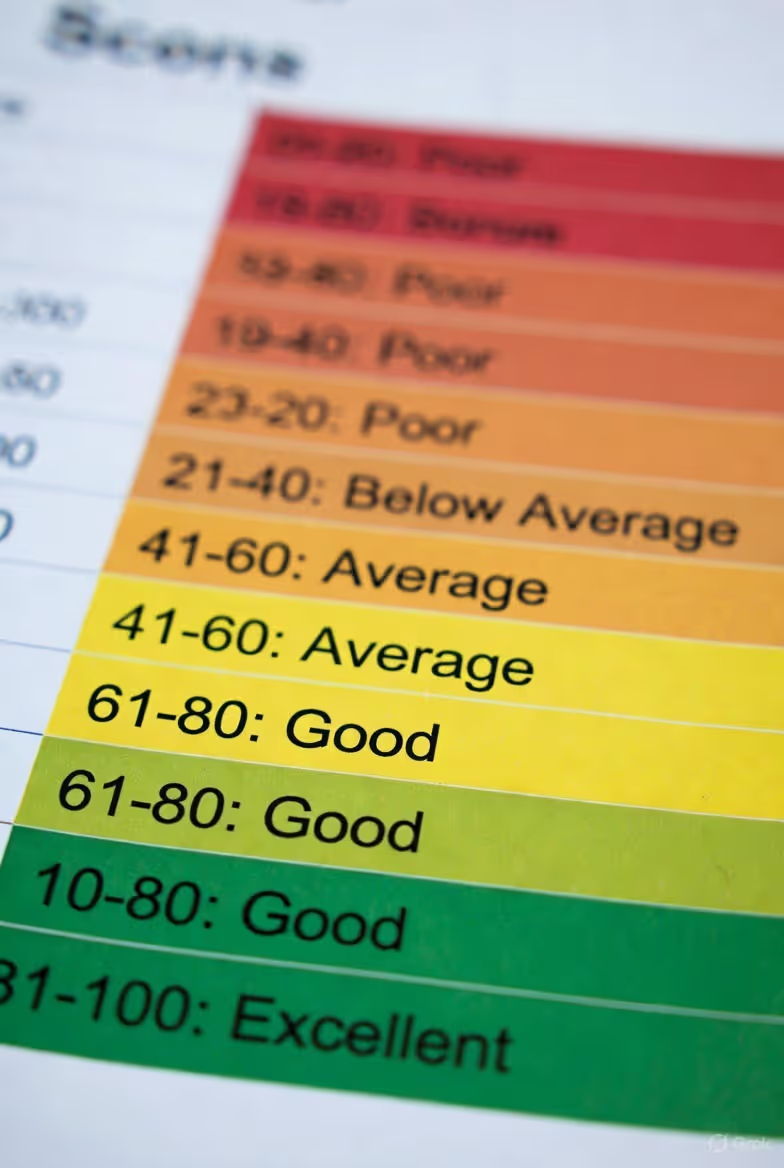
Now, let’s translate the algorithm into the number that greets you each morning. While the exact ranges can be slightly personalized over time, they generally fall into a universal spectrum of readiness. It’s not just a number; it’s a color-coded directive for your day.
The Red Zone (Poor Recovery: Typically Scores Below 60)
This is your body’s clear signal that it has not had adequate opportunity to repair and reset. A score in the red doesn’t necessarily mean you were awake all night (though that would certainly cause it). It often means your sleep physiology was stressed.
The Yellow/Amber Zone (Moderate Recovery: Typically Scores 60-79)
This is the most common range, representing an "average" or "fair" recovery night. Your body did some work, but faced some headwinds.
The Green Zone (Good/Excellent Recovery: Typically Scores 80-100)
This is the goal. A score in the green indicates your body had an optimal environment and sufficient time to perform its vital nocturnal maintenance.
If the Nightly Recovery Score were a royal court, Heart Rate Variability (HRV) would be the king. It is arguably the most sensitive and insightful metric in the entire recovery algorithm. To understand your score deeply, you must understand HRV.
Technically, HRV is the measurement of the time variation between successive heartbeats, measured in milliseconds. If your heart beats at exactly 60 beats per minute, it does not beat once every second. The intervals might be 0.95 seconds, then 1.05 seconds, then 0.98 seconds. This variability is not only normal—it is a critical sign of health.
Why is it so powerful? HRV is a direct, non-invasive readout of your autonomic nervous system (ANS). Your ANS has two primary branches:
These two systems are in a constant, dynamic tug-of-war. HRV reflects this balance. A high HRV indicates a strong, responsive parasympathetic influence and a resilient system that can easily adapt to stress and then return to calm. A low HRV suggests sympathetic dominance—your body is stuck in a state of high alert, leaving fewer resources for repair.
HRV and Your Nightly Score: During sleep, we expect the parasympathetic system to dominate. Therefore, a high nighttime HRV is a robust signal of effective recovery and is heavily weighted positively in your score. The algorithm often looks at your average nighttime HRV and, importantly, how it compares to your own recent rolling baseline.
What Drops Your HRV (and Thus Your Score):
Monitoring your HRV trend through your recovery score is like having a daily conversation with your nervous system. It provides an early warning sign of accumulated stress long before you feel overtly tired or get sick. For a deeper dive into this fascinating metric and how to improve it, our resource hub at Oxyzen.ai/blog offers extensive guides.
While HRV is the king of nuance, Resting Heart Rate (RHR) is the steadfast workhorse—a simpler, but profoundly telling, metric. Your RHR is the number of times your heart beats per minute when you are completely at rest. For most healthy adults, this falls between 60 and 100 bpm, but well-trained athletes can have an RHR in the 40s.
The key to recovery, however, isn’t just a low absolute number. It’s the nocturnal dip—the degree to which your heart rate falls below your daytime resting average during sleep. This dip is a hallmark of healthy sleep physiology and strong parasympathetic activation.
How it Informs Your Score: The recovery algorithm actively looks for this dip. A significant, sustained decrease in heart rate throughout the night is a primary indicator of physiological rest and contributes strongly to a higher score.
An Elevated Nighttime Heart Rate: The Red Flag. When your heart rate remains elevated during sleep—or doesn’t dip sufficiently—it’s a glaring siren that your body is still working hard. This can lower your score dramatically. Causes include:
By tracking your RHR trend and its nocturnal behavior, your recovery score gives you direct feedback on these lifestyle factors. Seeing a poor score linked to a blunted heart rate dip after a night of drinks or a late workout provides undeniable, objective cause-and-effect data to inform better future choices.

You could have a stellar HRV and a perfect heart rate dip, but if you only sleep for four hours, your recovery will be incomplete. This is where the detailed analysis of sleep itself enters the scoring equation. The algorithm moves far beyond "time in bed" to assess the architecture of your sleep.
Sleep Stages: The Phases of Repair
The algorithm evaluates the proportion and timing of these stages. A healthy sleep cycle rotates through these stages multiple times per night, with deep sleep dominating the first half and REM sleep lengthening in the second half.
The Enemies of Sleep Architecture: Disruption and Fragmentation
This is where many scores take a hit. It’s not just about what stages you get, but how continuously you get them.
By synthesizing data on stages, timing, and disruptions, the score tells you not just that you slept, but how effectively you slept. It answers the question: "Was my sleep architecture primed for maximum physical and mental restoration?"
The triad of HRV, RHR, and Sleep Architecture forms the robust core of recovery scoring. However, cutting-edge devices incorporate additional, equally vital physiological signals to paint an even more complete and personalized picture.
Skin Temperature Trends: The Circadian Compass
Your core body temperature follows a distinct circadian rhythm, falling in the evening to initiate sleep and rising in the morning to promote wakefulness. By tracking subtle changes in peripheral (skin) temperature throughout the night, the algorithm gains insights into:
Respiratory Rate: The Breath of Recovery
Your breathing rate (breaths per minute) naturally slows and becomes very regular during deep, restorative sleep. Monitoring this rate provides another window into autonomic nervous system balance and sleep quality.
The Most Important Factor: Your Personal Baseline
This is the critical concept that elevates a score from a generic number to a personal health tool. The algorithm doesn’t just compare you to a population average; it learns you.
Your recovery score is not created in a vacuum at night; it is the direct consequence of the choices you make during the preceding 16 hours. Understanding this cause-and-effect chain is the key to moving from passive tracking to active improvement. Think of your day as preparing the soil for the seeds of recovery you’ll plant at night.
Nutrition & Hydration:
Exercise & Movement:
Stress & Mental Load:
Your score each morning is the clearest report card on these daytime behaviors. It provides the objective feedback needed to experiment and optimize, turning guesswork into a precise science of daily living. For practical tips on building a better wind-down routine, our community often shares strategies on Oxyzen.ai/blog.
Waking up to a red "Poor Recovery" score can be disheartening. The immediate instinct is to search for a mistake, to feel like you’ve failed. This is where a crucial mindset shift occurs: Your recovery score is most powerful as a trend, not a daily verdict.
A single low score is a data point, not a destiny. Even the healthiest individuals will have occasional off-nights due to an unusual stressor, a one-off late night, or the beginnings of an immune response. The true intelligence lies in observing the trajectory over days and weeks.
What Matters in the Trend:
The Danger of Obsessing Over a Single Number: Becoming anxious or stressed over one low score is counterproductive—that anxiety itself can become the cause of the next poor night, creating a negative feedback loop. The goal is curious awareness, not judgmental attachment.
View your data through a wide-angle lens. Use the daily number as immediate feedback, but make significant lifestyle adjustments based on sustained trends. This longitudinal view transforms the device from a sleep policeman into a strategic life advisor, helping you pace your energy and stress over the long term. It’s this journey from data to wisdom that forms the core of Oxyzen.ai/our-story, a mission to provide not just metrics, but meaningful insights.

So, the alarm goes off. You reach for your phone or glance at your device. A number appears. What now? Let’s synthesize everything into a practical, 2-minute morning ritual that turns data into empowered action.
Step 1: The First Glance – The Color & Number.
Take a breath. Don’t judge. Simply note the score and its zone (Green/Amber/Red). This is your high-level readiness assessment for the day ahead.
Step 2: The Quick Diagnostic – The Contributing Factors.
Open the companion app. Most advanced systems will show you the primary positive and negative contributors from the previous night. Was it...
Step 3: The Connection – Linking to Yesterday.
Now, play detective. Cast your mind back to the previous day.
Step 4: The Daily Directive – Acting on the Information.
This is where insight becomes power.
By following this ritual, you move from being a passive recipient of data to an active participant in your own well-being. The Nightly Recovery Score becomes less of a grade and more of a trusted guide, a conversation with your body that informs a smarter, more responsive way to live each day. This is the promise of modern wellness technology, delivered seamlessly to your finger. To explore how this technology works and its foundation, you can always learn more about Oxyzen.ai.
You've mastered the morning ritual. The color, the number, the primary contributors—they now form a coherent story of your night. But for the true biohacker and wellness enthusiast, the surface-level score is merely the opening chapter. Within the detailed data that feeds that single number lies a deeper narrative, filled with subtle signals, early warnings, and nuanced insights about your resilience, your rhythms, and your unique physiology. This is where you move from a user to an expert, learning to read between the lines of your own biometrics.
Advanced interpretation involves understanding the relationships between metrics, recognizing paradoxical patterns, and identifying trends that precede tangible feelings. For instance, a "good" score of 82 with a slightly elevated resting heart rate and slightly depressed HRV tells a different story than an 82 driven by exceptional sleep architecture alone. The former might suggest you’re fighting something off but slept well despite it; the latter indicates pure, unadulterated recovery.
One of the most critical advanced concepts is latent strain. This occurs when your subjective feeling ("I feel fine") diverges from your objective data (a declining HRV trend over three days). Your body is registering and accumulating stress that hasn't yet broken through to your conscious perception. The recovery score, when viewed as a trend, catches this early. It's your body whispering a warning before it starts to scream. Learning to trust this data over fleeting feelings is a superpower, allowing you to pre-empt burnout, overtraining, and illness.
Furthermore, the interplay of metrics can reveal the type of recovery needed. Is the strain primarily physical (shown by elevated RHR and low HRV after training), psychological (low HRV with relatively normal RHR, often tied to poor sleep efficiency), or immunological (elevated RHR and temperature with low HRV)? Your score dip may look similar, but the contributing factors point you toward the correct intervention: more physical rest, better stress management, or extra hydration and nutrients to support your immune system.
We touched on daily choices, but to truly command your recovery score, you must understand the precise, dose-dependent mechanics of the most common lifestyle levers. This is the realm of controlled self-experimentation, where you become the scientist and your body is the laboratory.
Alcohol: The Deceptive Saboteur
The relationship between alcohol and your recovery score is one of the most consistent and dramatic. The mechanism is a biochemical cascade:
Caffeine: The Long Shadow
Caffeine's half-life is 5-6 hours, but its quarter-life is 10-12. That 3 PM coffee means 25% of its adenosine-blocking power is still in your system at 1 AM.
Food: The Fuel and the Burden
The timing, composition, and size of your last meal are direct inputs into your recovery algorithm.
Exercise Timing: The Double-Edged Sword
Exercise is a potent stressor that, when followed by recovery, leads to adaptation (a higher baseline). But timing is everything.
By systematically observing how these levers move your score, you can establish your personal thresholds and rules. This isn't about prohibition; it's about informed choice. You might decide a glass of wine with friends is worth a potential 75 score, while opting for tea before a critical workday to aim for a 90. The power is in the prediction.
Your recovery score is a product of your physiology interacting with your environment. You can make perfect daytime choices, but if your sleep sanctuary is working against you, you'll never see optimal scores. Optimizing your bedroom is a non-negotiable, high-yield investment in your nightly number.
Temperature: The Goldilocks Principle
This is arguably the most important environmental factor. Your core body temperature must drop by about 1-2 degrees Fahrenheit to initiate and maintain sleep.
Darkness: Total Circadian Alignment
Light is the primary driver of your circadian rhythm. Even small amounts of light at night can suppress melatonin production, the hormone that signals sleep.
Noise & Consistency: The Predictability Factor
Your brain remains alert to sounds as a threat-monitoring system. Irregular noises, even if they don't fully wake you, can cause micro-arousals that fragment sleep architecture.
Transforming your bedroom into a cave—cool, dark, and quiet—is one of the most direct ways to boost your score without changing anything else in your life. It removes external obstacles, allowing your innate biology to perform its recovery work unimpeded. For more tips on creating the perfect sleep environment, our community frequently shares their setups and successes on Oxyzen.ai/blog.
In the modern world, the greatest thief of recovery is often not physical but psychological. Chronic, unmanaged stress hijacks the autonomic nervous system, locking it into a sympathetic state that directly opposes recovery. Your recovery score is an exquisite barometer for this mental and emotional load. Improving it requires an intentional practice of decompression—a digital and psychological detox before bed.
The Physiology of a Stressed Night: When you bring the worries of the day to bed, your body remains in a state of high alert. Cortisol levels, which should be at their circadian low at bedtime, remain elevated. This leads to:
Crafting an Effective Wind-Down Routine: This is your systematic shutdown sequence for the nervous system. It should begin 60-90 minutes before your target bedtime.
Measuring the Impact: When you implement a consistent wind-down, you will see it reflected in your score within days. Look for:
This routine isn't a luxury; it's a necessary physiological transition. It tells your body, "The day is over. The work is done. It is safe to repair." Without it, you are asking your biology to switch from 100mph to 0 instantaneously—a request it is physiologically incapable of fulfilling. The result is a compromised score and subpar recovery.
Travel is one of the most potent disruptors of your recovery score, presenting a perfect storm of stressors: circadian misalignment ("jet lag"), environmental changes, dehydration, physical immobility, and psychological hassle. Watching your score plummet during and after travel is common, but understanding the mechanisms allows you to mitigate the damage and recover faster.
Circadian Desynchronization: The Core Challenge
When you cross time zones, your internal body clock (dictating temperature, melatonin, cortisol rhythms) is out of sync with the local light-dark cycle. Your score algorithm, which expects certain physiological events at certain times, is essentially measuring a confused system.
The Practical Assault on Recovery:
Strategies to Defend Your Score:
Monitoring your score during travel provides objective evidence of your disruption and, gratifyingly, charts your re-synchronization. The slow climb back to green is a visible sign of your circadian resilience. For frequent travelers, this data is invaluable for planning and performance. Sharing these resilience strategies is a common theme among our global community at Oxyzen.ai/testimonials.
One of the most profound utilities of your Nightly Recovery Score is its role as a pre-symptomatic surveillance system. Often, your physiology registers an impending issue—be it an infection or the brink of overtraining syndrome—days before you consciously feel unwell or overtly fatigued. Learning to recognize these early-warning signatures can help you take preventative action, potentially shortening illness or avoiding injury.
The Immunological Signature: Fighting Off a Bug
When your body detects a pathogen, it launches an immune response. This is metabolically expensive and creates physiological noise.
The Overtraining Signature: Too Much, Not Enough Rest
Overtraining (or more accurately, "under-recovery") is a state of prolonged imbalance between training stress and recovery capacity. Your score is the perfect tool to avoid it.
Actionable Intelligence: When your score shows these warning patterns, it’s time for an immediate and proactive "recovery week." This means:
Your recovery score shifts the paradigm from training by a blind schedule to training by physiological feedback. It allows for autoregulation—adjusting intensity based on how your body is actually responding, not just how you think you should feel. This is the future of intelligent, sustainable fitness, a principle deeply embedded in the vision behind Oxyzen.ai.
A one-size-fits-all approach to recovery is a fundamental flaw. A 22-year-old male athlete, a 35-year-old female in her luteal phase, and a 55-year-old peri-menopausal woman will have vastly different physiological baselines and responses. Your recovery score becomes truly powerful when you interpret it through the lens of your own biological context, including gender, age, and, for women, the hormonal cycle.
The Aging Factor: The Changing Baseline
As we age, several physiological shifts directly impact recovery metrics:
Women, Hormones, and the Monthly Cycle
For women of reproductive age, the menstrual cycle is not a bug in the system; it's a fundamental feature that must be accounted for. The fluctuating levels of estrogen and progesterone have dramatic, measurable effects on recovery physiology.
Interpretation & Empowerment: Seeing a score drop in the week before your period is not a failure; it's a normal biological response. This knowledge is liberating. It allows women to:
Advanced wellness platforms are beginning to integrate cycle tracking to provide phase-aware insights, making the recovery score even more personalized and meaningful. Understanding your unique biology turns the score from a source of frustration into a map of your personal power cycles.
Your smart ring and its Nightly Recovery Score provide a phenomenal, continuous stream of physiological data. However, it exists within the broader ecosystem of your health and life. To gain a truly holistic understanding, you must learn to correlate this objective biometric data with subjective and other objective inputs. This integrated analysis is where profound, personalized breakthroughs happen.
The Subjective Layer: How Do You Actually Feel?
Create a simple morning log (many apps have this feature). Alongside your score, note:
This practice highlights agreement or disagreement between data and feeling.
Other Objective Metrics: Filling in the Blanks
The Power of the Dashboard View: When you place your nightly score on a timeline alongside your training volume, subjective mood, and menstrual cycle, patterns emerge that are invisible in isolation. You might see that your best scores consistently follow days with moderate cardio, a high-protein dinner, and 9 PM meditation. Or that your worst scores follow back-to-back high-intensity days combined with evening screen time.
This integrated, holistic view moves you from being a passive data collector to the CEO of your own health. You have multiple streams of intelligence—physiological, subjective, and performance-based—allowing you to make executive decisions that optimize your well-being. It’s this comprehensive approach to wellness intelligence that defines the mission at Oxyzen.ai/about-us.
As with any powerful tool, there are common pitfalls in using and interpreting your Nightly Recovery Score. Falling into these traps can lead to unnecessary anxiety, misguided actions, or a loss of trust in the data itself. Let's navigate these potential missteps.
1. Obsessing Over the Absolute Number, Not the Trend.
This is the cardinal sin. A single night's score is a snapshot, heavily influenced by one-off events. The real signal is in the multi-day and weekly trend. Don't let a random 55 after a night out destroy your confidence. Look at your 7-day average. Is it stable? Is it improving? The trend is your truth.
2. Comparing Your Score to Others.
Your score is personalized to your physiology. Comparing your 75 to your friend's 90 is meaningless and counterproductive. They have different genetics, age, fitness level, stress load, and baseline physiology. Your only valid comparison is you yesterday, last week, and last month.
3. Misattributing Causes.
It's easy to blame the wrong thing. "My score was low, must have been that cup of coffee at 4 PM." But perhaps it was the unresolved argument you had at 6 PM, or the fact you only slept 6 hours. Use the contributor breakdown (HRV, RHR, sleep stages) as a guide. Low HRV points to nervous system stress. High RHR points to physiological/metabolic strain. Use this to triangulate the likely cause.
4. Ignoring the "Feel vs. Data" Mismatch.
As discussed, sometimes you feel great but your score is low (or vice versa). The trap is to completely dismiss one side. The correct approach is to investigate the mismatch. If you feel great but data is poor, are you running on adrenaline? Could you be getting sick? If data is great but you feel poor, is your mental health needing attention? Both sources of information are valid and inform each other.
5. Expecting Linear Improvement.
Health and recovery are not linear. You will not add 1 point to your score every day. There will be plateaus, dips, and spikes. This is normal. Don't try to "game" the system for a perfect score every night; it's unsustainable. Focus on consistent healthy behaviors, and let the scores fall where they may over the long term.
6. Neglecting the "Why" Behind the Algorithm.
If you don't understand what HRV is or why deep sleep matters, the score is just a mysterious grade. Investing time to learn the underlying physiology (as you are doing by reading this) transforms the score from an arbitrary judgment into a meaningful report. You stop asking "What's my score?" and start asking "What is my nervous system telling me?"
7. Letting a Low Score Create More Stress.
Anxiety about a low score can itself become the cause of the next low score, creating a vicious cycle. Remember: the score is information, not an indictment. View a low score with curiosity, not judgment. "Fascinating, my body is saying it needs help. Let me be kind to it today." This compassionate, data-informed response is the ultimate goal.
By avoiding these traps, you maintain a healthy, productive relationship with your biometric data. It remains a tool for empowerment, not a source of obsession. For further clarification on these nuances, our comprehensive FAQ at Oxyzen.ai addresses many of these common user questions and concerns.
Knowledge is only potential power; it becomes kinetic when applied. This final section of our exploration is about synthesis and action. You now understand the components of the score, the factors that influence it, and how to interpret it contextually. Now, we build your Personal Recovery Playbook—a set of proactive and reactive strategies based on your unique data patterns.
Step 1: Establish Your Baselines and Patterns.
Spend 2-4 weeks observing without major intervention. Note:
Step 2: Create Your "Green Score" Protocol.
Identify the repeatable behaviors that lead to your best scores. This becomes your ideal daily routine. It might include:
Step 3: Develop Your "Amber Score" Response Plan.
When you see a moderate score (60-79), have a go-to protocol to steer back to green that evening. This is your "recovery booster":
Step 4: Draft Your "Red Score" Emergency Protocol.
For scores below 60, have a non-negotiable plan for damage control and high-priority recovery.
Step 5: Build Your "Experiment" Log.
When you want to understand the impact of something new (e.g., a new supplement, a later workout time, meditation), structure it as a self-experiment.
Step 6: Schedule Quarterly Reviews.
Every 3 months, look at your long-term trends. Has your average HRV baseline improved? Are you needing less sleep to achieve the same score? Are you recovering faster from workouts? This big-picture view shows you the return on your lifestyle investment and keeps you motivated.
Your Personal Recovery Playbook turns passive tracking into active life design. It makes your recovery score the core feedback mechanism for a dynamic, responsive, and optimized life. You are no longer guessing; you are strategically engineering your well-being based on a continuous conversation with your own body. This is the ultimate promise of personalized health technology—a promise we are passionate about fulfilling, as detailed in our story at Oxyzen.ai.
Your Trusted Sleep Advocate: Sleep Foundation — https://www.sleepfoundation.org
Discover a digital archive of scholarly articles: NIH — https://www.ncbi.nlm.nih.gov/
39 million citations for biomedical literature :PubMed — https://pubmed.ncbi.nlm.nih.gov/
Experts at Harvard Health Publishing covering a variety of health topics — https://www.health.harvard.edu/blog/
Every life deserves world class care :Cleveland Clinic - https://my.clevelandclinic.org/health
Wearable technology and the future of predictive health monitoring :MIT Technology Review — https://www.technologyreview.com/
Dedicated to the well-being of all people and guided by science :World Health Organization — https://www.who.int/news-room/
Psychological science and knowledge to benefit society and improve lives. :APA — https://www.apa.org/monitor/
Cutting-edge insights on human longevity and peak performance:
Lifespan Research — https://www.lifespan.io/
Global authority on exercise physiology, sports performance, and human recovery:
American College of Sports Medicine — https://www.acsm.org/
Neuroscience-driven guidance for better focus, sleep, and mental clarity:
Stanford Human Performance Lab — https://humanperformance.stanford.edu/
Evidence-based psychology and mind–body wellness resources:
Mayo Clinic — https://www.mayoclinic.org/healthy-lifestyle/
Data-backed research on emotional wellbeing, stress biology, and resilience:
American Institute of Stress — https://www.stress.org/


