


From Numbers to Insight: The Expert's Framework for Interpreting Chronic Stress Data
The expert framework involves synthesizing trends across multiple biomarkers and life domains to assess overall chronic stress load and recovery capacity.
The expert framework involves synthesizing trends across multiple biomarkers and life domains to assess overall chronic stress load and recovery capacity.
%402x.svg)
We live in a world of unprecedented data. On our wrists, fingers, and phones, a constant stream of numbers flows—heart rate variability, sleep scores, activity minutes, readiness levels. For anyone focused on wellness, this data promises a path to a better, healthier, more balanced life. But for those grappling with the modern epidemic of chronic stress, this promise often falls short. You see the graphs dip and spike, you get the notifications warning of "elevated stress," yet you're left with a fundamental, frustrating question: What does this all actually mean for me?
The raw data point—a low HRV reading, a high resting heart rate—is just a signpost. It tells you something is happening, but not why it's happening, what it's connected to, or, most critically, what you should do about it. This gap between data and understanding is where wellness technology often fails and where human suffering continues. You're not managing stress; you're managing confusing numbers.
This article is your bridge. It’s a deep, comprehensive framework designed to transform you from a passive data observer into an active insight generator. We will move far beyond the surface-level metrics provided by your smart ring or wearable and delve into the art and science of interpretation. This isn't about chasing a perfect score; it’s about cultivating a profound dialogue with your own nervous system. We'll explore how to contextualize your biometrics within the tapestry of your life—your work, your relationships, your sleep, your nutrition—to uncover the unique, personal narrative of your stress.
The goal is mastery: the ability to look at your chronic stress data and see not just problems, but patterns, predictors, and, ultimately, a personalized pathway to resilience. This journey begins by shifting our perspective from tracking to truly understanding.

The wellness tech market loves a good score. A simple number, often color-coded from red to green, gives us the satisfying (or anxiety-inducing) illusion of clarity. "Your stress is 85 today." "Your recovery is 72." It’s tidy, it’s quantifiable, and it’s dangerously incomplete. Relying on a single, aggregated metric to understand chronic stress is like trying to diagnose a car’s engine problem by only looking at the check-engine light. You know there’s an issue, but you have no idea if it’s a loose gas cap or a catastrophic piston failure.
This oversimplification arises from a fundamental truth: there is no single "stress hormone" or "stress signal" in the body. Stress is a systemic, multi-layered physiological and psychological event. Your body’s response involves a intricate cascade of hormones (like cortisol, adrenaline, and norepinephrine), shifts in autonomic nervous system balance (between the sympathetic "fight-or-flight" and parasympathetic "rest-and-digest" branches), changes in cardiovascular function, immune modulation, and cognitive processing.
When a device gives you one number, it is typically a proprietary algorithm’s best guess—a weighted composite of several data points, often heavily reliant on Heart Rate Variability (HRV). While HRV is a powerful window into autonomic nervous system function, it is not a sole proxy for stress. A low HRV can indicate physiological stress, but it can also be influenced by factors like intense physical training (a positive stressor, or eustress), dehydration, or even the timing of your last meal.
The Expert’s First Rule: Correlate, Don’t Isolate.
Expert interpretation begins by breaking the hypnosis of the single score. Instead, you must learn to look at a constellation of data points simultaneously. For instance:
The story emerges from the relationships between the metrics. To start building this skill, you need to familiarize yourself with the core biometrics in your stress narrative. On platforms designed for deep insight, like the one offered by Oxyzen.ai, these data streams are presented not as isolated numbers but as an interconnected dashboard. This allows you to see the dialogue between your body’s systems, which is the first step in moving from generic data to personal insight. You can explore our blog for more on how these metrics interact and create your unique physiological fingerprint.
If you could only have one metric to understand your internal state, Heart Rate Variability (HRV) would be the choice of experts. Yet, it is also one of the most misunderstood. HRV is not your heart rate. While your heart rate measures the average number of beats per minute, HRV measures the tiny, millisecond variations in the time intervals between each successive heartbeat. Paradoxically, a higher HRV is generally better—it’s a sign of a resilient, adaptable, and healthy nervous system.
Think of it like a skilled driver on a winding road. A low HRV is like a rigid, nervous driver gripping the wheel tightly, making jerky, overcorrected turns. The car stays on the road, but the ride is inefficient and stressful. A high HRV is like a relaxed, expert driver—smooth, anticipatory, making fine, adaptive adjustments with minimal effort. The car handles the curves with grace and resilience.
Why does this matter for chronic stress? Your heart’s rhythm is directly controlled by the two branches of your autonomic nervous system (ANS). The sympathetic branch (accelerator) speeds up your heart rate, while the parasympathetic branch (brake) slows it down. Under acute stress, the sympathetic system dominates, creating a more regular, less variable heartbeat (low HRV). In a state of calm and recovery, the parasympathetic influence increases, creating more variability between beats (high HRV).
Chronic stress keeps your foot on the accelerator for too long, wearing down the brakes. Over time, this leads to a suppressed, lower HRV baseline. Your body loses its ability to adapt flexibly to new challenges. Therefore, tracking HRV trends is not about daily highs; it’s about establishing your personal baseline and watching for significant, sustained deviations.
Interpreting HRV: The Context is King
By learning to listen to what your HRV is telling you, you begin the first honest conversation with your stress. It tells you not just if you’re stressed, but how well your system is managing that stress. This foundational understanding of your nervous system’s flexibility is the cornerstone of the entire interpretation framework. For a deeper dive into establishing your personal baselines, our comprehensive resource library at the Oxyzen.ai blog offers advanced guides and expert perspectives.
While HRV speaks to the quality of your nervous system’s function, your Resting Heart Rate (RHR) speaks to its quantitative workload. It is the most accessible, yet profoundly informative, metric you have. Defined as your lowest heart rate while awake but at complete rest, a lower RHR typically indicates better cardiovascular fitness and more efficient heart function. However, in the context of chronic stress interpretation, we are less interested in the absolute number and more interested in its changes.
Your RHR is a barometer of total systemic load. This "load" includes physical training, psychological stress, immune activity (like fighting off a virus), dehydration, poor sleep, and even digestive processes. When your body is under a sustained load, it requires more oxygen and nutrients to be delivered to tissues, and waste products to be removed. To meet this increased demand, your heart must work harder, pumping more blood, more often—leading to an elevated RHR.
The Critical Insight: RHR as an Early Warning System
Often, your RHR will rise before you consciously feel unwell or overtly stressed. A sustained increase of 5-10 beats per minute above your personal baseline is a bright red flag signaling that your body is allocating resources to deal with a significant stressor.
Key Interpretation Patterns:
Learning to heed the silent siren of your RHR allows you to intervene proactively. Instead of waiting to feel exhausted, you can see the evidence in your data and take a rest day, prioritize sleep, or manage your schedule before the stress manifests as a headache, a short temper, or a full-blown illness.
Sleep and stress exist in a vicious, self-perpetuating cycle. It is the single most important relationship to understand in managing chronic stress. Poor sleep elevates stress biomarkers (like cortisol) and impairs emotional regulation, making you more reactive to the next day’s challenges. Elevated stress, in turn, hijacks sleep architecture—causing difficulty falling asleep (racing thoughts), reducing deep (slow-wave) sleep, and increasing nighttime awakenings. Your data will vividly illustrate this feedback loop, and the expert’s job is to determine the primary driver in any given period.
Sleep Metrics That Matter for Stress Interpretation:
Interpreting the Cycle:
Look for temporal patterns. Did a spike in daytime stress (logged or inferred from high RHR/low HRV) precede a night of poor sleep? If so, stress is likely the cause, and interventions should focus on daytime stress management (e.g., meditation, breathing breaks).
Conversely, did a night of terrible sleep (short duration, low efficiency) precede a day of terrible biometrics (high RHR, low HRV)? If so, poor sleep is the primary culprit, and your intervention must be fiercely protective of your sleep hygiene.
Breaking this cycle is the most impactful step in managing chronic stress. By using your data to pinpoint which side of the equation is failing, you can apply targeted, effective solutions rather than generalized advice. The stories of users who have broken this cycle are some of the most powerful testimonials we see; you can read their experiences in their own words on our testimonials page to understand the real-world impact of this analytical approach.
In our quest for health, we often worship at the altar of activity. 10,000 steps. 5 workouts a week. Closing all our rings. But in the framework of chronic stress management, physical activity is a double-edged sword—a potent medicine in the right dose and a dangerous toxin in excess. This is the activity paradox: the very thing that builds resilience in a recovered body can break down a stressed one.
Exercise is a controlled, acute stressor (hormetic stress). It breaks down tissues, depletes energy stores, and triggers inflammation. The benefit comes from the subsequent supercompensation during recovery—your body repairs itself stronger than before. This process requires a robust stress response system and ample recovery resources. When you are already under chronic psychological or lifestyle stress, your recovery resources are depleted. Adding intense physical stress on top of this can push you from positive adaptation into negative breakdown—a state of overtraining or under-recovery.
How Your Data Reveals the Paradox:
Your biometrics are the clearest indicator of whether your activity is restorative or destructive.
Expert Interpretation Strategy:
Embracing this paradox means moving from "more is better" to "what is optimal?" It requires the humility to sometimes do less in order to ultimately achieve more—more resilience, more health, and more sustainable progress. For those navigating fitness with high-stress lives, our FAQ section addresses common questions on balancing training with recovery based on biometric feedback.

Your stress data doesn’t exist in a vacuum. It is profoundly shaped by the fundamental inputs and rhythms of your daily life. Three of the most powerful, yet often overlooked, influencers are what you eat, what you drink, and when you do almost everything. Expert interpretation requires you to become a detective, correlating these lifestyle inputs with your biometric outputs.
1. Nutrition as a Precise Stressor:
Food is information. A large, heavy, or high-sugar meal triggers an inflammatory response, demands significant energy for digestion, and causes a sympathetic nervous system response. This can manifest as a lower HRV and higher RHR for several hours post-meal.
2. Hydration's Direct Mechanical Impact:
Dehydration reduces blood plasma volume. Your heart must work harder (higher RHR) to maintain blood pressure and circulate the thicker blood, and this sympathetic activation lowers HRV. Even mild dehydration can skew your data.
3. Circadian Rhythms: The Master Clock of Stress:
Your body operates on a 24-hour internal clock that regulates cortisol, melatonin, body temperature, and digestion. Disrupting this rhythm—through irregular sleep schedules, late-night screen exposure, or erratic eating times—creates a profound state of internal stress known as circadian disruption.
By systematically observing how these "hidden" factors move your numbers, you gain powerful levers for control. You move from being a victim of mysterious data fluctuations to an architect of your own stable, resilient internal environment.
All the biometrics in the world cannot measure a feeling. They can’t capture the tightness in your chest during a difficult conversation, the frustration of a traffic jam, or the joy of a meaningful connection. This is the critical missing link in most quantitative analysis: the subjective, qualitative context. Expert interpretation is the fusion of the objective (the numbers) with the subjective (your lived experience).
This is where conscious logging comes in. It doesn’t need to be an exhaustive journal. It can be simple tags or notes associated with your day:
The Power of Correlation:
After several weeks of logging, you will perform the most valuable analysis: correlation. Look back at days with terrible biometrics (low HRV, high RHR, poor sleep). What do your logs say happened the day before? You might discover:
This process builds self-awareness and creates personalized, irrefutable cause-and-effect evidence. It transforms data from an external judgment into an internal communication tool. It answers the "why" behind the "what." We encourage all our users to embrace this practice, and many share how it has revolutionized their self-understanding, as highlighted in the personal journeys documented in our story section.
In the age of social media and quantified self, comparison is a constant trap. "Why is my friend's HRV always 20 points higher?" "The app says my sleep is 'poor' compared to other users my age." This comparative mindset is not only demoralizing but scientifically invalid for personal health optimization. Your physiology is unique—a product of your genetics, age, sex, lifestyle, and personal history.
The single most important task in your interpretive framework is to establish your own, personal baseline. This is your neutral, homeostatic set point when you are living in relative balance—not perfect, but not in acute crisis.
How to Establish a True Baseline:
The Expert Mindset Shift:
Once your baseline is set, your entire analytical focus shifts inward. The question is no longer "How do I compare to others?" but:
This is the essence of personalized health. It liberates you from external benchmarks and connects you intimately with your own body's signals. Your wearable becomes a mirror, not a report card. The technology we've developed at Oxyzen.ai is built precisely for this purpose—to help you discover and understand your unique physiology, not someone else's ideal.
Daily data is noisy. A single bad night of sleep, a stressful email, or a poor meal can create a dramatic but ultimately meaningless blip in your metrics. The novice reacts to every blip with alarm or a drastic behavior change. The expert, however, learns to ignore the noise and focus on the signal—the trends that emerge over weeks and months.
Chronic stress is, by definition, a cumulative condition. It is not defined by a bad Tuesday; it is defined by a series of bad Tuesdays that blend into bad Wednesdays and Thursdays, with insufficient recovery in between. Therefore, the most powerful insights are not found in the daily view but in the weekly, monthly, and even seasonal view.
Key Trends to Identify:
Developing Your Analytical Eye:
Set a weekly "data review" appointment with yourself. Look at your weekly averages and graphs. Ask:
This practice of longitudinal review transforms data from a passive log into an active management tool. It allows you to course-correct before a bad week becomes a bad month. For strategies on conducting these insightful personal reviews, our blog features several method guides and case studies that can help you structure your analysis.
This entire framework is built on the power of data. But an expert knows its boundaries. The most sophisticated interpretation is recognizing when the numbers are no longer the most important source of information. Biometric data measures physiological states; it cannot measure meaning, purpose, connection, or joy. You can have a "perfect" HRV score while feeling utterly disconnected from your life, and you can have a "poor" score while feeling deeply engaged in a challenging, meaningful project.
The Dark Side of Over-Tracking:
Obsessive focus on biometrics can itself become a source of stress—a phenomenon sometimes called "orthosomnia" (the unhealthy pursuit of perfect sleep data) or more broadly, measurement anxiety. Checking your device constantly, feeling anxious about a dropping score, or forcing behaviors solely to "hack" a metric defeats the entire purpose. It puts you in a state of chronic self-evaluation, which is inherently stressful.
The Expert's Balanced Approach:
True wellness exists at the intersection of objective insight and subjective experience. The technology is a tool to enhance self-awareness, not replace it. This balanced philosophy is core to who we are; you can discover the human-centric values that drive our development on our story page.

Data without action is merely trivia. Insight without implementation is wasted wisdom. The final, and most critical, stage of the expert framework is closing the loop: turning your hard-won interpretations into deliberate, personalized actions that actively build your resilience to stress. This creates a virtuous cycle: Measure → Interpret → Act → Re-measure.
This is not about grand, unsustainable overhauls. It is about small, precise, data-informed adjustments—what we might call "micro-interventions."
Building Your Personal Intervention Toolkit:
Based on your pattern recognition, you develop a menu of actions proven to work for you.
The Re-measurement & Refinement:
After you act, you return to the data. Did that new wind-down routine improve your sleep efficiency? Did the breathing break blunt the afternoon stress spike? Your metrics will tell you, providing immediate feedback on the efficacy of your intervention. This allows you to refine your approach continuously. You are no longer following generic wellness advice; you are running personalized, iterative experiments on the single most important subject: yourself.
This active, engaged relationship with your own well-being is the ultimate goal. It transforms you from a passenger in your health journey to the pilot, navigator, and engineer. It fosters a sense of agency and self-efficacy that is, in itself, profoundly anti-stress. You are not waiting to be saved by a product; you are empowered by a tool and a framework. To begin this journey of empowered self-discovery, the first step is finding the right tool for deep, actionable insight.
To truly master chronic stress interpretation, you must graduate from observing individual metrics to quantifying the cumulative burden. This is the concept of allostatic load—the "wear and tear" on the body that results from chronic overactivity or underactivity of physiological systems that are normally involved in adaptation to environmental challenge. In simpler terms, it's the total cost of doing business with stress over time. An expert doesn't just see a high heart rate; they see it as a contributing debit to the body's resilience bank account.
Your body is designed to handle acute stress spikes beautifully. A work deadline, a hard workout, a heated discussion—these trigger a swift, efficient stress response (cortisol and adrenaline rise, heart rate increases), and then, crucially, a swift recovery. Problems arise when the recovery is incomplete. The system doesn't fully return to baseline before the next stressor hits. This leads to a persistent, low-grade activation of stress systems. Over weeks and months, this accumulates into a high allostatic load, which is the bedrock of chronic disease risk, burnout, and diminished quality of life.
Building Your Qualitative Allostatic Load Index:
While precise allostatic load requires clinical biomarkers (like cholesterol, blood sugar, inflammatory markers), you can construct a powerful proxy using your wearable data and lifestyle logs. This is your "Allostatic Score." Consider these contributing factors over a rolling 30-day period:
The Interpretation:
A week with two high-stress days, poor sleep, and low HRV is manageable. But if your rolling 30-day view shows that pattern repeating for three of the four weeks, your allostatic load is dangerously high. The expert insight is to see the contours of the debt, not just the daily balance. This perspective forces a strategic, long-view approach to recovery. You stop asking "Can I push today?" and start asking "What must I do this week to reduce my cumulative load?" This might mean a "recovery week" where you deliberately lower workout intensity, prioritize sleep, and schedule downtime, not because you feel terrible today, but because the data shows your load is too high to sustain.
This strategic approach to managing total load is a principle we embed into our guidance at Oxyzen. It's about sustainable wellness, not just daily fixes. For users seeking to understand this holistic view, our platform provides tools and insights that help visualize these trends over time, moving you from reactive to proactive health management.
A critical skill in expert interpretation is diagnostic triage. Not every negative biometric signal is psychological stress. Your body speaks one language of physiology for many different "ailments." A sudden drop in HRV could be stress, or it could be your immune system mounting a fierce attack on a new virus. An elevated resting heart rate could be anxiety, or it could be dehydration. Misinterpretation here leads to incorrect interventions—trying to meditate away a fever, for instance.
You must become adept at identifying signs of contextual contamination—when non-stress factors are masquerading as stress in your data. Here are the primary culprits and their telltale signs:
1. Incipient Illness:
This is the most important to catch. Your body will often signal an oncoming infection 24-48 hours before symptoms appear.
2. Digestive Load:
A large, rich, or allergenic meal is a significant physiological task.
3. Hormonal Fluctuations:
For women, the menstrual cycle is a powerful, predictable modulator of physiology.
4. Environmental Factors:
Extreme heat, high altitude, or poor air quality place direct strain on your cardiovascular and respiratory systems.
By learning to spot these contaminants, you refine your analysis. You stop saying "I'm stressed" and start saying "My data is down due to probable immune activity, so I will rest," or "My HRV is lower because I'm in my luteal phase, so I'll adjust my expectations." This precision prevents wasted energy on the wrong solutions and deepens your trust in the body's communication.
We spend immense energy measuring our stress but often fail to audit the efficacy of our recovery. Not all "relaxation" is created equal. Scrolling social media on the couch may feel passive, but it's often cognitively stimulating and emotionally taxing. A gentle walk in nature may be more genuinely restorative. The expert framework requires you to move beyond assumptions and quantify the ROI (Return on Investment) of your recovery activities.
This turns recovery from a vague concept into a strategic practice. You are not just "resting"; you are deploying specific, evidence-based tools to lower your allostatic load and improve your metrics.
How to Conduct a Recovery Audit:
Interpreting the Audit Results:
You will discover what your nervous system responds to. The data may reveal surprises:
This process allows you to build a Personal Recovery Protocol—a short list of high-ROI activities proven by your own data to reset your system. This protocol becomes your first-line tool when your data shows your load is rising. You stop guessing what might help and deploy what you know helps. For ideas and science-backed methods to test in your own audit, our blog is a repository of recovery techniques ranging from breathing protocols to mindfulness exercises.
This may seem counterintuitive within a framework built on measurement and intervention, but the pinnacle of expert insight is knowing when to relinquish control. Biometric feedback can create an illusion of total command over your body—a sense that with perfect behavior, you can achieve perfect numbers. This is a trap. The human organism is not a machine; it is a complex, adaptive system influenced by countless unseen variables, from subconscious thoughts to subtle hormonal shifts.
The Paradox of Control states that the healthiest relationship with your data is one that balances informed agency with radical acceptance. You use the data to make better choices, but you do not attach your self-worth or emotional state to the daily numbers.
Signs You've Lost the Balance (Data Dysmorphia):
The Expert's Mindset of Acceptance:
This balanced approach prevents the tool from becoming a source of stress itself. It allows you to benefit from the insights without becoming enslaved by the quantification. The technology should serve your well-being, not define it. This philosophy of humane, balanced tech integration is central to our mission at Oxyzen, which you can explore further on our about page, where we discuss creating technology that empowers without overwhelming.
Your self-generated data is a powerful tool for self-awareness, but it is not a diagnostic device. A critical component of the expert framework is recognizing the red flags that indicate it's time to transition from self-guided interpretation to seeking professional guidance. Your wearable can highlight areas of concern, but a qualified healthcare provider can diagnose and treat.
Red Flags in Your Data Requiring Professional Consultation:
How to Prepare for a Professional Consultation:
Bringing your data to a doctor can be powerful. Instead of saying "I'm tired," you can say: "Over the last three months, my resting heart rate has trended up by 10 bpm, my sleep efficiency averages 75%, and I have not had a single night of sufficient deep sleep according to my device. I feel exhausted." This objective summary can help a clinician focus their investigation more efficiently.
Knowing the limits of self-help is a mark of wisdom, not weakness. It completes the framework, ensuring that the pursuit of insight always serves the ultimate goal: your long-term health and safety. For questions about how data from wellness wearables can be used in a healthcare context, our FAQ addresses common queries on this topic.
At this point, you have mastered the components: the metrics, the patterns, the influencers, the recovery strategies, and the boundaries. The final act of the expert is synthesis. You are no longer looking at data points; you are writing and editing the ongoing story of your stress and resilience—your Personal Stress Narrative.
This narrative is a living document in your mind (or a physical journal). It answers core questions:
How to Craft and Use Your Narrative:
This narrative empowers you. It turns a life of reactive stress management into one of proactive resilience building. You see yourself not as a victim of chaotic external demands, but as the author of your own capacity. You understand your plot, your character's strengths and vulnerabilities, and you have a toolkit for navigating the challenging chapters. This sense of authorship is perhaps the greatest gift of deep self-knowledge. The journey to build this narrative is a personal one, and reading about the founding story and vision behind Oxyzen can provide inspiration for your own path of discovery and empowerment.
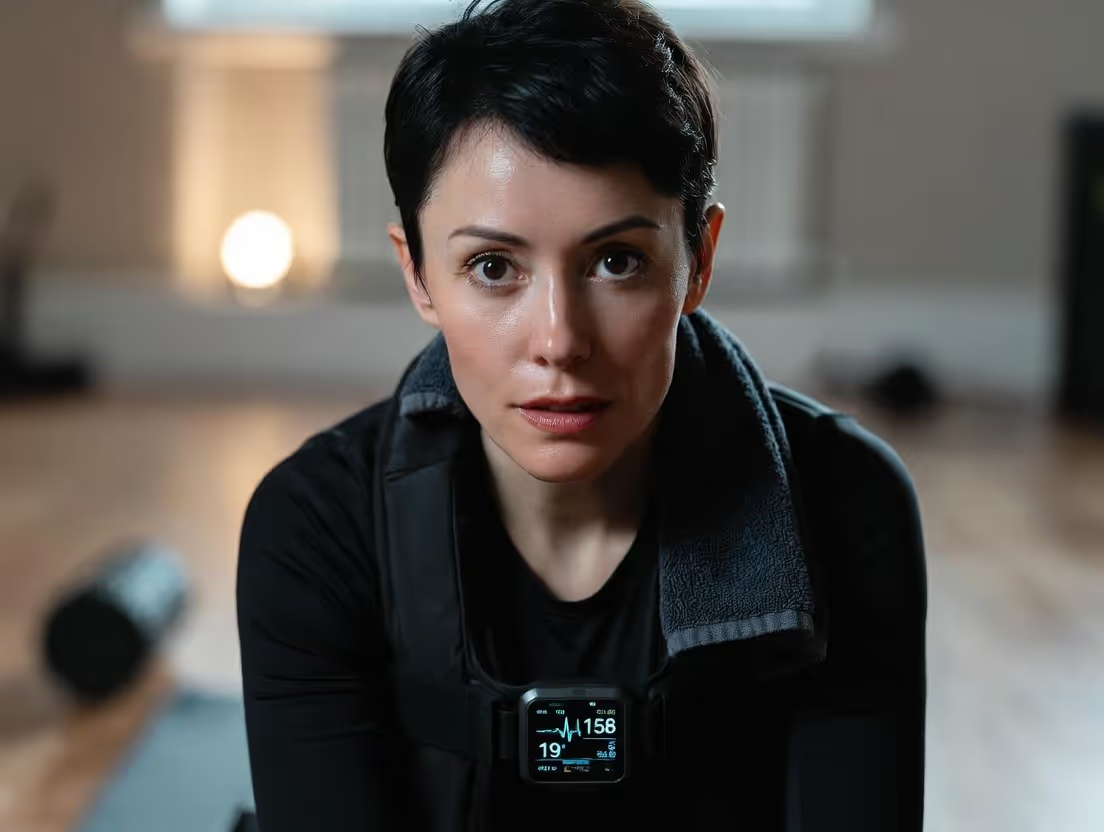
Theory without practice is just philosophy. To cement this expert framework, you must engage in a deliberate practice period. Here is a structured 30-day plan to transition from learning to doing, from observer to interpreter.
Week 1: Foundation & Baseline (Days 1-7)
Week 2: Correlation & Curiosity (Days 8-14)
Week 3: The Single Intervention Test (Days 15-21)
Week 4: Pattern Recognition & The First Narrative (Days 22-30)
This 30-day cycle is repeatable. Each month, you can test a new intervention, deepen your correlations, and refine your narrative. Over time, this practice becomes second nature—the framework becomes the lens through which you naturally view your well-being.
The framework we've built is based on today's technology. But the horizon of personal biometrics is expanding at a breathtaking pace. Understanding where this field is going helps you appreciate the foundation you're building and prepares you for the next level of insight.
Near-Future Advancements in Stress Interpretation:
As these technologies mature, the expert framework remains constant: correlate, contextualize, and personalize. The tools will get sharper, but the need for human wisdom—to interpret, to feel, to decide—will only grow. The goal is not to let the algorithm run your life, but to use its ever-deepening insights to make more informed, more empowered choices about your health and your life. Staying informed about these trends is key, and our blog is dedicated to exploring these cutting-edge developments in accessible, actionable ways.
We began with a fundamental problem: the chasm between the data on our screens and the understanding in our minds. We end this portion of our exploration not with a simple solution, but with a sophisticated, multi-layered framework—a new way of seeing.
You are no longer a passive recipient of notifications. You are now equipped to:
This is the transformation from numbers to insight. The data is the map, but you are the navigator. The framework is the compass, but your lived experience is the territory. The journey toward mastering chronic stress is lifelong, iterative, and deeply personal. It requires patience, curiosity, and self-compassion.
You now have the foundational knowledge and the structured approach to begin this journey in earnest. The next phase will delve even deeper, exploring advanced techniques for stress resilience, the intersection of mindset and physiology, and how to build a lifestyle that doesn't just manage stress, but cultivates antifragility—the capacity to grow stronger from the right kinds of challenge.
Remember, the ultimate metric of success is not a number on an app. It is the feeling of vitality, the capacity for joy, the resilience in the face of life's inevitable pressures, and the profound sense of being in dialogue with—and in stewardship of—your own one precious body and mind. Continue this journey with us as we build upon this framework, and discover how a deeper partnership with technology can illuminate your path to sustained well-being.
We've established that life events, sleep, and nutrition alter your biometrics. But there is a more subtle, powerful, and immediate influence: your cognition. Your thoughts—particularly your repetitive, habitual thoughts—are not ephemeral. They are electrochemical events that trigger cascades of physiological responses. The expert framework must account for this mind-body feedback loop, where your internal narrative doesn't just reflect your stress, it actively creates it, visible in real-time within your data.
Consider two individuals facing the same work deadline. Person A thinks, "This is overwhelming. I'm going to fail. This proves I'm not good enough." Person B thinks, "This is a challenge. I have the skills to make a plan and tackle it. I'll do my best." Their physiological responses will be starkly different, even if their outward behaviors (working at a computer) are identical. Person A's catastrophic thinking triggers a stronger, more sustained sympathetic nervous system response—higher cortisol, higher heart rate, lower HRV—and impedes recovery sleep. Person B's challenge mindset produces a more moderate, controlled stress response, allowing for better focus and faster recovery.
How to Detect Cognitive Stress in Your Data:
Your biometrics can act as a mirror to your mind, revealing patterns of rumination, worry, and negative self-talk that you may have normalized.
The Expert Intervention: Cognitive Biomonitoring
This is where you use your data for metacognition—thinking about your thinking.
By linking your cognitive patterns to their physiological footprint, you gain a powerful, objective motivator for cultivating a healthier inner dialogue. You're not just trying to "think positive"; you're engaging in neural rewiring with direct, measurable benefits for your heart and nervous system. This deep integration of mental and physical training is a cornerstone of modern resilience building, a topic we frequently explore with experts on the Oxyzen.ai blog.
Human beings are wired for connection. Our relationships are not just social or emotional phenomena; they are potent regulators of our neurobiology. Loneliness and social conflict are two of the most significant chronic stressors humans face, while secure attachment and positive connection are powerful buffers. Your wearable, perhaps surprisingly, can become a "social biometer," providing objective feedback on the physiological impact of your relational world.
Interpreting the Data of Connection and Conflict:
Actionable Insights from Your Social Data:
This isn't about blaming others or becoming a hermit. It's about awareness and intentionality.
Your stress data, therefore, becomes a tool not just for personal optimization, but for relational intelligence. It helps you build a social ecosystem that genuinely supports your well-being. The stories of how community and technology intersect are part of the human-centric journey we document at Oxyzen.

Your body is constantly sensing and responding to its physical environment in ways your conscious mind ignores. Light, noise, air quality, and temperature are not passive backdrops; they are active inputs into your autonomic nervous system. An expert interpreter learns to "scan" their environment through the lens of their biometric data, identifying and mitigating these invisible stressors.
Decoding Environmental Signatures:
Becoming an Environmental Detective:
By learning to read your body's response to its environment, you gain agency over a layer of stress that often feels inevitable. You can't control the city's noise, but you can control your bedroom's soundscape with a white noise app. You can't control the weather, but you can control your bedroom's microclimate. This proactive environmental engineering is a hallmark of advanced stress resilience. For practical tips on optimizing your environment, our FAQ section covers common questions on creating a recovery-conducive space.
Thus far, we've focused predominantly on measuring stress and depletion. But the ultimate goal is not to achieve a stress-free life (an impossibility), but to cultivate resilience—the capacity to withstand, recover from, and adapt to stressors. An expert framework must, therefore, include a way to quantify not just the load, but the strength of the system bearing it. This is your Resilience Score.
Think of it like a weightlifter. The stress is the weight on the bar. The lifter's resilience is their strength and recovery capacity. A novice lifter (low resilience) is crushed by 200 pounds. An elite lifter (high resilience) handles 200 pounds with ease and quickly recovers. Your Resilience Score is a measure of your physiological and psychological "strength."
How to Calculate Your Qualitative Resilience Score:
Combine several data-driven and behavioral indicators over a 30-90 day period:
Interpreting and Acting on Your Resilience Score:
Tracking your Resilience Score over time is the ultimate measure of progress. It shifts the focus from "How stressed am I?" to "How strong am I becoming?" It validates the entire framework, showing that through intelligent interpretation and action, you are not just managing symptoms—you are upgrading your fundamental human operating system. This concept of building antifragility is central to our vision at Oxyzen.ai, where we aim to provide tools that don't just track problems, but help build durable capacity.
For those ready to move beyond the simple "HRV number" provided by most apps, a world of deeper analysis awaits. Understanding the different components of HRV can reveal more nuanced information about the balance of your nervous system. While not necessary for everyone, this knowledge represents the graduate level of biometric interpretation.
Key Advanced Metrics:
The Practical Deep Dive:
For the advanced user, the goal isn't to become a cardiologist, but to ask more sophisticated questions of your data.
A Word of Caution:
These metrics are powerful but easily misused. Do not obsess over daily fluctuations in LF/HF. Do not use them to self-diagnose. Their primary value is in providing a richer dataset for observing your own trends in response to your own experiments. They add another layer of resolution to the picture you are already painting. For those fascinated by the science behind these metrics, our blog features detailed explainers written with clarity for the dedicated wellness enthusiast.
Your Trusted Sleep Advocate: Sleep Foundation — https://www.sleepfoundation.org
Discover a digital archive of scholarly articles: NIH — https://www.ncbi.nlm.nih.gov/
39 million citations for biomedical literature :PubMed — https://pubmed.ncbi.nlm.nih.gov/
Experts at Harvard Health Publishing covering a variety of health topics — https://www.health.harvard.edu/blog/
Every life deserves world class care :Cleveland Clinic - https://my.clevelandclinic.org/health
Wearable technology and the future of predictive health monitoring :MIT Technology Review — https://www.technologyreview.com/
Dedicated to the well-being of all people and guided by science :World Health Organization — https://www.who.int/news-room/
Psychological science and knowledge to benefit society and improve lives. :APA — https://www.apa.org/monitor/
Cutting-edge insights on human longevity and peak performance:
Lifespan Research — https://www.lifespan.io/
Global authority on exercise physiology, sports performance, and human recovery:
American College of Sports Medicine — https://www.acsm.org/
Neuroscience-driven guidance for better focus, sleep, and mental clarity:
Stanford Human Performance Lab — https://humanperformance.stanford.edu/
Evidence-based psychology and mind–body wellness resources:
Mayo Clinic — https://www.mayoclinic.org/healthy-lifestyle/
Data-backed research on emotional wellbeing, stress biology, and resilience:
American Institute of Stress — https://www.stress.org/


